Ask ChatGPT


 Gastropod
17 Nov 2026 · 47m · 12 chapters
The episode traces how energy drinks (starting with Red Bull) became a global, youth-targeted market, then argues they pose “hidden harms,” especially for kids, due to high caffeine plus other ingredients and effects on blood flow and cardiovascular function. It also covers policy responses, including England’s planned ban for under-16s based on caffeine-per-liter limits.
Written by AI. May contain mistakes.
Discover how Dietrich Mateschitz was inspired to create Red Bull after encountering energy drinks in Asia.
“This episode was supported in part by the Burr's Welcome Fund for our coverage of biomedical research and by the Alfred P.”
Explore the origins of energy drinks, starting with Lipovitan and leading to Red Bull's marketing strategies.
“And in the Newsweek magazine, there was a ranking of the best taxpayers in Japan.”
Learn how Red Bull became a popular mixer in bars, especially with vodka.
“who would drink anything, especially if it was free.”
Explore how Red Bull's marketing strategies influenced its brand success.
“If you think about it for a second, Red Bull is kind of a weird product.”
Understand the rise of competitors like Monster and the controversy around Four Loko.
“like the drink of the buffoon, if you will.”
Learn about the dangers associated with consuming energy drinks mixed with alcohol.
“We have determined that these products are not in compliance with the law, that the addition of the caffeine does not meet our legal standards for safety.”
Learn how combining caffeine with alcohol increases dangerous behaviors.
“They just ditched the caffeine and became a canned sweet alcoholic drink.”
Explore the perceived benefits of energy drinks and their actual impact on performance.
“The big promise of an energy drink is, obviously, that it will give you energy.”
Examine the alarming health effects of energy drinks, especially among youth.
“And so it's, to me, energy drinks can be a marker for engagement in riskier behaviors.”
Learn about the health risks associated with energy drink consumption among young people.
“By the time you get to 17 and 18 year olds, that number is 23 percent.”
Discover the recommendations for regulating energy drink consumption and marketing.
“go and get their brother to buy energy drinks or a friend like the Canadian law has where those people can be prosecuted.”
Find out why hydration is a better alternative to energy drinks for energy boosts.
“After all, like Wolfgang said, no one actually needs an energy drink.”

Get the gist, explore an idea or ask about something said.
 Claude
On Gastropod, what are the key points of this episode?
Searching your listeningAutomatic transcript. May contain errors.
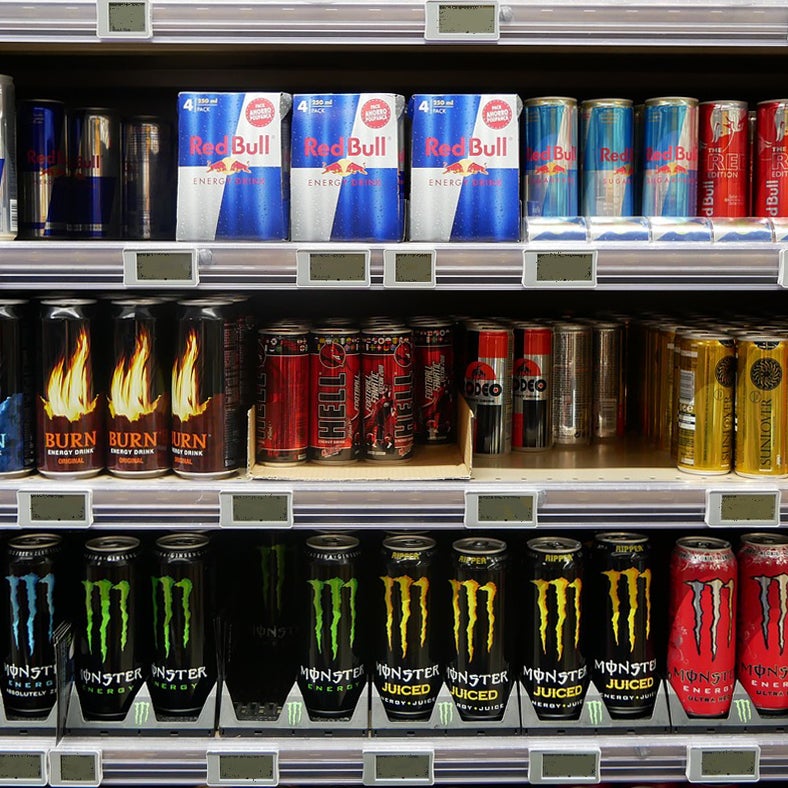
0:20Obviously, Red Bull does not literally give you wings, but some people seem to think it does because it is the most popular energy drink in the world. But soon, not everyone will be able to drink it or any of its rivals. Energy drinks will be banned for under-16s in England from next April. It's all to do with caffeine levels. If a drink has more than 150 milligrams of caffeine per liter, like Red Bull, Relentless, Monster, and Prime, then younger teenagers won't be able to buy them. I mean, Relentless and Monster do sound kind of scary, but a ban? I admit that I haven't had an energy drink since I was a student and vodka Red Bulls were on sale for a pound at the Leeds Student Union bar, but I drank plenty back then.
1:01So what's so wrong with energy drinks, other than the taste? You are not the only one with questions about energy drinks, Nikki. Hi, I'm Wasi. I'm calling from Indianapolis, Indiana, and I had some questions about energy drinks. Listener Wasi told us he noticed more and more of them appearing in stores every year. How did that happen? Was it advertising? Was there something else going on in society that made people look more towards energy drinks versus like coffees and teas and all that? Wasi first encountered these peculiar beverages in middle school when a friend who loved Monster tried to get him to join her.
1:37And I told her I was a little bit like, I don't think I want to try that. That seems scary. The green color is kind of weird. And she actually chased me down the hallways at the middle school trying to get me to drink it. Wasi obviously isn't in middle school anymore. But just recently, a 13-year-old I know was super excited about getting an energy drink can as part of a birthday gift. If this kid lived in England, they'd soon be banned from downing that present. So what's going on? What indeed. Because Wasi is right. There was no such thing as an energy drink when I was a kid. And now you walk into any convenience store or gas station, and there are entire refrigerators full of them.
2:13All different flavors and brands, and half of them with celebrity names on them, too. So they clearly have taken over the world. But how? We have that story this episode, plus the science of what you actually need to know before you take a sip. We, of course, are Gastropod, the podcast that looks at food through the lens of science and history. I'm Cynthia Graber. And I'm Nicola Twilley. This episode was supported in part by the Burr's Welcome Fund for our coverage of biomedical research and by the Alfred P. Sloan Foundation for the Public Understanding of Science, Technology, and Economics. Gastropod is part of the Vox Media Podcast Network.
2:49Hey everybody, it's Sue Bird. The WNBA season may officially be over, but there's still plenty of basketball to discuss. This week on Bird's Eye View, we're launching a special series dedicated to 30 years of the league. To kick things off, I've got WNBA OG and Hall of Famer Rebecca Lobo. She talks about what drew her to the WNBA, playing in the league's inaugural game, her dream starting five, and the rise of the W's first dynasty. Check out this week's Bird's Eye View on YouTube and wherever you get your podcasts. The people building AI believe it will upend the global balance of power. Are they right?
3:24I think people need to be aware of the risk of concentration of power if only one person or one company or even one executive gets to control this huge army of super intelligences. I'm John Feiner of The Long Game, a weekly national security podcast I co-host with my friend and colleague, Jake Sullivan. This week, we speak with Dorkesh Patel, The go-to interviewer for tech's most powerful people. The episode is out now. Search for and follow The Long Game wherever you get your podcasts. The story of energy drinks really starts with the story of Red Bull. And that tale begins with an Austrian guy named Dietrich Mateschitz.
4:02Mateschitz grew up in one of the poorest parts of Austria. He was a self-described bad student who took most of his 20s to get his undergraduate degree. But by his 40s, he was the sales manager for Blendax Toothpaste. This was a German toothpaste brand. Back in the 1980s, when Mataschitz was traveling the world selling toothpaste, he happened to take a business trip to Hong Kong. And one day in the bar of the Mandarin Oriental Hotel in Hong Kong, he joined a group of other sales managers and they took a copy of the Newsweek magazine. And in the Newsweek magazine, there was a ranking of the best taxpayers in Japan.
4:40Wolfgang Furweger is the author of the book The Red Bull Story. At the time, Japan was going through an economic boom. Sony and Panasonic dominated electronics. Toyota and Kawasaki were big for cars and motorbikes. But Dietrich Mateschitz, he noticed that the first place wasn't occupied by Toyota or Kawasaki, but by a company, Taisho Pharmaceuticals. And the product, main product was Lipovitan. It was an energy drink. This energy drink, Lipovitan, had caffeine in it, of course. and it had B vitamins because those were also supposed to be good for energy, but it also had something called taurine.
5:16This is an amino acid that our bodies can make on their own. There's a lot of it in bile, and it's present in a bunch of different organs and in muscles. It's also involved in energy metabolism in cells. It's called taurine after taurus, which is Latin for bull, because researchers originally isolated taurine from bull bile. During World War II, the Japanese experimented with giving taurine to fighter pilots to boost their performance. It didn't seem to do much. But the idea that taurine would give you a boost was still out there. That's what inspired the company Taisho Pharmaceuticals to create Lipovitan in the 1960s.
5:48And this drink really caught on. It was super popular for decades, especially as Japan got richer and businessmen there worried about staying alert and getting ahead. In the 1980s, Arnold Schwarzenegger, a.k.a. The Terminator, starred in the Lipovitan ads. He played a salaryman racing around the world, signing deals and asking Japanese businessmen if they could fight for 24 hours a day. We will post that video on our social. It's totally bananas.
6:20We have no idea if Matushitz enjoyed this incredibly memorable ad, but he was really intrigued by the very idea of energy drinks and what the profit margin must be on selling them, since the company was clearly making a lot of money to be paying so much in taxes. He'd never heard of them before, but soon he was tasting every energy drink he could. And one day he came to a company in Thailand and they had a product which was Krateng Daeng, in English Red Bull. Krateng Daeng was introduced in the 70s and unlike Lipovitan, it was a very blue-collar drink. It was a very cheap product. It was There are groups of buyers.
7:00They were track drivers, farmers.
7:07In fact, this ad for Kra Ting Dang has guys wearing hard hats, maybe they're construction workers. And then halfway through the ad, they're so powered up by the drink that they rip their shirts off.
7:21But the drink itself wasn't much to get excited about, according to Wolfgang. It's not very nice to look at the bottle, and there is no carbon dioxide inside. So it tastes very boring. Not the refreshing taste that we know from lemonade or soft drinks like Coke or Sprite or something else. But despite that, Matasit saw some potential in Crotting Dying. So he met with the owners, a father-son duo. And then he said, OK, let me take your product to Europe, and I will sell it there. and we make company together, you will owe 51%, I will owe 49%, and you give me your product, your name, the brand of the product, and I will try to sell it in Europe.
8:09And this was the beginning of Red Bull. Mataschitz knew that to catch on in Europe, he was going to have to give this blue-collar Thai drink a little bit of a glow-up. He added fizz, he tweaked the flavor to make it taste like an Austrian brand of gummy bears, and most importantly, he changed the packaging. He took it out of the bottle and put it in a tall, thin can. There was nothing like it. From the beginning, he tried to give Red Bull a very exclusive touch. It was a very unique look that the Red Bull can had. It looked quite high quality-like and it looked different from all other kinds of drink that you could buy at this time.
8:51But then Mataschitz ran into some issues at the time he was living and working in Germany. So he went to some officials and said, OK, I would like to sell a product that you don't know. It's an energy drink. And I said, OK, what the heck is an energy drink? You have to prove that it is no poison. It is no drugs. What are the ingredients of the energy drink? What is the outcome if you drink it? And so on. And this was a very long process. And in the middle of the process, Dietrich Mateschitz said, okay, fuck all the Germans. I go back to my small country, Austria, which is south of Germany. And then he started the Red Bull company here in Austria, not far away from the town of Salzburg.
9:34And it's still based there today. But although Austria allowed Red Bull to be sold, that didn't mean Austrians wanted to drink it. Almost nobody wanted to buy the drink. Like Dietrich Mataschitz by himself took a lot of cans in his car and gave it away in the whole town. There are people who I talked to. They told me, oh, I remember that crazy guy which brought us a drink and said, hey, I give you a few cans for free and then you can buy something for me. But that wasn't working. So Mataschitz came up with a new strategy. He decided to make the drink cool. He sent his employees out to party. The first people that worked for Dietrich Mataschitz, they went to each club and they asked, do you have Red Bull?
10:14And then they put some cans in the wallpaper baskets so that the people can see, oh, somebody has to drink a Red Bull. A lot of tricks. Gradually, these tricks paid off. Wolfgang was one of the people who encountered Red Bull out on the town. Some friends of mine, we were in a club and they had a lot of money. I had no money because I was a student and they had already a real job and they were making real money. and they were ordering a bottle of Gene Beam and four cans of Red Bull. And it was called cocaine for the poor. Side note, at the time, cans of Red Bull explicitly said not to mix it with alcohol.
10:58But that, of course, is exactly what was happening at the club, which is where Red Bull was doing its big marketing push. It was like a nudge-nudge, wink-wink thing. But those classy cans and maybe a somewhat less classy mixed drink people called cocaine for the poor, that all still wasn't enough to get Red Bull to go mainstream. Remember, Matyschitz basically needed to invent a new drink category in Europe. Nobody had any idea what an energy drink was or why they would drink it. He needed a catchy slogan. He hired his old college friend, Johann Kastner, and then proceeded to very nearly end their friendship by rejecting nearly 50 different suggestions.
11:35The legend is told that at two in the morning, Johan Kastner, he was in bed and he's right, okay, Red Bull is something that makes you feel good, that gives you good feeling when you're down, that gives you wings. Oh, and then he called at two in the morning and he called Dietrich Martaschitz and said, Verleit die Flügel, which means give you wings. And Martaschitz, okay, clear. And then the slogan was created.
12:11Red Bull verleit Flügel. By this point, Red Bull was starting to become super cool, but it wasn't legal everywhere. It wasn't legal in Germany, for instance, which was right next door and which was the biggest economy in Europe. And there were a lot of bootleggers who smuggled Red Bull over the border. We had no European Union at this time. Austria was not part of Western Europe like it is today. And Red Bull hired maybe or they inspired bootleggers to bring Red Bull to Germany, most of all to Munich. Munich is just one and a half hour away from Salzburg. and in almost every cool club in Munich, you could get some Red Bull.
12:56Being illegal just made Red Bull seem cooler, and people started to spread rumors that it contained secret ingredients like bull testicle extract or amphetamines. Neither of which was true, even the taurine was synthetic, but it all added to the allure. Once Red Bull did become legal in Germany in 1994, the demand was so huge the factories couldn't fill enough cans to keep up. Red Bull was popular throughout Europe by this point, but that wasn't enough for Matashitz. He wanted to conquer America, too, and Red Bull was introduced to the American market in 1997. One thing to point out before we cross the pond is that most of the people drinking Red Bull in the clubs of Europe were mixing it with alcohol.
13:37Wolfgang encountered it mixed with Jim Beam. In England, I remember it was sometimes mixed with champagne, or let's be real, sparkling wine, to create a drink we called the Shamble. In America, after Red Bull launched, the sales reps here first started to try to market to students on college campuses. I remember those Red Bull Volkswagen Beetles would just drive onto campus with two attractive people in the car who'd pop out and just start handing these cans out to desperate college kids who would drink anything, especially if it was free. This is Aaron Goldfarb. He's a spirits and drinks journalist and the author of the book Dusty Booze in Search of Vintage Spirits.
14:14I don't remember particularly liking them, and I don't remember many of my friends particularly liking them. Red Bull wasn't catching on super quickly on campuses, so the company's marketers went the tried and true route they headed into the club to try to sell it as a mixer. Specifically, they partnered with a hit bar in San Francisco called Butter. Butter is just like a kind of ironic dive bar that opened, I think, in 1999. Their earliest concept was let's serve kind of these giant kind of big gulp type drinks where sodas, the mixer, Dr. Pepper, Sprite. And Red Bull was a new product at the time, and Red Bull actually paid to be featured at the bar.
14:57Now, that would be illegal for a spirit to do that, but I don't think for a mixer to do that. So it's an interesting way to get into a bar. Like Aaron says, Butter specialized in mixing spirits with things like Sunny D and Squirt. And they gave the resulting cocktails ridiculous names like the White Trash Driver, the Tang Tini, and the Bitching Camaro. For Red Bull, they decided to mix it with vodka and they tossed around a bunch of ideas for what to call it. They had names like liquid cocaine they tried out. I think the heart attack special showing that even from the get go, they realized this was not good for the body.
15:35But they settled on Red Bull vodka RV. I think everyone has a different thing they call it. I've always called it a vodka Red Bull. Some people have always called it a Red Bull vodka. And just like in Europe, adding booze turned out to be the secret to Red Bull's success. I think it caught off quite quickly. It is a very, you know, if you've never had one before, it does jolt you, the mix of a ton of caffeine, a ton of vodka. The vodka Red Bull didn't just catch on quickly at butter. By the early 2000s, it was a hit across the U.S. To be fair, it didn't have a lot of competition. Well, you know, as I remember the time, it was still an era looking for like what to drink.
16:12New things were about to boom, like craft beer. Bourbon was about to become hot again. And cocktails were about to take off, especially in New York. And there was kind of this dead time for a few years where no one exactly knew what to drink. Vodka was still the hottest spirit around. Red Bull was new and exciting. And mixing Red Bull and all that caffeine into your alcohol just meant you'd stay alert and keep drinking instead of passing out. It came to represent like I can start drinking at 10 a.m. and make it till they kick me out of the bar at 4 a.m. and then possibly still find another place to drink.
16:45You know, it was liquid cocaine, as they called it. It was it was a legal way to amp yourself up for an extremely long night of drinking even more alcohol. Simple as that. For bars, the vodka Red Bull was a goldmine. Red Bull was way more expensive than soda and they could charge accordingly. Butter charged$8 for a vodka Red Bull at a time when a normal mixed drink in a regular bar costs more like$2 or$3. It's one of the most expensive non-alcoholic bar mixers of all time. And at some bars, it was a fireable offense to have a free Red Bull to treat yourself to one if you were a bartender. They'd much rather you take free vodka.
17:24Once again, like in Europe, Red Bull first caught on in the clubs, and then it spread to basically everyone. Turns out, it was the perfect drink for the moment. In the late 90s and about 2000, the Internet was the booming tool all over the world. And Red Bull was the drink for this generation of dot commerce. Red Bull also aligned itself with a bunch of sports like snowboarding, mountain biking and windsurfing. Partly, this was because the tobacco industry and the alcohol industry already monopolized all the normal sports like football and car racing. And partly it was because these new extreme sports had the right vibe.
18:03They were dangerous and cool and not old school at all. And a lot of the people that were in the dot-com companies, they feel themselves like we're something special. So we need a special drink and we need special sports. And it was the right drink for this society. Red Bull invented this booming energy drink market in Europe and America, but it wasn't going to have a monopoly forever. Of course, it soon inspired copycats. And some of those copycats, they were banned. What happened? That's coming up after the break. Everyone, it's time to wake up. Five more minutes. We've been sleeping long enough, hitting snooze on the fact that we're still stuck with the old way to phone plan.
18:47Is that a... Yes, it's old and cuckoo, just like that phone plan you have. Okay. I know, it makes no sense. so rise and shine it's time for a whole new way to phone plan T-Mix from T-Mobile where you pick what's in your plan like streaming, travel or gaming and then change those picks too because there's been a change in plans okay, we're awake and T-Mix sounds great good, because I'm all out of alarm sounds there's been a change in plans introducing T-Mix from T-Mobile pick what you want, change what you want included in your plan on America's best network. Number of picks varies by plan and lines on account.
19:29Account or pick changes may impact existing device and other promotions. Best mobile network in the U.S. based on analysis by Ukla of Speed Test Intelligence Data 1H2026. Visit T-Mobile.com slash picks. Support for this episode comes in part from Feeding America. The holidays feel a little different when we show up for one another, and for families facing hunger, your generosity could mean one less difficult choice. Across the Feeding America network, your donation fulfills the promise of connecting families to nourishing food and greater stability. When you give this holiday season, your help ensures more neighbors can gather around a meal.
20:02This Thanksgiving, give at feedingamerica.org slash holiday.
20:09Megan Rapinoe here. This week on Why Are You Like This? I am talking with the incredible Taylor Townsend. We get into how she became the confident person she is and what she wants her legacy to be. We also talk about the rise of black sporting superstars, and she tells me about her friendship with the one, the only Naomi Osaka. Plus, I'm also giving a shout out to the three women who ran the Chicago Marathon in under two hours and 15 minutes. It's absolutely crazy. And what that means for women's sports broadly. Check out the latest episode of Why Are You Like This wherever you get your podcasts and on YouTube.
20:50If you think about it for a second, Red Bull is kind of a weird product. If you go to the core, Red Bull in reality does nothing. If you are thirsty and you drink a Red Bull, you are thirsty still. Even though it's associated with all kinds of sports, it's not a sports drink that replaces fluids. In fact, the caffeine makes you pee and if you drink enough, that will indeed lead to dehydration. If you are very tired, you can drink one Red Bull, but you can also drink an espresso. So the drink basically does nothing. But it turns out the company doesn't really do very much either. They pay other companies to can the drink, to distribute the drink.
21:25They even pay a different company to make the actual drink itself. In reality, Red Bull has no production. Red Bull is a big marketing company, a big marketing player. Wolfgang told us that when a company registers to do business in Austria, it has to say what its purpose as a company is. And Red Bull's stated purpose is not to sell an energy drink. The purpose of Red Bull is to make marketing for the brand of Red Bull. And the brand of Red Bull is to earn money for Dietrich Mateschütz and Husson. As Wolfgang says, the company spends all their money on marketing and convincing people to buy an expensive drink that's pretty cheap to make.
22:06That's the purpose. That's what they spend their money on. And so they paid attention to who their fans were and what those fans liked. Red Bull started with selling the cans to young people. But young people are getting older. And if you're young, you're a very cool guy and do like something, things like snowboarding, mountain biking, helicopter skiing. And when you're a little bit older and then you're sitting on the couch and watching TV and what you get on TV is a sport like football, soccer in Formula One. So Red Bull bought soccer in Formula One teams. But as the drink went more mainstream, it lost a little of its cool factor.
22:49As it became kind of off-trend in the mid to late 2000s, it became seen as kind of like a Jersey Shore type drink, like the drink of the buffoon, if you will. But Red Bull itself is still super popular. As we've said, Matoschitz was really going for world domination right from the beginning. And since he had a hit with Red Bull, he obviously had to try his hand at other drinks as well. In the beginning, I think in 1990, Dietrich Matoschitz launched the second energy drink, Red Rooster. This was a maple syrup and lemonade-based concoction, like the Master Cleanse without the cayenne. In case you skipped the early 21st century, the Master Cleanse was a massive, extremely weird weight loss fad that Beyoncé famously promoted on the Oprah show.
23:34Red Rooster was not that popular. It was a disaster, a flop, and he took it from the market, I think, after two years. Then he founded a brand, Carpe Diem, which means enjoy your day. This was a sparkling tea that was meant to capitalize on the whole wellness trend. And it was also a big flop. And finally, there was a super cringe coffee brand called Afro Coffee with a mascot called Afro Dude. Astonishingly, also not a big hit. But those losses really don't matter because Red Bull stuck. The company did eventually release other versions of Red Bull, sugar-free, different flavors, whatever. And altogether, Red Bull made Mataschitz and his family and those original Thai partners a lot of money.
24:16Dietrich Mataschitz became richer and richer every year, and now his son is one of the richest persons in Europe. Which is the kind of success that tends to inspire others. Like we said, Red Bull could not have a monopoly on the energy drink market it invented forever. There were a bunch of contenders, of which Monster was probably the most successful. Monster launched in 2002. They're huge today. And they were marketed as a much better value than Red Bull for people who weren't quite as fancy. They put their energy drinks in larger cans. And they gave it a very aggressive look. And they made it cheaper.
24:53Monster got really big really quick. They eventually put out 40 different flavors, so there would be a whole case of different Monster energy drinks at the store, which creates what marketers call the billboard effect. Monster was later joined by Celsius and Relentless and Alani Nu, which had a quote-unquote wellness twist. And then all the celebrity influencer types like Logan Paul and Kim Kardashian piled on with energy drinks of their own. Did you know that people used to crash in the middle of the day? Wild. I thought someone should do something about it. Last year, we introduced Prime Hydration.
25:30This year, we're introducing a brand new product, Prime Energy. Refresh your energy with zero sugar, essential vitamins, and proven ingredients. Celsius. Live Fit. Energy drinks are now an$85 billion market in the U.S. based on the sales. Apparently, the average American is drinking about eight gallons worth per year, which is bonkers, to be honest. Among all of these competitors trying to get in on the energy drink gold rush, there were some that figured their unique selling point was going to be taking the work out of mixing the energy drink with the booze and just putting both in the can together, ready to drink.
26:12I remember there was a caffeinated kind of alcoholic drink called Sparks that was really disgusting that I may have drank a few in my life. And that was briefly popular for a while. In 2008, along came a new boozy energy drink in a can that blew Sparks out of the water. It was called Four Loko. A 23.5 ounce can of Four Loko is the equivalent of four beers, a Red Bull, and a shot of espresso, all for less than$3. Well, Four Loko, of course, was a massive, massive success and probably spelled the end of mixing caffeine and alcohol and putting it in the kinds of flavors that would appeal to young people with fake IDs that could possibly die from drinking too much of those.
27:02It looks like an energy drink. It even kind of tastes like one. Cops and kids say just one can of Four Loko can make you do some crazy things. So far, four kids in White Plains have been hospitalized with alcohol poisoning, and Police Commissioner David Chong says the numbers could be much higher. Certainly we think that there's a lot more. They make fun of it, they call it Coke in a can, and again, it's a dangerous game because what they're doing is they're chugging it. In the end, the deaths of four teenagers were linked to Four Loko, as well as a bunch of emergency room visits, and in 2010, the U.S.
27:39FDA warned the company that it needed to reformulate or face a ban. We have determined that these products are not in compliance with the law, that the addition of the caffeine does not meet our legal standards for safety. The federal government is following the lead of five states that have already banned the drinks. Washington, Michigan, Oklahoma, Utah and New York. Four Loko didn't shut down. They just ditched the caffeine and became a canned sweet alcoholic drink. Having a lot of caffeine with your alcohol is kind of an obvious recipe for disaster. Alcohol is a depressant, so if you drink enough, you just pass out.
28:13If you add a stimulant like caffeine into the mix, you don't. The problem with that, though, is when you drink more energy drinks, really all you're doing is allowing yourself to stay up longer and drink more alcohol. And then you're just awake and drunk and don't feel like you're as drunk as you are. Karen Pasch studies health behavior and health education at the University of Texas, Austin. And so that can lead to a lot of problems with, you know, alcohol, poisoning and things like that if you're drinking for a much longer time. Also, with all that caffeine in your system, as Karen says, you don't feel like you're as drunk as you are and you're likely to do all kinds of stupid things like driving.
28:51So this is a clear danger of energy drinks. When you use them as a mixer, all the bad things that can happen when you drink alcohol become more likely to happen. But just on their own? Sure, some of them are full of sugar, but they're not going to kill you, right? Well, honestly, officials in a bunch of countries have been concerned about energy drinks, even without the added alcohol, basically from the beginning. For example, in France, Red Bull was a very long time not approved because of the ingredients of taurine. In Switzerland, some politicians tried to forbid Red Bull. For more than a decade, France made Red Bull take the taurine out because it said the health effects of taurine weren't known.
29:32After Red Bull took the case to court, the French backed down because they couldn't prove definite harm. Norway said it could only be sold in pharmacies like a drug, but they also eventually relented and Red Bull is for sale everywhere in Scandinavia. This seems sort of like an overreaction or at least an abundance of caution. Taurine is just an amino acid that our bodies make. And as for caffeine, Americans drink a ton of caffeine in the form of tea and coffee every day. And I don't see anyone banning that. But it turns out that energy drinks are not the same as just drinking a caffeinated beverage.
30:04I mean, that's the literal premise, that they have something special to offer over and above coffee or tea. And that special thing they have to offer? It's not actually so great. The health effects of energy drinks coming up after the break. What's up, everybody? Steelers captain Cam Hayward here. One of the most respected coaches in NFL history, Super Bowl champion, and the man who led the Pittsburgh Steelers to 19 seasons, and my former head coach, the legendary Mike Tomlin, is joining me on Not Just Football. We're talking unforgettable moments, legendary players, behind-the-scenes stories, and his decision to step away from Pittsburgh.
30:45Don't miss this two-part conversation. Part one drops Tuesday, November 10th, and part two Thursday, November 12th. Listen wherever you get your podcasts or watch on YouTube and Spotify.
31:00I'm Bridget Reed. And I'm James Walsh. The Alexander brothers moved in a world of multimillion-dollar homes, exclusive parties, and powerful people. Behind that glamorous lifestyle were years of rumors and allegations that they were committing sexual assault. In our reporting for New York Magazine, we investigated what people knew and heard from women who came forward to tell their stories. Now, that reporting is the basis for a new three-part docuseries, The Wolves of Real Estate, The Alexander Brothers. You'll see exactly how privilege protected them and how they were finally stopped. Stream all three episodes now, only on Peacock.
31:46The big promise of an energy drink is, obviously, that it will give you energy. Energy you can use to focus on your work or your studies, energy you can use to play sports, and energy you can use to have fun. Karen's done some surveys of people who drink energy drinks, and that's exactly what they say they're hoping to get. We've seen it linked to wanting to stay up to do homework or do better on tests or study, that sort of thing. We've seen it, especially in college, linked to staying up to party longer. Karen says the marketing of these drinks is also specifically targeted at young people. Monster started as more of a exports, sports kind of beverage.
32:26Exports, extreme sports, and also e-sports gaming. Monster got professional gamers to drink Monster so they could hook all the people watching them. Most of those people were kids, and that's who the flavors of energy drinks target, too. Caffeine is the primary ingredient in all of these drinks. We've made a whole episode about caffeine, which you should definitely listen to. We go deep into the fascinating science of how it functions as a stimulant. But when it comes to energy drinks, does the specific neurochemical way caffeine blocks fatigue in your brain actually help you, say, be a better athlete?
33:00You know, there have been some studies that have been done showing that particularly for some endurance activities that a little bit of caffeine in the system can improve performance. John Higgins is a sports cardiologist at the University of Texas Medical School. He says that caffeine seems to help improve endurance if you're going to be active for longer than an hour. In terms of other kinds of athletic performance, the results are mixed. There are some studies showing that, that they get a bit of an improvement with some caffeine. Other studies have not shown that. So it's not a foregone conclusion.
33:34Okay, but what about stuff like focus and studying? Does caffeine help there? Karen says that's why a lot of kids are consuming energy drinks. It's really more about, I need to cram for this test or this paper or this thing that's due tomorrow, so I need to stay up and I need to stay awake. and when you work on a project the night before it's due probably that's not going to have the best impact on academics and a couple of our studies have looked at that and it does seem like kids and young adults who use energy drinks have lowered gpas so it's likely the kids who are maybe struggling in school or waiting to the last minute to do those projects that are then turning to energy drinks to be able to stay up to do those projects which means their grades may not be at the top to start.
34:20So it's maybe not the energy drinks that are having a negative impact, but more the procrastination, which kids, I feel you. But so is there any evidence energy drinks can help with focus? The positive studies tend to be the industry sponsored studies. So I think they kind of set them up for success. You know, for example, one study I read, they didn't let people sleep for two days, and then they had them perform a couple of driving tests in a parking lot. And they gave one group just a, you know, a flavored water. And then the other group, they gave an energy drink with caffeine. And, you know, the caffeine group had less mistakes.
34:59I'm not surprised by that. But, you know, other studies have shown that quite the opposite. So it seems like drinking energy drinks to help with focus, especially for school, isn't a clear win. And it's definitely not a focus solution for kid kids because they're really not supposed to be drinking any caffeine in the first place. Yes. So under age 12, the recommendation is no caffeine. The American Society of Pediatrics recommends pretty much against caffeine, especially in tweens or under. And then for teens, they tend to have a limit of about 100 milligrams per day. To put 100 milligrams into context, that's the amount of caffeine you'll get in eight fluid ounces of brewed coffee, which is two ounces smaller than a tall coffee, the smallest size on offer at an American Starbucks.
35:48Again, it's going to depend if you're having espresso, if you're having, you know, drip coffee, those sorts of things, and different kinds of drip coffee have different amounts of caffeine. But I believe a regular soda is maybe 40 milligrams. Again, depending on the soda, Mountain Dew will have more. Green tea has about 30 milligrams of caffeine per cup. Matcha is closer to black tea that has about 50 milligrams of caffeine. And a can of Monster is about 160 milligrams of caffeine. Alani New and Celsius and Prime all have 200 milligrams of caffeine. That's twice as much caffeine in one drink as a teen should be drinking at all.
36:19And the amount on the label is not necessarily all the caffeine that's in the drink. So sometimes the ingredients that have naturally occurring caffeine, that caffeine may or may not be disclosed on the packaging. Like a lot of energy drinks contain extracts of a seed of a Brazilian plant called Guaraná. It's a popular soft drink in Brazil, and it also has caffeine. That adds to the total caffeine in the drink. Which, if it's a Monster or a Lani Nu or whatever, that already has more than the official recommendation for teens. And then if you add on all the other things they may be consuming in the day, like soda, you know, other beverages that have caffeine, you can think about how quickly that total caffeine is going to rise in a day.
37:01The recommendation for how much caffeine kids can safely consume is quite low, and that's because kids are usually pretty sensitive to caffeine. They're usually smaller and lighter, and they haven't had much caffeine before. Caffeine's been demonstrated to screw with kids' sleep, and they also need more sleep than adults do. They can get into a vicious cycle where they don't sleep well because they've been drinking the energy drinks, and, you know, that'll happen. And then they, first thing in the morning, you know, they get an energy drink to get the day going. And that lack of sleep doesn't help with schoolwork and academic focus, But it's also perhaps what's going on with some of the negative emotional effects that are linked to caffeine consumption in kids.
37:39Kids who consume caffeine are more likely to suffer from anxiety and depression. Karen says that energy drinks in particular have also been linked to risky behavior in kids. It's not necessarily that drinking Monster or Red Bull causes that risky behavior, but they do seem to go hand in hand. We know, for example, it puts kids at risk for increased other substance use, alcohol, nicotine, that sort of thing. And so it's, to me, energy drinks can be a marker for engagement in riskier behaviors. So far, so not great, but also not exactly the end of the world. But energy drinks in particular have been linked to much more disastrous outcomes.
38:18The new report out tonight contains a real surprise. In just four years, the number of people who go to the emergency room after drinking energy drinks has doubled from 10 ,000 to more than 20 ,000 people in the ER. Monster Energy, another caffeinated drink, has been linked to five deaths, according to FDA investigations, including Hagerstown's Anise Fournier's last December. A lot of new energy drinks have swept social media, but a new lawsuit targeting distributor Glazer's Beer and Beverage alleges its high amount of caffeine played a role in a 17-year-old's fatal cardiac incident. We've established that caffeine isn't great for kids, but John says these emergency room visits and deaths from energy drinks aren't just a result of caffeine.
39:02Studies now that have actually compared energy drinks directly to caffeine from coffee have shown very different outcomes. So there's definitely something about the energy drink themselves, the combination of substances. So it's not just about the caffeine. So what is going on? John decided to look into this himself a couple of decades ago. He was seeing kids come into the emergency room with all sorts of heart problems. That's his specialty. And the thing that the kids had in common was they were all drinking energy drinks. So he launched a study. It involved healthy young medical students around 24 years of age.
39:40And we took about 50 of them and we had them consume an energy drink. before they did the energy drink, we measured their heart rate, blood pressure, and importantly, their vascular function on their artery of their arm. You can use that measurement to get a sense of how the arteries in your heart are doing. Scientists have proven that if the arteries in your arm are malfunctioning, then your arteries everywhere else are also struggling. And then we had them consume the energy drink, and then we re-measured about 90 minutes later. And we showed in these young, healthy students, no medical conditions, taking no medicines, nothing, that they had a significant reduction.
40:20In other words, their arteries were not able to open up properly 90 minutes after the energy drink. Other studies have looked specifically at blood flow to the brain, and they found that energy drinks reduce that blood flow, which is bad. These studies led to certain groups like the U.S. Navy. They do not allow their pilots to consume an energy drink 24 hours prior to flying their airplanes because of the potential effects of reduced blood flow to the brain. John says the negative impact of energy drinks on blood flow is pretty well documented at this point. They also raise your blood pressure.
40:57Studies have shown that even after consuming one energy drink, your blood pressure up to one week later will still have that mild elevation. Other studies have looked into this blood flow issue, and they've shown that somehow energy drinks are causing platelets. These are the tiny little things in your blood that help your blood clot. Well, energy drinks make them stickier, and that makes your blood a little sluggier. So there have been cases in the literature, and we've seen a couple of our emergency room of people consuming these and getting a blood clot in the artery of the heart and having a heart attack.
41:32All of these blood flow issues just make your heart work harder. And then the caffeine is also a stimulant that makes the heart beat faster. So that's a bad combination. And that can cause these fast, irregular heart rhythms, which could be dangerous. This all sounds really alarming, but if everyone was getting harmed by energy drinks, wouldn't we all know? After all, everyone's drinking them, even kids. I've done some work in middle schools and we've seen at least, you know, 15, 20 percent of kids have had an energy drink. So I think it starts relatively young. By the time you get to 17 and 18 year olds, that number is 23 percent.
42:08So that, to me, is a pretty high number. When you have one-fifth of 12th graders, almost a quarter, consuming an energy drink daily. And not all of these kids are ending up in the emergency room, obviously. But some are. John says that there are some kids who have diseases that they don't even know about, cardiac conditions that just haven't been a problem yet in their lives. Some of these syndromes that many times they're born with but they're not aware of, If you take that person and then you expose them to a stimulant and or then you put exercise on top of that, that could really exacerbate that condition and lead to some very severe side effects.
42:49And by severe, John means potentially fatal. For Anise Fournier, the 14-year-old from Maryland whose family sued Monster, this seems to have been the situation. They say she died after drinking two 24-ounce cans of it. Her cause of death? Cardiac arrhythmia. The coroner says Fournier did have a mild underlying heart condition. For other kids, the problem might be an interaction with medication. You know, if they're taking other stimulants like Adderall, Ritalin, pseudoephtarin, decongestants, nicotine, some of the asthma medications. A coroner's investigation unveiled what caused the sudden death of a 15-year-old last year during a school ski trip.
43:30It is likely the combination of a single can of Red Bull and an ADHD medication he was taking. These fatal cases, where a kid with an underlying condition or a kid on a particular medication drinks an energy drink and dies, they are thankfully still very rare. But the data show that every year, many thousands of kids under 18 visit the emergency room after consuming energy drinks. And kids going to the emergency room because they're collapsing after drinking energy drinks or their hearts are racing, that's not something we'd all necessarily hear about, but it is happening. Lots of those kids have nothing wrong with them to start with, but the energy drink has still managed to send them to the ER.
44:09John says that when our bodies are under stress or when we're exercising, in general, we're hyped up and our arteries open up and channel blood to important organs like our heart, brain, and muscles. And what we showed in our study, and others have shown the same, is that that ability is restricted significantly if you are doing that, soon after consuming an energy drink. So what does that mean? Well, worst case scenario, if they're really exerting themselves a lot, then this could lead to a situation where what the heart needs is more than what can be supplied, and that person can run into problems with things like chest pain, collapse, etc.
44:52Kids are more vulnerable, but John says the same is true for adults. We know that energy drinks will affect how well our arteries can open and close. It will thicken our blood. It will raise our blood pressure. And we know those things are not great. So yeah, energy drinks probably won't kill you, at least in the short term. But someone doing daily energy drinks, based on what we know, this is not good for cardiovascular health. For adults, they can make that choice. For kids, though, John and Karen say we have to do a better job protecting them from something that could harm them. They both support bans for certain age groups.
45:25Well, I think we should do what they did in England and Canada, in Quebec, that children right now, I would recommend 18, but if we can't do 18, 16 or under should not be able to buy or consume energy drinks. There should be a ban on them and it should have teeth in it as well so that kids don't go and get their brother to buy energy drinks or a friend like the Canadian law has where those people can be prosecuted. So I think we need that for a start. Protect the most vulnerable. That's number one. Alongside that, Karen and John say that energy drink marketing, which remember is basically the whole game, that also needs to be regulated, especially when it comes to marketing that targets kids.
46:09For example, John is one of a group of doctors and health professionals campaigning to get energy drink marketing out of college sports because so many kids watch those games. For me, it's also about creating norms, right? And so when we see kids, for instance, are in the retail environment or, you know, social media or wherever it might be, the more they are exposed to seeing the products, the messages, it just becomes more and more normative that this is what everyone does. And so I think if we can reduce that exposure, particularly for the younger ages, I think that would be really helpful.
46:46John also wants to see warning labels on energy drinks pointing out that they can be harmful. And then finally, I think we need to reclassify them as drugs and have proper studies done with safety and efficacy data. One of the things John wants to figure out is exactly which substances or what combinations of them are to blame for energy drinks having such different effects from regular caffeinated tea and coffee. You know, unfortunately, we don't know because there hasn't been a lot of really good studies to tease out. And a lot of the studies, they have, you know, the energy drink in total. They don't have the individual components.
47:21Basically, John and Karen both think we have to kind of hit pause on this whole energy drink craze. After all, like Wolfgang said, no one actually needs an energy drink. If you can safely consume caffeine, have a coffee or tea. And if you're a kid and you need an energy boost, Karen has some shockingly sensible advice. Like I always tell people, just drink water. And actually, that will help a lot. you know, to be hydrated. It's not going to necessarily give you the caffeine boost, but it's going to make you feel better if you're in that slump around three o 'clock and you need something. Water will actually make you feel a lot better.
47:57Thanks this episode to Wolfgang Furweger, Erin Goldfarb, Karen Pasch, and John Higgins. We have links to their books and their research online at gastropod.com. We have more energy drink controversy and excitement for our special supporters. You can get that newsletter crammed with extras by signing up to help us keep the show going at gastropod.com support. And a big thanks to all of you who do give to support the show. We couldn't make it without you. Thanks, as always, to our fantastic producer, Claudia Geib. We'll be back in a couple of weeks. Till then.
Looking for an afternoon pick-me-up, peak performance on the athletic field, or fuel for an all-nighter—whether you're hitting the books or the dance floor? Forget coffee or tea. These days, the kids (and a lot of grown-ups, too) are downing sweet, fizzy drinks that promise that most elusive and alluring of superpowers: energy. The popularity of these buzzy beverages has made the energy drink market worth $85 billion in the US alone; Red Bull and Monster are second only to Coke and Pepsi in global sales. But, just thirty years ago, the idea of voluntarily consuming a gummy bear-flavored, over-priced soda in order to get "wings" was a novel concept and, frankly, pretty unappealing. This episode, we've got the little-known story of how marketing tricks, extreme sports, a little bit of smuggling and a whole lot of vodka transformed a working-class drink from Thailand into the hottest mixer in nightclubs across Europe, and how its arrival in the US spawned the copycats that are now filling convenience store cases. With consumption rising among teens, and bans on the books in England and Quebec, we're also exploring the surprising science of how energy drinks affect your heart, brain, and blood pressure—and why something that seems harmless can sometimes be deadly. Listen in now to find out what you're risking in search of that extra boost.
Learn more about your ad choices. Visit podcastchoices.com/adchoices