Ask ChatGPT
 Gastropod
6 Oct 2026 · 52m · 17 chapters
Dietary fiber “maxing”—why most people eat too little, what fiber does for digestion, heart health, type 2 diabetes risk, and bowel cancer, and how different fiber types (soluble/insoluble, prebiotic/fermentable, viscous, resistant starch) work via gut microbes. Episode also revisits John Harvey Kellogg’s historical “fiber obsession” and Dennis Burkitt’s “Mr. Fiber” research.
Emily Leeming, nutrition and gut microbiome researcher at King’s College London; author of Fiber Power. John Cummings, emeritus gastroenterology professor at the University of Dundee and pioneer in fiber research. Justin Sonnenberg, Stanford professor of microbiology and immunology and gut-microbiome researcher. Erica Sonnenberg, Stanford scientist working with Justin. Howard Markell, retired physician/professor and author of The Kelloggs.
Fiber feeds gut microbes; microbes produce short-chain fatty acids (e.g., butyrate) that support mucus, immune regulation, and GLP-1; viscous fiber binds bile, lowering circulating cholesterol. Most Westerners get far less fiber than targets (AHA: ~95% below). Small increases (e.g., +7g/day) can meaningfully reduce disease risk.
“Four pounds of spinach/day” and “how many prunes” to hit targets; Kellogg’s Battle Creek sanitarium and “gorilla bowel movements” idea; Burkitt’s stool/x-ray studies using plastic pellets; practical tips like beans, whole grains, nuts/seeds, unpeeled produce, smoothies over juice, and cooled/reheated starches for resistant starch.
Written by AI. May contain mistakes.
Exploration of dietary fiber recommendations and concerns.
“Sloan Foundation for the Public Understanding of Science, Technology and Economics.”
Discussion on John Harvey Kellogg's impact on dietary fiber and health.
“It's just not necessarily been in the public awareness as anything that's necessarily worth talking about.”
Explore the controversial and innovative ideas of Dr. Kellogg regarding diet and health.
“Movie stars, he brought them in and gave them free room and board.”
Explore the controversial and innovative ideas of Dr. Kellogg regarding diet and health.
“And you can get it for nothing up front.”
Delve into the research and historical context surrounding fiber's health benefits.
“fiber was still largely ignored by the medical establishment all the way up into the 1950s.”
Learn why gut microbiomes are essential to our health and the role of fiber.
“What's been really phenomenal over the past 10 to 15 years is that there's been this awakening that this gut microbial community is essential for our health.”
Delve into the different types of fiber and their health benefits.
“Typically, when we're talking about fiber, we mean the roughage in plants.”
Discover how fiber impacts heart health and diabetes risk.
“Let's start with the heart health benefits, because those are the reason the government tells us to eat a certain amount of fiber.”
Explore how gut microbes and fiber interact to influence health.
“First, there's the physical way, and then there's what the microbes are doing.”
Learn about the health repercussions of insufficient fiber consumption.
“If there isn't fiber and microbes eat the mucus lining, then that bad stuff in our waste can more easily get in contact with our bowel tissues.”
Learn about the critical role fiber plays in reducing health risks and inflammation.
“The AHA says most Americans get just half that.”
Discover practical ways to incorporate more fiber into your diet.
“So, yes, fruits and vegetables are wonderful, but beans, whole grains and nuts and seeds do tend to contain about three to four times more fiber than fruits and vegetables.”
Find out how cooking methods can enhance fiber content in your meals.
“No sobbed stories about I don't like that sort of bread.”
Understand the common digestive reactions to increased fiber and how to manage them.
“That said, Emily and Justin acknowledge that excessive farting and even gastric discomfort can be the result if you ramp up fiber too quickly.”
Explore fiber intake recommendations and insights from historical diets.
“Do we need a major overhaul and to get everyone up to 25 to 30 grams a day?”
Learn about the relationship between fiber intake and gut microbial health.
“And I think there really is no evidence that eating too much fiber is unhealthy.”
Discover the overall health benefits of consuming fiber-rich foods.
“And the great news is that if you do make these changes, they come with all sorts of extra benefits on top of everything we've been talking about this episode.”

Get the gist, explore an idea or ask about something said.
 Claude
On Gastropod, what are the key points of this episode?
Searching your listeningAutomatic transcript. May contain errors.
0:24Thank you. of protein maxing, you've seen all the protein-pumped Doritos and Pop-Tarts and ice cream on the shelves in the supermarkets. Well, there's a new trend in town, and it's, you guessed it, fiber maxing. Of course, as Gastropod listeners, you all are well ahead of the curve, and you've been writing to us about fiber for a hot minute already. Hey, this is Jay, calling in from La Caneta, California, and I had some questions about dietary fibers. Jay's son was having, well, some challenges in the bathroom, and so they were trying to figure out whether they were all getting enough fiber in their diet.
1:00At the time, Jay's son's favorite vegetable was spinach. And before they asked gastropod, they turned to Alexa. And we asked how many grams we would recommend the dietary fiber intake as per day, but also asked how much spinach we would need to eat per day to get the required recommended amounts. And it turned out to be something ridiculous, like four pounds of spinach per day. Jay and his son were alarmed. Even a spinach lover doesn't want to eat four pounds of spinach a day. This is a common response from folks. Our listener Ranjit started looking into what he would have to eat to hit U.S. recommended daily amounts for fiber, and he quickly concluded that either the fiber RDA was absurdly high, or what he thought were high-fiber foods were absurdly low in fiber.
1:46He was shocked and a little traumatized once he figured out how many prunes he'd have to eat to hit the target. So what's going on? Are we all eating disastrously low amounts of fiber today? Do we really need as much fiber as the recommended daily allowance in the U.S. claims? And if so, what would we eat to get there? What is fiber doing for us anyway? How important is it to get enough? There was also questions that we came up with about the soluble fiber versus insoluble fiber, like what difference does it make for us? We're solving all those mysteries this episode. Plus, we have the wild story of how the father of cornflakes was obsessed with gorilla bowel movements and what that meant for our national diet.
2:25A quick note, that cornflake dad, a.k.a. John Harvey Kellogg, he had some strange ideas about fiber and sex, and that means we will be mentioning sex this episode. If you listen with kids, you might want to check the episode out yourself first. This episode was supported in part by the Burr's Welcome Fund for our coverage of biomedical research, as well as the Alfred P. Sloan Foundation for the Public Understanding of Science, Technology and Economics. Gastropod is part of the Vox Media Podcast Network.
2:56Support for this episode comes in part from Ring. Whatever shows up around your home this holiday season, with Ring, you're protected. Ring makes it easy to keep an eye on your home inside and out. Battery doorbell 2K Plus features retinal 2K clarity and up to six times enhanced zoom so you can take a closer look without losing detail. Indoors, the compact indoor cam plugs in almost anywhere, making it simple to check in on your home and pets while you're away. And Outdoor Cam Plus lets you keep an eye on your yard and other outdoor spaces no matter where you are. With Ring, you're protected for the holidays.
3:27Shop cameras, doorbells, and more at Ring.com. Your heart can tell you a lot about your health. Apple Watch Series 12 measures your heart rate every five seconds with the most accurate heart rate sensing in a wearable. So your vitals app, now with heart rate variability, can tell you when something is off. And your readiness score can let you know when to rest and when to push. Hear the story in every heartbeat with Apple Watch Series 12. The features described are for wellness purposes only and not for medical use. iPhone 11 or later required. Based on Apple conducted study of heart rate accuracy, August 2026.
4:00Visit apple.com slash apple watch series 12. We've actually known about fiber for a really long time. It's just not necessarily been in the public awareness as anything that's necessarily worth talking about. Emily Leeming is a researcher in nutrition and the gut microbiome at King's College London. She's also the author of a new book, Fiber Power. And I think part of the reason for that is that fiber's been just seen as something that helps you do a nice, smooth poo. As far back as the ancient Greeks, people connected their diets to their poops. Greek physicians wrote that whole grains were important to prevent constipation, which they weren't a fan of.
4:35I mean, really, who is? But no one fully figured out what it was about certain foods that meant that eating them kept things moving in the bowel department until the 1800s. Well, we have to thank the animal nutritionists for giving us an interest in dietary fiber, because the animal nutrition world knew very much in the 19th century that the amount of fiber in an animal food, particularly those for ruminants, had a major effect on digestion. John Cummings is an emeritus professor of gastroenterology at the University of Dundee and a pioneer in fiber research. And he says that agriculture researchers weren't fans of fiber because they could tell that it came out the other end and wasn't digested and they wanted to make sure every bite of food was transformed into meat or dairy.
5:22And they developed, I mean, the first methods for measuring dietary fiber were in around 1810, something like that. And they only measured it because it told them how bad the feed was. The 1800s were a difficult time for fiber in general. First, the animal researchers measured it and labeled it as undesirable. and then later that century, John Harvey Kellogg came along. I think he might be partly to blame for the fact that fibre has such a bad reputation. So Kellogg had a few strong views and some of his views was around having like really plain, high fibre and quite kind of stodgy food as being a way of keeping any kind of sexual desire at bay.
6:11We're going to get back to that issue of sexual desire. But John Harvey Kellogg was kind of the king of fiber back in the day. To put Kellogg into context, you have to understand just what was going on in the guts of Americans in the mid to late 1800s. They had constipation. They had upset stomachs. They had all sorts of things that what Walt Whitman called the great American stomachache. And, you know, depression and other issues were as common then, if not diagnosed as they are now. And so everyone blamed everything on their gut. Howard Markell is a retired professor and physician and also the author of The Kelloggs, The Battling Brothers of Battle Creek.
6:51He told us that doctors at the time were pretty helpless in the face of this great national blockage. There really wasn't much medical science could do to help Americans with their bowel problems in the 1800s. They had, you know, old-fashioned laxatives like Senna, which is, I remember when I was introduced to that as a third-year medical school, the entrance said this stuff could move a mule. It's really toxic to the gut. So they did stuff like that, Epsom salts, Calamel, which is a mercurial, which will actually turn your stools green. And a lot of people strained its stool and developed fissures and hemorrhoids and tags and stuff like that too.
7:30So it really was a problem. John Harvey Kellogg experienced all this firsthand. When he was a kid, he contracted tuberculosis and he was pretty sickly. But it was really his bowels that knocked him out. He had bloody poop and hemorrhoids. He also had a lot of GI issues, including rectal fissures, which are little tears in the rectal area, which hurt like beyond anything you've ever had. They're very painful. And he ate, like many people then, bad food. Fried food. Grease from last night's dinner saved to cook the next morning's eggs. Candy. He was a real sugar guy back as a little kid. He loved candy.
8:12All of this meant John Harvey was kind of the runt of the Kellogg litter. His father wasn't confident he was even going to make it to adulthood. His father and his mother both played a major role in shaping Kellogg's future, in part because they both got caught up in the 19th century movement called Adventism. Its leaders and followers believed in the literal second coming, the advent of Jesus, like any day now. One of the most biggest proponents was a guy named Miller, who actually made the mistake of saying it'll happen on October 5th, you know, 1820. and he was wrong and he lost his flock. Another Adventist leader called Ellen White was a little smarter.
8:46She also proclaimed the imminent return of Jesus Christ, but she didn't put a precise date on it. The Kelloggs joined that flock and moved to Michigan, which was, you know, frontier. Ellen White was one of the founders of this group the Kelloggs joined. It's now called the Seventh-day Adventists. Seventh-day because they celebrate the Sabbath on the same day as we Jews do. On Saturday, the seventh day of the week, counting from Sunday. But a bunch of Ellen White's beliefs had to do with health, with food. Certain foods were considered to be excitatory in the Seventh-day Adventist health book. Meat, flesh, as they called it, was one of them.
9:24Spicy condiments were another, because you're eating bland food, so you'd slather with mustard or relish, whatever. Other spicy foods were considered to be excitatory. And some of these excitatory foods, particularly Ellen White said, but Kellogg would pair it, could make young people a little bit more frisky than they needed to be, put it politely. And here we are back at sex. More on that shortly. But the point is, Ellen White believed that the body was a temple, that people should eat a largely vegetarian diet, and that stimulants like tobacco, coffee and tea were all bad. And John Harvey Kellogg was this precocious, bright little guy who spent all of his evenings at the white family, the Pope S of the church.
10:09Ellen recruited him to work for their in-house church magazines as a typesetter. And then from then he started writing their health reformer magazine. And from there they sent him off to medical school and they realized he needed a good education. Along with their health-focused magazine, the church also ran a health clinic in Battle Creek, Michigan. It was called the Western Health Reform Institute. While Ellen had all sorts of ideas about how to make her flock healthy, it didn't translate into a particularly lovely experience at the institute. The rooms were dark and cold and moldy. The patients there couldn't play board games.
10:43Who knows, maybe that would have been too excitatory. But the worst was the mushy, bland, disgusting food. This all helps explain why the Reform Institute was going bankrupt. In an attempt to save this rather sad institution, once Kellogg had graduated medical school, Ellen and the church elders invited him to take it over and run it. Starting in 1876, he utterly transformed it. He spent a large amount of the church's money rebuilding it from scratch into a palace of health. It was the tallest building between Chicago and Detroit. It had state-of-the-art laboratories and luxurious hydrotherapy rooms, a dedicated kitchen garden, and a thousand-seat auditorium.
11:24Lectures, proper food in the dining hall exercise massage if you needed medical treatment they had that and research it was a remarkable place and it became the sanitarium the battle creek sanitarium and he was the medical director and he kept making it bigger and better and battle creek was the number one train stop on the michigan central because all these um invalids if you will people with crippled stomachs or constipation or what have you. They all came to Battle Creek to be cured or treated by Dr. John Harvey Kellogg. Kellogg was super charismatic and a bit of a showman. He was a very entertaining man, about 5 '2", very dramatic, knew how to speak, always wore a white suit, so if he got a speck of dirt on it, he could quickly change.
12:18This three-piece white suit, made to measure by Marshall Field of Chicago, go, it allowed him to immediately see if he'd come into contact with any impurities. Kellogg was all about hygienic living. He also had an explosive temper and could be witheringly sarcastic to anyone who crossed him. He was an incredibly domineering boss who made his brother run next to him while he biked around the grounds of the sanitarium to take notes on his thoughts. And his brother had to even follow him into the bathroom so as not to miss a single inspired idea. He was very exacting. He wanted things his way. He knew what he wanted.
12:52But he also was easily bored and very restless and had a million things on his mind. And he was the kind of guy who would be writing a lecture at the same time he'd be riding his bike or inventing peanut butter or whatever. I mean, a million things. John Harvey, I would not want to work for John Harvey Kellogg. In terms of the regime at the SAM, as it came to be known, Kellogg followed Ellen White's health prescriptions around exercise and, of course, avoiding anything too exciting and eating a plant-based diet. But he also brought his own particular obsession with bowels, which meant serving foods that contributed to frequent and exceedingly smooth poos.
13:30Kellogg became famous for inventing a cereal that was basically like grape nuts and also with his brother inventing cornflakes. The tale of the two brothers and their lifelong feud is fascinating, and you should read Howard's book The Kelloggs to get the whole story. But the point is that Kellogg became one of the most famous doctors in the U.S., in large part because of his focus on fiber-rich food and on the nation's bowels. Like we said, that was a huge problem in America. So John D. Rockefeller Jr. was a patient who was obsessed with his bowel movements. And he would send his bowel movements from Rockefeller Center on the 56th floor to Battle Creek for analysis.
14:07Henry Ford was a patient. Movie stars, he brought them in and gave them free room and board. Eddie Cantor, Johnny Weissmuller. They were both huge stars in their day. Eddie sang Making Whoopie, though probably not at the San. The flowers and trees, the birds and bees are making whoopies. And Johnny was the original Tarzan. They mixed and mingled with the guests while they lived the high life because it was a very beautiful hotel and they ate good foods. He attracted athletes and coaches and even Booker T. Washington was a patient there at one time. Amelia Earhart was a patient there. Thomas Edison was.
14:55So it was really the place to be if you were sick and rich or you were the worried well, it was really the place to be. Kellogg's books were bestsellers. His magazine Good Health was read by millions of people. He was even nominated for a Nobel Prize for his research on digestion and diet. But the orthodox physicians, you know, like the people at Johns Hopkins or Harvard, thought he was a nut. Yeah, maybe not a nut, but he was a little wacky. And because he was so flamboyant, you know, he attracted a crowd no matter where he went. And in the state medical profession, he was considered to be a little bit out there.
15:32To be fair, Kellogg did have some extremely misguided ideas. For one, later in life, he became caught up in eugenics and what he called race betterment, which was unfortunate to say the least. And then there were those weird ideas that certain foods would cause, as Howard said, friskiness. Basically, Kellogg was concerned that foods could lead people to masturbate, and that for him was quite possibly one of the worst things ever. His relationship to sex was not the healthiest. And even, you know, Dr. Kellogg may or may not have ever had sexual relations with his wife that he was married to for 40 years.
16:05No one's quite clear on that. They had nearly 40 adopted children, but they lived in separate parts of their house. No one knows. Again, to be fair, sex was a pretty risky business in the 1800s. An estimated one in 10 Americans had syphilis. You know, 50 ,000 Americans, just in the U.S., died of syphilis every year before 1946 when penicillin was developed. And it's not just the death. Syphilis is a long-term debilitating, neurologic, cardiologic, bad disease that you don't want under any circumstances. And that doesn't even count for gonorrhea, which is quite common. Still, there's obviously nothing wrong with masturbation.
16:48and especially now that we have antibiotics, there's nothing wrong with safe sex. That said, Kellogg was right about a lot of things. He was talking about the dangers of lead water pipes in Michigan in the 1870s and 1880s. Which are still an issue today. Kellogg supported women's right to vote, which was not common at the time. He started a company to make specialites to help people with seasonal affective disorder long before that even had a name. He was also ahead of his time when it came to exercise. He had a set of records. I have them. 78 RPM records with a brass band where he's telling you how to exercise.
17:24It's called the Kellogg Ladder of Exercise. So not only could you do it in the sanitarium, but you could play these records long before Jane Fonda got to videotape to do a whole program of exercises. Rest. Take a deep breath. Raise arms. Turn palms back. Move arms backward and forward at each count. Ready? Begin. One, two, one, two, one, two, one, two. But where he was particularly prescient is in terms of eating a whole grain vegetarian diet is probably better for you. In terms of both diet and poo, Kellogg aspired to be like the gorillas he'd seen at the zoo. He figured that they had five to six bowel movements a day.
18:14And since that was the closest primate to humans, he felt that we should have four to five or six problems. He did. Which sounds a little excessive, but Kellogg lived until nearly 100. And in his final decade, he was famous for sunbathing and exercising while wearing only a tiny little wisp of cotton that barely covered him up. And his grain diet, he was so proud of it that he would show you like a little container of his stool at his older age, when he was like in his 90s, and say, look, it doesn't smell bad. It's like the perfect stool. Kellogg certainly loved fiber with a passion, but as you may have already noticed, he was just the tiniest bit eccentric.
18:52To Emily, having Kellogg as the main cheerleader for Team Fiber was a mixed blessing to say the least. So it's almost been related to this taboo topic of let's not talk about it. It's a bit embarrassing. It's a bit awkward. It took constipated sailors, a walk on the beach, and our emerging understanding of our gut microbiome to help fiber claim its true place in the spotlight. coming up after the break.
19:17Support for this episode comes in part from Ring. The holidays mean a lot more packages showing up at your door, but it also means a busier schedule, so you can't always be there to bring them in right away. With Ring, you can keep an eye on what's happening at home right from your phone. Whatever shows up around your home this holiday season, with Ring, you're protected. With Battery Doorbell 2K +, you can keep an eye on deliveries at your front door, giving you extra peace of mind that your packages will be there when you get home. Outdoor Cam Plus lets you check in on your yard and outdoor spaces with clear retinal 2K video that lets you zoom in and see the finer details.
19:49For inside, the compact indoor cam plugs in almost anywhere, letting you easily check in on your home and pets while you're out. Whether you're at work, away for the holidays, or simply out running errands, Ring makes it easy to keep an eye on your home wherever you are. With Ring, you're protected for the holidays. Shop cameras, doorbells, and more at ring.com.
20:11the new iPhone 18 Pro is here with a big leap in battery life. And you can get it for nothing up front. With so many reasons to choose T-Mobile, you'll want to talk about it. I heard at T-Mobile, you can get iPhone 18 Pro for nothing up front and get$1 ,000 off. Pass it on. Pay nothing today. No taxes, no fees, nothing down. Pass it on. Hey, Mickey, pass it on. iPhone 18 Pro has the most advanced iPhone camera ever. Pass it on. At T-Mobile, you can get iPhone 18 Pro for nothing up front. Pass it on. At T-Mobile, get$1 ,000 off the amazing iPhone 18 Pro with no trade in needed. With 36 monthly bill credits when you switch to T-Mobile on a qualifying plan.
20:54If you cancel entire account before receiving all bill credits, credit stop and balance on a required finance agreement is due. Example,$1 ,199.99, iPhone 18 Pro, 256 gigabytes. Bill credits end if you pay off device early. Qualifying credit, new line, cord-in, and service. $85 more per month with auto pay plus taxes and fees required. $35 device connection charged due at sale. Visit T-Mobile.com. Support for the show comes from Injun. Running a small business means every dollar has to work hard. But if your team is still booking travel the old way, it's costing you more than you think. Injun is the fastest growing travel and spend platform in the country, built specifically for businesses like yours.
21:28Book a trip in as little as two and a half minutes. Earn up to 10 % back on hotels. And in 2025, Injun customers save more than$300 million on travel with zero booking fees, no contracts, and no BS. More than 1 ,000 businesses join Engine every month. Join them and get$500 when your business signs up and starts traveling at engine.com slash Vox.
21:56Despite Kellogg's enthusiastic boosterism around eating a high-fiber diet in the late 1800s and early 1900s, fiber was still largely ignored by the medical establishment all the way up into the 1950s. I mean, fiber wasn't even listed in the cumulative index medicus until about the mid-60s. If you looked up fiber, all you could find was fiber optics. This is from a TV interview from 1990 with a surgeon and researcher named Dennis Burkitt when he was already in his 80s. Burkitt basically was the fiber man. He's Mr. Fiber. As a young man, Burkitt joined the British Empire's colonial medical service.
22:33He was posted to Uganda, and over the course of his career, he ended up putting together a whole set of clues to tell a brand new story about fiber. Like in any good mystery story, there were a bunch of different characters who all gave Birkett hints along the way. The first was a naval officer named Thomas Latimer Cleave. Cleave was an irascible character, a captain in the British Navy, who had to manage the bowels of naval ratings on the battleships. Cleve found that the sailors were regular if they ate bran, but he primarily blamed sugar in their diets and not the lack of fiber for their constipation.
23:08Burkitt and Cleve met and talked, so Burkitt knew about Cleve's belief in bran. Then a surgeon called Neil Painter came along and showed that feeding bran to people with a bowel disease called diverticulitis cured that. So that was another score for fiber. And then a scientist named Alec Walker broadened the picture. He noticed that some groups of people who ate higher fiber diets had lower levels of cholesterol, and then he confirmed that connection by doing experiments where he fed fiber to people, and yes, it lowered their cholesterol. And then along came the final piece of the puzzle in the form of Hugh Trowell.
23:40Hugh Trowell was a pediatrician, and he went out to the same hospital in Uganda that Dennis Burkett was working at to follow a sort of religious calling that he had to do good in places like Africa. Hugh Trowell noticed that a bunch of diseases that he called non-infective diseases, or what we call non-communicable diseases or chronic diseases today, conditions like heart disease and type 2 diabetes and high blood pressure. He saw that they were rare in Africa and higher in Europe and North America. Burkitt and Trowell talked, and then Burkitt was walking along the beach on the Kenyan coast, and as he liked to tell the story, he had a eureka moment.
24:21The connection was fiber. In Africa, where people ate tons of fiber, all these chronic diseases were super rare. And the opposite was true in the West. Burkitt was a surgeon, and for the first step in proving his fiber-solves-everything theory, he wanted to try to connect fiber to a disease that seemed to be linked logically to poop, and that's bowel cancer. His research involved having people swallow plastic pellets that would come out in their poop and show up in x-rays. He collected a lot of feces. He started with his own family, storing the shit in the fridge, and then he compared these Western poos to those from African people with a very traditional diet.
24:55I've had to travel hundreds of miles in Africa with a car full of stews because I didn't have an x-ray in the hospital concerned. Burkitt suffered for his science, but it was worth it in the end. All of this stool collection and x-raying proved his theory. The faster stuff moved through your gut and came out the other end, the less likely you were to get bowel cancer, and the difference was fiber. At this point, Burkitt was 100 % convinced fiber was the key to health. And he wrote a pic in the Lancet in the late 70s, saying related disease, related cause. And the cause is lack of fiber, and the related diseases were the ones that we're talking about now, heart disease, diabetes, bowel cancer.
25:37Burkitt's new fiber hypothesis, that fiber was the solution to basically everything, it was huge news. His book on the topic had a super catchy title, Don't Forget Fiber in Your Diet to Help Avoid Many of Our Commonest Diseases. It was an international bestseller. He was famous for one particular pithy summary of his theory. I think soft stools are a very important factor for preventing a great deal of our Western diseases, and fiber is the secret. Possibly, if communities pass large stools, they can manage with smaller hospitals. If they pass small stools, they have to have larger hospitals. Even today, fiber and gut researchers will quote Burkitt's large stools mean small hospitals rule.
26:19He had an enormous impact. I remember a colleague of mine who heard him give a lecture somewhere in Yorkshire in the 1970s to a group of doctors, and he phoned me up and said the next day all the bran had gone from the shelves in the local supermarket. At the same time that Burkitt was becoming famous for his fiber pronouncements and research, John Cummings was a young scientist just getting started, and he was assigned to do a review on fiber, and then he spent the rest of his life on the topic. People had assumed that the reason fiber made your poos so much larger is because the poos were full of big, fibrous fibers, and also the fiber-absorbed water, which bulked things up.
26:59John and his colleagues looked into this and discovered that actually wasn't the main reason a fiber-rich diet led to larger poos. Instead, what John found out was that poop is about 50 % bacteria, and the more fiber John and his colleagues fed their subjects, the more bacteria they pooped out. It looked like the fiber bulked poop up mostly by feeding microbes, which then multiplied and multiplied and got pooped out. John was based at Cambridge University in the UK, and his colleagues in the same building were doing all this groundbreaking research into how genes controlled organ development and cell death and much more besides.
27:34So John's discovery of the relationship between fiber and the gut microbiome, that kind of got lost. They ran away with the Nobel Prizes. And we ran away with some what were thought to be rather unimportant discoveries about what the microflora were doing. But historically, starting to identify the microflora as important has proven to be today very significant. That's putting it mildly. What's been really phenomenal over the past 10 to 15 years is that there's been this awakening that this gut microbial community is essential for our health. Justin Sonnenberg is a professor of microbiology and immunology at Stanford University and a leader in this wildly exciting and pretty new field of gut microbiome research.
28:24So what does this all mean? Why is it so important that fiber is feeding microbes in our gut? and fiber and those microbes, how are they all affecting our health? And what does this mean about what we should be eating? That's coming up after the break. Your heart can tell you a lot about your health. Apple Watch Series 12 measures your heart rate every five seconds with the most accurate heart rate sensing in a wearable. So your Vitals app, now with heart rate variability, can tell you when something is off. And your readiness score can let you know when to rest and when to push. Hear the story in every heartbeat with Apple Watch Series 12.
28:57The features described are for wellness purposes only and not for medical use. iPhone 11 or later required. Based on Apple conducted study of heart rate accuracy, August 2026. Visit apple.com slash apple watch series 12. Running a business shouldn't feel like surviving a software group project. One app for accounting, another for inventory, another for sales, and somehow none of them talk to each other. That's where Odo comes in. An all-in-one business management software that brings every part of your business together. From sales and accounting to inventory and marketing, all-in-one powerful platform.
29:26No messy integrations, no bouncing between tabs, and best of all, no spreadsheets. Stop managing software and start managing your business with one unified system. Try for free today at odoo.com slash vox. That's odoo.com slash vox. Support for the show comes from Google Gemini. You know that moment when curiosity strikes? You're exploring a new city with a family and a sculpture catches your daughter's eye. What is that? Who made it? With Gemini, you can snap a picture and get a fully interactive breakdown of its history, architecture, and even hidden secrets. Gemini is built for moments like that.
30:07Whether you're learning something new, solving a problem, or looking for your next favorite thing, Google Gemini is here to help. Download Gemini, Google's AI app, or visit gemini.google.com to learn more.
30:22so far this episode we've been talking about fiber like we all know what fiber is but the truth is most of us me included we kind of do but we really don't so when we talk about fiber it's really a kind of catch-all term because we have lots of different types of fiber when i say different types i really mean that fiber can have different jobs and different characteristics Emily says one thing we do know is that fiber comes almost entirely from plants, not animals. Fiber is a type of carbohydrate. Typically, when we're talking about fiber, we mean the roughage in plants. So fiber tends to be mostly found in the cell wall.
31:04And for plants, that cell wall really often gives that kind of plant a bit of structure. Animal cells have cell membranes, not cell walls. Ours are more flexible, but plants need something stiffer because they need, say, some extra buffering in the wind and to protect against predators. They can't run and hide. But when it comes to our diet and health, fiber also has another definition. Unlike all the other food we eat, which our bodies digest in our stomach and small intestine, fiber arrives in our large intestine, in our colons, still basically untouched. And therefore, it kind of has like this, you know, big arrival onto the table of your gut microbes for them to feed on it.
31:45Erica Sonnenberg, she's a scientist at Stanford. She works with Justin and she's also married to him. She says saving some of our food for our colon was a useful evolutionary development. We just don't have the enzymes encoded within our genome to deal with all the different complex carbohydrates that make up dietary fiber. And in a way, we sort of like farmed that aspect of digesting food off to our microbiomes. Just to add a wrinkle, this definition of fiber as the edible food that has to be digested in our colon by our microbes, it includes more than that cell wall roughage stuff. You can also find what's called resistant starch.
32:24This is a kind of new type of fiber. And these are kind of found as granules within the heart of the cell. And then the resistant starches are simply, again, what it sounds like it says, where they're resistant to being kind of broken down in the small intestine and therefore, again, useful for feeding your gut microbes. So that's the big picture definition of fiber. These are particular parts of plants and they don't get digested until our colons. But we also categorize fibers by the way they behave. There's insoluble fiber and soluble fiber. Soluble can be dissolved in water. This actually is a fiber that most of us probably aren't as familiar with because it can actually be completely invisible to the human eye.
33:07It might not have that kind of texture that we're used to when we think of something being fibrous. For example, your cup of coffee, which is nice and smooth and just is a nice drink, has some soluble fiber in that. But you just won't know that it's there because you can't necessarily kind of feel that kind of crunchingness to it. Other terms you might have heard talking about fiber are prebiotics. Those are the particular types of fiber that scientists know that specific microbes in our guts like to eat. The way bacteria digest them is by using fermentation, so they're also called fermentable fibers.
33:40There's also viscous fibers. Those typically form a slow-moving gel as we digest them, hence the name viscous. All those different fibers are acting in a different way. And actually what's wonderful is that all the different foods that we eat when we have whole foods all contain a variety of different fiber types. For example, an apple has both soluble and insoluble fibers. The peel has insoluble fiber and the flesh has soluble. A bean has both insoluble fiber and resistant starch. And oats have a kind of fiber that's both viscous and a prebiotic that feeds microbes. And we need them all because fiber is freaking great.
34:14I would say, as a whole, fiber is one of the most evidence-based nutrients that we have. We've got decades and decades of evidence to show how impactful it is, not just for your digestion, but also your heart health and your risk of type 2 diabetes. And now, more recently, your gut microbiome. So it seems kind of shocking that a part of our food that we leave to the microbes in our large intestine to digest would lower our risk of type 2 diabetes and heart disease and have all these impacts throughout the rest of our bodies. What is going on? Let's start with the heart health benefits, because those are the reason the government tells us to eat a certain amount of fiber.
34:50Most of the evidence, and particularly the evidence that informs the fiber guidelines, particularly for the U.S. and for the U.K., around its benefit for heart health. There's a fascinating thing happening in our bodies when we eat fiber that helps our heart. It has to do with that viscous fiber, the kind that forms a thick gel, and its relationship to bile. That's a digestive juice that our liver makes and that usually is kind of recycled in our bodies. But the viscous fiber gel, it actually soaks up some of that bile. And then carries that of your body to be excreted when you go to the loo. So then your liver then has to make new bile to be able to use by your gut.
35:27And it then grabs cholesterol to be able to make that new bile out of your bloodstream. Which means you have less cholesterol circulating in your blood, which is a very good thing because we all know that the higher your cholesterol, the higher chance you have of heart problems. There's a bunch of other great things that fiber does for feeling full and helping you maintain a healthy weight and for reducing your risk of bowel cancer and type 2 diabetes. These all work in two ways. First, there's the physical way, and then there's what the microbes are doing. In terms of feeling full, the physical way fiber works is easy to picture.
35:59If you eat bulky, fiber-rich food, your stomach walls get gently stretched, like a little workout, and that tells your brain you've had enough to eat. And then, as our good friend Mr. Fiber, aka Dennis Burkett, discovered, fiber moves things through your gut faster, and that includes any chemicals you've eaten that are potentially cancer-causing, so that physically reduces your risk of cancer. That fiber is helping that compound not having too long in contact with the gut wall to then cause a problem. For diabetes, Emily says that fiber acts a bit like a net to slow down how quickly sugars in your food enter your bloodstream.
36:35So those are the main physical ways fiber is keeping us healthy. But what's also happening is that fiber helps protect against all of these conditions through the actions of our good friends, the microbes. Yes, you can drink, although pace yourselves, because there are two big ways microbes and fiber are interacting in our guts to affect our health, mucus and waste chemicals. Let's deal with the mucus first. Our colon lining is lined with mucus, and that's an important barrier that helps keep the microbes in the lumen or center of the tube of the intestine and away from our cells. That's an important barrier that needs to be maintained.
37:12But that barrier is also made up of carbohydrates. And that makes it a backup food source for hungry microbes if they're not getting enough fiber. They'd prefer fiber. That's their favorite food. But if they're starving, they'll turn to that mucus lining in our bodies instead for sustenance. If you're not eating dietary fiber, essentially your gut microbiome starts eating you. That is its backup strategy if you're not eating dietary fiber. This is as bad for us as it sounds, because once the fiber-starved microbes eat this mucus buffer, that means they're right up against our body. And we think that that may be resulting in inflammation in the colon because now all of a sudden, you know, our human cells are like, wait a minute, these bacteria are getting really close.
37:54This is not a good situation. You know, we need to incite inflammation and make sure that those bacteria stay, you know, within the tube of the intestine. Inflammation isn't necessarily a bad thing. In general, your body reacting to something in the moment with inflammation can be really helpful. Like if you get cut, your inflammatory system sends all kinds of molecules to the cut to help you heal. What we don't want is what we call low-grade inflammation. And this is effectively when your body is just constantly on this kind of like low-grade alert. And that low-grade constant inflammation, that's linked to not just heart disease and diabetes and cancer, but also all sorts of autoimmune disease and mental health issues too.
38:33And this mucus lining, or the lack thereof, is another one of the links between fiber and bowel cancer. If there isn't fiber and microbes eat the mucus lining, then that bad stuff in our waste can more easily get in contact with our bowel tissues. So this mucus lining issue is the first major way that fiber and our gut bacteria interact to affect our health. But there's something else important. Because when our gut bacteria eat lots of tasty fiber, they ferment it to digest it so they can extract the energy to use. But that fermentation process produces a bunch of waste chemicals. And it turns out that those waste chemicals are also doing a lot of things in our bodies.
39:10And butyrate is the big one that everybody talks about in the colon. It's the major short-chain fatty acid produced there. And the bacteria don't have any use for it at that point. But our own cells can take that up and use that to also fuel our own cells' growth. But it also seems to do a bunch of things. It feeds the cells in your lining that make mucus. So it helps keep that mucus production going. But that's not all. It induces aspects of the immune system that decrease inflammation. And it also induces GLP-1. So most of the GLP-1 in our body is produced in our gut. We talked about GLP-1 in our episode, You've Lost That Hungry Feeling.
39:53It's an important chemical our bodies make or that we can take as medicine that in part helps regulate how hungry or full we feel. Like Erica said, butyrate is the poster child for these short-chain fatty acids that are produced when our gut microbes eat fiber. But there are a few of these chemicals that we know are important. These are all slightly acting in a different way. And again, this is something that we have quite new understanding. Propionate, for example, is seen to perhaps be able to signal to your brain to kind of lower cravings and to feel full and satisfied. And some of these short-chain fatty acids, they actually serve as food for cells throughout our body, kind of like sugar is a food for cells.
40:31But the way they provide energy is different. The important thing about it is that it doesn't cause insulin stimulation. So you can have energy obtained from your large bowel without any insulin production. So that's an absolute winner for a diabetic. Increasingly, scientists are thinking that quite a few of the benefits of a high-fibre diet are connected to the waste products that our gut bacteria are excreting. They're making tons of stuff, like just so many different compounds, most of which we have no idea what they are. We can find these things in our bloodstream. And this is really where this idea that, you know, what happens in the gut doesn't stay in the gut because those chemicals are circulating throughout our bodies and can influence, you know, our central nervous system, our metabolic health, basically everything.
41:21We do have to give one caveat, and it's that a lot of studies that are trying to tease out how these gut bacteria waste chemicals work in our bodies have been done on mice. At the same time, though, as Emily says, fiber is the nutrient that we have the most and the clearest evidence of benefit in human studies, too, that a high fiber diet is related to a lower incidence of a bunch of diseases. Which is why it's so shocking and worrying to find out how little fiber most of us are eating. One alarming study led by scientists at the American Heart Association found that nearly 95 % of American adults and children don't get enough fiber on a daily basis.
41:58Recommendations vary by age and gender, but the average is around 28 grams per day. The AHA says most Americans get just half that. We've now spent quite a long time talking about what fiber is good for and what happens when you don't have enough. And Justin says you can see how not having enough has played out in general in the West. You can imagine in a society that eliminated dietary fiber and reduced butyrate production, suddenly inflammation would go up and metabolic health would go down. And you would actually predict that the two major classes of drugs that you would need in that society would be drugs that would, you know, decrease inflammation and induce GLP-1.
42:38Which, hello America. Eating enough fiber is really one of the most significant things you can do for your health. Eating a high-fiber diet reduces your risk of death by around a quarter compared to eating a low-fiber one. It's kind of mind-blowing, but we still don't do it. We've been recommending higher fiber intakes for 30, 40 years and totally failed to really make much difference to people's intake. You know, we're talking about 25, 30 grams a day, and most countries are down in the 15 and 12 grams a day. It's very difficult to get people to do it. So I'm guessing that basically all of you are joining me now and asking, what can we do?
43:16How can we get more fiber in our diets? I think when it comes to what we can do with our modern day plate, it's really just prioritizing those whole foods and particularly beans, whole grains and nuts and seeds. So, yes, fruits and vegetables are wonderful, but beans, whole grains and nuts and seeds do tend to contain about three to four times more fiber than fruits and vegetables. If you remember, our listeners Ranjit and Jay were deeply discouraged by how many prunes and how much spinach they'd have to eat to reach their fibre targets. And that is because a lot of fruit and vegetables are not as high in fibre as you'd think.
43:51We perceived things like salad leaves and spinach as being high fibre foods when really they're not. Salad leaves, for example, contain about 2 grams of fibre per 100 grams, which is kind of a generous bowl. Still great. I still would advocate absolutely for eating salad. It's a fantastic source of different vitamins and bioactive compounds. But it's not going to be your main source of fibre. And there's a logical reason for why grains like whole wheat have more fibre in their cells than salad greens do. The wheat, of course, grows over many months and needs a very strong cellular structure to grow up and everything.
44:31Whereas spinach grows quickly, lies almost on the ground and is very quick to cook, etc. So they're just botanically very different. In short, if you're looking to Fibromax, beans, nuts and grains are really your friends. They must be whole grain cereals. Don't mess around. Whole grain bread, porridge oats, etc. And just get used to them. No sobbed stories about I don't like that sort of bread. You tell them, John. But there are some surprising sources lurking out there. Avocados, raspberries and dark chocolate are not only foods I personally love with a passion, they're also pretty good sources of fiber.
45:07Another important tip is to not peel most of your fruit and veggies. Don't peel potatoes, don't peel apples, and also don't peel carrots, just wash them. The carrot peel seems like it's the same as the inside of the carrot, but it actually has quite a bit more fiber. If we're talking about juicing, what happens when we juice something, we tend to squeeze that juice out and then there's the pulp that then gets chucked away. That pulp is where a lot of that fiber is. So if you are someone who loves juice, I would say, could you maybe switch to having a smoothie instead? Emily told us about another cool trick, which is a way that fiber gives you yet another reason to embrace your leftovers.
45:43If you cook cool and even reheat pasta, rice, potatoes, bingo, now they have something like a third more fiber than they did when they were first cooked. These starches, the kind of the way they're attached and they're shaped in terms of the structure of them, they kind of break apart and then they kind of come back together in a new way that makes them then resistant starches. And as we said earlier, resistant starches are fiber in the sense that they're not digested until they get to your colon. So another reason to love my favorite meal, which is the one I cooked yesterday. But I hear you all saying, what about the farts?
46:21We all should be farting. Like, farting is normal. Farting is okay. The reason I say that is that when your microbes feed on fiber and they're happy and they're making those molecules that we want for your health, they also make gas as a side effect. So that is something that, you know, that's why with fiber, that's what's happening. It's your microbes being very happy. Drink again. And toot. That said, Emily and Justin acknowledge that excessive farting and even gastric discomfort can be the result if you ramp up fiber too quickly. You know, if you try to introduce an extra 20 or 30 grams of dietary fiber from one day to the next, it's going to be pretty uncomfortable.
46:58Increase your fiber intake slowly. Drink more water. Obviously, consult your doctor if you have digestive issues already. And also know that scientists have found that your farting goes right back to your previous levels just as soon as your body adjusts to your new higher fiber lifestyle, which only takes three to six weeks. But also, as Emily says, farting is normal. Farting is great. And she has a suggestion for how to embrace it. Take a fart walk. Which is like after a meal, going for a walk outside, just letting it all go and then feeling confident to come back. Fart walks for the win. But maybe you're still struggling and you're tempted to just boost your fiber intake with a supplement.
47:38Is that going to have all the same magical health effects? That fiber type that is within a supplement or you're stirring into a drink, is usually just one type of fiber sometimes they're now blends of you know a couple of different types of fibers they are still going to be having a kind of net positive effect it just isn't going to be to the same wide-ranging impact as having a variety of different fiber types so think of it not as you know yes okay that's as good as I wouldn't put it in that bracket but it's still a positive in terms of helping you to close that gap if you're really struggling to do that from whole foods alone.
48:19As we already said, very few people in the Western world are getting enough fiber in their diets. Do we need a major overhaul and to get everyone up to 25 to 30 grams a day? What we're aiming for, yes, it's meeting that recommended amount, but even something as small as adding in an extra 7 grams of fiber, that's the equivalent of, say, half a can of chickpeas. is related to a significantly lower risk of type 2 diabetes, heart disease and bowel cancer. So it's even just making a small increase to your everyday that's likely going to have a great impact. Every little counts. But that said, all our guests agree, even though we don't hit the recommendations, we also don't know if the recommendations are high enough.
49:04We don't actually know if there's an upper limit for fibre, a point at which you stop seeing more benefits. At WHO, we drew graphs relating fibre intake to the incidence of different diseases. And at the higher end of the graph, we didn't have enough numbers to suggest how high you could go. So we were up to sort of 28 grams a day. But when we tried to look at 30, we didn't have enough information. So that's where we are. We could all benefit just from trying to reach those targets, but I don't think that those numbers were really based on any sort of evidence of upper limits. If you look at these Hadza hunter-gatherers, for example, they eat up to 100, 150 grams of dietary fiber per day.
49:54The Hadza are nomadic hunter-gatherers who live in Tanzania, and the Sonnenbergs have studied their diets and digestion. Scientists have also been able to dig into ancient poop to figure out that our ancestors also probably ate around 100, 150 grams of fiber a day. That's about 10 times more fiber than most Americans get in their diet. So I think, you know, in our Western society, it'd be really tough to get that high. But so I don't I don't think we have to worry about eating too much. Yeah. And I think there really is no evidence that eating too much fiber is unhealthy. Another interesting thing about the Hadza and about ancient poo is that scientists have found that there are a bunch of bacteria that we in the West don't have compared to people who eat or who ate a really high fiber diet.
50:39And Justin and Erica have actually found that if you feed mice low fiber diets, some species of gut microbes just go extinct. They're not found in the next generations. Scientists have seen this in immigrants, too. People who ate more fiber and then move here, they lose some species in their guts. We don't know exactly what that means for our health, but we do know that in general, diversity is a pretty good thing. Justin and Erica wanted to see if mice that had lost species regained them when they went on a higher fiber diet again, but they didn't. But before you start gnashing your teeth and wailing in despair, they have seen evidence that you can get back some of that lost microbial diversity by adding fermented foods to your diet as well as upping your fiber intake.
51:20If you eat fermented food, you get more species into your gut. And then if you give them fiber, that provides the sustenance they need to thrive and, you know, continue to survive in your gut. And so we think consuming both of those things is probably the ideal. We haven't tested that directly yet, but that seems to be, I mean, all arrows are pointing to that being the ideal pattern. And the great news is that if you do make these changes, they come with all sorts of extra benefits on top of everything we've been talking about this episode. Fiber-rich foods have all sorts of other good-for-us things in them.
51:58And it can displace a ton of bad things in your diet. So if you're eating a low-fiber diet, what are you eating instead? Probably, you know, if you look at the American diet pattern, a lot more saturated fat, a lot more simple carbohydrates. And so fiber is this amazing thing that can keep you full. There doesn't seem to be any negative to eating a bunch of it and can keep your consumption of things that we know are bad for us low as well. Honestly, it's kind of funny. If you look at what everyone is worrying about getting enough of these days, it's protein, which basically everyone except weightlifters and the elderly already gets enough of.
52:37Fiber, in comparison, we do have this big significant gap. so I would say it sounds a bit depressing but actually I find it a really positive message because it kind of means for most people that upping your fiber is really where this lever is for your health that you're filling this gap you can feel confident about it it's not just fiber the fact that fiber-rich foods contain lots of other different micronutrients lots of different bioactive compounds then you're likely meeting many other nutritional needs simply by doing the action for your health. So it's a kind of simple, you know, easy hack to just like game your health.
53:18Emily says it's simple, but honestly, she knows it's hard for a lot of people in the West to get enough fiber. That's why she wrote her book Fiber Power. It is full of meals and recipes that can help you get more fiber in your diet deliciously. Thanks this episode to Emily Leeming, Howard Markell, John Cummings, and Justin and Erica Sonnenberg. We have links to Emily and Howard's books and John and Justin and Erica's research on our website, gastropod.com, plus a newsletter filled with extras for our special supporters to say thank you for helping us make the show. Thanks, as always, to our fantastic producer, Claudia Geib.
53:51We'll be back in a couple of weeks with a brand new episode. Till then. Running a business shouldn't feel like surviving a software group project. One app for accounting, another for inventory, another for sales, and somehow none of them talk to each other. That's where Odoo comes in, an all-in-one business management software that brings every part of your business together. From sales and accounting to inventory and marketing, all in one powerful platform. No messy integrations, no bouncing between tabs, and best of all, no spreadsheets. Stop managing software and start managing your business with one unified system.
54:24Try for free today at odoo.com slash vox. That's odoo.com slash vox.
54:33Give you and your team more time to focus on the work that matters. This is Amex Corporate, one intelligent platform for company spending. With smart expense management to help capture details, categorize spend, and streamline expense submission and approval, there's less manual work for your team and greater visibility and control for you. Built to simplify, designed to scale. Get started at go.amex slash Amex Corporate. Terms apply. Bye.
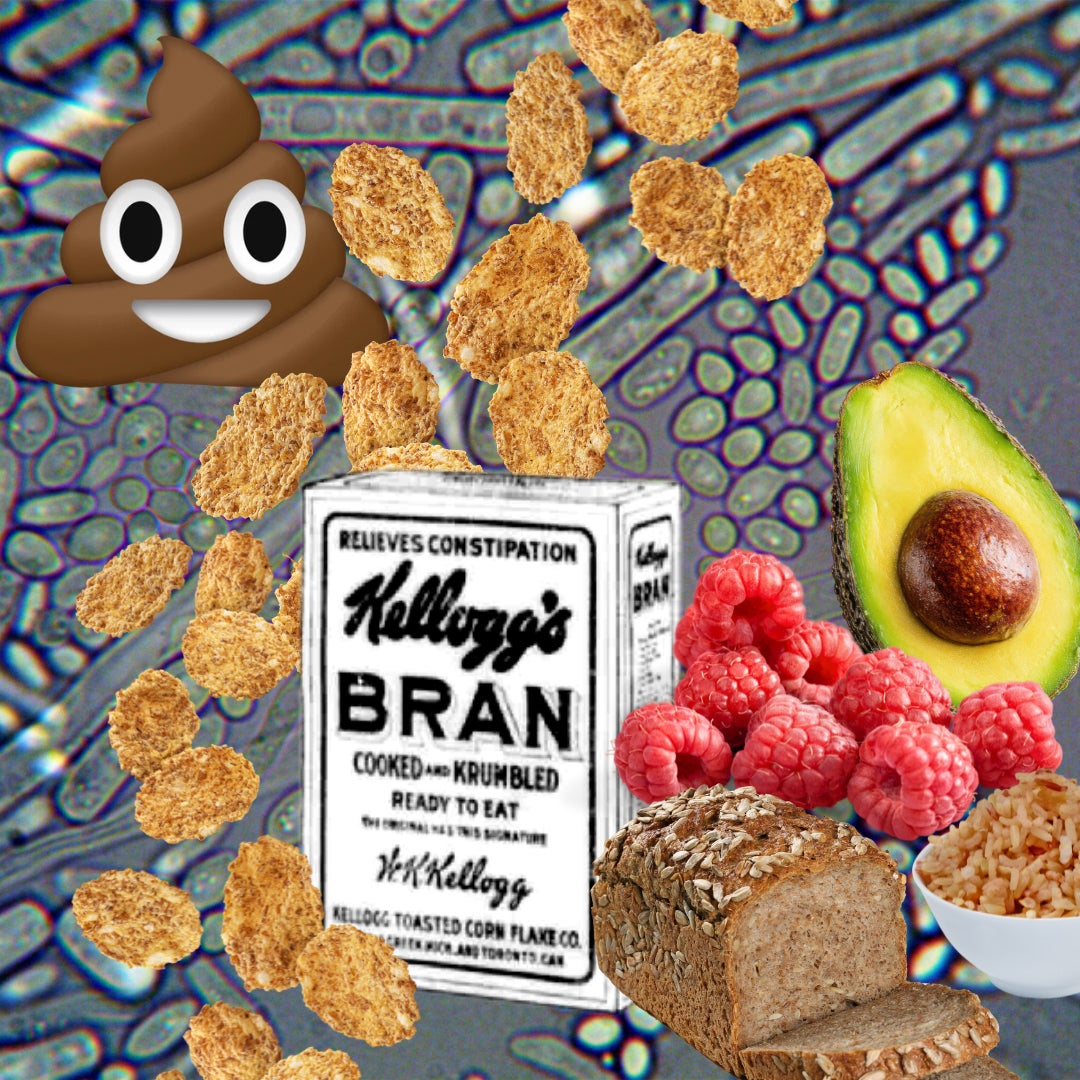
Move over protein, it's time to fibermaxx! Fiber has always been the neglected stepchild of nutrients: it's never been seen as essential, and some of its earliest enthusiasts were poop-obsessed oddballs. Take the inventor of cornflakes, John Harvey Kellogg. Inspired by the gorillas he saw at the zoo, he was fiber's first popular champion—but he also went around making people sniff his own perfect poops, and he believed that eating a plant-based, fiber-heavy, and condiment-free diet would help achieve his goal of reducing masturbation. It wasn't until surprisingly recently that scientists realized that fiber doesn't just prevent constipation—eating enough of it cuts your overall risk of death by about a quarter by lowering your cholesterol, helping keep your blood sugar and your weight stable, and preventing cancer. So it's a huge problem that nearly 95 percent of Americans aren’t getting enough of the stuff: on average, we eat about half what we should to hit government recommendations. This episode, we've got the story of fiber's embarrassing origins, the scoop on what all the different kinds of fiber actually are and do, and the emerging science behind its most magical powers—plus, the top tips you need to get more of it, deliciously and without digestive discomfort. Listen in—and, if you don't end up fiber-obsessed, too, we'll eat our whole-grain hats!
Learn more about your ad choices. Visit podcastchoices.com/adchoices