 Ask ChatGPT


The episode traces foraging’s history (dominant for most of human history; later restricted and stigmatized; now returning) and argues it’s not simple or risk-free. It also gives concrete examples of edible plants and explains why responsible, slow learning matters.
Shagbark hickory bark syrup; sorrel (sour “spark plant”); pepper grass (native “wasabi”); acorns (labor-intensive flour); pokeweed shoots (boil to reduce toxins); ramps (garlic-onion flavor; “ramp sweats”); lamb’s quarters; milkweed (edible but vital for monarchs).
Written by AI. May contain mistakes.
Understanding the appeal and ease of foraging with Diana Burnell.
“Sloan Foundation for the Public Understanding of Science, Technology, and Economics.”
Alexis and Diana share their childhood experiences with foraging.
“or visit gemini.google.com to learn more.”
Exploring how Alexis and Diana identified their passion for foraging.
“And then she moved back to the East Coast and got into plant identification.”
Discover the historical and evolutionary role of foraging in human development.
“We weren't just looking down at the ground, though.”
Explore how foraging shaped human evolution and cultural practices.
“And I do think the neural pathways that you are using and that you are performing this act definitely could have led to us becoming the species that we are today.”
Discuss the resurgence and transformation of foraging practices today.
“But a lot of the traditional knowledge was lost.”
Learn about Ewell Gibbons' transition from necessity to foraging advocate.
“put me in handcuffs lest I bopped them on the head with a dandelion boing.”
Discover how ramps transitioned from a regional staple to a culinary trend.
“I'm guessing that Yule's real goal was to get people interested in wild hickory nuts and spruce tips and not so much the grape nuts.”
Explore how the pandemic spurred a surge in foraging interest and practices.
“Foraging in general, and foraging for ramps in particular, was slowly starting to become mainstream again.”
Learn effective methods for identifying edible plants and the importance of caution.
“that I think I've seen in my yard before, but I wasn't sure.”
Understand the environmental impact and ethical considerations in foraging.
“You know, I certainly just didn't have the confidence.”
Examine the sustainability issues surrounding ramp harvesting practices.
“Well, ramps are a big part of West Virginia's culture, but there is increasing warning from experts about the over-harvesting of wild ramps and the plant's future.”
Explore the complexities and legalities surrounding the early harvesting of ramps.
“They're wanting to put in New York City ramps on the menu starting in February.”
Reflect on the deeper connection to nature and the benefits of foraging.
“But mostly, we had a lovely day in the park.”

Get the gist, explore an idea or ask about something said.
 Claude
On Gastropod, what are the key points of this episode?
Searching your listeningAutomatic transcript. May contain errors.
0:03So if you just want to kind of grab off little pieces here.
0:08Nicola Twilley: Okay, let's try this. Like this one? Is this a good one or is it not loose enough? I think that's fine if you just kind of snap it. Okay. Nikki and I snapped and bagged a few loose pieces of bark from a shagbark hickory tree on the instructions of professional forager Diana Burnell. Diana knew exactly how to get us motivated. If you like maple syrup and you also like a cocktail, you can make delicious shagbark, hickory, bark syrup any time of year, much easier forage, and it's going to taste like a smoky maple syrup. This will make you 12 ounces. Easy. It's the easiest forage you'll do, and it tastes fantastic.
0:53Nicola Twilley: That sounded pretty good to us. Head out to the woods for a few minutes, snap a few bits off a tree and up with a tasty drink. But Cynthia, if it was that simple, we'd all be doing it all the time. And no offense, but I'm pretty sure neither of us would have had a clue which trees bark to snap off and take home if we weren't with Diana. This episode, we have the story of how the way we fed ourselves literally throughout most of human history more or less disappeared, at least in wealthier countries, how it returned, and why it's not as simple as it seems. Plus, all the wild and wonderful flavors and foods you're missing out on if you're not foraging.
1:28Nicola Twilley: This episode was supported in part by the Alfred P. Sloan Foundation for the Public Understanding of Science, Technology, and Economics. Gastropod is part of the Vox Media Podcast Network. Before we head out foraging, don't forget to send us your questions for December's Ask Gastropod episode. We can't wait to hear what you want to know. We also want to quickly tell you about a podcast called It Turns Out. It's hosted by award-winning journalist Cara Miller, who hosted the public radio show Innovation Hub. If you're the kind of person who loves hearing a surprising piece of research that you immediately want to tell someone else about, you should definitely check out this show.
2:05Nicola Twilley: It Turns Out explains everything from how marriage became a dividing line in America to the unexpected jobs that make people wealthy, or why so many of us are scared to be social even though research suggests it almost always makes us happier. Find It Turns Out with Cara Miller wherever you get your podcasts. Support for the show comes from Google Gemini. You know that moment when curiosity strikes? You're exploring a new city with a family and a sculpture catches your daughter's eye. What is that? Who made it? With Gemini, you can snap a picture and get a fully interactive breakdown of its history, architecture, and even hidden secrets.
2:48Nicola Twilley: Gemini is built for moments like that. Whether you're learning something new, solving a problem, or looking for your next favorite thing, Google Gemini is here to help. Download Gemini, Google's AI app, or visit gemini.google.com to learn more.
3:06Nicola Twilley: Support for the show comes from TikTok. There is a scientifically documented correlation between listening to podcasts and curiosity. So since you're here, you probably enjoy discovering new things. One great place to indulge your curiosity is TikTok. Whether it's how to forecast volcanic eruptions, strange phenomena that the James Webb Space Telescope picked up near the beginning of time, or a literal deep dive on the ocean's deepest reefs, TikTok has a wealth of fascinating videos just waiting to be discovered. Your next discovery is waiting on TikTok. Learn more at TikTok.com slash discover more.
3:50So my mom loves plants, loves gardening, has always kept immaculate gardens my entire life. And so when I was younger, if I was going to be spending time with her, it would usually be outside in the yard.
4:06Nicola Twilley: Alexis Nicole Nelson is better known on many social media sites as the black forager, and she just wrote a new cookbook about foraging and foraged foods called Happy Snacking Don't Die. Alexis told us she was first introduced to the idea of harvesting edible stuff from nature by her mother really as a way to keep her out of trouble in the garden. Like sometimes you really got to get all of those fall bulbs into the ground and you have to send your five-year-old daughter to go investigate all of the onion grass growing in your lawn. And boy golly, that quest just sent me on a lifetime journey of, I guess, a near obsession with all of the wild edible foods around us and all of these flavors that it's often not possible to ever have in the grocery store.
4:53With my mom being a gardener and my dad being such a great cook, I joke with them all the time that I had no say in the matter for becoming like this. It was just kind of set out for me and I just walked the path in front of me.
5:06Nicola Twilley: Diana's first introduction to the outdoors and to enjoying foraged foods also came from her family. So I'm from New Hampshire originally, right on the coast. So I had the ocean at my front door, the backwoods, my back door. And as a kid, my mother really inspired me. I grew up with my sister who was older and my mom. We would always be in the backwoods and we would play a game called Transcendentalists. It's every American kid's favorite game, right? But having grown up in England, I was not familiar with the Transcendentalists, in case you are in a similar situation. They're a gang of writers and philosophers who all hung out in the 1830s and 1840s in and around Concord, Massachusetts.
5:49Nicola Twilley: They're famous for thinking poetic thoughts about nature and spirituality and the unity of all things. So my sister and I would rotate between, we would fight for either being Henry David Thoreau or Ralph Waldo Emerson. My mom was always Louisa May Alcott. But it was a great way for her to kind of teach us a lot about, you know, the New England writers, history. And while they were fighting to see who would be which famous writer and philosopher, as every kid does, they also ate. We would go in the backwoods and pretend And like we were fishing, we would gather a lot of berries. We had raspberries, we had blueberries, we had blackberries.
6:25Nicola Twilley: So we would, you know, forage for berries. And then we would just invent kind of crazy storylines about what was going on in Concord. 1800s. So, you know, like any normal family would do. For both Alexis and Diana, it wasn't until they were a little older that they realized, yeah, not so normal, actually. It wasn't really until I got to middle school when I left my small Montessori school, went to a big public high school. And that was, I think, the first time that I ever even got an inkling that what I was doing was weird. Alexis did also embrace pop culture to fit in with her middle school peers, but she never gave up her love of eating her way through the outdoors.
7:07Nicola Twilley: She just didn't really call it anything in particular. I did not know the word foraging until after I graduated from university. I never had a name for it. It was just a thing that we did. I was in the library, the Columbus main downtown library, just looking for plant books as I'm oft want to do. And I came across this gorgeous cookbook by Marie Villoin, who's a forager in New York called Forage Harvest Feast. And I was like, oh, the cover of this seems beautiful and intriguing and has wild foods on it. And that, I think, was the first time I was like, oh, that's what that's called. It's called foraging.
7:50I'm a forager.
7:52Nicola Twilley: We forage. Diana was the same. Even after she stopped playing transcendentalists, she carried on harvesting fruits and berries from the wild. As a grown-up, she'd moved to L.A. where there are fruit trees everywhere. And then she moved back to the East Coast and got into plant identification. And so I just started with a tree book. And that was in 2013. And the next book that was recommended to me by Amazon was something called Foraging, which I hadn't really ever heard of. And I bought it and I just started going out on the weekends. And my hobby became a passion, became an obsession, became a profession, basically.
8:31Nicola Twilley: Nikki and I had both picked the occasional berry from the wild when we were kids, but we hadn't gone out intentionally to look for food in decades. We wanted some help from a professional, from Diana. Today she runs a company called Edible Excursions Foraging. We're about to take a lovely kind of massive loop around Newton, Nahanton Park in particular. It was a beautiful morning in late summer, and we went out to Newton just outside of Boston, a.k.a. one of the transcendentalists' old stomping grounds. The park has a river running through it. It's partly forested and partly meadow. Loads of different kind of plants and trees that we can snack on, mushrooms in the woods, a bunch of fruits and nuts as well.
9:11Nicola Twilley: So it's a great kind of mix in a very small environment. We set out walking with Diana in the park. Well, walk is kind of a misnomer. We would amble a couple of steps, then we'd stop for a while, then we'd take a few more steps. We were going pretty slowly. Absolutely, yes. We walk slowly, but we find a lot of stuff and we eat very well. The first thing Diana pointed out was a very non-exciting looking little leafy green thing. Honestly, it just blended into the grass like some kind of weed. This is my spark plant. I'd never heard the term spark plant or spark anything. But in birding, a spark bird is the first bird that really gets you into birding.
9:46Nicola Twilley: Diana's girlfriend is a birder. My girlfriend and I have problems when we go anywhere. She's constantly looking up. I'm constantly looking down. We walk into things all the time. This spark plant, the wild edible that really got Diana into foraging, it's called sorrel from the old French word for sour. So anytime I'm foraging with kids, it's like their favorite. I load their pockets with this. They think it kind of tastes like Sour Patch Kids, I think. So it's really nice. The flavor you cannot believe is so epic for such a tiny little leaf. Nice, sour, tangy, thirst quenching. Just really refreshing.
10:22Nicola Twilley: Sold! We were on the ground stuffing leaves in our faces before you could say sorrel. Mmm. That's delicious. It's sour. Yeah. It's really like, I can see the sour patch comparison because it's got that like citric acid kind of like zing on my tongue. I buy sorrel sometimes at the farmer's market. It has long, narrow leaves, looks like a kind of lettuce. But it turns out that European sorrel is not closely related to these tiny plants and their even tinier leaves that we were foraging. They're just both sour. Diana also pointed out a second kind of sorrel that is little heart-shaped leaves. We tasted it too.
10:57Nicola Twilley: It's also delicious. And it's all over my yard, and I never realized I could eat it. This is one of my very favorite ingredients for pesto. Also, I treat it like a microgreen, great on salads, great on sandwiches. It makes the most delicious creamy soup, sorrel soup. We stuffed our faces, and then we moved not very far. Diana had warned us about the walking slowly part, but honestly it took about a half hour to go 30 paces because everywhere we looked there was something to eat. Just passed by one of my other favorites right here. This is called pepper grass. So before we had the spice trade this was our native pepper.
11:39Nicola Twilley: So if you like wasabi you eat the little seed pods and what I like to do with them is I'll sprinkle them over salads I'll put them in soups. I love them in pickle mixes. Oh, they're peppery. It has that little like wasabi kick to it. Oh, now I'm getting it like the like the kind of like back of your nose heat. We weren't just looking down at the ground, though. We were also staring up at the trees, not for birds, but for nuts. So we have, of course, an oak tree here. Acorns have been a staple in many Native American cultures. They are quite delicious. It's just a long process. To turn acorns into flour takes a very long time.
12:23Nicola Twilley: They're soaking and drying and grinding and to be honest it sounds a bit much. So there's loads of stuff you can do with it. It has a lovely flavor. My friend baked me a lovely loaf of acorn bread and I thought it tasted very similar to molasses bread. So really nice, great for people that are gluten-free, very popular in Asian cuisines, just a good amount of effort. All of this was a thrilling new adventure for me and Cynthia, but actually what we were doing was as old as the hills. Well, I love to tell everyone if you go far back enough in literally anybody's lineage, eventually you are going to hit a forager because that is the reason that we all exist today.
13:05Agriculture is super dope, but it has not been around the whole time that humans have been around.
13:11Nicola Twilley: Scientists even theorize that foraging is part of what helped make us human. We had to develop the right type of color vision to be able to best spot fruit amongst all the foliage. Humans developed specific circuits in our brains for remembering locations, like locations where food was plentiful. And because women were doing more foraging than men in ancient history, those food-finding pathways were and still are stronger in women than in men. Researchers also think that foraging helps explain our super long childhoods. Humans are unique among primates for how long it takes our kids to be independent, and scientists think that's because it takes that long to learn everything you need to know to become a successful forager.
13:47Nicola Twilley: All those skills, knowing what to look for, remembering what's in season one, how to harvest, how to process the foods, and then learning and teaching that to others, that's the root of human culture, the kind of knowledge that's transmitted over generations. And I do think the neural pathways that you are using and that you are performing this act definitely could have led to us becoming the species that we are today. Led to us being able to make more and more and more intricate connections and learn more and more about our surroundings. If you think about it, it makes sense. Foraging was the main way we fed ourselves for most of human history, and so it exerted a really strong evolutionary pressure.
14:35Nicola Twilley: We're adapted to be successful at it. There's even a theory that this is why ADHD is so common in humans, because it's actually an adaptation that makes people more successful at exploring and finding new edible resources to forage. The dawn of agriculture changed this relationship to wild food. Suddenly, we could plant food and harvest that food and didn't have to search for it. But foraging persisted even among agricultural communities. And for communities that didn't have agriculture, they practiced a sort of shepherding of wild foods, planting them in certain areas or selecting for them, managing the landscape to encourage the growth of the plants they wanted to eat.
15:11Nicola Twilley: These were places they could go back to year after year. It's beautiful to get to see like bits and pieces of remnants of some of those, I guess now what we would call food forests scattered in some places around the world where some of these very much intentionally built ecosystems still exist. These carefully created food forests, even if they're not being maintained or harvested, they're still biodiversity hotspots today because all the edible plants provide food for lots of other kinds of creatures, too. But when the first Europeans arrived in the Americas, they didn't realize what they were looking at, that this was a deliberately tended food forest.
15:53When they saw all of these beautifully cultivated food forests that had very intentionally, you know, had the hands of several indigenous bands in the southeast all over them, they saw how much food they were creating. And they were like, oh, my God, definitely a sign from God that we're supposed to be here. There are so many journal entries from conquistadors being like, it's insane. This place is so bountiful. All of these nuts, all of these grapes, all of these mulberries. And it has to mean that God wants us to be here. But, you know, it didn't look like European agriculture. It did not look the way that, especially in Western Europe, the way that people expected, like nice, tidy rows of the same species all growing together.
16:44Nicola Twilley: The colonists didn't give the indigenous people the credit they deserved. But even so, Europeans did have some experience with foraging. Everyone foraged. Even if you farmed, you still foraged in the forests and fields nearby. Because a lot of times when we do switch to an agricultural society, suddenly the diversity of what we're eating decreases a whole bunch. It's especially why in tons of cultures around the globe, you will see a habit of spring tonics or something similar when the first wild greens start coming up after a long winter of living off of preserved foods. And it was really important to go out and get those into your diet.
17:25Nicola Twilley: So everyone foraged at least a little bit, and those early settlers were no exception. But through the 17 and mid-1800s, one group in particular really relied on foraging. On plantations, I don't think it would surprise anybody that the food that was being set aside for anyone enslaved was usually of the poorest quality. And so foraging and hunting and trapping became a necessity. And not only that, it became a livelihood for a lot of enslaved people. You know, if you, due to a Herculean strength that I will never understand, had the energy on Sundays, the one day of rest that you were sometimes given, a lot of folks would be allowed to go and gather things like nuts, fruits, and sell them as wares for their own benefit in towns, even though they were enslaved.
18:19Nicola Twilley: So that knowledge of how to feed yourself from the land was really valuable. But then there was the Civil War and then emancipation in 1863, and plantation owners lost their workforce. And so those plantation owners, Alexa says, they were facing a problem. They still have this land that they want other people to be tending to because they don't want to do it. But they don't think they can convince these recently freed Black people to come back because they've had to learn how to take care of themselves due to the abysmal conditions they had to be living in. You know, there are awful quotes about them quite literally saying, we can't starve them.
18:57So what are we going to do? Let's pass some laws to make it a criminal offense for people to be foraging, harvesting, hunting, trapping, fishing on someone else's private property. And if you suddenly are not allowed to forage on the property that you know like the back of your hand, you're really kind of cut off at the knees. So a lot of formerly enslaved folks had to go right back to working on the same land as before. But as sharecroppers this time, instead of as slaves. And so that really cut off foraging within the American South first, because of course all of the isms are best friends racism classism and so in trying to cut off one specific group that also suddenly means that poor white people who do not own land suddenly feel like they can't be foraging either indigenous people who don't own certain tracts of land even if those are their ancestral homelands that are the homes of their ancestral foodways suddenly can't be foraging in a bunch of spaces either.
20:11Nicola Twilley: And the laws that started in the South, laws that prevented all people from foraging, those spread to the North too. For the end of the 19th century, that's really where you see the first huge decrease in foraging as an activity, because the people who needed it the most were not allowed to do it anymore. Also at the time, at the end of the 1800s and the start of the 1900s, that's really when Americans started moving into cities en masse. They were moving away from the landscapes they knew and into these more industrial environments where often they had to work in factories all hours of the day.
20:46Nicola Twilley: And so foraging became less and less common. Until there were food shortages during the Second World War, in part because the government wanted to save the best foods to send off to the soldiers and allies in Europe. And we saw a resurgence in foraging for like 30 seconds during World War II in which the USDA was like, uh-oh, we're telling everybody to make victory gardens, but also you don't get food the same day that you put the victory garden together. The USDA ended up hiring George Washington Carver. He was a famous African-American agricultural scientist and inventor. He's often associated with the peanut, but really his research spanned all kinds of crops and agricultural systems.
21:22Nicola Twilley: But anyway, he was asked to write a foraging pamphlet to be distributed to American housewives. To be like, hello, are you waiting for your tomatoes to come in? Here's a book of all of the wild weeds that are probably coming up around your yard and some of my favorite recipes for how to use them, which is the coolest thing ever. It's a fun read. But that was a blip, especially after the war when so many people moved to the suburbs and embraced picket fences and TV dinners. Foraging just didn't feel like the right way for a space age American to get their dinner. The thing that was cool was feeding your family these new trendy processed meals, not going into the drainage ditch at the edge of your community and gathering cattail hearts.
22:08And so people stopped doing it.
22:11Nicola Twilley: What that meant was that really most of the people who were foraging were either poor or immigrants who came from cultures that had held on to foraging traditions. Most of the wealthier people in America had pretty much stopped foraging altogether. So what brought it back? That's coming up after the break.
22:28Nicola Twilley: Support for this episode comes in part from Feeding America. The holidays feel a little different when we show up for one another. And for families facing hunger, your generosity could mean one less difficult choice. Across the Feeding America network, your donation fulfills the promise of connecting families to nourishing food and greater stability. When you give this holiday season, your help ensures more neighbors can gather around a meal. This Thanksgiving, give at feedingamerica.org slash holiday.
22:58Nicola Twilley: Support for the show comes from TikTok. There is a scientifically documented correlation between listening to podcasts and curiosity. So since you're here, you probably enjoy discovering new things. One great place to indulge your curiosity is TikTok. Whether it's how to forecast volcanic eruptions, strange phenomena that the James Webb Space Telescope picked up near the beginning of time, or a literal deep dive on the ocean's deepest reefs, TikTok has a wealth of fascinating videos just waiting to be discovered. Your next discovery is waiting on TikTok. Learn more at tiktok.com slash discover more.
23:42Nicola Twilley: Support for this show comes from MidiHealth. Restless nights, persistent headaches, and feeling exhausted no matter how much you rest. For many women, these symptoms aren't separate struggles. They're connected to the same hormonal changes during perimenopause and menopause. But just because they're common doesn't mean you have to live with them. MIDI can help you understand what's happening in your body and find the care and relief you deserve. Your symptoms have answers. Visit JoinMIDI.com right now to book your first visit today. That's JoinMIDI.com to book your first visit. JoinMIDI.com. Insurance coverage varies.
24:19Nicola Twilley: Check with your plan for coverage.
24:24Nicola Twilley: it's important to point out that even at the peak of tv dinner fish stick and frozen concentrated orange juice america even then foraging was not completely dead bits and pieces absolutely did still stand the test of time any of my other melanated brethren who have ever had their grandmother pull over on the side of the road to pick poke or wild asparagus knows that some of the knowledge and some of the most dear traditions did still get passed on. But a lot of the traditional knowledge was lost. That's part of the reason why I chose Black Forager as my username to begin with, was as a reminder that we are just as entitled to this knowledge as everybody else.
25:14You know, we also have a seat at the wild food table and it's one that was taken away from us for quite a while. And we are allowed to sit there too.
25:25Nicola Twilley: Alexis says her dad's family in the South held on to the tradition of eating poke salad. But I have to admit, I have no idea what that even is. It is a dish that is traditionally made in the early spring from the new fresh shoots of pokeweed, fidelaca americana. In the fall, pokeweed puts out delicious looking purple berries. And guess what? You most definitely should not forage and eat them. They're poisonous. But those early spring shoots, while still somewhat poisonous raw, are a lot less poisonous than the plant becomes later on in its growing season and are an excellent source of vitamins A and K and iron and a lot of things that people by the end of winter are not getting a lot of in their daily diet.
26:12So it was so important to like my grandparents and their parents to have that dish first thing in the spring.
26:20Nicola Twilley: I love how Alexis calls them somewhat poisonous, but it turns out there's a way to get rid of that poison in the early green poke shoots and it's by boiling. We are a one boil for 12 minutes household. Some people will do two boils, you know, one for six minutes, another for six minutes. Some people will do three boils. In my opinion, at three boils, you're just eating green mush. And if that's what floats your boat, that is so fine with me. But the whole point is to boil out most of the toxins while still leaving a lot of the vitamins and minerals and fiber behind for you to still get to enjoy.
26:59Nicola Twilley: Pokeweed was a food of necessity transformed into a food of tradition, and it's something parts of the black community held on to. But for most white folks, at least the ones who weren't super poor, by the 60s and 70s, foraging was weird. It was not for normal people. Foraging became part of the counterculture movement of the 70s and into the 80s. A guy who calls himself Wild Man Steve Brill was arrested in Central Park. The scene of the crime was New York's biggest playground, Central Park, an 840-acre refuge from the city's concrete and steel. The accused, a 37-year-old ecologist and nature guide, Stephen Brill, arrested last weekend when a park ranger discovered Brill, who was foraging for dandelions.
27:42I ate a leaf of the dandelion. The male ranger ducked behind a tree, took out a hidden walkie-talkie. All right, there he is on 81st Street. Go get him. Every park ranger in New York City popped out from behind the bushes. They surrounded me in case I was going to climb up a tree, put me in handcuffs lest I bopped them on the head with a dandelion boing.
28:06Nicola Twilley: Wild man Steve Brill was not the only far out dude trying to forage in a world that was more into yuppies and shoulder pads. Ewell Gibbons was a pretty well-known naturalist and writer at the time. he grew up foraging out of necessity, but then turned it into the basis of his writing career. He made his name with a foraging guide called Stalking the Wild Asparagus, but then he also made a Grape Nuts commercial. I'm Ewell Gibbons. I've spent years learning about natural foods. Ever eat a pine tree? Many parts are edible. Natural ingredients are important to me. That's why Post Grape Nuts is part of my breakfast.
28:44Nicola Twilley: This wholesome cereal is made from wheat and barley. These natural ingredients are baked into crunchy nuggets and fortified with vitamins. Its naturally sweet taste reminds me of wild hickory nuts. I call grape nuts my back-to-nature cereal. And I was like, I don't know if that really sold it for people, Yule, but I'm proud of you for trying. I'm guessing that Yule's real goal was to get people interested in wild hickory nuts and spruce tips and not so much the grape nuts. But foraging stayed niche until ramps. Ramps are a wild onion. Sometimes they're even referred to as wild leeks in parts of the range that come from forest lands primarily.
29:23Nicola Twilley: Eric Burkhart is a botanist based at Penn State University. Like he says, ramps grow in damp forested environments and they're found all over the eastern United States, all the way from northern Georgia up to the Canadian border. They look like shorter spring onions with slightly rounder bulbs, short reddish stalks and leafier leaves. The plant itself is entirely edible. So people have used both the bulb stock, as we would call it, the shaft that runs down to the roots, as well as the foliage. And indeed, people have also used the flowers as well. So they have a flavor profile that is often described as being intermediate between garlic and onions.
30:08And if you eat too many of them, you get the ramp sweats and you smell awful for like the next two days.
30:15Nicola Twilley: They became associated with poor people, people from Appalachia that were back culture, backwoods kinds of people, hillbillies, whatever you want to call them, right? So kids used to get sent home from school in southern Ohio for having the ramp sweats back when ramps were still like a poor people hill food. But by the 2000s, some communities in Appalachia had started using this backcountry food as a tourist attraction. They were selling it to visitors. And as chefs and foodies started to taste ramps and hear about them, word spread. Before you know it, none other than Martha Stewart was singing the ramps praises in 2015.
30:51Nicola Twilley: It's that time of year when one of my favorite ingredients is finally in season, ramps. And I don't know how many of you know ramps. I use them for many different things. I cook them with lamb over the weekend. But you can also use them for a compound butter, which is a mixture of sort of savory flavors in the butter. From there, we see it picked up almost instantaneously by a lot of other kind of what's called foodie channels. So, you know, Rachel Ray, who had a food show on the Food Network, started using them. And from there, ramps got more and more popular. Chefs, particularly on the East Coast, started buying foraged ramps and offering them on their menus.
31:29Nicola Twilley: Ramps were like a gateway drug for foraged foods. Those chefs started to include other foraged foods on their menus as well. Foraging in general, and foraging for ramps in particular, was slowly starting to become mainstream again. And then COVID happened. According to food experts, there's been a foraging frenzy during the pandemic. Social media interest up 89 % here in the UK, while U.S. foraging advocates say they've seen up to 500 % more internet traffic. For one, people had a lot more time on their hands during lockdown. Going outdoors into nature was one of the few things you could do. But there was something else going on, something a little deeper.
32:10Well, we realized how fragile our food systems were. I don't think people knew how precarious so much of our access to anything that is farmed, be it fruits, veggies, meats here in the U.S. are always, you know, one pandemic away from us having empty grocery store shelves. And I think that woke up for a lot of people a need to understand more about food access and understand more about where their food specifically was coming from. And it empowered a lot of folks to also want to take a part in their own, you know, food.
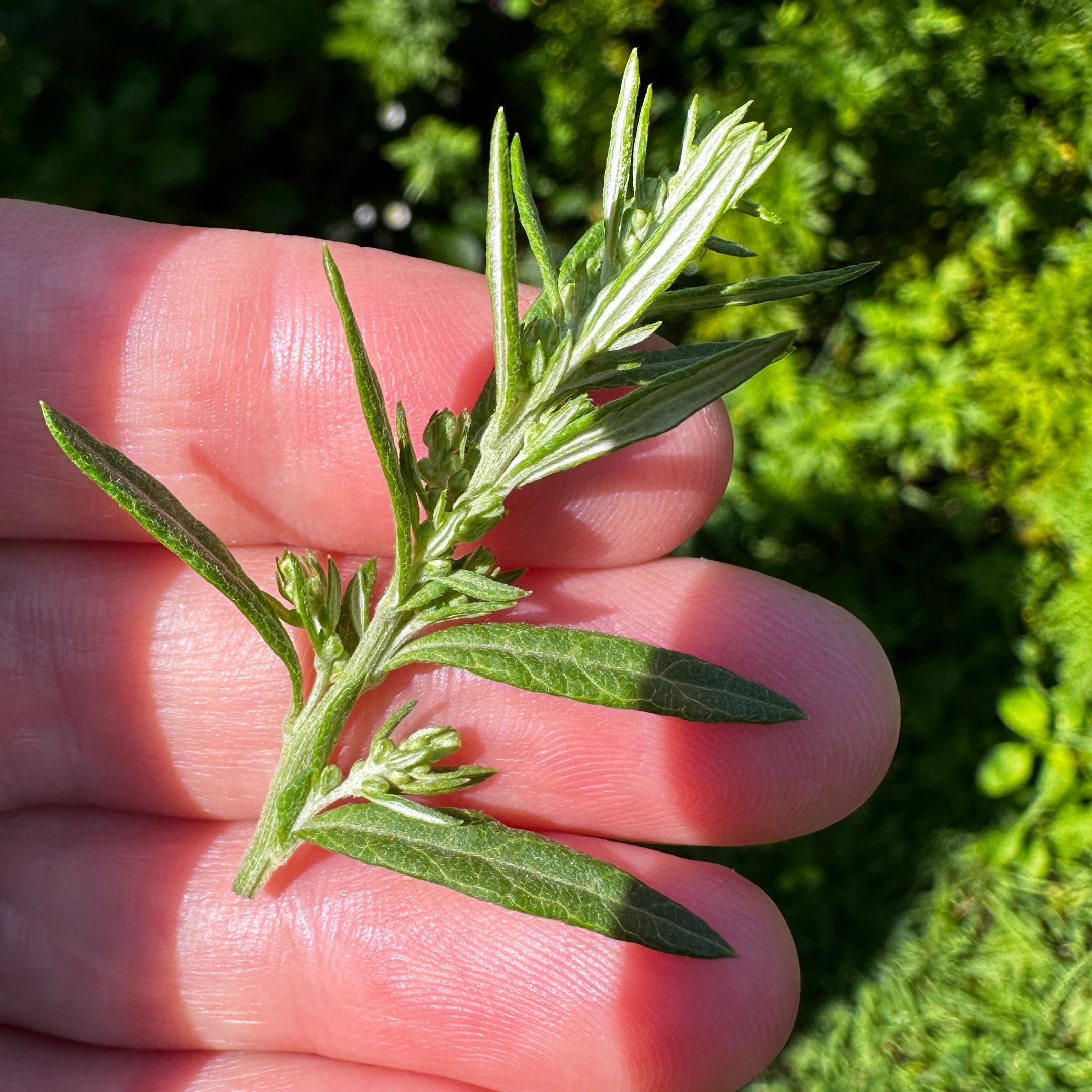
32:56Nicola Twilley: Nikki and I hadn't participated in the great foraging explosion that happened when COVID hit. And so when we went out with Diana, we were and still are novices. Diana pointed out lamb's quarters, which is an edible green, kind of like spinach, that I think I've seen in my yard before, but I wasn't sure. Easiest way, I think, to identify it is by flipping it over and looking for the silvery kind of underside. And then if you feel it, it actually is going to feel kind of sandy. You might think, sure, it's nice to know how to identify it using your senses. Thank you, Diana. But come on, it's 2026 and we all have devices in our pockets that can tell us what everything is.
33:34Nicola Twilley: None of them are accurate. Please do not rely on an app. They're not there yet. And some of them are scarily not close. Alexa says especially don't ask ChatGPT or Claude or any of those for help. A lot of people love sending me a screenshot of that AI overview at the top of a Google search. And I'll be like, hey, so that's an LLM, which are famously bad at a lot of things, but especially bad at the natural world. Because why? It's filled with so much nuance and so much variation, which LLMs are even worse at than the other things that they are bad at. Last year, I had to respond to a video where someone asked ChatGPT what a plant in their backyard was.
34:25ChatGPT said it was a wild carrot. It was poison hemlock. Don't pull a Socrates, internet, please.
34:33Nicola Twilley: It's not worth it. To be fair, although Socrates did die from drinking hemlock, it was actually his plan, not a ChatGPT mix-up. Back in his day in ancient Greece, folks generally took the time to learn what their local plants were. Today, Diana says one of the best ways to do that is using that old school technology we relied on before chat GPT and smartphones. A book. Anytime I go out, I have a field guide with me, one or two, just in case I run into something new that I don't know. I also instantly take pictures of anything I encounter. And I take multiple angles and I really try to kind of spend time with that plant to understand it a little bit better.
35:13Or get to know another forager who lives close to you so you can learn this information from another person, get to see these plants in all three dimensions, and learn much more effectively and much more correctly and not run the risk of poisoning yourself.
35:30Nicola Twilley: This might sound like learning edible plants around you from a book or from other foragers that's going to be a slow process. And that's true. Most things are fast-paced these days, but foraging is definitely not. Foraging is not a race. Learning everything and ingesting everything is certainly not a race. It's okay to take things home and try only a little bit. It's okay to take things home to just investigate them further. Look at them more against a book on your bookshelf. I do it all the time. The first two years I went mushroom hunting, I didn't eat a mushroom. You know, I certainly just didn't have the confidence.
36:06Nicola Twilley: even still now after, you know, almost 15 years, I still will pick three or four plants every month that I'll try to target and teach myself about. I'll pick two or three mushrooms every month, you know. So I'm just constantly kind of growing my repertoire. If you don't go slow and learn from experts, you really do risk poisoning yourself. And the danger is not just lookalikes like wild carrot and hemlock or poisonous jack-o'-lantern mushrooms and chanterelles. It's also about how you prepare those foods. Alexis pointed out that pokeweed has to be boiled for a while, and the same with fiddleheads, which I love.
36:39Nicola Twilley: They have to be cooked well or you'll get sick. You need accurate information about both identifying plants and how to prepare them, and you really can't rely on the internet for all of this. There are other hazards to consider. A dog might have peed on your sorrel, so it's a good idea to wash everything you forage really well. Golf courses are often sprayed quite heavily to keep weeds down as are train tracks, so Diana and Alexis suggest avoiding them altogether. Which is unfortunate because a lot of time where the shrubs start back up alongside trains here in my neck of the woods have some of the best staghorn sumac trees with reachable bunches, have some of the best wild grape vines because they're getting a ton of sun exposure, because the area has been cleared for trains to come through.
37:28So it can be very tempting. But I implore you, maybe don't.
37:33Nicola Twilley: Another thing to think about is the soil where you're foraging. You can forage in cities, especially for things like fruits and berries. But leafy greens can be more of a problem because toxins like lead can accumulate in their leaves. Yes, so it is really important to kind of do your research. A lot of the newer parks are actually being built on old landfills. So that's a no-go. You don't want that. You don't want kind of lead in your food. Lead does not over time, you know, decrease. Finally, there are other constraints that are just to do with being a responsible steward of natural resources.
38:06Nicola Twilley: Like Diana told us that milkweed is edible. You can forage the flowers for jellies and syrups and then the young pods. She says they taste fabulous stuffed with cheese and pan fried. However, big however, the only way I would ever forage and harvest milkweed is if it was in an absolute giant patch. That is because it is a staple for the monarch butterflies and a lot of pollinators. This concern about stewardship, it's also a big issue with ramps. Other than mushrooms, they're kind of the poster child for foraging on the East Coast, but they're also the poster child for what can go wrong. That's coming up after the break.
38:47Nicola Twilley: From the creators of Zootopia and Frozen comes Disney's Hexed. Welcome to Hex and enter the world of witches, where it was foretold that an ordinary girl would become an extraordinary witch and save the world of magic. Disney's Hexed arrives in theaters this Thanksgiving. I wrote a little song to remind you, Choice Hotels gets you more of the experiences you value. The Cambria Hotel's got it all. A rooftop bar, have a ball. Cocktails up here feel just right. Is Cambria amazing? All right. Bring a date, your team, or even your mom. Book direct at choicehotels.com. See you on the roof. Plan B is a backup birth control option that's there for you when things don't go according to plan.
39:42It specifically works after unprotected sex and before pregnancy occurs by temporarily delaying ovulation. Plan B is available nationwide at all major retailers and through delivery apps like DoorDash. No ID, prescription or age requirement. It's the number one OBGYN recommended brand of emergency contraception, and it won't impact your future fertility. That's Freedom the B. Use as directed. Well, ramps are a big part of West Virginia's culture, but there is increasing warning from experts about the over-harvesting of wild ramps and the plant's future.
40:16Nicola Twilley: With the ramping up in popularity of the famously pungent plant in restaurants and recipes, experts and seasoned foragers alike have increasingly grown concern over the future of ramps. Remember, ramps don't grow just everywhere. They need a very specific environment, and that forested, damp habitat they like is being under threat. That's one problem. The second piece is they are very slow-growing species, and they will take many years to develop. And so even if someone is responsible and just takes a small amount of a large patch of ramps, well, today they may not be the only person who's found that patch, and maybe someone decided to share the location on the internet.
40:54Nicola Twilley: And so even if they have the best intentions, for example, a lot of people will say, well, I never removed more than 10 % of a population, right? That sounds great, right? we're only taking one out of every 10 plants. But that's you. What about the next person that comes behind you and says, I only remove one out of every 10 plants. And the person that comes behind that person and says, I only remove one out of every 10 plants. And before you know it, there are not a lot of ramps left. But Eric says what's even more problematic is commercial harvesters who are trying to sell 3 ,000 or 4 ,000 pounds of ramps a week to chefs during the season.
41:32Nicola Twilley: The harvesters are trying to make a living, and the chefs want enough to put it on the menu and not run out. And so they really don't have a stake in where the ramps are coming from and whether that's a sustainable behavior. In many cases, they're not even asking questions about where those ramps come from. But there's a reason for this culinary excitement. Ramps are one of the earliest greens that sprout from the forest floor after the winter, which makes them super enticing to chefs and to foodies. And that includes a lot of the culinary chefs in big cities that are wanting to put ramps on their menu earlier and earlier, it seems, every spring.
42:06Nicola Twilley: So it's not just about March anymore. They're wanting to put in New York City ramps on the menu starting in February. In the New York area, ramps aren't really available until close to April. And of course, yes, it's exciting to get the very first ramps of the season, even if they come from further afield. But Eric says this is a really big issue. Because customers are demanding ramps so early, commercial foragers are harvesting the bulbs really young when they're tiny. And so you have to take a lot of plants to get a usable amount for a restaurant. Eric says if you harvest the plants super young, you need like four or five hundred to make a pound.
42:43Nicola Twilley: If you wait eight to 12 weeks, that decreases such that we can get 60 plants to a pound, right? So it's far fewer ramps that we're removing from the population to begin with to comprise the same weight because the biomass has increased over that time. We said that some harvesters were taking three to four thousand pounds at a time. And this scale of harvesting is illegal, at least on public land. But to be honest, what's legal and what's not legal when it comes to foraging is kind of confusing. Yeah, I would say, first of all, it's a mess. It's not very clear for most of the public where to harvest, what's allowed, what's not allowed.
43:23Nicola Twilley: We told you where a lot of the regulations around foraging came from. Basically, racism in Jim Crow times. But now there are also new laws, sometimes meant to protect agencies from liability and other times meant to protect endangered habitat. And so it can be really confusing. It's also tough to police. Sometimes people who forage at a commercial scale where it's illegal to do so or they're doing it without a permit, they do get caught. There was a big ramp bust in North Carolina just this past spring. But often the court system isn't particularly interested in following through. That happens all the time where, you know, the judge is like, you know, I don't have time for this.
43:59Nicola Twilley: Eric says the only real solution is for customers and chefs to get educated, to understand that part of eating foraged foods is understanding how much you can take and when so that you are part of the process of cultivating the resource rather than exploiting it. Basically, don't be greedy. Diana says most foragers already know that. So you want to leave it for the pollinators. You want to leave it for any animals that rely on it. And you also want to leave it for other foragers, right? And then especially with mushrooms, flowers, nuts, anything like that, right? You want it to keep seeding out, spreading, growing.
44:33Nicola Twilley: and encouraging kind of the wildlife and the birds and all that. We certainly left plenty of bark. When we snapped a few pieces off that shag bark hickory tree to make syrup, the tree didn't even notice it. But we were excited to go back home and see what we could cook up. Time to scrub. What am I, like, there's some licheny stuff on this. I'm like, am I supposed to scrub that off? I guess so. It's coming off. Okay, time to put the shag hickory bark in the oven to roast. After our cleaned up bark chunks had been roasting for 25 minutes, Cynthia's partner Tim came home from work. What do you smell?
45:10Nicola Twilley: Yeah, it smells like a forest fire. But in a good way. Like a campfire? But like delicious. Tim clearly wasn't quite on board yet, but I thought it smelled great. For the next step, we broke all that bark into smaller pieces and simmered them in water. We simmered the bark for a half hour and then cooled the liquid and then strained it. and then we heated a cup of it up with a cup of sugar to create some simple syrup. It's a delightful orange color, quite vibrant. Smells great. Smells a little smoky. Mmm. Butterscotch. Ooh. Mmm. Tastes like burnt marshmallow. Tastes like a s'more. Mmm. Mmm. It has a really nice aftertaste, too, where you get all of the more woody notes.
45:59Nicola Twilley: I think this is going to be good in a cocktail. It was, in fact, delicious in a cocktail, and I enjoyed that shagbark hickory syrup immensely. But I have to confess, I haven't gone out to find that particular type of hickory tree again myself and attempt to recreate the syrup. Foraging is a lot of extra work compared to buying food. I'm even happy to pay other local foragers for things like mushrooms and fiddleheads. Maybe we're too lazy, but honestly, however tasty the results, foraging is not something Cynthia and I are going to run out and do on the regular. It was also just a little slower than I like to walk.
46:33Nicola Twilley: Still, thanks to Diana, we foraged and ate some extraordinarily delicious foods. Those of you who get our special supporters newsletter will hear all about the feast she prepared for us, as well as get a hold of some recipes. But mostly, we had a lovely day in the park. And that's also great. I think people should at least experience foraging because in our current society, we are so out of practice at slowing down and noticing. Honestly, I know that so many people who follow my content are not going to become foragers. But what I hope everybody takes away from my content is pausing and recognizing some of these wonderful plants, which then also becomes you noticing birds and noticing insects and noticing fungi just happening right outside their own doorstep.
47:36even if you live in the middle of like a downtown area like me it's still an ecosystem and you're still a part of it you're still living within it and that reminder I think is so good for us like it's my very loving way of saying like we need to touch grass touch grass taste grass oh I have sweet grass growing in my front yard that's good for us and
48:02Nicola Twilley: And frankly, it's good for the environment. We could all stand to relearn some of that forager ethos. The idea that you pay attention, you cultivate, you harvest responsibly. And so to me, it's like the connection between, you know, I will spend time studying a plant and sitting with it and watching it and then tasting it and working with it. And then my favorite thing and why I do the courses is seeing other people's excitement and sharing that experience is like I get goosebumps every time I think about it. because it's just opening people's eyes. And when other people realize that they're lucky to exist in their slice of the world too, they feel more called to take care of it and to inspire other people to notice the beautiful things about it too.
48:48So I would say you should forage because even if you don't take home something edible, I do think you will take home a healthier mindset and a happier outlook.
49:02Nicola Twilley: Thanks this episode to Alexis Nicole Nelson. Her new book is Happy Snacking, Don't Die. And to Diana Burnell of Edible Excursions Foraging. If you're ever in the Boston area, you should definitely join one of her tours. Thanks also to Eric Burkhart. We have links to everyone's books, research, and foraging tours on our website, gastropod.com. Thanks as always to our fantastic producer, Claudia Geib, and also to our supporters who make the show possible. We'll be back in a couple of weeks with a brand new episode for your listening delight.
49:33Nicola Twilley: Support for the show comes from TikTok. There is a scientifically documented correlation between listening to podcasts and curiosity. So since you're here, you probably enjoy discovering new things. One great place to indulge your curiosity is TikTok. Whether it's how to forecast volcanic eruptions, strange phenomena that the James Webb Space Telescope picked up near the beginning of time, or a literal deep dive on the ocean's deepest reefs. TikTok has a wealth of fascinating videos just waiting to be discovered. Your next discovery is waiting on TikTok. Learn more at TikTok.com slash discover more.
50:17Nicola Twilley: From the creators of Zootopia and Frozen comes Disney's Hexed. Welcome to Hex and enter the world of witches, where it was foretold that an ordinary girl would become an extraordinary witch and save the world of magic. Disney's Hext arrives in theaters this Thanksgiving.
For most of human history, humans have fed ourselves by foraging, with a little bit of hunting when we were lucky—think more gatherer than hunter. Picking edible greens, nuts, fruits, roots, and mushrooms kept us alive before the advent of farming and, scientists think, helped make us who we are. So why did we stop eating wild foods? And how did an arrest in Central Park, Martha Stewart, and COVID make foraging cool again? Listen in this episode as we head out into the park to find dinner, explore the unexpected connections between foraging and ADHD, Jim Crow, and Grape Nuts, and enjoy a delicious wild feast full of flavors we've been missing out on.
Learn more about your ad choices. Visit podcastchoices.com/adchoices