
In short
Podcast Notes: Generative Now | PART 2: Matthew Hartman | The Value of Premium Content and the Shifting Economics of the Internet
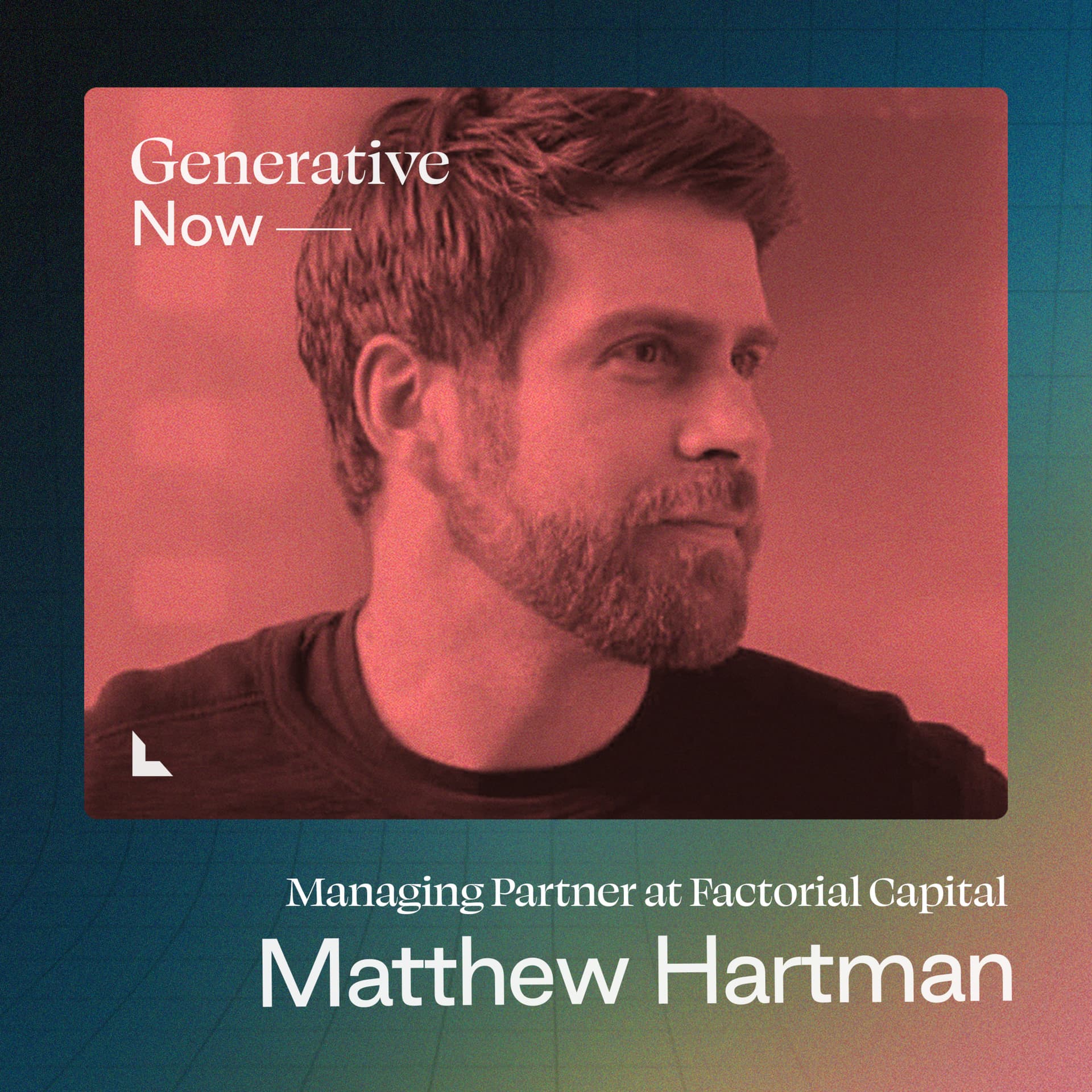
Overview In this episode of "Generative Now," host Michael Mignano continues his conversation with Matthew Hartman, managing partner at Factorial Capital. The discussion revolves around the impact of AI on the economy of the internet, particularly focusing on premium content, B2B SaaS products, the future of advertising, and the role of product managers.
---
Key Themes and Discussions
- AI in B2B SaaS Products
- Team Requirements: Successful AI-native B2B SaaS products require a combination of researchers, business strategists, and product managers.
- Investment Strategies: There is a discussion about whether startups should create new solutions or acquire existing companies to inject AI into their operations.
- The Future of Advertising and AI
- Attention Economy: The discussion reflects on the concept that as AI creates more content, the value of user attention increases due to the increased noise on the internet.
- Ad Revenue Models: Traditional ad revenue models may become obsolete with the rise of AI-driven content aggregation, leading to a need for new monetization strategies.
- Value of Premium Content
- Disruption of Traditional Models: AI tools like chatbots may replace traditional search engines, which could disrupt existing ad-based revenue models that fund many online services.
- Emergence of Content Aggregation: As content becomes more abundant, premium content could see increased demand, creating new business opportunities for quality content creators.
- AI and Product Management
- Changing Role of Product Managers: The ease of building software with AI could make the role of product managers more crucial, especially in translating user needs and guiding product development.
- No-Code Solutions: The rise of no-code tools is enabling more people to create software solutions without traditional coding skills, democratizing the development process.
- Economic Implications of AI
- Cost of Coding: The potential for the cost of coding and software development to decrease significantly could lead to a proliferation of niche products tailored to specific needs.
- Integration of AI: The integration of AI into everyday applications could lead to new business models and opportunities for individual creators.
- Personalization and User Control
- Personalized Content: The use of AI to personalize content delivery could lead to better user experiences, but also raises questions about monetization and sustainability.
- User-Driven Models: The idea of users controlling their content customization could shift the power dynamics in the content creation ecosystem.
---
Important Quotes
- "Attention is all you need" - referring to the increasing value of user attention amidst rising content noise.
- "If the cost of running inference comes down to zero, what kind of products could you build?" - discussing the potential future of product innovation with AI.
---
Conclusion This episode calls attention to the transformational impact of AI on the internet's economy, emphasizing the need for new business models, the evolving role of product managers, and the potential for increased value in premium content. The conversation underscores the necessity for stakeholders to adapt to these shifts to thrive in the future landscape of technology and content.
---
Additional Information
- For more insights, visit [Lightspeed](http://www.lsvp.com/)
- Follow Lightspeed on social media:
- [Twitter](https://twitter.com/lightspeedvp)
- [LinkedIn](https://www.linkedin.com/company/lightspeed-venture-partners/)
- [Instagram](https://www.instagram.com/lightspeedventurepartners/)
- Subscribe to the podcast at [generativenow.co](http://generativenow.co/)
---
These notes encapsulate the key themes and discussions from the episode, providing a comprehensive understanding of the current landscape and future trends in the intersection of AI, content, and economics on the internet.
Written by AI. May contain mistakes. Listen to the episode to check what was said.
Transcript
Automatic transcript. May contain errors.0:04Hey, everyone. Welcome to Generative Now. I am Michael Magnano. I am a partner at Lightspeed And this week, you're going to hear part two of my conversation with Matt Hartman. As a reminder, Matt is the founder and a partner at Factorial Capital, which is a new type of venture fund that focuses on partnering with angels and currently has a specific focus in AI. Matt and I pick up our conversation about AI and how it has fundamentally changed the way that the internet works. So check out this conversation with Matt Hartman. what else is catching your interest these days i've been thinking a lot about like what are the what are the b2b sass products that are ai native if you imagine that the team you need to build that if we take the industry out the team you need is a researcher who can really build you know models well a business person understands the industry for user acquisition and for understanding what the product needs the actual product needs to be and then maybe depending on the category product person, probably in my guess, who can kind of figure out what that application looks like.
1:11The questions I've been asking myself are just if each category kind of vertical by vertical, what's a good fit for where the value could accrue to a new company versus where it's probably going to accrue to an existing company. And then also there's some interesting models where people are, it's almost like we're not investing in this stuff, but like private equity style? Do you just, do you need the distribution? Do you start a startup or do you buy a company that is doing it an old way and kind of inject AI to change the cost structure? That sounds like literal to me, but I bet that there's a version of that that looks, that's 20 degrees off.
1:48That's, that's interesting. It's, it's a good point. Like I do wonder if it needs to be done in sort of a PE style way. Cause I think if not, it would probably just be so hard to sort of organ transplant the culture and potentially like do some, um, business model destruction. The way one person described it to me was picture, you spend money on customer acquisition, right? Yeah. What if the best way to acquire customers is to hire a company that has customers? I'm like, that's like, okay. Like if the math works better like that, then the question is, can you integrate it? Can you, you know, um, people are talking about, uh, service as software where the thing that you present is, is the service and don't worry about how we do it.
2:28And you can use AI to do it. I think that's, I think there's a bunch of business model questions interesting, which takes me back to web GPU. Like, can you right now where all of our assumptions are like, probably the cost of running inference comes down, but it's non-zero. But what if it is fully zero? What does that change? What kind of products could you build? What kind of, okay, here's a category that I'm kind of fascinated by. What kind of personalization happened? The best personalization. I also have been like playing, you know, I learned by like just tinkering around with projects. I've got this project where I took all the RSS feeds from New York local news.
3:04I pull them in and then you can write a prompt that will give you a newsletter about just the topics you care about. But you control the prompt. It's actually like, it's not that expensive to run, but it's not zero because I have to. That's really interesting to me. Well, people can go to nysignal.com if they live in New York. With most content platforms, you know, even the ones that are purely sort of personalized and algorithmic, like they're ultimately optimized around ad revenue. And so it's really just about maximizing your engagement and your engagement is really attached to like your revealed preferences, not like what you think your preferences are.
3:40You know, that's why like we're we're addicted to TikTok. It's, you know, it's junk food. It's not broccoli. But if you had a model and you had a product that let you actively tune the personalization and go to work for you, you'd have to fund it a different way. You can't fund it through ads. It just would never work. If you funded it through ads, it would just revert to junk food. The thought process I have is like, you kind of picture with Tinder or any of these things, you're training a model. It's just it sits on their server. But imagine the model sits on your server and you're actually kind of controlling it.
4:15the problem with that is it's actually pretty expensive to run it that way but not if you had web gpu that's my that like is my high like and an observation i don't know whether that's true or not but i wonder if that is one of the second order uh implications well why can't what hold on just to pull on this a little bit why can't the model be on the server in this in this model like it still could be user funded are you saying it's just cost prohibitive there's two different questions one is it could be on the server right that's what we're doing now um the We, but it's running, it's now, basically what we do is we score a bunch of articles through these RSS feeds our way.
4:53And then separately then, we look at what your prompt is and score it against your specific prompt, which is a lot of iteration. What's the prompt? You can be like, I am interested in, for me, mine says something like, I live in Brooklyn and I'm really interested in like economic policy and jobs generally and in transportation. Don't give me any news about Trump. That's like what mine says. Unless it's specifically related to New York City. And that tends to get, like, I don't want national politics news in this particular news, though. That's not why I'm here. And it works. But I was talking to somebody else who was like, they're involved with like this canoeing thing on the waterfront.
5:31He's like, I really care about waterfront news. And like, that's an interesting prompt. Like, it never would have occurred to me to be like, give me all the news related to New York City waterfront legislation is kind of an interesting prompt. because like no one's ever going to come up with that. But the problem is, so from a cost perspective, we've got to run every article through his prompt. So if we have 100 ,000 users - That's a real cost, yeah. Right, then like that doesn't scale well. Unless either you have small models and run them, you know, and then that's possible, right? Like the cost of the running inference is coming down, but it's not zero.
6:04I don't know, if there's a way to run that locally, you could make costs lower. And then what's kind of interesting is that people are willing to pay for these tokens because they know there's a cost. to run them. Yeah, totally. That's why you're willing to spend probably as much as you do on Suno. Yeah. I'm like, I know you're not just like charging me. Otherwise, you're trying to make it as cheap as possible for me to do that stuff, right? Yeah. As Suno. But I do often run local models to see how long it would take. It's actually a trade-off often, especially running your CPU. It's just time.
6:32But there isn't like a music model I can even do that with, you know? There's some video models. But the reason why I mentioned that is because technology isn't enough. if the business model matters. And what are the things that are changing that could, like social media inverted a business model, right? And tokens, I wonder, like are they inverting a business model in some way? And if we then we can reduce that cost, like people are willing to pay for this stuff, is there something that will change that it could make, can make the business model fundamentally different? I wrote this blog post, The End of Advertising, click-picky, click-baity title.
7:06I'm probably exaggerating about it being the end of advertising. um basically the whole premise is like look we're moving toward more and more towards the future where like agents are going out and capturing the information we want to know and understand on our behalf right this is effectively what happens when you go to perplexity or even like chat gbt when it goes out and browses the web like those things are going out and browsing the web and collecting the information and coming back to you and delivering you the exact one thing you want to know right even google google's doing this now through ai summaries or answers or whatever it's called.
7:38That is fundamentally disruptive to the existing business model of advertising in the internet, which is the thing that makes the entire internet free, right? The reason the internet is free is because you go to Google search, you search for a thing. I just searched for New York Signal. I wanted to find your website. I'm served a bunch of blue links. A few of them are sponsored. I click on one of them. That thing has ads on it, right? Those ads end up funding the thing that I went to search for right like that's how the new york times and even like the smallest tiniest blogs get funded subscriptions but yeah sure sure you get in games business that's massive yeah now all of a sudden if you have agents running around and not human eyeballs consuming these things the incentives just pretty quickly go away unless you find a different way to incentivize the content creator the the solution that that we're hoping uh it's an investment we announced a few days ago it's this thing called tollbit uh which basically blocks ai scraping and makes the scrapers the ai scrapers pay a toll before serving the content for rag hmm um interesting yeah but you i mean you could just see if we keep going down this path which i think we will the business model of the internet is going to change and it's easy to be like well well, ads will get figured out.
8:59Like ads will be injected into perplexity and Google, you know, Google summer AI summaries. And I don't think it's that simple, right? Like I don't, I don't think - I agree with you. I don't think, you know, if all of a sudden I had ads inside my Trello, that would be quite annoying, right? Like I'm not there, I don't, I'm there to get stuff done, not to give you my attention. Correct, correct. And certainly I have to-do lists that would be great to advertise against. But yeah, I'm sure it'll work to some extent. Perplexity will figure out ads. Google will figure out this new version of ads. Chachapiti will figure out this new version of ads.
9:30But like, we can't say the economics are going to be the same. You and I just talked for 20 minutes about the economics of inference, right? Like, it's different than serving a web page. I don't think we're talking or thinking enough about how much we effectively get for free today. And when I say free, I really mean like our attention and how much that is potentially at risk of going away as a result of AI. So, I mean, that's interesting because the compounding with that is with AI, is more content. So if, if, you know, if your attention, somebody made a comment to me, that paper came out, it's called attention is all you need.
10:07And they're like, that couldn't be more true. Attention, if the cost of coding goes to zero and the cost of creating content goes to zero, then there is this, we think there's a lot of stuff on the internet now to a lot of noise now, it's going to whatever fold, right? Like, you know, if it 100 folds, now all of a sudden, the value of someone's attention is that much higher because there's so much more noise. And I just wonder if there could be totally different ways to get people's attention like community has been for a little bit now. Are there, the current ways are just not going to be viable?
10:48Well, I also just think the value of premium content goes up, right? When you increase the supply, assuming the supply finds some way to get monetized, the new supply, then the demand, I think, for like the premium stuff, the good stuff is going to go up. I suppose another way to think about it, though, like to take, again, the opposite argument just as a thought experiment is if we do things that are in kind of two buckets generally, which is probably not true. but like, let's say the two things we do are productivity and entertainment. Um, it's kind of ironic because like a lot of our entertainment right now is not advertising.
11:25It's like, you know, Netflix. I mean, I guess like, uh, like people, there's not a lot of ads inside of, um, once you, once you, a lot of the entertainment is now, Spotify, certainly YouTube, right. Is, is, has, has ads, Spotify has ads, but, um, there is still paid, you know, stuff inside of, of entertainment. But if we think it's basically entertainment and productivity, the search is probably the number one place for productivity, right? You go in there because you're trying to do something. Even the thing you're trying to do, and discovery is probably someplace in the middle here because like sometimes it is productive to discover.
11:58But like having something on TikTok, probably not paying for TikTok. And I joke that Instagram is like a mall. It knows you. It's pretty good. And it has a lot of stuff that's like really targeted towards you. That probably doesn't change. but a lot of the productivity spaces in your agentic world, a lot of that user acquisition is sitting in the productivity category. And if those go down to zero, if there's no, if there's no ads. Well, it's probably everything that starts with a search, right? Right. It's probably everything that starts with a Google search, which by the way, while we're on this topic, I think these Google AI answers are like a really perfect glimpse of what's to come.
12:34Have you like spent time with this yet? It's not called AI answers. I don't know what it's called. I mean, I just, when I go to Google, I ignore all the links because they are all ads. The entire first page is sponsored content. It's called AI overview. The first thing is the answer to my question. The links are very secondary. Why am I going to click on any of these links? I don't need to. How about I look up? Dude, what is aggregation theory? Ben Thompson. What is aggregation theory? Okay. Aggregation theory is a framework that describes how the internet has been disrupted and how platforms come to dominate.
13:04And then there's a whole thing that explains it. why would you ever go to Stratechery? My point is, do you think, do you think Ben Thompson likes this? Well, he has subscription, right? Sure. But now you don't even have a reason to go, like you're not even gonna land on the website and subscribe. Yeah, I think that, I mean, I hear you. I think that for that, if I wanna learn something, I probably wanna like keep, I mean, at some point we've been using Google search like chat, right? Like, okay, cool. Now tell me about an example. Okay, then it gives me an example. And I like, it looks a lot like chat, which is potentially interesting.
13:35I mean, what I would love is like a video overview that like allows me to ask follow-up questions and then generates, you know, even more of a response. Totally possible, right? For most people on the internet, maybe not the best of the best, because you're right, they probably have other ways to monetize this. But for most people on the internet, the two main incentives for why you would make anything, distribution and revenue, are effectively gone by this. That could easily be true. Your point is, what's the next thing? Is there another place where that discovery could happen? It happens within a model, probably.
14:15And like, well, not through a model because it wouldn't be trained on the real-time information, but it happens via RAG, right? And so these answer engines, they become the operating system eventually. I do agree with that. I think my question is, how deep are they? or like, do you end up like Facebook? You ended up to first you did like, you know, you would do posts that would, you know, try to get a bunch of likes to go viral. And then you could like promote those posts, right? But like the ad unit was native to the new platform, right? It wasn't like just run AdSense. So the equivalent here would be, I guess I'm thinking like, okay, my example is I now have this like YouTube channel and I kind of want to like see if I could get some subscribers.
14:55How do I, what's the best way to get subscribers? And probably the answer is use a lot of keywords in the description. but like, I don't, I don't know if that's the answer. So I would type that question in, it'll start to give it to me. And then the question is what's below that, that is or isn't shared. Like I want to go deep into that question. And right now there's probably like some paid YouTube channel that will like tell you how to get a bunch of users and how to monetize your YouTube channel. Um, I would imagine. And it's like behind a paywall where they're like, Oh, subscribe to my, they're like, buy my thing.
15:27Like somebody is on there telling you how to do this. Maybe they're good at it, maybe not, but they're like, buy my thing. And how different is that than providing just enough of an answer, like Ben Thompson's answer, to be like, buy my thing, so that when NVIDIA's stock price goes up, I'm going to use aggregation theories to analyze why that's happened. There is a bunch of people who have created a social media native business model, which at the end of the day is freemium. They give you a little bit of stuff, and then they charge you for the deeper stuff. and there, and on the app store, it's kind of turned out to be the same thing, right?
16:01Like headspace, you can have today's meditation, but if you want like the whole library or a bunch of features, you can, you can, you have to buy it. Um, Ben Thompson, I'll give you one article or I'll give you the top half of the article and you can subscribe for the whole thing. Um, the information does that that's media, more media, but like also fitness instructors do that, right? They go onto social media and they, they show some of their exercises, but the hope is that you subscribe to their fitness thing. That didn't really exist pre-social. And if you think about SEO, SEO is like the Yelps of the world.
16:32We're saying, okay, we're going to make a bunch of landing pages. You're going to come on the landing page and eventually you're going to sign up and you're going to be part of this. And then we're going to be able to go charge. We're going to have a marketplace. I would imagine that, I think the question I think you're asking is a good one. And is we just sort of assume there's going to be a native AI way to do this. And what if the answer is actually there isn't? Yeah. Because, you know, like. Yeah, exactly. Exactly. We just assume it's all going to work out. And it probably will to some extent.
16:58But it's not going to be the same. It's not just going to transfer over one-to-one. That I'm sure of. I think it won't transfer over one-to-one. I think that the question that everyone's asking is, hang on a second. Is OpenAI trained on all of the stuff that I put out for free because I had this other business model expectation? And it'll be this moment in time, like all the internet up till 2025 looked like X. and then people stopped publishing blog posts because they were not useful and they weren't getting monetized. To what degree is AI helpful if there's a fundamental disincentive to feed it stuff?
17:34And how much stuff do you really need? Like, do you need to be the 50th person to explain how to do a, in my example, like a workout or something? All the more reason I think puts a premium on like the best content. Yeah. I mean, you kind of see that how open AI does deals, right? They're like, they don't need an infinite amount of information. They don't need the launch. They don't care. If you're the first one to give me the X thing I need, then like, I'll give you the money. Exactly. Then we're good. We're good. So I just think it's interesting. I just think it's really interesting. Because of Facebook's business model, they have an incentive to like bring people the internet and at their own cost.
18:12Like that's how good their monetization is. And yes, there's a cost, but it's only, yes, it's your attention. but also it's only your attention. And the amount of people who like couldn't pay to have Gmail or couldn't pay to access the internet or couldn't pay to connect to people, like that's, just get more people to the internet because they're like, it's amazing that everybody has this. I'll tell you the category. Can I switch gears for a second? Yeah, of course. A thing I've been thinking a lot about is if the cost of coding something goes to zero, and if you can build a niche product with one person who is really close to the problem, probably that person isn't officially a product manager.
18:56They're basically functioning like a product manager because they can make the design really easy over here and they can write the code over here. The question I've been asking myself is like, I'll use Gmail as an example. We all use one of like three email apps, right? is that because there's one best email there's basically one best product for everybody or is there simply like is the business model of of your attention such that we and the cost of creating a new email up so high that that this is kind of what we're ended up with and actually you could have and the email is like a bad example yeah this is interesting like what's the niche what's the niche version of everything and like i know what you're saying you know um you're you're saying um there are incumbent products and companies for which it's probably too expensive for a startup or an individual or even another company to attempt to compete because to build something like that's 10x better for the general population or even just for yourself the chances of it working or being that much better are so slim that it's not even worth it to compete.
20:06Or there's not even that much. Yeah. And there's, and there's maybe not many people times the amount dollars that they would pay. But if the cost of software is effectively free. If the cost of building is effectively building software is free, then you can have, not only can you have these really like personalized experiences like on demand, but you could also have sort of the best version of software for every, any use case on the internet. I did this with my piano bar app, right? So I played a piano bar and I always test software like to take piano requests. So I used Bubble, the no-code app, and in eight hours, that's probably generous.
20:43It's probably shorter than that. I built basically Trello for me and a QR code for the person who's at the piano bar where they can scan it, enter a song. It comes into my my like inbox i can tap it it goes to the main thing i tap it and go to archive i've already played it then like i added on like okay here's my venmo or like oh wait a second i can integrate it with stripe and now i can actually see the tip on the on the trello card effectively right so now i'm taking tips that's pretty unique to piano player i actually want a button that uh will just a quick button to get to the lyrics of the chords just like do a quick or just a quick short button like trello isn't building this right and and the only reason so now i've got like a hundred piano players using it.
21:27They're generating like a decent amount of tips. Wow. Really? I've done zero marketing. I only did - What's it called? We got to link to it. It's called MyRequestRoom. MyRequestRoom. MyRequestRoom. Is that the URL? Yeah. MyRequestRoom.com. Here it is. So it's super simple. You built this in eight hours. I built this with Bubble. I mean, I've added on features to it over time. Yeah. The truth is, because I code, I could get like, you run into these things where you're like, And I charge people for it. It's like generates revenue. Piano players pay for it. Piano bars pay for it. And the pitch to them is like, you can probably get more tips, but also you can collect, like even people can opt in to like, take my email.
22:06I could grow your email list. And so there's like, this is, I like this example because there's a very small dollar budget for like piano players. Like they're not spending a lot of money on software. No startup would ever invest in this. Right, like no venture - They would never invest their time in this. There's no big business here. Right. But if you're really close to the problem, and so you know exactly what you need as a user, and you have some distribution because you're in the community of piano players or piano bars, and then you can use, in my case, no code. No code was like, you know, Bubble was a really good product.
22:41I think actually you end up still needing to understand a little bit of code. You end up running to walls. But then what happens when you actually don't, right? Now, what if I can ask it, imagine this was genuine code and I could say, Hey, I want a button here that does this. Okay, cool. You might be able to do that today. Literally. I think in chat GPT, you can, you could probably build my request room today. I now don't code anymore. I just pick, copy, paste things into chat GPT. And now I've found that like using Replit, which has basically got like the chat incorporated into it. there's a company called Polymet that lets you do build React interfaces where you can like take a picture of a drawing and say what you want it to do.
23:22And then you can hover over it. Like we invest in this company. You can hover over this button and be like, oh wait, no, when I hover over this one, when you click on it, you can say with your language, when I hover over this button, I want to turn blue. Yeah. I don't even have to know how to code React. And now I just have to like meld that into, you know, the backend. And all of a sudden without truly without being able to code, you have to kind of be able to think like have systems thinking and you have to be able to like not build product. I think extreme version of this is like, imagine every user request was actually like every time somebody requested a feature, imagine that like the AI just built, like did a pull request, right?
24:00I could actually end up with a terrible product because you just have this Frankenstein thing, but, but that, I think that spirit is kind of interesting is this like the moment for product managers like it almost felt like there was a moment where like product managers were going to go extinct because it just seems like you know engineers got really good at design and at like taste and you know in terms of cost cutting it was like why would you hire a pm it's sort of like this middle unnecessarily unnecessary layer does ai actually make it go back in the other direction where if you're a pm or a non-technical founder, it's just like, boom, I could just make stuff now.
24:37I actually agree with that in two places. In the non-venture backed stuff, the person who matters, like what a true, I mean, product manager means many different, different companies. The person who can translate a user need and, you know, the person who can say, you're not asking for a faster horse is the person who can use all of this software to build a new thing. Right. Yeah. Which I think is a product manager. I think at companies too, though, going from the open AI playground to the, answering the question, what is the best way for people to engage with this API we've built? The answer, it took three years to figure out that that answer was ChatGPT.
25:18Like that was an invention. I know that it seems really simple and it seems dumb, but like, if it was that obvious, they would have done it at the beginning. It was an experimentation around what do you users want? How do we help people engage with this thing? And I think we are at, I think that will look like the equivalent of like what MS-DOS look like to having Windows is like, like chat GPT will look like MS-DOS. And we are all trying to figure out what Windows looks like. I think that the product manager, the true product manager is needed both at these small, you know, companies, but also at these big companies.
Read the full transcript
25:53meaning products that are genuine AI research that still need to have a user interface invented. Prompt engineering is sort of like a way to communicate with these models. I personally don't think that that's a big all-handle on how we're going to communicate with them. Yeah, I was surprised to learn, I won't name the product or the company, but a product, an AI product that is very, very beloved and growing very, very quickly right now, like 90 % of the magic is prompt engineering. It's just like all prompting. Like it's just, there's a couple of people in the company. All they do all day is they, they, they prompt.
26:34I'm going to ask you as a VC, um, do you look at that and say, Hey, I don't care how they do as long as the product they make is great. Do you look at that and say, B, if you're deciding, I think about like this spectrum of prompt engineering to, to fine tuning as basically this trade-off of where the customizing is happening. Fine-tuning sounds better to me. Like it sounds more investable, but like for you as a VC, do you care if the product is getting worked, is working? Do you worry that prompt engineering isn't defensible? Do you worry that, or are you like, I don't care as long as it's good?
27:10I don't care if there are other defensible aspects, right? Like if there are network effects or if there's some data moat that gets created or like i don't i don't i don't care if if it's like i feel like this uh like this term like you know rapper and like gbt rapper has become like a dirty word and like haven't we always just been building rappers on top of technology and like finding ways to make the brands really defensible or get network effects or whatever like make the lock whatever there's we've always had to find ways to make products defensible um i don't really have a problem with that yeah i think i i so i agree with you on the i think that the rapper thing is a i do think there are products which are only rappers they don't have their own defensibility i think that is a yeah sure but the reason why we call them rappers is because they don't have defensibility not because like the rappers is sort of incidental i kind of think about twilio where like is, you know, GroupMe was kind of a Twilio wrapper, right?
28:10It's all like Twilio existed. And so they built a group text. Apple had like crazy network effects, right? Exactly. Because once you brought a bunch of users on, you had a graph, you had, you know, like. And it was a really good product built on. Great product. Right? Yeah, totally. And over time, it was very obvious that it should also be an app, right? And like, it's, there's a whole bunch of reasons. And, but then you look at, okay, what are the other things that are text-based? Are they just wrappers on Twilio? all the way to the extreme of like, okay, so if I'm getting a text update from CVS, I'm certainly not, you know, no one would argue that CVS is a wrapper on top of Twilio, right?
28:44Maybe it's platform risk is like another way to articulate it. Platform risk. I think that's a great way to, yeah, wrapper as a derogatory term is really just another way of saying there's platform risk. And that's totally legitimate. Sometimes there's platform risk. Like, and sometimes there's not, but you have to make it, to discount an entire category of thing because they use an open API API seems quite naive to me. Matt, always a pleasure. Love talking to you. Thanks for coming on. We got to do it again sometime. Thanks so much for having me on, Mike. Thanks for listening to Generative Now.
29:13If you liked what you heard, please rate and review the podcast. That really does help. And please subscribe if you want to be notified next time we release new episodes. If you want to learn more about the podcast, follow Lightspeed at Lightspeed VP on YouTube, X, or LinkedIn. Generative Now is produced by Lightspeed in partnership with Pod People. I am Michael McNano, and we will be back next week. See you then.
From the publisher
We are back with PART 2 of our conversation with Matthew Hartman, a managing partner at the venture firm, Factorial Capital. Factorial partners with angel operators, with a focus on startups in the AI space. Host and Lightspeed Partner Michael Mignano talks with Matt about the value of premium content, software on demand, and the shifting economics of the Internet. Plus, is this actually the moment for product managers?
(00:00) Introduction
(00:38) AI in B2B SaaS Products
(02:58) www.nysignal.com
(07:05) The Future of Advertising and AI
(09:07) Attention Is All You Need
(11:23) Entertainment and Productivity
(19:02) Zero Coding Apps and Products
(21:39) www.myrequestroom.com
(24:28) Is it an AI wrapper or does it lack defensibility?
Stay in touch:
LinkedIn: https://www.linkedin.com/company/lightspeed-venture-partners/
Instagram: https://www.instagram.com/lightspeedventurepartners/
Subscribe on your favorite podcast app: generativenow.co
Email: generativenow@lsvp.com
The content here does not constitute tax, legal, business or investment advice or an offer to provide such advice, should not be construed as advocating the purchase or sale of any security or investment or a recommendation of any company, and is not an offer, or solicitation of an offer, for the purchase or sale of any security or investment product. For more details please see lsvp.com/legal.


