Ask ChatGPT

 Great Company with Jamie Laing
18 Aug 2026 · 55m · 23 chapters
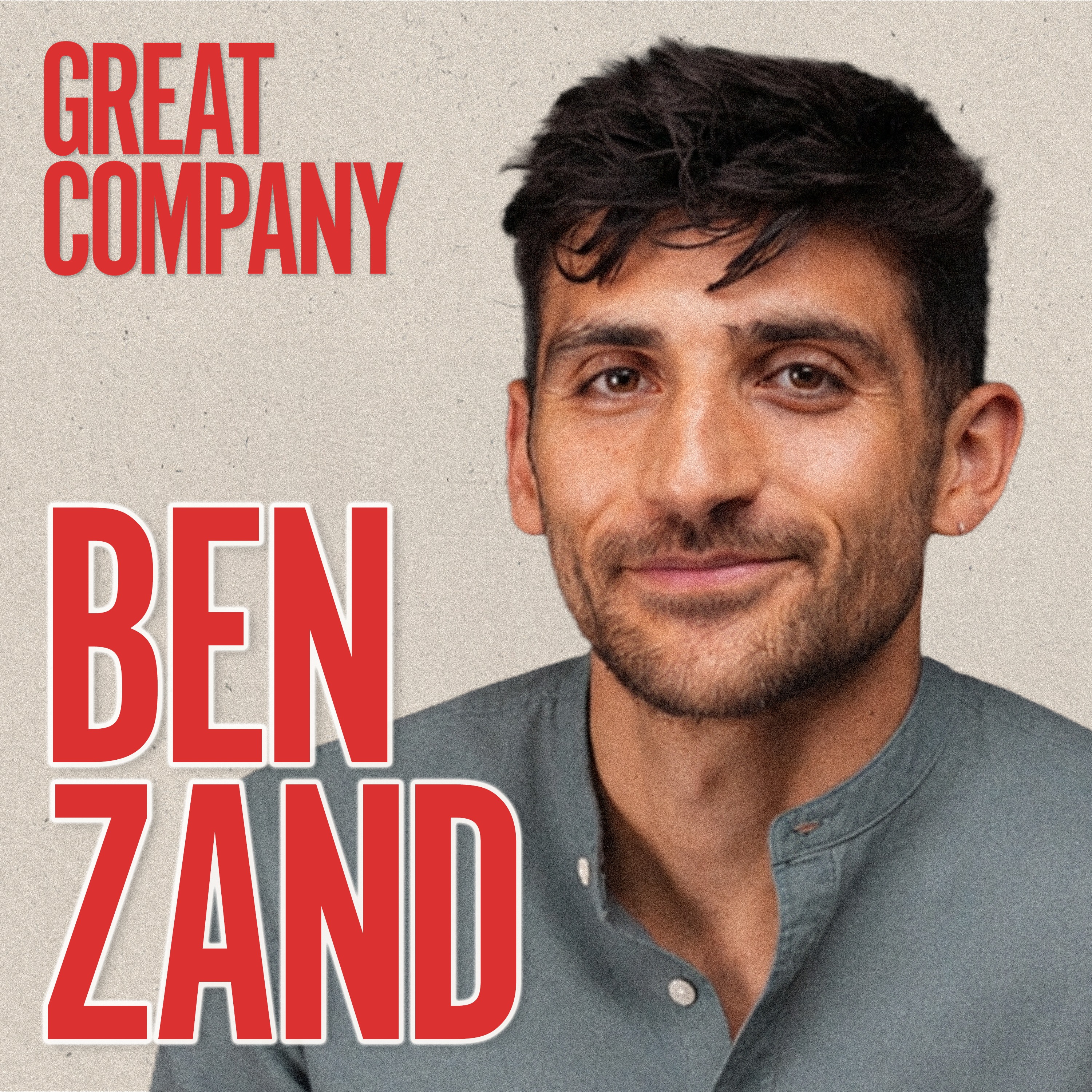
Ben Zand discusses how people get pulled into online “manosphere” communities (Reddit/Discord) and related escape routes: looksmaxxing (black-pill ideology), incel beliefs, “gooning” (extreme porn addiction with “goon caves”), AI companionship, and “trad wife” movements. He argues these ideologies offer a “reasoning” that rationalizes resentment and drastic behavior, often rooted in loneliness, bullying, insecurity, and difficulty forming real-world connections. He also explains how he gains access to dangerous subjects for documentary filming, emphasizing trust, transparency, and going to where communities already are.
Ben Zand is an award-winning documentary filmmaker who has investigated cartels, cults, and online extremist subcultures. He describes interviewing killers and racists one-on-one, and making films including a long-running project about an Amish man who eventually escaped.
Social media replaces shared truth with echo chambers; “more daylight” doesn’t fix underlying issues; cult/ideology leaders are often charismatic but insecure; people feel misunderstood and seek belonging.
Luxmaxxing jaw/chewing/gum and leg-lengthening; goon caves with many screens for hours; cartel claims “we never kill good people” (with broad definitions of “bad”); Nature Boy (Elizio Bishop) sex cult in Costa Rica; Venezuela kidnapping-gang interview where guns were put to his head.
Written by AI. May contain mistakes.
Ben Zand elaborates on the manosphere and its impact on young men.
“Social media platforms like Reddit is where a lot of these guys are going to, to kind of find out what it means to be a man.”
Jamie introduces Ben Zand and highlights his documentary work.
“Availability and coverage vary by state and insurance plan.”
Ben discusses influential documentaries and his favorites.
“But if you had to pick a documentary That everyone should watch Your favourite documentary and one of the films that you've made that is your favorite, what three would you pick?”
Exploration of looksmaxxing and the psychological effects it has on men.
“What did you find out when you investigated everything to do with the manosphere?”
An exploration of gooning and its implications on men's relationships.
“So they'll go on a discord forum or on Reddit and then a bunch of other people in similar scenarios to them will tell them that they have the answer to those problems.”
Ben explains how he gains access to various extreme individuals and communities.
“And there's like the kind of like list of things you can do to resolve this, that all seem to be just wild.”
Learn how documentary filmmakers approach and connect with their subjects.
“They're happy to be famous or whatever it is.”
Explore the beliefs behind the Trad Wife movement and its implications.
“and try and kind of make a reasonable case to somebody.”
Discuss the increasing sense of isolation in today's world and its social effects.
“And my wife's like a war correspondent for like a major news organization who, as we speak, is flying to the Central African Republic.”
Discover how online harassment affects personal well-being and social interactions.
“So I think it's difficult because people have a lot of problems that they need to resolve.”
Analyze the pressures of masculinity and the insecurities within the manosphere.
“So that they're kind of using that as a basis as to like, that is the experience of manliness now.”
Learn about the importance of respect and transparency in dialogue.
“And I don't really, I don't think there's any specific example of the best man.”
Understand how curiosity can lead to deeper insights and personal growth.
“I would happily sit next to a couple and talk to them to find out about what they're like, what they do.”
The guest shares their struggles with identity and belonging, reflecting on their mixed cultural background and experiences of exclusion.
“that point i was like right i don't necessarily feel like i belong anywhere um so that you know who the hell am I?”
The guest recounts their seven-year investigation into a cult leader named Nature Boy, exploring themes of control, belief, and manipulation.
“And we get into all sorts of tomfoolery on our podcast, The Jack and Ash Show.”
Discussion on the common traits and behaviors of cult leaders, and how they manipulate followers to create a shared identity.
“The framing is that they're dominant and alpha.”
Discover the risks journalists take and how personal experiences shape their perspectives.
“So, but they kind of create this like rationale in their brain that makes it okay to do bad things.”
Learn about the unique challenges of documentary filmmaking and the importance of creative control.
“As a creative, it's very important to be the master of your own destiny.”
Hear insights on the filmmaking process and the importance of asking the right questions.
Get valuable advice on building a career in filmmaking in today's digital age.
“If you're sitting in your rocking chair, you're 90 years old and you're looking back at your life, what do you feel and hope that you've achieved?”
Contemplate the importance of personal values and experiences in shaping one's life.
“Ben, thank you, man I really appreciate it Listen, we have our last eight questions Quickfire, are you ready for these?”
Engage with light-hearted quickfire questions revealing personal insights and humor.
“Those snapshot moments, those moments in your mind where you go, I just need to capture this.”
Ben Zand discusses the impact of filmmakers Michael Moore and Louis Theroux.
“And like, yeah, and he is kind of like, so, oh, it's a good question.”

Get the gist, explore an idea or ask about something said.
 Claude
On Great Company with Jamie Laing, what are the key points of this episode?
Searching your listeningAutomatic transcript. May contain errors.
0:00I've met killers, I've met racists, I've met everything. They think that there is a reasoning, a method to the madness. Probably only once, maybe like twice, I've met someone I thought was an actual psychopath, you know, like an evil psychopath who had no empathy and they were terrible. You like them? Hi, I'm Ben Zand and I'm in great company. The award-winning filmmaker, his work takes us to some of the most unexpected corners of the globe. I'm intrigued by people who are really convinced that they both understood themselves and the answers to the world's problems. They kind of create this like rationale in their brain that makes it okay to do bad things.
0:35Like in Mexico, I've interviewed cartels a lot. They all say, we never kill good people. What is your definition of a bad person? Someone who's stolen, someone who's disrespected. Okay, but your definition of disrespect is quite broad. The manosphere. Social media platforms like Reddit is where a lot of these guys are going to, to kind of find out what it means to be a man. Pull the layers back and there's just deeper trauma. If you had to steer young men or boys away from the manosphere, how would you do it? I mean, it's a tricky question. I mean, I'd say like I was in Venezuela. We were trying to interview a kidnap gang.
1:08Blindfolded us, put us in the back of motorbikes, took us into Lexham Hills. And then when I got there, they thought I was a police officer and they put guns to my head. Since becoming a father, has it changed your opinion of wanting to put yourself in these situations?
1:25Summer's supposed to be the easy season. So why are so many people quietly Googling a therapist between summer Fridays? Because more daylight doesn't fix the hard stuff. Sometimes it just turns the volume up. Grow does therapy differently. Grow connects you with thousands of high-quality, licensed therapists across the U.S., offering both virtual and in-person sessions, nights and weekends. There are no subscriptions, no long-term commitments. You just pay per session. Grow helps you find therapy on your time. The therapist you want takes your insurance on Grow. Grow accepts over 125 insurance plans.
2:02Sessions average$21 with insurance and some pay as little as$0 depending on their plan. Visit growtherapy.com slash ACAST today to get started. That's growtherapy.com slash ACAST. growtherapy.com slash ACAST. Availability and coverage vary by state and insurance plan. This week on Joe Marlow, we'll see you now, we had Prince Harry. An actual Prince of England was on. Did it go to plan? Sort of. Kind of? None of the plan panned out. The chuckle vision, chuckle chuckle vision. The chuckle vision. Down, down, down. Front and back? No, the back's a disgrace. It's like the eye of that thing from Lord of the Rings.
2:46The eye of Sauron? Yeah, that's what it's like. You pitched at this as a couples therapy thing. Sometimes I don't feel like I'm hurt. That's all I'm saying. Washing machines live longer with Calgon Prince Harry on Joe Muller Will See You Now Is out now Watch it on YouTube or Spotify Or listen to it wherever you get your podcasts
3:11Hey guys, welcome back to another episode of Great Company Today's episode is with Ben Zand This episode is amazing Ben is a documentary maker He's made shows on Manosphere Tradwives, Cartel, it's incredible And the situations he's put himself in are wild So get ready for it Now before we start, if I can just ask one quick favour If you can click that subscribe button It takes one second, it's completely for free And it does so many amazing things for our show Okay, thank you Enjoy this incredible episode of Great Company With Ben Zand But if you had to pick a documentary That everyone should watch Your favourite documentary and one of the films that you've made that is your favorite, what three would you pick?
3:56That's a very difficult question. The documentary that got me into making documentaries is something like Super Size Me, that kind of sense of gonzo journalism. I love that style of content, where it's like somebody takes on a thing. In terms of which one of my docs... Which one of your docs? It's literally impossible to answer that question. You have to. It's kind of like My Babies or something. You know what I mean? I'd say maybe our gooning documentary, if you want to step into the goon cave, feel free to go onto our website. And which documentary do you think everyone should watch because it's so impactful?
4:27Tickled is a fantastic documentary. Tickled is so great. It is. It's the type of documentary I love where it's like, because basically a good documentary is something where like - It starts as something then - It starts and then ends completely different. They say stranger than fiction and you need like kind of twists and turns. It's like that thing where it starts as kind of a seemingly like obscure thing that you don't quite, you know, understand. standard and it tends to something way bigger. I mean, another thing is like, you know, one of my good friends is like Uber Butler. Do you know Uber?
4:55I love Uber. Yeah. So I think Uber's documentaries are great. I know he's got like a Channel 4 doc out right now. So I love like people like him, where they're just like, they're just fascinating brains. You know, if you kind of sit down with someone like that, they kind of, they see the world in a different way. So I love people. I like presenter led documentaries. That's my thing. You know, I like hosted stuff. I think obviously character led docs are extremely important, but I love following people through an experience as they do something. That for me, to be honest, is also why I wanted to make stuff myself because that's actually less and less ubiquitous in the world.
5:24Now docs are very much like kind of either true crime, character-led docs, kind of celebrity documentaries. People should watch more documentaries because I think like the thing people don't quite realize is documentaries actually are not only incredibly difficult to make, they're also actually really expensive to make. And especially the type of docs people love where it's like, you know, if you make a documentary, like we made a documentary about this guy. It's like, I got an email once from this Amish man who was living in a community in, um, in Ohio in America. And he was, he initially said to me, you should make a documentary about what it's like to be gay in the Amish community.
5:57Um, and I kind of like looked at it and was like, well, that'd be hard to do without anybody to talk. And then he replied saying, I, I am that man. I am the guy who is, and I've been, I've got married, I've got two children, I'm living in this community and, uh, I feel like I'm trapped. I don't know what to do. So then we followed him for like five years. Um, and now he's kind of like, you know, through like the kind of highs and lows, he eventually got out to it. His life fell apart and he's now married to another kind of ex Anabaptist, which is like part of that kind of religious group. And he lives a kind of happy life, finally being himself, living freely.
6:31But those types of documentaries like - How do you fund that? Exactly. I mean, it's freaking difficult, you know, like, and often people don't really watch them. Like it's never going to be as big as like a big entertainment film. So I think a lot of people always tell me they love docs and I'm like, well then support a documentary maker because genuinely it's quite difficult to make these films i think it's really important to be able to capture these stories and to see life happening on camera and to support filmmakers doing these work okay so we let's get into some of the docs right so you know one of the big topics at the moment is the manosphere right and louis through did his one on netflix yeah but you'd you've already you've already been in that world and what's kind of terrifying about it is that it's this corner of the internet that is so kind of impactful to young men.
7:13What did you find out when you investigated everything to do with the manosphere? I mean, to be honest, it's a kind of continual investigation because we've done, we've done quite a few films in that space. I think like, I mean, I suppose I'd preface it with like, I think we have a general reality now where there isn't like kind of a shared truth. You know, there's no kind of mainstream culture in the way that used to be. You know, we used to have a kind of finite amount of TV channels and locations that we'd go to to get information. Um, and it was a kind of bit more of a kind of central idea of what it meant to be man, woman, whatever.
7:49I think now we've kind of moved into the space where like, um, information is a kind of battleground where you have like multiple kind of legacy meter institutions and are kind of not as powerful as they once were, you know, you have kind of independent creators like yourself and myself who are kind of creating another kind of type of content over here. And then you have kind of social media platforms like Reddit and kind of Discord and on the kind of fringes that is where a lot of these guys are going to, to kind of find out what it means to be a man or whatever. And I think, you know, it's well documented that, you know, these types of guys are kind of feeling increasingly kind of confused about who they are.
8:27And, you know, they're leading, they're trying to find answers to why they feel like they kind of don't have, maybe they're not working, they're neats, you they're not in education, employment or training or whatever. So they kind of generally feel resentful to society and they're trying to find an answer to those problems. So it's a resentfulness and insecurities? Yeah, I think, you know, the kind of general process of how these guys fall down this, you know, I've made docs about looks maxes. Explain that to our audience who don't know what looks maxing is. Well, they all kind of come from this idea of like the kind of black pill ideology, which is this idea that like kind of looks are really all that matters.
9:03like only a small section of men gets the majority of women and if you're not that type of guy you're not like kind of chad then your kind of chances are just hopeless you're not going to meet anybody so and you can kind of take a range of actions from that point you can like become an incel so you just accept that like you're out of luck and you become this resentful kind of woman hating kind of thing that just lives in a room and doesn't really interact with people and or you can become a lux maxer and you try and kind of gain the system you try and get like a specific face that they've decided is like the face based on these kind of like pseudo scientific kind of ideals being just so symmetrical in a way right yeah like giant jawline very hardcore jaw like i mean i i got like kind of lux maxing test and was told like i have like a negative cantile tilt which is like bad like my eyes point downwards and i've got a dorsal hump on my nose which is like a lump on my nose which is supposedly bad but like you know so there's all these things that you can just lean into it but i mean it's like it's like mostly bullshit obviously looks are important it's hard to deny that but they take it's like just such a degree and what do they what do they do when they when they are look maxing what do they do to try and improve their look they'll like hit their jaw bone to try and change the shape of their jaw because there's like this idea that if you hammer your face the bone grows back stronger so you can kind of dictate the direction of your jaw they'll mew which is they chew i mean they'll put their tongue at the top of their mouth.
10:26They'll chew like thick gum to try and get a bigger jaw. And then on the extreme ends of it, they'll get leg lengthening surgeries to try and be taller. Cause a big part of it is like, you have to be six foot. Um, so it's like, I mean, I miss the thing is like, I go into these worlds kind of as a bit of like a kind of anti-manosphere kind of, uh, observer within the space, which is really all I'm doing is trying to put these ideas back to them and saying, look, Like I understand you feel kind of out of place, you're not kind of, and it often comes down to like, maybe they were bullied in school.
10:56They didn't get the attention from women they wanted. And then they've kind of grown up and they get this kind of sense of often it's entitlement around like, I think I should be able to meet a woman and I'm not meeting a woman. So I'm quite annoyed about that. And then they'll go onto these forums because they, and this is what I'm saying around the sense of people don't have a central place for truth anymore. And you have all these little mini echo chambers that people fall into. So they'll go on a discord forum or on Reddit and then a bunch of other people in similar scenarios to them will tell them that they have the answer to those problems.
11:29And it's maybe it's Lux Maxing. Maybe it's like the kind of incel ideology. And then we've done things around gooning, which gooning is not necessarily, you know, gooning. No, I now spend my life spending too many people telling people, too many people. Tell me what gooning is. Gooning is, um, kind of like an extreme porn addiction, but it's like where people create like a goon cave. You got access to a goon cave. I stepped into a goon cave. I won't go into too much detail because it's a fascinating place to be. But a goon, the kind of concept of a goon cave is like, they like, it's basically like just porn maxing.
12:02So it's like you want as much porn as you can. So they'll have like 70 screens that are just playing different bits of porn. But it kind of goes into this, and it's all about - What are the ideas behind it? And where you sit and self-presure yourself? basking yourself in this kind of like hedonistic kind of like dopamine pit basically it's like and the idea is like you're you know they'll do it for up to 12 hours and they'll you know so it's like they're not actually like ejaculating on mass for 12 hours but like they're kind of like getting to the limit and then going back down again and i think i i'm interested in this for multiple reasons one is like it's kind of the sense that there's like kind of there's clearly a problem when it comes to like kind of um men and women being able to meet each other in the world that we exist in and like gooning is a is like an extreme another answer to that problem which is like i'm just going to completely check out of that i'm just going to step out of the system all together and just get any form of interaction and love from this kind of synthetic porn addiction we're also doing something about ai companionship and that's another part of that story we're doing something about trad wise, which is another part of that story.
13:11So it's like this kind of central thread running through all of this, which is like clearly people, both men and women are saying, you know, I'm not able to meet someone that I feel is a kind of a partner for me, or I feel like I'm kind of locked out of the system or men aren't kind of acting how I want them to act or kind of, you know, so I'm just going to kind of step out of this altogether, or I'm going to take drastic action. And there's like the kind of like list of things you can do to resolve this, that all seem to be just wild. But how do you get access to these areas, right? How do you, because my big question is this, is the amount of things that you've done, whether it is speaking to cartel or going to a goon cave or talking to people about look maxing or whatever it may be, right?
13:53You're getting access to these people. So in my mind, these people who are doing this don't really want to do it in private. They're happy to be on camera. They're happy to be famous or whatever it is. So how does that, how does the initial contact start? I mean, it's a process. it takes a while. I'd say the thing, because people always say to me, why would anybody want to talk about that on camera? And I think it's because a lot of people feel misunderstood, no matter who you are, no matter what they've done. Like they generally feel like they have reasoning. You know, they've got a reason that makes sense.
14:23Whether you're a killer or - Whether you're a killer, whether you're a gooner, whether you're, you know, whatever. It's like, you know, they think that there is a reasoning, a method to the madness. So they kind of are eager to talk about it, but it's a process. You know, we'll, we'll go to where they are basically. So So that might be you go onto these forums. If it's a drug lord, you get a fixer in a location that lives in that space. So you basically go to the community and then you try and you spend a bit of time doing it. And there's a lot of kind of false starts. You know, a lot of people say no.
14:51I mean, recently, like our last documentary, an interesting one, like it was about getting a millionaire to meet a homeless man. And we needed to get a millionaire in two days. So we just went to a really expensive gym in Arizona because we were in Arizona. and just sat outside the gym until a Lamborghini showed up and then just spoke to him, kind of said to him face-to-face with the premises and this guy was worth like hundreds of millions of dollars and he said yes to it. So I think there's an element of kind of just, you just have to put yourself out there and try and kind of make a reasonable case to somebody.
15:23And then a big part is making it seem like you have reasonable, not scandalous intentions. You know what I mean? Yeah, and that comes from you, right? Because your aura, your energy, I feel like I can trust you. Yeah. And I think because I am trying to be trusting, I think, and that's the thing I'm, I'm, we always say like in the work we do, like, don't say anything in the documentary that you wouldn't say to somebody's face. If you know what I mean? It's like, I'm not going to, like, if I was making a documentary with you, I might, you know, say, Hey, you know, why do you think this about this thing?
15:53And we'd have a debate kind of conversation around it, but I wouldn't then talk shit about you in the film behind your back type of things. I'm always trying to make it so that like you at least are it's a conversation between us and i'm being honest about what i'm doing so i'm always very transparent like i'll say like you know the trad wife one we've got coming up like we've actually got two films coming up one big british trad wife and a big american trad wife and like and just quickly explain what trad wives are i mean trad wives are this kind of i suppose a another solution to that problem that kind of men and women don't seem to be able to match together and, and, um, as easily as maybe they once did.
16:32And they have come to the conclusion that like, actually the solution is women need to be subservient to their husbands. It kind of, it comes from a kind of religious kind of Christian worldview quite often where it's like the role of a woman in a relationship is submission to their kind of husband who is serving God type of thing. And this is like become a thing. So there's now people doing kind of trad wife academies where they're teaching women how to act like this to their husbands so we're we're looking at it from the perspective of like you know they quite often believe women shouldn't vote and that women should be kind of disenfranchised from the voting system like you know there's certain things that i can kind of happily say i don't agree with that it's like obviously i think women should be able to vote and my my wife my wife is probably the least trad wife wife you could ever have my wife is like yeah my wife is the least trad wife yeah But it's interesting because like, because like a lot of these don't think women should work.
17:24Um, and they don't think they should have stressful jobs. And my wife's like a war correspondent for like a major news organization who, as we speak, is flying to the Central African Republic. An Emmy award winning. A multi Emmy award winning journalist. So it's kind of like, you know, completely different worldviews, but like, um, but like, you know, that she wants to talk because they think that, I think, you know, they think they've got an explanation. They think it makes sense, you know, and they think that there'll be an audience who think that what they're saying is right. People seem lonelier than ever.
17:51We feel disconnected, right? And perhaps that's because the internet, maybe it's because of social media. What is your view on that? Why do you think we're lonelier than ever? I think it's a lot of these things. I think like, yeah, you know, I think we don't have the kind of communities we once did. You know, and I think people are just increasingly isolated. Like you see it from the characters in the films I make. Like if you look at the lives they lead, quite often they don't work or they work very late. Their sleeping schedule is just messed up. like they'll kind of be awake in the early hours of the morning and they'll sleep kind of through the day um and then their kind of social circle is the internet and it's like specifically like forums you know they'll be on these forums until really late into the night and i remember when i made um you know what every time i make one of these films the thing that always astounds me is like when you meet someone who's kind of like perennially online they talk about their friends from forums as if they're kind of real people that they interact with in the real world so you'll say like you know do you have friends it's like yeah it's like do you meet up with your friends yeah and I meet up with them quite often.
18:49And I'll say, in real life. And they'll go, no. I talk to them on the forum. And I think there's that sense that there's just no difference. That is now the relationship. And clearly there is a massive difference to that kind of personal human connection. And I think the funny thing for me about stepping into this world is like, I am like probably the least perennially online dude really you can meet. Like I kind of, I am, you know, I've got a good circle of friends, big family, big family of in-laws, me and my wife uh kind of socialize a lot i've got a beautiful son so it's like i'm kind of stepping from this world that i'm pretty happy with and i feel like i kind of have a kind of it's mostly figured out and then i'm kind of like going into these worlds and generally it sometimes it feels really obvious you're like well obviously you know don't sit in a goon cave for 12 hours on a sunday you know that's probably not going to be the solution but i think then you get under the you know, you pull the layers back and there's just deeper trauma or kind of issues or insecurities that are coming from that or kind of relationships with their parents.
19:51So I think it's difficult because people have a lot of problems that they need to resolve. And, you know, Do you think a lot of it is down to that, down to the trauma when they were younger, whether it's family or friends or bullying or whatever it may be that has led these individuals to have these views and think about these different things? I think it's hard. I mean, I think it's yes, but I also do think that it's a lot more difficult now, you know, I think, you know, once you, once you leave, like school now is a different place anyway, and that people are kind of on their phones and on the internet, but like once you, once you've left school and maybe kind of university, like how do you make friends?
20:24You know, if you're not someone who's inherently sociable and you're not kind of, um, you know, extroverted, it is actually just quite hard to meet people and make friends. So I think like, and, you know, historically, um, you know, if you were feeling a bit lonely and a bit like kind of isolated, you know, there'd probably be more of an onus to go outside and meet people because there wasn't any other way to kind of satiate that feeling of kind of isolation. But now you just don't need to in the same way. No, you can just fall into this pit on your phone and feel as though you're making connection when you're not actually making connection.
20:55And connection is the most important thing, right? That's what makes us fundamentally happier is having real life connection with individuals, right? And the problem is now is if you're bullied, right? If you were bullied at school, you could leave school and it was left. Now bullies follow you home. They're on the internet, they're on your social media, they're on your Snapchat, right? They almost, it harasses you, it can't leave you. So then you feel like you're imprisoned within your own life because of it. I think also you're just continually reminded kind of who you're not, obviously. You know, I think that sense, and you see this a lot in the manosphere where they're like, they're being pumped imagery of like what it means to be a man and like kind of, you know, people with Lamborghinis and multiple women on their arm and they all kind of look the same.
21:37So that they're kind of using that as a basis as to like, that is the experience of manliness now. So if you, if you weren't Switzerland right now and you had to steer young men or boys away from the manosphere, how would you do it? I mean, it's a tricky question. I mean, I'd say like, I can only talk about myself and my own values in many ways, but I think like a lot of it is, you know, in terms of the economy, like the, you know, it is harder to get jobs now. These are legitimate things that play into that because this sense of a lack of place, a lack of kind of purpose will lead you to that sense of, I am annoyed.
22:12I want there to be some kind of rationale behind my annoyance. Okay, I've landed on this ideology. This all now makes sense to me. So I think there's a lot of major societal problems that we need to kind of resolve. I'd say like, you know, specifically around like, um, cause a lot of it is around wanting submissive women. You know, part of it as a guy who has the least submissive wife, wife ever, like I don't really get why people want that. You know, I think there's a really weird, like these kinds of strong men tend to be like the most weirdly insecure guys ever. Even if you meet them one-on-one, they're kind of like so insecure.
22:42Their whole life is about kind of appearance and they don't really truly understand themselves and who they are. So I just try and be like a principled guy. Like I'm trying to just be good to my wife and so on. I'm trying to have like a kind of, you know, equal relationship where we talk about things and it's about no one being better or worse than the other. We're just kind of part of that. And then just trying to be a productive member of society. Like I'm just trying to be, you know, I'm trying to learn from my problems. I'm trying to help people where I can. And like, that's as far as I can be and say what a man is to me.
23:12And I don't really, I don't think there's any specific example of the best man. I think it's just who am I? What have I seen that works? So what do you think your skill is? Are you good at making friends? Yeah, I mean - Because that is your role in a way. You have to, you in a way have to persuade people that you're trustworthy. I think I'm good at treating people with respect. I think, you know, I kind of, I really try and see the humanity in everybody I talk to, regardless of what you've done. So it's like, I'm trying to be respectful. I'm trying to be as non-judgmental as I can in that moment.
23:47Sometimes I will judge you if you've done something horrific, but I'll be kind of transparent about it. So I think it's, it's not so much that I'm being people's friends. I'm just being transparent with them and I'm being human to them, you know, in the sense of like, I'm really trying to give them their basic humanity and respect in our kind of engagement with each other to a point that like, I'm not going to screw you over. I'm going to treat you fairly, but I am going to ask you kind of difficult questions because I'm on a bit of a mission to try and understand why you are the way you are. And there'll be people watching this and they'll have their own questions.
24:17And I'm going to kind of be the conduit for those questions so i think it's a sense of like yeah like and i'm generally quite curious you know like i i am mostly my wife always kind of says to me like um i ask a lot of questions to everybody and and it's not just because i'm a journalist it's because like i genuinely just i'm quite intrigued of like why is that like that like i'm actually you know what why do you do that like that and she'll kind of quite often laugh i'm with someone she'll be like it's just you know just chill out well it's exactly the same as me yeah the world's interesting isn't it that's the I think.
24:47You can use the fucking greatest. Like, I got on holiday with my wife. I would happily sit next to a couple and talk to them to find out about what they're like, what they do. I hate it. It's like, why do you care? Because people are so interesting. And I guess it's like learning. You know, it's cool to be like, oh, why do people do different things? And as I've actually, that's one thing that in my 30s that I've really, and that is probably a portion of growing up, which is just like, God, there's so much I literally don't know. I have not been through many things, you know. Growing up in Liverpool, right?
25:18So what age did you move to London? So I moved to London at 21 years old. I left Liverpool when I was 18 and I went to university in Edinburgh. And then went to like America, like over a summer, which is, and my accent progressively got less gauss as I did different things. I used to proper talk like that, and now I enunciate my words more and all that, you know. Because the accent is hard to put, right? So I can sense a little bit of Scouse, but then there's a bit of a Southern going on. There's a Southern, like that's the worst thing you can ever say to me. It's a little touch, man. I don't have an issue with Southerners, but Scouse is very precious about accents.
25:59But no, it's interesting. I think it's actually like mostly, I went to America to work in a summer camp. Do you remember Camp America? Did you ever hear of Camp America? So I went to go work in a summer camp over the course of a summer. And it was my first year of uni. And I remember like, I'd say to the kids, like, go to sleep, go to sleep. And they'd be like, what? I don't understand what you're saying. And then like, so I started talking slower and slower. And then I got that kind of like annoying, like, you know, like that uni accent where everyone's kind of accents kind of merge together.
26:29And then now this is me. Wait, so what was, what was Camp America like? It was amazing. It was like, um. Cause I know it from Parent Trap. Oh yeah, yeah, exactly. It was cool. It was like a kind of camp. So I was a counselor in a camp. So like, I was 19 and I was like looking after kids who were like, probably like between five and 16. It actually taught me a lot about people because kids are like adults, but just absolutely wild. You know, it's kind of like adults with no emotional restraint. So it was quite an interesting kind of life lesson around how you just deal with like hundreds of different personalities in the most intense setting.
27:09I've always loved that fine line between kind of being insanely deeply uncomfortable, um, in a place that you're, you know, kind of a bit of an outsider. You don't really understand the kind of customs and norms of a place. Um, uh, so I both kind of love and hate that in equal measure. Uh, and I think it goes back to like, I grew up feeling a bit like many people, I think, in the media who become creatives, you know, you feel like a bit of an outsider because of circumstances, like I've got from like a kind of mixed race, mixed culture, family, kind of different religions, different backgrounds.
27:37Um, so I didn't really understand what the way to live was anyway so i kind of it started on a kind of bit of an emotional journey around like you know at first i was like i'm fully british and i was like i don't necessarily feel entirely british people don't treat me like i'm entirely british in school so then i went to a run when i was 16 my family from a run and i was like okay i'm gonna go once i step off this plane i'm going to belong and then my god did i not feel like i belonged so it's kind of like from that point i was like right i don't necessarily feel like i belong anywhere um so that you know who the hell am I?
28:06So I think there was a kind of long period of like, I literally have no idea who I am. And then that naturally lent itself to kind of being like, oh, well, I'm intrigued by who other people are. And I was kind of specifically intrigued by people who were really convinced that they both understood themselves and the answers to the world's problems. That was always like the most fascinating thing. Cause I'd be like, whether it's someone who's like deeply religious or kind of really politically aligned, or they had some like really clear vision of the world, I'd be like, great. Maybe if I meet you and spend some time with you, you'll give me the answer.
28:36Why do you think identity is so important? Well, to me, it was because I felt identity-less, which is probably an experience a lot of people who are kind of from like mixed cultural backgrounds have where you don't really... Also, being a kind of British-Iranian is a bit of a weird kind of identity. There's not loads of Iranians in Britain who wasn't in Liverpool growing up. So there wasn't like that kind of merge of identity wasn't really a thing. So, I mean, the strongest identity I have is Scouse because Scouse is quite a strong identity. But when I grew up, I also got kind of a lot of shit.
29:10I was kind of growing up in the kind of embers of 9-11 in that sense of like a much heightened version of like terrorism in the Middle East and all that. And I think that sense that like there were some places that were bad, some places that were good, didn't quite know how I fit into that sense of things. So just for a long time, I felt mega identity less. Did you experience racism? i mean yeah like i got called the p word or a lot you know um you know like uh and um i uh and i just like that kind of sense of just not really like you know when i grew up like you basically it was like kind of very kind of you know white british environment but it wasn't even just that it was like if you didn't have a one all over literally like a skinhead you or you didn't have like kind of air maxes like my one like 110s and all that or kind of it was just like a very specific definition like i really just did not feel like i fit in i was like um i was like a chubby lad um in like quite a rough environment um and it felt like i was just hiding stuff like um uh you know my my my you know kind of mixed race my family's got my you know member of my family's got kind of disability and all these things for you know my two grandparents were deaf from birth and like to kind of like all this stuff that just felt like kind of shame and not really knowing what you know i'd be embarrassed that for my friends to come to my you know grandma's house because it you know i was worried that people were going to judge me for these things it was just a sense of kind of feeling uncomfortable and not really knowing like actually what was okay you know what was normal when did you find your sense of identity probably the last few years really i think my my 30s have been great i've genuinely loved my 30s I mean, I always remember I had a friend who once said to me, he was like, I was like 23 and he was 33.
31:03He was like 10 years old than me. And we were on a shoot together in America. And, um, and I said to him, what's it like being 30? You know, as if like it was this thing that was like another planet or something. And he was like, yeah, he's American. He was like, yeah, it's pretty cool, man. Like, uh, and he was like, you know, in your thirties, you just know who you are. Or it was like, at least you, that's the aim that when you get to that point, you know who you are. And I kind of was like, oh, that's quite a high bar. you know like that by that point i need to kind of understand who i am and obviously i'm not now like completely i don't have the answer to everything but i just i'm a lot more comfortable in myself yeah which i think a process of a lot of things like i think as you age you start to get more and more kind of evidence you know i mean when you're young and especially when you're trying to do different things and you you know like you don't necessarily have reference points for it you always feel uncomfortable because you're doing things for the first time you don't really know if it's going to work out you don't know if you're good enough you have all these insecurities but then you get older and older and you get more and more bits of evidence to suggest okay i kind of know who i am kind of know this so now i have just a bank of evidence to be like i'm at least all right you know the amount of people i sit opposite right and talk to have the same experience and if i look back at my like 20 year old self man it's like not even comparable and and it's not a suddenly it wasn't a light switch but my 30s is when everything changed far more confident myself know kind of what i like and don't like but but i think part of it is kind of environmental as well because the truth is when you're in your kind of late teens 20s like your life is quite dependent on other people you know you you do need people to like you in some capacity or you're at least more than you do when you age because you're not kind of financially independent you haven't really figured out what type of career you want as you grow up so you're just dependent on people so therefore those insecurities have much more weight because like Like, you know, if you don't know if you're good enough, like, you know, with me, it was like, I want to be a journalist.
32:55I don't want to be a documentary maker. I want to be on camera. Then I want to run my own business and all that. And all those things, I had to get the help of other people in order to get to that point. So you are dependent on other people liking you, wanting to work with you. So those insecurities are just heightened.
33:16Thumbtack presents Tile Trouble. Every single time I use my sync, I think I make eye contact with the uneven grout on my kitchen backsplash. The crooked corners eye me and I'm haunted by more tiling questions than I thought possible. What kind of pro can fix a backsplash? Can I replace one cracked tile or should I replace them all? What? What if I just use Thumbtack? I can hire top rated pros, read reviews and compare prices with a tap. All on the app. Thumbtack knows homes. Download the app today. I'm Jack Remington. And I'm Ash Hay. And we get into all sorts of tomfoolery on our podcast, The Jack and Ash Show.
33:50Oh, here we go. Oh, I'm from up north. I only know about chippies and batter.
33:58If a cherry tomato makes me gay, then my God, smother me in a rainbow and push me down the river by love. How amusing. It is amusing. We also help you out with some good. No, let's be honest. It's mostly bad advice. Watch and listen to The Jack and Ash Show wherever you get your podcasts.
34:17You spent seven years investigating a cult leader called Nature Boy and his group, which you call the craziest cult of our time. What did you find out? Well, the thing, you know, this is a - Seven years, a long time. It's like a medical degree. Exactly. The thread of all these docs is trying to understand why do people do things that seem kind of out of the ordinary or extremely difficult to believe. And it's pretty much always the exact same thing. you know like they will is that what is the three line the three line is like you don't like you know these are you know this is a guy called nature boy his name is elizio bishop i um came across him initially like i was working for the bbc at the time and um and i saw this cult i was basically like doing a series going to central america used to have a very cool job where i'd just go to a place for a month at a time and make some films type of thing and i was going to central america i was like oh costa rica is a bit kind of like thailand or something where people go to try and find themselves or they go on like these kind of long gap year holidays so i just google called costa rica cult and i came up with a picture of this guy and then madly enough he just had this whatsapp number on his instagram so i just like kind of called him and he was like the most charming dude in the world like he was just like really kind of like you know ripped kind of good-looking nationality he's like kind of black american from atlanta like and his whole group was called melanation at the time the idea was like the more melanin you have in your body the closer you are to god um but you could kind you could join no matter what race you were the idea was like you just had to be naked and mostly naked in the sun and you get browner skin and that would mean you're closer to god um and then it kind of like you had this idea affair which is like it kind of built it off the from the kind of sense that like america is a you know kind of racist country and the kind of it's babylon like the system's broken instead of trying to fix america just leave the country so you managed to kind of get a bunch of young americans to fly most of had never left the us they'd never had passports they were all these kind of young smart kind of like ambitious americans who just basically paused their life for like six seven years to try and follow this guy and it just ended terribly well it ended how he became it became a sex cult and he forced them to do loads of things they didn't want to do he eventually got charged with rape um and now he's having life in jail and i think and again it's like people are looking for someone to follow they want something to believe they feel as though you know they don't know who they are they need direction and the problem is like especially with social media you get these like kind of snake oil salesmen you're extremely convincing you know you watch the videos and you're like wow like it does seem like you're making a lot of sense uh and effectively they then groom you over a period of time and then you're just in it it's very difficult to unwind What do these cult leaders have in common, do you think?
37:06They're extremely personable. They've got a lot of character. Dominant? Alpha? Yeah. The framing is that they're dominant and alpha. Again, they're super insecure in a really weird way. He wanted all the women to himself, kind of forced people to break up from their relationships so that the women would only be with him. But the sense is he is the alpha of the group. But if you look back into his personal story, I remember I was on the phone to him once talking to him, like he was adopted as a child. He never felt like he had the sense of family and identity and belonging. So he was trying to kind of, he always felt out of control.
37:43So he's then trying to create this thing that he controls. All from childhood. A family that will never leave him. That's basically his thing, you know. Do you think though that someone like that is, we look at that and go, oh, he's a cult leader. Do we think there are cult leaders hidden in plain sight? Yeah. I think like for me, like there's, I think anybody who can, um, I mean, there's elements of being a cult leader that can be like, it's a sense that you can create a shared sense of identity amongst a group of individuals and you can make them all sing to the same tune to achieve some kind of end goal.
38:15So like, there's probably like, you know, low level cult behavior that probably exists in loads of companies. It's like you have like this dominant CEO who's like, no, let's all be like this. I think that it then kind of turns into it when it's like, stop talking to your family, you know, detach from everything you know. Here's a very strict code of conduct that you can't break. Kind of commit yourself entirely to me. And I'm going to start now completely messing with your mind by kind of sleep deprivation, by making you kind of repeat the same words over and over again. So it becomes like this really tried and tested route that just seems to work.
38:48Mostly men who kind of create these often sex cults. Is it illegal? The consequences of a cult are illegal, if you know what I mean. Like in terms of what then happens in a cult, which tends to be sexual abuse and control and fraud and money. I think the kind of concept of can people, you know, there's a commune, you know, like you can live in a commune that could theoretically be not illegal, but it just depends what happens. That's so, you know what's interesting is that you, the reason why you say you're sort of good at what you do is because you don't cast judgment, right? You take people for what they are.
39:21So you were saying that even if people have done terrible things, maybe I think you've done a terrible thing, but also I want to know about you as an individual. It's a great way to be because I think we judge people so quickly. Yeah, I mean, I definitely obviously sometimes cast judgment. Like I'm not kind of literally the Buddha, but I think it's more just like, even if I am judging you for a part of your life, I'm not necessarily kind of taking that wholesale. And I kind of meet a lot of people who, to be fair to them, have a lot of reasons to kind of feel angry at their scenario. or like they have like, you know, one of the docs you've come up is about kind of an AI companion.
39:56And it's actually a woman who's in a relationship with her, a kind of a character on her phone. And she's also married to her husband. And in the documentary, her husband's like, he basically admits, you know, he just doesn't have the emotional space for his wife. Like he's not there for his wife. He's going through a lot. He struggles with depression. He's in a job he doesn't like. He has to like, and he feels he has no control over his life. So she's kind of trying to figure this out. So quite often I'm just, I kind of do these docs And that's why I'm saying - That's so sad. It is sad. But I think a lot of people have, people do have reasons for what they do.
40:28You don't always, I don't always agree with those reasons. I just, you know, I try and just accept that people do things due to the kind of circumstances of their life or the environments that they grew up in. Or I don't think, I hardly ever meet people who are like actually evil. I've met some people who feel - Come on, in your line of work? Well, I've met some people, like, you know, I've met a, it's sometimes I'd say probably on like, probably only once, maybe like twice I've met like someone I thought was an actual psychopath, you know, kind of evil psychopath who had no empathy and they were terrible.
41:01But actually most of the time, I've met killers. I've met people who, you know, racists have met everything. And like most of the time they're actually, you like them. I like them. Yeah. One-on-one, like, you know, I've met like kind of massive, you know, I remember I was in Lebanon once and I met this kind of drug lord who had killed loads of people. And like, I got there, I turned up, he had cooked me, his wife had cooked me like little kind of pastries like extremely nice extremely welcoming he's talking to me about his kids you know it's like so those I knew it was like I quite like this guy I was like wow this guy's yeah he's quite nice I mean obviously like the kind of journalist in me is still trying to have you know that's why I'm not trying to be their friends I'm trying to kind of have like some kind of separation but it just makes you realize like people find a way of kind of moralizing things you know like I've met a lot of people who have killed people but they create their own kind of like and you see you do this you see this a lot in like kind of cartels, you know, like in Mexico, I've interviewed cartels a lot.
41:50And they'll say, we never kill good people. We only kill bad people. And then you say to them, okay, like, what is your definition of a bad person? It's like someone who's stolen, someone who's disrespected. You're like, okay, but your definition of disrespect is quite broad. So, but they kind of create this like rationale in their brain that makes it okay to do bad things. And yeah. Your wife's pregnant and she's an incredible journalist, right? You're an amazing journalist, but you both put yourself in dangerous situations and you have a son as well, right? Since becoming a father, has it changed your opinion of wanting to put yourself in these situations?
42:25Or do you try and block that out and continue? Yes. I'd say like, you know, there was probably the worst experience I've been is I was in Venezuela and I was making a documentary for the BBC called World's Most Dangerous Cities. And I got blindfolded by, we were trying to interview a kidnap gang, which is probably a bit of a weird move in the first place. And then they made us kind of hand in our phones, get on the back, kind of blindfolded us, put us in the back of motorbikes, took us into like some hills. And then when I got there, they thought I was a police officer and they put guns to my head.
42:57And you can see the tail end of it and kind of the dock. But like that, I was like genuinely shaken up. Give me the feeling. What is the experience when that happens? What are you feeling? What is going through your mind? That was one of the only times um that i was like why am i doing this like this does not feel worth it at all this is a bit of a stupid thing to do like kind of playing with fire and you see it like in the documentary i'm clearly pooing my pants like you know i kind of have gone white and i kind of don't know what to really say and and it's very worrying so i was just like terrified like actually terrified um and and and then you know i got i i probably i probably wouldn't do that now in a way though it's hard to predict that that's going to happen, you know, so I would make documentaries meeting people who have done bad things.
43:44So you don't, I didn't like plan for that to happen, but I'm definitely more conscious now, but I think it's actually more, I mean, but then I have a bit of an, uh, you know, I'm always like, I can figure it out on the ground. I can like, I'll be able to like, I'll be able to say this thing. It's actually now about Trump. I can probably reason with them. I can reason with them, you know. What is something that you're looking forward to that you're excited that's coming out on like what is the one that you're making at the moment like this feels great i mean the tried wives films are going to be great it's a kind of two-part series basically where like in the first one we investigate one of america's biggest tried wives and we join her at like a kind of critical moment in her life is she she speaks at like turning point usa which is like a major kind of conservative political event for women um and she like we would watch her if she kind of bursts onto the scene and follow her journey and we interact with her husband and she's you know she's kind of projecting this idea of like yeah like the ultra ultra ultra alpha husband and a kind of submissive wife but actually in reality their relationship is inverted because she's this big kind of influencer and he's basically working for her in that moment and like so the kind of inherent contradictions are fascinating within that but generally i just think like um i mean it's cool like the the beauty of like you know i've now don't work for a media institution is that we just make what we want to make.
45:03You do what you want. As a creative, it's very important to be the master of your own destiny. Like I think you need to be the person calling the shots for it to actually be the thing that you want to make. Like, I think it's very difficult to do that through like executives or people giving you loads and loads of notes. So I think like there is a beauty now where we make it, I work with the team and we just go, do we like this? Yeah, we do. Put it out there, see what happens. You know, cool. And it's fun. Have you ever made a film where you felt like you could have, let me caveat that with the, the reason why I mentioned it right is um Louis Theroux did his documentary with uh Jimmy Savile Jimmy Savile right and you know he speaks about now that he wished he had pushed Harley he'd gone a bit deeper maybe he made a mistake right have you ever been in a situation made a film where you felt like maybe I could have done a better job there every single film get out of here yeah for sure yeah I mean like um because I mean documentaries are a kind of fascinating um kind of experience really because what you're doing is it's not like a kind of it's not a podcast or it's not a kind of news interview on tv or whatever like i'm stepping into someone's life for like a sustained period of time and so you have like the kind of conflicting thing of like i want to ask you interesting questions and like kind of dive deep into your life but also like i'm in your space surrounded by everyone you know and also like i need to be with you for like over the course of a week and you don't know how it's going to go and i remember i made a film once about like a kind of evangelical pastor in south america and in guatemala this guy is worth like millions of dollars he flies private jets around and he preaches something called the prosperity gospel which is like the idea that if you the more money you give the closer you are to god and we were meant to be filming with him for like a week and on the first day i asked him the wrong question and he pulled all the access and then we couldn't film anything and then i was filming another documentary with a guy called dennis hoff who was like um they called him the trump of peronf he was the biggest legal brothel owner in nevada and he was like friends with like ron jeremy this like disgraced porn star heidi fleiss this kind of big madame and I filmed with him for two days and then on the third day he just died while having sex um but like the documentary fell through because I was actually flying back to London for one day to go to a wedding and then I was meant to fly back and because I flew away I missed the whole thing happening so like it was this incredible story I didn't get to do it so like every one of them like because we are literally just capturing life on camera you know I mean we're not so it's not produced you're just there for these things so it's like all of them I'm like I should have asked that question better or like so it's all of it is yeah what do you think about celebrities who make documentaries about their lives but have edit control i mean i think it's i mean to be honest it's fine i think it's just don't be switzerland no it's fine like i mean it's not like in a world in which there's a load of content and there's like you know they call them authorized and unauthorized docs you have like an authorized doc that might be like victoria beckham has control over her film and unauthorized doc would be like r kelly or something you know like so i I think like, you know, or like the Michael Jackson series.
47:55I think, so I think there's a place for them and people clearly love them. And a part of doc is about like, do people actually watch this thing? Impact is everything. My problem is if the only environment we have is where there's docs where celebs have control over their content or on the flip side, true crime stories, which are kind of mostly horrible and really depressing. Like for me, that's not what docs is. Like this, you know, kind of observational documentaries, which is like following people as they live through something and experiencing something. is the stuff that's like less flashy.
48:26It's the stuff that like, you know, takes longer to make, but it's also beautiful. And it like really is for me, the core of documentaries and like experiential on the ground stuff. So it's like that I wish there was more of. And Ben, if someone's listening right now and they want to follow in your footsteps, right? And they want to start making films, they want to make documentaries, they want to get themselves out there. What advice would you give to them? Well, the beauty is we are in like the most kind of democratic time to make, to basically make a career like that because like you literally can now.
48:53Like when I started, I wanted to make docs, but like I didn't really know like what the hell, how you did that. Like I kind of fell into journalism by accident and didn't do that well in my grades. And that was kind of like, journalism was quite an easy degree to get into. And I didn't go to a fantastic uni. And then I kind of stumbled on this thing and like freaking loved it. I was like, holy shit, this is the first time that like I can meet people. This is great. But then when I finished, I was like, don't have any contacts in the industry. Don't really know what to do or who to kind of talk to.
49:22So basically, I just did loads and loads and loads of work experience for free and eventually landed on something. Now you don't really have to do that. Now you can just literally start making stuff and basically build an entire media empire. And there's obviously going to be winners and losers from that and some people won't make it, but the opportunities are freaking endless. And I think you really can become the preeminent kind of filmmaker, documentary maker in the world by doing it off your own back. So yeah, if you want to, I'd also just make sure you actually want to do it. You know, I think big parts of it is like, do you really enjoy it?
49:53Figure out if you do. If you're sitting in your rocking chair, you're 90 years old and you're looking back at your life, what do you feel and hope that you've achieved? I just want to have done what I wanted to do for as long as I possibly could. I was thinking, like I was reading a book recently and it was about kind of investment because I'm terrible at investment. Like I don't know how to invest in things. And the guy in it is talking about, I should reference who it is, but I can't remember because I never remember who wrote books. But he talks in it about like his investment strategy is like, don't try and make big wins, be in it for the long haul, basically, you know, try and incrementally put a little bit away at a time into a specific fund and it will kind of compound over time and you'll have money in your later years.
50:37you might not get insanely wealthy, but you'll be comfortable and it will allow you to do what you want for as long as you possibly can with the people you love. And it made me realize like, actually that is just my goal in life. Like kind of to compound over time, what I know, get incrementally better and like to try and stop wanting to win immediately and just to be like, actually, I'm going to look at life as a film and then I'll look at that last chapter and that's really what I'm trying to get to. So I just want to enjoy the process. That's great advice. I'm going to take that advice for myself Awesome I absolutely love that You can credit me and not the guy I will credit you The mythical guy that I forgot who it is Ben, thank you, man I really appreciate it Listen, we have our last eight questions Quickfire, are you ready for these?
51:20Yeah What's a saying or phrase that makes you smile or cheers you up? Well, my niece said to my son in Liverpool on the weekend Say, alright, I'm from Liverpool And he's like now a little kind of southern boy And he went, alright, I'm from Liverpool So that's a phrase that I quite like. Best compliment anyone's ever given you? When I was in school, the girls would kind of like come up to me and be like, E, are you wearing mascara? Because I've got long eyelashes. And then over time I realized it's actually great to have long eyelashes. So now if someone says I'm wearing mascara, I'm like, sweet.
51:55Great. What scares you most about yourself? That I'll never be able to relax. Yeah, same. When was the last time you cried? i am terrible at crying what you don't cry i really i got married about two years ago and for about a week in advance i was like how do i make myself cry because like this should be the place that you yeah this is it and i got to like i'm just really happy for my wife and that was like kind of like the closest i got and it's kind of embarrassing so uh i don't know i just find it hard to cry really so i've never cried obviously i have cried but i cry for about like 2.3 seconds and then my brain goes okay stop doing that stop doing that is that healthy definitely not healthy well actually maybe it's fine you know what i mean like i mean like i'm fine aren't i like i'm not like kind of out of control or anything no you're very in control i talk a lot you know maybe that's my crying yeah well maybe it's mine what's something you can't let go of eventually i guess youth and being able to do sports you know what i mean i think like that'll be the hardest thing eventually i won't be able to let go of like recently i stopped playing football for a bit because i got like kind of sore knees and toes and all that and then i realized like no i can't be that guy you know what i mean like yeah you can't be like oh no i'm not too old i'm only 35 so i i don't want to ever get to the point where i'm like i'm now too old to do no you've got to keep moving you've got to keep moving keep doing team sports so yeah that that's something i need to make sure i don't like but it's really interesting speaking to you because we're similar ages and everything that you're how old i'm 37 okay and everything you're sort of experience and going through i'm sort of investing the sports like youth i think it's midlife crisis is that what it's called well i think i mean one thing i i actually have found from documentaries is like i genuinely think there's like there's like a preset of human beings if you know what i mean like there's like kind of there's a finite amount of experiences we can have so like people genuinely do really go through i guess we're probably in reasonably similar environments you've got a new kid and all that um so yeah i think i think and that's why that actually gives mega reassurance often because i'm like i guess this is just how life goes how it is yeah what's your guilty pleasure nuts i'm obsessed with nuts give me what kind of nuts there's a shop in um uh new york called these it's not called these nuts that'd be inappropriate it's called like kind of nuts something i bet i just like everyone who knows me knows i love nuts um but this specific shop you can go in and get free samples um and my god doesn't feel like i literally might have used about four thousand dollars of nuts but like i felt so sick so like if i eat nuts i used to be quite a little a chunky monkey as kind of growing up so now i eat really healthily but i i just binge on food but i have to make sure it's healthy food but nuts is the thing that i eat a lot of yeah what's your biggest turn off bad breath what's your biggest turn on i'm actually like a proper cuddly dude so like i like like being proper close you know what i mean like just like my favorite parts like me and my wife have spent like like the day together and we like haven't looked at our phone all day we've like put our son to bed and we're being proper sweet and cuddly with each other watching a film and i feel like you know you just feel like an absolute abundance of love.
55:15That's the greatest thing in the world. But life is so busy. That's hard to get that all the time. It's like when you get those, like on Saturday, I went to the beach in Liverpool. I went to Formby beach. I had like such a nice day. I didn't use my phone. And then like my wife was sitting there, I saw my family. And it was just like, that is so nice. Those snapshot moments, those moments in your mind where you go, I just need to capture this. Maybe that's being a dad though. You know, like maybe you change, you know what I mean? Being a dad. I think you're right. What do you like most about yourself?
55:42I like that I've got to a point where I can learn from things and take constructive feedback so like you know with my company like I I try and say to people be genuinely honest with me if I am just incorrect or a bit of a dick or whatever and I and I kind of don't really believe in like hierarchies in that sense obviously everything has a hierarchy but like I guess I don't I really really try not to look down on people at all and i really try and learn from things so i think like and i'm kind of i'm grateful that my brain is all right like i don't i don't suffer from kind of serious struggles or kind of mental illness or a lot of that just feels like a lottery so it's like i'm kind of lucky for that so like i am so yeah i'm kind of i'm grateful for that ben bonus would you rather do a documentary with louis through or michael moore oh that's a good question that is a good question hmm it's a very good question I mean Michael Moore is like the kind of OG of that kind of sense of like authored documentary and kind of like I mean it's fascinating because the heights Michael Moore hit like with like kind of Fahrenheit 9-11 he has like the basically the highest grossing documentary of all time is it really what did it make I think it was like 300 to 400 million dollars or something fact check that but I think that's actually correct and but then Louis like I think his sustained growth It's amazing how he stayed relevant.
57:06And like, yeah, and he is kind of like, so, oh, it's a good question. I mean, also they both worked together at one point on TV Nation, like a kind of US show. So maybe through Louis, you get some of Michael Moore's - Switzerland. Well, Switzerland, yeah, exactly. So maybe I'll just like get a little - How do you make a decision in life? I'd say, I'd actually say Michael Moore. I mean, because Michael Moore, like I think he is more of an OG in that sense and that he kind of constructed this style of doc that Louis himself learned from, you know. So I think there is a kind of beauty in that. Ben, thank you so much.
57:39Thank you for everything you're doing. We're going to leave all the links to your shows where you can see your stuff, everything in the show description. You are fantastic, Kambi. Thank you for coming. Thank you so much. Appreciate it, man. That was fantastic. Come on, baby. Man, your life is insane.
58:05This week on Joe Marlow, We'll See You Now, we had Prince Harry. An actual Prince of England was on. Did it go to plan? Sort of. Kind of? None of the plan panned out. The chuckle vision, chuckle chuckle vision. The chuckle vision. Down, down, down. Front and back? No, the back's a disgrace. It's like the eye of that thing from Lord of the Rings. The eye of Sauron? Yeah, that's what it's like. You pitched at this as a couples therapy thing. Sometimes I don't feel like I'm hurt. That's all I'm saying. Washing machines live longer with... Cowgon. Yeah! Prince Harry on Joe Mahler will see you now is out now.
58:45Watch it on YouTube or Spotify or listen to it wherever you get your podcasts.
Ben Zand is an award-winning documentary filmmaker and journalist whose work has taken him to some of the darkest corners of the world.
Ben immerses himself in the darkness, getting close to people living on the edges of society to understand more about their lives. His recent documentaries have explored some of the most controversial topics of our time, from cults and trad wives to the men shaping the manosphere, and those being influenced by it.
In this episode, Ben shares:
Ben is a reminder to stay curious, ask questions and want to understand more about the world we live in.
Ben Zand is Great Company.
If you enjoyed the show, you can also follow us:
Instagram - @greatcompanypodcast
TikTok - @greatcompanypodcast
Jamie - @jamielaing
And if you've got thoughts, questions and comments, you can email us at: [email protected]
THE CREDITS
Producer: Helen Burke
Assistant Producer: Issy Weeks-Hankins
Video: Harry Sawkins
Senior Social Media Manager: Laura Coughlan
Audio: Rafi Amsili Geovannetti
Hosted on Acast. See acast.com/privacy for more information.