Ask ChatGPT
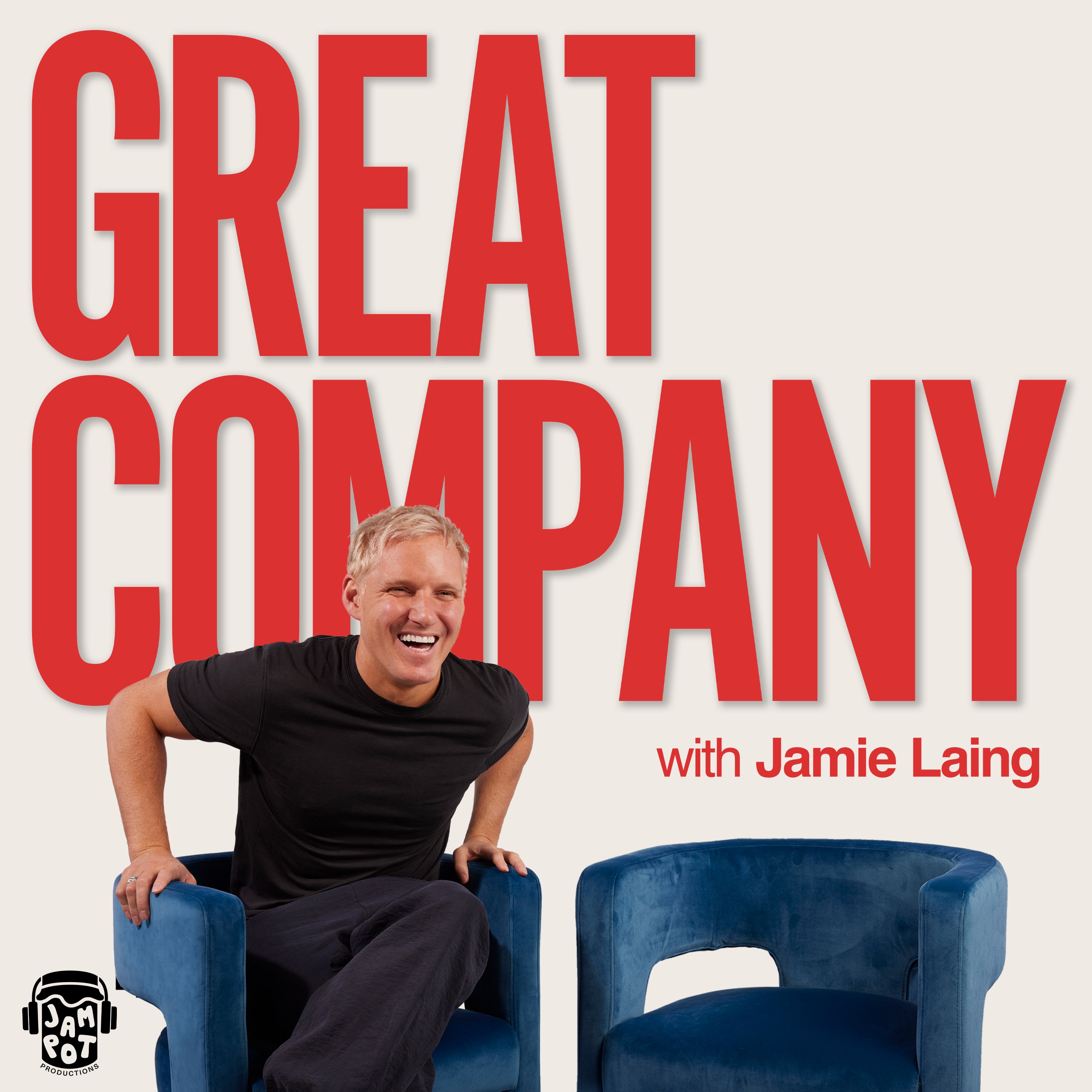

In this episode, Jamie Laing invites Caspar Lee, a prominent YouTube personality and entrepreneur, to discuss his journey living with Tourette's syndrome, overcoming anxiety, and transitioning from YouTube fame to running several successful businesses.
Written by AI. May contain mistakes.

Get the gist, explore an idea or ask about something said.
 Claude
On Great Company with Jamie Laing, what are the key points of this episode?
Searching your listeningAutomatic transcript. May contain errors.
0:28Hi, this is Knox from the Popcast with Knox and Jamie. contains nicotine. Nicotine is an addictive chemical. Does it ever feel like you're a marketing professional just speaking into the void? But with LinkedIn ads, you can know you're reaching the right decision makers, a network of 130 million of them. In fact, you can even target buyers by job title, industry, company, seniority, skills, and did I say job title? See how you can avoid the void and reach the right buyers with LinkedIn ads. Spend$250 on your first campaign and get a free$250 credit for the next one. Get started at linkedin.com slash campaign.
1:03Terms and conditions apply. What does it mean to move at the speed of AI? It means thinking big and moving fast. It means running like a 10-person team, even if it's just you. With Wix, it's possible. Create a website that's as unique as your business. Launch a new campaign or test new ways to make more money without slowing down. Think it, build it, scale it. All with AI on Wix. You ever wonder how far an EV can take you on one charge? Well, most people drive about 40 miles a day, which means you can do all daily stuff, no problem. Go to work, grab the kids at school, get the groceries, and still have enough charge to visit your in-laws in the next county.
1:47But they don't need to know that. And the best part, you won't have to buy gas at all. The way forward is electric. Explore EVs that fit your life at electricforall.org
2:02Hello everyone, my name is Jamie Lang and this is Great Company.
2:10Well, hello. Oh, I always start with howdy. What, just in life? Yeah. Howdy. Hey. Oh, you really thought about it then? Yeah. What else do you say hi? Hi, hey, howdy, how you doing? You alright? God, you're good at this. Bonjour, hola. No. Hey. I've not got any. Have you not got any? What's happened? Why have you not... Oh my God, how do you say hello? This is the best way to start the podcast. Producer Jemima has gone. She can't actually think. Hello.
3:01Greetings. Greetings. This is the greatest way to start this episode. That's fine. Oh my God. Hello everyone. Welcome back to Great Company. My name is Jamie Lang. I'm your host and you are? The producer. who is having a breakdown at the beginning of the podcast. We've had a long week though. That's probably why. We've had a long week. You've actually got tears in your eyes. We've had a long week, but a great week. A great week. Last episode was amazing with Louise. It was incredible. So brilliant. So amazing. And today's episode I'm really excited about because I've actually known this guy for a long time.
3:44His name's Casper Lee and he's a big YouTuber. And do you know, it's so funny. So Casper did YouTube. He was like the original OG YouTuber. Yeah. And I used to message him all the time because I had a YouTube channel, which I called Jamie's Happy Hour, and I wanted to collaborate with him. Does that still exist? Yeah, it does. Oh my gosh. The first video I ever did on it, which... And was this after Made in Chelsea? No, during Made in Chelsea. Okay, so like while you're on television. Yeah. Okay. And I did a... I got so into it. and you know how persistent I am with things. I did a vlog every single day for 48 days.
4:22Wow. While doing Made in Chelsea, while doing everything else. I just videoed everything. Wow. Yeah. What were you, like you're already sharing your life on TV. I don't know why. What else would anyone? I used to do like, I used to do like these weird shots where I'd put the camera on the ground and then like walk away, then walk past it. And I would put that in the edit. Oh, like a little foot shot? Like a, like a, like a pretty shot. I went everywhere with this camera, huge camera on like a tripod and I carried it wherever I went. Oh my, why? I saw that I wasn't in control of Made in Chelsea.
4:51So I wanted to take control of like my future. And I thought, well, I like filming. I like all that kind of stuff. So I'll just do that. And so when you're messaging Casper Lee, are you going to reply? Not really. But we've become friends since then. And have you discussed the fact that you messaged him lots? No, and I'm not going to bring it up, I don't think. You could. Casper's amazing. Honestly, he had millions and millions of followers online. He used to do these great sort of prank videos with his housemate and friend, Joe Sugg, who was also on Strictly Come Dancing. And Casper's done this amazing thing where he's kind of pivoted from this YouTuber entertainer into this entrepreneurial space where he now runs and founds these different businesses.
5:36That's why I think you guys are going to have loads in common. I think it's going to be a really interesting episode because that's kind of exactly what you did, but from a different space. but the big pivot and career and like being taken seriously, I imagine is quite difficult when you go into a room full of people who've only ever done business. And they're like, oh, I know you. You're that Garth TV or you're that idiot who does like pranks on YouTube. Do's and don'ts of the episode. What do you think? Do's and don'ts. So Casper is from South Africa. Okay. Don't do South African accent. Maybe not.
6:06How's it that? Okay. Don't do it. I mean, maybe, but sometimes people don't like that. Okay. Don't do that. What other things? Oh, I know. Yeah. Don't you two both like business? Let's not get so deep into business that no one else can understand what you're talking about. Got it. So always relate it. Well, just discuss business. But bear in mind that maybe some of the listeners might not know the difference between... Or care. But the difference between net and the other one. Gross. Yes. Case in point.
6:45Okay, I hear you. How's my interviewing been recently? Oh, you just like me complimenting, don't you? No, I don't. Do you know what? How's the producing been? Amazing. Exceptional. Exceptional. Love it all. Love the jingles. Love the pace of it. Oh, thanks. Love the editing. Love our guests. Love everything about it. It's amazing. Lovely guests. I love it. Yeah, lovely guests. No, you're doing well. You're doing well. Thanks, that's all I need. Son. Okay, thanks, daughter. Okay, are we ready for this? Yes. Okay, before we begin, I would also like to... You are such a tease. Sorry, I need to say this though.
7:18I like it though. Before we begin, guys, I do want to say, if you haven't followed our podcast and if you like it, if you hate it, obviously don't, but if you do like it, please, please click that follow or subscribe button and tell people about the podcast because it helps us in so many ways. I can't even begin. And if you want to follow us on social media, at Great Company Podcast. Okay, should we begin? Yes. Okay, please enjoy this episode. with Casper Lee on Great Company. I just want to say one thing before we start. You don't look that much like Judge Rinder. Just so you know, he's a lot better looking.
7:53Every single freaking... I honestly thought it was a joke at the beginning. And now, literally, people come up to him in the street thinking I'm Judge Rinder. Have you seen his eyes are slightly more round? You've really studied it? I think so. I've only seen him once in person and I just, I thought it was you at first. No, you didn't. And then I double-taked. I was like, no, he's slightly taller, slightly more built. Slightly older. Slightly older. You and I have so many similarities. In a way, I'm just older, which is really... And you have a few more pillows underneath your seats. Because my whole five foot eight doesn't reach the microphone where you're six foot whatever frame does.
8:40but we have lots of similarities where we both did YouTube whoa I tried YouTube we were also speaking before this and I was asked when did I first meet you and I was like I think there was a time when Jamie wanted to be friends with every YouTuber on earth and I just happened to be one of them yeah yeah yeah there was a lot of collaborations going on on YouTube and I had obviously done a TV show and I thought well this digital is where it's at and you guys were just killing it and it was insane and I just wanted to move into that space and when and I want to talk about all these things I don't want to jump too far ahead but when I was um going into YouTube I was like well I'm on a huge TV show I am I'm gonna do one video it's gonna get a million views and I'm gonna get a million subscribers I did a video every single week for four years for four years I got to 70 ,000 subscribers and I made three grand I did a video every week.
9:36You know, that's pretty bad, actually. That's probably the worst I've ever heard. Is it really? But it took me two years to get 1 ,000 subscribers. But then the next two years got to like 300 ,000. So I didn't have the same constant struggle you did, but I think the very beginning is hard for some people. And it sounds like for you at the time, just getting from probably, you started probably with like 5 ,000 or whatever from TV. And then getting to 70 sounded pretty tough. But I think you've done okay. I did a speed awareness course recently. Have you done one of these? I'm still in drive.
10:14I booked my theory test 70 times. Stop. 70 times since I was 18. What the... I know, man. I failed it 10 times, and my theory was is that if I keep failing it, at some point I'll pass it. And I never looked into it. I promise you, like, you will grasp similarities between ourselves in terms of, like, how we learn things and exams and all these different things. I passed my 31st time. Did you really? You can't pull me into that bucket with you. We're so similar, man. Get with it. But yeah, there was some interesting learnings from the speed awareness course. It was a humbling experience. But one of the things that...
10:51How fast were you going on the measure? I was going like four over like a 30, so 34. Which I'd say, oh, it's not that bad. It's really bad. You know, my coach on the speed awareness course made it very clear how dangerous it was. so he um yeah he also said the guy who did the studio not your coach he's my he was like a life coach he gave us some really cool principles and it reminded me of it like you know when you're in a traffic jam and you're so pissed off at everyone you're never driving so you might not know this feeling but you might be in the back seat you're like what the fuck like why is everyone here you're you're also there you're also causing the traffic jam did you ever think about that jamie you like that i like that's what my coach taught me and take that with me everywhere.
11:34Just put it in your pocket. But that's an interesting thing because that's basically what we're saying is that we live our lives a little bit where we're just focusing on ourselves. And actually what we've got to start doing is we've got to start focusing on other people. We can clip this up and stick it on TikTok. That's going to get views, baby. But I think that's a... Because I would say that you are one of these people who are quite... You're considerate, you're kind, you're thoughtful, you're empathetic. I think you... But I do. And I know, and I also know what's funny. that you find it quite tricky to talk about yourself.
12:04So what you'll do is if I give you a compliment, you're almost deflected in a certain way because you actually still can't take it on board. So if I give you a compliment, take it. You should do, man, because you are very kind. And I think anyone you've probably worked with would say, if you said, what is Casper like? He's just a great dude. Yeah, that's the visible thing. I'd love to go and hear that for sure, because you never know. You think you put in all this effort to be nice and people are just shit-talking you. No. But you know, I think it comes, it's a very British thing and I'm not British, but I'm from South Africa.
12:37And I think it's quite a similar thing there. Whereas in America, it's really good to take compliments. In England, I think we, you're so right. We need to get better at complimenting each other and taking compliments because I do think, even though it's just words, especially when you're in a business environment and you might go, oh, it's just words. I don't want to, you know, get that energy going. But I think that energy can have a massive impact on a team of people. So something we're trying to, I'm trying to do more of with my partners and people. I want to like tell them how much I appreciate them out loud.
13:05Cause I say it in my head, but I'm too embarrassed to sometimes say it with my words. Why are you embarrassed to say it with your words? It's just, it's just, again, I don't know if it's something about, you know, coming here 11, 12 years ago and, and, and the way people talk to each other, it's, it's, it's like, it's a sign of love when you say something negative about someone, it shows you're close enough. Like when I first came here, I started making fun of your height. Yeah, it's true. I was trying to show you that we're friends, but actually I should be like, Jamie, you're looking super tall today, bro.
13:33But that would be a lie. But maybe it would just bring the vibe up. I don't know. Maybe it's too much. No, that's not too much. It's a really interesting point. So when you work in America, it's very much about building each individual up. Where over here in the UK, you're so right, we build each other down, but that shows a great connection. Yeah, which is interesting. But I do think that ultimately, even though it shows that connection, I do think it has a net. So let's go back to net and gross, a net negative impact. And it's something I'm trying to, I want to change a bit. I don't want to become cringe.
14:08I don't want to start like being super like, I don't want to lie about your height. But I definitely want to make people around me feel a little bit better. But explain that. Why do you think it has a negative? Why do you think it has a negative? I think it, again, it builds emotions. But ultimately, I think when we get used to speaking negatively and acting negatively, I think the energy in the team and so on, um, just creates a culture of speaking negatively about each other. And, and when I'm, you know, when I'm in America with the American teams, I just ultimately feel like they're constantly uplifting each other.
14:39There is obviously it's not always, but the kind of overall arching theme is that, um, and, and I think that impacts, you know, decision-making the ability for people to take risks. and the ability I think is such a big thing when you feel good about yourself or good about the day you've had the way you work is just so much better when you feel bad it's so much worse and I think in England we kind of don't believe that actually has an effect so there's a there's a big thing which I learned from a guy called Mark Price who said that people would rather be congratulated for the work that they've done than to be given a pay rise 100 % Yeah, this book, like the five, there's a five love languages book.
15:20And then there's the five work kind of appreciation languages because they don't want to use the word love. Yeah. And that's exactly what they said. Like, you've got to work out how to make different people feel appreciated. Some people like words, some people like quality time, some, you know, some people like three other things. And it's super important to do that. And just giving them the pay rise, it's also very important. and we're not going to sit here as business owners and be like, you know, we don't want to pay people well. They don't care about it. Of course they care about it. But I think emotionally every single day, what hits them more is the appreciation.
15:53Did you, when you talk about that, sort of giving yourself sort of positive energy and talking yourself like, well, did you, have you always spoken to yourself positively or did you used to speak negatively to yourself? No, I think, I think negatively. In what ways? More in ways of fear. Like I had this voice, especially just after lockdown. And I don't know if it was the transition from being a YouTuber to being someone who isn't doing YouTube and an entrepreneur or whatever. I just had this kind of anxious feeling and I'd be like, you know, if I was invited on a podcast, we spoke about a podcast earlier that I was invited on and I just said, no, I don't want to go because I was just too scared to do it.
16:38And that was that negative voice. and it was just so loud. And today I got up and it was like this weird moment that I clearly remember. Got out the shower. I was kind of singing the shower. I wasn't very nervous. Obviously it has to do with the podcast host as well, but I was excited. I was like, oh my gosh. And I said to myself, I'm so proud of you. Like two years ago, you would have hated to do this. And today you're like excited. And that only happened because I went towards the stuff that I was scared of. And so I definitely have seen the shift and it's so important to say nice things. And if you can write nice things, that's even better.
17:12But some people struggle to find the time to do so. That is so interesting. Like no one would ever expect someone. I just, I think this is someone who did YouTube for so long, who was so successful on that platform, be able to film themselves and put content out there and be vulnerable at times and be excited at times of the different things that you actually have that fear within you. That you can go and talk in front of a hundred, two, under three, I've seen you on stages talking business, wherever it is, but sometimes in intimate situations, you, you can become a bit nervous. No, it was a time where I wouldn't, I was scared to go on a date with my fiance.
17:46That's how crazy it got at like a certain time, like after lockdown. And that was, I don't know if that was feeling, it wasn't anything to do with her. It wasn't anything to do with the person. It was just feeling scared of getting anxious. And then the worst thing to me was getting really anxious in a situation where you should not be anxious. right and whereas like so on the stage in front of like a lot of people I would have a different sort of nerves but I was like this is expected I should be nervous whereas the more nuanced stuff got me really freaked out so yeah it's something I went through I didn't I spoke a little bit about it I didn't speak too much about it and and now looking back it it taught me so much because now I know how to deal with those things a little bit better touch wood and never you know it could happen again there could be another major earth event that somehow leads me to get into the spiral but in a good place at the moment for sure.
18:38But did you speak to your fiance about it? Because it's quite hard to approach, right? I didn't really, I didn't tell her during it so much and I think she understood it. You internalise it, everyone dies, always, yeah. And I think it's more the feeling, I think she understood that I was just anxious, going through an anxious time in my life and yeah, she was super supportive. The hard thing was, you know, when my mother was coming to visit, I don't see her very much. And, and so when I felt anxious about, again, it wasn't her, it was just going to dinner with someone in a very relaxed environment.
19:14I was worried that she thought it was cause I was something to do with her. Right. And so, and so, yeah, that, that was a really difficult period, but. It's funny because what you're describing is, is so normal. So basically you're, you're describing the situation, which is, um, okay, let me give you an example. So, uh, people who are really friendly in life and they, never get cross and they take a lot of shit from people or whatever it is, whether it's the workplace, relationship, friendship, whatever, whatever it is. Typically when they go on the road and they start driving car and someone cuts them off, they can scream and shout at them because they're able to release anger in that moment because there's a reason, oh, someone's cut me off.
19:53I can get angry at them. So they become very angry. They get road rage or they can be rude when, I don't know, uh, a takeaway comes and it's the wrong order and they get over the top irritated or angry about it because in their normal life they're not expressing themselves and what's funny is you're describing is that what so many people feel is that uh being on stage in front of those people you expect to be anxious so it's fine this feeling is okay but you're so scared of the feeling that in normal everyday life you just don't want to feel it so you just don't even want to approach those situations because you're so scared of it yeah and then fear is the worst thing in the world because when you fear something and you're so scared of it it only perpetually makes it worse and worse and worse and you avoid it and so that was the you know i did speak to someone about this and what they helped with is they're like you did therapy yeah and um so this is brought to you by better help yeah probably is so so are you comfortable talking about this yeah of course great yeah it's i mean yeah i talk i mean it's to me it's like gym um completely uh so so yeah what what he said you know he said a few things one was um i'm his his method was like i'm not here forever i'm just gonna work with you for a little bit.
21:02And then eventually he told me you're fine kind of thing. I don't know if that's the best method, but it worked with me. And, and he, he basically was like, you need to start doing these things that scare you. Don't do them all at once and overwhelm yourself, but just know like you avoiding them is the worst thing you can do. And, and so it was like, you know, doing little bits at a time, a big part of it, it was weird, like driving, like being in a car. Um, I felt again like stuck again this is so strange to talk about now because like i love i love driving um and and so he'd say just go for a 10 minute drive on your own quickly okay make it 15 minutes make it 20 minutes you're anxious going for meals okay well go for a meal on your own first okay now take the you know someone who i would say take someone who you love very much but that was making me take someone you don't give a fuck about yeah yeah because that's what you then it's easier You can slowly build your way up and train yourself.
22:02And it was weird. There was another moment during those things where I was like, I'm just so scared. What happens if I'm one day anxious, like with my kids, like even hanging out with my kids? And he's like, Casper, stop worrying about the future so much. I promise you, you're going to be okay. And so far, so good. I feel like I could have kids now and I'll be fine. I dealt with anxiety really badly over the years. And for so long, and I've spoken about this before, but for so long when I first got given this diagnosis of anxiety, right? I was like, well, I don't want it. I don't want it. Get this away from me.
22:33What can I take? I would have taken anything. Okay. I can get drunk. If I drink a beer, I can get entertained. If I watch YouTube, I'll take anything right now to get rid of this. And they said, well, you'll learn to live with it. And I went, what the fuck do you mean? I'll learn to live with it. I can't, I don't want to learn to live with this. I wanted to go that sort of advice is, I always say is the, it's kind of the worst piece of advice you can get given at the beginning, but it's also the best because as soon as you, as soon as you start, Accept it. Acceptance, man, is freaking everything.
22:58And it's the hardest thing to do in life. Accepting that we haven't got the job offer, accepting that our business has potentially failed, accepting that the relationship hasn't worked, accepting that we have anxiety, I have tinnitus, accepting that I have... Once you start accepting things, that is the road to kind of freedom. And it's the hardest thing to do. I swear to God, as a human. Yeah. Did you, when you first created your first YouTube video, And I, and I was talking actually to Jamie, you know, I used to watch your videos first because I just wanted to be desperate to know about YouTube, but also it was just, I don't know, it was so engaging in a way that I can't describe.
23:36I don't know why it was engaging and it's still slightly baffles me why it was. Thanks, Jamie. No, but it was, but it was the writing. It was so, it was so engaging. Yeah. And, and I remember people used to see me watching it and they'd be like, what are you watching? and we were watching Casper. And people who didn't watch YouTube would be confused why you're watching someone else do stuff. They didn't really get that. The first video that you ever made, what was it? Shit. It was me in a bath, basically naked. I'm sure I was wearing some Speedos or something. Basically playing a character. I called him Dick of Africa, which in hindsight is a really weird name.
24:19but my middle name was Richard. And so I thought it would, I thought it would get me some more clicks. Should I just leave the story there? Yeah, just leave the story there. So I was, I was basically saying is bathing, is bathing more difficult than showering? I thought that was content. That was what the people wanted to know on YouTube. But, but really they couldn't give a shit. But hang on a second. How did you know that people, because. That didn't do well, by the way, no one cared. No one cared. But, but how did you, because this is, this is entrepreneurial. Yeah. Like the through and through.
24:49You just throw it out. Yeah, because what I, okay, I came across YouTube, right? I saw it as a platform that videos were being posted on. And typically it was like cats or whatever it was. I didn't look at it as a platform, a playground that I could play on. I had a video camera wherever I went as a kid. I filmed freaking everything. But I never thought about posting that on a platform in order to get views or subscribers. You were like a celebrity CEO when you were a child. Yeah, I took it everywhere. Honestly, I've got all this footage. but I didn't, I didn't see YouTube, YouTube as a platform for, for business, but you did, you saw an opportunity there.
25:22A little bit. I don't know if I knew it was like going to be a big moneymaker at the time. I thought it would get me going back to like trying to impress the girls next to me. I thought maybe if I had some level of following on this platform, it could impress the girls in my class. And I think at the time it was 2010, intent. They didn't care about that kind of thing. Maybe how many Facebook friends you had was important, but having subscribers on YouTube, that didn't mean anything. But to me it did because I'd become a fan. You saw YouTube as an opportunity. You started posting the videos on it.
25:53You started getting subscribers, you started getting followers. What was your first paycheck from it? It would have been like, I think you get a hundred dollar check the first time you get to a hundred dollars. So that would have been after like a year or two, maybe a hundred dollars. So what did you say you made three grand three four grand over three years or whatever it was but that's hard to pay rent in chelsea so yeah it was not paying any rent with that um so yeah it would have been a hundred dollars and then i got on this website called you now which basically did you ever go on you now a lot of youtubers kind of built their career on there it was this platform where it was like an open mic so someone would be on and they would have like a thousand people watching and then someone there would be a line of like 10 people and as soon as they get voted off which is quite cutthroats, you can come on.
26:37So I'd time it perfectly that I'd always go after the other YouTubers. And I went after people like Alfie Days, Marcus Butler, Jack's Gap. And I would say, oh, like, I mean, I'd kind of pretend we were friends and like, I love these guys. I'm just like them. And so like maybe 10 % of those people would subscribe to me. Eventually they realized like I was catching up to them. And then I got on a flight. I don't know if everyone remembers jack harry's finn harry's they're still doing great things but they left youtube a long time ago um and uh i i got picked up went to their i went to jack's house i was like 18 17 and i think a lot of parents would have maybe not let their kids do that but luckily my parents are pretty easygoing and that was the start of everything once i collaborated with them i realized like i could collaborate with everyone um and that's my strategy with a lot of things if you can start with like the best everyone will follow and jack and finn were the best that is really interesting yeah so you think it's that that way about if you yeah i totally agree with you if you if you connect with the best it's always about quality and always about keeping it never cut corners i think too many people in life want to cut corners so how old when you you did your first video on youtube 16 and then 18 when i started doing it professionally did it become an obsession oh yeah yeah so is that healthy at that age um yeah i don't know it definitely impacted my studies like I was a scholarship kid because we couldn't afford the school.
28:03And so I somehow managed to get the grades to get that. And one of the things was like, you got to keep your grades high and it impacted those. But I think again, going back to the school and the culture, they were kind of impressed by what I was doing. And they actually, there was a time when I needed a microphone. So I said to them, I'll make a movie for you guys. And then they bought me the microphone. And so, yeah, I think if I didn't end up becoming a YouTuber and I wanted to go to university to study law, it would have stopped that from being possible because my marks were pretty bad by the time I was 18.
28:34But you had then curved up this career where you were this entertainer on YouTube and you had, how many followers did you have by the end? So by the end of YouTube itself, like 7 million subscribers. And I kind of wanted to end on a high. I didn't want to just keep going forever. And YouTube got to a place where I realized the level of content you have to upload to, to keep this going, especially if you've been doing it for 10 years and you, you know, people aren't just there because you're relevant. They're there because of your content. Now I couldn't focus on that and try and do the business stuff at the same time.
29:08So I was like, let's leave it here. It wasn't like, it wasn't like something I planned. I was like, I'm going to take a few weeks off. And then I realized, wow, this is, this is pretty good. I can now focus on something else. And one day, you know, I could always come back to YouTube. There's a few things I want to say about this because leaving something behind and especially something that is successful and starting a new thing is one of the hardest things to do in life. And actually most people just don't do it because they're too scared. They're fearful of the future. But before we get into that, I want to understand, you know, and try and be as open as you can, because I think it's a mystery for everyone.
29:38YouTube is always known that they're making money and it's done on a CPM, right? Which is a cost per metric. So every thousand views you get, you get paid a certain amount. In the heyday, you don't have to say yourself, but what were YouTube is making per month? So, so the way I did, I can be quite open about it. The way I did it was like 90 % of my revenue came from brand deals. So that is when I have a, you know, a sponsor within a video rather than the AdSense, which is the pre-roll adverts or the YouTube premium. They divvy up all of the subscription fees. And so 90 % of that was coming from brand deals, 10 % from AdSense.
30:16That's because I wasn't uploading that consistently. I was like doing it once a week versus someone who does it every day you know people when you talk about cpms back in those days i think i was making like a three pound cpm so three pounds per thousand views uh it's getting like 20 million views a month uh you can do the math but if you times that by 10 because of the brand deal stuff then it it really was quite ridiculous i'm gonna do this it's 20 million let's just work this out let's just have a look i don't know if i'm gonna do it 20 million divided by a thousand is that then times that by three so it's about 60k a month and then you times that by i guess 10 because 600 000 a month oh is this a month that was that was that was 20 million on 20 million views a month okay no it wasn't that it wasn't i wasn't making quite that so let me just give you i was i'm not gonna tell you what i was making for clear but i think most youtubers with those subscribers back then was making over a million a year pounds and they didn't really have any expenses and then because your overheads are so little yeah because they weren't doing like mr beast level stuff and then um but now i think anyone with that amount of subscribers should really be making kind of like three to five million a year why has it gone up so much it's just there's so many more opportunities this brand you know the the amount of brands working with creators, you know, the willingness for the audience to actually spend money on this stuff.
31:47It used to be so kind of taboo to charge your audience for any sort of product because you were seen as a complete sellout. Because it's a free platform. Exactly. It should be free. And so, you know, I know a lot of creators now who don't even have a million followers on a platform and they can be making a million a year just through the right collaborations. but a lot of that comes down to now. So take me, for example, I had a lot of followers, which is why I made quite, you know, a lot of money. And, you know, someone today, even if they don't have a lot of followers, if they have the right following, they can still make a lot of money.
32:25So say they do golf videos or like equestrian or something very specific that can make your CPM, you know, three CPM. Some people would look at that and laugh. If they were like a finance creator they can be doing like 20 to 30 cpm which is so 20 to 30 pounds per thousand listeners thousand views exactly and that's just on the videos that aren't sponsored and that's just on the stuff that isn't so this world is is quite ridiculous and a lot of you know creators i meet today because i do you know got a management business and stuff a lot of them want to also go on TV and as good as UK TV is, I'm like, you have no idea how good you have it doing this.
33:04So do the TV stuff too, potentially, because it's great brand uplift for you. And it can help, but from a business perspective, you can't expect to compare the two. But it's interesting, right? Because that sort of digital world, which you're talking about and which you're part of, and which you were trailblazer in, that is taking over our current Well, linear television channel in the UK, BBC, ITV, Channel 4, Channel 5, it's really struggling. Advertisers are drawing money away from it. This year, they've seen another drop in 13 % in ad sales. All those different things are going on. And so you feel like the digital world is taking over.
33:38However, for some reason, there is a still glazed look on television. That's the pinnacle. That's what you've got to get to. It doesn't pay well. It's long hours. It costs a lot of money to make, but people still want to do it. want to be Jamie Lang. And all the Jamie Langs want to be them. And now you're both. I try to drift into both. But what's interesting about that is, okay, I remember when we won a BAFTA for Made in Chelsea. And it was the most exciting moment of my life. But it was also the most embarrassing moment. Because I walked onto stage and looked into the audience and saw Olivia Coleman and Hugh Laurie and all these amazing people looking up at us and thinking, we have spent the last 10, 20, 30 years training towards this.
34:22And you've just gone on a TV show and actually yourself and you are up on the stage when you're BAFTA. So it was a very humbling moment for me. And I think what happened with YouTube is as well. And I think the reason why I think it was irritating for those professionals is because they felt like their jobs were under threat. When YouTube came along or this digital world came along, the reason why there was a negative connotations towards TikTokers, Instagramers, YouTubeers, whatever it is, is because the people in the television world, reality stars in particular, shit, you're going to take our jobs away from us.
34:55And so therefore it's this sort of hierarchy that kept looking down, down, down, down, down, because everyone was worried that their jobs were going to go. And the worst part about it is also the journalists. I'm not saying all journalists, but you could see how influencers or creators were kind of seen as, as the new version of media in that way. And so before when like a car brand used to take a bunch of journalists on a trip to talk about the new Audi, they now, you know, they took the journalists too, but they started bringing creators as well. And, and I think that, you know, when you read about creators in the media, it's usually fairly negative.
35:36and the word influencer doesn't have the best connotation. And that's also because media in general don't like to write positive stuff that doesn't get clicks. But I do think it is because of that hierarchy of like, why the hell are you able to make like a million a year making TikToks where you don't do any work? But I think what they kind of don't see is that, yes, there are from time to time people who have crazy viral success without any work. And that's like winning the lottery. but for the majority of people, there's a lot of work that goes into it. And especially today, it's more competitive than it's ever been.
36:13It's the most sought after job in the world. So if you do get there, I do believe they deserve kind of the levels they're getting to.
36:25Hi, this is Knox from the Popcast with Knox and Jamie. And maybe like us at the Popcast, you also know people who have been smokers or vapors. And Zen is the one product it seems like everyone is talking about. because there are many good reasons to make a change to Zen nicotine pouches. Reasons like Zen nicotine pouches are still America's number one choice for smoke-free, hands-free nicotine satisfaction. And you can choose between 10 varieties, each variety available in either 3 or 6 milligrams. Check out zen.com slash find to find Zen at a store near you. Warning, this product contains nicotine.
36:56Nicotine is an addictive chemical. The market's uncertain. Revenue's tight and hiring on hold. That's why results-driven companies are using Upwork to keep work moving. Go to Upwork.com today and start hiring proven freelance talent fast. No bulky overhead. No rigid long-term contracts. Just the right expert right when you need them. Work smarter and faster with Upwork. Go to Upwork.com now and find your freelance expert. That's U-P-W-O-R-K.com. Post a job for free and get started today. Jen's the mother of two teens. Her online shopping cart is always full of amps and auxiliary cables, so you might think she's funding her kid's garage band.
37:37But what you don't know is she's actually the one shredding on stage. With TransUnion's 360-degree view of consumer identity, you can get a clear picture of your marketing audience and reach people like Jen with messages that are more headbanger, less homebody. See how TransUnion is bringing clarity to marketing chaos through deeper insights, smarter reach, and precise measurement at transunion.com slash clarity.
38:05If someone said that you could be a superhero, what superhero would you be? I've always, I think, wanted to be invisible. So who's the one in Fantastic Four who's invisible or is that not a thing? There is someone in there. Yeah, he does. He goes invisible, doesn't he? There is. Yeah? That's the girl who goes invisible. Yeah, so I want to be Susan Storm. And I think I kind of look like her too. But hang on a second. This is interesting because obviously there's like... glaze into who you are as a person. Why do you want your superpower to be invisibility? So you've gone fully Steven Bartlett on me already.
38:38This is how I open you up, baby. This is how I open you up. Why do I want to be invisible? I'd love to hear what people are saying about me behind my back. That would be really interesting. I think it would be a great way to like rob big banks. Okay. Every now and then for fun. And sometimes I'm just not in the mood to be at a party or something. It would be fun to just completely go invisible. But to be fair, I just go to the toilet sometimes and pretend I'm having a very long wee. And so there's other ways to do it. But I think everyone does that. Yeah. Like, yeah, it's honestly, I think this, what I've noticed recently is that, and I had this for a while, because what you're kind of talking about is like sort of social anxiety in a way, right?
39:17Like, I think it's so social anxiety is on such a rise. And I think that's definitely because we have become so connected in the world through devices and whatever, that actually we've become disconnected. like I definitely see that like I definitely see that with me sometimes that I would prefer sometimes to stay in and sit on my phone rather than going out but then I get FOMO at the same time because I'm not out with everyone do you get that yeah so I I don't get so much I don't get FOMO so much I've gotten quite I've become quite a homebody but I think the reason is similar to what you said around the reason when I'm out that I maybe get but not anxious but like I'm just oh God, you know, this is not as exciting as being on my phone is because of the dopamine hit I'm constantly getting on my phone, on social media.
40:01And I think it's a bit harder to get that in real life. So I definitely feel a lot better after going out and spending time, even if it's sometimes not as exciting as, you know, being on TikTok. And I guess that kind of leads me on to the fact that like things that aren't instantly gratifying always usually make me feel the best afterwards. and so I've started to like try and go towards things I don't necessarily enjoy that much things like running or gymming or doing podcasts even though I'm enjoying this one I used to not and so the more I went towards those things the more I'd walk away being like I'm happy so going to a party and being slightly bored would probably be more fulfilling than being at home completely comfortable the endorphin here is this funny thing right like I I totally had that as well where um the way that you and I are, right, in terms of our brains, in terms of minds, in terms of how we are in lots of different ways.
40:54I think if you were born in not this, the decade that you were born in, in this era, this social media time, this kind of place where actually you can be your own boss, right? Do you think you would be doing what you're doing? Or do you think you would not be as successful as you are? Yeah, I don't think I would be. I think we had a very good start to, I think you're referring to business as well, right? And that's where I've, you know, I've seen what you've done and I was really inspired. And I think the reason I was able to get going the way I did was because of the social media. And for you, maybe it was the TV and the social media.
41:35So I think I would have tried to do it and maybe it would have taken a lot longer to get there. I hope I would have figured something out. But what I learned from social media, I think, helped me not only be a platform to get into business, but also kind of helped me do business, which I think, you know, a key part of doing it is collaborating with people. And I had to learn that really early on from starting a YouTube channel in South Africa with like, as I said, like a thousand subscribers after two years. the only way I got to where I was wasn't because I had a, you know, a talent like Justin Bieber, um, or it was very funny.
42:09It was, it was like collaborating with the right people and never like saying no. And again, I really respect you for that. Like you're so good at reaching out to everyone and just staying in touch and connections. And that's YouTube, that's business. That's I life. And, and that's what, you know, uh, I could say I'm good at. Uh, I don't like to say I'm super good at like YouTube videos or super good at a P &L, but connections. And I think that's something that's the most important part of what we do. That's so interesting. I'm exactly the same. I said in my wedding speech, I said to my stepfather, who's chairman of both the county business and the production, I said to him in the speech, I said, thank you for teaching me the difference between gross and net profit.
42:50I'm sorry that I'll never know. What's the difference?
42:55didn't uh richard branson say it's like the net is something he remembered it because it was like throwing a net in the water and it's like when you take out some of the expenses and yeah so so we know what gross is gross is the top line basically of what totally we know and that is the bottom line right that's what we kind of know but i said to him i'll never read a pnl and I think that's what's kind of interesting in this space is that I generally believe and I was saying this before that I think if I wasn't living now I'd be unemployable and the reason I became an entrepreneur is because I was unemployable so I had to employ myself.
43:32Do you find similarities with that do you think? I think you'd be a camp guidance counsellor. I think you'd be a great one. Do you know what I mean? I would go to Club Med and be like the windsurfer. But do you not think that? Come on, do you really think do you really think that you do you think you'd be employable? Do you think you could work for somebody else? I know. I mean, maybe, I don't know. I think I can adapt to situations. I, I'm trying to just say I am employable in case things go really wrong and someone watches this one day. But you're a true entrepreneur. That's what I mean. You really are.
44:05Thank you. I mean, I think the way I do it, I definitely partner every, every business I'm involved in, you know, I do quite a few things and people ask, how do you do it all? It's because I've got a really good partner involved. And so there's, and I feel with those partners, even though I don't work for them, I try and act like, you know, I'm, I'm work for them because I want them to be happy. And so I like to think the way I do business and the way I, you know, I try to be on time. I try to, even though people like us can be all over the place, I've really tried to reign that in over the last few years.
44:34So I think potentially could also get a job at Club Med. Um, but I, yeah, you are right. I don't know if I'd like it. I think it would be a really big shock. However, there is also something, um, when you, when you have that structure of, of, um, you know, routine, that routine, that structure. And I find that's quite as much as it's probably very difficult and I'm not saying it's easy. That's something I might be drawn to, especially in times of stress when things aren't, uh, feeling like you're fully in control. Yeah. I mean, you're so right. The, the, the, the curse of running your own businesses and being an entrepreneur is that you feel constantly out of control.
45:15And it's the, I find it's the, um, I almost, uh, like envy people who have that routine in their life where they get up, they go to the office, they come back, they have their holidays. They know what's coming in each month. They don't have to worry about, you know, the, every employee in the company. That's what I, I sort of struggle with sometimes. So that thing on holidays, there's this, I don't know if it's a stat, but there's this thing someone did where they said to people, don't, you don't have any holidays. Like you can take them whenever you want. There's no set days. You do have holidays, but there's no set days.
45:50And people ended up taking a lot less because of the lack of structure. And I think like, yeah, you end up sometimes not, not having, you know, built in systems and entrepreneurs aren't very good at creating those for themselves. I think the good ones are great at creating those for their companies, but they don't always follow them. which I'm trying to do more of. That's really interesting because when people like those structures, so when the underground started, right, I had this thing where people were kind of going on the tube, but they weren't really taking it that much, and people couldn't understand why they weren't taking the underground.
46:27And what they did is then they put up a notice, a clock saying when the next train was going to arrive. So they said it was going to be two minutes, three minutes, four minutes, five minutes. They want to know. And then people taking the underground went up four, five, six, 700, 800, 1000 % because there was the sense of the unknown now wasn't unknown. You knew what was happening. And actually, as humans, we want to know what's happening. Same as there's an analogy for traffic jams. If you gave people the option of being sitting in a traffic jam for 45 minutes, but not knowing when the end was going to be 45 minutes or taking a longer route round.
47:01But even though you're moving and you knowing how long it's going to take, you would take the longer route round just because you're like, OK, I know the end goal. people hate the unknown. And I think with an entrepreneur, we actually don't mind not knowing the unknown. That's actually a little bit more exciting, I think. Yeah. And part of me gets a little bit scared about what happens afterwards or, and I don't believe there will be because I do quite a few different things. And even if one thing comes to an end or there's an exit or something, I'll have something else. But I hear from people who've put everything into one thing and they finally get to where they wanted to get to, the day later, they're very happy.
47:37They're partying. A week later, they're like, okay, this is a bit weird. And then like three weeks later, they're like taking the train back to the office and looking into the windows and like remembering the old days. And I think that is a little bit scary, but the fact that we know about it and talk about it, and the more we talk about these things, I think we're able to work them out and figure a way through. What were you like as a kid? Were you an anxious kid? Were you an energetic kid? What were you like? Growing up? No, not really. I mean, I have, I don't know if you've ever noticed, but I have Tourette's.
48:09So growing up, that was kind of the thing I was dealing with more, which was more kind of just moving movements of head, my head or my eye or whistling and stuff in class. And it was, it was difficult, but I had a great, you know, group of friends. I living in South Africa, you know, you do tons of sports. You get to be outside a lot. It was a great place to grow up. Was the stress hard though? Was it hard when you were younger? Because I suppose how do you understand what that is? Yeah. So, you know, luckily when I was six years old, I kind of started realizing it for the first time. I went to my dad and he was never diagnosed, but he was like, I think I kind of have the same thing.
48:53And my mom is like, she's so into any sort of medical treatment, anything. As soon as you have an issue, she knows what it is. She's like, she wanted to be a doctor. Like my mom, honestly. It's exactly the same as my mom. So she took me straight to someone and got diagnosed at six. And that was really helpful. You know, when you become like 13, 14 with Tourette's, your hormones have a really, you know, negative impact on it. And you can, after, you know, you're an adolescent, but when you become an adult, it can go one or two ways. either it can get better or it can remain the same. Luckily for me, it's improved a lot.
49:28But yeah, it was... Why does it exaggerate it? Why does it when you get to hormones? I think a few things. I think, you know, stress levels, like what you're eating and so on. I think this, again, I don't want to claim to be an expert, but I think that time in your life is just super stressful. And Tourette's is usually something that also becomes a lot worse when you don't want it to be bad, similar to anxiety. And so these things are kind of connected. And so when you're in like a room, you know, at school, you don't want to do it. There's like the cute girl next to you. You don't want them to think, you know, you can't control your own movements.
50:00And so that, that would bring out the worst in it. And also, you have some kids make fun. It's an easy thing to make fun of. Yeah. Yeah. It's, to me, it's one of the most difficult things some people can deal with. Again, I luckily, I didn't have the, a lot of people think Tourette's is just verbal, but only a small percentage of people with Tourette's have the verbal Tourette's, but like that is so difficult because you honestly say the words you don't want to say in that moment. Yeah. And imagine being surrounded by strangers saying the worst possible things to those strangers and you just can't control it.
50:29For me, it's the great analogy is like, it's a really scratchy itch that won't really go away until you do it. And it's like, so it is slightly controllable in the sense of you can postpone it. But unless you somehow, you know, you get distracted or you do some other form of Tourette movement, it won't go away. And so there have been some therapies where like people have created systems whereby instead of doing the head movement, you do something more subtle. Maybe you move your finger without people noticing. And there are a few medications that are fairly good. But that is what, you know, one of my dreams in life is if I ever get super, super duper successful um i'd love to try and help um come up with with you know more treatments or try and contribute to that that treatment i don't think i'll be in the laboratory myself but that's but that's amazing the fact that but do you do you now get awkward or embarrassed about the situation at all no no i don't think so i think it's yeah it's something i'm i'd say i'm slightly proud of now like great it's kind of cool to i don't know if cool is the word but to have at least gone through something that makes me slightly not different, but it means I've gone through something.
51:43I've gone through strife. I've lived through something quite difficult. And I think people appreciate that in this world. So yeah, definitely don't feel embarrassed about talking about it, but it's something a lot of people will meet me and they'll never know. So yeah.
52:02It's funny that you said, cause you then move out of YouTube, you start your businesses and you have four different businesses. You have four. And can you, so each business, so you have a. Yeah, I have, I'll quickly run through it. So when I, you know, in about seven years ago, we spoke about the money earlier. Brands were 90 % of my revenue, but they weren't doing it very well. They were just throwing money. It was usually a PR afterthought. They weren't tracking how things were doing for them. And so I met a guy called Ben. we co-founded a company called influencer.com and basically we connect some of the world's biggest brands to thousands of creators.
52:40Uh, and we're able to do that with our platform waves. And then, so, so that's like, you could see that as an agency where brands go to spend money and then it filters down to the creators through the managers or directly to them. Um, and we help with the strategy and so on that, that business now has like 130 people. Um, and we're in London and New York. That's crazy. Yeah. It's, it's, it's, it's been an amazing ride. And yeah, it's, it's, it's, it's just, it's very cool to go from like 10 people to 50 people to then here and you realize the different stages of the business. 130. Full time? Yeah.
53:13Wow. And, and so what is the growth on that business year on year? Would you say? I mean, yes, it's very good. It's very healthy. It's, it's, it's, it's profitable. It's profitable as well. Yeah. It's all the things you need in today's climate. We're very lucky. It hasn't been easy, but it's been great. And then outside of that, there's a business called MVE, which is a management business, a co-founded with IMG. So I'm sure you know IMG Sports, IMG Models. And we manage about 90 creators between London and Los Angeles. And that's taking our expertise. I actually did that with Joe Sugg. So he's my co-founder.
53:51And that's taking our expertise and their expertise as a a huge agency group and combining to help manage our talent 360. Um, then there's the fund, which I, you wouldn't really, it's not necessarily a business. It's, it's a partnership. Um, and, and we invest in early, early stage businesses. Um, it's called creative ventures. We raised a$20 million first round. So, so over the next kind of three years. And just explain that to someone who doesn't understand. So you, when you raise 20 million first round, that basically means you raised 20 million to do what with it? To invest into seed and series A companies.
54:27So usually it's around the time the founder's getting started with the business, or they've just started to get a bit of traction. We invest between like a hundred thousand and a million dollars each time. And basically what it is, right, is where a group of people have given you this money because they believe that you have the insights and the knowledge and the analytics to work out what business you think will do well or not, right? Exactly. And so I do it with my partner and my cousin, Sasha, who's like this genius Harvard, you know, Oxford, but also worked at Bridgepoint guy. And he and I started investing together while I was still creating content.
55:09And we realized that I was getting access to deals that were quite good. And he knew what the deals were that were good. So we came together and did that. We did it with a few other creators. We got some actors. Um, and we, we had an accident, a company called face it, and they merged with another company for 1.5 billion. And it was like a really quick two year thing. Uh, and that kind of returned all of our money that we'd invested personally in these, in these businesses. And Sasha left his job, uh, to, to raise this fund. It's funny, right? Because you said, um, in business, firstly, did you find it hard to be taken seriously because you were from a YouTube background, even though you run these businesses.
55:49And you said, being new to something means you can simplify things again, which is amazing. And what our producer Jemima said, which is so true is, um, it takes confidence to be simple, which I really think it does. So when you went, when you went into these businesses, it's a, you, you don't, you, do you know the difference between net and gross? Did you know what a P &L was? Did you know what a PAYE was? How do you learn these things? So yeah, in the very beginning, probably not, but I love to just read Wikipedia. So every time I didn't know something, I'll just spend my, you know, spend the spare time I have reading and learning about it.
56:29But then it's also, I think, you know, not knowing everything can be quite helpful for some of the reasons you mentioned. One is you might try something differently to everyone else. And And usually that could be good. And if it's something you shouldn't be doing differently than anyone else, there's people who already know how to do that. And if you get your business to a certain place, you can hire some amazing people. And that's really the skill, I think, the most important part of being a founder is knowing how to hire well. And it's something we've had to definitely learn over time. It's not something I'm born with, but I'm starting to get a really good feel for it.
57:04And recently sitting around, especially at Influencer, which is now 130 people sitting in that senior management team meeting. I'm like, wow, we've got this to such a good place. I'm just so proud of that. And so I think like Richard Branson, for example, is kind of someone I look up to. And you've met him, haven't you? I have, I have. And I was even on a flight with him, which was, and it was so cool to see how, you know, when he's on his flights, he does, he kind of comes in last onto the plane because you don't want the whole thing to be crazy. But when he's there, people start to realize. And then he goes up and down and takes selfies with everyone.
57:47And then at the end of the flight, he says thank you to everyone for flying. And he really makes everyone's experience amazing. That was another thing I took from him. But I was like, this guy is by no means kind of a Bill Gates. I don't know why I use Bill Gates. But what he's good at is putting the right people in the right seat. and that's something I really want to get good at because that's as a founder that's really your job you shouldn't be doing everything if you're holding everything together on your own you're not creating a valuable product or a valuable machine that one day can live without you but some would say that you're spreading yourself too thin that's what the argument would be right you have four different businesses that you're running how do you what would you challenge someone who says that so they all really are connected I mean the one we didn't speak about is student accommodation.
58:33I'd say that's slightly less connected. In South Africa, right? Yeah. That's my chance to do a consumer business and understand like how to sell stuff on social media. So I think the underlying theme with everything is like understanding how social media affects businesses. And so when we invest into a business, the reason they bring us into some of the best rounds, so a round is something when you're investing into a business is when all the investors come together and they invest at a certain valuation. And usually we're investing alongside some of the biggest VCs in the world. And the reason they want us is because we can come in and help them when it comes to both their company using social media to sell, but also sometimes the founders wanting to understand it more.
59:14And a lot of the founders are now 20, 30 years old. So they get that this is an important part of building a business. What do you think about content creators being the next business owners? So what do you think of something like Prime? Yeah, I think, well, firstly, I think Prime is just an incredible beast. Which is Logan Paul and KSL. Yeah, I think everyone, almost more people know what Prime is than actually who they are now. Like some kids apparently don't know who they are, but they know Prime. And when they put Prime into a thumbnail, it gets more views than their own faces. And they're so proud of that.
59:47And it is something to be proud of. When it comes to social media people and starting businesses, I think there's no kind of better way to get into business. because going back to the money side of things, a lot of these people have made quite a bit of money so they can take more risks. They are able to maybe hire people who are good at stuff and bring them in. And so there is this thing of being young, having a bit of money and then also having that audience to then test and try your product. That is the perfect recipe for starting a business. And that's why I think you kind of have an unfair advantage if you're a creator launching a company.
1:00:21Because you can try it and test it. I didn't even think about it. That's so true. However, the only issue with it is some creators will launch a company and it will do really well because of them. And so you've got to be careful when you're testing and trialing that you're not just relying on you for it to work. But you don't think something like Prime is that? I think it is. Because Prime isn't, let's just take Prime because we just speak about it. Prime, for example, is like, it's an energy drink. It's a, you know, it's like a, what is it? Like a Lucozade type drink. It's like an athlete drink, right?
1:00:52But is that such USP? Like would it sell if it wasn't Logan Paul and KSI? Are people buying it because it tastes good, it has the right things, it gives you the right nootropics or whatever it is? Does it do that for you? So I don't really drink much liquid other than water. So I'm not the target market for the drink itself. But I think the very fact that like it's stocked so well and they managed to do that, the very fact that they've got the branding they do, the fact that it's not called the KSI and Logan Paul drink, I think they're definitely going in the direction of this is bigger than they are.
1:01:26And the fact that they're getting, you know, people like Haaland and some of the biggest athletes in the world to become prime ambassadors. I think that all that is up to it not relying on them. But I guess we'll find out in 15 years from now. But I would say it's definitely going to be around.
1:01:45Okay, Kasper, we like to end the podcast on seven questions. Okay. Are you ready for this? Yeah. what's a saying phrase that always makes you smile oh you miss 100 of the shots you don't take so you just that's it you like that one i really like that is that like michael jordan or that's a basketball that's great i love that that's could be my favorite what scares you most about yourself well as i you know hit my 30s my back is starting to give way a bit we spoke about this earlier actually you don't get that so much because you're more compact I'm more compact. I'm like, I'm like built to pick, like pull out weeds.
1:02:25I'm built like a gardener. So I'm a bit worried about what's going to happen, you know, with, with just my, my bones and so on. And then my memory, I forget everything, like everything. Even being an entrepreneur. I know I'm an entrepreneur. Because you have to remember a lot of things. How are you in names? Terrible. I write everything down. I'd say lovely to see you. I don't know if we've met before. I love that. That's good. When was the last time you cried? I cried watching The Boy Who Lived, I believe it's called. It's like the story of Daniel Radcliffe's stunt double. Did you see that? He got paralyzed, didn't he?
1:03:09And yeah, it was just such an incredible film. And just, yeah, it was very sad. And I've had, I have a friend who's gone through a really difficult accident. and I don't know if it was that or just how amazing the film was, but it really, really did affect me. That's great. Okay, I'm going to watch that. What's something you can't let go of? So like legal and accountancy fees. I just, I hate how they charge by the hour and I have no idea. Yeah, yeah, like what is that? Like please, we live in a world with AI. We could watch them. Yeah, yeah, yeah. Like surely there's a tool. I did 28 hours. Did you?
1:03:48like like did you like website even website building fees i know this shit costs a lot of money but i just want to know for sure i'm not being scammed i'm sorry to my lawyer you've you've created a lot of net positives for me what's something that you'd be embarrassed for people to know you like i just love a bidet like so much especially the well the japanese Japanese one because that hits your butthole every time wherever you move it it hits it and in in like um in like the Middle East it's the spray ones that's pretty good too yeah they're slightly a bit scary because someone's touched them before and so on um but I don't really get the French normal bidets like it seems because they're white yeah are you meant to sit in them and then yeah that's horrible because and then you then you flush with your hand oh is that how you use them Yeah, I think so.
1:04:40So I'd rather those than nothing. I don't understand how we just use paper. It's disgusting. It's true. It's so bad. Yeah. It's so bad. It's so true. What turns you off? People are completely unaware. So, you know, you're in a room and someone's just treating someone like shit, or they just don't realize something's going on. I struggle to understand. What turns you on? My fiance. Great answer. What do you like most about yourself? I like my ability to connect with people like I'm really proud of that and I lost that for a little bit when I was really anxious but I'm really happy that's back love that before I ask you the last question I want to ask you one more if you have one piece of advice for people what would that be?
1:05:22because you do so many things and you've been through a lot and you've been anxious so I think I think like really remembering how little anyone cares about you obviously I hope Amber cares about me my fiance say but i think a big worry and a big problem for everyone is they overthink what other people are going to think and they're not thinking about they're thinking about the bidet they're about to use that's great last question before we go your favorite swear word fuck 100 hands down just so sweet i learned it at a young age and i just keep using it it's not too overused either i quite like it casper thank you so much really appreciate it buddy thank you oh that was amazing Thank you.
1:06:08I like that a lot. Yeah. Fun, great. Yeah, he's really great. And also, I really enjoyed the business chat. Oh, you liked it? I followed, I enjoyed. It wasn't unrelatable in any ways? No. What's that thing that you said you're never going to read? What thing? An AP. A P &L. A P &L. Don't know what that is, but other than that, but it sounds like neither do you. But the business stuff is so interesting. And it's also a thing that I'd never think, I would never think I'm interested in that. I like that. And also he opened up and he spoke about things and it was amazing. I loved it. Yeah. And talking about anxiety and also really interesting, his Tourette's.
1:06:53I know. I know. It's amazing. And I love the fact that he is open with it and talking about things like this. And every single time people open up about stuff, whatever it may be, I just, what I really like is that it definitely helps other people. And that is an amazing thing. Guys, thank you so much for listening. As I said, if you haven't already, please follow or subscribe to our podcast. It means the absolute world. I cannot tell you enough. And if you want to follow us on social media, at Great Company Podcast, and we're also on YouTube where you can watch these videos. And next week we have another episode with Madeline Argy.
1:07:27Madeline Argy the big TikToker TikTak and as you can see we are Gen Z I accidentally went viral on that thank you very much for what? on TikTok well save it for next episode save it for doing that save it for next episode alright everybody thank you so much for listening and we'll see you next Wednesday for another episode of Great Company
1:08:10Hi, this is Knox from the Popcast with Knox and Jamie. And maybe like us at the Popcast, you also know people who have been smokers or vapers. And Zen is the one product it seems like everyone is talking about. Because there are many good reasons to make a change to Zen nicotine pouches. Reasons like Zen nicotine pouches are still America's number one choice for smoke-free, hands-free nicotine satisfaction. And you can choose between 10 varieties, each variety available in either 3 or 6 milligrams. Check out zen.com slash find to find Zen at a store near you. Warning, this product contains nicotine.
1:08:41Nicotine is an addictive chemical. What does it mean to move at the speed of AI? It means thinking big and moving fast. It means running like a 10-person team, even if it's just you. With Wix, it's possible. Create a website that's as unique as your business. Launch a new campaign or test new ways to make more money without slowing down. Think it, build it, scale it, all with AI on Wix. You're invited to spend an evening on Fremont Avenue. For generations, this house has been home to soulful music, good food, and cutthroat card games. saints and sinners unexpected laughs and unspoken truths good times hard times and of course family always family so pull up a chair and join us at fremont avenue a world premiere play only at arena stage performances start october 8th tickets at arenastage.org greg's car shopping and since he lives in florida your marketing's probably pushing something a little sporty.
1:09:46Too bad you don't know he's planning a move to Alaska. Turns out marketing without a clear picture of your customer is like driving a convertible in the Arctic. A bad idea. Learn how TransUnion's 360-degree view of customer identity is bringing clarity to marketing chaos through deeper insights, smarter reach, and precise measurement at transunion.com slash clarity.
Living with Tourette's, overcoming anxiety, and realising I don't resemble Judge Rob Rinder quite as much as he thought, I welcome a guest whose success has inspired millions, including myself - one of the original YouTuber's, Caspar Lee.
Having started his channel as a teenager his subscriber count quickly skyrocketed to seven million, I now have the chance to sit down with Caspar to chat about life after YouTube. Despite his massive following, Caspar battled anxiety, to the point where he couldn't even go on a date with his fiancée [13.51]. He explores how he transitioned to running four successful businesses and the pressures of entrepreneurship [22.48] and how he has learned to embrace his Tourette's diagnosis at the age of six to the point where he is now proud of it.
If you enjoyed this episode, please click follow - we have so many great guests like this one, you won't want to miss out!
You can also follow us on Instagram and Tiktok @greatcompanypodcast
THE CREDITS:
Exec Producer: Jemima Rathbone
Assistant Producer: Gurlina Heer
Booking: Ben Johns
Video: Jake Ji
Social Media: Laura Coughlan
Great Company is an original podcast from JamPot
Hosted on Acast. See acast.com/privacy for more information.