Ask ChatGPT
 Great Company with Jamie Laing
16 Jul 2026 · 41m · 17 chapters
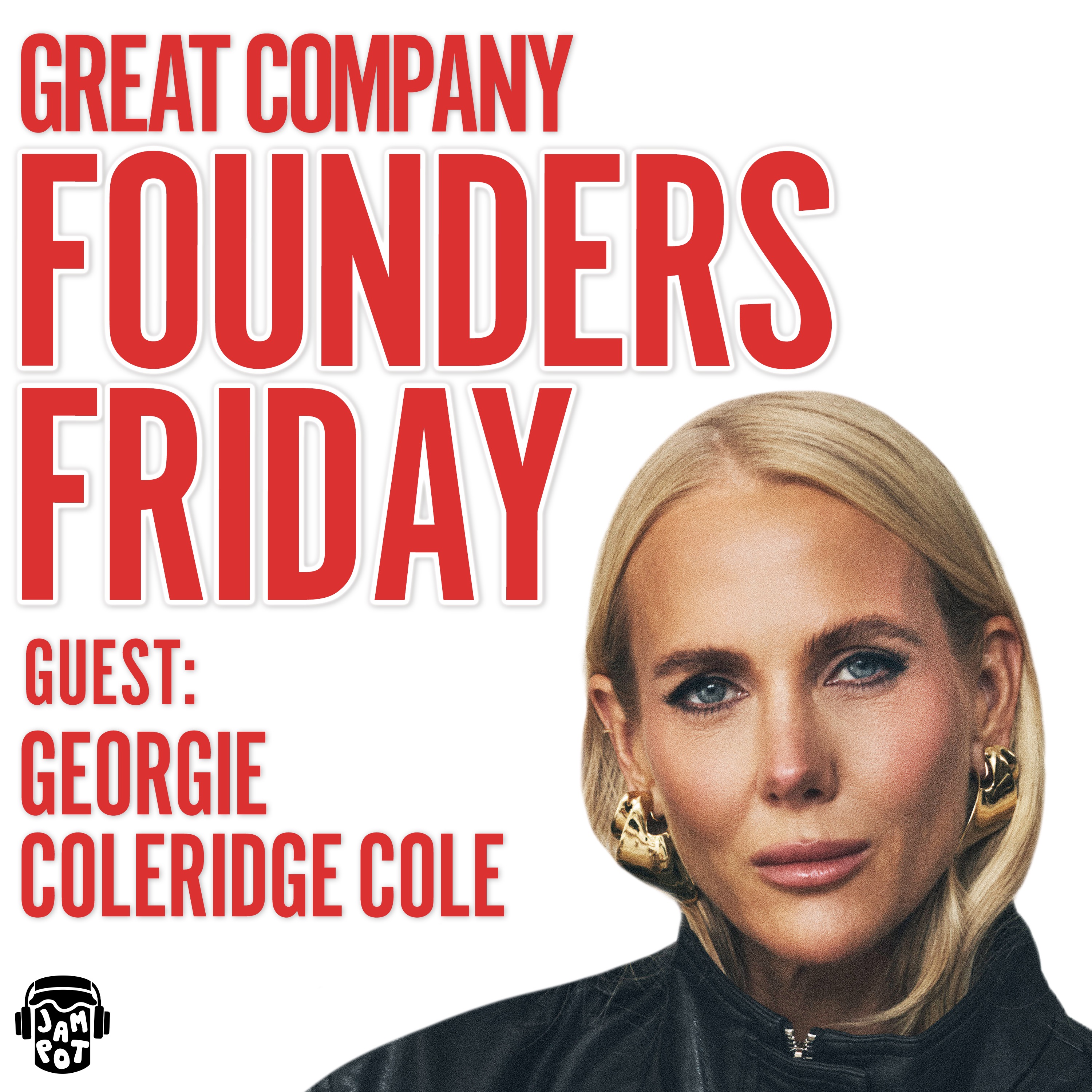
Georgie Corridge-Cole, founder of ShearLuxe, discusses selling the lifestyle digital publisher for just over £40m, building community through “behind-the-scenes” content, and the financial lessons behind valuation and profitability.
Georgie built ShearLuxe from a weekly e-commerce retailer newsletter into a multi-channel digital publisher/social broadcaster covering fashion, beauty, travel, interiors, parenting, weddings, and business. She launched in 2007 (work began end of 2005). Her husband handled bookkeeping and later taught her P&L, EBITDA, and cash flow; they met young and now have a daughter.
ShearLuxe’s mission stayed constant while channels evolved. Community requires human access, not blasts. High gross margin (digital publishing) drove valuation. “Money is oxygen” and “trust the process” helped her avoid running out of cash during growth and sale.
She shifted from using luxury-brand assets with models to shooting products on her team after a campaign underperformed. She created a long-running docu-style “behind-the-scenes” series (Rich) partly because PR wouldn’t feature a competitor. Sale relief came during intense due diligence; she described it as an “exorcism.”
Written by AI. May contain mistakes.
Georgie discusses the emotional impact of selling ShearLuxe for £40 million.
“The problem is you just haven't been introduced yet.”
Georgie explains what ShearLuxe is and its evolution as a brand.
“I think in the UK, sometimes being British, we don't like to congratulate that much.”
Georgie shares insights on how ShearLuxe connects with its audience.
“You know, I always think you put out good karma and you get back.”
Discussion on how ShearLuxe adapts its content strategy to engage users.
“We also have a Middle East business and we are launching in the US next year.”
Georgie describes the importance of authenticity in their content creation.
“Or inspiring, not controlling, inspiring.”
Exploring how ShearLuxe fosters a sense of community among its users.
“I think it's, I think that is the next wave, right?”
Georgie discusses the challenges of entrepreneurship and balancing personal relationships.
“I remember working with a luxury brand who sent some assets through of their new spring collection, let's call it.”
A candid discussion on the pressures and rewards of entrepreneurial success.
“Because they wouldn't want to be, no one would ever write.”
Explore the challenges and dynamics of combining business with personal relationships.
“Because going into business in any form or any sense is tricky, right?”
Understand the importance of financial literacy and its impact on business success.
“And I think we still, as a business today, with the turnover of about 15, we just closed our financial year.”
Discover the significance of maintaining high margins in a business.
“But explain that to someone, because again, what I think is really important in this episode is people listening are going to take nuggets from it.”
Delve into the emotional journey of selling a business and the relief that follows.
“There's a video taken when just after our lawyer called us and said we've completed.”
Understand the importance of caution and daily assessments in business operations.
“All of it, it's like a firework going off in your mind.”
Learn about the importance of cautious financial management and focusing on present goals in entrepreneurship.
“remember the conversation so vividly, and I said, we both sort of said, shit.”
Discover Georgie's exciting future plans, including expansion and innovative projects.
“But ultimately, like smart wine boxes, cool wine boxes, like the candy kittens of wine boxes.”
Explore the complexities of balancing work and family life while running a business.
“Um, I'm working on a pilot in a women's prison at the moment to start a business, um, there, which is a real passion of mine and has been for a long time.”
Hear about personal insights on parenting, business pressures, and building a positive mindset.
“and everybody's setup is different then that's right.”

Get the gist, explore an idea or ask about something said.
 Claude
On Great Company with Jamie Laing, what are the key points of this episode?
Searching your listeningAutomatic transcript. May contain errors.
0:00You said a great quote about Vogue, which is something along the lines of... She promised me she wouldn't write that. You have sold the business for how much? Just over 40 million is the initial consideration. What did that moment represent for you personally? Relief. The pressure not to fail. I've just always been that person that never, you know, never quite, never quite got it. So what's next for you?
0:33Here's a tip for you. There's a podcast out there with fans waiting to be your next customer. They tune in every week. They trust the host. And that host wants to talk about brands like yours in their own words to their audience. The problem is you just haven't been introduced yet. We're Acast, where that introduction happens. As the world's largest podcast marketplace, we let you browse shows, see who's listening, and book host-read sponsorships or run your own ads all from one platform. Transparent pricing, real-time data, complete control. Start advertising on podcasts by visiting acast.com slash advertise.
1:15Hey guys, welcome back to Founders Friday. I hope you're enjoying them. Now today's episode is with Georgie Corridge-Cole, the founder of Shear Lux, the digital lifestyle brand. Now Georgie built Shear Larks from a weekly newsletter into the go-to lifestyle destination for fashion, beauty, travel and interiors. And get this, she just sold it for£40 million. It's a huge decision and we get into all of it in the show. Now I really enjoyed this conversation and I can't wait for you to hear it. So here it is. Founders Friday with Georgie Korish-Kohl. Georgie, how are you? I'm very well, thanks. Great.
1:49Firstly, just congratulations. Thank you. On really, honestly, on everything. I think in the UK, sometimes being British, we don't like to congratulate that much. And we like people to sort of just quietly move forward with their success and don't really shout about it and say, well done. And we like to push that down. But I think it's really important to applaud and say, well done when people have done things which are incredible. And what you've built and what you've done with Shale Lux and everything is amazing. So firstly, congratulations. Thank you. Thank you, too. I think it's the thing that has sort of blown me away so much is how bloody nice everyone's been and I don't think that that would matter and I don't think I've sort of gone out and seeked people's approval but when it comes you're like whoa that's it's so touching it's like the thing that yeah warms my heart the most is is just the messages of support I think we've got this amazing community at ShearLux that solicits that kind of warmth.
2:52You know, I always think you put out good karma and you get back. But yeah, it's been really heaven to have the response we've had. And I want also for people who are listening right now for you to explain what ShearLux is, if they've been living under a rock, right? Yeah. What started 20 years ago as a directory of e-commerce retailers. today we call ourselves a digital publisher and social broadcaster if i was talking to my granny i would say we are like a magazine on the internet uh my father still thinks we're a shop we are not but we essentially help our audience live their best lives by featuring the best brands products services people to inspire our community to live our live their best lives so we feature everything from fashion and beauty to lifestyle to travel to careers to money to parenting to weddings and like a magazine we keep our readers our community in the know with all the best things there are out there to help them live their best lives um we sheer locks is the core business we have supplements in the parenting category in the weddings category in the business category we have a gold edition which is for grown-up women and we have sr man which is absolutely flying uh which is a sort of i think i think sr man's about five but it is really going from strength to strength.
4:27We also have a Middle East business and we are launching in the US next year. Just mad. Mad that many different audiences. And Lux Jen. I've got one of them sitting over there. I'm so sorry, India. Gosh. Shea Lux's little sister is Lux Jen. Which, by the way, we have Izzy who is somewhere in the building who said that some of her friends can't get ready without checking what it's saying. And the same with Shea Lux. People can't get ready without checking what Shea Lux is saying about this outfit or this space or whatever it is, which is huge. You're controlling a generation in a way. Well... Or inspiring, not controlling, inspiring.
5:07Yeah, let's go inspiring. I said recently that a few years ago, we very much committed to our mission being to, not just to educate and entertain and inspire, as we often say, our community, but to really get under their skin. and to be part of their lives. And as a digital publisher, it is sort of relentless. And I always say that our mission hasn't changed, which is to connect our audience with the best brands, products and services. The ways in which we connect with them has changed as the digital landscape has evolved from what was just a website, which is now sort of the dinosaur and the legacy product into multi-channel, social, YouTube, podcast, vodcast, whatever you want to call it, WhatsApp, a peer-to-peer community.
6:01So the mission has always been the same. The ways in which we connect with our audience has changed. And as I was saying several years ago, we made a really conscious decision to try and get under the epidermis of our readers and really be part of their part of their lives and for them to feel that they not needed to consult us but they that we were like they're in the no friends so we've always had a really sort of friendly warm approach to the way we produce content and we have that in our staff and and it sort of really runs through the business in terms of the content we produce and our employees and i think that's why people think you know they can't get us without it because they think we're like this friend who's sort of guiding them through life and helping them live their best life i feel like we're there's a big movement towards like personality led brands.
6:48I think it's, I think that is the next wave, right? Brands that you feel connected to. And what I love about sheer lux is it, you love the business, but you love the people within the business. And you said a great quote about Vogue, which is something along the lines of, everyone knows who Anna Wintour is. She promised me she wouldn't write that. So what is it? You said it's great. It's something where it's here. is I'm not here to disvogue, but you can name any, but can you name anyone there apart from Anna Wintour? I know, I know. She promised me she wouldn't write that. She did. I said, please don't write that.
7:22I'm really not here to disvogue. Yeah, but what's interesting about that is I agree with you. And what Shea Lux has done so well is you've championed, you see behind the business. Yeah. When was that conscious decision made? When did you start? Or was it slowly by slowly? Was it a mistake? How did that happen? It was definitely not a mistake. It happened And very early, we started to shoot product on our team. I remember working with a luxury brand who sent some assets through of their new spring collection, let's call it. And I looked at them and I was like, oh, they are not warm. They're not commercial.
8:02I don't think that's going to drive a return for this client. And they insisted that we run with those assets. and the story didn't do very well. So I went to them and I said, can we shoot them on our team this time? And we did. And they got an amazing response. They're like, wow, that's really cool. We're actually going to take that to our board and we're going to use that now to drive our own sort of brand positioning when it comes to campaigns. And so that was really the start. Yeah, we started shooting not very well. our team wearing the stuff that we were being paid to sell because I knew that they were going to connect with the audience more than some model on a in a concrete car park was or whatever it was and then so there was that side of thing and then we were very well known for our behind the scenes series which was shot by a guy called Rich and we worked together for about a decade almost with him filming sort of fly on the wall, docu-style content.
9:15And yeah, that came two reasons really. One, we never could get any PR. Like no one... Because they wouldn't want to be, no one would ever write. People used to say to themselves, oh God, they did this amazing feature on some entrepreneurs. You should be in that. I was never in it because they wouldn't write about us as a competitor. So that combined with the fact that I love documentaries. There was a three-part Vogue docu. And I was like, this is the best thing ever. This is all I want to watch. And it was then that we started our behind-the-scenes YouTube series. And we did that for years. But that really opened up our team and our people and built this incredible loyalty and connection.
10:05And this is sort of before Instagram. 8.6 million community, that's what you have. Yeah. But the connection we built from behind the scenes was huge. So how do you build community? Well, you have to let people in. I think to build a community, you've got to give, you've got to let people access your brand in a way that they feel part of something. A lot of people talk about community, but just one way blasts two people, I don't think really achieves that. You've got to, there's got to be some human connection, I think, to do that. I think you're completely right. And I think also, like, I heard you talking about how when you look at content, right, you're like, okay, there's three pillars, which you mentioned, which is you want to entertain, you want to inspire, and you want to educate.
10:53Which, by the way, I've said literally word for word that same thing. I think it's amazing. That's what you have to do, right? And I used to love acting as drama at school. Yeah. Yeah, I used to love drama at school, right? And I think a lot of entrepreneurs in lots of ways, actually part of being an entrepreneur is entertaining, is performing. You have to perform. And the stuff that you do within your content and the watch, sheer luxe is like a performance a lot of it the whole time. Yeah, well, it's hard because I'm sure our team would love a few more working from home days, but we've had to have less because our office is our product.
11:26You know, it's where we create everything. And our job is to sell product for the clients to spend money with us. And we do that best in our office. So being an entrepreneur, being a leader requires that energy and to bring people along with you. And that's also better done in person, I'm afraid to say.
12:27You have sold the business for how much?
12:35For just over$40 million is the initial consideration with a three-year-on ouch to 80. And what does that feel like when you say that? I sort of feel the same. It's a weird thing. I've said a lot recently that I feel really relieved for me. It must have been just over a year ago when I said to my husband, my husband works in corporate finance and has been a huge part of Sherlock's. Because he did your bookkeeping and everything. Yeah, he did. Which is amazing. He did. He did my expenses. Poor thing. Have you got any receipts? Not sure. Oh, I found another one. I found another one. Is this when you were dating?
13:22Is it when you were dating or married? So we... So you met when you were 19. We were 19 during his key season. And then I went to Edinburgh University. He'd been to university. And he went and did his ACA, his accountancy. Yeah, so we met very young. I left Edinburgh, went to work in Coty and Beauty Marketing. Yeah. And very quickly decided I was too impatient to wait for a promotion and move very briefly into property marketing. And actually it was there that I started working on ShowLux. And it was before we got married. And... Because that's a big move. To say to your partner, by the way, can you help me out with this?
14:01Because going into business in any form or any sense is tricky, right? And that's a balance because then your relationship becomes a little bit about business rather than what it should be. And so the lines get blurred. Yeah, although I know a lot of entrepreneurs who have ended up in business with their other halves. I think it's often the women that start the businesses and then the men get, oh, she's doing quite well. I might go and join in. Or maybe it's the women that are going to delegate this finance bit to my husband. But I think it's actually a really interesting thing. And I think for us, you know, it's challenging because, you know, the pressure on the entrepreneur.
14:42And then, you know, for us, we didn't have a lot of money. We didn't have a rented flat. We didn't own a property. So I guess... It's a lot of pressure. It's a lot of pressure, but it also gave us so much and has given us so much. I mean, there's never going to be a danger of us sitting down in a restaurant and not having anything to say to each other. And actually, my husband works in corporate finance in the consumer sector. And as I've learned more and more about business, to put it basically, the more it sort of gives us, and we love to chat about brands and businesses and who's doing well and interesting opportunities.
15:21And I'd say for us, it's given us masses. Made you closer. My daughter, you sweetly let her gate crash this podcast. But I would say we have really interesting conversations at home around the table. And I've worked so hard and you sort of get that mother's guilt. But I also know that actually they're surrounded by interesting conversations, surrounded by interesting people. We have some really interesting friends. And so I think actually for us as a family, it's been really additive. But I mean, yeah, going back to my husband. but that's interesting though because when we when we think about relationships right the sort of stereotypical relationship that we think about right it's like we watched Disney growing up and it's about being in love and talking about love and how much we love each other and being romantic but actually we when you get into a relationship you have to find common ground and typically talking about business or work that you know you're meant to leave that at the door but actually why bringing that to the table oh that's the best chat I think that's the best chat i mean we will sit there and talk about has all birds peeked you know what's happening to they just raised enough you know like that that is what we'll sit there on a sunday and i'll say oh they've just did it there really that's your call yeah love it love it love it like truly and i think you know now you know i do hope that in years to come we will we will do more together we've never worked together together but you know going back to where we started he he was bookkeeper by night he was a lot more than that by night he was um incredibly supportive and incredibly involved in the sort of financial side, raising money, et cetera, et cetera, and sort of teaching me what I didn't know about P &Ls and EBITDA and cash flow and all those things that are so important.
17:09And I think we still, as a business today, with the turnover of about 15, we just closed our financial year. 15 million. And, you know, we still, we have an incredibly strong margin as a business. And, you know, I've learned so much of that from him and the importance of margin, the importance of profitability, the importance of cash flow. And so, yeah, whilst we never worked together, I have to say, looking at my daughter, I could not have done it without him. Wow. Yeah. Do you know what? I said in my wedding speech to my stepfather, who's called Jonathan, he's been a mentor to me in business.
17:55And basically, if I'm the yin, he's the yang. And I think that, I mean, lots of advice there that I would always give, right? It's like, actually do listen to the elders, what they're saying, because they actually know what they're talking about. And as much as you don't want to take it as Bible, just like recognize and hear And I didn't 100%. And in my wedding speech, I said, thank you to Jonathan for allowing me to know the difference between gross and net and what a P &L was. Yeah, because I had no clue. And for me, I always say, what's the biggest advice you can say to anyone in business? I said, money is oxygen, helps you breathe.
18:33I mean, too fucking right. And we ignore a lot of it because a lot of what we talk about is marketing and product and this and this and this. But actually, when you get down to the crux of it, it's really the financial knowledge you need to have in order to make a business successful. And I'm not good at that still now. You've got that principle. I would add to that turnover is vanity, profit is sanity. So difference between... Break that down for me. What do you mean? Turnover is vanity. So if you might be a marketplace or not on the high street or something, and essentially you're just passing money through a marketplace to the retailer and you're taking a tiny cut which is why marketplace business is very hard to make money because they bring a lot of money in but they're really just passing it over and they might take 10 but then they've got to run a business on top of that so so actually it's your profitability or ebitda that is is the really important number that's yeah and and that's so i so i say we've had 15 million turnover we we we're a 47 % margin business.
19:36Which is huge. Which is huge. But explain that to someone, because again, what I think is really important in this episode is people listening are going to take nuggets from it. So why having a 40 % margin is, why is that good for a business? Well, it's your profit, right? So, you know, you could make up, you could bring a hundred pounds into your business, but only 20 % of that is profit because you've got your manufacturing costs, which is why publishing, digital content is such a great business. My husband always said that to me. He said, you've got 100 % gross margin business. You don't have print costs.
20:10You don't have manufacture costs. You're not left off with stock. And stock is the hardest thing because it goes off or you have to get rid of it. And I think that's what I think is really important, especially going back to the valuation of the business. Because you had such a high margin, you had this high valuation. Yeah. So when Shearlocks were sold for 40 million, what did that moment represent for you personally? Relief. Relief. There's a video taken when just after our lawyer called us and said we've completed. And my brothers and my sister had been to a football match and turned up at my house at 11 o 'clock at night and happened to be there, which was just this magical moment because they are my biggest supporters and just an amazing part of my life.
21:03Anyway, my father had threatened to come over and I said, no, no, you can't. We're up at 7.15 tomorrow announcing it to the business and to the market. Anyway, my brothers didn't listen and turned up and climbed over our gate and said to my husband, my husband opened the door and said, you're not coming in. And they went, F off, we're coming in. Wow. And then they came and literally seven minutes later, the lawyer called us and we were waiting and waiting and waiting and waiting and my brother Fred took a video of me hugging my husband and it's like the longest longest video it's like three minutes and I'm just like makes me and I'm literally just like there and it's like all this I don't know stress or whatever it is just like the drain from my drain from my body it was quite an extraordinary moment does it make you emotional now yeah very but why because the pressure not to fail the pressure not to fail and I think I've just always been that person that never you know never quite never quite got it never got I know I didn't get the the job the grad job at L 'Oreal I got down to the last round and I'd actually worked for Coty in Paris who were a competitor of theirs.
22:25I remember doing a SWOT analysis on Kerastase, the hair care brand in the last round of the interview. And I'd got really far, like I'd got really far in there. I remember there was a girl at Edinburgh who'd done it as well. And I'd got around past her and I couldn't believe it because she was so clever. And I got to the SWOT analysis and I think I was just a bit too confident. I mean, he actually rang me up and was like, I think he didn't really know what to do with me and SWOT analysis, strength, weakness, opportunities, threats. And I was like, well, obviously I didn't get it. I was never going to get it.
22:56And I think just, it was so close to the wire and due diligence is one of the most brutal things to go through, particularly with the PLC. I mean, it is just horrendously intense on top of running a business and trying to grow and keep every KPI on the up when you're in a sale process. And I just, you know, the week before we were, there was a sticky point, nothing to do with business performance, just an appointment we couldn't agree on. And my husband was very involved because that's what he does. And I was just convinced it wasn't going to happen. So I think it was just this like surreal relief.
23:37Yeah, because you said it was like an exorcism. Yeah. Which is such a great way to describe it. Yeah. And what's tricky maybe for people listening now who haven't had their own business it's the um the way i tried to describe it this morning whatever whatever you want to do with the business right whether you want to sell keep it whatever right that's it but having a business is like watching your child go for the most important exam every day i was gonna say yeah it's like that and when when they come back from the exam and they've got the good grades oh my god thank god they passed that exam but that is every day you're basically holding your breath every single day because you don't quite know what's going to happen because you have pressure and people and product and everything going on.
24:18So when you get to that moment where suddenly that's relieved, which I get with you and it's like, here we go. All of it, it's like a firework going off in your mind. I'm just like, wow, I've done something that no one else thinks I could have done. You yourself probably doubted yourself at times. Yeah. And it's also a big number. Yeah, it is a big number. We had a number in our head that we wanted to achieve because it just felt like the business was worth that much money. Digital publishing is a great business model, as I said. It's 100 % gross margin. There's no product to buy. There's no magazines to print.
25:01And the more people that see your content, the more money you charge. I mean, that's how you make money in digital publishing, right? So it's a great business model in that sense. And that's why the creator economy is booming so much and why there are so many young freelance creators, influencers, who I read something the other day that said there are more millionaires or something in this young millionaires in this country than there ever have been. Yeah, it's crazy as well. That is because of the creator economy. So, you know, that's essentially our business model too. So, you know, look, the number mattered and it's a great number.
25:36And, you know, obviously I feel hugely lucky and excited for what we can do with that. And, you know, as we were saying, you know, my husband and I share a lot of interest. So it's exciting to think what we can do that and how we can put that to work. But it was as much about feeling like I've done it. And people say, how do you feel now? And I've often said that I feel like the first movie had me as the main character and I got a happy ending. Isn't that great? And now we start the sequel and I'm a supporting character. That's a beautiful way to look at it. because I've spoken to founders before, right?
26:17Who have built a business, built it, built it, built it, sold it. And they felt great. And it was exciting. And the headline was amazing. And some people think about headlines rather than actually the after effect. And they had the headline. And then a couple of weeks later, actually felt sadness. Because they were, money is really just a number. And sometimes it doesn't bring all the things that you want it to bring. and so you have to almost have something more than that right and did you have any sense of when you sold and that's your baby and you've built for the last 20 how many years 25 years well I launched it in 2007 but I started working on it at the end of 2005 so yeah over 20 years over 20 years what did you feel so when it all gone through and everything happened all the lights and cameras everything stopped and then you're just right here we go now we're into the next chapter what did you feel then i just feel really content isn't that amazing that's great that you feel that way yeah i really really i feel really relieved i now look back and i think i can kind of reflect on how hard i've worked and that i'm all right and that i didn't hit the wall I had a girlfriend, I have a girlfriend who started a business at a similar time to me.
27:42And she sent me a podcast, this must have been about 10 years ago, about this woman who was really high energy and had it all and woke up one day and had hit the wall. And I remember being on the phone to her, I was at petrol station, it's weird I can remember the conversation so vividly, and I said, we both sort of said, shit. I really hope we don't wake up one day and we've hit the wall. And there were, there'd been a couple of moments, not many, but a couple of moments when I've sort of felt, and actually the sale process is very stressful, but I've always been very cautious. I've never had a massive ego.
28:25I've never thought we've got this in the bag. I've always thought what we were doing was right and always believed in it, but I've never been reckless and I'm still not. Do you think that's important? And that served us really well because we've never run out of cash or got anywhere close to running out of cash. But do you think that's important? Because what you're sort of suggesting there is you're not looking at the end goal. You're looking at the present, right? You're looking from day to day, right? Are we okay here? Are we okay here? Yeah, the end goal's great. But if you run out of money, I mean, what is it?
28:48Three years, most businesses run out of money. So do you think that's good advice for an entrepreneur who's listening now? Saying, don't, don't, I have a great like saying, which I always lead with, which is businesses paid in two currencies, cash and experience. Take the experience first, the cash come later. Don't do something because you want to make money. Don't do it. Do it because you want to build something and you feel like it's going to be an exciting thing to build. If you're looking at the end goal, if you're looking at where, if we do this, what's going to happen here? I think you're on the wrong path.
29:16I think. I don't know. What's your view on that? I think you've got to make money. It's great having, unless you're in a position where you don't need to and you can fund losses. I mean, I definitely wasn't in that position. and we didn't raise very much money in sort of the lifetime of Sherlock's. It's very easy to spend money and I think instilling that cautious, frugal mindset into a business stands you in really good stead. I think you've got to know that you've got to plan to make money and you've got to make money along the way. and know at what point you've got to make money by or raise by.
30:04But I mean, raising money is incredibly time intensive, difficult, distracting. We only did it twice and it wasn't too distracting because it was done very simply. But, you know, going out to market to raise money is full on. And you find some entrepreneurs just raising and re-raising and re-raising, which when you're also trying to drive a business, it's really hard. So, you know, I think having a business where you know it will make money is absolutely essential. A good idea is one thing, then what's your revenue model? And so I always wanted to start a wine box business. Subscription? Subscription, yes, eventually.
30:50But ultimately, like smart wine boxes, cool wine boxes, like the candy kittens of wine boxes. oh sorry wine from a box yeah my dad whenever we used to go on a holiday in asia my dad we'd have delicious meals on the beach and my dad would stick a load of wine boxes in our suitcases because the wine in thailand ain't that great and i remember going off to somewhere in the middle east with my husband i was like oh let's pack a wine box and i went looking and there was nothing it was all just total rubbish yeah and i was like right this is it this is about a decade ago there are now some wine box businesses but i actually so you were in the thick of building sherlocks at that point yeah but i was convinced and there's a wine journalist called matthew jukes who's sort of one of the most loved wine journalists in the uk and i went to him and he's like yeah that's quite a cool idea so what about in a can i was like nope not in a can it's got to be in a box like festivals on the beach picnics in the park yeah whatever whatever and i was going to call it what i was going to call it the easy white the bodied white the smooth red i did all the design the branding it looked freaking cool i've still got a pin pinterest forward somewhere but my husband was like no no no there is no because it's a distraction and it's also a distraction right making wine it's just but but most of wine is tax yeah and it's actually very hard to make money in wine so there you go he always said to me he's like hun it's a great idea and I get all the consumers getting from it, but you're not going to make any money from it.
32:22So there's a good idea and then there's a good business.
32:28Okay, so what's next for you? Because as you said, you played you in your movie and you had a happy ending, but surely there's going to be a sequel. Surely there's something now. What is the part two? Look, what's next? I'm still very driven by Sherlock. There is still so much I want to achieve. It's exciting. We're on a really great growth trajectory and the business is performing really well. We're working with more and more exciting brands and clients. In fact, Charlotte, our editor-in-chief, and I were on the phone last week and she said, this week's been epic. We're working with Google on this and we're doing this with this.
33:06And, you know, the opportunities that are coming to us are really freaking cool. And like, I do have to pinch myself that, you know, we're doing campaign for this brand and this brand and this brand. And it's still fricking cool when you win it, you win a pitch. And, you know, the budgets get bigger and you're like, whoa, they're spending that like that. The thrill of that has definitely not gone away. So look, the future is the US. I'm going on our first recce with Charlotte and I'm sure future will, will throw up huge opportunity for us. Um, I'm working on a pilot in a women's prison at the moment to start a business, um, there, which is a real passion of mine and has been for a long time.
33:51And gosh, lots more. Who knows? Who knows? You know how quickly things change, Jamie. I know. We don't stay still for very long. If you could go back and give yourself one piece of advice on day one of Sheilocks, what would that be? I would say I'd steal Charlotte's husband's piece of advice. Charlotte's tattoo on the day we signed was TTP, which was trust the process. And I mean, I think I did, but it's great. It's great advice. I thought you said steal Charlotte's husband. And I was like, he's a great guy. That's what I would do. He's a great guy. Steal husband's, Charlotte's husband's piece of advice.
34:29Yeah, yeah. Okay, got it. And trust the process is important, right? because we don't trust the process. And that is so good. It's great advice. It's great advice. Sorry, Ben, I'm stealing it again. But look, it takes time. I thought in three years I was going to be drinking mojitos in the Bahamas. And I mean, I stopped me into the Bahamas to drink mojitos. I think it's... I think I, you know, I think you got it right. It was one step in front of the other. It was focused on a really good product. Yeah. And have a really, really good eye on the numbers, on the data. And I think it is those two things that are so key.
35:11It's a really great product and making money. And if you've got your eyes on those, give it time, trust the process, put good energy out of there. I think I've built an amazing network of people around me. and I think sort of cultivating I did a talk at Barclays recently for women and and I was saying I really think sort of building a network of peers any stage of your career whatever you're doing is so important and 20 years on I'm really lucky to know other founders who who are sort of at a similar stage to where I am now and and that's why people always say do you switch off do you switch off and I'm like no I I love it I have my best thinking time on holiday I love to talk about work with my husband and and I love to a lot of my greatest friends are also founders and and that's a huge part of who I am in my life and what drives me and what makes me happy and what interests me so I think I think building a network of people so do you have a good work-life balance Should I ask your daughter?
36:22Does mum have a good work-life balance? Yeah, I guess. Yeah, I guess. Yeah, I guess. I mean, I think probably not on paper, but, you know, I've just been skiing for two weeks and, yeah, look, I'm on and off my phone all the time, but that allows me a sense of freedom. And I've often said, I think, this idea, particularly for mothers and working fathers this idea that you have to be fully present at work and fully present at home I actually think puts really unnecessary pressure on the parent because I've just been skiing for two weeks and the fact that I can do that is because I might be sitting on a chairlift and someone's saying Jordy can you just let me know if I can go ahead and do that that allows me to do that and this idea that you're failing you have to take a work call when you're at home and my children know yes I might be able to go away for four weeks in the summer but that is only because I'm doing X number of hours of work a day that is great advice and I think also in the workplace you know as I've got older if someone's phone goes and it's school they know they can get up that minute and take that call and they can go to sports day and come in late or if it's the holidays and there's a dentist or whatever whatever so I think I think that is really important is not to put that pressure on yourself to have a good work-life balance because if you don't hate what you do and you juggle it in a way that suits you and everybody's setup is different then that's right.
37:55Who is more important to make proud? Your parents, your kids or yourself? My children. 100%. 100%. It always makes, whenever we talk about kids it makes everyone emotional always. Yeah, I mean it's talk about pressure running a business, pressure bringing parents. And you've got three. Yeah. Yeah. It's a tough world out there for them. What's harder, being a mum or being a founder?
38:30Good question. Good question. It's all. Parenting is really hard. It's amazing. It's really hard. It's a huge responsibility. I think it's funny because I think, I guess you don't, will you ever know you failed as a parent, you know, whereas you'll never in business, you know, if you hit the wall, you run out of money, you failed, right? Everyone knows it. I think, yeah, it's, parenting is the best and the hardest thing. And, you know, that saying you're only ever as happy as your least happy child is... It's very true. It's very true, yeah. Georgie, thank you. You've been amazing. Honestly, you've been incredible.
39:13We like to end the conversation with eight questions. Are you ready for this? Okay. What's a saying or phrase that makes you smile or cheers you up? Look lively. That's great. That's great. I take that. Best compliment anyone's ever given you? You're the first posh person that I've liked. I had that from Paloma Faith. Oh, I can't top that. What scares you most about yourself? I would say the thing I worry about the most is parenting and getting it right it's up there for me as well actually yeah you can only do your best and your Heimars said you can be the best, best, best parent in the world and your children will still blame you for everything 100 % what's something you can't think of?
40:01Diet Coke and Kit Kats unbelievable cold Kit Kat or no warm no room temperature room temperature diet coke too you're crazy that's the maddest thing you've said on the episode room temperature diet coke unless I'm in the desert then I'd have it in the fridge you know that all those Kit Kats went missing before Easter did you hear about that no it made the news and I about 36 people messaged me saying Apparently the suspect was blonde. What's your guilty pleasure? A lion on a Saturday morning. It's a distant memory for me. I would love that. Well, it comes back. I hope so. What turns you off? People taking their shoes off in my house before I've asked them.
40:52If I ask them, that's fine. When they come in and take them off. I kind of would be... What turns you on? Good shoulders. Good shoulders. The back or the like, as in? Like good shoulders. Good shoulders. Yeah. What do you like most about yourself? Oh, God. Here we go. Good energy. I'd say I'm a radiator, not a drain. It's important in life. It's important to go into a room and take positive energy with me. Bonus. What's your biggest ever fashion fail? A t-shirt that I wore to a capital VIP ball that said, this bitch bites back.
41:36Georgie, thank you so much for coming to a great company. You're the best. We appreciate it. Thank you very much. You're amazing. That was so good.
41:56While every other channel is fighting for your customer's attention, podcasts are where they've already given it. No one accidentally listens to a podcast for 45 minutes. They choose to be here. They trust the voice in their ears. And when that voice talks about your brand, it doesn't sound like advertising. It sounds like a recommendation from a friend. Acast gives you that trust at scale. Digital precision, post-read authenticity, and performance data that proves it worked. Don't fight for attention. Buy it with Acast. Learn more by visiting acast.com slash advertise.
Georgie Coleridge Cole is the founder of SheerLuxe, one of the UK’s leading digital lifestyle brands.
Over twenty years, Georgie built SheerLuxe from a weekly newsletter into the go-to destination for fashion, beauty, travel and interiors.
Then she sold it for £40 million.
Georgie’s story is proof that a simple idea can become something extraordinary. So, I couldn't wait to sit down with her for this week's episode of Founders Friday.
In our conversation, Georgie shares:
- The purpose behind the SheerLuxe empire
- Why she thinks the creator economy is booming
- The big business idea she never followed through with
- The difference between a good idea and a good business
Georgie is proof that an idea, done well and done consistently, can become an empire.
Georgie Coleridge Cole is Great Company.
If you enjoyed the show, you can also follow us:
Instagram- @greatcompanypodcast
TikTok - @greatcompanypodcast
Jamie - @jamielaing
And if you've got thoughts, questions and comments, you can email us at: [email protected]
THE CREDITS
Producer: Helen Burke
Assistant Producer: Issy Weeks-Hankins
Video: Josh Bennett
Senior Social Media Manager: Laura Coughlan
Audio: Rafi Amsili Geovannetti
Executive Producer: Ewan Newbigging-Lister
Great Company is an original podcast from JamPot.
Hosted on Acast. See acast.com/privacy for more information.