Ask ChatGPT
 Great Company with Jamie Laing
17 Dec 2025 · 1h 11m
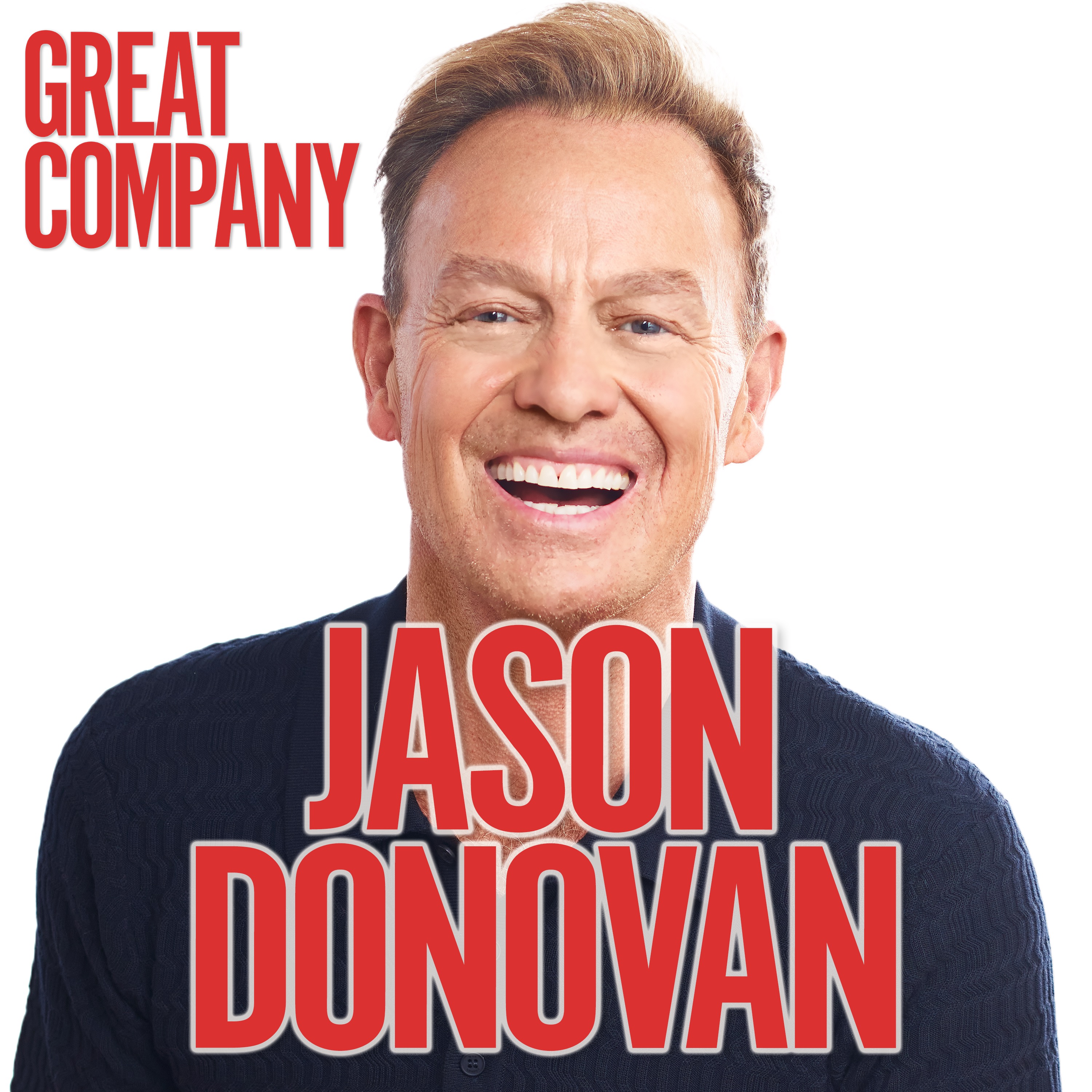
In this episode of Great Company, Jamie Laing interviews Jason Donovan, a renowned actor and singer, best known for his role in the iconic Australian soap opera Neighbours. The conversation explores Donovan's journey through fame, struggles with substance abuse, and the transformative experience of fatherhood.
Written by AI. May contain mistakes.

Get the gist, explore an idea or ask about something said.
 Claude
On Great Company with Jamie Laing, what are the key points of this episode?
Searching your listeningAutomatic transcript. May contain errors.
0:00This episode contains conversations around substance abuse. If you're affected by anything you hear in this episode, please check the episode's description for a list of organisations who can help and support. Coming up in this episode of Great Company. When we take substances, we're sort of putting a band-aid on pain. There's a story of you in the Viper Room. Viper Room, that's a true story. It was Kate Moss's 21st birthday party. I just wanted to crash out. My dreams came true when I was 20, 21, without a handbook how to navigate my way through what was happening to me. Consuming, so, three grams of cocaine a day, right?
0:37Did you nearly die? I'm Jason Donovan, and we're in great company. Please welcome Mr. Jason Donovan. The whole Jason mania thing was outrageous. You couldn't go anywhere without his face on something. You were that peak of fame. When you and Kylie got married on screen, it was watched by 22 million people. That is like a royal wedding, but a fictional one. Your relationship is owned by the world. It's a lot. And then you split up. That was a really tough, tough time. All they talk about is the wedding. Every time I get into a cab now is, how's Kylie? Were you in love with Kylie? You're overworked.
1:19You're burnt up. You're tired. You're doing eight shows a week. and then it all at some point just comes crashing down because you can't cling on anymore. And I sort of didn't want to be that Peter Pan and blonde-haired, blue-eyed kid. I get shouted at from scaffolds. Objectified in a way. Correct. So I tried to really screw up the canvas. How do you find your true self? Fuck, that's a tough question.
1:46Hello, everyone. My name is Jamie Lang and this is Great Company.
1:53We recently got a cat. Oh, nice. Yeah, a cat in the house. We lost a cat this year and I wasn't particularly happy about getting a new cat. Because you killed the last one. Yeah, because the last one I killed with kindness. There's a great story about that one. Just really quickly, Pixie, we had for 18 years And then two years ago she just disappeared and we realised that she'd been outside the front of the house and jumped into an Amazon truck. I'm not joking. I'm not fucking joking. And ended up, she was chipped, right? Yeah. So literally we were like, oh, my God, this cat's fucking gone. We're putting posters up, you know, the whole fucking, the sellotape, asking everybody around town.
2:49Got to the point it had gone. She'd gone. Five months, Ange walks out the fucking house and goes, they've found her. I'm like, fuck, you are kidding. In Dagenham. And do you remember, do you remember they, they, they, do you remember about a year ago that you had to have your animals chipped? It came into law. And this person that had been looking after Pixie and Dagenham, whoever she was, we never got to meet her. Laura's from Dagenham. Right. Laura, was it you? So Dagenham's a great part of town. Was it you, Laura? They even named a musical after the play. I love Dagenham. I had to get my satellite out and bloody pack a fucking, you know, suitcase just to go and pick the thing up.
3:40Shit. Literally took five hours return to get back from there. But you found Pixie? We found her, mate. But then Pixie died? Well, we found her. She came back, not the same cat, lasted about a year. That's a true story. And then I'm thinking. What do you mean not the same cat? Well, she'd gone through a lot of shit. I think Amazon Prime too. oh my god i mean that was this is an absolute true story
4:29you grew up in australia your dad was kind of your hero right growing up which i find kind of amazing because typically when I talk to people right normally and this is a generalization when parents divorce and you go one side typically you it feels like the mum is the one that sticks around and maybe dad dress off and go to him but in your case your dad was your hero he's there all the time well I mean you you've you've explained that in your book about your your mum's influence which was a great read thanks man I really appreciate it on that thank you um I uh yeah Yeah, I was one of the first probably people in Australia in 1972.
5:09My parents split up. I really haven't got in still into the details as to why that happened, but my father got custody of me. Do you personally know why that happened? Well, I mean, both my parents are quite strong characters, you know, and no, I don't really know the fine print. No, I don't. Again, strong personalities, but they split up. Dad got custody of me and I ended up spending my time with him, a lot of which was on sets, going to work. Wow. He's probably the only person in my life that's been part of my life consistently for 57 years and recently just turned 90. My dad is an incredibly outrageously honest character.
6:05He's always kept fit, loves a drink, loves to tell the truth. In a harsh way? Yeah, sometimes. Yeah, yeah, that can be pretty tough. That's harsh growing up. It's tough growing up, right? Yeah, yeah, yeah. I faced a lot of stuff with that. Like what? Give me an example if you can. Well, I mean, he would jokingly always say you got the fame and the money and he said, I got the hair. You know what I mean? But I said to him once, Dad, I've managed to work the hair out. I've done that one. So I've always found a way around. But, you look, Dad, if he's had a few drinks, will tend to go a little bit off-piste, shall we say.
6:46Jason, do you have a relationship with your mum at all now? Yeah, I do. I do. It's had fractious times, but it's on a sort of a good keel now. I think, you know, I understand that she, you know, there's been a lot of issues in the past. I think, and you will find this with family and kids, and there's sort of a, not a change in the guard, but a change in the generations where, you know, certain people, I'm the oldest, I'm the oldest, I'm the only one from my parents' marriage but I have three stepsisters from my mother's subsequent marriage and one brother from my dad's subsequent marriage, that all the old problems tend to sort of disappear a little bit and your parents almost become your children.
7:46Yes, this is what happens. It's weird. It's just this whole role of us. That is sort of what happens, not just psychologically but physically, you know. Funny enough, my grandmother, a lady called Joan, who was my mum's mother, played a big part in my upbringing. Really? Yeah, even though my mother and I didn't see a lot of each other. You know, it's difficult. She started another life with someone else, lived in a different part of town in Melbourne. But in the same town? In the same town, yeah. Wow. Yeah. I mean, a lot of people would say, you know, there's issues that probably haven't been resolved as a result of particularly maybe a mum leaving.
8:32I would like to think that both parents are sort of equal as particularly. We're living in a generation when that is more prevalent than it's ever been. And great, fucking great for that. But I also inherited a great stepmother. You know, dad had relationships. My grandmother came in from my mum's mum. I always felt loved. Neighbours, right, is a big thing that a lot of people know. And it doesn't really matter how kind of old you are. You either watched it, heard of it, been a part of it. It was like this just thing that was just so big. And I remember being young and my sisters being obsessed with it.
9:14Right. How old are you? I'm 37, so they're 10 years older. But they were obsessed. Exactly about the right age. And they were obsessed with it. Walking onto set and being a part of something like Neighbours when you were first getting into it, what was that like, if you could take us back then? Well, I mean, I always grew up on sets, you know. You know, there's pictures of me because my parents were divorced and my dad was a working actor, you know. And Dad was in a TV show in the 70s for six years and, you know, he would pick me up from school in full television make-up as a detective with a gun holster, you know, in his suit.
9:50So excited. And we'd drive to, you know, drive to set because you have to shoot two or three scenes in the evening and the company that he worked for, Crawford's, gave him a lot of scope to be able to look after me. they recognized that dad was a single parent. But I did a lot of shows in my teens. Then it came to my late teens and I got an audition for this new show called Neighbours. So I went along. I've seen pictures of the audition. I went on a tram, went to my gran's workplace. Do you remember it? I remember it very well. Went in there, went and auditioned for a character called Danny Ramsey.
10:31There were two households. There was the Robinsons and the Ramsey household. I got the part. I was 17 years old. I went to the school. The agent rang up, my dad's agent. I inherited my dad's agent, classic. And Gary Stewart rang up and said, look, you've got the part, you know, but I think you're going to have to leave school. I was in my second last year of school. I went. And you were good in school? I was okay. I was a good worker. I was a good worker. I'm not really academic. But I had a good work ethic. But I had a good work ethic. So I always got through. Sporty? Maths, I was shit at maths.
11:11Not really sporty because I was the Aussie rules. They're too fucking, you know, too blokey. And I was always, with the cricket, I was always scared of the hard ball. Do you know what I mean? Anyway, I went to the school to see whether I should leave school and all the teachers unanimously said, go. Are you serious? This is an opportunity. Yeah, they all said go. And I went to Dad. I said, what do I do? And Dad said, don't do it. Turn it down. He said, it'll come around again. And I went, fuck. And I rang up the agent and I said, I'm going to say no. I'm going to say no. And I said no. Neighbours got launched at Channel 7 in Australia in about 1984 and it lasted six months.
12:00It crashed. It got axed. And I thought, well, I made the right decision, didn't I? Because if I'd gone on that journey, I wouldn't have gone back to school and that was my dad's argument. Finish your 12 years of school. Get it done. Then you can do what you fucking want. You can do whatever you want. So, you know, I'm coming up to my HSC, your A-level last year, exams. It must have been July, August. I get a phone call from my agent saying Neighbours has been recommissioned in a new network, Channel 10, and they want you to go and audition for a character called Scott Robinson. Would you be up for him?
12:37I said, sure. And that's what I did. And I got the part. I literally walked from my last exam into what now is, you know, sort of been the rest of my life. But that's the big thing, right? And for someone listening right now, right? You know, firstly, interesting that your dad said, said, don't do it right. That for most parents, especially in that acting world, your dad would have known how kind of fickle that industry is and how hard it is to get in there. Right. He would have known that. Yeah. Or he was a tight ass and he just wanted me to finish the school, which is another argument. But yeah, keep going.
13:11Cause he's a bit of a tight ass. Yeah. I love him. But, but also, you know what I mean? It's like that power of saying no to things is so important, but someone who's listening right now, how do you know when saying no is the right thing? How do you know? Yeah. Well, one of my problems, Jamie, if I'm honest, you know, is in my career, I wish I would have said no to a few more things at pivotal moments. Really? Yeah, I do, you know. Like what? I wish I would have taken a few more risks. No risk, no magic. You know, it's quite simple. You know, I wish I would have just, you know, in youth, particularly with success, what was happening?
13:51Kylie was really good at that, just saying, no, I don't want to do that shit. I don't want to pose in that T-shirt. That's strength. I don't want to pose in I want this is the way I want to look. This is the way I believe. And particularly with music industry, they're all sheep. They just follow the fucking trends half the time. Until you break the mould and then they go with you because, oh, my God, a revelation. You know, she was right. I think it's one of the things I would probably say to my kids who are 24, 25, one of which is embarking on a career in acting, is sometimes say no. But that sort of ability to say no to that age, saying no to neighbours, and then it coming back around and you getting Scott as the role, that is just like, that's the world, that's serendipity, that's something aligning just going here's your chance well done for saying no we tested you now here you go yeah yeah i mean i you know i i believe what comes around goes around i mean you know i believe i don't believe in luck i think you create your own luck in life i really believe that but timing is everything it's on our it's on our hands it's it's in comedy it's in what we're doing at the moment you set a time at 2 30 today to for me to be here and here I am it's timing it's all about timing and how you place yourself within those allotted minutes hours seconds days years months life that you have to create the best out of your life you know it's not always about success you know doesn't but jay when you did in that neighbors thing right you when when you and kylie got married on screen it was watched by i think 22 million people that is like a royal wedding look i mean it was a different era you know golden era of television you know it um Um, yeah, I mean, you know, I mean, it's a long time ago, Jamie, for me, man.
16:06It was a long day, long three days. It's funny how your life doesn't get defined by that moment. I like it. But I certainly own it, acknowledge it, and very grateful for it, which is why we all went back to Neighbours to say goodbye, that sort of false ending that happened a few years ago. A lot of people don't like to recognize their past because they're embarrassed about the fashion, the looks, the whole, you know, that was it. I don't want to. No, man, that show, and it's indicative of the great characters and maybe a bit of the Aussie attitude and a shift in generation that sort of says, no, we need to acknowledge what that did for all of us.
16:54So you wouldn't change it? What? Then? You wouldn't change it then? No, absolutely not. No. I'd probably change a few decisions I made afterwards, but not Neighbours itself, you know. But did you find it hard when you became that famous? And then, you know. Yeah, I mean, it's invasive. It's claustrophobic. You know, I'm nodding Hill, you know, when you've got 30 people on a corner outside Portobello Road, two houses up from you for four years, camped outside your house, and you're watching you go in and out of your house. It's sort of, you know, that becomes very strange. That's what happened, Jason.
17:35Yeah, yeah, yeah. You had people. People camped outside the house. It's sort of. 30 people to get photos. Yeah, I mean, you know, that wouldn't always be that big. But, you know, that was an era where fans for me would, quite respectfully though I always felt, you know, keep a distance but certainly be in my radar as I would go to Tom's when it was down in Westbourne Grove. Was it scary? I was going to get my coffee. Well, I mean, you know, I sort of exploded as is quite well documented, you know, post the Palladium. and when that fame sort of started to happen again in 1990, unexpectedly, eight shows a week, I was trapped a little bit.
18:29I sort of, that's when I started to get into drugs quite a bit to sort of, you know, just escape. You experienced this fame in Neighbours. You're in the UK and you go and do Joseph's Technicolor Dreamcoat at the Palladium. And you're saying to me that you felt trapped and you're not happy. I think I've just overworked. Really? I've been going since 85, 86. You know, and I'd kept pretty much on the – I kept pretty much focused, you know. Because that work ethic within you is keep going, keep going, keep going. And, again, that's exactly what I was talking about, saying no. But you've got to understand the context of the decision to go into Joseph was the right decision.
19:17Lloyd Webber, you know, myself, Tim Rice, you know, what the currency of theatre and popular culture was running side by side at that point in the sense of, you know, Andrew just done Phantom, he just done Cats, you know. These were big pop stars. Huge. Not just songwriters and legends, you know, as they are now, but, you know, big pop stars. So a bit like Stock Ake and Waterman, you join forces with these people and it's sort of the perfect storm. Really? That collaboration was his best? Yeah, and Joseph for me was that moment, you know. And ironically, not many pop stars. I couldn't think Harry Styles would put on a loincloth and a technique coloured coat and do eight shows a week.
20:09But because I came from an acting background, I'd done musicals, it just felt like the right decision. And it felt different. Yeah, and it felt different. Also a way of reinventing what I was doing and it was the right move. Were you trying to, can I ask, were you trying to change this persona of being this person just for Neighbours? Were you like, I don't want to be Scott from Neighbours, I need to be something different? No, no, no, not really. It was just I was looking for something else other than just being a pop star, Stock Ake and Waterman. You know, for all those hits and the success we had, that story was starting to water down.
20:50Do you know what I mean? And it needs, you know, everybody needs to reinvent in some ways. and that connection with myself and Andrew and Tim and the Palladium and that show was, you know, the perfect sort of storm. I get it. I get it. I get what that is. It's where you're – it's a great way of doing it. Everything starts to water down so then you go into the show so it feels like a perfect storm to do and you go into it. You're overworked. You're burnt out. You're tired. You're doing eight shows a week. You're earning this unbelievable football wage money. So you're thinking, I've got to do it.
21:26And you're basically just clinging on in life. And then it all at some point just comes crashing down because you can't cling on anymore. Yeah. And then I had a pretty weird sort of court case, which you may or may not know about, that sort of took things in a bit of a different direction. With Face Magazine. Yeah, that was a bit of an odd moment for me. Face Magazine wrote an article saying that you were gay around that and you decided to fight them because you said, hang on a second, you're writing these things about me. And what's interesting about that is that you won the court case but you didn't take any of the money.
22:04Well, let's put it into context. You have to have it in context. It's the late 80s, it's the early 90s. You know, there is a group of militant campaigners outing, trying to out mostly politicians on both sides of the pond. that were making legislation against gay rights, but not really, but hiding their own sexuality at the same time. So this militant campaign was initially trying to expose this injustice, which seems sort of relatively fair. Well, it's sort of fair if people are making laws against stuff and not representing their true beliefs. I mean, you've got to want to do that. You can't change.
22:51But I don't think it was getting the traction that they wanted. And so they switched to celebrities. It started in New York with Tom Selleck, Whitney Houston, Tom Cruise, and then came across to the UK. And at that time I was in Joseph, Technicoloured Coat, the colours of LGBT, you know. I was blonde-haired, blue-eyed, good-looking boy, Palladian. and what they did was they strategically took a picture of me in a white T-shirt that I'd posed many years ago and superimposed on the front, queer as fuck, out. Put this poster campaign, as they did to Tom Selleck and Whitney Houston, in strategic places in New York and LA where journalists would see the poster, go back to their desks and write about it.
23:49Same thing happened in the UK, but I was the poster boy for that campaign. And I didn't pose with those pictures. I didn't pose with the words queer and fuck written on my T-shirt, out. But the face, the tabloids didn't because they knew it was litigious. The face, in their bold, brazen, cool way, decided to report on this event. And at that point, I think the rumours had sort of gone too far. I felt it was going too far. And they didn't ask for my opinion when they presented. They didn't ask for me to add to the articles. I probably think they would have known my reaction. and they printed instead.
24:40Now, it was not the issue about homosexuality. I don't care if you're gay, straight, black, white, whatever the fuck. I've grown up in theatre and I'm an actor and I'm love, baby, love. The suggestion that I was lying about myself was where it came down to. I'm not lying about myself. I wasn't lying. And that's very unfair. It's not the way I choose, you know, and that's where I went, no, that's not right. Jamie, honestly, it's part of almost like my CV. Is it something I'm proud of to, you know, have done? Not really. Was it the decision I made? Yes, it was. You know, I was the chairman of the board.
25:24You know, I had to, you know, as I've done since I was 18, I've had to make fucking decisions, you know, that some people at 45, 50, 60, 80 wouldn't have to make. And I've had to make decisions sometimes. With no experience. With no experience, and you'll find this with your kids. You'll find you're going to have to make some decisions that there's no real rule book on. You know, maybe management-wise, maybe we could have thought a little bit more about it, but I found myself in the High Court in this moment and I had to go through with it and for the right intentions. Yeah, but do you know what I mean?
26:00And maybe in a way, sorry, just to say, So maybe in a way, as I found along that journey, I was actually speaking up for those people that didn't want to be outed, but that wanted to be who they wanted to be. They don't have to fucking, you don't have to be told you have to be something just because. No, and do you know what is so interesting? It's not right. And do you know what? When someone is making lies about you, whatever it is, it's not about anything in particular. When it's making lies about you, that is upsetting. But I also love the fact that you saying you're owning your mistakes. And I think that's really strong.
26:35You know, and also I always think the hardest thing, right? The hardest thing about life is it's not a dress rehearsal. We're going at it, right? That's what we're doing. We're going at it and we're going to make mistakes along the way. But the mistakes that you were making is in front of the world. And so if you make mistakes or say the right thing or do the right, wrong or right thing or whatever it is, kind of everyone has an opinion. And that's tough. When you found drugs, why do you think drugs helped you at that point? Well, I mean, you've got to go back a little bit. I never drunk until I was in my 30s at all.
27:11Did you not? No, no, no. I didn't touch alcohol until my 30s because I watched my dad and I thought he was a fucking dick, you know. And because he was my dad and I only lived with him and, you know, Dad, you know, didn't smoke weed or do anything like that. But I smoked weed from a young age. And I always thought, oh, late teens, you know. And I always thought I'd rather walk into a room full of people stoned than I would a bunch of pissheads, basically. And particularly as I got famous. You know, there's nothing worse than drunk people. It's just a fucking. Because then they're all over you.
27:51It's just a nightmare. And I know a lot of people say, you know, smoking weed doesn't necessarily move on to Class A. Well, it did for me. Did it? Yeah. Sorry. It just did. And, you know, success, you know, money and what had happened after Joseph Face, you know, I just wanted to crash out and go surfing and smoke weed and do all the other things that I hadn't had the chance to sort of do in my life. So many people, right, who are going to be listening to this are maybe in that same place where they're… Binging. Yeah. Yeah. Binging on the weekends. And they're finding the way to get out of it, right?
28:37And maybe, like yourself, what happens is you start taking drugs recreationally. It's a bit of fun, right? You go out on the weekend, you start doing it, whatever, and then slowly by slowly it's like this cat that creeps into your life. And it gets, especially with something like cocaine, right? It's like a cat that comes up next to you, suddenly gets its claws into you. And then suddenly without even realizing it's taken over your body and over your mind and over your ability to do anything. And I have, I have friends and people very close to me who've, who've gone through addiction and come out the other side.
29:07And addiction is a total disease. 100%. And it takes over your brain and your body and your whole existence for a bit. And it's a cruel, cruel disease, I think. Well, I think going back to getting out of that is you've got to want to change yourself. There are catalysts for change. And to cut a long story short, for me, it was the birth of my first child and meeting my wife. Really? Yeah, I just knew that that was the get out clause I was waiting for. But even reversing back, my drug take was more binge, binge, but long binges. Like what? Three, four days. Yeah. No sleep? Some days, yeah. I think I went four days without sleep once.
29:58That's true. Yeah. I used to have seizures too. Fuck. Yeah. Because there's a story of you in the Viper Room. Viper Room. That's a true story. Can you explain what happened? Well, I mean, it was Kate Moss's 21st birthday party. and, you know, I flew in from Australia and, you know, scored some cocaine and it was pretty good quality. And, I mean, that's the truth, you know. And I, you know, got on it, as they say, and that was two or three days before the event. And, you know, suddenly I found myself, you know, amongst all these, you know, very famous people and, you know. Like who was that? I mean, you know, it's your Christy Turlington's and your Linda Evangelista's and your Michael Hutchins and Gloria Gaynor and, you know, it was a pretty Johnny Depp and, you know, it was that time.
31:05And I just found myself overheating, shall we say, you know. and ended up on the floor as Michael and Johnny were singing Gloria, G-L-O-R-I-A, Gloria. And then this sort of, you know, soap star from Australia who'd been sort of on a bender for two days suddenly finds himself in a stretcher with the room closed down and the lights gone up. Jamie, nothing, nothing to be proud of. Nothing to be proud of. I'm telling you right now, for all those people watching it, absolutely nothing embarrassing you know the roof through the roof embarrassing you know it's just oh you know but um did you nearly die i don't know whether i i can't remember but i got back on it straight away oh my god because you had no care for your own health no filter and no filter nothing you know and i had the money and the ability to um to do what i wanted to do and also So what I could do as well was, you know, if I wasn't liking what I was seeing in one country, I'd just get on a plane and fly somewhere else.
32:18Do you know what? That's the freedom. That is the freedom of success and fame. Because what happens, I imagine, right, is that when you have that money and that freedom, people go, that's all we want. That's whatever. I want that fame and I want that freedom and I want that cash. But actually that becomes, you get lonely. and you don't have a purpose. And so then you have to spend your time filling it with something that either you find a great hobby or you go down a route which is not going to be healthy. I got vilified in the 90s for announcing on a news show once that, you know, why did I take drugs?
32:57And I said, because I liked them, which was the truth. I, at the time. Because I, you know, I read that, and I think you said this, you were in your sort of that period of your life you were consuming so three grams of cocaine a day right and you were kind of just authorized you had the freedom and the ability to do it you say you meet your wife your kid is what is that moment that you suddenly go i'm not doing this because what is that eureka moment and how do you get through that can i can i just say with regards to the three grams a day sure you know there were there were days weekends that would begin on Thursday and, you know, sometimes not in until the following Tuesday or whatever.
33:37But it was a binge. It's not sort of like a, I wouldn't say like a heroin type of situation that's just sort of quite consistent, you know. Your body has to shut down particularly with something like cocaine at some point. I also would argue and I will say I also kept working a lot. So work enabled me to switch off. How did you balance that? I just did. You could just do it. I could just do that. I'm quite disciplined. I'm a bit of a, you know, all or nothing type of guy, you know. I also kept very fit. I have done all my life. And that's the little thing that knocks on your door. Just go to the gym, have a steam, have a swim.
34:25You walk out and you've done your big three-day or something. and you walk out and you feel great and you go, see, Jason, that's what you can feel like if you don't get back on it again. Now you feel great for two days and then that little demon in your head would come along and go, come on, let's do a cheeky one. Let's blow it all up again. Let's blow it all up again. And that was the problem, you know. But to go back to your point about changing, the catalyst of change was that, You know, I was the cat chasing its own tail. I was listening to so much bullshit from, you know, nightclubs and stories and browns and China White and bloody, you know, all those clubs, Met Bars and, you know, coming back to mine and getting on it and seeing the sunrise, playing table tennis, you know, in my muse house, you know, like, ooh, do you know what I mean?
35:23On one. It just becomes boring. It becomes fucking boring talking about yourself and chasing your own tail. And, you know, the paranoia, particularly with cocaine, starts to set in. In what ways? Well, you know, 24 hours into something like that, you think, you know, there's the MI5 are outside your window. Do you know what I mean? And also you start to do it on your own, which is a trap as well. And then you don't even realise that that's happening. No, and it just catches up. So the good news is I now know what I don't want to do and haven't done that for 20, 25 years. Congratulations. The catalyst for change was meeting my wife.
36:05She didn't change me, but the time, that time changed me. The birth of Gemma, the realisation that I could get out now. I was still in my 30s. You know, enough time for the body to repair. Do you know what I mean? There's enough time to get back time. I hadn't blown out. I was quite good with money. I didn't blow all of that away. I was quite good like that. Still am. How was your mindset? Were you anxious ever? Were you ever depressed? Because it feels like you – and the times that I've met you, right, you're so generous with your time. You're very kind with your time. And I said, you know, even before we even knew each other, you would come up to me and say, hey, how are you doing?
36:52Love what you're doing. You're kind of a supporter of people without even really knowing them, which was really nice to see. And you feel like a lover of life. Jamie, I got my dreams came true when I was 20, 21 without a handbook, how to discover and navigate my way through what was happening to me. I built that tree, those roots, those foundations for a good life. I managed to burn some of the twigs and the leaves along the way, but I believe I've still got some great foundations, you know, and maybe a bit of the Aussie, maybe the fact that I was in a TV series, not a pop star who believed, you know, his own hype the whole time.
37:38Do you know what I mean? I didn't write my own songs. Bummer. But so, you know, I've always had my feet on the ground. So even when I went through my blowout period, I could never really sit in my bed after a bender and wake up and go, I've lost everything. It's just terrible because I didn't, you know. Wow, so you never really hit that rock bottom. No, I didn't hit that rock bottom. That's why when someone said to, you know, you're out of control, what are you doing? I said, I'm just, I'm having my sort of teenage years in the public, you know, and driving up the coast in my V-dub combi, you know, smoking weed and just having a fucking great time.
38:20But the world's looking at me. Try working that one out. Oh, my God. How did the world find out that was happening? Well, I mean, it was on the front page of most papers. Was it really? Well, you know, yeah, it was pretty, pretty. And that didn't worry you, embarrass you, upset you, scare you, nothing? Well, I just, you know, sort of just didn't care. Didn't really care. I just sort of put in the work and I was like, okay, I'll just go back and go out and have a good time and forget about it. Also, I got into this notion, and this is an interesting one. I thought for a long time I wasn't cool.
38:57Now, I've never been cool. I don't really give a fuck whether I am or not. There is no such thing as being cool. So going back to the Palladium when I was talking about the amount of money I was earning, sitting there in a white fluffy loincloth with shoes earning this extortionate amount of money at an incredible height. And to a lot of my parents and people at that time, they were like, this is amazing. Amazing. You were working with Lloyd Webber. You know, I wanted to be a cool, grungy sort of pop star. This was when Nirvana were just coming out. Makes sense. I was this cheesy sort of what I thought a cheesy little pop star from the 80s seeing especially for you.
39:39And you didn't want to be that. And I sort of didn't want to be that Peter Pan and blonde-haired, blue-eyed kid. And so I tried to really screw up the canvas without actually thinking, you know, a little bit about what I was doing. And it's only ironic in life and in time and as a person, a male, when you start to grow a few lines and you start to look a little bit like you've grown into yourself, that actually you realise that the drugs, the nightclubs, London 90s, it's all bullshit, you know. I mean, you need to get to work. And, you know, that Palladium moment was fucking cool, man. maybe someone right now is listening and saying i don't think i found my true self or maybe i'm in a relationship or a business or a job or a life that i feel like i'm not living my true self what would you say to that person how do you find your true self fuck that's a tough question jesus christ fuck how do you find your true self because you found it you accepted the fact that you were like even you wanted to be cool you want to be in nirvana you want to be in a band Yeah, you know, I always wanted to be the lead singer of a rock band.
40:58How do you find your true self? How do you accept? Well, for me, you know, for me it's about nature and nurture, purpose. And I can only just go back to a bit of purity and, you know, when we take substances we're sort of, you know, putting a Band-Aid on pain a little bit. And I've never had a psychiatrist. So you've never been to therapy? Never really been to therapy. You've never done that? No, no. Because I've just gone out and gone for a swim or gone for a bike ride. Do you know what I mean? And also in my life I've had journalists talk. You sit here and talk. I'm talking to you now. I'm learning more about myself.
41:51just by, I'm not saying you're a journalist, but by I'm talking it out. Yeah. And I don't have any inhibitions to not. Hang on, you've never spoken it out to anyone. I have, I have. But I was, you know, and I remember there's a couple of high profile people that said, listen, you need fucking help. And there's someone in Harley Street and you go to Harley Street and there's this guy sitting there in a Versace fucking outfit going, what the fuck do you know about what I'm going through? I'm sorry. Because you didn't trust me. Maybe I didn't find the right people, you know. Maybe I never found the right people because I was Jason Donovan, you know, and, you know, these sort of high-profile, you know, therapists, you know.
42:35I'd rather go to someone in a, you know, a town hall and sit down and have a, you know. Did you do that? No. No, I didn't either. I don't know. No, I just, I guess I was just lucky, you know, that I embraced the moment when it needed to happen before it became, you know, too much of a story. Yeah, I nipped it in the bud at the right time. And, you know, Ange and I, it's no secret, weren't together when Gemma was born. She wrote a letter to me saying, I'm going to have this child and I know you're not going to take that very well. And I was at my house and I didn't have any other options, but I couldn't be half a parent.
43:33Wow. That's the thing in my life. I'm either in or not. And I'm clear in my vision and my life to know what I want and what I don't want. And I wanted that enough to go, right, this is the moment you step up. This is the moment you, you know, you see the sunshine, you clear the clouds a little bit. This is it.
44:00Back in the day when you were sort of, I would say, at that peak of fame, right? When it was the 80s, the 90s, the early 2000s, right? When it was just madness. People must have taken your words out of context the whole time. Everything you did, there was nothing long form. It was quite bite-sized. You do interviews and stuff like that. That must have been tricky. It probably made you not want to do press or speak to people because everything was taken out of context. Or was it not? Yeah, I mean, I think, you know, I think the thing you've got to understand about the press is they're only interested in two things.
44:34when you're up and when you're down. And when you're in the middle, it doesn't really make for great conversation. I've spent a lot of my life recently in the middle ground, which is very, you know, which I'm very, very content about, you know. Success is a funny sort of thing and how you process what was happening to me in the 80s and early 90s at the age of 21, 22, 23, 24. I mean, that's a whole psychological analysis and then the sort of the falling off the cliff moment for me, particularly in the 90s. Press, yeah, I mean, look, it's always been a necessary part of what we do, you know. And I think there are people that going back to that era you could pretty well trust.
45:32You know, for me, Neighbours, being an actor, you know, playing the character of Scott and then Charlene and then Kylie and myself, which was sort of art imitating life, life imitating art. Explain that to me. What do you mean by that? For anyone who does that? Well, I mean, look, you know, it's no secret that now, it's no secret that Kylie and I were in a relationship. I mean, that didn't initially start. But if you go back, the history between her and I, we played brother and sister in a TV show when we were in, you know, 11, 12 and then met on the set of Neighbours in 1987. Wow. And I don't know whether we were actually initially destined to become this on-screen romance, but that's just sort of how it worked out and then the relationship sort of blossomed.
46:21You know, we never openly went out and told anyone that we were going out because we felt that we had to have an element of privacy to ourselves, you know. But it was sort of an unwritten rule that people sort of knew, but they didn't. It was a game. It was a sort of a game. But I explained that to you. What do you mean by the game? Because it's, I know what you mean. It is sort of a game. Well, they want a little bit. You want them to have a little bit. Yeah. But then you don't want them to have everything. Also, you know, as a male, maybe there's an element of, you know, I mean, I don't know whether I agree with this now, that the fact that you're, you know, single or you're not going out with someone or makes you more, you know, in fans world accessible or there's an opportunity.
47:10I don't know. Do you know what I mean? Yeah. It's sort of. What came first? Was it the real relationship or the fictional one with you and Kylie? The fictional one. Did it really? Yeah, yeah, yeah. Yeah, that didn't really sort of blossom straight away until I think we were filming in Sydney, I mean, if you want to be really specific about it. Oh, yeah, I like that. You can give me. Jason, I want everything about your life. I want you to dog your life. There was a story about us in a travel lodge, and actually I think it's sort of pretty true, you know, on the North Shore. But, you know, that whole time and that, you know, Neighbours and, you know, the pressure, the not pressure.
47:55I mean, it was, you know, and her career particularly was sort of started to really take off in the musical sense. And with Kylie, really interesting because she, you know, she started out as this sort of rough mechanic on Neighbours. Yeah. her mad sort of tomboy-like character and just sort of blossomed, you know. It was a phenomenal thing to watch. And then came Locomotion, the single which really complemented, you know, her public persona outside of Neighbours and just gave a reinvention of her. So, you know, initially I think it was probably more her chasing me And then I think it sort of flipped a little bit.
48:42Were you in love with Kylie? I think so, yeah. I think so, yeah. Yeah.
48:53Well, I mean, you know, that was my first. Yeah, I get it. You know, that was my first love. It was so high profile. It was. Well, not that the profile wasn't. It's a lot to handle. That's all fucking da-da-da-da. But it's, you know, our connection and what we shared was on another level, mate, on another level. But imagine all that happens for four years of your life. You live art imitating life. You become these people that are possessed, not possessed, but sort of owned by the world. Your relationship is owned by the world. It's a lot. And then you split up and, you know, that was tough. That was a really tough, tough time.
49:42Heartbroken? Yeah, yeah, yeah. I mean, you know, the circumstances, you know, she went out with Michael Hutchins after me. That was a pretty tough old time. But then for the rest of your life, when you're on Instagram or, you know, I mean, imagine even someone like Ange. I know. Can you imagine that? I know, I know. Can you imagine when people just, all they talk about is the wedding and yet, hold a second, I've spent 30 years with this man. Do you know what I mean? And I don't think for once again. He's an amazing woman. Yeah, that's what I want to pay tribute to that when you talk about love and people.
50:28But can you imagine just, you know, that gets pushed in your face all the time and has done for how long? This is pre-Instagram. You know, there's tapers, television, you know. Because they think it's the scoops. They just want it. They want it. Every time I get into a cab now is, how's Kylie? Are you serious? Yeah, I'm fucking serious, you know. Get out of here. I mean, it's that iconic, man. That's how to a generation, you know, it still happens. And I'm at peace with it. It's all cool. but it's a head fuck it's a head fuck I think initially it was pretty hard, I mean I hope she doesn't mind me saying that that is a big thing to get your head around but I think you know we've proven in time that you know it's you know you have bumps in the road and things are sad yeah I get it we're 25 years in Let's go, man.
51:31Let's freaking go. So that says it all to me, you know. And she is my best friend and, you know, the love of my life. Where did you meet Ange? Ange and I, she was a stage manager on the Rocky Horror Show, 1998, sort of in the peak of that mad time. Crazy time. You know, and we were sort of, you know, pretty mad together at times. um but yeah we uh what kind of love was it or is it but was it at the beginning it it's something that just grew which is i think being part of the true relationships in my life if i'm absolute honest anything that's anything that's too quick and full-on tends to doesn't have the meaning you know and that's something i'm only talking to you now actually thinking about it is probably the truth because we think that that fire and that excitement when it's like this it's like this but actually that then fizzles out and you go like well that was exciting and fun and dramatic and everything but it was quick and it's those ones that you i look at with sophie like yeah i know because you with the with with your um yeah with the show with the show as well though And I remember that in your book when you had to, you were sort of confessing to her on a bench, if I remember.
52:57Is that correct? Yeah, that I just, I said, look. Yeah, and you were like, oh, fuck, what am I saying? Yeah, and it was weird. And I was so addicted to, I thought like a real relationship was one where you had to fight and argue. Right. It's like fireworks all the time. And I'm leaving. Okay, you leave. It was all like that. And with Sophie, it wasn't like that. It was actually karma. Yeah. And it grew. And the love just grows and grows and grows and grows. And then you grow not just love, but respect. And you grow your friendship and everything just starts. It's like a sponge soaking up water.
53:27It's like an espresso. Yeah. It's like a macchiato or a cortado. It's like a low tide cortado. Yeah. Is she younger or older? Younger. Younger. How much? Five years. Five years. Okay. How is Ange? Ange is a little bit about the same, actually. Listen, it's about best mates. It's about authenticity. You know, we're a team. Are you doing a tour next year? Mm. 2026, baby. Yeah. Well, we got 30 dates out this year and it went well. And then, as I said to you before, it's up to me to either press a button or not press a button. And everyone's going, look, we could do another 14. I'm going, oh, that sounds quite cheeky.
54:20A little sprinkle. Let's have a little encore, shall we? Let's just add a little bit more. And, you know, the show, you know, a lot of my stuff's quite nostalgic and personal, but that's sort of, that's what we're going to do. A bunch of cities that we didn't do this year. Do you love it? Would you love it when you're on stage? I like, I like, I like performing. I like the adrenaline. and I like the instant feedback. Yeah, and I think, do you know what, I think I've got better at it in my older age. I'm more comfortable, more confident. I'm a better singer. That's another thing I struggled a lot with, particularly in the 80s with success, was that I had all these hits yet, you know, the overdubs were left, right and centre in the songs.
55:14I struggled. You watch people like Kylie in the studio that just picked up things like that, you know. I really struggled with music, but it mystified me because I wanted to be a pop star. Maybe I was in a way sort of chasing. You sold 30 million albums. Yeah, I mean, you know, it was, but I think that was, you know, I, yeah, I was doing something right. Can I ask you a thing about, just a slight tangent, but because you were so good looking, right, And you were such an icon and so those kind of things. As you get older, right, we typically lines start to form, maybe our hair starts to go. Was that an issue at any point?
55:52Well, I mean, I lost my hair in my arm. I started to see that happening in the 90s, which I would argue was one of the reasons also why I probably started to go downhill a little bit. I was starting to see the aging process happening And you're right, you know, I was always known as the blonde-haired, blue-eyed kid. I remember once someone ringing me up once in my muse house and this nervous voice on the phone saying, look, I'm so-and-so from a production company and we've had this idea. I've got your number from so-and-so. I'm like, yeah. He said, we've got this idea. We'd really like to do a documentary on famous people losing their hair.
56:44going bald, he said. I said, get fucked. This was probably about 1996. Fuck off. Why would I want to do that? And then I was watching, you know, it's funny, I was watching the other day I'm a Celeb, which I did in 2006 or 7 or 8, something like that, and I really did see I was losing my hair. But then I think I did my first transplant in 2010. When were you honest about it? I've never been dishonest. Okay. But what I have been is it's not something I'm going to go out and publicise, is it? Not like, I mean, God bless him, Shane Warne, our beautiful bowler who's up there looking down, great guy.
57:37Shane, you know, really embraced it with a company called Advanced Air. Yeah, he's the face of it. He became the face of it, as many celebrities had. I didn't feel the need to do that, you know. But I was sort of really right at the sharp end of it. And it was such a – when it happened, man, I couldn't believe how good. It just – my confidence. Everything. It's amazing. Everything, and I got it at the right time. I've always thought with hair transplants, the technology is relatively the same. Yeah, yeah, yeah. It's the person that puts it in. Because they need to be an artist. Yeah, they need to be an artist.
58:19Correct, man. Correct. They need to be an artist. And I always said to the lady I went to in Paris, you know, in 2009, I said she handed me a pen and said, where do you want your hairline to be? I said, don't fucking give me a pen. I'll probably do a, yeah. I want it down into here. I want so much fucking. I want to look like Chewbacca. Or the guy from The Muppet. But do you know what is interesting about this thing, right, is this. As Guy, I've had it done, so I had the foot of my head done. Yeah, I sort of figured that. But for me. I don't know how to take that. Thank you. In a great way. But my thing is this, right?
59:09My thing is, for some reason, as guys, we feel it's tricky to talk about our looks, the fact they may go, the fact that we care about aging or balding or our height or whatever it is. Women are typically much more open about their insecurities because perhaps they have their friends or their colleagues or their partners or husband. They feel like they're not as ashamed about it for some reason. Yes, there's shame there, 100%. But they can voice it. Men, we don't voice it so much. So it's an internal shame. So then when we start to talk about it, it feels like we want to vomit. So we don't actually, so we push, we go back and we keep it inside.
59:49So actually we don't talk about it because we feel that being vain is a weakness. And I think that's why. And I'm even struggling to like work it out now. Why did I find it so hard for so long to say about my hair trans, about the insecurities I had, or the insecurity I had about weight or whatever it was? You know, like so many things. Being conscious of our bodies and our image doesn't feel like a very masculine thing, so we deny ourselves from being able to talk about it, I think. I agree. I'm just trying to think about women and men and how we all age in different ways too. but I'm also trying to contextualise it in the sense of when in 2025 it's not such a big deal.
1:00:32And it's not a big deal. It's not a big deal. And I think we've come so far, right, and we can talk about it now, and I think there is an open space to do it, but if you go back 15, 20, 30 years ago. Yeah, of course. Of course. You know, of course. You know, I think, yeah, I've always found for me as a male, you know the older I've got the more lines the more you know the better you look yeah the more interesting I feel and and I think I don't know about women but I think that's the the male journey yeah in a way is that sort of I now feel I felt like the blonde head blue-eyed good-looking guy was a bit of a hindrance for a while really with me um and and because we had to keep it as well.
1:01:20Yeah, maybe. Or just that as an actor you're not, unless you look fucked up, you're not, do you know what I mean? Unless you look. You're not versatile enough. You're not versatile. You can't deliver the goods. And you're not taken seriously because you're just a good looking one. Yeah, and there's prejudice towards that. There is real prejudice towards that. I've always found being famous as a male and blonde-haired, blue-eyed, there's a lot of prejudice there too, you know. You know, I get shouted at from scaffolds. You do? Yeah. I wish I got shouted at those scaffolds. Do you know what I mean?
1:02:01It's like, hey, Jase, do you know what I mean? I felt like it's a role reversal in a way. Objectified in a way. Correct. Exactly the word, objectified.
1:02:20man can i just say this has been fun world class listen we'd like to end the conversation with eight questions you ready for this yeah what's a saying or phrase that makes you smile or cheers you up the biggest fear is fear itself love that best compliment anyone's ever given you um that you're authentic that's great the best compliment you can be given from anyone what scares you most about yourself my ocd how bad is it bad In what ways? It's getting worse. Is it really? Oh, it's terrible. I can't. It takes me, like even leaving the house today took me an extra 10 minutes. Light switches, door shuts?
1:02:59Light switches, doors. Doors is bad. I'll go back three or four times. I'm now onto the gas hob. I'm checking taps because I think the place is going to flood. It comes out of anxiety and fear and responsibility. because, you know, if you didn't have it, you just walk out of your hut and go for a surf. Have you always had it? No. It's got worse. Really? Yeah, really bad. Jesus, what do you think triggered it? I need help. Really? Yeah, I do need help. And my daughter said, you know, everyone said I need help. Why won't you go and speak about it? I'm going to. I'm going to. I'm going to do that in the next hour.
1:03:43Do you promise me you'll go and talk to surf? I am, mate. I seriously, I am. So next time I see you. Yeah, I have, you know, I'll be like. Because it's one of these things, right? Have you got, is it? I had it for a bit. Right. I had it for a bit leading up to my wedding. I had, and I obviously had serious anxiety and mine wasn't as crippling as that. But it got to a point where I, I had one day where, where I had a mayonnaise pot and I couldn't find a position in the fridge to put it in. And I just, and I was like, what? I couldn't find a place in the fridge because it wouldn't fit. Oh, I didn't like it there.
1:04:18It didn't look neat. And I was in my head. I was, I was like, well, hang on a second. What is going on here? And it was just like, if I, if I didn't find a place for it, that was going to fit. All I was going to do is think about it. It was going to consume my thoughts. Is that not perfectionism rather than OCD? I don't know. Maybe a form of OCD. I don't know what it was, but it was, it was something. But I had also a friend who used to do light switches before and they'd have to leave the house 30 minutes before he said it took him 28 minutes in the morning yeah to get out of the house because he was checking light switches on and off there's there's a jack nicholson film about this called as good as it gets which is all about that um it's bad man and and i recognize it and and part of thing about you know these problems is is knowing you've got the problem yeah when was the last time you cried i watched the caroline flack documentary last night that really, we talk a lot about fame, you know, here.
1:05:17And, you know, just because you're in the public eye and just because you have things that people may think other people don't have does not mean you are not vulnerable to anxieties and insecurities and doubting yourself. and through her life we saw what can happen and that really, really hit home and made me upset. 100%. What's something you can't let go of? My hair. Good one. I think I'm the same. That's good. I'm so happy for you. What's your guilty pleasure? My guilty pleasure is rosé. Long lunches. Wow. Long lunches with some wine. Long lunches with wine. Have you ever tried Kylie's rosé?
1:06:14I have. Do you like it? It's good. It's good? Yeah. It is really good. She sent me a few bottles. Did you? Yeah, yeah, yeah. Yeah, man. Yeah, fucking great. Love rosé. Love hers. Long lunches. Long lunches with a couple of Vinos. Fucking great, man. and then a little snooze in the afternoon and then maybe go, okay, let's go again. Get it, yeah. And then everyone's like, God, have you got a problem? Fuck, here we go. The world's a circle, not a square. What turns you off? A messy house. Yeah, I'm a big, you know. Clean it. I love. I just, I'm not like it has to be, you know, spotless, but I like to walk in and see the canvas clean.
1:07:04I just don't, I don't want. I'm with you, by the way. You know, I like to start the day with my bed made and it's just looking nice. And then when I come home, I feel, you know. Biggest advice I ever got from someone when I was going through that process of like understanding myself more was they, my like ADHD and stuff was off the chain. They said, you've got to do the little things right. Put the keys back in the pot, hang your jacket up, make your bed in the morning. Do that. Do the little things, keep everything tidy, and the big things will fall into place. If you have a tidy place, the other stuff will be in place.
1:07:35Stuff tends to. 100%. What turns you on? What turns me on? What turns me on? What turns me on? Turns me on. Chase has gone. He's gone. He's gone. Too many things. Have you got, have you got, have you got, well, a clean hour. What turns me off a dirty house? What turns me on a clean house? Let's just, let's do the. Give it up. Yeah, the, yeah, yeah, yeah. And Jack Nicholson movies. Yes, and Jack Nicholson movies. What do you like most about yourself? My work ethic and my, maybe my ability to talk to anyone. I like to think I'm a man of the people, really, you know. Yeah. With an extraordinary life that I've had so far.
1:08:35Yeah, you've got a lot. It's a lot. Yeah, so hopefully there's a bit more to go. There's a lot. My dad, 90, but let's see. There's a lot of time left. Bonus one. Yeah. You've got an option. You can do your favorite swear word, favorite lyric you've ever sung, favorite Joseph song. Favorite swear word. There's still all three. Okay. Favorite swear word. You can say it if you want. I mean, I can't really. is probably the word. Yeah, there you go. And do you know what? It's such a chunky word. Cunt. It really just. If you're Australian, it works. It works. And I talked about this to an actress once many years ago.
1:09:14She's really good. She was like, you've got to own cunt. You've just got to fucking. Own it. Get it out. You know, it's chunky. It's got depth. It's like a stake. It's like a good Wagyu burger. You just want to bite in and juice it up. Oh, fuck. Favourite lyric you've ever sung? Oh, shit. Favourite lyric I've ever sung. If dreams were wings, you know I would have flown to you. That's from Especially For You. That's pretty dull. It's quite a nice lyric. I like that one. It's quite a nice lyric. If dreams were wings, you know I would have flown to you. That's quite a good lyric. I'm only saying that because it's the only one I can think of.
1:10:08But it's a decent lyric. Favourite Joseph song?
1:10:15None of them. No, I love, I love, I look handsome, I look smart. I am the walking work of art. Do you know the score? Do you know Joseph? Yeah, I know Joseph. I was taken as a kid. Were you? Yeah, yeah, yeah. Fuck. Great. Love it. Love it. Jason. Thanks. That was cool. Unbelievable. Yeah, really good. Good fun.
1:10:58Thank you.
Jason Donovan is one of the most interesting people I’ve ever met. I grew up knowing him as the golden boy from Neighbours so, it was surprising to hear how desperate he was to shake off that teenage heart throb image.
Fame hit him young and fast, and before he’d had chance to figure out who he was, Jason found himself trapped in a world that expected him to stay the same blue eyed, blonde haired version of himself that everyone had fallen in love with.
In the ‘90s, he pushed back hard: three-day bender, a coc*ine overdose at LA’s Viper Room and using dr*gs to escape the squeaky-clean persona that followed him from Neighbours to the West End.
He doesn’t regret those years, but says they taught him a hell of a lot about himself.
We cover:
This conversation is a reminder that even the brightest stars carry shadows and that facing them can be the most powerful comeback of all.
Jason Donovan is Great Company.
This episode contains sensitive topic discussions including substance abuse. If you or someone you know is affected by anything in this episode and need support, please see the suggested helpline and website links below.
Coc*ine Anonymous UK
Frank
If you enjoyed the show, you can also follow us:
Instagram- @greatcompanypodcast
TikTok - @greatcompanypodcast
And if you've got thoughts, questions and comments, you can email us at: [email protected]
THE CREDITS
Executive Producers: Ewan Newbigging-Lister & Jemima Rathbone
Producer: Helen Burke
Assistant Producer: Issy Weeks-Hankins
Video: Jake Ji & Josh Bennett
Social Media: Laura Coughlan
Great Company is an original podcast from JamPot
Hosted on Acast. See acast.com/privacy for more information.