 Ask ChatGPT


In this episode, Jamie Laing chats with Jo Brand, a pioneering female comedian known for her humor and authenticity. Jo shares personal anecdotes, touching on her challenging childhood, her career in comedy, and the impact antidepressants had on her father's life. The episode also touches on Jo's perspective on advertisements, hecklers in comedy, and her unique experiences in both mental health nursing and stand-up comedy.
Written by AI. May contain mistakes.

Get the gist, explore an idea or ask about something said.
 Claude
On Great Company with Jamie Laing, what are the key points of this episode?
Searching your listeningAutomatic transcript. May contain errors.
0:00The market's uncertain. Revenue's tied and hiring on hold. That's why results-driven companies are using Upwork to keep work moving. Go to Upwork.com today and start hiring proven freelance talent fast. No bulky overhead. No rigid long-term contracts. Just the right expert right when you need them. Work smarter and faster with Upwork. Go to Upwork.com now and find your freelance expert. That's U-P-W-O-R-K.com. Post a job for free and get started today. When you think of skyrocketing brands like Aloe, Allbirds, or Skims, it's easy to credit their success to great products, sleek branding, and brilliant marketing.
0:40But here's the overlooked secret. The real magic lies in the engine behind the scenes, the business powering their business. For millions of brands, that engine is Shopify, making selling seamless for them and shopping effortless for us. upgrade your business and get the same checkout aloe yoga uses sign up for your one dollar per month trial period at shopify.com retail all lowercase go to shopify.com retail to upgrade your selling today shopify.com retail how many times have you wished you could be in two places at once with wix you practically can wix's website builder is packed with powerful ai tools to make running your business online easier.
1:23Build a full site just by talking with AI. Get an AI agent to manage your sales and marketing. Or work like a 10-person team, even if it's just you. So you don't need superpowers to get everything done. You just need Wix. Try it out for yourself at wix.com. Hello, everyone. We're Jamie and Sophie. You may remember us from nearlyweds and then newlyweds. But now, guys, things are about to get even wilder as we take on our biggest adventure yet becoming parents. Yeah, that's right. Newlyweds is now Nearly Parents and we're bringing you the same honest, heartwarming takes on our journey to parenthood, I guess.
2:00Join us as we find out what it really means to become a family while trying not to kill each other. Get ready for Nearly Parents, your favourite new podcast.
2:14Hello everyone, my name is Jamie Lang and this is Great Company.
2:22You alright? Late again. Four minutes. Literally four minutes. That's late. Okay, fine. Actually, not in my book. Coming from someone who says they're time blind. I am. Five minutes to me actually isn't late, so I take that back. Who do we have today? Who are you? Every time. Hello, my name is Jamie Lang, and I'm the host of this show, Great Company. and you are? The producer. You're Jemima, the producer. And each episode, we thought rather than me just rambling into the microphone aimlessly with no point, I would sit with my producer who does the research for the show with me and we go through the notes.
3:02We talk about who we have on today and we discuss what we think we should say and shouldn't say. A little peep behind the curtain. That's what it is. Maybe we should call it Peep Show. I think it's already been done. Yeah, also I think people would think that's something else. You might actually have to do the show naked. That would be weird for our guest today, Jo Brand. That segue. That's our guest. That's our guest today. Tell me about Jo Brand. What have you been learning? Okay, so born in Clapham, raised in Hastings. Jo is a British comedian. She's been on the circuit since the 1980s. This sounds a bit like you're reading something, Jamie.
3:35Well, I'm reading some of the notes that I have in front of me. How long have you known Jo? Have you known Jo in a long time? Oh my God. This is not me reading off the notes. I've known Jo for a long long time I would say eight years I've done shows with her, that's where I've met her before panel shows most well known probably Bake Off Extra Slice which she hosts and she's always been so generous to me yeah, so I do a production call and I just hung up on that call and I thought what a lovely, I'm so excited to meet her today Right. And what a lot of people don't know about her is that she had a very tough childhood.
4:15Her dad was pretty abusive. She went and worked in a mental health clinic for the NHS. Yes. And she did that for many years. Yeah. And so when people see the funny Jo Brand behind it, she has this amazing sort of core, which really cares about people. And that's what's so amazing. And I think we're going to talk a lot about that today. Yeah, I'm really fascinated because she was a mental health nurse and worked in a psychiatric hospital kind of in the 70s and 80s. I'm fascinated to find out kind of what she thinks of like the state of affairs at the moment. Yeah. I promise it will be fun as well, guys.
4:55It's going to be 100 % fun. Okay. Are we ready for this? I think you are ready. What do you think you're going to ask her first? I don't know. Maybe she likes me? No, I'm not going to ask her. I think she loves you. I think she's a fan of Made in Chelsea. I think she is as well. Yeah. All right. Well, I do think you're ready. OK, you ready for this? Yeah. Here we go. Enjoy the episode of Great Company with Joe Brand.
5:20Hi, I'm Joe Brand and I'm Great Company, apparently. So, Joe, I've done a few of these now and no one has ever sat across from me with notes. That scares me a little bit. They're not comprehensive by any means, so don't worry. So it's not, they're not saying he's a man. It's an essay about you.
5:46When did you first realise that you were funny? Well, I thought I was funny as a child, but then I saw an interview. For some reason, they went to talk to my granddad about it. And he said, I was very grumpy and I had no idea. So, yeah, it's difficult to say. I think it's the middle child and I had two brothers and they were like complete kind of pranksters and would torment me basically. And I think my favourite episode with them ever was where we lived in the middle of nowhere in Kent and we used to go and play in the woods all day like you were allowed to in those days. Yeah, exactly. And I remember once I trod in a wasp's nest and like this massive swarm of wasps sort of came out.
6:35And my brothers ran one way and I ran the other. And they chased my brothers and stung them really badly. I was so delighted at the time. I was only seven. But it's true. It's funny when you, I think also growing up with brothers, because I had sisters and I had a younger sister and I gave her a hard time. Did you? Yeah, I did give her a hard time, but in a sort of loving way. How do you give someone a hard time in a loving way? I don't know, I used to do all sorts of things Like she had a horse She had a horse Trying to make it relatable She had a horse, she had a pony called Teasel And every single time we had an argument Didn't matter where in the world it was I would then go and pick up a stone and say This is going to kill Teasel And throw it And she would hate it I'm not surprised she would hate it She would hate it But I think when you have that sort of relationship, especially maybe with brothers, it gives you, my sister definitely has this sort of, I don't know what, this sort of inner confidence as well in a strange way.
7:37I don't know if your brothers gave you that. Because she sort of learned how to deal with it. Yes. Yeah, absolutely. Yeah, I suppose you're just trying to make yourself look good there. But I taught my sister inner strength. Oh, well done. No, I'm joking Yeah, I suppose so I kind of got I mean, they were awful to me Were they really? Yeah, I mean, I once was sat on a five bar gate And my brother, my little brother Matt pushed it And it swung shut and I fell off the back And as I fell off, my arm got sort of ripped open on barbed wire And what did my brothers do? Piss themselves laughing I had half my arm hanging out And I had to walk home on my own And then, of course, my mum and dad went, and, you know, we went to A &E and everything.
8:25Yeah. But it was sort of, it was kind of a bit like that, really. But were you, were you, because did you become a rebel? Were you a bit of a rebel? Yes. Well, I say eventually, yes, I was. I mean, I got chucked out of home when I was 16. What was that for? Well, for having a boyfriend who was a local drug dealer. and also my parents hate, my dad was like very left wing when he was younger and this boyfriend was extremely posh and he brought me home quite late one night and of course my dad loved doing that kind of like old man brand thing where he sort of said to me, what do you mean by bringing my daughter home at this time and all this kind of thing.
9:06And this guy said to him, but my dear chap, right, which my dad, you know, hated that sort of thing and thought it was patronising. And he said, don't say anything like that to me together or I'm going to hit you. And so he went, but my dear chap, the fool. So my dad hit him and knocked him out. You know, yeah, absolutely. And the thing with my dad, just to say is that my dad suffered from quite severe depression. And I think that was the big part of his temper and his violence. He was violent on occasions. Was he? He was. Towards you? Yeah. Joe. It's alright, I'm over it. Are you sure? Yes, I am.
9:55You can talk to me. We're here. Thanks. I heard, well I read that you your father was undiagnosed and he if I'm right in saying he had depressive episodes and you said that though he would go through these episodes a lot and that must be tricky because as a kid you don't really understand what's going on no you just think they're being horrible you know yeah yeah he was for a long time he didn't he wouldn't go and see anyone about it my mum tried to persuade him for years and then eventually he did when he was in his mid-50s and he was prescribed antidepressants and it absolutely changed his life and it changed him.
10:38Did it really? It really did. Yeah. And as an ex-mental health nurse, I wouldn't say antidepressants are the answer to every type of depression, but certainly with him, it was, you know, life changing really. It was really interesting. Yeah. Someone said to me, there are side effects to antidepressants, but the side effects to depression is suicide. So why wouldn't you give them a try? And I kind I really agree with that. And it, it, so it completely changed his life for the better. He became, he dealt with life much easier then. Yeah. And he was very different. He was like much more relaxed, more humorous, you know, it really made a huge difference to him.
11:18Yeah. Yeah. But was that hard growing up? Yeah, it was very hard. It was very hard. Um, because, because he was, he had kind of odd ideas as well. He was very strict about, particularly me, because I was the only girl, you know, about me going out, about me going out with blokes, about all that sort of thing. I don't really, I remember they let me have a 16th birthday party. And you can imagine what that was like. They said, we'll go out and we won't come home till midnight. And of course, it all went like it does and they came home an hour early and a friend of mine who was really pissed opened the door and threw up on my dad's feet so that didn't bode well and then he just kind of rampaged around the house shouting and threatening everyone and found some guy asleep in the car outside and went right give me his parents number and so rang the father up and said will you come and get your drunk son who's asleep in his car this poor guy was obviously used to his son being drunk and going to sleep in the car and really didn't want to get up at like half 12 at night yeah i know so yeah it was it was like that i mean god bless him because he's not around anymore but in our village because we lived in a little village probably from up until when i was about 11 or 12 in the village he was known as old man brand and i worked out how old he was at the the time, who's 37 when someone calls him that.
12:54Because we had a war memorial opposite our house. Nearly my age. That's hilarious. You were 37? I'm 35, so nearly that, yeah. Well, there was a war memorial and so some kind of biker types would go and hang around and make a load of noise. And he would go out and run at them and shout at them and wave a stick at them. You know, it was... But even though he was tough And he said that he maybe Was abusive But you loved him dearly Or was it a complicated relationship? I think it was complicated I did love him because he was my dad And I kind of even sensed when I was young That he was suffering in some way So I did give him a bit of leeway But how do you know he's suffering?
13:38Because you could see that it was just not quite right I could see he was very unhappy really Yeah Yeah. Yeah. And I think my mum took the brunt of it, quite honestly, you know, because I was of that era where parents, where you don't really know what's going on with your parents and they never tell you anything. And so you just have to work everything out yourself and get a bit wrong sometimes. But yeah. Do you think that's why you then went into nursing because you wanted to help people because maybe you couldn't have helped your dad as much as you wanted to? Well, I think there's some element of it that is true, what you say.
14:18My mum also worked as a mental health social worker before she then specialised in child protection after that. but so for example she would take us to the local kind of very big um psychiatric hospital again in the middle of nowhere because they had a badminton court there so we would go and like play badminton there when we were kids and there were lots of people wandering around and i just thought it was a fascinating place you know i was never scared of it and unfortunately i feel like for years they've stopped doing it now but the tabloids used to really demonize poor mental health so you would have a picture on the front of a tabloid of a famous person who'd had some sort of breakdown and they'd pick a particular photo that actually did make them look dangerous and a bit mad um and I used to be really angry about that you know because I thought it was so unfair because then in the end people would say well you know if you're schizophrenic then you must be like really violent and dangerous which in many ways couldn't be further from the truth It is interesting, though, because you're right.
15:28I think it's, firstly, whenever anyone historically had some sort of mental health disorder, oh, it's a breakdown. Oh, they're going through a breakdown. It wasn't depression, anxiety, or insomnia, or whatever it could have been. It was just, oh, they're having a breakdown. That's right. Oh, let's ignore this having a breakdown, you know, whatever it was. And you're right with sort of psychiatric units is that, you know, you see it in horror movies. Horror movies are constantly set in these places, right? So you become fearful of them. And that's amazing. You used to go and play badminton there Because as a child that would seem a little bit scary But why wasn't it scary?
16:02I think because my mum was so relaxed about it You know, it was one of these huge buildings That looked like it could be in a horror film Sort of brooding, you know When the light was fading It was... But it just, it never bothered me really What makes someone funny, do you think? Well, I think it's impossible to explain in one sentence because to me, there's so many different types of funny. I mean, there's naturally funny people who could sort of say anything and it would be funny the way they say it. But there are also other very funny people who are very, very kind of specific about the sorts of things they say in their comedy.
16:51It depends. What sort of comedy do you like? I think I like storytelling Yeah I like observational comedy But you know that Well that's very American isn't it Is it? Observational comedy Yeah it is You know and they kind of go Hey you know when you're on the Auto No autobahn That's true Where are we in the world? Oh shut up You know like Hey you know when you're walking down the sidewalk I hate that sort of comedy But
17:21But why? Because it's too simple It's really important if you're doing that sort of comedy that you identify with what they're saying, you know. So like they'll go, hey, you know, when you're, I don't know, some big baseball pitch in America. Hey, I know when you're the Yankees. I don't know what that's like. I think on the whole, our humour is very different from theirs. I think theirs is kind of lighter on the whole, apart from obviously some comics who are very dark. But our culture comedy wise is self-deprecation, going as far as you can go without getting arrested, you know, and probably very different politics as well.
18:06So, I mean, you know, I've never been to America. You've never been? I've never been. Why not? Because I don't want to. You're not allowed in. Oh, yeah, that's because. It's the drug charges, isn't it? It's not drugs, it's murder as well. You've never been? No. I've seen it from Canada. What? You looked at the border and you got to sort of Seattle, just before Seattle. I went to the Montreal Comedy Festival and ridiculously, I went with a friend of mine and we drove, well, I drove from Montreal to the Niagara Falls, which is a five-hour drive. I hadn't quite realised that it was that far. And of course, you can see the American Falls from our side.
18:54But she was endlessly entertaining because as we drove into the park where the Niagara Falls is, she went, oh, there it is. She's sort of like, all right. She's great. And I went, that's a fountain. Anyway, it was all like that over there. She was a joy to take over. But why have you not decided to go to America? Because you just don't really agree with it, want to go there? Um, because I think I never wanted to, you know, a lot of people do that thing. I want to make it in America. And I never felt that. Um, I think the only reason I would go is to kind of see things, um, you know, like incredible, like the Grand Canyon, maybe just as a cliched example, never fancied Disneyland and I didn't want to soil the kids by taking them there.
19:46Because it's just so What? I don't know Commercialised I don't know So you hate being sold to You don't like I don't like being sold to No You're Which is It makes you You're just very authentic You're authentically you as well Which is Well Authentic's a bit of a weird word Isn't it? That's the way I can describe Joanne She's authentic I mean I don't do ads, for example, and I never have done. Ever? Ever, no. And I find that weird about like social media, the way that people are just kind of covered in little tags going, you know, supplied by or, you know, clothes, products, M &S, Sainsbury's, whatever.
20:36I mean, I'm not having a go at other people for doing them. But I agree with you. I just don't want to do them myself. But why? But explain that. What is it the sort of idea of selling that... Because selling feels like, in the nicest way, even though I definitely have done it, it feels a bit dirty for some reason. Well, let's go to George Orwell briefly, shall we? Great. Because he said that advertising is the rattling of a stick inside a swill bucket. and I know it's a bit extreme but I kind of see what he means you know people are kind of scrabbling to sell their product and I think like at the worst end maybe um you know um all these betting apps and that sort of thing I kind of feel for a lot of people they're damaging and so So to advertise them is a bit sort of morally questionable.
21:37And at the other end, I just feel, I mean, I personally always wanted to do anti-adverts. So I wanted to come on after an ad and go, can I swear? Yeah. That product's shit. I've tried it. And I don't know why that person is saying it's all right.
21:57I do that like for no money, you know. But aren't we all selling throughout our lives? Selling ourselves to our partners or our husbands, selling comedy tickets. It's just a different sort of selling. Well, I see that as like a job, you know, and I think that's very different from, I don't think of myself as a product. I mean, maybe I am, but I don't see myself like that. But you're definitely a brand. Oh, no one's made that joke before. That was clever of me, wasn't it? Yeah, really.
22:29What happened with the heroin addict boyfriend? What happened with him? Well, we were together a long time How long is long? Probably 30 years No, you're still married soon, dear reader What happened to him? So you left home with him though? I left, well, the weird thing This is what happened, I'll tell you This was, this presage I want to actually say what, so you bring back this guy, dear chap, your dad hits him. Then what happens? Well, then we've got a few months of them saying you can't see him and me kind of sneaking out to see him and all that sort of thing. And then my dad getting increasingly angry and saying, you know, you've got to get rid of him and all the rest of it.
23:18And then saying to me, right, this is, you know, here's an ultimatum. if you don't stop seeing him, we want you to leave home. It was that basically in the end. And ironically, I found somewhere to live and I moved in. But the same week that I did that, I don't know if it was deliberate on his part, but he just happened to get offered a very good job in London. So he then moved to London and lived there during the week and he would come back and see me at weekends. And after about six months, I always used to meet him at a pub in the old town in Hastings. And I got there half an hour early to meet him, walked in, thought he's not going to be here for a bit.
24:07But I walked in and he was in the corner snogging another woman. well not woman like a 17 18 year old so that in my head I went I've given up my entire life for you I you know and look you've done this after only six months that breaks your heart it was awful It's awful. Yeah. It's actually, I always, I remember when I had my first heartbreak and I obsessed. Was it that sort of scenario or was it? No, it wasn't as bad as that. It actually wasn't bad. It was sort of, well, I was in love with this girl, wanted to marry her. I must have been 16, 17, so probably similar age. Yeah. And she broke up with me in Oxford and I got down on my knees and begged her.
25:00not to do it. I can understand that. Honestly, I couldn't breathe. And I think heartbreak is one of the most painful experiences to go through. It's horrendous. I agree. But I mean, it makes for kind of great literature, doesn't it? Because I think some of the best books in the world are about that madness that you experience when someone doesn't want you anymore. You can't quite believe it until it happens to you. It's so fascinating. I think you're in a dream. Yeah. You want to go to bed and say, don't worry, I'll wake up tomorrow and I'll be okay. But that's hard. So you have to deal with this heartbreak and then you have to go home.
25:39What happens? Well, what? No, I didn't go home. I stayed where I was living. And did you walk over to him and say, what the? I squirted him with a soda siphon. I wore both of them because there was one on the bar and it seemed the nearest less fatal weapon, to be honest. That'll teach them Yeah well exactly And so then he came kind of crawling back And said I didn't like him I don't know what I was doing I did a lot of drinks on the train La la la la la So I was so angry So I pretended that everything was alright And then over the next couple of months I plotted And so he went The gunpowder plot No yeah not to kill him Okay, fine.
26:29Always going back to killing. He went up to London back to work, not straight away after a few weeks where I got my ducks in a row. He went up to London and he said, oh, I'll be back Friday. So whilst he was up in London that week, I moved. And I moved everything out of our flat as well. It was more mine than his really. And so I wanted this image of him coming back on Friday night, putting his key in the door and the whole place was empty and I'd gone. So I did that. That's amazing. I was delighted with myself for doing that. I'm delighted with you and I'm not even there. That's amazing. It's funny how those situations where you slowly by slowly can get the strength to do things and you kind of relate to it, whether it's a job or it's a relationship, you kind of go back, but then slowly by slowly you plot your exit.
27:22and then when you do the exit in this sort of way that you did it's kind of you get it's almost better revenge absolutely absolutely because obviously I never saw what his expression was when he arrived there but I just kind of could imagine it and interestingly it took him about a year and a half to find me because I told everybody else not to tell him where I'd gone all the people close friends you know so nobody did and when he found you what happened Well when he found me I was living in Tunbridge Wells Because I was at school in Tunbridge Wells So I had a lot of friends there So I moved there And I got a job in a pub full time And what happened was that one night I was working in the pub And he just walked He walked in So What did you do?
28:10Well It ended up With us getting back together again I'm so sorry What? It dragged on for years Oh no I thought it was going to be something where oh what all my friends absolutely hated him and he was he was a bit of a he was a bit of an idiot really but you know yeah very charming and funny
28:40the market's uncertain revenues tied and hiring on hold that's why results driven companies are using Upwork to keep work moving. Go to Upwork.com today and start hiring proven freelance talent fast. No bulky overhead, no rigid long-term contracts, just the right expert right when you need them. Work smarter and faster with Upwork. Go to Upwork.com now and find your freelance expert. That's U-P-W-O-R-K.com. Post a job for free and get started today. When you think of skyrocketing brands like Aloe, Allbirds, or Skims, it's easy to credit their success to great products, sleek branding, and brilliant marketing.
29:21But here's the overlooked secret. The real magic lies in the engine behind the scenes, the business powering their business. For millions of brands, that engine is Shopify, making selling seamless for them and shopping effortless for us. upgrade your business and get the same checkout aloe yoga uses sign up for your one dollar per month trial period at shopify.com retail all lowercase go to shopify.com retail to upgrade your selling today shopify.com retail hello everyone uh we're jamie and sophie you may remember us from nearly weds and then newlyweds but now guys okay things are about to get even as we take on our biggest adventure yet, becoming parents.
30:04Yeah, that's right. Newlyweds is now Nearly Parents and we're bringing you the same honest, heartwarming takes on our journey to parenthood, I guess. Join us as we find out what it really means to become a family while trying not to kill each other. Get ready for Nearly Parents, your favourite new podcast.
30:28so you then you then move into so you go and work as a nurse and you're specializing in sort of mental health yeah and the interesting thing about that is that the culture as we said back then was totally different to it is now you know so when when people come in for diagnosis whether they are depressed or anxious or they are going through a schizophrenic moment whatever it is how has that changed to when it was then to when it is now? Because now people come in and everyone's very empathetic, very understanding. Whereas before... We were empathetic. You're thinking too far back to One Flew Over the Cuckoo's Nest.
31:05Yeah, you put me in Shutter Island. No, it wasn't like that. Really? Not at all. And it was, you know, I worked on a selection of different types of wards when I was training. So general psychiatry wards, adolescence. I worked on the locked ward. So I got a very good experience, but I ended up full time on the walk-in 24-hour emergency clinic, which just was a fantastic service, which shut down years ago at the hospital I was at, where anyone literally could walk off the street who was worried about their mental health and see someone. It was like A &E, really, for people with mental health problems.
31:48But was it called mental health? No, it was called psychiatry. Yeah. Yeah, it was called, you know, I was called a psychiatric nurse, not a mental health nurse. Because if people, but so people would be feeling, because it's, you know, there's definitely something right now, which is, I remember as a kid, right? I remember when I was sent to boarding school at eight years old, and I remember. Well, that must have been scarring in some ways, in many ways, was it? We get into that one day. Jesus It was scary Because once my parents Didn't tell me what was going on They just My mum found it too difficult My mum was going through a divorce With my dad at the time I didn't know about it I was also from this era Where people just never spoke about stuff Or the parents never told the kids So I didn't know what was going on I was dropped off at this school Did you know you were going to stay there?
32:36No My mum is convinced that she told me But I'm like I don't And so And as kids We remember And I don't remember it at all So I suddenly at the end of the day he said where's mum and my shadow is the older boy he's looking after he said oh no your mum's gone home and I was like what and I was given a school number that's awful it was horrendous but I think it was quite common wasn't it because there's some very famous letters I'm not comparing you to Winston Churchill you should but I will if you want me to I get it all the time and his letters to his mother and I think the same thing or similar happened to him but he sent letters to his mother and when you see them they're all smudged because he's actually crying while he's writing the letters.
33:20Yes, it was awful. And also I remember Prince Charles, there's a very powerful, tiny little bit of film of him arriving back from his first term at school and being met at the station with a carpet and everything by the queen. And he walks up towards her. He must have been six or seven and she shakes his hand. And you just think, wow, Wow, that is so inappropriate, knowing what we know about separation and children and everything. And I, you know, in some cultures, kids sleep in the same room as you until you're six, seven, eight years old. You know, that happens like regularly, right? And so to be sent away at eight was a lot.
34:04And yeah, it was scary. But also I kind of just sucked it up and I didn't show emotion. But I remember I used to lie in bed at night and I would get a lump in my throat. and I couldn't swallow. I was like, couldn't swallow, but I wouldn't tell anyone because I didn't know what it was. But if someone had told me that's anxiety, I would have then labeled it and I would have gone, oh, I'm anxious, I'm anxious. Okay. And then maybe that would have become a deeper issue. I don't know because the next morning lump had gone, forgot about it. Right. And do you think there's a bit of freedom? And maybe there's not, I'm just spitballing here, freedom in the sense of when people used to walk in off the street and you would look after and it was not mental health, the psychiatric unit or whatever it was.
34:41now there's this sort of in a great way we talk about a lot but there's also an obsession over it over anxiety and all these different things that it almost spreads a little bit as well do you feel like that can happen or no what i feel is that actually different types of let's call them mental illnesses um are they they're they're nuanced and they're kind of on a spectrum and people don't seem to understand that some of the time so you can get mild anxiety which is very appropriate when you're going for a job interview or, or, you know, you have an exam or something. And that's very different from someone that's getting the most appalling, appallingly debilitating panic attacks.
35:27And it's, it is the same route, you know, and so people will sometimes say, oh, you know, I've got OCD and they'll either mean they're absolutely, They're so crippled that they can't go out or they'll mean I fold my sheets up in a certain way. And that's, I think, what the confusion is, you know. I agree. And no one knows what really the whole spectrum is and what are the different stages along it. And I think we're just all a bit confused and we're confused about what to call things anymore. Is that acceptable to call something that or is that not anymore? Or, you know, I think it's complicated because I hear people talking on the radio saying, oh, I've got mental health.
36:14And they mean actually they've got mental ill health, but they don't quite understand how the terms are now meant to be used. So I kind of find it really confusing. It is confusing. And I think you're so right. because I remember when I went to, I was dealing with this anxiety, boarding school, all that different thing. And I went to this therapist and I said, I think I have bipolar. I definitely, you know, because my emotions were so up and down. And the therapist said, I'm going to take you to a place where actually you're going to see where people are not very well. And then you'll see the difference with what you're having, which is anxiety.
36:51You've got anxiety, but you have to understand the difference between two because if you catastrophize your own mental health, that's going to be more of an issue because you're going to lean it to... Who was that person? She was called Mal. Malayha Khan. And what was that? Was she a psychiatrist? She was a psychiatrist, yeah. What a great thing of her to do. Because particularly with bipolar, you can also have a thing called a cyclothymic personality, which means you go through periods when you're down and other periods when you're a little bit high and you're all positive. But that's not an illness.
37:25It's just you and the way that you are. Whereas if you actually have bipolar disorder, that is like so much more serious. And complicated. Yeah, and there's actually a drug that really works for it that people sadly have to stay on. And the side effects are kind of a bit difficult. Yeah, and a lot of people don't want to keep taking it. And so when they stop, you know, that's when they sort of, for want of a better word, they break down again. but you need to sort of delineate what the parameters are of how they're feeling and what their behavior is. You know, if you see true sort of bipolar disorder, which to be honest with you, we used to call it manic depressive psychosis because people did literally lose touch with reality sometimes when they were on a high.
38:16I mean, I can remember someone being brought into us by the police, because that was a big part of our job, who had literally gone into a multi-story car park and jumped from roof to roof of all the cars in the car park and dented the whole lot of them. Well, you know, that's not what most people think of as bipolar. Your behaviour's totally out control really. Do you, is it deposition, deposition, deposition? Do you shift towards the sunnier side or can you shift towards sometimes the darker side yourself? Myself? Yeah. Oh, I like to go everywhere. Yeah. Because I definitely sit with my, you know, my, and sometimes I think these things you, you maybe get them from parents because you were just talking about your dad and I know with my mum I can see her now my mum definitely has anxiety undiagnosed you know I can see it within I think I does she just try and suppress it yeah I think so a little bit a lot of people self medicate if they have anxiety normally with alcohol because it allows them to freely sort of socialise without the horrible panic kind of rising I did that in my 20s yeah a lot of people do that I did in my 20s because and I but mine was just for lots doing a show, not knowing the future, all that kind of stuff.
39:39And I used to drink through it. And I thought, oh, I'll just have a drink and it'll be fine. And then you realise that adds on to another issue because then you suddenly become a bit codependent on alcohol. And that then becomes a real sort of tornado to deal with. I never shifted too much on that side, thank God. But I know people do and that's quite hard. It's hard. And how do we educate people on that? That's the tricky thing, right? It is tricky. I mean, there's also like a group of drugs called benzodiazepines, which are things like Valium and Librium and that sort of thing. And the problem with them is they're highly addictive.
40:11They do the job brilliantly in terms of your anxiety. But if you go to a GP these days, they probably won't give you any more than two weeks worth because they've been told by the general medical council or whoever it is, you know, that the person will then be in danger of becoming addicted to them and then you have a whole other issue. so it's very difficult because most of the drugs that they use and a lot of them are much better than they used to be they're not perfect so you'll either have side effects or you'll have dependency issues and it's very difficult you know I mean I think again the opiate sort of drugs like heroin and that sort of thing some people use them to medicate yourself themselves and like people say like with alcohol um oh you know don't give people on the streets any money because they'll only spend it on drink and i think if i lived on the street i'd quite like to be pissed all the time because it'd be better than being sober wouldn't it do you know what i mean or a heroin addict because you know yeah and the issue is not really with the the dependence to some extent it's to do with you have to be able to afford to buy heroin for example you know and and so you start stealing and then you lose your house and then you lose your relationship and then you're right at the bottom of the pile.
41:34I'm not suggesting we give everyone money to buy heroin with, but you know, the problems that are attendant upon sort of drug abuse are social ones largely. And I used to think when I worked at the Maudsley, it's in South East London, it's in quite a deprived area. And I, you know, I used to think I'd have mental health problems if I lived in some of the places around here and if I couldn't work because I was disabled or, you know, whatever reason it was. Social conditions are so wedded to depression, for example. Yeah, it completely is. I'd be depressed if I lived 15 floors up and the couple in the next door flat were fighting all the time.
42:17Yeah, of course you would because your social environment is forcing you into that space. Absolutely.
42:24The juxtaposition is so interesting because you're doing all of that and you're working in that space, but then you're doing comedy as well at the same time. I did them both for two years. That is wild. How I say that is the, because that's quite, that's very heavy. One side you'll do, and I'm sure there's some interesting moments, but then you have this completely opposite side. And what I find your stage name to begin with, and I hope I'm getting this right, please say I'm getting it right, was Sea Monster. The sea monster, if you don't mind. The sea monster. So what I find amazing is when is that first moment that you go, you know what, I'm going to give this a go?
43:06I think I probably wanted to do it for quite a long time because I loved comedy when I was a kid, you know. And I think, I suppose I somehow thought in one form or another, the world's a miserable place. And if people can laugh for a bit, it makes it better, even if it's temporary. I suppose I thought that so that's in a way another side to being a nurse if you like to make people laugh and feel better for a bit because you were doing that weren't you all the time within being a nurse you were trying to cheer people up yeah in a therapeutic form I did sort of have laughs with people because another thing that people think I think because you know in the olden days people with mental health problems were so dehumanised by the press or by, you know, the way that people talk about them.
43:57A lot of people would think, oh, I can't talk to them because either they'll pull out a machete and try and kill me or they'll be so weird that I won't be able to talk to them, you know. And obviously there's a proportion of people who are very ill and they've lost touch with reality. And yes, they're not that easy to talk to or identify with in any way. But that's what your nurse training is for. And, you know, with me, I just found, like I said, you know, you said I like people and I liked being in that job where we could try and help. But it's interesting because you then, the comedy on the side, you're doing it because you were hit with a lot of criticism to begin with.
44:40Oh, that's still going on. I wouldn't worry about that. I've had that for nearly 40 years. I heard stories or Say anything you like Honestly I can't You know There is nothing In I know Because the weird thing about You would spat at Or throw drinks at Or Shout Shouting names Calling you Cow And all these different They're much worse than that What is the worst thing That people would shout You're on stage And one person I heard one of your first gigs Someone was just the whole time Heckling you the whole way through Calling you something awful That was my first ever gig And someone started chanting and actually it was a comic who did it and he was pissed and he just started shouting fuck off you fat cow over and over again until I fucked off but that is because I just where do you get that resilience because any normal individual going to give it a go for the first time would just go do you know what fuck this I'm not doing this I don't I don't care about this.
45:44You know, I don't want these drunk idiots to just to be calling me these names. I just can't. What is the resilience? I think there were several aspects. So one was me, you know, and my upbringing. And, you know, I'd had a lot of issues with my dad. So I wasn't kind of out of touch with people sort of being horrible to me because my dad, not all the time, but had been horrible to me. And we'd had to all learn to live with that as kids. So there was that. There was also working as a nurse and in the emergency clinic, people's emotions were very heightened. So they would be quite abusive and particularly towards me because I was in charge.
46:24So I was the one who was always wheeled out to say, I'm sorry, we're not going to admit you. Or I'm afraid we can't give you any Valium or I'm sorry, you're too drunk to be assessed. You'll have to leave. So I was like the head of that cohort that headed towards them So I was used to really getting some much better abuse than I got when I was a comic, to be honest with you Really? Much more imaginative and much more cutting What do you mean cutting? Well, so for example, when someone just said, fuck off you fat cow It wasn't like, you know, I hadn't heard it before And I kind of heard it before better You know, that would be accompanied by a side dish of how they were going to kill me or they were going to rape me or whatever it was.
47:13So no one's ever said that. Well, they've said quite bad things in an audience. But, you know, on the whole, there was never anything as bad as I got when I was a nurse. And I got hit when I was a nurse. No audience members ever hit me. I've had beer thrown at me, but, you know. That is insane because that is, I mean, that resilience is huge. because normally you're just able to get through it and not worry about it too much and just say, well, these are just words. It doesn't really matter. I've seen it before. But also you understand that the vast majority of those people that do that are ill, you know, and so it's not their fault.
47:51They need help rather than... Yeah, but there's an excuse that, and I get that. You can sort of put that in a corner and say, right, they're ill. But when you're in the comedy circuit trying out and then people are saying it to you, you're just like, hang on a second, what's going on here? For me, I would, maybe I'm too sensitive at times. Well, I think you're probably the normal one. I think everyone is sensitive, really. And it's a question of how you deal with it. I mean, with me, like with the fat thing, my thing was that I would always go on and try and be funnier about my weight than they were.
48:23And it was very easy because they weren't very funny about it, the audience, because they always used to say the same thing. You know, it was that they didn't sit at home and write really witty heckles. Whereas I sat at home and tried to write heckle put down. So what was your best heckle you had? Heckle put down or heckle? I want to hear both if you go. What was my best heckle? Well, I used to like the sweet heckles, to be honest, you know. And I think if someone heckles and it's really funny, you should just acknowledge that. because they've said something really funny. So if I was to shout at you, I'd go, get off you fat cow.
49:04Well, if I had a particular fat one and I would say something like, oh, don't worry, I deliberately keep my weight up so a tosser like you won't fancy me. So that would get a bigger laugh than the original heckle. So you kind of need one, you know. And then the audience is on your side. That's right. And that's kind of in a way what you're looking for, really. Because as a comic, as soon as you show a bit of vulnerability and start to falter a bit, audiences aren't particularly kind and they don't go, oh, you poor thing will go easy on you. They get worse, you know. So you can't show any vulnerability at all.
49:47No, that's right. Wow I thought it was the opposite I thought as soon as you Oh god no They want to kill you I thought if you showed vulnerability They would feel sorry for you No they don't They don't Really That is horrendous So as much as When you do comedy also You get to do the corporate gigs Have you ever had a strange one of those? Loads They're all strange They're all strange Yeah and I think One that I was like quite proud of Was I did a corporate gig and it was all builders, right, in Southampton in a hotel. There's about 900 of them. And when you do those gigs, they don't know who's going to come on.
50:27So you're kind of a surprise. So I got announced on and I could just hit basically an audible sigh of despair. And I thought, how am I going to get around this? And I've just, this actually came into my head at the time. And this is kind of like quite unusual for me because I'm not a terribly spontaneous person. And I said to them, I can tell you're looking at me and you're thinking, what on earth does she know about building? And I said, well, you'll be absolutely surprised because my dad is a structural engineer. My brother's a quantity severe and my husband's a fucking plank. So that got like a massive laugh.
51:07And then they were much warmer to me. And that was the first thing I said. So it really worked for me that day.
51:17Joe, thank you so much. We like to end the podcast with seven or eight questions. It's eight questions. Are you ready for them? Yes, I am. Okay, here we go. What's a saying or phrase that always makes you smile or cheers you up? Well, I've always really liked it. It's from a film called The Outlaw Josie Wales with Clint Eastwood in it. And the saying is, don't piss down my back and then tell me it's raining. don't be the one responsible for someone but then distance for something happening and then distance yourself from it so when have you needed that what situation have you thought with the current government possibly great shout what's the best compliment anyone's ever given you i think to do with my comedy career it was a woman probably in her early 80s coming up to me in central London and saying, I saw you many, many years ago and I remembered all your best put downs and I've used them so many times with people that have been rude to me or shouted at me and they've just been brilliant.
52:22So thank you. Love that. What scares you most about yourself? My appearance. No, shut up, Joe. I can't help myself. looking in the mirror. Do you know what? I don't know, really. What do you say? I think what you're like... Oh, yeah, yeah, you're that. You say it before your brain and get... Your brain goes... Your mouth almost goes first and then your brain goes... Probably can't say that. Yeah, I do. I open my mouth sometimes before... Oh, look. There's an ambulance coming to get me. It's because of your very big heart. I've got myself into trouble a lot of times. Have you really? Yes. Have you ever said something that you go, oh, God, I've already shouldn't have it?
53:06Yeah, only about 100 times. Do you remember one that was really bad, if anything springs to mind? Well, for example, you know, I've done jokes on TV shows which have then been seized upon. I had a joke about Margaret Thatcher that went out on Have I Got News For You? And it was about when she became Lady Thatcher. And I said, that sounds like something you'd sort your pubic hair out with before you go on holiday. and certain tabloids didn't really like that, that I was disrespectful. But I wasn't trying to be, I just thought it was funny. Do you feel like you have to sense yourself sometimes on that?
53:47Only 24 hours a day, Jamie. Yeah, I do have to really. And I don't always succeed. When was the last time you cried and why? Well, I can't absolutely remember the last time, But I've lost a lot of relatives and friends over the last five years. And I suppose the thing that kind of really gets me, and everyone has their different thing, is like music. So if a song came on that my brother particularly loved or a piece of music that my mum loved, I think music more than anything kind of makes me, you know, get a bit tearful really. Are you scared of death at all? Well, I think you'd be a bit weird if you weren't.
54:29Some people are. Well, like who? I don't know. Vickers. Vickers aren't scared. Vickers definitely aren't scared. I think some people aren't. They're just like, oh, whatever. It's just a spinning rock. I'm definitely scared of it. For me, it's like, no, I don't really want to go. I think the thing is it depends what stage of your life you're at, you know. I mean, I am a supporter of dignity and dying. And I do think that we could be a bit more sophisticated about how it's approached when you're suffering and you're in a lot of pain and it's not going to get any better. And I can imagine that must be terrible for some people who last much longer than they want to, if you know what I mean.
55:16So you're saying that if you were in a position, I should take you in your wheelchair and then just... Push me over beachy head. Just take the break off I'd like you to do that tomorrow
55:29What's something you can't let go of? Like an object? It could be an object, it could be a feeling It could be a regret Let's just say pork pies Great, great, love a pork pie I've got one moulded into my hand at the moment Yeah What's something that you'd be embarrassed for people to know you like or want? Well I've thought about this for a long time Because I think people are very kind of weird About what music you like And if I like a song I like a song I don't care I mean obviously if it was by a sort of A famous world fascist leader I'd be embarrassed But I don't think any of them are singers are they But yeah So and I think people are quite sneery about their, you know, about musical taste.
56:23So to be honest, like a lot of people, I like Dire Straits, I like Michael Bublé. I don't like everything they've done. I like certain songs of theirs. And, you know, I'm supposed to be embarrassed about that apparently. I like that. And you like reality TV. I love reality TV. I love, well, I love certain ones. I really like Made in Chelsea. You know that already. I know, it's so great. what turns you off I suppose it's bullying is my big turn off that's my one as well I really hate it and I hate it when people bully people who are smaller than them in certain ways and they just take advantage of that I really hate that and I totally agree with you and I think it's quite a hard thing for people to tackle because I think bullying cultures build up in certain organisations and in a way it's so all powerful that although 80 % of people would like to do something about it, they're kind of pushed down by the culture, so they're scared to speak up.
57:25And I've always thought that about whistleblowers. It's very interesting how we absolutely look down on whistleblowers and we think they're weird and there's something wrong with them. But the vast majority of whistleblowers are trying to unearth some sort of bullying or something that's unfair. I mean, I worked in a residential place for adults with learning disability. This is in 1975 or something. And it was very Victorian and it was cruel. And I went and complained to the head of the place and said, I don't like that this certain charge nurse treated that person like that and did that. and he just said to me, well, I suggest you leave then.
58:16And did you? I did. I mean, I tried to create a fuss, but nobody there, because of the culture, was interested in listening because I was 17 or whatever I was. Yeah. What turns you on? That's so difficult. Dig deep. I haven't been turned on for about 15 years by anything, if I'm honest with you. So nothing. Great answer. What do you like most about yourself? Well, I suppose what I like is I like the fact that my best friends like me because they are wonderful people and I kind of think, well, I can't be too bad if they like me. That's the nicest answer. No, I like that a lot. Last one. What's your favourite swear word?
59:05Oh, Lord. I quite like fuck wit. Why do you like that one? Because it just kind of sums up A certain sort of person Who's possibly not really meaning To be horrible But they just have been And they need to think about their approach to life I like shit I think shit Yeah I think shit's good too Shit's great Last question for you Say that on Radio 1 I can't wait On your first day First word Shit it's me Jamie Fuck did I say that? Alright hello everyone Oh, Bolly. Oh, Bolly. Last question. When you watch Mane Chelsea, do you like me on it or did you hate me? You know I liked you on it. Jo, thank you so much.
59:49You're welcome. Thank you so much. It's been a pleasure. I loved it. Bye-bye. Oh, that was amazing. Okay, unpack it for me very quickly. Go. I just love, I feel like coming out of that just like I thought I'd like her and I just like her even more. Just so warm. And warm. warm snap padlock one two three four is that what they do does that mean i can't yellow car that's the other one isn't it punch me in the face she's she's amazing yeah she really is and so wise like i genuinely i feel like i like have come away from that feeling fuller and also open little vulnerable but not too vulnerable and just shared and but very funny and what the listener you don't know is that afterwards when we finished she just stayed and she just stood with us and chatted.
1:00:39She loves you. I adore you. Jo, if you're listening to this, I absolutely adore you. I really, really do. That was an amazing episode. That was a really great episode. Who do we have next week? Who do we have? Oh, we have Paloma Faith next week. We have Paloma Faith. Another pop star. Another pop star. I don't know why I'm whispering that. She's not here. But we have another pop star next week. I really hope you enjoyed the episode. As always, please get in touch with us. You can through our socials at Great Company Podcast. And if you would like to really help us and follow and follow this podcast that would help us tremendously.
1:01:21Okay, enjoy next week with Paloma Faith but for now that was Joe Brand on Great Company.
1:02:04is Shopify, making selling seamless for them and shopping effortless for us. Upgrade your business and get the same checkout Aloe Yoga uses. Sign up for your$1 per month trial period at shopify.com slash retail, all lowercase. Go to shopify.com slash retail to upgrade your selling today. Shopify.com slash retail. Surprise! Beach day. No excuses. I'm in. Gimme five. With Bixolet Glide Razor, you'll have hydrated, smooth skin that's ready to go on the fly. No shave cream needed. You can prep, shave, and hydrate all in one step. Thanks to moisture bars that hydrate your skin during and after shaving.
1:02:44Five flexible blades hug your skin for a close shave. Glide into smooth. It's your time to shine with Bixolet. Buy now at Amazon and Walmart. Ready. Your skin looks amazing. So smooth and beach ready. Let's go. Are you? Pipe down. Calm down. And get a grip. If you're as sick of hearing these words as we are, we've got a little podcast for you. Get a grip with me, Angela Scanlon. And me, Bicky Patterson. We're tired of staying quiet about the realities of womanhood. So we're being loud, proud and unapologetically ourselves with a sprinkling of unhinged laughter and a bit of celeb gossip thrown in for good measure.
1:03:18Basically, it's the group chat we've all been waiting for. Get a grip every Thursday and Tuesday. Watch on YouTube and listen wherever you get your podcasts.
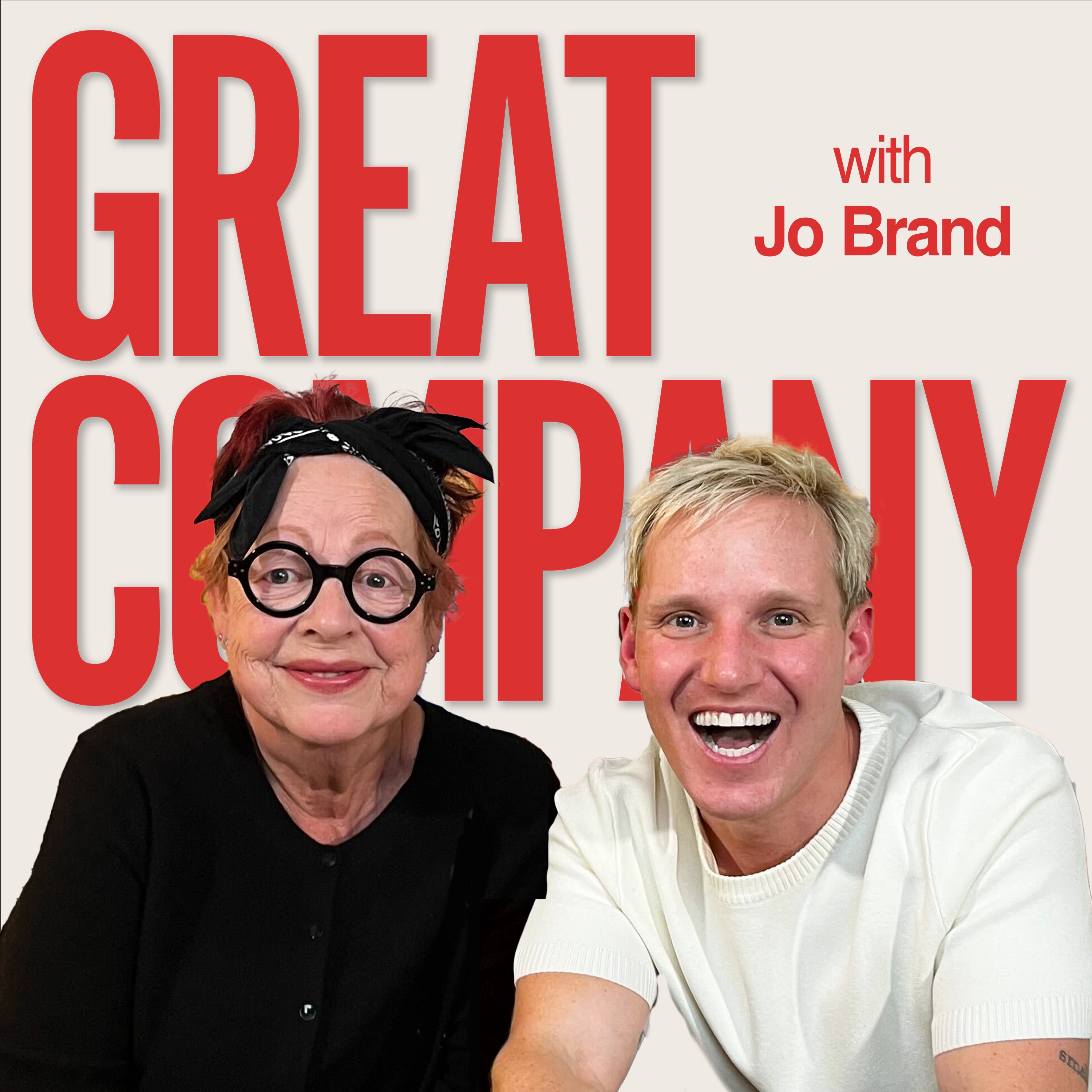
Getting kicked out by her parents for dating a questionable man, how to be funny and why she's never wanted to visit the states, Jo Brand was one of the first female comics to break through, and has gone on to become a beloved household name, now hosting the Bake Off's Extra Slice.
Jo chats to me about how antidepressants saved her father's life [07.57], her hatred of adverts [17.43] and why the abuse from hecklers at comedy gigs was nothing compared to her work on the ward [40.35].
If you enjoyed this episode, please subscribe - we have so many great guests like this one, you won't want to miss out! You can also follow us on Instagram and Tiktok @greatcompanypodcast
THE CREDITS:
Exec Producer: Jemima Rathbone
Assistant Producer: Gurlina Heer
Booking: Ben Johns
Video: Jamie Gilbert
Great Company is an original podcast by JamPot
Hosted on Acast. See acast.com/privacy for more information.