Ask ChatGPT

 Great Company with Jamie Laing
30 Jun 2026 · 1h 2m · 26 chapters
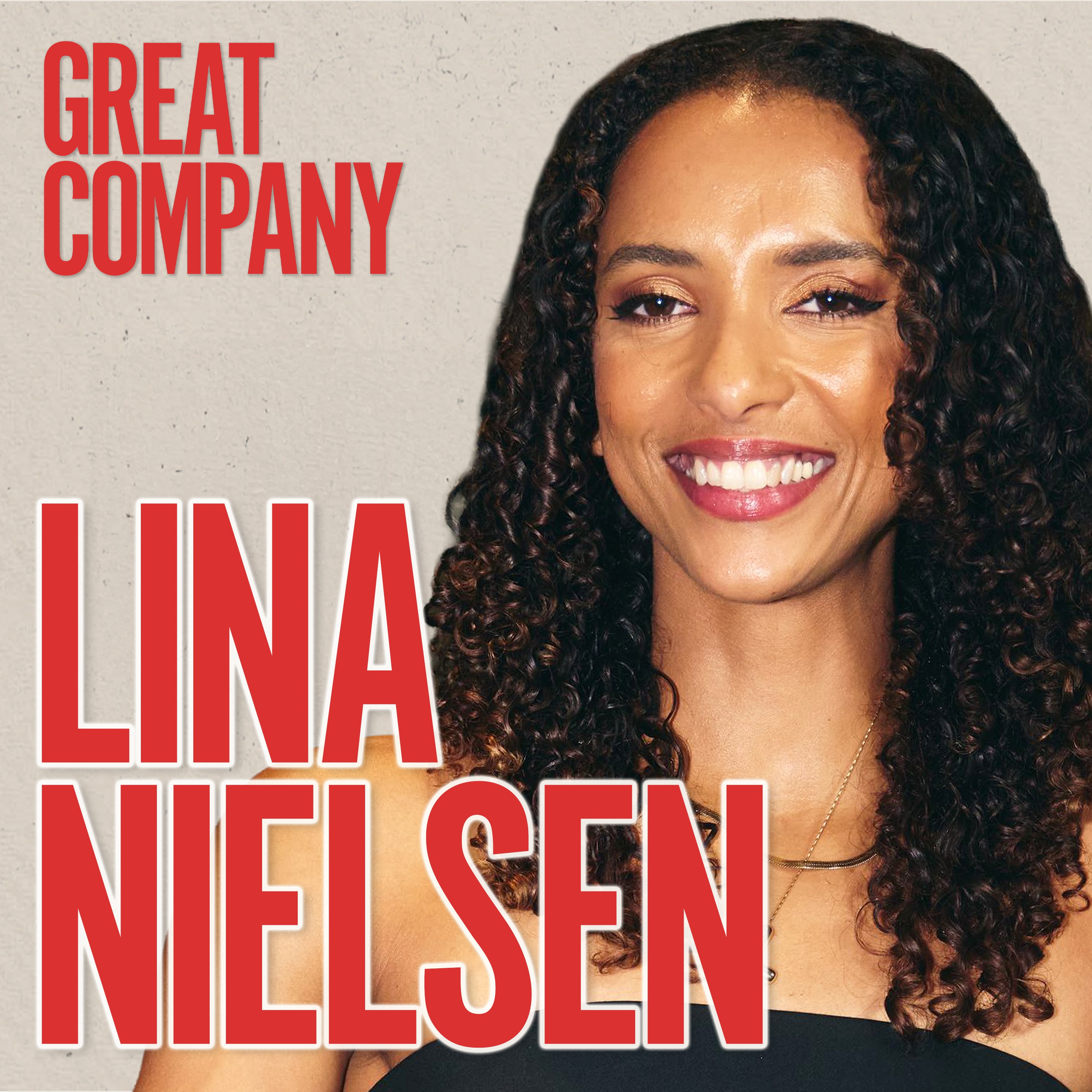
Lina Nielsen recounts her journey from being diagnosed with MS at 17—after rapid right-side weakness and near-paralysis—to becoming an Olympic medalist, and discusses MS misconceptions, retirement timelines in sprint/hurdles, and how her upbringing shaped her independence and relationships.
Lina Nielsen is a UK Olympian and British record holder (400m hurdles/400m hurdles and 4x400 relay). She grew up in Leytonstone, East London, on a council estate with a single mother (Sudanese, Arabic-speaking) and her twin sister. She has relapsing-remitting MS; her first symptom began at 13 and she was properly diagnosed at 17. Her twin sister also has MS but later diagnosis and different symptoms (including breathing issues mentioned).
MS is an autoimmune “snowflake” condition with no cure yet; it can be severe but does not automatically mean a wheelchair. Athletes often retire young due to long training age and injuries/mental toll. Lina’s identity and future planning include studying chemistry and becoming a qualified yoga instructor.
She describes being told “you’ve got MS” in a UCLH doctor’s office, the MRI process, and learning to walk again while her sister trained. She links her Olympic dream to carrying for London 2012 (100m prelims and Jessica Ennis’s 200m heptathlon). Her Olympic medal is from the 4x400 relay with her twin sister.
Written by AI. May contain mistakes.
Lina discusses her diagnosis of MS at 17 and its emotional impact.
“My mum sat next to me and they were like, you've got MS.”
Lina shares her early experiences and aspirations related to the Olympics.
“Hi, I'm Lena Nielsen and I'm in great company.”
Lina reflects on growing up without her father and its influence on her.
“I just looked at my twin sister and I thought, we have to try.”
Lina discusses her journey to becoming an Olympian and the significance of her achievements.
“How I'd introduce myself in professional spaces.”
Lina talks about the challenges of a sports career and the looming retirement age.
“is that if I could, I was actually messaging a friend of mine yesterday called Ruri, amazing guy.”
Lina shares her thoughts on retirement and finding new opportunities beyond athletics.
“So we live in this different world and it's interesting.”
Lina recounts her childhood in East London and the values it instilled in her.
“For me, actually, I'm quite excited about it.”
Lina describes her experience as a young games maker during the London Olympics.
“I think I grew up with community, with people around me.”
Lina shares her emotional experiences as a kit carrier at the Olympics.
“You just know that there are 80 ,000 people there.”
Discussion on Lina's upbringing without her father and her mother's impact on her independence.
Lina discusses her struggles with trust in male figures and relationships.
“And she didn't rely on anyone else to protect herself.”
Lina reflects on the lessons and independence instilled in her by her mother.
“And I think I'd take some of that from her.”
Exploration of the connection and competitive spirit shared between Lina and her twin sister.
“I should be that fast, clearly, because we've got the same genes.”
Learn about the different types of MS and its complex nature.
“It's where your immune system mistakes your nervous system for not being yours and attacks it.”
Discover the public misconceptions surrounding MS and the importance of awareness.
“nurture involved here um and we've got very different types of ms it's it's it's interesting For the scientists in me, I studied chemistry at university.”
Explore Lina's personal experience and emotional journey of being diagnosed with MS.
“So yeah, that's still considered quite young.”
Learn about the journey of acceptance and the power of speaking about MS.
Discuss the stereotypes of MS and the importance of representation.
“And so when I now advocate about MS, I say when you are ready, because it does take a while for you to come to terms with that diagnosis.”
Lina discusses misconceptions surrounding multiple sclerosis and the importance of awareness.
Lina reflects on how sharing her MS diagnosis during the Olympics can inspire others.
Lina talks about her mother's influence and the emotional journey of dealing with MS.
Lina emphasizes the importance of perseverance and the gradual journey towards success.
Lina and Jamie discuss strategies for managing nerves before competitions and public speaking.
“Do you think you've grown up quicker because of it?”
Learn how Lena Nielsen manages nerves and pressure to perform at her best.
Discover the backstory behind Lena's Olympic rings tattoo and her excitement for the upcoming events.
Engage with Lena as she answers fun and personal questions about her life and values.
“What's a saying or phrase that makes you smile or cheers you up?”

Get the gist, explore an idea or ask about something said.
 Claude
On Great Company with Jamie Laing, what are the key points of this episode?
Searching your listeningAutomatic transcript. May contain errors.
0:00You're 17 years old. You're wanting to become an athlete. I sat there in the doctor's office. My mum sat next to me and they were like, you've got MS. And I just remembered the room just spinning and I literally just burst into tears. And my poor mum, Arabic is her first language. For my mum to be so worried and not know what was happening, that was really hard. That is so hard. Yeah, not good. At this point, my sister's now fully in training. She's at the national under 20 championships and I'm learning how to walk. and it just very much felt like, yeah, life was over. And it doesn't have to feel that way.
0:36Hi, I'm Lena Nielsen and I'm in great company. Completed it! It's going to be a 1-2 for the Nielsen family. She smashed the British record, Lena Nielsen. Wow. So I grew up in East London. You know, we grew up in a council estate. The borrower that I grew up in was one of the Olympic borrower. So we got to see 2012 rise from the ground up. Wow. And me and my sister were so fortunate we get carried for Jessica Ennis. And I remember I will never, ever forget the feeling of walking into an Olympic stadium for the first time. I got shivers now. That's insane. I just looked at my twin sister and I thought, we have to try.
1:07I want to be at the Olympics. And then that was when the dream started. Was your dad around? No, I never knew him. I never questioned that lack of a male figure. Even now, I'm kind of in this phase where I do struggle to listen to men and trust men. But I just think it's because I never needed it. Mom was everything, and I think it would do her injustice if I think I need the dad there. She raised me to be a strong woman. If you could achieve anything, what would you want to achieve?
1:52from a friend. Acast gives you that trust at scale. Digital precision, host-read authenticity, and performance data that proves it worked. Don't fight for attention. Buy it with Acast. Learn more by visiting acast.com slash advertise.
2:12Guys, welcome back to Great Company. We have Lina Nielsen on the show today. She's an incredible athlete with an even better story. So get ready for this. Now, before we start, if you can click that subscribe button it takes one second it's completely free and you join the amazing community of people already following us thank you so much okay enjoy this wonderful episode of great company with lena nilsson for anyone who doesn't know who you are yes can you explain who you are what you've achieved so i would say i'm lena nilsson um i'm an olympian That would be my first thing. It's a relatively new thing.
2:48And I am just a normal girl. But you are an Olympian. I seem to be an Olympian as well. How I'd introduce myself in professional spaces. Does that ever get old? No. And I have my Olympic medal on display in my living room. And I literally legit walk down every morning to make my coffee. And I look at it and think, what is that doing here? How does that belong to me? Like, it's weird. Yeah, it's very special. And when you think about the population of the UK, it's something like 70 million. And when we assemble Team GB for the Olympics, it's something like 360 people across different sports. I think athletics was 70 compared to 70 million.
3:26It's a very, very small group of people to be a part of. And that's something I don't take for granted. You're the best of the best of the best. Best of the best of the best. It's amazing how you don't take it for granted. I really struggle with this. I think a lot of people maybe struggle with this. is that if I could, I was actually messaging a friend of mine yesterday called Ruri, amazing guy. And he, I mean, just like in my own head about lots of different things recently, not major things, but a little bit. And he was messaging me and he's quite a good source of like encouragement. And sometimes I think we all need that kind of encouragement.
3:59And he said, if someone was, if you were to say to yourself 10 years ago, when I first met you, that you'd be doing this now, you'd be over the moon. You'd be so excited. You'd be like, no freaking ways and as we gain what is success or do different things we kind of lose that but you don't you see your medal every morning and go yeah that's a great way to be yeah and i think it's because there's so many factors involved like you know 10 if we talk about 10 years ago there's no way i would have believed i'd be at the olympics let alone come back with a medal that was not written in my cards at all um and then also just to know that the career is so short-lived like sports people know they're going into this career and it's going to be something 10 odd years of your whole life which is very minor time you just wake up every day grateful because there is something tomorrow that could take it away it could be an injury for my case it could be illness and it's just something that you know is yeah very fragile and I think that's why I don't take it for granted every single day wow I didn't really there's a ticking time clock yes yeah it's a ticking time bomb it's very yeah very very scary especially now that I'm into my late 20s entering my 13s I'm very aware that this is the part of life where they start talking about retirement and it's very much yeah I feel it a lot now and it's something that I don't I'm not going to do it anytime soon but it's something that does loom over you it's this okay right you are going to retire very soon what are you going to do next and it's very yeah that's also quite scary it's and 30 is so young it is isn't it but it's crazy young but in sport it feels like it's not yeah you're like the grandma of the team the veteran they call you the experienced one and And it's, yeah, it's very, yeah, it's a different timeframe.
5:35So we live in this different world and it's interesting. But yeah, for a lot of people now, especially with mothers in the sport, that retirement age is shifting to a much later stage of your 30s. That idea of time, and we all kind of have that in life. Yeah. That we're constantly worried that time, I have it. I need to succeed. I need to do this now. Here we go. But I've kind of got my whole life, I suppose, to do it. I've never thought about it, especially with athletic athletes, people competing in sort of sprinting, you know, on a track, there is really this window. There is, yeah. And why is that?
6:07What is because what happens to your body, to your muscles, to your brain during that time? Well, a lot of it's to do with training age. So for me, I've got what they call a young training age. So I didn't start, I guess, an elite level of sport until I was in my mid-20s. So I was quite a late bloomer, if you will. Okay. But most people would be doing it in their teens. And so that training age, so you training over and over again, you're pushing your body to these limits. There's a timeframe to that. It's very dangerous. And so what happens when you reach kind of your 30s, you would have been training for about 15 odd years really hard.
6:35And your body just can't handle the injuries and the niggles. And there's going to be a pestering little pain that just never goes away. And that's kind of what leads a lot of people to retirement. There's also the kind of mental toll, the emotional toll that it takes. And some people just can't do it anymore. It's like that emotion just gets a bit much. And then also life takes over as well. I think you see a lot of people having babies and want to maybe prioritize their families. And so then that takes over. So there's so many different factors, but it tends to hit around your mid-30s, early 30s.
7:04Wow, that is so young. Right? But then it's exciting to know how much more of life you've got. And then those skills that you gain in sports, you're going to carry that for the rest of your life. But then when we talk about retirement, what does it make you feel? For me, actually, I'm quite excited about it. I say that. I'm not scared of it. So I know a lot of athletes would be thinking, what do I do next? And how do I rebrand myself? How do I change who I was? I was an athlete for 20 years and all I'm known for is running and this that or rugby or football and then they struggle with the identity crisis whereas for someone like me I compete with a chronic condition so in the back of my mind I've always known that one day this career could just go tits up and I've always tried to have other things to work on so that should something happen I can just fall back on this I made sure to go get a university degree qualified as a yoga instructor I'm kind of dipping my fingers into too many pies at the moment but yeah I've always wanted to make sure that I had something to fall back on and so in that way it's almost like endless opportunity when I retire so I'm not too scared about it I think I will be sad because it is something that has taken over your whole life and it's something that you it is for a lot of people sport is their first love and it was my first love and to let go of that it would be quite sad but it's not so scary I think you as a sports person this can go for any other career to be honest if you're someone who is you know doing a career for quite a long time and you know that at some point you might want to move forward from that um it's okay to be sad about it and it's okay to kind of grieve that but then there's so much more that life can offer so i think that's how i phrase it and how i look at what people don't realize is that out of every single race out there the 400 meters is probably the worst yeah and the reason why it's the worst okay maybe not the longest it's not the shortest but running a sprint yeah 400 meters around a track yeah that's a full track yeah it's quarter of a mile it is maybe one could argue 800 meters is worse i actually would agree that yeah but let's say 800 meters 1500 800 let's say 800 400 probably the worst yeah it's just horrendous because you are you are everyone you're getting everything out of your tank yeah it is out there plus you're adding in hurdles yeah so you're having to jump over hurdles i like a good challenge as you can tell why on earth you picked that event it's so funny you're often hearing track and field it's like there's so many different events i think there's something like 18 and that goes throws jumps and run um and often people go how did you pick the one that you're doing and you'll hear athletes go i didn't pick the event the event picked me okay so for me it was i started actually cross-country i wanted to be a distance runner i had watched 2012 i wanted to be an 800 meter runner and then quickly learned that i have no distance bones in my body and then went down to 400 I found it incredibly boring to be honest still do to this day it's just one lap it's it's yeah it's hard and it's I find I find it boring and then I thought let me add a challenge I'll put 10 barriers in the way and I absolutely love every single hurdles race so for me it was my calling it was very much this is yeah I'd love to do something where there's barriers involved let's take it back to when you're younger okay because you have a twin sister I do what was the household like where did you grow up so I grew up in East London um if you could probably tell from the accent um in a place called Leighton Stone I loved living there it wasn't at the time when I was growing up it wasn't a very good area to live in it was you know we grew up in a council estate and it was very much quite dangerous and actually the other day we went back and we saw some of the people that we grew up with and they're talking about you know coming out of prison and so and so still in prison and it's just crazy that we grew up there but I actually I feel like it shaped the person I am in what ways I so it's funny I didn't realize we weren't uh affluent if you will until much later in life so I grew up with so it's me my twin sister and my single mom my mom is from Sudan which is somewhere we used to go to a lot when we had our summer holidays and when we'd go to Sudan we'd see people uh living in mud huts people children barefoot people literally having nothing and so when I would come back to this council estate I'd look at us and be like oh my god we've got rooms we've got a roof we've got walls we've got stuff we've got toys like we've got a bit like so many things and I always thought wow we're so rich like to see something and like the people living in Sudan and then to see us you know living like that I thought we're so rich and not only only when I then grew up did I realize oh right we weren't rich and it's something that made me grateful for having that childhood because I'm always grateful for what I have because I know what it's like to just have the clothes on your back so that was something that really shaped I think the person I am today I'm quite a positive and optimistic person which I think and we've met a few times and and you are always positive yeah it's annoying isn't it no it's not it's brilliant but I think that's what shaped me to be this person because I just thought wow I have so much and and so I I talk about my childhood but I had a great childhood I really do.
11:56I think I grew up with community, with people around me. The thing about Arab families, so Sudan is an Arab-speaking country. Arab families, they're always together. There were always people around our house. We were always socializing. I grew up with all my cousins and it was just incredible. And I really do think I had a good childhood. When did you realize that you weren't affluent? Probably only when I was in my early 20s and I started to, you know, be around other athletes. And then a lot of athletes would come from families where they would push their children into sports clubs and things like that whereas we didn't have the money to go to sports clubs and you often think you often hear actually that athletics is a poor man's sport because all you need is a field and a pair of trainers correct um which is what Usain Bolt says I think it's a poor man's sport um so you know going into sports so if you wanted to be someone to go into tennis like usually you need to come from a family of money um but you know I was in sport because athletics was just available and actually where I grew up we were very very fortunate that the borrower that I grew up in was one of the Olympic borrowers so we got to see 2012 rise from the ground.
12:54So yeah, that's, that's another part of my childhood that really, really shapes me, you know, living in Leytonstone, we were one of the five Olympic boroughs. And there was an opportunity when the Olympics came around for 16 to 18 year olds who live in the local boroughs to become young games makers, YGMs as they were known back then. And me and my sister were so fortunate to become kit carriers at the 2012 Olympics, which was just an incredible experience. And I remember, so we were so, we lived so close to the Olympic stadium that we could walk there, took about 15-20 minutes but we could walk to Olympic Stadium so we put our little uniform on it was like a purple shirt with like little orange stripes and we just walked down the high road in our uniform and I remember members of the public just stopping us and going thank you so much for your service and I was 16 and I had no idea like the magnitude of this event that was happening so we'd walked to the Olympic Stadium we had our first shift as young games makers and our first experience of kit carrying at the Olympic Games was the 100 meters prelims so not the heats the prelims so the Olympics has this incredible movement where lesser populated countries can enter athletes so that they can experience the Olympics which I just think is a great movement from the Olympics yeah so we kit carried for the 100 meter prelims that was our first ever shift and I remember I will never ever forget the feeling of walking into an Olympic stadium for the first time we had very strict rules to pick up the box we walked out first there was a team of eight of us obviously eight lanes and we'd put down the box don't look at the athlete don't look around don't like just put down the box and focus we took our job very seriously but that moment when you walk out into olympic stadium you can't help but why what did it what was the feeling it's just 80 000 people is just so many people it's a magnitude of people and there's british flags there's other countries flags but everyone has this look of joy and pride on their faces we've got a home olympic games and that's something that not a lot of us will experience in our lifetimes and I don't think the UK will experience it for a very very long time so I was very fortunate to be at the London Olympic Games just to see how many people showed up for the 100 meter prelims it's like incredible and yeah and we just put down the box and the the cheer was very loud but what was an even better experience than that was we carried for Jessica Ennis's 200 meters heptathlon race now this was in the nighttime so this was another shift so what would happen is we do a kit carrying shift we'd then go back into a sort of little staff room with all the other little teams um and when it was our turn they'd go right at kit carries for the headathlon 200 up you get and so we get up all eight of us my sister sneakily took box six because she knew that that was just getting this is lane so still hate her to this day for it i think i had box seven or box five i was on the lane either inside or outside of her.
15:39And so our job was to walk out first. So we picked up the boxes. They're empty. We'd walk out into the stadium first. And it is nighttime. So you're not seeing the faces anymore. You just know that there are 80 ,000 people there. And as soon as the athletes walked out behind us, obviously Jessica Ennish Hill was the golden girl of the 2012 Olympics. The eruption of 80 ,000 people, you would have thought there was an earthquake. I got shivers now. That's insane. I will never forget it. The flashlights, you would have thought it was daytime. But obviously back then it wasn't so much smartphones, we were still kind of using cameras with flashes the flashes that went off it was so bright and I remember like all eight of us just looking around going oh my goodness what is happening this is incredible and I remember wanting to sneak a peek at Jessica and I wanted to see what she was like and the amount of focus on her face really she just wasn't phased by it I thought it's like lightning and thunder in here then these people are all here for you you know and it was just to see her the focus on her face that was when I first realized I wanted what she had I was like I want what she has explain what you mean by the focus what was it it's like if you know us with us we were 16 of course us with the role of right go out there don't look at the athletes don't look around and we broke out of that we had to look around we had to figure out what's going on she was just looking at the track and it looked like she was going through her race plan and she was very much nothing could break that focus that level of commitment and not succumbing to that kind of pressure I think like looking at her knowing I mean we all knew that the country was behind her she was I think at the time one of our only gold medal hopefuls in athletics um and it was just she just didn't seem any she didn't seem fazed by it and I just thought I want to know what that's like how do you get to a point where you're like that and I remember when we took the boxes with everyone's kit inside um our job was to take it to under the tunnels of the stadium to the finish line and our team leader was was there ready to meet us and I just looked at my twin sister and I thought we have to try we have to try and have this happen for us like we I want to be at the Olympics like I want this to happen and that was when the dream started and honestly that was my childhood if if the London 2012 Olympics didn't come to my Olympic to my home borough I don't think that dream would have ignited in me so yeah my childhood was fantastic can I was your dad around no I never knew him really never knew him yeah but again I this is what I mean when I say I'm very positive our mom was our whole like she was my whole thing she was strong enough to to raise two twin like twin sister babies I don't know how she did that she was 26 I just don't know how she did that so for me I never questioned that lack of a male figure and and I only when I got to the point when my prefrontal cortex then kicked in so past 25 so even now I'm kind of in this phase where I do struggle to listen to men and trust men and I only realized that as a girl glad you're here because I did want to I felt like you weren't you were ignoring me I struggle well you struggle but break this down for me because there's a lack of trust a lack of understanding a lack of it doesn't help that most coaches in athletics are male coaches my coach right now is a male coach so it doesn't help so sometimes like the other day I was so tired from I've just started training again I'm in week two so he was trying to give me these cues and I just stopped listening I was like I don't want to hear it he looked at me he's like are you okay I was like don't want to hear it and that's where it like the barrier is and like I think if I was someone who maybe would lean on I guess a male figure to kind of help me through that tiredness then I would just be like I'm so sorry coach I'm really tired but I get to the point where I just blank out I'm like I don't want to hear it like I'm going to do this on my own is that a defense mechanism i guess maybe you could phrase it that way but i just think it's because i never needed it i grew up without a male figure so i think i'm very much i'll lean on a female like if there's a problem i'll probably like you know lean on the female character in my life who right now is my twin sister who's my best friend um but it's yeah it's something that i've only figured out later in life that that could be a barrier um and it's something that i struggle with uh in my relationships as well yeah i want to know but this is what this podcast about here we this is what the podcast he's like yes the first few years is very difficult but why talk to me what happens in that relationship why would what happens at the beginning when you get into a relationship with someone what manifests because of that i think it's that whole avoidant attachment thing it's very much like i i don't mean to draw on your relationship but i feel like you've spoken about this yeah you and sophie she's more avoidant and you're more anxious attachment 100 so i'm more like sophie i'm very much like avoidant like if i've got a problem i don't want to hear from you and it's very much um i've noticed that i'm not very cuddly and very like touchy feeling like i don't really need that from my my partner but it's the other way around for for him so it's yeah something that i've yeah definitely noticed is what's something i'd love to work on and something that I'd love to move past because it's it can be a barrier and it was a barrier in the beginning of our relationship um but I think it's something where I need to almost embrace that male figure and know that they're going to be around and yeah it's uh it's something I have to rephrase yeah as I get to my my late 20s yeah my Sophie my wife um went through divorce and she the way that I'm speaking for her so I hope she doesn't mind but the way that I I'm going to perceive it for her is that she had to protect herself.
21:03Yeah. And she didn't rely on anyone else to protect herself. So she closed up. Yeah. And that's what she has done. You know, I've seen it, me and her, when I do something that annoys her or makes her feel like she doesn't trust me because I haven't been reliable, not even big things, right, but small things, she immediately closes off. Yeah. Well, I don't need you. I don't need you. I can do it. And so you're the same. I'm exactly the same. It's like, why? Why are we like that? and that's what I'd love to explore. Our childhoods have a mad influence on our lives. Yeah, for sure. Have you ever spoken to a dad?
21:36Never knew him. We did. My sister actually was more wanting to find out who he was. So she went on a deep dive. So we're half Danish. That much we do know. He was Danish, our mum's Sudanese. And she found our half-sister. So he was married before my mum. So found his half-sister and asked her where he is and he had just died six months prior to her trying to find him. it affected her quite a lot and it's something I'd love to I hope she doesn't mind me speaking about this but it's something that I'd love to know why we're so different because when she told me she was in tears going he died and I was like okay because you're an avoidant that's like you telling me Bob on the street wow his dad died like for me that person is not in my life I don't is your sister an avoidant yes I think she is yeah you think she is yeah exactly the same yeah twin sisters talk the same laugh the same side yeah I assume she's avoidant but yeah how did he pass away I think he had a form of cancer and he was living in Indonesia at the time but he was quite estranged from his other family so we know that he wasn't a very good he's a female family member if that makes sense but yeah it's not something that I grieve about or I'm sad about or it could have been would have like I just it sounds bad but I just don't care enough like my mum was everything and I think it would do her injustice if I think I need the dad there she was she she raised me to to be a strong woman.
22:57She raised me to be funny. I think she's hilarious. And I think I'd take some of that from her. And I just, I just don't think anything's missing. She's, she's an incredible woman. Tell me what's your mum's name? Amanda. Hi, Amanda. She's in Egypt right now living her best life. Is she really? She loves it there. Yeah. She's, I mean, did she ever date again? No, which is really interesting. Yeah. So she was a very strong woman and she, like, we never had a male figure in the house. I think she was just very focused on raising her two daughters um which she did to the best of her ability what did she teach you to fend for ourselves she definitely taught me to not need anyone else which is interesting because i've got twin sister and i often think i need her but um yeah i often when i have a problem i don't like to to get help from it and you know like what men are like in relationships like the woman likes to vent and the man likes to give a solution correct yeah i i can solve it i don't want to listen let me solve it I don't want to hear your solution I just want to vent I don't get that I can solve it sometimes we just want to just you know rant and vent and so for me it's like I don't even want your solution I'd rather just deal with it myself and that's another thing I'd love to just fix within myself but yeah she just raised us to be super independent I remember I remember our very first washing machine lesson at 11 she's made us stand there from the washing machine and said this is how you use it and so like she's very much taught us to be self-capable and yeah to to keep going and to go for our dreams and like she never once I mean for a mom who's Arab and African you know it's the worst of the two combinations and you know you're very much in those cultures you need to be an accountant a doctor or a lawyer engineer that's your job role and for us we were like we want to run around circles we want to go to Olympics she never once made us feel bad about it she never once made us feel like we were lesser for wanting a job that's not quite conventional um she very much like she wasn't so much a pushy parent she was very much like if that's what you want to do then yeah go and do it like don't let anyone stop you but she never was that parent that stood on the side of the track and went go on she made you competitive then because you have a competitive nature in you right you got it maybe that's because you're a twin sister maybe it's because i'm a twin sister i think it's the sibling thing competitive with each other yeah we're competitive with each other and it's quite nice that we do different events so she runs the 400 meters flat whereas i run the 400 meters hurdles but with them we do come together in the 4x4 relay which is where our Olympic medal is from um so when we're training together we use each other so I know my sister's slightly faster I'm better at the endurance stuff so we like push each other and if she comes near me in an endurance run I'm like no way go away this is my thing like you can't beat me whereas when she does a speed session I'm next to her like she doesn't let me beat her so we call it friendly fire yeah so you're constantly good it's a healthy competitiveness it's healthy competitiveness it's really good to have that it really is and I'm so thankful 100 always to be better carbon copy to use wow Wow.
25:43So it's like, right, she's that fast. I should be that fast, clearly, because we've got the same genes. So it's an advantage that we both know we have and we use it to the best that we can. Just quickly, with your twin sister, are you guys telepathic? We get asked this a lot. No. Although we share memories, which is really weird. Because you were both there at the same time. Yeah, well. But we'll remember it. Weird how we share memories. Let me land, let me land. Do you know I remember when mum did no? I remember. It would be like, oh, I remember this time when I went down this slide and she'd be going, no, that was me.
26:17You didn't go down the slide. You didn't want to. But I very much remember physically going down a slide. Like it'd be something like that, like a mad memory where I think I was the one in it. Whereas it's actually my sister. Yeah, it's very weird. So we share memories, but we don't, we can't telepathically talk. But the connection of twins is different. Yeah, very different. I can't compare it to anything else. it's funny because it's again one of those things that we didn't realize was special until very much later in life yeah i was like everyone has this connection with their siblings like and it's like oh actually when we see the way that we laugh like even my boyfriend will be around us all the time we'll just have these inside jokes and it's just not funny but it's funny to us um but then like she'll also know when i'm like raging with anger um she'll be like we have to be nice to lena today she's angry so she knows me very like we know each other like like the back of our hand like We're very, it's a very special relationship.
27:07And yeah, it's, it's, yeah, something that's very unique, I think.
27:16Do you keep hearing podcast ads like this one, for example, but always wonder how you actually get involved with them for your own brand or organization? Well, it's easier than you think. We're Acast and we give you the platform to do it all yourself. Browse thousands of popular podcasts. Choose the shows that match your perfect audience, set your budget, and launch. And if you want a hand, our podcast specialists are there to help you launch with confidence. This is podcast advertising without barriers. Get started at acast.com slash advertise.
27:53You got diagnosed with MS when you were 13. Yeah, I had my first symptom at 13. First symptom at 13, then diagnosed at 17 properly, right? At 17, yeah. Can you explain to me what MS is? Yeah, so MS is an autoimmune condition. It's where your immune system mistakes your nervous system for not being yours and attacks it. And then that can lead to various different types of symptoms. And it's very strange. And within MS, there's three different types. So there's relapsing and remitting MS, which is the type I have, where you have relapses. So certain periods of time where something is not quite functioning properly.
28:29and then you'll go into remission where things heal to what extent we don't know but then you can kind of live like a healthy human and then there's primary progressive where that's um your ms would start that way so primary progressive is where your nervous system gets attacked and it just stays that way for the rest of your life how it progresses again not we can't really give a certain prognosis and then the secondary progressive where relapsing remitting can become secondary if there's a certain symptom that just keeps progressing so there's yeah it's we we call it a snowflake condition because it's very different for everyone including in identical twin sisters so um so my sister i hope she doesn't mind me speaking about this but she got diagnosed with ms a lot later than i did we both have relapsing remitting ms so rrms and even with us we've got the same genes same upbringing so there's no nature versus nurture involved here um and we've got very different types of ms it's it's it's interesting For the scientists in me, I studied chemistry at university.
29:28I find it so fascinating. Is it genetic? We don't know. The thing about MS, it's very difficult. We don't know the cause. Come on. And there's no cure. We're getting very close to a cure. And I like to share this a lot with, so I try to be as open as I can when it comes to MS. And I like to share as much. And the other day I shared a news article on my story of this research that's happening behind the scenes. I think it was a Sky News piece that had maybe about 20 comments. And I was like, not a lot of people know about this. So I'll share it on my platform. So hopefully the people that do follow me that are following me because we all have MS can see that there's hope.
30:02There's a lot of research happening behind the scenes. But yeah, we don't know the cause. We don't know if it's caused by a certain gene. We know it's some sort of gene expression gone wrong, but we don't know how many different genes have been expressed wrongly. So it's very much a big question mark over MS. How many people in the UK have MS? So right now it's about 130 ,000 people in the UK that have MS. So it's very low. It's very, yes, known as a rare condition. Yeah. So for that reason, there's not a lot of awareness around it. And so I think what happens is, so the complexities of MS, the fact that it's a snowflake condition, the fact that there's not a lot of awareness around it, people paint it in a certain way.
30:42And it's because there's very limited information that is kind of sent out publicly. And so it's something that is very, there's a lot of misconceptions around MS. And it's one of the things I try to advocate for. I have a friend that I know who's now got MS and he's in his late 30s. Yeah. So you get diagnosed quite young. I don't think he was diagnosed young though. You tend to get diagnosed between 20 and 40, which is quite young. Wow. Okay. He's very young. I was thinking young's like eight. No. 30s is young. So yeah. So you said he's 30. He's 39. 39. So yeah, that's still considered quite young.
31:17Yeah. So it's known as a young person's condition. So a lot of people, one of the misconceptions is that it's an old person's condition. Where it's not, it's most people get diagnosed between 20 and 40. So it's a young person's condition, if anything. And if you had a Richter scale of how severe it can get, how severe can MS get? It's, yeah, definitely varies from person to person. You can, you know, become paralyzed from MS. You can be in a wheelchair. Whether you want to paint that severe, you know, some people would phrase it in a different way. But, yeah, it can affect so many different things.
31:50it can affect the way you walk the way you speak the way you swallow the way your bladder is controlled and that varies from different person to person sometimes it can affect the way you breathe which is happening to my sister at the moment um so it's not fatal um sometimes there are complications that can lead to fatalities but it's not ms that it's fatal um in my case the most severe it's gotten is that i've become paralyzed on the right side of my body so that did stop me from walking for a little bit. But that's the worst day in Scotland. So it's very, very complex and very individualized.
32:23You're 17 years old. Yes. You're wanting to become an athlete. That was a year after the Olympics. Yes, the year after the Olympics. Life is like ready to go. I mean, if I look back when I was 17, it was like probably one of my favorite years ever. I was just young. I was dating. I was out. About to become an adult. About to become an adult. All these things were going on. and then you get told you have MS, that's probably a pretty scary moment. Yeah, it was definitely the hardest thing I've ever had to deal with. Even now when I've had times where MS has affected my life, that never gets as hard as it was when you were 17.
32:59Talk me through it because I imagine a lot of people listening to this potentially are maybe in the same position as you. Talk me through what happened. So like you said, I was 13 when I had my first relapse, which was weakness on the left arm. at the time i was a pediatric case um no one could figure which is child child case um no one could figure out why this child is presenting symptoms that look like a stroke because obviously it's left arm weakness um so it was brushed underneath the carpet and it's something that just recovered on its own and i forgot about it when i was 17 it happened on the right side so it's my right arm that went weak first and i just i remember thinking this has happened to be before like clearly now when I look back at it it was clearly trauma that I just buried deep into my brain and didn't like think about so when it happened on the right side it was like one of those movie scenes where the flashbacks come back wow and you're and I'm sat there going oh my god this has happened to me before and when I realized that my right arm was weak I was actually in the gym with my very first coach Frank Adams who I have to say because he's just a sweet darling very close to him still to this day I was doing bench press it was so weird I was doing bench press and the I was pushing the bar and the left my left arm was pushing my right arm wasn't pushing and the weight started to slide off on that side and I just went why is my right I'm not working I don't understand and I then then that's when all the memories came back and I sat there in the middle of the gym and went oh my god it's going to get so much worse and Frank was like what do you mean it's going to get worse I said this is going to get so much worse because this happened to me before so I just went home didn't tell my mum which is very strange because I don't I don't want to worry her when we were 13 she was very worried you could see it yeah and you know because you're her life yeah and I don't want to worry her you know there's been so many times I was the problem child so I got hit by a motorbike when I was 10 worried my mum then had that left arm weakness worried my mum so I was like I don't want to worry her again I'm not going to tell her it's going to go away and it's only like it did last time so yeah I didn't tell her and then it just got worse and worse and I started to notice that my leg was getting affected and so it got to a point where I just couldn't hide it.
35:01You didn't tell anyone. Yeah, I didn't tell anyone. I know. I was 17, Jamie. But I did eventually tell her because I couldn't hide it. So I think I was getting a glass from one of the top kitchen covers and I just couldn't hold on to it. It just dropped and shattered and I just broke down and went, Mum, I can't move my right hand. I can't move my right arm. And of course she goes into panic mode. Our local hospital at the time was Whips Cross Hospital, which last time we went didn't give us any answers. So she took us straight to UCLH. how she knew this hospital had a neurology apartment I'll never know I didn't know she could google things she's like first language is Arabic I didn't know she could do this so she was I'm taking you to CLH which I was very confused about so we've got in the tube I'm now at this point limping because I could barely walk so it progressively starts to it starts to go and it was very quick so like I noticed that my right arm wasn't working on the Monday and then by Thursday it was very much I'm really struggling to walk and then what is going through your mind I didn't you know at 17 you don't think a lot of anything no you're naive which is a blessing yes so I didn't I was like it's fine I'll be okay like I went away last time it was very much like everything's going to work out in the end early then when I got to hospital in this country it's very notorious that emergency waiting times are very long so we got to emergency room I know that there's a lot of people waiting my mum said the symptoms to the doctor and I got rushed in immediately which I then was like alarm bells are ringing I went in front of all these people why are they taking me in i was in an mri machine within an hour of walking into that a department um so then that's when the ball dropped and i was like right this isn't this isn't good um and when you're in an mri machine i was in there for an hour because at first they put me in there without contrast so that's when um you just get scanned yeah and then when they put in contrast it's so that they can highlight things that where there's inflammation or if there's a tumor they were very sure it was a tumor just because of the way they progress really quickly wow so i'm hearing these things I'm hearing tumour I'm thinking like so then they you know put me into an MRI machine and then that's when I'm panicking it's a very obviously confined yeah and I literally just burst into tears and I was like my life is just has changed from this moment on um I was then hospitalized for three days to be kept under observation and in that time it's a university hospital University College London there was university like junior doctors coming in and testing my reflexes and asking me questions and it was just ongoing it was like very much I was like a case study and I'd hear the words MS being thrown around or this other condition being thrown around and I just thought no that's that's not me I had learned about MS in A-level biology I was like no that's not whatever like these students what did they know they're learning um but then I got sent home and it took about six weeks to really recover at this point my sister's now fully in training she's at the national under 20 championships and I'm learning how to walk so again I found that very difficult you know we were training side by side and I was learning how to like walk again and jog again and then eventually you're watching visually with someone who looks like you and is your someone there doing what you want to be doing but you can't because something out of your control is completely that is the worst when something is taken away out of your control that was yeah that was that made that whole experience a lot harder because we had just seen the olympics and that was our dream um and then so it was a bit sweet it's like I want my sister to do well but also why am I not doing well so it was never like a oh I want my sister to also just feel this it wasn't that it was like okay she's flying but I also want to be flying so it was yeah it was very difficult and then I didn't get diagnosed until about two months later when I then got called into the consultant's office and they had you know done the the test and figured out through the results and they were like you've got I sat there in the doctor's office my mom sat next to me and they were like you've you've got MS and I just remembered the room just spinning and I couldn't look it's very interesting when something happens to you that drastic you want to blame someone yeah of course and I looked at the consultant and I just all these swear words in my head going oh you you've done this to me like you just want to blame someone and I said I just couldn't look at him and it didn't help that he had these like piercing blue eyes I'll never forget and like doctors are very like sure and certain and he's looking at you going you've got MS and I went no no I don't that's not me you've got it wrong and I just remember looking at the box of tissues on his desk and eventually those box of tissues being handed to me because I didn't realize I was like crying and my poor mom Arabic is her first language she didn't know what he was saying so she's all asking me in Arabic like Lena what's going on I was like I can't I can't I don't know I can't like literally burst into tears um and it was just honestly just the worst day and like for my mom to be so worried and not know what was happening that was like really hard that is so hard it's okay Jamie it's all right yeah yeah not good yeah we'll get you a box of tissues as well hold on one second but when I think about that memory it's not me it's like making my mum worried yeah that's the hard bit I knew you'd do this to me Jamie it's okay listen I am man it's yeah yeah it's tough it's really tough and that moment is obviously still within you it never leaves you like you it's when you get a diagnosis a lot of people say it's very similar to grief so you get you go through the denial so I was very much like in denial for like I'd say probably until I was about so I was 17 when I got diagnosed it was a month before my 18th birthday and I don't think I fully accepted that diagnosis until I was about 21 so it took like two like three or four years to really go okay I think I can get on board with this I know this is what I have but it's still very much like maybe it can turn around maybe one day they'll realize that MS can be turned into many different other things maybe it's an umbrella term and actually I've got this thing which is very similar to it so there's very much still denial and it's only actually when I started speaking about MS that I fully started accepting it and that's the power I think of speaking it's like oh I can actually I'm not scared of this anymore I can actually speak about it and and then I just took it you know like grasped it by the horns and I really started to think of myself as someone who lives with MS.
41:01Actually, let me rephrase that. MS lives with me. So there's a power in speaking. And so when I now advocate about MS, I say when you are ready, because it does take a while for you to come to terms with that diagnosis. And I always say, when you are ready, tell someone about it, just speak about it. And if you cry, talk through the crying like I'm doing now. And just, it can be someone that you're not even that close to just speak to someone about it or like maybe like start an anonymous blog and and speak about it or do something because you need to get it out of of you and that really helps you come to terms with it and I think there's power in in sharing can I ask though the because if I was diagnosed with something and this is probably my naivety coming in right but if I was diagnosed with something I think I would say it but what you're saying is that it feels like there's almost a denial or maybe I don't want to put words in embarrassment or shyness or something what is that fear it's interesting actually and it's something that's very unique to MS I think because what we know of MS is that it's disability it means that you're weaker than you come across as and what we know about MS is very superficial so what the first thing I learned about MS was I remember it so clearly my a-level biology book textbook there was a small corner of the textbook of an old white man in a wheelchair old white man mixed race young woman i was like this isn't two and two are making five i was like i'm not really i don't relate to that so for me it was very much like i'm seeing an old white man in a wheelchair there's there's definitely denial um and so i think with with what we know about ms and it's definitely changing now with the power of social media i follow so many social media pages talking about ms we're starting to see more and more people who could look like us we're seeing a lot more young women so ms is um you're more likely to be diagnosed if you're a woman so 70 of the people in the uk who have ms are women which is a big number compared to men so um we're starting to see more and more what ms could look like we're now starting to see that it doesn't necessarily mean that you're going to end up in a wheelchair whereas for me it was very much like you're going to wheelchair so there's i think there's power in in speaking about it and raising awareness and I think that everyone's going to react differently to a diagnosis but I see more and more so with MS that it's very much like I'm scared to tell my colleagues because they're going to think that I'm not able to do this job I'm scared to tell my friends because they're going to think that they can't you know invite me to a night out because I might not handle it so it's very much this this misconception that MS means you're gonna have to stop your life and I think that's what stops people from sharing and I think if you can tell people what your exact MS looks like to you because it's very individualized and this is why I talk about me and my twin sister quite a lot because it's like we are identical twins and ours is different if you can share what your story is like that will stop people from just putting you into the box that they think MS is because a lot of the information that's out there is very outdated there's so much research happening behind the scenes that doesn't get to the doctors until about five to ten years later so what they might tell you is very different to what you might see on the internet of this social media page of this guy who's living in Cornwall who's you know lifting every single day or maybe you know doing something else and I think that's the power of like something like MS that is so individualized if we can see as many different stories as we can that's what can help someone who might get diagnosed tomorrow might go oh actually okay I'll be okay and what was great about the Olympics was we get such a platform with the Olympics and I remember when we were like doing our kit collection there was this part where we had to just say a little bit about ourselves so that if like let's say for example there's a there's an olympic app so paris 2020 2024 had an olympic app and you're racing they can click on your name and there's a little profile about you mine said literally she has ms that was like that was my profile i was that's great and i didn't know how to change it so as i was competing at the olympics it was very much if you clicked on my name it says she has ms which i was i was okay about but what made it great and I got this dm and I'll never ever forget this dm it was this guy and he had dm me and said my girlfriend just got diagnosed um about two months ago and out of the blue the olympics was on and they heard Lena Nielsen GB lives with MS by the way and apparently it had just changed the whole way she looked at her diagnosis and for me I was like if I just touch one person with my story just one hopefully a young person who might not know how to do with this diagnosis then I'll be happy with just sharing my story and that's why I remember that DM because I went that's who I'm doing it for is so that someone can come to terms with their diagnosis because when I got diagnosed it was absolutely dire I had no one to turn to no one to look for and it just very much felt like yeah life was over and it doesn't have to feel that way Lena and you do do that it's so impressive because you're an Olympian yes you're the best of the best of the best right and you're living with MS and you can still get out there and you can still medal and you can still achieve what you want to achieve and that's why I don't take it for granted at all it's something that's why I walked downstairs and like 10 years ago they told me I wouldn't be walking and I've got an Olympic medal on my coffee table what's going on so it's it's you know what it just wraps up that whole experience in a bow for me and what it does is that you're you're forging a path for yourself when there wasn't one right that's the sort of thing which you're going through like this isn't I don't know where my future's going to go and you're like no I'm going to get through this yeah it's going to be okay and I think that's the way my mum raised me so credit to her credit to amanda amanda but what i find so beautiful about the thing with amanda and i don't want to bring you back there but um which i am doing um is yeah is um but you're you feel like you're not you're not sad for yourself you're sad for your mom yeah i think because she gave us everything you know she came to this country she actually was living in denmark with our father and she i guess she what i love about my mother she never trauma dumped on us so we were never sure why it ended with her and her husband um you've never asked no I think now more so but I don't want to bring up old trauma for her she's honestly living her best life in Egypt credit to her what I love about my mom is that yeah she never trauma dumped on us never told us why it went wrong with um her and her husband but she gave us everything so for me it was like she gave us everything I don't want her to think that now I have nothing like I want her to feel like yeah that she she did the best she could because I know it's hard you know like raising a baby it's hard raising two babies is hard raising two babies on your own is even harder so for me I know that she gave us everything so I guess in a way I just didn't want to take away from what she gave us and it broke my heart because when I eventually could tell her translate into Arabic somehow she thought it was her fault and I just was like this is what I didn't want and I was like no mom and even now she calls it a problem she's like in Arabic it translates to your problem she goes and muscular head gig is your problem and i'm like mom it's not problem i have ms do you know what it is and so i'm now educating her which is so funny because back then it was so funny i couldn't even look at the letters of the supermarket m &s it triggered me i was like i can't i can't look i won't go in there and now it's like me speaking about it it's just like wow look how life has gone and it does take a while but i think so the part of that was just sharing it and talking about it and being open about it and it's scary but once you get through it it's very much it's something that I'm proud to share and proud to raise awareness for and being an advocate for and you know the Olympics definitely gave me a platform and it's not something that I take for granted and so a lot of people who do the Olympics might just have the Olympics and then go back to normal life whereas I'm I was like no we need to build and this is a great platform and I'm definitely going to hopefully go to the next Olympics and and so there's four years in between I'm very much like let's use this platform and let's raise awareness about MS let's just scream it from the rooftops if we can get that awareness get that funding for the research and hopefully get closer to a cure it's amazing honestly it's amazing because um it's it's it's hugely impressive thank you and i know it's funny how it sort of shows the closeness of your family the fact that your mum thought it was her fault yeah and then you don't want to make your mum feel it's her fault no and so you're just trying to protect each other and it makes me really realize that um um we when you're in those moments of real darkness and you feel like the clouds are closing in and there's no escape from it there always is you just got to find your way through it yeah and I always say that and like you thought in that moment this is your life change I'm sure it did change in many ways yeah but you probably thought you would never compete you never meddle you never do the things that you have done many people listening to sound watching you on tv doing competing we'll just go if she can do it i can do it and that's the thing that i'd hope but in every way not just with ms with so many other things yeah but any chronic condition it doesn't even have to be sport it's like i know for a lot of people you know starting that business can be hard and one of the things actually it was the same teacher who entered our team for the 2012 olympics so she entered our p.e class that's that was our team who carried um she would always say you never know unless you give it a go 100 and she had a little new zealand accent i'm not going to butcher it but it sounded way better in her accent and it's something I've carried with me through life and actually one of the first things was like right I'm going to learn to walk again and jog again and sprint again and then I was like you know what let's just try let's just try and push through this and I'll just I'll never know unless I give it a go and it wasn't like I sat there in hospital bed thinking I'm going to go to Olympics it was never that it was very much like I'm going to get back to track and field I'm going to go to the national under 20 championships and then after the under 20 championships I'm going to go to the European under 20 championships then we got gold in the four by four it's like okay now I'm going to go to the senior European So it was very much like a snowball effect.
50:39And that's what life is like. It's not like you'll start from zero and then go straight to 100. No, it takes time. Yeah, the journey is, to quote Miley Cyrus, the journey is the part that people remember anyways. But it is, it's true. It is, and it's that journey. Like how are you going to start that journey? What does that mean for you? Find those stepping stones and just do it anyway because you just never know. You never know what's going to happen if you start this business. It might fail, it might thrive. And even if it does fail, even if you don't make it, you're still one step closer to something than you were before.
51:09And there's something you learned from that.
51:14Quick question. When was the last time a display ad changed your mind? Now think about the last time a friend told you about something they loved. Different feeling, right? That's how podcast advertising works. A host who's built real trust with their audience talks about your brand in their own words, in their own voice. It doesn't interrupt the experience. It's part of it. With Acast, you can access the world's largest podcast marketplace. Choose the right shows, the right audiences, the right format. Then watch the data tell you it worked. You're not buying impressions. You're buying influence.
51:48Learn more by visiting acast.com slash advertise.
51:55What does it teach you sport? Do you think you've grown up quicker because of it? Definitely. I remember when I was at university and I was, So I was, I'd say I was about European class. So I was competing at sort of European level type competition. So I wasn't exactly wild class, but I was competing in these kind of smaller stadiums. And I did have a British best on at a junior level. So when I was 19, and I remember being at university and we were doing our final exams. What university was it? Queen Mary University of London. Shout out. Big up Queen Mary. But we were doing our exams and I looked around and everyone was so nervous.
52:26And I was like, why are you guys nervous? What's going on? It's just an exam. um but I remember that I had competed in these massive like sort of occasions that something like an exam didn't worry me wow so it's yeah I definitely realized I remember that being a pin drop moment of oh okay this is something I can handle like a final exam but even sort of the things that you gain from sport like I'm I stood in an Olympic stadium with 80 ,000 people watching me so it's now something like public speaking doesn't scare me whereas it used to scare me in the past or you do media interviews where you know millions of people back at home are going to be watching this on tv so things like that it's like you can gain so much confidence from from those experiences in in sport what makes you nervous this get out of here i'm joking what makes me nervous um what actually makes you nervous that's a good question spiders good so you'll never find me when i'm a celeb i'm i'm i'm i'm scared of spiders as well that's more of fear that doesn't make me nervous yeah what makes me nervous maybe nothing makes you nervous uh competing still makes me nervous so like when I am stood on the start line but it's good nerves I remember nerves used to take over and I would almost bottle it and think I don't want to race but now it's it's that good anticipation and I almost crave the feeling of nerves I know if I'm not nervous for a race it's not going to go well so I need those nerves how do you control those nerves though because I when I was a kid I used to compete a lot yes don't even know this but my 100 meter time 10 8 do you know what I'd love to know Jamie actually were you nervous when you started the ultramarathon uh the weirdly the sort of good thing about me with my nerves is that um I only get nervous at the point of about to do it yeah so I don't really think about it too much and then suddenly when I'm there I'm like okay well this is so that's why I kind of do lots of things I'll set up this do this whatever because I don't think about it at the moment I get nervous as soon as I started the ultramarathon I was a little bit nervous but I got nervous day two I was nervous because I knew what day one was like yeah and then that was like oh my god I can't believe I have to do this another four times that was really hectic but I I'm really bad with nerves okay like I'm it's it's actually my crypto and a lot of people wouldn't recognize this or know this but I get serious nerves right okay um nerves in um I mean uh sometimes when going on stage I can get nervous.
54:48I can be nervous about getting names wrong or people wrong. I get really nervous about that because I have a dyslexia around that. So I get really nervous about that. And I haven't been able to handle or calm my nerves that much. I just sort of push through it. Okay. So how do you, for someone listening right now who's really nervous, how do you control your nerves? So there's a lot of things that you can do to control your nerves. One of them is something you can do physically. So we hear a lot about breathing. So let's try it together. Okay. So let's say you're than on the start line Olympic Games.
55:15Oh, I'm there. What tends to happen when you're nervous is obviously your breath quickens. So there's something that you can do where you really just slow down the breath. So it's really just as simple as taking a deep breath in through the nose and slowing it down and then breathing out. So this is what you're doing on the start line? Yeah. You'll see a lot of people doing it. You'll see a lot of people, you know, puffing their chest and then slowly just releasing the air through their mouth. You'll see that a lot of like, that's like, yeah, unanimous with sports people is that breathing out of the nose.
55:43but then there's also out of the mouth but there's also um taking control of what you can control so for me if i'm nervous for a race yeah i know that there's a certain number of steps i need to take to get to the first hurdle so for me that's 22 steps so in my head i'm like right how am i going to get 22 steps i'm looking at my starting blocks and i think big first three steps and i literally repeat to myself right when the gun goes you take big three big steps and you get to that first hurdle and then you know your race plan like the back of your hand and once you're over that first hurdle it's very much like right now i've just got to get to the second one the third one all the way until you get to 10 and then it's then the race is over and it's finished so you control the controllables you control the controllables you don't think about the end game you think about what's in front of you yeah you can't think about the outcome and and it goes that goes for like a lot of different things so if you're someone who's speaking on a stage or doing public speaking you've prepared for that there's no way you've gone onto a stage and just just improvising the speech you've done something where you think this is how the speech is going to go um and so you just think about that you think i'm prepared for this what am i going to start off the speech with and then if you take that deep breath and have that in the back of your mind that's how you're going to start that speech eventually it will just flow and you will just you will know what to do so you feel prepared enough then you shouldn't really have nerves i would argue that you want to have a bit of nerves yeah because nerves i think we paint nerves to be very bad yes oh i feel really like it makes me feel like i want to throw up i want to be sick this and the other but actually if you rephrase what nerves are and it really is i call it bottled up adrenaline because the moment that gun goes i don't feel that nervous energy anymore it's very much like the most explosive start i've ever done you can't replicate that in training you need that kind of like race adrenaline um and then you no one ever does their pb in training you do it at the big stage at the end of the year why is that it's just the adrenaline it's also there's so many factors but it is that adrenaline is putting the british vest on you know having that union jack on your chest one of our team captains for the uh he was our team captain for the 2022 world championships he his team speech so anyone that's team captain does a team speech in front of everyone in front of the whole team we were at the world championships and his team speech was pressure is a privilege yeah i say that a lot yeah and it still resonates with me to this day i've been amongst a lot of team speeches but that one really stuck with me because i thought yeah no one ever really performs better than when they've got that british vest on when they know that they're represent in the country they know they've got people that they don't know is rooting for them and you know pushing them wow so 80 000 people in a stadium yeah when you're about to go and people are chanting your name yeah and you've got the vest on yeah and you're you're on the ground yes it's a thrill unlike any other and one of my sister twin sister was a team captain for the world indoor championships and her team speech was when you go out there so our world championships was in glasgow so it's the home championships and her um team speech was when you go out into the stadium take a look at the people's faces like really look at the crowd and we all took on board and I remember walking out into the stadium and looking at people's faces and no one there is is angry that you're there no one there is sad or you know worried for you everyone has this joy in their faces and everyone's people are you know holding British flags and then people if they recognize you'll be like go on Lena go on so and so go on so and so and it's like knowing that people are there to support you that really does lift you and so you're sat sat there or stood there on the start line thinking everyone here just wants me to do well and that's a powerful thing and it's just incredible and it's a thrill that not a lot of people get to experience so that's a privilege so pressure is a privilege when did you get your olympic rings tattoo did you notice yeah my tattoo artist who did this tattoo she messaged me after we got the medal and went if you want your rings done I'll happily do them for you um so it was literally like I got back on the Eurostar recovered from a very bad hangover and then literally saw it like two days later and she did it free of charge bless her she was like no no you you deserve this so that was really cool yeah she did it for me so open rings yeah are you excited for LA I'm so excited because we're the first event we're always athletics is the last one so we never get to experience the other sports but we'll be done before the Olympics is over so I'm going to go watch the squash because it's in the Universal Studios let's go squash at the Olympics firstly first time we're going to we're going to medal right yes we want to upgrade from our bronze let's go it's going to be and you know that America is going to be like team USA like it's going to be like massive can't wait for the opening ceremony it's just going to be it's going to be insane closing ceremony will be amazing it's just going to I think it's going to be one of the best Olympics of our bar 2012 because that's always going to be the best one it's going to be just just a big party it's going to be the greatest show on earth Lena I could talk to you all day yeah me too honestly this has been a real like complete honour to chat to you oh no it's been an honour for me thank you and I really appreciate everything and I'm yeah you're amazing you're incredible and such a inspiration for so many young men and women out there kudos to you I appreciate that Jamie thank you so much and I can't wait for you to win more medals thank you listen we'd like to end the conversation with eight questions.
1:00:46Are you ready? Here we go. What's a saying or phrase that makes you smile or cheers you up? If it's not a fuck yes, it's a no. Because that's how I live my life. If I want to buy something, I'm like, is it a fuck yes? Then if it's not a fuck yes, it's a no. So maybe I don't need that handbag. Best compliment anyone's ever given you? That I look expensive. It was from this gay guy that I used to work with and I showed him a picture of this party I had gone to like the night before and I went, look, look what I was wearing and he was, He goes, oh my God, you look expensive. And I love that compliment.
1:01:19That's a great compliment. That's a great compliment. What were you wearing? A red dress. It was like a gala of some sort. Let's go. And I did look like a Disney princess. And he goes, you look expensive. And I think that's a great compliment. What scares you most about yourself? That I don't trust men very easily. Which is understandable. Yes. So I'd like to change it. When was the last time you cried? Today. Today. 20 minutes ago. Thanks for that, Jamie. But before that was probably, God, Tokyo World Championships. Didn't do very well, but I'm going to have to talk about that today. What's something you can't let go of?
1:01:56Oh, that's a good question. Like physical? Anything. It could be a TV show. It could be a food. It could be a memory. It could be anything. I can't stop watching Friends. Oh, yeah. It's always in the background. It's the greatest. Can't let it go. It's the greatest. Apparently, anxious people really love Friends. I've heard this. Makes sense. Yeah, it's because it's like I can recite the lines. I don't even have to look at the screen. Yeah, it's a comfort blanket. It's a comfort, yeah, it's a comfort thing. My wife loves it as well. Oh, great, we should hang out. What's your guilty pleasure? Oh, party rings.
1:02:28Nice shout. Party rings are so good. Yeah, they are actually, that's good. They're a bit too good. They're really good, party rings are great. They're not good for you, but they're so good. What do you like most about yourself? That I'm reliable. It's one of my core values and it's something that I try to explore a bit more. So like my sister will often predict what I'm going to say next, which some people might find annoying, but I like that I'm that reliable, that, you know, that's what I'm going to do. I have the same pizza order, the same sandwich selection that I get on my meal deal. Like I'm the same and I like that, you know, that that's what I'm going to be like.
1:02:59So yeah, it's something I like about myself is that I'm reliable. Bonus one, if you could achieve anything, what would you want to achieve? I would love to get a gold medal, any gold medal, whether it be European, Commonwealth, World, or Olympic would be fantastic, but I need a gold medal before I retire. And it's something I know I can do. So stay tuned. Lina, 100 % we're going to get it. I can't wait. Lina, thank you so much. You've been brilliant every single way. You're the best. Thank you so much. That was amazing.
1:03:41Keep hearing podcast ads like this one, for example, but always wonder how you actually get involved with them for your own brand or organization. Well, it's easier than you think. We're Acast, and we give you the platform to do it all yourself. Browse thousands of popular podcasts, choose the shows that match your perfect audience, set your budget and launch. And if you want a hand, our podcast specialists are there to help you launch with confidence. This is podcast advertising without barriers. Get started at acast.com slash advertise.
Lina Nielsen is an Olympic sprinter and hurdler who has overcome incredible challenges to reach the top of her sport.
Growing up in East London, Lina got the chance to be a kit carrier at the London 2012 Olympic Games. Seeing the world’s greatest athletes up close made her dream of competing in the Olympics one day too.
But when she was just 17, Lina was diagnosed with Multiple Sclerosis after the right side of her body became paralysed. She thought her Olympic dream was over.
It wasn’t.
In our conversation, Lina shares how she defied the odds to achieve her dreams, what it took to get there and what she's aiming for next.
In this episode, Lina shares:
Lina’s story is a powerful reminder that the labels we’re given don't define what's possible.
Lina Nielsen is Great Company.
Lina will be competing in the Birmingham 2026 European Athletics Championships in August. You can buy tickets HERE! https://tickets.birmingham26.com/
If you enjoyed the show, you can also follow us:
Instagram- @greatcompanypodcast
TikTok - @greatcompanypodcast
Jamie - @jamielaing
And if you've got thoughts, questions and comments, you can email us at: [email protected]
THE CREDITS
Producers: Helen Burke & Dan King
Assistant Producer: Issy Weeks-Hankins
Video: Josh Bennett
Senior Social Media Manager: Laura Coughlan
Audio: Rafi Amsili Geovannetti
Executive Producer: Ewan Newbigging-Lister
Great Company is an original podcast from JamPot.
Hosted on Acast. See acast.com/privacy for more information.