Ask ChatGPT

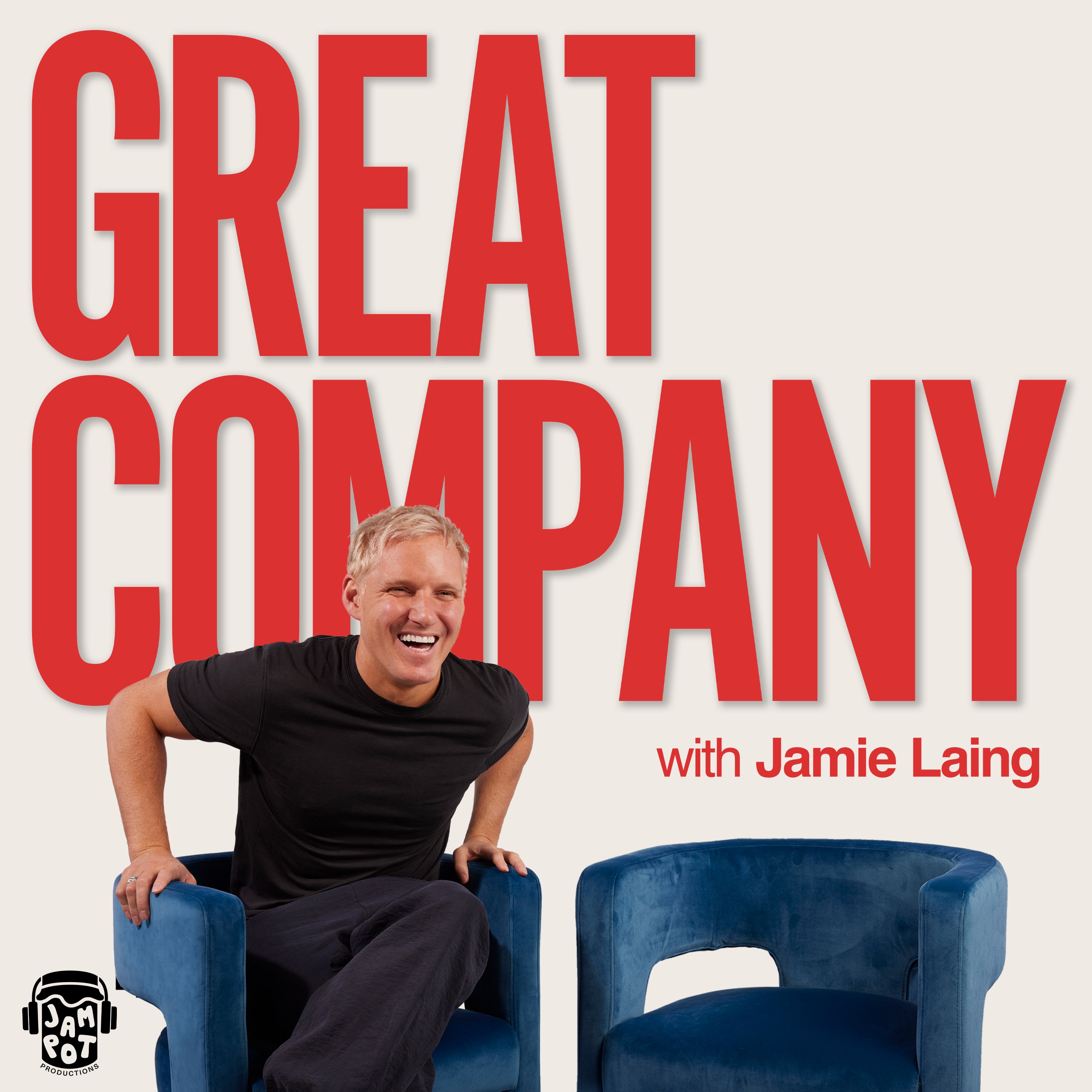
 Great Company with Jamie Laing
10 Dec 2025 · 1h 8m

Written by AI. May contain mistakes.

Get the gist, explore an idea or ask about something said.
 Claude
On Great Company with Jamie Laing, what are the key points of this episode?
Searching your listeningAutomatic transcript. May contain errors.
0:00Coming up in this episode of Great Company. My mother died when I was 16 and my father when I was 19. I went into this terrible grief space of loss, complete loss of who I was. I had no roots, I had no family. My father, when he remarried, didn't change his will and he died nine months after marrying this woman. She sold our family home and we were then out on our own. Have you forgiven your dad and his second wife? I'm Mary Portis and I'm in great company. What I don't know about shops isn't worth knowing. She is the goddess of Wheat Out the Fabulous, Mary Portis. When I turned up at Harvey Nichols, I was a 28-year-old, working-class kid without any parents, without any money.
0:41And so I had to sort of navigate, how do I fit into this? What do you think your superpower is in business? Oh. Your brother Lawrence is the biological father to your son. How does it work? Did he come around and check my ex-wife? No. Lawrence turned up to the old donor place and said, done it, sis. So I was like, OK, much. The most beautiful time is when he came into the world and Lawrence turned up and picked him up. It was his gift to me. God, I get emotional. It was his gift, you know. And it's the greatest gift. I honestly look back and I think it just took me years to lose that grief. You don't just lose your parents, you lose the social infrastructure, you lose your roots, you lose your family.
1:24It took me a long while to just suddenly...
1:32Hello everyone. My name is Jamie Lang and this is Great Company.
1:41Do you get people sliding in to your DMs? Yeah, don't you? No, and I've never had it anyway. I don't know why. I think I give off quite gay energy. So sometimes people get confused. I don't really get men or women coming in. That's what happens. Yeah. People keep saying the comments that I get on the Daily Mail that I'm in a lavender relationship. They'd love you, the Daily Mail. God, we love you. How can we... Look, I got on a train the other day and someone had the Daily Mail and she started chatting to me and she was really lovely. She thought, it was so nice to meet you. And all I could look at was that she had the Daily Mail.
2:15And I would say, do you know what? Put that away and we can have a conversation. You cannot like me. You cannot have things in common with me. And you're reading the Daily Mail.
2:31What is the biggest risk you've taken? Life, personal, business. What is the biggest one? Truthfully. I remember when I fell in love with my wife and I was, you know, seen as straight. And the press were coming to interview me for my first big series. And I'd gone on to tell you, I was in my mid-40s, So I don't, I got into, and I remember my, he says he doesn't say this, but he did say it to me and I love him, but he was my business partner who's gay. He said, don't tell them you're a lesbian. Because there aren't glamorous lesbians on TV. I mean, you're glamorous. And I don't want them shoving you into the same category as we won't say who.
3:23And I went, oh, okay. Okay. And I did these interviews and they presumed that I was still, you know, totally heterosexual as opposed to bisexual, whatever. Bloody, I don't have any title on this crap. But anyway, so they didn't ask me. But all the time I kept on thinking, I'm not telling you the truth here and I don't like this. And it was really uncomfortable, really uncomfortable. And so I decided, you know, and I remembered, I think, what's the worst shit paper that can, you know, write about me? yes, the Daily Mail do come in. You've got an interview with me. Full on one. Here we go. Because I'll let you, because I'm going to give this to you and then you sound like you're being all supportive.
4:09Anyway, so I did that. But then I had this terrible whisk of like my ex-husband and how do I manage that? And my children, that felt really shitty. You know, it doesn't sound shitty now, but I remember Verity coming home from school and she was crying. And I said, what's the matter, darling? and she said, and someone had brought in the mail, you know, the mother had given it to a kid. My daughter was seven. I'm like, you know, what? Given it to them. She said, and I said, I'm so, she knew. I mean, we were, you know, I was with my apartment then. She said, actually, I've got to tell this story.
4:41I don't know, I'm going to go. Please, tell the story, tell the story. I'm going to tell the other story of this because it's hilarious. But she said to me, I don't want them saying bad things about you, Mama, because I just love you, you know. And I remember being so, it wasn't about her. She was like, how could you come in and go, look at your mother, you know. But this really funny story, because my daughter's about to turn 30, and so we were going through old stories, and she's got the most gorgeous boyfriend in the great space. We're working out her weekend, which is coming up. And this is one of my favourite stories.
5:14So I'd fallen in love with my ex-wife, my wife, my girlfriend at the time, and I'm navigating. How do I navigate these children? You know, I'm going to divorce. I'm navigating. I'm now in the public eye. You know, I'm getting TV. There's press. And how do I navigate this? And it's really tricky because you're doing everything. I don't want to keep them safe and don't want to offend anybody, my ex. You know. And Verity comes home from school. She's seven and her little friend is leaving, her better friend. So she sits at the table with me. and I have this really serious straight Catholic South African nanny for them, right?
5:58And she's really deeply Catholic. Sunday's church, okay, fine. And she's dishing up supper and I'm sitting at the table and Verity's sitting next to me and Milo and my son's sitting there and the Catholic nanny's sitting there and Verity's right in the car. And I said, Verity, don't put it away. We've got supper now. She went, how do you spell lesbian? I hadn't told at the time I was with a woman I went, my God, am I giving off these pheromones? And I just went, L-E-S and I'm thinking, what's she writing? What is she writing on this card? And then I get stressed because I knew the mother of the girl that she's writing the card to and I'm thinking, oh my God, what if they think I've got this lesbian sort of hangout and I'm bringing my daughter into it and I scoop the card up after supper and I read this and it says, Dear Leah, I'm so sorry you're leaving.
6:48I love you. You are like a sunflower. Love, Verity. P.S. Lesbian.
6:59That, Verity's darling, is coming out on your 30th speech this weekend. But that is just the best. What she was actually saying was she saw lesbian and love. That's very beautiful. That is beautiful. That's what she was saying. That's what she was saying. You're like a son, I love you, P.S. lesbian. But can I ask, was that a, was that, that is, I mean, that's so pure. Yes. Can I ask, was it a confusing time for you because you were with your ex-husband for how long? I met him. I was with him for together. We were 20 years. So 20 years together, right? He took me out of just great pain. I fell in love.
7:39He was beautiful. and he gave me such security. You know, he was very, a wonderful man. We're having Christmas together. That's what I think is amazing. Just quickly, just tangent, why did he take you out of pain? Well, because it was the first time, I mean, I'd had boyfriends, but it was the first time I'd really, truly felt in love and he made me feel safe and he was, you know, 25 and he was finished university. He was a, you know, chemical engineer. He was a very bright guy. He was an academic and he was just strong and could do anything. and I was, you know, I'd been lonely all those years with that death and it was great.
8:14And we, you know, we built a lovely life and had two children together. It was beautiful. Was it confusing though when that period where you then go, you fall in love with another woman? And was that confusing because you've been in a relationship with a man for 20 years or no? No, I look back on this and you do try and analyse it. And I used to have crushes on both, but I always found it so easy to go out with men. I just didn't even think I wanted to be with a woman um but looking back I mean you had crushes and you just thought you did and you know that that was fine I never got hung up about it and uh but I I loved I think what I'm probably my sexuality I don't know I I would think it's more gay now because I've been with uh women since but and I find women just so easier to be with and I don't I know this sounds I don't have to change me at all to fit in there's an absolutely most women most gay women love powerful women so it's like game on you know whereas men I have to sometimes just go and I don't want to do that but I found relationships that's really interesting I don't want to diminish myself my wife is quite strong and dominant and sometimes when I go, I will, sometimes he's almost a little too strong for me.
9:32And I'll go, and she goes, no, you know what I'm like. I'm strong. Come on. And she doesn't want to retreat. You are, and you like that in her. Yeah, I do really like that. I encourage that. Yeah, the era of, I, you know, even I write about it in the book, you know, in business, you had to play men in a certain way. And I just, it was so freeing because women just don't expect that of you. And your friends, they like strong, funny, clever. but women, they just do. And gay women like strong, clever women. You don't have to go, there's no other role you have to play. There's nothing. And it's really bloody freeing.
10:07But I really did enjoy the male relationship. I did. And there's parts that I still miss, if I'm honest. But I can't imagine being in a male relationship again. I just can't. I just don't know what sort of... There was one guy I quite fancied, but they're like this sort of artist and stonemasons who are just like arty and they'll be like, whatever, babe. Whatever, darling, you can be what you like. You know, those, they're rare though. Now I've said stonemason, they'll work out who it was. No, it wasn't you. No, you were not the guy who was doing the stonemason. Do you believe you can have more than one love of your lives?
10:42Of course. Yeah, I'd like to think there's another one. I'd love to think that. I think, yeah, of course you can. And love's just so powerful, isn't it, the greatest thing? Oh. Oh, man. And, you know, even my, whatever, whether it's a relationship, like my young son who's 13, he lost his grandmother. So my ex-wife's mother died. And I saw him just sobbing at her funeral. And I just held him and said, this is love. This is what love's like, my darling. That is the most beautiful thing to feel that so deeply, you know. So, yeah, I think you could, of course you could have love. That's a brilliant way to put it.
11:18Because life is about love. Life is about love. Yeah. 100%. that's really all it kind of is you know I was chatting to a guy the other day on the podcast and he was saying at the end of people's lives they never talk about their achievements ever really they don't say oh I did this I did that I created Harvey Nichols to what it is you talk about your relationships and you talk about whether you were a good parent or a good friend or a good lover or whatever it was that's what you go back to because that's really what we care about in the end that's all it is isn't it and what was it what's another Maya Angelou isn't it you might forget what people say you might forget what people do but you'll never forget how they made you feel whoa god did that woman I hope someone maybe quotes me sometimes it'll probably be PS lesbian
12:10you've opened up about how your brother Lawrence is the biological father to your son yes that was headlines as well baby let me tell you that one that was the front cover oh yeah and and lovely paps that turned up on all my brothers because i've got three brothers houses to find out which one it was and my brothers are so funny you know they're so funny my brother joe rang me said oh perhaps be in the door babe and i said okay have they he says yeah i answered the door with the tenant's lager in my underpants went no it weren't me i said you didn't they make me laugh no it weren't me and I said stop it yeah can we just talk about that a little bit so my naivety so was it your decision obviously and your ex-wife's decision to to how does it work what did he come around and check my ex-wife no Jesus it's not how to navigate it's the one that I don't really know how to navigate let me tell you the story why would you be embarrassed with me, Jamie.
13:14So Mel had decided she wanted a child. I had two and I was very clear that I wanted to have a bloodline. I wanted, if I was going to have another child, I wanted to make sure that it was related in some way and biologically related to my other kids. Wow, okay. And I had two brothers who weren't married and then, and I knew my younger brother didn't want particularly to have children but he and I had a particular bond. You know, He was the one who... Who you looked after. Well, and he looked after me. It was a real symbiosis. And both of them said, yeah, of course, you know. Wow. And Lawrence, you know, turned up to the old donor place.
13:53And we said, done it, sis. I was like, okay, watch. And it was really amazing. It's amazing. And Horatio, my son, is the image of my side of the family. Really? And he's the performer and he's funny and he's just divine. And yes, so... And Lawrence and Horatio's relationship must be... Great. Lawrence lives abroad now, but he rings as regular and they talk about football. God, it's so boring. I mean, it's like non-stop. But the most beautiful time is when, you know, he came into the world and I rang Lawrence and Lawrence turned up and picked him up. And it was like, it was his gift to me. God, I get emotional.
14:29It was his gift. You know? And it's the greatest gift. A little tinker. Still paying school, Peter.
14:40Why the greatest gift? because my god he's you know like because of the years that we helped each other he and i and you know i was always his big sis you know and then he was able to give me this gift i mean what a great gift that's amazing come you know and he looks like him and it's just great i um i think it's also amazing that uh when it was made legal to um for gay marriages to to happen in the UK you did it on the the 14th of December 2014 wasn't it you and your ex-wife now you both went straight there and did it straight away that is magical we're the first in there and Horatio I kept Horatio up my daughter came keeping Horatio up and he walked in he was only two with a little bunch of flowers like it's like midnight we did it I'm like get him in there get Get in.
15:30Really cute.
15:34What do you think your superpower is in business? Oh, I think it's very difficult. But the first thing is I kind of culturally know what the next thing and what is right for people. So I know, like even when you came out with your brand, I'm like, oh, that's clever what you're doing there. And I can get that that's going to work. Why? And reasons why. So I had this, it's my, my friend always wrote about this once. And I just, I can, and I don't mean it to say anything, because I know culturally what the next thing's going to be. What have you called? What have you called in like your time? What have you seen?
16:09You're like, that's going to work. That's going to work before it worked. Even when I took the charity shops and said, right, 15 years ago, recycling, upcycling is going to be big. Stop behaving like a charity shop. Let's make this really cool. Look at all the charity shops now. Crisis. They're cool. Great. That was more than 15 years ago. Let's stop doing it this way. This is going to happen. People will want vintage recycled, upcycled. Before vintage came on or whatever, and that's where 30 million came from through those doors. So, you know, stuff like that, or you just know what the, you just culturally feel it, what it's going to be right.
16:46When I did my collection for women over 40, there was no models that we could find that were over 40. now you'll see loads of those older models being used and whatever it was really and actually that's when twiggy wrote to me because she was doing something for marks and spencer so it's just you know and i'm coming back to community is going to be the next thing believe me that's my thing that community and connection we are craving particularly post-covid we realized what we lost when we thought i could get everything online i can go and shop at that great big place in the sky and get that delivered and we realized that actually what we all wanted to do when COVID hit was just even stand out in those streets whether it was freezing cold and when a pub was opening and passing you a beer out the window and you spoke to someone it is the most fundamental fundamental part of humanity connection and community and I think we're going to see small happening i think we're going to see collaboration happening i think we're going to see power coming back to communities because we've lost hope with the global powers that be there's angry powers that be that are all i completely agree with you yeah i think we're going to do a role reversal i really do where we've gone through this stage of in so many different ways right which is we've gone through the age of like reality tv and instagram and vlogging and putting our life out there and let's see what we're all doing i think we're going to retract from that and go actually hang on a second why were we doing that that's the first thing the second is why are we not meeting up in person?
18:13You know, why are we not going to a bench and reading a book? Why are we not going on walks? Why are we ordering stuff off corporations when we can go to the local shop and go and get it? That's what people are going to want to do, because we're going to almost go and get, it was kind of cool and exciting and new, right? And so when everything's cool and exciting and new, you go for it, you try and grab it. But as soon as then it becomes everyone's doing it, we all go, hang on a second, what the hell are we doing here? And we want that in real life experience. and I think that's again like you said I think it's going to come back to high street where people come back and they want to go into shops they want to experience touch it feel it see it that's what's going to happen.
18:49Jane Jacobs wrote this incredible book when I did my high street report and I used to go into government and meet with them and they would ask me if I'd met the you know the captains of industry like the head of Sainsbury's and I'd go yes have you done your due diligence you know i've meeting with all those wonderful ministers and um and you know have you met sir philip green tragically i have met philip green and what's he going to tell me about high streets and community he might tell you how to make a lot of money but and this is what we're seeing playing out now we're seeing the tech bros who can show us how to make a shitload of money but are you caring about how people live and jane jacobs i found this book that she'd written in the 60s and it was called the death of american city it's amazing if you get a chance there's a death of the american city and it there's a picture book that was done that she did which i read and i gave to my kids and she's much easier it tells you all the same things and effectively she talks about why high streets and community and local neighborhoods matter and she gives these examples and i started to write this in my high street report so instead of listening to this is how much money a great big sainsbury's can make which incidentally moved out of the high street when they got cheaper planning laws, not just Sainsbury's, all the supermarkets, you know, and built these huge, big fuck-off spaces.
20:09Yes. Where everyone went, oh, this is great. I can load my car up. Doesn't matter if I've got a load of food at the end of it. I can chuck that out. We all did it. I was one. We all did it. We didn't know. Oh, that's value. Oh, yeah, that's value. No values in that at all. And we all went, and then the internet came, and that completely pulled away our high streets. and we lost what she talked about where you pop out for a loaf of bread. Has your baby been born yet? Not yet. When's it coming? Very soon. Very soon. Very soon, yeah. Right, you wait. You wait till that little thing comes. You will want to be out connecting with and you're part of this, oh, I am now part of this race that has children and connection and meeting in little parks and connecting and let's pop off and get a coffee.
20:53And she talks about popping out to the shops to get a loaf of bread. And you bump into someone and say, gosh can your daughter babysit on Thursday or something like that you know and then you run on and someone tells you that the old chap who used you always used to see getting his newspapers not been well and someone do you mind popping in and she talks about these things and she says they may sound trivial you know you wouldn't put that into a business plan no you wouldn't put that into that we're going to lose this but she said the sum is not trivial at all it's a social infrastructure network of how we as humans need and want to connect I've never thought of it that way right which is so interesting because we we've become obsessed with like run clubs and and because we want to meet people and be around people right yes and they're all doing it and they're all doing but actually what you're talking about that is a club that's a club that's a free club that's the club that's the club that you can just go to right yeah you're saying oh how was you know how how's your mom yeah she's great that kind of oh and did you know this is going on did you know that that oh no i didn't i was even listening to that we've lost that lost And then we lost religion.
21:55And a reason why, we will know all that, and we can go off whenever. We're not even going to get onto my book. We've lost religion. And the reason why is because there's a patriarchy, alpha culture building it. But actually, when you looked at what church did, it was community that most people missed. The rituals and community and connecting and having a time in the week that went, that's what you do as a family. We've lost the art of small talk as well, in a way, because we don't do it, so we try and avoid it. And what it used to be was small talk. you'd lean over your garden wall or go to the Waitrose, Sainsbury's, whatever and have a small talk.
22:27Yes. And people don't want to do that anymore because we're scared. Well, they'll just be doing this. We're looking down. Yeah. When I'm dead, you can go, yes, she was right. She was right. It took 30 years. We'll keep replaying this. Yes, she is. And I think I am, and which was the producer who found me, she was amazing, Pat Llewellyn. It's that direct with the soul. so that's what i also think it's that is a much more beautiful way of putting it direct with the soul you um you can say the hard things to people because you do it in a way where it doesn't feel offensive you make them you do it in such a way where you go yeah it's actually completely fair yeah you you charm make people laugh and are direct I laugh for human's luck.
23:17So you could just say, if you think that collection. Yeah, you do. And they're picking it up. There's one where she has the dresser. She goes, I've got these, why have you got dressing gowns in this beautiful fashion shop? Because the hospital's across the road. So, oh, there's a hospital across the road. I better get some dressing gowns for people last minute. Could you imagine Gucci opening its doors and going, oh, God, we're up the road from UCH. Oh, I better get some hospital gowns in. what planet are you on and you say it to them like that and then they start laughing you've got the point you get it right the the the how business has sort of changed now right your view of business um in recent years because i have a big belief that we are relying on government to make decisions and leave the world in a better place and actually it's the business's responsibility to do it but in in the 90s that wasn't happening was it well you say that you see i think that business that's what i talk about that i think business has a great responsibility i mean if you go back in time to great businesses that looked after communities and clark's shoes fries chocolate they built villages where these people that they looked after them and really looked after do you know i remember meeting the md of clark's shoes and they told me years ago that when the wages came out for the men they didn't give it to the men the women came in collect the wages because the men would go down the pub with it and they clicked that and they they knew that these these women were running the house and the households i thought that was just such a fabulous little thing and then you look at people like anita roddick who i talk about she was the greatest she was a goddess she was in i mean look you know if anyone was to start a business today that said i do no harm and it created community and looked after small businesses globally who produced the face oils and the body, it would be an Eterodics body shop.
25:10I think the years where we lost it and we lost our sense of purpose as businesses were the years when the digital world and we became so obsessed with operationally, how quick, how fast, how cheap can I get stuff to people? We let people like Sheen, you know, someone came to my book talk the other day and I was signing my books and and I said, oh, you look lovely. She went, yeah, it's Sheen. And I went, how could you actually say that to me? And I said, I'm not signing your book. No, Mary. I did. So go to your room, you naughty girl. That is just not, have you not listened to what I'm talking about?
25:50It's so good. What? Sorry, Sheen. And you think, oh, yeah, that's great. Those people who are just abused in factories and we're pumping more shit into it. And you are thinking that's okay. And it's funny. It's not. It's not funny. It's not funny. And I didn't even do that with humour, no. No, you went straight in there. I went straight in. And a friend was like, can we have a picture? What part of this are we not getting? Do you think, do you believe we can change the role of retail? Oh, I think everything can change. Look, we have to just keep on with this. Will it be as fast as we think? I don't know.
26:28I don't know. I tell you what I do believe. There's a couple of things. One, so for example, fast fashion, when that happened and got faster and faster and you looked at the high street and people go, you know, isn't it a shame we don't have those cheap, cheap shops that was just more stuff. I don't miss that. And I do truly believe that we can make change happen. Look at the secondhand market. It's growing faster than fast fashion. We need to educate that saying this is secondhand or I haven't bought new is a sexy, modern, progressive thing to do. And when you stand in front of me and say, this is Sheen, you are deeply unprogressive.
27:06And that's the new thing we've taught. That's why I shop, therefore I am. That is what Kruger was saying is this is an indictment on the fact that you lot think that what you have is cool and says that you're progressive. You're not enough. And we need to make that sexy to buying secondhand thinking, thinking being absolutely conscious is a sexy choice it's a sexy choice to talk about love it's a sexy choice to talk about spiritualism vulnerability the other bits not and that's what we have to build and i'm a marketeer and that's what i love doing is how do you get those new messages out there and you can do it you can do it look at what he's been doing with um you you know, Yvon Chouinard at Patagonia.
27:51You know, we had Sir Philip Green, this side of the ocean, with his chain of shops. I mean, it's a tragedy that Topshop's gone. You know, taking, what was it, 2.2 billion out as a dividend? Crashing the business, people losing jobs. Cross the ocean, he's got one shareholder, Mother Earth. And he's opened up to his, being absolutely transparent on how his sustainability report, which is not as great as he wants it to be. And he's going, we are not getting anywhere near as fast as we need to. But my one shareholder is Mother Earth, and I regenerate by putting back it. Have you read the book, Let My People Go Surfing?
28:31Yes, it's just great, isn't it? Isn't it just wonderful? So we need more of those voices to counteract the Elon Musks of the world and the tech bros and all that. We just need more. And we need to educate that that sort of huge wealth is not what's going to be generative for us as communities, as life, as humans.
28:58You have written this book, Mary Portis, I Shop Therefore I Am. Why did you want to write the book now? Well, I went to, there was this great exhibition called Rebel on at the Design Museum. It was 30 years of new generation catwalk shows. And it was about the history of 30 years ago, how they started getting behind young designers. And I launched that. I started it at Harpy Nichols. And my team, my old team, who I hadn't seen in years, got in touch and said, should we go down and look at this exhibition? Because that will take us back. And let's have supper afterwards. And we went down and I suddenly was like looking at this going, wow, did I do that?
29:40You know, I was 30. And it was just powerful. And we all went out for supper and just laughed so much, Jamie. Like the memories are behind the scenes, you know, of, wow. And I suddenly was like, this sounds like Mr. Selfridge on acid. It's a TV series. I kept saying, this is a TV series. And I rang my agent the next day and said, listen, I've got this book. And she went, we're going to do this. And it's just rolled. It's just rolled. It was as if, because it was such a vital part of my career and my growing and my finding myself that those years from 28 to 38, it was just so magnificent and powerful and generative for me.
30:26And I thought, wow, why have I not done this before? In what ways? well um my early years part but when my mother died when I was 16 and my father when I was 19 um I think I went into this terrible grief space of loss a complete loss of who I was I had no roots I had no family um my father when he remarried um didn't change his will and he died nine months after marrying this woman. And so she took our family home. And so we were sort of homeless. And I honestly look back and I think it just took me years to lose that grief. I mean, I write about it in the book and I say that there was a wonderful line that I found that C.S.
31:16Lewis wrote, that I sat with my anger long enough and realised it was grief. That's amazing. And I was so angry, but just angry with the world. I couldn't, I had no one. And so I think it took me a long while to just suddenly find that I had a place. Because you don't have a place when you lose your home. You don't have anywhere to go on a Sunday for lunch, or you don't have, you know, I'm just going to go back and see mum, or I'm upset about this, or I can't, there's nothing. So you don't just lose your parents, you lose the social infrastructure. you lose your roots, you lose your family. And I wasn't quite cooked enough, as it were.
31:58Do you know what I was 16 when mum died? So you're not quite... You're so young. Yeah. You know, and you talk about how Irish Catholic, there was noise, there was cooking, it was just life. And how you describe it, it sort of really hits my heart because you went from this sort of life in home to nothing. It just, there wasn't life anymore. And you had to learn to cook. You had to do all the things. It was just, it went from everything to just suddenly nothing, which it must be at 16 years old is just insanely hard. It was that summer as well when my siblings were going off to university. So I was one of five and I was the fourth out of five.
32:40And so they were leaving. My eldest brother had already gone. He was in Scotland. And then my sister, we're very close, who was three years older than me. She left that year. So she was 80, just finished her A-levels at 18. So she went off. And then, so it was just my younger brother, Lawrence, and I left at home with my father who worked. And so where I used to come home from school to a house where my mother cooking and the dog barking and some neighbors in or, you know, and it being like Paddy's Market, as my mother used to say, you came into the hug. You know, you just came home to this place.
33:17And you had to be the person I'd put on everything. The radio, the telly, the music, everything, just to make noise. Going back to when you were 16 years old, right, and your mother passes away, it's interesting how you, that quote you said about grief and anger, you were angry and then you suddenly, you were just angry after that. Or was that after your father died? After my father died, well, both really. I just well because I got into RADA and I wanted to act I was actually when I was on the way here I was listening to Saskia Rees being interviewed on radio and she said oh you know she fell into acting and I just thought oh my gosh I so love that I wish I had but um and I got into RADA but I couldn't go um because of um me being at home and looking after my brother and actually didn't want to I just wasn't even feeling was even less the financial part of it but I thought if I leave and go and live in, you know, some little place in London.
34:20What's going to happen with him? You know, because my father had sort of disappeared and married and left us in the family home. So it was just us two and then my siblings coming back. Where did your father go? When he married this woman, he went and moved in with her but kept our family home. And so, because he would say, well, you're old enough. You can run it. And so he would leave money for us to get the food shopping. And then my elder siblings, thank God, used to come home at weekends and it was heaven. You know, they'd come back. Then we all go out to nightclubs and all friends would come back and stay.
34:50But there was no parents. You were left alone. What is that? We were okay because we were old enough. See, this was, you know, the late 70s. No therapy, no one going, no. It was just, no one asked any questions or what's happening. I remember when, I lived in London with my mum. Parents divorced at eight, moved to London with my mum and my three siblings, or two siblings. and at around 16 years old, my mom had this sweet three-bedroom house and across the road, there was a garage and above it was a flat. I mean, nothing, a bedroom, bathroom flat, that was it, but she wanted the garage because she couldn't get any parking.
35:30So she rented it and I broke her a deal saying, can I live in the flat? And she said, yeah, okay. And so at 16 years old, I got this free flat. It was the biggest disaster ever because I could then do anything I wanted. There was no boundaries, no rules. So when I came home from school, I just invited everyone back. I didn't see. And it was kind of, I think, a downfall of my teens and 20s because I got introduced to alcohol. I got introduced to things. And I think there is something about having that sort of parental guidance there, which I sort of didn't really have in my teens. So I didn't really have direction in a way.
36:04I was making it up myself, which was good and bad. Yes. And it was too early because you weren't ready. And, you know, I say that to my kids. you know when they stepped out of place I'm pulling you back in because you are not old enough to be making those decisions and while you're under my roof I'm making those for you and to this day the older ones thank me but what happened to me was I went the opposite way I didn't rebel and I became I was very naughty as a kid I was out there I was performative and then I didn't and I went into this kind of sunken place of responsibility and so I didn't rebel.
36:42I didn't ever do drugs. I didn't get into the big alcohol because I didn't feel free enough. I didn't feel there was any safety. I was scared. And so then when my father died, she sold our family home, even though they had a home. And we were then out on our own. So I think, I think I just felt angry inside, but didn't know it. And I used to just, just not want to be around really. Just think, what am I doing? It was just nothing. No social. How did your dad die? Heart attack, just a massive heart attack in his office. That's hard when you're that young and it's back to back. Yeah, but in a weird way, you know, and I look back and I'd just love to have time to talk with him, but I was like, well, okay, Dad, but you weren't there, you know.
37:29So it was like he'd gone, you know. Anyway, it was just a really difficult time. You still keep sort of, and I look back at his childhood and he's just discovering it and thinking, well, no wonder, you know. you know it's hard that and i mean looking back now i had this um i'm sort of really conscious and i speak about this i'm really conscious of that life is like limited right it's it's not forever and for some reason you suddenly get to an age and you suddenly go oh my god it's not forever and i luckily my both my parents are still here and unless you really experience grief at that age you don't really you sort of don't realize you think your parents are superheroes right and so now i constantly try and have those conversations with my parents that i wouldn't normally have i ask the questions about their life and ask the questions about how old are you now 37 yeah that's when it starts happening it doesn't happen before or when you've got a baby coming yeah that's interesting like my kids like my daughter came to one of my uh book tours and she went that was amazing afterwards and she was like really emotional and i thought well she's going to be 30 this weekend but half of i didn't know you did that i said well i've written about it and I've done a few interviews and I'm with you 24-7 growing up.
38:36They don't want to know then. You don't. And it's natural. And I kind of like that. But it's when you suddenly are getting your family. And I write about it when I have Milo and I'm just holding this baby. You'll have it. And I'm just holding his little neck up while I'm washing him. I could cry now. And I just, all that love, you know, all of it, all of, you know, Maya Angelou talks about this so beautifully. she said when she goes on stage, she brings them all, you know, her parents, her grandparents, all that love comes with her, you know, and there are times you'll feel it when the baby comes in the world, you go, oh, there you are, mum, you know, there you are, dad, there you are, you're my grandparents, they're all there, that is, it's just the most magnificent thing, and that's when you go, mum, tell me about, but then you don't have her there, and I found that the most grieving that's when i grieved that's when i grieved when my son was born i was just like i remember not not even being able to get up off to the bathroom floor holding him because she wasn't there and i brought in and the weird thing my mother was this fiery redhead and um and she had all these all of us none of us had the red hair yes my hair well died when i did the shows um and my pop out these little redheads and milo comes up and my husband was very very dark so i I thought I'd have these swarthy dark, no, boing, there she is.
40:00Bright orange little hair, so orange that my daughter, when I used to push her in a little buggy, all the little green fly landed on her hair thinking she was a marigold. She was like, Verity, come on, I've got to pick those little green fly out of your hair. Yeah, it all comes, that's where it comes. That's the circle of life, man. It's just like powerful. That's love. What was the best thing about your mother? Oh, she was hilarious. They were very witty. In my family, if you weren't funny, you know, the one-liners, that was it. You know, it was five of us. So she was very, very funny, very witty.
40:33And had nicknames for everyone. But she was very capable. She played the violin. You know, she read. She read poetry. At night, when we'd all go to bed, there's five of us, and she didn't have time to go around and read in every room. She would sit on the landing with a book and leave the door opens of our bedroom. Isn't that lovely? And read. And I just remember hearing those lovely Irish poems. my mother was from the north of Ireland and she'd be just talking like that and I'd be like, oh my god, this is heaven That is unbelievable It's cute, isn't it? That is more than cute That image of just her sitting on the line just talking to her kids And pretty exhausted I just didn't care, went for it Yeah, just went for it, read the stories and always tuck you in What does it make you realise about parenting because I'm stepping into that realm now of becoming a parent and I'm trying to take little bits from you, from everyone going like okay that's good that's good I love that idea okay maybe I'll try and do that what do your mother teach you about being a parent well you know I think my my um I think the most important thing is boundaries and loving within those boundaries it's so easy to let children get away and my mother didn't let us get away with anything but I knew it was done with a real clear love and boundaries I just knew that and I respected that and interestingly one of my really good friends who's very different from me you know she's a historical novelist she's you know very I was very straight um and I when I was having my my children I just followed her I loved the way she she parented like my mother did you know there was just those boundaries the finger would go up you go here okay that is the fingers up but I knew it was done with love and really an important moral compass that she would just bring into me what was fair what was right what was fair, what was right.
42:18And I know that I've always sort of followed that. I mean, I've been pushing outside it. So I think that was really important. I think the other thing is structure around mealtimes. I think they're really important. My mum says this as well. I really do. You know, this is your tea time. So she didn't wait until my father got in or he had separate leave from us late. That was the time you had tea. Be in, you know, respect, I'm cooking, be in at this time. And so, you know, this is before mobile phones, you'd go out to play, but you knew, Mum would have the meal on the table at that time, come back for it.
42:50So I think there was a real structure. Structure, and then I think when you give structure, it's like, you know, I always think of it as how I am in my life. What if there's that ball that used to be on the end of a string you played for in the garden? Yeah, and you'd hit with a tennis racket. You could hit the hell out of it because you knew that the middle of it was really strong. And I always saw my mother like that. We were all like, whoa, round, but there was this rooted, strong woman at the heart of it. what is it like being a new parent later in life is it different yes yes and milo and verity say oh you're so much softer on horatia i go no i'm not no i'm not you know um but it's really yeah of course it's different um but it's great and uh he and i you know it's just i always think what would i do because all my older kids have left home and what would i do if i didn't have that little herbert turning up you know after school with sweaty rugby boots on and whatever it's beautiful i think i'll just transition all the way through and then there'll be grandkids and i'll never stop being like oh my god the amazing thing which i can feel on you right is that you just have um so much love to give that's that's kind of amazing because normally i think when uh you know you when you come from sort of grief and pain and lots of different things typically people can close up and they then cold because they don't want to they don't want to feel anything again because I don't want to that was too painful so I don't want to go there but you kind of you can feed it on you about your kids and your friends and your family and why do people and your ex-colleagues you can kind of feel and you just this real optimistic lover of life which is so great to see because I think especially being a Brit we're quite used to going oh shit no no that you kind of do it in a brilliant way you just open and love it which is quite exciting Yeah, it's just, I think I've had to learn a lot of that though, you know, because you do live in fear for a long while when you think, I'm not going to have enough to get by or I'm not going to.
44:54And then the universe has an incredible way of holding you, you know. And once you learn that and you can fall back into it, it's just so beautiful, you know. I wish I'd learned it earlier instead of listening to those Catholic priests wanging on about shit up there on the altar. You know, please give me a break. We could have just been so enlightening, couldn't it? You know, going to church on Sunday and just saying life lessons like this, going, actually, here's some really beautiful life lessons instead of, bless me, Father, for I have sinned. I'm in the Catholic Church. What would you do? I didn't help mum with the washing up.
45:29Go into a wooden cupboard and beat your chest and say, ten Hail Marys. Give me a break.
45:39You know, I have a very strong mother. and I just thought that was the norm. I just thought, well, everyone has that and then as you get older, you realise they probably don't and I was quite lucky with that reliability and then with Sophie, my wife, the strength of her. Do you know what? And I didn't think we'd talk about this, but you know what we lost and we can go back the millennia and it was the power of the divine feminine. So many women got killed and male power, alpha power, patriarchal power took over. So you look at the top of any, you know, whether it's church, whether it's kings it's male power right institutions politics education what the actual fuck now why would you stop a whole percentage 50 percent of society why would you suppress that alpha male power and there's a beautiful i think it's an ancient american tribe that talk about the bird of humanity and the bird of humanity has been been flying for a long long time with one wing, a male wing.
46:42And it's just going around in circles, doing the same shit time and time again. And this gets harder. And this is the wing that needs to come up, which is the divine feminine. We don't talk about this. I talk about it in business now, because I don't give a shit that anyone will think it's weird. It ain't. It ain't. and until that comes up and we don't suppress this one because we love the male energy but if it doesn't have the female energy with it the bird of humanity won't soar and that's what we have to talk about that's why we have to talk about love that's why we have to talk about kindness that's why we have to talk about vulnerability and you think other people can't aren't like that of course look look look at the shows that we would ram down our throat in business you know The Apprentice.
47:34Trump. You're saying you don't like Alan Sugar? I don't know Alan well enough, but I actually probably think there's probably a quite sweet, gentle guy under there. I think, I don't know him well enough. I did have to go and do a talk and we were both on stage and I was on after him and it was to all these thousands of entrepreneurs we were giving a talk and I'd written a book called Work Like a Woman. And which, you know, was quite out there at the time because I was saying, let's reclaim this feminine energy in the workplace. Let's do it this way. Who says we've got to go, you're fired, you know?
48:12It's aggressive, right? And unneeded. And all the way they behave like just complete idiots. And you're like, it's all to belittle other people and make yourself look better. So that whole way that that's been set up, but that's the way that business has been for years, you know? I mean, I talk about it even in my book in the fashion industry, you know? and we have come a long way by the way i don't want to sit here as some cynical i'm never cynical at all and i believe that you can we can make change happen i absolutely believe in generative hope and that change comes from even sitting doing this or someone might pick this up and go oh actually that that makes sense to me why don't i do that at work or wow yeah i am going to talk about spirituality yeah i am going to talk about love or that doesn't feel fair you know if that's what this does you know and we think we're not making change but this is where it does start to happen and i think i think we're shifting into this new space of transient space that we've been in quicker than we believe and i think that's where the hope is do you know it's interesting that you say um that you can sort of now talk about this now but but for me and knowing your personality and having met you now a couple times i wouldn't say you ever would have held back from saying things or did you?
49:28Of course, of course I did. Really? You held back? Yes, of course I did. I talk about that in the book. When I turned up at Harvey Nichols, I was a 28 year old working class kid without any parents, without any money, living in a bedsit in Manor House with Lino on the floor. And I went into a world of luxury. Well, they spoke like that. I kid you not, where they drove Range Rovers. It was the Sloan Rangers. Sloan Rangers and money that I had never seen, Jamie. I just didn't believe that you could. I came from Topshop, you know, looking like Cindy Lauper, hair all dyed in my fluorescent gear. And they had sort of silk scarves.
50:14Huge wealth. Huge wealth. Cars, drivers drove them in and parked outside. And so I had to sort of navigate, how do I fit into this? How do I fit? How do I connect with these people? As I was head of visual merchandising, how do I create these windows and this ambience and this atmosphere to a whole class system I've never, ever had anything to do with? So how did you do it? Well, at first I fell and I don't think I did it very well. I tried to copy. So I tried to fit in. I tried to fit in. So the guy who had the job before me had gone as head of installations at the V &A and he's terribly lovely, you know, and I tried to fit in.
51:01I remember the first Christmas window I did, I thought, and I got very inspired by Peter Greenaway's film, The Cook, The Thief and His Lover. I said, wow, this, they'll get this. This is Baroque and beautiful. And I remember presenting it to the Bayon director and sort of saying, you know, it's Baroque. I've never studied history of art, you know, but I read enough on this and she went, that's Rococo. And I just remember feeling a total twit. It wasn't Rococo, actually. She was wrong. But what she was doing to me then was saying, I know. You don't know. And I've studied at the lycée and that's where I went to school and you went to, you know, on a bus from Watford to Rickmansworth, you know.
51:43It comes back to you and you feel that embarrassment. You don't know. You feel embarrassed? Yeah, of course you do. Come on. You do, I did. And you just think, oh, how do I do this? And so I started to change the way I spoke. And I remember my brother going, why are you speaking like that? Like, why are you talking like that for, Suze? And you do, because you wanted to fit in. And then you find your space. I love that honesty, right? Because I think, you know, if we bring this to a current, and this is why people need to read your book, right? Because you can relate it to a current climate right now, right?
52:14Which is where, okay, you had shop windows. We have social media, right? It's like a shop window into someone's life, right? And what we're doing is we're trying to copy each other the whole time because we think, oh, they're successful. Let's do what they're doing. And actually - They look like that. And that's how they do their hair. And that's how they show fashion. And that's what they do. And it's the wrong thing to do because as soon as we start copying someone, we're going to run out of ideas because that other person has to keep, it's like following, it's like copying a chess move. You're going to checkmate yourself at some point.
52:45You have to be individual. Rory Sutherland, one of the greatest marketeers. I know Rory. I got very drunk with Rory one night. We were both talking. Oh my God, go on, give me his quote. I love him. And you know the other thing it is, Jamie. Smoking on his vape, right?
53:01He said to me, you never follow logic. Don't follow logic because you get spank in the same place as everybody else. Go against the grain. Do something different. Never copy people. Because otherwise you're just where everyone else is. Yeah. And the difficulty that is. It's hard to admit that. Well, no, it's difficult. If you work for yourself and you do your own thing, but when you've got to speak with people who are trained to follow logic and have frightened themselves. So if you go into a business, I'm often called in my consultancy to a business, and we want to do this. And you go, right, okay, this is what I do.
53:29And you throw them a wonderful big left ball idea. They're unable to catch it because they are following that logic and their fear's there. It's a very difficult thing. You're okay. You're working for yourself. You've set up your own thing. And, you know, I did that. It took me a long while to get to that though. And when I started in my windows, where I went outside what I thought I was meant to do and followed my instinct and just put these crazy loony artists into the windows. And, you know, it was then... Was that scary for you? No, because I was knowing I wasn't working it the other way and I knew I was losing and I just took a risk.
54:08I thought, this is not right. I'm trying to play their game and I'm not able to do that. I am not able. So once I stepped outside it and started to do what I thought, and I instinctively didn't follow the logic, I didn't. I put in the first one that got talked about was when I saw these crazy dudes in the Nevada desert who had stacked up cars. They were where everybody dumped all their old disused cars. They were rusting. And these loonies stacked them up and created what they called car henge. And they were like, wee-ha, woo, out in this desert. And I thought, oh, my God, I'm going to do that in the windows.
54:44Yes. And Creative Review, the magazine, just saw them and went, wow, what's this? And that's how it started. And once I knew I was playing over in my field, I followed it. There's a great, you know, one Christmas to Harvey Nichols, you stripped out the window display and instead gave the money to charity. I didn't even put the window display in. I took the money. I came back. I think everyone thought I was a bit kind of crazy after having my child, which I thought it probably was. and I came back after maternity leave and I looked at this budget and I'm like, okay. And I had to get my head around.
55:16How much was the budget, can I ask? I can't remember. Thousands and thousands. 10 ,000? It doesn't sound a lot now because today, no, no, I think about 25 grand or something. That's a lot. Yeah, a lot of money. It's a huge amount of money. And it was all the windows you have to install and Christmas isn't really competitive. So you're trying to find out what's Harrods doing, what's Liberty's doing, you know, what's Selfridge is doing. And all you little insiders can I think because they'd have friends that were on their display team. And I just remember thinking, there was two things that came into my head.
55:43A, that amount of money, and then B, what if I did nothing? That would just, we'd make headlines. And then I just thought, if I strip, don't put anything in, and instead of just doing nothing and just, I was going to put, first of all, I was just going to put a statement in each window, you know, and statements that sum that year up. And the reason, and I'll tell you one of them was, the reason why I loved this book, and I called it I Shop Therefore I Am, is that Barbara Kruger had done this real statement art. She'd done the Serpentine, a big exhibition, and she'd put out these statements, which were real indictments of how we were living.
56:21And I Shop Therefore I Am was saying, what a bunch of idiots we are. We think that what we have defines who we are. And how shit is that? We're not far off that today still, but nevertheless. And I called my book that. So I thought, oh, I'm going to do these statements. And then I went, oh, my God, what if I don't do statements? What if I give that money to different charities? Each window would have at least five grand, three grand. And so I went to the board with it. I said, look, I want to do this. And I went, you lost your marbles. And I said, and they said, this is Christmas. Everybody wants to celebrate their joy.
56:58You want to feel abundance, not someone ramming down your throat that you are spending a huge amount. and look at these people that have less than you. Anyway, they did go with it, bless them. They really did. Because I was getting quite a reputation, Bogle writing about me and, you know, the art magazines and Brian Seale, who was the art critic of the standards. So you had a bit of confidence. I had confidence. But it was from the outside world who were going, this is great. Look at what's happening in Harvey Nichols. And so I said, take the risk. Please take this risk with me. Wow. And they did.
57:28They did. Do you know what? There's a great quote, which I think, I'm going to murder it, but I heard Harry Styles say it, right? of all people bizarrely but he said um and and i want to rate this to someone listening right now which is something like um when you're in a place when you're in a place where you don't know if it's good or bad that's a good place to be because that's an exciting place it's when you actually don't know if something's going to work that's true is that true yes i think that's utterly true i don't like being in it as much but i'm in it quite often but for someone listening right now who is like taking notes furiously as they're listening to this right about about you and Again, you've got to go and get your book.
58:03But what would you say or relate to them? Say, right, take the risk. How do you take a calculated risk in these moments? Well, there's lots of times where I've had to and I didn't have money to fall back on. So I do understand that. So I always come from the premise, you know, not the old fag packet, but boy, do I have, what can I get by him? What's the worst that's going to happen here? You know, even when I left Harvey Nichols, set up my own business or when I was divorcing or when I've decided to finish marriage, how am I going to do this? I'm not going to be on that streets again. I've been on the streets.
58:39You know what I mean? I'm not going to go back there. So what can I get by with, right? So what's the worst that can happen? Taking it from that, and then what's the real opportunity that can happen here? And then in the middle, which I always ask myself is, if I don't do this, can I keep going like this? Will that feed my soul? Will that actually make me ill sometimes, you know? Where you feel it, I'm just unhappy here, you know? In any time in life where you're... And so I'm going to go into the Harry Styles middle space because actually at least you're navigating. And when you navigate, you're pushing.
59:18You know, is this right? And that's why you see so many young people, particularly when I was younger, that become more evolved early would be the gay young men who had to navigate. I'm not like them. I can't slip into that stream. And you see them in that little mid-ground going, and they navigate, and they create, and empathy comes, and a maturity comes. And I think that space in the middle is a good space, every so often, to put yourself in. I think that is such a brilliant lesson because people listening now, maybe in a business, a relationship, a country, a town, a city, a house, a friendship, that isn't fitting right, but they're just too scared to take the risk.
59:58And what they should do is, what is the worst that can happen? What is the worst that can happen here? And what will happen if I do continue on with this? And the worst for me was always that sort of low lying, just not complete unhappiness, but I put it in there. And I would get it. It would get into my stomach. I've had that before. It comes into my gut. You wake up with it and you go, what is that? What is that? And I would rather be falling, falling flat to get myself up free than sitting with that and under someone else's or species.
1:00:32This has been exceptional. I want everyone to go and get your book. Yes, because at the back as well, my darling, thank you for keep calling it out, is I look at what future business should be doing. So I shop there for I am. How do we take what she was saying as an indictment on consumerism and take it into the world that we want, you want your babies to grow up in? 100%. You've got to go and get it. We're going to leave the link in the show description so you can go and click on it and go and purchase it as well. We like to end our conversation with eight questions. Oh, God. It can be quick-firing.
1:01:04I said to my publicist, get the questions that they're going to ask. I'm going to shoot them. You're going to love this. You're going to love this. What's a saying or phrase that makes you smile or cheers you up? I think, and I say it, it's going to be okay. You know, it's going to be okay. The other would be, do you want a cup of tea? Do you want a cup of tea? you know you're going to be somewhere it's actually so good it brings you to the countryside which is why exactly which is why Nigel Slater as well called his be a brilliant oddbuckery toast you just go oh yeah yeah smell it got the butter on it cup of tea I'm home that's brilliant best compliment anyone's ever given you
1:01:47oh the one when Verity your daughter said I've just what was the one that she said When she said she was seven years, I don't want anyone to be mean to you. So that was... No, I know what the best one is. When I've moaned, because your kids always go, they laugh. Kids never tell you you're great. Never. Let me tell you that. Putting that out there now does not happen. And, you know, even the other day, I'd put on this shirt dress and my son went, oh, Scrooge. And I went, I just... What the actual... His girlfriend was there, gorgeous. And I said, Florence, do you notice that Milo never says anything nice to me?
1:02:21And he said, he said, Mum, most parents, most mums are boring, love a bit of live, love life, drink sparkly. He said, you're the coolest one, so you've got to be kept in your place. That's brilliant. I'm like, okay. That's a very good compliment. Yeah. What scares you most about yourself? My mind is too much on and I need more sleep. Rest, rest, rest, rest. I mean, I'm like three o 'clock in the morning, right? you know, two o 'clock and getting up, making a bowl of music, chatting online. That's bad. Stop it. And all those things go, now that you're this age, sleep and I want to go, oh, fuck off.
1:02:58No, it's not happening. It's only getting quicker. It's only getting faster, yeah. When was the last time you cried? Oh, I just did now with you, didn't I? You did. What's something you can't let go of? The only thing I was able to take when my mum died and it's her little Christmas cake decoration. and I none in my family blooming Christmas cakes and so I make it every year just to put the little decoration on and they all go okay mum will have a slice because they know how important it is to me yeah yeah I'll never let go of that what's your guilty pleasure? oh I know exactly what my guilty pleasure is a beautiful glass of red wine a really good one a really good one what turns you off?
1:03:44oh god how long have we got? what turns me off? Well, my daughter has a saying, I look at Telly sometimes, I'm not very keen on her. She went, do you know what? It's always someone who's just very like you. What does that say, Jamie? Can you talk? I need a therapist on that. And she names them. She names the women. I go, she drives me around the bender bit. Okay, it's another one, just like you. And I don't know, that's wrong. So there's something there. um what turns me off is um i'm very i just can't bear grumpiness in shops you know just like why i used to love working when i was in my saturday jobs or just saying hello or morning or and i just can't bear it when the other day i went into a wh smith in waterloo and i needed a plug for the phone i was traveling and i needed i had forgotten my charger and the guy was there and i was oh and i knew i had about three minutes before the train was moving off to i think i was going down to breadport to do a talk and i said oh charger charger charger for my phone i'd forgotten and i was being fun you know he just didn't even smile face like the proverbial slapdolls he didn't even smile and i'm like charger charger i'm being full oh which way and he just walked me and i followed with him and he just pointed right nothing there was not even one syllable that came out of that mouth.
1:05:12And if I'm being kind, I go, oh, he must really hate it. But really, is it that bad to be in a shop and guide someone to? No, it's not. I agree. I totally agree with you. And for anyone who writes and goes, oh, she'll not be home with all their money. No, I've been there. I've done it. And I would all. Bad services, really. It just pisses me off. And to how much more we're going on. And all these businesses that put out these ads that are a fortune on how you should feel this Christmas and you go in and you've got someone with a face like a slapdass who doesn't even greet you, pay them a bit more, entertain that staff, give them a culture that makes them feel jolly and fuck the Christmas ads.
1:05:52Don't you agree? Unbelievable. Wouldn't you? Yes. I'm going to up your wages by 10%. We're not going to pay out an ad. That's a true marketeer. That's exactly it. I'm going to make the best service. when you come in, you're going to be greeted, you're going to be enjoying, you're going to laugh, someone's going to show you the way, you're going to walk out and go, I'm coming back there again. Anyway. What turns you on? Oh, hello. Oh, baby. What turns me on? I think a great, I mean, I love the theatre when I've seen an extraordinary performance or great acting, I'm like, whoa, or a great band. I love going and seeing live bands.
1:06:29I went and saw Lady Ray there and I was like, wow, you are just amazing, you know. I think that's incredible. Great piece of music. So very much that. That art is just... Oh, hang on. It's just incredible, you know. When someone's doing something, it's just like... Wow, you can escape into another place. It takes you outside. The Jenny Savile exhibition is on the national. I was like, what? This is insane. Or, you know, I heard a piece of music, you know, a new little band, and you're like, wow. Or you just, that art, the arts, and we need to keep those alive. What do you like most about yourself?
1:07:03for some i have been given um i i don't ever get low i'm very lucky about that i'm very glad i don't and i always believe that change can happen and i love that in myself that i just keep going last one christmas is coming up worst gift you've ever received
1:07:23someone sent a um people when i had my bob particularly people thought they would do pictures of me, paintings. I have a Barbie of me, even a Barbie did me. Really? Yeah, yeah, yeah, it was great. And then someone did a, what are they called? A little bit of fabric over a thing and they stitch it. Yeah, like, I know, like a, you know, they stitch it over like a wooden tambourine or whatever it is. Yeah, yeah, yeah. That they normally have for cushions. Yeah. It was, I was, is that, that can't be me. And someone sent this. I'm not sure it was any human that would want to look like that. or hang on their wall.
1:07:59And they'd obviously taken time to sew it. That was so bad. Mary, you are the greatest. Thank you so much for coming on Great Company. You're amazing. Thank you. That was the greatest ever.
Mary Portas is a retail expert who has built her career on instinct, creativity and a drive to do things differently.
She redefined Britain’s shopping culture in the 1990s, transforming Harvey Nichols from a tired department store into the ultimate shopping destination and later, became a household name through her hit TV series, Mary, Queen of Shops.
I first met Mary a few months ago and she completely blew me away. What I didn’t know then were the circumstances that pushed her into retail in the first place. By 19, Mary had lost both her parents and found herself homeless, suddenly responsible for supporting herself and her younger brother. What began as a search for a ‘proper’ job turned into the beginning of an extraordinary career.
We cover:
In this conversation, Mary reminded me that identity isn’t inherited, it’s created. And sometimes it’s only after losing everything that you learn how to build a life that feels like home.
Mary Portas is Great Company.
If you enjoyed the show, you can also follow us:
Instagram- @greatcompanypodcast
TikTok - @greatcompanypodcast
And if you've got thoughts, questions and comments, you can email us at: [email protected]
THE CREDITS
Executive Producer: Jemima Rathbone
Producer: Helen Burke
Assistant Producer: Issy Weeks-Hankins
Editor: Dan King
Video: Jake Ji & Josh Bennett
Social Media: Laura Coughlan
Great Company is an original podcast from JamPot
Hosted on Acast. See acast.com/privacy for more information.