Ask ChatGPT

 Great Company with Jamie Laing
14 Jan 2026 · 1h 3m · 36 chapters
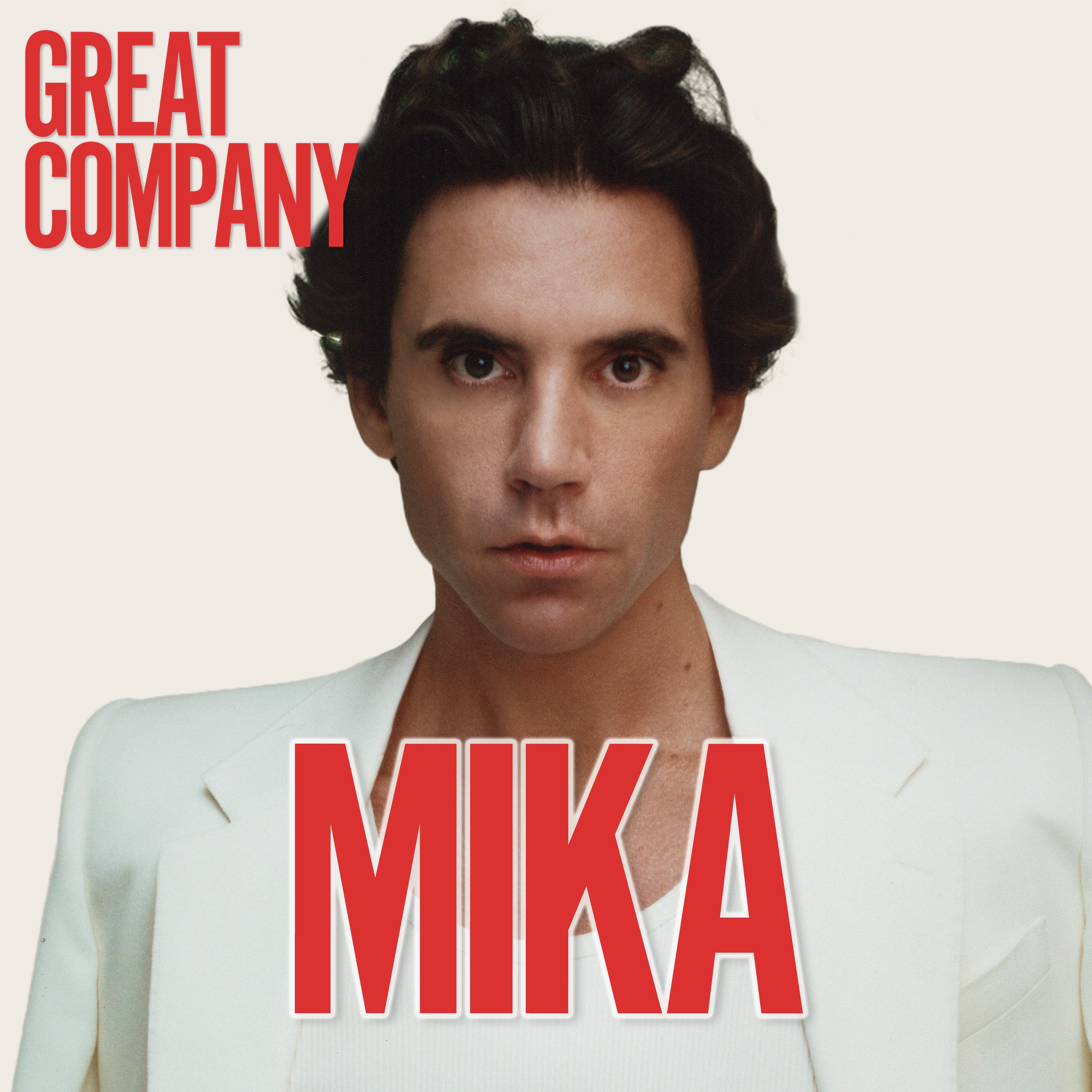
In this episode of "Great Company," host Jamie Laing welcomes the platinum-selling pop star MIKA. The conversation delves into MIKA's colorful music, his life journey, and the experiences that have shaped his identity, creativity, and resilience.
Written by AI. May contain mistakes.
Mika shares his experiences with bullying and how music became his escape.
“and you're going to get someone to listen to it.”
Mika reflects on his mother's influence and the impact of losing her.
“The amount of times I wake up in the middle of the night and he's like.”
Mika recounts his tenacious pursuit of a music career from a young age.
“that was important in my life is associated to embarrassment.”
Mika talks about his early connection to music and how it shaped him.
“And slowly, slowly, and I went back every week.”
MIKA shares his childhood curiosity and early experiences with music.
MIKA discusses the difficulties faced by his family during his early years.
“So I think there's some sort of curiosities that just kind of provoke a chemical reaction.”
MIKA reflects on how his father's captivity affected his childhood.
“And he would do drawings and he would send messages to all of us.”
MIKA describes how music became a refuge during turbulent times.
“And so we got in our white Toyota Previa.”
MIKA talks about his mother's support and influence on his artistic path.
“And so she would say, oh, well, if you can sing, why don't we just start singing?”
MIKA shares his feelings about losing his mother and finding direction afterward.
MIKA discusses the importance of rebuilding after loss and embracing new beginnings.
“And for someone listening now, that's what you would say.”
MIKA reflects on the balance between commercial success and personal happiness in his music.
“It feels like we haven't achieved what we should achieve.”
Exploring the meaning and impact of success in music and storytelling.
“It was written on that white piano and it was really just, it was about making something that made me happy, that would make me happy.”
MIKA recounts his experiences auditioning for record labels in unexpected settings.
“it wasn't a construction that afterwards it was like okay how do i actually wait a minute it's about my own altitude.”
MIKA shares humorous and poignant stories of his mother's attempts to get him noticed.
“Can I just quickly say, I rarely have interviews, right, where I, we've got time left, but I'm almost concerned about coming to the end because I have so many questions about your life.”
Discussing the role of embarrassment in achieving one's goals and aspirations.
MIKA discusses the pressures of public scrutiny regarding his sexuality in music.
“But if you learn it from a younger age, you're more likely to do it when you're older.”
Reflecting on the journey of self-acceptance and the media's role in shaping identity.
“With your sexuality, did you feel pressure to come out publicly?”
MIKA describes how music provided an escape from the challenges of childhood.
“If you want to know why my gigs have that euphoria kind of feeling to them.”
Exploring the significance of the piano in MIKA's life and creative process.
Discussing the dynamics of MIKA's relationships with family members through music.
“before we left, the bailiffs came and the only thing they didn't take was the piano because it was rental.”
MIKA shares his feelings of being an outsider during his school years.
“Can you look at the world from my point of view?”
Discover how Mika's experiences of embarrassment shaped his identity.
“at the very beginning of this conversation.”
Mika shares a memorable story about his unique fashion choices at school.
“But here's the most delicious part of it.”
Mika recounts being expelled due to a harmful teacher's actions.
“And so without potentially all of those things that happen, you know, The fact that the piano was left and you got to take the piano.”
Learn how music became Mika's refuge during tough times.
Mika discusses his sister's role in identifying his struggles.
“close my eyes i've had a lot of hearing problems in my life yeah yeah i i can guess right And so I shut down and no one understood what was going on.”
Mika shares how he started anew after leaving his school.
“And then the director of the school puts me and my dad in his office.”
Mika discusses the creative process behind his new album.
“Your new single, Modern Times And you have your album coming out Yeah Are you excited?”
Explore Mika's perspective on love and its representation in his songs.
“And he went, I listened to the records and there are 52 mentions of different types of love.”
Mika and Jamie discuss the importance of chaos in life and creativity.
“Because we were all singing all your songs upstairs.”
Explore the significance of chaos in life and creativity.
“Because I think in chaos, there's just the best things happen.”
Discuss the powerful emotional responses tied to memories and family.
Uncover personal likes and dislikes that shape identity.
“Potato chips It's a good one Salty Salty crisps Yeah, yeah, yeah And Japanese beer Okay Yeah Have you been to Japan?”
Understand resilience and how it influences self-identity.
“It's not about, I turned, a biggest turnoff also, by the way, is vanity.”
Delve into the creativity behind songwriting and personal expression.
“And it's the lyric goes, as I wander, I listen to your words and play with them between my fingertips, like embers on my chapstick lips, sweetly burning.”

Get the gist, explore an idea or ask about something said.
 Claude
On Great Company with Jamie Laing, what are the key points of this episode?
Searching your listeningAutomatic transcript. May contain errors.
0:00Coming up in this episode of Great Company. You don't understand that this is wrong. You don't understand that it's not your fault. So I shut down. He's an idiot. He's stupid. It's a waste of space. Public humiliation. Bullying. I would literally put my head in between the two speakers, put music on and put it as loud as possible. What, to escape the... Just to feel, yeah, something. I mean, that's worse than bad. I didn't realize that that was not mine. Hi, I'm Mika and I'm in great company. Platinum selling pop star Mika. Mika. Mika! Mika! Every single thing that was important in my life was associated to embarrass me.
0:38Get out of here. My mother's obsession. Just try and get someone to sign me. She said, all right, now I'm going to drive you in and we're going to go to Warner Music and you're going to get someone to listen to it. She made me gay crash Diana Ross's Christmas party and I sang to Shaka Khan. What did that teach you? I shouldn't even be saying this. When you talk about your mum, your whole body opens up. She was extraordinary. One thing that I'm so happy about is that I'd managed to take her on that journey that she always dreamt of. You losing your mom must have been so tough. Oh, it was so tough.
1:10You said? You said, when I lost my mother, it felt like losing my compass. I think we all kind of feel that at one point or another. If I don't have that compass, what am I going to do now to make sure I'm going the right way? You feel life changing in front of you and it's quite a scary time. How did you know things were falling apart? I was...
1:35Hello everyone. My name is Jamie Lang and this is Great Company.
1:42Hey guys, welcome back to Great Company. Now, this episode today is going to absolutely blow your mind because we have the singer-songwriter Mika on the show. Now, Mika and I first met, we met when we hosted the Attitude Awards together. Right now, if you know what the Attitude Awards are, you're probably wondering why was I hosting it? Because Mika loved the podcast. He thought we'd make great hosts together. So invited me to go and do it. And I was really touched by that. And since then we've become friends. Now this episode is amazing because Mika is an amazing storyteller and his life is fascinating for so many reasons.
2:14He grew up in Beirut and then his family had to leave because a civil war broke out. His father was held hostage. Yes, hostage. Okay. And his mom took the family away and had to bring them up by herself. Mika found music and he fell in love with music. And that was kind of his escape. He called it a hug, which you'll find out all in the episode. Now he's gone on to sell millions of albums. He was nominated for a Grammy and so many of us have loved and listened and just fallen for everything that he's about. And this episode doesn't disappoint. Now, before we start, I just want to ask one favor.
2:45And that is if you could please subscribe to the show. Now, the reason that does so much for us is because this show is completely free and we want to keep it that way. You don't have to pay anything. And the reason we can keep it free is because you subscribe. So if you haven't subscribe, you just click that button and it does us wonders. It keeps us getting the guests that we want to get and keep making the show that we want to make for you guys. If you can do that one thing, thank you so much. Okay. Enjoy this incredible episode of Great Company with Mika.
3:17Hi, I'm Mika and I'm in Great Company.
3:23can we just talk about the fact that we met because uh yes my partner and i who you know we listen to your podcast so all those i've not done many hardly any uh you know you are very much present and i also then very rudely announced to everybody and you that he listens also to Your wife's podcast. But to fall asleep. Yeah, to fall asleep. To fall asleep. I have to wait. The amount of times I wake up in the middle of the night and he's like. Like that. And your wife is somewhere in the bed. And I'm just like, can I just shut her up? And I'm just like, literally. And he's just snoring and she's somewhere in the bed.
4:09And we just get her to shut up.
4:20you have done very few podcasts this is all new to me why why is it why have you not done a podcast really before um i don't know i don't i i'm not sure if i was well i wasn't invited just as simple as that i'd love to tell you there's some big kind of i'm holding back there's a whole media plan and strategy no it just wasn't really invited but do you find it easy because podcasts are quite like an intimate space right so you have to like you have to be quite open about things i suppose how's my body language yours is very open right now i'm quite closed my arms are crossed no i'm gonna open up okay so how does this work i'm in that zone at the moment i don't know what it is but i'm my emotions always here at the moment right so one thing can just send me off.
5:08I can get emotional. Do you know, do you remember when, um, when things make you, I don't know how you get this, when things make you upset, the emotion goes to your throat. That's where my emotion always goes. And I realized for so long that I always held my emotion there. So now I let it go past. It's so funny how different emotions go to different parts of your body. I mean, and that sounds way worse than what I was intending. I know what you neck so true like almost like a dog yes right and when it's frustration it's almost your chest yeah when it's fear it's you know it's always somewhere else but you're right when it's when it's kind of emotion in a positive sense yes you do feel it and when it's yeah and that is so true it goes to different parts where i never thought of and so and when you feel yeah nervous anxiety sort of it is in the chest but also that's excitement as well sometimes that i have and sometimes i find it hard to and those old kind of adages like butterflies in your stomach and stuff those are real things you do feel those butterflies yeah i had a great quote the other day which i'm going to absolutely murder but it was something like um someone said that uh embarrassment is an emotion we never explore and we should go out and make a fool of ourselves and it's so true we don't some emotions that to a friend of mine two days ago really so she she went on holiday and she's going through a bit of a life change at the moment.
6:36And she very clearly on this holiday that she went to a Greek island somewhere. And she's going to, I'm not going to say her name, but she's still going to kill me for talking about this. And she's a very good friend of mine. And she just stayed there for about four weeks. And she spoke to me on the phone about how she got so embarrassed by some of her actions. She'd been in such a serious job for 10 years. And then she just went out and let her hair down. And she was feeling embarrassed about it. I was like, that's the whole point that is exactly why you went on this trip that's what you needed to do something to be embarrassed to not think about the consequences to recognize it but also feel that it's a really good thing you know how many times have we been made by the things that were the most embarrassing in our adolescence i mean my life is made by fundamentally embarrassing moments throughout my entire life even my adulthood give me some examples when oh gosh every single thing that was important in my life is associated to embarrassment.
7:33Get out of here. Of course. I mean, your first kiss. Isn't that a moment of embarrassment as well? Afterwards. Yikes. You're crumbling inside. I remember the first time I lost my virginity. Yeah. Embarrassment. It was the most embarrassing thing. Who in their right mind? Anybody who says, the first time I had sex, the first time I had sex, I was wonderful. It was just so great. I mean, I'm just perfect. That person is a psychopath. And you should be really afraid of that person The first time I ever tried to have sex I didn't know what I was doing Honestly, I actually How old were you? I think I was quite young I was about 15 Okay, well that's illegal But that's alright And it was someone who was 38 What?
8:20What's a mansion? But I remember I didn't know what I was doing So I couldn't I thought you just moved like a dance move on top. And how did you form this opinion? Well, because I didn't, you don't, I didn't get, you don't get taught anything. I wasn't taught anything. I didn't know what I was doing. You know, when I saw the first season of Sex Education, I was just, the one thing I thought was, oh gosh, these teenagers are really lucky. Because they know what they're doing. Because this is up, you can actually watch stuff like this. You know, it's so strange. We had such a different exposure.
8:56We had a very Hollywood-like exposure to sex and sex lives. I think going back to embarrassment, embarrassment as something good is quite an extraordinary thing. So it's not just negative. For example, overcoming embarrassment is important. 100%. I was 12 years old. My mother used to make me, I would write songs at my white piano and then my mother bought me a mini disc machine I remember that and also I had lots of little Walkmans and stuff and a mini disc machine and she was like now if I bought you this mini disc machine you have to make demos so of course I went and I would record my songs on the mini disc machine and then she'd say alright now we're going to transfer that to tape so I would transfer it to a cassette and then she's like now you're going to draw some nice write your name problem M-I-C-A because that was my name yeah That's my real name.
9:53Well, my other real name. And she said, all right, now I'm going to drive you in the white Toyota Previa and we're going to go to Warner Music off High Street Ken. Get out of here. We're going to park there and you're going to go in with your cassette and you're going to get someone to listen to it. I was like, Mom. She said, yeah. And so we would drive there. I always remember it was pouring with rain. It was like 3 p.m. She had taken me out of school to do this. That was the exchange. I didn't have to go to school, but I had to go and sell my songs. And I walk into the lobby of Warner Music.
10:30You're 12 years old. 12, 13, yeah. And I have my little hand-decorated, hand-drawn MICA songs. And I go up to the secretary at the reception desk. And I knew that my mom was staring at me through the window. And I hustled. And I had to hustle. And you know what? I was dying of embarrassment inside. And I knew I had no choice because I got that day off school. And this was what I had to do in exchange. That's amazing. Do you know I worked my way up that building? What do you mean? They were so embarrassed by my embarrassment. And they felt so bad that they let me in. And they found someone to listen to me who was just like a runner in the A &R department on the first floor.
11:19Get out of here. And slowly, slowly, and I went back every week. You just kept going. I kept on going. But that is tenacity. That is, I think what happens is in life is that we see the end product, right? So what we do is we see the end product the whole time, which is where we watch someone finish, like do the 100 meters and they get to the finish line or they see your success and they go, okay, I want to be there. They don't see the grind that it takes. They don't see that little boy, 12 years old, going into Warner Music or wherever it is, getting up to the reception, having all that embarrassment come over there.
11:53They just want that end product. But actually, you have to do that hustle. Every single thing, typically most people have done, there's been this hard graft at some point that people don't get to see. And you've had that since 12. Oh, yeah. But it's a joyful thing at the same time. 100%. Of course it is. It's like, you know, when you're 12 years old, you're like, oh, that was interesting. And it forms you. It kind of becomes, it's pretty cool to go home and eat your spaghetti with tomato sauce and go, I hustled my way up to the first floor. But that's unique. They told me to go away. And isn't that great?
12:25They told me to go away. Yeah, but Mika, that's unique. I would say that's a unique thing. Like that is most kids, especially around that time, you know, wouldn't be hustling, wouldn't have a dream they were so focused on that they would want to go out and achieve it the whole time. You know, I wanted to be a stuntman at one point, but I'm not going to go into all the different places where stuntmen work and ask. I'm just not going to do that because I wasn't that. Some kids do.
12:57When was the first time that you realized music was part of your soul? Oh, it was. Well, according to other people, it was from when I was really, really young. So I was, as a baby, it's funny, my father always says there was this really, this moment that he remembers. And we were in a restaurant and a guy, a street busker came up to the restaurant in, I don't know where it was. And I was a baby and I was about one and a half years old and he was playing a violin. And they could tell that I was reacting, my face was reacting to the sound. and I just went completely quiet and I just kind of like, you know, almost like a dog does when a dog's really interested, you pull out the ball and the dog kind of like suddenly pokes up and straightens its back.
13:46Well, apparently I was in his arms and I suddenly straightened up and my back got a little bit, you know, kind of more engaged and my hands went up and this guy saw that I was reacting to his music and I was listening to him and I went and as he came closer my hands went up and up and up in the air and he kept on getting closer and closer until I went for the strings with my hand and grabbed them and I wouldn't let go and I pulled and pulled on the strings of the violin because apparently I wanted to know you know where it was coming from and so that about a year later they give me for Christmas a violin when i saw it i was over the moon apparently i don't remember this but you know i was three four years old or something and they leave me with it and i'm constantly plucking it and doing things with it they leave me with it they go off to the kitchen yeah and we were living in an apartment at the time in in uh in france and my dad was working there and by the time they came back i smashed it into a million pieces and i wanted to know what was inside i wanted to know what was going on inside and how it made that noise.
15:01So I think there's some sort of curiosities that just kind of provoke a chemical reaction. And I think as parents, I was so lucky and I think a lot of parents have this natural thing where they can feel when there is that reaction happening in the kid in front of them. It's really important just to go there. And give that to allow them to go and experiment and feel that and experience it. So the pushing, you know, and the pushing and the mum who's sitting out there in the Toyota Preview in the pouring rain, I can see her on my shoulder. And she's sitting there going, go on, you do it. That forcefulness and that encouragement doesn't come from an empty place.
15:44It comes from a natural predisposition, a natural curiosity that was already instilled. You know, that was already very clear and manifesting itself early on. Were your parents always like that? Or have they always been like that? where they encouraged you to try and do and experience and experiment and go for it? I think it was, um, it was really, it was music. It was really music and, and storytelling and using music to express yourself. Um, and, uh, it was, it was really encouraged, encouraged with me. It, it, I had a lot of problems at school. Um, I was young and I had a lot of problems and we had, My dad had had, we had a lot of issues at home.
16:25I was born in Beirut in the 80s in 1983. And it was a really violent time in the Civil War there. And of course, I don't remember any of that. So that part of it for me didn't have any consequences, but it kind of conditioned the family in a way. And we were evacuated by the Navy, the American Navy. And my mother said that she wanted to go to France. She didn't want to go back to the States. So we went to France and we went to Paris. My dad ended up getting caught again in the first Gulf War and was a hostage, actually, in an embassy, in the American embassy for about eight months. Wow. And life fell apart.
17:03How old are you? I was young. I must have been seven or something. And but it was strange to have life fall apart. You know, everything just kind of fell apart. and in what way can i in what way because you're seven years old and seven we're my parents got divorced at eight yeah and i remember things it's a weird thing life sort of continues you're quite naive but you feel you feel life changing in front of you and it's quite a scary time because you're so conscious of that now so what was that for you how did you know things were falling apart well well when your mother makes you when the cnn or whatever the news is on constantly your dad doesn't come back but i mean it was always working but then when your mother kind of makes all four kids because at that time my little brother wasn't born because i'm one of five all four kids every single evening do the rosary all together trust me i never i never did the rosary ever again you're gonna remember it at that point you're like something's up something something's up with dad and um and it was funny it was it i mean it it was really bad it was really bad there was no way of knowing if he was gonna you know survive and there was no way of getting messages out and every once in a while magically a fax would arrive and a fax would arrive and it was his in when he had a chance of sending out a fax he would send a fax out from the embassy and it would print out on one of those rolls of kind of very thin, slightly shiny white paper.
18:39And he would do drawings and he would send messages to all of us. And, yeah, he was careful about what he wrote. And then these faxes would come in. It was the most extraordinary thing. Xerox messages from another world, while our world was kind of falling apart, you know. And I just remember in the midst of all this, I remember one thing. My mother used to put on vinyl records and we would dance. And we would dance and dance. We would dance to Joni Mitchell. We would dance to Nirvana. We would dance to Bruce Springsteen and this French singer, George Moustaki and Charles Trenet. And we would, you know, do can-cans or whatever the hell we would do.
19:27And we would dance. And so after that, we moved. When my dad came back, he was a different person. He had a beard. He was emaciated. We stopped calling him dad like that. We called him Mike because he wasn't dad anymore. And then everything kind of fell apart. We lost everything. We lost our house. We lost stuff, which was just stuff. But that stuff changes things. And so we got in our white Toyota Previa. The white Toyota Previa is very present in my life. And we get into, we drive over to the UK. And we start up and life slowly, slowly starts up again. That was when I was put into a school in the UK, a French school called the French Lise, French state school.
20:10And it was really hard because I was just a bit, I didn't understand what was going on. And that's when the dyslexia really settled in. Long story short, I get kicked out of school. I had issues with a teacher and my mother looked at me and she goes, you know what? you're not going to go to school i'll say yes i said what am i going to do she goes you're going to go to the park i said yes i'm going to go to the park this is great and you're going to learn how to sing and you're going to learn piano say oh okay i didn't realize she meant four to five hours a day my piano teacher showed up and it was a russian woman called alla who didn't speak much English and used to speak to me in Russian.
21:00She realized very quickly that in order, because I couldn't read music and I still can't, I would sing, she would sing to me and I would sing it back and then I'd be able to play it. Get out of here. And so she would say, oh, well, if you can sing, why don't we just start singing? And I started to sing Schubert and Russian songs, German songs. And then I started working. This was like during nine, ten months of not going to school. I started working and then I get my first job And it was at the Royal Opera House In the chorus How old are you at that point? About eight Nine This is wild And I know it's your existence right So in your head it's like okay this is what's happened to me But someone sitting here And you know we've met and I've been a fan of yours for a long time I told you that already And researching your history and understanding your life I was completely Just amazed at all of the stuff that went on.
21:58And I know almost in your head, you brush over it, but your dad becoming hostage and then coming back and not calling him dad. That is a lot for a seven-year-old boy to handle. But it happens to more families than you'd think. Yes, true. It does. It does. And when you're probably, when you experience that, you probably experience a lot of other families, but someone who's listening now and someone like me who hasn't experienced that you know so fortunate i'm more and more more more i speak to people more and more i realize how fortunate lots of us are that we don't experience any of this but so are we and so was i because there was always a response and in the most in like my mother had this amazing capacity to respond and she was a she was a she was an artist she was a designer she loved music She was a great cook.
22:48She made children's clothes and she had a workshop with like seven people making the clothes with her in our kitchen and in our living room. The sewing machines used to go through the night. I used to wake up and go, hey, hey, Tina. You know, hey, Paul. And they're loud. Yeah, they're loud. Go, go pee. Bye bye. Good night. Going back to bed. She made clothes that were sold in department stores. She made them for other brands. And so she was really an artist. And very smart. She was smart, not financially smart. Okay. She was emotionally intelligent. She wasn't financially smart, with so many money problems.
23:33But it was always, she responded to life with music, with art, with color. and and when you have that that is is an enormous luxury when you um when you talk about your mom your whole body opens up yeah because it was she was extraordinary she was an extraordinary human being but i did tell her that before she died and i did say you know you are extraordinary and um i've learned so much i was lucky enough to be able to have the guts to overcome my embarrassment at saying something like that to my own mother because it's amazing how embarrassed we sometimes are to say what we really think you losing your mom must have been so tough oh it was so tough it's so tough but um you know i i was because we started together and so you know from that the driving to the record companies and all that it really didn't end and it just went on and on and on and on and um of course there was an element of pressure but she was she knew that i wanted it so it was kind of complicit you know it was it was we were in it together um and the one thing that i'm so happy about is that the last 15 years of her life we actually managed to i'd managed to take her on that journey that she always dreamt of you know that that is awesome that is amazing you know actually go and do all these crazy things that we dreamt being able to do we did them and she saw your success well she she was you know and all the challenges yeah of course everything but uh but that's why we had this extraordinary friendship that we were two two we had two layers we were collaborators and friends and then she was also my mom and it was really amazing how there was a in front of others we were just we were together and there was love there but we and then but in private i was her son there's an amazing quote that you said you said when i lost my mother it felt like losing my compass that really got me because i think um in life we sometimes try to we don't know our parents tell us what to do or where to go and actually as i've got older in life i've realized that actually our parents typically would in my experience and i'm sure yours your parents are trying to do their best and they're navigating us through life as much as they can absolutely and it's so beautiful that you said that your mom was you know you then didn't have that compass in a way i didn't and i think it it's so i think we all kind of feel that one point another when we feel like we've lost that compass and then you realize that that that's actually it's almost like passing of the baton well then you know you assume a certain responsibility you have to you have to kind of you have to you know you look around you're like actually no i'm not alone there is you know there are my siblings there are the people i love my friends you know and and you um it's uh i i think it's probably normal to feel that but then you kind of saying okay well now if i don't have that compass what am i going to do now to make sure i'm going the right way That's really important.
26:48And for someone listening now, that's what you would say. Maybe they're in that moment where they feel that they've lost someone. And they're probably in that moment where they don't think it's going to get better. Oh, it gets better. It does get better. It just takes time.
27:05there's these moments in your life where it's like start again let's rebuild start again let's rebuild yeah start again which is an amazing um kind of weighed attitude to have in life because sometimes we cling on to things i think too much again relationships business whatever it is and actually there's a moment when you've got to you got to let go and starting again we're so scared of for some reason because it feels like failure. It feels like we haven't achieved what we should achieve. But actually, there's something beautiful about starting again. And I think with you, if I look at your music career, it feels like for me that you are constantly challenging yourself and rebuilding yourself and growing yourself and developing yourself the whole time.
27:50Well, that's a kind way of putting it. The truth is none of this was meant to be commercial. What do you mean? Well, even the first album, which is very successfully commercial. I mean, it's so successful. It was not at all. It was written on that white piano and it was really just, it was about making something that made me happy, that would make me happy. Like you have the ability to write your own medicine. Yeah. Why not just do it? it sold millions of albums didn't it yeah but it's it's the whole the whole time that that i i i guess the the promise i made it was like okay and then when that destabilized me a little bit the the success of that album which was really made in my bedroom and it wasn't a creation it wasn't a construction that afterwards it was like okay how do i actually wait a minute it's about my own altitude.
28:49It's about where I am in my thing. And it's about finding a way to write things that engage me and to constantly kind of develop my story and tell stories that I find interesting and challenge myself in that way. And that's what I've always tried to do. And that's why I believe fundamentally in alternative pop I think alternative pop is glorious Because alternative pop, even though it sounds like a contradiction in itself Something has to be popular And alternative, how is that possible? But I think it can be How did you deal when the success of the first album happened? Was it also with Universal?
29:29Or was it with Universal? Yes, it was with Universal I was signed by Lucian Grange After auditioning in a hotel lobby in front of people who were drinking their tea. Get out of here. Yeah. Get away from you. Get out. And one lady complained. Can I just quickly say, I rarely have interviews, right, where I, we've got time left, but I'm almost concerned about coming to the end because I have so many questions about your life. It is just, and the way you, do you know what so amazes me? Is the way that you're a storyteller and that you're so engaging. You really truly are. And that's why your music does so well, because it captures, it captures you, the way you speak, the way you're talking to me, the way you're telling me your stories.
30:12I'm in, I'm in it with you. And that's your music does the same. So that little boy, what happens? So you, so you're, you're how old and you go and see people and they're drinking tea and what happens? So by this point of, you know, being forced to go into really, you know, crazy places and, and try and get someone to sign me, which is my mother's obsession. like i mean everything from like she made me i shouldn't even be saying this she made me uh gate crash a party in america in new york where because she found out that this guy who lived not far away from my aunt he was the head of rca i gate crashed that party and found my way at the piano and sang for the people get out of here and there were like movie stars there and um i remember uh and so by that point anyway i still didn't get signed but by this point i was used to i even did it she made me gate crash diana ross's christmas party and i sang to shaka khan
31:23i'm completely completely serious what did that teach you or what has that taught you I don't know It's again It goes back to that theme of embarrassment I think Where in order to succeed Or get what you want in life You have to remove that element of embarrassment The thing that stops us from achieving what we want That's being a florist Being an artist Being a singer Being a banker Being a producer Whatever it is You have to get Being a lover You're being a lover You have to get over embarrassment Yes And that when you put yourself But it's so hard It's impossibly hard. But if you learn it from a younger age, you're more likely to do it when you're older.
32:03You might learn it in a certain, you know, like you might learn it in some ways, but you still, you never really learn it, do you? You know, after all that training, I find myself in a position where I've got, I've written most of the songs on the first album and I've been told to go meet this terrifying guy called Lucian Grange. Lucian Grange now is head of Universal worldwide. He's a very big deal. But he's also infamous because he was a notoriously difficult and frank and expressive executive. Anyway, so I'm sitting there and there's this guy called Lucian Grange drinking. He's having tea and we're talking and he's like, well, there's a piano there.
32:56so all right um was like then use it go on then i'm like all right fine and other all these american ladies are having you know their tea with their bouffons and um and i sing i sing again i try to be like grace get it like that in the middle of a hotel lobby which is fine if the song is actually now it's it's you know it's a bit more well known than it was then but then it was just like you know just just a weird song that i yeah but have you not seen um there's a thing which i love uh have you seen um chapel rhone where she's singing oh yes i saw that she's saying and there's like six people there's six people and then it cuts to yes i saw that we obviously are getting the similar thing i'm like wow i've watched that like seven times it's amazing it's amazing it's amazing And so, yeah, you have to start somewhere, though, with your songs.
33:56Of course you do. Yeah, exactly. It's just, you know, at least she was singing to, in, like, a proper, she was doing a gig. I know, you were just in a, but then you get signed. There's a quote, which you said, the record company said, I wasn't marketable because I was too weird, too theatrical, too colourful. So I wrote a song that said, fine, I'll be whoever I want. Yeah, exactly. And it was always, and because there's always this idea of seduction, isn't it? You inevitably, you feel like when you're writing songs and you're presenting them, you're entering in this kind of uncomfortable kind of like seduction.
34:31That's why even in the phrase, there's a song in it that goes, should I look older? Should I be bolder? Should I bend over just to be put on the shelf as in just to have my record there put on that kind of display shelf? And that's that no one ever mentions that line. Should I bend over? It's in Grace Kelly. Is it really? It's the second verse. Should I bend over just to be put on your shelf? Well, guess what? I'm not. I'll do the one thing that's going to piss you off even more. I'm going to walk around like Grace Kelly. With your sexuality, did you feel pressure to come out publicly? Yes. Well, I did.
35:16It's okay to say it. I mean, I was, I was, you know, it was everywhere in my music and in my lyrics. Should I look older? Should I bend over to be put on your shelf? Like I try to be like Grace Kelly or it's, you know, Love Today. It's everywhere. Stuck in the middle. And then, but it's everywhere, but it's being discussed. It's being explored. It's being used poetically. Sexuality in the most pure, beautiful, glorious way through the life of a 20-year-old, 22-year-old, 23-year-old going and out loud figuring it out. and then immediately before even a single comes out the the uh the labeling and the the the kind of like well announce it why what club are you in what are you part of uh you are this you are that why aren't you this you know like all these things and it just like it was it was funny because it It became something else.
36:35And instead of being discussed in this way through performance and through music, it suddenly became just about satisfying the media more than anything. And thank God we've moved on. Thank God, yeah. I was never embarrassed about my sexuality. I was sneaking out at the age of 15, come back at like four in the morning from the Astoria. It was the best night. If you want to know why my gigs have that euphoria kind of feeling to them. I learned that at 14, 15 years old at the Astoria at GAY. When you saw those things, it was like Studio 54 back then. It was like those drag queens on those podiums and the confetti and the giant gold balloons.
37:23And like the Spice Girls miming on stage, half pissed. Oh, just amazing. And whoever had the number one would come and just do a personal appearance. And everyone would just heckle them or sing along or boom and all at the same time. And I wasn't embarrassed about my sexuality. And then suddenly I felt like it changed. And in the end, I found my own. I navigated it. I found my own pace, my own way of dealing with it publicly. Do you live in the present or do you think about the future a lot? I both. I try. I think about the future a lot. Sometimes I force myself to live in the present a bit more.
38:05I try. I try as well. Yeah. I can see you like that. I can see you kind of, yes, exactly. Too much. Too much. Too much sometimes. What do you, or who do you want to be? Or how do you want to be remembered when you're 60? Oh, remembered. I know you'll still be here. Well, hopefully alive. Yeah, you'll be alive. um so uh but if not if not i won't i won't be if i'm not i won't i won't miss it because i won't be here i'll be something else i'll be oh no don't worry my spirit will go into a dog or something i'll be i'll be kind of reincarnated to a higher form of being what kind of dog do we think colin retriever obviously working retriever obviously what else either that or a duck even when you know that that time when i was at the park when i was at the park i sound like i'm in slow horses but when i was at the park now when i was going to the park instead of going to school and i was just doing music i used to look at the ducks all the time and i was fascinated by the ducks and said they have the best life ever the geese and the ducks because they were free and they were just walking about just like get fed bread float around swim all day hang out in the park and guess what whenever the weather gets cold they go on holiday for like four months somewhere else that is um going back to that because i do want to it feels like i think when um when you're when you have that sort of conscience when you're thinking about that that means you're probably having a tough time yourself and so that eight-year-old boy or whoever old you were when you're in that park you were obviously having absolutely a tough time because you're looking at the simple things exactly and you're going they have it so simple why do i have it so tough because and there's a great quote which you said which is music was my escape hatch from fear the piano became my safest place yes what do you mean by that well the piano became this this kind of like thing where you can no one i didn't have to ask for permission to make something it didn't cost any money even the piano itself the physical thing was something that we got because when they came to take all our stuff in that apartment that we lost in in uh in france before we left, the bailiffs came and the only thing they didn't take was the piano because it was rental.
40:17But then when we tried to, when we left, we found out that actually the rental company had gone bankrupt. And so the piano just stuck with us. And that's why we, that's my piano. That's the one I still have today in this, in where we are in the UK, for example, the piano sitting there in a little cottage, all beaten up and perfect. So it was this kind of like this, this thing where i could build a landscape and i could tell stories and i could talk about sex and you know obviously not when when i was like 15 16 and 17 sensuality sex i could bitch about my sisters you know i could talk about my grandmother who was such a piece of work there's a song on my very first album that goes i sit and think about the day that you're gonna die Your wrinkled eyes betray the joy with which you smile.
41:08Oh, can't you tell? Can you look at the world from my point of view? Or are you just too rigid? Wow. It's about her. Did she? Oh, yeah. She heard it. She loved it. She was a vicious bitch. So my grandmother, Ruth Hill, was the same. Really? Yeah, yeah, yeah. Complete. I mean, and she... In the greatest way? Both. Yeah, yeah. Good and bad. Good and very bad. Yeah, good and very bad. Very good and very bad. Was your mum's mum? Yeah. Yeah, my mum's mum as well. Tough. Extraordinary. Tough. Very, very, very tough. Extraordinary woman. Extraordinary woman. Did you feel, during that time though, because you were playing, did you feel like an outsider?
41:50When you were looking at the ducks and you were seeing the ducks and you thought what an amazing life that had, did you feel uncomfortable in yourself? It's really interesting that you started talking about embarrassment at the very beginning of this conversation. And it's so, so, so, so, so, so present as this idea of embarrassment and the good and the bad. And so being an outsider and embarrassment obviously are connected. When I came over to London and I went to the school, it was a disaster. Just the bullying. Well, you don't even know it's bullying, right? So when you're going through it at first, especially when you're a kid.
42:30It's just in a very practical sense. I was at a school beforehand that was really small in Paris, and we had a uniform, right? My mother's a dressmaker. I spend with my sisters most of our Thursdays and Friday evenings or weekends in the Sentier, which is the wholesale district for textiles. And we choose textiles, which inevitably means that we all get to choose our own textiles and get offcuts and stuff from these places, from these warehouses. Wow. All this to say, I get to London in this very big school, and there's no uniform, and the worst thing in the world possibly could happen, I dress myself.
43:12And I show up. I show up. I can't wait. I had pink polka dot shorts. Nice. Here we go. With a yellow shirt and a matching bow tie. And that's how I went to school. That's a recipe for a disaster. Yeah. But here's the most delicious part of it. I thought it was completely normal. And it should be normal. Well, should it? Well, yes, because what you're doing is you're doing what we should all be doing, is standing out rather than fitting in. And that's the most, and we spend all of our lives, I don't know why we do it, trying to fit in the whole time, especially when you're younger. I tried to do it.
43:57You tried to do it. We all tried to do it. And actually, why fit in when we're born to stand out? I wish you could have said that. I know. To me when I was, by the end of the day, hiding in the bathroom. Your bow tie was off. Crying. And I didn't have anything to change into. I did take off the bow tie, but I still had to walk around with my polka dot Bermudas. But, but, Mika. So that's embarrassment. Totally. So I didn't then. I walked in that day not feeling like an outsider, but I quickly realized that there was some, that, that existed. And that is the moment that I realized that the outsider thing, I would say, whoa.
44:34But do you know what's amazing is that even though you had this, this, this embarrassment and this tough time and what was going on, but then you start learning to sing and play the piano and that, those little moments lead you into what you're doing now. And so without potentially all of those things that happen, you know, The fact that the piano was left and you got to take the piano. Yeah. The fact that you didn't have a good time at school. So your mom took you out and said, you're going to learn to play. And I was expelled, but that's okay. Why were you expelled? Oh boy. I was expelled because unfortunately I had a very bad teacher.
45:14Okay. I know that's what all the kids. Yeah. This is what I, Right. Right. And I was expelled because this bad teacher used to do really bad things to us. And and not just to me, but she had she chose her kind of the kids that would be that would get the wrath, the most of the wrath every year. And I happened to be one of those kids in that year. And there was there was two others. and there was there was very strange things i mean like what like uh i i she used to public humiliation um writing poems about she would find out something had happened something embarrassing she would write poems about it and she would put the poem up and everyone had to recite it together no to the kid making me and making me stand on my chair for hours in front of everyone and if you had to go to the toilet well tough shit you you peed there i mean that's worse than bad yeah it was bad very very bad things and and so i went into another kind of um i went into i i thought it was i didn't understand you know you don't understand that this is wrong you don't understand that it's not your fault no of course you don't you're having trouble in the you know for adam and eve it was the apple in the original sin for me it was the the the pink polka dot bermuda shorts and and the serpent was a teacher and uh so then um i didn't realize that that was not normal so i shut down shut down forgot how to read and write uh stopped communicating that's when i used to i used to i did this thing where i would go home and i would just i didn't want to i would try and distract myself so i would listen to music really loud nirvana or bach i know both of those literally bach or nirvana or um uh shabarangs that i loved and i would put my head in between the speakers and put it as loud as i possibly could what to escape the just to feel yeah something and it's funny that was i would take comfort in the sound um which is why that phrase is in one of the songs there's a song my um my new album called spinning out and it goes and when the world spins round just take comfort in the sound and it's so funny it's about me as a as a kid i would do this very strange thing that would freak out my parents i would literally put my head in between the two speakers put music on and put it as loud as possible and try and feel it on my face but try and explain to me because what would that do what would the sensation do what would the music do it became like a hug but a hug that went inside and so the music would would kind of make me feel other things and i would go somewhere else and i would close my eyes i've had a lot of hearing problems in my life yeah yeah i i can guess right And so I shut down and no one understood what was going on.
48:34I was just literally. And you weren't reading, writing, you weren't speaking? Oh, it all fell apart. I started speaking a lot less, detaching myself. All the typical signs of a kid that's going through something bad. It was a mystery. Parents couldn't understand. One day, my sister Paloma finds my satchel, my rucksack, in the street. outside the school. I just left it there. Which, of course, then the teacher would, this woman would have tortured me about and humiliated me. Of course. So then, but I just didn't care. I couldn't make sense of anything. So then my sister Paloma walks into the room and she goes, she knocks on the class door and she goes, I'm sorry, my brother's bag.
49:24And she makes me stand up. She makes me stand on my chair and she starts again and this time though my sister hears it wow so you have you have an ally there almost my sister doesn't understand she just thinks it's completely crazy and she's only two years older than me but she understood this was bad she leaves the school and goes and tells my mom she walks home and my sister's disabled so for the fact that the way that she ran home as fast as she could to the house, which is, you know, about 20 minutes away and tells my mom, my mom suddenly puts it all together. This is what's happening. She was, my mom, Paloma's like crying.
50:09She's like, he's standing on the chair. This is all happening. Everyone had to, you know, repeat after her. He's an idiot. He's stupid. He's a waste of space. And they all had to say it. And she couldn't, she's just like going on. My mom's like, oh God, that's what's happening. and she calls up my dad and tells him he freaks out i have no idea what's happening and we're waiting to be collected and everyone had to be collected at the um in the courtyard and so there's a and there's ropes and the parents are on one side and there's the rope then the teachers with their classmate with the classroom you know around them the the pupils of their classroom standing there and then once you see your dad or your mom or whoever's picking you up you then you would go out to wait how it worked yeah my dad arrives and he steps over the rope and he walks over and he goes in a very loud voice in front of everyone he was like i need to say to you all the things that you said to my son and he goes on and loudly he doesn't touch her but he's absolutely livid and he's loudly saying you say to my son in front of everyone and you made the repeat that he is stupid that he is worth for nothing that he is and she goes on and on and on and on which is extraordinarily dramatic yeah imagine i just wanted him to shut up i was so embarrassed i was just like this is awful and then she faints no um and And they all run to her.
51:50And then the director of the school puts me and my dad in his office. And he goes, well, you're clearly expelled. And you can thank your father for that. We left. Oh, my God. Me, Paloma, who's there, my dad, holding hands, walking down from the Lycee Francais, this school, all the way home singing together and skipping hey ho the witch is dead the wicked witch is dead what an amazing image and then i started singing just to kind of that's why i didn't go to school it wasn't you know that's that's the reason why my mom was like yes there's no point sending you back into school start again we need to rebuild
52:44Your new single, Modern Times And you have your album coming out Yeah Are you excited? Yeah, I think because it's quite a euphoric album I wrote the entire thing at the piano I wanted to write an album alone again And it was really important to find a way to make something bold and by going back to the piano I found that that that friend again and I found that permission as well to make something really bold so then you know it's been it was produced and completely reinterpreted as well by a guy called Nick Littlemore from a band called Empire of the Sun and Piniao and so I just didn't want to water down his work I was like it doesn't it it might be it might please some people it might not please others some of it's a bit edgy but it's it's fearlessly joyous it's joyful and joyous and it it takes no prisoners do you write about loving it it is very strange that you're talking about that because i just had to do an interview with a with with an author who's like a novelist and he was writing a piece on the thing.
54:02And he went, I listened to the records and there are 52 mentions of different types of love. He says it is an album that is obsessed with love. Why? I say, it's really funny. I was like, well, because it's fascinating. I say, you know, I consider, I always say that love is like electricity. Electricity is this incredible thing because like from a, from a, you know, a positive and a negative, electricity jumps in the emptiness between. Well, love is the equivalent between people and it's that same thing. So if you're not going to write about love, what are you going to write about? Might as well read the yellow pages.
54:41Do they even print the yellow pages? I don't know. I wish they did. It was really nice to have them. Great doorstops. We like to finish the podcast with eight questions. Are you ready for this? Yes. Also, I just can't wait for the music. I cannot wait. I think you'll like it. No, maybe not all of it, but I think you're like, there's a bit of it. Like, I think there's a song called Excuses for Love that you'll love. I can't wait. Because we were all singing all your songs upstairs. And then we saw that everyone was arriving. So we quickly, and then I was singing a little bit while I was coming down the stairs.
55:14It's true, true story. Okay, eight questions. What's a saying or phrase that makes you smile or cheers you up? Oh, yeah, we put you on the spot. Yeah, it's really good.
55:27Can I have two? Anything you want. Okay. Well, the one thing that really cheers me up is what's for dinner. Yes. That, honestly. That's great, yeah. It's like you just live for dinner. I live for dinner. It doesn't matter what it is. Pasta? Fish fingers? Anything. Anything. Fish fingers, pasta, you know, Chateaubriand. Actually, I hate that stuff. But, you know, what's for dinner? But there's a word that always, that is, I love, that I find really comforting. And that's chaos. Because I think in chaos, there's just the best things happen. I'm not kidding. That's one of my favorite things. Really?
56:08I'm not trying to jump in. Yeah, I love it. And sometimes my big thing is I miss chaos. Me too. Yeah. And that's when I, actually becoming more sensible in life. Yeah. I go, I miss, I love chaos. Chaos is great. In the best way. Chaos is really important. and then we should do a whole other episode on chaos. Man, I would love it. I'm being completely serious because chaos is your friend. It has to be controlled, and you can't let it go too far. Chaos is everything. Without chaos, there is no love. You will never fall in love. Without chaos, there is no art. It's so true. I'm a big believer in chaos.
56:49Best compliment anyone's ever given you. Do you want to go out on another date? let's go what scares you most about yourself um restlessness you know throwing babies and bath water out at the same time that sort of thing without even realizing it i'm similar again when was the last time you cried uh watching the golden girls
57:23i i don't know it was so it reminded me specifically of my aunties it was really strange really and i really don't cry often do you know i think i was really tired yeah and it just reminded me of my there's some flash of it just i just was transported back to this house in connecticut yeah and it was this thing where i saw them all together whatever yeah the golden girls love the golden girl amazing what's something you can't let go of apart from my piano my dogs and does and we have one now that's melicky and there's a whole song about her on the album it's called immortal love yeah i know and um uh she's 15 and a half yeah they go with mal that's the one that's only got you now the connection we have with animals is wild yeah What's your guilty pleasure?
58:19Potato chips It's a good one Salty Salty crisps Yeah, yeah, yeah And Japanese beer Okay Yeah Have you been to Japan? I've been to Tokyo, I love it Okay, did you drink the beer? I would have drunk a beer You're a fool I would have drunk But it doesn't stick out in my mind It's something that I love It's very good It's the champagne of beers I also liked unpasteurized Pilsner. You have to get it from a tank. It's good. I love that. Yeah. I like really, yeah, I like beer. What turns you off? Bullying. And it happens in so many forms. So often I've realized people who are often screaming that they are the victims are often the bullies.
59:14Yeah. What turns you on? Someone who's at ease with their body. It's not about, I turned, a biggest turnoff also, by the way, is vanity. I just think it's so gross. But the opposite of someone who's at ease with their body can have a body that's not like an Instagram body, which only looks good on Instagram, but in real life, it's all a little bit too, like there's bumps everywhere and it's also tight and hard. And it's not, you want some, you know, sure. Someone who's comfortable in themselves is always. Exactly. And you can have any shape of body, but when you are at ease and you're in equilibrium with your own body and spirit, then that's hot.
1:00:01Hot. It's not like Paris Hilton. Hot. It's hot. What do you like most about yourself?
1:00:09my extremely stubborn resilience fundamentally as much as i torture myself and struggle and go feel like i go up and down emotionally and all that fundamentally i'm like a cockroach survive a nuclear attack i really can i'm a cockroach it's good resilience is everything just amazing yeah just keep going amazing rats also are amazing yeah by the way we're really really really too tough on rats they're fascinating creatures they are you should study them yeah rats rats are i mean the amount of studies that people have done on rats which are insane like it's wild this is literally the point on the podcast where everybody is not going to agree with us they're agreeing with us bonus one favorite lyric you've ever written oh it's a new one can't wait and it goes we have to just remember it very quickly.
1:01:00It's a song called Nicotine. And it's the lyric goes, as I wander, I listen to your words and play with them between my fingertips, like embers on my chapstick lips, sweetly burning. Your words leave me yearning for you. You speak, you smoke me under. And now I'm thinking only of you in my nicotine dreams Mika you're amazing we absolutely love you thank you having a great company buddy that was insane
1:01:43okay well I hope you enjoyed that episode I mean Mika if you're listening thank you so much I mean so many takeaways the fact that his parents his mum pushed him into music made him go to record companies and perform for execs there That is amazing. A parent allowing their children to follow their dreams. That's exactly what kind of great parenting is. Embarrassment can be good as well. That was another thing I took away. He's been embarrassed throughout his life and it's made him who he is today. You know, that great conversation we had about leaning into embarrassment. In 2026, if you can lean into embarrassment, that will be a good thing.
1:02:21His close relationship with his mom, her death and you know music became an escape for him he described it as a hug right and i hope that you in your life in 2026 you can find your hug for you um and the last one about being bullied at school feeling like an outsider teacher picking on him now that teacher picking on him that was a kind of wild story but the fact of feeling like an outsider i know so many people listening will relate to that now i'd love to know what you guys think of the episode okay so if you can please leave your comments and i'll read out some of my favorites next week and for anyone who's looking at the comments, like your favourites too.
1:02:54Let's create that community. That would be amazing. Now Mika's new album, Hyper Love, is out right now, so you can go and get it. Mika, thank you so much for coming on. Remember, if you haven't subscribed to the show, please do. It's completely free and we'll see you next week for another episode of Great Company.
1:03:22Thank you.
MIKA’s music is full of colour. It’s bold, joyful and instantly recognisable. It’s the kind of music that lifts you up and meeting MIKA, that same energy radiates through.
He’s lived a fascinating life, shaped by bright moments and darker ones too. In this conversation, we talk about the years before his success, the awkwardness of putting yourself out there and how, at his treasured white piano, he found a place of freedom where creativity led, identity didn’t need explaining and he could be himself.
We cover:
- Fleeing Beirut with his family after civil war broke out
- The teacher who tormented him and why he was forced to leave school
- How music became a warm ‘hug’ when everything else fell apart
- Turning up at Warner Music aged 12 with his demo tracks
- Celebrating his sexuality through his music
- Why embarrassment can be a force of good
MIKA’s story is a reminder that the things that make us different are often the very things that save us.
MIKA is Great Company.
If you enjoyed the show, you can also follow us:
Instagram- @greatcompanypodcast
TikTok - @greatcompanypodcast
And if you've got thoughts, questions and comments, you can email us at: [email protected]
THE CREDITS
Executive Producers: Ewan Newbigging-Lister & Jemima Rathbone
Producer: Helen Burke
Assistant Producer: Issy Weeks-Hankins
Video: Jake Ji & Ryley Kirby
Social Media: Laura Coughlan & Anthony Barter
Great Company is an original podcast from JamPot
Hosted on Acast. See acast.com/privacy for more information.