Ask ChatGPT

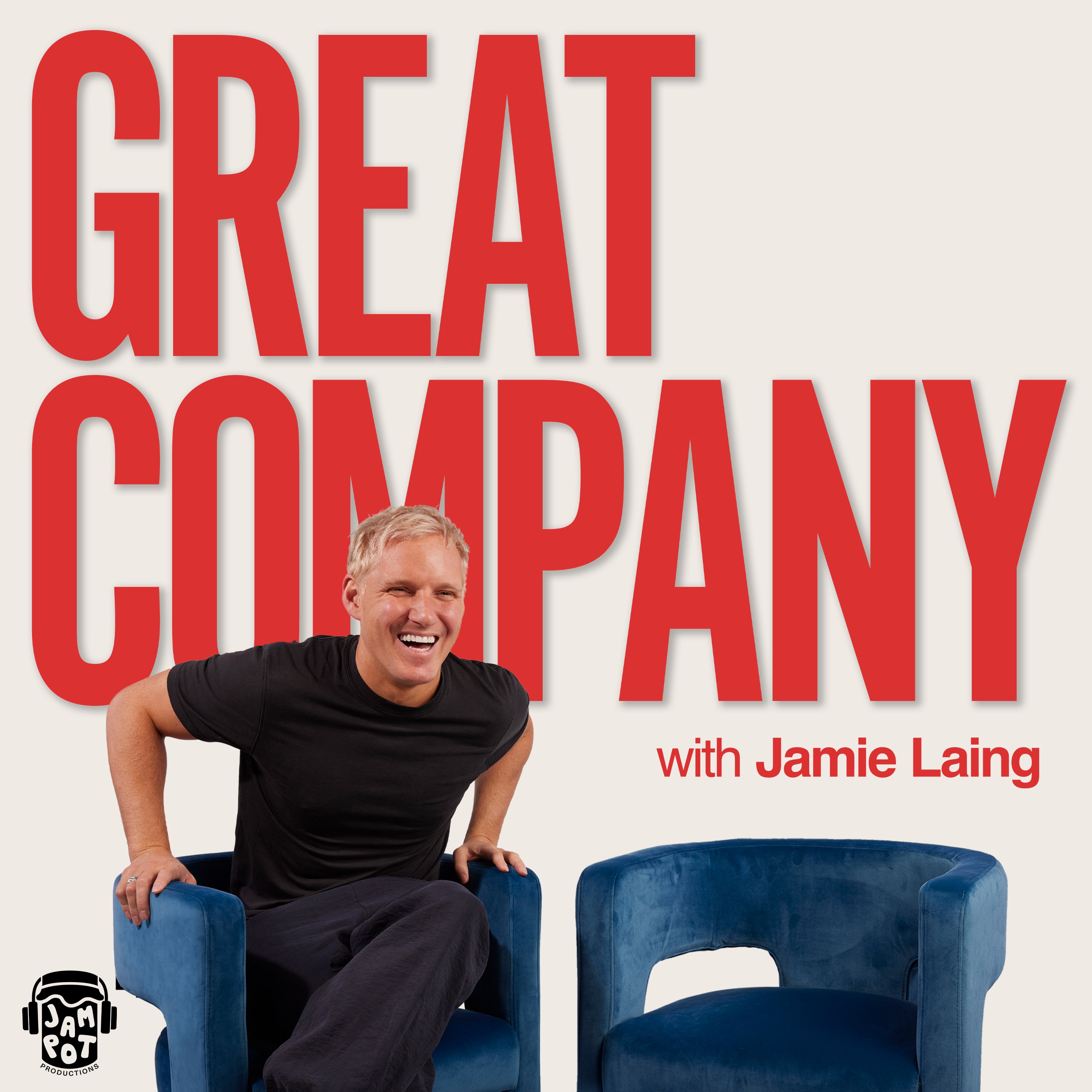
 Great Company with Jamie Laing
27 Aug 2024 · 1h 16m

Episode Description: Jamie Laing engages in a deep conversation with neuroscientist Nicole Vignola, exploring ADHD, its links to depression, and how to navigate life with these challenges.
Written by AI. May contain mistakes.

Get the gist, explore an idea or ask about something said.
 Claude
On Great Company with Jamie Laing, what are the key points of this episode?
Searching your listeningAutomatic transcript. May contain errors.
0:00Does it ever feel like you're a marketing professional just speaking into the void? But with LinkedIn ads, you can know you're reaching the right decision makers, a network of 130 million of them, in fact. You can even target buyers by job title, industry, company, seniority, skills, and did I say job title? See how you can avoid the void and reach the right buyers with LinkedIn ads. Spend$250 on your first campaign and get a free$250 credit for the next one. Get started at linkedin.com slash campaign. Terms and conditions apply. If you're a smoker or vapor ready to make a change, you really only need one good reason.
0:35But with Zinn Nicotine Pouches, you'll discover many good reasons. Zinn is America's number one nicotine pouch brand. Plus, Zinn offers a robust rewards program. There are lots of options when it comes to nicotine satisfaction. But there's only one Zinn. Check out Zinn.com slash find to find Zinn at a store near you. Warning, this product contains nicotine. Nicotine is an addictive chemical. Fall is all about cozy comforts, but when you're prioritizing your health, it's easy to feel like you're missing out. With Hero Bread, you can enjoy all your fall favorites because they're made with Hero Bread sliced bread loaves, tortillas, bagels, dinner rolls, and more.
1:13Try their all-new Hero Noodles with 12 grams of protein and just 80 calories. You won't believe Hero Bread's options have 0-5 grams net carbs and are high fiber from the taste and texture. They've even got small batch drops of indulgent favorites like the popular Hero croissant. And right now, Hero Bread is offering 10 % off your order. Go to Hero.co and use code FALL25 at checkout. That's FALL25 at H-E-R-O dot C-O. All figures are per serving of Hero Bread. Contains 2 to 18 grams of fat per serving. See the product nutrition panels on Hero.co for more information. Hello everyone, we're Jamie and Sophie.
1:47You may remember us from Nearlyweds and then Newlyweds. But now, guys, things are about to get even wilder as we take on our biggest adventure yet, becoming parents. Yeah, that's right. Newlyweds is now Nearly Parents, and we're bringing you the same honest, heartwarming takes on our journey to parenthood, I guess. Join us as we find out what it really means to become a family while trying not to kill each other. Get ready for Nearly Parents, your favourite new podcast.
2:20Hello everyone, my name is Jamie Lane and this is Great Company.
2:29Hey, how are you? Whoa. Who says hello first? Look at that thing over there. Is this a trick? Yeah, well I was just trying to tee us up for the episode. Oh, okay. By acting distracted because of my ADHD. You got it? Oh, I was about to say what's it to stand for, but attention, deficit, hyperactivity. Hyperactive disorder. Hyperactive disorder. Attention Deficit Hyperactive Disorder. And you have it? Well, okay. So, hello everyone. Welcome to the podcast. Hi. My name is Jamie Lang. I'm the host of Great Company. And this is? Jemima, the producer. You're the producer. And we like to do these little chats at the top.
3:05Yes. Because we think it's an interesting way to get an insight not only to how we make and create the podcast, but also how we host it and things like that. Very exciting. Because... Yeah. And we always forget to do that bit. We always forget to do this bit. because probably because we have a bit of ADHD ourselves. Very exciting. We have Nicole Vignola on today, which is amazing. She is a neuroscientist. She is an expert in ADHD. She has incredible Instagram, which talks about five hacks to everyday life, change your narrative. It's all about changing your brain chemistry in lots of different ways.
3:41Yeah, very accept, essentially making neuroscience really accessible for people. So she talks loads about on her. she's at Nicole Neuroscience on Instagram and she talks about like what's going on in our brain when we fall in love and when we have a breakup and those kind of things which everyone is very interested in. Typically on Great Company we have celebrities or people who musicians or artists or whatever it is and occasionally what we like to do is pepper throughout some experts because generally this podcast is about Great Company. Now throughout my life I have always found it hard to concentrate.
4:16I was bad in school. I couldn't revise. It took me 70 times of booking my theory test to actually pass my theory test in driving. Which you're going to have to do again. Which I'm going to have to redo anyway for lots of reasons. Don't go into that right now. And I've been very lucky in my life because I've had people in my family, friends, teachers, mentors who have kept me on a good track and made me realise that perhaps my brain is a little sporadic, including my wonderful wife Sophie who puts up with it every day. You as a producer, how am I like as an individual to deal with? So fun, but also chaotic.
4:51It is chaotic. Yeah, you are chaotic. But that's also, I think... But explain that chaoticness. You get very fixated on things. So when we come into a studio, something like if you've decided that you're interested in the light, you can't concentrate. If we're saying, don't worry, we'll sort the light. You can't concentrate. You won't start recording until you you are happy with the light. Yeah. Wow. Okay, so I have sort of tunnel vision into things sometimes, but also I can be a bit loose and not concentrating on other things. From a producer point of view and a friend point of view, positive negatives of that?
5:29Oh, so fun. Like you're so easy to get whipped up and excited. Am I? Yeah, and so I also, if I ever told you this, with this show because I know you like when things are really ordered I think I've told you this when things are really ordered you like that's not a comfortable place for your brain to be no so I will never decide the title of the episode until the day before because if everything's organised you'll go can we do a different order can we put this out I'm like no because there's quite a lot of things have to happen for an episode to be made so how do you know this because your brain is similar to mine in lots of ways I think it's just having worked with you.
6:09I've kind of just learned that if I have some decisions that are last minute, that's where you feel comfortable. How do you roll with that? More in the sort of workspace, I suppose. How do you manage that with me then? Because my brain's all over the place and I make decisions. Well, I think we work quite well together because I'm quite like that as well. Yeah. I think really like taking the time to understand like why I can, I now can kind of foresee things that I think you'll get fixated on. so like building in time so we're actually looking at doing um on newlyweds we're going to do a shoot which is out of the studio and we're just coming up with the schedule and i was like we need we know that jamie when he'll come in he'll want to see the camera angles he'll want to see this so let's just add an extra half hour on so that you can feel comfy and so i just know i just know that's how what you want so if someone does have that type of brain where it's perhaps add or adhd learn that and understand that i think that's what i do with you and that's the thing i think because we've worked together for 18 months now and when we have new colleagues coming in to jam pot those are the types of things where i'll say like this is how you'll get the best how you get what you need from jamie yeah just because you're yeah because and also if you if you channel it right if you get you excited about something it's like the best thing in the world yeah and um and And also knowing, yeah, sometimes if you're really like, yeah, focused on something, it will pass.
7:33We'll find something else that you'll be excited about. Is that weird hearing how you're like managed? Yeah, no, but I like that a lot. I think it's amazing. And so what I'm really interested today is to talk about ADHD and to talk about neuroscience and to talk about this whole area and kind of almost understand myself a little bit more. Right. Okay, sorry. This is just me and you chatting about our thoughts. Let's actually find out some facts. I also want to know this. I think this episode might be a little chaotic. Yeah, I think we're just going to go free reign. I'll try my best in this edit.
8:11I'm so excited. I know. So I'm a bit worried where it's going to go. But hopefully I'm articulate and I'm streamlined and I don't go all over the place because I'm just very excited about all these different topics. So bear that in mind, listener, just in case. And I'm going to try my very best. Even if you do, I'm going to try and pick it all back together in the edit. So if I did, enjoy, listener. And if I didn't, I promise I tried my best. OK, here we go. Please enjoy the episode of Great Company with Nicole Vignola. Hi, I'm Nicole Vignola. I'm a neuroscientist. And I'm Great Company. My mum has sent a voice note describing what I was like as a child.
9:00Let's listen to it. I want to see what she said. I have no idea. I haven't listened to it. I don't know what she's saying. So as a child, you were just super, super active right from day one. For a start, you came six weeks early by emergency cesarean. You never stopped churning in my stomach. and then you were just always active. I mean your brother walked at 14 months and you ran at 11 months but from the moment you could stand you climbed out of your cot and ran. It was just so interesting and so different. You also were completely frustrated until you were four because I think you couldn't tell us what you wanted us to do and so you had a huge frustration all the time so you were always throwing a tantrum major tantrum from the moment you got to about four you could be sort of more rationalized with which had never happened before but you were unbelievably loving very needy and very keen to please but just i mean on the go non-stop no concentration that was you love you oh you heard that laughing at the end that's so sweet
10:17Nicole I woke up this morning really I'm very excited to always do these things right these interviews just because I love connecting and the point of this podcast is about connection yeah but I was extra excited today because you're coming in to talk about everything to do with the brain typically ADHD and I, throughout my life, have struggled with attention, struggled with being too hyperactive, struggled with keeping concentration in certain places and never was really explained to me what was going on. And you are hopefully here to explain all of those things, not only to me, but to loads of people.
11:01So my first question for you is, what is ADHD? Well, so ADHD is essentially categorized as a neurodevelopmental disorder. Now, there's scope to sort of challenge that phrasing, right? Disorder. What does that mean? Does it mean that it's impacting people's lives? or there are many people who have ADHD and go on to live very good lives or find ways that they can work with it so it doesn't impact to the point where it's a disorder. So that's my kind of challenge there is I want to really pay attention to why we're calling it a disorder. And I appreciate that without the knowledge, it can be very detrimental.
11:43And I know that you're going to speak all about the sort of troubles you had growing up and the narratives. and you know it's interesting because you were saying to me that you know you were labeled as a naughty child and I know that we'll get into this a little bit later but boys are more categorized than girls as naughty boys hyperactive uh conflictive uh conflicting conflicted full of conflict I don't know I don't know don't ask me pensioned for conflict there we go very eloquent whereas girls tend to be more introverted have struggle with emotional regulation are have more trouble with self-esteem etc and so in the way that they present as children it can be very hard to diagnose girls but it can also be very easy to label a child or a boy as naughty maybe we should get into what i was like as a child then which is what you described was that so um I had a sort of test a sort of diagnosis when I was a kid where they said you're ADD or ADHD and but that was kind of swiped away and I was told I was just very hyperactive that's what I was told oh he's just very hyperactive that's what it is and actually as a kid I was just labeled as naughty my A level exam which is in the UK which is the exam you take to go into university or whatever it is or just exams you take when you're 18 17 18 I couldn't study at all the time that I studied was is I would wake up at one in the morning yeah I would take uh these caffeine pills to keep myself awake and I would just cram everything I could before the actual exam happened because that's the only way I could study yeah I could never I couldn't get myself to study.
13:29It was impossible. And I felt so much frustration within me. I felt so much like I was trapped. I felt that I was always doing something wrong. And I remember saying, I can't wait to be an adult because then all of this frustration within me would disappear. But it didn't. Yeah. It stayed. Yeah. Well, I'm very sorry about that, but hopefully we can unpack this. Yeah. So when we're growing up, the frontal cortex, the part of the brain that resides in the front of your brain, it's part of the neocortex. Neo meaning new. So neonatal, new baby. Neocortex, newest part of the brain. It's the most newly developed part of the brain.
14:09Then we have a limbic system, which is part of your emotional brain. Now, the neocortex and the frontal cortex, they tend to fully develop around age of 25. So in the run-up to that, there's still a lot of development going on there. And with ADHD, there tends to be a neurodevelopmental disorder, predominantly in the frontal cortex. That's where attention resides. That is where decision-making resides. Impulsivity resides as well. So if there is a dysfunction as it is on top of the developmental way that the frontal cortex should develop anyway, you've kind of got a double whammy there. That makes sense.
14:49That does make sense. So let me get this straight. With the frontal cortex, there is a problem within it, as you call it, a disorder. And that affects lots of different things. And why is the frontal cortex so important? Because it's responsible for higher executive functions. So cognitively demanding tasks, decision making, problem solving, paying attention in class, etc. And when those are impacted, there tends to be hyperactivity, physically manifesting, but mentally manifesting as well, which is why you may have felt frustrated growing up. Is that correct? Yeah, completely that. There also is a functional connectivity in the way that the frontal cortex communicates with the rest of the brain.
15:31So I said about the limbic system being the emotional brain. So what tends to happen is that there's a disconnect between those two systems. So when a child is feeling a particular way about an emotion, tantrums, there isn't enough frontal cortex activity to then regulate that emotion back to a logical state of mind. Yes, now that is typical in children as it is. This is why two, three, four-year-olds have tantrums. you then teach them about emotional regulation. You teach them how to handle their emotions. When there's an additional dysfunction there from the frontal cortex in activity in ADHD, etiology, you will get a exacerbated outcome to that situation where a child will feel really frustrated and have bigger, not bigger outbursts, but maybe more frequent.
16:16And it's quite challenging when you don't know how to deal with it, right? So it poses again that question, like if we put a child that has ADHD in an environment where they can thrive, not in a classroom paying attention for six hours a day, which sounds like hell to me, to be honest. Back to A-levels, I actually redid my A-levels at the age of 25 because I finished high school with an average of 48 % across the board. I didn't study either. I'll one-up you there. I had to do retakes. It took me 70 times of booking it to do my theory test for my car to get my theory test done i had to book it 70 times why because i couldn't do i couldn't learn i just never learned it right okay going so going back to that so i i know what i'm going to do in this this episode today is just is personalize it a lot just because it's the easiest way to deal with it i understand that a lot of people here listening probably have the same sort of things but if i point at myself it might be easier yes yes yes yes because everyone's different as well.
17:15Everyone's different, right? But I'm just going to use my own sort of experiences. So as a kid, I would have huge tantrums. Wild to the point where I had a tantrum so bad in a car once on the way back home that my brother threw up because it was just too much. Because I was screaming and I was all over the place. And the only way I'd calm down is I'd be so exhausted. And so they would exhaust me. My parents would exhaust me. My mum, and she admits this, is that I was so frustrated and throwing so many tantrums that she would have to put me on the other side of a fence in the kitchen because she just didn't know what to do with me.
17:55She couldn't handle it because it was just so much going on. But I don't know where mine... Am I born with it? Yes. You can, yes. Or are people born with it? Yes, that's a great question. Now, it's complicated because every single cell in your body has DNA, right? But every single cell in your body is different. So what happens is the DNA is switched on and off at different parts that you can encode for skin cells, hair cells, eyes, muscle, etc. Right? So there's these histones and methylation on the DNA. You don't need to worry too much about that. But they're essentially switches that tell the DNA where to switch on and off accordingly.
18:39What tends to happen is that through our environment, potentially food, potentially stress, potentially even just programming as well, again, you know, from the people around us, these switches can switch on and off incorrectly. So someone could carry the gene for ADHD and never develop it, but they can also carry the gene for ADHD and develop it. So you likely had the gene for ADHD and you developed it. So it's hard to say whether, you know, someone can develop it without having the gene. I've never really heard of that because there's always a genetic factor involved with that. But then what you're suggesting is can you develop ADHD in later life?
19:23Well, so you wouldn't have developed it later in life. You probably always had it. You just probably presented with it later. or perhaps there was more of a mass awareness around it. So let's say you are a 30-year-old person that is starting to hear about ADHD and you think, well, that actually really resonates with me. I've had all these struggles my whole life. I have a friend who just recently got diagnosed with autism at the age of 36 and it's been eye-opening for her because she has kind of like seen, she feels seen. It's validated her entire experience leading up to that point where she felt different, she communicated differently and just didn't really ever know how to deal with, you know, the symptoms she was presenting with.
20:05Why does a diagnosis help so much with individuals? Because personally, again, being told that didn't really help me for some reason. But my sister, who's been diagnosed with different things, and for her, that was the biggest reassurance. Yeah. She suddenly understood why she was feeling the way she was feeling, why she acted potentially, which she thought was different to other people. Why is that so important for people? Because we want to know. We want to know where we fit in. We want to know why we are the way we are. Was your ADHD diagnosis when you were a child? Completely when I was a child.
20:36Yeah, and maybe you didn't really understand or comprehend the meaning of that. So it didn't mean anything. Because with ADHD or any label really, you then can assess the situation and add solutions to it based on what you know. As a child, it doesn't really mean anything to you. You know, we only really start learning the meaning of things as we get older and start to attach context to names and labels, etc. So it probably didn't help you in that sense because there was no outcome to the solution. Just said outcome to the solution. There was no solution to the outcome. I didn't even look at that.
21:09My brain was like competing.
21:13What is stress? What is cortisol? So when you detect a threat, you have something called the amygdala. Have you heard of the amygdala in your brain? That's responsible for threat detection. So it will see something, perceive it as threatening, and then basically communicate with your brain or the hypothalamus that then communicates with the adrenal glands to release adrenaline. Adrenaline is released, and the way that I describe it is adrenaline is pretty much like the starter of the engine. It's saying we need to fight or flight. Let's go, guys. And then cortisol is basically the pedal that keeps that system awake.
21:50Now cortisol in an acute stressful situation is responsible for dampening the stress signal and communicating with the brain and body that now it's time to recover etc and you know regulate blood glucose levels. When we stay in a chronic state of stress cortisol becomes detrimental to our system. It causes inflammation, causes chronic stress and it becomes detrimental. It's the opposite of what it's supposed to do. It becomes quote-unquote bad. Because it's too much of one thing, right? Yeah, exactly. And so you want the brain to communicate with your system regularly that stresses have passed.
22:34Otherwise, it can become chronic, and then they can also become allostatic, meaning that they build up. So trigger stacks, you've heard of that, right? No, I haven't. I have a reactive dog, and this is really interesting because if she experiences something stressful and then regulates again, that's fine. If she experiences another one on top of the other one before regulating, it's just like a wind-up mechanism, which is what was happening with you as a child. So your dog, or me as a child, you experience stress. You never go back to the building. So then it's basically like a stressful lasagna on top of each other.
23:07I love that. Is that what it is? Stressful lasagna, yes, exactly. And so it's being layered on top of each other. Exactly. And so you're never dealing with the stress underneath it. And the threshold for stress becomes smaller and smaller. So at the end of your day, if you'd experienced something mildly stressful, you probably would have been triggered a lot quicker than in the beginning of the day or if you hadn't regulated from that stress. Is that why when we become tired or maybe we're hungover or maybe we are frustrated, we're very quickly triggered and we can't hold our temper as easily?
23:40Yes, I actually did all my research on this. I've called it in quote unquote mental currency. so you have an available pool of cash mental energy that you can give to things um as your day goes that money does become depleted naturally it's called vigilance decrement if you were to throw a ball or a tennis ball at a wall the first 20 throws you'd probably be able to aim then you'd start making mistakes you'd start getting a bit irritable maybe someone with adhd that's shorter span who knows um but the more kind of energy you spend on different things the less money you have or the less currency you have for other things right so now if you're hung over that currency is being depleted because you've had to give it away to recovery recovering from drinking if you had a stressful day you're going to be giving more currency to that as well so when you get home you have less available currency for making decisions for yourself etc or keeping a call with your wife or your partner or your dog, your child, and you might become more snappy and irritable.
24:43So then how do we build back up the currency? So one of the things that I was looking at in my research was work-related. So what happens with people in the workplace is that they will think, okay, I actually can't concentrate anymore. I'm going to grab my phone and take a break with a perceived idea that the break or the phone is giving you a mental break, but it's not. It's taking more energy from that currency because it's attention. You're having to give that to something else. the way that we replenish those energy resources or build up our bank again if you will if we're sticking with this metaphor is to do anything that is externally not stimulating to the system so a walk a meditation a nap naps are great but even just anything we can kind of just close your eyes and just really relax so when my clients have a dip in the afternoon 2 p.m they start you know making you know compromising decisions at work I always say to them lean into the dip instead of trying to get out of it with caffeine and whatever just take the dip go with it because you will come back up again you just need to replenish during that time are you okay yeah just so many questions the so using your phone is highly dangerous not dangerous but highly impactful to your your mental currency instead of what i think it does or more my wife thinks it does is it relaxes her it chills her out that's what she likes to do she likes to scroll on tiktok or social media at the end of the day that relaxer in fact it doesn't relax you okay and as a caveat it could relax her because it's helping her take her mind off other things but what i would say is if she's then trying to go into maybe like working after there's going to be a depletion there so what happens is people will think that they've taken a break and then will try and sit down and finish the report and struggle but at the end of the day it actually could help you recover which is the caveat here because I'll explain it when you think about the stress that you've experienced sorry I know I get where you're going with this now okay but say they've done studies on this so they took two groups and they asked one group to sit on the sofa after a stressful experience and recover and they asked another group to play tetris the group that played tetris recovered a lot quicker because they weren't thinking about the problem.
27:02Because when you sit down after a long day and you've had an argument with Susan at work, sorry if anyone's called Susan, you're still thinking about that. So the brain still perceives that threat to be there. Remember I said that earlier. Whereas if you completely immerse yourself in something else, you're taking your mind off it. That's why I've used that as the hobbies as a tool for regulating from your stress in the book. And social media can be a form of stress relief. I always say, you know, social media is not, it's not the devil. It's poison is in the dose or whatever. Yeah, there you go.
27:32So if you're having a stressful day at work and you think, right, I'm going to go and have a lunch break, not a good idea is to go and look at your phone and scroll through your phone because you're creating more kind of stimulation towards you and actually you're going to go back to work straight after that so you're amongst the stuff that's going on. Actually, at the end of the day, it's quite nice because you know the threat is not there. You're not at work anymore. It's the end of the day, so you realise your body is in that relaxed mode. So actually doing that in the middle of the day is actually not relaxing because you're surrounded by it already.
27:59Does that, have I, is that what you? Yeah, pretty much. Yeah, I wouldn't say it's not relaxing. It's just more that it's taking on more of your energy. So if you're not having a busy day at work, then by all means, scroll, go for it, because it could be a form of stress relief. But if you're having to do some deep work, you know, when you need to get into a flow because you've got a report, you've got an email, you've got, that's when, you know, it could be detrimental to your performance at work. Do people with ADHD have a different amount of mental currency? Interesting question. Potentially, yes.
28:30Now, the thing about ADHD is individuals with ADHD tend to hyper-focus on the things they really care about. So I know people that have to put alarms on their phones to eat, to drink, to go to the bathroom, because they're so deeply absorbed in what they want to do. I have a client who's an artist. She has to put timers on, because otherwise she just gets completely lost. At the end of the day, she feels rubbish, because she hasn't eaten, she hasn't drunk, she hasn't even gone to the bathroom properly. What, because you hyper-focus into something? focus yes so there tends to be this ability to really narrow down in the focus on something you care about and i'll explain why so we've got three major systems in the brain one is the default mode network what that is is your default mode of thinking you know your idling state there's kind of thoughts that pop up when you're washing the dishes etc internal mind wandering then you've got central executive network where we're at right now we're having a conversation you're having to pay attention to me you're having to think about the words i'm saying you're not pondering your nine-year-old life i know we're just talking about your nine-year-old life but you're not going on to offer on a tangent thinking about it right then you've got a salience network that's responsible for determining which network is important now there seems to be an asynchrony in the way that the salience network determines which one is of importance and there's a delay and that's the reason why someone who may be doing work will start to float into internal mind wandering or vice versa you know that feeling when you're having a conversation with someone you're like oh that email and you just like walk away all the time yeah that's the salience network salience network's naughty but that's what's wrong there is that the salience network is essentially determining importance at the wrong time in the wrong network why is it doing that i'm not entirely sure to be honest and this is the this is the the creme creme de la creme that we're trying to understand is why the salience why there's a delay in the timing of the salience network so another typical thing would happen is i will ask you a question and we'll take you a bit of time to answer it because you've had to switch from internal mind wandering back to central executive network where you're having to pay attention to me does that happen yes yes all the time i can see your eyes are like shining yeah i feel seen yeah and i sure imagine so many people listening to us are going, that happens to me all the time.
30:51Yes. So when someone really cares about something, let's say like my client who's an artist, that salience network is attaching a lot of importance to that internal mind wondering or whatever it is that she's doing. It will create a hyperfixation. What is the connection between ADHD and depression and anxiety? The way that I see it, so when you put someone in a nine to five. There's a friend of mine, she's a neuroscientist as well. She's got ADHD. She talks about it as the canaries. So individuals with ADHD or any neurodivergency will be the first to buckle under pressure because we're living more secular lives.
31:36You know, back in the day, we would have had villages. We would have had maybe religion. We would have had people helping us in context not just as a secular person going to work coming home doing your chores getting into bed at night getting ready to wake up again the next day so when you add on those pressures of having a nine-to-five and the stresses involved in that people that on your divergent tend to buckle sooner what do you mean buckle though sooner just display inabilities to deal with the stresses so the inability to to deal with the anxieties and distress that's so funny would you agree yeah massively i found i found responsibility quite a hard thing to deal with and also the the interjection of information so individuals with adhd struggle with um spontaneous meetings there's a meeting at two o 'clock what i wasn't planning that the the inability to deal with unexpected things tends to be a classic kind of symptom of ADHD.
32:36And that's why it leads to anxiety because then you're frantic and you can't handle it and then that ultimately leads to some sort of depression as well because your anxiety is so high and you can't handle that and then it leads on to that. Yes, now depression, there's different, dopamine is implicated, norepinephrine implicated, inflammation is implicated, so it's dependent. But yes, I would imagine that there's more of a link between ADHD, depression, anxiety, also because I think a lot of people with ADHD tend to struggle with knowing where they fit in within society. That's why we go back to that conversation of labels being helpful.
33:11Your Instagram basically makes neuroscience accessible to everyone and something that I know that you're passionate about. And you've written this book, Rewire. Why do you, why have you called it Rewire? because I want people to know that they can change should they wish to and the basis of the ending of the book is to exhume the traits that you've got and make the best out of those ones and kind of get rid of the ones that are no longer serving you so like you said stop focusing on you know get rid of the ego the weaknesses let's pie those onto somebody else let's really work with the strengths that you've got so you know you don't need to change but it's more about really just honing in on the on the strength that you do have and then getting rid of the ones that are fulfilling you there's a real tendency in our sort of culture at the moment to have negative thoughts and ruminating thoughts to just go back and back and back and the same thing the same thing wake up every day we're worried about money we're worried about paying our mortgage our rent worried about our relationships how do we get ourselves out of that cycle how do we rewire our brains.
34:18So back to that default mode network that I spoke about earlier, when you're in that default mode type thinking, internal mind wandering, the thoughts are seemingly incoherent. They don't really have a beginning and an end. They're spontaneous. Can you resonate with that? Yeah. Yeah. When you then snap out of that and you generate words by either thinking about a sentence or saying, okay, this is how I feel from top to bottom, you're now bookmarking exactly how you feel which puts you back into a state of frontal cortex activity so you're recruiting frontal cortex again so that you are essentially snapping out of that ruminative cyclical pattern of negative thoughts so that's why journaling can help speaking out loud to a friend there's a caveat there because sometimes you can just emotionally dump too much having a therapist or yeah just kind of like putting a narrative to how you're feeling can really help to snap out of those negative thoughts.
35:16Really? Is that why journaling works so much? Yes. But someone with ADHD like myself, I can't journal. I can't. The issue that I have is that when I had sort of ruminating sort of, you know, anxieties or thoughts within my brain that wasn't helping whatsoever, I couldn't journal because, oh my God, I can't focus on that. I can't do meditation because I don't have time for meditation. So what do I do? I mean, I just dealt with it. Does talking to someone help? Yes, massively. Yeah. I've said this before and I'm going to say it again. I the time that I phoned up my friend Toby and I finally said to him I'm really struggling here was one of the moments of like a complete changing moment because he said we'll go through it together and it was just the best moment yeah I got goosebumps he was best man at my wedding and I said it at my wedding because it was just I couldn't believe he hadn't got scared I was so afraid of abandonment all the time that I just didn't want to do it and so so speaking is a really great way to help yes naming your emotions as well so what do you mean by that so there's a wheel of emotions you can find one online there's one in the book um that shows you the the eight basic emotions and then the different branches of those emotions so you've got like at the core you've got anger sadness disgust fear joy trust surprise anticipation I can't believe I just remembered all of it.
36:39Unbelievable. Wow. And then, you know, it gets bigger and bigger. Like, you know, anger can turn into rage, can turn into violence, et cetera. So what they've seen is that when you accurately or try to accurately name how you feel, you reduce that amygdala activity and you reinstate activity in an area called the ventral medial prefrontal cortex. You're just getting a little bit more specific, which essentially snaps you back into a state of logic. So if you've ever had it when you feel a particular way, you go away, you come back and then you're like, oh, actually, I've got a different perspective on that.
37:12Yes. Because your frontal cortex has had time to reinstate activity. You can do that by naming emotions. So by telling your friend, I'm really struggling, you're now really sort of pinpointing how it is that you're feeling, which requires you to generate words. It requires you to think about how you're feeling and then say them out loud, snaps you out of that default mode type thinking and actually bookmarks the feeling. Why do we at night, logic goes out the window? Yeah. Yes. So I always say don't believe anything. I think I'm dying every night because something's arrived on my body that I don't know what it is.
37:51And the next morning I go, nah, I don't care. I know. I know. And then I go next night, I'm like, no, I forgot to do that thing that I thought was this or that. Yeah, for me, it's thoughts of comparison. At nine o 'clock at night, I'm like, you're shit. Everyone's doing better around you. And then I'll wake up and I'm like, oh, my God, I just wrote a book. Why does that happen at night? So when this is really interesting, when you wake up the first eight hours of your day, you tend to have high levels of dopamine and norepinephrine. Thereabouts. then you have high levels of serotonin in the evening because serotonin is melatonin.
38:25Serotonin gets broken down into melatonin. Serotonin is the happy one. Yes. Ish. Yeah. I love how you wobbled your head. He doesn't quite know what he's talking about, but he can't get it. No, it is. I just, I'm always like, maybe because serotonin is also responsible for, for example, pushing the food through your stomach. So, you know, serotonin's got many functions, but yes, mostly attributed to mood. So serotonin is for, it's for digestion. Also for digestion, but also for mood. Wow. Hang on a second. Just a tangent quickly here. Is that why when some people take antidepressants, SSSRs, to help with serotonin, the side effect can be weight gain?
39:06Is because it's making you constantly hungry? Potentially. So go back to what we were just talking about. Yes. What were we talking about? Oh, my God. It was just before. We were talking about serotonin and... Oh, yes. So at night, you have high levels of serotonin because your body's now getting ready to wind down. Serotonin is responsible for mood, but it's responsible for regulating mood. So you can feel a little bit more emotional at night. You now tie that in with that vigilance decrement we spoke about earlier, the currency being depleted because you've had a long day. You start to become a bit more emotional.
39:43You start to think more about the negative aspects of your day. it's almost like your your threshold for staying on top of things is just completely out the window so if if susan again or robert are listening to this right now and they're thinking that's what i do at night how do you caveat that how do you counter that yeah so i always say try not to take yourself to try not to believe everything you think it's great advice past seven o 'clock i mean anything that comes into my mind about who i am as a person past seven eight o 'clock i'm like you're lying let's reassess this in the morning because it's probably not true anything that can help you again just regulate your central nervous system so i actually stretch before bed i'm like okay we're gonna wind down we're gonna just leave all of this here we'll unpack it tomorrow tomorrow we're gonna really figure out whether you do need to be doing more with your life whether you do you're not as good as other people and these are the kind of thoughts that i sometimes have you know yeah yeah I'm if someone's listened to this today and they're gonna buy your book rewire which you can get anywhere and congratulations it's been translated 21 different languages and that's growing at the moment which is just amazing thank you congratulations it's incredible and they're gonna buy and they're gonna read it but perhaps they also think I just can't read that I can't listen to the audiobook I I don't know what to do and I'm really struggling here and I'm really confused with my thoughts or my kid is having a tough time, my relationship is having a tough time, my partner's going through something.
41:12What would you say to them to help them or to ease their thoughts or to assist them? So I've actually had a lot of comments from people with ADHD saying that it's really helped them, which I found interesting. I have taken into consideration neurodivergent brains. And, you know, one of the hacks, if you will, for listening to an audiobook is listening to it on 1.5 or two times. I don't know if you do that. I do that. I listen to everything on like 1.5 because I'm like, I can't deal with the slowness of this conversation right now. And would you say to someone who's struggling and they think they're broken, would you say you're not broken?
41:47No, none of us are broken really. And we just have to understand our brains a bit more. Once we understand ourselves a little bit more, then we are able to really... Excel. Excel. Exume the good traits, let go of the ones that aren't there for you like you know you said earlier
42:07the market's uncertain revenues tied and hiring on hold that's why results driven companies are using upwork to keep work moving go to upwork.com today and start hiring proven freelance talent fast no bulky overhead no rigid long-term contracts just the right expert right when you need them. Work smarter and faster with Upwork. Go to Upwork.com now and find your freelance expert. That's U-P-W-O-R-K.com. Post a job for free and get started today. If you're a smoker or vapor ready to make a change, you really only need one good reason. But with Zinn Nicotine Pouches, you'll discover many good reasons.
42:47Zinn is America's number one nicotine pouch brand. Plus, Zinn offers a robust rewards program. There are lots of options when it comes to nicotine satisfaction. But there's only one Zin. Check out Zin.com slash find to find Zin at a store near you. Warning, this product contains nicotine. Nicotine is an addictive chemical. Your business is one of a kind, so your website should be too. With Wix, it's easy. Almost too easy to create a website that's perfectly yours. Just tell AI what kind of site you want to build or choose from thousands of templates. Change whatever you want, whenever you want, and get everything you need to start running your business your way.
43:28No matter what you sell or what you aspire to be, you can do it all yourself on Wix. Go to Wix.com.
43:41Partners of people with ADHD, it must be frustrating, right? Because they're always losing keys. They are not shutting the front door. they're forgetting to turn up to dates on time. That must be really tricky. The dates on time is an interesting one because within that, so dopamine is responsible for time perception, time dilation, which is... Producer Jemima's shaking her hand in the air because she also has ADHD. And she described me, she said she's time blind. Yes. So this will be interesting for you then because dopamine is responsible for time perception. So when you're having a very good time, time flies, right?
44:24Time flies when you're having fun. Yes. When you're not having a good time, it goes by really slow. So individuals with ADHD tend to have an inability to perceive time correctly because of that dysfunction in the dopamine system, whether it be abundant or depleted. It tends to be more on the depleted side, but I don't want to say that with a kind of be an end all because there are individuals who have an abundance in dopamine. So how do you counter that? So if producer Jemima is sitting across there, that is a tricky time with turning up on time and being on time. How do you counter that? Add on 20 minutes.
45:0120 minutes? Add on whatever works for you, 15, 20 minutes. Calculate how late you normally are and then start adding on that time to every single thing you do just in case. And then take a book with you. I have a crossword in my bag. actually and it's super nerdy so whenever I am early I either read my book or I do scroll sometimes I'm not a complete saint um or play sidoku and do the crosswords what other tips for partners of ADHD is communication for sure because you know my partner and I have this conversation all the time because I do that I I've come home and I've been drunk and I leave the door wide open and he wakes up in the morning he's like what the hell why is the door open oh I know why I'm sleeping I've been completely unaware of what I've just done.
45:49Patience. Yeah, patience, but also understanding that there's a side to every coin, right? The fact that I leave the door open and I lose my keys and I lose my passport and I'm always in some kind of chaotic manner is also the reason why I'm so high-functioning and I can run two businesses at the same time whilst doing my master's and writing a book, you know? So it's learning where people thrive and just really channeling that. Going back to your Instagram, one thing you talk about is the science behind breakups my most popular topic is breakups everyone wants to know what to do in a breakup what do we do in a breakup?
46:23so when you're going through a breakup your brain is going through withdrawals you've had this constant supply of feel-good chemicals all of them dopamine, serotonin, oxytocin, vasopressin when you take that away the brain is like dipping right so you're going to try and find ways to replenish so the typical symptom of that is i'm going to text my ex i'm going to check up on them i have a friend and this is not you know i'm smiling but i can resonate with it for sure she used to check up on her ex's new girlfriend for like a year after they broke up because it became a habit she was just so obsessed with like what this girl was doing you know and that's a lot of us can relate yeah it's classic classic behavior so it's just your brain trying to attach itself to something again with that dopamine will it won't it will i find information will i find out who their uncle is will i know what they do for a living etc so the quickest way to sort of snap or break that is to just go cold turkey if you can you know appreciate people have children so maybe you can't but with breakups you know you've got these habits these automatic patterns as i spoke about earlier that have taken into consideration another human being they are essentially an extension to your body right when i walk out of here the first thing i'm gonna do is i'm gonna text george and see if he's outside if i if we broke up my automatic brain will say text george oh wait there isn't a george i have to like reprogram all of these deeply ingrained habits and that's going to be quite taxing for the brain so you're not just broken up with somebody you've broken up with the routines and the way that your brain normally operates so it has to re kind of organize itself if you will to take into consideration that this person is no longer in your life and nostalgia is like an interesting thing because we start to just pay attention to all the things that we could have done differently yes now that's got to do with our error detection area it's a part of the brain called the anterior cingulate cortex responsible for wanting to gain control over situations so what will happen is you will hyper fixate on what You could have done differently to not get that outcome.
48:28Because as humans, we want to make sure that we don't do that again. So the better way to use that system is to say, okay, this is what went wrong. This is what I'm not going to do in my next relationship. I'm going to assess and say, these are the values I've got. I want to make sure that in the next one, these needs are being met. This is being accounted for. I don't want that in a person. What is going on when we fall in love or have a crush? Because it's insanity. Yes. Yes. Yeah. And there's a temporary insanity. I think Albert Einstein has an amazing quote that I can't remember now, but it's something about the temporary insanity that we go through in new relationships.
49:04So in new relationships, we tend to have more of an abundance of dopamine because things are uncertain. We don't know anything about them. We're learning about them. Where do we fit in with this person? Will they fit in with my friends, etc.? All this kind of uncertainty in the brain. Dopamine, the dopamine system loves uncertainty, right? so it can be really fun studies show that about 18 months between 12 months two years dopamine comes back to baseline that is when people tend to think that maybe the spark has gone and that maybe there's something wrong with the relationship which is not necessarily always the case so it's two sides to this coin a either yes something is missing and you were just sort of masking it with the thrill of the relationship or it's just turned into something more nurturing more consistent more long-term commitment love which has its own benefits but you know you now know a lot about that person so probably the thrill of it has kind of gone to some degree and you can reinstill that in other ways by going on adventures and doing fun things and you know buying a farm and renovating that etc you know that's gonna not suggesting people buy a farm that's such a no but i know what you mean this is your first world do you know but do you know what's so funny is that that's so interesting because um i i had i had lots of relationships growing up but you know late teens early 20s and all that and had all these different relationships and um i think typically the same with men and women they get to some point i was like ah it's it's boring now yeah i wasn't getting that dopamine and then when i met sophie my wife it was very exciting it was very exciting and all these kind of things and you know it it's it's beyond i i could i couldn't love that person more but it becomes more normal and what i realized is i when i sat with this therapist and i said oh life isn't as exciting it's not as exciting it's it's very still she said still is a good thing yeah yeah be still and that's the thing that's what you need stop chasing that high because if you're constantly chasing that dopamine hit constantly chasing that hit to okay i need to find that next relationship or whatever it is are you about to read something from i'm going to just find that page i think it's like 275 But that's what was so insane is that suddenly I realized that actually stillness is a positive thing.
51:21And it took me 30 years to realize that being still in a relationship, in life is a great thing to be. That's not boring. Exactly. And that's what I was going to say is like, yes, maybe it is more boring, but it changes and we do need to learn to be still. I had to learn to be still. I wrote a post about that recently because my entire life has been go, go, go do this, get a master's, do a PhD. I didn't do a PhD because I was like, I don't actually want to do this. But that was a huge ego thing for me because I was like always wanting to do more. And I'm going to read you a section of my book.
52:00the arrival fallacy so the arrival fallacy is the feeling that when you get what you want you'll then be happy so the arrival fallacy is an illusion it leads us into thinking that once we make it once we get what we want and finally reach that goal we'll finally be happy when we strive for goals and progress towards them the brain releases dopamine to beat the arrival fallacy we must learn to appreciate that the real pleasure comes from the journey not the destination the only race is against yourself live easy in the moment you won't get it again i love that yeah it's so true that and this is what i've realized and do you know what out of everything out of everything that i've um done in my life uh yeah and i've done lots of interesting things uh the relationship has taught me the most yeah it's taught me that um uh long not short satisfaction doesn't actually work.
52:55It's not good enough. It dies. Long term things are much more important. Yes. And also, you know, you won't get the same levels of oxytocin, vasopressin and serotonin in the thrill of a relationship in the beginning. I mean, you can. That's not, you know, an exclusively sort of relationship that's different. But what that means is that you probably won't feel the depth of the love that you feel for your wife right now in the first three months of the relationship, it changes, right? So it's actually more nurturing to have this long-term relationship, however many years, and you can still reinstill the dopamine in other ways by finding the thrill, whereas the other way around is hard to do.
53:37You can't force love. Be still. It's a great thing to be. Live easy in the moment. Don't chase chaos. I chased chaos my entire life, and then I got into a relationship and I stopped chasing chaos, and I'm happier than ever. That's so interesting. Because we think that fieriness and that excitement and that break, that's what love and life is about. It's not about that. That's your brain tricking you. That's your brain also enjoying that part. It's part of it. Enjoy it, ride it, it will disappear, but it will change into something that's more.
54:12With people who have ADHD, there's a lack of dopamine. Is that correct? A dysfunction, I would say, in dopamine. because some people have more. So explain that to me. So it could be either an abundance or a deficiency. It depends, again, genetic factors. And what is dopamine? So dopamine is the neurotransmitter that is responsible for putting you in motivation drive. So it's not responsible for pleasure. It's responsible for putting you in the pursuit of pleasure. So you want to attain something, dopamine is there to attain it. Sex. That was the perfect way to describe that because it's exciting.
54:48You don't know if you're going to. will you won't you and it's the the thrill of attaining something that you don't know you can get that is why typically people end up drinking end up being you know thrilled with sex so so dopamine isn't the happy drug that's in your brain yeah it's more responsible for attaining the the reward that is so interesting because I always had the belief that okay I go and go on a a theme park ride or I go and have sex or I drink dopamine is then released yes after all that so I'll rewind dopamine is released in two different contexts one is predictable reward so when you know you're going to get some or you think you're going to get something you're working towards it dopamine is released before if you don't know you're going to get it like a notification dopamine is released at the reward now it's not as simplistic as it's just dopamine is an an amalgamation of other neurotransmitters that work as a kind of cocktail of emotions to make you feel a particular way.
55:48But the underlying theme for dopamine is that when there's an unpredictability, it feels better. There's more of abundance in it. So that is why people tend to text their axes to see or text people, hey, you up tonight? Because you want to know, will you or won't you? It's the thrill involved in figuring out whether you're going to attain this reward or not penny drop penny drops and that's why gambling is incredibly dangerous because that's the ultimate it's the ultimate predicting of like would would i won't i exactly wow yeah dopamine is wild so it's tricking me it it yeah kind of i know i would say it's more like wanting to attain it wants to know if it will you know if it can get the reward dopamine is responsible for putting in pursuit of reward it but it's also responsible for movement so you know it's not as again as simplistic as just that there's there's four different dopamine pathways in the brain so you know it's also responsible for initiating movement from the basal ganglia which is an area of the brain that initiates motor movement okay so when you when you are experiencing some sort of um i don't know uh desire for whether it's sex or gambling or alcohol or drugs or one of these things yeah it's not the actual doing it that's going to give you the satisfaction it's the thought process of oh that is going to be exciting yeah how do you counter that so ideally you would channel that into something that's more constructive so when you teach the brain to prefer immediate rewards versus long-term rewards you then become better at wanting to reach for the short-term ones so what that could look like is reach for your phone grab it pick it up check put it down versus hey I actually need to go and work out right what happens over time is that your brain gets this kind of like need for reward so it will automatically go to the phone.
57:57Now not only that, it pairs that habit together. So one of the sort of simplest hacks, if you will, that I give people is when you get that urge to grab your phone, don't. Wait a few seconds, wait a minute, and then grab it. Because you don't want that pairing to happen. Because what happens subconsciously is then there's this trigger, I want something, cue, which is picking up the phone, reward, I have a notification. Reinforce that pattern to the point where it becomes automatic. We call it automaticity. You don't think about how you walk in the door and brush your teeth and make a coffee. You just do it.
58:32It's an automatic process. And the more you repeat something, the more automatic it becomes. The more you pick up your phone to check it, the more that happens. Have you ever left your phone at home and then you reach into your pocket and you're like, oh yeah, I don't even, I don't have my phone. All the time, right? All the time. All the time. Sometimes I like move my Instagram app to somewhere else just for the fun. And I still, well, I clicked on it 23 times once knowing that it wasn't there out of habit out of that automatic pattern that my brain just does what is going on with dopamine with people with adhd what is happening so could be an abundance could be a depletion it appears to be more in the norepinephrine system so noradren with in america they call norepinephrine it's easier on the tongue to say that but it appears to be an amalgamation of potentially both.
59:19It's hard to know. But what that looks like or the symptoms is an inability to initiate motivation to want to do the harder thing. So immediate rewards become more sort of shiny and exciting versus long-term rewards. Explain immediate rewards. Grabbing your phone, eating chocolate, smoking a cigarette, buying the drugs, drinking the alcohol versus I'm going to channel this into a podcast, into exercise, into something more long-term fulfilling. We're chasing that quick win. Yes. Do you know what's so funny? I went to a therapist when I was about 27 years old, finally, because I'd been drinking too much and I experienced anxiety and lots of different things.
1:00:04And the therapist's advice straight away was, do the little things. Do the little things. And I went, what do you mean the little things? and he said make sure when you come into the house put your keys in a key spot yes make sure you hang up slow down make sure you hang up your jacket when you come in in the morning make sure you make your bed make sure you pay that gas bill as soon as it comes through yes do all those little things yes don't come straight in and go onto the playstation don't come in straight in and grab a energy drink from the fridge don't do that do all the little things first that you think are meaningless and your whole life will become more structured.
1:00:44And do you know what? He was so right. And I had to coach myself into that. And it took time, took six months of this constant just, I don't want to do it. Because there was no reward doing it. Yes. And that's typical for ADHD is there's no reward in the little things. So you have to create a system where you kind of like almost trick yourself into saying, okay, well, if you do the little things, then you can get the big thing after so that's why people with adhd will overlook brushing teeth doing the mundane stuff because there's no reward in that so a typical kind of hack for that is to then put those the playstation all that on top but that's perfect because it reaffirms what i've been saying is that you were teaching your brain to start prioritizing the longer term reward i will get the reward later but i have to do this now instead of just reaching when that impulse came in because if you if left unchecked that impulse will govern your life you end up being an addict it makes so much sense with so many different things but it took me ages to learn that yeah you know and that that's do you know what so i i always think you know it was so upsetting for the sort of current world that we live in because you know uh people who have addiction issues people who are potentially homeless people who um can't hold down jobs relationships people who are incarcerated, people who are struggling with crime, whatever it is, the sort of idea is, is that they perhaps have some sort of issue with the brain.
1:02:15And when I say issue, that sounds negative. Yeah, exactly. It doesn't mean need to be negative. I heard a scary statistic that 50 % of people incarcerated have had some sort of head trauma. Yes. And homelessness as well. I think it's like 52%. over 50 % of people who are homeless and incarcerated have had some sort of head trauma. That is wild. Yeah, exactly. And we're not feeling sorry for the people. We're not helping these individuals. We're not caring for them. We're not caring. You know, I was incredibly fortunate. Yeah. I had a privileged upbringing. I had parents who loved me. I had food on the table and a roof above my head.
1:02:51And I still struggled with my life in lots of different ways because I thought I was different and naughty and all those things. But I had all of that. So if you don't have any of that, it's chaos for you. Yeah, exactly. And I had a therapist be able to pay for a therapist to tell me, do the small things, do this and that. And so I went, okay, fine. And I had to coach myself. Man, I had to do that. Lots of people don't have that. Yeah, and that's the detrimental part, right? Like the accessibility to mental health is, you know, it's dire at the moment. if you as a parent and let's say a parent's listening to this right now or and let's go with parents first yes right how if you feel that your child is either being uh introverted or they're being hyperactive or you have a feeling that they may be dealing with some sort of abhd or something similar to that as a parent how do you deal with that what roads do you take how do you go down the road what do you even do well in the uk it'll be a gp first he'll refer you to a clinical psychologist and then they'll be able to properly assess they'll follow the diagnostic criteria for children there needs to be six criteria being met for adults it's five so they've changed that what i wanted to say is for parents as well you know your parents for example they only really started categorizing add and adhd as two separate things around 1994 so there was still not that much awareness around what this was i think a very valuable tool for parents to take away from this podcast with us something that your parents you know you just described struggle to teach you is that emotional regulation now have you heard of the physiological sigh double inhale so inhale through the nose then another inhale through the nose you take an extra sip pause at the top and then exhale through the mouth long let's do three of them together two more last one how nice does that feel yeah I feel much more relaxed yeah I actually do that with all my clients before sessions because they they come in and they're all like hyphen and I like bring them down they're like okay I can communicate now why does that help so we have a mechanism in the back of our brains, the midbrain, that regulates breathing.
1:05:11You don't think about going in, out, in, out. Your brain just does it. When you are stressed, have you ever noticed that you huff and you puff? You start going, oh, oh. Yes. That's a good thing. We've associated with a negative thing for some reason. Again, societal conditions, yeah. But it's a good thing. Your body is trying to dump carbon dioxide and bring your central nervous system back to a state of parasympathetic. Parasympathetic means rest and digest. So a state of calm. So it's trying to just slow down your heart rate it's trying to slow down your breathing rate and just regulate you back down from the stress because the stress gives you high heart rate and shallow breathing yes exactly so you can fast track that breathing by doing the physiological sigh so you would normally sigh anyway when the stress has been removed or when your body's trying to regulate from it but you can fast track it by doing that breathing that we just did it's called cyclical sighing or physiological sigh now what's interesting is it's so like fun watching my sister raise my niece because whenever river uh you know she gets hyper my sister would be like okay let's just take a breath and she goes she's like four years old and she's like i just need to breathe and i can see the emotional regulation there now what that does is it reinstalls activity in the frontal cortex so you're saying to that limbic system we don't need to be active right now let's reinstate activity in the frontal cortex so that we are ready to make logical decisions.
1:06:34There's no stressor involved here. We can go back to normal functioning. And what that does over time is it strengthens the connectivity between the frontal cortex and the limbic system so that as you grow up, you have more emotional regulation. So when you're in a state of stress, when you're in a state of tantrums, hyperactivity, et cetera, you know how to regulate your emotional brain. What? so what is that called again it's called the physiological sigh physiological sigh yeah so doing that as a parent teaching your kid just to breathe yes and as an individual if you just breathe it can just calm everything down so it's not an old wives tale where if you eat those crusts you're going to get curly hair or whatever it is it actually the physiologically physiological psychological sigh, it changes everything within your body.
1:07:27It brings stress down, it makes you more relaxed. Yes. So Dr. Andrew Hooperman and Dr. David Spiegel, they looked at this breathing compared to other breathing techniques in the lab and they saw that this is the quickest and most effective way to bring your central nervous system back to a state of calm. It's so simple. And it's in your back pocket. You can do it anywhere. You can do it before a You can do it with your child. You can do it at the end of a long day. So when we have stress in our lives, back in primitive times, there would have been a lion. The lion then would have left and your brain would have gone, okay, the threat is now gone.
1:08:05We can now recover. We live in a world where threats don't really go. You know, we've got texts, we've got emails, we've got financial worries, we've got all kinds of things. So that stress can stay there in a cyclical pattern. And so the cycle of stress doesn't close because the brain doesn't perceive the threat to be removed. Because we have a neocortex that is wonderful. We can problem solve, but we can also think about our problems, which is an issue. And so can children. so by doing the physiological sigh you're recovering the whole system and you're telling the brain the threat is now gone you can relax ADHD in adults it didn't exist in adults when we were younger and it was only thought to be in children and then in 2013 is that right it changed is that right yes they changed the diagnostic tools in the DM5 which is the the diagnostic criteria that all psychologists across the board will be using to you know make diagnoses and in 2000 so before then they did acknowledge it yeah they did but they a lot of the the the wording was may persist into adulthood could persist into adulthood but there was no diagnostic criteria for adults and in 2013 they changed that which is pretty wild so you know i get a lot of questions around the rise in adhd diagnoses is it a fad is it or now we just have more mass critical awareness around it and people feel validated they're going to their doctor saying i think i might have this thing you know what do they think happened to it which do they think adhd just disappeared they grew out of it yeah i'm not entirely sure but yeah potentially so it does change from childhood to adult to adulthood it typically manifests more as a hyperactivity and physical hyperactivity as a child and then an adult tends to be more hyperactivity in the brain so inability to relax inability to yeah yeah yeah yeah yeah yeah so you know that's why alcohol is so useful exactly and it's just that's why it's depressant makes me relax i always used to say i like drinking alcohol because it makes me not think yeah exactly that's actually really upsetting because it really did that's what it used to do yeah but you're here now but i'm here now helping other people who are in that situation well you are helping other people some people sometimes would suggest that having ADD or ADHD is a superpower.
1:10:30Yes. And can you explain that to me? Because a lot of people, that's what I always say, and I don't know why I say it, but I was sitting in a car with my stepfather once and he said to me, if we can harness your energy, we can do great things. That's what he said to me. And I went, okay, right, fine. So this feels like a good thing. So he understood that I had this sort of frustration within me. I couldn't do exams. I was bad at exams. my sort of saving grace was I had sport. I would become obsessive. Obsessive over kicking conversions in rugby. And I'd become obsessive over getting a forehand right.
1:11:07And I'd become obsessive over these things. That's why I became obsessive over these things. I had this blueprint that I wanted to become a rugby player, I wanted to become a sportsman, and I damaged my ASL ligament. So my identity then just disappeared. My focus from going on a sport then went into negative areas, which was alcohol. I started to drink a lot of alcohol. Very typical for an adult with ADHD. Really? Yes. I started to date and have a lot of sex, I suppose. I don't know. It would be exciting. Yes, that's what I was going to say. That's dopamine. Okay, so it would be exciting. And the reason why I call it a superpower is I had all those things going on.
1:11:42My stepfather says if we harness it, it's going to be great. I've managed to sort of harness it and I put it into my work. Yeah. and that is a great place for me to put it into and I put it into work and I have this space for creativity um but if you manage to harness all of that and actually use it in a good way it can become hugely positive yes and that brings me back full circle with challenging that question where we're calling it a disorder in children what if we're just helping them channel what they really care about maybe they're not programmed to be in a class for six hours maybe they should be outside maybe they should be gardening maybe they should be painting maybe they should be playing rugby whatever it is that fulfills their needs and satisfies them if you think or if your child is struggling with adhd you said do a breathing technique that's great what other things can there be that you can help i say definitely try and help your children find what works for them because you could even explain you know awareness is one of the best tools for everything you know explain to your child look we've got to do school right it's I don't know why but some for some reason we do I don't know why because I just did all of mine in my age of 25 I literally did GCSEs again I went back to A levels and then went to university at the age of 27 so I did it all the wrong way around so you don't nobody don't take this no six-year-olds listening to this but you don't really need school neuroscientist says I mean I did I had to go back to school to get my degree but anyway um so helping them sort of channel the idea that yes fine they maybe have to put up with this and it sucks and they may struggle to concentrate what do they care about well how can we help children find what they want to do because yeah one of the biggest challenges is that conflict between what they want can't get and the frustration of not really understanding who they are on top of that you know you now know who you are but you didn't no one did at that age and then you've got this added layer but it took me a long time yeah okay i want to say a huge thank you um i think what you're doing is just incredible you're helping so many people and uh through your social media and through your book rewire which you can get now so many things it's uh you know it's just incredible and you you really and the greatest thing is is that you are not only do something that you love but you're doing the perfect combination which is also helping people and i just love that thank you um we like to end the episode with eight questions.
1:14:07Oh yes, I actually didn't read those earlier. That's okay, doesn't matter one bit. Can't wait. Here we go, whatever comes into your head you say. What's a saying or phrase you'd like someone to take from this interview? Somewhere, something incredible is waiting to be known by Carl Sagan and I love that because sometimes when we don't have the answers it's out there somewhere, we just need to find it. What's the best compliment someone's given you for your work? Oh my gosh, it's hard to say. I get so many amazing messages sometimes of people just telling me they've completely changed their lives their rewire has or i had a girl message me the other day saying she read in one sitting wow that's amazing that's incredible i've never read a book in one sitting what scares you about your work oh i think definitely maybe interpreting information incorrectly and giving out the wrong information but with that being said you know we're always very cautious as scientists to make sure that we know we're not saying completely left field things.
1:15:06When was the last time you cried and why? Oh, I cried after my book launch because I was just so depleted and tired and overwhelmed but also so grateful. I cry a lot actually. It's good to cry. I easily cry. I cry because I'm happy. I cry because I'm sad. I like that. I cry at movies, films, voice notes. I nearly cried when your mum said I love you. I nearly got that as well. Oh, sweet. What's something you can't let go of? I'm quite good at letting go. It's a good thing. I'm very good at letting go, I think. There's some things that I slightly niggle, but I'm pretty good at letting go. Yeah, I don't struggle with letting go of things.
1:15:40I think it's a great thing to be. When you've done your research, what do most people get embarrassed about when they talk about these things? People always think that people like them a lot less than they actually are. There's a really interesting study that's called The Liking Gap, where individuals will think that the person they just had a conversation with didn't like them. But then when looking at scores, they actually were liked a lot more than they had perceived themselves to be liked by the other person. Yeah. So generally speaking, people like us a lot more than we think they do. Wow.
1:16:12Yeah. Biggest turn on? Ooh. Oh, just definitely like smartness, conversation, ability to like think outside the box as well. Janusian thinking for me is like really attractive. So it's the inability to hold two opposing thoughts without letting either of them bother you. I think that's why I'm so good at letting go of things because I'm like, yeah, but there's always two sides to the coin, right? I love that. Biggest turn off? Oh, I think just like brattiness. Yeah. Yeah. That's a good one. Yeah, it's like... What do you like most about yourself? My brain.
1:16:49I had to. Sorry. I like that. I like that. And bonus question, what's your favorite swear word? Definitely fuck. I use it for everything fuck this fuck that fuck fuck fuck fuckity fuck Nicole thank you so much for coming on thank you it's been an absolute pleasure it's been incredible I've learned so much I know everyone else has as well thank you so much for having me thank you so much for coming on great company it's been amazing thank you so much for having me that was amazing
1:17:21okay be honest absolute chaos I knew it was gonna be no but it was quite I think you just let loose in terms of your brain. Yeah, I just went everywhere. How badly chaotic? A little bit. Not too badly. I'll have to listen back to it in the edit and see. I felt like I was going a bit chaotic. Really? Yeah. Can you feel yourself doing that? Yeah, because I lose my train of thought. And so because I have so many things that... What happens in an episode, right, to be sort of totally honest, is why I suppose that I can interview people in a sort of way is because firstly, I'm interested. I'm really interested.
1:17:59I'm curious in so many ways. But I can listen to what they're saying and also think about three different things at once. Yeah. So I can think about three different things that I want to ask. But the problem is, is when I'm so interested in what they're saying, those three things also get muddled into the new thing I want to say. So therefore, when there are so many things going on, I don't know which one to pick. It's like, the way I describe it, it's like having a spider web, like Spider-Man throwing a spider web out of your hand and all of those questions you want to ask, but you don't know which one to pick because you're overexcited.
1:18:30So you start picking all of them in random order. Overexcited like a little puppy dog. Yeah, I was so overexcited there. But so interesting. Wow, amazingly interesting. What a wonderful person and a wonderful interview. You know, anyone listening who potentially has ADHD or they are more interested in their brain or understanding it hopefully this episode really helped you yeah and definitely go read her book rewire go and read her book rewire please do that because it may help someone a link in the description and also i want to say that if you are struggling in life with your brain or you think you're different or people call you uh irritating or naughty or lazy just remember that you are probably just a unique individual who is dealing with what so many people deal with not everyone has the same brain and that's okay.
1:19:17Yeah. Anyway. It's great. It's amazing. It's amazing. It's really great. Yeah. Rock on to you guys. Yeah. If you really enjoyed this episode please share it to your friends. That would be amazing. Also follow us on social media at Great Company Podcast and to our owls. Oh my I did not mention them once. I know. Hello to the owls. Hi owls. Thank you so much for listening. Hoot hoot. Yes they did. And we'll see you next week. Hope you enjoyed it. We'll see you next week for another episode of Great Company.
1:20:03Hi, this is Knox from the Popcast with Knox and Jamie. And maybe like us at the Popcast, you also know people who have been smokers or vapers. And Zen is the one product it seems like everyone is talking about. because there are many good reasons to make a change to Zen nicotine pouches. Reasons like Zen nicotine pouches are still America's number one choice for smoke-free, hands-free nicotine satisfaction. And you can choose between 10 varieties, each variety available in either 3 or 6 milligrams. Check out zen.com slash find to find Zen at a store near you. Warning, this product contains nicotine.
1:20:34Nicotine is an addictive chemical. Fall is all about cozy comforts. But when you're prioritizing your health, it's easy to feel like you're missing out. With Hero Bread, you can enjoy all your fall favorites because they're made with Hero Bread sliced bread loaves, tortillas, bagels, dinner rolls, and more. Try their all-new Hero Noodles with 12 grams of protein and just 80 calories. You won't believe Hero Bread's options have zero to five grams net carbs and are high fiber from the taste and texture. They've even got small batch drops of indulgent favorites like the popular Hero Croissant. And right now, Hero Bread is offering 10 % off your order.
1:21:10Go to Hero.co and use code FALL25 at checkout. That's FALL25 at H-E-R-O dot C-O. All figures are per serving of Hero Bread. Contains 2 to 18 grams of fat per serving. See the product nutrition panels on Hero.co for more information. What does it mean to move at the speed of AI? It means thinking big and moving fast. It means running like a 10-person team, even if it's just you. With Wix, it's possible. Create a website that's as unique as your business. launch a new campaign, or test new ways to make more money without slowing down. Think it, build it, scale it, all with AI on Wix. Hello, everyone.
1:21:49We're Jamie and Sophie. You may remember us from Nearlyweds and then Newlyweds. But now, guys, things are about to get even wilder as we take on our biggest adventure yet, becoming parents. Yeah, that's right. Newlyweds is now Nearly Parents, and we're bringing you the same honest, heartwarming takes on our journey to parenthood, I guess. Join us as we find out what it really means to become a family while trying not to kill each other. Get ready for Nearly Parent, your favourite new podcast.
What is ADHD? Are you born with it? How can it affect your life and the people around you? Nicole Vignola, neuroscientist and ADHD expert joins me for an expert special episode of Great Company to talk all things ADHD.
Branded as a naughty child, with difficulty regulating emotions and concentrating, I was diagnosed with ADHD while at school, and later in life struggled with chasing thrills which left me feeling empty. With Nicole, I ask all the questions I've ever wanted answered about Attention Deficit Hyperactivity Disorder (ADHD), and discover the reason behind the rise in adult diagnoses. Nicole also shares with me what’s happening in our brains when we fall in love, or go through a break up, and how we can help ourselves when we’re in a cycle of overthinking.
This episode is a fascinating listen for anyone who’s ever felt they’re wired a little differently…
And if you want more of Nicole, you can find her on IG: @nicolesneuroscience or grab a copy of her latest book, Rewire here: https://www.waterstones.com/book/rewire/nicole-vignola/9780241661833#:~:text=CHANGE%20YOUR%20MIND%20TO%20CHANGE,to%20achieve%20peak%20mental%20wellbeing
If you enjoyed this episode, please click follow - we have so many great guests like this one, you won't want to miss out!
You can also follow us on:
Instagram | https://www.instagram.com/greatcompanypodcast/
TikTok | https://www.tiktok.com/@greatcompanypodcast
—
THE CREDITS:
Exec Producer: Jemima Rathbone
Assistant Producer: Gurlina Heer
Video: Jake Ji & Ryley Kirby
Social Media: Laura Coughlan
This is a JamPot Original podcast
Hosted on Acast. See acast.com/privacy for more information.