Ask ChatGPT
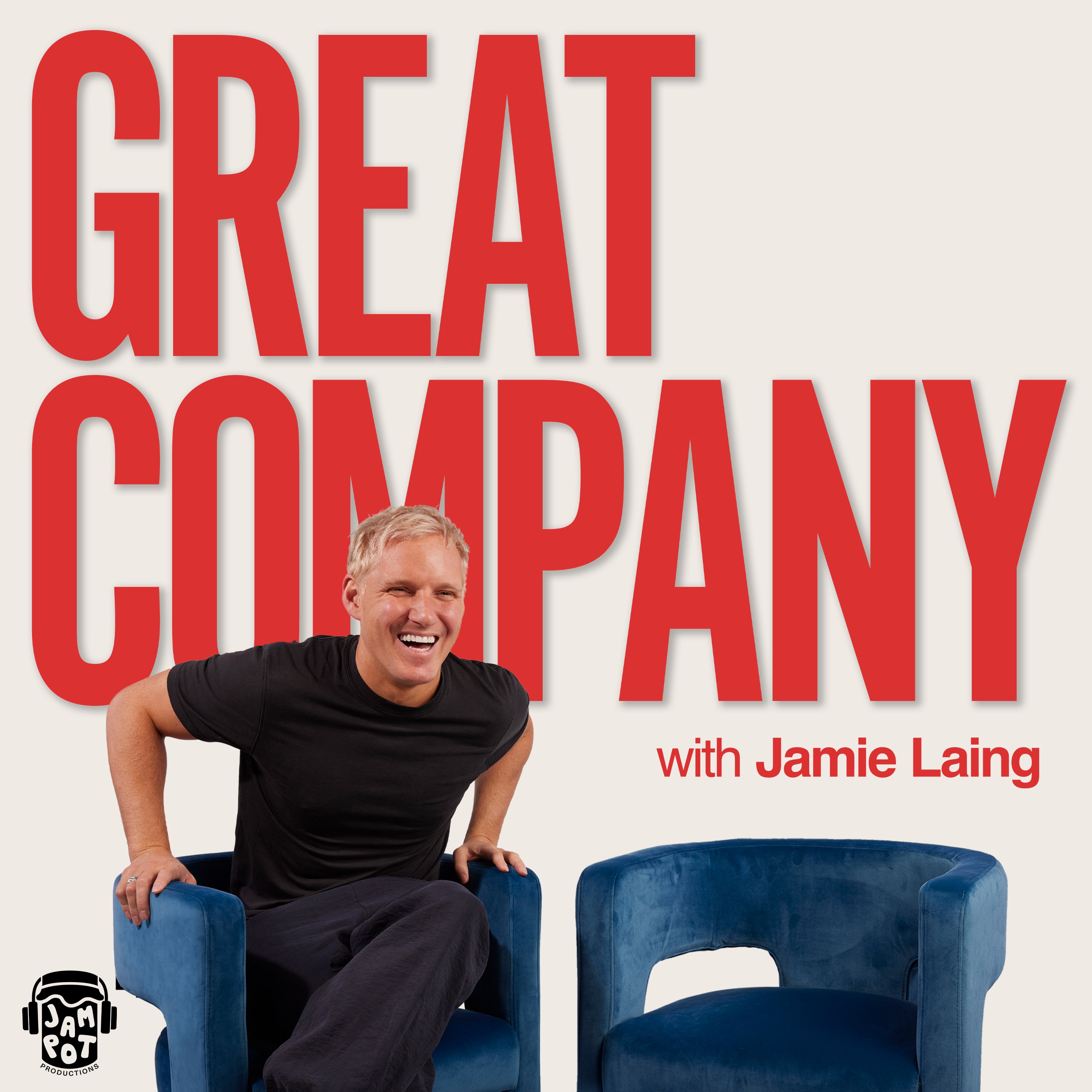
 Great Company with Jamie Laing
26 Feb 2025 · 1h 12m

In this episode, Jamie Laing hosts Rory Sutherland, Vice Chairman of Ogilvy UK, who shares his insights on marketing, behavioral science, and the nature of trends. Sutherland, a recognized figure in advertising and a recent TikTok sensation, discusses various topics ranging from herd mentality in consumer behavior to the importance of questioning conventional logic in marketing.
Written by AI. May contain mistakes.

Get the gist, explore an idea or ask about something said.
 Claude
On Great Company with Jamie Laing, what are the key points of this episode?
Searching your listeningAutomatic transcript. May contain errors.
0:00Does it ever feel like you're a marketing professional just speaking into the void? But with LinkedIn ads, you can know you're reaching the right decision makers, a network of 130 million of them. In fact, you can even target buyers by job title, industry, company, seniority, skills. And did I say job title? See how you can avoid the void and reach the right buyers with LinkedIn ads. Spend$250 on your first campaign and get a free$250 credit for the next one. Get started at LinkedIn.com slash campaign. Terms and conditions apply. Hi, this is Knox from the podcast with Knox and Jamie. And maybe like us at the Popcast, you also know people who have been smokers or vapors.
0:37And Zen is the one product it seems like everyone is talking about. Because there are many good reasons to make a change to Zen nicotine pouches. Reasons like Zen nicotine pouches are still America's number one choice for smoke-free, hands-free nicotine satisfaction. And you can choose between 10 varieties, each variety available in either 3 or 6 milligrams. Check out zen.com slash find to find Zen at a store near you. Warning, this product contains nicotine. Nicotine is an addictive chemical. If you're a maintenance supervisor at a manufacturing facility and your machinery isn't working right, Grainger knows you need to understand what's wrong as soon as possible.
1:12So when a conveyor motor falters, Grainger offers diagnostic tools like calibration kits and multimeters to help you identify and fix the problem. With Grainger, you can be confident you have everything you need to keep your facility running smoothly. Call 1-800-GRAINGER, click grainger.com, or just stop by. Grainger, for the ones who get it done. I'm no tech genius, but I knew if I wanted my business to crush it, I needed a website now. Thankfully, Bluehost made it easy. I customized, optimized, and monetized everything exactly how I wanted with AI. In minutes, my site was up. I couldn't believe it.
1:50The search engine tools even helped me get more site visitors. Whatever your passion project is, you can set it up with Bluehost. With their 30-day money-back guarantee, what have you got to lose? Head to Bluehost.com to start now.
2:06Hello everyone, my name is Jamie Lang and this is Great Company.
2:15Well, Jemima, how are you? I'm well, Jamie Lang, the presenter of Great Company. That's it, you are the producer of this show. Sometimes we do that smooth and sometimes we don't. Was that one a smooth one? I think that was smooth, yeah, I feel like it was very smooth. And welcome back to everyone who's listening. Welcome back, and welcome if you're new. And welcome if you're new. So if you're new, you are able... What is it? Come on, give it a go. Okay, I was going to say, we call our listeners owls, our wonderful listeners. You call them our owls. We call them our owls. We call you our owls. So if you're new, you're very welcome to be an owl.
2:48Yeah. Hoot, hoot. It was on the tip of my tongue as you were saying hoot, hoot. Firstly, so how's your... I listened to a Louis Thru episode and he always says this at the end. How's your energy? But how is your energy? because you're producing a couple of shows. I mean, you're producing my show, but also Ploma Faith's show, Mad Sad Bad. Yeah. Your energy's still good? Is it okay? You tired? I was hella hormonal last week. You were? Yeah. Okay, that's good. It just hits you out of nowhere. Okay. Suddenly, you can't see for it. Okay, that's what happens? Yeah, that one, I think it was like hormones and I was probably quite tired.
3:25I don't notice it. Really? Maybe I should be more in tune. But that's it. That's the way that you feel. Okay, I get it. Hey, listen. But no, otherwise, I'm enjoying it. It's exciting. It's very exciting. Hey, and I'm very excited because today we have one of my heroes. How's your energy? Yeah, great. Are you good at asking questions back to people? Yeah. What do you mean? You know, if someone says like, how's your energy? And you're like, oh, yeah, blah, blah, blah, me, me, me, me, me. Do you remember to go, and how's yours? Oh, I think I do. There's a big thing about passing the salt, right? You should never say, can I please have the salt?
3:57You should always say, would you like the salt? and then they should say no but would you and you go yes I would actually and so that's how conversation should always work you should always ask someone how they're feeling and in the response they will probably ask you and if they don't maybe they're thinking about themselves so I think I'm a sharer and a giver I find if I've got a big answer then I'll forget to ask I don't think you forget to ask do you know what I am quite bad at? what? saying thank you I'm quite bad at saying thank you I don't think you are bad at saying thank you I think you're bad at saying thank you to your partner when it comes to drinks.
4:30Yeah, just that one example. Just that one example and that stuck with you for whatever reason. Yeah, anyway, sorry, really did what I said I wasn't going to do and monopolised that conversation to talk about me. Tell me about our guest. Our guest is, I'm really excited because he's one of my heroes. Oh. He's one of my heroes in the sort of... Post on the wall as a kid? Not post on the wall as a kid, that was Johnny Wilkinson. Ah. And weirdly, Baby Spice. Mate, that's not weird. That makes sense. That makes sense. You look the same. But I, he's one of my heroes. He's one of the people that I would probably invite to a dinner party.
5:06Really? Yeah, I think so. And the fact that I get to sit down with him. Rory Sutherland, this is. Rory Sutherland. So Rory is the vice chairman of the Ogilvy Group. It's called Ogilvy and Martha Group of Companies. What's that? Ogilvy Group is a big sort of marketing company in a sense. And so what Ogilvy do is they do some amazing things in the world. like i don't know if you're coca-cola are launching a new thing ogilvy will get involved and he's not only that he's he's a he's a international speaker so he does a lot of talks on um how you should uh the psychology between sort of brands in your mind and how people look at different things from a psychological point of view he's very smart very very smart i would say that rory is either diagnosed or undiagnosed with ADHD.
5:54So he goes on tangents from the times that I've met him and spoken to him and also he gives talks. But what he has to say is pretty spectacular. And if anyone is interested in marketing or is interested in building brands or is interested in this space, I would get out your notebook and I would just take some little notes throughout this conversation. It might be hard to or listen to it a couple of times just because some of the stuff he says is going to be amazing. I cannot wait. You've really set that up in a really exciting way. And now it's going to be let down by me for some whatever reason.
6:27No, no. He's also really having a bit of a resurgence on TikTok. Yeah, he's a TikTok star now. People are loving it. Because his stuff that he talks about on TikTok is genius. Anyway, are you ready for this? I'm really excited. Okay, we're going to get into this. Now, before we do, remember to subscribe to the show. It does us wonders. And also, you can find us on social media at Great Company Podcast. And also, so slide into our DMs, but you can also send us emails greatcompany at jampopproductions.co.uk. Everything is in the show description. Are you ready for this? Sure am. Please enjoy this episode of Great Company with Rory Sutherland.
6:57Hello, I'm Rory Sutherland and I'm in Great Company.
7:06Rory, welcome to the show. Oh, thank you. It's a pleasure as ever. No, this is more... I cannot... I've been raving to the team. And to not make you blush, but you are sort of one of my heroes. God. you are i'm afraid um i find this utterly bizarre by the way i mean why i well i don't know because i've just always done this stuff and to be honest you know people close to me as likely to find me annoying and perverse as they are to find me particularly rewarding so the fact that you know weird stuff that i might say or think which i've been saying or thinking for some time has suddenly gone mainstream is probably too generous a word for it but has actually sort of i suppose it's kind of what you call a crossover hit or a breakout hit in musical terms it's come as a complete surprise to me and it's very very bizarre um by the way it happened there was a young guy who effectively started taking my content and putting it up on tiktok so that's a shout out to hugo there and the first i knew about it was when i started getting kind of mobbed by school kids and just Didn't know what was going on.
8:09Yeah. Do you know what's funny? So I've just recently been in LA and I was talking to a single person there who is a woman and she was saying that everyone, what has now changed when you talk to single people, typically men, is that everyone is an entrepreneur. That's what everyone is. Where, you know, 15, 20 years ago, that was not the case. It's a great way to rebrand unemployment, of course, isn't it? But nonetheless, you're absolutely right that when I left university, for example, going into business for yourself or even joining a very small company, I left university in 1988. That would have been considered a deeply weird, risky thing to do and was probably evidence that you couldn't get a job with Pricewaterhouse or something.
8:54Okay. Whereas now it's actually pretty much, again, a mainstream thing to do. Good. It is a good thing. And I think that's why people are so obsessed with you because I think this idea of being an entrepreneur and being a sexy, cool, exciting and fun and the most sexy thing about being an entrepreneur is it's not you're not that sexy if you work in the numbers really what kind of is sexy is being a marketeer oh i've got this idea this brilliant thing and you sort of personify that in your work so people i think um take what you say and then regurgitate it on dates and sound like they're clever i think that's what people are doing I truly think they are.
9:34Oh, I see. I never thought of that. I mean, I'm a very unlikely source of sort of chat-up lines, I would have thought. So, Roy Sutherland, I think you're a source of chat-up lines. I really do. This is fascinating. I suspect that actually there's a degree to which all podcasts are a little bit like that, which is their conversational fodder. In other words, you know, if I watch quite a few podcasts, if anybody mentions something, I might have something interesting to say about it. That is an interesting approach. I mean, the popularity of podcasts is, to some extent, surprising. In what it suggests is, interestingly, that maybe mainstream news media and entertainment media neglected human conversation for a long time.
10:19Because in evolutionary terms, it's very old, isn't it? Storytelling, along with dance and music and possibly sport, we don't know, are obviously very, very old forms of entertainment going back hundreds of thousands of years. And actually, our enjoyment of them might be kind of, you know, an evolutionary adaptation. Yeah. And you might argue that just long-form conversation was always much more popular and better than the people who made entertainment media realized. And it always fascinates me, if you think about it, you leave a home which has Netflix and Amazon Prime and Disney and, you know, all the entertainment known to man, and you leave that home voluntarily to go to a pub to chat with your friends.
11:02Okay. Now, lots of people do that several times a week. Now, when you think about it, you've got the best that Hollywood has to offer at home. Okay. With car chases, you know, absolutely fantastic actors. You go, no, no, I don't want any of that. I want to go and meet six people and have a chat. Yeah, but that's because I hope that there's nothing better than actual real life connection. Yeah, I think that's true. But it's also, I think, true that just good conversation is its own reward in a way. Wow. So are you saying that... I think we've probably evolved to enjoy it because it's useful to do so.
11:41I mean, that's probably the reason. Wait, hang on a second. So that's really interesting. So just by the way, with this podcast, if I go all over the place, it's because I have so many questions for you. So I apologize. And poor producer Jemima is going to have to piece it together. I work in advertising because it's the best way to monetize ADHD. so no problems with going off topic at all okay great but that is so interesting because so that conversation right an authentic conversation is what we are after I agree with you and what happened was is that Hollywood came along in a sense and basically said here we go here's conversation and storytelling let's jazz it up and now TikTok has done really well because it's short form authentic conversation with no jazzing up and people just like to see the realness.
12:26This was the best thing. There are a lot of people in marketing called futurologists and an awful lot of what they say is utter bollocks, you know. In other words, they'll go and say, look, there's this shop in Copenhagen which makes furniture out of recycled rhino dung. We think it's a massive trend. And you go, how very interesting. And then six months later, you Google it and realize that the shop went bust because unsurprisingly, nobody wants their furniture made out of rhino dung. But one futurologist told me something really brilliant, which is there aren't really trends, there are vectors, which is that what people often talk of as a trend, you also find there's an opposite trend going on at the same time.
13:03So what's interesting about the podcast stroke TikTok world is it's both very, very long and very, very short. Everything in conventional entertainment world was at the kind of, you know, it was at the kind of, you know, one hour, 20 minutes length. That was the kind of thing about a film and music tracks lasted so long. And what's interesting is that we've discovered, in a sense, through just media experimentation, everything from the box set binge, where I actually find watching one episode of something at a time really painful now. So do I. I either want to watch nothing or I want to watch three episodes.
13:40And similarly, actually, I have to confess, the only reason I wasn't a heavy TikTok user is that whenever I used it, my kids used to shout at me. They're 23, and they thought it was deeply inappropriate for a 50-year-old man to be watching TikTok. Okay? It was kind of their thing. But I've always enjoyed it. I've always found it... By the way, I also find it quite benign. I mean, we talk quite a lot about the malign effects of social media. And there's undoubtedly this component of social media, which is driving FOMO. In other words, people share the curated parts. Well, you're on Made in Chelsea, you know?
14:16Okay. But people share the most glamorous, most curated parts of their lives, okay? Whereas actually, when you're off camera, you're eating in a KFC on the old Kent Road, right? You know, your car's broken down, you know. What I mean is that the parts of your life you share are vastly more exotic than the parts of the lives you live. And that can have a malign effect, I think, on people's expectations. But I always find TikTok, you know, quite often people's backdrop is a pretty shabby house, or the house isn't very tidy or everything's a bit scruffy. And it's mostly just the wholesome business of people using their talents to entertain other people without any particular kind of status component to it.
14:56It's just, you know, that healthy business of sharing, you know, jokes, amusements, observations. What makes something a trend? Sometimes I think, I think the only way you can look at it is say it's completely arbitrary. In some cases, things become fashionable. Sometimes marketing drives it. Sometimes marketing accelerates it. Sometimes marketing creates it. Sometimes I think it's just genuinely the product of kind of accidental circumstances and time. Give me an example of that. Female fashion. I mean, there is some degree of planning by the fashion houses, but you will get these weird trends which just come from nowhere.
15:38One that particularly irritates me, okay, is when a trend is a perfectly healthy trend, and then it becomes all-encompassing. So sourdough bread, okay? It's great. I think it's a handy addition to my bread repertoire. I'm glad it exists, okay? But what's happened is that sourdough has just become effectively a phrase that means posh bread, okay? So you go into Gales. Now, I'm partly Welsh, partly Scottish, and any Irish listeners will also agree with me. There's soda bread, which is magnificent, right? Fantastic. Cornbread, if you go to the southwestern United States. Cornbread, brilliant form.
16:15You can't get that stuff anywhere. Very occasionally, M &S sell this actually black treacle soda bread, which is the greatest bread ever made. But it's in store like on alternate Wednesdays, depending on the lunar cycle. Anybody listening from M &S, fucking pull your finger out and make that a daily staple, okay? so sometimes these trends if you look at sourdough as a trend it's fine i'm glad it exists it's a useful addition to my kind of bread choices okay um but there's a bit of me which goes okay it doesn't deserve to predominate at gales to it you know it's like the gray squirrel of the bread world it's one of these things that starts off as a useful little addition to the gene pool and then becomes basically a pest, you know, the Japanese knotweed.
17:02And a lot of trends, the best way to understand a lot of trends are actually through understanding evolutionary biology. Wow. That you get these kind of runaway effects where certain things just become massively amplified through feedback loops. Women's fashion is weird because it has to keep changing effectively. But someone once very cynically described women's fashion as innovation without improvement. In other words, everything has to keep changing. It's not as if women's clothes have actually got better. No. Okay. They haven't got better at protecting you from the elements or better at being hard wearing.
17:38It's just needless, gratuitous kind of changes. And so the whole fashion question is really, really interesting. And it's also interesting to study evolutionary biology because the pace of these things is actually very variable. Now, there's one interesting finding often you can't predict them but there is an interesting finding which is that the faster a trend explodes the faster it dies and they've done a load of research into this so there's a kind of symmetry that if you take fashions in for example first names in the united states or the uk names that suddenly go from nowhere to big in the space of a year also tend to die off very quickly.
18:22Whereas if you looked at the trend for Emma, Emily, Arthur, this isn't the UK, I don't know what Americans are calling themselves. But if you look at those trends for sort of slightly Victorian names, you'll see that actually it's been a long period of gradual growth over 15 years, and you can consequently predict that the fashion will die off more slowly as well. and so there's a kind of interesting idea that um uh you know i imagine there was a year where there were loads of girls called daenerys or something okay um because dame of thrones was big okay and i can confidently predict that there aren't going to be many daeneryses in your primary school in uh in seven or eight years time so there are a few things you can know about this but i mean acknowledging that some of it is beyond our control um that it is a kind of it's a kind of version of collective insanity sometimes is just useful um because i mean one of the most important things if you if you talk about entrepreneurialism yeah one of the things they basically found that distinguishes really successful businesses over which the founder doesn't really have full control is purely timing what do you mean explain that there are ideas which effectively if you had adopted the thing a year too early or a year too late you would have got nowhere.
19:43So there are ideas that just somehow just impinge on our consciousness at a moment. And sometimes it's because the development of other technologies is necessary before your technology becomes. So, I mean, just an example, if you'd invented Uber before there was 3G mobile, okay, basically the mapping wouldn't have worked or would have been massively frustrating. Okay. So quite often you have to wait for two or three other things to be developed before your idea or you have to wait for them to be adopted. So what you're saying... Sometimes people will only do thing X if they're already doing thing Y.
20:21And therefore, you have to wait for Y to become popular for you to then... I mean, okay, here's another one to go alongside sourdough, bubble tea. Okay. Oh, God. I really didn't like it. I genuinely don't know whether it's a useful addition to my beverage options or a load of old bollocks i mean i do buy the stuff i quite like you like it yeah i think okay i my theory my theory is there's a thing called variable reinforcement theory in psychology which is oh god i'm going off to digression um we were going to do that don't worry so they were doing this experiment with incentives to pigeons and And effectively, the pigeon would peck a switch and you'd give it three food pellets.
21:07Okay. And what would happen is the pigeons would fairly reliably peck the switch. They'd get the three pellets. And then after they eat enough pellets, they go, that's kind of enough. Okay. I think I'll kind of give that a break now. And they go off and do some other pigeon stuff, shitting on people or whatever. Okay. And then while they were doing the experiment, which is supposed to be a simple experiment on sort of Pavlovian incentives and rewards. they ran out of pellets they ran low on pellets for some reason i mean it was just an accident so they they tweaked the dispenser so rather than dispensing three pellets it would sometimes dispense one sometimes three sometimes two sometimes zero okay and i think it was pigeon the pigeons went bonkers what you'd effectively created was a pigeon fruit machine okay where Now, they didn't know what to expect when they pecked the switch.
22:00And so they just pecked it furiously, a bit like someone at Vegas, endlessly feeding coins into a fruit machine. And that was called variable reinforcement theory, which is that if you do something which has a variable effect, it's somehow weirdly more addictive than something that's a kind of constant reward and return. And my theory with bubble tea is because you don't quite know what you're going to get. Wow. Right, okay. That actually there's an element of kind of, you know, what you might call a gustatory fruit machine at work there where you go, oh, I wonder how many of those blobs are going to be coming up the straw this time round or whether I'm going to get the gunky stuff at the bottom or the...
22:40So it's a game within yourself and that's why you enjoy it. Possibly the very fact that actually you don't quite know what's going to happen actually makes it appealing. Whereas if you think of a completely conventionally blended drink, you know, there's a pretty clear expectation.
22:59It's very interesting because I often ask this question, you know, what are things we'd all like to do? There's a wonderful quote from bizarrely Abraham Lincoln where he says, basically, feeling socially awkward about something is an unbelievably strong emotional driver because whenever we're in public, we're always conscious of how we appear. And so there are things we won't do because we don't want to stand out. I mean, you know, cider, I think, as a drink, is just as nice as beer. But what you'll see is that beer, which is the social norm, will outsell cider seven to one and so on. Okay. Guinness, I think, enjoys a lot of its advantages as the best-selling beer in Britain, partly because it's very visible when someone's drinking Guinness.
23:47And they also came up with clever little things like splitting the G. Exactly. okay um but guinness is it's absolutely obvious when someone's drinking guinness the problem cider had unless you put ice in it is that people assume you're drinking lager so it doesn't have the same social visible norm question now one of the things so abraham lincoln's quote was it's a bit dating but it said imagine going to church wearing your wife's bonnet he's writing to a male audience you've just got to sit in church and all you're doing is you're wearing your wife's floral hat. Okay. The hat's not uncomfortable.
24:20It's probably less uncomfortable than Abe's traditional top hat. Okay. But you would feel terrible the whole time you were there. You would feel absolutely awful, unless you could explain you were doing it for a bet or something like that. If you were forced to do something in public that's just fundamentally embarrassing, you'd experience a kind of physical pain. And by the way, it may well be a physical pain because Because strangely, if you're nervous before a party, obviously some people have a few drinks before a party. Apparently, paracetamol, just one paracetamol works against social anxiety.
24:57So there may be some kind of connection between where we experience physical pain and where we experience social awkwardness. Get out of here, Rory. That can't be true. No, no, no. Actually, I'll probably get absolutely slated by the medical authorities for sharing that bit of information. So anyway, that's our chance to work with Public Health England completely kibosh.
25:19But this is what we're talking about in the cab. And it's a theory of mine. Okay. If you take away social embarrassment, all English men would wear shorts all the time. Is my theory. No ways. Yeah, yeah, yeah. I think if it weren't for social sanction. Okay. How many people? Yeah. Yeah. Yeah. Every day you're on holiday, you're among strangers, it's normal to wear shorts, you wear shorts every goddamn day. Now, I think English blokes, I think it's true of Australians, it may be an Anglosphere thing, but we basically, except for Arctic expeditions, we wear shorts because they're just more comfortable.
25:54You get a bit more, you know, ventilation where you need it and so forth, but we just prefer wearing shorts. I think about 60 % to 70 % of people would be naturists. No way!
26:10no no no seriously okay let's ask this question you're living alone in a villa that's overlooked by absolutely nobody it's pretty warm weather and you've got a swimming pool okay would you wear swimming trunks no no of course you wouldn't no way and if you're with someone who is now obviously if you're with a load of friends you might want to preserve a bit of modesty but actually if you're on your own or with a significant other there's no way you get dressed to go in the pool no and so you know you look you look at all these things you realize when they argue about transgender bathrooms i have the very perverse argument which is that the very concept of a bathroom and a toilet is an imposition upon men because if you had a male planet we just piss anywhere wouldn't we like dogs okay right okay the very fact that social society demands that we go into a special role it's true okay um but but i mean it is just interesting because you realize that i mean what are things okay i always i once said that what was it that um that for example um uh environmental a lot of environmentally friendly behaviors are are actually what i call the opposite of a hot tub okay which is everybody pretends to want them but they don't, okay?
27:26And hot tubs are the opposite because everybody secretly wants a hot tub, but they're too embarrassed to buy one because it looks a bit pervy. Okay? Is that fair? I mean, who wouldn't have, if you had the available money, who wouldn't have a thing in their garden where you can basically sit outside in really hot, bubbly water, okay? I mean, you know, okay. Genuinely, I think there's a huge amount of human economic activity, which is effectively constrained simply by how will it look. I had to fight with my wife for ages to get a Japanese toilet, which is the most obvious. Have you got one? No, but I'm getting one for the new house.
28:01They're brilliant. No, absolutely. There is no turning back, okay? There is absolutely, you know, once you've done that, basically anything else seems medieval. But my wife was highly resistant, I don't think for any practical reason, except that She didn't want other people to think... She's English, you see, and so she cares what other people think. The great advantage of being Welsh is you don't give a shit, OK? South Welshness is like a superpower. You just don't really care that much. And so my wife, I think, didn't want us to be thought of as the people with the strange toilet.
28:37We're going back to that idea then, which I totally agree with you, which is we see that trend as something which is hugely popular suddenly and then dying out. Everyone is after that viral content, the viral product, but actually you're saying that's a negative. No, no, no. I think there's a problem with things that spread in the sense that two very big strong forces in humans, it's kind of the default mode in human behavior, is both there's habit, do what I've done last time, and there's social copying, which is do what everybody else does. and in a globally interconnected world you might argue there's a bit too much of a winner-takes-all effect in that it's not that i'm saying that taylor swift is shit just to be clear about that i'm saying that maybe she doesn't deserve to be that much more famous than the second third fourth fifth and sixth best performance in the world but because of this kind of herd effect where we're influenced, it's technical memetics, where we effectively cannot help admiring things that other people admire.
29:39Got it. So in other words, we automatically have this reflexive urge. There was a famous guy called René Girard who coined this whole idea of memetics, that fundamentally we're a copying species. And so things that are fashionable acquire a kind of desirability, not because we ourselves necessarily like or value them, but we can't help being impressed by the fact that everybody else does. You can go back to actually the reason it's slightly problematic is that it does create this winner-takes-all effect, which whatever the brand leader is, whatever the category leader is, which has the biggest volume of support, that enjoys a kind of disproportionate advantage.
30:20It's why I have an Android phone, by the way, as a rebalancing act. I think that the thing that's most popular is, generally speaking, a bit too popular. Wow. Because the first time I ever saw you, Rory, was on stage at something called the TV Festival. It was hosted by Channel 4 ITV. I loved that. That was fantastic. You were fantastic. It was in the middle of a wood somewhere, wasn't it? Correct. And you were on stage and you gave this talk. And I have borrowed something that you said and I say it to our team the whole time, which is where you talk about never following logic. Well, I wouldn't go quite that far, but I think you have to be free to suspend logic in order to explore the solution space for problem solving, which is the number of solutions you'll arrive at if you insist that every stage of your journey is kind of reductionist and logical is a very limited part of the solution space, and you have to allow yourself freedom to speculate and to experiment.
31:22Because, well, first of all, An amazing number of really important scientific discoveries happened with a chance observation. And the creative act there wasn't coming up with the idea. It was spotting the significance. And the way I describe this, the analogy I always use is I think that the police, if you think about it, the first question the police would probably ask if they find a dead body is they'd go door to door and they'd say, did anybody notice anything unusual? Okay. Totally open-ended question. Okay. It has no particular end in mind, but simply the fact that if something weird happened, and we also have this weird finding, which is a dead body, the two weird things might be connected.
32:04And then someone might say, I noticed this white van. For some reason, serial killers seem to be disproportionately fond of white vans. But I noticed this white van, and it drove past the house three times last night. Now, that's got no evidential value. It has no value in a court of law. But it does suggest, okay, maybe we need to spend a bit more time investigating white vans and have a look at the CCTV and see who it might be and whether they had a connection with a victim. And that's what I call an investigative open-minded phase. And then eventually, you've got to appear in a court of law and you've got to prove the person driving the white van actually did it.
32:41Driving in a weird way is not enough, okay? That's not evidential. It's merely. but what we've i think tried we've tried to create in business and in government and i blame economics for this because it pretends that things are physics when they're not okay uh is we've created this world where unless it's evidential you can't use it because it's not science and i think it's a mistake because if you look at science eventually science has to be scientific you've got to you've got to be proved to a reasonable level of confidence that what you're claiming is right. But the way you get there to the right answer is actually much more open-ended, much more speculative, and actually involves a lot more creativity.
33:23That makes total sense. And the reason I ask you that, right, is because we're in this world where you, which you've said, is that we can't bear but copy other people. But if we're in a world where we're copying other people all the time, we're never actually making anything new or discovering new places. We're actually ending up in the same place as everybody else, a place where we shouldn't be? Well, this is a very interesting thing because I used to think, working in advertising, advertising works really well if you're not asking people to do very much. In other words, if you want people to choose cornflakes rather than grape nuts, okay, then they're moving their hand three feet to the right on a supermarket shelf, not a very big behavioral ask.
34:03Advertising is going to work pretty well. And sure enough, it does. And then I kind of took from that wrongly, I think the idea that if you've got a really, really great product, you don't need to advertise it very much because its virtues effectively justify itself. In other words, if your product's good enough, you don't need marketing. I used to sort of think that. Then I realized that if you've got a really, really revolutionary product, typically because it's revolutionary, it'll require a lot of behavioral change. And behavioral change requires a lot of marketing. so why i suddenly discovered this is because if you look at some of the best ideas anybody's ever had like smallpox vaccination yeah okay i always assume naively because i hadn't read the history that basically jenner notices that dairy maids don't get smallpox surmises from his observation okay maybe that's because they all catch cowpox first and cowpox immunizes them against smallpox Hey, I'll take the gardener's son, and he did this, totally unethical.
35:08I'll infect my seven-year-old gardener's son with cowpox, and then I'll try infecting him with smallpox to see what happens, which somebody did, and the guy didn't get smallpox. Now, at that point, I thought, you go, wow, this is a brilliant finding, okay? Okay, whoop-de-doo, have a nice knighthood, Ed, Jenna, and we're off to the races, let's get everybody vaccinated. It was actually 50 or 60 years fighting all manner of kind of opposition from religious groups, from vested interests that made money out of variolation, which was the prior form. And so you suddenly realize that actually, I mean, mobile phones, you're too young, okay?
35:48Do you remember a world where you had to be persuaded to have a mobile phone? You don't, do you? No, I had to persuade my parents to give me a mobile phone. Ah, yes, yes, yeah, that's another form of marketing. But actually, there was a whole period where the majority of adults would say, I don't want a mobile phone. Why would I want to make phone calls in the street? What? No, no, no. Seriously. Okay. So I keep reminding people this. So in 1989, we had about five work phones at Ogilvy that were shared. Okay. They were big Motorola brick phones and they were kept in a box or charging. And if you had to go somewhere, you'd sign one out.
36:22I'm not making this up. Okay. You'd tell your colleagues what your mobile phone number was for the day. and say, if you need me urgently, call me on this number. And so I've picked up one of these phones. I'm going off somewhere, and I'm trying to, I think, go to Tottenham Court Road tube station, and someone from the office bloody well calls me. And so the phone rings. I'm walking down Oxford Street. So I haven't got much choice to answer the bloody phone. While I'm speaking on a mobile phone in Oxford Street, 1989, two people shout abuse at me from passing cars. Literally, wanker, okay? Someone actually pulls down the window of a black cab and goes, wanker.
36:55Now, okay, obviously, you could try that now, okay, driving down Oxford Street and shouting wanker at everybody using a mobile phone, but you'd have your work cut out, okay? But back then, it was a socially objectionable thing because it wasn't the practice of most people, because it hadn't been effectively normalized as a behavior. Using a mobile phone in public in 1989 was kind of a, I was going to say a subversive act. It was seen as something people would... Well, first of all, they were sort of obnoxiously yuppie. Got it. They were enormous. So that, you know, you couldn't discreetly make a phone call because you were holding this.
37:33You were seen as a show-off. Yeah, yeah. Now, I had no... Interestingly, I wouldn't have made a call in public back then because it would have been embarrassing. I didn't have any choice because someone rang me. But what I suddenly realized is that really, really big ideas, we love to think that they're adopted. But because a big idea requires you, one, to put your head above the parapet and do something that most people don't do. and people find that very uncomfortable okay and secondly it requires you to break your habit okay in other words don't do something you used to do do this other thing instead that encounters an extraordinary okay it's impossible there are probably four people around us here who are like air fryer rejecters is there anybody yeah yeah okay there were three of them three of them won't have the things how do you know that well i'm just guessing it's always the case okay that There's no reason to reject an air fryer, but for some reason there's a percentage of the population and they just make them angry, okay?
38:30Just quickly, but explain that just really quickly. Why does it make them angry? Because it's going against habit. Well, I mean, in a sense, you get people who go, oh, it's just a very small convection oven, which is not true. I mean, you know, it's a ridiculous understatement of the benefits of air fryer ownership. But it always fascinates me. So there was hostility to the vaccination. there's hostility to the mobile phone there's this weird hostility to the electric car okay right um uh where i mean okay so you invent the electric car and the first thing the top gear team do is they drive an electric car until it runs out of electricity right you kind of go how is that a useful experiment i mean you could have done that with every petrol car you've never trip and drive.
39:16Okay, we're going to take this new Ferrari, you know, LaFerrari, and we're going to just try to drive it up the M1 until it runs out of petrol. Well, yeah, you could do that, but people think that's ridiculous. But for some reason, an electric car, there's this innate kind of hostility to the drivers of the electric car or to the early adopters. And so the early adopters of anything, you get, ah, effectively have to, you have to be a little bit thick-skinned and so there is this fundamental thing that innovation requires an awful lot of marketing precisely because if you want someone to do something that's different to what they did before and you also in the early stages require to do something that most people don't do the social burden the kind of pain and discomfort we experience through doing that is just disproportionately high.
40:11Wow. Now, I'll give you an example. Anybody here got one of those taps that produces boiling water? Have you got to cook a tap? Yeah, cook a tap, one upstairs, yeah. Yeah. Now, the interesting thing about that is that it's very difficult to buy the first one, isn't it? Okay, because you go, Jesus, I'm paying like 800 quid for a kettle here. Once you've had one, you never go back. Okay, so the one thing technology does have, successful technology has on its side is that it's like that old voxel strapline once driven forever smitten that once you've had a mobile phone you can't go back because you discover uses for it you've created a new normal eventually then social norms reach a point where not having a mobile phone makes you a bit of a weirdo okay and the whole dynamic changes and so you know a lot of these things effectively the fact that there's this mimetic quality to the brain where we essentially take our opinions and value judgments from each other um that would affect massively there are loads and loads of experiments in music where you show people 10 music tracks and you ask them to rate them and they'll rate them fairly independently and differently and then you show the music tracks and they're star rated okay so it shows how many people have listen to this track, those people will automatically like the tracks more that more people have liked.
41:34They'll rate them more highly. Because everyone else has that. Because everybody else does. Yeah. So that explains an awful lot of these kind of trends, which is they're kind of, the best analogy is contagion. You know, the best mathematics to model many of these trends is to look at, you know, effectively, to look at, you know, disease transmission. Because it's, now, We can use this to our benefit. There are great people like Nicholas Christakis and others who've made the point, for example, that once one person on a street has solar panels in their house... Everyone else will. It's much more likely, yeah.
42:06If you have someone stand at the entrance to a pub visibly drinking Guinness, the likelihood that people coming into the pub order Guinness goes up by its double-digit percentages. That's why they put Bloody Marys. Go on. When you go into a pub, right, What landlords do or people behind the bar would do, they'll put Bloody Mary, a jug of Bloody Mary, at the till. So what you do, you go, I'm going to have a Bloody Mary. And I reckon the markup on Bloody Marys is... It's a very suggestible drink, the Bloody Mary, isn't it? It's highly suggestible, which is any mention of a Bloody Mary will cause people to drink Bloody Mary.
42:42Yes, it does do that. So if you say, I want to have a Bloody Mary, and you see it, they go, I'm going to have a Bloody Mary. And the markup on Bloody Marys are probably quite high, so they're trying to sell it at the front of a pub. Well, one of my funny ones is that having written my books, you get these people who, you know, come up to you on the street and go, I made 4 ,000 quid because of you. And they don't explain how annoyingly. But I remember someone at a cafe, they could never sell watermelon juice. And they read Alchemy and they added a few herbs. They put the price up and they called it Watermelonade, which is a sort of anagram, not quite of lemonade.
43:15Okay. And they suddenly sell tons of the stuff. Effectively, it's the same thing, but presented differently, has a completely different appeal. And so everything, you know, that's another thing about human perception. I mentioned the fact of mimetics. I mentioned the fact of habit. We're also, we perceive the world contextually, you know. Partly we judge things according to expectation. Now, a lot of people say it's a mystery how Ryanair has survived so long because, you know, everybody affects to despise it. But I always make the point that the genius of Ryanair is that it's always the real experience is always slightly better than you expect, okay?
43:53So the night before you fly on Ryanair, you're in a state of absolute terror because you're convinced that you'll be fined 70 pounds because your clamshell luggage is one millimetre too large. And then you actually go there and it's kind of all right. And then you get off the plane at the other end and you go, well, I wasn't actually pistol whipped by Serbian mercenaries, so I'll chalk that up as a win, you know? And also what's so great, Rory, about Ryanair, and I don't know if you've seen their social media post, which is so good, on Twitter, where people sort of slate them. Their replies are, we'll see you again.
44:26Absolutely true, which they will. Which they will. Absolutely true. It's so clever.
44:36Hi, this is Nox from the Popcast with Nox and Jamie. And maybe like us at the Popcast, you also know people who have been smokers or vapors. And Zen is the one product it seems like everyone is talking about. Because there are many good reasons to make a change to Zen nicotine pouches. Reasons like Zen nicotine pouches are still America's number one choice for smoke-free, hands-free nicotine satisfaction. And you can choose between 10 varieties, each variety available in either 3 or 6 milligrams. Check out zen.com slash find to find Zen at a store near you. Warning, this product contains nicotine.
45:07Nicotine is an addictive chemical. The market's uncertain. revenues tied and hiring on hold that's why results driven companies are using upwork to keep work moving go to upwork.com today and start hiring proven freelance talent fast no bulky overhead no rigid long-term contracts just the right expert right when you need them work smarter and faster with upwork go to upwork.com now and find your freelance expert that's upwork.com Post a job for free and get started today. If you're a maintenance supervisor at a manufacturing facility and your machinery isn't working right, Grainger knows you need to understand what's wrong as soon as possible.
45:48So when a conveyor motor falters, Grainger offers diagnostic tools like calibration kits and multimeters to help you identify and fix the problem. With Grainger, you can be confident you have everything you need to keep your facility running smoothly. Call 1-800-GRAINGER, click grainger.com, or just stop by. Grainger, for the ones who get it done.
46:15I know there are going to be business owners and people who are starting brands right now, right? Who are just trying to, they're writing down everything you're saying and trying to capture everything. How important is it for a brand to be able to say no? That's an interesting question. In what sense? To customers? I mean, I'm intrigued, but you know my theory about opening a chain of cafes called Bacon Sandwich, do you? No. Which is, I've looked at successful restaurant chains and various food places, and one of them is if you only do one thing, people imagine you're going to be really good at it.
46:50If you only do one thing, people go, well, if they survive and they only do that one thing, that one thing must be good because they're entirely focused on it. it's why you wouldn't go to a place which was uh tool shop and oyster bar okay right you go come on come on go you got to focus mate you know right okay tool hire an oyster bar although there is a mystery in capitalism which is why the same places that do heel repair also do key cutting uh and i thought it was mechanical that you needed a thing that went round and round but apparently it isn't uh if you go on the timpson's website somewhere there is a place where they explain why it was that heel repair and shoe repair places, effectively, when Portuguese shoes came in, which were not actually, they were actually glued rather than sewn.
47:40The sole was glued rather than sewn. And also shoes became cheaper, so people just chucked them away. Effectively, cobblers found themselves short of revenue, so they moved into key cutting as a diversification strategy. I know where you're headed with this. This is so interesting, because it's what Levi's did. So Levi's made denim jeans, and so you knew what you were going for. So when it goes back to the idea of the Paris saying no, you just sort of focusing on one thing and doing one thing well is a really valuable thing to do. Fundamentally, people respect, I think, what you might call specialization.
48:16But the interesting thing is my theory about bacon sandwiches that you have a couple of choices of bacon, you have a couple of choices of bread. You do it incredibly well. You do a whole load of research into what the perfect bacon sandwich is. You only serve two drinks, which is builder's tea and champagne. Okay? Those are the only two acceptable drinks to have at a bacon sandwich restaurant. And there's a rule, which is totally perverse, which is you'll provide HP sauce but no ketchup. You just refuse to offer ketchup. Now, this defies all economic logic, except if you're really passionate about what you do, you have rules.
48:54Okay? This is an extraordinary story, which is a friend of mine, quite a wealthy copywriter, went to the Bristol dealership in South Kensington, which is a very, very eccentric car, specialist car company. And he said, I'm quite interested in buying one of your cars, actually. And they said, oh, I'm very pleased to hear that, sir. Do you have a garage? And he said, no, actually, I don't. He said, I'm thinking of building one, but I haven't really gone around to it. And he said, well, I'm terribly sorry. If you don't have a garage, we wouldn't really be prepared to sell you a car. but at the point where you've built a garage, perhaps you'd like to come back.
49:28Okay, right. That is, now, it's actually weirdly quite clever salesmanship. As practiced, okay, the most genius version of this idea is Bernie Madoff, okay? Because Bernie Madoff, who had this effectively bogus investment fund, got billionaires coming to him and saying, I really want to invest. Now, if you're a billionaire, there's one thing that drives you absolutely insane, which is someone saying no okay so bernie would go i'd love to have you on but i'm afraid you know i just can't take you on at the moment i'm just can't take your money and this would drive so as a result all their normal skepticism about whether bernie was genuinely legit was completely drowned out by their desperation to be accepted by bernie wow that's so interesting which that's why members clubs why golf clubs yeah yeah oh if if you advertised okay if you advertised in metro for the membership of the club at the ivy okay it's game over okay you have to pretend that membership is scarce there of course there are nightclubs which have the bogus queue aren't there they create a queue outside and then my daughter got a scam by that somewhere where you queue for bloody aged you go and the place is totally empty that is so but that's again social proof or mimetics being used as a kind of really but my idea of brown sauce no no ketchup i've stolen that from a a tiny brand called thrashers fry of thresher's fries in ocean city maryland i think it is they got three outlets i think they close in the off season they only sell chips or what we american listeners would call fries now this is the weirdest thing of all um uh they're so good at making chips and they're so cultish that when five guys launched they went to these guys to ask them how to make chips because they're just absolutely extraordinary now the weirdest thing about this thresher's fries thing in um ocean city it now bear in mind this is america right not in the uk this would be a bit perverse but it wouldn't be that weird this is america you can't have mayonnaise and you can't have ketchup you can only have salt and vinegar now all the brits are going yeah absolutely spot on okay that's correct now how perverse that is for an american retailer of fries is almost unbelievable there's another one which is in chicago if you're a chicagoan okay you will not put ketchup on a hot dog and it's considered basically in chicago it's now this is traced back to a hot dog seller outside i think it still exists the business and it's called something like somebody's hot it's got a polish name i think but they had a stand outside i think the white socks stadium and the the guy who ran the hot dog stand made very very good hot dogs but he refused to offer ketchup because he said it was just used to disguise poor quality meat and the quality of their hot dogs was such that you wouldn't need ketchup.
52:33And there's actually, if you look on Google Images for pictures of this place, there's this massive sign outside which has a big picture of ketchup and it says, don't even ask. And this is a cultural thing spread to the whole of Chicago where even now, anybody who considers themselves either by adoption or birth an authentic Chicago won't do it. It's just too unpleasant to do. They just can't bring themselves to do it. And so my theory is you just have this perverse kind of rule. Rory, I... I haven't told you about flat white or fuck off, have I? My other business idea, which is that the Starbucks experience is great if you've got 45 minutes to spare, but at a railway station, it's completely wrong, okay?
53:18Because you want to get a coffee, pay, and get the hell out of there so you can catch your train, right? So my idea is you only serve flat whites, you make them in advance, people pick one up, they tap with their card, they pay, they go off, And if you ask for anything other than the flat white, the answer is in the name. Okay? That is such a good idea. Because you don't want... You've got a train to catch, and then the person in front of you demands some ice-based drink that requires whipped cream and a whole load of... Yeah, that's not... That's wrong. Airports, railway stations, flat white or fuck off.
53:48It's fantastic. That's the answer. So, quick answer. If you were going to launch a product now, okay, and someone's listening now and they're saying, okay, what do we do? What... What do you say is the most important element and the most important element when you're launching a product now? What do you need to look at? What I think you need to do is all I'm asking for. Now, a lot of people, I spend a lot of time attacking economics and attacking finance and procurement and all these kind of banozic, reductionist parts of the business world. And my argument is this. Look, the point about the laws of conventional economics and the laws of physics is you can't rewrite them.
54:24Okay? You're stuck with them. So the opportunity to be really creative if you're confined in your thinking to economic logic or the logic of physics in the case of transportation, say, okay, your opportunity to break those laws, annoyingly, they've been written in stone and you can't really do anything about gravity. You know, you're stuck with it. OK, the laws of psychology are gloriously mutable, gameable. OK, and so if you look for a psychological edge or psychological arbitrage, you're much more likely to have a breakthrough than you are if you're if you're just looking at, you know, what do we provide?
55:05How much does it cost? It's much, much easier to actually be creative and distinctive and therefore successful through psychological gameplay and marketing than it is through trying to be cheaper or trying to be faster. Wow. Okay, that's it, basically. So have a great idea for an electricity company, Greg, but make sure you've got a pink octopus.
55:31Can I ask you then a question? What is a product or a product that you've seen that's been launched that was a great product that you thought was good, but the marketing didn't work for it? That's really interesting, because actually I've asked this question a lot, which is one of them actually where I think they should have persevered was Google Glass. I think they had a brilliant, I fundamentally believe in augmented reality. I think that having a thing where I can walk around, I mean, partly having, you know, and occasionally it says, you know, things like turn right, your next meeting starts in 10 minutes, it's going to rain, okay?
56:08that basically effectively takes my environment and adds subtitles to it without me needing to look at a watch or retrieve a phone or do anything like that. I fundamentally thought it was a good and necessary idea and they messed up a couple of details. Part of it was because there was some sort of weird affair going on within Google between somebody and the person who was launching the product. But I won't go into that because, you know, family show and all that. But also, they only gave Google Glass to developers initially. You could buy them. It was about£1 ,200. And it was only on sale to the developer community, who, with the best will in the world, probably aren't supermodels generally.
56:50Okay. And so the user imagery was problematic. And that's, by the way, going to be a problem with the Apple Vision Pro, because the only people who will use an Apple Vision Pro in public are going to be weirdos. and so the user imagery is going to be damaged by that very weird sector of the population who are happy walking around wearing a pair of steampunk goggles on their head okay but but i always thought i always thought google glass was an interesting case but i'll give you the best example of a brilliant idea which had terrible marketing because i i think that was a brilliant question which is okay i always say you know of octopus energy which i think is a brilliant and fascinating an innovative company, they always go, yeah, yeah, it's absolutely great what they're doing.
57:33It's absolutely mold-breaking. We as Britons should be proud of it. But if they decided to call themselves greenecotech.com and they hadn't had a pink cuddly octopus as a logo, they'd still have 20 ,000 customers. Got it. Okay. Marketing really matters. And people with an engineering mindset hate this because it means that contrary to the kind of deterministic world in which you want to live, you're actually living in the middle of insanity. Okay. It's so true. But it's basically true, okay? And so, okay, the worst marketed good idea of all time, nuclear power. Okay, right. If you think about it, you have this extraordinary green efficient form of energy, and they had to name it after a kind of bomb, okay?
58:19I mean, come on, guys. You know, if you just consulted the worst copywriter on the planet and said, do you think we should call this nuclear energy? He would have gone, I'd probably know, you know, can we call it kitten power or something? It's so true. Because then you'd be in with a chance. So actually, it's a really, really interesting question because I think a lot of ideas get killed because they go, we tried this idea, nobody bought it, therefore we gave up. Yes. And actually, what you need to say is maybe the reason you failed isn't because there was anything wrong with the product. It's two possibilities, okay?
58:53The timing was wrong or you didn't market it right. And prime example which you talk about is Sam Pellegrino. Do you mean the cans, the foil on the top of the cans? I'm campaigning for them to bring it back because I think it was one of those things where the foil was notionally unnecessary. Can you explain this? My argument was that there are lots of things that are extraordinarily potent in marketing which finance people hate because they're unnecessary. Strictly speaking, they're unnecessary. but the reason we love them is because they're unnecessary do you ever do an ocado order yeah yeah you get that bizarre text that says your delivery will be made by brian in onion van you know eh 21 okay it because it's idiosyncratic and weird we notice it and if you talk to any other ricardo shopper they're always familiar with those texts and it's just one of those things it's like a quirk of personality.
59:51Now, what's really interesting is that the things you do that you don't have to do, that's what politeness consists of. Politeness is not doing the bare minimum. It's doing something more than you are required to do. And we understand that as humans, which is why we wrap presents. We don't just go, here's a can of beer. We actually wrap it up first in something decorative. We go the extra mile. Now, what happens with a business is the finance people go. Our customers aren't buying wrapping paper, they're buying beer. Let's get rid of all the extraneous stuff. And in the process, you become more alike your competitors and you lose personality.
1:00:26So if you're a cafe, find something weird to do that nobody else does. Okay. Now, in particular, the example I always cite here is the Doubletree Hotel chain, where if you check into a Doubletree Hotel, they have an oven underneath the check-in desk, which has warm cookies. They make cookies to their own recipe. And when you check in, they say, and welcome you to our Doubletree. Here are warm Doubletree cookies. Now, the finance people hate that because they go, no one in our market research has said they want warm cookies when they check in. Why are we giving someone something that they didn't ask for?
1:01:04It's a cost, therefore we need to cut it. But as far as human perception goes, it's incredibly impactful precisely because it was unasked for unexpected and it's surplus to requirements and it adds a little bit so we're going back to the foil on the top the foil on the top of the of the san pellegrino thing someone described it beautifully one of my colleagues as an access all areas pass for the drink in other words you could have a wedding and have cans of san pellegrino because it had the foil dressing okay whereas it would be a bit weird to have tango okay right at your wedding it basically said this is a posh drink because now it also makes by the way it's very difficult great book on the subject by the way will gadara's book unreasonable hospitality so good isn't it a great book yeah i started reading it fantastic my business partner told me to read it's amazing and he i'm actually very i'm very i was very flattered to be quoted in it but because i kind of venerate the guy and he i think gets to the absolute nub of this that it's the unexpected And this could go back to brain science, which is that most of what we perceive is a prediction.
1:02:11It's internally generated as a prediction. And we use our eyes, ears, noses effectively for prediction error correction. In other words, we're only really using our optic nerve for things that we weren't expecting. So it's the unexpected thing that garners disproportionate attention. It's the thing we really, really notice. And by the way, it makes market research. it's very difficult, I think, as Will Godara would acknowledge, the kind of ideas you need aren't ideas that you can come up with by talking to customers. It's very important for a business just to be distinctive, just to have that little distinctive quality like the pink octopus, okay?
1:02:47Animals are a bit of a gift in branding if you use an animal because we've evolved to pay attention to notice kind of animal things. That's what you said about candy kittens. You said, well done for calling it. Well done, candy kittens. We're talking about product and we're talking about marketing a product. A famous product, which is, because everyone says that, you know, with candy cannes, it was all about making a great product, right? That's what we had to do. We had to make a great product and then we had to mark. You had a great name. Had a great name. And you had your fame, let's be honest.
1:03:18And we had that. So it was a great combination. So immediately you had a brand spokesman who was well known. So you did start with the benefit. Fame is actually extraordinarily valuable because it means that customers find you rather than you having to find them. It fundamentally reverses the polarity of business growth. Which is so interesting. And there's a question about whether content creators are going to be the next business owners, right? But then you look at something like this, right? We should have a hell of a lot of energy drinks, if that's the case. Okay, but going on energy drinks, right?
1:03:46This is a prime example of a product which is terrible, but there is still a rise in the sales in energy drinks. And I know you've spoken about Red Bull before. Yeah. The product is terrible. The marketing is genius. Product's not terrible. Okay, well, it tastes terrible. Objectively, if you ask people what it tastes like as a drink, they will say it tastes horrible, okay? Because if you're expecting Fanta, it's like Ryanair, okay? If you're expecting Fanta and you get Red Bull, you go, yuck, right? Fanta is a drink, I think, which is intrinsically enjoyable, okay? Red Bull requires contextualisation.
1:04:29and the contextualization is hugely important, by the way, in drinks for some reason, in that one of the things that most fascinates me is that Pernod, which is quite an enjoyable drink in France, is absolutely repellent if you try and drink it in the UK and I can't get my head around this at all, okay. But by the way, there are findings, rosé wine tastes better if you drink it by the sea. Yes. What are the other ones? There are some extraordinary findings about, there was somebody who was in the Caribbean drinking a banana liqueur and they bought the import rights to the UK, shipped back a case of this banana liqueur back to the UK, invited all their friends around and said, I bought the rights to import this drink.
1:05:09And they all poured themselves glasses back in some basement in Fulham. And they were basically retching all over the place because what tastes great on a Caribbean beach doesn't taste great in Fulham on a rainy October day. Pimms in the summer, delicious. Yeah. They have produced winter Pimms. they have actually tried to make it a year-round thing. It doesn't work. No, it is fundamentally kind of, it's contextually dependent. And Red Bull, if you think of it as a medicinal thing, the weird taste is actually a benefit, not a cost. But I truly, but isn't it right that Red Bull were quite smart with that?
1:05:43They made it taste medicinal. So therefore, you as the consumer would know that it was doing psychological things to your mind, so therefore you go, I'm drinking this. It's psychoactive, because it's weird. And it comes in a small can and it's really expensive. And 16-year-olds, you need ID. I still need ID to buy Red Bull. A fucking fat 59-year-old man. Come on. For God's sake. You know, I mean, that must be, you know. Do you really think somebody who's 15 is going to have this much plastic surgery just so they can buy a can of Red Bull? For God's sake, Tesco's. But no, it's fascinating because Sonatogen, which you may not know of, but it was famously a tonic wine.
1:06:23Now, tonic wine was quite common, I think, because people who didn't drink, well, sometimes I think it was people who pretended to be teetotal, but then drank tonic wine as a way of getting alcohol by claiming that it was medicinal. But the last ingredient in the production of synatogen tonic wine, which was a very sweet wine and was therefore probably a bit like port, was a weird chemical that didn't taste very nice because they realized if you didn't have that weird taste, people wouldn't believe it had medicinal effects. You can't make, you know, if Nurofen meltlets, I don't really trust them because they're a bit too tasty to be effective.
1:06:59You know what I mean? Wow. Okay. Whereas real Nurofen, when the bloody capsule bursts in your mouth, that must be doing a job because it's fucking disgusting, right? Okay. And similarly, by the way, Diet Coke had to be made slightly more bitter than regular Coke so people would believe it was a diet drink. In other words, you had to have that little sacrifice of sweetness for people just to be convinced that it was actually a low-calorie drink. Wow.
1:07:31Rory, I've enjoyed... I can't tell you how much I've enjoyed this. And Jemima just gave a heart sign from behind because she loved it so much. I've got these eight questions and I'm hoping... We can do rapid fire if you want to. Do you want to do rapid fire? Yeah, we'll do rapid fire. Are you sure? As rapid as I can be. Okay, let's see. To be honest, it's more like small arms fire with me than machine gun fire, but we'll do our best. Yeah. Roy, just to caveat, I've absolutely loved this. So I can't tell you. Anyway, first question. What's a saying or phrase that always makes you smile or cheers you up?
1:08:01Plain or spicy, because it means I'm in an Indian restaurant. Next. Best compliment anyone's ever given you. Oh, yeah. Not the best, absolutely, but the best comparatively is Andy Serkis has really let himself go, which appears underneath a lot of my YouTube appearances. Now, the reason that pleases me so much is it's a massive improvement on Miriam Margulies has really let herself go. So comparatively, I consider that a massive bonus. I'm sure Andy Serkis is now actually probably swinging from a light fitment somewhere if he's listening to this. But nonetheless, that does cheer me up massively.
1:08:43When was the last time you cried? Ah, interesting digression here. Weirdly, actually, two things. We're much more likely to cry on planes when watching a film. And it's a weird physiological effect which someone has finally explained, and I can't remember whether it's to do with oxygenation levels or whatever, but I've cried on planes watching utterly shit films. But the other last time I cried, I'm actually weirdly quite patriotic, is re-watching various scenes from Dunkirk. Yes, when they fly over. Oh, my God. When they fly over, my brother-in-law stood up and saluted the TV. Absolutely, Gloria.
1:09:26He was so emotional. Roy, do you know what's interesting about your answer there is that we've had 43 people on the show and every single person says, I cry on planes and I don't know why. And I've done it again. And you've done it again. There is an explanation. You can Google it. Only recently did they find out why it is. but I've watched some pretty crap films. And cried. I've still gone, oh, this is so, you know, oh my God, this Peppa Pig thing, the pathos is just unbearable. What scares you most about yourself? I've only got two modes, being very, very busy or being completely lazy. Okay, so I don't know how I can face retirement because I'll either basically just sit around in my pants, okay, watching YouTube videos about traction engines or I'll be insanely busy.
1:10:11I don't know how to do the middle way. Yeah. What's something you can't let go of? Annoying thing, if I have a tech problem, my degree of tenacity in trying to solve it is ridiculous. It's a bit like the old joke that men never ask, in the days before sat-nav, there was a joke that men will never ask for directions. I have to explain it to all you young people, by the way, which is before there was sat-nav, you had to use things like maps or you had to talk to passers-by and ask where something was. And the joke was that men will never do it. I'll never ask for help with tech. I become absurdly determined.
1:10:46You know, if there's some weird problem attaching something to your television and it's playing up, I'll just reach level of determination where at four o 'clock in the morning, I'm still there trying to fix the thing. What's your guilty pleasure? There aren't any unguilty pleasures, are there, really? I mean, guilty pleasure. This is the first time Rory Sutherland doesn't have an answer. Well, I could talk about frozen parathas. There we go. The fantastic frozen paratha, the greatest food innovation. Sourdough, you are dead to me. Your time has come. What turns you off? I once ditched a girl because she wore training shoes with a skirt.
1:11:25Now, I can't publish that. That's terrible. Because she might listen. But it was genuinely, there are certain things. I found it really, really... I had a female colleague, I won't name. She's a brilliant, brilliant client of ours now. but she had a list of no-nos when dating men, like wearing a hat. Okay. I think it's very interesting to ask what are the most, just as you could ask what are the most sexy things you can do, things that are a massive turnoff. I remember talking to the comedian Sarah Pascoe about fashions that women love that men really, really hate. Okay. Okay. And those high-waisted Andy Pandy trousers.
1:12:08Do you remember those? Yeah. Yeah. They were a massive fashion with women. There wasn't a single guy who found them anything other than repellent, you know. Okay. Well, next question is what turns you on? Curiosity in people. And actually, I love people who are non-neurotypical. Same. That actually, weirdly, you know, it's often said that, you know, for example, people who are slightly aspergic, I find them conversational absolutely brilliant because they're prepared to go absolutely deep into something. What do you like most about yourself? Oh, what I'm most pleased, I don't think it's necessary about myself, but I have managed to find employment in marketing and advertising, which for all its faults has pretty much allowed me to remain me.
1:12:58Yeah, brilliant. The fact that you can basically remain fairly true to yourself with all the faults and foibles rather than having to bury it is one of the gifts of working where I do. Bonus, favourite swear word? And there's a Bristolian one, which I don't use, which is literally cunting. Okay. Which I've never, I'm not, I'm only like an eighth Bristolian, so I don't feel I qualify to use it. But it does strike me as an absolutely ridiculous extension of, in other words, if fuck has a present, past, or whatever it is, we need to do the same, even though it's a goddamn noun. Okay. And I have to go, I kind of admire the person who came up with that one.
1:13:41That's a great one. Rory Sutherland, thank you so much for coming on Great Company. That was going to be amazing. Pleasure. Thank you very much, Nina. What a pleasure. Wow. See? So good. Okay. I mean, how long did we talk for? We had to wrap it up. I feel like we could have gone on for like three more hours. Did we talk for an hour and a half? Like over two. Ah, that edit for you is going to be amazing. And if you're listening, you won't see, but he was just holding his vape, his lost Mary vape the whole way through. Yeah, he loves it. And the way that, my favourite thing about Rory is when you say something to Rory and it sparks like a different sort of thing in his mind.
1:14:20Yeah, that was awesome. So good, so good. And so many things I think I'm going to like, I'll just have in my pocket now walking around being like the behavioural science behind everything. Everything is so interesting. And flat white will fuck off. Fantastic. It would just be amazing. As always, guys, thank you so much for listening. we really appreciate it remember you can watch us on YouTube or you can subscribe to the show which would do us absolute wonders and also we're on Instagram and TikTok at Great Company Podcast we'd love to hear from you if you want to send us anything and you can send us an email greatcompany at jampopproductions.co.uk Jemima until next week Great Company Goodbye Great Company Goodbye
1:15:19Hi, this is Knox from the Popcast with Knox and Jamie. And maybe like us at the Popcast, you also know people who have been smokers or vapors. And Zen is the one product it seems like everyone is talking about. Because there are many good reasons to make a change to Zen nicotine pouches. Reasons like Zen nicotine pouches are still America's number one choice for smoke-free, hands-free nicotine satisfaction. And you can choose between 10 varieties, each variety available in either 3 or 6 milligrams. Check out zen.com slash find to find Zen at a store near you. Warning, this product contains nicotine.
1:15:50Nicotine is an addictive chemical. If you're a maintenance supervisor at a manufacturing facility and your machinery isn't working right, Grainger knows you need to understand what's wrong as soon as possible. So when a conveyor motor falters, Grainger offers diagnostic tools like calibration kits and multimeters to help you identify and fix the problem. With Grainger, you can be confident you have everything you need to keep your facility running smoothly. Call 1-800-GRAINGER, clickgrainger.com, or just stop by. Grainger, for the ones who get it done. No one knows your business better than you.
1:16:26So who better to create your website than, well, you? Wix's website builder puts it all in your hands. Create a beautiful website just by talking with AI or choosing from thousands of templates. Customize every detail with simple drag-and-drop tools and get everything you need to start running business your way. Build more, think bigger, and do it all yourself on Wix. Go to Wix.com. Did you know that parents rank financial literacy as the number one most difficult life skill to teach? Meet Greenlight. the debit card and money app for families. With Greenlight, you can set up chores, automate allowance, and keep an eye on your kids' spending with real-time notifications.
1:17:09Kids learn to earn, save, and spend wisely, and parents can rest easy knowing their kids are learning about money with guardrails in place. Sign up for Greenlight today at greenlight.com slash podcast.
Rory Sutherland is one of my heroes. You might not know his name, but you’ve definitely been influenced by his work— as the Vice Chairman of Ogilvy UK he has shaped the face of marketing and advertising as we know it today. He’s also become a recent TikTok phenomenon as others have realised what an absolute genius this man is. I was beyond excited to have him join me on the show.
Rory is not only a marketeer, but an expert in behavioural science, talking me through how trends work and change over time. We spoke about memetics; how a herd mentality can massively dictate our tastes and the important role social awkwardness plays in swaying opinions. I also asked him about the best and worst marketing successes and failures, from Ryanair to bubble tea, nuclear power to wearing shorts in winter.
This conversation was brimming with great advice - it’s definitely a conversation I’ll be coming back to; my main takeaway was to never blindly follow logic, but to question and push to boundaries to create something new!
You can also follow us on Instagram and Tiktok @greatcompanypodcast and if you've got thoughts, questions and comments, you can email us at [email protected]
If you or anyone you know has been affected by suicidal thoughts, you can head to CALM to find support: www.thecalmzone.net
--
THE CREDITS
Exec Producer: Jemima Rathbone
Assistant Producer: Gurlina Heer
Video: Jake Ji & Ryley Kirby
Social Media: Laura Coughlan
Great Company is an original podcast from JamPot
Hosted on Acast. See acast.com/privacy for more information.