Ask ChatGPT
 Great Company with Jamie Laing
7 Oct 2025 · 1h
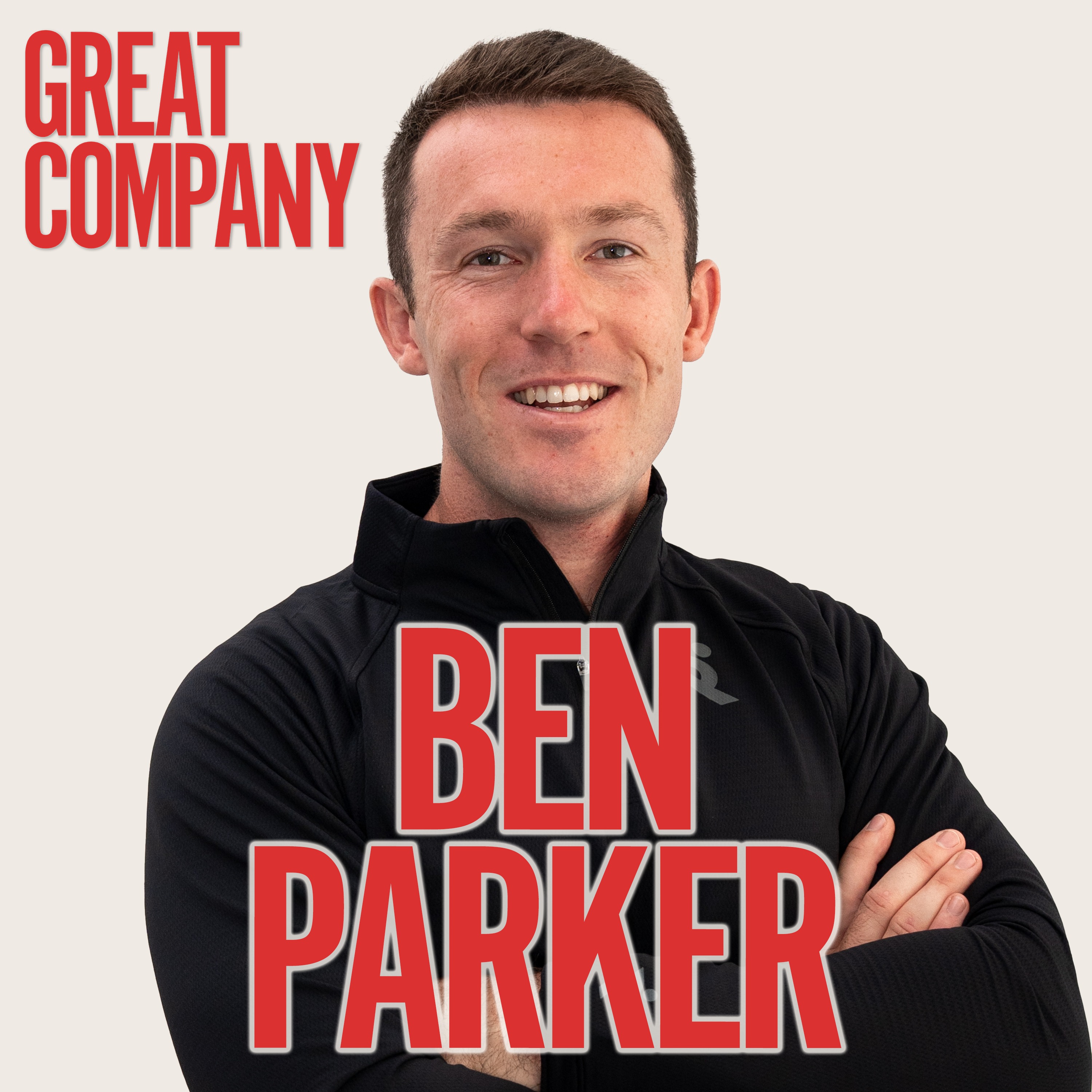
Host: Jamie Laing
Ben Parker, Founder of RUNNA
This episode focuses on Ben Parker’s journey of building RUNNA, a running app that has rapidly become one of the largest fitness apps globally, culminating in its sale to Strava for a significant sum.
Written by AI. May contain mistakes.

Get the gist, explore an idea or ask about something said.
 Claude
On Great Company with Jamie Laing, what are the key points of this episode?
Searching your listeningAutomatic transcript. May contain errors.
0:00Hey, it's Maya and Sim from the Girls That Invest Podcast. If you are an IT or security pro, you know managing devices, identities and applications can feel overwhelming and honestly risky. That's where Trallica by 1Password comes in. It helps conquer SaaS, brawl and shadow IT by discovering every app your team uses, managed or not. With pre-built app profiles, you can assess risk, manage access and even optimize your software spend. Plus, it simplifies onboarding, offboarding and compliance, all while cutting costs by eliminating unused licenses. Take the first step to better security for your team.
0:40Learn more at 1password.com slash special offer. Hey, Ryan Reynolds here from Mint Mobile. Now, I don't know if you've heard, but Mint's premium wireless is$15 a month. But I'd like to offer one other perk. We have no stores. That means no small talk. Crazy weather we're having. No, it's not. It's just weather. It is an introvert's dream. Give it a try at MintMobile.com slash switch. A upfront payment of$45 for a three-month plan,$15 per month equivalent required. New customer offer first three months only. Then full price plan options available. Taxes and fees extra. See MintMobile.com. Bustwood the Boys is here to let you know that every college football Saturday, FanDuel is dropping profit boosts that can turn wins into bigger wins.
1:24Sounds like we should rename Saturday Booster Day. Nice. 21 plus and present in select states opt-in required bonus issued as non-withdrawable profit boost tokens restrictions apply including any token expiration and max wager amount see full terms at fanduel.com gambling problem? call 1-800-GAMBLER
1:46morning people wake up for peace and quiet McDonald's breakfast people we wake up for the sweet rush of getting that warm delicious breakfast right before it ends. With McValue at McDonald's, get any size pumpkin spice iced coffee for just 99 cents until 11am and try our pumpkin and cream pie. They're spiced and priced, so very nice. Price and participation may vary. Cannot be combined with any other offer.
2:20Hello everyone, my name is Jamie Lang and this is Great Company.
2:27Hello everyone, welcome back to Great Company. High party people. High party people. That is my producer, producer of the show, head producer, Jemima. And this is me, Jamie, your host. And welcome back, guys. If you're new to the show, welcome. If you're an OG, hello. Also welcome. Also welcome. Not welcome anymore. Not welcome anymore. This is Great Company podcast where we talk to amazing different people about their journeys, their lives and we kind of learn from them as we go along and today god the takeaways the takeaways are amazing in today's episode we're going to learn so much because it's with ben parker now ben parker may not ring any bells with you may not know who ben parker is but ben parker is founder of a business a brand called runner which a lot of people will have heard of which a lot of people would have heard of runner is a app that you download and will train you to run any length that you want from a 5k to a half marathon to a marathon to even ultra marathons and ben is the co-founder behind it i would also say this is an episode with um an entrepreneur entrepreneur hard word to say um and sometimes the business episodes are things which i always think okay we'll do the business episode because you yourself an entrepreneur and it's interesting but I always come away from a business episode feeling like really like g'd up just because it is really inspiring to listen to someone who's just built something off the ground so I just say like if you're interested in business or not it's definitely well like this it's a really interesting listen it's a really interesting listen and Jemima you're so right and also what I love about this episode is Ben says at one point, which you'll hear, where he said, if it was any harder to build Runner, it would be impossible.
4:18And he just kept doing it, turning up every single day. And the funny thing about Runner is it's a running app, Jemima. What's funny about? Because who would have thought creating a running app would then be one of the biggest things that people use in order to sort of feel healthy and train and everything. And what we learned today is amazing things. firstly about resilience, about business, about the highs and lows of it, but also following your dream and following your gut. It's just the most important thing because Ben went through the same thing that so many people go through. Hey, I'm going to go and set up a running app and people go, okay, good luck with that and look where it is now.
4:57And it's about really trusting your gut. And if you want to do something, go and do it. And 50 % of success is just turning up. The getting started is the hardest part. And it's amazing what we learned today, isn't it? Absolutely. So get ready for the show. If I could ask you one thing, that is, if you could please subscribe to Great Company. It takes one second. It's completely free. If you like the content. If you don't like the content. Do you still subscribe? Well, you don't have to, but I would love you to subscribe if you can. OK, you ready for this? I'm ready. Enjoy this episode of Great Company with Ben Parker.
5:33Hi, I'm Ben Parker and I'm in Great Company.
5:40Can you explain who you are and what runner is? Absolutely. So I'm just an ordinary bloke who's completely out of control. But I love running, love triathlon, love doing hard things. Graduated uni, became a normal running coach and helped some super cool people like one of your friends, Joshua Patterson, do some amazing challenges. And I got to the point where I had not enough time to be able to help any more people. so I'd help 40 online clients train for their running goals and one of my online clients Dom who worked in tech suggested automating that so we basically built a machine that would write the training that any runner needs in an automated way and by doing it using a computer service it means that it doesn't take up human time and it can be infinitely cheaper so basically we've been able to build a fully automated way to train any runner for any running goal but in a way that is immediately more accessible for anyone.
6:40And so with that in mind, we charge 10 times less than what I used to charge as a private client or private coach. And we've gone from me having 40 clients to now having doing over half a million people who will open that app every day. And then they will go and do whether they're training for their first 5k, faster 10k marathon or crazy ultra marathons. And the funny thing is that like, they all need the same thing. They all need optimal training. They need it to be fun and they also need it to be really easy to use. And with that in mind, we've been on this kind of four and a half year rollercoaster journey from building this kind of funny, silly thing in our evenings that we launched the internet and thought it would go nowhere to now being in a place that we've got three offices, 130 staff around the world.
7:22We've also just sold the business to Strava. Oh my God. So much to unpack there. so let's get into runner right um runner is probably going to be one of the biggest regrets of my life if we're honest so my story with you right I met you once you may you may remember this because as you said you were a fan of my podcast but I remember meeting you for the first time it was a place called blue earth summit and it was in Bristol and um you came up to me and you said, I have this running app called runner. It's really good. It's a running thing. And I, and I would love to chat to you about it. And I ignored you.
8:02I didn't ignore you. I said, Oh my God, so nice to meet you. But I didn't think about it. You were another young entrepreneur with an idea and full of dreams coming up to me. And then story by story, what happened? I kept seeing runner pop up around the place, doing different things. I thought, okay, this is interesting. And you and I had a conversation about investment and I didn't invest. And I invested in a friend of mine's business instead, because I thought they had more chance of being successful, even though your business runner was doing quite well. And then lo and behold, I reckon last year, towards the beginning of last year, I spoke to someone who is an old friend of mine who works in VC and she's incredibly good.
8:41And she has now gone and set up her own VC fund. She's amazing. And I said, why have you left your old VC firm that was doing so well and doing so incredible. And she said, well, there are a couple of investments that I wanted to put a big ticket into. And when I say ticket, that's a big investment into, and I wanted to lead on the round and my boss didn't allow me to do it. And I said, well, what were those two investments? She said, one was Revolut. They missed out on Revolut. And the other one is Runner. And I went, Runner? She went, yeah, you know it? Did you invest? And I went, no, I didn't invest.
9:13She went, ah, you're going to regret that one. And I went, what do you mean? she said to me and this is I don't know if you can talk about this or say this but I'm going to say what she said to me she said to me that she thinks Rona is going to be sold for around 250-300 million pounds and that's 10 % of the valuation we're just going to go to as a VC she said that and I suddenly realized that my investment that I could have invested into Rona would have been quite substantial what's your response well i mean i was delighted to ever get to meet one of my idols and i it sounds silly but like i learned so much that has translated into the way that we build a brand into the way that i treat people day to day and in the business from listening to your podcast so i was delighted the day that i got to i think you remember that day you were speaking um you and your partner, Ed, was speaking about candy kittens and kind of some of your journey.
10:19And then I went on to speak later about how we're trying to raise some money or something probably much less interesting and much less eloquent. And then there was a number of times we'd kind of reconnect for whatever reason. And I'd be like, Oh, do you want to invest? And I knew you were always like very close to it. And I think also, I also understand that you have your finger in a hundred pies. You are so busy on the TV, on the radio, running all your different businesses that like, I didn't, I didn't ever take it as you didn't believe in the business. I took it as like, you just don't have the capacity to, and I think that was the biggest reason, but it was always the case that it's like, Jamie's being an idiot.
10:55Jamie's missing out on this one. And like, also in reality, one of the strands that has meant or led to our business being so successful is we've worked with amazing creators. But and so that's people in the public eye sharing their journey with Runner. And inherently, therefore, someone like yourself investing in Runner is doubly beneficial. And hence why it was frustrating for us for you not to invest because the money is a tiny fraction of what we could have had by supporting you with your running training. And that would have added back to the investment. So you built Runner over the past four and a half, five years.
11:30you have over a half a million people subscribe to it who wake up every single morning go onto the app and use it over half a million it's a tech business it costs£100 a year to subscribe to Runner so£8 a month whatever it is what did Runner sell for to Strava? it's not public information but yeah a lot of money can I Can I... ChatGPT actually comes out with quite close to the answer. So ChatGPT said to me that it was 250 million. Interesting. For context, I didn't own the entirety of Rutter, and there's a lot of tax to pay. With reference to the money, I think we made some VCs and some big investors a lot of money.
12:20And as individuals, I've made a lot of money. But the thing that actually means something is that when we go back to that crowdfund, so we had 303 different investors, some of which putting in 10 pounds, some of which putting a thousand and some of which putting in the biggest one was 50 ,000 pounds. One of the investors was one of my private PT clients. She was called Niddy, she still is called Niddy. And she was going through a really messy divorce, but she had chosen on her birthday to prioritize herself and started training with me. And she trained for her first marathon. And it was probably, without trying to hype it up too much, the best thing in her life at that time, through this really miserable time.
13:01She went through the process of having to divide their lives. And they didn't have enough money to find two separate places to live. So the husband would rent somewhere and he would stay in the family house to be with the kids on every second weekend or whatever it would be. I don't know the details. And then carry on renting separately she got a bit of cash um and she put a disproportionate amount of her wealth into the business and she's now getting and so since that day for the last three years she's worked two jobs as an orthodontist working six days a week during struggling to bring out these three children um and now she's going to leave one of those two jobs and she's able to qualify as a yoga instructor and do that as a kind of a side hustle and like that is the reality of like what this leads to, it leads to cash for some VCs and they get a great return.
13:52Like genuinely, who cares? And then at the same time, another interesting example, and for context, all of our runner employees get equity in the business, because we don't want it to feel like an us and them. We want all of us to be incentivized in the exact same way to be loving our customers, feeling like we're all doing it for the same reason. And then also in a scenario like this, where it all works out really nicely, we all win together. And so some of our earliest employees, and one to give context, Katie, she was a PE teacher. I met her at a run club. And at the time we were working on the Run Buddy, this website, and she worked 10 hours a week on her summer holidays and then went back to school and handed her notice.
14:36And at the end of the Christmas term, she joined us full time. And so she got a bit of equity with her starting in Runner. and that equity has obviously grown enormously through the business's journey and she'll get a, well she has got a life-changing amount of money that will allow her to completely change where she lives or buy a new car and all of these things and that's alongside a healthy salary and everything else and so it's the people that we got to touch in a really positive way has been great and that means infinitely more than any number that we can write in an article and get some kudos for and all the while we've done that while positively touching the lives of our customers and it's not like we've sold some expensive tobacco that's like fuck people up while we've all profited it's been the case that like we've worked genuinely so hard and at the same time we've been able to build something that really helps people and as a result it's then therefore valuable to the industry
15:37um what personal sacrifices have you had to make for runner to be a success well i'm not as fast a runner as i was when we started runner which sounds crazy now that i run well that i run a running business but i used to work 30 to 40 hours a week outside happy healthy every day with very little stress. Now I probably work, I don't count, but I don't know, 50 to 80 hours a week. And as a result, I don't run as much as I would like to do. And I don't sleep as much as I'd like. I don't eat as well because I don't have as much time to cook and do all of those things. So my greatest passion, which is my running, has had to go sideways, if not backwards.
16:17And that's been really sad. But so those are some of the sacrifices. And then I think attached to that, my life has been pretty crazy. My ex-girlfriend, we were together for, um, kind of six, seven years. And I think runner just kept getting more and more crazy. And it also was the thing that I was so committed and devoted to, um, meant that I was probably a bad boyfriend and led to problems there. And that ended. Do you think it's worth the sacrifice? yes i think i'm very grateful to get to do what i do now to have the life that i have now um and to have the impact with our runners that we have and also i think like i'm not a professional athlete if i've never going to be as fast as i would have otherwise been if i'd lived a different last five years that that's fine because i've got to do something even better and also i think when When it comes to an ex-girlfriend or any of those personal sacrifices, I think there's lessons to be had.
17:25June, I'm probably developing more as a person from reflecting on situations, from all the feedback that I get left, right and centre at work. And I think that will lead to me being a better partner in the future one day. I think a lot of people forget the sacrifice that has to be made when you're building something. It doesn't matter if that's in sports or business or whatever it is, you have to sacrifice so much. in your opinion do you think it's impossible to grow something as big as you did with runner without the sacrifices you made i think it goes back to things needing to be a bit hard i think life would be really boring if i was winning in all three of my buckets if i was winning in my fitness work was just plain sailing and i'm just like happy as larry with all my friends and girlfriend i'd probably be like life would be too easy i'd probably go and fuck something up on purpose um and i think it's the same for you i have no doubt that like you don't have everything nailed.
18:16No ways. It's impossible. And I think like - It's impossible, but it's normally personal that goes hard because that's the last thing you think about, whether that's health or relationships or whatever that is. And that's become - Yeah. But so as a result, I think you must sacrifice. But I think the key to then being happy is almost to like take stock every now and again, work out what's gone a bit out of balance and bring it back in line. and if we spend 20 years where we let us put too many eggs in one of those buckets you'll get to or i'll get to 50 and realize that i've nailed career i've done loads of iron mans and i'm a single lonely old man with too much money and like that would be a huge mistake and instead i think it's really important every so often to be like i've actually just gone backwards with my fitness new year new me i'm dialing it down or i've gone back with my fitness and new goals for this year.
19:09I'm going to try and finish work a bit earlier. I'm going to make sure I don't start before nine. I do this exercise in the morning. Just quickly on your co-founder, Dom, something like statistically 72 % of businesses have a co-founder. Be incredibly lonely to be running a business solo. I cannot believe that it's as low as 72%. The fact that any businesses succeed where the founders done it on their own is mind blowing mind blowing do you that how hard like what do you mean when you've had hard times at candykins or any of your businesses to not have someone just someone who like the way i i think about it is dom and i were good friends before we started but now we're best friends and i describe that as we i always say trauma bonding we've been like abused for years but we've been abused together so we kind of understand each other yeah and and And do you know what's so beautiful about that?
20:01I love my business partner. Yeah, likewise. Like, I love him. I love Dom. And it's strange because he's this annoying ginger man that I can't get rid of. But he is genius and he's so kind and he's taught me to be a better person. And I could not have done it without him.
20:21Do you think you enjoy paint? I did a cycle race yesterday and I have a very sore bottom since. and I would rewind time and do it again. The reason I ask this, right, is because Ironman's constantly pushing yourself, constantly making yourself better, constantly driving. You spoke about how tough runner was. The pain of growing and developing and pushing and pushing and pushing is a lot, especially when it comes to sports and performance. And there must be something that you love about it. I think I don't like being bored. And I think, just like we said - Explain that, what do you mean? i think um i think in general life is just so short we're gonna die so soon so we need to just like do stuff um that like i'm nearly 30 i'll die at 80 or 90 that's like i'm doing 40 the way through my life so i need to get on with it um but i think attached to that as well i think like when things are easy they're actually quite boring and i think there's a difference between fun and happiness.
21:21It's fun to play PlayStation. It would be fun to lounge around all day and watch some telly, but you finish that activity and you're not any happier. You'll sometimes almost regret having wasted that time. But what makes you happy is doing something that's hard, but is productive. And that's probably why I enjoy chasing to be better at stuff. Because if you finish a task and it adds to the next day or the next week, or you're on a positive journey, I think that leads to fulfillment and happiness, whereas fun doesn't lead to any fulfillment. Kind of like scrolling on TikTok, it's fun sometimes, but you finish it and you're no happier for it.
21:56Whereas if you do something that lets you be better, you're happier. And I think something that gets you better at something or that anything that leads to fulfillment is often hard. Like it's easier to have fun than to do something that leads to the fulfillment, but fulfillment is what leads to happiness. And I think understanding that then helps you do the hard stuff. Like it is hard to go to the gym consistently to build a healthy body. It is hard to go out running three, four times a week and do a marathon. And it's hard to not stop the whole way through the marathon and do your best time.
22:26But when you finish that marathon, when you finish your challenge, like that feeling is impossible to replicate. And it is better than any time sitting on the toilet, scrolling on TikTok, or any other game you can play, whatever it is, because so much hardship has gone into it. and at every moment you wanted to stop and because you didn't it's fulfilling at the end yeah but okay so because then then you go into this right which is my argument it's like i always get asked the question what am i driving towards why am i driving why am i building the businesses that i'm doing why do i constantly wake up every day and think i gotta keep going i gotta keep going and the more i think about it is probably i'm lacking something i'm definitely probably lacking I was a real people person.
23:07I really, I probably lacked, I feared abandonment. I worry things are going to go the whole time. I really want people to, especially my parents, to admire what I've done. And that's the kind of thing that keeps driving me forward. So it probably comes from an insecurity. Does yours come from an insecurity or just a willingness to get better? I don't know. Like, I don't think I've been analyzed or analyzed myself enough to know the answer and to some extent i don't think it matters and in reality it's also impossible to know because it will be a combination of all of those things um doing it will be an element of insecurity an element of some trauma and some invalidation you had as a kid and do external validation you have on you now and internal validation that you have and it's all of those things and i think in reality it's like what you've done to date so many amazing things has led to you feeling good but you know that you can do each of those amazing things a bit better.
24:01Like you can probably entertain and educate more people via all of the different media streams you're on. Like it's led to happiness today, but you'll probably get even more happiness into the future. And also the fact that it's led to you being happy today, I hope you're happy today, but the fact that it's led you to being happy today is exactly why you shouldn't stop. Because if you are happy today, it'd be really silly to be like, okay, I'm really happy now. Dad thinks I'm great. And then to be like, so now I'll stop doing the podcast or I'll stop running this sweet business that like makes people happy.
24:32And in the same way, Dom and I are now in this weird situation where we've received a big chunk of money for selling our business. And so the rationale to work, to earn money is smaller because we don't need that much more money. So you're not driven by money? well i always thought that the reason why i was prepared to throw away my perfect life as i was so i came back from the hotel in greece set up my ben parker fitness business coaching people in richmond park nice sunny park in southwest london well certainly half the time um and did my online coaching i'm 24 25 earning really good money um and probably working 30 40 hours a week nice exercising healthy outside outside really flexible hours um lovely life yeah why would you ever throw that away crazy and the two reasons why i did was one of which was um because i could see it on a path to being able to do a lot more like helping a lot more than 40 people um and the other reason was that it may well lead to financial freedom um which is something that everyone would love and to some extent that's now what we've got but it doesn't change how i want to spend my time like i literally the money arrived in bank account i was like this is brilliant this it's kind of funny didn't know that's what bank accounts could do and then turned up the office same next day and like i would hope that the team at the office can't tell a difference in me in the way i work like i know that runner is a good business but we are 20 of the way to what the app can do and i want the app to be that 100 and in reality just like all goals in life the goal post move as we get closer to 100 we'll need it to get to 200 um so again it goes back to my point which is like earning money is a byproduct of what you do.
26:19Yeah, and I want to be better at everything I do, and I also want to help people. And I think that's inherently why I enjoyed being a personal trainer is because I got to see people who, I got to see their bodies transform, but more than seeing their bodies transform over a journey in the gym or in the park running, I'd also see their lives getting better and them being happier. Like part of being a personal trainer is being a therapist for someone, seeing them each week, hearing about their ugly divorce, hearing about their annoying children, whatever it's going to be, but like being a light in their week.
26:52And while I don't get to see that day to day with our customers, because they're all online using our app, I know there's a bunch of people that have a happier day because of this silly little business that we've built. And also building that silly little business is quite fun.
27:10You walk in tired and hungry, one bad dinner away from losing it. You don't like to cook. You don't want more takeout. You just want something good. That's why there's Dish by Blue Apron. Pre-made meals with at least 20 grams of protein and no artificial flavors or colors. From fridge to fork in five minutes or less. Keep the flavor. Ditch the subscription. Get 20 % off your first two orders with code APRON20. Terms and conditions apply. Visit blueapron.com slash terms for more. Hey, it's Maya and Sim from the Girls That Invest podcast. If you are an IT or security pro, you know managing devices, identities and applications can feel overwhelming and honestly risky.
27:53That's where Trallica by 1Password comes in. It helps conquer SaaS, brawl and shadow IT by discovering every app your team uses, managed or not. With pre-built app profiles, you can assess risk, manage access and even optimize your software spend. Plus, it simplifies onboarding, offboarding and compliance, all while cutting costs by eliminating unused licenses. Take the first step to better security for your team. Learn more at 1Password.com slash special offer. Mint is still$15 a month for premium wireless. And if you haven't made the switch yet, here are 15 reasons why you should. One, it's$15 a month.
28:36Two, seriously, it's$15 a month. three no big contrast four i use it five my mom uses it are you are you playing me off that's what's happening right okay give it a try at mintmobile.com slash switch upfront payment of 45 for three month plan 15 per month equivalent required new customer offer first three months only then full price plan options available taxes and fees extra cmentmobile.com
29:02what were you what were you charging as a running coach to begin with per session so i would do two things. I would charge for like in-person one-on-one sessions. So I'd go running with you and I'd work on your form. I might bring my kettlebells and go ahead and doing strength, doing work on your strength or run next to you and support you through intervals. So I'd typically charge like £60 an hour for a one-off session. And then I'd also charge£20 per week for someone's online training plan. So you'd be WhatsAppping me, telling me how you're getting on, and I'd be then sending you your training.
29:29And I'd also do it. If you saw me in person that week, you got your online plan for free. So I'd have 40 online clients and I'd see normally about 10 to 15 people in person that week. And that was basically what I called Ben Parker Fitness. And the funny thing is I set off on that journey to be a normal running coach because I'm very lucky. I grew up in a very privileged environment. My dad was very successful in business. What did your dad do? So he ran a investment management business and he was lucky enough to retire at 49, lived in kind of wealthy area of Southwest London. And him and a lot of his friends were all kind of in this similar environment that they're doing high powered jobs, earning a lot of money.
30:08But I looked up to my local tennis coach infinitely more than I did him and his friends because he was happier. My tennis coach was happier. He was outside doing everything, doing something, helping people outside, moving his body. And he still had enough money to drive a car, go on holiday, have a wife and kids. So I very much knew that that was the life I wanted to emulate more than having more money than you need, having a bigger house than you need and having spare money because you're retiring at 49 because you don't love what you're doing. Because you saw your dad wasn't, was your dad happy?
30:41I think my dad was happy, but I think my dad was probably happy because of everything that comes alongside that career. But I don't think he lived for that job, which is probably why as soon as he could, he stopped. Whereas to some extent, maybe a tennis coach can't stop at 49 because most tennis coaches will need to keep working for longer. But I wanted to copy that life. And so I, first of all, I went to university and did an ordinary boring degree because my parents very much pushed me in that direction. What was your degree? So I did a geography degree. Whereabouts? At Southampton, which is where I met my co-founder Dom.
31:12So it was amazing. But at Southampton, I did no geography, ran the lacrosse club and very much focused on just like moving my body, exercising. And I knew that I was going to be on a path to work in the fitness industry against my parents wishes. They wanted me to go down the route of being in finance. um it was actually very funny I came home in the Christmas holidays in my first year so in December of my first first year um and I kind of was so excited because I finally like worked out what I wanted to do with my life I knew I was obsessed with fitness I had been for like three or four years um and at the dinner table I'm one of four um it's a big dinner table and I was like I know what I'm going to do with my life and everyone was kind of silent and I was like I'm going to be a personal trainer and my mum's reaction was like everyone was silent and like my siblings were probably all ready to see the reaction from my parents um and my mom's reaction was like that's fine we'll cut your allowance you get used to being poor um which was just like ridiculous in a way because i think obviously things have transpired to the case that i've like been financially successful despite doing what i loved um and i don't also think she spoke of it from like a place of being evil but i think it was very much the case that like from her lived experience.
32:26Both my parents went to Oxford. They both went down the route of kind of financial careers. So, and that's led them to having a comfortable, safe, stable life. So from her lived experience, that's the right advice. But probably as you know, doing something that you love probably leads to you doing it very well. And I have no doubt that if I was working in finance, I'd find it so boring. I wouldn't come up with good ideas. I wouldn't be able to, whatever, that I would be living for my life outside of work. It's interesting. There's a great quote, which I live by, which is a business is paid in two currencies, cash and experience.
32:56Take the experience first, the cash come later. Do something because you love it, right? Don't do it because you want to earn money. Because if you just want to earn money, you'll be unhappy probably in the end. You want to experience and do it and love it and enjoy it. And there's a big thing, right? Which is, um, you're, you're in a, I would say unique situation because having, having grown up in a household, which was affluent, which feels like you had, you know, all the opportunities that it gives you, right? Good schools, holidays, probably a car, allowance, whatever it is, right? And normally, typically what happens in those situations is that you sort of want to continue that and you want to be able to do those things that you've done as a kid, but you kind of just want to be happy in your work life.
33:39And that didn't matter what you were doing. You realized that you wanted to become a trainer and follow down that road. And also, which I think is interesting, how old are you when you realize you want to be a personal trainer? 21? So I was 18 in my first year of uni. Okay. So 18 years old. I think I can go and ask most 18 year olds right now and they'd have no clue what they wanted to do. And we're so forced into this space. It's like, what do you want to do? But actually one of the biggest things I think is life is finding out what you don't want to do. But I think it wasn't the case that I wanted to be a personal trainer for the rest of my life.
34:11I wanted to work in fitness. And that meant that I needed to start as a personal trainer. I think my dream at the age of 18, when I was obsessed with the gym was probably to one day run a warehouse gym where I had this big gym. I watched loads of YouTube, all these cool YouTubers setting up their cool warehouse gyms. I thought that was my like path, but I knew the first step was to work in the fitness industry, qualify as a personal trainer. And during thereafter, my life pivoted and moved in so many different ways. I got a job working in Southampton as a private PT studio. And the person who ran that studio was an ex professional runner.
34:41So like started to get me thinking a bit more about running. I would support him by taking out some of his running clients. And I was also enjoyed running myself. And then the next step was that I went and worked for two years running the fitness department at a five-star hotel in Greece. And this was also, again, a point of privilege, but I'd been to that hotel growing up. So I knew that that kind of lifestyle, that job existed, but it was a way that I could go and enjoy basically living on holiday, but for free. So I had my food, I had my accommodation, all paid for. I earned basically nothing.
35:14I earned 80 pounds a week, which is basically illegal, but you get paid in. I felt like I was earning a million bucks because I had nothing to spend it on because I had my food I had my accommodation had a bike could go running and I could go windsurfing in my free time um and I think like what you said was that you kind of like grew up with these great things but I was happy to like throw them away to go and be a be a trainer and I don't think that was the case I think it was very much the case that I realized that the things that made me happy were cycling were running were being outside and doing nice things which aren't unlocked by money and i think that's also the thing that's now um an interesting thing for me to wrap my head around which is that because we've now just sold the business there's like i have enough money to probably go and buy new things if i wanted to but there's nothing that i want to buy because i already own a nice bicycle i own a few bicycles so i have one for my gravel cycling with my road cycling but i was able to buy that already from the business's success to this point.
36:11And in reality, I own those things from my success as a normal personal trainer before runner. And so as a result, like what do I want now? I want time to be able to do the things I enjoy, of which that is cycling around with my club and pushing myself to get better, running around and getting better, doing marathons. And that all stems for me to culminate with Ironmans and spend weekends exercising with my friends. And also I know that if all I did was that, it would actually get quite boring. And so it's really good that between Monday and Friday, and sometimes between Tuesday and Saturday, or whenever it's going to be, I work really hard.
36:47But I also do that on something that is very fulfilling. I'm not just trying to bet on the right stock that goes and makes loads of money for some big business. Instead, the impact that we have every day. So one of the things I do inside Runner is work with all of our different engineers to build the algorithms that dictate to what running people go and do. So if we go and make an improvement today, that's going to go and affect the lives of half a million people and many, many millions of people over the years ahead. And like, there's nothing better that I could do with my time. And then that also means that I don't have as much time so that when I'm doing those things that I enjoy, the running, the cycling, spending time with my friends or silly things like playing Call of Duty, like that's scarce.
37:28And as a result, you are grateful for them. And probably if you ate candy kittens for breakfast, lunch and dinner, you'd probably not enjoy it. But if you had candy kittens every now and again, you're like, this is fantastic. And I think that's the same with everything in life. Um, that moment that your mom said she's going to cut you off when you said you want to be a personal trainer, did that change your relationship with your parents? I think, um, amongst other things, I did mean that my mom and I were like a lot less close for like many years. my parents went on to get divorced and I think due to other factors like I think me looking like my dad and reminded my mum of my dad all the time and also being able to share triathlon and running and cycling with my dad that I didn't with my mum and other factors probably led to mum and I having a bit of a more wedge between us.
38:19Additionally when Runner got started we needed to raise some investment and I think the right way to do things for businesses out there that are getting started is not to raise money immediately from your family because they're biased. And it would have been a huge mistake for Dom and I to have like basically spent a year or two years working on this idea just because my mum's biased, loves me loads and gives me some money. So instead we went and got money externally. Did you really? You didn't go to your parents? We thought it'd be a stupid idea. Wow. I went to my parents and that was a bad idea for different reasons.
38:52but I think I went I that's a really interesting that's a really interesting tactic to take when raising money because when you're raising money on a on people say nothing to do like a family and friend family and friends round correct yeah um and what we did was we raised our first bit of money from Joshua Patterson who was one of my private clients and I was supporting him to do doing some of the amazing challenges he's gone on to do um but like a he had a lot more value to the business than my mom my dad could have had but also he was less biased like he didn't just love me because i'm his or her son um and as a result he could probably evaluate the decision a bit more objectively and that's i think so important in the same way when you john tom had to go and quit his job i had to go and close down my private coaching business that i'd set up and was going growing really well.
39:44And we should not do that unless we're on for something good. And your parents just want to say yes, want to support you a lot of the time if they can. But the problem is you actually need to have someone who's not biased to objectively evaluate that decision. Anyway, so we didn't raise money from either of my parents in that first round. But then we did go on to raise a crowdfund a year later. So this is what we got kind of started to grow the business that much more. And we raised half a million pounds from 303 different people. And this was basically our earliest customers but within that round my dad did go on to put some money in and my mum didn't um and at the same time lots of my friends then did start to put money in but they're also our customers and as did probably 290 other people um and so i think that was another interesting one where my like i think my mum was still not supporting in that way where my dad did and i think continued to like drive a little bit of a disparity between us and it was really interesting because I think like the perspective that a parent has of their child is I think often they want to be able to like shout about how great they are and me being a personal trainer doesn't conform to that like narrative for your parents though for my parents or for my mum particularly um but it's now funny because runner has gone on to succeed and a lot of her friends know about that because their children are training with runner or whatever it's going to be and now she's almost able to be like proud of it um and actually my mom and i are much closer again so we've kind of like solved a little bit of the challenges that we've had to date but it is interesting whereby i think one of the things that everyone wants to some extent is some external validation and she wasn't getting or she didn't feel like she got that when i was a personal trainer and now maybe she feels like she gets that because i get to come and talk to cool people like you it's funny right i remember when i started doing made in chelsea right a reality show.
41:35And my parents were definitely not proud at all. They were not proud of what I was doing. I was on a show. I wasn't seeming to work. It wasn't the route that they typically wanted me to do. They want to be the same thing to go to university, get a job in the city and do something that had some sort of respect around it. And now I would say that they're probably incredibly proud of what I've done, but it was off the back of doing a reality show, right? That was my roots where I started. But it's because what you've done is you've taken the success and the fame that that brings you to go and help people in so many ways, set up amazing businesses, which are then inherently something to be proud of.
42:09But it's, but it was my, my argument is this, right? I want to riff it out with you is, is with parents, why, why do we need to have, why does some sort of, some sort of success mean that they can be proud? Why do we have something to have to have something tangible? Why do we have to grow a business or be part of a business or do something that is quite big and bold for our parents to be proud? Why can't they just be proud of the person? If you're a kind human, If you're considerate, if you're great with friends, if you are willing to spend time with them, shouldn't we be proud of you then? Why do we have to achieve things in order for our parents to be proud of us?
42:42I think there might be an element that our parents are optimizing for, or what they're trying to aim for is for us to be able to live a safe, stable life and provide for a future family. and maybe by being a personal trainer which doesn't earn the income that they think you need to grow a family in their crazy world or doing the path of being on made in chelsea which is risky and not as established as a more doing established career is dangerous and so as a result they're nervous for you which like presents in not being proud but the thing they're probably proud of or the thing that actually matters more than anything is that you're a nice person yeah but it's that that's not measurable so the thing that's measurable is like your success in a career and in during 30 years ago, 50 years ago, success in a career was going down these conventional career paths and climbing the ladder in a very measurable way.
43:34And so the fact that like we're both doing careers that are so different to that makes it not measurable or not one that they understand the metrics of to some extent, or they can relate to it. So they're nervous for us that we're not going to be able to have this established life and do you have a security that maybe they've had and that then presents in them being nervous for us and not being proud. but at the same time i think everyone is validated by success so when it comes now back to the case that june clearly you're a success and probably runner is clearly a success as well it's easy for them to be able to say they didn't go down the normal route so i didn't understand it but now it's yeah tangible so now they can support it again because they know that we can provide and be stable which is probably the thing they want for their children out in the world yeah but do you know what's interesting right if um when i was a kid right um we used to have a chart on the fridge which was every single time that i was good i would get a gold star and if i got a certain amount of gold stars in the week i could go and watch free willy the movie i remember it's so bored of watching that over and over again it was a different movie that was the first one and so you never you never got to watch it because you didn't get any stars well i did i remember i I got my gold stars in the week and we got to go to Free Willy.
44:48But my brother, Alexander, who was always good, never got rewarded for being good because he was always good. And my brother had a really amazing career, done super well, works as an analyst in the city, very high up, has a family, two kids, has his own home, incredibly successful. Doesn't get the validation from my parents because he's always done that. yeah and maybe the same for you perhaps is um because you because what your parents you went down a route which your parents thought deemed as probably not the route that they wanted you go down but now you sort of made a success of that oh now we're proud of even more because you've gone against what we thought was going to happen but actually shouldn't parents just always be that's what i'm sort of saying right like do you have to do something not you know so the interesting thing so i'm one of four my younger sister um growing up in the exact same environment um and i think she's entirely not motivated by money in any way um i think she probably has these crazy family that she's always observing and evaluating um went on to do a psychology degree and now works in as an assistant psychologist um and she's applying for her doctorate and wants to just help people and she works in a um a hospital of people who are recovering from brain trauma and that's not a career that's going to lead to financial security.
46:11That's not true. It's not a career that leads to like being extremely financially wealthy because it's a lot more established. She's working within the NHS, etc. But like I think she's equally as successful as me. Totally. But like if you measure it on financial wealth, that's not the case. And I do think my parents are very, very proud of her. But I think that's also because it's an established career, one that they can understand like you've done. you're working towards a doctorate, you're on a path that leads to a safe and stable life. Whereas, again, because my parents didn't understand personal training, they've never worked with a personal trainer.
46:44It's not a career that existed 30 years ago. They think you qualify as a personal trainer and then you don't ever go anywhere and you can't ever have children, or you can't ever enjoy spending time with your children because you've got to work the whole time. Whereas the path of being a doctor of psychology does lead to established life because there were doctors of psychology before. But I think my sister's a kind, good person, and that's the best thing to be proud of. And irrespective of whether runners are a success or not, whether someone should be proud of me or not is whether I open the door or treat people nicely, because that's what matters in the world.
47:27What's the magic ingredient to be a great founder? It's a question everyone wants to know as with anything i don't think there's one thing um i think naturally you need to be i think like really gritty like really able to keep enduring you need to be able to deal with a good and a bad scenario every day and you have no idea what's coming and i think that's probably like universally true across any startup i think one of the biggest reasons why ours works well is because people are happy our team love coming into work every day and I think that is because I think I've learned a lot from Dom but Dom knows how to treat people he knows how to communicate and he knows how to give feedback so I learned from him how to do that when we were working as a two so when we hired our next two employees and Dom had someone support me on the tech and I had someone support me on the brand I learned how to work with them because Dom had taught me how to work with himself and that's transpired now that we have 130 people where they're managers in the team we manage eight to ten people and they've learned from the way that Dom really taught us how to treat people.
48:30So explain that to me, role play with me. How do you, what do you mean? So I come into the office and I have an issue. How do you treat me? So when Dom and I started, it was nine o 'clock every day. We'd have a call. And for the first five or 10 minutes, he'd just want to chat to me about like, how was my evening? What do I get up to? Like, how am I as a person? And then it'd be like, cool. And then I would also then like ask him in return. And then we'd get into the day. And as a result, I cared about him and he cared about me. And then we worked on this common problem. And the same when, June, I hired my first employee, I felt like it was inappropriate.
49:07But I'd be like, oh, how was your evening last night? What'd you get up to? Oh, cool. Like, been to the gym this morning. They'd be like, oh yeah, I did this and what my dog. And I'd be like, oh, cool. Right. Should we get into it? And that, it still happens every day. And it sounds so silly because like, obviously that's how humans should be. But I think there are like hearing from so many of my friends that work in these big, boring corporate businesses. It's like, hi, have you read the email yet? Should we get into the actions? It's like, that's not how humans should work together. And as a result, five o 'clock comes around, six o 'clock comes around, people want to get away from it.
49:36And an example of treating people nicely and also not taking life too seriously is we start every day, sorry, every Monday and every Friday with the same silly thing, which is the bring Sally up challenge. I don't know if you've heard of it. It's a three minute video on YouTube. You should try it and it goes bring sally up and you basically do a press up or you stand up with a squat bring sally down you go down and it goes on for three and a half minutes and sometimes there's a hold at the bottom and at 905 on a monday and 905 on a friday everyone in the office does it we put it on the huge loudspeaker and everyone working from home dials in and does it and as a result you are going to see your manager as a normal person who's doing some calf raises in the morning doing some squats and you're going to see them having their dog jump up and down on them while they're doing some press-ups from home and like humanizing everything and also we work for a fitness business.
50:20We work for a health business. We don't want everyone to sit at their desk for doing 40 hours a week and degrade their health. We want them to be taught to get up and move and everything. And I think like that is undeniably an inefficient use of 130 people's time. The cost of that meeting is astronomical, but I have no doubt it leads to us making Runner better. And what you're doing is you're building a happy culture. Yeah. And culture is everything. It's such a buzzword. And to build that happy culture is so hard. I heard that you buy every employee a Lego person when they join Runner. Yeah. So when you join Runner, you get your little Lego person, and we will design it to look as close to you as possible.
50:59And it's on a little Lego platform with the Runner logo behind it. And then every year you get a new brick for your one year, your two years, your Lego person gets higher into the sky. And then whenever you work on a big project, so for example, we've just launched B races, so you can train for a B race on the way to your marathon. So you could put that into your plan beautifully. You'll get a little bee piece of Lego that you can put on. And it's a bumblebee that sits on your little Lego man or Lego person. If you worked on, I think it was a London Winter Run 10K partnership, you got a little ice gem.
51:31And there's so many of these. If you work in the train team, so you work on building the algorithms that determine what people do for their training, you get a little train and then your man or your person drives the train. And like, it's just fun and silly and that costs money. And we also have to spend time designing it, buying it, ordering it, whatever, but it probably is enough. I arrived outside here and I was on a call before I had meetings and you were sitting outside in the sun on your laptop doing emails before you came in. You're working all the time. And sometimes you look at the successes, right?
52:01And you forget how you've driven towards it. You look at David Beckham taking the free kick against Greece, right? When he scored that and you're like, God, that's amazing. Usain Bolt winning the hundred meters. You're like, oh my God, runner selling for whatever it sold for. You just look at the successes, right? You don't see the graft and the grit and the thing that's gone before it and built towards it. Many people listening now who are starting a business and building a brand, right, are in that process right now about giving up. They can't do it again. They can't keep going. We pinned that moment, right, which is you're constantly at that threshold of giving up and they're going to give up.
52:32Person listening now is like, I'm going to give up. I'm not going to do it. I'm not going to be a runner. I'm not going to make that happen. I put all my life savings into it. What would you say to that person? So I think two things, one of which in some cases we should give up. If Dom and I had started off on a stupid idea and we couldn't raise any money and we couldn't make the business move in a positive direction, we should stop wasting our time, come up with something else or do something that is moving in a positive direction. On the assumption that you have, and if you can't move in a positive direction, you need to change something so that you can.
53:07If you're moving in a positive direction, even if it is slowly, but you're on a good trajectory and it's really hard, all you need to do is keep going. Because with a business that is a growth business, like any kind of selling more suites or selling more running training plans, we need to sell a little bit more, a little bit more, and we'll grow and we'll do something great. But while it's growing really slowly, that's painful. But if you zoom out and go from looking at week to week to year to year, that growth continues and you make it continue, you've got this brilliant business. And so on the assumption that you're moving in a positive direction, you just need to endure and always see if you can speed up that trajectory.
53:44Okay, but let's play devil's advocate a second. What happens if someone listening now is they're not seeing growth and they're plateauing and they're just staying exactly the same? What would you say to that person? I think then you need to have a path, an idea, an action plan to get to positive direction. And so that might be pivoting the idea slightly. That might be launching a new product that will then make it from going from slightly unprofitable to slightly profitable, a new feature inside their app. And if they can get to a positive direction, then great, you need to endure. If they get to that point where they're going to build this new feature, it's going to take three months to get there, then it should see positive uplift.
54:20They get to that and it doesn't. Is there another play they can do? And how long do you have to keep making these tests? and in reality that's kind of why investment is a necessary evil because you only have so much time before you run out of money so when you're starting to run out money you need to go and raise some more money to be able to survive on the assumption that your business needs money which all businesses do um and so then you need to get to a new point in time where you can test and if you can't convince an investor or a vc that you get to that point and then it will start to be able to move in a good direction, then it won't work.
54:56But that's also where the grittiness comes in and the gut feeling and the belief, because we came so close to not being able to convince people that our concept would lead to a good business. And there genuinely was a point in time where we nearly had to completely pivot the idea or the weight, not the idea, but the way that we ran the business, because no one would invest in us. We'd done the crowdfund and a year had gone by and we've grown. We've launched from the RunBuddy to be the runner app. We're growing. We've got, let's say, 2 ,000 paying subscribers at the time. But no VC, no big investor, and we needed to raise a bit more money than that kind of half a million that we'd raised, would believe that this was something that would work.
55:36And we had probably pitched to 50 of the most relevant VCs in London, and they'd all told us this is a stupid idea. This will never work. This is just super niche only for diehard runners. And as a result, we should just give up and do something else. And we nearly had to change our plan, not hire new people, and do what we could with the resources we had, and kind of extend that point to be able to prove it again and raise some more money later. And eventually, we managed to, after about four or five months of pitching, eventually found a VC that believed in us. And that was the hardest point in time for our business.
56:10And that's what led to faster growth, that then led to people believing that this is possible, and then everyone wanting to invest later on. And that VC, by believing us when most people didn't, got a great return. This one you said to what makes a good founder grit. That's grit. You just keep going, keep going blind into the future without knowing what's going. You just keep having that passion, that desire to keep pushing forward all the time. What's next after selling the company? So for the company, what we've always set out to do is make the very best running coaching service in the world and as accessible for as many people as possible.
56:43and there is so much to do. We want to make your running training plan adapt around the menstrual cycle, adapt around how well you slept last night. There is so much we can do and we are working so hard to do that. And then the other thing we need to do is put it in the hands of more people. And by partnering with Strava, we can help more people. So that's exactly what is next for Runner. And for you? I think for me, it's the same. I like love my three buckets and I probably have the opportunity to find slightly better balance between them. But I also know that life would be boring if I just reduced my buckets and made it all really easy.
57:20I'm going to work just as hard because I care for runner just the same. I'm going to train just as hard and push my body just as hard because that makes me happy. And I'm going to try my very best to be a good friend and a good partner. And I'm 29. One day I hope to have kids and have a nice stable relationship. And that's the goal. And I'm sure as with anything, it always moves around a little bit. and life's hard.
57:46If someone's listening right now and they think you're starting a business or they're in the process of building it, what advice would you give them? I think the most important thing is you start with good foundations. And with that in mind, I think there's a few layers that you should go for before you sprint full steam ahead. First of all, you need your idea. then you need to validate your idea you need to show that to your friends they think it's good great then you need to get a stranger to think it's a good idea who's not biased so that might be making some sweets your friends say sweets are great that's not very helpful because they're biased then and same with your mom then you go and show it to some strangers if they say these sweets are great you're doing quite well but they haven't paid for it so then you need to get a stranger to pay for this thing.
58:41If you can get a stranger to pay for this thing, that's really good. But then you need to go one step further, in my opinion, which is if you can get a stranger to pay for your thing, even if it's a tiny amount of money and it's a really primitive version of your sweets without nice packaging, they need to pay for it. But then they need to say, I want, like they need to pass it to a friend and then they need to go and want it. And I think as soon as you can have a thing that a stranger thinks is good, pays for it, and then goes and brings one more stranger into the mix. You've got a concept that if you go and add a brand to it, you go and add a great team, great R &D, whatever that is in whatever industry I think is going to be a success.
59:19And if you can't get to that, you need to keep pivoting, keep tweaking that initial idea before you go running in that direction. Because the last thing you want to do is go and get some money off your dad, spend three years working on an idea where you're just biased and you haven't been given that like signal that what you're doing is going to go in the right direction because the last thing you want to do is waste your time because the way I view it is we're all going to be old and die soon. Ben, that's fantastic advice. Ben, this has been brilliant in every single way. Like truly amazing. And I can feel and understand why you've built such an incredible business and you're a great team leader.
59:59It's amazing. No, truly, man, it's amazing. We like to end the podcast with eight questions. Are you ready? Quick fire. Ready. What's a saying or phrase that makes you smile or cheers you up? I think, like I said, don't be boring. We're going to die soon. Best compliment anyone's ever given you? You're not what I expected. I think I'm bigger than the average runner. I'm probably sillier than the average business person. I think connected to being boring, but don't want to be vanilla of what people expect me to be. What scares you most about yourself? That I am too obsessive and I might blink and I'll be 40 and be in the exact same position that I am now.
1:00:36When was the last time you cried and why? I don't cry a lot. When my family dog died and I cried loads. Sweet. Oh no, what was the dog called? Dottie. And I desperately would love to have another dog. What's something you can't let go of? I think I can't let go of the hotel I used to work at in Greece. I've been back every year since and I always thought I'd buy the hotel one day. I don't think I'll do that. I think I'll just keep going back on holiday, but I love it. It's my favorite place in the world. Oh, that's beautiful. What's your guilty pleasure? Every time I fill up my car with petrol, I reward myself with a fizzy drink or a chocolate milk and a bag of sweets.
1:01:17Every time? Every time. And sometimes I'm like, oh, my car's halfway through. It'd be kind of handy to have a full tank. Really? Even if it's like 10pm at night, I'm driving home. I'm like, oh, I filled up the car. Got to do it. Got to treat. I love that tradition. What turns you off? I don't like people being rude. And I think inherently the other way, I think intelligence and selflessness is just like the most attractive quality in anyone. Agreed. What turns you on? Intelligence and selflessness. No, I think I'm just like, yeah, being kind, being driven on something is just an amazing quality and ultimately prioritizing health as well.
1:01:55I agree with you. What do you like most about yourself? That I'm really funny. At least I think I'm funny. And even if other people don't think I'm funny, and then laugh that I think I'm funny, that makes me happy. Bonus one. What did Runner sell to Strava for?
1:02:20I'm trying to count the figures to give you an arbitrary number that is still something that I could probably share um but uh yeah we uh we sold the business for lots of money you should be very proud honestly you should be very bad and thank you so much for this man you you're an incredible guy and i just really appreciate everything so thank you so much well no thank you jamie and thank you for everything because i've learned so much from you oh man you do the best thanks so That was amazing.
1:02:49That was great. Yeah, amazing. I've really enjoyed that. I mean, just... Being a business owner myself, I just know how hard it is to do something like that, to build something from scratch and build it up and just keep going relentless. That's so quick. Four years is mad. How long would you say a business would normally take to be selling to something? Ten years. Really? Yeah, I would say 10 years I think it takes to really build a business. Doing it in four years? But not only just building it, but building it to a point where it's selling for that. I mean, he didn't say how much money, but...
1:03:27I think it's around 250 million. That's what I think. That's so much money. It's a lot of money. It's a lot of money. Wow. Very, very impressive. It was amazing. Ben, thank you so much for coming on. And now, if you enjoyed the show, please subscribe to us. It takes one second. It's completely for free. and also send us an email if we want to hear what you think about the show what guests you'd like us to have on next greatcompany at jampaproductions.co.uk and you can also slide into our DMs at greatcompanypodcast okay and we'll see you next week for another episode of Great Company
1:04:15Hey, it's Maya and Sim from the Girls That Invest podcast. If you are an IT or security pro, you know managing devices, identities, and applications can feel overwhelming and honestly risky. That's where Trellica by 1Password comes in. It helps conquer SaaS, brawl, and shadow IT by discovering every app your team uses, managed or not. With pre-built app profiles, you can assess risk, manage access, and even optimize your software spend. Plus, it simplifies onboarding, offboarding, and compliance, all while cutting costs by eliminating unused licenses. Take the first step to better security for your team.
1:04:56Learn more at 1password.com slash special offer. Hey, it's Austin James. Yes, I'm living with diabetes, but it doesn't have to define me. Thanks to the Freestyle Libre 3 Plus sensor, I get real-time glucose readings throughout the day. The Freestyle Libre 3 Plus sensor is small and easy to wear, giving me the freedom to focus on my life as a parent and a musician. Now this is progress. You can get a free sensor at freestyllibre.us. Offer available for people who qualify. Visit myfreestyle.us to see all terms and conditions. Certain exclusions apply. Data on file, Avid diabetes care, or prescription only.
1:05:28Safety info found at freestyllibre.us. These days you've got two choices. Buying a new car or making the one you've got run like new? We know which one we'd choose. That's why at Firestone Complete Auto Care, we have thousands of ASE-certified technicians nationwide trained to spot an issue with your car before it becomes a problem, no matter the make or model. Get more out of your car. Firestone Complete Auto Care. Call or go online at firestoneauto.com to book today. Comcast Business can help turn your small business into a connected, secure, modern business. It's how restaurants become reliably up-and-running neighborhood favorites.
1:06:11How healthcare offices become the data-protecting caregivers that we all depend on. And how wealth management firms become cyber-securing guardians of your information. With reliable connectivity, enhanced cybersecurity, and Wi-Fi backup, your business can stay connected and get threat-ready with Comcast Business. Powering possibilities. Call today to learn more about our great offers.
You might not have heard of Ben Parker, but you’ve almost definitely heard of Runna — the incredible running app that just sold to Strava for millions
For me, this one’s probably my biggest regret but also one of my biggest lessons. A few years ago, a young entrepreneur came up to me after an event to tell me about his business. It sounded brilliant, but honestly… I couldn’t see it: “Why would a running app take off?” I thought. Well, that business was Runna, the app that’s now one of the biggest fitness apps in the world. And that young entrepreneur was Ben Parker. Missing the chance to invest in Ben’s vision taught me a powerful lesson: always look for the opportunity in someone else’s passion.
Fast-forward four years and Ben’s built — and sold — a business that most would call “impossible.” But behind that success is a story of sacrifice, pressure, and what ambition really costs. In today’s episode, Ben opens up like never before about the realities of building something extraordinary — the highs, the lows, and the lessons he’s learned along the way.
We cover:
As much as I’m still a little gutted I didn’t invest, I’m blown away by what Ben’s achieved — and I can’t wait to see what’s next for him.
This is one of those rare, raw conversations you don’t want to miss.
And I've got a new book coming out, Boys Don't Cry which you can pre-order here: boysdontcry.co.uk
If you enjoyed the show, you can also follow us:
Instagram- @greatcompanypodcast
TikTok - @greatcompanypodcast
And if you've got thoughts, questions and comments, you can email us at: [email protected]
THE CREDITS
Exec Producer: Jemima Rathbone
Producer: Helen Burke
Editor: Dan King
Assistant Producer: Rhoda Abrokwa
Video: Jake Ji & Josh Bennett
Audio: Rafi Amsili
Social Media: Laura Coughlan & Anthony Barter
-
Great Company is an original podcast from JamPot
Hosted on Acast. See acast.com/privacy for more information.