Ask ChatGPT

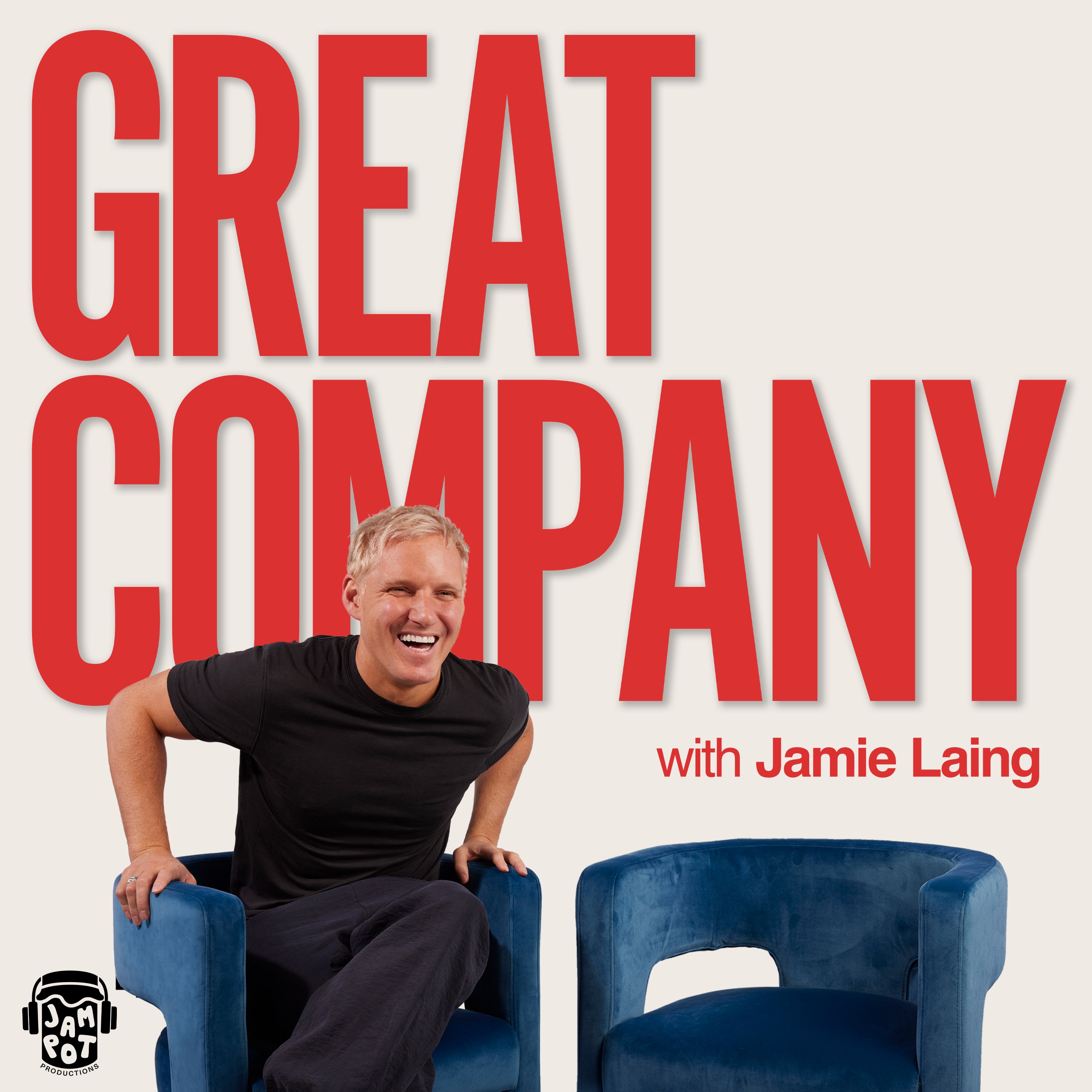
 Great Company with Jamie Laing
9 Jul 2026 · 52m · 24 chapters

Evan Spiegel (Snapchat founder/CEO) discusses building Snapchat from a Stanford student project into a global messaging platform, lessons on leadership and culture, calculated risk, and how social media should optimize for human connection. He also touches on Snapchat’s competition with Meta, his inspiration from Steve Jobs, and his views on money, fatherhood, and technology’s role in well-being.
Evan Spiegel grew up in Los Angeles with two lawyer parents. He attended Stanford, launched Snapchat in 2011 while a student, and became one of the world’s youngest billionaires at 25. He later returned to complete his Stanford degree (finished in 2018). His wife is Miranda; they have children.
Early internal secrecy was a mistake; leaders must communicate and build transparency. Snapchat’s “disappearing” visual messaging supports more authentic sharing and stronger relationships than broadcast-style social media. He argues the best tech optimizes for connection over competition.
Meta’s “Poke” imitation (Zuckerberg recorded “poke,” notification sound) and Snapchat’s screenshot-detection feature. He describes dropping out after investor funds landed during a CNC machining class, and marketing Snapchat via flyers at Santa Monica’s Third Street Promenade. He cites long-term research (Waldinger’s happiness study) linking happiness to strong family/friend connections.
Written by AI. May contain mistakes.
Learn about Evan Spiegel's journey to becoming a billionaire at a young age.
“You became one of the youngest billionaires in the world aged 25.”
Learn about Evan Spiegel's journey to becoming a billionaire at a young age.
“Long days, pool parties, your best life on a loop.”
Evan discusses the early culture of secrecy within Snapchat and its evolution.
“It feels like we're about to do a cooking show.”
Evan shares how Steve Jobs influenced his approach to design and technology.
“I mean, that's who, you know, growing up, I had the Think Different posters on my wall.”
Evan reflects on leadership, adaptability, and the importance of admitting mistakes.
“If you had to go into business with Mark Zuckerberg or Jeff Bezos, who would it be?”
Evan Spiegel discusses the significance of quickly adapting and admitting mistakes in business.
“But if you know you're wrong, you'll admit you're wrong, or will you hold?”
Evan shares his experiences with therapy and how it helped shape his worldview.
“We're trying to get to the right answer to the fastest.”
Evan reflects on his childhood, the lack of TV, and the importance of imagination.
“Growing up in LA, so you had your sisters, you, your parents, happy childhood?”
Evan recounts his experience building his first computer and the lessons learned.
“And it wasn't until, I guess I must have been in middle school, I'd fallen in love with computers.”
Evan delves into his feelings of being both an insider and an outsider growing up.
“So hang on, so you opened up the computer, but how would you even know where to begin?”
Evan shares the origin story of Snapchat and the inspiration behind its creation.
“You're hanging out with friends and you you come up with this idea to create an app.”
Evan describes the launch of Snapchat and the importance of community engagement.
“And when I first presented Snapchat, or what was called Pickaboo at the time, to my class, because it was like one of my senior projects, essentially.”
Evan discusses the decision to drop out of college to pursue Snapchat full-time.
“The launches that I remember are sort of a bit later into the life of the app where everyone would sort of cluster around, you know, a computer and watch the dashboard.”
Evan explains the growth trajectory of Snapchat and the marketing strategies used.
“and certainly as folks get later into their lives and have responsibility with, you know, family, children, et cetera, then it gets much harder to take a risk.”
Learn about the early days of Snapchat and how it gained traction.
“I would like hand out flyers like, don't you want to send, you know, don't you want to send visual messages to your friend?”
Explore how Evan Spiegel views wealth and the responsibilities that come with it.
“You became one of the youngest billionaires in the world, age 25.”
Learn how different social media platforms affect our relationships and well-being.
“And I was so excited to see independent researchers not only focus on that and study the services differently, right?”
Explore how technology can enhance human connection rather than competition.
“So if you had a magic wand and you were in control, what would you change with everything?”
Discover the potential of augmented reality to create shared activities and reduce environmental impact.
“This is like a really wacky idea, but so many of the things that you think about as physical things, right, can be made out of light in glasses.”
Understand the need for technology that aligns with human living and working.
“And if you think about that over the long term, the next 10, 20, 30 years, like that's a big idea.”
Learn about the perseverance required to succeed as an entrepreneur.
“And you know, I say this all the time, right?”
Learn about the perseverance required to succeed as an entrepreneur.
“Restrictions and more terms at Lowe's.com slash mylowe'smoneydays.”
Participate in a light-hearted rapid-fire questioning session revealing personal insights.
“To get time with you and to chat with you and to get into your mind is a huge privilege, especially what you've built and being so passionate about it.”
Evan Spiegel discusses how prioritizing team relationships and gratitude shapes his leadership style.
“As I arrived, so did the thank you note.”

Get the gist, explore an idea or ask about something said.
 Claude
On Great Company with Jamie Laing, what are the key points of this episode?
Searching your listeningAutomatic transcript. May contain errors.
0:00You became one of the youngest billionaires in the world aged 25. You said that that Metro has stolen some stuff. Mark Zuckerberg recorded himself saying the word poke that was the notification sound for the app. Such a big company was so focused on what we were doing. My mom was like, you can have your own computer if you build it. And I was like, okay. You're building a computer? What age is this? 11, 12. You've gone into one of the best colleges and then you're saying you want to drop out for this idea. It seemed obvious to work on something I was passionate about. So what are your hopes for the future of Snap?
0:32Oh my gosh, I have so, so many.
0:58award varies based on status. Members in gold get 30, silver get 20, and bronze get 10. Milo's money valid for 30 days. Restrictions and more terms at lowes.com slash milos money days. This episode is sponsored by ZocDoc. Have you been putting off a doctor's appointment or need a dentist and you don't know where to start? We've definitely been there and that's why we use ZocDoc. Actually, over the holidays, Michael had a dental emergency and seemingly every office was closed, but we hopped onto ZocDoc, found an in-network dentist, had great reviews, saw real-time appointments available, which was key.
1:34It was on New Year's Day and booked an appointment in just minutes. It took so much of the stress out of the already stressful situation. ZocDoc makes it easy to search and compare over 250 ,000 local in-network providers across more than 200 specialties. So you can find the right doctor or dentist and book instantly. Taking care of your health just got easier, download the ZocDoc app today and book that appointment on your to-do list. That's Z-O-C-D-O-C, ZocDoc. Everyone treats summer like it owes you happiness. Long days, pool parties, your best life on a loop. So what does it mean when you feel worse?
2:15The summer blues are real. It's why summer is one of the busiest stretches of the year for people starting therapy. Grow Therapy is here for all the moments when you decide you want more, more support, more clarity, more tools. Grow connects you with thousands of high-quality licensed therapists across the U.S., offering both virtual and in-person sessions, nights and weekends. The therapist you want takes your insurance on Grow. Grow accepts over 125 insurance plans. Sessions average$21 with insurance and some pay as little as$0 depending on their plan. Visit growtherapy.com slash ACAST today to get started.
2:55That's growtherapy.com slash ACAST. growtherapy.com slash ACAST. Availability and coverage vary by state and insurance plan. Hey guys and welcome to our brand new mini-series Founders Friday. Now I've been an entrepreneur for the last 14 years with Candy Kinnons, with Jampot, with Tuck Shop, my other businesses. And honestly, it's been one of the hardest journeys I've ever been on. And that's coming from a new parent. Okay. And I'm learning every single day, making mistakes every single day. So for the month of July, I want to do something special for you, our community, our amazing community.
3:31Okay. But also for myself, I'm going to be sitting down with founders. I admire people who have built brilliant businesses and have been generous enough to share the lessons they've learned along the way. Trust me, you do not want to miss this. The things that I have learned have been incredible. My first guest is someone who genuinely changed the way we communicate. He's one of the youngest billionaires ever. It's Evan Spiegel, the founder and CEO of Snapchat. Evan launched Snapchat in 2011 when he was still a student at Stanford University. Since then, he's built one of the biggest social platforms in the entire world, used by more than 400 million people every single day.
4:03We sat down together in April at a Snap Forward event I was hosting in the Cotswolds. It was incredible. And our conversation just went everywhere. Evan opens up about the early days of building Snap, the biggest business lessons he's learned, and how he thinks about social media when it comes to his own children. A huge conversation. So here it is. Our first ever Great Company presents Founders Friday with Evan Spiegel. Enjoy it. It feels like we're about to do a cooking show.
4:35that'll be the next episode yeah yeah this is how we're just going to share about how to make sourdough what's your favorite sourdough let's go do it great company
4:53do you know i want to start with some quick fire questions for you what's one belief you had as a younger founder that you've completely reversed? You know, when we were starting the company, we were so focused on secrecy. We were incredibly secretive about the products that we were working on. You know, even inside the company, people really wouldn't talk with each other about what they were working on. And obviously, there was an enormous amount of fear, partially informed by our competitive experience, right, with Meta always knocking off our products, that we really should not talk about what we're building, even internally.
5:32And I think that was a huge mistake because one of the most important things that I think leaders do, or at least that I do, is communicating with our team and, of course, facilitating that inside the company. It's so important to the culture. It's so important to furthering the vision. It's so important to making sure we get the best ideas from all over the company. So one of the biggest things we've change has gone from being like a very secretive siloed company internally to one that is way more transparent and open about what we're working on. That's it. So you were always secretive at the beginning.
6:04You just, you didn't want to say anything. We didn't want to say anything publicly. We didn't really want to say anything, you know, internally where we were really focused on was our customers. And as long as our customers were happy, we were like, you know, that'll kind of take care of care of the rest. And then, you know, as the company got bigger and the company's profile grew, it became much more important, obviously, to communicate externally, but also internally to really align the team. So that comes with, you know, building a lot more trust inside the team and relying on folks not to share all the fun stuff we're working on.
6:32But it creates a much stronger, you know, and more cohesive team internally. What was the thing you said that that Metro has stolen some stuff before? What was the thing that really hurt the most when someone took it? It's not so much what hurt the most, just, you know, from the earliest days. I mean, And I think there were four of us living in my dad's house working on Snapchat when they create a ripoff called Poke and put it at the top of Facebook. So every time you open the app, it told you to download Poke. Mark Zuckerberg recorded himself saying the word Poke. That was the notification sound for the app.
6:59And we were like, wow, this guy's really into Snapchat. You know, so I think just like learning so early on that even as such a tiny team, just, you know, four of us working out of my dad's house, maybe five of us, that's such a big company was so focused on what we were doing. made us really feel like we needed to protect our ideas, at least until we ship them to our community. Who's your business idol? Wow. I think my business idol is Steve Jobs. I mean, that's who, you know, growing up, I had the Think Different posters on my wall. I even had the posters of like the G3 Mac tower on my bedroom wall.
7:32So I think for me, you know, Steve was just such an incredible inspiration. And, yeah, that story is always really, really deeply inspired me. Why? What was it about him that you just admired so much?
7:50That he cared so deeply about design that he cared enough about the way things actually worked. Right. So he I think he really showed people that if they wanted to build amazing things or design amazing things, it wasn't just about making something that looked beautiful. It was about making something that worked beautifully. And that to me, that it's so hard to do. And his commitment to doing that was just incredibly inspiring to me. You know, Steve Jobs said many times that his main goal was to create technology that enhanced humanity. do you feel like that's your there's a similar goal for you there yeah our goal is to make computing more human so certainly sounds uh certainly sounds aligned with some of those some of those early ideals but also i mean i think throughout history i mean even you know think about stewart brand and the whole earth catalog people who were working on computers in the very very early days they really viewed them as accelerants for humanity tools for humanity and talked about them in that way.
8:53So I think, you know, at its best, computing makes all of us better. What's a success that didn't feel as good as you expected? You know, I think for us, like, people always talk about taking the company public, right? And we'd see all these, you know, photos and videos, everyone with the confetti coming down and they're ringing the bell and all this kind of thing. And I remember I was meeting with a friend of mine because I went and talked to a bunch of public company CEOs before we went public, you know, and like learn, ask a bunch of questions. and I remember one of my friends was like, whatever you do, do not get the confetti.
9:25Tell them no confetti because every single day from there, there on out, it's hard building a public company. Every single time, you know, there's a hiccup or, you know, a problem with the company or whatever, is they're going to put that confetti photo up. And what was very interesting for me was how sobering that was, right? Because I think so many people view an IPO as like an end, right? And in so many ways, it's actually the beginning of a totally different phase for the company, a totally different way of managing the company, communicating about it. So for me, I think that's something that is typically viewed as a success getting to that milestone, but comes with so many new responsibilities and so many changes.
10:05Last quickfire. If you had to go into business with Mark Zuckerberg or Jeff Bezos, who would it be? Jeff. Why? Because we don't like Mark. You know what, Jeff was really kind to me when I was starting the business. I remember I was in a big executive meeting with Jeff. It was about our Amazon relationship or something like that. And towards the end of the meeting, he excused everybody, but he stayed behind with me. And the company was going through a bunch of difficult challenges at the time. And I was really young and just trying to learn how to build the company. And he was like, Evan, just don't worry about it.
10:41Just stay focused on what you're doing. You're going to do great. And I was like, wow, for him to go out of his way to take that time to connect with me and encourage me like that. It was just a really it was a really inspiring thing and something like I've held with me to this day. And, you know, I think about that a lot when I meet other founders. Right. It's not it's not easy building a company. And for him to go out of his way and just encourage me like that was was really, really powerful. Do you know what I find that with with this sort of entrepreneurial, like the founder community? it's so collaborative everyone kind of wants to help each other but also there's competition right but people really want to help each other where there's some industries where that doesn't really happen as much but it's it's a you know like Jeff helping you sees like a young entrepreneur who needs help that's kind of like the special thing that no one really sees that goes on behind the scenes right I think it is probably the best thing about the technology industry I mean I certainly experienced it uh you know building our business and I had the great fortune of knowing absolutely nothing about running a company.
11:41So I really relied on all the incredible mentors that I met along the way who were willing to help out or were super responsive if I had a question. So I do think that is probably, at least for me, the best part of the industry as a whole. And where did you grow up? I grew up in Los Angeles. Yeah. I was raised by two lawyers. My mom was a tax lawyer. My dad did a lot of business litigation. I had two younger sisters, both way smarter than me. And I think, you know, having two lawyers meant for very spirited dinner table conversations and certainly, like debates. Yeah, debates and never, you know, never adversity to conflict, right?
12:24I mean, lawyers actually like, I think in some ways feed off of conflict. And so I think it was really interesting to grow up in an environment where there was a real commitment to intellectual honesty and integrity. I mean, we used to call my dad, you know, the encyclopedia before Google came along and sort of unseated him, you know, from this position of knowing so much about the world, really passionate about history and economics. And so there would just be really great and intense, you know, debates around the table in our home growing up. And what does that teach you, though? You know, I think one of the things that taught me at a very young age was like the ability to stand my ground in really, you know, tough conversations.
13:02I mean, I remember, you know, getting to know my wife and like, you know, us all having dinner with my dad or something. And I'm just debating with my dad and my wife's like, what are you like, what are you doing? Like, I'm like, no, this is like, this is, this is like our love language. Like we're having a conversation. Um, but I think it was really fun, uh, you know, to, to be in an environment that encouraged that because I think that's, you know, that sort of intellectual curiosity and spirited debate, I think is so much at the heart of like creating good ideas. Um, and that that's really, uh, really valuable.
13:28Yeah. I've never thought of that way. Cause you have to, Life is sometimes about having those hard conversations and also be able to stand your ground. I think that's in some ways really what separates sort of good leaders from great leaders. And that has to be from childhood. But also to develop at the same time a willingness to be open minded when you're wrong. Right. And I think like that's where like that focus on, you know, that that intellectual integrity is so important because the dinner table was about getting to the right answer, not being right. And that was a really interesting dynamic, I think.
14:04So are you stubborn? I can be, yeah. I can be. But if you know you're wrong, you'll admit you're wrong, or will you hold? To me, the entire game is how quickly can you change your mind once you find out you're wrong. So that's really... So give me an example. What do you mean? I think, you know, for example, when we're working on a new product in our company, or I'm really holding my ground on a feature, As soon as somebody proves I'm wrong or shows me our customers are looking for something different or has a better idea, what we always try to reward is the speed at which you admit you're wrong and change.
14:36And so for us in our company, we're not necessarily looking for folks who are always right because it's impossible to always be right. In fact, like quite a lot of the time, even the smartest people in the world are wrong. So the question is, how quickly can you adapt and change? How quickly can you say, you're totally right, my mistake, let's change direction. and by rewarding that behavior, you have an organization that grows and learns very, very quickly compared to an organization that rewards people who are right the first time. I mean, who cares, right? We're trying to get to the right answer to the fastest.
15:05That is, yeah, I had some therapy once, right? Just once? Just a few times. I actually think that all founders should have therapy. I totally think they should, right? Just in general, most people should have therapy if they can, but I had it quite a lot. And the therapist said to me, when you argue, you're trying to win. And I said, what do you mean? He said, well, with your family, with your friends, maybe with your partner, it feels like you're trying to always win. I said, yeah, isn't that the point? They said, no, you're trying to find the solution. You're trying to find the answer. No one should be a winner when you're arguing.
15:42And that's exactly what you're saying, right? And I think the most attractive thing is admitting when you're wrong. I think there's probably nothing more powerful, especially if you can do it quickly. especially if you can do it quickly. But it's funny you mentioned therapy. You know, my parents, I think when I was like 15 or so, 15, 16, ended up divorcing. As part of that, I started therapy. And that was one of the greatest things that ever happened to me because, you know, I was able to do so much work on myself and my worldview and all this sort of stuff before, you know, because we started Snapchat when I was 20.
16:15So in that intervening period, you know, between my parents divorcing and creating Snapchat, I actually was able to do a huge amount of work, you know, on myself, which I think was well-timed going into, you know, all the challenges of growing a business. Growing up in LA, so you had your sisters, you, your parents, happy childhood? And a dog. And a dog. What was the dog called? Walter. Love Walter. Me too. Happy childhood? Yeah, generally speaking. You know, I loved reading. I loved design, got very into computers. My parents did not let me to watch television when I was growing up until I was like a teenager or something like that.
17:02Hang on a second. Nothing? No television. No television. For what reason? They wanted me to spend my time doing other things, which was an enormous gift that they gave me because I ended up reading and building stuff. I got super into Lego. I mean, you name it. And I would use my imagination to create stuff. So I would like build a ship in the living room out of our furniture and like, you know, hit the seas like this kind of thing and use my imagination. And, you know, the flip side of that was the challenge, I think, you know, socially, because people connect through television. They connect through media.
17:36I think it's a huge point of connection in our society and really important to, you know, having shared stories is a really important way that people get to know each other and make friends. And so I think missing that point of connection was hard with my peers who were watching all sorts of stuff and talking about it at school. But in hindsight, the benefit of really spending a lot of time reading and learning and imagining was massive. And it wasn't until, I guess I must have been in middle school, I'd fallen in love with computers. You know, I'd go at lunch, I'd be in the computer lab. I was really into design, and I really wanted my own computer.
18:09And my mom was like, you can have your own computer if you build it. and I was like, okay. Man, your parents are tough. My parents were like giving me like silly potty. Like just like play with this. I was like, okay. You're building a computer. What age is this? This must have been in middle, sixth or seventh grade or something like that. So what age is that for UK audience? What is that? That's like 11 or 11, 12, something like that maybe. So just, so your parents said you can have a computer, but you have to build it. Yeah. And they took me to Fry's Electronics, which is the electronics store.
18:40And I, you know, picking out the motherboard and this kind of thing. And that was a real breakthrough for me and a really exciting moment to have my own computer, but also to realize that like building a computer wasn't that hard. I mean, I think so many times in our lives, you know, we are afraid of things that appear complicated or, you know, seem difficult. And when you actually just have a chance to build it yourself or try creating it yourself, that illusion sort of disappears and you realize you're capable of so many things that maybe you didn't feel like you were able to do before. So hang on, so you opened up the computer, but how would you even know where to begin?
19:14I had a teacher at school who was the computer teacher. And, you know, I'd taken a course over the summer or something like that in building your own computer. And so he, you know, obviously very generously helped me out. Do you feel like an outsider growing up? In some ways, yeah. I mean, in some, in others, I was like the ultimate insider, right? I grew up, I was really fortunate to grow up in a privileged family. I, you know, was able to attend a, you know, an elite private school in Los Angeles. And so in many of those ways, I think I, you know, I was absolutely an insider. I think in other ways, you know, for example, not being able to allow, you know, not being allowed to watch TV, I was sometimes an outsider.
19:58But you mentioned you said that school maybe had been a bit tricky at times in social situations. Yeah, definitely. I mean, I think, you know, I was a pretty nerdy kid, you know, spending a lot of time reading books and making stuff and not a lot of time watching TV. And, you know, I was really I remember in kindergarten, my parents helped me write a letter to the PE teacher because I was too afraid to do PE because there were too many people running around and balls flying around. I was like terrified. I'm like, so, you know, I literally sat down with my parents, wrote a letter to the PE teachers and said, like, I'm just like I'm not ready for PE.
20:30Like I'll play when I'm ready, you know, and my parents, God bless them, like supported me in doing that and like communicating that way. And it's hilarious. My three of our kids now go to the school that I went to growing up. And the PE teacher is still there. I mean, almost every day when I drop our kids off, whenever any day I drop our kids off at school. I mean, she's there and I'm like, hey, you know, morning. The PTSD. I don't want to go play dodgeball. Thankfully, I was able to overcome that that that fear. But I think, yeah, I just that that was not something, you know, I spent a lot of time reading and not a not a ton of time running around.
21:07You went to Stanford, though. Yeah, you're at Stanford. You're hanging out with friends and you you come up with this idea to create an app. How do tell me the origin story of Snapchat? So Bobby had lived across the hall from me in our fraternity. We had started working on a bunch of projects together, one of which was called Future Freshman. that was designed to help people get into college. It was like a total disaster. Only my mom used it, despite both of our siblings were applying to college at the time. So this was not a great success. And we started working on other ideas. My friend Reggie was like, oh my gosh, what if you could send a photo that disappeared?
21:44We were like, oh wow, that's an interesting idea. So I sketched out the frames of the app. It was called Pickaboo at the time. We built a prototype. Hence the ghost, right? Hence the ghost, Pickaboo, boo like a ghost. So you came with this idea, you started creating it, you started building it. With your buddies, you always thought this is what I was, this is what I want to do. I want to be entrepreneurial. I want to create a business. I think most, you know, Bobby and I really did not like working for other people. I mean, we'd both been really fortunate. You know, he had a job working for like sort of a payments company.
22:15I had a job interning at Intuit, which was an amazing opportunity. We had been working on, you know, essentially websites that would be on, not smartphones, but on those like touchtone phones, like ways to build websites on touchstone phones for India. That had been really cool because I realized on a team of just three people or four people that you could build and ship software to the world. It was really like inspiring for me. And so I think that combination of like not wanting to work for other people, wanting to, you know, build stuff and then realizing that if you build software, you could scale it and deploy it to people all over the world pretty easily was really, really exciting.
22:55And then Bobby and I just love working together. So I think all of those things combined led us to work on Snapchat. And when I first presented Snapchat, or what was called Pickaboo at the time, to my class, because it was like one of my senior projects, essentially. Was it really? Or junior projects, or whatever it is, at school. Everyone was like, this makes no sense. This isn't going to work. You can always take a screenshot. The photos don't disappear. Like, what? But what was very interesting was after, you know, that sort of summer, as we continued to work on it, we really loved using Snapchat to just send photos back and forth to our friends.
23:29We invented a new mechanism to detect when somebody took a screenshot, so we couldn't prevent it, but we would at least let you know if somebody saved your photo. And Snapchat became a way that people started talking to each other, which meant that then, you know, we pivoted, we called it Snapchat, we pivoted to talking about it as visual messaging, we added captions and drawing and all the sorts of things that you now, you know, use today. When you launch it, what was that moment like? I mean, it's probably like very anticlimactic, right? Launching an app is like clicking a button. Yeah, but isn't there that moment where when you, I remember when we first launched, I have a sweets company, we first launched our website.
24:06For me, I remember seeing my buddy and just being like, we launched it, here we go. And then just nothing happened. And I was like, okay, surely something's meant to happen. It was, it was anticlimactic for me as well. But I still remember that moment like it was yesterday, weirdly. The launches that I remember are sort of a bit later into the life of the app where everyone would sort of cluster around, you know, a computer and watch the dashboard. Because to me, the fun of a launch is the community feedback. I mean, that's the best part. So what was the moment you decided to drop out of Stanford?
24:37I was in the back of my CNC machining class. So you remember this moment. Here we go. Yeah, I remember this moment. I was in the back of my CNC machining class. I was refreshing the Wells Fargo app over and over and over again Waiting for the four hundred eighty five thousand dollars from our investors to hit the hit the account and when it landed I went up to the teacher and I said I'm so sorry I have to drop out of school Because you didn't do that you didn't walk up straight away. Oh, yeah. Yes. I'm sorry. Excuse me, Craig I actually I you know I have to drop out of school and And I mean, God bless Craig, because I went back and took that same CNC machining class again later to get my degree in 2018.
25:18That's a wild appetite for risk. Your parents are these incredible lawyers. You've grown up with them, right? So they're your parents. You admire them. They have kind of these strict rules like you have to work hard. You have to, you know, no TV, no screens, nothing at all. I imagine they were like, you've got to go to university. You've got to push. And becoming a lawyer, you have to go through all that education to become a lawyer, right? But then what you've done, you're smart. You're educated. you have ideas, you've gone into one of the best colleges, and then you're saying you want to drop out for this idea.
25:45And as we know, most businesses fail. So what was your conversation you had with your parents? Well, I think it's funny, because like what you described, I think paints a picture of very little risk, right? I was just out of school. You know, I had the opportunity to live in my dad's house and work out of my dad's house. I, you know, had gone to a really great university. So I wasn't worried about being able to get a job later if it didn't work out. I mean, I think it was almost the perfect circumstance to take a huge risk because the downside was minimal at best. I think, you know, one of the challenges I think sometimes we face as entrepreneurs, and certainly as folks get later into their lives and have responsibility with, you know, family, children, et cetera, then it gets much harder to take a risk.
26:25But I think for me, you know, it seemed obvious to work on something I was passionate about. And I think for me it was much more about the responsibility, frankly, that we had to our investors. I mean, they'd invested$485 ,000, which to us was like infinity. It's crazy. We were like, we will never need to raise money again. I mean, this is, you know, we were able to hire two of our friends. You know, it was extraordinary for us. And we really had a responsibility at that point to focus 100 % of our time on building the company. Snapchat grew so quickly. I remember downloading it for the first time and just being like, this is insane.
27:03and it just spreading like wildfire. And this was like around 2013, hundreds of millions of snaps were being sent every day. I mean, the growth was so quick. Were you expecting that? You know, it didn't feel quick for us. And in a lot of ways, actually, the growth of Snapchat was slower than traditional social media because social media is broadcast oriented and Snapchat's messaging oriented. So actually it grows slower because you're onboarding a smaller network, like just your close friends and family, not necessarily, you know, 2000 people you don't know very well. And so I actually remember feeling a lot of pressure that like, oh gosh, I hope this can grow and grow faster because just the nature of Snapchat as a messaging platform means that it doesn't grow as fast as broadcast social media.
27:45But how does Snapchat catch on to other people outside of your college? How did that, how did you market it outside of that? You know what? We tried to market it really unsuccessfully. So, you know, I would, I literally went to the, there was a mall, an outdoor mall in Santa Monica called the Third Street Promenade. I would like hand out flyers like, don't you want to send, you know, don't you want to send visual messages to your friend? At that time, we advertised it as 10 times faster than MMS because sending a picture via text message at the time took like minutes. You know, it's like crazy.
28:13And we invented a way that you could send pictures really quickly. So we would try to advertise that way. And people are like, what? Like, what are you talking about? But a bunch of our friends started using it. My cousin started using it. He was in Orange County, started using it with some of his friends. over the summer as all of our friends who had been using it at school went back home, you know, to their hometowns, they shared it with their friends. And ultimately, I think the only way that Snapchat's really grown consistently over time is just friends sharing it, you know, with other friends or with family members and teaching them how to use it because Snapchat was so different, right?
28:43It was a new way of communicating visually. And people weren't familiar with an app that opened to the camera like that and prompted you to communicate with a picture instead of words. When was the point where you suddenly went, oh, this could be a thing this is working?
28:58I think it was like partway through my senior year of school because I would sit in the back of my classes and refresh the little snap counter we had that just showed how many snaps were being sent. And early on in the year, you know, it would kind of go up by one every now and then. But midway through the year, it was incrementing, you know, very quickly. So every time I'd check, maybe it was 100 new snaps had been sent or something like that. And that was about the time that we realized we were running out of money to pay for the server bills. You know, my grandparents had given me$10 ,000 that I had spent Bobby and I had like maxed out the credit cards.
29:27My dad was like, I am not paying for people to send pictures. Like, what are you talking about? So, uh, so that was really the point where we were like, okay, we've got some momentum here, but like now we have to figure out how to pay the server bill. So you were big, you're huge risk taker. Or was it calculated risk? I would say definitely like highly calculated risk. Yeah. I, well, I'm thinking about other risk. Cause anything, cause what I see is so interesting, right is that you you wouldn't do PE you didn't like that because you felt like that was too much but at the same time you're happy to take a risk which is even worse than doing something like PE do you know what I mean like is it is it I don't know yeah sounds pretty bad right now that's what I find so mad right and so interesting is that you're you're happy to risk life career going to college other people's money you're happy to take that risk but you won't go to a PE class because you're worried about the bulls and the intensity and things like that?
30:22I think you're maybe missing the other side of the equation, which is reward, right? What is the upside of PE class versus building a company? I mean, I think that it's so important to, you know, very thoughtfully consider if you're going to take a risk, you know, especially a risk, like for us working on our specs glasses that are coming out later this year, this has been a 12 year undertaking, enormous amount of risk, but also one where the upside is enormous and one where we have huge strategic advantages. So I think that's an example of a very thoughtful, calculated risk.
31:12Not a member yet? Join for free today because members get more at Lowe's. Milo's Money Award varies based on status. Members in gold get 30, silver get 20, and bronze get 10. Milo's Money valid for 30 days. Restrictions and more terms at Lowe's.com slash Milo's Money Days. This ad is sponsored by ZocDoc. Hi, it's Danny Pellegrino from Everything Iconic. Have you been putting off that annual doctor's appointment because you don't want to make the call? Or maybe you've been meaning to find a new dentist, but you have no idea where to start. I find that's especially true when you move. It's hard to find your people.
31:44I've been there, which is why I use ZocDoc. Now, as a busy podcaster parent and someone who's always juggling a million things, I love anything that makes life easier. And ZocDoc lets you search and compare local in-network doctors with over 250 ,000 providers across more than 200 specialties. You can read reviews from real patients, find a provider who feels like the right fit, see actual appointment openings, and book instantly. I recently had a last-minute health issue pop up and needed to see someone fast. Instead of calling around or sitting on hold, I found a doctor on ZocDoc and booked an appointment in just a few minutes.
32:19It made the whole process so much less stressful. Now, taking care of your health just got easier. Download the ZocDoc app today. That's ZocDoc, Z-O-C-D-O-C, and book that appointment on your to-do list. Everyone treats summer like it owes you happiness. Long days, pool parties, your best life on a loop. So what does it mean when you feel worse? The summer blues are real. It's why summer is one of the busiest stretches of the year for people starting therapy. Grow Therapy is here for all the moments when you decide you want more. More support, more clarity, more tools. Grow connects you with thousands of high-quality licensed therapists across the U.S., offering both virtual and in-person sessions, nights and weekends.
33:04The therapist you want takes your insurance on Grow. Grow accepts over 125 insurance plans. Sessions average$21 with insurance and some pay as little as$0 depending on their plan. Visit growtherapy.com slash ACAST today to get started. That's growtherapy.com slash ACAST. growtherapy.com slash ACAST. Availability and coverage vary by state and insurance plan.
33:35You became one of the youngest billionaires in the world, age 25. That's young. How important is that side of growing a business to you, the sort of financial side? Well, it's interesting, right? The more money you have, the less important that becomes, right? And I think the biggest step change for me and when I really felt the difference was our investors like really wisely and thoughtfully, I think when the company was valued around$800 million or something like that, allowed Bobby and I each to sell$10 million worth of stock. And that immediately took the financial stress and pressure of growing a business just off the table, right?
34:17I was like, okay, I can buy a home and like provide for my family and like all of those things that I think, you know, are just constantly sort of gnaw at you, right? We're taken away very early on. And I think that's another example of then our investors creating an environment where Bobby and I felt comfortable taking way more risk and really building the business for the long term and making really big bets on the future of Snapchat. So I think for me, that was really the moment I felt that step change and that like relief in a sense. And then, you know, once you feel like you can buy a home, provide for your family, et cetera, then the rest is awesome and fun and, you know, an opportunity to give back and all these sorts of things.
35:00But it's not as fundamental as that first step change from like, you know, living in my dad's house to like being able to buy a house. That was the big, the big difference. You're right. Money is, is fundamentally important when you can provide your family, buy a house, buy a plane ticket, whatever it is. Above that, it doesn't, it sort of doesn't really mean anything as much as much as we think it means, right? I think beyond that, then it comes with a huge amount of responsibility, right? That feels, you know, it's pressure in a different way. And I do think, you know, having had this extraordinary opportunity, that comes with a massive responsibility to give back, to make a positive impact.
35:38You know, that's, I think, then, you know, once you've provided for yourself, your family, immediately the next step is like, okay, how can I use this to give back to my community or, you know, whatever it is. And how do you stay ambitious? You know, I love what I do so much. I love serving our community. Our community constantly is pushing me to do more, to do better, to make something more interesting or engaging that helps them connect better with their family and their friends. And so I think for me, it's our community that provides that constant drive and ambition to build a better service.
36:13How do you balance being a successful founder, but also being a good dad and a good husband? You know, I'm so fortunate to have a fabulous wife and really wonderful kids. I think it would be almost impossible without, you know, Miranda, who's my wife. I mean, she's just an extraordinary mom and so committed to our family and so supportive of me. I mean, there is not one time in our entire marriage or actually our entire history of being together that she has criticized me for working too hard or working too late or, you know, being totally exhausted. She's never created that pressure for me. And so as a result, I think I feel like I can do great work without constantly, you know, feeling that anxiety and pressure.
37:01And, you know, it's in some ways, it's really fortunate because we met each other when we both already had really demanding careers. She and she already had Flynn, who I think was three at the time or something like that, two or three at the time when we met. And, you know, so I think we sort of built our lives together already sort of admiring and respecting the intensity with which we approach our family and work, et cetera. And so I think that was really helpful, you know, in terms of creating a foundation where over time, we've just worked really hard together to create the right, the right balance.
37:34But it's, it's very difficult. And, you know, there's often, there's a lot of times where there isn't, there isn't balance. So what's harder being a dad or building Snapchat? I would say they're hard in different ways. It's so diplomatic. They're hard in different ways. Because I'm a new dad. You're like, being a dad's way harder. It is. You know, yeah, it's hard being a dad. And what I'm finding tricky, which I didn't think was going to be hard, is finding that balance between being a present dad and being a good dad, but also building the businesses that I have. And I find that's tricky at times.
38:13But it's interesting, right? I mean, kind of going back to our risk-reward conversation, the heart-expanding miracle of being a dad is just so unbelievably rewarding and far more rewarding than building a business, right? So maybe that's what balances it all out. Your parents didn't allow you to watch TV, right? Do you do the same with your kids? With some minor exceptions, yeah. We allow YouTube during the... We've got a two-year-old who really doesn't like getting his hair cut, so we allow YouTube videos of... Do you know what a Bobcat tractor is? You know, those four-wheel skid steer tractors?
38:52That is his thing. That's his thing. I mean, for his birthday, I got him like six different size Bobcat tractor toys, so he wants to sit and get his hair cut and watch Bobcat tractors, and that's good by me. That's the only rule. That's it. When he's getting his haircut, he can watch YouTube. Because there's this whole conversation right around sort of social media. And, you know, today when we were talking about social media and what Snapchat is doing so well, it's about connection again. And I interviewed a great guy, which is all about what creates happiness. And there's a happiness test that lasted 100 years or close to 100 years.
39:30It started in 1920-odd or something, Robert Waldinger. And they followed these people, 917 people throughout life, and they checked in them every two years. They checked their brain, they checked their financial status, they checked their connections, they checked everything, right? And it was one of the biggest social experiments ever. It lasted nearly 100 years. And at the end of these people's lives, they realised the people who are fundamentally the happiest weren't the ones who were richest or most successful or had the most power. is the ones who had the best connections with family and friends.
40:01And it's so simple. The more we're connected, the happier we are. And it was kind of amazing today to realize what you guys are trying to do is bring back social media to what it was, which is about connection. And there's a great quote, which you said, it's something along the lines of how social media started as a place where we're all connected, but actually it's come to a place where we slightly become disconnected. What are your views on that? Well, I think technology has such incredible power to help people connect and build deeper relationships or sustain relationships, especially when we're separated and, you know, further apart from our friends or family or we've traveled halfway around the world or, you know, we've moved for a job or something like that.
40:40And I think we really want to build a service that supports those deep relationships and connections. And one of the things we found in building Snapchat, right, we built Snapchat at a time when social media was very focused on, you know, performance metrics like likes and comments where everything that you posted was saved forever. And that changed what people were sharing. They were only sharing the good parts of their lives, right, and not the other 99%, which is actually how we build those relationships and connections with one another. and we found that because Snapchat was about sharing the moment in the moment, right, and allowing people to express however they were feeling and then letting that moment just go away, that folks weren't paying attention to how they looked.
41:17They were actually communicating how they felt in that moment. And so when you could see your friend's face and how they were feeling and where they were and, you know, rather than them typing out a paragraph via text message, that instantaneous moment of connection was so incredibly valuable and we built our service around that. And I think what's been so gratifying for me over the last couple of years, you know, we always found in our own research that, you know, people felt happy when they use Snapchat, that it improved their relationship with their friends and their family. But now because there's so much interest in social media and its impact, there have been independent studies that have shown, you know, there's one out of Australia, one out of the Netherlands, another one that just came out of the United States that shows Snapchat has a positive impact on people's well-being.
41:58Isn't that great? And their relationships. It's awesome. And I was so excited to see independent researchers not only focus on that and study the services differently, right? Because the other concerning thing is that it found services like TikTok or Instagram were not good for people's well-being. And I think it's so important that we look a layer deeper rather than bundling everyone up and calling everything social media, really understanding how the technologies, the services we use impact our lives. And so, you know, I was really excited to see the positive impact Snapchat's making. It's something I've always known, but to see it in the research was really exciting.
42:32What you said is this, my hope is that social network of the future is right here in person. I think one of the biggest challenges we face today is that we have gotten so good at connecting with people who are really far away, but we have gotten less good at connecting with people right in front of us, across from us at the dinner table. Man, that's great. I'm going to get that tattooed across my chest. You're so nice to pick good quotes. Our team quotes me back to myself a lot, but usually to make a, to point out when I'm wrong. So thank you. But that's so good. Cause it's, cause life is really about being around the dinner table.
43:04There's a great person I admire who says you can tell when someone's successful that their dinner table gets longer. And that's how we should sort of really value success, right? Is that when your dinner table gets longer, that's friends, that's family, that's loved ones, that's people you care about. Right. And I think because of social media, we've kind of forgotten that. Unfortunately, I don't think it's just social media. I think the challenge with computers today and smartphones today is that they're all designed around a single player experience, right? Whether it's a computer or an iPad or a phone, it's all something that people use alone, right?
43:39They're only designed to be used as one individual. And I think what's so interesting about specs and our work with glasses is that two people can wear glasses together or more, see the same thing together, play the same game together, build something together. So it's a technology that actually gets out of the way and brings people together to do things. And I think it's so funny, and I see this all the time with our boys, right? It's so easy to build connections with other people around shared activities and shared experiences. Creating shared experiences, that's one of the best points of connection, right?
44:11And we generate stories that then we can share with one another or share with our friends that furthers that connection. And so I think to think about technology that enables people to get all the benefits of computing but to share those experiences together really sets us up for a totally different way of relating to technology that's really about being present together in the moment rather than on a device. So if you had a magic wand and you were in control, what would you change with everything? Like the whole wow. Yeah, not the whole. I mean, a magic wand, I'm going to go big here. If that's like world peace, I've got a long list.
44:44Yeah, let's channel it to some area, right? But in terms of tech and social media, what would you, focus on social media, what would you do if you had a magic wand and you said, this is what we have to do with it to make it right, to make it good, to make it feel, make it a happy place? I think I would really try to make sure that services are optimizing around human connection and relationships rather than human competition. And I think human beings like to compete, but far more than competing, I think they like to connect with one another. And I think if we make tools that make it easier to build relationships and connect than it is to compete, that we will have a more productive and perhaps more fruitful relationship with technology.
45:34You know, when we were on stage, we were talking about specs, right? And you're saying it's taken 12 years to build it. are you excited about the future of it? I'm so excited. I mean, I've dedicated so much of my life to working on this technology. I'm so passionate about the way that it's going to change the way people think about computers, right? Not as something that take us away from the world, but as something that keep us in it. I'm so excited about this. This is like a really wacky idea, but so many of the things that you think about as physical things, right, can be made out of light in glasses.
46:11Explain to me, what do you mean? Well, what's really fascinating about specs and about augmented reality is that you can imagine like if you and I were gonna play a board game together, right, today that board game is made somewhere in the world, it's packaged up, it's put on a ship, right, and sent all the way here to the UK and it's unboxed and unwrapped and all that sort of stuff and then we put it on our table and we play a board game. What's so powerful about specs is that we can use light to create that exact same physical experience. So you and I can see the same board game and move the pieces around, right?
46:47And have that experience of play together with something that historically would be a physical object, but now today is represented with light. And the spillover impact of that in the world as that becomes more and more popular is a really big deal, right? It improves the accessibility of things. It, you know, because no longer, you know, do you have to get the thing on a ship all the way across the world? It improves the environmental impact because all of these things that were physical are now things that we can share that are made of light rather than physical objects. And I think for a lot of businesses, actually, it improves the economics because you can scale your idea at a lower cost.
47:22Right. And so I don't think, you know, I think, you know, if you imagine the world that way, we can give more people more things at a lower cost with less environmental impact. And if you think about that over the long term, the next 10, 20, 30 years, like that's a big idea. uh that i'm really excited about so what are your hopes for the future of snap oh my gosh i have so so many give it to me i know i think i i think that the headline would be that we make computing more human that you know 20 30 years from now uh we look back on you know all these different size screens that people are hunched over today and we say that is crazy that we used to live like that work like that communicate like that uh and thank goodness we change the way computers work to better fit into our lives as humans.
48:09I mean, I think that's the story of the last 40 years of computing is that humans have had to turn their lives upside down to get the benefits of computing. And instead, in this moment, we should be asking, how do we change computing to better fit humans and the way that we've naturally lived and worked and played together for thousands of years? What do you think makes a successful founder an entrepreneur? Not giving up. Yeah. That's it, isn't it? I wish it were easier. Oh, man.
48:42And you know, I say this all the time, right? Especially in the UK, there's this bit of a narrative where to live a fulfilled life, you have to be an entrepreneur. You have to be a founder. And if you're not being an entrepreneur and founder, then you're not living. There's kind of like a sort of idea that's being sort of spoken about. And I'm like, hell no. No. You have to be a complete psychopath to be an entrepreneur and founder. It's the hardest thing in the world. It's virtually impossible at times. And that resilience you have to have to keep going, to wake up every single day, to keep going, that's what the success is, right?
49:22I think so. And on some really tough days, you know, when I've asked friends for advice or other entrepreneurs, you know, the answer invariably is like you just got to knuckle down and figure it out. And I think, you know, that's why I say I wish I wish it were easier. I wish there was a silver bullet. But that's that's seems to be the common denominator across founders. Did you ever get to a point where you thought you were going to give up?
49:50Um, there have been really hard days, but I don't think that's ever seriously been on the table because I love what I do so much. And it's the love of what I do that overcomes all of that exhaustion and frustration and whatever it is on, on a bad day.
50:36We'll be right back. for 30 days. Restrictions and more terms at Lowe's.com slash mylowe'smoneydays. Everyone treats summer like it owes you happiness. Long days, pool parties, your best life on a loop. So what does it mean when you feel worse? The summer blues are real. It's why summer is one of the busiest stretches of the year for people starting therapy. Grow Therapy is here for all the moments when you decide you want more. More support, more clarity, more tools. Grow connects you with thousands of high-quality licensed therapists across the U.S., offering both virtual and in-person sessions, nights and weekends.
51:14The therapist you want takes your insurance on Grow. Grow accepts over 125 insurance plans. Sessions average$21 with insurance and some pay as little as$0, depending on their plan. Visit growtherapy.com slash ACAST today to get started. That's growtherapy.com slash ACAST. growtherapy.com slash ACAST. Availability and coverage vary by state and insurance plan.
51:45Evan, listen, a big thank you, man. My pleasure. To get time with you and to chat with you and to get into your mind is a huge privilege, especially what you've built and being so passionate about it. And what I love is when you meet entrepreneurs or founders of such big businesses, but still have the passion and excitement that you have. That's insane. I love that. Oh, thank you. Like when people ask me about my sweets business, my eyes light up. It's like talking about my second baby. It's like, oh, my God, I love it so much. And the same with you. Well, I was told I was going to get some candy out of this.
52:15Don't worry, man. You got loads. Don't worry, Scott. I got loads of you. Listen, we'd like to end the conversation with eight quickfire questions. You ready for this? Well, start and end with quickfire. You know how it is. I've never seen any like that. Here we go. What's the saying or phrase that makes you smile or cheers you up? Love you, dad. Best compliment anyone's ever given you? I think the best compliments have just been around my ability to listen, learn, and change and try to do that really quickly. So I think my wife often has feedback in areas where I can improve. And I think when she notices my effort in that regard and change, that's usually a well-received compliment.
52:58Wise feedback is the best. I get it a lot. What scares you most about yourself? I think I'm extremely impatient. I'm really conscious of time, like earthly time. And I think sometimes that gets in the way of really being in the moment or even really giving time to something that's maybe inconvenient but incredibly important. and I think I'm really trying to work on that impatience, I think, to make sure that I'm living fully in the moment and in my life and I don't let it all, you know, yeah, just fly by because I'm trying to get to the next thing. When was the last time you cried? Oh my God, this weekend.
53:52I watched the movie, I Swear, and I was bawling. It's unbelievable. It was unreal. so inspiring. How good is that acting? But I was like, oh, I was like, I was blown away by this film. And we don't like, we don't watch movies that often. And I was just like, in tears the whole time. Dude, I talk about this a lot. Do you really? Don't I? On this show, it's unbelievable. No, I swear to God. This was like a life-changing experience. Yeah. Dude, it's insane. It's really. I hosted the BAFTA film Red Carpet. Oh, wow. And I spoke to Robert, who was the guy who played it. And he was unknown. I just spoke to this guy.
54:29I didn't really know anything about him. And then suddenly he wins the BAFTA. And I watched it and I was like, you're like the greatest actor. And the story of John David is unbelievable. You have to watch another movie called Nowhere Special. Okay. Nowhere Special is, James Norton's the actor. It's about a window cleaner who has to look after a boy. Man, it will, it is unknown. Nowhere Special. Nowhere Special. It's unknown. It's a little bit like I saw it. It's unbelievable. Watch that. What's something you can't let go of? I cannot let go of, like, my phone. Computers. Yeah, there you go. That's it.
55:13What's your guilty pleasure? Probably every now and then playing Call of Duty with my friends. That is my guilty pleasure. And not appropriate for young kids to watch either. I'd fuck you up on that. I would snipe the shit out of you. That's probably true. That's probably true. What turns you off? What turns me off is when people are talking over other people. It drives me crazy. Yeah, it just like really grates on me. I don't know. I'm like, just let them finish, you know? It's a great answer. I think I do that sometimes. Oh, my gosh. I'm so excited but I've learned from this having done a podcast for so long that actually silence is golden it's like you got into my team's mind do you have any other feedback yeah well what turns you on I think people who are really open who wear their heart on their sleeve who aren't afraid to talk about what they love and share that uh you know that i get really inspired by that i love that and last one the cheesy one what do you like most about yourself oh boy um like i i really make an effort to prioritize our team and our community on a super on a on a human level uh and you know sometimes that's as basic as like going out of your way to you know you hear somebody's had a loss or you know gone to a car accident like making sure i pick up the phone call them how are you doing how's your family is there anything we can do to help and i think like that to me well it's obviously the foundation of like real relationships but i think uh it's just something that's really important to me or writing you know i write thank you notes or you know yeah uh just for stuff our you know team members have done that's awesome just like hey thanks man a thank you note it's it's the greatest thing my parents taught me yeah it honestly is write a thank you note I got a job once because I I wrote them a thank you note for having me on and then they gave me the hosting job back in the day yeah thank you notes go I remember as a kid after my birthday or after Christmas it's like mom it's Christmas day and it's like here's the stack like she would gift me gift me for Christmas thank you notes I'm like mom like okay I was my first ever girlfriend I my thank you note arrived to the house before I arrived and I thought it was going to arrive afterwards.
57:50But weirdly, it worked. That's like very timely. I like that. I like that. As I arrived, so did the thank you note. I was like, hi. But I also liked you had real conviction it was going to go super well. I mean, yeah. I loved the weekend. I loved the moment we had this. So they're like, sorry, you're a liar. Evan, thank you, man. I appreciate you. You're incredible. Thank you so much for being great company. You're the best. Thank you so much. Thank you. I really appreciate it. Thanks so much. Thank you.
58:30Milo's Money Days are here, and we're making it rain for rewards members. For the first time ever, when you make a purchase of$200 or more through July 12th, you'll get up to$30 back in extra Milo's money. Not a member yet? Join for free today because members get more at Lowe's. My Lowe's Money Award varies based on status. Members in gold get 30, silver get 20, and bronze get 10. My Lowe's Money valid for 30 days. Restrictions and more terms at Lowe's.com slash My Lowe's Money Days.
Evan Spiegel, the co-founder and CEO of Snap, launched Snapchat in 2011 while he was still a student at Stanford University.
Since then, he’s built one of the biggest social platforms in the world, used by more than 400 million people every day.
Evan's idea has genuinely changed the way we communicate. So, I couldn’t wait to sit down with him for our first episode of Great Company Presents: Founders Friday mini-series.
In our conversation, Evan shares:
Evan is proof that every successful business starts with an idea and sometimes the biggest rewards come from having the courage to take a risk...
Evan Spiegel is Great Company.
If you enjoyed the show, you can also follow us:
Instagram- @greatcompanypodcast
TikTok - @greatcompanypodcast
Jamie - @jamielaing
And if you've got thoughts, questions and comments, you can email us at: [email protected]
THE CREDITS
Producers: Helen Burke
Assistant Producer: Issy Weeks-Hankins
Video: Josh Bennett
Senior Social Media Manager: Laura Coughlan
Audio: Rafi Amsili Geovannetti
Executive Producer: Ewan Newbigging-Lister
Great Company is an original podcast from JamPot.
Hosted on Acast. See acast.com/privacy for more information.