Ask ChatGPT
 Great Company with Jamie Laing
6 May 2025 · 1h 18m
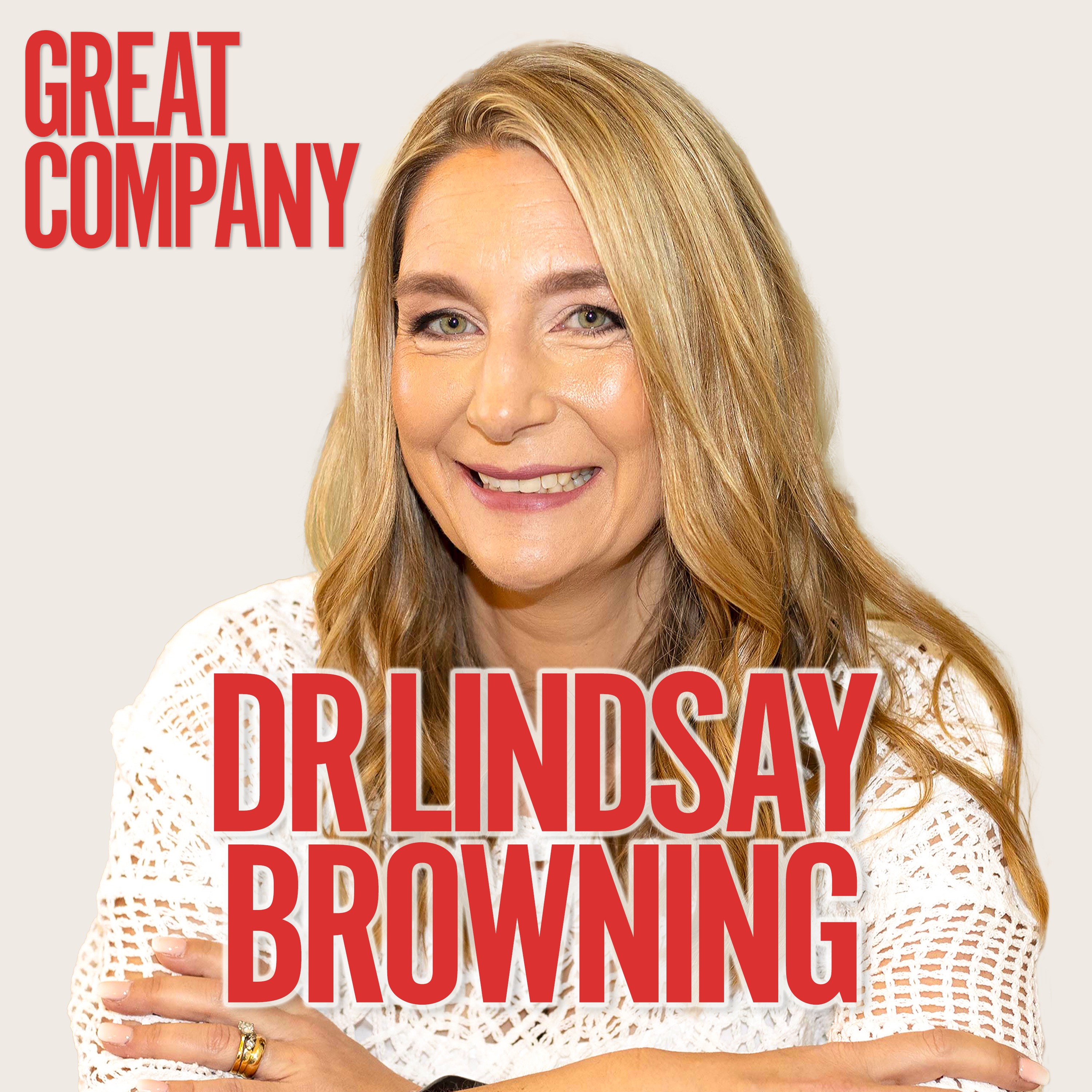
Host: Jamie Laing
Dr. Lindsay Browning, Psychologist and Sleep Expert
Acast
In this episode, Jamie Laing engages with Dr. Lindsay Browning to explore the critical importance of sleep, its influence on mental and physical health, and the common misconceptions surrounding sleep practices. They discuss the science behind sleep, the effects of sleep deprivation, and practical solutions for improving sleep quality.
Written by AI. May contain mistakes.

Get the gist, explore an idea or ask about something said.
 Claude
On Great Company with Jamie Laing, what are the key points of this episode?
Searching your listeningAutomatic transcript. May contain errors.
0:28Hey, it's Adam Grant from WorkLife, a podcast from TED. software, you'll work smarter, not harder. Freshworks uncomplicates. Learn more at freshworks.com. Does it ever feel like you're a marketing professional just speaking into the void? But with LinkedIn ads, you can know you're reaching the right decision makers, a network of 130 million of them. In fact, you can even target buyers by job title, industry, company, seniority, skills, and did I say job title? See how you can avoid the void and reach the right buyers with LinkedIn ads. Spend$250 on your first campaign and get a free$250 credit for the next one.
1:04Get started at linkedin.com slash campaign. Terms and conditions apply. Hi, this is Knox from the Popcast with Knox and Jamie. And maybe like us at the Popcast, you also know people who have been smokers or vapors. And Zen is the one product it seems like everyone is talking about because there are many good reasons to make a change to Zen nicotine pouches. Reasons like Zen nicotine pouches are still America's number one choice for smoke-free, hands-free nicotine satisfaction. And you can choose between 10 varieties, each variety available in either 3 or 6 milligrams. Check out zen.com slash find to find Zen at a store near you.
1:37Warning, this product contains nicotine. Nicotine is an addictive chemical.
1:46Hello, everyone. My name is Jamie Lang, and this is Great Company.
1:55Hello, Jemima. Hello. This is our third try at opening this. What, a tin? We've just got a jar in front of us. Guys, you join us. We're trying to open some jam, and we're just really struggling. This is the third attempt. Go on, go on. Oh, God, it's really hard to open. It opened. Like our jam pop. Well, hello, Jemima. Hello, Jamie. You're the presenter. I'm the producer. That's exactly it. And you guys. are our owls, our wonderful listeners. We haven't mentioned this in a while, but we can mention it now. Hold on one second, sorry. These headphones are not nice. So Jamie has been wearing earbuds, which Sophie and Melissa like to wear, but we like the big ear covers, don't we?
2:40Yeah, that's way happier. It's terrible. I can't share buds. I'm waxy. But I have really sensitive ears, so I have to like, I want it to be like... Mr. Tinnitus. Yeah, but you know what? Tin man. Tin man. I went and had my hearing tested. Yeah. it's absolutely fine really so I don't know where the tennis is from I had we had our ears tested at another company I worked at because we worked in audio they were like we want to make sure your ears are okay and my friend so how old were we he was like 29 and he his hearing he couldn't had like high frequencies couldn't hear which and that came back and it was like you've got the hearing for high frequencies of a 50 year old which means you can't hear women and children and he was like well well there we go I suppose I can't
3:27what were you about to say you can't talk about until now you just started something sounded very intriguing what i said i can't talk about well we can talk about it now did i say that oh my god you can't remember there was nothing what an alluding you know when someone goes to you oh my gosh um i was talking you know if someone starts speaking that way i'm like what i was gonna say i know immediately hooked it can i can i understand that what does that do for so when I say something when I say to Sophie you'll never guess what happened it's like nectar to her like what is it the same to you yeah yeah but what was that thing you were going to tell us the listeners me and the listeners we're sat here waiting I don't know what it was was it to do with Reardon no there was nothing but Reardon was amazing one of our greatest episodes boy oh boy thanks guys for trusting us with that one yeah and to be honest I would love to hear you the lovely owls that's what I was going to say about the owls we haven't said that for a while oh my god that was so not worth it I know I'm sorry but we haven't spoken to our owls our wonderful listeners OWLs our wonderful listeners if you like Reardon and you want to hear more stories like that let us know because we are thinking about getting more of those guests on I've got dates I've got Jamie's dates I'm going to check them with Reardon we're going to get a part two for you it's going to be amazing but can you guys send me some questions because everyone's like I want a part two I want a part two and I'm like oh there's lots there's lots to talk about so today's episode is a great one because Oh, I'm excited.
4:48Why are you excited? Because we all do this. We all sleep. We all sleep. And I want, I'm really interested in, I want to know for me if I sleep well. Because I think I sleep well, but maybe I don't. We have today Dr. Lindsay Browning on. Lindsay is a sleep expert. Yes. She's a psychologist when it comes to sleep. Yes. So previously, people have problems with sleep. You'd go to the doctor and you'd get prescribed medication. Correct. However, Lindsay, so like back when Dr. Lindsay first started studying sleep, it was that you just go to the doctor and you get prescribed medication. However, she was interested in kind of the psychological side of sleep and that you can, you know, like the medication might help you, but it might not be really tackle the problem as to why you're not sleeping.
5:34So that's the angle she comes from. And it's fascinating because, as you said, we all do it. We all should be doing it. We all should be doing it. We all probably don't do it as much as we should be doing. The importance of sleep is crazy fascinating. it truly is you know the science behind it why we need it um why some people sleep better than others insomnia sleep terrors all these things which is like a really exciting thing and with dr lindsey browning i want to discuss everything yes it's probably worth saying if you are struggle to sleep it can be quite triggering to listen to people talk about sleep yeah if you do struggle with your sleep there are absolutely tons of things that you can do to help so hopefully you won't find this if you do struggle with sleep you'll find this like a reassuring lesson yeah and so the big thing is is that everything is curable yeah and really easily and really easily so you can be helped which is fascinating now also we're going to put links in the description of the podcast so go and check out those things if you're struggling with your sleep or want help or want more information on lindsey browning everything's down there she also has her books and all those things which is incredible yes yes we'll leave a link to her company's called trouble sleeping which is going to be amazing also before we start the show we hope that you like this podcast and you keep coming back if you could please subscribe that would be amazing a lot of you are listening to this but not a huge amount of you have subscribed so there's people who haven't subscribed yet what a little slap on the wrist from jamie i know please click that button because it does us absolute wonders can i just tell you a little side quest story i worked on a show one of the first shows i ever produced and it was with a group of um like young people anyway there are about 30 young people working on this show and one day after we'd released about five episodes someone turned around and was like can you please ask the people who are working on the show to subscribe to the episode and we were like yeah and they were like do you know how many subscribers we've got bearing in mind there's at least 30 contributors to the show let alone all the production team making it and hopefully listeners 11 people subscribed there you go no one you don't click the button people don't subscribe you don't subscribe and I can't tell you how much it does for us so if you can click that button or tell your friends or your loved ones, whoever it is, click the button, that would be amazing.
7:40Okay, are you ready for this? I'm so excited. If you're trying to sleep, this might be a good one. But if you're also trying to stay awake, this is maybe a good one as well. Here we go. That's a weird intro. It's a really weird intro. Please enjoy this episode of Great Company with Dr. Lindsay Browning. Hi, I'm Dr. Lindsay Browning and I'm in Great Company.
8:05Before we start, can you explain to everyone who you are and what you do? Sure. So I'm a sleep expert. I have a degree in psychology, a degree in neuroscience and a doctorate from the University of Oxford in insomnia. And I specialize in helping people with sleeping problems and educating people on better sleep and working with different industries like schools and the NHS police about shift work and anything sleep related, basically. It's funny because it's one of those things that sort of growing up, you want to be a police officer or you want to be an actor or a singer, but it's kind of a unique thing to get into.
8:41Especially back then. So, you know, I did dream psychology and neuroscience and sleep is one of those things that, especially, you know, it was 20 years ago when I graduated, it was really not very well researched. I mean, now it's everywhere. But back then, sleep was even seen as a bit of an inconvenience, you know, a nothing kind of subject. It's something that we do as a waste of time. But, you know, I knew, and it was really interesting to understand, you know, what's going on in the brain, especially neuroscience-wise. So I just fell into looking at sleep, researching sleep. And as I researched it more and learned more about it, I found that there was a huge amount of people who really struggle with their sleep.
9:21And that's where my interest in insomnia and helping people with their sleeping problems came from. Normally, I say normally, when people find sort of an interest in something, it means that it's probably affected themselves. Growing up, did you, was your sleep affected? Yeah, so loads of people ask that. But actually, I'm genuinely a really good sleeper. I've always been a really good sleeper. I love sleep. I dream loads. I remember my dreams. I've always been really interested in sleep and dreaming. But But it's just really the aspect of people struggling with their sleep that I really wanted to go into helping.
9:55It's like counseling or being a medical doctor. It's going into something where you can help people. And that's just the niche where I saw there was a bit I could help with. What actually is sleep? Great question. So when we fall asleep, our brain doesn't just turn off. It's not like when you turn your phone off. It's more like a scan and it's amazing. It is the most active time of your brain. It's incredible. So we have different parts of sleep, light sleep, deep sleep and REM sleep. Okay, break this down for me. So REM sleep, start with that. That stands for rapid eye movement sleep. And that's because during that part of sleep, your eyes, like under your shut, your eyelids are shut, but your eyeballs themselves are moving rapidly from side to side.
10:44So if you are with a partner and you look at them and they're asleep, you can tell if they're in REM sleep because their eyeballs, you can see them moving quickly behind your eyelids. And REM sleep is amazing. And your brain activity, if I was, you know, psychostatic electrodes on your head and I was monitoring your brain, I wouldn't be able to tell by just looking at your brain activity if you were awake or asleep in REM sleep, because your brain is so active. And we tend to have vivid dreams at that time. You know, our brain is processing, it's simulating it's sort of practicing for the future you might have dreams about turning up for like one of these not wearing any clothes or turning up for an exam naked or not having revised or um you're running away from someone because our dreaming sleep is often a time for our brain to kind of simulate and practice things that it worries might happen to us and so that's REM sleep and then deep sleep our brain looks completely different in deep sleep and our neurons in our brain are synchronized they're all kind of firing at the same time whereas REM sleep and and our brain activity right now our neurons are firing all over the place and it's all really random but in deep sleep all our neurons are firing in like waves and if you look at the brain activity of our sleep, it looks amazing.
12:06It's just like you can see the waves literally of all the neurons firing together. And it's associated with producing different hormones. Children produce growth hormone during deep sleep. And it's a time when our brain is, we don't fully understand every single thing that's going on in the different parts of sleep, but we know that it's associated with a whole host of benefits. And light sleep is where the brain activity looks very very similar but the waves are less deep and a bit faster so the difference between light sleep and deep sleep is more of a continuum where we we can sort of like break it up based on the the the power of the brain waves but REM sleep the brain activity is completely different and we tend to spend as an adult around 55 percent of the night in light sleep about when we were 21 years old about 21 22 percent of the night in deep sleep and about 25 ish in rem sleep but lots of people think that light sleep is bad that it's the bad part and i get calls all the time from people saying dr browning can you help me because my sleep tracker tells me i get 50 percent of the night in light sleep and that's terrible i need to eliminate light sleep and only have the good quality deep sleep or REM sleep.
13:23To which I say to them, that's complete nonsense because they're all good. There is no such thing as a good bit of sleep and a bad bit of sleep. They're all important. It's like a plate of food. You know, think about a balanced meal. A balanced meal doesn't involve just one type of food like broccoli. Deep sleep is kind of like broccoli. It's really good for you. But if you only had deep sleep, you wouldn't be healthy at all because you're missing out on the other parts of sleep that are also just as valuable just like a plate of food you need protein carbohydrate calcium you need all the different parts of food to be healthy you need all the different parts of sleep to be healthy really yeah and most people don't know that i was because i used to have a whoop right i used to i used to track my sleep and i would wake up and it would say this light sleep and things that i would just be furious and so i stopped wearing it because i was only having so much light sleep and I was having broken sleep.
14:16But you're saying that you need it because it's the full plate of food. Yeah, absolutely. And actually the... Are you sure? Yes, I promise. I promise. It's really easy for us to kind of fixate on one thing, you know. But actually, as with much of life, like eating healthily and exercising, it's all about a balance. And our night sleep is all about a balance. And we need the different parts of sleep to enable us to get all the benefits of that. and to fixate on one part is just silly because, well, frankly, we can't control it anyway. There's no way we can change the proportion of, we can't decide, well, tonight I'm only going to have deep sleep.
14:54It's just simply not possible. So REM sleep, if you were to track it, you wouldn't be able to tell if I'm a sleeper or wait just by tracking it because your brain is so active. By just looking at your brain activity, for sure. That's why we have to, when we look at polysomnography, which is a PSG, it's an overnight sleep assessment, We put monitors on your eyes to track your eye movement. We put monitors on your heart rate, on breathing, on your muscle tone. Because during REM sleep, yes, your brain activity itself, we can't tell the difference, but your body, we can. Because during REM sleep, your body tone, your muscle tone becomes paralyzed so that you don't act out your dreams, basically.
15:31Because when we're dreaming, we need to be paralyzed so that we don't start, you know, whacking our partners in the middle of the night and fighting imaginary ninjas that we're dreaming about. So you can tell from these other indicators what's going on and which part of sleep you're in. As a kid, I used to sleepwalk. And I remember, I can sort of remember certain times when I sleptwalk, but weirdly enough, it felt like a dream, but I was obviously sleepwalking. And I've also experienced night terrors. where I've been lying in bed and I feel like I'm awake. My body becomes completely rigid and still and I can't move.
16:09And what I can only describe as sort of like a figure. That's not a night terror. That's sleep paralysis. Is it? So sleep paralysis is where you wake up from REM sleep. If you remember, we talked earlier about the fact that when we're in REM sleep, REM sleep, our body becomes paralyzed. So what can happen is when you're in REM sleep, you can wake up part of your brain can be awake but the part of your brain is still asleep and in REM sleep so you wake up and you're conscious and your brain is awake and you open your eyes and you can see the bedroom but your body is still in the middle of REM sleep and is paralyzed and it's almost entirely petrifying so did you feel extremely scared at that point I couldn't move and it was almost like I was trying to pull a weight up yeah and people with sleep paralysis and it's really fascinating.
16:57Across the globe, people report the same things. They report seeing a figure at the foot of the bed, or they'll see some kind of figure in the room, and it's really dark. Maybe it's like they'll describe it as a ghost, or the devil, or a witch, or something, or even an alien. And it's always really bad, and they can't move, and they're struggling, and they can't scream, they can't make a noise, and they're fighting against it, and it's really petrifying. And then after a while, you'll come out of it, but it's really, really scary. And that can trigger insomnia because people don't want to experience that because it's so petrifying but actually sleep paralysis um isn't either scientifically there isn't a demon in your room it's just your brain interpreting the fact that you were in rem sleep dreaming kind of sleep um but you were physically paralyzed because your body was still asleep which is what happens at that point so what i tell people who experience sleep paralysis is rather than trying to fight it because if you're trying to fight it and wake up, you can't, is try and concentrate on moving your little finger, just one finger.
18:00Just lie there and think, okay, I know what's going on. I'm having REM sleep, but my consciousness, I am awake, but I'm still trapped in REM sleep. So scientifically, that's what's going on. There isn't really a scary figure. I'm just going to try and concentrate on moving my little finger. And if you can then, once you move your little finger, you'll break it and you'll wake up. But that's an easy way. Just keep yourself calm, concentrate on moving one part of your body and then you'll be able to wake up when it first happens is the scariest thing and if you look at images from sort of tudor times it's it's the same image of this devil standing above you almost sitting on your chest the devil sits on your chest that's why you can't move it's so strange that the brain goes to sort of a witch a sort of figure that scares you and everyone across the globe has the same thing and i love to think to talk to people about um alien abduction stories so if you think about alien abduction stories they almost always an alien came into my bedroom in the middle of the night and paralyzed me and I'm like it's sleep paralysis that's what happened sleepwalking what happens when we sleep walk so sleepwalking happens in a different part of sleep so if you imagine you know REM sleep our body is paralyzed sleepwalking tends to happen in deep sleep um and when we sleep what we're not really dreaming because sleepwalkers aren't running around the house trying to you know do exciting stuff they just walk calmly down the stairs they might open the fridge get some food or they might go to the toilet possibly in the wardrobe because they're kind of asleep you know it's not a great thing um so sleepwalking it is it's more common in children than in adults it's there's nothing wrong with it nothing sort of you know but it can be dangerous if you're sleepwalking and you might be in danger of falling down the stairs or climbing out of a window so if If you or someone you know, yeah, yeah, because if you're asleep in your bedroom, you might, during sleepwalking, open the window and go out.
19:46So it's really important to sort of proof your sleepwalking, proof your house, if you think that you're at risk of sleepwalking, by locking the windows, maybe even putting a stair gate at the top of the stairs to help protect you from that. These kinds of things. But I always tell you, if you wake up a sleepwalker, it's dangerous. It's not. It can't be right. Producer Jemima's written that and said, This is what producer Jemima's written said. Is it dangerous to wake up a sleepwalker? Will it make them go mad? No, absolutely not. It's fine. But you don't need to wake them up. You could just gently just, you know, push them back, you know, get them back into bed.
20:20There's no need to wake them up, but it's not going to be dangerous if you do. But they're in deep sleep, so it's quite hard to wake a sleepwalker because they're so deeply asleep. So just generally guide them back to bed, put them in bed.
20:35so how many hours a night should we sleep so for an adult 18 to 64 the recommendations are somewhere between seven to nine hours and this is where like a really huge misconception comes in because eight hours sleep is often banded around as the perfect amount of sleep but that's so unhelpful because it's just the average you know we're not the same height we're not the same weight people don't all have the same sleep needs so if you're trying to get eight hours sleep because you think that's the magic number if you only need seven hours sleep you're going to be tossing and turning for an hour every night because you don't need eight hours sleep or if you need more and I one I'm someone who definitely needs more than eight hours um I'm I can function fine on eight hours sleep but I'm really good on just under nine and that's where the whole partner thing going back to the beginning, you can get disparity because if your partner only needs seven hours, but you need nine and you're both going to bed at the same time and trying to get eight hours sleep, you're both going to be unhappy.
21:38So it's about trying to get the right amount of sleep for you. And that might be different to your partner, to your siblings. It's just, it's very individual. And then what happens if we don't get enough sleep? What happens if we're sleeping three, four, five hours a night? So we can survive on less sleep for sure. And as humans, of course we can, because there are times in our life when we have to, we've got a brand new baby, or if you're, you know, faced with a crisis, you know, God forbid you're in a war zone or something, we can't get enough sleep. But that doesn't mean to say that we're thriving, just like we can survive on eating absolute rubbish.
22:17It doesn't mean that we're doing good for our bodies. so people who get less than six hours six hours sleep a night have a whole host of more negative health outcomes than those who get seven to nine hours so like before i mentioned you're more likely to be obese to get diabetes to have heart disease stroke to get certain types of cancers to to get dementia it disrupts your immune system it means you're more at risk of car accidents it's it's huge but equally and interestingly if people sleep for way too much there's also an associated risk of poorer health outcomes but people who sleep for a lot like you know 10 hours 11 hours often that's not because the sleep they're sleeping too much is causing them to be ill but it's more likely that they're sleeping too much because they're already ill if that makes sense if i was to say to you i get eight hours sleep a night but i smoke 40 cigarettes a day or i would say to you i live a really clean life but i get four hours sleep a night what is better they're both not good they're both not good uh i think that oh goodness they're that's really hard one.
23:38They're both terrible. I would say, yeah, they're both equally terrible. But they're both equally as bad as each other. I think so, yeah. So the four hours sleep a night, but I live a really healthy life, but I'm getting four hours sleep a night. That is awful for you. Absolutely. It really is. It shortens your life expectancy. It puts you at a huge risk of so many things, of depression or of anxiety. Yeah, it's massive. And people who think, well, I'm fine. I can function on four hours sleep. Yeah, you can function on four hours sleep, but you can also function smoking 60 cigarettes a day. But it's not good for you.
24:08it's amazing because it's we look at alcohol drugs cigarettes um you know there's a big thing with uh you know fast food and all this ultra processed food ultra processed food everything but we're not really looking at sleep as the lack of sleep that we're getting because of our lives our stressful lives the uh city life whatever it is and it's it's sort of the easiest thing which is out there but we're not focusing on it and it's free that's what's crazy you just have to go to bed and so there are two groups of people there are people with insomnia who know this and listening to this they're just right now they're listening going oh i'm so angry because i know sleep's important i'm trying but i can't yeah but there are a huge amount of people who aren't prioritizing their sleep they just genuinely aren't and they're scrolling through sleep procrastination is when you go to bed and you meant to go to sleep but before you know it you spent an hour or two scrolling through tiktok or snapchat or whatever and then oops it's one in the morning, I better go to bed, and then you've got to be up at seven for work.
25:07Well, one until seven is only six hours. So there's no way you can get the recommended seven to nine hours sleep if you're only trying to sleep for six hours. What can lead to death quicker? Lack of food or lack of sleep? Well, I think that no one has made it past five days of no sleep before dying. What? Like, you cannot, you can survive, you know, water, if you have water but no food, you can survive several weeks with no food, but no one's made it like a week or so with no sleep because you die, basically. Or people just sleep. They can't be kept awake. They just can't. What happens? But you start hallucinating.
25:53People go completely, there are people who've done experiments They've tried to stay awake for a certain amount of time and they start to hallucinate. It's really bad. And basically your body, even if you're trying to stay awake, you start having micro-sleeps. You just start falling asleep. You just cannot stay awake. But you can't keep yourself awake because your body is going to sleep whether you want to or not. And I use this example a lot with my clients actually because lots of my clients think that they're never going to sleep again. But of course you will. you're going to fall asleep whether you want to or not because even if there was a if you're stuck in a room with a tiger this example i use a lot about how anxiety affects our sleep so if you were in bed and you're really calm and relaxed and suddenly there was a tiger in your bedroom well you'd be wide awake because there's a tiger in your bedroom basically because if you are anxious there's no way you can sleep and and we would all know that there's no way we would fall asleep for a second and if that tiger stayed in our bedroom for 24 hours we would be wide awake 48 hours wide awake 72 hours at this point like we're starting to get sleepy and at some point I would think by day four definitely by day five I would fall asleep in a room if I stuck there with the tiger even though I know that when I fall asleep the tiger's going to eat me because you cannot stay awake even if your life literally depends on it it's interesting because I think this is the moment we should talk about insomnia because um it affects so many people i mean so many people um my mother-in-law talks about it a lot i've had it um and it's a really scary thing and it's a self sort of it's a self sort of acting thing that you as soon as you you start thinking about sleep you're worried about going to bed it becomes a cycle in your head i'm not going to sleep i'm not going to sleep.
27:46And then ultimately what happens is you don't sleep. You wake up the next day, but I have to go to work. I have to look after the kids. I have to do a sports thing. And then you don't sleep and it becomes worse and worse and worse. And then you get yourself in a real pickle. And I think the scary thing about it is that we don't really know anything about it. And it's the anxiety within our body that really scares us. And then we see bed as fear rather than seeing it as a comfort place, which is really important. So I want to talk about it but I also want to make sure that anyone listening right now who is perhaps being triggered or is does is going through insomnia there are ways to get through it there are ways to cure it to make it feel better and you're not going to be stuck in this for the rest of your life isn't that right definitely I mean I've had clients who've had insomnia who've been terrible sleepers for 40 plus years they just thought that was just who they were there was nothing they could do about it but once they do CBTI basically cognitive behavioral therapy for insomnia once they address their problems and fix their behaviors that are causing it and deal with those anxieties, their sleep is fine.
28:49So yeah, there really is a lot we can do to, there really is a lot to do. Give me an example of someone who came to see you, who was really bad. And I want to know sort of, you know, what their sleep was like and you managed to help them. Yeah. So I have people who've come to see me who had literally quit their jobs. They felt that they couldn't have a job because they couldn't guarantee they were going to sleep the night before so rather than you know they'd been not going to work on time and then after a while it just became unsustainable so they quit their job thinking that would help and they also thought maybe well it's the job stress that's causing my sleeping problem so I'll quit my job and of course the sleeping problem remained so working with them to to to fix their sleep the sleep's now fine and they're able to live their life again it's such an isolating thing as well yeah because you're alone at night yes absolutely and the jealousy of your partner that they're asleep and you feel like you're the only person in the world and so when I talk to them and they explain their fears and what's going on I say you're I'm really feel for you but you're really normal for someone with sleeping problems this is exactly what people go through and the the worries that you have the fears you have are completely normal and that's great because we can fix that and get you through that wow that is so comforting yeah that is so comforting I remember when I when I had I have tinnitus and when it first started it's just and it's in some ways it's a little bit like insomnia just it's not until you sleep but it's the same sort of anxiety driving thing that you have and I remember I went to see a specialist and they said don't worry you'll get through it I promise you and it was those words that made me think oh my god what is the potential of people in the world in the UK that have insomnia so at any one time I think it's about one in three who are struggling with short-term sleeping issues but but chronic yeah who have some kind of problem sleeping so I'm sure you know in this room there's probably people who are not sleeping brilliantly but about 10 % of people have or have had chronic insomnia which is where it's not just a period of poor sleep because you're a bit stressed about something and yeah my sleep isn't great right now but it'll be okay later chronic insomnia is where it's become an ongoing issue that people are really struggling with their sleep and it's every week, every month and they really need more help with it.
31:05Insomnia, where does it come from? So as you said, it's sort of anxiety. So I like to think of insomnia or describe it as a phobia of not sleeping. So if you think about it, insomnia is where your brain goes, oh my goodness, if I don't sleep, tomorrow is going to be a disaster. And that thought process, that fear of not sleeping then causes such anxiety that you then don't sleep it's it's like you said self-actualizing it it it makes itself happen because you're so worried that you're not going to sleep well that then you're so anxious like that tiger in your bedroom that you can't sleep we have one two three four five six we're eight including you know but six people in the room hands up who struggles with their sleep out of the team one two three four four out of six Wow.
31:50That is a lot. Yeah, it really is. And the trouble is lots of people just think it's just who they are. They can't do anything about it. And there really is so much they can do about it, which is, you know, sad. If someone is struggling with their sleep and they're listening to this, right, and they're going, please help me, you know, Dr. Lindsay, please help me. What should they do in order to make things better for them? Okay. So really, really common thing people do when they're not sleeping well is to start going to bed much earlier and sleeping in the morning because they think, well, I'm not getting enough sleep, so I will give myself more time in bed to give me more opportunity to sleep, which seems like it makes sense.
32:29But just as you described earlier, what you're doing then is you're spending more time in bed, not sleeping. So your bed starts to become this really negative place where you're frustrated because you're spending all this time in bed unable to sleep frustrated anxious and then it becomes that you're when you go to bed you're now you're stressed and anxious because you're in this negative place so sometimes going to bed much earlier and sleeping in much later in the morning isn't helpful so have a think about how much you how much time are you spending in your bed and how much sleep are you getting and if there is a huge difference in that maybe try and bring them a bit nearer I'd you know if you're going to bed at nine, getting up at seven, but only sleeping for six hours, that's what, 10 hours in bed, which is crazy.
33:16So maybe go to bed at 11 and get up at half six or seven, just to shrink a bit of that time off. And then secondly, is people just lie in bed trying to force sleep. And people think, well, at least if I'm in bed and resting, or I don't want to get up because then I'll wake myself up. So people spend huge amounts of time just lying in bed, trying to force themselves to sleep because that anxiety, that fear of, well, I have to sleep, otherwise I won't be able to cope tomorrow. So they're trying to force sleep so much. And actually just getting out of bed. If you can't sleep, if you've been lying in bed, either at the beginning of the night or you wake up in the middle of the night and you just can't fall back to sleep again, you can't fall asleep.
33:59And you've been lying there for what feels like about 20 minutes you don't need to look at a clock but that sort of gut feel of yeah it's probably been about 20 minutes it's been long enough that yeah i've given it a shot and it's not happening then just get up just get up out of bed and go and do something else for a little while go and read a book go and paint a picture um go and do something calming things and something to distract you to make you not think about sleep anymore what i don't want you to do is to get out of bed and go and read a boring book because people do that or go and do some meditation out of bed because that can actually just make you you were in bed trying to sleep and now you're in your lounge reading a book that's really boring and you're just like thinking oh this is such a boring book but I have to read it because my sleep's bad and I'm so annoyed you're still thinking about sleep I want you to think about like having a break so get out of bed and go and have a break from trying to sleep think about if you know if your job whatever your job is if you were doing a like a project, you're working on your computer trying to do a project and the words weren't coming, you just couldn't do it.
35:04You wouldn't just sit there at your computer trying to force it. You'd go, oh, it's not working for me right now. And you'd get up and you'd go and have a cup of tea and you'd go and watch a bit of telly and you'd have a break. And then you'd come back and you're like, oh, I can do it now. That's what you're trying to achieve in the middle of the night. You're trying to get out of bed to have a break from trying to force sleep and failing so that when you go back to bed again, when you're feeling sleepier, you've got to reset and you're calmer and you're in a better place to sleep. And go and try some CBTI.
35:34Yes. So CBTI, if you have like chronic insomnia, if you're really struggling, so good sleep hygiene is the sort of have a wind down time before bed, all the good sleep rules that you know, which is great for normal sleepers whose sleep maybe is just a bit iffy. But if you feel that you're someone with chronic insomnia, who's really struggling, then CBTI is not the same as just sleep hygiene. It's a program that you should be able to get access to probably for your GP. You can get access to it. You can read a book and follow a plan. You can speak to a private therapist like someone like myself.
36:07But there are options available to you for free or minimal cost. Go through that program and it is 80, 85, 90 % effective at curing insomnia. It's really amazing. I was always told because I used to have broken seats. I'd wake up in the middle of the night. I'd need to go to the bathroom or I'd just wake up. I was told to never look at the clock. definitely never look at the clock it's just so unhelpful because always everyone should have an alarm set in the morning even if you're someone who goes well i don't need an alarm because i'm always awake before the alarm well if you don't have an alarm set then when you wake up you have to look at the time to see if it's morning yet and every time you look at the time your brain goes oh that means we've had oh this amount of sleep and that means it's this long till we have to get up and you're doing these mental calculations which make you stressed and anxious so do not have a clock that you can see from bed if you wake up in the night all you have to do is think has my alarm gone off yes or no if no okay i'll see if i can go back to sleep again and if it has we'll get up is having sex before you sleep a good thing always um as long as you're with someone you love um so when we have sex uh we do produce you know hormones like oxytocin uh that might be helpful for for sleep it helps us to be calmer now depending how you do it uh if it's very vigorous then vigorous exercise right before bed isn't you might make you a bit too awake um so if it's not so vigorous.
37:44I can't believe I'm discussing this. But basically, there are lots of hormones we produce when we love someone and we are intimate that help us to feel relaxed and safe and loved and calm, which is great. But if you're too hot, then you might struggle to fall asleep. So you might want to do it, you know, a little before bed so that you're not too hot. I heard that there is a, I think they do it in the Nordic countries where people sleep in different beds. is that a good thing or a bad thing? So there's lots of evidence to show that bed sharing is a poor person's issue, basically, and that rich people tend to sleep in separate beds or if not separate rooms, or if you were the late queen and, you know, Prince Philip, separate wings of the house, I believe.
38:34But us mere poor mortals, we have to share a bed because the kids have got all the other bedrooms. if you do sleep separately then if you move around you're going to be able to not be disrupted by somebody else you're going to be able to feel less worried that you're going to interfere with somebody else especially if you have a sleeping difficulty you might feel that you don't want to interrupt your partner by moving and also temperature regulation maybe like the Scandinavian sleep method isn't having two separate beds but having two separate duvets and that's a really good compromise So you can share a bed, but have two single duvets.
39:12And if you're someone who gets too cold in the night and your partner gets too hot, then you can have different togs. You can throw one off without disrupting them too much. And they don't steal the duvet as well. I think most of us can agree, though, in a relationship. When you know your partner's out of town or you're sleeping by yourself, you're thinking, this is going to be a great night's sleep. We all agree with that. It's unbelievable. And you can just roll onto any side of the bed that you want. And get the cool side and then go back to the warm side. Oh, yeah, that's the best. That is the best.
39:42Apparently, a huge amount of breakups happen from sleep patterns. I don't have the stats for that, but I do know that I deal with, in my clinical work, a lot of people who massively struggle in their relationships, for sure, because of sleep issues. Either one partner needs or wants a lot more sleep than the other, and then there's this disparity. You're both trying to go to bed at the same time and get up at the same time, which naturally happens with couples. But if one of you doesn't need as much sleep as the other, then one of you is going to be tossing and turning and frustrated. Or if you're different times of the day, like you said nocturnal, but it's kind of like larks and owls.
40:17Some of us are early birds. Some of us are later. A lot of people are in the middle. But if you're a couple and one of you wants to get up early and go to bed early and the other one wants to stay up late and sleep in, that can cause a daily conflict where you're not in the same sort of time zone as each other. So, yeah, it's a really common issue. and the problem with that I suppose is what happens is that when you're in a couple and say you say I'm an early riser and my partner likes to sleep late I see that as lazy but actually no it's just a different sleep pattern yeah absolutely so I'm I'm a late person I'm a night owl for sure and my husband here he's he's an early person so we have that conflict but it's about understanding and compromise but not making it a problem so for example me being a late person.
41:02I like to stay up late and going to bed isn't something that I naturally think, oh, I should go to bed early. But that's not great because I have to be up for work. I have to be up for the kids. I have to be up for life things. So I have to remind myself to go to bed early. So having someone who's on the other end of the spectrum can kind of help nudge you into the better frame of mind. But equally, first thing in the morning, I'm not fun to be with because I'm a, you know, mornings aren't my friend. So as a couple, it's that understanding that, yeah, Lindsay isn't going to be the best bright and early.
41:34She's not going to jump out of bed and go make a cup of tea first thing in the morning because that's just not who she is. But if you want someone to get things done at half 10, 11 o 'clock at night, I'm that person. What we're talking about is something, is it called the chronotype? Chronotype. Chronotype. And you have what I can see here, but this might be wrong. We have the lion. Yep. the bear and the owls or wolves so there is a owls and larks are like larks are the early people who go to bed early wake up early and owls are go to bed late wake up late and then you have animals so the bear the wolf the lion and the dolphin which is another way of looking at it dolphin out of nowhere yeah yeah yeah dolphin out of nowhere so so if we go with the animal because you know larks and owls is very pivotal it's like you know early or late.
42:23Whereas the other, the animal chronotypes, they cover the same content, but in a bit more niche. So the lion is kind of the lark. It's someone who gets up early and goes to bed early. The wolf is kind of like the owl who goes to bed late, wakes up late. The bear is the majority of people basically. And that's people who, they get up at the normal kind of time, go to bed at normal kind of time, and they're feeling their most energized, most awake in the middle of the day. And the dolphin, that sort of weird one out of the side, is someone who is a short sleeper, someone whose sleep is really bad quality.
42:54So those are people who really struggle with sleep. Maybe they can't fall asleep easily. They wake up throughout the night and they're not getting enough sleep and they're just always tired. So you might think of new parents or someone going through a really stressful time or a menopausal woman who's really struggling with night sweats and hot flashes. Those are sort of the dolphins. How do couples overcome difference in sleep cycles? How do you do that in a couple? If someone's listening right now and they're saying that my partner snores or someone says that my partner goes to bed at one in the morning or whatever, because there'll be loads of people listening right now.
43:29How do you counter that in a relationship? So those are two different things. So the snoring, to be fair, people think, oh, snoring is just annoying. But often snoring is a sign of a greater issue. So often it's a sign of sleep apnea. Sleep apnea is when someone stopped breathing during the night. They have some kind of either obstructive sleep apneas where they're breathing, the airway is blocked for some reason. So maybe it's enlarged tonsils or adenoids, maybe the weight of your throat, especially when people are overweight, they can physically close up and stop you breathing during the night.
44:02And snoring is a partial blockage of the airway. If you imagine, it's like your airway isn't fully closed, but it's a bit closed. So the air, the throat vibrates and you get that noise of snoring, which as a partner is really frustrating and annoying. But for the person experiencing it, actually they're not getting great, good quality sleep. So if somebody does have a snoring partner, rather than just nudging them or being angry with them about it, it's a really good idea to make sure that there isn't something else. It's not a sign of a deeper issue like obstructive sleep apnea, which actually is really dangerous because it causes strain on your heart.
44:36It causes sleep deprivation. It ruins the quality of your sleep. And it really is, I think 85%, it's estimated that 85 % of people with obstructive sleep apnea don't know that they have it. So they're just going through life, snoring, feeling chronically fatigued and just thinking, well, that's just who I am. But actually, there's likely to be this issue. 1.5 million people have sleep apnea in the UK. It's a huge amount of people and a huge issue that, you know, if we get it treated and resolved, they'll be able to sleep better. They'll wake up feeling more refreshed and their partner won't be, you know, really angry with them that they can't sleep because of the snoring partner.
45:15dr lindsay i think i have a slight bit of sleep apnea because two examples so when i'm on a flight and it's tip and i'm a flight and i'm sleeping and i'm sleeping upright like this when i'm on a flight for some whatever reason i wake up and i find i'm not breathing properly and then the other night i had when i was sleeping i had a dream that i wasn't breathing and i woke up and i wasn't breathing and it was really scary and I couldn't catch my breath and then I came out of it and I could catch my breath. Is that sleep apnea or is that a nightmare? So it does sound like sleep apnea. So apnea, the word apnea means it's sort of that pause in breathing and many people will have an apnea or two during the night and that's kind of normal.
46:02But if they're happening a lot, it becomes a sort of a chronic and actually diagnosable issue that needs to be resolved. so the fact that you've reported signs of sleep apnea are waking up gasping breath waking up choking having dreams about choking you know having dreams that there's something stuck in your throat feeling chronically fatigued during the daytime falling asleep really really really quickly at night which people might think is oh it's really great you know i'm such a great sleeper i fall asleep within seconds but actually that's often a sign of sleep deprivation that the sleep you're getting isn't good enough quality.
46:37So you fall straight to sleep. So do you fall straight to sleep really quickly? Straight to sleep. Okay. So as a sleep expert, that doesn't make me happy. That makes me worry. You know, if someone says I fall instantly asleep, I first of all think, gosh, you know, is there a reason for that? Are you sleep deprived? And it could be that you're not giving yourself enough time to sleep, or it could be that when you do sleep, you keep waking up throughout the night, stopping breathing, sleep apnea, which is causing you to not have good quality sleep, meaning that you fall asleep really really quickly so i would suggest it's definitely worth getting it checked out you can speak to your doctor but the symptoms of you know snoring waking up feeling like you haven't been breathing waking up gasping for breath are definitely signs that indicate sleep apnea but the tricky thing right so i'm i'm here listening to this right and i fall asleep straight away yeah um and then i've had this sort of slight problem which i've noticed maybe a couple of times where i'm sort of gasping for breath when I sleep.
47:32I definitely feel jaded and tired throughout the day sometimes, but I still have a lot of energy. But I put that down to that I'm just working and doing a lot. My life is kind of constant entertainment. Someone listening right now will say, well, of course I fall asleep straight away. I have a really hard day. I have kids. I have to teach. I have to do this. I have to do that, whatever it is. So how can you differentiate the two? Yeah, it's really difficult. So I would say, you know, your partner, Are they awake when you're asleep? Can they look at you and say, oh, actually, I have noticed that you stopped breathing during the night?
48:06These kinds of things. You can get sleep trackers, especially modern things like the modern Apple Watch, that measure your oximetry, which means the oxygen content in your blood, as well as sleep tracking. And they're not diagnostic. They're not the same as having a doctor overnight sleep assessment, but they can give an indication of sleep apnea. because if you're wearing this device and through the night it notices that your oxygen content in your blood keeps dropping and that you keep waking up throughout the night these are indicators of obstructive sleep apnea but yeah for some people they will fall straight to sleep because they're in a season of life where they're just so busy and that's you know that's not necessarily a worry at all but if you do fall straight to sleep it's often a sign that you aren't getting enough sleep And if you are only sleeping for like seven hours a night, say, maybe you actually need a bit more sleep than that.
48:57So maybe try going to bed a bit earlier, giving yourself a bit more time to sleep in the morning and see if then you do feel more rested and less tired during the day. I try and get into bed a little earlier and I try and do the thing where I switch my screen off. So I don't look at screen and now read a book. Nice. I mean, my mother would be so proud. I now read before I go to bed. but I also wake up early and I the sun comes through or something happens but I wake up at sort of around six even without my alarm I just do wake up at that time even if I'm slightly tired and it's sort of I'm in this regime where I can't get out of that and I don't know why and I'm sure a lot of people feel the same way when I was a teenager I could sleep yeah until two in the afternoon I was absolutely great now I'm lucky if I get seven if I get eight hours sleep a night I'm lucky.
49:45Not because I have a busy life or because I need to get up early, just because that's my sort of rhythm that I have. Yeah, and there's nothing wrong with that. The fact that teenagers sleep in is a biological fact, basically. Lots of people think, oh, teenagers are so lazy. But actually, when we hit the sort of 11, 12, 13 years of age, our circadian rhythm, our biological kind of internal clock starts to shift a bit so naturally um teenagers start to produce melatonin a bit later in the day so they're genetically like biologically supposed to go to bed and go to sleep a bit later and sleep in in the morning that's what's happening and we think evolutionarily so that teenagers could have a bit of time uh at night when all the adults were asleep you know when we were cavemen the teenagers would stay a bit later so they would have a bit of a teenager of time to find themselves when the parents were all asleep and then they would sleep in in the morning and that was fine but modern day society doesn't work like that because school still starts at the same time and loads of teenagers are going to bed really late because they their bodies want them to you know to stay up late and do stuff like be on social media or gaming or talk to their friends but they still have to get up for school and i was just reading just recently just under three quarters of teenagers don't get the recommended amount of sleep it should be like eight to ten hours and you know almost three quarters of our teens aren't getting the recommended amount of sleep and it's partly because of that that that shift to that later sleep-wake cycle which you experience as a teenager and then when we hit adulthood it kind of goes back to normal again um lots of us will find that we become more early people again than whereas when we were teenagers we were going to bed at two in the morning and sleeping until midday happily do Do women and men need different amounts of sleep?
51:33Yes. Yes, actually. Studies have shown that women need about 11 minutes more. It's not a lot, but around sort of 11 minutes more sleep. So women tend to need a little bit more sleep than men. But women are much more likely to have insomnia and have sleeping difficulties than men. And that's partly because of maybe a disproportionate amount of childcare responsibilities that tend to fall on women, which maybe in the future won't be such a disparity. but also hormonal fluctuations which is a massive thing so you know women tend to have they have a menstrual cycle once a month if they get pregnant if they stop being pregnant if they have perimenopause menopause at all these times their hormones change and fluctuate and that can have a significant impact on sleep so yeah that's why women tend to have worse sleep than men
52:26The market's uncertain. Revenue's tied and hiring on hold. That's why results-driven companies are using Upwork to keep work moving. Go to Upwork.com today and start hiring proven freelance talent fast. No bulky overhead. No rigid long-term contracts. Just the right expert right when you need them. Work smarter and faster with Upwork. Go to Upwork.com now and find your freelance expert. That's U-P-W-O-R-K dot com. Post a job for free and get started today. Hi, this is Knox from the Popcast with Knox and Jamie. And maybe like us at the Popcast, you also know people who have been smokers or vapors.
53:04And Zen is the one product it seems like everyone is talking about. Because there are many good reasons to make a change to Zen nicotine pouches. Reasons like Zen nicotine pouches are still America's number one choice for smoke-free, hands-free nicotine satisfaction. And you can choose between 10 varieties, each variety available in either 3 or 6 milligrams. Check out zen.com slash find to find zen at a store near you. Warning, this product contains nicotine. Nicotine is an addictive chemical. Fall is all about cozy comforts. But when you're prioritizing your health, it's easy to feel like you're missing out.
53:38With Hero Bread, you can enjoy all your fall favorites. Because they're made with Hero Bread sliced bread loaves, tortillas, bagels, dinner rolls, and more. Try their all-new Hero Noodles, with 12 grams of protein and just 80 calories. So skip replacing every carb with cauliflower and indulge in your breakfast, lunch, and dinnertime favorites while still hitting your goals. From breakfast bagels and meal-prepped enchiladas, to mouth-watering burgers and cheesy noodles. You won't believe Hero Bread's options have 0-5 grams net carbs and are high fiber from the taste and texture. They've even got small batch drops of indulgent favorites like the popular Hero Croissant.
54:15And right now, Herobred is offering 10 % off your order. Go to hero.co and use code FALL25 at checkout. That's FALL25 at H-E-R-O dot C-O. All figures are per serving of Herobred. Contains 2 to 18 grams of fat per serving. See the product nutrition panels on hero.co for more information.
54:35Dr. Lindsay, why do we dream? Oh, it's a great question. Lots of reasons. We think that it's a way of processing and dealing with emotion. So, for example, PTSD, if you've had something traumatic happen, like a car accident, often people will dream repeatedly about that car accident. And they'll keep reliving the trauma, which is really sad, really terrible, because it's the last thing you want to be experiencing. But we think it's our brain's way of kind of trying to process what happened and come to terms with it and understand it. and the content of our dreams that let's put ptsd dreams to one side but for people who just normal dreamers the content of the dream maybe isn't quite so important as the emotional sort of underlying themes explain that to me so give me an example so because you dream about um a teapot doesn't really mean as much as the fact that you know the teapot was breaking and that you're really sad about it breaking it's more probably more like about the emotions going on because there is lots of dream interpretation.
55:41And again, scientifically, there is no evidence about dream interpretation, but it doesn't mean to say, you know, I'm open to anything. What do you believe? On that side, I'm more of a scientist about it. So people say to me, what does it mean that I dreamt that I flew an airplane and it turned into a dragon? Like, I don't know. It just means that you like dragons. I don't know. But some people, but it doesn't mean to say that there aren't people who maybe, I don't know. Yeah, but I'm a scientist, so I'm like, yeah, let's not worry about that. But then when I dream about losing my teeth, does that mean I'm worried about money?
56:15Again, I think losing your teeth is probably one of those dreams that could be sleep apnea related. Because again, it's about dryness in your mouth and maybe a choking. I do choke sometimes in my sleep, in my dreams. I think that might come back to, again, the fact that you're potentially at risk of sleep apnea rather than you're losing money. wow this is simply fascinating do some people not dream no everyone dreams that's a great question because i have lots of people say oh i never dream you everyone dreams so my husband uh when i stuck the electrodes on his head so he never almost never dreams he never remembers dreaming i always remember dreaming uh but it's because we tend to dream we're more likely to dream during rem sleep so we don't dream the whole night we'll have dreams throughout the night if you wake up from a part of sleep where you weren't dreaming, you just won't remember that dream.
57:08And if you've ever had a dream and you wake up, you'll know that the second you woke up, it was already vivid. And then as you're awake, it's almost like it starts to like smoke, just drift away. And you're like, oh my goodness, I can't even remember my dream. It only happened a minute ago. So if you don't tend to wake up from within a dreaming part of sleep, you won't remember your dreams. So I did polystyrmography. I stuck a lecture on my husband's head. He doesn't wake up from REM sleep. He wakes up from a different part of sleep which which is in line with the reality of what he says which is i never really remember my dreams but everyone dreams you just just because you don't remember them doesn't mean they aren't happening it doesn't mean they aren't doing good because dreaming sleep is really important for memory we think for memory consolidation and for processing emotion and processing all sorts of stuff i haven't drunk in about four months now since i haven't drunk in 2025 and i have i'm dreaming way more it's amazing i think probably because my sleep pattern is better so I'm probably having more REM sleep that means and alcohol affects REM sleep so you know by not drinking alcohol you're likely to have better and more REM sleep as a doctor and you know looking at sort of science when you have things which are more sort of homeopathic in a way and you kind of want to lean into that maybe drinking lavender tea maybe having acupuncture whatever it is but also you have your sort of logical brain which goes well it hasn't been scientifically proven so then you you're sort of juggling your ideas in a way so that's why um you know in the sleep world recently especially the sleep world has become full of people who are out to get your money and that makes me really sad because you know explain this more though i'm interested in this like the the sleep industry is worth millions if not i don't know probably not billions but it's worth a lot of money people make a lot of money selling you things that are going to help you sleep.
58:58And their motivation for some people is to make money. And therefore, it's really hard as a consumer to know the difference. You know, is this product that I'm being told is going to really help my sleep, is it really going to help my sleep? And, you know, and I deal with people with chronic insomnia, people who are really genuinely struggling with their mental health. Lots of people, my clients, they've quit their jobs because their sleep is so bad. they can't cope day to day. And lots of the clients that I see have spent a huge amount of money on gadgets and supplements and accessories that they've read somewhere and promised it's going to fix their sleep.
59:38But scientifically, the gold standard treatment for chronic insomnia is a thing called Cognitive Behavioural Therapy for Insomnia, CBTI, which is robust. It's like proven with countless studies to be incredibly effective. Whereas things like a particular, I don't know, particular kind of pillow or a particular... Or honey that you spread on. Yeah, or supplements like magnesium is really, really popular, for example. All these supplements that there are elements of truth to most of these things for sure. But if you're saying this is going to massively help your sleep, it's not. Like drinking milk.
1:00:16Milk contains tryptophan, which we turn into melatonin so that's a good thing if you want a warm glass of milk before bed in theory the warmth of the drink is going to help your um it sort of raises your body temperature ever so slightly and then as you cool down your body temperature starts to drop which helps you to fall asleep the tryptophan in the milk we can turn to melatonin so it's you know it's it's got science behind it but the effect size is so tiny and there is no way that warm glass of milk before bed is going to fix chronic insomnia. But of course, it's very cheap. So I'm very happy for people to try things if they have the money to spend and they want to try them.
1:00:56Brilliant. But if someone's selling you a special milk that costs£300 and they say, oh, this is going to cure your insomnia, well, the science just isn't there. But if you'd want to warm up a glass of milk and have it before bed, please do so because you've got nothing to lose. And the issue is, and I want to talk about insomnia. The tricky thing about insomnia is a lot of insomnia is probably developed through anxiety. And when you're anxious about not being able to sleep, and then you're given, hey, you know, you're typically going to say, well, if you eat this bit of chocolate before you go to bed, that's going to help you sleep or drink this milk or whatever it is.
1:01:32You then get it in your brain that if you're not going to eat that or drink that, then that becomes a problem. Then that's more anxiety driven towards the sleep. And actually, you want to sort of cut out all of that in lots of ways. If I had to, or you had to give an A-star grade to sleeping conditions. What would the A-star sleeping conditions be? So we sleep best when it's dark and silent. So having good quality curtains. Now blackout blinds do give you the best sleep. It's true because it blocks out all light. However, if you get used to sleeping with blackout curtains, then when you go on holiday or you go to a Tinder date, for example, and you meet someone else and they don't have blackout curtains you might struggle to sleep because you've been used to perfection so there's you know a star sleeping conditions are blackout lines but i'd rather have the a conditions uh so that you're not used to perfection because then you'll be disappointed when you go somewhere else so yeah so dark curtains are important and double glazing so that you it's not too noisy outside and having a a fairly cool bedroom so sort of 16 to 18, 19 degrees Celsius is a good temperature.
1:02:42Lots of people have their bedrooms too hot because they have the heating on through the day and then they don't turn it off overnight or their bedrooms have got too hot. And we all have experienced it in the UK because we don't have air conditioning. In a heat wave, most people struggle to sleep because their bedrooms are suddenly way too hot. And obviously mattress, you need to have a comfortable mattress. And lots of us, we might splash out and buy a really fancy mattress, but they do have a finite lifespan. And we might need to replace our mattress, even if you think, well, I did buy it in the millennium, the turn of the millennium.
1:03:16So it's quite new. Actually, that was quite a long time ago. And if you change weight, if you have a partner, so maybe you were single and you had a double mattress, but now you've got a partner, actually that mattress that was fine for you maybe doesn't hold the weight of two people. Children, as they grow, we don't replace their mattresses. And a teenage boy who's 16 weighs a lot more than when he was 12. So we really want to be looking at conditions and how we've changed. If we put on a lot of weight or lost a lot of weight, we might need to change our mattress. And pillows, we should definitely replace those much more frequently than our mattress.
1:03:54And make sure that your pillow is comfortable for your sleeping style. Because if you sleep on your back or your side or your front, you'll need probably very different pillows than generic pillows. If you and your partner, maybe one of you sleeps on your back and one of you sleeps on your front and you've got the same pillows, that's unlikely to be good for both of you. I got recently told that you should flip your mattress. Yeah, well, it depends on the kind of mattress. If you have an inbuilt topper in it, that's not going to work. But yeah, as a general rule, normal mattresses, yes, you're supposed to flip them.
1:04:24You're supposed to turn them over and back to front so that you're wearing out the mattress nice and evenly. Otherwise, you might find a body-shaped, you know, divot in the bed where you normally sleep. So flipping your mattress does extend its life and it's really good. You should also rehoover it to get rid of dead skin cells and other ick that we, you know. We shed a lot of dead skin cells and sweat in the night. And if we don't change our bed covers regularly and we don't, you know, hoover our mattress and we don't clean our duvets and that kind of thing, then we're sleeping in a lot of built-up gunk which can cause allergies and can cause you know breathing difficulties during the night because we've basically the dust mites live off all the dead skin cells it's really gross um and also if you do have your bed covers that are cut that are full of all this yuck then the air isn't going to flow through them and you might find that you're getting you're overheating in the night because you basically you just can't the air can't flow to keep you cool because it's trapped in a layer of gunk.
1:05:27I do sleep naked. Should I sleep in pyjamas or should I sleep naked? It's up to you. There are positives to both, basically. Okay. So if you do have nightwear, then it means that it will extend the life of your bed covers because you've got protection there. And also it means that if you get too hot, you can sort of throw the covers off and you've still got a bit of layer of protection there. But equally, if you tend to overheat, then sleeping naked allows you to expose that and cool down really quickly. So there's positives and negatives to both. If it works for you, brilliant. There was, interestingly, a study recently that said that sleeping in bed socks can be helpful because it warms, helps with the vasodilation, helps with our temperature regulation, helps us to cool down as we're trying to fall asleep.
1:06:13So you could try naked with bed socks. That might be good. Before you go to bed, what are the harmful things we can take before sleeping? How harmful is alcohol? Yeah, so lots of my clients, lots of them, genuinely, will actively drink more before bed because they think it will help their sleep. Because if you have a couple of drinks, you fall asleep more quickly, which is true. But you don't really fall asleep. You kind of pass out. It's not the same kind of thing. And alcohol especially disrupts REM sleep, REM sleep. So although you might fall asleep more quickly, the sleep quality that you get once you're asleep after having alcohol-fuelled sleep isn't as good.
1:06:50And if you've ever got drunk, which I'm sure you've never got drunk ever, never, what happens is you kind of pass out for two, three hours. But then the rest of the night, your sleep is so fragmented and disrupted because that's when you're metabolizing the alcohol and it really is messing up your REM sleep. So I would really recommend people don't drink deliberately to help them sleep. But I have drunk and I have fallen asleep and it's impossible to wake me up. That is solid REM sleep, surely. maybe your alcohol hadn't quite maybe you drunk so much that it was still in your system you hadn't metabolized it yet at that point so that idea of a nightcap is not a good idea no it's not it's not really not as an if you're struggling with your sleep and you're trying to do something to help it i would say there are much better options than having a deliberate nightcap before bed okay well then that leads me on to things like taking melatonin or taking sleeping pills or a Xanax, these sort of things that people unfortunately get in the habit of taking.
1:07:49And especially if they have something like insomnia, which we're going to talk about, you sort of get caught up in this system. If you do take a sleeping pill, if you do take a Xanax or continue to take melatonin, bad or good thing? So sleeping pills, like pharmaceutical sleeping pills, like Zopoclone, the Z drugs, these kinds of things prescribed by the doctor. They do help you to fall asleep and stay asleep better in the short term. But the trouble is you start to become tolerant to the medication very quickly. So within a couple of weeks, maybe three weeks to start with, day one or two of taking the sleeping pill, you're like, oh goodness, this is great.
1:08:28I can sleep for seven hours. But after two, three weeks, maybe you're only getting five hours sleep. It starts to become less effective. kind of like we've become tolerant to alcohol if you're tea total and you have a drink you're like whoa party party but if you have a drink every single day for a week it doesn't have the same effect and you have to then up the alcohol and have two drinks to get the same buzz same with sleeping pills you start to need more of the sleeping medication to get the same effect and of course it's not curing or fixing the problem as to why you weren't sleeping in the first place so there is a place for sleeping pills if you've got a i don't know you're going on an overnight flight somewhere or you have something has gone wrong like a really critical issue maybe you're in pain sleeping pills prescribed by the doctor can be helpful for that short-term blip or to get you if you're really freaking out about your sleep you're really stressed it can kind of help just calm you down okay good I've had a night's sleep I feel better and then your sleep can get back to normal but as a way to solve long-term sleeping problems they don't solve it at all because they're not a solution.
1:09:32Melatonin, in the UK, you're not allowed, you can't buy over the counter, but you can in lots of other countries. Yeah, absolutely. And melatonin, it is the sleep hormone that we produce before bed. So it kind of makes sense that we would use it as a sleeping aid. However, it's more of a timing issue. So melatonin tells our body when to sleep. And for most adults, so under 55s, neurotypical adults, for most neurotypical adults, we're producing enough melatonin at night that taking more isn't going to do anything else. And melatonin is often in that sort of group of people, more like a placebo.
1:10:11So you might take it and think it works, but it's probably not really doing anything. When we get a bit older and the elderly, and not what I'm saying over 55s are elderly, but once we get to the older age bracket um our melatonin production can start to wane and therefore melatonin can sometimes be more helpful and we can get it prescribed and for people with adhd especially children with adhd autism they can have sometimes melatonin issues if we're producing melatonin and they can get prescribed melatonin so for some groups of people melatonin can be helpful but again as a cure for insomnia it's generally not very effective um as a as a as a cure because it's not really often the reason why people aren't sleeping the reason why people aren't sleeping is as you've said anxiety mouth taping is a big thing at the moment yeah i try to do it the other night and i woke up please don't what because mouth taping um so if you snore the idea is that taping your mouth shut forces you to breathe through your nose.
1:11:11Yes. And breathing through your nose is probably better. It humidifies the air. It's good. However, if you have some kind of blockage to your airway, like nasal congestion, taping one source of airflow shut, forcing you to breathe through your nose, maybe you have a nasal congestion issue, which is causing a blockage to your airway during the night for example in which case taping your mouth shut is terrible so basically mouth taping as a as a craze there are advantages to it but serious serious drawbacks especially if people have sleep apnea they then mouth taping is is a horrific thing and i'm really worried about that and i've talked actually a lot about the dangers of mouth taping because if you if your airway is fine, then it's okay.
1:12:01But if you have another condition, then mouth taping is going to block. It's dangerous. Yeah, it's dangerous, basically. So please don't mouth tape unless you've had your seatbelt and you're assessed. I thought I was going to get a really good jawline from it. I thought you meant you tape your mouth shut. Yeah, I tape it shut, but then apparently it gives you a good jawline. What? It's TikTok. It's TikTok crazy. There's loads of sleep stuff on TikTok. TikTok is great. But again, it's like, where are you getting your information from? And everyone wants a quick fix. Everyone wants the, oh, this sleepy mocktail is going to fix my sleep, or this sleep tape, or this particular thing is going to fix my sleep.
1:12:42But the reality is, sleeping well is about doing the right things, eating well, exercising well, not being too stressed. And if you think you might be struggling with sleep apnea, please do not mouth tape. So you think the sort of TikTok crazes that come up on social media are all marketing stunts? Well, everyone wants a quick fix, don't they? I mean, it sounds great. Just like, you know, I'd love a six pack. Oh, buy this cream and rub it on. I've got a six pack. Oh, brilliant. But the reality is I need to do a lot of sit-ups. I need lots of salad to get a six pack. And that's a lot of work. And actually fixing your sleep is about doing the right things, not necessarily the easy things.
1:13:26You do a lot of work with people who have different work patterns. So shifts work, typically in the police or in the NHS where they're working mornings or late at nights and it's on a cycle. And people in the UK and around the world have this a lot, where they're constantly shifting and changing. It's like they're flying to Australia and spending three days in Australia and then flying back. How does someone in that job help themselves? Yeah, so it's really difficult because our circadian rhythm is our body's 24-hour clock. And that's the thing that some of us are like larks and owls and different times of the day.
1:14:02But generally speaking, we're all on a UK time zone, say, the time zone that you're in. But when you're doing shift work, it's just like you've been plomped into another country like Australia from here. And you're trying to work when your body is saying, no, no, no, it's producing melatonin. It's saying, no, we should be asleep. It's really hard. And then when you finish that shift, you come home, the sun is up, people are outside, kids are screaming, going to school, there's noise, there's activity. And then there's that sense of I shouldn't sleep because I really should pop to the shops or go and pick up that parcel.
1:14:36And really, you need to sleep, but the world isn't allowing it. So shift work is really difficult. What we need to do with shift workers is to understand that they need to avoid, as much as they can, bright light at the end of their shift, especially a night shift worker. Because you finish your night shift and you go home and that's when the sun's coming up. And if you expose yourself to loads of bright light before you want to go to bed, that's going to suppress melatonin production and wake you up even more. People who do shift work have to be really careful about their bedrooms. So unlike nine to five workers, we can, you know, our curtains don't have to be 100 % blackout lines, say, but for shift workers, they do.
1:15:16And before your shift, before you start the shift, it's a really good idea to go and have a deliberate nap, like a top up nap just before your shift, just to like a 20, 30 minute nap. That helps. Yeah, yeah, absolutely. Take the edge off that tiredness because if you do go and start doing a night shift, your body, even if you've had loads of sleep, it's still thinking it's the middle of the night and it's really hard. So a top-up nap at that point can really, really help. And get bright light during your shift, but avoid it after the shift and at the end of it so that you can fall asleep when you get home.
1:15:47Can shipwork be dangerous? so night workers i tend to get about i think it's two hours less sleep on average than people who work nine to five a daytime worker and that's huge in itself because that's not enough sleep you know if you're getting two hours less than average you're probably not getting the recommended seven to nine hours sleep which puts you at higher risk of of everything so people who work shifts It's really important that they take more effort to prioritise their sleep than maybe nine to five people who don't need to think about it as much. God, it's tough, isn't it? Yeah, it is.
1:16:24But we need people to be awake all night. If we have a car accident at two in the morning, we need doctors and nurses. And of course, the shift timing can be really critical as well. One thing, you have your book, which is Navigating Sleeplessness, How to Sleep Deeper and Better for Longer. And the cover is Lots of Sheep. It is. Tell me about it really quick. Yes, it's a sort of self-help sleep book. And I wrote it as a guide, basically, to help people who are stressed and anxious about their sleep, just to be calm and give them some advice that is in a really user-friendly way that isn't going to freak them out.
1:17:01because sometimes there's a lot of advice about, oh my goodness, if you don't sleep well, then all this terrible stuff will happen to you. So I wrote this book to be a sort of a kind, calm friend to help you and give you some tips if you're not sleeping very well. And it's honestly a calming cover. Not that counting sheep is like the best solution to sleep, but obviously it's a, you know, it's cute. We're going to leave the link to the description in the podcast. If you want to go and get this book, you can just click on the link and you get it there. Thank you. Dr. Nancy, this has been amazing.
1:17:29Really, thank you so much for this. We like to end the conversation with eight questions and they're as quick as you want. So here we go. What's a saying or phrase that you'd want people to come away from this interview with? Well, that you don't need to get a great night's sleep every night. Not sleeping well one night is completely normal. It's okay. Just get on with your day. Don't worry about it because stressing and fixating on trying to force yourself to have a good night's sleep one night is just going to make it even less likely to happen. best compliment anyone's ever given you for your work oh just uh that they change their life like genuinely then that's just amazing i'm really happy to be able to do something that has that kind of impact what scares you most about your work um not having enough hours to help people because i have more people that want to have help than i can physically do it so yeah that's i don't want people to not get the help that I know I can give them but I'm only one human when was the last time you cried probably yesterday I'm quite an emotional person what's something you can't let go of um how about my uh my my teddy bear that I still sleep with every night he's called Mel what's a sleeping guilty pleasure well your teddy bear that you still have I do I do I do like to sleep a lot and if you let me i'll probably sleep until midday sometimes i i i like sleeping biggest turn off people who smell bad please have a shower very good not you okay i'll take it i'll take a shower i got it biggest turn on people who smell nice it's a good combination and what do you like most about yourself uh i think that i am very honest and uh yeah i i don't come into anything with an agenda.
1:19:17So if you speak to me, I'm going to try and help you because that's the right thing to do. Dr. Lindsay Browning, this has been so amazing. You're going to help so many people. And this has been fascinating. We're going to put every single link that is about you and your work in our description. So please go to it. Thank you so much for that. That was fantastic. Thank you. That was amazing. Honestly, that was amazing. I loved it. What did you learn? Give it to me. I learned that if you fall asleep immediately, Yes. That's not a good thing. I do that all the time. I do that all the time. I pride myself on it.
1:19:51So do I. I strut around the house, my life, like I'm an excellent sleeper. Because straight away. Put a pillow under my head, I'm gone. No, same as me. Is that because we're exhausted? It's not good. But I also think we're the same type of people where we exude a lot of energy in the day. Because we're quite upbeat and energetic. so perhaps that's why we're tired. It was just all round really interesting in so many ways. A personal highlight for me was when you announced, like a newsreader, you went, I do sleep naked. Yeah, I do sleep naked. It wasn't a question and you said it so loud. Straight in there.
1:20:33And then she's like, brilliant. Okay, is that a question? Brilliant. Okay, that's good news. All right. I want to say a big thock you. Thock you? I want to say a big thock you. I'm being thock-yewed. That sounds like a fuck. I'm being thock-yewed. I'm going to say thank you, I say thock. What do you want to do? I don't know. Thank and what? Sock? Oh, right, go on. So many people don't listen to the end of the show and they're missing out on this gold. guys if you listen to the end of the show and you know people who listen to it tell them to listen to the very end because you're missing absolute gold like that gold like that what are you trying to say thank you to Dr Lindsay Browning again if you if you want to find her books and her studies and just her the way she works everything is in the show description yeah and once again if you haven't subscribed to the show please do that would be really amazing and remember we're on social media at great company podcast or you can send us an email great company at jamperproductions.co.uk everything is in the show description again alright we're going to see you next week for another episode on Wednesday with Jemima and I but until then this has been fuck you fuck you for listening fuck you for listening it's been great company
1:22:18Hi, this is Knox from the Popcast with Knox and Jamie. And maybe like us at the Popcast, you also know people who have been smokers or vapors. And Zen is the one product it seems like everyone is talking about because there are many good reasons to make a change to Zen nicotine pouches. Reasons like Zen nicotine pouches are still America's number one choice for smoke-free, hands-free nicotine satisfaction. And you can choose between 10 varieties, each variety available in either three or six milligrams. Check out zen.com slash find to find Zen at a store near you. Warning, this product contains nicotine.
1:22:49Nicotine is an addictive chemical. Fall is all about cozy comforts, but when you're prioritizing your health, it's easy to feel like you're missing out. With Hero Bread, you can enjoy all your fall favorites because they're made with Hero Bread sliced bread loaves, tortillas, bagels, dinner rolls, and more. Try their all-new Hero Noodles with 12 grams of protein and just 80 calories. So skip replacing every carb with cauliflower and indulge in your breakfast, lunch, and dinnertime favorites while still hitting your goals. From breakfast bagels and meal-prepped enchiladas to mouth-watering burgers and cheesy noodles.
1:23:25You won't believe Hero Bread's options have 0-5 gram snack carbs and are high fiber from the taste and texture. They've even got small batch drops of indulgent favorites like the popular Hero Croissant. And right now, Hero Bread is offering 10 % off your order. Go to Hero.co and use code FALL25 at checkout. That's FALL25 at H-E-R-O dot C-O. All figures are per serving of Hero Bread. Contains 2 to 18 grams of fat per serving. See the product nutrition panels on Hero.co for more information. If your small business has a problem, you could say... Ugh, just my luck! But you should say... Like a good neighbor, State Farm is there!
1:24:02And we'll help get you back in business. Like a good neighbor, State Farm is there. Did you know 39 % of teen drivers admit to texting while driving? Even scarier, those who text are more likely to speed and run red lights. Shockingly, 94 % know it's dangerous, but do it anyway. As a parent, you can't always be in the car, but you can stay connected to their safety with Greenlight Infinity's driving reports. Monitor their driving habits, see if they're using their phone, speeding, and more. These reports provide real data for meaningful conversations about safety. Plus, with weekly updates, you can track their progress over time.
1:24:34Help keep your teen safe. Sign up for Greenlight Infinity at greenlight.com slash podcast.
Sleep is something we all do, or at least we’re supposed to do. But for many people, it’s far from a restful reset; it’s a daily struggle that affects every part of life and is a powerful took for protecting both our mental and physical health. I was keen to chat to Dr Lindsay Browning, psychologist and sleep expert, about the biggest misconceptions around sleep and how we can help ourselves when it comes to resting well.
From improving memory and mood, to long-term health, Dr Lindsay breaks down what sleep actually is, and explains how the brutal cycle of insomnia is usually triggered by an anxiety which is often easier to treat than many realise, offering real hope to anyone feeling stuck. I then asked her about sleeping trends - mouth taping, sleepy teas - is there any truth in these, and is eight-hours really the optimum amount of sleep to get? She also explains why teenagers are biologically programmed to wake up later, and even answers my burning question: should you sleep naked?
This is a fascinating conversation about something that makes up a third of your life.
If you want to find out more about the work Dr Lindsay does, you can find her on @DrBrowningSleep or troublesleeping.co.uk
You can also follow us on Instagram and Tiktok @greatcompanypodcast and if you've got thoughts, questions and comments, you can email us at [email protected]
--
THE CREDITS
Exec Producer: Jemima Rathbone
Assistant Producer: Gurlina Heer
Video: Jake Ji & Ryley Kirby
Social Media: Laura Coughlan
Great Company is an original podcast from JamPot
Hosted on Acast. See acast.com/privacy for more information.