In short
Summary of Podcast Episode: What Jane Goodall’s Life Teaches About Courage, Curiosity, and Care
Podcast Details
- Title: Guy Kawasaki's Remarkable People
- Episode Title: What Jane Goodall’s Life Teaches About Courage, Curiosity, and Care
- Host: Guy Kawasaki
- Guest: Jane Goodall (in memory)
- Date of Episode: Original recording date not specified; a tribute episode released following Goodall's passing on October 1, 2025.
Episode Overview In this episode, Guy Kawasaki pays tribute to the renowned primatologist and conservationist, Jane Goodall, by revisiting previous conversations they shared, which encapsulate her wisdom, humor, and unwavering hope. The discussions cover her early experiences, groundbreaking research on chimpanzees, and her commitment to conservation and education through her organization, Roots & Shoots.
---
Key Themes and Takeaways
Legacy and Contributions of Jane Goodall
- Influence and Inspiration:
- Goodall is remembered for her pioneering work with chimpanzees that transformed our understanding of their behavior and intelligence.
- Her messages of courage, curiosity, and care continue to inspire individuals to take action for the environment and animal welfare.
Early Life and Journey
- Childhood Dreams:
- Goodall's fascination with animals began early, influenced by her mother and literature such as *Dr. Doolittle* and *Tarzan*.
- Despite financial limitations and societal expectations, her mother's encouragement fueled her ambition to work in Africa.
- Path to Africa:
- After saving money through waitressing, Goodall embarked on a journey to Kenya, where she met Louis Leakey, who later invited her to study chimpanzees.
Research and Discoveries
- Trust and Observation:
- Goodall learned to build trust with chimpanzees through patience, wearing consistent clothing, and observing their behavior over time.
- The landmark discovery that chimpanzees use tools challenged scientific understanding and led to profound changes in how humans relate to other animals.
- Pioneering Gender Roles in Science:
- Goodall faced skepticism from the scientific community due to her lack of formal education and being a woman in a male-dominated field.
- She persisted despite criticism, leading to recognition of the intelligence and emotional depth of non-human animals.
Environmental Advocacy and Activism
- Roots & Shoots:
- Goodall established this global youth program aimed at empowering young people to make a positive difference for animals, the environment, and their communities.
- The initiative emphasizes that every individual can create change through their daily choices.
- Call to Action:
- Goodall advocates for ethical consumerism and encourages individuals to consider the environmental impact of their choices.
- She stresses the importance of educating future generations about environmental issues to foster a sustainable future.
Closing Reflections
- Hope and Optimism:
- Goodall remains optimistic about the future, citing the resilience of nature and the passion of young people as key components for turning the tide on environmental crises.
- Her message resonates with the idea that collective small actions can lead to significant change.
- Personal Legacy:
- Goodall’s legacy is not only in her scientific contributions but also in her efforts to inspire hope and action towards a better world for future generations.
---
Final Thoughts Jane Goodall's life and work exemplify the power of perseverance, compassion, and the belief that every individual has the ability to make a difference. Through her reflections shared in this episode, listeners are encouraged to engage in activism, educate others, and adopt a mindset focused on care for the planet and its inhabitants.
Resources
- Roots & Shoots: [Website](https://www.rootsandshoots.org/)
- Jane Goodall Institute: [Website](https://www.janegoodall.org)
---
Guy Kawasaki expresses gratitude for having had Jane Goodall as a guest, emphasizing her remarkable contributions and the hope she instilled in people worldwide. The episode serves as both a celebration of her life and an urgent reminder to continue her mission of caring for the Earth and its creatures.
Written by AI. May contain mistakes. Listen to the episode to check what was said.
Transcript
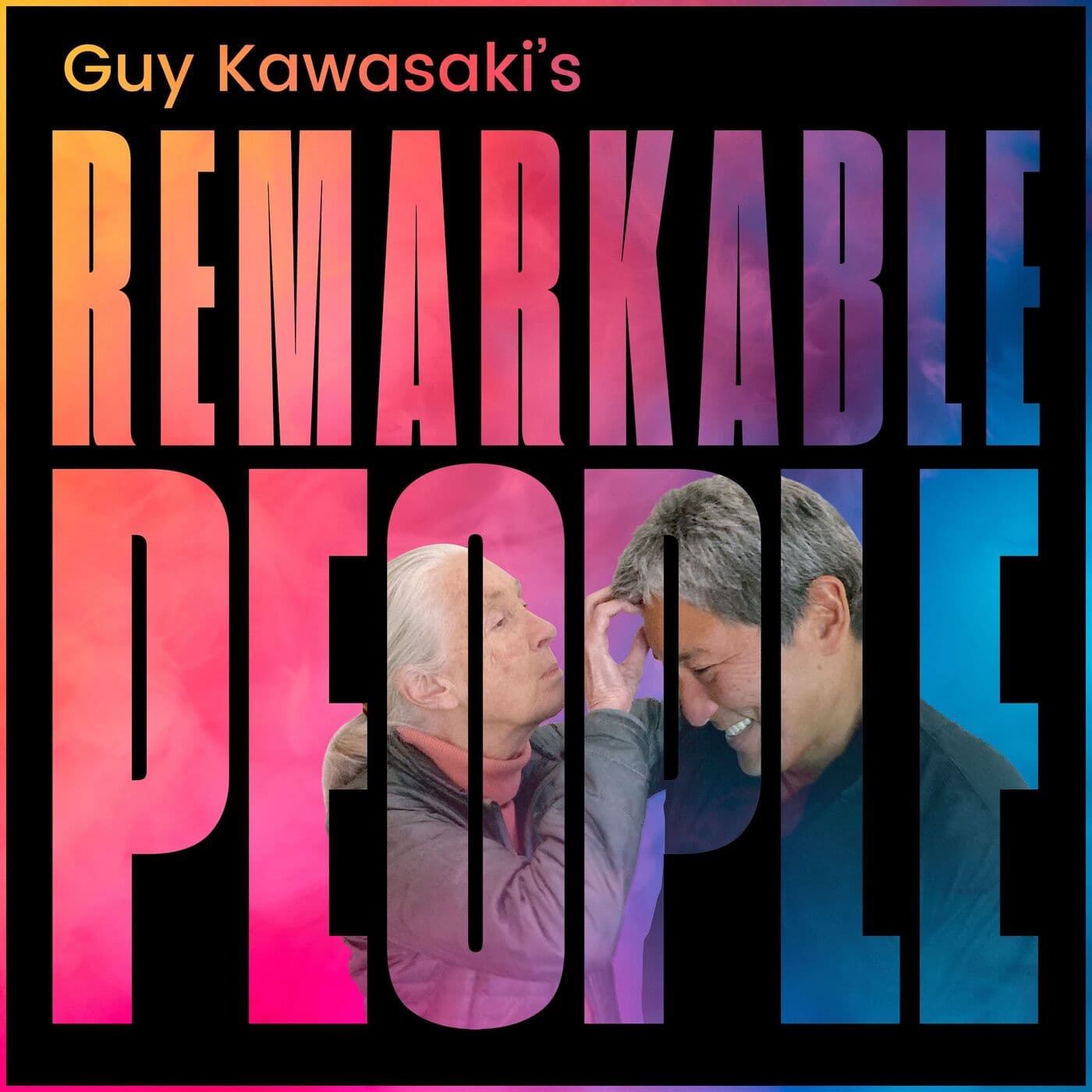
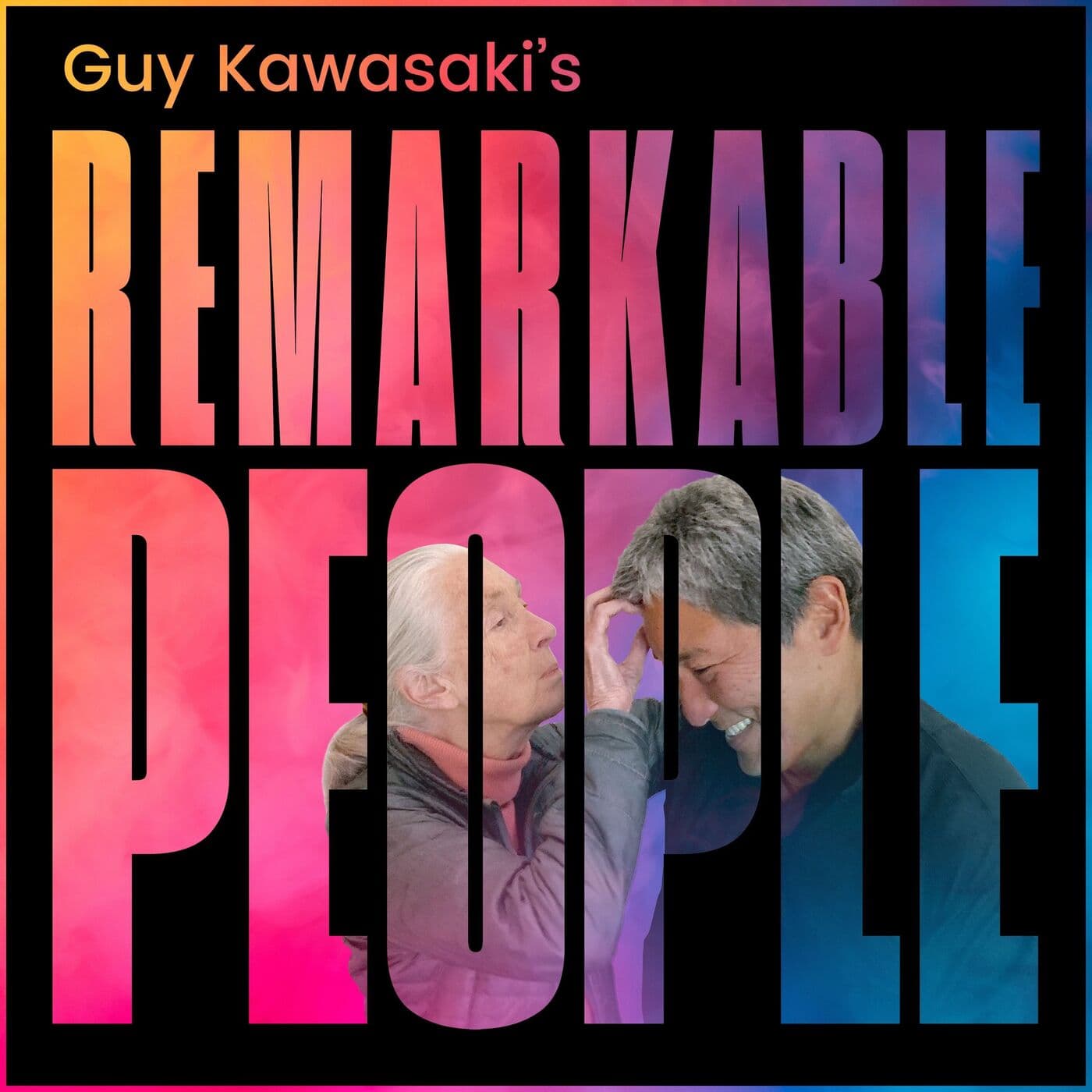
Automatic transcript. May contain errors.0:08It's October 1st, 2025, and today the world lost one of its most remarkable people, Dr. Jane Goodall. She was a friend, a hero, and a guest on this podcast. She was in fact our very first guest. If you look at our album cover, that is her looking for lights in my hair, a la her beloved chimpanzees. Jane was many things to me and to the world. In her honor, we are replaying the two episodes that Jane recorded. Listening again, you will hear her wisdom, her courage, and her unshakable hope. The last time I saw Jane was at her birthday party about a year ago in San Francisco. She had been on the road for something like 300 days that year.
0:59I said, Jane, do you want to take a rest? Take it easy. Come stay at our house. No one will ask you for autographs, no photos, just rest. She looked at me and she said, Guy, I cannot rest. There is too much to do. This is who Jane Goodall was, tireless, relentless, unwavering in her belief that every person can make a difference and that we must make a difference. The world will not be the same without her, but her spirit, her mission, and her example will endure. If anybody deserves to rest in peace, it is Jane. Please join me in honoring her life and listening to the conversations we shared together.
1:45Rest in peace, Jane Goodall. The world is better because you walked among us and gave us all hope. This is the first episode with Jane. It played in 2019. Hello, this is Guy Kawasaki. Welcome to Remarkable People. You are listening to the inaugural episode. Believe it or not, I've never been on this side of an interview. I love the concept of go big or go home, so I wanted to unveil my podcast with a truly remarkable person. Who could be better than Jane Goodall? Duh.
2:30That was Goodall doing her chimp impersonation. Goodall is a scientist, conservationist, peacemaker and educator. She wrote the book on chimpanzees and their relationship with humans. She's redefined our understanding of animals for the past 60 years. I met her because Ronit Whitman-Levy, the producer of the TEDx Salon in Palo Alto, asked me to interview her on stage in September 2018. Being asked to speak at a TEDx event is an honor. to interview Jane Goodall at a TEDx event is life-altering. I love Jane Goodall. I love her wit. I love her passion. I love her love of our blue marble. I love her spirit.
3:09I love her fearlessness. I love her energy. I love that she skipped a bachelor's degree and skipped a master's degree and went straight for a PhD. I love that my kids think I'm cool because I know her. Can I tell you how I really feel? In this podcast, she explains the influence of her mother, of education, of secretarial skills, and why the earth would be better without humans. Have you wondered what animal Goodall would like to be in her next life? Keep listening and you'll find out. I'm Guy Kawasaki. This is the Remarkable People Podcast. And now, here's Jane Goodall. I was born in London. And then for some reason, my father wanted me and my sister to grow up speaking French.
3:56I don't know why. So he rented a house in Le Touquet, and I was five and she was one. Three months after we got there, the war broke out. So that was the end of learning French. I didn't learn anything. And then went to my mother's mother, my grandmother, in Bournemouth. That's where I grew up. That's where I used to roam on the cliffs with my dog. and that's where I watched the birds and the squirrels, read Dr. Doolittle and was, I wished I could have a parrot to teach me animal language and I pretended when I was eight, I pretended to all my friends that I could understand. I interpreted the dogs barking and the cats meowing and the birds singing.
4:43They believed me. And then when I was 10, I used to save up my few pennies of pocket money. We had very little money. My father had joined up as soon as the war began. And I saved up these few pennies and I found a second-hand bookshop because we didn't have TV back then. There was radio, but no TV. And I don't think the radio talked about animals at all. I'm sure it didn't. It was building up for war and, you know. So in this little bookshop, I found a small volume called Tarzan of the Apes. Just had enough money for it. Read it from cover to cover, fell passionately in love with the lord of the jungle, and was really peeved when he married the wrong Jane.
5:31So, you know, I knew that there wasn't a Tarzan, but that's when my dream began. I would grow up, go to Africa, live with wild animals, and write books about them. So everybody laughed at me. How would I do that? It was a walk on. Africa was far away. We didn't have any money. I was just a girl. Only my mother said, if you really want something like this, you'll have to work really hard, take advantage of opportunity, but don't give up. And I've taken that message all around the world, particularly to young people in disadvantaged communities. And I wish mom was alive to know how many people have come up to me and said, Jane, I want to thank you because you taught me that because you did it, I can do it too.
6:16Growing up in World War II, what was that effect upon you? I think it had a very major effect. And I think, you know, it was horrible and people we knew were being killed. But at the same time, it taught me not to take anything for granted. Food was rationed. Clothes were rationed. Everything was rationed. So you didn't waste. You made use of every scrap of food. And, you know, we didn't have much money either. So today, young people take things for granted. They take it as a right that they have this, that, and the other. It's not their fault. And yet, how shocking to think that even in the wealthiest countries, there are people living below the poverty line.
7:02So, you know, there's something really wrong with us. You haven't mentioned formal education. How far did you go? I always did well at school, came up very close to the top, and I was still going out. I went to a riding school, and because I volunteered to clean the harness, they let me ride the horses, and I worked on the farm. But even so, I came second or third in the exams. And I should have gone to college. My friends all did, but we couldn't afford it. And back then, you couldn't get a scholarship, and as you were good in a foreign language. And I wasn't. And so there was just enough money for a secretarial course, really boring shorthand typing, the old-fashioned typewriter where you had to bang down, bookkeeping, all of which I detested.
7:56But I got my diploma and got a job in London. And then the opportunity came when a school friend wrote and asked me if I'd go for a holiday to Kenya where her parents had moved and had a farm. And of course, I couldn't save money with my job in London. So I went home and I worked as a waitress. It's very hard work and took about six months to save up enough for a return there to Africa. Back then, no planes going back and forth. I think there were a few, but they were really expensive. So I went by boat. and so the first place I set foot on Africa soil was Cape Town which I loved until I asked the friends my mother had there what does this writing mean in Africa, slicks blanc, white people only and then I wasn't brought up that way.
8:51My grandfather was an amazing congregational minister and we didn't judge people by their language, the color of their skin, their culture, their religion but as human beings. So I was glad when we left Cape Town, and Kenya was much better. It was just on the very, very brink of independence from British colonial rule. Now, fast forward for me. Well, it's not too much fast forwarding. Richard Leakey, how did you get that job? It was actually not Richard Leakey. Richard Leakey's father, Louis Leakey, a famous paleontologist, anthropologist. and he was curator of the Natural History Museum at that time.
9:33So I stayed with my friend a little while and then somebody said, if you're interested in animals, you should meet Lewis Leakey. So I made an appointment to see him. He took me all around. He asked me millions of questions about all the specimens. And because I'd read every single thing I could find about Africa and animals and spent hours in the Natural History Museum in London, And I think he was impressed by how much I knew. And guess what? Two days before I met Lewis, his secretary had suddenly quit. He needed a secretary. That boring old secretarial course, there I was. It paid off. You see, you never know.
10:14You never know. And life offers you these opportunities. But at any rate, he took me on as his secretary. Now I'm in a world where people can answer all the questions about mammals, the birds, reptiles, amphibians, insects, plants. And that resulted in him allowing me to go with himself, his wife, one other young English girl, and I think about six of the Kenyans. Every year he used to go for three months to Olderby Gorge, which is in the middle of the Serengeti Plains, searching for the fossilized remains of the early humans that he was sure he would find, even though nobody believed him except his wife.
10:57And it turned out they were right. But when I went, they hadn't found any human remains. We were there for three months. I think we saw four Marzai Marani in total. And it was just the Africa of my dreams. There were animals everywhere. All, you know, the still animals on the Serengeti. But back then, goodness, we used to see giraffe and antelopes. And one evening we met a rhino, Jillian and I. We were out just walking. And one evening it was a young male lion. He was about two years old, fully grown. Followed us for, well, I don't know, about probably close to ten minutes. And it was a bit scary, but it was exciting.
11:45This was Africa. and I think it was that evening around the campfire that Leakey decided I was the person he'd been looking for to go and live with and learn from not just any animal but the one most like us.
12:20From the outside looking in, you would say, well, so she didn't have a college degree, much less a master's or PhD. And, you know, every parent today is trying to push their kid to get all that formal education, to get all that. So is it luck? Is it serendipity? Was it your passion? I mean, all of the above? I don't know, I sometimes feel it was a path laid out for me. I really don't know, but it was partly my mother, you know, encouraging me and not preventing me, because to allow a 23-year-old girl, back then we were very naive. It was more like a 16-year-old today. She let me go on my own, on this boat.
13:05And, you know, I'd just been preparing myself for this all my life. It doesn't mean that I just sat and learned about animals. I had terrific fun. I went to parties. I flirted and did the sort of things you would expect. But what I really wanted was to be out in a forest. And that happened. Can we fast forward a little more and talk about how did you get the chimpanzees to trust you? What did you learn about trust? I needed infinite patience because they ran away as soon as they saw me. and it wasn't until about the fourth month of the study that one of them began to lose his fear. I called him David Greybeard.
13:52He had a beautiful white beard. And I saw David one day and he was breaking off grass stems to use as tools to fish for termites, breaking off leafy twigs and to make them into tools he had to strip the leaves. And so he was using and making tools which at that time science thought was unique to the human. Man, the toolmaker. So that was the turning point. That was when the geographic agreed to continue funding. First, it was only money for six months from an American philanthropist. And didn't all the biologists of the day say that that's just wrong? I mean, well, on two levels. One is she shouldn't be befriending her subjects.
14:40And secondly, chimps don't use tools. Yeah, there was a lot of disbelief. That's why when Hugo came and chimps began to lose their fear, people, you know, when I described kissing, embracing, holding hands, patting on the back, swaggering, using rocks as weapons, different kinds of objects as tools. And when Hugo began filming this, as the chimps began to lose their fear, then the scientists were sort of forced to believe. But after two years, Leakey made me go to Cambridge University. He said I would need a degree, and there was no time for an undergraduate degree. So he got me a position in Cambridge University in England to do a PhD in ethology.
15:30I didn't even know what ethology meant. No Googling back then, no internet. so you can imagine how I felt when I got there and many of the scientists told me I'd done everything wrong I shouldn't have given the chimpanzees names they should have been numbered I couldn't talk about their personalities their intellect or their minds because those were unique to us particularly the emotions attributing human behavior to non-human animals was an ethological sin and it was anthropomorphism. But fortunately, I'd been taught by my dog when I was a child that the professors were wrong. Of course, we're not the only beings with personality, mind, and emotion.
16:19And so thanks to the chimpanzees and this gradually unfolding information about their biological and behavioral similarities, science was forced to move out of that narrow reductionist way of thinking. So, and then once you break down the line between us and them, then the chimp's going to look back and say, what about all the others? So now we know. Now there's this huge excitement studying animal intellect, and not just chimpanzees and other primates and elephants and dolphins, but the behavior that birds are capable of, crows and ravens and parrots and probably many, many more. they can make tools, they can work out problems and then on top of that you've got this extraordinary intelligent behavior in octopuses and they don't even have a sort of brain that we would recognize
17:25When you see what man has done do you now think the world would be better off without men? Oh, I think infinitely better off without men. Now, humankind or the male species? No, both. Both? Yeah, well, you know, the women have been overpopulating the world with considerable help from the men, of course. No. You know, the problems that face us today, caused by us, you know, first of all, how we're destroying nature with the pollution and the fossil fuel emissions and the accrual raising of animals in factory farms, clearing the land to grow the grain to feed them, using masses of fossil fuel to get the grain to the animals, to the abattoir, meat to the table, water that we use to change vegetable to animal protein.
18:17And then during their digestion, they produce methane gas, well, we do too, and that's a very virulent so-called greenhouse gas. The main one is CO2, of course. and this is creating this blanket of gas around the planet, trapping the heat of the sun. Now we have the climate crisis, which is so real and was predicted by the scientists years and years and years ago, but nobody paid any attention. Now people have woken up, finally. Some people have. Well, there are people, yes, who say, I mean, even Donald Trump now says, yeah, there is climate change, but it's nothing to do with us. and it's all reversible.
19:00Let's not go down that path with Donald Trump. I've finished with him. In what sense? You mean he's off the radar, you're just ignoring him from now on? No, I just, you know, if it wasn't so terrifying, it would be funny how somebody like that can be head of the most powerful nation in the world. It's beyond belief. And the UK, look at the mess there with Brexit And we have Boris. And all around the world, there's this swing to the far right. And environmental regulations are being tipped over for short-term gain. And what about our children's children? What's the world going to be like for them?
19:44So when you had your son, you paused your career. Well, actually, I didn't stop my career. I had my son, Hugo, who got to be known as Grub. It was originally Grublin and a silly reason, but anyway, he got known as Grub. So I was still at Gombe, and I spent the morning with the chimps, and the students had a research station by then. When he reached the age of six, up until then, he was homeschooled in Gombe, and having the most amazing life. But then he went home to live with my mother. So it was like having an extended family. And he went to a little school in the UK and he spent every holiday with me.
20:31He visited his father as well. We were divorced by then. And so I never gave up my career. But at the same time, one thing I've learned from the chimpanzees is there's good mothers and bad mothers. And the most important thing for an infant chimpanzee, which I believe is important for a human infant as well, is for the first two or three years to be surrounded by a group of people the child can trust. Are you saying that those people don't have to be the biological parents? I am. I don't think it actually matters if it's a biological parent or not, as long as there is that the child feels safe, supported.
21:14and we found looking back over now 60 years of research on the chimps that the supportive mothers tend to raise offspring who do better. They're more self-assured. The males reach a higher position in that male hierarchy and probably sigh more infants and the females are better mothers. Okay. Now let's switch to the last big topic, which is activism. Act three in Jane's life, I think. So, first of all, do you believe we're beyond the point of no return? I definitely think we have a window of time, but it's closing. We are getting towards the tipping point. You know, I think that the thing that gives me the most hope is the young people.
22:01So, for the last 10 years, gradually environmental education has crept to the school system, and they've begun to understand about things like climate change and pollution and how we're growing food, really sprinkling poison onto the land is not a good idea. So it's on the food. It's also killing the soil with our artificial fertilizers, pesticides, herbicides and so on. And, you know, the sea, the forests, two great lungs of the world destroying the forests, burning them, CO2 being released back into the atmosphere, the seas are polluted, and it can't in many places absorb CO2 as it should. And so children are learning about this.
22:50And once we help them to become educated, and then we listen to them, and we empower them to take action. You know, I started our Roots and Tutor program back in 1991, main message every individual makes a difference every single day. And unless we're really poor, we can choose what sort of difference we make, what we buy, what we eat, what we wear, did it harm the environment, and so on. And every group is choosing for itself, every group of roots and shoots. Project help people, want to help animals, want to help the environment. So it began with 12 high school students in Tanzania. It's now in 60 countries.
23:33And they are learning that it doesn't matter what color your skin is, or what your culture is, your language, your religion. If you fall and bleed, the blood is the same. If you weep, your tears are the same. And when something strikes you as funny, there may be cultural differences in sense of humor, but the feeling of the laughing, which does us such good. And so Roots & Shoots is becoming this family. And everywhere I go now, there's young people wanting to tell Dr. J what they've been doing to make this a better world. And, you know, that's the hope. They're out on the streets. They're marching now.
24:13They're making their voices heard. Do you look at the rise of Greta as like, yeah? Well, Greta's risen because of social media, without question. She went viral with her one speech. And, you know, our Roots and Shoots young people have been Greta's for years. Didn't go viral. They didn't have the great idea of children taking a day off school, which I would have loved to do. But yes, I mean, you know, providing those marching children then can roll up their sleeves and actually do something. because even though we are stealing our children's future, I still don't think it's okay for a child to go up to somebody in government and say, you're doing everything wrong.
25:05Look, I'm doing my bit. I'm planting trees. I'm collecting trash. I'm putting notices up to say, don't throw your plastic down. Then you can go up and point a finger and say, what you're doing is wrong because you're doing something to help. You've touched on this already. So what can an ordinary person do? Well, I think we all have these little choices to make. And if we start making ethical choices, I mean, one thing is to eat less or preferably no meat. That makes a huge difference. And I just learned yesterday that in Europe, in the last, I think it's six months, there's been a 20 % drop in the buying of meat, which is incredible.
25:53That's why I say I think we've got a window of time, because change is out there. I see it. I've been travelling around this world since 1986. And there's a big change, a big change in understanding, and also people are beginning to feel we need to take action now.
26:19Thank you.
26:48Do you have any Jane Goodall tips for how do you get people to act? How do you get people to believe? Tell stories. Stories of? Whatever. Supposing you're wanting to talk about climate change. I tell people how I've stood in Greenland with Inuit elders who said, even in summer, the ice never melted here, this great ice cliff. This was late winter. and already, you know, icebergs were crashing into the ocean. Water was pouring down that ice cliff. I've met people who've had to leave their island homes because of the rise in sea levels, meaning it was not practical to live there, even in high tide, let alone storms.
27:35I've seen the results of some of these terrible, terrible droughts with animals lying dead. I've seen the terrible damage inflicted by the hurricanes and the typhoons and the flooding. And, you know, so I've seen it. You feel it. You know it. And I know the planet is heating up. But I think if we all get together in time, we can at least start to heal some of the harm and slow down climate change. What comes to mind when you think about the legacy you want to leave? Well, I want a legacy to be young people all around the world fighting, doing their bit, you know, a different kind of mindset so that we elect politicians who will resist doing something for short term gain, not give permission for yet another shopping mall, not give permission for yet another great highway, not give permission to probably go against existing legislation so that you can go and make a mine or logging in an old-growth forest.
28:46We need that kind of politician. We need businesses that are ethical. And, you know, the thing is, this intellect, which makes us more different than anything else from other animals, chimps and everybody, they're way more intelligent than we used to think. But we sent a rocket up to Mars and a robot's been taking photos. We don't want to go and live there. And that was supposed to be at one time the most hopeful planet to take over. So we've just got this one Mother Earth. How bizarre that the most intellectual creature that's ever walked the planet is destroying its only home. And there seems to have been a disconnect between clever brain and human heart.
29:30and we're making decisions based on how does it help now, short-term gain, rather than what's this going to do to the future of the planet, the future of our own species. My last question. If you could pick what animal you'd be in your next life, what animal would it be? Well, I sometimes think I'd like to be a dog in a really good home, but a really good home because my favorite animal is a dog but of course some dogs have the most terrible, terrible life. And if I'm a wild animal it's going to depend on the level of protection that I would have because so many wild animals are losing their habitat.
30:18So, well, if all things were equal I'd probably like to be an elephant. I think elephants are absolutely amazing. Chimpanzees are so like us that I think of them not as animals. And there's nice ones and nasty ones just like people.
Read the full transcript
30:42If you want to help Goodall protect and save our wildlife, go to janegoodall.org. Special thanks to Neil, Driving Miss Daisy Pearlberg Dan DuPont and Carmen Mullins In the next episode, we go from learning how much chimpanzees are like humans to how we are influenced by social psychology, situational roles and bad people with Dr. Phil Zimbardo I'm Guy Kawasaki and this was the Remarkable People Podcast
31:22This is the second episode with Jane. It was done in 2021, and it has somewhat of a checkered past. Jane and I did a conversation on a social media platform based on phones, so the quality of recording is not as high. But Jane is Jane, and her brilliance will shine through no matter how the audio is recorded.
31:55I'm Guy Kawasaki and this is Remarkable People. This episode of Remarkable People is particularly remarkable because it was unplanned. On April 14th, 2021, I did a fireside chat with Jane Goodall on a social audio platform. It turned out so good that we decided to make it into a podcast. Jane and I were both on phones as opposed to using our usual squad cast podcasting recording platform. So the audio is not quite what you've come to expect from this podcast. But it's all about Jane. I'm Guy Kawasaki and this is Remarkable People. And now here's the one and only Jane Goodall coming to you from her home in the south of England.
32:44My wonderful welcome comes to you from the forests and hills of Gombe National Park in Tanzania. The sound that you would hear if you came, some of you have been, but if you go to Gombe and climb the hills in the morning, the sound of a chimpanzee greeting the day, announcing, here I am, who's out there?
33:11Hello. Bring another language into your clubhouse. Well, I'll tell you something. Elon Musk could not have done that. Well, it's a chimpanzee hello. I think I have some lice in my hair. I need to see you again so you can pick them out for me. Then you shouldn't have chosen clubhouse. You should have Zoomed. Where are you right now? I'm in the house where I grew up in Bournemouth in the south of England. It's cold and gray. And this is where I've been for the duration. I've been grounded here since last March. But you still have a tremendously busy schedule, don't you? What are you doing every day?
33:57It's far, far, far busier than when I was traveling around the world. Because when you're traveling, you go from country to country. When you're in a country, you concentrate on that country. You don't do more than two things in a day. But here, the world has access to me. I'm asked to speak all over the world. I do Zooms and Skypes, and now I'm doing a clubhouse, which I've never done before. I'm sending video messages to people who need cheering up or need a bit of hope or something like that. And then, of course, there's all the emails and writing articles. Honestly, I can be in four different countries in one day.
34:40it's clearly not easy to be Jane Goodall I want you to tell people and I know you've probably told this story 50 ,000 times but I think this story of how you actually got to Africa the first time is a very inspiring story and has a lot of great information and lessons for young people well, okay but you know it did begin right here in this house when I was reading books about Dr. Doolittle and Tarzan and dreaming of going to Africa. So the journey really started when I was 10 years old. And born loving animals, of course, that goes without saying. Left school. I did actually very well at school, but we couldn't afford university.
35:23And so I had to earn some money. We had not much money. Got a boring secretarial training in London and got a job. And then came the opportunity. and that was a letter from a school friend inviting me to Kenya for a holiday. Couldn't save money in London so I came home here to Bournemouth and got a job in a hotel being a waitress which was extremely hard work and eventually after about five months I think had saved up enough money for a return fare to Africa. And I give a lot of credit to my mother. First of all, she was the only one who supported this crazy dream of going to Africa, living with wild animals and writing books about them.
36:11Everybody else loved me. Never do that. Africa was far away. And anyway, I was just a girl. But she said, if you really want to do something like this, you will have to work really hard, take advantage of every opportunity. And if you don't give up, hopefully you'll find a way. So there I am on my way to Africa, age 23. And 23 in those days was much younger than a 23-year-old now. And most mothers wouldn't have let their 23-year-old daughter go off on their own to a faraway country that we didn't know much about. But anyway, off I went. And it was by boat because there were no planes going back and forth in those days.
36:55and arrived in Kenya, stayed with my friend. Then came the amazing conversation where somebody said, if you're interested in animals, you should meet Dr. Louis Leakey, famous paleontologist. And I went to see him. He was curator of the Natural History Museum. And guess what? That boring secretarial course. Well, two days before I met Louis, his secretary had suddenly left. He needed a secretary, and there I was. So now I'm in a world where there are people all around who can answer all my questions about the animals and the plants in Africa. And that eventually led to him offering me the opportunity of going to live with and learn from not any animal, but the one most like us, the chimpanzee, with whom we share 98.8 % of our DNA.
37:52The problem was that the British authorities, because back then it was Tanganyika, which is Tanzania today, and the British authorities refused to take permission for this young girl to go off into the forest. It was a crazy, crazy idea. Nobody was doing it. Men weren't doing it. But in the end, because Leakey persisted, they said, oh, all right, she can come, but she cannot come alone. She must have some female companionship. So who volunteered to come but that same amazing mother? And the early days, the chimpanzees ran away and ran away and ran away. But after four months, one of them began to accept me.
38:35So there's the story of how I got to Africa and began my research. I think a very important point is that, well, A, it was the support of your mother. That's one important point. Second important point is you didn't exactly have a PhD from Oxford in biology. You had secretarial skills. So it's not necessarily the amount of formal education you have. Perhaps more important is the passion. And this is about taking risks. I'm amazed that if my daughter, who I think is listening, said to me, I want to go to Africa and I don't know what I would say today. So hats off to your mom. Well, I think Africa is more dangerous today than it was then, actually, to be honest.
39:23It really wasn't dangerous. But anyway, it was fascinating. One of the things that was very, very meaningful to me in the way I look on the world is that the first place where that ship stopped in Africa was Cape Town. We didn't go through the Suez Canal because there was a war with Egypt and it was closed. And Cape Town is wonderful, that iconic table mountain. And I had two days there while the ship refueled or whatever it did. And mom had a couple of friends there, so they said they'd look after me. And it was some magic. And then I saw these words on the back of the seats in the parks and on the doors into the hotels.
40:08Selex Blanc in Afrikaans. So I said, what does this mean? It means white people only. I didn't grow up that way. My grandfather was a congregational minister, and we didn't judge people by the color of their skin or their nationality or their culture or their religion, but judge them as human beings. So I couldn't wait to leave Cape Town. It was the height of apartheid. Anyway, I got to Kenya, and it was much better. They were on the very brink of independence and the same when I got to Tanzania. Can you tell the story about how you built trust in that first engagement? As you say, it took four months, but how did you build trust with the chimpanzees there?
40:59Okay, well, I used the same method as I'd used on the birds and the squirrels and things around my home here. Patience. I didn't try to get close too quickly. I wore the same colored clothes each day. And it was one chimpanzee, David Graybeard, very distinctive, very handsome. And for some reason, he was less fearful than the others. You know, they're all different. They have their own personalities. And he was calm. And I later discovered that he was best friends with the top-ranking alpha male. and so it was during the fifth month, just the start of the rainy season and that's when the termites fly, the princes and princesses fly from the nest to form new colonies and turns out that chimpanzees love termites.
41:55So at this time of year, the worker termites have enlarged the tunnels near the surface ready for the fertile insects to fly out. And so there was David Greybeard. I watched him in amazement through my binoculars and I saw him scratch the soil from the entrance to one of these tunnels, pick a long stem of grass, push it down into the nest, pull it out with termites clinging to it, munch them off, push it down again. And then I saw him pick a leafy twig and strip the leaves. And at that time, Western science maintained that only human beings used and made tools. In fact, we were defined as man, the toolmaker.
42:45And so when I told Lewis Leakey what I'd seen, David Greybeard using and making, because by modifying the twigs, he was making tools. And so Lewis sent back a telegram saying, ha, now we must redefine man, redefine tool, or accept chimpanzees as human. But it was that observation that enabled him to go to the National Geographic Society in America. And they agreed to fund the research when my original six months' money ran out. And they also sent a photographer and filmmaker, Hugo Van Laowek, because by the time he came, I was really beginning to learn I could get close to more chimps. David Gravey had helped, I think, because if he was in a group when I approached, expecting them to run away and he sat there calmly, I suppose they started to think she can't be so frightening after all.
43:40Because David was a leader. They looked up to him and respected him. He was calm and gentle. Let's talk about the future a little. So what is your vision for how we're going to go forward from where we are today? If we all know where we are today, we're facing disaster if we don't get together and change our ways. If we carry on with business as usual, if we continue to exploit the finite resources of our planet as though they're infinite. If we continue to have this crazy belief, we can have unlimited economic development on a planet with finite natural resources. And thinking in short term gain rather than long term health of the planet.
44:33And indeed our own future and the future of life on Earth as we know it. so we need to get together and somehow create a new relationship with the natural world of which we are a part and on which we depend and a new more sustainable and greener economy don't ask me how we do that but that's what we have to get together and work out and we are gifted with amazing intellects. So if we really, really want to create a good future for our great-grandchildren, that's what we must do, get together, discuss, find ways, and it's beginning to happen. That's the encouraging thing. Businesses are beginning to try and conduct their business in a more environmentally friendly way.
45:25People are beginning to think about their own environmental footprint. So it is beginning to happen. If I'm listening to this and I'm thinking, okay, Jane, I want to help. What can one person do? Something tactical, practical. Not everybody's going to be a Jane Goodall or Greta Thunberg. So what can a random person listening to this do to help? Quite honestly, it depends on who that random person is. Because some people, I know a number of them. They're making a whole lot of money. And if we live to make money, it's not a very good thing to do unless we are making money to help make the world a better place.
46:11So people like that can make donations to organizations that are fighting for conservation, for preventing the loss of any more animal species than we've lost already, for slowing down climate change, for alleviating poverty. But the ordinary person who doesn't have masses of money in their wallet, every single day we make some impact on this planet. and we get to choose unless we're living in poverty. We get to choose what sort of impact we make and a lot of people feel helpless and hopeless because they think it's just me. The world is going to hell in a handbasket. I think that's the expression and there's nothing I can do about it and the big problem is people are told to think globally But if you think globally, you can't help but be depressed.
47:10I mean, it is depressing what we're doing to the planet. But act locally. Yes, do what you can in your own community. And whether it's thinking about what you buy, where was it made? Did it have to travel far using up lots of fossil fuel? Did it harm the environment? Was it cruel to animals like the terrible factory farms? Is it cheap because of child slave labor or unfair wages in another country? And if people start making ethical choices, obviously one person won't make that much difference. But when millions or billions of people are making ethical choices, it will make a difference. And then there's consumer pressure.
47:54If a company is not behaving ethically, don't buy the products. try and buy organic food that hasn't poisoned the land with agricultural chemicals. And it might cost a little bit more, but honestly, if it costs a little bit more, you will value it more and you'll waste less. And the waste of food is absolutely shocking around the world. And yet there are people starving without even one good meal a day. This is the kind of mess we got ourselves into. And this is the kind of mess that we must use our intellect and our head with our heart to try and put things right. From your work with the chimpanzees, do you think that humans and chimpanzees have some kind of built-in aggression into the DNA and were doomed to be aggressive?
48:51and at war, zero-sum game, combating each other? The reason Leakey sent me to study the chimps is because he believed, and now it's been proven pretty well, that about six million years ago we shared a common ancestor, an ape-like, human-like creature. And so Lewis argued if Jane sees behavior in chimps today that's similar or the same as in people, then perhaps it was also in that common ancestor and perhaps we've brought those traits with us in our long evolutionary pathways. So do I think that there are aggressive tendencies in humans innately? Yes, I do. But the difference from chimpanzees who are on occasions extremely aggressive, even have a kind of warfare, kill each other.
49:47But the difference is that we've got this intellect. We can speak to each other. We've developed a spoken language. We can sit down and work out a moral code. And again, we just need to find ways of living together in harmony with each other and with nature. And people are always trying to do that. There's all these peace movements and everything, but there is that aggressive streak, and unfortunately, some people haven't learned to control it. Sometimes in our language we say things like, oh, I could kill him. But we don't mean that. We don't mean it. And we control most of our aggressive impulses.
50:35We might feel like punching somebody and people who get drunk do. But, I mean, for the most part, we do control our aggressive behavior, don't we? Don't you think? I do. I think that a lot of it is the perspective of journalists that bad news sells and community living in peace is not exactly a headline story. So it's very difficult to truly know what's going on in total as opposed to the negative highlights. I think that is for sure. I completely agree. I mean, there's all this fake news. And, you know, the Internet is wonderful if you use it wisely. But it does lead to an awful lot of all this hate stuff coming out.
51:18And there's no control over it. But when I was traveling around the world, you know, I got to meet so many amazing people and visit so many incredible projects where places that we've destroyed, given a chance, nature can take over again and life can come back. and so people actually do want good news stories and I'm always telling journalists if I ever have a press conference or an interview your job is to give good news time not only the bad news and we do need to know what's going on that's harmful but we do need to know all the amazing things that are going on as well because that gives you hope And only if you have hope will you bother to take action to do something about it.
52:11If you don't have hope, why bother? It sounds like you're fundamentally an optimist. And I bet people would love to know, how do you keep the faith in the face of so much that's going wrong right now? Well, yeah, I am an optimist, and I'm also a very obstinate sort of person. The more I hear these bad things, the more determined I feel that these bad people shall not win. And that means trying to find your reasons for hope. And I've already said one. That's our intellect. We can get together and discuss. And we are creating solar and wind power and clean green energy so that we can move away from fossil fuels once we get rid of the leaders who keep opening up coal mines, even knowing that's the worst, most contaminating fossil fuel for the greenhouse gases.
53:05But anyway, so we've got our intellect. And if we use it wisely, we can get out of the mess. And then there's the resilience of nature. nature coming back, rescuing animals on the very brink of extinction. In Europe, we've got this rewilding, and it's actually amazing. And in Canada, you've got a wonderful example of Sudbury. Sudbury that was totally, totally, totally destroyed. And now it's green and lush, and the animals have come back. In America, there's Yellowstone. All over the world, there are places like this. So nature's incredibly resilient. But then my main reason for hope is the youth.
53:50So we have this program for young people, Roots and Shoots, which is now in almost 60 countries. It's been in other countries, but sometimes the leader, the person who started it moves on or dies or something and it fades away. But nevertheless, many young people have been changed forever when they join Roots & Shoots because its main message is that every individual makes a difference every day. Every individual has a role to play. And every group chooses three projects because it's all interrelated. I learned that in the rainforest. One project to help people. One project to help animals. One project to help the environment.
54:37and the wonderful, and by the way, it's kindergarten, university, everything in between. We're beginning to get the staff of major corporations starting their own Roots and Shoots group, so it's really for everyone, but basically youth. And so these young people are encouraged to choose the projects that they want to work on. So it's not a top-down. It's bottom up. It's grassroots. It's flexible. It'll grow differently depending on the age of the members, depending on the environment that they're in, the country they're in, the religion, and so on. So it's flourishing. It's all over China. We've got about 2 ,000 groups in China.
55:26It's everywhere in Tanzania. It's all throughout the UK. It's in, I think, every single state in America. It's right across Canada, including working with First Nation people. It's moving ahead quite fast in the Middle East. We just started Jane Goodall Institute in India and another one in Turkey and another one is about to be registered in Israel. There are about 30 Jane Goodall Institutes, but then roots and shoots in about 60 countries. So the young people are changing the world. They really are. It's amazing their energy, their commitment, their determination. they choose their project, discuss how to do it, roll up their sleeves and take action.
56:20Hallelujah, right? Hallelujah. I hope it continues to happen. And listen, people who are listening now, if you want to support her efforts, just Google Roots and Shoots. And Jane, I'm sure you'll be happy to take their support, right? I'd be happy to take their support. I'll be even happier if they will involve their children, grandchildren, friends' children in the program, because this is what we need. What I'm caring about is the future of this beautiful planet, saving what's left. I've got grandchildren, could have great-grandchildren soon, I think, and I care about their future. And so we need a critical mass of young people, not only Roots & Shoots, any youth program that has the same goals and mission.
57:07We need a critical mass that understands, yes, we need money to live. It's when we live for money, it goes wrong. We need a new definition of what it means to be successful. At the moment, it's power and money. That's not what I see as a successful person. If that's what you don't see as a successful person, how do you define a successful person? Somebody who makes enough money to supply them with what they need, and if they have a family to look after their family, and if they make a lot of money to reach out, as so many people are doing now, to support organizations that are working in the field, on the ground, and who can be happy.
57:56People who have time to smell the roses, as the saying goes. If you go to a poor part of Africa and the people don't have very much at all, Some of them are just making money each day enough to eat. But you go there in the evening and they've lit their little fires and they're singing and they're laughing and they're having fun. And we don't have enough time in our crazy world. We're always looking at emails and children are not in nature anymore. They're just looking at their little cell phones and their WhatsAppping and messaging and doing all these things that I don't do. And they should be out in nature learning from life, not learning from these stupid little screens.
58:46I've got my eyes shut now, so I'm not looking at this little screen. You've traveled all around the world. Can you give us your impression? Do you think that people are more similar or more different as you go from country to country? Oh, they're more similar without any question. And that's the wonderful thing that's come out of our roots and shoots, because as often as we can, we bring young people together. Usually it's just within the country or even the city, but we try to bring people from different backgrounds together as much as we can from different countries, usually virtually, but not always.
59:25And it's just coming out of this program is a feeling of much more important than the color of your skin or your culture, your religion. your socioeconomic group, is the fact we're all humans. We laugh, we cry, our tears and our laughter is the same. And if we hurt ourselves, we bleed and our blood is the same. Our blood actually is the same. So that is tremendously important. People are more the same than they are different. And the worrying thing is that the way a child is brought up really makes a big difference. And so some children are brought up in societies where violence is condoned. And you know that these religious differences, it's not the basic underlying religion that's causing all this hate, of the hate between Muslims and Christians and Jews and all the rest of it.
1:00:32It's the fanatics within those religions because the basic tenet of every single major religion is the same golden rule, do to others as you would have them do to you. And I include animals in that because we know they're sentient. They have feelings like we do. They can feel happy and sad. They have personalities. They have problem-solving capabilities. They're adaptable. So when we think of these factory farms, the wildlife markets where COVID-19 actually began and this unhygienic, cruel, wet wildlife market in China, But there's wildlife markets across Asia, in Africa and Latin America. We ship animals around the world as exotic pets.
1:01:25They all take their bacteria and their viruses with them, which is why 75 % of new human diseases to emerge are from animals. And we create the conditions that make it easy. so when you think of a factory farm or trafficking animals or species being exterminated or sports hunting we're talking about individual animals with personalities and with feelings of fear and terror but they could be feelings of joy and they all feel pain which leads me to ask a question that I'm just very curious about. What do you think about zoos? Do they help educate people about animals, or are they fundamentally imprisoning animals and they're not a good thing?
1:02:19It honestly depends on the zoo, and of course I'm asked this a lot. The really good zoos, they do a lot of good. They have very, very good education programs. They raise money for conservation on the ground in the countries where the animals come from. They have excellent veterinarians who get a lot of practice with treating exotic animals. And more and more zoos are sending their qualified vets out to programs in the field to train people there and lend their expertise. The really good zoos, they have good enclosures. They have staff who care, who understand. And really important, they understand the need for enrichment.
1:03:10By that, I mean, just imagine being in a small space with nothing to do. That's what really upsets human prisoners. It might be even worse for animals. Maybe they have less ability to think outside the prison, so to speak. So now the good zoos, this enrichment, animals aren't just given their food. They have to work for it. They have to solve problems. obviously depending on the species but they need enough space they need a good social group and they need people who understand them and give them the right food and the good zoos are doing that Did you know that the Secretary of the Interior in the Biden administration is a Native American?
1:03:56Yes, indeed I did know Is that just not The greatest story ever? Yeah, because these indigenous people, they understand the natural world. I love with the Native Americans, they say the animals, the birds and the fishes and the mammals and the trees and the flowers. And some of them, even the rocks and the mountains, they're our brothers and sisters. We're all one with creation. And that is how we need to think about it. we're part of this amazing tapestry of life. You know, we first encountered each other back at Stanford, believe it or not. I was a student, you were a professor, and already you were just remarkable.
1:04:44I have to say that our friendship is one of the most valuable things in my life. I appreciate you doing this again on Clubhouse. And wow, can I just be a little bit of a fanboy for a while? You are being. And one of the stories that I like the most is that when you went back and you told other biologists that you had established friendships with the chimpanzees and you observed that they used tools. and rather than thinking of you as pushing forward the edge of science and making discoveries, didn't they summarily reject you because you're a woman and you didn't have a PhD in biology? So let's talk about that.
1:05:32What happened there? What happened is that after I'd been with the chimps about one and a half years, I get this letter from Louis Leakey saying I have to go to university. I have to get a degree because I'll have to stand on my own two feet to get money, and I'll need a degree for that. And there's no time for an undergraduate degree. And he's got me a place in Cambridge University to do a PhD in ethology. I didn't even know what ethology was, study of behavior. But anyway, when I got there, as you say, I was told I'd done everything wrong. Shouldn't have given the chimps names. They should be numbered.
1:06:10that's scientific. And you can't talk about them having personalities, minds or emotions, because those are unique to us. And you mustn't on any account have empathy with them, because then you can't be scientifically objective, and your science will never be any good. But you know, fortunately, I had this great teacher when I was a child, my dog, Rusty, And he taught me that the professors were wrong. So as usual, I didn't confront them. I didn't argue with them. I just went on writing about it in the way that I knew was right. And then, of course, it was Hugo's film. And when Hugo's film started coming out into the open, the scientists just had to realize that I was right.
1:07:04Wait, wait. How did Rusty, your dog, teach you this? This is a new story. Well, no, it's not. If you share your life in a meaningful way, they have personalities. Do you have any animals, Guy? Oh, let's see. Well, I know a lot of the listeners will. And I bet you any listener. That's for sure. Yes. Yes. That's what I mean. A dog or a cat could be a bird, a pig, a horse. I don't care what it is. But if you have an animal and you allow that animal to be part of your life, then you know quite well we are not the only beings with personalities, minds and emotions. And so I knew. But then, of course, the chimps, they're so like us, kissing, embracing, holding hands, forming these long-term relationships, good mothers, bad mothers, close family relationships, using tools, all these things.
1:08:02so it was just very clear that these professors were wrong and anyway they'd never been out looking at wild animals they mostly studied birds did nasty things to them like deafening them to see if they still learned their instinctive song not nice things jane we've had you for 38 minutes and i know it's late where you are we're going to wrap this up but i would love if you would just have a few closing remarks and say goodbye to the hundreds or thousands of people who are listening to you right now. The stage is all yours, Jane. Just bring it on home. First of all, Guy, let me say I value the opportunities that you've given me to share a message.
1:08:47I think this is probably the fourth time that this has happened. And it's people like you and And I'm sure that probably every single one of the people listening in is a much better person than a much worse person. There's far more good in people than bad in people. I'm convinced of that. And when they do behave in violent ways, that's their upbringing most of the time or things they've experienced in life. So to end up, to wrap up then, I think everybody needs to become involved. Everybody needs to find something to do. And if you can go to bed each night and think, I didn't do that much today, but I think I made the world a little bit better.
1:09:40And that's simple things like making somebody smile. We don't smile enough. We see people with drawn, worried faces. and sometimes you can just smile at them and they smile back. We're getting afraid to smile these days and you can bother to report if you see an animal being abused. You can give water to a dying plant. Just the little things. Choose what you buy. And I think if everybody behaves like that and if everybody realizes that truly and honestly what you do each day does make a collective difference, then we shall be moving towards a better world. And maybe some of the people listening have children or grandchildren.
1:10:34Think about their future. Think about how what you do every day will affect their future for the better or the worse. Think about the fact that if we carry on with business as usual, their future is going to be very grim indeed. If the world continues to heat up, if we go on losing the biodiversity, which I like to think of as the web of life, that's much more, it's a much nicer picture than biodiversity, which some people don't even understand. But we can't go on destroying this web of life. It gives us healthy ecosystems. And if people remember that we actually are part of the natural world and depend on it for clean air, clean water, for food, for shelter, for everything.
1:11:26And I can't forget. And I'll end up by saying that I have many Native American friends and actually indigenous people in other countries, too. But one of the most wonderful gifts I was given was by a Native American chief of the Cherokee tribe. And sometimes you're honored in a naming ceremony, and it is a great honor if they give you a name in their language. And so I was honored with a Cherokee name, and the translation of the word is Sister of Mother Earth. And what more wonderful gift could you have? So I have to fight every day. I have to fight every day for my sister. But we're all sisters of Mother Earth and brothers of Mother Earth.
1:12:21Think of it that way and act that way. That's how I would sum it up. Believe it or not, Jane was the first guest. I discovered something, Jane, magic of Google search engine. And if you typed in Jane Goodall plus the word remarkable, guess what? It finds that episode. So if you want more of Jane, listen to that episode. And Jane, it's always an honor and a privilege and fun to be online with you post-pandemic. Anytime you need me as your fireside chatterer, I'm there for you, Jane. Anytime you want. It's an honor and a privilege. Thank you, Guy. And next time, I'm going to put you on the spot and ask you all the questions.
1:13:06Okay. I'll be on your podcast. Yeah, that's right. Speaking of, Jane does have a podcast, so look for Jane's podcast. And also, remember, rootsandshoots.org if you want to help her and her quest to help Mother Earth. By the way, yes, sister of Mother Earth. The podcast is called Hopecast. What a great name. Isn't that a good name? That was Dan DuPont, Director of Communication. That's a super name. So I do Hopecasts. You do podcasts. That's why you're Jane Goodall, and I'm merely Guy Kawasaki. So we'll let you go to sleep now. I hope this is the last thing you have to do today. It's getting late there.
1:13:55No, actually, I hate to say it, but I have a Zoom call at 11 p.m. What? With whom? It's my special people in Asia. And if I do it earlier, they have to get up at 3 in the morning, and I don't want them to do that. And I'm always awake at 11 o 'clock anyway, so I thought it's kinder to them to do a Zoom at 11. Then I can have a whiskey. Speaking of whiskey, have you used that whiskey glass I bought you? Oh, indeed, I have used that whiskey glass. Absolutely.
1:14:33Many times. I think it's a positive that when I saw a whiskey glass, I thought of you, Jane. Yeah, very positive. Absolutely. You can think of me when you see the whiskey, too. Never mind the glass. All right, Jane. We'll let you go get ready for the Asians on Zoom. So thank you very much. And I'm sure all of the audience here appreciates you taking the time and making this effort and bringing some love into our lives. love and laughter today. Thank you so much, Jane. Take care. Yes, and you too, Guy, and everybody listening. Lots of love to everybody. We need to spread love, hope, happiness, laughter, then we'll have a better world.
1:15:14Bye-bye. I hope you enjoyed listening to Jane as much as I enjoyed interviewing her. She's always such a pleasure to work with. If you would like to help Jane, or, as their friends call her, Sister of Mother Earth, please go to rootsandshoots.org. I'm Guy Kawasaki. This is Remarkable People. My thanks to Jeff C. and Peg Fitzpatrick for another remarkable episode of the Remarkable People podcast. Remember, this podcast is sponsored by the Remarkable Tablet Company. When you need a writing and note-taking device that can help you focus The Remarkable Tablet is your answer Mahalo and Aloha
1:16:06This is Remarkable People I hope you've enjoyed these two episodes of the Remarkable People podcast with Jane I want to close with a quote from her What you do makes a difference and you have to decide what kind of difference you want to make support Jane's work go to the Jane Goodall Institute site rest in peace Jane Goodall I will miss you
From the publisher
Jane Goodall transformed how we see the natural world and our place in it. In this tribute episode, Guy Kawasaki revisits their past conversations filled with humor, courage, and wisdom. Jane reflects on her early journey to Africa, the groundbreaking discoveries with chimpanzees, and her tireless advocacy for conservation and youth through Roots & Shoots. Thank you Jane for making this world a better place.
---
Guy Kawasaki is on a mission to make you remarkable. His Remarkable People podcast features interviews with remarkable people such as Jane Goodall, Marc Benioff, Woz, Kristi Yamaguchi, and Bob Cialdini. Every episode will make you more remarkable.
With his decades of experience in Silicon Valley as a Venture Capitalist and advisor to the top entrepreneurs in the world, Guy’s questions come from a place of curiosity and passion for technology, start-ups, entrepreneurship, and marketing. If you love society and culture, documentaries, and business podcasts, take a second to follow Remarkable People.
Listeners of the Remarkable People podcast will learn from some of the most successful people in the world with practical tips and inspiring stories that will help you be more remarkable.
Episodes of Remarkable People organized by topic: https://bit.ly/rptopology
Listen to Remarkable People here: **https://podcasts.apple.com/us/podcast/guy-kawasakis-remarkable-people/id1483081827**
Like this show? Please leave us a review -- even one sentence helps! Consider including your Twitter handle so we can thank you personally!
Thank you for your support; it helps the show!
See Privacy Policy at https://art19.com/privacy and California Privacy Notice at https://art19.com/privacy#do-not-sell-my-info.