In short
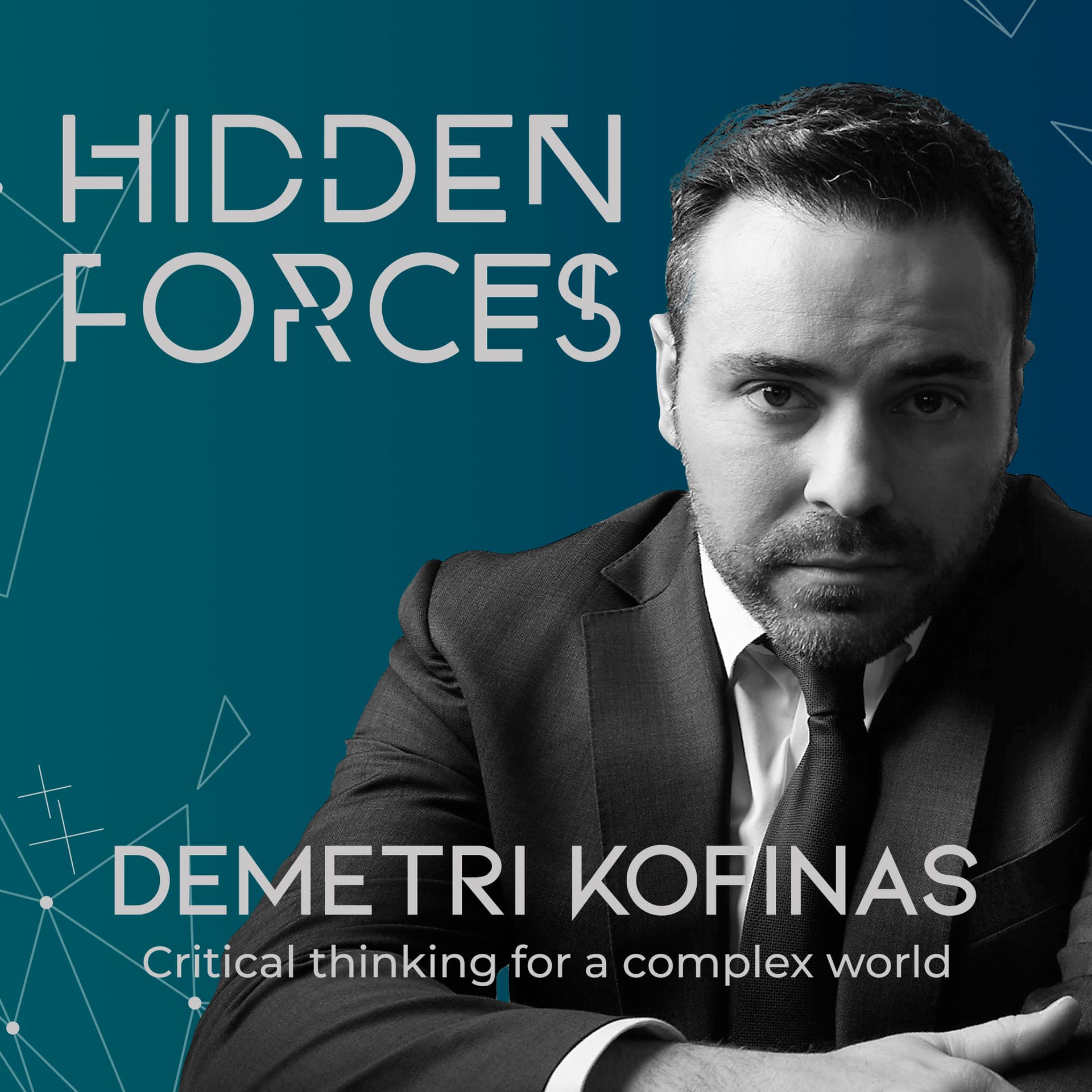
Edward Luce and Demetri Kofinas debate how US grand strategy has shifted from Cold War-era strategic debate to post–Cold War risk aversion and process-driven policymaking, and how that affects today’s geopolitics. They apply the framework to Operation Epic Fury, US policy in the Gulf, strategy in Asia, and the logic of Trump’s China approach ahead of a Trump–Xi summit.
Guest background
Edward Luce is a British journalist and U.S. national editor/columnist at the Financial Times. He previously worked as a speechwriter for Larry Summers (Clinton Treasury Secretary), started at The Guardian as Geneva correspondent, and has written multiple books, including a major biography of Zbigniew Brzezinski.
Key claims
The West “squandered” post–Cold War advantages by assuming “history was over.” Washington’s “blob” culture reduces appetite for strategic debate. Democratic administrations are slow due to interagency process; Trump is faster but more volatile and expert-skeptical.
Notable examples
Brzezinski’s opposition to the Iraq war and his role in supporting Mujahideen against the Soviets; Biden’s Ukraine delays from process; Operation Warp Speed as a Trump-style speed example; Iran/strait tensions and the difficulty of an off-ramp without a deal Trump can accept.
Written by AI. May contain mistakes. Listen to the episode to check what was said.
Chapters
Tap a time to open that second in VODecline of American Grand Strategy
2:08 to 6:00
Discussion on the decline of U.S. grand strategy post-Cold War and Trump's impact.
“You know, Ed, I was reflecting on this right before we turned on the microphone, which is that your colleague, John Byrne Murdoch, was recently on the podcast.”
Edward Luce's Career and Insights
8:00 to 14:00
Edward discusses his career, writing process, and reflections on geopolitics.
“You can't really cut too many corners or be impressionistic with a full life biography.”
The Arrogance of Universalism in English Ideals
14:00 to 17:48
Explore how English language and culture influence perceptions of global ideals.
“And I grew up, it became a joke when I was growing up, but it wasn't originally the idea that God was an Englishman because the sun never set.”
The Unique Moment for Immigrants in US History
17:48 to 20:56
Discuss the welcoming of diverse intellectuals to the US during the Cold War.
“things that you learned in the series of interviews?”
Kissinger and Brzezinski: Contrasting Strategies
20:56 to 24:28
Examine the differences between Kissinger and Brzezinski's approaches to foreign policy.
“seem to differ noticeably from the way in which statecraft and diplomacy was handled in the pre-Cold War era.”
The Evolution of Foreign Policy Processes
24:28 to 28:00
Analyze how the bureaucratization of foreign policy has changed US strategy.
“That's not a very satisfactory answer, but I think it's a description of how different Washington is today than it was during most of the Cold War.”
Biden's Leadership and Foreign Policy Challenges
28:00 to 29:10
Discusses Biden's perceived weaknesses and successes in leadership and foreign policy.
“I mean, pretty hard for Jake Sullivan to overcome a president who's stubborn and more than three decades older.”
Comparing Administration Processes and Outcomes
29:10 to 30:30
Explores differences in decision-making processes between Trump and Biden administrations.
“No, that's such an interesting insight, the age difference.”
Impact of Process on Foreign Policy Decisions
30:30 to 32:30
Analyzes how the Biden administration's slow process affected its foreign policy actions, particularly in Ukraine.
“So I can't name this person, but it's an ambassador of a prominent country, not Britain.”
Trump's Unconventional Approach to Policy
32:30 to 34:20
Discusses Trump's less formal approach to policy decisions and its implications.
“It was essentially a process of a lot of second self-guessing going on, debating with imaginary Putins in their heads.”
Show all 18 chapters
Vaccination Debate and Trust in Institutions
34:20 to 36:10
Addresses the discussion surrounding vaccination and the loss of trust in health institutions.
“But for example, my father's a perinatal doctor who deals with high-risk pregnancies.”
The Political Fallout of the Pandemic Response
36:10 to 37:40
Examines how the COVID-19 response affected public trust in institutions and the Democratic Party.
“muddled on this and people have good reason to be upset with how much of this was handled.”
Deciphering Biden's National Security Strategy
37:40 to 40:00
Discusses the complexities and interpretations of Biden's national security strategy and its implications.
“just how much harm this did to trust in them and in institutions.”
Understanding Trump's Foreign Policy Instincts
40:00 to 42:00
Explores how Trump's unpredictable nature complicates understanding his foreign policy actions.
“So it's still hard for me to interpret exactly what is the outcome here?”
Trump's Unpredictable Foreign Policy
42:00 to 45:58
Explore how Trump's foreign policy is shaped by his instincts and negotiation style.
“give you absolutely no guide whatsoever to what Trump is going to do.”
The Iran Conflict and Market Reactions
45:58 to 51:03
Discuss the ongoing Iran conflict and its impact on global markets.
“There's nothing that I look forward to more.”
Geopolitical Dynamics and Future Challenges
51:03 to 55:48
Analyze the implications of US-China relations and geopolitical trends.
“goes, we keep forgetting about the US-China relationship.”
Conversation Wrap-Up with Edward Luce
56:01 to 56:52
Edward Luce shares how listeners can follow his work and engage with his insights.
“It's definitely on my reading list to read.”
Transcript
Automatic transcript. May contain errors.0:00Demetri Kofinas:What's up, everybody? My name is Demetri Kofinas, and you're listening to Hidden Forces, a podcast that inspires investors, entrepreneurs, and everyday citizens to challenge consensus narratives and learn how to think critically about the systems of power shaping our world. My guest in this episode of Hidden Forces is Edward Luce, columnist and U.S. national editor at the Financial Times, who has written several books on matters of politics and policy, including a biography of former national security advisor Zbigniew Brzezinski, whose life and times inform much of today's conversation. Ed and I begin our discussion by tracing the decline of American grand strategy back to the end of the Cold War and the emergence of a more risk-averse, process-oriented era in US foreign policy.
0:48Demetri Kofinas:We then discuss how the Trump administration, in appending many of the practices that define that era, has introduced new risks and complications in the field of international relations and geopolitics, and then apply that framework to Operation Epic Fury, American policy in the Gulf, US grand strategy in Asia, and how to think about the Trump administration's China policy ahead of the upcoming Trump-Xi summit set to take place in a little less than a month. If you want access to the transcripts and intelligence reports for this and other episodes, which includes summary sections with key takeaways, you can access those by subscribing to our super nerd tier at hiddenforces.io slash subscribe.
1:29Demetri Kofinas:If you want to join in on the conversation and become a member of the Hidden Forces Genius Community, which includes Q &A calls with guests, discounted access to third-party research and analysis, and in-person events like our intimate dinners and weekend retreats. You can also do that on our subscriber page. And if you still have questions, feel free to send an email to info at hiddenforces.io and I or someone from our team will get right back to you. And with that, please enjoy this interesting and timely conversation with my guest, Edward Luce.
2:08Demetri Kofinas:Ed Luce, welcome to Hidden Forces. It's great to be with you, Dimitri. You know, Ed, I was reflecting on this right before we turned on the microphone, which is that your colleague, John Byrne Murdoch, was recently on the podcast. And it might seem to the listeners that the two episodes are somehow connected because I've never, to my knowledge or recollection, had two journalists on back-to-back, let alone two FT journalists. Although in fairness, I've had a lot of journalists from the Financial Times on the show over the years, including Jillian Tett, your former editor at large. So maybe something subconscious going on here.
2:44Demetri Kofinas:But in fact, you and I have been in correspondence for some time. And I've also been a reader of your columns in the FT for many years. But beyond that, I don't really know much else about you. I know that you were a speechwriter during the Clinton administration for Larry Summers, but that's about it. So maybe the best place to start is to learn a little bit more about you. What's your deal? What's your life story? How did you get into journalism?
3:06Edward Luce:Well, I'm British and went to, I'm really bad at describing myself. I think I'm quite good at describing other people.
3:15Demetri Kofinas:Why do you think that is? Does you feel uncomfortable?
3:18Edward Luce:Even though I'm economist now, I still have that reportorial gene, which tells you the story is not about you. But so yeah, I'm British. I mean, You know, I'm from, essentially I'm from London. And I've had a fairly dull career in terms of jumping around. Most of my career has been at the Financial Times. You're right, I was speechwriter to Larry Summers when he was Clinton's Treasury Secretary. So the end of the 90s, 2000, first 20 days of 2001. And I did start out with The Guardian as their Geneva correspondent in this sort of early to mid 90s. And I've written a bunch of books. taught a little bit at universities.
4:00Edward Luce:But by and large, I've been Financial Times and Financial Times based abroad for most of the time. So although my accent, it continues to sound very BBC, I've spent more of my adult life in the United States than I have in Britain, here in Washington, DC, most of it.
4:19Demetri Kofinas:How do you like DC? How do you think it compares to London?
4:22Edward Luce:Well, it's a village, really. I mean, it is a small town. It's also a company town. Although Northern Virginia does have, you know, quite a few non-defense industry related private sector investments nowadays, it's still basically a government town and it is fashionable to hate Washington. I have to admit that, I mean, I'm fortunate enough to live in Georgetown, which is a gorgeous neighborhood. You know, it's one of the best neighborhoods in the world, in my opinion. And unfashionably find Washington continually interesting, particularly nowadays. It's kind of a Chinese curse level of interesting, and a very beautiful city.
5:02Edward Luce:It's also an immensely frustrating transactional one, but so is London.
5:07Demetri Kofinas:It is absolutely transactional. I lived for a few years in DC, and it's also beautiful. So Ed, I don't know if you know this, but I've been recording a number of these one hour long conversations since the outbreak of Operation Epic Fury, mainly to keep myself, but also my listeners up to date on the war, how it's going and its ramifications for both the global security picture and also the global economy. This interview was originally scheduled with that in mind, but I think because you've written so many books and even more articles, including one that comes readily to mind that I mentioned to you before we turn on the microphones about former national security advisors, Zbigniew Brzezinski and Henry Kissinger, whose careers both offer, I think, some really interesting contrasts to the current crop of diplomats and strategists.
5:53Demetri Kofinas:I think this will invariably be a much bigger picture conversation where the war is concerned. Now, just from my recollection, you've written four books, is that right? That's correct. So your most recent one is on the life and times of Zbigniew Brzezinski. Other books include The Retreat of Western Liberalism, In Spite of the Gods, which was a book about the rise of modern India, and Time to Start Thinking, which was a book about America in the age of what you call dissent. When it comes to writing books or articles, how do you decide what you want to write about?
6:26Edward Luce:That's a very good question. I mean, the first book I did wasn't, I didn't imagine it to be the first of many. I just thought I had to write a book about how India was changing. And I was the Financial Times South Asia bureau chief in New Delhi for five years. I had been very immersed in India before then. My first wife, I'm remarried, but my first wife, or what we call in Washington, my previous administration, she's Indian. And the mother of my daughter is Indian. And so I'd sort of been very involved in India. And I felt that what continues to be true, that the West overlooks the geopolitical emerging importance of what is now the largest, most populist country in the world.
7:09Edward Luce:And it deserved a book. And so that's how I sort of began on that track. And in spite of the gods, the strange rise of modern India was, it gave me a taste for longer form, much, much longer form writing. And the book did very well. It continues to sell. Weirdly, I just did an event about it yesterday at George Washington University. So that gave me a taste for it. But I think the crisis of Western democracy you know, was my next two books, Variations on that theme through an American lens, you know, that they just sort of compelled themselves as really, really urgent topics about which I felt I had something to report and to say.
7:48Edward Luce:And then thank you for raising my last book. My last book is not journalistic. I would say that the first three are my biography of Bigniew Brzezinski is a full life biography with, goodness knows, 60, 70 pages of endnotes. You can't really cut too many corners or be impressionistic with a full life biography. You either do it properly or not at all. And that I think to date is my most significant single work and the one I'm proudest of.
8:19Demetri Kofinas:So in anticipation of this conversation, I was reflecting on what has been for me in the last five years or so an evolving, I suppose, state of mind, which is that I no longer feel at home in the world. Now, I don't know how much of this is just normal. As you get older, the past feels more and more like it was where you belong and the present feels more foreign. I suppose that's certainly part of it and pop culture, I'm sure it plays a role there. But our politics has changed so much, the quality of our leadership, the nature of our discourse, all of those things. I don't know to what degree that factors into what you've written about in your books about the age of descent, but I'm curious if you had to tell a story about when things began to change or go off the rails, what is that story you tell?
9:09Demetri Kofinas:I mean, I often reach for 9-11. That's really for me when things began to change, but that's also, again, when I was 18, 19 in college. So I don't know how much of that is a personal bias. I'm curious from your perspective, is there a date? Is there a time? What is the story that you tell about when things began to go wrong in the West? It's a very interesting question.
9:30Edward Luce:And you're right. The age we are and what forms our memories, definitive early formative years, memories is definitely interlaced with any answer anybody would give to a question like that. And my, I guess, equivalent, same age, but 12, 15 years earlier, defining moment was the end of the Cold War. I was 21. I was studying at Oxford University as an undergraduate, and I was 21 when the Berlin wall fell on November the 9th, 1989. And that day, it was an incredibly exciting historic event. And that day I got four other friends, students. We got a train to the south coast of England, to Hastings, took a ferry from Hastings to Zeebrugge in Belgium, rented a car in Zeebrugge, drove along the German, West German, then Autobahn, which now as then does not have speed limits.
10:33Edward Luce:The Germans and cars are a whole, somebody should write a book. I'm sure there are many books, but at any rate, got to Berlin in time to join what I felt was described as this sort of orgy of historic vandalism. We rented pickaxes and joined thousands of others and just laid into of the wall, got pretty drunk like everybody else. And I think that how we responded collectively, the West, and in particular the United States, to this moment of triumph was seminal in what is going wrong today. We got drunk on hubris and on the belief that history was over and that there was one way of doing things.
11:16Edward Luce:And we were at the top of the ladder and we can help you climb up the ladder, but there's only one ladder and there's only one destination. And we stopped doing what I think we did very well during the Cold War, which is learning about others, adjusting perspective, thinking strategically. And so I think the 1990s, somebody, I think, perhaps a bit unfairly described the Clinton administrations as holidays from history. Now, I think Clinton, that sells him a little bit short. But the 1990s, I think, by and large, squandered the extraordinary advantage we had in the West to reach out to other parts of the world and forge new partnerships, reform the global sort of institutions to adapt to the emerging sort of 21st century world.
12:08Edward Luce:And we didn't do that. And then, of course, 9-11 happened. And we went really dangerously. And I think we're still heading dangerously in the wrong direction, alienating other great powers. On the original post-war Cold War supposition, the geopolitics great power rivalry is over, that somehow it's a thing of the past. And a tremendously naive misreading of the recurring folly of human nature and human history. We're not escaping that. And I think we are paying a price for continuing to think that we can.
12:43Demetri Kofinas:So, you kind of preempted Mike's question, but I'm going to maybe reformulate it and take a quote from that article that I mentioned where you talked about Brzezinski and Kissinger. And Kissinger, apparently you interviewed numerous times for that specific book. I don't know if you interviewed him in other instances. So, here's the quote. You write, ''The question is whether Americans can ever understand that we are living in a continuous experience that has no end and that you can never segment life into different problems,'' Kissinger said. As Europeans, we knew that we were living in a continuous history.
13:16Demetri Kofinas:It never comes to an end. He might also have quoted the great American novelist, William Faulkner, who said, the past is never dead. It's not even past. How does that speak to what it is that Americans get wrong about the past and in particular, our post-war history? And is that endemic to the American experience? Is that especially unique to American culture? In other words, is it only an American culture that would have produced an end of history type document like that, which resonated so much written by Francis Fukuyama, or do you think any empire would have fallen into this trap?
13:52Edward Luce:I think to some degree, the British might overlap with the Americans in this regard. I mean, there are still sort of strands of Britishness in America's DNA. And I grew up, it became a joke when I was growing up, but it wasn't originally the idea that God was an Englishman because the sun never set. You know, and there was a joke. I think it's apocryphal, but it might as well be true. Some newspaper headline in the 1920s, 1930s, fog over the English Channel, continent cut off. Meaning, you know, the center of everything is London and they've been cut off from us. So I think there is a certain sort of within the semiotics, if you like, of the English language, There is a certain arrogant universalism that believes that we created this world.
14:45Edward Luce:It's in our language. And we have proclaimed the universalist ideals to which everyone else should aspire. And by the way, I do subscribe to most of those ideals. What I'm questioning is our grasp of what it takes for both others and ourselves to realize those ideals. Brzezinski and Kissinger were refugees, exiles from the interbellum sort of bloodlands of the first half of 20th century Europe. Kissinger from Bavaria, Brzezinski from Poland, both of whom washed up as children or a young adolescent in Kissinger's case in 1938 on North America's shores, just in time to avoid the coming Milestrom.
15:28Edward Luce:And although they were great lifelong rivals, frenemies, as the word goes, they did share a couple of really important characteristics. And one is that sense of slightly flinty old world realism that I think was exhibited well by that Kissinger quote you just read out, Dimitri. And another was that when they came of age and really in the 1940s and started becoming luminaries in the academic world in the early sort of days of the Cold War, There was huge demand in the United States as this new sudden colossus that really had the world in its hands, but faced a deadly ideological rival in the Soviet Union.
16:13Edward Luce:There was massive demand, thirst for knowledge and welcome, Matt, to immigrants, to scholars, to luminaries from all walks of sort of life, you know, from nuclear physicists, of course, you know, to sociologists, to historians and political scientists as well, like Kissinger and Brzezinski. and therefore, you know, this for them was a pretty much unique moment in history. And it's pretty much, this is where America is very different from Britain, pretty much unimaginable that Britain would have had a similar sort of welcome. Okay, you've just arrived. We need your expertise. We need your knowledge.
16:53Edward Luce:You don't care what your name is, how difficult it is to pronounce. You're smart. We need you. Sign up here. I mean, that is a very American thing. I think that's in jeopardy today. And I think that America even more today is in need of strategic thinking and debates and brains, because today we're facing a multipolar world, which is considerably more complex and volatile than a bipolar world that we saw with the dawn of the Cold War. And yet the appetite for that seems to have, and this is where the hubris thing comes in, seems to have waned. So, I mean, that's a rather long answer to your very good question.
17:35Edward Luce:And that, of course, also answers a potential other question you might have, which is why did I choose to write a biography of Zbigniew Brzezinski?
17:44Demetri Kofinas:Yeah. Why don't you take that question? Because that was one of my questions. I mean, both, why did you choose to write a biography about him and what were the notable things that you learned in the series of interviews? Well, actually you didn't, had he passed away by the time that you decided to write the biography? He had, he passed away in 2018. Okay. But had you had a chance to interview him before or to speak with him ever or meet him before? I know you spent quite a bit of time with his family, but - Yeah, I got to know him reasonably well. I mean, I had no idea that I was going to,
18:12Edward Luce:when he was alive, that I would end up writing his biography, but I used to meet him for lunch. I mean, he was as a sort of reporter in DC. He kind of stood out in terms of his ability, whether you agreed with him or not, his ability to cut through the noise and the sort of extraneous detail to what is the sort of core geopolitical trade-off we're facing here? I don't know, with the Iraq surge, say, or the Libya, or whatever the issue might be that I wanted to ask him about. Which he was opposed to, if I remember correctly. Wasn't he opposed to the Iraq war? He was. He was very much opposed. And he felt that the global war on terror after 9-11 was mishandled and created a sort of boomerang effect.
18:52Edward Luce:He made himself pretty unpopular on the right, having been weirdly quite popular with conservatives when he was Carter's national security advisor. He was known as Darth Vader in those days because he was hawkish.
19:06Demetri Kofinas:And he also, didn't he also, he was a primary architect of the US strategy to support the Mujahideen against the Soviet invasion of Afghanistan in 1979, was he not?
19:16Edward Luce:Yes, he did, which is a very controversial chapter in his, you know, there are a lot of controversial chapters. I mean, he advised Carter on how to handle the Iran hostage crisis, you know, in terms of history never being dead, the past not being passed. You know, that sort of kind of commends itself. But so does the Russian war on Ukraine. You know, these are things he dealt with, NATO expansion. But I guess the reason I sort of chose to write this is because the family offered me these amazing diaries that he kept as national security advisor, which he'd sort have spoken to a dictaphone on the car on the way back from the White House to Virginia.
19:56Edward Luce:He's home in Virginia every evening. And he spoke in fully formed paragraphs. And they're very comprehensive, extremely interesting, hitherto untapped, mostly untapped diaries. He hadn't shared them with anybody when he was alive. And once the family agreed that they couldn't redact anything and they couldn't edit or see my book before it was published, then I got just too intrigued. I couldn't stop reading.
20:21Demetri Kofinas:So I went to, as I mentioned, I went to college between 2000 and 2004. One of my majors was in political science with a focus on international relations and foreign policy. And so I came of age during a time when international relations as a discipline had become formalized and technocratic in what was then the post-Cold War era. And there was a sense that there was a correct way to engage in international affairs. And this involved working in procedural steps through multilateral frameworks and institutions that seem to differ noticeably from the way in which statecraft and diplomacy was handled in the pre-Cold War era.
21:02Demetri Kofinas:And for the purposes of this discussion, in particular, the eras of Kissinger and Brzezinski, how would you say that those great grand strategists, as you've referred to them, differ from the crop of international relations technocrats and think tank intellectuals that have run US foreign policy in recent decades? And I'm thinking now people who populated administrations of folks like Bill Clinton, George Bush, Barack Obama, and even Joe Biden. It's a good question, quite a difficult one to answer because I don't want to
21:39Edward Luce:short sell, you know, some of the foreign policy brains that are around, both the think tanks in DC and, you know, universities. I think, you know, there are a lot of very smart, very educated people in the United States, some of whom speak Chinese, you know, some of the scholars or Russian or whatever, and, you know, who are world-class. I don't think the climate is as receptive to strategic debate in Washington. So I don't think this is a supply problem necessarily. I think it's a demand problem. I think for the most part, if you, I don't want to idealize the Cold War era, there were a lot of very partisan disputes.
Read the full transcript
22:22Edward Luce:There was McCarthyism, you know, there was a sort of whole debate and controversy around detente in the 70s. Of course, there was the massive falling out over the Vietnam War in the 60s. But broadly speaking, politics stopped at the water's edge when it came to defining what America's overriding challenge was, which was the Cold War rivalry with the Soviet Union. And this was a global rivalry. And we had never had that before in history. And so therefore, there was a lot more space and demand for strategic debate. It's hard to sort of imagine now, but in the 70s, Kissinger is a very controversial, deservedly controversial national security advisor and then Secretary of State as well to Richard Nixon.
23:10Edward Luce:That Brzezinski is seen as the Democratic Kissinger. And the aspiring hopefuls, White House hopefuls on the Democratic side, 1972, then 76, courted him. They wanted him to be on their team. And Carter eventually won. It was a very improbable choice, Brzezinski. He bet on a rank outsider, is the way I put it, who goes on to win the derby. And I really like people like, I don't know, Jake Sullivan. I have great respect for Jake's capabilities. But it's not like Democratic candidates go around sort of seeking their Jake Sullivan or their whoever it might be. And as I say, no disrespect to them. It was a different era.
23:52Edward Luce:and the rewards to being entrepreneurial, controversial, to thinking big, to risking being branded as not a team player, the rewards to that were quite high and the risks were much lower. Today, you've got to be a team player. And I think it's no accident that the term the blob, which I think Ben Rhodes coined, the blob does capture something, which is a sort of, I think, systemic risk aversion amongst so-called think tankers. They don't want to stick their heads up above the parapet too much. And it's a different climate. That's not a very satisfactory answer, but I think it's a description of how different Washington is today than it was during most of the Cold War.
24:37Yeah.
24:38Demetri Kofinas:It's interesting that you brought up Jake Sullivan, because I remember having a conversation with someone who worked in the Biden administration, and they essentially spoke about the obsession with process as being detrimental to foreign policymaking. And that, I think, is kind of what I was trying to get at, which is that the world after the fall of the Soviet Union, and this remained true to some extent in the Biden administration's own thinking, was one in which rules and processes had become so formalized that the bureaucracy was essentially impeding the changes needed to adapt US foreign policy to what was and what became a radically different world.
25:19Demetri Kofinas:How much of that change do you think coincided with Trump's election in 2016? And how much of it reflected a process that had already been underway and that Trump was largely therefore a symptom of a deeper set of underlying causalities? I mean, I think Trump's both a symptom and an accelerant.
25:40Edward Luce:But I mean, just to pick up on, I think, your very well-observed point about what is essentially the bureaucratization of foreign policy making and the interagency, the sort of strung out sort of quantity, particularly with democratic administrations of the interagency, the lawyered up nature of American foreign policymaking, to which Trump is a reaction and a cure worse than the disease. There is no interagency process. There isn't really a National Security Council. There aren't really sort of interdepartmental policy sort of options prepared by deputies. None of those sort of procedures are in place anymore.
26:23Edward Luce:And I think, you know, that is worse than having the excessively slow-moving, cautious, loyal policymaking that you get with, you know, you certainly had with the Biden administrations, for sure, to some degree, perhaps with the Clinton administration. But that has been getting worse. And partly this is a function of the growth of the imperial state. You know, I mean, it just sort of gets more and more sunk into precedent and into procedure and into, you know, it's like a barnacles gathering on the hull of a ship. It It just slows its passage through the water. And, you know, you get a lot of lawyers who are there to tell you what you can't do, not what you can do.
27:05Edward Luce:And so partly it's just the passage of time. But, I mean, I do think there are certain sort of quirks here. So let's look at Jake Sullivan and Joe Biden. Now, Joe Biden is 40 years older or not quite, maybe 30 something years older than Jake Sullivan. He's old enough to be a sort of fairly elderly father. Oh, he's a member of the silent generation, in fact. He's a member of the silent generation. Brzezinski was like three, four years younger than Carter. Kissinger was about a decade younger than Nixon, but they were broadly the same generation. And they both in very, very different ways, because they were radically different personalities, but they were both able to change their president's mind.
27:45Edward Luce:Or in Brzezinski's case, he had stand up arguments with Carter. there was a sense that they were intellectual equals and there was a sort of confidence about arguing with them very difficult for jake sullivan to do that with biden with that age gap and the fact that biden you know i mean biden with his various characteristics i genuinely think he's a likable decent human being joe biden don't get me wrong but he's also kind of thin skinned about the fact he didn't go to an ivy league school and you know the generals always sort of always spoke patronizingly to him when he was vice president. So he's kind of a bit chippy, as they say, and therefore not pretty stubborn when he makes a decision, even if it's a bad one, like let's pull out of Afghanistan overnight or, you know, let's just sort of give Netanyahu as much leeway as he wants.
28:36Edward Luce:I mean, pretty hard for Jake Sullivan to overcome a president who's stubborn and more than three decades older. So that's a sort of quirky thing that could have happened in the 70s. It just happens to describe the last administration. And I do wish to double underline that for all the foreign policy questions about what went wrong and what went right in the Biden administration, I think their China policy evolved into a pretty good one, to be fair. I think Jake Sullivan is a high caliber person. So this is no reflection on Jake.
29:11Demetri Kofinas:No, that's such an interesting insight, the age difference. Biden was also, and also, yeah, he was totally thin-skinned, although not all that uncommon. I can point to a number of presidents for whom this guy, including the current one, who really breaks all the records. But Biden was very good and it seemed that he took himself and his place in history too seriously, far too seriously. He was very conscious of it and his own stage presence. And he performed well in certain instances, like both before and after Putin invaded Ukraine in a number of notable speeches, as well as when he arrived in Tel Aviv or wherever it was, Jerusalem, I don't know where, presumably it was Tel Aviv after October 7th.
29:49Demetri Kofinas:He was very good in those moments. And you could see that those moments were very important to him, almost as though he was sort of cinematically processing them in his head. I want to go back to this point about process because I had been speaking with another person who worked at the National Security Council high up in the NSC. And he had said that when I was asking him about sort of the difference between the Trump administration and the Biden administration, he said, well, and I hope I'm not butchering what he said to me or misremembering, but I I could swear that he said that the Biden administration had a process, but they didn't have an outcome that they wanted or the clear outcome they wanted.
30:23Demetri Kofinas:Whereas the Trump administration has an outcome, but they don't have a process. I'm curious if you agree with that. And my second question is, what would you say the outcome is that this administration wants? Because quite frankly, I cannot tell.
30:37Edward Luce:So I can't name this person, but it's an ambassador of a prominent country, not Britain. An ambassador has been here a long time and has known successive administrations. And he said, what is it with democratic administrations? It's like, you think you've got a deal and an agreement, and three years later, it still hasn't been implemented. Whereas with Trump, though we disagree with a lot of things he does, it's like he says something
31:07Demetri Kofinas:happens and it happens. Actually, there's a famous anecdote I was literally told recently at our Washington DC dinner, where apparently this was during the recent takeover of Syria, and the Trump administration was debating taking sanctions off Syria. And then someone, whether it was Wyckoff, I don't know, met with MBS down in Saudi Arabia. And he was essentially like, or communicated to the president, I know what's going to happen. This is going to take X number of years. And basically Trump intervened and they just took them off. So to your point. And there are many examples of that, more than bad,
31:41Edward Luce:some of them disastrous and good. But I mean, here's one good one, and it's not directly foreign policy. I cannot imagine Operation Warp Speed happening in the Biden administration. I can't imagine blowing through all the restrictions, all the lawyers' objections, all the sort of government procedures happening under a democratic administration. And the fact is that Trump did blow through it. There was probably quite a bit of brifting on the side. and certainly a lot of cronyism with Jared Kushner's sort of pals being involved. But it got us to mRNA vaccines at a scale way quicker than it could have been.
32:20Edward Luce:And so, I mean, great irony that Trump's never able to boast about his single biggest accomplishment because so many anti-vaxxers support him. But the prime example to me of the Biden administration being too slow is Ukraine. I mean, he broadly speaking had the right response, which is to back up Zelensky's government, but just wasn't able to do obvious things quick enough because every single thing had to be debated as like, do we need this weapon? Would Russia respond by it? Where's its nuclear red line? It was essentially a process of a lot of second self-guessing going on, debating with imaginary Putins in their heads.
33:02Edward Luce:And that, of course, meant a lot of stuff that should have been, whether it's some high miles or whatever it might be, a lot of stuff that should have been getting to Ukraine either didn't come or came months and months after it could have been decisive or very, very much more helpful. And this is a frustrating element to democratic administrations. I mean, this is something that needs to be addressed. Now, Trump, you know, going into Iran, which is, I think, you know, unfolding into a potential catastrophe that in some ways rivals the Iraq war disaster. This could only happen with no interagency process, where the options are not given a chance to be properly vetted, debated, and then presented to a president who wants to read them.
33:51Edward Luce:None of this happened. I don't think a properly due diligence-oriented administration would have got into this situation.
33:59Demetri Kofinas:So I do want to end our interview or spend the rest of our time talking about Trump. I do want to revisit something you said. You used the term anti-vaxxer. I know that's going to trigger a lot of people in the audience. We have a 19-month-old at home. We didn't follow the CDC immunization schedule for childhood vaccinations. Doesn't mean we're anti-vax or against vaccinations in principle. But for example, my father's a perinatal doctor who deals with high-risk pregnancies. He's long had issues with the immunization schedule, the way in which many of these vaccines are administered and front-loaded at a time when a baby's immune system or a child's immune system is most vulnerable, or in some cases, view some of these as totally unnecessary from a risk reward standpoint, a good example being the rotavirus vaccine, which if you are a child living in a developed country, you're not at risk of dying from diarrhea.
34:52Demetri Kofinas:So I'm curious, when you use the term anti-vax, what is it exactly that you mean? Well, in the context of COVID,
34:58Edward Luce:I meant the people who believed that COVID, I mean, there were a lot of sort of RFK junior adjacent sort of elaborate theories about this being actually a bad faith vaccination rather than not necessarily one. And I fully understand your data and respect that position where there could be underappreciated or understudied side effects. This is one where, You know, you have people with large audiences spreading the view that, you know, these microchips are being injected into your bloodstream, you know, and Bill Gates is taking control. I mean, there was some pretty wild anti-COVID vaccine conspiracy theories that went around.
35:40Edward Luce:Listen to somebody like Candace Owens, you know, who's a big, what was then a big supporter of Trump. Trump found it quite difficult to advertise the degree to which this mRNA vaccines had come much quicker than otherwise. But I am not in any shape or form a medical expert. And I defer to people in that field to debate the pros and cons of the schedule. I'm trying -
36:07Demetri Kofinas:Yeah, no, I do too. And I just wanted to clarify that because I think the debate's gotten very muddled on this and people have good reason to be upset with how much of this was handled. And of course, people were gaslit about the side effects of, I mean, I got the COVID vaccine. I didn't get any of the boosters. And thankfully, I haven't had any lasting side effects that I know of, but I know people that have, and I did have side effects. And so I think that this debate has been so unscientific on both sides, on those who are basically institutionalists, whatever the authorities tell me I do, whatever the standard of care says I do, anything else is stupid and you're all idiots and conspiracy theorists.
36:44Demetri Kofinas:And then people on the other side, which is basically like, oh, now I don't believe anything. I'm just going to believe some random influencer on YouTube and I'm going to follow whatever that individual says. Yeah. Can I just sort of add a point here?
36:55Edward Luce:And I've written about this and annoyed people on what you describe as the institutionalist. I mean, I guess for want of a better shorthand liberal side of this debate, or not all liberals though, of course, it's a bit more variegated, but which is, I think, that the whole follow the science thing. I think the Dr. Fauci sort of turning up on TV every other day and sort of changing guidance. I think what the CDC guidelines, the arbitrary, at one point sort of recommending, and this isn't just about vaccines, that infants be masked. And then, of course, schooling. My daughter was then a teenager.
37:30Edward Luce:She was out of school way too long and arguably shouldn't have been out of school at all. So I believe that the democratic, sort of left liberal, whatever you describe it as well, still doesn't understand just how much harm this did to trust in them and in institutions. And this is a sort of underappreciated political event, how the epidemiological debate was conducted and the intolerance for dissent from it. But that is not a medical point I'm making. It's a communications point about how politics is conducted.
38:10Demetri Kofinas:Yeah, I agree. I think that what happened was essentially, it seems to me the democratic left or the liberal left or whatever you want to call it, saw themselves as the sort of institutionalists and as the establishment. And the cohort that I'm describing here basically just believed anything they were told. And anyone who disagreed with them, they viewed them as idiots or attacked them. Meanwhile, what's happened is the other side of the political spectrum. There's a large cohort that basically disbelieves anything. And the same time, what they end up doing is you can't remain in a state of disbelief around everything indefinitely.
38:44Demetri Kofinas:So they've ended up finding new people to believe in, and they'll believe in some random doctor, some random quack or whatever it is. And so that's kind of where I think things have fallen. But what I wanted to make sure that we talk about before we end is when it comes to the outcome that this administration wants. I mean, they released their national security strategy document some time ago now. In fact, it probably wasn't that long ago, but everything feels like it was forever ago. I mean, we're right around the same day as the Liberation Day tariff announcements, which is wild. And that's the pace.
39:14Demetri Kofinas:I mean, it's easy to forget what... I remember when Biden came into office, one of the things that many of us, myself included, felt was a sense of relief from the chaos of the four years of the Trump administration. And that's exactly what it feels like. Again, everything is chaotic with this president. And the document, I know that there were a lot of people that interpreted the document as being advocating for spheres of influence. I never felt that it was that way. I felt very much like it was saying, no, yes and. Yes to defending Taiwan. Yes to maintaining American preeminence in Asia, because we don't want any power to challenge us in the Pacific.
39:50Demetri Kofinas:But also we want to dominate the Western hemisphere. And it's hard to match the rhetoric and what comes out of the administration, because also there are so many different spokespeople, including the president himself, with what is being written or proposed as a kind of formal document. So it's still hard for me to interpret exactly what is the outcome here? What's driving policy here? I'm curious what you think it is. And I also mentioned this, that the tough thing about having these conversations is both, and this is especially true for you, Edward, because you're a journalist, you want to be objective, although you write a lot of op-eds.
40:24Demetri Kofinas:And you also don't want to be labeled as being TDS, which has become a derisive way of describing anyone that has negative things to say about Trump. And so oftentimes I'll find myself trying to make excuses for the president to try to find some kind of rational way to explain his behavior. But I wonder at the end of the day, if a big part of this is just that the president is just not, I don't know, is a bit cuckoo, to put it mildly. So I'm just curious, what would you interpret the outcome? How do you think about what this administration wants, what the president wants, and how that gets reflected in any kind of coherent policy?
40:57Edward Luce:So the TDS accusation or enable is one that I actually throw back on people who follow whatever Trump does, however capricious, unexpected, self-contradicting it might be. I think that is true derangement because that is cult-like behavior. So I have some respect for you know, the quotation marks, America firsts who are now falling out with him. And I never thought I'd say this, but you know, the Tucker Carlson's to some degree, Steve Bannon's, Megyn Kelly's, you know, at least sort of thought there was a sort of core principle there to the Trumpian worldview, which was not to get involved in wars of choice, particularly in the Middle East.
41:39Edward Luce:And so I have some respect for them, although maybe they're being performative, you know, I think they were naive if they genuinely believed there was a sort of core philosophy. The core philosophy is what Trump does. And what Trump does, you read the national security strategy and the related sort of sibling national defense strategy that came out a few weeks later, I think they came out like November and December, respectively, give you absolutely no guide whatsoever to what Trump is going to do. I mean, there are a couple of very brief pro-forma sentences on Iran in the national security strategy.
42:14Edward Luce:There isn't too much on Taiwan either. There's more in the national defense strategy. But again, I wouldn't really pay much attention to that at all because I don't think Trump did. I think this is a negotiation between underlings, Bridge Colby being very important with the national defense one, you know, various people had stated in the National Security Council for the national security strategy. But I don't think even in sort of normal administrations, they're brilliant guides to what's going to happen, but they at least provide a sort of blueprint of what the philosophical approach is. They don't very much with Trump.
42:52Edward Luce:The one area, well, to be fair, two areas where they do signal Trump's instincts and sort of build some scaffolding around it is Western Hemisphere. that this is our hemisphere and, you know, essentially Monroe Doctrine 2.0. That is, I think, consistent with Trump. And the other is this idea of civilizational erasure happening inside European liberal democracies, and that being a concern of the United, a civilizational concern of the United States, which wishes to defend and rebuild Western civilization in its own mind. And I think that's sort of something that I think Trump would use that language, but that's something that he thinks, broadly speaking, is to sort of give a heuristic to how he thinks about Europe.
43:42Edward Luce:It's essentially, it's all Berkeley. It's Berkeley campus. They're a bunch of liberals. You know, they're all vegetarians. They don't fight. They don't spend on weapons. They don't mind having, you know, Sharia law in their capital cities, et cetera. I think that's kind of how Trump thinks. So those are the two sort of core impulses that it brings. But the sort of quicker answer to your question, that was a longer one. The short answer to your question is that Trump's foreign policy is what Trump decides. And Trump's very capricious. I think he's more and more cornered of this Iran situation. He wants to end it quickly, but he can't find an off ramp.
44:22Edward Luce:And that's sort of putting psychological pressure on him. I don't buy into the school of he's suffering cognitive decline. I think he's always been like this. I think he was in the 80s arguing we should take Iran's oil. And in the early 2000s, we should take Iraq's oil. I'm one of the journalists that have got his cell number and I've had some calls with him. He was calling journalists in the late 1970s. He was doing, by his own count, 50 to 100 calls a day when he was Roy Cohn's so-called apprentice, talking to gossip columnists, page three people, calling him to talk shows as Don from Queens.
45:02Edward Luce:I mean, there are certain through lines to help Trump to his habits and ways of thinking. And of course, he always loved tariffs. And he always thought Japan was ripping us off and the USSR wasn't such a big problem. Japan was the big problem. There's a lot of through lines there into Trump's that make him more than just capricious. But for the most part, he's a guy who rolls the dice, goes with instinct, and has suspicion of experts. And so that makes him volatile and unpredictable.
45:33Demetri Kofinas:So Bob Woodward had published a three-part volume of the Bush administration, which I read, which was okay. But I loved James Mann's book, Rise of the Vulcans. I thought that was the best book I'd ever read on the history of the Bush administration. I cannot wait till someone writes the equivalent historical work of this administration. I'm going to read it voraciously. I'm just going to be... There's nothing that I look forward to more. I can tell you that right now, Edward, than a history of the Trump years. When they're over, if we're still alive, if we haven't been converted into some kind of AI liquid soup or something.
46:11Demetri Kofinas:Look, so we're recording this on Friday, April 17th. The markets are just... They've been yo-yoing now since this war began. And they're yoing. They're yoing way up today off the news that Iran is temporarily halting any attacks in the strait, this being interpreted as the strait is now open. But then the Trump administration also responds by saying, but we're still blockading the strait. I mean, I've never really indexed too tightly to headlines. That's an understatement today. I mean, I don't pay any attention to them at all, but I also don't even know what that means. I'm curious what you understand about this recent headline or this recent news, and more generally, how do you think this is going?
46:52Demetri Kofinas:Where is this going to end up? Is there going to be some kind of permanent resolution, or do you imagine this is just going to become a simmering conflict and that Iran will eventually look like post-war Iraq in 1991?
47:04Edward Luce:Well, the explanation for record highs recently, or surges, or day gain, whatever it might be with this S &P index, and then a lowering of the bond yields corresponding, that I get is unsatisfactory. I hear people talk about normalcy bias in the markets, that they're just sort of geared more to good news because half the people trading don't remember 08. There's no sort of memory of what real bears look like. And then others say, well, look, the AI gold rush is real and the valuations there are driving this. And that's kind of unrelated to the Iraq. unless the Iran war metastasizes into a global conflict, then it's containable relative to the upside of this AI investment.
47:52Edward Luce:So that's another explanation. Frankly, I don't find any of them fully satisfactory. I mean, the United States is more insulated from the blowback as a surplus oil and gas producing country. It's more insulated than say Europe or Asia for sure. And that might also explain some of it. Where Trump finds an off-ramp, though, it's a much more important question in a way, because can we psychologically have any confidence in saying, would Trump's pride stand doing a deal that is comparable to Obama's JCPOA? Weaker on some points, maybe stronger on others. Can Trump's pride withstand that? Because he did pull out of that deal.
48:37Edward Luce:It was described by him as a worst deal ever and Obama's a fool, etc. If he's now forced back to agreeing to something along those lines, maybe with longer time periods, say 15 years, as opposed to the 10 years that Obama had, or lower nuclear yields Obama had, you can enrich up to 3.67%. Does Trump get to 2.5? I don't know. I'm not a nuclear expert. Does he have to release a lot more billions of dollars that have been frozen of Iran offshore accounts in order to get Iran to agree to this? I don't know. But his sort of pain point, pride point, is going to be a real key to answering how this ends.
49:19Edward Luce:I cannot believe that there will be any deal possible in which Iran gives up its 420 kilograms of enriched uranium, because if it has learned anything from the last six weeks, it wants to, and I think we can take this almost as an article of dark faith, is that it wants to get from zero to 60 miles an hour from Tehran to Kim Jong-un, North Korea kind of nuclear defense as quickly as possible, because this is existential for them. It's a nasty regime. It's more hardline now than it was six weeks ago. It realizes there's no real middle way for them. It's not going to believe any Trump pledges that he's not going to resume bombing six months from now, regardless of, there's no court that will enforce the contract of a ceasefire deal, a longer term settlement.
50:12Edward Luce:So they're going to go for nuclear. And I don't know how and how long it will take. But I do know that only a revolution at home or a full scale sort of boots on the ground we'll stop it. And I don't think the latter is going to happen. A revolution is conceivable, but I don't think boots on the ground is going to happen because I don't think, I think the reason why, you know, 90%, what, 80 % of Republicans continue to back Trump's Iran, Operation Epic Fury, is because there's no body bags. And Trump knows that. Trump's not going to get into a big body bag situation, is my hunch. And so we're left with an Iran that wants to become a nuclear weapon state as its ultimate insurance policy.
50:51Edward Luce:And I don't see any easy way to stop that.
50:54Demetri Kofinas:What are the things that keep you up at night, realistic concerns, ways in which the world could become more destabilized in the course of the next three years?
51:02Edward Luce:We keep forgetting about, because the urgent drives out the merely important, as the phrase goes, we keep forgetting about the US-China relationship. And it is the most important one. It is sort of the most critical geopolitical relationship to the future of the world. Trump has surprised me on two fronts. One is much more warlike than, you know, he surprised J.D. Vance, too. He surprised Tucker Carlson. Much more warlike than he was in the first term. The ease with which he's departed from that sort of anti-forever war. And the second thing he surprised me on is China. Incredibly dovish, almost submissive toward Xi Jinping.
51:41Edward Luce:He wanted that summit from them, not even his inauguration, from his election. He kept saying, I want a summit. Now, Xi Jinping didn't concede that summit until Trump had climbed down from, you know, the tariff force with China. They agreed this off-ramp, what I call the spinal tap moment, where Trump said our relationship is a 12 out of 10. And then Xi says, OK, we can have a summit and we've got a truce here. I'm releasing my chokehold on, straggle hold on rare earths and you're bringing tariffs down to a sane level. Let's have a summit. That summit's really important. Will Trump remain fairly sort of dovish in his instincts towards China?
52:25Edward Luce:Does China in this Iran situation see an opportunity with a weakening America that has lost its allies, that has alienated its allies, that is really quite dreaded by the global South. I think something that Americans do not sufficiently appreciate is when Hegseth gives his briefings, is this is the ugly American. Somebody glorying in violence and misquoting the Bible as justifying violence. I don't think America realizes just how many people are rooting for Iran, which is an extraordinary thing to say because it's the nastiest regime, or one of the nastiest on the planet. And just how much this, for the generally patient, generally cautious Chinese leadership, how many temptations, geopolitical temptations, this is presenting China.
53:18Edward Luce:I worry about that. That ultimately is what would endanger our world. And I don't have any forecasts except to say we are, as the cliche goes, we're living in the revenge of geopolitics. It's not going to go away. It's the natural state of human affairs. And this is the most important geopolitical relationship in the world. And it makes me nervous.
53:40Demetri Kofinas:Last question. How do you think Kissinger and Brzezinski would advise not just this president, but the leaders today, the people in positions of influence to either influence foreign policy directly or this administration or future administrations? How do you think they would advise them today, do you think? differently to each other.
54:03Edward Luce:They had a fairly different approach to each other, to the Soviet Union during the Cold War. Now, Brzezinski, where Brzezinski differed from Kissinger was he believed the Soviet Union was a sort of Rube Goldberg contraption that was the last great European empire, albeit a Marxist one, but was resented by the peoples who were not Russian. And we should weaponize that to sort of hasten the unraveling of their system. Kissinger believed it was around for keeps, that it was a permanent feature of the landscape and that we should therefore find a way of living with them, detente. So they had very different views to the Soviet Union.
54:41Edward Luce:China, they had similar views. I mean, so Nixon opened to China and then Carter normalized. And they were both therefore fairly dovish towards China. But I think there is a big difference between China today and the Soviet Union then, and that is it's just going to be around. You know, there are on its peripheries, there are people who do not feel Chinese and who feel oppressed, like the Tibetans, like the Uyghurs of Xinjiang, but they make up a few percentage points of the Chinese population. And there is just no chance Tibet is going to be an independent entity. So there's no strategy here that involves regime change in China.
55:19Edward Luce:that does not involve World War III. And therefore, we have to, I imagine they would agree on this point. We have to find ways of, to use the rather blow-dried phrase that Jake Sullivan, I think coined, is to cooperate where possible, compete where necessary, confront where, I forget the exact formula, but we have to base our strategy on the assumption the Chinese are not going to go away. And the regime's character is not going to radically change. We have to work on that assumption and find ways whilst defending our allies of also jointly confronting things like AI that have species level implications.
56:00Demetri Kofinas:Hmm. Edward, it was great to speak with you. I've heard great things about the book. It's definitely on my reading list to read. So thank you so much for coming on the program. If people want to, I mean, obviously if people want to read your work, they can go to the Financial Times and they can read your column, but how do they follow you on Twitter and And is there any other way that people can stay up to date with your thoughts and opinions?
56:19Edward Luce:I mean, so I post all my stuff on Blue Sky and Twitter. I mean, I sometimes regret sort of putting unvarnished opinions on those sites. Social media isn't very good for the soul or the professional persona, but mostly I just post stuff I've written or stuff that by colleagues or other people that I think is worth writing. And it's at Edward G. Luce on Twitter. and it's something like it's Edward Lewis B. Sky. So that's where I post stuff by me and others. Wonderful. All right.
56:49Demetri Kofinas:Thank you so much, Ed. It was great speaking with you.
56:51Edward Luce:Thank you, Dimitri. It was a great pleasure. Thank you.
56:54Demetri Kofinas:If you want to listen in on the rest of today's conversation, head over to hiddenforces.io slash subscribe and join our premium feed. If you want to join in on the conversation and become a member of the Hidden Forces Genius community, You can also do that through our subscriber page. Today's episode was produced by me and edited by Stylianos Nicolaou. For more episodes, you can check out our website at hiddenforces.io. You can follow me on Twitter at Kofinas, and you can email me at info at hiddenforces.io. As always, thanks for listening. We'll see you next time.
From the publisher
In Episode 477 of Hidden Forces, Demetri Kofinas speaks with Edward Luce, columnist and US national editor at the Financial Times, about the history of American Grand Strategy and the revenge of geopolitics in a new age of multipolarity and great power competition.
Kofinas and Luce trace the decline of American grand strategy back to the end of the Cold War and the emergence of a more risk-averse, process-oriented era in US foreign policy. They then discuss how the Trump administration has upended many of the practices that defined that era, introducing new risks to America's policy in the Middle East and its relationships with European and Asian allies, before turning to the administration's China strategy ahead of the Trump-Xi Summit now less than a month away.
Subscribe to our premium content—including our premium feed, episode transcripts, and Intelligence Reports—by visiting HiddenForces.io/subscribe.
If you'd like to join the conversation and become a member of the Hidden Forces Genius community—with benefits like Q&A calls with guests, exclusive research and analysis, in-person events, and dinners—you can also sign up on our subscriber page at HiddenForces.io/subscribe.
If you enjoyed today's episode of Hidden Forces, please support the show by:
-
Subscribing on Apple Podcasts, YouTube, Spotify, Stitcher, SoundCloud, CastBox, or via our RSS Feed
-
Writing us a review on Apple Podcasts & Spotify
-
Join our mailing list at https://hiddenforces.io/newsletter/
Producer & Host: Demetri Kofinas
Editor & Engineer: Stylianos Nicolaou
Subscribe and support the podcast at https://hiddenforces.io.
Join the conversation on Facebook, Instagram, and Twitter at @hiddenforcespod
Follow Demetri on Twitter at @Kofinas
Episode Recorded on 04/17/2026