
In short
Coinbase’s approach to scaling AI adoption across 1,000+ engineers, measuring impact via cycle time, and using AI to compress feedback-to-feature. It also covers building in-house agents (CloudBot) that turn unstructured feedback into Linear tickets and PRs.
Guest background
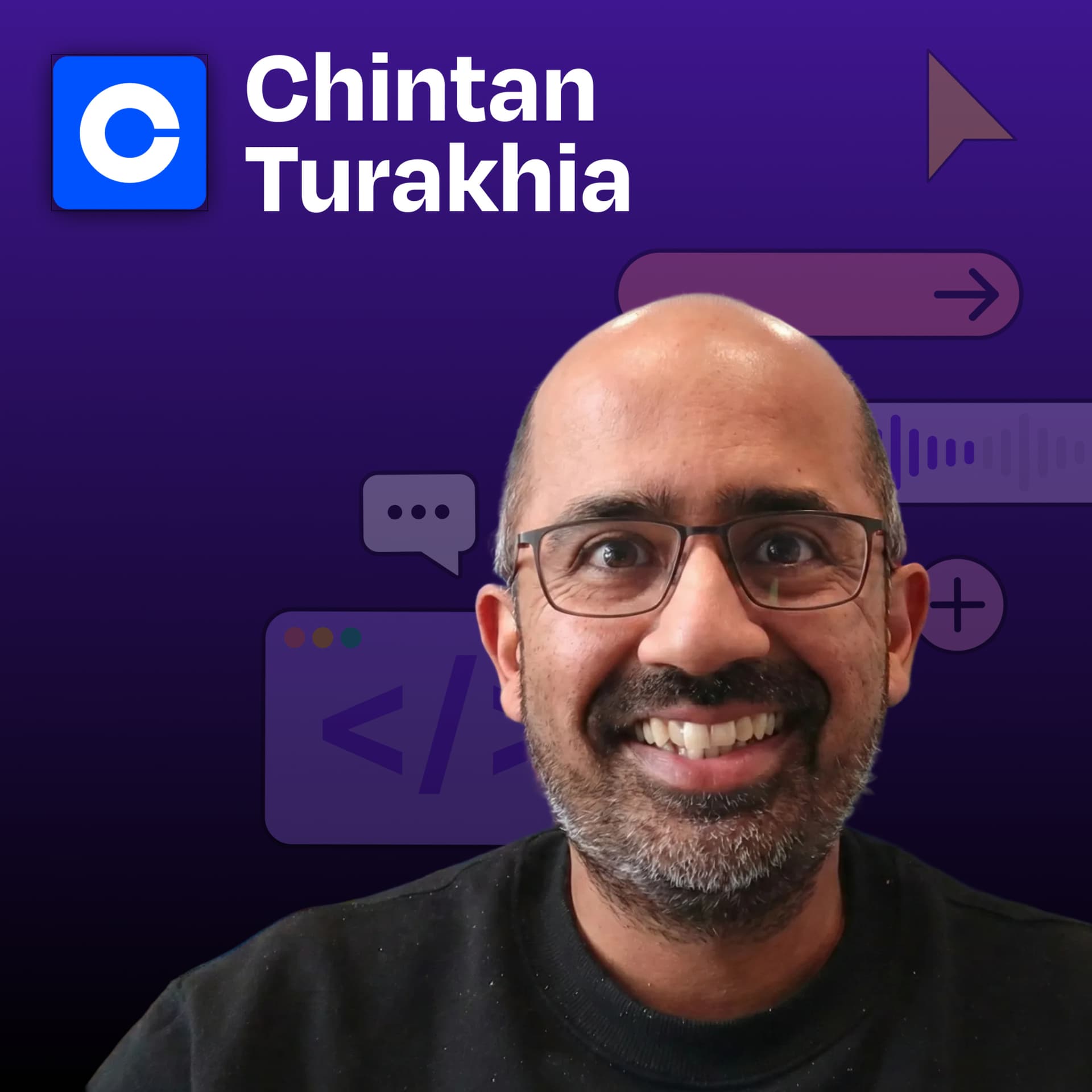
Chintan Turakhia is Senior Director of Engineering at Coinbase. He emphasizes efficiency, hands-on leadership, and “show not tell” for organizational change.
Key claims
- AI adoption requires a highly convicted, hands-on leader; “decree you must use AI” fails.
- Start with toil-reducing use cases (tests, linting, paper cuts) and prove value with rapid wins.
- Measure outcomes as time from ticket to user change (ticket→PR ready→review→merge→OTA update), not “AI lines of code.”
- Use AI to speed feedback loops (surges + “feedback cafe” + automated capture).
Notable examples
- “Cursor speed run”: ~70 PRs in ~15 minutes; later ~300–400 PRs in 30 minutes with ~800 engineers.
- Cursor analytics: cohorting users into agent-heavy, tab-heavy, balanced, light/inactive; generating playbooks and guidance.
- CloudBot: audio feedback → bug summary → Linear ticket → PR (with Cursor deep links/QR).
Written by AI. May contain mistakes. Listen to the episode to check what was said.
Chapters
Tap a time to open that second in VOThe Challenge of AI Adoption
0:45 to 1:29
Discussion about the skepticism surrounding AI adoption in large engineering teams.
“And the worst thing any engine leader could do is just be like, I decree you must use AI.”
Transforming Engineering with AI
2:36 to 3:50
Chintan shares his journey of driving AI adoption at Coinbase and the initial challenges faced.
“There's still so much skepticism, but I think you've proven it's possible and you're hopefully going to show us the way.”
Cultural Shifts in Engineering
3:50 to 4:50
Discussion on how changes in the team structure and mindset impacted AI adoption.
“Because, you know, how many engineers are we talking about here?”
Overcoming Adoption Barriers
4:50 to 6:30
How Chintan addressed the initial resistance and challenges in adopting AI tools.
“thousand person teams that have a 10 year headstart.”
The Importance of Hands-On Leadership
6:30 to 8:10
Chintan emphasizes the role of leadership in driving AI initiatives and being engaged.
“And, you know, for even a year prior to this event, like the company tried to adopt other AI tools like GitHub Copilot.”
Tactical Techniques for AI Integration
8:10 to 10:10
Detailed strategies used to integrate AI tools effectively within the engineering team.
“And the worst thing any engineer could do is just be like, I decree you must use AI.”
Creating a Culture of Wins
10:10 to 12:30
Chintan discusses the importance of celebrating small successes to foster momentum.
“And so people started seeing it in action.”
Speed Runs: A Transformational Practice
12:30 to 14:03
Exploration of the 'PR speed run' concept and its impact on team productivity.
“We call it, It was like basically cursor speed run.”
Transformational Moments in Engineering Teams
14:03 to 15:35
Discover how breaking rules can enhance engineering team dynamics and velocity.
“I just, that has to be such a transformational moment for an eng team.”
Harnessing AI for Speed and Efficiency
15:36 to 18:17
Learn how AI accelerates processes and reduces cycle times in development.
“This is a moment where we should be breaking the rules because AI is breaking the rules for us.”
Show all 24 chapters
Real-time Feedback and Rapid Iteration
18:18 to 20:01
Understand the importance of real-time feedback for product development.
“We reduced it by 10x down to like 15 hours or so, roughly.”
Using Data to Analyze Team Performance
20:02 to 22:51
Explore methods for analyzing engineering team performance using data.
“And one of the things I really wanted to figure out was like, what are the natural clusters of usage?”
Developing User Cohorts for Improved Outcomes
22:52 to 28:00
Learn how to identify and guide user cohorts to enhance software usage.
“I do want a static dashboard just for fun.”
Exploring User Pathways to Power Users
28:00 to 30:00
Learn about the non-linear paths users take from light to power users and the special actions that lead to increased engagement.
“Regular user seems to be like balanced on the tiering.”
Leadership and AI Integration
31:00 to 33:20
Discuss the evolving role of leaders in the age of AI and how to leverage AI tools for team performance.
“And like, you know, the thing is like, no one should expect all this information is going to be perfect.”
Accelerating Feedback Loops with AI
33:20 to 36:10
Understand how AI can drastically reduce the time from feedback to feature implementation in product development.
“You identified cohorts and power users, which would have been very tedious to do if you were going to do manually.”
Real-Time Feedback Capture Techniques
36:10 to 42:04
Explore methods for capturing user feedback in real time and translating it into actionable insights.
“we can do this use case which is you're talking about the speed of feedback to feature and you said some fighting words out there.”
Building In-House AI Agents for Enhanced Workflow
42:04 to 44:42
Learn how in-house AI agents can streamline workflows and improve efficiency.
“video or audio, run a little baby LLM on it, get not only a summary of the issue, but a good recommendation on how you might fix it.”
The Importance of AI Skills in Engineering Careers
44:42 to 48:56
Discover the career advantages of becoming proficient in AI within engineering roles.
“Or if someone is like, hey, we just got out of this meeting.”
Personal AI Use Cases: Managing Daily Tasks
48:56 to 53:20
Explore innovative personal use cases of AI in everyday life, from school events to wine selection.
“I think there's like one super important thing.”
AI's Impact on Time Management and Productivity
53:20 to 56:03
Understand how AI changes time management and productivity in professional settings.
“And now you can pick yummy stuff to get for, you know what?”
Effective AI Prompting Techniques
56:03 to 57:06
Learn techniques for improving AI response accuracy through effective prompting.
“I am spending way more time in the code base, fixing bugs, trying things, coming up with technical approaches.”
Introducing the New Base App
57:06 to 57:58
Discover the innovative features of the new Base app and its impact on creators.
Join the Team at Coinbase
57:58 to 58:22
Find out about career opportunities and the culture at Coinbase.
“And we are hiring two cracked front-end, back-end design engineers, ML engineers.”
Transcript
Automatic transcript. May contain errors.0:00People are skeptical that large, established, highly technical, highly capable engineering organizations can deploy AI at scale and get any effect. But I think you've proven it's possible.
0:11Chintan Turakhia:It's not only possible, it's adapt or die. It's just been such a huge superpower for the team. How many engineers are we talking about here? A thousand plus. So we're not messing around here. The company tried to adopt other AI tools and we saw this uptick in adoption. People opened it up, checked the box, did kind of like a hello world thing, but it didn't stick. My biggest thing is how do I make this damn thing stick? Because there's something here. I do think that it's really important when you're doing this organizational transformation that you have a single person with incredible conviction at the leadership level who is also hands on the metal.
0:45Show the engineers, not just tell.
0:47Chintan Turakhia:And the worst thing any engine leader could do is just be like, I decree you must use AI. Come on, no one's going to listen to you.
0:58welcome back to how iai i'm claire bow product leader and ai obsessive here on a mission to help you build better with these new tools today we have chintan tarakia senior director of engineering at coinbase and he's going to show us yes it is possible to drive ai adoption and higher velocity in an engineering organization of thousands of engineers he's also going to show us the new expectations for engineering managers and engineering leaders, which is less meetings and more code. Let's get to it. This episode is brought to you by WorkOS. AI has already changed how we work. Tools are helping teams write better code, analyze customer data, and even handle support tickets automatically.
1:40But there's a catch. These tools only work well when they have deep access to company systems. Your copilot needs to see your entire code base. Your chatbot needs to search across internal docs. And for enterprise buyers, that raises serious security concerns. That's why these apps face intense IT scrutiny from day one. To pass, they need secure authentication, access controls, audit logs, the whole suite of enterprise features. Building all that from scratch? It's a massive lift. That's where WorkOS comes in. WorkOS gives you drop-in APIs for enterprise features so your app can become enterprise ready and scale up market faster.
2:20Think of it like Stripe for enterprise features. OpenAI, Perplexity, and Cursor are already using WorkOS to move faster and meet enterprise demands. Join them and hundreds of other industry leaders at WorkOS.com. Start building today. Chintin, thank you so much for joining. What I love about what we're going to talk about today is we've spent so much time talking about the individual Vibe Coder or the non-technical person, becoming a software engineer, and still people are skeptical that large, established, highly technical, highly capable engineering organizations can deploy AI at scale and get any effect.
3:02There's still so much skepticism, but I think you've proven it's possible and you're hopefully going to show us the way.
3:10Chintan Turakhia:I think it's not only possible, it's you know adapt or die um like it it's uh it's just been such a huge superpower for the team and we've gotten so much efficiency out of it and and there's just like ways to approach it um i was i think i was reading a tweet yesterday uh just about a very very long story at microsoft or someone like pulling co-pilot in to their organization and it was just like just a fun tweet of just like yep we're gonna make graph go up into the right but like the actual adoption wasn't good. And so like I've been spending the last year just absolutely obsessing about it and you can do it.
3:49Chintan Turakhia:People can do it. So how can you do it? Because, you know, how many engineers are we talking about here? A thousand plus. Yeah. So we're not we're not messing around here. This is a real team working on real products who know what they're doing, who have built great software. And so where did you start? Either culturally, from a product perspective, from a tools perspective? So I think a lot of it actually just started around this time last year. We had some changes to align like the product I'm responsible for. And a big part of that was effectively like rewriting the entire product from scratch, from turning it from a self-custody wallet to actually a social consumer app that just happens to use crypto.
4:34Chintan Turakhia:And, you know, we're using React Native, but we made a lot of decisions for a self-custody wallet. But to become a consumer app, you got to like rethink everything. That was one. Two, we needed to do it in like six to nine months. So we were going head to head with like the big social players out there that have multi thousand person teams that have a 10 year headstart. And we were really trying to just do something big and new and crazy like absolutely just crazy and and a big part of this is like how do we rewrite the app so that is the best possible app out there like consumer grade and do it in this insane timeline and the team is cracked they're amazing but like you know we we became a smaller team as a result of some of these changes and so I started just looking at like ways to accelerate and and you know like i don't know my team knows me well and if you if you know me like i obsess about efficiency uh and i think that's like so critical to like make teams accelerate their velocity um but in in in ways that makes sense uh for tool and using the tool so around this time i think cursor had come out with their sort of initial release it was around like november of last year we we all tried it right 2024 and it kind of sucked and it's not like i love cursor i love cursor uh the models weren't there just the models weren't there like the models couldn't even you know really write a unit test right well and you know you're an engineer um and you understand like once once an engineer tries a tool and and they're like ah this is not so good.
6:18Chintan Turakhia:Like it's very quickly and very easy to write it off, right? It happens. And so we kind of went through this like trough of sorrow of just like, okay, goddammit, AI tools are not here. The models aren't ready. What are we going to do? And, you know, for even a year prior to this event, like the company tried to adopt other AI tools like GitHub Copilot. And we saw this like uptick in adoption. Like people opened it up, checked the box, did kind of like a hello world thing, but it didn't stick. Right. And, and like my, my biggest thing is how do I make this damn thing stick? Right. Because there's something here.
7:00Right.
7:00Chintan Turakhia:And my mental model was just always the models will, the foundational LLMs will always get better. And it's like going to the gym. You need to go and build your reps and try it. And that's okay. And the cost of doing it is like nothing it's just a little bit of wasted time we're not worried about compute right now because it's so early and so like from basically january all the way to like march or april of 2025 i just changed the the mindset and the mentality i i was like in cursor every single day every single hour of the day and i was like how do i make this work right like you know it was great because I was writing code again.
7:41Chintan Turakhia:It was great because, you know, it was unlocking all these like use cases. Like we were doing interviews, like interviewing candidates and just like, I don't want to necessarily write up all the notes, right? That takes a long time. But I intuitively, I like, I know I've assessed, right? So I would use it for like tactical day-to-day paperwork kind of things to accelerate me. But also from like a coding perspective, we just pick up bugs and be like, hey, let's try this, right? What's going to happen? What can I learn. What are the tips and tricks to like show the engineers, not just tell. And the worst thing any engineer could do is just be like, I decree you must use AI.
8:21Chintan Turakhia:Like, come on, no one's going to listen to you. I have to empathize with this because I also running a large, like multi-hundred person engineering organization, you know, was experiencing even early versions of these tools and had such innate conviction that it would, of course, transform how we did work. That was very obvious to me. I don't know if it's obvious because of experience or obvious because it was just obvious. But then you just had these experiences as leaders, especially maybe 12 months ago. One engineer tries it, doesn't work. It's not just that engineer throws it away. It's everybody else says, well, I think, I trust their opinion.
9:04And if they say it's not going to work, it's not going to work for me. And I do think that it's really important when you're doing this organizational transformation, that you have a single person with incredible conviction at the leadership level who is also hands on the metal. Because until you can say, well, I understand it didn't work for that, but it worked for these three things. Or I actually figured out how to make it work for that because we tried A, B, and C. I think it's just the only way you could not be in philosophy you could not be in you know someday in the future you figure it out you have to actually get back to it and then I think like bonus points so many of us in engineering leadership have like been pushed away from
9:46Chintan Turakhia:from coding I know I was happy to get back in it and I'm like I just want to code again like give me some joy give me some time yeah and so I think that's the benefit as well and you you have to show not tell and and so i did and like i think what i learned very quickly is like okay there's something here there's there's a there right and then we just started picking off like one or two use cases and and the best way to get to an engineer is just give them the tools so they stop doing the shit work and so that they can build the stuff they love right right and so like we would just like pick off unit tests we'd pick off like linting all these like little things that just like paper cut and suck the soul out of you as a builder but the engineers and you know like the team just wants to move faster the team wants to build better things and so we started leaning into like cursor rules for some of these things even the simplest thing i remember like i think i remember my aha moment which was like popping in some bug report working through it and then I didn't think about it I just did it I was like just create a draft PR here's the ticket here's kind of the PR like and you know here's the PR description I want and it just did it and I was like I never need to remember get status get rebased not like why is anyone doing this anymore like like what are we doing and it took a funny thing is it took some convincing of me to the team like guys just type create draft a pr like create a draft pr and it'll be done for you and like like well you know i kind of have my workflow it's like cool cool cool cool i get your workflow you can modify it you can use cursor rules it's okay like no one's getting bonus points for memorizing git commands exactly exactly and and so like we chipped away and we put in a bunch of rules like cursor rules and that helps so much and then like we i was like sensing i was like okay i have i have enough like folks on the team that are like yep this is unlocking stuff and they would post in the team channel like look what we had literally a channel called cursor wins and like everyone was just posting the channel like i just did like you know 20 unit tests and then went and had a coffee.
12:04Chintan Turakhia:This was great. Like, I love it. And so people started seeing it in action. And then we hit this like point. I was like, okay, how do I speed run now the whole team? There's a, there's a little bit of conviction here. So we just, and I remember this, like, I think I had landed. I was going to the East coast. I landed, um, for my flight, got into an Uber, hopped on like an entire team, all hands, like speed run. We call it, It was like basically cursor speed run. And I was in the Uber using cursor, putting up a PR. And the goal of the speed run was every single person would just pick up the most trivial thing.
12:43Chintan Turakhia:It could be like copy change, a bug, whatever, and just put up the PR. And we ended up, I think in 15 minutes, I think 100 people had joined. In 15 minutes, we ended up putting up like 70 PRs. And we broke GitHub too, which was cool because we learned like our infrastructure needed improvement. it. So I want to I want to pause real quick, because again, how I a little bit about tactical techniques, and you've used a couple that I have used, which is like, one high conviction leader with hands on the metal that just says, like, we just got to do this. Access to tools, focus on toil. And it is very important.
13:18You called out linting, you called out tests. Another one I would call out is like design debt, where, you know, front end engineers or designers have just lived with parts of the app they hate. That is another really great one. And then a shared Slack channel. And one riff I would make on your cursor wins channel is we made ours wins and losses. And so we were very clear, just post what you did and when it worked and when it doesn't. Because when it didn't, people would be like, oh yeah, but you could try XYZ or I have a cursor rule for you or whatever. But what I haven't heard that I want people to just perk their ears on and pay attention to is this like idea of a PR speed run, which is like do a time down time, everybody boot up whatever tool and just speed run some fixes.
14:06Because how much conviction does an org have to get going from look, I've been there like the doldrums of like quarterly planning and this will be in four months and blah, blah, blah, blah, blah to just like, we just got 70 PRs that we've been sitting on out the door in 30 minutes. I just, that has to be such a transformational moment for an eng team.
14:27Chintan Turakhia:You know, there was a success rate on those, on merging those PRs and like, it was just like, shit, this is possible. They're like, everyone's eyes lit up and it was really sort of a death to status updates, long live building moment. Yeah. And this is the other thing I want to call out because I think you all have a really special culture there. But so often we in product engineering design orgs get like really wrapped around the axle on like the rules of engagement. Like, well, I'm not allowed to build it unless the product manager says it's important. Or like I can't really make that decision about what color that button is because design hasn't weighed in.
15:03And like I do think these moments where you just break all the rules and you're like, guess what? Remember, you can just ship code. You can just. You can just ship code. Like put AI aside. AI maybe enables it and makes it like a much less costly, you know, expense. But like just doing that is so powerful for velocity and for I also think for quality, like people just take more radical ownership of things. So I'm going to 100 percent steal this.
15:32Chintan Turakhia:I mean, I want everyone to steal it. Like, you know, I really like the way you just put it. Right. This is a moment where we should be breaking the rules because AI is breaking the rules for us. and if we don't adapt to how like we can use it we're toast right and we is like a very collective like whoever's not adapting is going to fall behind kind of thing right and what all of this like ends up unlocking is is like the reduction in coordination overhead so like one thing i've been obsessing about a lot it's like okay cool great good job on the speed run yes we got a
16:13Chintan Turakhia:did Brian then you know we were sharing some information with Brian like how adoption is going and then we just did a company-wide speed run and at that moment like there was like 800 engineers on the call and we ended up pushing up for like three four hundred PRs in 30 minutes and yes again we broke GitHub and that's fine that's good like this is pressure testing we should be designing ourselves to break the rules right but the thing I've been obsessing about is like how do you how do you measure any of this like in terms of output right there's there's this like tension where okay the more ai we use well does that count as a replacement for people and like i'm in the camp of absolutely not ai is an accelerant right ai is an accelerant because there will always be more work like to do right and so the way i think about it at least for for my team and what i'm pushing across the board is really like time from ticket to when the change lands to the user.
17:17Chintan Turakhia:Like that actually encompasses every single piece you need. Right. And today, like even if you go from like ticket backlogs and stuff like that, like there's, oh, do I, should I like, like you said, should I prioritize this? Is this important? Let me ask my PM or let me ask the program product manager, project manager, whatever. And now the whole team, like fast forward from back then to now, we just see someone give us feedback. And literally within like seconds, we're like, like we built this internal bot up, I'm excited to show you. And within seconds, like the PR is being authored, right? An agent picks it up.
18:00Chintan Turakhia:And within seconds, that feedback is like acted on. And so we crunched the time to action, the time then from ticket to the PR being ready for review. Then the review time, like all my devs complain, review times take too long. We found some solutions, actually. I think we were doing average of like 150 hours, like was a cycle time for a PR review because there's so much. We reduced it by 10x down to like 15 hours or so, roughly. and then the last piece is like from that merge how do you do like that ota update and you squeeze that whole cycle again and then the team is like just literally unlocked with sheer velocity yeah that's it and then you get stuff in front of customers yes and then you have the velocity of like actual market ideas yes and you get that feedback and like the we're obsessing also about how fast can we take like in real life feedback yeah and then actually just fix it right then and there.
19:00Chintan Turakhia:I think there was another aha moment. I was on a call with a user of our product, right? And they're like, hey, it'd be cool if you changed X, Y, and Z. And literally, while I was on the call, I just put up a PR and pushed it. And they're like, before the call ended, it was 30 minutes. I was like, just reload the app. It's fixed. Okay. Before we put this into an hour of two end product leaders being like, just ship really fast. We'll go into the merits of reducing PR cycle time, all that fun stuff. Let's actually show a couple of things you built, because I think the kind of meta commentary on like, you can do this in engineering organizations, there are steps to it.
19:41There are measures you can take, I think are things that everyone can learn from, but you also have been building. So let's talk about how you used actually cursor to drive how you drove this into the organization and understand adoption of AI.
19:54Chintan Turakhia:yeah for sure um i think a lot of it just comes like from honest curiosity and figuring out um where the bottlenecks are like why aren't folks adopting how are people using it etc etc i want to show you like i think the the kind of crazy thing i'm about to walk you through is like i just got this harebrained idea cursor has like great analytics right and so you go to the admin panel you look at the analytics and you know awesomely they let you download it into csv i was like what if i just use cursor to figure out what my team is doing in terms of using cursor but not in just like from a vanity metric point of view of like lines of code committed by ai i think that's like kind of misleading actually digging more into um how they're using cursor and how do we sort of like replicate power users so let's see uh we have some some data it's in this file here and it's just like a standard CSV from cursor that you can like download from their their site like your admin panel and then there's also here a bunch of different sort of fields so like accepted lines chat lines chat lines deleted various like data elements but you know one thing like I just sort of started with I want to understand the usage of cursor right and I I already know we have like light users all the way to power users.
21:26Chintan Turakhia:And one of the things I really wanted to figure out was like, what are the natural clusters of usage? Can you find them across the team? What is the best way to cohort them? Right. And I'm just going to pick up the standard analytics file here, maybe pop in another one here. And then I love Opus High. I also love plan mode because it gives you a chance to see what it's thinking through. So we can let this cook and see what it comes back with. And what I want to call out here for engineering managers or engineering leaders is this is the kind of quantitative analysis that we would all have loved to be able to do across a bunch of engineering metrics at some point.
22:14How often do we get asked by the board or our boss, what's velocity, what cycle time, which of our engineers are really on the far edge of the curve in terms of efficiency? How are our junior engineers ramping into the repo? All that kind of stuff. And that kind of analysis is actually really onerous and hard to get at because of the structure of the data and the nature of the analysis. And so what I love about just LLMs in general and in particular using something like Cursor is you can get to really nuanced cohorting analysis on human behavior and human analytics as a manager in a way that I think has been really challenging to do before.
22:52yeah i totally agree and like the beautiful thing is now with mcps with data accessibility
23:01Chintan Turakhia:like i think of tools like cursor as just my daily operating system if i have a question it doesn't matter if it's technical or not i just go into cursor and ask it um and so it's like super super powerful that way okay so it's asking me a little bit about like what outputs do i want I do want to enrich CSV. Just it makes it easier. I do want a static dashboard just for fun. Like I'm not really trying to create a brand new dashboard right now. But my main goal here is just honestly, honestly, like fine natural cohorts. Right. And so it's going to kind of try to do light, moderate, active, power, super user.
23:39Chintan Turakhia:It's going to look at line suggested. So volume, sophistication, agent mode, model preference, acceptance rate and breadth. What features are they using? I'll spit out, you know, a CSV dashboard, likely generate a Python script to that I can reuse. So I'm just going to kick off build mode. While that's cooking, I do want to just maybe bop over to like, it's going to create all this stuff in Python, create the scripts for me. Awesome. But we can look here at some of the information, right? So like, this is all sort of random made up data. It's like sample data. But what it did was in a previous run, it looked at all the data, generated the Python script, which is great, super simple.
24:23Chintan Turakhia:And it sort of just did some like high level status metrics, like AI code percentage, again, on all this made up data, AI lines per week, composer lines. This is when you're using the agent mode in cursor, or tab lines, right? When you're hitting tab. One of my team members actually got the cool cursor tab award, which is great. And so it sort of breaks all this down. And then what it really segmented around was like agent heavy users, which is folks who really lean into agent usage. There's also tab heavy users. This is like a different cohort. They just lean into tab usage and they maybe want really just a bit more control and maybe haven't gotten yet used to like how to let go with an agent.
25:06Chintan Turakhia:You have balance users that try both. And then you have sort of like maybe cursor curious or maybe not cursor pilled or LLM pilled right now. And so I generated this whole script. It's great. And now let me show you sort of a bit more analysis I want to do here. So let's do this. Run the analysis on, I have a sample user set and generate the HTML as well. And let's, we're actually like, this is sort of the output of the analysis script that was generated in Python, which is already cooking in parallel. Got it. So what you've done here is you've taken some raw data from cursor. You've asked one kind of agent to do a cohort-based analysis and generate a enriched CSV essentially with some data.
25:58And then you're kicking off another agent to actually do the analysis on that and generate sort of an HTML view of it so you can visualize the data. That's right. That's right. What it did was the Python script that was generated,
26:15Chintan Turakhia:it found these natural cohorts, these natural cohorts of super user, regular user, power user, light, inactive. Again, this is just honestly sample data, but based on like real information, real schema real cursor data fields and it came up with like 70 percent or an agent heavy in the sample data 20 percent are minimal four percent are balanced we have some room to improve here on the sample right like not enough people are using it um and so it does a bit of a breakdown which i kind of like you know kind of a recap of metrics yeah we have a lot of lines of code in this data we have 520 power users again made up names but like this person is crushing it i want to know what this made up person gabriel diaz is doing right awesome thing here it generated a little visual dashboard nothing fancy something just really simple to look at right total lines composer lines tab completion a little bit of breakdown some structuring on the tiers and usage right but what i really kind of want to understand is like what is gabriel diaz doing right this made-up user who's just like crushing it yep how about based on the data generate guidance for each user cohort what you know they should do to advance and graduate to super user i'm looking for explicit guidance effectively like i want to turn this into some type of playbook right so let's let this cook and then in parallel what i also want to do is i like visuals and there's something intuitive here where like as we look at the data itself right we we know that the like the path to this super user over here it's it's not like you go inactive to light to regular to power to super we know it's not linear like that right right there There may be like forks from light to straight to power user.
Read the full transcript
28:18Chintan Turakhia:Regular user seems to be like balanced on the tiering. But what I want to know is like, what are the special things these folks are doing? And how do I sort of shift the curve, right? And so I'm also going to throw another question in parallel, like create a mermaid diagram for all the different sort of paths a user can take from light to power. And I'm assuming it's not linear. And let's just see what this cooks up to. okay this is really working hard really opus or five yeah opus is opus is really working hard on this but um yeah let's let's see where it goes well you know it's really interesting i'll give you a a shorter hack on this one so i think what this is generating is like an html playbook that you could share out that has has things i will tell you what i would do in this use case and I've done this a couple of times with customer QBRs, is I say, write a Slack post that I can put in my engineering channel on a couple of these stats and how we can get people to move from A to B.
29:24And it'll write me like a short little Slack post. So I love this idea of going from something like a CSV to a really deep analysis to an HTML-like visualization to like three bullet points I can send in Slack. And as a manager, each one of those steps would have taken just forever to do. And now you can get them all done in Cursor.
29:46Chintan Turakhia:Yeah. You know, that's like kind of the awesome thing is the power of something like a workflow markdown file is huge. It's absolutely huge. And it's exactly like the thing you're describing here. Meet Rovo, your AI teammate, connecting knowledge, people, and workflows so teams can work smarter and move faster. It helps people find answers, make decisions, and automate work securely and with context through search, chat, agents, and studio. Rovo runs on the teamwork graph, Atlassian's intelligent layer that unifies data across your first and third-party apps so no knowledge gets left behind. and you always get personalized AI insights from day one.
30:33And the best news, it's already built into Jira, Confluence, and Jira Service Management paid subscriptions, so the power of Rovo is already at your fingertips. Know the feeling when AI turns from tool to teammate? If you Rovo, you know. Discover Rovo, AI that knows your business, powered by Atlassian. Get started at rovo.com. That's R-O-V as in victory, O.com.
31:05Chintan Turakhia:Let's see. Let's see what it came up with, right? And like, you know, the thing is like, no one should expect all this information is going to be perfect. Like if anyone is thinking, oh, wow, what is going to be my job as a leader if Cursor can do all of this? Well, your job as a leader is to lead, right? And to make change and impact. And this accelerates them. So inactive users, like, yeah, kind of true. You haven't installed, you haven't really used AI features yet. The hardest part is getting started. So I kind of like this. It gives like just some very simple prompts. Try the agent mode for your next task.
31:42Chintan Turakhia:Something very, very simple, something like, wait, try a tab completion flow. I kind of feel like the LLM really wanted to just turn this into a game, like a little quest or something. Yeah, it's gamified a little bit. Yeah, it is a bit gamified. It was kind of fun. All right, so this is cool. It's kind of given me like, this would be my Slack post TLDR. 16x more AI line super users versus other users. Let me zoom in just a bit more. More agent requests for super users. I love this. Stop typing, start shipping. It's dark mode, so the engineers will just love it. Yes, right? It's kind of perfect.
32:20Chintan Turakhia:and then you installed cursor but you haven't used ai yet we talked about this that's cool light mode okay i you know this like resonates stop saying fix this bug actually like talk to it like you would maybe a junior engineer right um cursor just did release bug bots i love bug bot yeah i love i love bug bot agent isn't for hard stuff it's for everything these are like motivational quotes now but i think like we should just make posters for and put them up on the wall um write unit tests actually read the comments okay cool now power users you're good to be great think bigger and tab harder okay if cursor is listening i think this is like gonna be your new merch line guys i need a hat that says tab harder yes okay so just to just to recap again we're doing we're doing a free free product work for cursor here we we took you know your ultimate problem was like how do i drive up adoption of these tools and you're like of course i'm gonna use the tool to understand adoption and then figure out ways to drive adoption we did analysis We created a visualization of the data itself.
33:40You identified cohorts and power users, which would have been very tedious to do if you were going to do manually.
33:45Chintan Turakhia:Yeah. And then you created a hosted playbook as well as a series of motivational statements, which we can either give to our friends at Cursor for free or trademark right now and make a little money. um agent everything tab without thinking bug bot always on iterate prompts love it and this you know again what i think is fun let me talk about what i think is fun about this one everybody who has been in engineering leadership knows this is the kind of stuff you get asked to put in a board meeting you get asked by your boss like what percentage of our engineers are using cursor do we have power users are we actually getting value and we're talking about an AI use case right now.
34:35But again, across management, there are actually measurable things you can do about the performance and efficiency of your team.
34:42Chintan Turakhia:Yes. And I think it's been so impossible to get before. Two, it would be no fun if you didn't get to do it with code, which you get to do with code. Actually, that is the thing. You can solve problems with just code now, right? You can just do things. I, I, you know, you're so right. Like I, I think this, I underappreciated exactly what you're saying right now. And I just want to repeat it because normally you would be asked this and then you would have to go pull an IC to do that. And like, what, what? Yeah. Come on. Like, no, you can just do things right now. And, and again, it's like not the, I think people underappreciate the velocity creation of a fun task.
35:28Chintan Turakhia:Yeah. Which is like at the end of the day, like this is silly, but also the like little fun bits of it. You're like, great. I want to go to the next level because I got like a little dopamine hit from this dark mode playbook. That's kind of funny. And I think people underappreciate like that iteration speed that can just come with like a fast feedback loop. Yeah. When you're building something and the fast feedback loop, when you're building something that has high quality against it, which like something designed like this does so much more fun to look at than a google doc yeah or a spreadsheet or a dashboard so we we did it we did it we again you and i are twin stars i think here and so we probably go all day on the things that we find fun but let's go to a second use case that i think people are going to see and let's see how fast we can do this use case which is you're talking about the speed of feedback to feature and you said some fighting words out there.
36:22You're like, we're really compressing the time from feedback to feature. So how does that actually work?
36:28Chintan Turakhia:Those were some fighting words. And, you know, I think you know this, right? You want to build this for your users, right? And you want to create the best damn product out there as fast as possible. And the way to like make that cycle work really well is genuinely how fast you can move on feedback okay but i want to start from how does like feedback even normally come in right so you you know normal like teams and culturally like you'll have dog fooding or bug bash sessions right you'll get on a meet or get in a room keep using the product blah blah blah all that jazz and then someone has to like collect the bugs in a Google Doc and then take those bugs in a Google Doc and put them into a ticket system.
37:17Chintan Turakhia:Right. OK. And then there's a whole discussion around. Is this important? Is this not important? OK. Should we pick it up in this sprint? Should we wait for another sprint? And by that time, your user has turned out. They're like, you guys didn't fix this. I kind of hate it. Moving on. Right. Everyone's attention is like so, so, so short. And right now, like the whole team we're all preparing for a big launch. And we wanted to get together and do this thing called a surge. And this is where we like just bring the team together. And we do very, very long days using all this AI and just shipping like massive amounts of code.
38:00Chintan Turakhia:And fun fact, like during these surges, we end up shipping like more than three to four X more PR volume in the same time. But the other thing we wanted to do was bring people into the office and we set up this thing called like a feedback cafe and so we'd invite externals internals etc and we'd dog food with them and we'd show them the app and like here's just like a couple seconds of you know what it looks like we're just standing there collecting information doing all this like live dog fooding and the hard part though is especially in real life how do you actually capture that information because it's voice it's video how do you translate it into a system okay so i just spent like half a weekend and built a tool to capture your feedback live let's just pick something i'm gonna pick i'm gonna i'm gonna pick a new thing how i ai testing with claire awesome so let's do that it's gonna create a little session perfect very simple and we have two modes you can like you can use this on your mobile phone that's what the team did when they were in real life but for this i'm just gonna like capture some audio and And let's see, what's, what's actually, maybe I can just hear from you like a fun little bug or something of a product that you, you think you want to fix.
39:33Chintan Turakhia:So we're going to start capturing audio. There is a AI chatbot that I use where my account when switched to business account forces me to clear all my chats. And I think we should fix that bug so that I can access my existing chats. We're going to start capturing audio. Okay, cool. We captured it. It's basically taking the audio. I did a system prompt, sends it to an LLM. And then what we do is the prompt is basically saying, go and identify the bugs. And then I'll create it. I'm going to do one while it's processing. Right now I'm using the app. I'm on the trade tab and I'm clicking the from field and I'm typing in numbers but the numbers are not showing up so that's not letting me make a trade so I think in our first example the audio is a little hard to capture just because it's going through the system but let's look at the second example it calls it out really clearly on trade tab typing into from field does not display enter numbers user cannot initiate a trade cool really really clean yep I hit create linear ticket it even gives like a suggested title the user journey I care about for this is trade boom I create the ticket itself awesome I pop over the ticket is all here the file is there linear is a incredible tool is doing some triaging but the thing I want to now hop over to is we're going to just create the PR so we have this tool we built in-house we call it cloudbot it's actually like using all sorts of underlying models.
41:13Chintan Turakhia:It's not something that is specific to Claude. So Claude bought CreatePR. I know the repo for this is Wallet Mobile. And here's the ticket. Oh, that's not the ticket. The ticket is, boom, here, great. Cool. So I just went from a bug report to a ticket. To a PR. So the PR is cooking. Okay. So I have to pause because if you are new to how I, you have not seen my signature move when I really love something, which is this. And I was doing this because I was just thinking about this, this little micro app that you have on the left side, which is, you know, live user feedback, totally unstructured, right?
42:04video or audio, run a little baby LLM on it, get not only a summary of the issue, but a good recommendation on how you might fix it. Very quick beep boop to linear. We love our friends at linear. I think it's a great platform for agents. And then a little custom agent in your Slack that can read those linear tickets and just execute on them. And again, so traumatized by the past, maybe, which is like this process would have been, you know, somebody manually summarizing what came out of a research session. Some document being written. Somebody actually making explicit decisions about what to include and not include.
42:48The decision making is gone. Yeah. Like no filter anymore. You don't get that like, well, you know, if I make this five pages long, no one's going to read it. So I'm really going to focus on the top 10 things. It's like, let's capture everything and then just burn through it. And then I have to ask you, why did you all build your own little bot to do this? What was the advantage of building the bot?
43:12Chintan Turakhia:So this is like in-house and we built it. You know, it all started around like middle of this year. I created this like, I was just obsessing so much about it. And I was like, how do I create better tooling for the team, for the company? So everyone can be accelerated. So I invented actually like I put a call out on Twitter. I invented this role called Super Builder. And the single job, single most important job of a Super Builder is to create more Super Builders. So we hired our first Super Builder. And we talked about some ideas. And one of the biggest things because most of our company uses Slack.
43:52Chintan Turakhia:We're all in Slack. And Slack, you know, I'm a strong believer. It's just a bunch of humans pretending to be systems. right and the cost of writing that something in slack is zero but the cost of answering something in slack is enormous and most of it is noise right and so one of the things was just like how do we bring the workflows that we are also used to um and how do we like sort of capture that and then add ai on top of it so we had like various reasons we know like lots of companies have background agents, cursor, et cetera, et cetera. We just have different sort of security requirements right now that we just couldn't launch with and that's fine.
44:33So we built this in-house and we have these feedback channels, right?
44:38Chintan Turakhia:Hey, there's a bug here. There's a bug here. And so now all we just do is like CloudBot, go and do something with that. Or if someone is like, hey, we just got out of this meeting. Here's a summarized transcript. we're like awesome at linear agent go break this down into tickets then just like you know you know the look you you showed like right like everyone is just doing that emoji of like the head exploding right because then now we have like 20 tickets and then we do fun things like this which is just go like bonkers where we just fire off tons and tons of calls right to just and so we built this plan mode so this bot has a create pr which i'm it's cooking um it has a and also the cool thing about create pr is when it's done it will respond back it will show you a link to like the cursor branch using cursors deep link and when then the one-off build is ready it will show the qr code so you can just scan and start playing with the fix right there's a plan mode which is very much like cursor's plan mode it just comes up with like a plan and then we also have um explain as well where it's like oh, I want to debug something.
46:10So like, why is Chintan's app not working right now?
46:20Chintan Turakhia:Chintan.base.es as an example, right? And it has like all the skills, all the MCPs. And so the thing I realized is context is the most important thing. So the place where we capture all of our context is linear. And then this agent that we built, we added skills and MCPs. So if we can capture context through linear, then we can trigger the agent using all the context from linear. And then it goes off into all the MCPs like Datadog, Sentry, Amplitude, our internal Snowflake databases, et cetera. And it has the ability to pull context from the rest of the company and it can work across multiple code bases and then boom, like it's, it's like, it's a, it's, it's a super builder.
47:09This is, this is awesome. And so before we move, move on, I think what I want to call it here are a couple of things that I hope people didn't miss. One is right now, if I can give people career advice, you want to be like the, the top three most AI-pilled people in your engineering organization. I'm sorry, I just have to say it. Whenever I pulled an engineering leader aside or someone aside who's maybe a little AI skeptical,
47:36Chintan Turakhia:and I said, I want you to lead this. I wasn't doing it. Yes, of course I want to do it because I think it has high impact on the company, but I felt like I was doing people a career favor by giving them this role. And so if you can find companies that are hiring super builders, that will put you in the role of driving AI across an organization where you can learn these skills. I tell you, it is an incredible benefit to your overall career. And I don't think people appreciate how much that is pretty still rare right now. So if you can find it, I would just beeline directly directly to it. I think the other thing, and we've seen this a couple of times, we saw this Amplitude actually did it.
48:18Building your own agents is not impossible for organizations. And so if you do have security compliance, data access restrictions, you can't use cloud agents, you can't use these things. It is not impossible to build these things yourself. And there are lots of like really great SDKs out there, too, that you can use to do so. And then, you know, three, like I do think some of these platforms, linear and Slack, are just friction reducers to access to AI. And so if you are thinking about driving AI adoption in your organization, like figure out how you can get the right platforms in place that can unlock access to agents.
48:55Because if you ask somebody to open or learn a new tool, it's just going to create too much friction to move forward.
49:01Chintan Turakhia:I think there's like one super important thing. Like this is a channel where we call CloudBot Playground. And I'm scrolling through fast just to show you like how much people are using. This was one night. I was up at like 1 a.m. just pushing this. We got like 200 bucks, right, from this tool I showed you. And I just kicked them all off in like one solid go just to get things cooking. And like it was great. Let's see if a plan came out here. Yeah. So like there's a plan that comes. It actually creates the plan in the linear ticket. Yep. The trick here, why Slack, is because Slack is how things go viral within your company.
49:45Yep, totally.
49:46Chintan Turakhia:If you have pulled out the magic into some separate tool that others can't see, it doesn't happen. And so by getting things into Slack, people are just like, holy shit, this is possible. Let's go. And it's like, it's really cool. I completely agree. Okay, so we have just seen about everything I wanted to see from the engineering side. But before we get out of here, I want you to spend just a couple minutes on a personal use case. Okay, let's go. I think the one that resonates probably for everyone is getting, if you have kids, getting the school emails. That it's like, oh, here are 50 events that are about to land.
50:27Chintan Turakhia:Here are the dates. I've just started taking a picture of it and then throw it into chat GPT and say, create the calendar invites. 100%. Right? It's like, it's the dumbest thing, but oh my God. And then the shared calendar dance happens. And it's like, it's so great. Another thing though, like I love food and wine. I really do. And like, I've done like Somalia training, et cetera, et cetera. And I realized like, you know, I went to New York recently with one of my buddies. He's learning about AI, but he's like, what are some of the real use cases that would resonate with me? and I was like well like one of the biggest sort of anxieties people have is when they go to a restaurant they're handed the wine menu right and they're like what do I pick what if I pick the wrong thing so uh with my friend in New York we went to some uh like champagne tasting and so like I just took notes there's like this whole notebook right I just did this like an hour ago and I was like oh here's a great producer single star means like yeah it's good and then here's another one oh see i wrote amazing by like this is someone i've actually never tried before but i loved loved their champagne was he it was just super yummy here's another one right effectively then i just like popped this right in and i said here are a bunch of champagnes that i tasted figure out from my notes like what are my taste preferences well really simple because you know like when i when i did like somalia classes the biggest thing that it teaches you is the vocabulary to describe the stuff you like right and then so i just took the images it figured out the producers and this is actually like spot on the fun thing i did with my friend while i was in new york was like we were just he was he's he actually is the real life version of chat gpt and it's it's what inspired me to do this which is he's always trying to figure out my taste preferences.
52:17And so, you know, this is like my strongest signal. I love like these wines that
52:22Chintan Turakhia:have very little sugar that are like really rip-roaring acidic. I love some aging. I love growers, right? Grower champagne, not like the big houses that are like very sweet. It even went into like a certain subcategory of like, you know, the chalky style, this specific producer that I wrote amazing buy for and it also called out something i learned in real life which is like i do like pinot meunier but only like with this sort of characteristic right kind of crazy all right fine and so then it came up with like a little bit of like a champagne profile cool and if i'm buying stuff you know here's here's what i would buy all of that's fine okay like why on earth would anyone do this right like like people must be listening and be like okay maybe just drink a little less champagne dude but like the fun thing is let's say you took you went to a restaurant right and i just did this for this like example here and you just like dropped in took a picture of uh the wine menu right and it's like a big old menu some of them are like size of a dictionary some of them are simple but like you don't want to make a choice especially you just want to be with like talking to the company that's in front of you not like staring at the wine bible you drop it in and boom what it actually comes out with and i think the prompt is is what would i like from this list what are good values and it kind of just went through this really fast based on my preferences like and it's right like i would love this i have i have had it and it's great and it's fun it shares the price absolute no-brainer another example another example and then it kind of gets into a bit more detail like categorically like look if you want to value one and just like want a bunch of bottles go for this like everyone's gonna love it if you want something a bit like more splurgy try these right um and very much like it kind of talks about what why you'll like it what i love the most always says this is the stuff just to stay away from right and you know if it's a big night then just go get these six bottles and call it a day and so like that's the fun thing here for me so what i have to call out for folks is we've actually seen not this particular use case but this flow before which is like how you reverse engineer your own taste so we saw hillary at whoop show how to reverse engineer her own taste on slides um we saw i forget somebody else reverse engineered photographic styles um ravi uh reverse engineered photographic styles and said like here's a photo like tell me explain to me how how to describe this, but you are the first person that has reverse engineered their own taste in wines.
55:10And I love this. And now you can pick yummy stuff to get for, you know what? Six bottle cart. I'm going out with you next time. Let's do it.
55:19Chintan Turakhia:I know. We'll celebrate AI adoption or something like that. This has been so great. I have one, two lightning round questions for you. We'll keep them very short and then we'll get you out of here. My first one is, if you look back two years ago to now at work, how are you spending your time differently? Like how has all this changed how you personally spend your time? My calendar is empty, like almost empty. And the reason why is because the coordination overhead of like, hey, let's prioritize this. Let's change this. Let's change the roadmap. No, you just do things. That's one. Two, I'm writing way more code.
55:56Chintan Turakhia:The team knows like if their contributions fall below mine, like that's, we got to like help on the AI. But like, Look, I'm also jumping in. The team is doing incredibly hard work. I am spending way more time in the code base, fixing bugs, trying things, coming up with technical approaches. I am not a replacement for the insane amount of talented, cracked engineers on my team. But I'm able to move things forward much faster and cut through the bullshit. If AI has done anything for us, canceling meetings would be the gift that I want. Okay, my last question is, when AI is not listening to you, when it gives you a really dumb playbook for your engineers, what is your prompting technique?
56:43Chintan Turakhia:It depends on like how many times I've tried to convince it. But generally, it's like, okay, one, you're clearly not listening to me. This is what I said. Two, yeah, I know I'm absolutely right. But like, stop being stupid. I need your help. and three I like the nuclear option is I threaten it and I say um Claude if I'm using like Claude Opus 4.5 high like okay I'm gonna stop using you Claude I'm gonna switch to Gemini and then it gets it shipped together I love it I don't know what that says about either parenting or management style but I think it is I think it is effective well this has been great where can we find you your team and how can we be helpful yes um so i'm on twitter at chintan therakia we are building the base app i used to be known as coinbase wallet and i think by the time that when this uh episode airs it will be live to the general public use it it is a consumer social app that happens to use crypto and it's enabling creators to earn and be valued um and we're excited to launch it and And we think it's like a real big paradigm shift in crypto consumer apps.
57:56Chintan Turakhia:So give us a feedback. Give it a shot. Post. See the magic happen. And we are hiring two cracked front-end, back-end design engineers, ML engineers. Super builders. Super builders. I have two super builders. Happy to bring in a third one. But it is really, really fun to work here on this team. And it'll be awesome. So come join us. Well, thanks for joining us. Thank you. This was such a great way to cap off the week.
58:53howiaipod.com. See you next time.
From the publisher
Chintan Turakhia is Senior Director of Engineering at Coinbase, where he’s led the transformation of a 1,000-plus-engineer organization to embrace AI tools at scale. When tasked with rewriting Coinbase’s self-custody wallet into a consumer social app in just six to nine months, Chintan turned to AI as a force multiplier. His team has achieved remarkable efficiency gains, including reducing PR review times from 150 hours to just 15 hours, and dramatically compressing the cycle from user feedback to shipped features.
What you’ll learn:
- How to drive AI adoption in large, established engineering organizations
- The “speed run” technique that got 100 engineers to push 70 PRs in 15 minutes
- How to identify and replicate the behaviors of AI power users
- Why engineering leaders must get hands-on with AI tools to drive adoption
- How to build custom AI agents that integrate with your existing workflows
- The metrics that actually matter when measuring AI’s impact on engineering velocity
- How to compress the cycle from user feedback to shipped features
—
Brought to you by:
WorkOS—Make your app enterprise-ready today
Rovo—AI that knows your business
—
In this episode, we cover:
(00:00) Introduction to Chintan
(02:38) How Coinbase approached rewriting their app with AI assistance
(08:00) The importance of leadership conviction and hands-on demonstration
(10:30) The “PR speed run” technique that transformed team adoption
(17:57) Measuring success
(19:20) Demo: Real-time feedback-to-feature implementation
(23:14) Using Cursor to analyze AI adoption patterns
(33:15) Quick recap and appreciation
(36:00) Demo: Building a live feedback capture system using AI transcription
(40:50) Using custom Slack bots to automate engineering workflows
(47:10) Advice for driving AI adoption within your organization
(50:00) Personal use case: AI for wine selection based on taste preferences
(55:23) Lightning round and final thoughts
—
Tools referenced:
• Cursor: https://cursor.sh/
• Linear: https://linear.app/
• Slack: https://slack.com/
• ChatGPT: https://chat.openai.com/
• Claude: https://claude.ai/
• GitHub Copilot: https://github.com/features/copilot
—
Other references:
• Coinbase: https://www.coinbase.com/
• React Native: https://reactnative.dev/
• How custom GPTs can make you a better manager | Hilary Gridley (Head of Core Product at Whoop): https://www.lennysnewsletter.com/p/how-custom-gpts-can-make-you-a-better-manager
—
Where to find Chintan Turakhia:
LinkedIn: https://www.linkedin.com/in/chintanturakhia/
X: https://x.com/chintanturakhia
Base App (formerly Coinbase Wallet): https://base.app/
—
Where to find Claire Vo:
ChatPRD: https://www.chatprd.ai/
Website: https://clairevo.com/
LinkedIn: https://www.linkedin.com/in/clairevo/
—
Production and marketing by https://penname.co/. For inquiries about sponsoring the podcast, email jordan@penname.co.


