
In short
Lucas Werthein explains how he built a personalized “AI performance coach” in ChatGPT that synthesizes his nutrition, wearable recovery data, bloodwork, and pre/post injury imaging (X-rays/MRIs) to give evidence-based, day-to-day training and recovery guidance with strict “red/yellow zone” guardrails.
Guest backgrounds
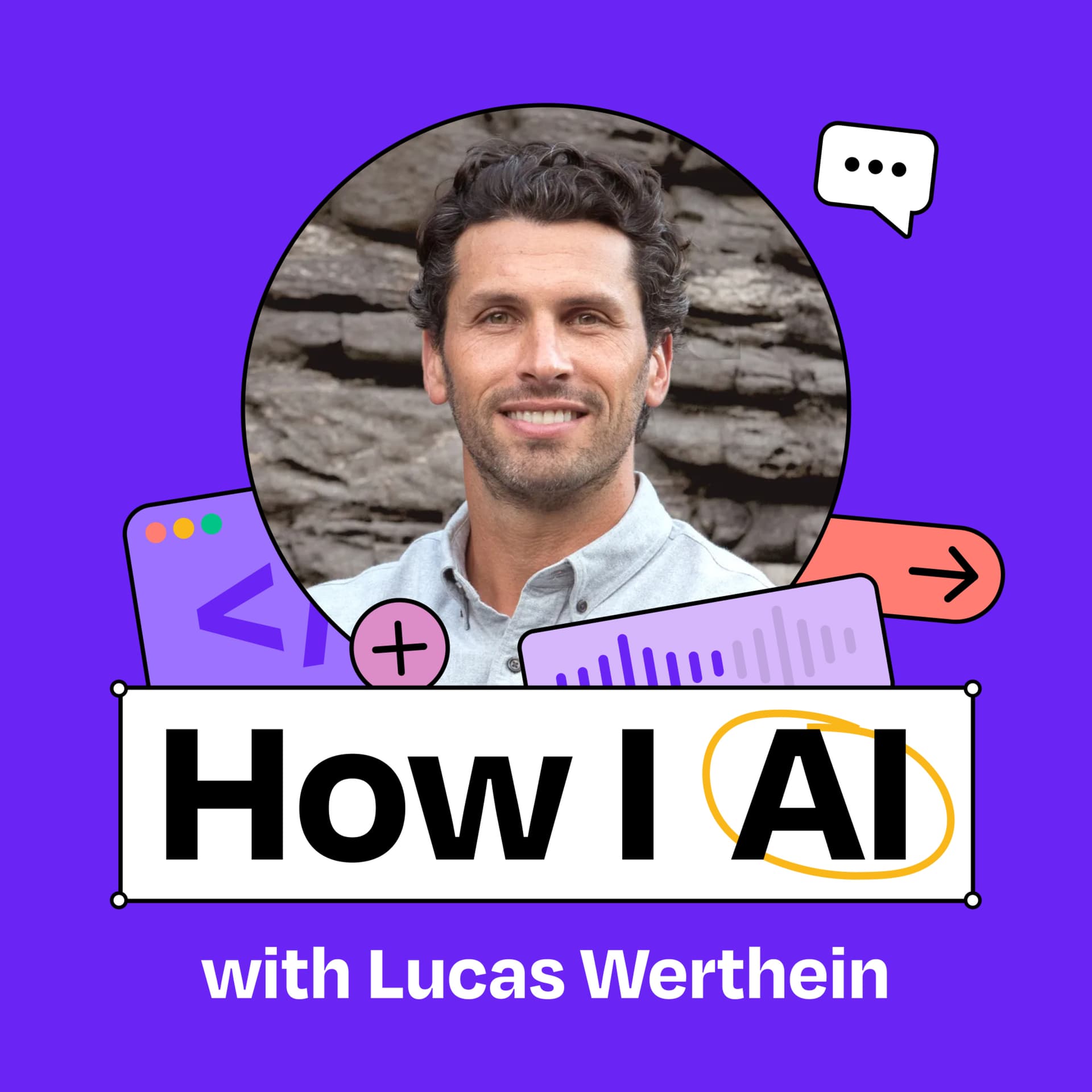
Lucas Werthein is Head of Technology at Cactus. He has worked with major brands including Apple, Coca-Cola, MTV, and Beyoncé (per the host). He’s also a competitive athlete (tennis, lifting, Muay Thai, surfing) who’s had multiple surgeries (foot, knees, shoulder) and manages recovery while running a company.
Key claims
Data is siloed; AI can unify it for actionable synthesis. The coach should prioritize joint safety, pain-free training, stable energy/inflammation control, sleep, and readiness metrics; avoid unproven gimmicks and “unknown ROI” supplements.
Notable examples
Adjusting meals before a birthday dinner (protein-forward, minimal carbs) and forecasting elbow recovery timelines for an amateur tennis tournament using daily pain videos/photos and PT evolution.
Written by AI. May contain mistakes. Listen to the episode to check what was said.
Chapters
Tap a time to open that second in VOPushing Limits and Seeking Optimization
0:00 to 1:27
Learn about the journey of optimizing physical performance through data aggregation.
“I have always been super active into sports, really constantly pushing myself to the limits of what my body can do.”
Pushing Limits and Seeking Optimization
2:11 to 3:18
Learn about the journey of optimizing physical performance through data aggregation.
“Tools are helping teams write better code, analyze customer data, and even handle support tickets automatically.”
The Personal Journey of an AI Coach
3:18 to 7:20
Explore Lucas's journey from sports injuries to using AI for personal wellness.
“And thank you so much for inviting me to be on this wonderful podcast and show.”
Data-Driven Health Insights
7:20 to 9:21
Understand the importance of synthesizing diverse health data for optimization.
“seeking out advice, going to medical professionals, getting different advice, reading.”
Configuring the AI Performance Coach
9:21 to 14:03
Learn how Lucas configured his AI to act as a personal health optimization coach.
“So you're going to pull up your screen and show us this well-coached GPT that you built.”
Personalized Coaching for Performance
14:03 to 16:51
Learn how to use AI to optimize personal performance and health.
“and I wanted to coach me like I'm a high performance operator.”
Nutrition and Load Management
16:51 to 19:32
Discover the importance of nutrition and load management for overall performance.
“It's absolutely and super important for it not to tell me to go get ozone therapy or to go sit inside a hyperbaric chamber, which may work.”
Integrating Expert Insights
19:32 to 21:05
Understand the integration of various expert insights through AI.
“And yes, PT, mobility, sauna, cold, massages, mindfulness need to be important and not optional.”
Setting Boundaries for AI Coaching
21:05 to 21:56
Learn how to set boundaries for AI coaching to avoid overtraining.
“And then you do what everybody does, which is you give it a bunch of stuff to do and then a bunch of stuff to not do.”
Crafting Effective Prompts
21:56 to 23:57
Explore how to craft effective prompts for AI performance coaching.
“No pushing past the volume and intensity when metrics show under recovery.”
Show all 22 chapters
Real-Life Application of AI Coaching
24:26 to 28:01
See how to apply AI coaching in real-life scenarios and manage daily challenges.
“So this is a great deep dive into instructions and I hope people are paying attention to it because one, like what a great prompt.”
Accessibility of AI in Nutrition and Recovery
28:01 to 29:28
Learn how AI can provide on-demand feedback for nutrition and recovery decisions.
“know, that sound very basic, a little bit more accessible, a little bit easier to implement and gives you sort of an on-demand feedback loop that as social human beings, we respond to.”
Using AI for Injury Management
29:29 to 31:48
Discover how AI can assist in managing injuries and recovery processes.
“I'm curious if you have anything that shows a little bit more of the kind of like physiology side of things.”
Validating Expert Opinions with AI
31:49 to 35:38
Explore how AI can help validate and reformat expert medical advice for better understanding.
“One of the, you know, I want to just go back and reflect on what you just showed us.”
The Future of AI in Personal Health Coaching
35:39 to 41:28
Envision the future where AI personal health coaches seamlessly integrate into healthcare.
“I think that's a really fantastic point.”
Broader Applications of AI Beyond Athletes
41:29 to 42:05
Understand how AI health coaching can benefit caregivers, children, and older adults.
“And it's actually something that my company does quite a bit.”
Exploring AI for Caregiving and Wellness
42:05 to 43:31
Learn how AI can assist in caregiving and personal wellness regardless of athletic background.
“I want to bring it back to people who are maybe watching the podcast saying, how does this apply to me?”
Innovative Workflows in Healthcare Tech
43:31 to 44:31
Discover innovative workflows that integrate digital products into healthcare and wellness.
“So this is your favorite, but can you just tell me a couple other maybe that you use and work, maybe flash us one or two that you think are interesting that people can think about.”
Creating Synthetic Clients for Efficiency
44:31 to 46:05
Understand how synthetic clients can optimize decision-making processes for busy professionals.
“from articles and other podcasts and things that are available on the internet.”
The Role of AI Co-Founders in Business
46:05 to 47:26
Learn how AI can serve as a valuable partner for brainstorming and problem-solving in a distributed team.
“me, whereas you build that GPT and then it accidentally becomes an enterprise software business, which is how my company started.”
Navigating AI Limitations and Improvements
47:26 to 48:21
Explore strategies for managing AI limitations and how to guide its learning process.
“because as you were describing this, I was thinking, oh, maybe I can save my husband a little bit of trouble if I make a synthetic Claire.”
Final Thoughts on AI Coaching
48:21 to 50:11
Reflect on the potential and personal experiences of using AI as a coaching tool.
“Can I just mention, going back just to the synthetic client, just so I don't get in trouble with my clients, it's important to highlight that none of the information that we put in the synthetic clients are proprietary.”
Transcript
Automatic transcript. May contain errors.0:00I have always been super active into sports, really constantly pushing myself to the limits of what my body can do. And naturally, that means injuries, right? And for me, it became a little bit too much. And so as soon as Chachi PT launched, I started experimenting with aggregating this data so that I can get a more clear synthesis of what I can do to actually optimize the body.
0:23Lucas Werthein:One of the things that I have never seen anybody do yet, I've seen a lot of folks drop in their daily workouts or their food diaries, but I have not seen MRIs and imaging here. And what important context for somebody who's an athlete to say, not only is this how I'm performing on an output basis, but this is actually like the structural setup under the hood. So it's really interesting, that combination of data into these files. I'm wanting to demand of my body to feel like 25 in a 40-year-old's body. And it's interesting to think, what if every person could have a coach that organizes all this action into clarity, right?
1:00And part of what we've been talking about is that not everyone is looking for this type of performance. Most people don't need six packs or match prep, but they could use help with the basics, right? Eating less, processed food, sleeping better, moving more. And I think an AI coach could meet people where they are and actually give them the necessary nudges and contextualization of information that they need to be a better version of themselves.
1:26Lucas Werthein:welcome back to how iai i'm claire vo product leader and ai obsessive here on a mission to help you build better with these new tools today we have lucas worthing head of technology at cactus who has done work for basically everybody apple coca-cola mtv and even beyonce herself but today we're not going to talk about product development we're going to talk about how lucas has built a wellness coach inside ChatGBT to optimize his nutrition, his workouts, and keep him feeling 25, even though he's a little bit older than that. This is a really fun episode with some practical insights for people just trying to make their lives better with AI.
2:06Lucas Werthein:Let's get to it. This episode is brought to you by WorkOS. AI has already changed how we work. Tools are helping teams write better code, analyze customer data, and even handle support tickets automatically. But there's a catch. These tools only work well when they have deep access to company systems. Your copilot needs to see your entire code base. Your chatbot needs to search across internal docs. And for enterprise buyers, that raises serious security concerns. That's why these apps face intense IT scrutiny from day one. To pass, they need secure authentication, access controls, audit logs, the whole suite of enterprise features.
2:46Lucas Werthein:Building all that from scratch? It's a massive lift. That's where WorkOS comes in. WorkOS gives you drop-in APIs for enterprise features, so your app can become enterprise-ready and scale up market faster. Think of it like Stripe for enterprise features. OpenAI, Perplexity, and Cursor are already using WorkOS to move faster and meet enterprise demands. Join them and hundreds of other industry leaders at WorkOS.com. Start building today. Lucas, welcome to How I AI. Thanks for being here. Thank you. Glad to be here. And thank you so much for inviting me to be on this wonderful podcast and show. What I'm excited about is so much of How I AI so far has really been How I AI for business.
3:35Lucas Werthein:And I really want to show your use case because it really is a personal how I AI and how you can actually use AI in your daily life to really make improvements and build something for yourself. And so tell us about the story that got us to what you're going to show us today. I have always been super active into sports and would consider myself a pretty competitive person. And so that means really constantly pushing myself to the limits of what my body can do and how much I can deal with in terms of the stress of these sports. And naturally, that means injuries, right? And so I've had surgeries on my foot, two surgeries on my knees, surgery on my shoulder.
4:31older and this is through through various sports from surfing uh to Muay Thai uh to playing tennis weightlifting and kind of changing it up over the years as the injuries come and needing to move into these sports and we were you know joking about this before the show but obviously as we enter 40, things start becoming a little bit more dire and you start paying attention, more attention to how your body feels and reacts daily to the things that you didn't feel before. And I started becoming really obsessed with how I could optimize my body. You know, I'm 40 years old i'm running a company i play competitive tennis i lift weights and i'm recovering from all these old injuries and i'm trying to keep up with these teenagers on the tennis court playing these amateur tournaments and running around and and i'm i'm wanting to demand of my body to fill to feel like 40 um to feel like 25 sorry uh in a 40 year old's body and you know data is so siloed um and to make sense of everything that people tell you that professionals tell you and put it together is actually really hard right you get blood tests you go to the nutritionist you go to the physical therapist um you get data from your world you know nutrition plans in body scans and for me it became a little bit too much and so as soon as As the chat GPT launched, I started experimenting with aggregating this data so that I can get more, a more clear synthesis of what I can do to actually optimize the body, right?
6:29Because the problem isn't the lack of data. The problem is the lack of synthesis and putting it all together. And I started having a few breakthroughs, actually. And it started helping me feel better and perform better. and I just started using it on a daily basis. So, you know, it came from a need of getting injured and trying to perform and getting back on the horse to now actually having interesting technologies that are allowing me to have really, really specific actions that I can take to actually perform better.
7:07Lucas Werthein:And what I want to reflect on before we get into actually what you built, which is going to be really interesting to see is, you know, you strike me as a person and you've described yourself as a person that is pretty proactive about seeking out data, seeking out advice, going to medical professionals, getting different advice, reading. And so it's not that you're not informed. It's not that you don't have access to experts. But for all this data and all this effort and all this access, you were still struggling a little bit with with some things here and there. And it's pretty amazing to me that what you're telling me is, you know, even given that whole portfolio of things that I've put against my my body and my wellness goals, this AI tool that I built was actually one of the things that helped me unlock a couple of things that had been bothering me for for a really long time.
7:58Lucas Werthein:So I'm really interested that, you know, that last mile of optimization is really being driven by this tool that you built. And it's pretty cool to see somebody who is a deep expert still get a lot of value out of going even further. It's a really interesting conversation because I think we all see it in our numerous interactions in the field of health and wellness. you know you were describing that you you do a lot of pt i'm dealing with an elbow injury right now and i was having a conversation with my pt today and they were telling me about a patient that had to have surgery for their elbow after a while and i said you know it's really interesting because the the doctor makes the diagnosis you guys are treating the patient but this person needed to go into surgery because there's a missing link.
8:54There wasn't someone looking at the sky stroke and saying, well, you need to change your tennis grip like this, or you need to change essentially a biomechanics specialist. Right. And, and, and to me, that's really interesting because there, there is always a lack of communication and the information is a little bit siloed. And I think that what I'm about to show when you start thinking about the possibilities of how this can scale even to not through performance you know we're talking about the edge of the edge of the edge of trying to gain a little bit to to be better um but we're gonna i can talk more about that but i i think it's really interesting how you know essentially this is a performance strategist right it's trained to personally think about my joints optimize my energy extend my peak and you'll see that it answers me filtered through rules i've created um and that helps me sort of compile all this information that is usually really disparate
9:55Lucas Werthein:and really separate but yeah okay so let's actually let's go ahead in and show it because i'm really interested to see how you got to something that meets your standards which from what I can hear are quite high. So you're going to pull up your screen and show us this well-coached GPT that you built. Yeah. Well, let's get into it. Let me dive into this. So when I configured this GPT, I set it a few files that were important for it to have the context of what I wanted information to be reflected on, right? And so here you'll see that it has an x-ray of my left knee, my left knee, my right knee.
10:39It has my physiological cycles. This is a CSV file coming in from whoop data on my journal entry. So what I described in my day today, am I stressed? Do I have anxiety? Did I sauna? Did I do compression therapy? My workouts that are logged on a daily basis and essentially my strain and how hard I work and my sleep data on how much good sleep that i get rem sleep deep sleep so a lot of lot of data being fed into into here in addition to that i mentioned i had a couple of knee surgeries so it has the mri of my knee pre-surgery post-surgery and it has a few blood exams from uh this year and last year so three different blood exams so it can compare the evolution of the tests and how I'm doing.
11:33In addition to a nutritional plan from a nutritionist slash dietitian that helps me think about food as fuel and how I can perform better based on fuel. And an in-body scan that essentially measures percentages of fat and muscle and distribution across the body. And so it's using all these files to think about, to have context around myself. And so that was an important element to be able to gather this data manually inputted into this GPT.
12:09Lucas Werthein:What I think is interesting about this for folks that are listening or watching are a couple of things. One is all this data is in all these different formats, right? So you have imaging data from MRIs and x-rays. You have like semi-structured data from sleep from a wearable. You have blood tests in PDF form where it's got to parse a bunch of stuff, a textual nutrition plan. And what I love about AI now for people that maybe haven't built some of these tools for themselves is you can just dump all that data in. You don't have to worry about is it clean? Is it organized? Is it structured? Just put it in.
12:45Lucas Werthein:And then one of the things that I have never seen anybody do yet, I've seen a lot of folks drop in like their daily workouts or their food diaries, but I have not seen MRIs and imaging here. And what important context for somebody who's an athlete to say, not only is this how I'm performing on an output basis, but this is actually like the structural setup under the hood. So it's really interesting, that combination of data into these files. And then how is this GPT set up to actually work? What are the instructions? Would you walk us through that? Yeah, just to add something, I think you mentioned something really interesting around how the data is structured, and it's also coming in from different languages, right?
13:28Because I spend a lot of time in Brazil, some of my exams are in Portuguese. A lot of them are in English, but some of them are in Portuguese. And so I don't need to worry about that either. I just dump it in and it process that information. And so I think that's also a valid point about how easy it is now to port that data into something that can unify it. Yeah, you're absolutely right. Let me tell you about how I configure this, right? And so I'm telling you to act as my performance strategist and health optimization coach. It has access to my physiology, labs, imaging, wearables. and I wanted to coach me like I'm a high performance operator.
14:12That's really important. I'm not trying to be a professional athlete. I wanted to understand that I want to perform, but I'm balancing tennis, lifting, recovery, and mainly running a company, which takes the majority of my time. And I don't want to be the most competitive person in the world. I don't want to be the best. my main objective is for it to safeguard my my joints and to amplify my output and to extend my peak i want to feel healthy and pain free that's super important but i do want to perform like a 25 year old in a in the body of a 40 year old so i give it that that that instruction um when i share my prompt um i wanted to interrogate it through my context right looking at my my blood exams, my scans, my WUP, other specific information that it has.
15:08I wanted to flag what we call red and yellow zones, right? We see this in a lot of wearables or early signs of overtraining, under fueling, inflammation, and it's important. I want shy ROI actions, no fluff, no hacks, nothing that hasn't been proven. and I want to be kept inside this zone where I'm moving pain-free. I can play at high-alpha tennis. I don't break down.
15:38Lucas Werthein:I want to reflect to you something that, one, I think is personally interesting, and two, I think is interesting from a prompt perspective. So, you know, the top of your prompt is very common. You act like a blank. You are a blank, that sort of instructive point to the LLM to give it a role. What I think is really interesting about this last bullet point here is it's the opposite side of that coin, which is at the end of this, I want to be X, Y, and Z. And so, you know, say you're a performance coach. That's the kind of your role. My role is I'm running a company. I want to feel 25 in a 40 year old body and I want to be rested, move pain free and play tennis like it's a very clear input output structure.
16:24Lucas Werthein:and then the human in me wants to reflect these are very reasonable nice goals so again you know we're talking about this like hyper optimization and at the end of the day you want to wake up you want to feel good you want to engage in your company and you want to be able to play the sport that you want to play and so i think the kind of idea of like a role and then a really realistic outcome for yourself is a nice framing for something like this kind of personal coach prompt It's absolutely and super important for it not to tell me to go get ozone therapy or to go sit inside a hyperbaric chamber, which may work.
17:04I'm not necessarily giving it a ding, but I do want things that are accessible in my day to day and that are proven, that are scientifically backed. That's really important to how I wanted to think about the recommendations.
17:22Lucas Werthein:Yeah. And the other thing I see a lot when people prompt is they go to these extremes where they're like, you are the best in the whole world and you're going to make me the most elite, blah, blah, blah. And, you know, what I like about this is you're saying I'm getting good outcomes by like pulling in the bounds of reason on both sides of those and having reasonable roles and reasonable expectations. So it's a really good insight from a prompting perspective. Uh, let's go down and show me, show me what you optimize for. Yeah. So, so I think part of this is the context that, that I mentioned of how, for example, it has my nutrition plan.
17:57Right. And so when you think about performance, so much performance is about how you eat and how you rest. And so having the basis of how I wanted to eat has been absolutely fundamental for it to think about the recommendations. Right. And so I wanted to stick to my nutrition plan unless there's data, a driven reason to adapt. So this is all based on fueling and avoiding inflammation, right? I wanted to prioritize energy, stable glucose, low inflammation, and muscle retention. Number two, thinking about training and load management, you can't overtrain. If you overtrain, you burn out. And so I needed to think about balancing strength, endurance, and mobility, because I need to protect my knees and my shoulders and my joints, which have been messed with in surgery.
18:51And so when thinking about recommendations, we can't overload the HRV. We can't be outside of sort of the readiness score. And I needed to help me pull back because I will overtrain. I do want to get better and better and better, right? And so one of the things we hear about the most when studying and thinking about performance is people don't pay enough attention to recovery and to rest. And so this is super important for me. The third one, again, going back to recovery and regeneration is sleep is the main factor here, right? And yes, PT, mobility, sauna, cold, massages, mindfulness need to be important and not optional.
19:42They're part of the training cycle because they're part of recovery. So I need recommendations of how to have it give me nudges so I can maintain those up on my day today. And lastly, this idea of tracking and feedback loops. It's integrating data across in-body labs, diet, journal entries, and I needed to cross-validate the decisions and not recommend something that is not aligned with what I have said it, just like from pulling some random thing from the internet.
20:14Lucas Werthein:One of the things I want to reflect on here that I've said in other podcasts, more in sort of a business context, is when people are designing these GPTs, I really read these prompts and I'm like, oh, they reflect like the perfect employee or they reflect the perfect team. And when I'm looking at this, this sort of reflects how in an ideal world, all these experts that are supporting you, your doctor, your PT, your coach, would all be fully integrated, aligned on a strategy, like consistent in their recommendations, data backed. But the reality is when you bring a team of individual experts together, one, they're all going to come with their unique point of view.
20:57Lucas Werthein:Two, it's very hard just just tactically to stay aligned on recommendations and kind of resolve things across the board. And so what I like about this is, you know, ideally, you'd be able to sit all those experts in a room with you and say, hey, hey, guys, this is how I want you to take care of me. But because that's not actually practical, what you're doing is bringing some of the data and insights those people have, your own ambitions and goals, and then sort of like putting it in the system that will operate optimally for you over time. Absolutely. And we'll talk more about the vision and a little bit of provocation of where I think this will go and how this is a prototype of something that will be much bigger and that many, many practitioners, health systems, physicians will adopt in the future.
21:48Lucas Werthein:Yeah. Okay. And then you do what everybody does, which is you give it a bunch of stuff to do and then a bunch of stuff to not do. Exactly. So hard, hard boundaries, right? No pushing past the volume and intensity when metrics show under recovery. My whoop is showing a red or yellow. I can't go train hard. Don't get any supplements that are unknown. Don't, you know, don't tell me to go take uh creatine or anything that although super popular at the moment, right? That, that we, we don't know is absolutely measurable scientific backed and has roi they'll give me novelties um stick to what actually works to perhaps even ancient data and act on red flags uh if if i tell you there's a lot of soreness or low hrv or decreased sleep quality that means perhaps i'm getting sick don't don't push when i can't push yep great and i think this again for people i'm just kind of giving the meta commentary which is it's a very common prompt structure for anybody trying to build something for themselves it's like give you a role give the gpt role give it a goal give it some input and data give it an anti-prompt i say which is like tell it what not to do and then i like that you're closing on like the the check that it's all following the rules and this is how I want you to respond piece.
23:13Lucas Werthein:So we can go through that really quickly and then maybe show a couple examples. Totally. So values, right? Precision, energy, adaptation, kinetics, all about movement. It's all about energy. It's all about precision. And then the tone, right? Like a coach, be clear, tactical, no fluff, no lectures. Connect the dots. That's super important about everything that we're talking about. And prioritize what matters this week, not vague, long-term theory around what's possible. Great. And so, you know, it's very clear you put a lot of thought into this. Did you also use ChatGPT to help you like craft the structure of this prompt?
23:51Many times.
23:52Lucas Werthein:Yeah. I can tell from the emojis. From the emojis. You can always tell. This podcast is supported by Google. Hey, everyone. Shrestha here from Google DeepMind. The Gemini 2.5 family of models is now generally available. 2.5 Pro, our most advanced model, is great for reasoning over complex tasks. 2.5 Flash finds the sweet spot between performance and price. And 2.5 Flash Lite is ideal for low latency, high volume tasks. Start building in Google AI Studio at ai.dev. Okay, awesome. So this is a great deep dive into instructions and I hope people are paying attention to it because one, like what a great prompt.
24:33Lucas Werthein:Thank you for sharing. It's super useful. And two, just the structure of it is very classically well set up for setting up a GPT. So whether it's this topic or another one, I think people can learn a lot from how you've set it up. So how does it work? Show me what are common things that you would do with this GPT. Yeah, let me give you an example. I'll give you a few fun ones here. Um, so this morning I, I woke up and my wife told me that we have a birthday dinner that we need to attend. Um, good friends of ours gonna celebrate an amikase, uh, birthday dinner, which means plenty of rice and sake.
25:16And so how should I manage my day to balance the fact that I'm gonna indulge in the evening? And this may be simple, but actually it's really interesting that it thinks about how to change my actual diet. Right in the morning, I would usually eat something post training, but here it's saying basically like eat only protein, minimal carbs. At lunch, it's saying the same thing. And so it's guiding me how to go along my day based on the fact that I'm going to indulge in the evening and have something that's going to be a little bit different and not necessarily feel destroyed. And so it's prepping me for something that's going to happen.
26:04And it's really useful because I don't have to think about it. I prompted, I asked it, it gives me a response and I try to adapt. Right. And so, okay, great. It told me to have no carbs. I took a picture of my breakfast, a little bit of eggs, avocado, coffee. And then it feeds me information about, okay, that's fantastic. Got a little bit of pepper for inflammation. You know, I'm very cognizant also that this is most people, not what most people need, right? If we think about most people, they perhaps just need to move a little bit more, sleep a little bit better. not eat processed food. And I'm very cognizant also that this is for something very specific that I'm personally looking for, but it's very useful to how I can then program my day and how I can think about the next day as well.
27:01Lucas Werthein:Well, I think the other thing is, yes, your goals are maybe a higher level of what the kind of like baseline person might have for their own performance health goals. And at the end of the day, the like, I'm going to a birthday party later and I don't want to feel crummy tomorrow. Are there any things that I can do before this birthday party to keep me from feeling crummy is like a very applicable problem. I think one. Second thing is, you know, it's a really on demand coaches and nutritionists and experts are expensive. They are inaccessible to a lot of people. And just this sort of short loop, like, am I doing the right thing?
27:46Lucas Werthein:You know, give me an answer. And I like this piece that you showed us, which is like, look, I did it. And you get like a very short blip of a good positive feedback loop can actually help people reinforce habits that I think compound over time. And so, you know, I do think something like this makes some of these like tactics, you know, that sound very basic, a little bit more accessible, a little bit easier to implement and gives you sort of an on-demand feedback loop that as social human beings, we respond to. And so I don't think it's kind of too far aground from what most people would find useful.
28:24I think that's a great point. And the fact that you now have a coach in your pocket is super interesting because things change. another scenario I fed it the other day is I said I was going out to dinner I prepped the day but there was a change of plans and we went to a party and we were going to drink and have a bunch of gin and tonics and get home at 3 a.m and I didn't need to think so much about what I needed to do because I prompted it gave it that information and then it reacted based on that change of plan And so having that be accessible now to so many people, whether you are able to make that change at home because you have access to food, but even if, you know, you need to go eat at Chipotle and it can tell you the things that you can eat or that you should order at Chipotle, because that is your only option.
29:16I think is a super interesting point of just how accessible good information for you to be optimal is becoming.
Read the full transcript
29:28Lucas Werthein:So I would love to see, I think this is a really great sort of like day-to-day practical example. I'm curious if you have anything that shows a little bit more of the kind of like physiology side of things. You know, you mentioned a lot at the beginning, injuries and protecting joints and making progress? Has any of that come into play in your coaching? We see the nutrition side, but I'm curious if there's anything else there. Totally. Let me show you. What I also want to call out for folks that I love as you're scrolling is context changing, content changing. It's like, now I want to talk about nutrition.
30:06Lucas Werthein:Now I want to take a screenshot out of my workouts. Now I want to do this and do that. And the chat can kind of adapt to all that information and not need you to follow any rules or any schedule or any structure. So I think that's really interesting. And then I'd love that this is in Portuguese, some of it, and then switches to English. I caught that on the screen share. So I think this one's really interesting. I have I've been dealing with not a tennis elbow, but an elbow injury. And I went to a doctor. I gave it the diagnosis of the doctor. I gave it the prescription of physical therapy. And basically, I talk about my pain.
30:51I would talk about my pain on a daily basis. And I would take pictures and I would record movies of how I'm feeling pain. And basically, it would confirm what the doctor has said. you know i tell the doctor discard a tennis elbow um and it's like you know i've been i've been off the courts for a week how much longer and the doctor has told me and the pt has told me but i'm trying to test it if if it's going to say something different and it's saying the same thing and really frustrated you know i'm following all the prescriptions i'm i'm doing all the exercises but it's like it's not not getting better and then one day i actually go into pt and it does feel better because of something specific that they did with electrical currents and strength training at the same time and so now i'm prompting it to think about if you know based on the evolution of the recovery that i've been telling it will i be able to play this amateur tournament that i i want to play on september 18th and so it's thinking about how many weeks are left what's realistic you know decision checkpoints um what it thinks and then i asked it to put put everything on the table to think about the recovery um the recovery uh plan um for for how we're gonna do this and honestly it is exactly the same thing the pt told me which is really interesting but it is contextualized in a way that i can digest and now sort of the anxiety of me every day thinking man is the pain gone is the pain gone is the pain gone is eaved a little bit because I can manage the expectations of what will happen in just a very visual manner that you don't usually get from your PT or from your doctor and so I'm contributing at this information so I can think like them but perhaps process and synthesize the data a little bit better because it has so much knowledge about myself and what I'm doing and how I act.
32:55Yeah.
32:56Lucas Werthein:One of the, you know, I want to just go back and reflect on what you just showed us. Cause I think there's a couple of really interesting things here for people to listen to. One is I think people really underuse what you just showed, which is a video or a picture circling a thing into, into chat GBT. I found that that's such a useful, um, a useful kind of workflow for folks that are new to AI and not sure what it can do for it. Uh, I don't know if this is an appropriate metaphor or not, but I live in 114 year old house. It's like very similar to living in my 40 year old body. And we, you know, we have leaks here or cracks there or bubbles here or whatever.
33:36Lucas Werthein:And I'm constantly taking a picture of something, circling it and saying, what could this, you know, tell me what this could be. And so you can do that. You know, I have a, it's not tennis elbow. It's I sit at my laptop elbow and put my, my arm on my desk at a bad angle. I know I do it. But taking that and just saying like, I've got pain here, not here, not here, but like here. What could that possibly be? It's a really good use case. I think people also don't know. A lot of these models can process video really well. And so that is another input you can put in and, you know, kind of do the thing that they make you do at PT, which is like, I can go to here, but not further.
34:18Lucas Werthein:I can do this. So I think that's a really interesting workflow. I think the second thing people are using ChatGPT for a lot is just validating expert opinions, not to dismiss expert opinions. But you know what? My personal doctor is not on demand 24 hours a day. When I leave the office, that's about as much as I'm going to get for them. So being able to go back and saying, can you re-explain this to me? Is there anything else it could be? Just gives you a more accessible outlet for sort of validating some of that stuff. And then the last thing I would say is often when you leave a, certainly in the health profession, but an expert and they give you some takeaways, right?
35:00Lucas Werthein:They give it to you in the format they give it to you. They explain it to you verbally. They text it to you. They give you a little takeaway sheet. And you're like, no, I want this, but I need it in a day by day plan until September. Or can you re-explain this to me in this format? And I also think this ability to grok the same information through a different format by having an LLM translate it, it's really useful, especially when it's information from an expert where you may not understand the terms or the language or the mechanics. And so I think those three things are really interesting use cases of AI.
35:36Lucas Werthein:You can see them all in just this one flow. I think that's a really fantastic point. And I think we can extrapolate and think about what I'm doing here for myself, you know, manually uploading MRIs, whoop data labs just exposes a much bigger opportunity. um and and ai could be a a missing synthesizer of personal health and i think that healthcare has obviously an interoperability problem and the data is siloed and it's interesting to think what what if every person could have a coach that that organizes all this action into into clarity right And part of what we've been talking about is that not everyone is looking for this type of performance.
36:28Most people don't need six packs or match prep, but they could use help with the basics, right? Eating less, processed food, sleeping better, moving more. And I think an AI coach could meet people where they are and actually give them the necessary nudges and contextualization of information that they need to be a better version of themselves.
36:50Lucas Werthein:Well, what's really funny about this is I'm thinking about you as a more high performance athlete operator. I was just reflecting, I want to make this for my eight year old wants to get much better at basketball. Like that's his performance goal. I'm like, oh, you could take the same framework, right? He's eight. He's got this much time. We have to walk to the basketball court. What do we do? and you can do everything from videos to, to, um, you know, pictures, all that kind of stuff. And so I think it's just really interesting to think about this, no matter what your goals are, setting up a framework like this that can help you day by day, increment your way to them.
37:28Lucas Werthein:So before we, before we wrap this up, you know, you've, you kind of, um, talked about it a little bit, but you know, what do you think the future of this is? Are everybody going to make this themselves? Do you think there's a product here? Like what, what do you think is the gap between I have a GPT and everybody can kind of do this on their own? Yeah, I think there's a really interesting notion when you think about this, and you think about how this can potentially scale in the near future. I see a vision in which in five years or less, everyone will have access to a personal AI health coach and not to replace doctors but to help us show to doctors show up more in form and to live healthier between visits and to make these micro decisions every day additionally I do think that the doctors will also have this and so our AI AI will talk to the doctor's AI.
38:32And it's interesting to think about what are the spaces that need to be designed and what type of interactions will occur once that happens. It's going to be a different world because they will have all the context. They will meet all the context. And when the doctor and the patient show up, there's just much more clarity to have the conversation. And so I think that the future of health isn't just about medical breakthroughs. It's a lot about synthesis and the ability to turn this overwhelming amount of data into something that's simple and very, very personalized. I also believe in an era of seamless capture.
39:15You know, we're talking about manually uploading all these things to the GPT, but it will be seamless. We will have micro sensors around potentially in your bloodstream, tracking information, glucose, hormones, smart fabrics, eventually toilet sensors, measuring microbiome, hydration, and it will all be ambient, passive, and invisible. And I think that there is a world where the healthcare leaders will eventually sell their knowledge as trained AI models. You know, imagine having a coach in your pocket that's been trained not just on you, but on decades of patient data from institutions like Mayo Clinic or AdventHealth.
40:02It's just really interesting to think about what happens when you combine that passive data and you put it next to the guidance that's grounded in the best medical science and personalized to you. and i think this also gives the ability for the doctor to get out from in front of the computer and be a storyteller and a long-term strategist and to have this hyper personalized aspect around food supplements habits um and so i i think that i laugh because i think that in 10 years we'll look back and talk about how much manual effort we put into health tracking. And we'll think about just like no one today types in GPS coordinates into their phone, no one will manually log workouts or meals and health data will capture itself and we will have coaches in our pockets to go back and forth and evolve.
41:00And so just last words. I do think that's important to reflect that this is absolutely not about gimmicky. It's really a precision tool for consistency. I am looking for high ROI choices and it's helping me do that through injuries or food. And I do think that when we think about a potential population level impact, that's where this becomes powerful to imagine what this can be. And it's actually something that my company does quite a bit. And, you know, maybe this is not the place to talk about it, but it's something that I'm seeing a fast adoption to how health systems and wellness companies and doctors are thinking about this.
41:50I think there's a brave new world coming.
41:52Lucas Werthein:Well, I'm excited for that world. I spent a hot minute in health tech and I was like, where is my FHIR epic MCP I can plug into? And then I'm going to go wild. But again, I think that is a future. I want to bring it back to people who are maybe watching the podcast saying, how does this apply to me? I'm not an athlete. And just the use cases that I think of are caregiving. when you're a caregiver of an elderly relative, you have so much information, so many specialists, so much points of data that you have that, you know, you go visit, you have pictures, you have recordings, you have all this stuff.
42:30Lucas Werthein:And just having this coach to maybe help with the caregiving journey is one. I think kids are super interesting. I think athletics is very interesting. I think there's probably product market fit for people that apparently there are many on this podcast recording right now that are 39 turning 40, but want to be 25. And so I just think like, you know, maybe people listening don't have the exact same goals, but the framework really applies to a lot of healthcare and wellness challenges or goals for people. So I'm really excited that you showed this to me. It gave me so many, I have so many ideas.
43:08Lucas Werthein:I won't bore everybody with my achy hip and elbow, but I have, and sleep issues, which I can attribute to my kids. But I think it's really interesting and it's inspired me to want to go build a couple of these for different coaching topics I have. Okay. Well, we are, this was fabulous. I want to do kind of three lightning round questions. One is just, you mentioned a couple other workflows. So this is your favorite, but can you just tell me a couple other maybe that you use and work, maybe flash us one or two that you think are interesting that people can think about. Yeah, absolutely. I'm also happy to share the prom so that you and others can configure their own GTTs.
43:50Lucas Werthein:Yeah, we'll put that in the show notes. Cactus is a firm that works at the intersection of physical space and digital technology. And we work for healthcare and wellness, uh developing uh essentially digital products and thinking about physical space it's an intersection of a consulting firm and a design firm and so many times we're thinking about new products new services for our clients and this is an example where we have taken the client who is a brilliant fantastic doctor but she is extremely busy and so we have synthesized a lot of this information from articles and other podcasts and things that are available on the internet.
44:38And we have said this information so that we can ask it questions when she's unavailable and try to get the work to 80 or 90 % of where we think she would agree with so that when we present it to her, it's not taking time that could be skipped over because we have a lot of how she thinks and how she makes decisions.
45:02Lucas Werthein:I love this. We have seen one or two synthetic bosses on the podcast. And I love this from a kind of like consulting firm, design firm perspective, which is like synthetic clients are very interesting ways. Because as you said, just going back to everything we've been talking about, your expert's not always available, your client's not always available, people's time is scarce. But if you know enough about how they might react to information. You can not only give yourself some insight, but you can also give your team insight into how they might react to things. And then, you know, I love these as people make them for their bosses or for their clients.
45:43Lucas Werthein:A little pro tip to the bosses and clients out there, you want to make this even easier. Make one of yourself that you can share with people because you probably have the best understanding of what's important to you and how things matter. And so it's one of those tips I tell everybody to do is go replicate yourself in a GPT to give your team a first line passive feedback. And then sometimes you end up like me, whereas you build that GPT and then it accidentally becomes an enterprise software business, which is how my company started. So I think this is a great idea. And then one other thing we talked about before the show, and maybe you could just voice over what you do here is you have an AI co-founder as well.
46:21So lots of synthetic people.
46:23Lucas Werthein:Tell us a little bit about that yeah my i love my my co-founders they're they're brilliant um and i do not need uh an ai co-founder but this is a new world that we're living in the company that we run is a distributed firm we're no longer in an office and we no longer have access to each other um you know by going and and tapping on them and saying, Hey, do you have a minute? And you have to schedule a call or column. And many times you just need a little bit of a partner to think about a potential for me problem that you would only think with your co-founder. And it's really interesting to load it up with data around how your co-founder thinks, how you think some of the problems that you're going through and being a voice to brainstorm with you so that you're not starting from a blank slate, which is something obviously you hear a lot, but it's really helpful.
47:24It's almost like business therapy.
47:25Lucas Werthein:Yeah, well, on that point, I'm laughing to myself because as you were describing this, I was thinking, oh, maybe I can save my husband a little bit of trouble if I make a synthetic Claire. And he just double-checked like, should I say or do this to Claire before I do it? But I do think that we're in this interesting world where, you know, wanting the expertise of someone on demand is not always possible. And AI has made an approximate version of that possible. And it's not, you know, it's not the real thing. But it does help you in the moment, especially in a distributed world where, you know, you don't want to mention your colleague in Slack at, you know, 11 o 'clock when you're thinking about a problem.
48:12Lucas Werthein:And so I found similarly that AI can be a really great, again, co-pilot or partner in some of those moments where you just need a quick check. Can I just mention, going back just to the synthetic client, just so I don't get in trouble with my clients, it's important to highlight that none of the information that we put in the synthetic clients are proprietary. They're all available on the internet. And so we're not training any of the models with the information that we get from our clients. It's just an exercise that we run through presentations publicly available. Yeah. So, yeah. Well, this is awesome.
48:51Lucas Werthein:You know, I'll wrap with our final favorite question, which is you are clearly an expert prompter, which I love to see. But when your coach is giving you bad advice or, you know, the AI is not responding how you like, you seem like a very reasonable person. So you probably act quite politely. But what is your go-to tactic? How do you how do you get AI back on track? Do you ever find yourself frustrated? What do you do? Not frustrated. Um, and I think this ties into how the models have evolved as we see the iteration of models. I see definitely an evolution of how it. Hallucinates less or it makes up less things.
49:34I do think that putting guardrails around how we're allowing it to think and not necessarily access outside information makes it a little bit easier. and so when it gets something wrong, I see it as the evolution of technology. This is brand new technology. It's going to get it wrong and I try to perhaps help it like I help my children when they get things wrong.
50:01Lucas Werthein:I have said this consistently on this podcast. The answer to that question is always a reflection of your parenting tactics and strategies. Well, Lucas, this has been amazing thank you so much for sharing your coach i'm actually going to go spin off into chat gbt i have a really good idea for one that maybe i'll share in the show notes as well i appreciate you joining how iai where can we find you and how can we be helpful well you can find me at i'm actually off social media um so we can't social media where can we find your company you can find my company it's cactus.is as in Sam. And that's where I spend most of my time to be honest.
50:44So if you want to find me, just go to Cactus.
50:46Lucas Werthein:Great. Go to Cactus and find him at that amateur tournament, tennis tournament on September 18th. Or challenge me to a tennis match. That's the other way to get my attention. Yeah. Perfect. Well, thank you so much for joining. I really appreciate this. It's been a great conversation. All right. Thanks, Claire. It's a pleasure to to meet you and thanks for having me on the show. It's been wonderful. Thanks so much for watching. If you enjoyed the show, please like, and subscribe here on YouTube or even better, leave us a comment with your thoughts. You can also find this podcast on Apple podcasts, Spotify, or your favorite podcast app.
51:22Lucas Werthein:Please consider leaving us a rating and review, which will help others find the show. You can see all our episodes and learn more about the show at howiaipod.com. See you next time.
From the publisher
Lucas Werthein, the COO and co-founder of Cactus, shares how he built a personalized AI wellness coach using ChatGPT to optimize his athletic performance while managing past injuries. After multiple surgeries on his knees, shoulder, and foot, Lucas created a system that synthesizes data from medical imaging, blood tests, wearable devices, and nutrition plans to provide personalized recommendations. His AI coach helps him balance competitive tennis, weightlifting, and running a company while maintaining his goal of “feeling 25 in a 40-year-old body.” Lucas demonstrates how this approach transforms siloed health information into actionable insights that protect joints, optimize recovery, and extend peak performance.
What you’ll learn:
- How to configure a ChatGPT with multiple data types, including MRIs, x-rays, blood tests, and wearable metrics, to create a comprehensive health profile
- A framework for setting clear performance boundaries that prioritize joint protection, energy optimization, and injury prevention
- Techniques for using AI to balance nutrition around special events like social dinners while maintaining performance goals
- How to use images and videos to get AI feedback on physical symptoms and injury recovery timelines
- A method for validating and contextualizing medical advice by having AI synthesize information from multiple health-care providers
- Why creating clear rules and anti-prompts helps AI deliver practical, evidence-based recommendations instead of trendy supplements or extreme protocols
—
Copy Lucas’s Health Coach Prompt: https://www.lennysnewsletter.com/p/how-to-create-your-own-ai-performance-coach
—
Brought to you by:
WorkOS—Make your app enterprise-ready today
Google Gemini—Your everyday AI assistant
—
Where to find Lucas Werthein:
Website: https://cactus.is/
—
Where to find Claire Vo:
ChatPRD: https://www.chatprd.ai/
Website: https://clairevo.com/
LinkedIn: https://www.linkedin.com/in/clairevo/
—
In this episode, we cover:
(00:00) Introduction to Lucas’s athletic background and injury history
(04:55) The challenge of synthesizing siloed health data
(06:11) Building a GPT to optimize performance and recovery
(09:57) Demonstrating the data types integrated into the AI coach
(13:54) Configuring the GPT with clear performance goals and boundaries
(16:31) Setting realistic expectations for the AI coach
(17:50) Creating nutrition, training, and recovery frameworks
(21:47) Establishing hard boundaries and anti-prompts
(24:25) Example: Managing nutrition around special events
(27:30) Accessibility and affordability of on-demand coaching
(28:24) Practical examples and real-life scenarios
(29:31) Using AI for injury management and recovery planning
(34:19) Validating expert opinions and translating medical advice
(37:25) Vision for the future of AI in personal health coaching
(43:27) Other AI workflows: synthetic clients and AI co-founders
(48:48) Final thoughts on AI reliability and evolution
—
Tool referenced:
• ChatGPT: https://chat.openai.com/
—
Other references:
• InBody scan: https://inbodyusa.com/
• Whoop: https://www.whoop.com/
—
Production and marketing by https://penname.co/. For inquiries about sponsoring the podcast, email jordan@penname.co.


