In short
How enduring family legacies are built through diversified “human/intellectual/social capital,” governance, and purpose-driven stewardship—contrasting the Rothschild branching strategy with trustee selection, and using Henry Ford’s family dynamics as a cautionary tale.
Guest
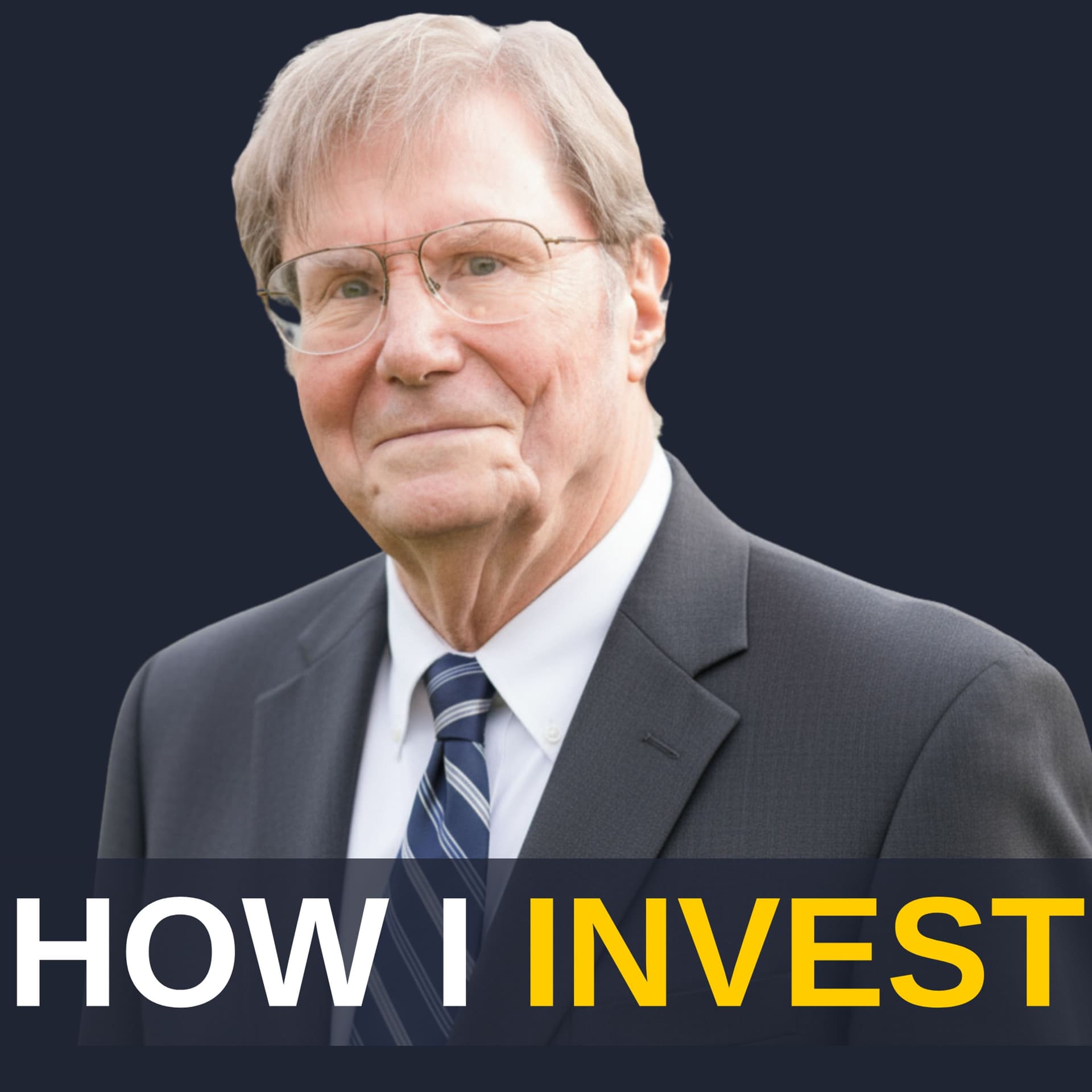
James E. Hughes Jr., legendary family-office advisor for 50+ years; trust and estates lawyer turned author of Family Wealth and other books on family governance, wealth preservation, and family dynamics.
Key claims
Joint decision-making fails when families lack shared purpose; choosing trustees is a continuity-critical decision; giving/altruism builds stewardship and prevents a hedonic spending treadmill.
Notable examples
Meyer Rothschild (18th-century Frankfurt) sent sons to London/Paris/Vienna/Naples with weekly reporting; two branches collapsed and Holocaust deaths occurred, yet the family endured. Henry Ford’s son Edsel was constrained by Henry Ford’s demands; Edsel died early; Henry Ford II later restored Ford.
Written by AI. May contain mistakes. Listen to the episode to check what was said.
Chapters
Tap a time to open that second in VOThe Legacy of Meyer Rothschild
0:00 to 1:35
Learn how Meyer Rothschild established a banking empire and family legacy.
“Meyer Rothschild was a Jewish man in the ghetto in Frankfurt in the middle of the 18th century.”
James Hughes's Journey in Family Offices
2:21 to 3:11
Discover how James Hughes became a pioneer in family office advisory.
“I started out as a trust and estates lawyer in a large law firm in New York City.”
Understanding Wealthy Families' Decision Making
3:14 to 5:27
Explore why wealthy families struggle with joint decision making.
“But why are they so poor at joint decision making and joint governance when it comes to their wealth?”
Meyer Rothschild's Vision for Family Flourishing
5:33 to 8:14
Analyze how Rothschild's strategies ensured family flourishing.
“Tell me about Mayor Rothschild, the patriarch of the Rothschild family.”
The Importance of Trustee Selection
8:16 to 10:48
Understand the critical role of trustee selection in family wealth.
“Now, David, one of the sad parts of the Rothschild story, and yet it is part of his foresight, what a remarkably farsighted man he was.”
The Tragic Story of Henry Ford and Edsel
10:51 to 14:03
Examine the impact of Henry Ford's parenting on his son Edsel's life.
“Some of our listeners went to their photographic AI systems and they looked for a picture of Henry Ford.”
Impact of Family Purpose on Wealth
14:03 to 16:06
Explore how family purpose and foundations can help preserve wealth.
“who was one of the great executives of the Ford company, until he began to tell Mr.”
Impact of Family Purpose on Wealth
16:11 to 16:22
Explore how family purpose and foundations can help preserve wealth.
“With Square, you get all the tools to run your business with none of the contracts or complexity.”
Aristotle's Views on Flourishing Societies
16:23 to 19:23
Discuss Aristotle's insights on family and societal flourishing.
“It is the foundation of all books on political science.”
Altruism and Family Wealth
19:24 to 21:44
Examine the relationship between altruism and family wealth accumulation.
“Said another way, the giving builds the purpose and the self-esteem of the people that give, which has two effects.”
Show all 14 chapters
Skepticism About the Billionaire's Pledge
21:44 to 23:41
Critique the effectiveness of the billionaire's giving pledge.
“And a choice to live your life individually and independently is a very legitimate choice.”
Shifting Focus in Professional Relationships
23:42 to 28:00
Learn how to approach client relationships with the intention to help.
“So you've been advising family offices for 50 years.”
Masterclass on Courage in Law
28:00 to 28:33
Learn about the importance of courage in private client work from Jay's experiences.
“And my father said to me, Jay, In the profession of law, in private client work, ask yourself whether you are prepared to provide courage because it is in that area that you earn your living.”
The Role of Families in Society
28:33 to 28:50
Explore the concept of families as building blocks of a flourishing society.
“And I thank you for the service that you're providing to society, for opening up the possibility of families flourishing, and in turn, being the building blocks of a flourishing society.”
Transcript
Automatic transcript. May contain errors.0:00Meyer Rothschild was a Jewish man in the ghetto in Frankfurt in the middle of the 18th century. He was a brilliant banker. He had a bunch of children, five sons and daughters. And he thought, what could I do with my five sons to create a great family? And he said to them, I'm going to send four of you, one to London, one to Paris, one to Vienna, one to Naples. I'm going to keep one here in Frankfurt. I'm going to give you each a loan, start a bank in that city. I'm going to charge you interest, but less than I charge our clients because you're family. I give you a better deal. But he said, I'm going to ask something that you may feel is an imposition, but it's part of the deal.
0:50That is that once a week you will write me a letter and tell me what is going on in London, Paris, Vienna, Naples, and Frankfurt. And I will disseminate that information among you. Eventually, two of the branches collapsed. They didn't produce heirs, and the issues in the communities they were parts of did not work. And during the Holocaust, there were deaths. What is so important is that with the diversification of his human capital, the diversification of the family's intellectual capital, the diversification of its social capital, inspired by the flourishing guia, the family still exists today.
1:35And it's still good to be a Rothschild. today i'm speaking with legendary james e hughes jr who's been advising some of the most prolific family offices for over 50 years james is widely recognized for his pioneering thought leadership on family governance wealth preservation and family dynamics james is the author of several landmark books including family wealth keeping in the family james has shaped how family offices across the entire globe approach stewardship purpose and legacy for those that may not know you Jay, you've been in the family office space for quite a while. You've written five books on it, including Family Wealth, which is a bestseller.
2:16Tell me about how you got in the space of family offices. I started out as a trust and estates lawyer in a large law firm in New York City. And I spent my first years as a pupillage, as you do as a young associate in a major law firm, learning how to administer estates, probate wills, do tax returns, and gradually write documents. I had been in that work for about six months, and I thought I would leave the law, even though I'm the sixth-generation lawyer in my family, until I realized that the one area that young lawyers actually have clients is in the private client work. And I realized I really found the clients fascinating and families fascinating.
3:04So I decided to stay in the law and devote myself to the question of family flourishing. And that was 58 years ago. I understand that the very successful entrepreneurs, the billionaires, many of which you've worked with, are abnormal and maybe even difficult people. But why are they so poor at joint decision making and joint governance when it comes to their wealth? A man named Zixensmajai wrote a book quite some years ago on creativity. He was perhaps the greatest psychologist of the 20th century in some ways, post-Jung and post-Freud. He wrote the great book Flow, that is one of the greatest books of our lives.
3:46What does it mean to be in flow? So after writing that book and having incredible conversations as a result of flow, he thought, I wonder what creative people are like because they're in flow, aren't they? Almost by definition. So he went and decided he would write a book on creative people. And he talked to his friends. And they said, oh, please, you're such a nice man. Those are not nice people. You're going to have a terrible time. And he said, but they're creative. They're doing remarkable things in the arts, not just the businesses, arts and sciences and entertainment and all kinds of areas.
4:24So he said, you know, I'm going to do this anyway. So, David, he wrote this remarkable book, which most people did not read this book by him, but I found it fascinating. He went out and began to interview, I think it's 36 or 40 people. I can't remember now. And this is what he said. He said the first 10 minutes of the interview, they were absolutely, incredibly uninteresting people. until I got them to start talking about the act of creation. And then they became the most fascinating people I've ever met. So he said, one has to be interested in what they are interested in. And then they become fascinating.
5:04I think an investor way to say that is that the average investor is an uninteresting investor, except in the place where they have alpha or competitive advantage. Somebody might be a early stage venture investor and might be an average or maybe even worse than the average public investor. But once you get them into their early stage venture, they're worth less. Yeah. And I think that makes all the sense in the world. And that's Zixson's Mahai's wonderful wisdom of his book. Tell me about Mayor Rothschild, the patriarch of the Rothschild family. Meyer Rothschild was a Jewish man in the ghetto in Frankfurt in the middle of the 18th century.
5:48He was a brilliant banker. And he basically banked one of the crown heads of Europe who had a successful war. So he had a success. Meyer Rothschild was successful. The war came out well, and so he got paid back. and Rothschild was also, Rothschild had a fortune. He made money, created money out of his banking efforts. What is much more interesting about Rothschild is that he had a bunch of children, five sons and daughters, but five sons. And he thought, what could I do with my five sons to create a great family. Great in the sense of a flourishing family and a long-term family. So he decided, David, to sit his five sons down, who happened to be quite smart, good genetics, I would say.
6:45And he said to them, banking could be a very good business for us as a family. Do you agree? Yes, Papa, we agree. He said, so here's what we're going to do. I'm going to send four of you, one to London, one to Paris, one to Vienna, one to Naples. I'm going to keep one here in Frankfurt. I'm going to give you each a loan to start a bank in that city. I'm going to charge you interest, but less than I charge our clients, because you're family. I give you a better deal. But he said, I'm going to ask something that you may feel is an imposition, but it's part of the deal. That is that once a week, you will write me a letter and tell me what is going on in London, Paris, Vienna, Naples, and Frankfurt.
7:32And I will disseminate that information among you. So we will diversify our risk from Frankfurt in the ghetto. We will diversify our risk to four more places. Diversity of investment is a very useful thing. So if you have great human capital, which he did, and great intellectual capital, which he did, He created social capital. You feel that? A learning system. He created the world's first great learning-sharing business system, all by his aspiration that his family should flourish, and it inspired them. Well, what happened? Well, what happened, as we all know, it's still good to be a Rothschild.
8:20It's still good to be a Rothschild. Now, David, one of the sad parts of the Rothschild story, and yet it is part of his foresight, what a remarkably farsighted man he was. Eventually, two of the branches collapsed. They didn't produce heirs, and the issues in the communities they were parts of did not work. And during the Holocaust, there were deaths. what is so important is that with the diversification of his human capital the diversification of the family's intellectual capital the diversification of its social capital inspired by the flourishing idea the family still exists today and it's still good to be a retro.
9:13What wisdom. In the day, right when I started, so I think they're in their seventh generation today. Tell me about how the one decision on who your trustee is can either sustain or destroy a family's fortune within a few generations.
9:31In the lawyer's office, the choice of the trustee often lasts 10 minutes. And yet it is the most powerful question of continuity imaginable. So I create a trust for 200 years, and I choose a trustee that will be dead in 10 years. Is that the height of absurdity? Yes. Height of absurdity. If I'm going to put the lives of my future generations in trust, it's a wonderful pun, then shouldn't I consider the question of the trustee as perhaps the most important decision I will ever make? Yes, it's that important. because I am consigning, consigning, just like a consignment shop, my children and grandchildren, great-grandchildren into the hands of that person or persons.
10:29The great question of the trustee you're consigning your children and grandchildren to is, will he or she or it enhance their lives? Will the trust enhance their lives rather than make them dependent? Entitled, remittance addicted. The trustee has that job of accountability. Tell me the story of Henry Ford and the Ford family. Some of our listeners went to their photographic AI systems and they looked for a picture of Henry Ford. They would see a man, a thin man, austere man who lived, I believe, into his 90s. An overwhelming personality. If there was ever a man certain of everything, it was Henry Ford.
11:19Doubt was not his highest calling. He was not a philosopher. He was a man who was an engineer and who had to build things, the things that people wanted. He had one son whose name was Edsel, E-D-S-E-L. If you see pictures of Edsel as a young boy, he was a round boy, nice tummy, nice round cheeks. He died looking like a Holocaust survivor. He was destroyed by his father. He ate him up. He asked him to do things in the business for which he was not incapable, but he had other things in his life he wanted to do. No choice. He had to relive his father's life because that's what his father required.
12:10And he died very early and very sadly. And for people who are of a certain age, they might remember that the Ford Motor Company created a car called the Edsel, which was one of the greatest failures of an automobile ever created. Life follows life. the Edsel was a disaster. And for the Ford family, if Henry Ford II hadn't had real capacity as a human being and as a mind, the family, it would have fallen apart. Henry Ford II was able to regain and restore the Ford company. He had a good life. But I remain tremendously saddened by the life of his father and Henry Ford's son, Edsel. Look at the physical manifestation of what the father did to the son.
13:22how did Henry Ford II change his own future when Edsel his father had suffered such a tragic end I really don't know I just know that he was during my lifetime he was a very serious businessman very serious philanthropist had I think a successful family. The Ford family is still very important in Michigan and in America. Intermarried with other of the great families. I do know that he had some very complicated relationships with Lee Iacocca, who was one of the great executives of the Ford company, until he began to tell Mr. Henry Ford II, what Henry Ford II ought to do. And Mr. Ford reminded him of the name that was on the company, Ford.
14:19And Iacocca left and made Chrysler a successful company for a while. But I really don't know, David, much more about the Henry Ford II. I would also say that he must have been deeply affected by his father's life. Must have been deeply affected by his father's life. From a dollars and cents aspect, how is it that having this purpose or having these foundations help preserve the family wealth? Obviously, you say wealth is well-being, but in terms of financially, is it just that it gave the family office a reason to exist? It gave resources to the family offices. Connect those two dots. How does the purpose of the family help actually increase the wealth of the family?
15:07Support for today's episode comes from Square. It's all in one way for business owners to take payments, book appointments, man staff, and keep everything running in one place. Whether you're selling lattes, cutting hair, running a boutique, or managing a service business, Square helps you run your business without running yourself into the ground. I was actually thinking about this the other day when I stopped by a local cafe here. They use Square and everything just works. Check out is fast, receipts are instant, and sometimes I get loyalty rewards automatically. There's something about businesses that use Square.
15:34They just feel more put together. The experience is smoother for them and it's smoother for me as a customer. Square makes it easy to sell wherever your customers are, in-store, online, on your phone, or even at pop-ups, and everything stays synced in real time. You can track sales, manage inventory, book appointments, and see reports instantly, whether you're in your shop or on the go. And when you make a sale, you don't have to wait days to get paid. Square gives you fast access to your earnings through Square checking. They also have built-in tools like loyalty and marketing, so your best customers keep coming back.
16:03And right now, you can get up to$200 off Square hardware when you sign up at square.com slash go slash how I invest. That's S-Q-U-A-R-E dot com slash go slash how I invest. With Square, you get all the tools to run your business with none of the contracts or complexity. Run your business smarter with Square. Get started today. Aristotle, in the fourth century BC, wrote a book called The Politics. It is the foundation of all books on political science. Political science is no more than the science of joint decision-making. That's the way it works. Aristotle said the following, you cannot have a flourishing society if the families that are its building blocks are not flourishing themselves, and vice versa.
16:52If the families of a society are not flourishing, you cannot have a flourishing society. Great families who flourish, with the names that we've been using today, see their well-being as the flourishing of the societies at which they are a part? Of course they do. Aristotle was absolutely right, wasn't he? You can't have a flourishing society if the families that make it up, the first building block of joint decision-making are those two people who form a family and make decisions for the first time. That's the building block of a society. So it is natural for great families, those who are flourishing, to seek to help others flourish too.
17:37It is natural. Now, somebody says, well, aren't you spending the family wealth? No, you're growing the family wealth by growing human beings who are flourishing by understanding how to flourish and help other people flourish. That's your biggest asset because that leads to intellectual capital. That leads to better joint decision making. It leads to aspiration. And here's the marvelous thing. If you are a flourishing human being, you will be a good steward of the family's financial capital because you will learn how to do that so that it enables you to fulfill your aspirations. You're not going to spend it thoughtlessly, and you're not going to not invest it carefully.
18:27So what do we know? We know that the great families are the bedrock of our capital investment system, right? And they have the greatest investment in the well-being of our society, because if they're living in a society that is not experiencing well-being, then they will be destroyed. Look at what happened in Europe when the best families no longer supported a great society after World War I. Some of the most horrific human disasters, the families didn't flourish, the societies didn't flourish. And the worst of human nature came out. Who has the greatest, just not to come back and say, ask yourself this question.
19:14whose financial capital has the greatest desire for a flourishing society, the wealthiest financial families in it. Of course they do. And it's altruism. It's giving back. It's sharing reciprocally. So you get a flourishing society. Said another way, the giving builds the purpose and the self-esteem of the people that give, which has two effects. One is it motivates them to be a better steward of their capital and to invest it wisely. And also it keeps them from living this kind of meaningless life that requires them to constantly stimulate themselves. And through reckless spending, it allows them to be focused and professional, grow their self-esteem and grow the communities around them, which kind of fuels them with the love that they need to kind of continue growing and continue being a good member of society.
20:01You've been advising families on this very topic for 50 years. So you've seen this play out. Is that how it plays out? Yes. Yes. And my father did it for 50 years before me. Well, we overlap for 10. Yes, I see how it comes out. And both versions of that, which is the families that don't give end up on this hedonic treadmill of more cars, more yachts. They go away. Now, there may still be wealthy financial members, but there's no family. I might have a purpose of helping puppies. My sister might have a purpose of helping homeless people. Why does it all have to be a joint purpose? Well, here's the peculiar thing.
20:41If we came to money for a moment, let's leave beside the spiritual purpose that we want to be a family that's flourishing and we want to be part of a flourishing society. Let's assume for the moment, David, that we're all only interested in ourselves. By definition, there isn't a family. We are not about enhancing each other's journeys of happiness, which is the core measurement for Jay Hughes of whether you have a family. So if I'm interested in this and you're interested in that, we can know each other, but we're not a family. We're not about enhancing each other's journey of happiness. Now, the interesting thing, however, is we might still have an office and we might still invest together.
21:22But I would challenge the definition you said there as to whether you're a family in any way I'm defining that is other than genealogy.
21:34There's nothing wrong with it. Let me be very clear that I've said throughout all my whole life and my dad before me, these are conscious choices. And a choice to live your life individually and independently is a very legitimate choice. I'm not in favor of one choice or another. What I am in favor of is that those families that have an aspiration like the Iroquois to flourish for five generations and be parts of a flourishing society, have advisors who are interested in helping them with that problem. That's my goal in my own life.
22:14There's a famous billionaire's pledge. Bill Gates, Warren Buffett, Elon Musk, Larry Ellison. Many prominent people have signed this billionaire's pledge. What do you think about this billionaire's giving pledge? Like all ideas, there's a kernel of goodness in it because there is a kernel of altruism in it. That is, we have prospered. We should share our prosperity. Sharing the prosperity is part of a flourishing society. So the billionaire pledge in and of itself, I believe, is an act of altruism and therefore should lead in some way toward a more flourishing society. what i would say david is where i am skeptical not cynical by the way i'm not cynical about it where i'm skeptical is we don't have enough data yet as to whether that pledge will be redeemed but it's not being spent it's being accumulated as another way of accumulating yes it's for philanthropy.
23:30So I'm skeptical in the sense that I don't feel we have enough data yet to know whether the billionaires who have made this pledge will redeem the pledge. We just don't know yet. We have to wait and see. Conceptually, it's a beautiful idea. So you've been advising family offices for 50 years. What is one piece of advice you could have gone back when you started giving yourself that would help you either accelerate your career or minimize mistakes. David, I wish I had known more as a middle-aged person rather than as a young person about how to get past the question of what does a client need to the much deeper philosophical question of how can I help?
24:26Without getting into testimonial, I will simply say to our audience with great candor that in midlife, the age of 49, just like Dante and his great poem, I found myself in a dark wood with no way out. This is the great statement of the midlife crisis. Perhaps no one has ever written about it more passionately and succinctly than Dante. and Dante essentially gives us a way to look at a very dark place and then ask ourselves what are the questions I need to address to come out of this place there were a number of questions I needed to address one of them in my professional life was profound I knew that fulfilling needs which is what experts do, was not fulfilling me.
25:17And it didn't seem to be helping the families I was serving all over the world. So in that dark place, as I contemplated the question of my professional life, I realized that the great question of a professional, what I call a person de confiance, rather than a person of affairs, a person of greatest confidence, to another human being is how can I help? But not with a sense I could help, but with a sense that I had no idea if I could help, nor did I want them to feel helpless. Because one of the problems, David, of fulfilling needs, which is the professional system of doctors and lawyers and even ministers and high academics today, is that we are taught as experts to fulfill needs.
26:09and so the client or the patient or the student or the congregant is made to feel needy. This is inhuman. So I gave up the question of what do you need and I devoted the rest of my life to the question of how can I help with an open heart and open mind. No expectation I could help. Saying to the person sitting next to me, do you feel there is some way that Jay Hughes could help you? Most of the time there isn't. So you have a great conversation. You enjoy meeting each other. And then there are some times when the answer is from the client who leads that conversation. You know, I need some help with this.
27:00The strange thing about this, David, is that most of the clients don't believe actually that you're there to help they think you're there to fulfill a need and this self-limits the relationship doesn't it it destroys the possibility of the deeper relationship in which the professional through his or her help learns about him or herself which is what i was trying to do i tried about who i who am i in this world of serving clients. Now, the second part of that, and my father, bless his heart, many, many years before that, had said something I will leave our audience with. If you are providing knowledge to clients, it's fungible.
27:54If you're providing courage, it's invaluable. And my father said to me, Jay, In the profession of law, in private client work, ask yourself whether you are prepared to provide courage because it is in that area that you earn your living. He was absolutely right. Knowledge is fungible. Courage is invaluable. Well, Jay, this has been a masterclass on 50 years of advice and advising some of the most prominent families in the U.S. Thanks so much for jumping on the podcast and I look forward to continuing this conversation live soon. It's been an incredible privilege. And I thank you for the service that you're providing to society, for opening up the possibility of families flourishing, and in turn, being the building blocks of a flourishing society.
28:49That's, David, as Aristotle said to us, our great work. Thank you. Thanks for listening to my conversation. If you enjoyed this episode, please share with a friend. This helps us grow. Also provides the very best feedback when we review the episode's analytics. Thank you for your support.
From the publisher
How can families preserve wealth and well-being across five or more generations?
In this episode, I dive deep into a conversation with James E. “Jay” Hughes, Jr., legendary family wealth advisor and author of five influential books including Family Wealth. Jay shares stories from advising families for over 50 years—why flourishing, not just financial returns, is the real measure of wealth; how families like the Rothschilds and Fords illustrate both triumph and tragedy; and why choosing trustees wisely may be the single most important decision for multi-generational continuity. We explore governance, purpose, philanthropy, Aristotle’s philosophy of flourishing societies, and Jay’s own midlife realization that the true professional question is not “what do you need?” but “how can I help?”