In short
JP Morgan CIO and U.S. equity derivatives head Hamilton explains how options help investors stay invested by expressing precise views, managing downside, and improving risk-adjusted returns. He argues the biggest behavioral mistake is selling during drawdowns (e.g., March 2020) and emphasizes disciplined rebalancing and volatility/risk budgeting rather than market timing.
Guest background
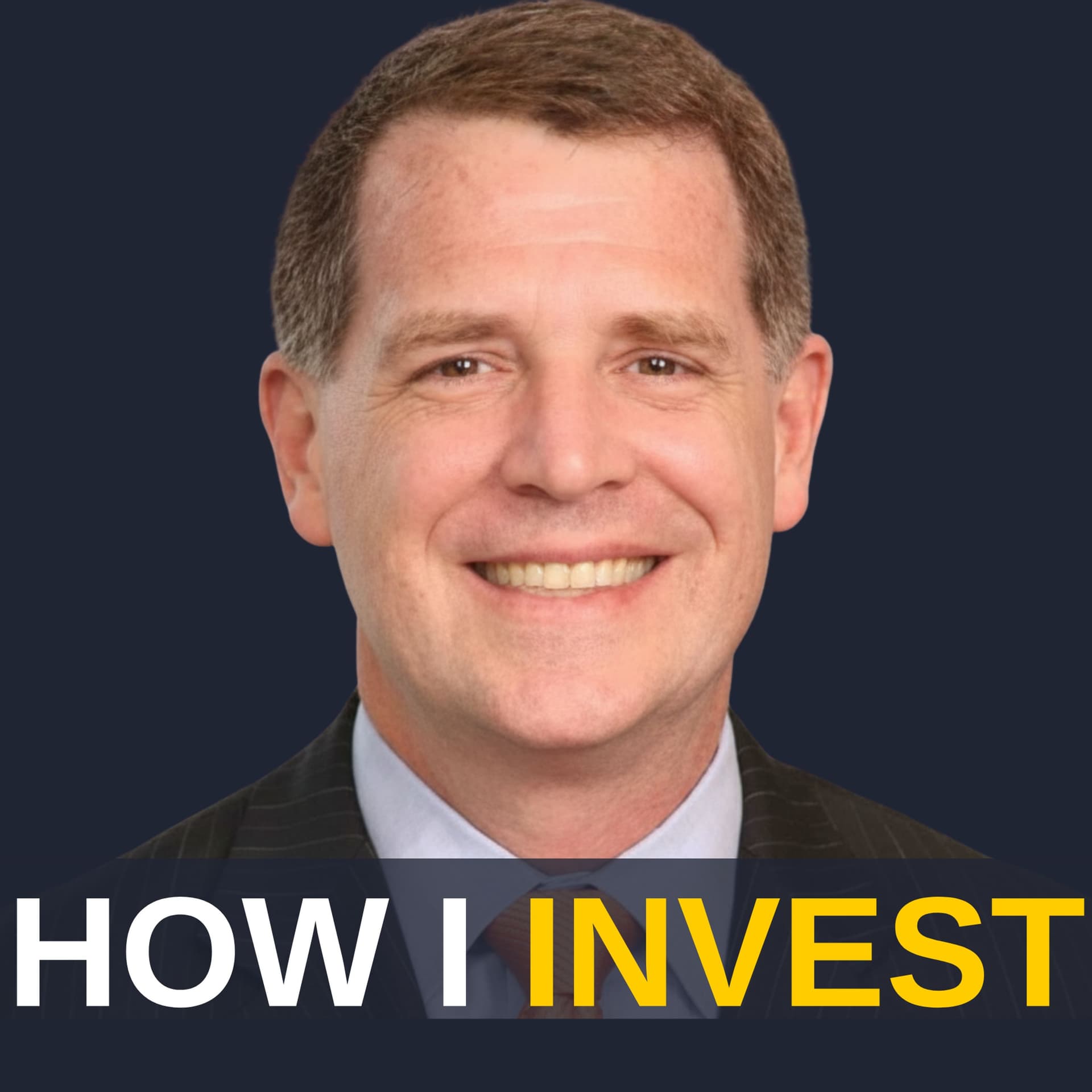
Hamilton has been at J.P. Morgan since late 2009, runs U.S. core equity strategies as CIO/portfolio manager, and leads U.S. equity derivatives in equity asset management. He cites 35+ years investing in equities and equity options.
Key claims
About 40% of clients use options for downside protection; 60% use them for income. Options are about “optionality,” not leverage. Volatility (VIX) reflects uncertainty/range of outcomes, creating opportunities if sized appropriately. Hedged equity strategies can fit within a 60/40 by taking a portion from stocks/bonds to maintain risk.
Notable examples
farmer wheat hedging; buying puts to lock gains (e.g., stock at 100 protecting gains after a 40% rise); selling calls at a target (e.g., 110) to get premium and discipline. Stats: missing the 10 best equity days cuts returns (10.5% to ~5.5% over 20 years); 7 of 10 best days occur within two weeks of worst days. March 2020 and “Liberation Day” illustrate staying invested.
Written by AI. May contain mistakes. Listen to the episode to check what was said.
Chapters
Tap a time to open that second in VOThe Magic of Options
0:45 to 2:10
Understanding how options can express precise investment views.
“Meaning, if you like a stock, you can buy it.”
Hedging vs. Income
2:10 to 3:25
Differentiating between using options for hedging and generating income.
“And that's kind of the long-term use cases of options.”
Practical Strategies for Investors
3:25 to 6:10
How investors can use options to protect gains and manage risk.
“and hedging is about truly finding a way to sleep a little bit better at night with your investment, whether it be your crops or your equities.”
Behavioral Finance and Market Timing
6:10 to 7:35
Discussing the impact of emotions on investment decisions and market timing.
“the options premium, but you would actually have to deliver that stock to the person that bought that option from you.”
Discipline in Investing
7:35 to 9:50
The importance of maintaining discipline during market fluctuations.
“So doing a portion, I think is best practice because that way, if it does go there, it gives you a chance to actually reconsider for a larger position.”
The Key to Staying Invested
9:50 to 10:45
Staying invested through market ups and downs is crucial for long-term success.
“if it's always a good time to buy for a long-term holder.”
Understanding Market Volatility
10:45 to 13:30
Exploring how to manage volatility and its effects on investment returns.
“and it's also about putting money to work in a way that you feel the most comfortable from a risk perspective.”
The Cost of Missing Opportunities
13:30 to 14:00
Highlighting how missing key market days can significantly impact returns.
“It does, but forget the fact it uses options.”
Understanding Market Volatility and Investor Behavior
14:00 to 18:09
Learn about the impact of market volatility on investor decisions and outcomes.
“and let's say a 10 % standard deviation.”
The Paradox of Illiquidity in Investing
18:10 to 20:59
Explore how illiquidity can serve as an advantage in investment strategies.
“He complains that private equity funds only have to mark their books once a quarter.”
Show all 23 chapters
Evaluating Investment Opportunities During Crisis
21:00 to 22:08
Understand how to assess investment opportunities during uncertain times like COVID-19.
“And I love how you quoted Stanley Druckenmiller because everyone harkens back to March of 2020 saying it was a generational time to buy the market.”
Evaluating Investment Opportunities During Crisis
22:17 to 23:18
Understand how to assess investment opportunities during uncertain times like COVID-19.
“Support for today's episode comes from Square, the all-in-one way for business owners to take payments, book appointments, manage staff, and keep everything running in one place.”
Evaluating Investment Opportunities During Crisis
23:26 to 23:39
Understand how to assess investment opportunities during uncertain times like COVID-19.
Risk Management and Portfolio Construction
23:40 to 28:00
Delve into effective risk management strategies and portfolio construction based on risk tolerance.
“But this whole COVID risk to me was not a real risk.”
Understanding Portfolio Construction
28:00 to 29:03
Learn how to balance risk and returns in portfolio management.
“though almost every single investor portfolio needs some type of risk tolerance then all of a sudden you scale your weightings appropriately.”
Options in a 60-40 Portfolio
29:03 to 31:32
Explore the role of options in traditional investment strategies.
“My humble view is 60-40 is a risk outcome that happens to comprise 60 % in stocks and 40 % in bonds.”
Market Timing vs. Staying Invested
31:32 to 36:19
Discover the pitfalls of market timing and the benefits of staying invested.
“You know, carving out that 20%, if you will, should actually move that dot above the line, but keep it on the same risk profile.”
Timeless Investment Advice
36:19 to 39:29
Gain insights on career and investment lessons from experience.
“just like you would in a basketball, football, or baseball draft, to find those talented young athletes that you want to add to your team, I think financial investors are like athletes.”
The Power of Compounding
39:29 to 41:44
Understand how compounding can significantly grow your investments.
“pretty good way to operate your career, your life, your relationships with.”
Real-Life Examples of Compounding
41:44 to 42:00
See how historical investments illustrate the impact of compounding.
“My passion for markets came from my grandmother.”
The Power of Compounding
42:00 to 42:42
Learn how a small investment can grow significantly through compounding.
“And I'm like, what am I going to do with this certificate, grandma?”
Market Returns vs Cash
42:42 to 43:49
Explore the differences between cash returns and average market returns over time.
“As you may have some younger listeners, If I could guarantee you 4 % on cash for the next three plus decades,$200 ,000 becomes$800 ,000.”
Investment Mistakes
43:49 to 44:13
Understand common mistakes investors make with their money.
“the waggles, but the juice is worth the squeeze on that little 200 grand at$2.4 million gap.”
Transcript
Automatic transcript. May contain errors.0:00So Hamilton, you're head of U.S. equity derivatives at J.P. Morgan. What does that mean exactly and what do you do on day-to-day basis? Sure. So I've been at J.P. Morgan since the end of 2009. And my responsibilities today are I have three hats I wear, David. The first one is I'm CIO of our U.S. core equity platform. I'm a portfolio manager on numerous strategies. And in addition, I am the head of U.S. equity derivatives within equity asset management. A lot of that goes back to my background, over 35 years of investing in equities and equity options. And why would an institutional investor want to own an option?
0:36Options are magical. And the reason I think they're magical is because they give you the ability to express a more precise vision or expectation around a stock. Meaning, if you like a stock, you can buy it. And then it's very linear. It goes up, you make money. If it goes down, you lose money. But if you like a stock, you could buy a call. You can buy a call and sell a call. You can buy a call, sell a put. You can sell a put to get your exposure. So it gives you something a little bit more precise based upon your view, your opinion on a security. When I've thought about options throughout my career, it's never been about leverage.
1:10It's about getting that precise way of expressing a view that does not have that traditional linearity, if you will, meaning up I win and down I lose. options, I think, give you that pun intended optionality out to express a viewer and opinion. And like I mentioned, you're a head of U.S. Equity Derivatives. So you run this for JP Morgan. What percentage of your clients are utilizing options in order to hedge their positions and how many of them are leaning into them and trying to establish a view in the market? Sure. So throughout the strategies that I manage, about 40 % of those assets are in people looking to, you know, call it hedge their exposure.
1:53But it's not about hedging your exposure. It's rather about having some type of downside protection or downside buffer, if you will, so you can stay invested. So think about hedging in many cases as a way to not only get invested, but more only stay invested. And then the other 60 % are people that are seeking income, potentially for going some of the upside of the market in return for that bird in the hand of income today. And that's kind of the long-term use cases of options. Options were started on exchange in the early 70s, but actually have been used for over a century by farmers in some shape or form, where either farmers were looking to protect their crops, hedging, or in the case of trying to know what they'll be able to sell their crops for when they harvest them, income.
2:40That one is also important because imagine if you were a farmer back 100 years ago and you planted some crops and the two biggest risks you had were, number one, something unfortunate happening to your crops just as you're about to harvest them. So you'd want to hedge it. The other thing was I have no idea when I plant my crops what I'm going to be able to sell it for when they come due to harvest and somebody says, well, I'll pay you$40 for your wheat today. You'll give it to me in three or four months. And you say, you know what? I'll take the 40s and it costs me 20. I'm blocking the$20. If it goes above 40, you're happy that you were able to lock it.
3:13You gave up a little bit, but you're happy you're able to get the 40. But if it goes below 40, you're really happy you're able to lock it in. That's how I think about hedging and income. Income is about getting income today in return for giving some of the upside. and hedging is about truly finding a way to sleep a little bit better at night with your investment, whether it be your crops or your equities. To use that example, by giving up the upside from$40 and higher, you get income today. So you're being compensated for giving up that upside. Yes, exactly. There's no free lunch, David. There is a trade-off between those two things that you're trying to accomplish.
3:51But let's say stocks are up 40 % this year. you might be concerned about the stock multiples. Let's say you wanted to stay in the market. How could options help you accomplish that? And what do your clients do in those kinds of situations? Sure. So when we think about whether it be income or hedging, we think about it at the portfolio level, but that portfolio level could be also be done at an individual stock level as well. So let's just say there's a stock ABC and it's up 40%. There's a couple of things you could consider. The first one is, you know, you've accumulated quite a amount of wealth on that stock and it's done quite well.
4:27And you want to find a way to lock in some of that gains you've had year to date. So you could buy a put and that put, what it would do would say, if that stock were to go below a certain level, you would no longer lose any money based upon that stock going below a certain level. So if the stock were 100, you know, and it started the year, let's call it 70, and it was up 40%, you know, you would say, you know what, I'm going to lock in, you know, all those gains up until 90. Now you could actually lock up everything up to 100, but the higher that protection is, that higher that put is, the more expensive it is.
5:08But once again, we talked about being able to create a more precise investment experience by using option. So that's kind of one way of trying to lock in some of your gains and protect some of your winnings, if you will, in that stock, or even at the portfolio level. But there's another aspect to it. And that is, perhaps you don't want to lock in those gains per se by buying downside protection. But you also, at that point, say, you know what? I would actually probably sell of this stock if it went to 110. So now all of a sudden, instead of buying puts, you could actually sell a call at 110 on a portion of your portfolio.
5:46If the stock goes to 101, 102, 103, 104, 105, you get all that upside appreciation plus that options premium from that call that you sold. If it were to go to 111, 115, 120, the amount of options that you sold based on how many shares you had, that stock you would actually have to deliver to somebody. But you would have continued upside appreciation plus the options premium, but you would actually have to deliver that stock to the person that bought that option from you. So once again, it comes back to what are you looking to accomplish with your portfolio? How can options complement the experience you're trying to give yourself in that portfolio, David?
6:28So in both of those cases, whether you're buying when the market goes down or you're selling if it goes up in the future, you're basically getting paid to take the right action. So taken to the extreme, the market goes up 200%. It goes from 100 to 200. You know, you're going to take some money off the table because likely it's overvalued to some extent. It's the same thing if it went to 50. It's unlikely that the same stock and the same portfolio is worth 50. You can make that decision ahead of time. And by making that decision ahead of time, which is to force yourself to sell at 200 or force yourself to buy at 50, you're being compensated.
7:05And it creates good discipline. The challenge is when many people, including myself, think about investing, if a stock were at 100, most people would say, I'd buy more down 50%. But once it's down 50%, you have to realize there could be a reason why it's down 50%. And so you still have to be comfortable. So you don't want to do, let's call it a full position from that perspective. You want to do a portion because it's easy, not easy. It's understandable that many of us don't ever think that a stock could go down 50 % or even up 50 % for that matter. So doing a portion, I think is best practice because that way, if it does go there, it gives you a chance to actually reconsider for a larger position.
7:46Do I still really want to buy the stock down 50 %? Do I really still want to sell some more of the stock up 50 %? So it does create discipline, but you also have to be aware that you can't suffer from buyer regret or seller regret because you're doing this in advance, as you said earlier, David. I can't help but think about Rene Girard's mimetic theory, which is that human beings copy the behaviors of others, which is why we have these cycles oftentimes. When things are going up, everybody gets excited. Everybody else gets excited. There's this contagion of optimism. When things go down, you have this contagion of pessimism.
8:15So acting rationally almost goes against our very evolutionary wiring. It's much easier to do when you're at 100 to kind of make those pre-bake those decisions. It is. And it also creates good discipline. I mean, when you think about rebalancing your portfolio, it's never easy to take profits and reduce some of your stocks and buy some more bonds in that rebalancing your portfolio. Constantly rebalancing is one of the best ways of compounding wealth over time. Or the opposite. in March of 2020, the best thing you could have done if you weren't comfortable buying stocks because you're so scared of COVID and what could happen, or even in liberation, the end of the first quarter, liberation at the end of the first quarter, nothing's ever easy, but just sticking to a disciplined approach to investing, buying more stocks when they go down to rebalance your portfolio back to its target state, or even selling some stocks to stay at its target state enables you to navigate storms and markets and uncertainty in a more holistic and comfortable way, if you will.
9:15I want to get to March 2020 in a bit, but first I want to double highlight what you said about when the stock market is up. So it's gone from 70 to 100. The biggest behavioral mistake you can make is actually getting out of the market. So if you zoom out any 10-year period going back to, I think, 1930s, 1940s, every 10 years, the stock market goes off. Sometimes, obviously, it's at a local maximum. Sometimes it's only up by 5-10 % over 10 years. So the right time to buy is always now. And if you take that to the next logical point to that is there's never really a great time to sell if it's always a good time to buy for a long-term holder.
9:54So when you have this market go up and you sell, let's say you bought at 70, you sold at 100, now it's at 120, the incentive to keep on buying in and admit that you were wrong before, there's a counter incentive to do that. So buying insurance against a downturn so that you stay in the market is incredibly underrated behavior. I wouldn't call it insurance because FINRA does not allow any of us to call options insurance. So I would actually say that it's the ability to own an asset that would mitigate some of the downside, not all of the downside. But you're right. When you think about car insurance, which really is insurance, we all have it.
10:32And we all hope that we never need to use it and it never comes into play. But it enables us to drive on rainy roads, icy roads, sunny roads, what have you. and when you come back, investing is about putting money to work and it's also about putting money to work in a way that you feel the most comfortable from a risk perspective. If you are an investor that loses no sleep at night and can navigate the ups, the downs, the wiggles, the waggles, you're right, you know, basically stocks that never lost money over a 10-year rolling period and if you're a young investor, you should probably have a significant amount of money invested in the market based upon your timeline and your horizon.
11:14But if you're that nervous Neil or that nervous Nelly, your amount of equity you should have should be, in my mind, this is one person's opinion, should be commiserate with never having to utter those three ugly words of get me out. You should feel comfortable with markets going up, down, sideways. And if they happen to go down, you're actually in a position to be able to add more because of your risk tolerance from that perspective. I think the biggest cardinal sin is people that have a mismatch with their risk tolerance and their investing. So everyone is happy, happy and high-fiving when the market goes up.
11:50But those people that are still comfortable with their holdings when the market goes down probably have a better understanding of their risk tolerance. When you think about the financial advisor community, they have clients that are conservative, moderate, and aggressive. The real question is, is that person still aggressive when the market goes down 5 %? If the answer is yes, their allocations are correct. If the answer is no, then they're only aggressive in a one-way market. You need to be aggressive or moderate or conservative in a market that can go up or down. Because as you said earlier, David, stocks over a 10-year rolling period historically have gone up, but it's never a straight line.
12:30There's always every decade a thing, whether it be the tech bubble. I mean, I've been doing this since the late 80s. So you had the 87 crash. You had the 89 United Airlines kerfuffle. You had the early 90s Gulf War. You had the end of the 90s. You had the Thai bot and long-term capital. Then you had the tech bubble. Then you had the GFC. And then you had the U.S. debt getting downgraded in 2011. And then you had, you know, in 2015, you had some of the challenges around oil and some of the other situations. and then 2020, and then 2022. It happens. These things happen. Liberation Day, just more recently, these things happen.
13:14And the best thing that any of us can do as investors is not only get invested, but most, most, most importantly, is stay invested. And options, I believe, specifically hedged strategies, help you stay invested. I would almost say, forget the fact that it uses options. It does, but forget the fact it uses options. it's Mr. or Mrs. Investor. Are you okay making some of the upside if in return you don't have all the downside? How you get to that by using options is how the sausage is made, but how to use the sausage, how to think about the sausage, how to think about a hedge strategy is exactly that.
13:51Making some or most of the upside in return for not having all the downside. It's interesting because the unpredictability of the market, so it might have a 8 % to 10 % expected return and let's say a 10 % standard deviation. So some year it'll be down 2%, some year it'll be 18%. That is actually the feature because if it went straight up, it would be more like a bond. And if the return was more predictable, it wouldn't have that return. So the question becomes, can you deal with the ups and downs? I had Julia Reese, whose job was for a decade to go and meet with the CIOs of foundations, endowments and pension funds, Goldman Sachs' top clients.
14:27And what she found was this, the volatility and the selling was directly this nasty chart where every time there was a drawdown was when the selling occurred. So a lot of people think of markets as this linear instrument, but a lot of wealth is actually created and lost in those downturns. There's 10 % plus markdowns. I'll give you another cool stat, I think, Dave, and that is over the last 20 years, a fully invested equity portfolio is up approximately 10.5%. If you miss the 10 best days, that number goes from 10.5 to about 5.5. But many people would say to me, Why would you ever think I missed the 10 best days?
15:04Am I that bad a stock picker or market timer? Well, seven of those 10 best days happened within two weeks of the worst days, of the 10 worst days. Think about that for a second. When are people most likely to make those irrational and maybe suboptimal decisions? Within two weeks of those worst days. So it's not that you're not a good stock picker, not a good stock timer, but when do you really have to think about that behavioral component to investing? it's around those worst days and if seven of those 10 worst days were within two weeks then it's likely you hopefully made the right decision by staying invested but it's also likely you had to make that decision it sounds like when you say these 10 days it sounds like some some meaningless marketing drivel yes if you cherry pick these 10 days randomly you're not going to get that return but when people are systematically selling exact two weeks behind before those 10 days then that starts to illuminate.
15:59I used to try to develop and cultivate myself this steady hands, this in crypto hodl, right? These ability to withstand crises. And then I listened to an interview with Stan Drunkenmiller and he said, nothing looks as cheap as after it's gone up 40%. And I had an epiphany, which is rather obvious, which is if one of the greatest traders of all time, Stan Drunkenmiller, struggles with trading and not prescribing to when things go up, buying more and when things go down, selling less. Maybe what needs to be done is not to cultivate this kind of strong hands, but it's to structurally create a portfolio that does not require this heroic action.
16:37That's when I started to look at things like illiquidity. I have this whole paradoxical belief. Illiquidity could have a lot of virtue. In fact, when I interviewed a lot of the top crypto investors, like the top decile fund investors. So think of there's hundreds of millions of crypto investors. There's these elite fund managers that a small percentage of the population has said can hold their assets and then there's top desol of them both privately and publicly they admit that their best investments are actually their illiquid ones in other words it's the illiquidity that made their returns good not actually the picking picking and choosing of different cryptocurrencies and there's something set at um to be said about that because you don't have to make the decision to sell when you can't it's unilateral you know i'm married to this position because illiquid.
17:25But I'd also say those illiquid positions, if I were a betting man, had underlying fundamentals, underlying valuations, underlying things about them that attracted people to them. There's plenty of illiquid stuff that could be a little schlocky, right? That just doesn't have the right reasons to own it. But to all those wonderful, great investors publicly and privately to share with you, some of the best investments were illiquid, it's the underlying fundamentals. I mean, the things about those securities were the same, whether it be public or private, but because they're illiquid, they didn't have to make that decision up to buy, hold, or sell.
18:05They were holding them because there was no choice. Previous guest Cliff Asnes calls this volatility laundering. He complains that private equity funds only have to mark their books once a quarter. I actually think that's the feature of the asset class. A lot of people will say on this topic, sure, retail investors, grandma, you know, my mom might have weak hands, might sell at the exact wrong time. But surely institutional investors are not prone to this bias. And then when you look at the governance at institutional investors, you see the ultimate poor decision making governance for these kind of decisions, which is committee.
18:38You have these 10 people committees. And if only one or God forbid, two people on that committee are panicking, you are going to have a contagion and you are going to have this compromise of selling a big portion of the portfolio. And this is something that we see over and over, regardless of market cycle for decades, ever since the early 20th century. So investing is about risk. There's no getting around it. You have risk when you have an investment. The question is, what is the magnitude of that risk? And if you were in a committee-like approach, you are subject to, I told you so. And nobody wants the, I told you so, whether it be personally from your significant other or professionally from your investment committee.
19:17And so when I think about investing, it is behavioral. And I'm not a big fan of using the term all-weather portfolio. I'd rather say balanced portfolio. And many institutions do it quite well, David, where they have some private, some public, some fixed income, some extended fixed income, and they don't have all of their eggs in one basket. Because when I think about investing, it goes back to what I was talking about. It's about risk tolerance. So I don't start, and I don't think people should start with asset allocation, stocks, bonds, alts. I need some of all of them. No, my belief is you used the word standard deviation before.
19:58Standard deviation is volatility. It's a range of outcomes to your portfolio. It's a range of outcomes to a stock, to a bond, to a private. And so I think portfolios are, you start with how much risk can we take as a pension, endowment, foundation, individual? And then how do I fill that bucket of assets? And it could be in stocks, bonds, alts, privates to actually meet that targeted risk profile, such that you can actually, at a committee level, individual level, or a CIO level, stay invested. Because if you have a portfolio that's well-balanced to risk and the market goes down, you can all look around the table and say, you know, markets are down 20 % and we're only down 8%.
20:42We're only down 10%. We've done a good job in creating a well-balanced portfolio. Now, if you're chasing returns and you're 100 % in stocks and you're down 20 % or maybe even more, the market down 20, then there's this, oh my God, what if we continue to go down? What if we're down another 5, 10 or 15 or 20? And I love how you quoted Stanley Druckenmiller because everyone harkens back to March of 2020 saying it was a generational time to buy the market. On TV and on radio and on podcasts, there were numerous people calling for the end of the world saying we should close markets till Labor Day, saying that this is terrible and getting worse.
21:19We're shutting down the economy, all these things. But it was a generational opportunity by the market if you had the ability or the risk tolerance or the risk available to put some money to work. Or the best thing you could have done at the very least in March of 2020 was not sell. Because once you sell in March of 2020, you'll never get that money back. I have a prideful moment in March 2020. I had the opportunity. Sequoia was doing a round into Robinhood. And this is this golden grail to invest alongside Sequoia directly on CapTable. and I hit up a bunch of family offices that have been asking me for years for this impossible Sequoia Co-investment in a top company.
21:58And all of them said, well, yes, but it's COVID. Not understanding that the whole opportunity existed because of COVID. And my thesis was rather simple and perhaps it was very differentiated than other people because a lot of people took wrong action, which is if the world ends, it doesn't matter anyways. If it doesn't end, it's a good investment. That was honestly my thesis. Support for today's episode comes from Square, the all-in-one way for business owners to take payments, book appointments, manage staff, and keep everything running in one place. Whether you're selling lattes, cutting hair, running a boutique, or managing a service business, Square helps you run your business without running yourself into the ground.
22:34I was actually thinking about this the other day when I stopped by a local cafe here. They use Square and everything just works. Checkout is fast, receipts are instant, sometimes I even get loyalty rewards automatically. There's something about businesses that use Square. They just feel more put together. The experience is smoother for them and it's smoother for me as a customer. Square makes it easy to sell wherever your customers are in store, online, on your phone, or even at pop-ups and everything stays synced in real time. You could track sales, manage inventory, book appointments, and see reports instantly whether you're in the shop or on the go.
23:07And when you make a sale, you don't have to wait days to get paid. Square gives you fast access to your earnings through Square checking. They also have built-in tools like loyalty and marketing to your best customers keep coming back. And right now you can get up to$200 off Square hardware when you sign up at square.com slash go slash how I invest that's s q u a r e.com slash go slash how I invest with Square you get all the tools to run your business with none of the contracts or complexity run your business smarter with Square get started today. Obviously there was there's a diligence on the company but everything about the company look good and look promising.
23:44But this whole COVID risk to me was not a real risk. It was kind of things are going to happen the way they're going to happen. We didn't know at that point. We didn't know maybe it would be like the black plague and maybe society will be wiped out. But regardless, I wasn't worried about that outcome from an investment standpoint. I agree. And let's just bring that back for a second to my background in equities and equity options. Everyone calls the VIX the fear index, and it's not about fear. It's a measurement of uncertainty. When the VIX is higher, it's because there's more uncertainty in the world or the markets.
24:18In March of 2020, the VIX, I think, went to 50, 60. There was a lot of uncertainty. There was a greater range of outcomes from any investment. And range of outcome does not mean down. It means up or down. So that's why in the second quarter, when the markets ripped about 20%, people should not have been surprised by that magnitude because the VIX was projecting a greater range of outcomes. It could have been down 20 or up 20. But the fact is, is that that is, in my mind, an opportunity where your job as an investor is to scale your investments appropriately, as well as take that as an opportunity to put money to work or to reallocate.
24:57In 2020, there are certain asset classes that did their job for you, whether it be puts or bonds or, for that matter, cash. But then when the market gives you this opportunity to be risk-efficient or risk-opportunistic, You should put money to work. But once again, the higher the risk, also the higher potential reward, which means you don't need to put as much money to work. If your normal investment in the market is$100, when the VIX is$60, you really only need to put$20 or$30 to have the same opportunity as a normal environment. I actually want to double click on that because alongside being head of U.S.
25:33equity derivatives, you're also the CIO of U.S. core equity at J.P. Morgan. There's an orthodox belief that volatility is bad. In fact, the entirety of modern portfolio theory is about how do you maximize return while minimizing standard deviation. But you said something there, which is sometimes risk in small doses could be extremely good. Let me give you a thought experiment. Let's say that U.S. equities had a 20 % return with a 20 % standard deviation. Obviously, you wouldn't size it the same. You wouldn't put 60 % of your portfolio into that. But would that be, in some ways, a better asset class than 10 and 10?
Read the full transcript
26:08Talk to me about how you think about that. So let's come back to my original statement a few minutes ago, where I talked about, let's not talk asset allocation. Let's talk about risk management, targeting a volatility and risk profile. Once again, volatility talks about a standard deviation of returns. So if you have Mr. or Mrs. Investor that feel comfortable as a moderate investor saying, you know what? I need to get invested, stay invested. I want to be in the market for the long run. But my risk tolerance is sort of like a 10 % loss in any given year. Conceptually, and it's not exact, but humor me.
26:43It means if equities have a 10 volatility and 10 % return, you'd be 100 % in stock. If 20 return and 20 volatility, you'd be half in stocks. You still should have the same expected return on your stocks. The question is what do you do with the other 50 % of your money in that 20 and 20 environment? Because just to, that's very interesting. So just to double click on that. And the reason for that is the 10 % drawdown is this constraint. So you're building a model of how do I maximize my returns while dealing with this constraint. In other words, if you made that 10 a 20 and you expected just one standard deviation drawdown, or if you're only accounting for two standard deviations drawdowns, in this case, 20 minus 40, then you would put all your money in equities in theory.
27:29So it's only constrained by your risk tolerance. Said another way, if you didn't have risk tolerance, if you were truly an AI trying to bet against the house, you would have 100 % of your portfolio there. which one in the new and the 2020 sure and and and absolutely because if you're just trying to maximize return without a risk constraint then you should be using leverage and risk and all those things but as soon as you actually incorporate a risk tolerance and to be quite frank i feel as though almost every single investor portfolio needs some type of risk tolerance then all of a sudden you scale your weightings appropriately.
28:09Let's just say, let's bring it back to the stock. If you have a low volatility stock and a high volatility stock, and both of them have some type of return profile, you don't need to own as much of the high volatility stock to deliver the same amount of expected return because it has a greater range of outcomes. Said another way, a perfect portfolio might be 10 different types of investments with a 20 % return, maybe even 20 % volatility, that somehow it didn't have correlation. It doesn't exist. But you would basically want a little bit of all these things, knowing that on average, they're going to get 20%, but knowing that some will be up 40, some will be down 20.
28:46And that's just the name of the game. That's the portfolio that you built. As long as they all don't have positive correlation, yes. But as soon as they're positively correlated, it's all the same. Good luck finding. In a traditional 60-40 portfolio, what percentage of a portfolio should be in options. And how do you fit that into the 60-40 framer? My humble view is 60-40 is a risk outcome that happens to comprise 60 % in stocks and 40 % in bonds. Stocks tend to have, what's called, an average 16 volatility. Bonds tend to have approximately one-third the volatility of stocks. You put those together, you end up with a risk profile.
29:24Options are not meant to replace stocks or bonds is meant to complement it. So if you have a hedge equity strategy that has half the volatility of stocks, theoretically, it's about asset allocation. You take 5 % from stocks and 5 % from bonds, your risk profile stays the same, but you'd hope your Sharpe ratio would increase, your up capture would increase, your down capture would decrease, and your total return would go higher. Because if you have a hedge equity strategy, your goal is to create asymmetric returns, better risk-adjust returns, and reallocating some of your stocks and some of your bonds would actually complement.
30:01So if you have a 60-40, I think option-oriented strategies could be anywhere from 10 % to 20%, taking a little bit from stocks and a little bit from bonds. And in theory, but more importantly in practice, if you have a 60-40 portfolio and you're hedging some of the downside in your equities, shouldn't you own more? In other words, you may have slightly capped upside, but you also have lower downsides. So doesn't that make the equity better than the bonds on a relative basis? It could and should, but more importantly, if you put options on top of some of your equities, you actually have decreased your risk.
30:37And my goal in thinking about 60-40 is to maintain the risk. So if you have a 60-40, if you actually put options on, let's call it 10%, actually no, 20 % of your stocks, you now have taken 20 % of the 60 and reduce the risk by 50%. You theoretically want to actually reduce your bonds and add to your equities to maintain that risk profile. So a 50 stock, 30 bonds, 20 hedged equity will have a very similar risk profile of a 60-40. But what I just do, I just reduce my bonds by 10 % and I reduce my equity even though it's hedged by 10 % because 50 plus 20 is 70. And so it comes back to, you know, trying to, and you talked about the efficient frontier, maximizing the return, but still maintaining that same level of risk.
31:32You know, carving out that 20%, if you will, should actually move that dot above the line, but keep it on the same risk profile. You've been in this market for 37 years. I'm not trying to age you, but you've gone through so many market cycles. And what is something that you've changed your mind on in the last couple of years? One of the things that a younger version of me believed is that my job was to outsmart the market, to time the market, to have an algorithm that knows when to get in and get out. But we've all heard the expression, markets could stay irrational longer than I can stay liquid.
32:14Timing the market to me is not like free throws. If we were having a free throw competition, you and myself, you'd probably win. But regardless, if I was to hit nine out of 10, I would say I was pretty good at it. And you'd said was pretty good at it. But being right on the market nine out of 10 times probably means you're unprofitable. Had you missed Liberation Day because you thought it was going to persist and tariffs going to be the end of the world. Had you missed 2020. Had you missed the U.S. debt getting downgraded. I mean, had you missed any of these idiosyncratic events, which aren't so idiosyncratic because they happen more often than people think they happen, you're going to give up everything and then some.
32:57You could have timed the sell-off in COVID perfectly. But if you didn't get back in in March, you gave it all back. You could have timed Liberation Day perfectly. But if you didn't get back in some point, you know, around April 8th, you gave it all back. And then some, at some point this year, the markets were down over 20 % only to see the S &P right now up. Last I looked around 15%. Think about that for a second. You could have nailed everything, geopolitical, political. So my belief is being, finding a way, you know, my younger self would have said, my job is to outsmart the market and beat the market.
33:36Maybe my slightly mature self and many of my friends and colleagues and family say it's not so mature But maybe my slightly more mature self today would say, you know find a way to be as efficient as possible To maximize return but be able to stay invested and use those market sell-offs opportunistically In your favor because you have some dry powder or you have the ability to reallocate My younger self would have been a little bit more You know competitive to beat the market as opposed to finding a way to use the market as a tailwind. One of the mind twists about this is I interview people and now I've had this podcast for over two years and I talked to them about these things.
34:15And I know that when Liberation Day came, they sold. Even though they were talking about, well, when there's sell-offs we buy, I just know categorically, and I talk to people on and off the camera, they committed this investing fallacy again. And yet they still, they don't see the pattern between their investing history and they still believe that next time and they'll pick it again. So humans have this twisted way of having revisionist history, thinking that they have learned the lesson of history, not understanding that, to your point, the next black swan, by definition, is unpredictable. It's a three-standard deviation event, so it's something that we can't even fathom.
34:52Thinking that they'll behave differently there, not understanding that what needs to be learned is to act rationally and to stay invested during those downturns, or if you could be heroic, to add to your positions. But even just not taking action is actually the thing. I agree, David. And I don't know if it's heroic. On April 8th, you're 60-40 based on market conditions. Went to 55-45. You could actually buy five units of equity just to get back to your target state. You don't have to be heroic. You just have to be disciplined saying, you know what? When I get out of balance, I want to maintain my risk profile.
35:26I have the ability to add because my portfolio is now slightly imbalanced relative to my long-term investing goals. So it's actually a positive discipline to buy in April because your portfolio is now out of whack with your long-term investment goals. This goes back to this whole behavioral, which is a lot of people then get stuck in. Oh, well, maybe I'll go down and I'll buy it at the exact right day at the exact right second, which, of course, is absurd. But the pros that people have been in it for 20, 30, in your case, coming up to 40 years, are actually just re-dancing their portfolio. What do I do?
36:00I go from, they went from 60 to 40, and then it goes down to 55, 45, and I go back to 60, 40. The genius insight from 40 years. And yet, if people did that, they would do extremely well. They would not only get the market, they would actually surpass the market without doing any other thing, strictly by doing that and just buying indexes. and being very disciplined. Now, I do believe that if you do the homework, just like you would in a basketball, football, or baseball draft, to find those talented young athletes that you want to add to your team, I think financial investors are like athletes.
36:34And if you do the work and do the homework and find people with the process and philosophy you believe in and it's consistent and repeatable, I do think you can find active managers that can outperform the market. But it's like being a GM in any sports team. You have to do the work. First, you must master the beta, and then you could find alpha. If you could go back 37 years ago, what piece of timeless advice would you give a younger Hamilton that would have helped you accelerate your career or avoid causing mistakes? I'd say there's a handful. Let me share them with you in no particular order.
37:04Number one, patience. Things always take a little bit longer than you expect or want. The second thing, when it comes to career advice, for over two decades, people would say to me, who owns your career? And I puff out my chest and say, I do. But the reality is your career is a joint venture between you and your manager. The amount of times people talk about you, think about you or mention you and you're not in the room is a lot more than when you're in the room. So you might as well share your career aspirations, the things that you're looking to accomplish with your mentor, your manager to help you get to that point.
37:36I would also say that, you know, we all aspire to serve and to answer questions. A more mature, older version of me takes a second to compose my thoughts or my opinion as opposed to being the first one to answer the question. And then I would say, sometimes you have to reflect on, you know, where you are, what you're doing. And sometimes it's perceived that the grass is always greener. It's not always I think you have to have this perspective On what you're doing With whom and for whom And if any of those three things are missing I think you're probably going to find Career dissatisfaction When it comes to investing I would like to tell you that Humbly I'd like to say I'm always the smartest one in the room I'm not And so I've always thought Over the last X number of decades This is something I always want to be Surrounded by some of the smartest people So for a brief window of my career, you know, I did a, you know, a, uh, an internal hedge fund with three people I love, but I realized about myself, you don't learn and grow and develop, you know, being in a room with three other people as you would in a slightly large organization.
38:45So you should also learn a little bit about yourself. What kind of environment do you operate best? How do you think about that? You know, the optimal way to, to create success. And then lastly, I would say you have to teach yourself some, some resilience. having worked at Lehman Brothers in 2008 and having lost everything because you weren't allowed to sell your stock unless you were getting married or having a kid. And I already had done both of those things. So I lost everything at Lehman. And by doing that, it gives you a greater appreciation for investing, risk management. It also gives you a greater appreciation for, you know, things aren't always glass half empty.
39:27More often than not, the glass half full is something that's pretty good way to operate your career, your life, your relationships with. It's almost right to say you lost money in Lehman 2008. That's the best thing that happened to me. But there's also downsides. Maybe your risk tolerance goes down. Tell me about the pros and cons of having something like that happen in your career. It's not about risk tolerance, about risk management. And so it actually has crafted how I think about investing my money as well as other people's money, creating balance in your portfolio. For example, you know i'm a believer in ai i am i think it's going to be transformational i see it i use it i witness it i witness it at the firm i work for i witness it in my personal life i witness it how my my day-to-day works um this is not uh a pet rock this is the adoption rate here is much faster than the internet but even though i believe that in my heart my brain my core it doesn't mean that's going to be my only investment for my investors i'm going to have a well-balanced portfolio, they may tilt a little bit into AI.
40:26It may tilt a little bit into the beneficiaries, you know, across the stack, if you will, you know, the infrastructure, the chips, the distribution, the usage, what have you. But shame on me if my entire strategy is 100 % based upon a single philosophy or theme. So I think, you know, I think that's one of the ways I would manifest the question. There's this adage in wealth, concentration builds wealth, diversification preserves it. And while that's true, another force unrelated to that, that builds wealth is compounding. Einstein called it the eighth wonder of the world, but staying in the game is just so important, whether it's in your career, whether it's in your investments, and that's chronically undervalued.
41:12And just having those chips kind of goes full circle to the beginning of our conversation. If your portfolio is up 40%, you don't have to either buy or keep all the chips on the table, you could buy options, you could protect your downside. Compounding is one of those things that's just so tricky to understand until you see it with your own eyes. It's almost one of those unlearnable lessons that you must see for yourself. I completely agree. And I love the quote that, you know, Compounding in the eighth wonder of the world because it's been a tribute to Einstein. I think people get Buffett credit for it.
41:41Regardless, it's magical. And the reason it's magical, I'll give you a couple of examples. And I believe this. My passion for markets came from my grandmother. My grandmother was invested. She loved markets for her whole life. And every year for the holidays, instead of giving me a toy, she'd give me a share of a stock. And I'm like, what am I going to do with this certificate, grandma? And she goes, someday you'll thank me. And so my passion around markets coming from her is why I thank her. But when I graduated high school, she gave me$1 ,500 worth of mobile. Ultimately became Exxon mobile. After a quarter, I got a dividend check and I'm like, what am I going to do with this?
42:23So I did dividend reinvesting around it. So I did a drip. That$1 ,500 with dividends reinvested and compounded, and it's not like ExxonMobil has been a great stock for nearly four decades, but that$1 ,500 right now is worth over 160K. Think about that. That's the power of compounding. And let me bring that to life today. As you may have some younger listeners, If I could guarantee you 4 % on cash for the next three plus decades,$200 ,000 becomes$800 ,000. It's pretty darn good to have that compounding effect, David. But, and most people would say it's pretty good because five years ago, that$200 ,000, three years later, was still$200 ,000 because its cash was getting zero rate.
43:05But that same$200 ,000 getting average, nothing heroic, average equity market returns over that same period of just over three decades is$3.2 million, a$2.4 million gap. The power of compounding is so powerful. But the next part of that question that I love is, which do you think is more likely? 4 % of your cash for the next three plus decades or average equity market returns? So with all this cash on the sidelines today, it's remarkable how much money is being left on the table because people don't necessarily see the benefit of compounding on equimark returns and having to navigate through those wiggles and waggles because they're going to happen.
43:46And that's one of the reasons people say in cash is they don't want the wiggles and the waggles, but the juice is worth the squeeze on that little 200 grand at$2.4 million gap. There's two sins. One is not investing. And the second one is selling at the, at any time, really, or selling all of it. You could say wrong time, right time. That also could be just a 10 % difference. When you zoom out enough, it's the difference between having 3 million and 3.2 million. But the real mistake is actually just getting the chips off the table. I looked it up. Warren Buffett, 99 % of his wealth came after the age of 56, speaking of compounding.
44:20On that note, Hamilton, this has been an absolute masterclass. Thanks so much for jumping on the podcast and look forward to continuing this conversation wise. David, thank you so much. Truly enjoyed it. Love to come back if you'd ever happy again. Absolutely. Thank you, Hamilton. That's it for today's episode of How to Invest. If this conversation gave you new insights or ideas, do me a quick favor. Share with one person in your network who'd find it valuable or leave a short review wherever you listen. This helps more investors discover the show and keeps us bringing you these conversations week after week.
44:48Thank you for your continued support.
From the publisher
Why do most investors fail at the exact moments when staying invested matters most—and how can options help fix that?
In this episode, I talk with Hamilton Reiner, Managing Director at J.P. Morgan Asset Management and CIO of the U.S. Core Equity Team, about how options can be used not for speculation, but to create discipline, manage risk, and help investors stay invested through market volatility. Hamilton shares lessons from more than three decades managing equities and derivatives, explains why volatility is misunderstood, and breaks down how hedged strategies, rebalancing, and risk-based portfolio construction can dramatically improve long-term outcomes—without requiring heroic market timing.