In short
Podcast Summary: How I Invest with David Weisburd - Episode E288
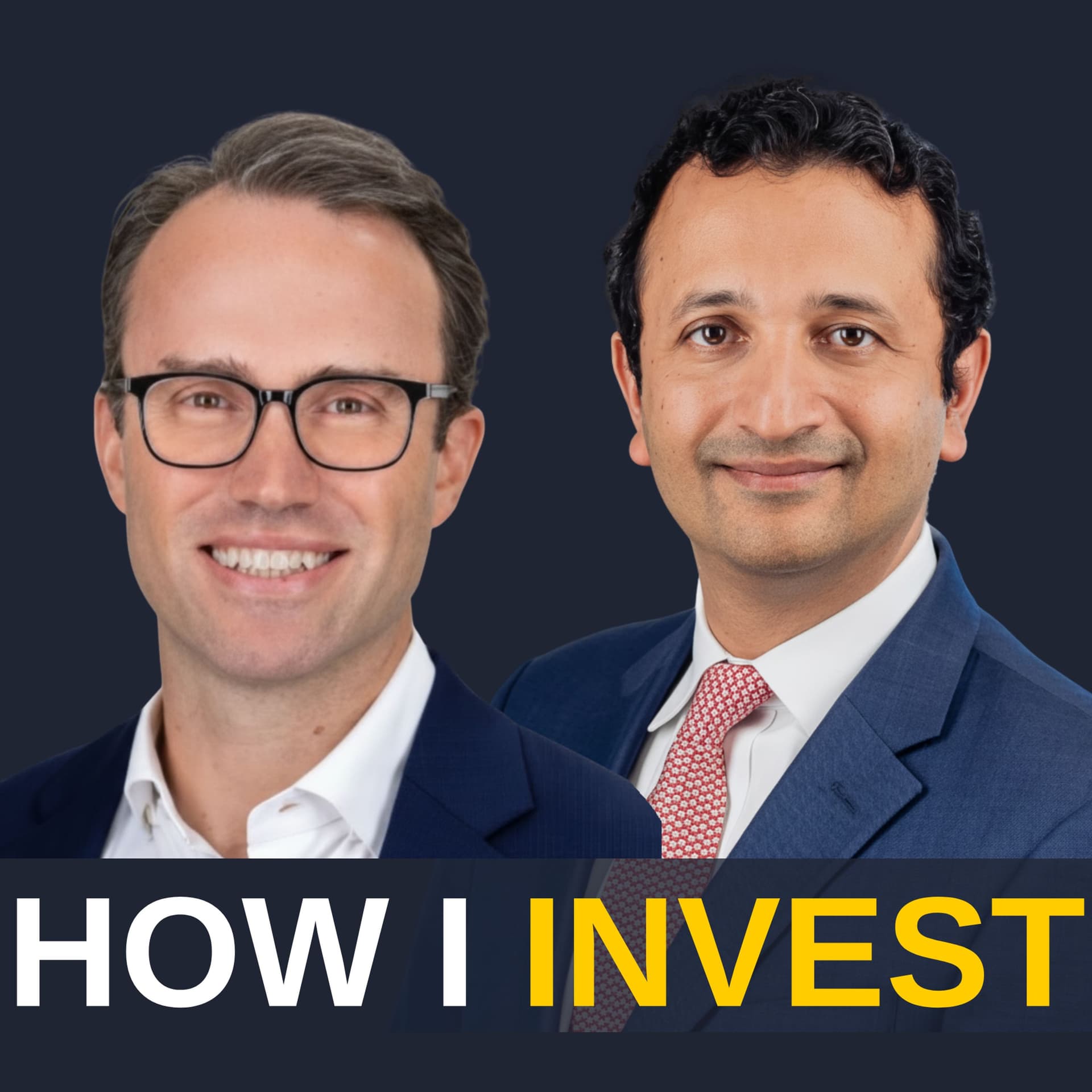
Episode Overview In this episode, David Weisburd interviews Jesse D. Serventi and Atif Gilani, the Founding Partners of Renovus Capital Partners. They discuss the firm's impressive fundraising success of $875 million amidst challenging market conditions, as well as their unique strategies that have led to top-tier performance metrics in private equity, including DPI (Distributions to Paid-In capital), IRR (Internal Rate of Return), and TVPI (Total Value to Paid-In capital).
---
Key Themes and Concepts
- Fundraising Success
- Market Timing: Renovus capitalized on their successful track record and the market's need for strong DPI during tough fundraising times.
- Strategic Focus: The firm targets lower middle-market companies, particularly founder-owned businesses with sub-$10 million EBITDA. This niche market provides numerous opportunities.
- Team Strength: A robust team of 45 contributes to their reputation, facilitating strong investor confidence during due diligence.
- Performance Metrics
- Renovus is recognized for its exceptional performance, being ranked #1 in IRR, DPI, and TVPI.
- The firm attributes its success not to one secret, but to a combination of:
- Market focus
- Team dynamics
- Strong cultural values
- Talent Density
- Importance of Team: The emphasis on recruiting and developing talent has been pivotal. The firm employs a full-time Director of People dedicated to maintaining the culture and ensuring growth within the organization.
- Learning Environment: A culture where junior team members bring fresh ideas, particularly in areas like AI, enhances the overall capability of the firm.
- Portfolio Construction
- Investment Philosophy: Renovus believes in gradual capital deployment, often starting with less than 50% of their intended investment and scaling up as they grow the business.
- Value Creation: The focus is not merely on short-term exits but on long-term growth of portfolio companies. This approach compiles significant returns for investors.
- Long-term Orientation in Private Equity
- Contrarian Approach: Renovus adopts a long-term view contrary to the prevalent short-term focus in the industry. Investments are structured to promote sustained growth rather than quick returns.
- Founder Engagement
- Founders prefer to partner with Renovus due to their understanding of business dynamics, fair pricing, and the opportunity for founders to roll over equity into the deal.
- The emotional aspect of selling a business and the importance of trust and understanding in the negotiation process is highlighted.
- Lessons Learned Over 15 Years
- Business as an Operating Model: The evolution from a transactional focus to thinking of Renovus as an enduring enterprise has been a crucial learning point.
- Mentorship and Coaching: The importance of external coaching to help transition the firm's mindset from merely a fund to a sustainable firm model.
---
Key Takeaways
- Renovus Capital Partners has successfully navigated a challenging fundraising environment by leveraging a strong team, strategic focus on lower middle market companies, and a long-term investment philosophy.
- Their unique culture and attention to talent density have allowed for superior performance metrics, setting them apart from competitors.
- The firm’s approach to portfolio construction emphasizes gradual investment, value creation, and long-term growth, countering the industry trend of short-term exits.
---
Conclusion The insights shared by Jesse D. Serventi and Atif Gilani underscore the importance of strategic thinking, team development, and a long-term vision in private equity. Renovus Capital Partners’ journey demonstrates how a focused approach and dedication to culture can lead to substantial success in a competitive landscape. The episode wraps up with a note of potential future discussions on their ongoing strategies and growth.
Written by AI. May contain mistakes. Listen to the episode to check what was said.
Chapters
Tap a time to open that second in VOSuccessful Fundraising Strategies
0:45 to 1:48
Discussing factors that contributed to successful fundraising amidst challenges.
“And I think it's a combination of those things, the time, the strategy, and the team that led to a great outcome.”
The Secret Sauce of Capturing Alpha
1:48 to 3:20
Exploration of what distinguishes their fund's success and the strategies used.
“recruiting in young and very talented people who want to make their careers at Renovist.”
Building a World-Class Team
3:20 to 5:42
Insights into team development and the importance of culture in private equity.
“In terms of the team, we have a big team.”
The Evolution of Fund Management
5:42 to 7:13
Transitioning from deal-makers to fund managers and the importance of team success.
“There are so many thoughts that come to me.”
Hiring for Potential
8:31 to 14:00
Discussing the hiring philosophy focused on potential and attributes over background.
“Check it out for yourself at alpha-sense.com slash how I invest.”
Differentiating Investment Approaches
14:00 to 14:32
Learn how this firm operates differently in private equity investing.
“investor who comes from a brand name private equity firm, we say to them, look, we do things slightly differently.”
Evolving LP Mix and Fund Strategy
15:41 to 19:05
Understand how the firm's LP mix evolved from Fund 2 to Fund 4.
“and start using free resources to build something amazing.”
Unique Portfolio Construction Strategies
19:05 to 21:22
Explore the firm's approach to portfolio construction and investment scaling.
“And to your point, it's not just the relationship with the person, it's also the quality.”
Long-Term Investment Philosophy
21:22 to 23:13
Learn about the firm's long-term investment philosophy and its impact.
“And this was done out of our second fund, which is a great fund.”
Valuation Decisions for Founders
23:13 to 26:02
Discover why founders may lower their valuation to partner with this firm.
“I think a lot of private equity has become what we say internally as investment banking.”
Show all 14 chapters
Investment Philosophy and Diligence
26:02 to 28:00
Gain insights into the firm’s investment philosophy and diligence practices.
“We love Stanley Druckenmiller, who we famously learned from George Soros and read everything that he says.”
The Strategy of Follow-on Investing
28:00 to 28:50
Learn about the advantages of follow-on investing and proper sizing of investments.
“And so as the future unfolds after you make the investment, of course, you're going to learn a lot.”
Timeless Advice for Young Investors
28:51 to 29:50
Discover crucial advice for building a sustainable and long-lasting business.
“Then our strategy is really a question of like business durability.”
Transforming a Fund into a Firm
29:51 to 31:08
Explore the evolution of Renovus from a fund to a comprehensive firm.
“have a three to five year horizon is that early on in our careers, there were multiple recessions and you got fired and you became unhired.”
Transcript
Automatic transcript. May contain errors.0:00You've raised$875 million in one of the most difficult fundraising markets in decades. How were you able to accomplish this? For us, it was a function of having the right time, the right strategy, and the right team. Our track record's been good. Leading up to the fundraise, we had been posting a lot of exits, a lot of very successful exits, and our DPI numbers had been great at a time when there isn't a lot of DPI. So the timing was really good. Our strategy resonated with investors as well. We focus on the lower middle market. We buy founder-owned businesses. We buy sub-10 million dollar EBITDA businesses.
0:30And we are a purchase price matters firm. And I think all of that story is resonating right now with LPs. We have a 45-person team, which is quite a large team relative to our fund size. And I think people love our team today. Every on-site diligence session that people do, we get complimented on the quality of our team. And I think it's a combination of those things, the time, the strategy, and the team that led to a great outcome. So Renovus, alongside being oversubscribed on$875 million, you're also ranked number one in terms of quantitative metrics like IRR, DPI, TVPI. What allows you to capture alpha in your fund?
1:02What's the secret sauce? It's a great question. Just a quick story. There was a morning in 2022 when we both woke up to having all these inbound emails from institutional investors, highly respected names from around the world who wanted to set up meetings with us. That's not what we normally wake up to. And we were wondering what was going on. And it turns out we had been named in one of these studies. This particular study, HEC Dow Jones Private Equity Report, is one that turns out to be very widely followed. You needed to have 10 years of track record in order to get into that study. Come 2022, we had built up 10 years of track record and have been in that study every year since then.
1:41So it's just been fantastic for us and helped to raise our brand and raise our profile, which has been great for fundraising. but it's also been great for recruiting executive talent to our portfolio companies, recruiting in young and very talented people who want to make their careers at Renovist. It's been an amazing momentum builder for us. But to answer your question, what is the secret sauce? You know, there's really no one thing in private equity. And we hear this all the time from founders considering selling their businesses. Every private equity firm looks the same. You know, we show up in our, you know, Patagonia vests and we look a certain way.
2:17and we're smart people, but from one firm to the next, are they different? And in some ways, we are like the others. We do LBOs. We do some business repositioning. We employ smart, competitive, driven people. So what is it that has enabled us to deliver the results that we've delivered for the investors? We actually, in last year's annual meeting for our investors, tried to answer this question for them in the course of our presentation. And what it really came down to was we put forward three questions for ourselves. What game are we playing, really? How good is our team? And do we have any special resource advantages?
2:52The game we're playing is about playing in the lower end of the lower middle market. Almost every deal we do is a sub $10 million without business. The number of at-bats that we see compared to an upmarket strategy, it is night and day different. We have so many more targets that we can pursue within our strategy. We are buying from founders. We're the first institutional investor. We're buying fundamentally solid businesses, but where there is so much value that an experienced institutional investor like us can have. So we're trying to play what we call the game on easy mode. I think that's been a big driver.
3:26In terms of the team, we have a big team. We mentioned that. 45 people. That is large, especially relative to the fund size that we have. One of those investments that we've made is we have a full-time director of people. That's become more and more popular in private equity. A lot of times, though, that people person focuses on portfolio companies. Our director of people spends all of her time recruiting, training, and ensuring that we're living out our cultural values and that people can make great careers at the firm. We also work with an executive coach. He works with the partners. He works at the levels beneath the partners.
3:59And so there's just a lot of investment when you add all that up and a lot of time and focus spent on building a truly world-class team. So I think the team is a special part of why we've been able to produce the numbers we've been able to produce. And we now have this kind of flywheel effect where we have stayed down market and focused on small businesses and have this vast network of people that are willing to talk to small business owners who are thinking about selling their business to private equity and can tell them, you should sell to these guys because if you roll a piece of your equity into the deal, it's going to do really well.
4:33look at how well it did for me. And so I think just the staying power that we have had in the market in doing this for 15 years and all the successes that we have has built a brand and a network of references that really is helping us to stand out relative to the company. Over those 15 years, what has compounded exponentially and what has compounded linearly? I won't be surprised to hear me say this. I'm so uber focused on talent. It's the part of the business that I like the most, I think that has really compounded exponentially for us. We have, we mentioned that we showed at our annual meeting, the series of slides about what makes us special and why we're able to produce great results.
5:12One of those things was all the boomeranging talent that we've had at the portfolio level. We had a page that was just focused on CEOs and founders who have done business with us on a repeat basis. And we have people on there that hadn't just done like two deals with us. They had done three deals with us and they'd all been successful. And I think when you're able to build that network of really good people who want to keep coming back into the Renovas ecosystem, and they happen to be friends and connected with really good and really talented people, and they're pulling their people in, I think that network effect is really special in Compounce.
5:42There are so many thoughts that come to me. One of those is our own evolution. When we started the business, we were really deal guys and had really good training and experience putting deals together. Over the last 15 years, we've elevated our role from just deal leaders to fund managers and from there to firm owners. And what that means is that as we've studied different models, we have become good at not just doing a great deal at the deal level, but delivering great fund products to the LPs where we are generating not just good deal returns, but good gross returns. And most importantly, great net LP returns by recycling capital, by using really innovative financial capitalization at the fund level.
6:35So those things have resulted in very significant growth in terms of the results that we've been able to produce. So that evolution obviously continues. And brand is something else that has had a pretty significant impact that 15 years ago, nobody knew who we were today. Thanks to all the transparency that third parties are bringing to our end of the market through rankings and through a lot of benchmarking, a lot of investors, not just here in the U.S., but globally, are able to find us. And raising capital has become a lot easier than it was 15 years ago. One of the hardest things of investing is seeing what's shifting before everyone else does.
7:17For decades, only the largest hedge funds could afford extensive channel research programs to spot inflection points before earnings and to stay ahead of consensus. Meanwhile, smaller funds have been forced to cobble together ad hoc channel intelligence or rely on stale reports from sell side shops. But channel checks are no longer a luxury. They're becoming table stakes for the industry. The challenges has always been scale, speed and consistency. That's where AlphaSense comes in. AlphaSense is redefining channel research. Instead of static point-in-time reports, AlphaSense channel checks delivers a continuously refreshed view of demand, pricing, and competitive dynamics powered by interviews with real operators, suppliers, distributors, and channel partners across the value chain.
7:59Thousands of consistent channel conversations every month deliver clean, comparable signals, helping investors spot inflection points weeks before they show up in earnings or consensus estimates. The best part, these proprietary channel checks integrate directly into AlphaSense's research platform trusted by 75 % of the world's top hedge funds with access to over 500 million premium sources. From company filings and brokerage research to news trade journals and more than 240 ,000 expert call transcripts. That context turns raw signal into conviction. The first to see wins, the rest follow. Check it out for yourself at alpha-sense.com slash how I invest.
8:37So you have three main co-founders, Jesse, Autif, Brad. If I gave you 100 points in terms of what drives the company, how much comes from the three of you versus your hires and this machine that you built in terms of talent? That's a great question. For the first fund, it was really the three of us that did everything. We raised the fund. We sourced all of the deals, executed, did the portfolio management work ourselves. And so certainly all 100 for fund one. And the goal has been to shift that down over time. And we have been very successful in doing that. Now we think of ourselves, really, we've gone away from being players.
9:12We're still playing, but we're playing player coaches. And we've organized the firm with the specific intention of enabling really good and talented people, coaching them up, working with them, developing them, and seeing them spread their wings and being really successful. And now we're at a point of our own individual careers where nothing makes us happier than seeing people get it. I was saying just as we were kicking off the podcast that we just completed an internal call where we announced all of our internal promotions for the year. I mean, it was kind of an emotional event for many of us.
9:44Like there is great pride in seeing the people beneath us succeed. Was that something that was difficult to cultivate? There's a lot of learning that goes as you build a firm. As investors, you take a lot of pride in putting together the best deal possible, the best financial structure, the best executive team, and doing both financial and operational engineering to get to a great outcome for the investors. This is something we take so much pride in and that becomes a DNA. But when you are building a firm, it's not about the best deals you do. It's, again, delivering a great fund for the investors.
10:23And that means not just doing your job well, but creating an environment for your team members. Fund one, as I mentioned, it was just the three of us doing the entire thing. And that was a function of starting in 2010, it took us two solid years just to get into business, no paycheck. And so we were really careful with our management fee dollars in the early years of the fund. fund two comes along, we start bringing in some institutional investors. In fact, our largest institutional investor in fund two is still our largest institutional investor today. And they asked us a really simple question, when are you guys going to start building the team?
10:58And they were walking us through about like why we should do this, giving us comfort. Hey, you're going to be around for a while. And Atif says this sometimes, some of these institutional investors, they believed in us more than we believed in ourselves. And that helped get us started on really investing and thinking about Renovus as an enterprise. And we have so fully embraced that, you know, 10 years later, after our second fund was raised, that today, this is what we have. We have a large team. We have a director of people. We work with an executive coach. And so it has been a gradual thing, but we've gotten some great advice that's helped us, you know, make that transformation that we very much needed to make.
11:35That's my heuristic for who you want to surround yourself with people, people that see more new than you see yourself. And similarly to that, I look at the heuristic of who you want to hire is somebody that is going to do things that you never even imagined. So you bring somebody in, not only do things as good as you or even better than you, but come up with things that you didn't even think about. Absolutely. This concept, I think like Netflix popularized it of talent density. You have a talent dense organization that just raises everyone's game. I think our people, our best people. They're raising his game.
12:06They're raising my game. It is awesome to have people around us, even if they're less experienced, but you just see their passion and competence. That makes everyone better, including us. Talent that we are hiring, they have a lot of new ideas, new competencies. They're better at AI than we would have ever been. So we've learned so much about AI adoption within our firm and how we can push that out to a portfolio companies from one of our associates. So yes, there is this flywheel effect that Jesse was talking about. You learn from your junior people. They learn from you. And in a way, what we talked to them about is that we are looking to bring in more entrepreneurs in the firm, not more managers.
12:49And we're also constantly screening people, not just for their pedigree and resume, but for their potential. How do you do that? How does a fund manager go about sussing out, I guess somebody's soft skills or somebody's future talent versus their track record of completing tasks. This is spending time with them and having a good sense of who you want to bring into the firm and who you do not. Jesse was mentioning to you our chief people's officer. She's someone who had never done any HR work. Jesse got to know her through his time with his local church. And she had such amazing people skills that Jesse kept talking to me that we need to bring her on.
13:30And when Jesse approached her a couple of times, she said, no, the person who was running our IR was actually an asset manager at Vanguard. But we saw in her the passion, the detailed orientation, which many times you don't see in other IR people. So we are really screening for attributes, not for people's backgrounds. And when we are hiring our people, we tell them the first couple of years are on us. Even when we are hiring who you may consider plug and play investor who comes from a brand name private equity firm, we say to them, look, we do things slightly differently. We pursue the same kind of deals that you may have been at your firm, but we are operating at the lower end of the market.
14:13We have more of a valuation discipline that you may have seen at your firm. We are willing to do more volume that you may have seen at your firm. So it is, and it takes them at least a year, but once they get it right, they really start to perform and become believers in that model. When you want more, you start your business with Northwest Registered Agent. They give you access to thousands of free guides, tools, and legal forms to help you launch and protect your business all in one place. With Northwest, you're not just forming an LLC, you're building your complete business identity. From what customers see to what they don't see, like operating agreements, meeting minutes, and compliance paperwork, you get more privacy, more guidance, and more free resources to grow the right way.
14:56Northwest has been helping founders and entrepreneurs for nearly 30 years. They're the largest registered agent LLC service in the US with over 1 ,500 corporate guides, real people who know your local laws and help you every step of the way. What I love is how fast you can build your business identity with their free resources. You can access thousands of forms, step-by-step guides, and even lawyer-drafted operating agreements and bylaws without even creating an account. Northwest makes life easy for business owners. They don't just help you from your company. They give you the tools you need after you form it.
15:27And with Northwest, privacy is automatic. They never sell your data because privacy by default is their pledge. Don't pay hundreds or thousands of dollars for what you could get from Northwest for free. Visit northwestregisteredagent.com slash invest free and start using free resources to build something amazing. Get more with Northwest Registered Agent at northwestresortatoragent.com slash investfree. And I want to get into your portfolio construction later, which I think is fascinating. But on the LP mix, you mentioned that that institutional investor came in fund two, and now they're one of the larger investors.
15:59How has your LP mix evolved from fund two to fund four? When we started in 2010, it was right in the midst of GFC, and there wasn't any capital available for first-time managers looking to start a blind pool of capital. So through Jesse's research, we stumbled upon this program run by the U.S. Small Business Administration called the SBIC program, except that that program was really for mezzanine investors and for people who had a lot more deals on their track record as we did. But the best thing about that program was for every dollar of capital you would raise from third parties, the program would give you two additional dollars of capital.
16:42So essentially, the U.S. Small Business Administration became our largest LP in our fund fund with 67 % of capital coming from them, and the rest primarily coming from family offices and high net worth. So fund two is really when we made the transition, not complete, but beginning to make transition from that investor base to bringing in a large university endowment, insurance companies and start building that base. To our last fund, Fund 4, where instead of the SBA being 67 % of our capital is less than 20, we've been able to retain all our large accounts and really proud of the 130 % re-up rate from our existence.
17:28meaning investors who gave us$500 million in Fund 3, not only they've kept that investment with us, but on top of that, they've given us another$650 million. So we've been able to keep our existing, but expand the LP base and over time diversify a base from the capital that we've been receiving from the SBA. As I mentioned, you were overscribed. There's a lot of demand. How did you pick and choose which LPs you wanted to add to Fund 4? So how did we select our LPs? So I would say it's a matchmaking process. Obviously, our existings are the ones who know us best, and they always have the first tips at the available capital that we're looking to raise, and they came in very, very strongly.
18:12So they filled up most of the capital need that we had. And beyond that, we've been very strategic. There are certain areas and certain types of capital that we think could be a base for our long-term success and growth. So we brought in one large state program, and we feel that could be a way for us to build that type of investor base. For the first time, we went outside the U.S. and got a number of high-profile institutions and family offices in Europe and the Middle East. We think that we can significantly expand that. So while availability was limited, we used those limited slots to bring in what I would consider strategic investors who can really help us grow our capital base.
19:00And that's just geographic diversification. The new investors, largely people, like we're very confident that the capital base is going to be stable over a long period of time. And to your point, it's not just the relationship with the person, it's also the quality. I just interviewed the former CIO of UTEMCO, the second largest endowment in the world. And I learned they're going to be the number one largest endowment in the next 10 years because they get one and a half,$2 billion from the state of Texas from oil reserves every year. So kind of knowing where what's going on with the underlying capital base is also really valuable versus a pension fund that might be overfunded or other pools of capital, otherwise great relationships, but they might be in a difficult situation from capital base.
19:37Absolutely. So one of the most interesting parts about your fund is your portfolio construction. Tell me about your portfolio construction and how did you come about with this unique structure? Our portfolio construction has a number of attributes. First, we believe in starting out small and over time building our position. So if we are looking to invest$100 particular business, we must start out at 50 or less. And over time, as we professionalize the business and we scale the business through acquisitions, we put in more capital. So building position over time is the first thing that we think about.
20:17Secondly, because we operate not just in the market, but at the smaller end of the market, we look to create a diversified portfolio for every fund. And so we have typically around 15 or so active positions per fund. If we have early wins, we give the profits to our investors, recycle the cost basis, so have some of our capital make return more than once. And through that, we end up investing on average 120 % of the LP capital. And for that capital to have a compounding effect on the overall net returns of the fund, This helps us keep the spread between growth to net return for investors low and overall deliver a really good fund product for the investors.
21:08You guys have figured out what private equity has taken a long time to figure out, which is if you have a great company, why are you selling it four or five years later to your competitor? We're going to keep on investing and helping that company grow. I'd like to say that we figured it out right away, but it actually is a learning of ours. Autif talks, likes to talk about our both our worst deal and our best deal we ever did. It was in a company called Red Nucleus. And this was done out of our second fund, which is a great fund. But it was a business that we bought with$4 million of EBITDA. We took it to$12 million of EBITDA and sold it, did very well for our investors.
21:37And then that company continued to grow significantly after we exited with the team that we had put together, with the strategy that we had been executing. As we've grown our knowledge and grown our confidence by observing what upmarket GPs are doing, we've realized that we're able to do this. And so now there's no kind of dogmatic approach on our part that says, OK, when you double the EBITDA, now it's time to exit. And as a result, we have a business that started with four of EBITDA and today is 50. We have another one that started at three and today is 90 of EBITDA. So I think that's actually a practice that we're proud of today and we think makes a lot of sense.
22:13But it's one that has been a learning of ours over time. But in these investments, not only that we're growing our EBITDA, we're improving the quality of our businesses. So we make as much money from growing the EBITDA multiple. So we, on average, have been able to buy these smaller businesses for mid-single-digit EBITDA multiples, and we sell them at teens of multiples. So that has a compounding effect. Family offices have been doing this for decades. I spoke to Sam Zell's partner, Mark Sauter, who continues to run his foundation's family office. also Brent Bishore, he's in the Midwest, he has a 30 year fund where they figured out that a, first of all, if you make a fund that lasts longer, you're making decisions over a longer time horizon, you actually build healthier businesses.
22:56If I asked you guys to flip something in three years versus holding it for 10 years, regardless of, you know, how good of a guys you are, or your incentive is just going to be to build a fundamentally different business. What's corrupted that process historically is these two to three year fund cycles, You always want to be showing momentum. So everybody ends up owning slightly worse versions of the business downstream because of these like short term over optimizations. There's a lot we could talk about here. I think a lot of private equity has become what we say internally as investment banking.
23:27Plus, there's a very short term orientation that's kind of crept into the industry. And it's not just among the GPs, managers, the executives, the C-suite executives, you know, throughout the economy. I mean, they're now all trained to think this way. It's like, okay, I'm going to get hired. I'm going to exit in two years. And then I'm going to be on to my next private equity thing. The next thing I find. And I actually do think that if you can get your LPs to support this and you yourself can think differently, there's a great opportunity if you can be a little bit more long-term. Why do founders lower their valuation in order to partner with you?
23:57So selling a business by a founder is perhaps the most difficult decision they ever have to make at a professional level. It is an emotional decision. It is a game changer financially for them. So they are very diligent about it. They look for a number of things and price is just one of those things that they look for. First of all, they look for a counterparty, meaning a private equity firm like us, that is transaction worthy, an entity that understands that business has sector expertise, that has a really high close rate that once we sign on a piece of paper that we are interested in the deal, that we would get to a closing of the transaction.
24:42So they care deeply about those things that the counterparty they are dealing with is transaction worthy. And that is one area where as of late, private equity has gotten the bad rep, justifiably or unjustifiably. So we position ourselves as not just another New York-based LBO shop, but rather a founder-owned, founder-led firm that is based in Philadelphia and on location. We use it as a strategic advantage to give the message that we are a different type of a firm and we understand what it is to run a small business that's looking to become a mid-sized business. Beyond that, they do care about price.
Read the full transcript
25:23They take a few dollars less, but they are looking to get a fair price. So in that respect, purchase price matters. But beyond that, in our model, we encourage them to roll over 20 to 25 percent of their stake. So they want to believe that the rollover stake could be worth more than the cash out they receive on day one. You guys both embrace this contrarian philosophy that I share transparently, popularized by George Soros, which is invest and investigate. Put in a little money and learn more to get an insider edge. Tell me about that philosophy and how do you internalize that philosophy into your fund?
26:02We love Stanley Druckenmiller, who we famously learned from George Soros and read everything that he says. And of course, he's a public markets investor and more of a trader. But what we have taken from that statement and applied to our business is the view of, as we talked about earlier, building a position over time. When we enter into a new business model, there is a huge difference between owning something in that segment and not. And buying something, even if it's only a$5 million EBITDA business, buys you a seat at the table. There are people who will talk to you that will not talk to just the private equity firm.
26:36There are other business owners. There are things that you get invited to, history conferences. There's a big network of things that open up to you once you invest. And I can maybe just illustrate it through an example. We exited a legal services business called Harbor last year. And it was a thesis that we built in 2021 and made our first investment in early 2000. And we ended up doing 10 add-on acquisitions over the course of our ownership period. The difference between what we saw when we didn't have an investment and what we saw when we did have an investment was night and day. And the add-on acquisitions that we sourced, we believe many of them we don't see if we don't have something in there.
27:14And so investing in something allows for a much greater investigation of something, even when you start really small. So that's how we apply that Sorosism to Renovus. It reminds me of a diligence question I like to ask towards the end of the process, which is, what am I going to find out in the next board meeting that you're not telling me right now? People don't always, and usually they don't answer that honestly, but that's really what you're trying to suss out, which is, what am I going to find out within the business that I could never really find out? That's not in the spreadsheets. That's not in the data room.
27:42I'm a big believer in how you phrase a particular question. And I'm now going to use that question in all of our diligence sessions going forward. So thank you for that. You do learn so much about a business after you own it. that's a fact that every GP will at least admit to you privately. And obviously, investing involves making decisions about an uncertain future. And so as the future unfolds after you make the investment, of course, you're going to learn a lot. What we like about our strategy of doing follow-on investing and building our position over time is that if you could decide between investing all of your money in a company in day one or investing the same amount of money over a three or four-year period, and you could stop at any time, you would obviously choose that second road 10 out of 10 times.
28:24And so we really like that. We like getting smarter, gaining conviction, investing accordingly, or losing conviction and stopping investing accordingly. So we love Nestor. As a thought experiment, if you could invest$1 in the business to get access to information and be on the inside, obviously you would do it. So it's a question of what is the right sizing of the first check in order to make it more valuable than potentially the downside. It's not a matter of if that makes sense as a strategy, it's a matter of sizing. Then our strategy is really a question of like business durability. You know, we invest in very small companies.
28:56There is such a thing as too small. You know, if you invest in a$2 million EBITDA business as the first thing you buy in a fund, is it even a business? And so that's how we think about that question. If you could go back to 2010, when you were first starting Renovos, you know, a lot of mistakes, a lot of lessons learned over the last 15 plus years. What's one piece of advice that's timeless that you would have given a younger version of yourself that would have either helped you accelerate your career or helped you avoid causing mistakes? Think of the business we were starting not just as a project business where we are doing deals, but like an operating business.
29:30Build a business that would be there forever. That means to take more risk early on, to invest more in the team early on and do things that would pay off dividends not in five or 10 years, but over 25, 30 years. The reason why a lot of young investors like us have a three to five year horizon is that early on in our careers, there were multiple recessions and you got fired and you became unhired. So there's been this mindset of feast or famine that at times are good, crap, whatever you can versus investing in a business like most of our founders do, who we buy from, they're never building a business to sell.
30:21They are building a business that may be transferred over to the next generation. So having that longevity to the business really helps you build a business that does good deals, but overall, over time, builds enterprise value. I love Atif's answer there, and it aligns actually really well the coach that we've been working with, you know, personally for many years now, when we hired him, and this is what he says to us now, he's like, you guys hired me to help turn Renovus from a great fund into a great firm. And it wasn't something that we thought about in 2010. In 2010, it was about, hey, let's try to get into business together and build a fund.
31:02And somewhere along the journey, somewhere in fund two, we really started thinking about Renovus as a firm. Well, Jesse, Atif, you guys are growing legends in the private equity space. It's going to be very fun to see where you guys go over the next 10 years. And we'll have this conversation maybe in a couple of years and check in. And it's been a pleasure to sitting down and thanks so much for sharing your story. Thank you. And we welcome doing that again with you. Thank you for having us. Thank you, guys. That's it for today's episode of How to Invest. If you're a GP with over$1 billion in AUM and thinking about long-term strategic partners to support your growth, we'd love to connect.
31:35Please email me at david at weisbergcapital.com.
From the publisher
How do you raise $875M in one of the hardest fundraising markets in decades and still outperform on DPI, IRR, and culture?
In this episode, I sit down with Jesse D. Serventi and Atif Gilani, Founding Partners of Renovus Capital Partners, to unpack what actually compounds in private equity over 15+ years. We break down why staying in the lower end of the lower middle market creates structural advantage, how talent density became their real edge, and why portfolio construction—not deal hype—is the hidden driver of net returns. Jesse and Atif also share how Renovus evolved from three founders doing everything into a scaled firm built to last decades, not cycles.