In short
Podcast Summary: How I Invest with David Weisburd - Episode E290
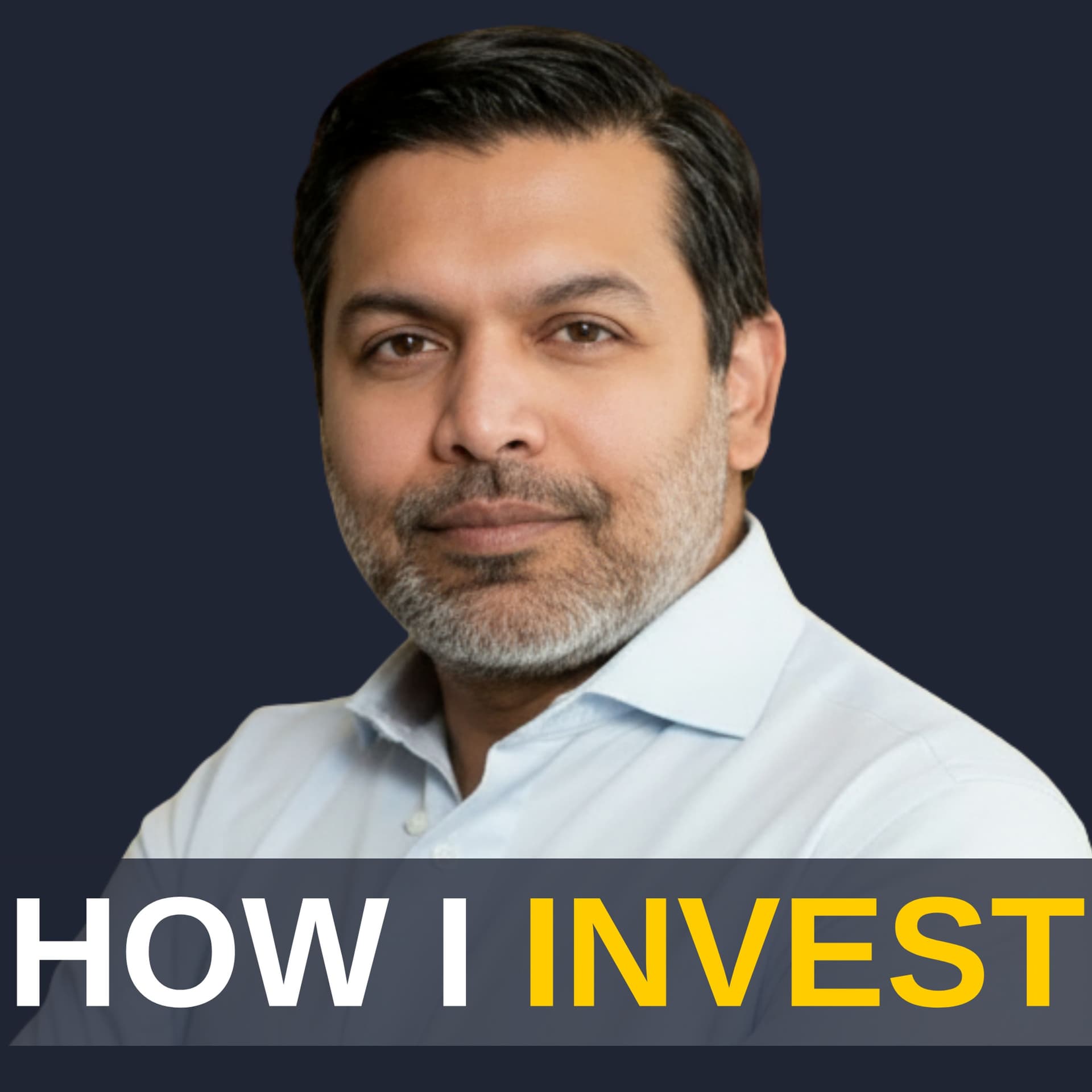
Overview Podcast Title: How I Invest with David Weisburd Episode Title: E290: How LPs Underwrite Venture in 2026 Description: David Weisburd interviews Narayan Chowdhury about the current dynamics of the venture capital market and the importance of relationships and trust in decision-making amidst increasing market noise. Chowdhury, a partner at Franklin Park, discusses the structural shifts in venture capital and the challenges of data-driven investing.
Key Themes and Discussions
- Current Venture Market Conditions
- Untethered Sentiment: Chowdhury describes the venture capital environment as "confusing" and "untethered," citing unprecedented events and developments in the market.
- Market Noise: Consistent disruptive events contribute to a chaotic landscape, making it difficult for investors to navigate.
- Challenges in Data-Driven Decision-Making
- Limitations of Data: Chowdhury highlights the flaws in relying heavily on historical data for investment decisions due to biases, gaps, and irrelevance in current contexts.
- Ground Truth: He emphasizes the need for reliable data sources, advocating for LP-driven insights, which can provide a clearer picture of venture performance.
- The Role of Relationships
- Importance of Access and Trust: As traditional metrics lose their reliability, the significance of long-term relationships between founders and investors rises.
- Founder Incentives: Understanding why founders are willing to give up equity is critical to the venture equation; trust and demonstrated support from investors are essential.
- Emerging Investment Models
- Alternative Funding Structures: New venture funding models are emerging, such as accelerators that focus on service offerings rather than equity stakes.
- Changing Dynamics: The podcast discusses how early-stage investments are shifting with the rise of "talent magnets" and the strategic importance of media and distribution in venture success.
- Identifying Opportunities
- Navigating Regime Changes: Investors must adapt to ongoing shifts in the market and be proactive in identifying new models and trends.
- Long-Term Vision: Successful venture capitalists need to cultivate patience and a long-term engagement strategy, as relationships develop value over time.
- The Future of Venture Investing
- High Stakes Environment: The conversation touches on the challenges of selecting funds with high potential amidst market volatility and the need for effective operational management among firms.
- Building a Sustainable Network: Continuous engagement, research, and relationship-building are emphasized as key strategies for navigating the uncertain landscape of venture capital.
Key Takeaways
- Focus on Relationships: The importance of trust and established relationships in venture capital is paramount, as traditional metrics become less reliable.
- Evolving Market Dynamics: Investors must stay adaptable and open to new funding models and investment strategies.
- Data Limitations: A skeptical view on the reliability of historical data is crucial, as it may not reflect current or future opportunities.
- Long-Term Commitment: The venture capital industry rewards those who invest in relationships over the long term, emphasizing the value of patience and persistence.
Conclusion This episode provides an insightful exploration of the complexities and evolving nature of the venture capital landscape. As investors and founders navigate a noisy and fragmented market, the emphasis on relationships, trust, and an adaptable approach becomes increasingly significant. The discussion illuminates the challenges and opportunities that lie ahead for institutional investors and venture capitalists as they seek sustainable growth in an unpredictable environment.
Written by AI. May contain mistakes. Listen to the episode to check what was said.
Chapters
Tap a time to open that second in VOUnderstanding Today's Investment Confusion
0:45 to 2:38
Exploration of the confusing nature of current investments and market events.
“The amount of options founders have, seemingly many, but when it gets down to the nitty gritty of those financings and those fundraisers, the has and have not stories seem so insane to me.”
The Impact of Founders and Financing Models
2:38 to 4:30
Discussion on the evolving models of financing and how founders navigate them.
“and they put people in these monk mode modes for 12 weeks and these companies go from 500 000 to 10 million ARR just in just focused work and development for 12 weeks.”
Challenges in Data Analysis for Investment
4:30 to 7:19
Challenges investors face in relying on data due to biases and incomplete datasets.
“data set of our own to mine from, but you draw some conclusion.”
Navigating Noise and Uncertainty in Investments
8:56 to 14:03
Strategies for investors to handle uncertainty and leverage founder relationships.
“You mentioned this word untethered And I'm wondering whether it actually is untethered, maybe on the past, but it is tethered to the future.”
The Importance of Conviction in Venture Capital
14:03 to 14:27
Learn how conviction from both investors and founders drives venture success.
“They the founders feel a certain way about them.”
Product vs Distribution in Today's Market
14:27 to 15:30
Discover the significance of product and distribution in venture capital today.
“And so we have to also be thinking about those opportunities.”
Lessons from Market Failures
15:30 to 16:32
Understand the importance of learning from past failures in venture capital.
“And just to add to that, so many of the top firms now are investing heavily in media.”
Evaluating High-Risk Funds and Managers
16:32 to 19:23
Explore how to navigate high-risk investments and the importance of references.
“so much noise, as you mentioned, and you're picking the top funds for institutional investors, that's what Franklin Park does.”
The Role of References in Venture Success
20:15 to 21:33
Discover how references can significantly influence the success of GPs.
“Their revealed preferences, not what they say they're going to do, but what they actually do when the shit hits the fan.”
Building Relationships in Venture Capital
21:33 to 22:59
Learn about the importance of continuous relationship building in venture.
“You love that time of whiteboarding and thinking through difficult personnel product, go to market problems with a small team.”
Show all 18 chapters
Understanding Long-Term Success in Venture
22:59 to 26:05
Examine the correlation between long-term engagement and success in venture.
“And you build this giant graph of, okay, I'm waiting for this thing to happen.”
Challenges of High-Velocity Deal-Making
26:05 to 28:00
Discuss the challenges faced by capital deployers in high-velocity environments.
“it end up being successful versus the people that are successful end up sticking with it.”
Building Long-Term Relationships in Venture
28:00 to 28:30
Learn about the importance of long-term relationships in venture capital and the impact of personalized communication.
“Uh, he's one of my favorite episodes, episode 199.”
The Shift to High-Velocity Capital Deployment
28:30 to 29:50
Discover how the venture capital landscape has changed with a focus on rapid deal-making and the implications for investors.
“And they re-engineered their orgs to be high velocity.”
The Value of High Potential Bets in Venture
29:50 to 30:50
Understand the dynamics of making high-risk investments and the potential rewards of successful bets.
“and now OpenAI goes out at a trillion dollars.”
Founders' Influence on VC Selection
30:50 to 32:20
Explore the concept of founders choosing venture capitalists and the factors that drive their decisions.
“One other ground truth that both Professor Steve Kaplan and Gregory Brown and other researchers believe in venture is that it's idiosyncratic in the way that the founders are actually the ones picking the VCs.”
The Evolution of VC-Founded Relationships
32:20 to 34:20
Learn about how relationships between founders and VCs evolve over time and the factors that affect these dynamics.
“I'll mention another story, kind of again, going to our ground truth exercises.”
Market Trends and Opportunities in Venture
34:20 to 36:50
Gain insights into the current trends in the market and the potential opportunities for venture capitalists.
“most difficult, unknowable parts of their company.”
Transcript
Automatic transcript. May contain errors.0:00Narayan, you're a co-founder and a partner at Franklin Park. Tell me where Franklin Park sits at an AUA basis today. We are about a 21 billion AUA, AUM firm based out of Philadelphia. And you said last time we chatted, you said it's the most confusing, untethered sentiment today investing in nature that you've seen. That's quite the statement, given that you've been in the industry for a while. Why did you say that? But every week there seems to be some event, some pricing, some scaling thing that, you know, I can't, there's no basis for, no precedent for. So, you know, things like a single person getting a$1.5 billion comp package to leave a company that he just co-founded months before.
0:53These things have never happened. trying to figure out trillion dollar spends on data center build outs, the sort of growth and death and retention metrics of some of these companies that are just, you know, a few engineers are creating incredible products for enterprise and consumers. it's just unprecedented. I'm in awe. The amount of options founders have, seemingly many, but when it gets down to the nitty gritty of those financings and those fundraisers, the has and have not stories seem so insane to me. It's just a very bipolar market, all these little niches. I can't imagine how confusing it is for all the market participants when you have all these really, really spiky events.
2:00Our ground truth has always got to be, why do founders want to give up part of their precious life's work to somebody else? That's kind of at the heart of the venture equation, right? adding to this complexity there's companies like mid-journey some report that 500 million half a billion arr with no outside capital raised so they've scaled without outside capital so vcs aren't even getting to those opportunities then there's people i had the founder of hf zero which is a 12-week ai accelerator in san francisco it's one of the most interesting podcasts i've ever had and they put people in these monk mode modes for 12 weeks and these companies go from 500 000 to 10 million ARR just in just focused work and development for 12 weeks.
2:46They take away all the distractions from their lives. So there's the, and now they've actually evolved. They used to give a million dollars for a 20 million, take 5%. Now they've evolved. Some people don't even want the million dollars. They'll just take 3 % for just the services. So they're basically being paid in services. There's so many different models emerging. There are. And so it's in that backdrop that, you know, we're trying to think about what's going to endure. How should we build our portfolio? What's the value of legacy brand? So I'd say the other confusing thing is there's a temptation.
3:19I think a lot of investors have quant data analyst sort of mindsets. You want to dig into the data. You want to have some grounding for your beliefs in data. And I think the scary part for as I look at it is the data is very often plagued with holes, non-reporting, self-bias reporting. It's lagged. And so, you know, the slice of data we get to look at is either just not relevant for for this current market or the thing that it tells you. was relevant for a prior regime. And so there's been a regime shift or there's been a underlying firm shift such that the conclusion you draw from the data is not helpful.
4:10So let me mention some examples of this. You might look at a data set of, say, this isn't analysis I've done, but you look at, say, first-time funds out of some data set that you've paid for maybe your own data, you know, after 23 years for us, for example, we have a lot of, we have a rich data set of our own to mine from, but you draw some conclusion. Well, what confidence do you have that it's representative of a population? There are some data sets where, you know, I'm looking at these vintages and it doesn't include this fund and this fund and this fund, like 40 really compelling funds that are just not in the data set, right?
4:55And you might be led to believe that first-time funds underperform or have more risk or have less risk, but the paucity or the N in a particular, the number of observations in a particular year are like four because you were looking at, say, Israeli infrastructure as your slice. And so very hard to do data analysis when the data, I'd say, is problematic. There is some good news on that front. I interviewed Professor Steve Kaplan from University of Chicago and also Professor Gregory Brown from University of North Carolina, two of the leading researchers in the entire world in space. They both use the same data set, which is the MSCI Burgess, which is LP driven data.
5:33So in order to get the ground truth, GPs, there's going to be, GPs are only going to report their best funds or some GPs are only going to report their best funds. So you have to go to LPs for ground truth. And most interestingly, when I interviewed Professor Steve Kaplan, he had just gotten a look at the Adipar data. So Adipar now is somewhere around$7 trillion in assets on their platform from a data standpoint. So they're actually getting very similar data to MSCI Burgess. So a completely independent data set is getting to a similar ground truth. That was very promising. I hope that's published soon.
6:01I'd love to see that. Yeah, things like that would be great. But obviously, it'll probably be anonymized, which has its own issues. And then there is that still there's a bias of, well, you have that. It's nice to hear that there's an independent correlation because you're still going to then deal with the fundamental LP bias that is driving those portfolios. So for example, let's just say you got an LP submitted data set, but the underlying LPs were very large FOIA-based investors, right? They would have different access than either the broader market or say best in class access. And access, of course, is a huge deal in venture.
6:45So there are still some problems. But then there's also the problem of, okay, you make a conclusion about, wow, this group or this segment is interesting. Well, okay, it was interesting then, but perhaps this group that you've identified, they're 5x the size of when their peak performance happened, right? So they're essentially competing in a new market. So is the, you know, the dangers of being backwards looking on that data analysis within either it could be that maybe the sector has has completely gone away or it's overfished. And so the magic was you were you were on the front end and the valuations were two times revenue and now they're 20 times revenue or whatever it might be.
7:32One of the hardest things of investing is seeing what's shifting before everyone else does. For decades, only the largest hedge funds could afford extensive channel research programs to spot inflection points before earnings and to stay ahead of consensus. Meanwhile, smaller funds have been forced to cobble together ad hoc channel intelligence or rely on stale reports from sell-side shops. But channel checks are no longer a luxury. They're becoming table stakes for the industry. The challenge has always been scale, speed, and consistency. That's where AlphaSense comes in. AlphaSense is redefining channel research.
8:05Instead of static point-in-time reports, AlphaSense channel checks delivers a continuously refreshed view of demand, pricing, and competitive dynamics powered by interviews with real operators, suppliers, distributors, and channel partners across the value chain. Thousands of consistent channel conversations every month deliver clean, comparable signals, helping investors spot inflection points weeks before they show up in earnings or consensus estimates. The best part, these proprietary channel checks integrate directly into AlphaSense's research platform trusted by 75 % of the world's top hedge funds with access to over 500 million premium sources.
8:41From company filings and brokerage research to news, trade journals, and more than 240 ,000 expert call transcripts. That context turns raw signal into conviction. The first to see wins, the rest follow. Check it out for yourself at alpha-sense.com slash how I invest. You mentioned this word untethered And I'm wondering whether it actually is untethered, maybe on the past, but it is tethered to the future. What does that mean? Meta today is a$1.6 trillion company. When they're going out and giving these billion dollar signing bonuses, which they're probably not doing anymore to start their team, they're acting from some pretty interesting first principles.
9:19Obviously, I'm not in the boardroom. I'm not talking to Mark Zuckerberg, but it seems like they've embraced a couple of principles. One is that the best teams and the best 100X engineers, AI engineers want to work with the best people. This whole concept of talent magnets. Some organizations just absorb this talent. And if you take that to be true, which is a pretty non-controversial truth, then paying three to$5 billion on these three to five 100X engineers in order to bootstrap a company and a team for a market cap that could go from 1.6 trillion to$10 trillion if AI plays out, it becomes highly rational, but only when you tether it to the future, not when you tether it to the past.
9:54For me, untethered just means when I would think about, you know, I was very fortunate. I've said this before on some different podcasts, just being very fortunate to meet Josh Koppelman in 05. And, you know, the beautiful thing there was meeting somebody who had some insights that not a ton of other people had and getting into that first mover community of micro VCs like Inayidin Senkud or Mike Maples or Manu Kumar or Steve Anderson, like they were all kind of seeing it and it didn't really get overfished, become ultra obvious. I remember a lot of the larger cap VCs at the time really dismissing that strategy.
10:38And so you could really, there was a kind of a good first principles approach that wasn't being overfished. And so it felt like a very underwritable thesis that didn't, did in fact work out here. It's, it's, it's, it's, it feels like the consensus happens very quickly. And so even if you feel like, okay, that, that is the future perhaps, well, everybody has, has coalesced into that, that feeling. And that's where it feels, you don't, you don't feel like you're always, always making a unique insight. that has been culled from a massive primary research effort like we did back in 05, 06. It's just noisier.
11:19That's another way to say it's just extremely, extremely noisy. Right. So we have to kind of go back to what I said earlier about we still have to answer that question at the crux of the problem. An entrepreneur has to give up some equity for capital. and what's going to motivate that person to give up that equity ownership. And I think what we're feeling now is that it's going to be a couple things. So you assume a high degree of noise and uncertainty. I think that's going to be our operating framework. Okay. It's very uncertain. It's very noisy. What's the response to that? We think that groups that have engendered a lot of founder love by virtue of being in the market, having poured seats, being in the trenches for decade, two decades has a lot of merit.
12:16They've essentially created a federated network of founders for them that are helping them look around the corners, that are giving them some insight into interesting use cases, interesting go-to-market, interesting spin-outs, whatever it might be. They're giving them a little bit more heft, credibility, access into a next-generation company. But importantly, you have to marry that with, okay, they've been around for a very long time, but they're staying somewhat disciplined in terms of the stage, the type of founder request that has worked for them. What I mean by that is, okay, so let's say you've been around for 20 years, but that 20 years of history and that great trust and those halo deals and all the great things that happened are not as relevant because that all happened when you were first finding companies, helping to build culture, helping to make key hires, making those key initial business introductions.
13:15But now your business is, we got to figure out how to get into the Series D. What's the maximum we can pay? There's five other exploding term sheets. How do we, you know, it's a different, you're now in a different business than what the founders knew you for, how you competed. And so it's that question of regime change. And what you're really saying is top desk all investors that have kept their AUM consistent and have not grown. And the team, and they've continued to build that alumni network. And the alumni networks feels very positive towards them. Like, it's one thing to have just funded 100 things, but, you know, and we all know groups that have been high velocity investors, but totally forgettable on a cap table.
13:58Right. That doesn't also mean much. It's those folks where, again, kind of use USV, you know, they had conviction. They the founders feel a certain way about them. So all of those things kind of have to work in concert. The other thing that will undoubtedly work, I think, are more emerging, opinionated, thesis-driven, basically the non-consensus and right, but new things. And so we have to also be thinking about those opportunities. So the next generation of Josh Kopelman's Dima News, but today in 2025. Yeah, but those were, for the most part, generalists. If we look at new managers and, again, crudely bucket them into specialists and generalists, I think the newer generalists are a challenge for us because we're wondering why they might be a sustainable brand in this market where there's 3 ,000 options for first checks.
14:58There's a meme in the market that today, more than ever, it's about product and distribution. Peter Thiel, this is his paradigm. He calls himself a distribution maximalist, meaning the best example in the last couple of years has been this company, Clearly, that learned how to go viral without necessarily having a worked out product, which is quite impressive in today's world. To what extent is that what founders should be looking for, which is, can this VC help me with my product, which really is upstream of that in terms of recruiting? Some people will work on product, but that's not very scalable.
15:29Or two, can they help with distribution? And just to add to that, so many of the top firms now are investing heavily in media. Andreessen Horowitz, Eric Tornberg, who co-founded this podcast with me, now has their media strategy. And talk to me about media and is media becoming a core part of a value proposition for venture? Or is it just some headline grabbing thing that VCs are doing? When we think about success or what works is we tend to forget about all of the failures along the way that had the same strategy. You know, it's all anecdotes, right? So if you remember the summer of Turntable FM, that was the hottest company in the entire universe.
16:06I don't know if you remember this company. I was obsessed with it. You'd go into a room, you'd DJ some music, and it was joyful. It was fun. And it grew like crazy until it didn't. The narratives there, they were doing everything right, and this was the formula, and here's how you build. until you didn't. When you're in this time period with so much froth, so much activity, so much noise, as you mentioned, and you're picking the top funds for institutional investors, that's what Franklin Park does. One of the principal agent issues that I see is you may be reluctant to pick a very potentially high expected return fund that may end up going to zero.
16:53So you have this headline risk that a principal investor would not have. How do you make sure that you're staying cutting edge and choosing those funds that may be a 10x half the time, might be a 1x the other half? How do you make sure that you stay cutting edge? It's funny to think about the real disaster funds because there aren't that many. I think the interesting thing about power loss is one investment can often save a firm. I'm actually thinking there's actually a buyout fund or they started life as a buyout, pure buyout metal bending fund. had some luck in the venture space that really saved a fund of theirs.
17:32And then they pivoted to become a venture fund very successfully. And I always think about that as, you know, risk saved that franchise. Interestingly, we worry more about the ultimate operations and behavior of firms. I think that's part of the reason we've been a little bit reluctant on the solo GPU front. And that is not a return-optimizing statement, right? Meaning, going back again to K9 and Manakumar, there's been fantastic, Steve Anderson, been fantastic solo GP funds, and there will continue to be. And absolutely, it works for certain VC profiles. What we have noticed is that they can engender some operational friction, let's call it, whether it's subsequent fundraisers are a bit more challenging and so they're out of the market for a while, or there's other reasons why they're out of the market for some period of time.
18:39The reporting, the portfolio management, perhaps it's a little bit more loosey-goosey, amendments. Just it tends to not be quite the institutional quality that we'd love to see. And then, frankly, we're doing a ton of references on how they behave in tough times through our backchannel network, which we've been cultivating now over really 25 plus years going back to our prior employer. So, you know, knowing who those people are, how they behave, how much are they committed into that fund. That, in our mind, some of these softer things are going to help mitigate disaster. If you've been considering futures trading, now might be the time to take a closer look.
19:27The futures markets has seen increased activity recently and plus 500 futures offers a straightforward entry point. The platform provides access to major instruments including the S &P 500, NASDAQ, Bitcoin, natural gas, and other key markets across equity indices, energy, metals, forex, and crypto. Their interface is designed for accessibility. You can monitor and execute trades from your phone with a$100 minimum deposit. Once your account is open, potential trades can be executed in two clicks. For those who prefer to practice first, Plus500 offers an unlimited demo account with full charting and analytical tools.
20:02No risk involved while you familiarize yourself with the platform. The company has been operating in a trading space for over 20 years. Download the Plus500 app. Trading and futures involves the risk of loss. This is not suitable for everyone. Not all applicants will qualify. Their revealed preferences, not what they say they're going to do, but what they actually do when the shit hits the fan. Yeah, yeah. And I think that that is probably where we've avoided issues more so than fund one or fund two or small fund size, that sort of thing. An odd question, perhaps taken to the other extreme. I'll reveal my bias.
20:39I think references are the greatest source of alpha in GPs. And I think what truly separates the top LPs, one of the things is that they just do more references. So that's my bias. But just as a thought experiment taken to the other extreme, most people are so set on their gut. I've never met somebody that didn't say they're not good at assessing people. Never met in my entire life. Is there ever, once you reference, you do your 20 references or whatever number of references you do, do you still have a feeling in the beginning or is that feeling a bias? And most specifically in this highly sophisticated world of VCs, you know, top 1 % people in society, do the best people, are they able to really fake their actual behaviors versus their revealed preferences?
21:17I have very few really bad meetings. To your point, these are all fairly accomplished, articulate, you know, for the most part, unlike I'd say other segments of finance. You usually get into venture because you want to make an impact. You love company building. You love that time of whiteboarding and thinking through difficult personnel product, go to market problems with a small team. You know, there's a certain attraction that most of the folks I meet are pretty awesome. So the bar is very high. Still, you do have, I'll say two things about kind of referencing and funnel building. And that is that for us, it has to be continuous, meaning like we we really it happens, but we really hate to be in situations where.
22:08We hear about a platform or a team or or some some opportunity really completely out of the blue. Usually you would have liked, oh, yeah, you know, we knew they were spinning out or, yeah, we knew their deals. We knew that she led Pinterest when she was, you know, we knew some of that person's work here. One of the harder things in venture is you really can't be reactive. You kind of always have to be every day in the market talking to your founder friends and your VC friends about, you know, interesting product, interesting spaces. What events, what hackathon? I want to soak in all of these disparate pieces of information about how things are being built and how things are growing, attaching names to those stories.
22:59And you build this giant graph of, okay, I'm waiting for this thing to happen. And there's actually a very recent concrete example of this with a group called BrightMind in the cybersecurity space, where we knew that we've been feeling for a long time that cyber is a space that benefits specialists. The way those founder communities, the way they're sold, it's not as accessible to generalists. Sure, there are some, but even at the generalist firms, there tend to be partners who specialize in cyber. It's idiosyncratic. Like you can't just apply a generalist framework into cyber. There are people preferences in cyber, kind of like how there is in drug discovery as well.
23:43What do you mean by that? Meaning I'm used to working with these sorts of people. I'll overweight somebody who's taken a drug through or somebody who's sold a Zeme product that I know has worked in production. You know, there's people lean on heuristics, I would say, which are which are self-reinforcing then for the type of people involved in those in those spaces. So that's another way. There's not many 18 year old VCs in cyber. And so we had built a list of these companies that were just tracking at an incredible rate. And this is, you know, a while ago, you know, Wiz and Abnormal Security and Cribble and a bunch of others, Huntress and blah, blah, blah.
24:25And then it's easy enough. I mean, the access to data now and through our network, you start having these conversations. Well, tell me more. Tell me about these other companies. How competitive is this space? Who's doing this? And we kept hearing this entity called Falcon Fund, either through data analysis or people flow that was showing up in these companies. So I said, well, you know, what's Falcon Fund? So again, more back channel investigation. Falcon Fund is the captive fund inside CrowdStrike. Okay, that's interesting. I kind of loved immediately that it wasn't on offer, you know, but there's people obviously behind that.
25:02and through some other relationships we we got to know who those people were and then sort of said let's let's just keep an eye on that that the progress of those people and so much i think i think vcs do the same thing they they plant a flag on a person or an idea and like all right i'm track that and this was this is that's so much of the business is you start with a germ and then you track that over a period of time and then that opportunity meets. I've noticed this as well. And I think this originally is an avalism, but the people that are successful, that are hardworking and smart and high integrity that end up staying at it for a decade, almost all of them succeed.
25:43So it's very hard to predict on a specific venture or two ventures or maybe even on a third venture. If you could own equity in that person, they're going to be successful. And I've oftentimes thought about, and I've noticed that in my own network now, also going a couple of decades, going back to 2008, so many people either flame out, burn out, change careers, and so few actually stick with it. And I'm wondering whether that's like a bias, which is the people that stick with it end up being successful versus the people that are successful end up sticking with it. Wondering your thoughts on that.
26:10The people who flame out or the people that we tend to not or lose track of, they often presented a very transactional. They had the reverse appreciation saying it's, you know, we had a good conversation. It didn't work now, but I'm also opting in to be tracked, to, to stay in touch and to, to collaborate on what's may not seem like, um, an immediately fruitful, uh, idea now. So they tend to also, if you, if you get what I'm saying, kind of opt into the long road. Uh, and so if I, if I think about, you know, Franklin Park's broad universe of friends of the firm, they also kind of have that, hey, it may not work out now, but I'm going to call you when our company has a fundraising need.
27:02And I trust you to help me think about, even if it's not for my immediate benefit or your immediate benefit, somebody who's thinking about blood brain barrier technology solutions, And, okay, well, I happen to know somebody, so let's get them on the phone and talk about it. And these sorts of not immediately obvious transactional sorts of things, there is a kind of a mutual opt-in to that style. So I think there is something to the style begetting success, I think. I think that's one of the hidden luxuries in venture and private markets is that if you're a naturally long-term relationship building person, the model works.
27:44if I was selling a product that's a thousand dollars, I couldn't spend 15 years building a relationship with you. Even if I, even if I loved you, uh, it just doesn't work. The business model doesn't work, but it's, it's such a luxury to be in an industry where you could spend 15 years, 15 years with somebody. And then they end up writing a$20 million check, a whole McDahl. I don't know if you know him. Uh, he's one of my favorite episodes, episode 199. And he builds these decades long relationships. And I've seen it with, with my own eyes. He sends me these handwritten cards, which is epic. I don't even get cards period, let alone handwritten cards.
28:13But it is one of those hidden luxuries where the stakes are so high, at least the business model works. Then it's a question of whether you have the patience and stamina to stay in there. But the business model rewards those people that are long-term. Which is interesting, right? Because, gosh, we're going to circle back to the regime question. When you look back to people who came into the industry, again, I'm painting with a very broad brush here, but in that 1920, 21, and perhaps we're back into it, but the period when capital deployers really, really scaled like crazy in terms of their AUM and the velocity of how many deals they were doing.
Read the full transcript
28:50And they re-engineered their orgs to be high velocity. Like, hey, we can't be diligencing this opportunity for a month. We're going to be, that's now a competitive of disadvantage, perhaps. And so we're going to reorient our firm to be hypervelocity. You reorient to get money out the door. And then the people who come in, of course, they love this because it's just option value, right? It's just, if I can early in my career, make 50 bets, and they viewed them as bets, you know, if one of them hit, now I have a halo deal, now I have some credibility, and now I have something I can take to my next position, or that's my track record, right?
29:32So again, beauty of parallel is that some subset is going to have something interesting that's going to come out of a not great process. To your point, if you do that 50 times today and one of those bets was 200 million at$5 billion and you made 50 of these bets, you put out$10 billion and now OpenAI goes out at a trillion dollars. So let's say it's 15X on paper because a lot of these companies that end up scaling, they dilute less than the typical company. so you still you might be at a 2x even if everything else goes to zero and it's so hard to internalize that idea because if if you don't have an opening ai then you might have a zero without with everything going to zero but then you have a 2x which is you know somewhere around top top 33 for venture fund on that basis is that talent is that great process like going back to the thinking about the process rather than the outcome that that person that strategy feels really hard to underwrite for future success, unless you believe entrepreneurs value that as well.
30:36It has to come back to that, right? If entrepreneurs are, we don't think they're that naive, ascribe a lot of value to that work, then yes, it'll pay off. But if they don't, it won't mean anything. One other ground truth that both Professor Steve Kaplan and Gregory Brown and other researchers believe in venture is that it's idiosyncratic in the way that the founders are actually the ones picking the VCs. That seems to be ground truth as well. It's not actually VCs that are going out and picking. The returns go from actually being picked, at least kind of post-seed. That's an interesting question.
31:10I would love to have a chat with them. I feel like there's a correlate of time and company progress. when it is, say, like you've heard stories of companies that start with one idea, completely pivot from a consumer app to an enterprise, you know. The most common from elite seed investor mistake that they make is that very mistake, which is I was bullish on the person, thought the idea was bad, didn't realize he would have iterated one, sometimes two times into success. that's a number one it's not actually picking wrong it's not picking the wrong company it's the person was right the business was wrong i should have invested anyways knowing that was wrong and you know there's because the power laws are so great because a great person can return 100 x if only 20 of times they end up iterating it's still like a great investment which is also a hard thing to put your head around right and so i don't know it's kind of the question of what is knowable at the idea or pre-idea, even at the wireframe stage.
32:17And so I wonder about the VC founder, mutual opt-in. I'll mention another story, kind of again, going to our ground truth exercises. We love to interview founders just about what are their priorities. There was a time where we wondered, would the whole industry move towards platform service companies, meaning everyone would look like an Andreessen? To some extent, the service offering at big scale, that has kind of played out a little bit, probably not at the Andreessen scale, but offering talent partners, media strategy, capital markets professionals, that kind of has existed, but they're all playing at a different stage.
33:04At the early stage, founders keep telling us, and hopefully we keep asking and we keep engaging and we keep refreshing this research, but they keep telling us that they care about sort of a minimal firm brand viability. So they're not optimized. There isn't a list of five companies or five VCs that they think about. But they do want to know that there's some stability that as I talk about my cap stack with either of the customers or hires, it recedes and it's not an issue. So there's some minimal threshold. But then beyond that, it is, are you gonna run a sane and be respectful of my time process as we court each other?
33:49Am I gonna, are you gonna, is your money good? Are you gonna, I gotta pay these people. Are you gonna fund me in a timely manner and you're good for your capital? And then are you gonna, can I stand to talk to you every day or every week for the next five, six years? It doesn't get too much more complicated. And so I think part of that, that goes back to kind of that unicorn category of VCs with an established federated founder network that really cares about them, that they've demonstrated a lot of care and love for them at the very earliest, most difficult, unknowable parts of their company.
34:26That's a really fascinating question of how much is the VC picking and how much is the founder picking? And I'm sure it's very founder dependent as well. The founders that have had good success with a VC partner more than likely are going to go back. Unless, here again, we go back to an earlier statement about regime changes. We were talking to a few groups, I'm sure you've seen, they've really developed a thesis around backing repeat founders. And they'll have some nuance to it. It's not just, you know, you founded X, you had a above 100 million outcome or whatever, and therefore you're funded.
35:06They often have things about where were you in the org? What did you run? Do you still have a chip? You know, they have all these things. One of the questions we'll often ask is, well, these founders already took capital. By definition, they already have some venture relationships. Why aren't they just going back to them. And one of two things have happened. One is they didn't have a good experience with that VC. Or interestingly, they did have a good experience. They would have loved to have continued the relationship, but they have moved to a different part of the market. They can't justify a$1 to$2 million equity outlay anymore.
35:47And that's all that they're, you know, they don't want to raise a 10 million out of the gate chunk of capital. And so it gives them the opportunity. And so it's the, they're offering a capital, there's a capital offering that has been abandoned. There's a vacuum for some of these groups that come into. But otherwise, yeah, the repeat founder is something that I'd say most VCs, it feels fairly orthodox. there's so many unknowns in the market what is one thing that is knowable in the market today that you believe with high conviction well not on the venture side but the thing that i i'm pretty convinced about and mostly because i've been i've been building with building software with it the the two things are happening right now the ability to build and the ability or the the willingness for buyers to think about swapping incumbents, I think are both at all times high, which is a very exciting space for venture.
36:57I don't know if I've been clear about that. Meaning like a small team, this is sort of dumb and obvious, a small team in less time is getting a lot done. Great. But complementary to that, buyers are saying, I think more than ever, I'm willing to consider swapping out Big Iron for something new because the offering is so different, right? The utility from this class of software is so different. It's an order of magnitude better. Yeah, so like willingness to change plus ability to change are, so I'm definitely convinced that amazing value is gonna be turned over. On that note, Narayan, it's been an absolute masterclass.
37:51Thanks so much for jumping on the podcast and looking forward to continuing the conversation live. Well, I look forward to having more questions and queries with you anytime. That's it for today's episode of How to Invest. If you're a GP with over 1 billion in AUM and thinking about long-term strategic partners to support your growth, we'd love to connect. Please email me at david at weisbergcapital.com.
From the publisher
Why does today’s venture market feel increasingly untethered from historical precedent?
David Weisburd speaks with Narayan Chowdhury about structural shifts in venture capital, the limits of data-driven decision-making, and how founders and investors navigate an unusually noisy and fragmented market. Narayan shares how access, trust, and long-term relationships are becoming more important as traditional signals lose reliability.