In short
How LPs should evaluate venture capital and private equity fund terms and manager incentives, focusing on carry (20% vs 30%), negotiation vs “price taker” realities, incentive-driven risk-taking, persistence of returns vs style drift, and how LPs should build venture portfolios (diversification and correlation) while accounting for biases like escalation of commitment.
Guest background
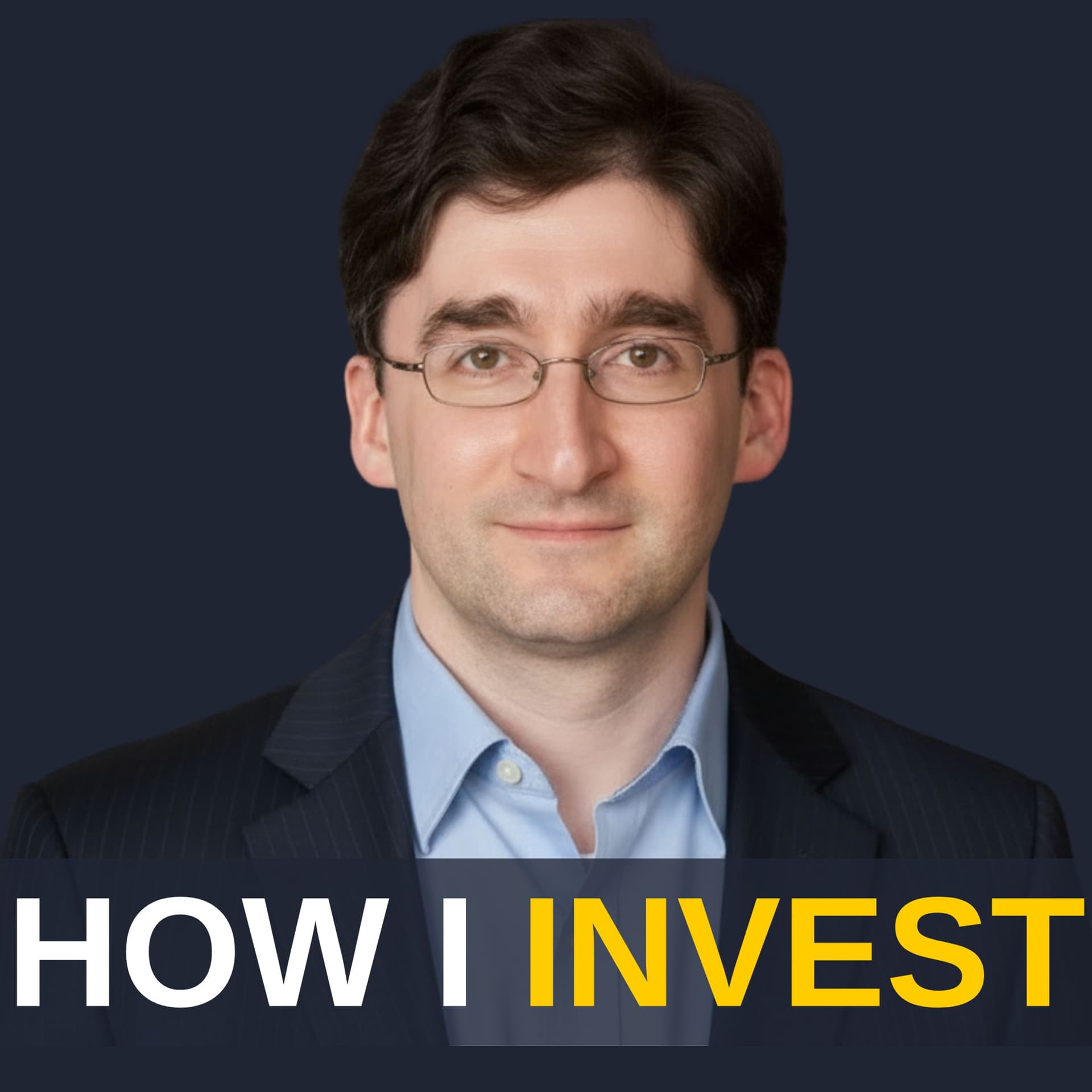
Ilya Strebulaev, Stanford GSB David S. Lobel Professor; leading researcher on private equity/venture capital economics; teaches Stanford MBA classes on VC and private equity; has built a database tracking venture/PE professionals (1990s–2020) using sources including StepStone and other providers.
Key claims
(1) “2.5 and 30” vs “2 and 20” comparisons are often unhelpful; what matters is the base (committed vs invested vs managed capital) and whether it changes over time. (2) Higher carry increases managers’ nonlinear risk incentives and can change risk/portfolio composition, raising style-drift risk. (3) LPs should focus on expected net performance, not just gross performance. (4) Venture shows persistence in risk-adjusted returns; style drift can erode it. (5) LPs should diversify across managers but also manage correlation; correlation is harder to reduce in venture than in public markets. (6) Corporate governance and decision mechanisms matter; biases like escalation of commitment can drive inefficient follow-on decisions.
Notable examples
Shai Bernstein’s study on VC value-add via direct flight access to board meetings (outcomes improve when travel is easier). “Piggy bank game”/winner’s curse intuition: competition can lead to underpricing in early-stage venture due to non-price components (brand/board help). Example of style drift: a fund shifting from late-stage to Series A (or vice versa) by changing who actually invests.
Written by AI. May contain mistakes. Listen to the episode to check what was said.
Chapters
Tap a time to open that second in VOUnderstanding LP Negotiations
0:45 to 4:00
An exploration of limited partners' (LP) negotiation dynamics in venture capital.
“And so the question is, if you're a price taker, do you walk away or not?”
Incentives and Risk Profiles
4:00 to 7:14
Discussion on how manager incentives influence risk-taking and investment behavior.
“Because I think this is one of those, I work with LPs, but also I'm teaching the, one of the classes I teach at Stanford for my MBA students is private equity class, the economics of the private equity industry.”
The Importance of Past Performance
7:14 to 11:00
Examining the relationship between past and future investment performance.
“Do you think the large VC firms are specialized?”
Investing in Venture Capital
11:00 to 14:02
Strategies for investing in venture capital with a focus on governance and performance.
“career and you just want to, say you work for Stanford's endowment, you just want to return the most amount of capital to Stanford on a risk-adjusted basis and you want to invest in venture capital.”
Understanding Venture Capital Demand and Supply
14:02 to 15:00
Learn about the dynamics of venture capital manager demand and supply.
“With AlphaSense AI-led expert calls, their TGIS call service team sources experts based on your research criteria and lets the AI interviewer get to work.”
Strategizing Diversification in Venture Capital
16:37 to 19:06
Explore effective strategies for diversifying investments in venture capital.
“I'm a little bit maybe too professorial, but when I talk to, when I answer questions of my students, but also LPs that I work with, or fund managers that I work with, I very often rephrase questions.”
The Importance of Correlation in Investments
19:06 to 21:02
Understand how to assess correlation among venture capital investments.
“in which specific manager to invest, in which specific industry or stage to invest or which specific geography, but the correlation.”
Evaluating Exposure to New Asset Classes
21:02 to 23:03
Learn how to evaluate the benefits of investing in emerging asset classes.
“Perhaps a dumb question, but let's say you're in 15 to 20.”
Trade-offs Between Fund Types
26:39 to 28:03
Discover how to make trade-offs between generalist and specialist funds.
“And as many things in life, there's trade-offs.”
Data Collection and its Importance in Investment
28:03 to 29:16
Learn about the methods and importance of data collection in venture capital.
“And we follow them through their career from 1990s till 2020.”
Show all 23 chapters
The Role of Brand Names and Key People in Investments
29:16 to 30:47
Discover how brand names and key team members affect investment success.
“Now, what it really means is that for LPs, the brand name could be relevant.”
LPs' Decision-Making in Fund Investments
30:47 to 32:09
Understand how Limited Partners decide on investments and the factors they consider.
“when private equity firms create different verticals so that they have, let's say, you know, buyout fund and they create a real estate fund, et cetera.”
The Importance of Picking in Venture Capital
32:09 to 34:31
Explore the significance of picking investments in various stages of venture capital.
“But you have to ask, one of the many basic questions you have to ask is, okay, well, who's going to manage that?”
Understanding Competition and Pricing in Investments
34:31 to 36:11
Learn how competition influences pricing and investment decisions in venture capital.
“Which means what I say in my venture mindset book, home runs matter, strikeouts don't.”
The Winner's Curse in Investment Strategies
36:11 to 37:39
Discuss the concept of the winner's curse and its relevance in investment scenarios.
“In early stage, price is just one of important components.”
The Value Added by VCs in Different Stages
37:39 to 38:26
Examine how venture capitalists add value at various stages of investment.
“And this, I think, also why winning is important.”
Research Insights on VC Contributions
38:26 to 41:26
Delve into academic research showcasing the contributions of VCs to startups.
“He looked at the VC's investments in portfolio companies headquartered far away from, let's say, Silicon Valley.”
Incentives and Human Behavior in Investing
41:26 to 42:01
Explore how incentives influence investor behavior and decision-making processes.
“A lot of IAM, but hundreds of students who raised venture capital money and funds, and I'm advising many of them.”
The Role of Incentives in Investment Decisions
42:01 to 42:52
Explore how incentives influence investor behavior and decision-making.
“Well, I think a lot of financial decisions go counter to human nature.”
Human Aspects Beyond Financial Incentives
42:52 to 43:59
Discuss the influence of personal biases and non-financial factors in investing.
“I said that incentives drive behavior, which is different from being an explainer of everything.”
Understanding the Escalation of Commitment
43:59 to 46:00
Learn about the escalation of commitment bias and its impact on venture investing.
“is that when I say incentives drive behavior, it's not necessarily incentives to make as much money as possible.”
Strategic Decision-Making for Fund Managers
46:00 to 48:24
Examine how fund managers should approach follow-on investments and decision structures.
“So what escalation of commitment means and why it's particularly important in venture.”
The Distinction Between Biases and Preferences
48:24 to 50:30
Clarify the difference between biases and preferences in financial decision-making.
“So strategic is how much to allocate to fall on investments.”
Transcript
Automatic transcript. May contain errors.0:00Ilya, you're the David S. Lobel professor at Stanford at the GSB at the business school. You're a leading researcher on private equity. Right before we started recording, I asked you about two and a half and 30 and which part of that LP should negotiate on. And you told me neither. Why is that? Well, you asked me a slightly different question. You asked me what is the difference between two and a half and 30 and two 20. Okay. How many basis points in PME? Okay. And my response was, you can calculate or you can estimate the basis points, but that really will not help smart investors. Because typically, you do not choose between 2.5 and 30 and 20.
0:38You're typically really given what you have and you're then a price taker, or you can negotiate and then you're at least partial price maker. And so the question is, if you're a price taker, do you walk away or not? Or if you're a price maker, you can negotiate. And then if you can negotiate, negotiate on what? And from this point of view, 2.5 and 30 is not very helpful because the question is, well, 2.5 of what? It turns out that whether it's 2 or 2.5 is less important than if it is 2.5 or 2 of the committed capital, of the invested capital, of the managed capital, some combination, and specifically whether it changes over time.
1:16For example, other things equal, I definitely would prefer 2.5 of the committed capital that goes into managed capital after year 5 compared to 1.5, forget about 2, 1.5 of committed capital for 10 plus 3 years. So I think the base is very important. Now, that is just an example, of course, there are many other things. The same is 30. Now, are things equal? Of course, I would prefer 20 to 30 as an investor. But in this case, I have to ask a question. How can it be that other things equal? Incentives drive behavior. When I work with large LPs, I always tell them, look, incentives drive behavior and incentives of your incentives drive behavior, but also incentives of fund managers that you invest in.
2:04So 20 and 30 create very different incentives. they create very different risk return profile, and there is a selection of fund managers. So that would be my one response to this. So it's very difficult to compare other things equally. Let's start with the incentives. Why is there such different incentives for a manager making 20 % carry versus 30 % carry? What is carry? Carry is an option. And as with any option, those who have a long position in an option, such as fund managers, would rather prefer high risk. So that if you have a 20 % carry, you actually prefer high risk than many other investors in the world.
2:41But if you go from 20 % to 30%, you prefer even higher risk. So as a result of this, as an investor, you have to ask yourself a question whether you're okay with that specific fund manager taking higher risk. Because typically what happens is that, what is 30 %? Well, 30 % results because a manager who was on 20 % performed very well. And then that manager says, well, guys, I really delivered returns for you. So now it's going to be maybe 25 % or maybe a step up to 30%. But if the manager is the same and the manager delivered great returns on 20, the question is whether this manager will behave exactly the same when you move that manager from 20 to 30 and you have a step up and whether the risk profile of that manager will change, which will affect the persistence of returns.
3:33So I think the word persistence data is critical. At the end of the day, you invest in successful fund managers on expectation, on belief, on wish that they continue to be. The future performance is determined by past performance. The opposite of that disclaimer, right? This is really interesting because this is what LPs believe. That's what the market very often believes, that future performance is a function of past performance. So let me clarify this, okay? Because I think this is one of those, I work with LPs, but also I'm teaching the, one of the classes I teach at Stanford for my MBA students is private equity class, the economics of the private equity industry.
4:10And by the way, when I say private equity in our conversation today, I also mean venture capital. Okay. So, and we go very carefully over all possible mistakes or inefficiencies that LPs commit that may affect their returns. So one is the following. you should not think about whether future performance is a function of past performance because you really care about future net performance at the end of the day you're an investor if the future gross performance is great but the fund manager takes all the gross and you have zero net you're not going to be happy but as a function of gross performance so that is very important let me repeat this because i think in my experience with working with many lps but also with my students, it's very often unclear.
4:56The question is whether your future expected net performance is a function or will depend or how it will depend on the past gross performance, not past net performance. And so this is where our discussion about incentives and about carry comes into play. You said something, and I want to play devil's advocate on that, which is you said 30 % carry will incentivize somebody to take more risk. Is that a positive or a negative incentive? That depends. So LPs should think about broadly two things. One is risk-reaching profile of a specific manager. So if you were, David, working for me at 20 % carry, okay, and you succeeded, and now you increased 30%, out of each dollar you lose for me, you're still taking nothing.
5:45It was zero, zero. Out of each dollar you make for me, okay, I'm simplifying, you now will take 30 cents. as opposed to 20 cents. So this creates dramatic optionality, dramatically higher than for 20 cents on the dollar. And this - What's the intuition around that? Why is that dramatically higher? Well, 30 % is 50 % higher. Actually, what is really interesting is that because it's nonlinear, nonlinear meaning that, so if you can see my hand, so if you lose money, it's zero. So the fund managers don't lose their own money. I mean, they commit capital, but let's ignore this, okay? But if you take 20%, it's like this.
6:27That's the angle of 20%. And that is the angle of 30%. And that only is amplified by tiered carry, where you have certain tiers over certain structures. That even dramatically increases that. Well, tiered structure introduces wrinkles on this. But the intuition is the same. That increases the risk-taking. Well, it increases the other things equal predisposition to take risk. Now, it does not mean by itself that risk is, as you said, bad. because it's risk return profile. High risk can mean better return on the risk-adjusted basis, okay? But, and that is, I think, big difference between private equity and many other investment spaces, which is investors, fund managers, fund managers specialize.
7:14And as you increase risk - In theory? Oh, I would say it's in practice. Absolutely. In practice. Do you think the large VC firms are specialized? Well, so many VC firms specialize, many PE firms specialize, absolutely. Now, if you take about the giants, they may not specialize, but their funds specialize. Absolutely. There's no doubt about this. The team. And in fact, many success. So if you look at the correlation of specialization success, those that are very specialized, other things are more likely to be successful. So that proves out in the data, because a lot of people have this intuition that that's something.
7:47That is the data definition. What's the research on that? Oh, there is a lot of research. There is a lot of research by my colleagues, but also I've done this and I show the specialization to my students every year. We compare the specialization of both for VC, for buyouts, that if, and that's important for our risk discussion, is that persistence tends to disappear. And there's a special name for it. It's called style drift. when managers kind of go and do something else. And going back to risk, this is where I would like LPs to think. If they move from 20 % to 30%, then that manager is going to increase risk.
8:26But the question is whether it also means that there's going to be a style drift. Because what does it mean, high risk? Now, in buyouts, it might mean high leverage. But more likely than not, it's actually investing in different kinds of portfolio assets, underlying portfolio companies. That intuition, why is it if I'm a biotech investor, crypto investor, or even a AI investor or defense investor, why, if I want to increase my risk, should I go into another sector? What's intuition around that? I'm not really sure whether you should, but that's likely what you're going to do. Because high carry means you like high risk.
9:07High risk means that you would like to invest in assets with higher volatility, high exposure. Okay. Now, what does it mean, assets with high volatility? Well, it's a different profile of assets. Let's think about the stock market. If I would like to invest in low volatility assets, I might invest in, let's say, the so-called, at least in the past, dividend kings, electricity utilities, whatever. But if I would like to invest in dramatically high volatility assets, I will invest maybe in tech companies. Now, the same intuition holds for private assets. Again, I think it's important to understand the chain here.
9:41the chain of intuitive thought. So if we move from 20 % to 30 % carry, incentives drive behavior, fund managers have predisposition to be interested in high-risk assets. And the question is, how these high-risk assets will materialize? Will they materialize in different portfolio composition? Will they materialize in different structure of assets? So that depends. But going back to your original question, you asked me, so would investors prefer 30 % or 20 % carry If everything else, let's say, stays the same, like management fee, whatever. And there's no right answer for this. And this is, I think, going back to the allocation of capital and private equity and the specific fund manager selection.
10:22It depends. But it depends in a helpful way because, in fact, there are many methods that smart LPs can use to separate those managers that not just deserve 30%, But the net expected return on the risk-adjusted basis is still going to be high relative to the market, relative to the market expectation. Alpha. Higher return without higher. Higher return. Higher return, right? And still could be higher for some managers, but definitely not for all. So let's say you're an endowment and you have the perfect governance structure. You're completely unbounded by investment committee and you're in the tail end of your career and you just want to, say you work for Stanford's endowment, you just want to return the most amount of capital to Stanford on a risk-adjusted basis and you want to invest in venture capital.
11:11What are one or two smart strategies? Well, first of all, a side note, what you're describing might not be the perfect corporate governance, but let's... Let's double click on that. Okay. What is a perfect corporate governance? Is it just a single family office investing their own money? No, what I mean is perfect governance structure is the structure that is built, again, around understanding that incentives drive behavior. On the one hand, you would like to have the flexibility so that decision makers managing money can make decisions that maximize risk-adjusted return and allocation. On the other hand, you would like to have a structure where there is control and where there is an opportunity to account for the decisions that are made.
11:54You know, the biggest challenge in financial markets, especially in private equity, is that you might need to wait for years and years and years before the returns are materialized and before the quality of your decisions become clear. So the moment you mentioned at the tail of your career, which I interpret is that, well, you're going to make investments. But in fact, it's the subsequent generation will realize that. Let's assume that you had this angel investor that was completely aligned with the university and had no ego and just wanted to have the best returning portfolio investor. What would he or she do?
12:27First of all, I think that it overall could be very high risk risk on strategy. I think if you look at historically at venture, venture has returned on the risk-adjusted basis higher than the market. And there are many, many few spaces, many few spaces in the financial industry that have demonstrated clear persistence. And based on the absolute, on relative, on the PME basis, et cetera, and venture is really one of them. Actually, maybe kind of more or less the only one that persistently demonstrated that. I asked this very question to Eric Poirier, CEO of Adapar. Is venture capital the best performing asset class of all time?
13:08And he said, no, sports teams, but it's number two. So if you had invested in sports teams over the last 20, 30 years, obviously that's very difficult to access asset. But joking aside, venture capital appears to have this persistence over, what, 40, 50 years? Yes, at least over 40 years. So, you know, that's actually not a joke because it's a very important question. What is an asset class? One can claim that sports teams is an investment, of course, niche, but is it an asset class? Now, by the way, some people, including some in Silicon Valley, say, tell me, well, venture is not an asset class because it's relatively small.
13:43It used to be relatively inaccessible. And, you know, there's something into this. Tell me more. Well, let's think about this. So in the stock market, if you believe in a mutual fund manager, well, you just invest in the mutual fund manager. okay and the future fund manager just takes on my money in the venture if you really believe in a specific fund manager there is no guarantee that that fund manager will take your money so almost the opposite if it's a good fan fund manager almost guaranteed that they will not take your money well it depends on who you are depends on the who you are it depends and so as a result of this there is a not always the equilibrium between supply and demand and that's a interesting question by itself why that is the case but but as a result of that it's not the same asset class as for example public market so i would say some private equity real estate investments but to your question about venture so my first answer would be that it's actually i think likely a good decision to invest in venture so another way it's a good neighborhood in general and then if you want to find where to invest in that neighborhood where would you where would you invest expert calls have always been one of the most powerful ways to build conviction but But today, investors are asked to cover more companies, move faster, and do it with leaner teams.
14:59With AlphaSense AI-led expert calls, their TGIS call service team sources experts based on your research criteria and lets the AI interviewer get to work. The magic is in the AI interviewer, purpose-built and knowledgeable-based information to conduct high-quality context-rich conversations on your behalf, acting as a trusted extension of your team. Then they take it one step further. Your call transcripts flow natively into your AlphaSense experience and become querible, searchable, and comparable. So your primary insights plug directly into earnings preps, digital work streams, and pitch books with zero tool switching.
15:33And with AlphaSense expert call services, the AI-led expert calls are just one option because we know the importance of a hybrid expert research approach. AI for coverage and efficiency. Humans for complexity and conviction. It's the institutional edge that scales research without scaling headcount. For hedge funds, that means validating thesis assumptions across dozens of experts before earnings instead of a handful. For private equity, it means faster pre-IOI scans and deeper commercial diligence. For investment banks and asset managers, it means pulling real operator perspectives straight into models and sector positioning without disconnected tools or manual handoffs.
16:10All of it lives inside the AlphaSense platform, trusted by 75 % of the world's top hedge funds, alongside filings, broker research, news, and more than 240 ,000 expert call transcripts, turning raw conversations into comparable, auditable insight. Take advantage of AlphaSense AI-led expert calls now. The first to see wins. The rest follow. Learn more at alpha-sense.com slash how I invest. I like rephrasing questions. Of course. I'm a little bit maybe too professorial, but when I talk to, when I answer questions of my students, but also LPs that I work with, or fund managers that I work with, I very often rephrase questions.
16:48So you ask me where, I actually would rephrase it as how. That's more important. Because where suggests to me, like, you know, in robotics or in, you know, that's data center, et cetera. And that changes very frequently. I can tell you right now, but by the time it will be aired or six weeks down the road, somebody is going to listen to this, this will change. But the answer to how question does not change, at least as frequently. So first is that I would think about how you should diversify in venture. Because in my experience, this is where I think many LPs make, I would say, strategic mistakes.
17:28So on the one hand, you would like to diversify. You don't want, if you're an LP, to invest in a very, very small number of venture funds, however great they are. Because, especially in venture, there's a very high degree of volatility among funds, which means that if you invest in a specific fund, you might be very disappointed. Even if previously that fund had a great outcome. Okay? That fund manager had a great outcome. And that could be noise. It doesn't mean that the manager is bad. Well, it can mean that the manager is no longer great, but it can also be noise. So the noise adventure is definitely larger than in many other financial assets.
18:05There's no doubt about that. So as a result of this, you would like to diversify. However, and that is something important, in the stock markets, very often we say, we tell our students in the basic finance classes, you know, you have to diversify as much as possible, okay, like invest in whatever, S &P 500. And if you look at statistics, you know, passive investment has gained dramatic, including among large institutions, including large LPs, okay? well, I think in venture, just diversification to the same extent will not work. So you would like to diversify, but you would like to diversify very meaningfully.
18:36So at the end of the day, you need to have a reasonable but limited number of fund manager relationships. Now, how many of that depends on the size of your investor example. but I would say for a very large investor that decided to invest, let's say, hundreds of millions of dollars in the venture space or billions of dollars in the venture space over the course of the years, it would be at least 15 to 25 relationships. And how depends not only on deciding in which specific manager to invest, in which specific industry or stage to invest or which specific geography, but the correlation. So the relationship between these fund managers.
19:18I think that is critically important. And in my experience, this is what many LPs underestimate. So they spend a lot of time thinking about whether to invest in individual managers. So they spend a lot of time with individual managers. They do spend a lot of time on their allocation decisions. We haven't yet mentioned the denominator effect, but they spend quite a bit of time about that, okay? The overall allocation. And also maybe where to invest, like geography or whatever, venture versus private. They spend much less time, much less effort in what I believe is very highly productive activity, thinking about correlation across their venture and more broadly, private equity portfolio.
20:04And that's kind of the free lunch in venture. If you could get the same returns with lower correlation, that's what you're looking for. Well, there's almost no free lunch in the world of finance. But yes, it's going to be a more efficient decision. So you want low correlation. You would like to reduce the correlation. Absolutely. You would like to reduce the correlation. But again, the way you reduce the correlation in many other markets is just by effectively increasing the number of assets you manage. And in venture, it doesn't work this way. So therefore, you have to think correlation thinking in venture, I would say, is much more strategic than in many other assets.
20:45Because it's more difficult to implement. because it is, I would say, there's both art and science. Also given the access opportunities you have and I think given also what exact information you observe about all the fund managers. Perhaps a dumb question, but let's say you're in 15 to 20. There are no dumb questions that I tell my students. There could be dumb answers there. Let's say you invest in this 15 to 20 manager portfolio that you mentioned, this canonical portfolio, and you have this larger set of portfolio companies, let's just call it 300 to 400. How would one go about figuring out whether there's correlation between these assets?
21:22Is this a tool? Is this some AI-assisted process? Well, now everything's AI-assisted, so that's not right. So economics is the same. AI is basically helping you with the data processing. So the answer is the following, is that first it depends on the quality of your information. Let's assume that you invest in the manager under the expectations that the manager will not have a style drift, which means that the manager will continue pursuing the same strategy. Like if the manager was investing in, you know, series B2C SaaS companies, then the manager will be investing in series B2C SaaS companies with certain modifications in the next fund, okay?
21:59So that allows, in fact, to look at the correlation that this asset class had vis-a-vis the rest of your portfolio, but vis-a-vis also other fund managers that you invest. And I think that is really important because if you look at, let's say, adding another manager to your portfolio. And if you look at that manager in isolation, you may conclude that that manager may not be that great, especially maybe then if you have 2.530 or something like this. And looking at isolation, that might be true. But maybe that manager is investing in something that you don't have yet exposure to. So let's say you're investing in the venture, but you have not had exposure to crypto assets or blockchain assets, let's say.
22:41And maybe you didn't because it's a very new asset class you haven't been exposed to. And also maybe because you thought that economics is against you because it's costly to invest in better managers because of high demand. This all might be true, but correlation-wise, it actually, this asset class might be really beneficial given your portfolio. And again, I think that this is where many, many investors do not pay enough attention. When you find something that just fits right, you end up wearing it more than anything else. And for me lately, that's been my rag and bone Miramar jeans. What really stood out to me is that they look like traditional denim, but honestly feel more like sweatpants.
23:23They've got that clean structured look, but with a level of comfort that makes them easy to wear all day. I've been wearing them pretty consistently, whether I'm recording, traveling, or just out there during the day. and they become one of those go-to pieces I don't really have to think about. Even after long days, they don't feel restrictive, which is something I didn't realize I was missing until I started wearing them regularly. With Rag & Bone, it's not just about one pair of jeans. It's about having reliable staples in your closet. You could dress them up a bit or keep it casual, and they just work.
23:50The washes are clean, the cut is sharp, and they hold up really well over time. It's that balance of comfort and structure that makes them stand out compared to most jeans. If you're looking to upgrade your denim, I definitely recommend checking out Rag & Bone Miramar jeans. You get 20 % off site-wide at www.rag-bone.com using code INVEST. Again, that's 20 % off at www.rag-bone.com with code INVEST. When you find something that just fits right, you end up wearing it more than anything else. And for me lately, that's been my Rag & Bone Miramar jeans. What really stood out to me is that they look like traditional denim, but honestly feel more like sweatpants.
24:29They've got that clean, structured look, but with a level of comfort that makes them easy to wear all day. I've been wearing them pretty consistently, whether I'm recording, traveling, or just out there during the day, and they become one of those go-to pieces I don't really have to think about. Even after long days, they don't feel restrictive, which is something I didn't realize I was missing until I started wearing them regularly. With Rag & Bone, it's not just about one pair of jeans. It's about having reliable staples in your closet. You could dress them up a bit or keep it casual, and they just work.
24:56The washes are clean, the cut is sharp, and they hold up really well over time. It's that balance of comfort and structure that makes them stand out compared to most jeans. If you're looking to upgrade your denim, I definitely recommend checking out Rag & Bone Miramar jeans. You get 20 % off site-wide at www.rag-bone.com using code INVEST. Again, that's 20 % off at www.rag-bone.com with code INVEST. Support for today's episode comes from Square, the all-in-one way for business owners to take payments, book appointments, manage staff, and keep everything running in one place. Whether you're selling lattes, cutting hair, running a boutique, or managing a service business, Square helps you run your business without running yourself into the ground.
25:38I was actually thinking about this other day when I stopped by a local cafe here. They use Square and everything just works. Checkout is fast, receipts are instant, and sometimes I even get loyalty rewards automatically. There's something about businesses that use Square. They just feel more put together. The experience is smoother for them and it's smoother for me as a customer. Square makes it easy to sell wherever your customers are in store, online, on your phone, or even at pop-ups and everything stays synced in real time. You could track sales, manage inventory, book appointments, and see reports instantly whether you're in your shop or on the go.
26:14And when you make a sale, you don't have to wait days to get paid. Square gives you fast access to your earnings through Square checking. They also have built-in tools like loyalty and marketing, so your best customers keep coming back. And right now, you can get up to$200 off Square hardware when you sign up at square.com slash go slash how I invest. At Square, you get all the tools to run your business with none of the contracts nor complexity. Run your business smarter with Square. Get started today. And as many things in life, there's trade-offs. And a lot of these sector funds, for better or for worse, they become sector funds after there's a couple of breakouts the first couple of generations.
Read the full transcript
26:49And a lot of times that they're also later stage, they might be a Series A sector fund. How would you go about the tradeoff between precedency generalist funds versus call it Series A specialist funds? And talk about maybe earlier stage and late stage in the sector versus generalist. How would you make those tradeoffs? I would approach this question a bit differently. I would look at underlying people who are making decisions. I would say the single most important provision, or maybe I shouldn't say this single most important, but one of the single most important provisions that you have in your LPA is the key person provision in the world of venture.
27:28Who actually is going to be responsible for managing those portfolio companies? So if, let's say, consider a hypothetical situation, but I can see this hypothetical situation all the time in Silicon Valley and beyond. Okay. And by the way, why do I know about this? Because we've now constructed with my student who is becoming a professor in his own right, Blake Jackson. We've now constructed the database of every single venture fund manager and private equity as well, every single investment professional. And we follow them through their career from 1990s till 2020. Where are you guys collaborating from a data perspective?
28:11Oh, well, we're collaborating with ourselves. We've manually collected a lot of data, but also we have a lot of commercial data providers. We've been very grateful for the partnerships with such institutional investors as Stepstone, for example, and many other providers who prefer to be anonymous. But we've collected, we know almost every single fund person. Now, why it's important, let me give you a hypothetical scenario. We have, let's say, a great fund manager with a great brand name and great people who are investing in late stage. And then they look around and they say, oh, early stage investment is becoming very interesting in that space.
28:52So let's also create Series A. Now, we're too busy and also we don't really understand this very much. So let's maybe hire the team that is going to do Series A or maybe let's buy out this team from somewhere else. And they open Series A under their brand. So this is a classical style drift. Usually it's the other way around, right? It's the Series A going to a later stage. I see it both ways. But it's the same style drift. It's the same idea. Now, what it really means is that for LPs, the brand name could be relevant. There are some brand names that open the doors, okay? Very few. Especially these days, but they change and they turn over.
29:31but you should look into underlying people because that specific fund manager was successful because of those specific people in the key person and maybe some junior people who are rising through the ranks. And now there are different people investing in Series A or there are different people investing in late stage. Or there are different people investing in different sector or there are different people investing in different geography if an American fund decided to go to India. So the question is, are you as convinced that those new fund managers would be as successful? So as a result of this, I would say it's not really about a generalist versus specialist.
30:12It's how those generalists and specialists came to be. If you have a specialist fund that was very successful, and then the specialist fund became generalist or became specialist in several fields, well, who is making those investments? Are you convinced that those people also know about those investments in the same way? Sometimes the answer would be yes, but most of the time the answer actually would be, I'm not sure, or maybe not. Maybe they're not the best in class. Even though I think LPs are broadly aware of that, I'm not entirely certain that LPs pay too much attention to this. So, for example, when we have less data on venture about this, but when we look at private equity, when private equity firms create different verticals so that they have, let's say, you know, buyout fund and they create a real estate fund, et cetera.
31:04We see the substantial overlap among LPs in those fund structures, which suggests to me that LPs effectively invest in not in a fund manager, but in a private equity firm. Again, I would separate, not legally, but from the economic point of view. from the point of how I make investment decisions, the firm and the fund manager. So that if we have... But many LPs do not. In my experience, many LPs do not do this explicitly as an important component of their decision making. So when I work with LPs, we always discuss, this is the private, let's say private equity firm, okay, and they're starting this fund, and should they invest now?
31:51And I think many LPs, they think more about, well, we have this relationship and that relationship has been great for us, okay, in the past. And so, yes, we're going to invest in that flagship fund, but also they're having all these many other funds around this, okay? But you have to ask, one of the many basic questions you have to ask is, okay, well, who's going to manage that? By the way, key person provisions very often are different in different funds in the same fund family. Well, because there are different people. Implicit in this is your focus on picking. So you think in venture, there's sourcing, picking, and winning.
32:32Do you believe picking is the most important vector of those three? And if not, how would you stack rank those? There's been a lot of research on this, including by my co-authors and me. We've done a lot of work on this. So I would say first is that all three are important.
32:51Sourcing, being able to access deals, picking, and then what you call winning. Well, I say post-investment managing, okay? A bit more academically. So which one is more relevant? Very often difficult to specify precise. It also depends on the stage. Earlier stage being picking, later stage being winning. So I would say, in fact, it's very often the opposite. Really? Very often. Because if you think about the early stage, if venture invests in the early stage, the investors who are the lead investors become board members. And they help, especially first-time founders around. Or they don't help.
33:33I mean, that depends on who they are and how smart they are, et cetera. But this post-investment management can be very, very helpful and productive. But that's the value add. But there's also the winning. there's these rounds that come together. They get 10 term sheets from the top 10 funds, let's say. Oh, I see. This is what I call, I see what you call by winning. This is, okay, we're talking about different stuff. So I talk about post-investment management, which is after you - Value add. Right. Interesting. So my research suggests that, let's say in California, in Silicon Valley, in IT, on average, a startup will get around conditional being funded.
34:14we'll get around 1.5 to two term sheets, which means that it's far from no competition. But it's also not super, super, super competitive. But does that average matter? It's a very good question. Average does not matter ex post, but it matters ex ante. Let me unpack this. So ex post is the power law, okay? Which means what I say in my venture mindset book, home runs matter, strikeouts don't. So ex post, there's one investment that is better than all combined, okay? But Exanta, you don't know. You don't know whether that investment, specific investment, is going to be the home run or not. And by the way, the hotness of the deal does not necessarily indicate that.
34:53So therefore, Exanta, I would say, average matters. Okay? So expectations matter. And yes, of course, there are a number of super competitive deals. One of the reasons, I think, why super competitive, especially in early stage, venture is important whether you win or not, is because those deals, for various reasons, might not be fully priced, so to say, to the complete extent. Said another way, if you're getting 10 term sheets, the buyer may be overpaying. No, I'm actually saying the opposite, amazingly enough. Well, there are situations when buyers are overpaying. In fact, that's more likely to happen, I think, in late stage.
35:37I used to play with my Stanford students what I call the piggy bank game that demonstrates this. It's called the winner's curse in academic circles. And that happens all the time. Is that more pronounced in private equity than venture capital, the winner's curse? The winner's curse is just pronounced in life. It's pronounced both in private and venture. Whenever there's a lot of competition, it's though less pronounced in early stage venture. And the reason is the following, is that in later stage in private equity, in public markets where there's M &A, et cetera, if there's a lot of competition, it effectively just moves the price.
36:11In early stage, price is just one of important components. There are other components. One is the quality of the investor. For example, there is research that shows that, let's say, early stage startup founders are ready to pay, effectively are ready to accept a low price from a more reputable fund manager. Do you think that's rational? It could be rational because if you accept money from somebody who is ready to be either helpful to you on the board, okay, or whose brand is going to help you to, let's say, attract employees, et cetera, absolutely. It could be – Especially the earlier, the more rational.
36:50So I think for later stage, it's less important. For later stage, the investors are less likely to be very, very active in corporate governance. For later stage, I think the investors are likely larger, likely more diversified. So think about mutual funds investing directly in unicorns. Think about super-in-wealth funds investing directly in large AI companies, etc. But in the early stage, I think specifically, there is this non-priced component. When I say non-priced, it doesn't mean it's irrational. It does mean that it's economically unimportant. It just does not explicitly reflect on price.
37:28As a result of this, the winner, the eventual winner, other things equal can win because effectively that winner underpays for the asset. I'm not saying it happens every time, but it can happen. And this, I think, also why winning is important.
37:48So sourcing, picking, winning, my assumption. And managing. And managing or value add. Some people will question whether that exists. Maybe we should go there. It definitely does. So there's this meme, can VCs add value? What does the research show? Research, I think, is very clear on this. And how would you go about even asserting this in research? Yeah. So, well, first of all, research is very clear that VCs add value. Now, obviously, again, depends on the stage. Everyone's breathing a sigh of relief. That's good. Depends on the stage. So as we should expect, VCs in early stage are more likely to add more value.
38:24Well, actually, there's a lot of research. Let me give you my favorite example, which is my colleague at Harvard, Professor Shai Bernstein, who years ago conducted with his co-authors the following piece of research. He looked at the VC's investments in portfolio companies headquartered far away from, let's say, Silicon Valley. More importantly, far away from where that VC was located. So effectively, let's say, so you flew, right, to see me. And you flew direct. Yes. right but let's say you would be located you know somewhere well New York City to San Francisco you still can't fly directly but let's say you were located somewhere where there is no direct flight to San Francisco okay so then you would have to make a stop in New York City and Atlanta in Denver whatever okay and now let's say my friends at United Airlines decided oh we're going to have a direct flight from your small city to San Francisco so you can see me it's going to be cheaper than in terms of not just money more importantly in terms of time for you to come and see me.
39:23So what Shai Burns and his colleagues show is that when VCs invest in portfolio companies, to which they cannot get, like to board meetings, that was pre-COVID research, okay, to board meetings, direct flight, and then the direct flight is introduced, the outcomes are substantially better, which is, I think, a beautiful piece of... It's a great construction. Well, it's very smart. It's very beautiful. It's a beautiful piece. Why? Because it actually goes to the heart of the matter. It goes to the heart of the matter that where's the quality of those VCs? Well, intuition suggests that VCs help because they are there to the founders.
40:04They actually come, well, maybe for the board, but they talk to the founders face to face. They help. Now, there are other research shows how exactly they help, et cetera, et cetera, including my research. This is just one, I would say, beautiful example. And looking under the hood, is that academic research? What is that exactly? Well, academic research I think is a part of it. It is a part of it. So, I think there are trade-offs here. On the positive side, I think academic research, if it's well conducted, really can identify mechanisms, can identify principles, can identify relationships that are very helpful.
40:39Now, the trade-off, of course, is by its nature, academic research looks into the past. It is lagging. Now, as a result of this, for example, I don't like answering questions about, oh, professor, what space you're going to invest right now? I don't think I'm the best person to answer this, okay? And in fact, if people asking me this question likely misunderstand what academics do. It is the venture investors or other investors on the ground, if they're great, they should know. By the time I, as an academic, know, likely it's a little bit out of date. Now, I happen to have taught more than 5 ,000 Stanford students, including more than 1 ,000 who took my VC class, venture capital class, and I think more than 500 now, maybe slightly less, who took my private equity class, including hundreds of students.
41:25A lot of IAM. A lot of IAM, but hundreds of students who raised venture capital money and funds, and I'm advising many of them. So, actually, I happen to know a little bit. But still, I would actually defer on this to some other guys. But when I always talk about economic mechanisms that do not get delacidated very quickly, depreciated very quickly, then I think academics can really offer a lot of help. Especially if they go counter to human nature or maybe even counter to human intuition. Well, I think a lot of financial decisions go counter to human nature. That depends on human nature, of course.
42:06I want to go back. I know you're not a philosopher. I know you're academically a philosopher. How are you sure about this? Have you done research on me? Based on your answers, but one throughput through this conversation has been incentives drive behavior. And of course, who's going to say incentives don't drive behavior? At the same time, when I speak to a lot of investors, whether on the LP or GP side, they do seem to have philosophical biases or either moral or stylistic ways that they go about investing. that is not maximizing, let's say, their management fees and carry. Is that just complete narrative bullshit?
42:42Or is there an extra layer of human behavior that can't be explained by incentives? Well, I didn't say that incentives explained everything. I said that incentives drive behavior, which is different from being an explainer of everything. I think investing, especially investing in illiquid assets such as private equity underlying assets, is complicated and is subject to potential many biases. And I can spend the next couple of hours. Let's take away the biases, but is there a human aspect to it? For example, we're at Stanford. David Swenson, he had many offers to make a lot more money than at Yale.
43:25I didn't know him, but he supposedly loved Yale, went to sports games, loved his students. Is that just complete narrative? Is that not how you would look at it? or is there more than just incentives and making money that drives the greatest investor? Well, David, let me try to disagree with you so that our viewers are entertained. I think biases play everything here. Okay, that's number one. It's all about biases, how we view life. Second is that, and how we make decisions. Second is, and that's important, is that when I say incentives drive behavior, it's not necessarily incentives to make as much money as possible.
44:07For example, let's say we're talking to fund managers who are just starting their career. For them, their career might be more important than the next dollar they're going to make. In fact, it should be. So the lifetime of income they make is more important than the income they make from, let's say, the current fund they're working at. So as a result of this, if you think about the managers who are starting and the managers who have been there for 25 years, when they face exactly the same decision, they might make a very different decision. Now, your example also suggests that there are non-financial, there is non-financial aspect of decision-making, maybe less with investing in a very specific portfolio company or a specific asset.
44:56Okay, that's typically driven, I think, most of the time by financial considerations. But whether you move to the West Coast or to the East Coast, or whether you start a new fund after you made money, for example. We have a lot of examples where successful investors step back and return money to investors who decided not to raise new funds. Now, from the point of view of purely making money, that might have been an NPV negative decision. From the point of view of managing their life, that might have been an NPV positive decision. And when you say biases, another word of that is preferences? Not necessarily, no.
45:32Biases implies it's the wrong decision. Again, I'm trying to avoid you saying the words bad or wrong, but you can say so. So biases are effectively aspects of human nature that lead us to ignore certain aspects of decision-making that make our decisions less efficient. less efficient. So let me give you an example, because with that example, it's too philosophical, okay? Too abstract and abstue. So let me give you an example. One of the most important biases, I think, in the world of venture specifically, it's so important that in my book, The Venture Mindset, we, Mike Oath and I, spend the entire chapter on this bias, and it's called the escalation of commitment.
46:16So what escalation of commitment means and why it's particularly important in venture. Well, if you're a venture investor investing in Series A, it turns out to be that the biggest decision you're going to make about this company is not whether to invest in Series A in this company or not, but whether to follow up on your investment. So you invest in Series A and then 15 months later, this company is going to raise Series B, okay? And you in all likelihood negotiate your prorator rights. That gives you the right to demand, okay, your pie, if you sit at the table. But you now have to pay. And you have to pay the high price if the company is doing well.
46:54So that is a fall-on decision. And escalation of commitment effectively tells you that in too many situations, people who made the original decision, Series A investment here, the original decision are likely to fall on, in Series B here, are likely to fall on, even if the fall-on decision should not be made. and smart VCs are very well aware of it. That, in fact, I think leads to more tears in the VC world than mistakes in the original investments. Smart VCs are aware of that and create mechanisms. In a sense, it drives behavior, but also what drives behavior is the corporate governance structure.
47:35Create mechanisms. For example, many funds allow their partners to make their individual decisions, at least for relatively small investments of maybe$20 million or whatever, on their own. Or maybe if they convince just one more partner. But to make a full-on investment, you have to go through the entire investment committee. Or some funds have a separate investment committee just for full-on investments. Or the funds will have a rule that they will not invest in the full-on unless there's a new investor who is leading or who is negotiating the round and so on. So that is an example of a bias.
48:16And this bias, I said many tears, this bias does lead to inefficient outcomes. So in fact, this is less relevant for LPs, but for fund managers, I think, I think one of the, for venture fund managers, especially for early stage venture fund managers, the one of the most important strategic decisions they have to make. What to do with their parada? That many underappreciate as well. Yes. So strategic is how much to allocate to fall on investments. Is it 50-50? Is it 40-60? Is it 25-75? That is a really important decision. And yes, the second one is how to structure mechanism. It's not the decision on whether for this company we're going to do prurata or for this company we don't.
49:05If this is decided on a case-by-case basis and there is no structure, that is ripe for or the escalation of commitment to flourish. So the question is whether to build and how to build these mechanisms. So when I work with GPs, with fund managers, and again, that is less relevant for LPs most of the time, but when I work with the fund managers, that is one of the very important issues that we discuss because many fund managers historically have not built the structure of corporate governance decision-making around these biases. So this is just one bias out of like 50, okay? And we can spend 20 hours here just talking about biases, but they're not preferences.
49:52They're not preferences. Preferences would be, I like chocolate ice cream. I like vanilla ice cream. Not necessarily a good reason. Not necessarily a good or bad decision. Biases, maybe one is better than the other. More efficient. Yes, well, preferences are, they're on the day, what you really prefer. We're talking about utility function. And in financial decisions, preferences can also play an important role. But preferences by itself do not make your decision less efficient. Well, Professor Strublev, like any great conversations, much more questions than answers. We also got some really great answers as well.
50:33So thanks so much for taking time. Absolutely. you're always welcome back thank you so much
From the publisher
What if the biggest mistake in venture investing isn’t picking the wrong fund—but misunderstanding incentives and behavior?
In this episode, I sit down with Ilya Strebulaev, Professor of Finance and Private Equity at Stanford GSB, to discuss how incentives, biases, and portfolio construction shape outcomes in venture capital. Ilya explains why fee structures matter less than how they’re designed, how carry changes risk-taking behavior, and why persistence in venture is real but often misunderstood. We also explore diversification, correlation across managers, and the hidden decision-making biases that drive both LPs and GPs, from escalation of commitment to style drift.