In short
How early venture winners “look wrong” at first—because narrative, tier-one signaling, and market timing distort what seems investable; alpha comes from bottoms-up taste, common-sense demand, and being a first believer.
Guest backgrounds
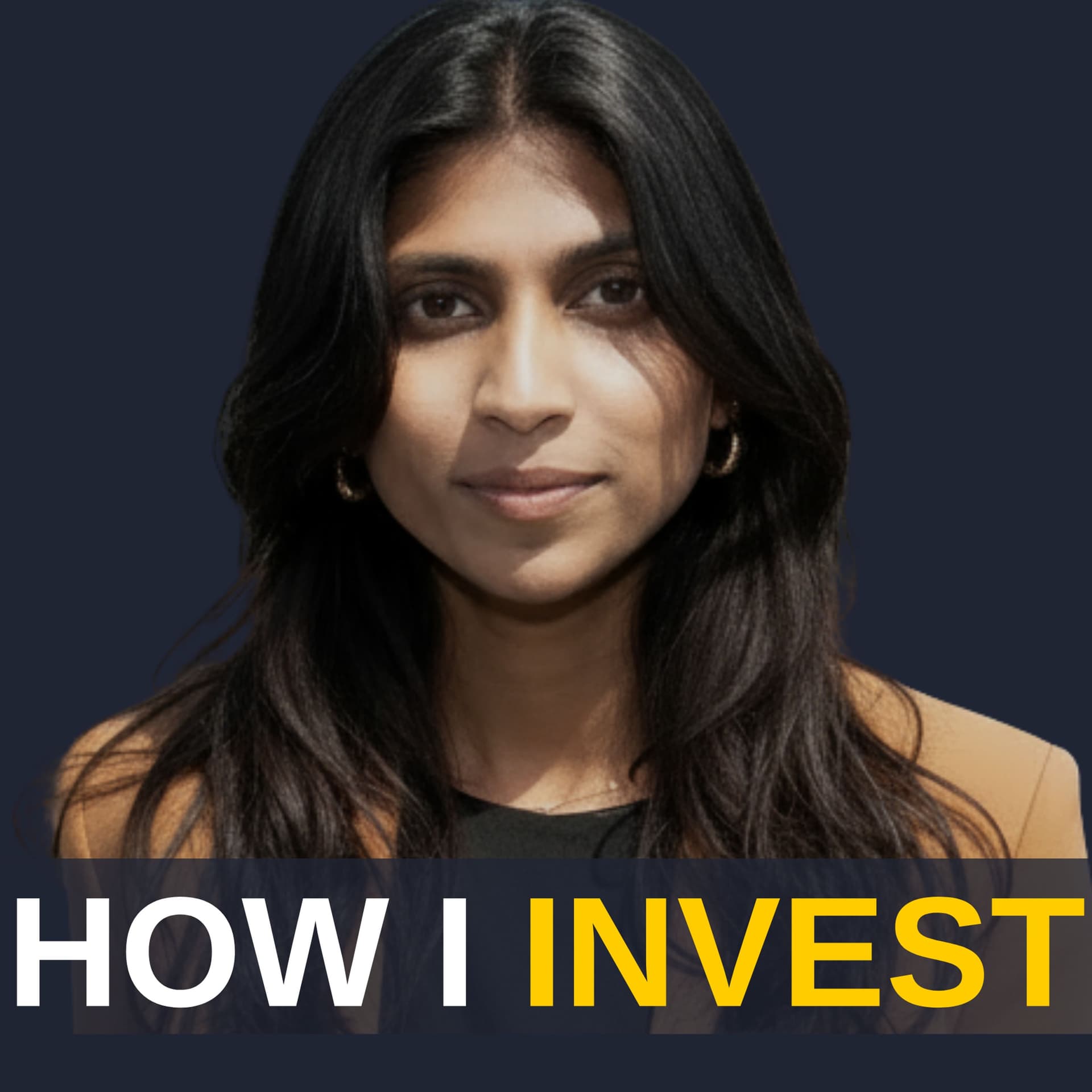
Maya (Spice Capital) has invested in 72 companies and is on her third fund. She entered VC via 35 Ventures, founded by Kevin Durant and agent Rich Kleiman, where she managed deal flow as a quasi–chief of staff. She grew up in South Florida, studied at NYU, worked at PwC, and previously interned for Rock Nation (overlapping with 35 Ventures).
Key claims
Don’t blindly follow “tier one” signals; VCs have portfolios where only some win. Opportunity exists in preseed/early periods before tier ones react. Information is commoditized, so spreadsheets lag; invest from unique conviction. Narrative premium/discount drives valuation swings (e.g., “AI healthcare” conferences).
Notable examples
Investments/portfolio include Whoop, Robinhood, Coinbase, Hugging Face, Mercury, Underdog Fantasy, Skydio, Fantasy sports, Alto (Alto IRA), Girl Beer, Beehive, and Crocs (cultural arbitrage). Medical tourism payments (Turkey/Korea demand) and Whole Foods/Walmart traction for Girl Beer illustrate bottoms-up “common sense” investing.
Written by AI. May contain mistakes. Listen to the episode to check what was said.
Chapters
Tap a time to open that second in VOMaya's Unique Entry into Venture Capital
0:45 to 2:46
Maya shares her unconventional path into the venture capital world through an opportunity with Kevin Durant.
“you could run up and down the court and be doing deals.”
Navigating the Venture Capital Landscape
2:46 to 3:58
Maya discusses her experiences and lessons learned while investing at 35 Ventures.
“I was like, to go work for Kevin Durant.”
Understanding Investment Signals
3:58 to 6:27
A deep dive into the misconceptions of tier one VC investments and the opportunities that lie beyond them.
“But there is a signal that if they invest, you have to invest.”
The Barbell Investment Strategy
6:27 to 7:58
Maya explains the barbell strategy for investments and how it helps in recognizing potential success.
“That's how we were able to invest in some now iconic companies like Hugging Face, which when that started, that was a very non-consensus company building chatbots.”
Insights into Market Corrections
7:58 to 10:00
Discussion about how market corrections influence investment strategies and the learning curve for investors.
“And LPs always ask this question, what was the last market correction that you saw?”
Lessons from Early Investments
10:37 to 14:00
Maya reflects on the challenges faced in early investments and the importance of building a unique investment thesis.
“So there is quite literally no market map.”
The Rise of Medical Tourism
14:00 to 15:00
Explore the growing market for medical tourism and its implications.
“It's really a second order effect of the creator economy.”
Investing in Alto IRA
15:00 to 16:20
Learn about the common-sense investment in Alto IRA and its growth.
“You're legally not supposed to bring that much cash.”
The Story of Girl Beer
16:20 to 17:40
Discover the entrepreneurial journey behind Girl Beer and its market entry.
Understanding Market Timing
17:40 to 20:00
Gain insights into the importance of market timing and consumer trends.
“They like sold through one month's quantity in a weekend.”
Show all 30 chapters
The Importance of Being Rooted in Investment
20:00 to 21:40
Learn why having a solid investment thesis is crucial for success.
“Being calm allows you to see these very clearly, these opportunities, right?”
The Crocs Investment Story
21:40 to 23:10
Hear the compelling personal story of investing in Crocs and its turnaround.
“But every day he would have to reassess his thesis.”
Cultural Arbitrage in Investing
27:28 to 28:00
Understand the concept of cultural arbitrage and its relevance in investing.
“You also tried to convince your brother, your dad, your mom.”
The Concept of Cultural Arbitrage in Investing
28:00 to 28:24
Learn about the idea of cultural arbitrage and its application in investment strategies.
Valuation Trends in Healthcare AI Startups
28:24 to 29:15
Discover how narrative shapes valuations in the healthcare AI sector and its implications.
“So you're arbitraging your knowledge of culture.”
Mimetic Behavior in Venture Capital
29:15 to 29:56
Examine how mimetic behavior influences investor decisions and market trends.
“the valuations 2, 3, 4x'd, which just shows like, you know, and the companies that I've been building had been building two years prior.”
The Future of SaaS and Application Layer Startups
29:56 to 31:01
Understand the ongoing debate about the relevance of SaaS versus application layer solutions.
“There's memes everywhere saying, I don't want Claude to come for my company.”
Evolving Perspectives on Investment in AI
31:01 to 32:34
Learn how the narrative around AI investments has shifted over time and its implications.
“One company in the next month, I would not be surprised, a month or two, will do$600,$700, a billion dollars of revenue as an application layer startup.”
The Importance of Bottom-Up Thesis in Investing
32:34 to 33:38
Explore how a strong bottom-up thesis can guide better investment decisions in venture capital.
“And so how can you have be an early stage investor investing in companies with 10, 15 year life cycles and be this wishwashy on your opinion?”
Access and Sales in Early vs. Late Stage Investing
33:38 to 34:47
Differentiate between the critical skills required for early stage vs. late stage venture investing.
“And that's what you're going to end up investing in.”
Evaluating Companies as a Buyer or Seller
34:47 to 36:04
Learn how to assess whether you should buy or sell an investment based on company performance.
“And especially if so much of the dollars are going into it, you're probably getting exposure to it in other ways already.”
Investing with a Source of Truth
36:04 to 37:34
Understand the importance of direct engagement with companies for informed investing.
“and I think the biggest challenges happen, or at least when I see my peer group struggling, it's because they're not playing the game they're supposed to be playing.”
The Narrative Discount Explained
37:34 to 38:41
Explore the concept of narrative discount and its impact on investment opportunities.
“You have street cred for the life of the business.”
The Maker Mentality in Founders and Investors
38:41 to 40:52
Discover the traits of successful founders and the importance of unconditional commitment.
“Now, including the emergence of DeepSeek, he and his team had to fundamentally re-underwrite, is Anthropic valuable?”
The Importance of Passion in Work
42:00 to 43:13
Explore how intrinsic motivation and passion affect long-term success.
“Like what is driving you to push forward?”
The Immigrant Hustle and Resilience
43:13 to 43:58
Discuss the immigrant mentality and its impact on work ethic and determination.
“Sometimes, by the way, that could be a downfall.”
Navigating Challenges in Entrepreneurship
43:58 to 45:49
Learn about the challenges faced in entrepreneurship and the mindset to overcome them.
“to be losing to the people where the heart is in it.”
The Creator Economy and Its Evolution
45:49 to 47:38
Analyze the shifts in the creator economy and the rise of platforms like Beehive.
“They're able to figure out the things that need to happen in order for them to just keep doing what they're doing.”
Investment Strategies in Unfavorable Markets
47:38 to 49:24
Understand the strategies for investing in sectors that are out of favor.
“So there were all these participants that didn't come from the traditional VC world that all actually made their investing career off of Beehive, including myself.”
Lessons from Missed Investment Opportunities
49:24 to 50:38
Reflect on past investment decisions and the importance of trusting your instincts.
“And as soon as you run out of that money and you go back to market, you better have results because your category is out of favor.”
Transcript
Automatic transcript. May contain errors.0:00So Maya, you've invested into 72 companies at Spice Capital. You're on your third fund. But before then, you started in 2017 with Kevin Durant on his startup investments. Tell me that story. It was pretty non-traditional of a backstory or entry into investing. I had this crazy opportunity to work for 35 Ventures, which was started by Kevin Durant and his agent, Rich Kleiman. rich had the like kind of fortitude and i would say the guts to you know when kevin was working for the warriors um to start making relationships with some of these tech founders and it was a really interesting moment in time where side was like the best networking you could you could ever go to there were like billionaire ceos tech ceos yuri milner yes exactly and it was almost like you could run up and down the court and be doing deals.
0:49And I think credit to really Kevin and Kevin's agent, they were opportunistic. They took advantage of that. So they were saying yes to meetings. They were like attending all the things they were speaking at conferences, like Kevin and Rich were at TechCrunch Disrupt and really putting themselves out there as like open for business in a way that most athletes had not done. And from an investment perspective, most of them had done it from an endorsement. And so I got hired to help manage this, you know, deal flow and be almost like a chief of staff. And that's how I weaseled my way into venture capital.
1:22And just to take a step back, you make it sound easy. But tell me the story about how you actually got hired. I grew up in South Florida. I really wanted to leave Florida and move to New York. I went to NYU for undergrad. After undergrad, I was working as a consultant at PwC. And I had formerly interned for Rock Nation, where I overlapped with some of the folks at what became 35 Ventures. And I heard about this opportunity and they were looking for someone to help as a potential chief of staff for Kevin Durant and his investments with the goal of them hiring someone full-time down the road. And I heard about this opportunity.
1:56I was not even one year into working at PwC, but this was one of those things where you just kind of have to volunteer yourself. and I always worked in and around tech. I was at NYU. I was interning for different founders, including the Venmo founders. I really desperately wanted to be in that world and I didn't have the background. I didn't go to Stanford. I wasn't studying tech necessarily. And so, yeah, while I was at PwC, I did not tell them, but I agreed to start working with Kevin Durant and his team at 35 Ventures. I did it while I still had a client at PwC. I was even taking calls from sometimes like the client's office, but I would be like interviewing startups and doing founder pitches while I was still working at PwC and kind of running two jobs for as long as I could until I finally got, you know, was able to get the full-time offer at 35.
2:45And it was the best day ever when I went up to all my PwC bosses and was like, I'm quitting. And they're like, what? How are you, where are you going? I was like, to go work for Kevin Durant. And it was like, everyone's jaw dropped. And they're like, you know, we can't even say anything. Like, go forth. Like, we released you. That was kind of that Genesis story. and I was always really I would say just right place right time but also I liked kind of being this outsider entering the world of venture capital and I even liked working under a celebrity where you get all the best access and brand but it's kind of on you the celebrity's team to and people underestimate you constantly right people think like oh you're just working for a celebrity you're not a sophisticated investor and I think that was kind of my first impression of the boys club of Silicon Valley, all the kind of signaling that comes into factors into decision making, perception, how much of investing and fundraising is perception versus reality.
3:38And then that's kind of where I got all of my chops, just working for somebody who is so mainstream in a world where most of Silicon Valley is in bubbles, right? Give me a sentence for Kevin Durant's portfolio at the time. We had a great strategy. We did a barbell strategy. We were investors in Whoop, which recently announced a pretty big raise, a$10 billion dollar raise yeah we were wrestling whoop robin hood coinbase and these are all kind of like later stage whoop robin hood coinbase postmates which got acquired by uber rubric which is went public two years ago skydio if you know the drone company which was like considered kind of non-consensus at that time it was american-based drone that's aging pretty well uh years later that's also multi-billion dollar company and then on the early stage we did the hugging face mercury underdog fantasy where they crossed a billion dollar valuation last year they're doing hundreds of millions of revenue that's like a fantasy sports company and the list goes on so it's a pretty robust portfolio generalist across the board and you alluded to this earlier but this is where you learn that tier one signal isn't all it's hyped up to be tell me about that when i were talking about this earlier um in venture there's this there's this uh belief that when a tier one VC, whether it's Sequoia, Andreessen, Benchmark, and these are all iconic firms.
4:53Don't get me wrong. I really respect them. I look up to them. I want to build my firm like them. But there is a signal that if they invest, you have to invest. And I felt that they have a strategy just like other VCs do, where they have a certain percentage of companies that will win, and then they have a whole portfolio that doesn't make it. No VC firm has 100 % hit rate. There's this tendency as a new investor or an investor who hasn't had a long track record to just blindly follow what those firms do. And I think I'm very proud of what we did at 35 Ventures and what I've continued to do at Spice Capital, which is have your own guts and have your own conviction, because many times you are the exit liquidity.
5:32So you're coming into a bridge round, sure, XYZ tier one firm led it, but you might be getting access to it. Why are you getting access to it? If it was really the next Just OpenAI, Airbnb, that firm would be piling as much money as possible. Nobody else would get a shot. And that is one thing about the tier ones. When something is working, they're fighting for their allocation. Any good investor is. And so there's this tendency to, yeah, over-index on tier ones. But I started figuring out that there was actually opportunity kind of coming in before the tier ones. And especially as those funds started to get bigger, there was this kind of area around what we now call, and the name always changes, Preseed, where you would have a founder who was building something amazing.
6:13They were of tier one caliber, but the market maybe wasn't ready for their investment. So it would take them a year or two, maybe 18 months, 24 months for the tier ones to take note. And that's where I started finding opportunity while we were working at 35. That's how we were able to invest in some now iconic companies like Hugging Face, which when that started, that was a very non-consensus company building chatbots. That's how they started. And investors in Silicon Valley would say, like, who's going to talk to a chatbot? That's crazy. And their V1 was a chatbot for teenagers. And like, look at the companies now.
6:44Everyone is talking to ChatGPT as their therapist today. And so I think just being able to have your own conviction, being able to question why things are being sent to you, taking more of a bottom-step approach. Those are all skill sets I learned while working at 35. But then I also got to learn what good looks like, right? So the beauty of a barbell strategy is you invest in good and then you invest emerging as well. And so when you see good, you get this great pattern recognition of what is a standout multi-billion dollar founder? Like what does that team makeup look like? What does it mean to have a monthly call with them?
7:13What are their problems at that scale? And when you start investing in early stage, you can start to pattern match over time, right? Like what are some of those attributes that those successful founders have? What are mistakes they made that we can coach our early portfolio to not make? What are lessons we can pass? And so working for the celebrity is the best breeding ground or working for a big brand if possible because I always feel like I got the best of many worlds I got to see what good looks like I got to see a full venture cycle from the 2017 to today era from pre-seed to multi-billion dollar business and then I also got to see an up and down right like a 2017 2021 2022 correction post Zerp was an interesting dynamic to watch companies now.
7:52There was a 13-year bull run from 2008 to end of 2021. And LPs always ask this question, what was the last market correction that you saw? Or were you investing in 2008? Because until you've gone through a correction, some would argue you haven't really seen the entire life cycle. You're not a fully experienced investor, even if you've been investing for 13 years. Bull markets are just categorically different from bear markets. I want to double click on something that you said. You said you saw what good looked like. You've made now 150 the investments to startups, how long did it take for you to really get a sense for this is a great founder?
8:25Expert calls have always been one of the most powerful ways to build conviction. But today, investors are asked to cover more companies, move faster and do it with leaner teams. With AlphaSense AI-led expert calls, their TGIS call service team sources experts based on your research criteria and lets the AI interviewer get to work. The magic is in the AI interviewer, purpose-built and knowledgeable based information to conduct high quality context stretch conversations on your behalf, acting as a trusted extension of your team. Then they take it one step further. Your call transcripts flow natively into your AlphaSense experience and become querible, searchable, and comparable.
9:01So your primary insights plug directly into earnings preps, digital work streams, and pitch books with zero tool switching. And with AlphaSense expert call services, the AI led expert calls are just one option because we know the importance of a hybrid expert research approach. AI for coverage and efficiency. Humans for complexity and conviction. It's the institutional edge that scales research without scaling headcount. For hedge funds, that means validating thesis assumptions across dozens of experts before earnings instead of a handful. For private equity, it means faster pre-IOI scans and deeper commercial diligence.
9:35For investment banks and asset managers, it means pulling real operator perspectives straight into models and sector positioning without disconnected tools or manual handoffs. All of it lives inside the AlphaSense platform, trusted by 75 % of the world's top hedge funds alongside filings, broker research, news, and more than 240 ,000 expert call transcripts, turning raw conversations into comparable, auditable insight. Take advantage of AlphaSense AI-led expert calls now. The first to see wins. The rest follow. Learn more at alpha-sense.com slash how I invest.
10:37is from investing in NetNew. So there is quite literally no market map. So if you are investing on a market map or a blog post, you're reading tech crunch headlines and trying to go find those companies, you're too late, ironically. And so I think the beginning stages of my career, the first, let's say, 15, 10, 15 companies, it really was 10, 15 companies because it takes almost 18 months to realize, oh man, I made a mistake. There's no direct feedback. There's no direct feedback. It's really, but you know pretty quickly if you talk to any VC, they know within the third, you know, board meeting or monthly check in, you're like, oh, man, I made a mistake.
11:09This is not what I used to ask. I still I still ask this diligence question, which is what are you not telling me now that you're going to tell me at the first at the next board? Yes, exactly. Yeah, exactly. No one ever answers that the right way. But no, of course not. There's no incentive, right? It's a little bit of that where it just takes some time to learn how to have your own opinions. And the irony of all of it is the less you try, the easier it becomes. The more you're pretending or trying to be like or emulate somebody else's investment strategy, the less of a unique opinion you have and the less edge you have when you're pitching a founder.
11:43Capital is now a commodity. If you are pursuing something competitive, if you are giving a rehearsed VC take, how are you any different than any other investor? Yeah, the founder should take money from Sequoia. Why should they take your check? So it is that unique insight that makes somebody remember you, that builds the relationship, that it is your unique experiences that give you a point of view. And I think leaning into that, it feels almost stupid or it feels less high IQ, right? To be invested. Actually, I had an LP say that. They're like, oh, so you're doing a lot of gut investing. That's low IQ.
12:15Someone said that to me. And they're like, oh, you look at a lot of consumer trends. That's low IQ. So there's this whole concept in finance of like research and thesis. And I do agree you can build a thesis, but you don't build a thesis off of other people's materials. There was an era where you could do top-down investing, you could do market map investing. I think information is so commoditized now, you actually need to go bottoms up. So you actually need to look at, yeah, you can look at consumer trends and you can look at behaviors and market tailwinds and then come up with an investment thesis around real data as opposed to copy-pasting other people's opinions.
12:47So that was really the learning for me. It did take me probably 10, 15 companies before I just leaned back into myself. Maybe you could distill the difference between this highly analytical, what your investor called high IQ investing versus this bottoms up or low IQ investing. I'll give an example. There was a, I'm sure all of us have heard of someone that's gone to Turkey for a hair transplant or Korea for skincare treatments. And so there was a company pitching medical tourism payments around medical tourism. And they were first starting their conversations. A lot of investors, I mean, rightfully so, but felt skeptical, right?
13:24They're like, well, there's no public market comp. Who do we point to? Who do we compare you to in our research memo to understand this market? Is it like a ZocDoc or what are you building? And all you really need to know about this idea is that 1.4 million people went to Turkey for, you know, similar in the millions went to Korea. Like they report the Korea Tourism Board reported that, hey, there were X millions of people that came here and their visa set for medical procedures. Right. And so and people have been doing this for years. People have been going to my parents would go to India for dental work.
13:54Why? I mean, they had dental insurance, even though they lived here, they would go back to their home country. All immigrants have been doing this. It's really a second order effect of the creator economy. Now you can have a video that says, come with me to Turkey to get my hair transplant. There's thousands of YouTube videos you can follow. You can see the entire process documented. It creates this comfort. It's just, it's the same way the whole world has globalized, you know, on other in software, physical is starting to globalize as well because people can see it. And so all you really need to know is there's millions of people going.
14:25The average spend is$3 ,000. So it's already a venture scale market and there's no public market comp. So when a company was pitching me to do payments around medical tourism, I'm like, yeah, this is a no brainer. Completely bottoms up. There's so much demand. And guess what? Because of that, even though there might not have been investor demand, right? There were physician demands off the bat. Like every single physician was like, oh, you allow us to take credit card from Americans? Of course, because right now an American has to bring$17 ,000 of cash to Mexico to go do their IVF, which is there's no recourse if something goes wrong.
14:58You can't pay by card. You can't do installments. You're legally not supposed to bring that much cash. You're only supposed to bring$10 ,000. Yeah, exactly. And so there's all these things that are just... I know that from Wolf of Wall Street. Yeah, exactly. Oh my God. Great movie. So that's an example. Yeah. Said another way, it's common sense. In other words, there is no market mapping. I made this type of common sense investment, let's see five, six years ago, in a company called Alto IRA, now called Alto. And at the time, I was a consumer of Pensco IRA, which you can invest into startups through your IRA.
15:28Why? Because I didn't want to invest in index. I wanted to invest in things that I'm already exposed to. Previous podcast, I talked about my portfolio construction was 90 % of VC startups, which made my wife talk about. But Alto was making it simpler. And the thesis was very simple, is that if you could bring down the friction and the cost of investing to startups through your IRA, more people will do it. There was no market mapping. There was no industry because the industry was 30, 40 years ago and it cost$500,$600 to make an investment through your IRA because they treated every single investment as idiosyncratic, as one of one.
16:02Because of that, I think the entire seed round was$2 million. I got like 1.8 million of it. I essentially did the entire seed round. And companies gone out to, I think their latest valuation was$325 million. They've done well. they continue to do well they haven't even had to raise money in a while and I knew that it worked when I was at a conference and I was talking to them about the company oh that was an obvious investment I'm like yes yes if you make a common-sense investment at some point the high IQ the analytics kind of catch up and said another way the spreadsheets the analytics are a lagging indicator to the investment which always come about because once an industry gets big enough now you have all these cottage industries like consultants the PWC is where you worked at making all this market mapping and selling these market maps but if you want the real alpha you have to go before there's that data correct and like we had we had another one like this and it's happening in real time so we invest in a company called girl beer and it's really as simple as it sounds it's beer for women and alcohol is or beer is the largest category within alcohol so it's like it's a crazy amount it's like 115 billion dollars a year of revenue in beer okay in just the u.s market and so this founder was like there's no there's no beer brand marketed to women and so she went and did it mass market and so she went and did it when you know even the way she did the business was so interesting where she talked to a bunch of men and a lot of people in the industry they're like you got to go bodega to bodega like this is going to be a slog and she was like why would i do that this is a low margin high volume business so let's get volume so she went straight to whole foods and said give me 15 stores they were like okay we have not actually you're right we have our beer aisle is not performing well we have zero options for women.
17:40They like sold through one month's quantity in a weekend. Whole Foods was like, oh, wow. Okay. Let's keep going. And then before you know it, Walmart came knocking on the door. Like they'll have almost like their first year of business will be 7 million in revenue. And then now everyone's like, yeah, girl beer makes total sense. I mean, to get that first round of financing done was just like, no, nobody would take it seriously. Right. Everyone had a complaint. Everyone said no one's drinking alcohol. Everyone said alcohol is too hard of a market. it and you're right it's like once it makes sense it's obvious right it's it feels everyone says it's inevitable it's like impossible i always say in my with my founders i'm like everyone's going to think what you're doing is impossible until it's inevitable that's kind of my my framing of your same point it reminds me of concept market interesting got me on yeah hashtag retard maxing it's one word i'll just call it idiot maxing since we have an institutional lp audience but the idea is you don't overthink things if there's a market there's a female segment of the market that wants to get beer, you create a product for that female segment.
18:37You don't have to think about what's been done the last 20 years, how people are consuming. So another way, all innovation is a new behavior, new product line. So sometimes getting in your head and being two pattern matching, it goes against common sense. And I think there's other effect, at least with early stage investing, around narrative, which we talked about a bit, where the narrative can really swing in and out of favor on any sector. So maybe right now, everyone is talking about better for you in cpg it's like better for you protein now that the response to protein is fiber like it's a funny pattern that you can follow but the irony is like if you wanted to for example if you believe in better for you or if you believe that people aren't drinking which is like a common feedback you should have invested 10 years ago into athletic brewing and all the na companies like they're now at billion dollar valuation so the time to invest in that was 10 years ago now you see we're in new york city people are smoking cigarettes people are drinking Diet Coke, like Vice is very much back.
19:33Maybe it's a response to culture around, you know, like AI and dumourism and young people feeling some type of way. But even alcohol sales were drifting down and then almost 18 months ago, like started ticking back up. And so you want to start investing again into Vice as the trend, the pendulum is swinging. And almost in every single industry, there's this, it's a bit of market timing, but being away from it, like stepping back from it and not getting whiplash because you're reading blog posts and being reactive, Being calm allows you to see these very clearly, these opportunities, right? I think investors get, especially new investors feel, and I even see it in my group chats with people of all levels where they're like, oh my God, so much is happening.
20:14The world is changing so quickly. They're so reactive. And it's because they don't have their own opinions. They're getting thrown around based on the opinion or the tweet of the day. Being rooted in investment is so underrated. I used a Bitcoin example. if I'd known you and I convinced you to just buy Bitcoin at$10 of Bitcoin, but I didn't really explain to you the thesis. You weren't rooted in it. Suddenly it goes up to$160, a 16X. Then it goes down 20 % to 120. What are you going to do? Sell. You're going to sell because you're like, holy shit, I need to lock in this 12X. Not realizing if you held for another 10 years, it'd be up another 1 ,000X.
20:48Right. And it's very underrated. It's very unsexy. It's timely to get rooted in the thesis. And yet it is so fundamental, especially in liquid strategies, but even in the liquid strategies, you have opportunities to continue doubling and triple down. And also, I made several more investments before it became ConsenSys. In HoneyBook, I was in the Series B with Norwest, and it was not the most competitive round at the time. Now it's a$2.5 billion company. I got my fill, and then during COVID, there was another round, and there was even more sweeteners, doubled, and then I did another investment, and then another investment, and that's ConsenSys.
21:23And now it's a$2.5 billion company, but it's because I was rooted in that thesis. Right. And I knew that because of the thesis, you have to constantly reassess your prior. So I learned this from Cliff Asnes from AQR. So he built this$130 billion hedge fund. It's probably bigger at this point. And during 2020 to 2024, value investing was out of favor. So this wave that he was running. And every day he had to reassess. So he heroically traded. He heroically held. He didn't sell his assets. But every day he would have to reassess his thesis. And he would have people come in and pitch him. Here's what may be happening.
21:58Here's why this might be wrong. And what was so difficult about his position is that he had to hold his position in the absence of data that it was wrong. Right. In other words, he wasn't getting data that it was right. He was just systematically every day looking at data and figuring out whether he was wrong or not. And again, it goes back to this real thesis. Having a thesis on something, which, by the way, the opposite of that is chasing a trend, could be extremely useful. So last time we chatted, you talked about this narrative premium. them what is that it kind of ties back into what we were talking about earlier with my Crocs investment and talking about this is how you made your first million dollars yes my first million dollars is made in the shoe company called Crocs tell me the story okay so the long story short is I was always obsessed with Crocs as a brand growing up in South Florida when I was growing up they were the hottest shoe in my middle school parents were it got me the Walmart one so you know I had this chip on my shoulder like I want to buy myself a pair of Crocs finally had a job bought them and then by the time I bought them I was living in New York and they were very much out of style at that point.
22:58And so years later, Robinhood had actually come to present at NYU, which is where I went for undergrad. And they were launching their, they had a beta program. They were going to a bunch of colleges. And I was on the wait list for Robinhood. As soon as I got access to the app, the first stock I bought was Crocs. Because I had this joke with my friends that Crocs would make a comeback, as all things in fashion do. They always cycle back. And so... You put in$20 ,000. Yeah. Long story short, during the pandemic when Crocs was really, you know, oversold, a lot of the companies were oversold. I noticed that LeBron James, Balenciaga, like all these kind of culture movers are wearing Crocs.
23:33It was all work from home. The company was had cleaned up its act, so to speak. They had a domestic factory where they were producing things. So their risk of exposure of, you know, COVID was much lower and things were booming on the cultural side. So on every magazine, every fashion cover, Balenciaga, you name it, every brand was collabing with Crocs, but nobody in Wall Street was really paying attention to the company. And so, yeah, I put$20 ,000 of my money, pretty much like my whole paycheck, I was living at home at the time, into Crocs call options right before earnings because I felt that they would be earnings.
24:03I was right. When you find something that just fits right, you end up wearing it more than anything else. And for me lately, that's been my rag and bone Miramar jeans. What really stood out to me is that they look like traditional denim, but honestly feel more like sweatpants. They've got that clean, structured look, but with a level of comfort that makes them easy to wear all day. I've been wearing them pretty consistently, whether I'm recording, traveling, or just out there during the day, and they become one of those go-to pieces I don't really have to think about. Even after long days, they don't feel restrictive, which is something I didn't realize I was missing until I started wearing them regularly.
24:35With Rag & Bone, it's not just about one pair of jeans. It's about having reliable staples in your closet. You could dress them up a bit or keep it casual, and they just work. The washes are clean, the cut is sharp, and they hold up really well over time. It's that balance of comfort and structure that makes them stand out compared to most jeans. If you're looking to upgrade your denim, I definitely recommend checking out Rag & Bone Miramar Jeans. You get 20 % off site-wide at www.rag-bone.com using code INVEST. Again, that's 20 % off at www.rag-bone.com with code INVEST. When you find something that just fits right, you end up wearing it more than anything else.
25:13And for me lately, that's been my Rag & Bone Miramar jeans. What really stood out to me is that they look like traditional denim, but honestly feel more like sweatpants. They've got that clean structured look, but with a level of comfort that makes them easy to wear all day. I've been wearing them pretty consistently, whether I'm recording, traveling, or just out there during the day, and they become one of those go-to pieces I don't really have to think about. Even after long days, they don't feel restrictive, which is something I didn't realize I was missing until I started wearing them regularly.
25:40With Rag & Bone, it's not just about one pair of jeans, it's about having reliable staples in your closet. You could dress them up a bit or keep it casual and they just work. The washes are clean, the cut is sharp, and they hold up really well over time. It's that balance of comfort and structure that makes them stand out compared to most jeans. If you're looking to upgrade your denim, I definitely recommend checking out Rag & Bone Miramar jeans. You get 20 % off sitewide at www.rag-bone.com using code invest. Again, that's 20 % off at www.rag-bone.com with code invest. Support for today's episode comes from Square, the all-in-one way for business owners to take payments, book appointments, manage staff, and keep everything running in one place.
26:23Whether you're selling lattes, cutting hair, running a boutique, or managing a service business, Square helps you run your business without running yourself into the ground. I was actually thinking about this other day when I stopped by a local cafe here. They use Square and everything just works. Checkout is fast, receipts are instant, and sometimes I even get loyalty rewards automatically. There's something about businesses that use Square. They just feel more put together. The experience is smoother for them and it's smoother for me as a customer. Square makes it easy to sell wherever your customers are, in-store, online, on your phone, or even at pop-ups, and everything stays synced in real time.
Read the full transcript
26:59You could track sales, manage inventory, book appointments, and see reports instantly, whether you're in your shop or on the go. And when you make a sale, you don't have to wait days to get paid. Square gives you fast access to your earnings through Square checking. They also have built-in tools like loyalty and marketing, so your best customers keep coming back. And right now, you could get up to$200 off Square hardware when you sign up at square.com slash go slash how I invest. At Square, you get all the tools to run your business with none of the contracts nor complexity. Run your business smart or square.
27:31Get started today. It was a surprise beat. You also tried to convince your brother, your dad, your mom. I tried to convince my dad to put his Roth IRA into Crocs. He's like, you're crazy. And that was my first conviction bet where nobody else around me would do it. So I was like, I'm just going to do this myself. I know this company. I've been following every single news article of this company for like 10 years. So I probably know it better than a Wall Street analyst at this point. And I asked my brother, who was in investment in banking at the time to pull up reports or like what was the research and there wasn't any great reports on it like there was no great equity research you could check facts at whatever Bloomberg nothing phenomenal no deep dive I was like I could write this and so yeah I did it and it worked and it was even funny like it wasn't just one quarter like there were a couple of quarters back to back where they kept having surprise earnings and then CNBC all the analysts started picking up you start seeing coverage of this company like very widespread coverage and like that's when I sold them like that's when I'm exiting the position and that was my first I kind of made up this thesis called cultural arbitrage.
28:26So you're arbitraging your knowledge of culture. It's no different than understanding behavior. And I think this translates to VC really well, because similarly to the equities market, where there are areas or sectors that get a lot more attention in certain quarters, it's very similar in venture capital, where I think there's almost a narrative of the quarter. We're talking about this in 2024. There was a JP Morgan healthcare conference and they talked about AI. And like overnight, okay, there was a market map from one of the tier one VCs and a blog post saying healthcare AI is the next thing.
28:58Every healthcare AI startup six months before that was raising, you know, their first round at a$10 million valuation. All of a sudden it was a 25, 30,$40 million valuation. So just because the narrative was brought up on LinkedIn and in blog posts, it wasn't like any meaningful change had happened besides the topic was hot and trending, the valuations 2, 3, 4x'd, which just shows like, you know, and the companies that I've been building had been building two years prior. It was just that it was their time to get that narrative premium. And I'm sure some people were constantly making a momentum trade, but most of them were not realizing or didn't realize they were just part of this mimetic behavior.
29:35Yes, exactly, exactly. It is mimetic behavior. And what was interesting to me is in every single quarter, there's some sort of narrative that proliferates in venture capital. And 99 % of investors, it's like sheep, or lemmings, they call it, will concentrate in that category. And right now, probably the narrative is, oh, Claude is going to take over everything. There's memes everywhere saying, I don't want Claude to come for my company. Please don't come for my payroll company. Please don't come for my fintech company. And then the reality is we have a company that we invested in that where the buyer is not only a big investor and owner in Claude, but what they said was, I don't know if I should go into specifics, but anyways, we have a company that is a applied application layer startup.
30:18And while everyone's saying that no one's going to buy SaaS anymore, SaaS is dead. It's all about horizontal AI. This, you know, they have a pilot. Well, they have a pilot with a Mag7 company. Essentially that buyer said, hey, if you go horizontal, we don't want to work with you. We actually want a point solution that works because Claude is great. We almost have to buy it like from a marketing standpoint for, you know, every single Fortune 500 company as in like Mag 7 company needs to be showing that they're investing in AI. And of course, they eventually will be completely AI first. They're tech companies.
30:47But in reality, in practice, what people want is point solutions that actually work. And so if you can give me a vertical solution end to end that works, like I will pay for it. And so that just contradicts, you know, SaaS is dead. And I guarantee right now, everyone's saying Claude is going to kill all SaaS, SaaS is dead, blah, blah, blah. One company in the next month, I would not be surprised, a month or two, will do$600,$700, a billion dollars of revenue as an application layer startup. And I guarantee you every single VC will change their tune completely and start doing more of those. And then the narrative will be, no, no, no, AI actually makes so many advancements.
31:17It's not about the horizontal models. It's actually about application layer. That's the next investment opportunity, right? Like whatever the zeitgeist of the quarter is. In 2022, when ChadGPT first came out, and remember, I invested in Hugging Face in a prior job. So I am of this kind of mentality. anyone that's a hugging face investor believes that the models will over time be commoditized. And you could actually argue this is a bit of a stretch, but you could argue they already are. Like they are a public good already. If you think about who's backing these models, it's, you know, they're funded heavily by VCs.
31:46The VCs are funded by endowments. There's like sovereign funds across the world that are heavily invested in the VC funds that then invest in the models, which then give you like a free credit tier to use compute. And so you could argue some of the models are already commoditized. But let's say you believe that reality, where does value at the application layer. And I'll never forget that right after TIEGPT came out, all VCs said, we don't invest in chat GPT rappers. Like that was a strong statement that sounded really good. Like there's no moat here. Yeah, so memeable, there's no moat here. Even I remember like Sequoia had this big presentation.
32:17It was on YouTube, like infrastructure is all about infrastructure. And literally one year later, that Sequoia had that same presentation. It wasn't just Sequoia, every single firm, every single tier one saying all value accrues to the application layer. because Harvey, you know, there were all these app, Cursor, all these applications were taking off. And now you see people swinging right back to saying, oh, Cursor, the business model, the unit economics don't make sense. We're out on Cursor. And so how can you have be an early stage investor investing in companies with 10, 15 year life cycles and be this wishwashy on your opinion?
32:46It's kind of going back to your point, like you don't have a strong enough bottoms up thesis on the world to withstand. And it just shows like the state of venture capital today, where narrative is driving and it's all reactionary top down investing. And that's why you see what what are in any hype cycle you see what happens it's like all the capital concentrates into the winners because people don't have the guts to make their own decisions and i joke it's like you're when i tell my founders when you're pitching a vc you're actually pitching their chat gpt so like you might as well just put invisible text in your deck that's convincing the vc because they're not reading it they're putting into the chat gpt take and that's the state of the world we're in and investing where everyone is just giving us the consensus take and so of course People are getting surprised that all the capital is concentrating in the same companies.
33:29Well, if you're putting all your research through your opinions, your chat, GBT, it's going to tell you what has the most data and what's the most the loudest, most memeable thesis. And that's what you're going to end up investing in. It makes this thought experiment, which is in the world of full AI knowledge and commoditized AI. Where is the alpha going to come from? And it reminds me of this dinner at a three and a half hour dinner with one of the chairmen of the largest investment banks is off off the record. and he said, I like to invest into things that are boring and hard. And I'm like, holy crap, that is the best definition of alpha I've ever heard.
34:00And if you start double-clicking on that, you think, what is hard? Well, hard is anything that's not chat GPT-able. You mentioned the Crocs, you know, knowing fashion, knowing what your friends are doing. It's certainly differentiated and some would argue hard. You mentioned before we started recording that you hang out with people in Bushwick to figure out what the next strand is. I would argue that that's hard. And then two is boring. in this case, it's very boring to invest in a fundamentally good company that not everybody's fucking around. And it's the opposite of boring is exciting or sexy.
34:31And what is the most exciting and sexy thing in venture? It's trying to get into these mega rounds, where just having access and getting into these rounds itself makes it a quote unquote good investment. Although you'd probably argue that in most of these cases, especially in the very large rounds, that that's just beta. It is beta. And especially if so much of the dollars are going into it, you're probably getting exposure to it in other ways already. That's just a normal retail investor. The way I frame it is early stage investing. I mean, I love that. So boring and hard. And I've definitely done all of those.
35:00I mean, girl beer is, it's so hard to do a beer company. You're selling to two buyers because you have a distributor and a retailer. It is, do not recommend anyone jumping into that business. So like investing in those types of companies, those founders work really, really hard. They can't even compete. I mean, you have to travel around the country meeting with distributors, people who don't have college degrees like you are really all kinds of characters there's a full stack of people but you still have to maintain an online presence and brand and pitch vcs so you're kind of wearing a lot of hats it's very difficult so yeah i do agree hard and boring you'll never have competition there the way i think about it is early stage and it depends but early stage venture to me is all about taste now even the tech bros have like memed that word to you know which which sucks because it's a very good word but let's rephrase it as you need to have your own point of view like that that's really it who are you paying to get a point of view from, right?
35:48And then on the late stage, it's about sales. So it's access sales, right? So working for someone like Kevin Durant does give you that access because - So it's reverse pitching. 100%. Green Engine, Anthropic, OpenAI, SpaceX, none of these companies go out and pitch VCs. They all get pitched. Correct. So one is sales, one is taste. So if you're going to play, and I think the biggest challenges happen, or at least when I see my peer group struggling, it's because they're not playing the game they're supposed to be playing. So they're playing the sales game in early stage venture, which means they're concentrating in like really kind of like overhyped deals, trying to play a sales game where there's no reason for that company to be valued the price.
36:20You don't want to be in a bidding war with something just because there's a bidding war. You want to be in a bidding war because it is actually outperforming or actually something amazing. It's the other side of that JP Morgan 2024 trade, which is two weeks before the conference. It was the same exact company. It was valued at$10 million. Now it's valued at$30 million. Two weeks later, there's more hype around it, but it doesn't make a fundamental different business. So you're either underpaying or overpaying, depending on when you're investing. Right. 100%. That goes back to this narrative premium, like thinking about where you are in this.
36:47If you had to have a chart overlay being like, where is the narrative on top of this business? And are we at the top of it? Are we at the bottom of it? Are we at the top? And there'll be ups and downs in every company, right? Like there's times where sectors go. I mean, in the public markets, you see it. You'll have companies taking a hit for three years, everyone writing it off. Google is a great example of that, right? So many people wrote off Google. I wouldn't bet against Gemini, right? Like, let's see what happens. And so I think, yeah, on the VC side, there's sales and taste and taste is really what where there is alpha, where there is edge.
37:15And you get the taste, at least in my opinion, from really investing bottoms up, but then investing early. So when you're somebody's first believer, you get this insight. And this is what we like to do. It's very similar to what you said in the beginning with Stanley, his quote of putting 20. Was it him? Yes, Stanley, Drunken Miller, invest and investigate. Right, invest and investigate. So it's like you put in that early stage checks. You have street cred for the life of the business. you're taking the risk. And then when it's working, or actually the second time I like to invest, I like to do two investments.
37:42First is, you know, first money in. And the second time is every single company has this inflection point when something goes wrong. So it's like, I mean, in the most tragic of cases, somebody passes away, a co-founder passes away in a more mild case, you know, or co-founder split. I'm in a more mild case. It's like the market is reacting. There's a political thing that happens. There's a scandal. There's always something or some technology trend comes and that nobody believes that the business can, you know, whether it's like what happened with Salesforce and all the AI, all the AI narrative.
38:10And there's always an opportunity to double down when again, nobody is believing in the company. It's no longer hot. It had its golden moment. It became a unicorn and people forgot about it. Although I'd argue in many ways there you're re-underrating. So yesterday I had an interview with Hans from Notable Capital and he invested into Anthropic, which I'm also an investor in. He invested two weeks after DeepSeek. So if you rewind back to DeepSeek, people are like, holy crap, do the large LLMs have no value? Right. And he invested two weeks after that. What does that mean? He had a fundamentally rooted thesis.
38:43Now, including the emergence of DeepSeek, he and his team had to fundamentally re-underwrite, is Anthropic valuable? Now, obviously, it's become extremely valuable since then. But it wasn't obvious at the time to anyone that didn't do the work there. Yeah, you're right. Hunter and Satya from Homebrew, they told me this. A while ago, I'll always remember, they're like, every round you need to ask yourself of a company, are you a buyer or seller? And to your point earlier, I think you are right that even venture, though it's not liquid, there are still a lot of opportunities to continuously re-underwrite.
39:13And the only way you can actually ask yourself, are you a buyer or seller, is one, if you have enough information on the company, which I would argue you only really get unbiased information if you're there from the beginning. Otherwise, you're always getting some, you know. Some sales pitch. Some sales pitch, some version of it. And even though, no matter what, when you're an investor, you're not a founder. So you're still getting some, but that's the closest you can get to source of truth. And I think that's what I realized about myself. I love, like, I really, really love being at that source of truth.
39:39Like, I want to be, I will never pay for something where I don't really understand. I would rather sit it out. And that's, like, something I feel strongly about as I build my firm and just my own investment philosophy. Is there an opposite of a narrative premium? It's a narrative discount. It's a company that's fallen out of favor in a way. An example of that. Yeah. One of our, actually our first, first company that we invested in out of Spice, that was the formation check almost, was into a startup called Beehive, which is a creator economy startup. And they're now, you know, they are a newsletter platform.
40:12They work with some of the biggest publishers in the world. They have raised capital from Lightspeed, NEA, you name it. They have tons of celebrities writing newsletters. They do B2B. But anyways, that founder was from Morning Brew. So he was a CTO of Morning Brew. Tyler Dank. Yeah, Tyler Dank. He's amazing. Also pretty interesting just to double click on like, why did Morning Brew, a newsletter company, have a CTO? Well, that's how they scaled so quickly and sold. Like they applied a lot of automation techniques from day one at a time where people weren't applying tech to newsletters and media.
40:39So they were ahead of the curve, took that playbook and said, let's build it for everyone. Let's make this company called Beehive. Great idea. I mean, killer founder. If you guys know Tyler, he's amazing. If anyone meets him, they're like, this guy is just like the one of the, you know, he's like a tier one, one of one founder. Is that something that you ascertain very quickly? It's like they have this unconditional love for what they do as opposed to conditional. So it's just like in love or partnership or anything. They're missionaries, not missionaries. They're missionaries. Yeah, 100%. And I like the word unconditional because I think in today's world, you can build conditionally.
41:08And 99 % of pitches I get are, and especially when you're talking to early stage founders, it's like, I'm working at Bain. I'm going to try to raise$3,$4 million. If I can raise it, I know this guy Andreessen. If I can get that round done, I'll probably quit my job and start experimenting ideas. I'm like, what? You're taking no risk. There's nothing on the line. As opposed to the girl beer founder, Tyler, it's like it's, you know, from Beehive, it's happening with or without me. If you're not funding this, I'm taking out a credit card loan. Like that's the kind of level of this is meant to happen.
41:38I'm building this unconditionally, not when every single situation is perfect. You need that because if you're starting your company that way, there's going to be ups and downs, but you've already trained yourself to build unconditionally. As opposed to if you started in a really cushy way, when something inevitably doesn't work out your way, I see those founders who got it, who had it really easy off the bat struggle in the middle. And the middle is when it's boring. There's no hype. You're no longer the darling. No one cares about you. Like what is driving you to push forward? So you need this mercenary style focus.
42:07And you can read that very quickly, especially for me working for a celebrity. Actually, the best secret is people are trying to get something from you all the time, right? Like everyone is trying to get their only friends with you because they want access to the celebrity or they want money from you they're always pitching you they're always an alter your motive they're so cynical but they're they're very shrewd because they know i mean they're not dumb they know hey this guy's probably ripping me off but like it's okay it's worth it cost of doing business i'll take the 20 cut he's definitely ripping me off or this girl is definitely ripping me off but they know you know they're not idiots and so anyways taking all this back to like the narrative discount with beehives specifically they were building in the creator economy which year over year has exploded i mean we're doing a podcast right now like you we see the value of distribution and content that was my I guess unconditional love and speaking of beehive yeah she had a newsletter on beehive got to about a thousand subscribers and great platform have nothing negative to say but my heart wasn't in it and at this point in my career something that I've learned is all the value and anything you do has to do with compounding so if my heart wasn't in it what a downstream consequence of that I'm not going to do it for 10 years if I'm not doing for 10 years I should quit so I quit like two months into it wow there's this idea that you shouldn't quit that quitter you shouldn't be a quitter you should absolutely quit very quickly in order to make room for other things what's the other thing for me it's this podcast i do it five times a week i've now done this is roughly episode 370 i'm going to be doing this probably for the rest of my life until ai replaces me it's not even hard for me and i know that i could build this compound advantage in this specific thing because i love it i have what you call this unconditional love i love it and you could tell i mean that's a that's a high volume to do five days a week yeah it would be very difficult to push through that although as i know you're a second generation immigrant and first generation immigrant, we kind of thrive in these difficult and impossible things, this kind of grunt work.
43:51Sometimes, by the way, that could be a downfall. Sometimes, why are you grunting? Why are you grunting on the New Zealand letter? Oh, well, my heart isn't in it. Well, you're going to be losing to the people where the heart is in it. They're going to be running circles on them, just like I run circles around people that just today decided to do a podcast. A hundred percent. And that's how I really felt when I started my fund. I felt like I had very strong opinions in a way that others didn't and that I could outwork anyone. And at least in my fund one, I was really trying to prove my value to the founders.
44:15And it was just that like immigrant hustle where I felt so confident. And I was like, I will outwork you. Nobody else is going to be staying up this late. VC is supposed to be a cushy job and I'm going to make it really hard. It's so interesting because I thought about the downstream consequences of loving what you do in this intrinsic love for it. And they're oftentimes very tacit and very powerful. So right now in emerging managers, you see this extinction level event. So there's roughly 3 ,000 managers, by some accounts, 50 to 75 % of them are on their last fund, which begs the question, why aren't 25 to 50 % of the managers on their last fund?
44:50Now, some might just have good traction, might've gotten lucky on some investments, but a lot of them are going to keep on grinding, keep on hustling. Why? It may not even make financial sense. They may be a CMO at a top pre-IPO company, make money. They intrinsically love it. And the downstream consequences of that are actually quite powerful. They start to problem solve around what you need to do to stay in this business. There's so many examples of this. I had Eric Bond from Hustle Fund. He created this whole media network. They make millions of dollars because they're fun. They want to keep their fund size small.
45:19They want to have a great fund for LPs. They build these ancillary businesses. There's other investors that I know that are now partnering with people on secondaries that are offering co-invest to their LPs at discounted terms so that they stay around and fund their future funds. But the more love you have for something, the more your ego goes down, the more you go from victim mindset or passive into problem solving and active. And it becomes a self-fulfilling prophecy where the people that are, their heart is in it. They're missionaries, not mercenaries. They're able to figure out the things that need to happen in order for them to just keep doing what they're doing.
45:54That's a great point. That's a great point. Someone, Brian from Starface, do you know that company? It's the Pimple Patch Company. I had like the first time I had a call with him. He said this to me, I'll never forget it. And at the time, this was in relation to nothing to do with venture. I was producing like a short film. And he was like, it's always fun to do it your first time when you don't really know what you're getting into. But the real test of like entrepreneurship is, will you do it the second time when you know how hard it is, but you still choose to double down? I think like between me starting my fund one and going into fund two, when I didn't really have any results and like some of that high wears off.
46:26That is it is the love and it is the creativity that pushes you through. Right. Alex Ramirez, a two time podcast guest and a mentor of mine. I consume all of his content, which is contrarian for. I love it. space. He talks about this concept, choose your heart. Everything's hard. Grass is not green anywhere. So choose your heart. It's not about whether something's hard or easy. Everything has competition. Everything has friction, especially if it's profitable. But where do you want to slave away? Where do you want to have all the highs and lows? Make sure that's worth it. It goes back to this missionary drive.
46:58I love it. I love it. To close the loop on the kind of like narrative premium or narrative discount with Beehive, you know, talking about the creator economy, which we have, I have so many thoughts on that whole space. But the interesting thing there was when Beehive was starting, it was right at the end of 2021 and Clubhouse had just imploded. The creator economy, which was this like big thesis that many funds like co-opted quite quickly, you know, there were a couple other startups like Patreon raised a big round and there was, there were recaps in certain companies. And so there's this whole belief in Silicon Valley, all of a sudden that 18 months after the creator economy started, it was over, you know, like clubhouse died that was the peak of it it's over and i guess everyone's going to go back to coding i don't know what their thesis was but just completely fell out of favor like if you were doing a creator economy deal you were considered low iq and you were considered you know like you didn't get the memo you didn't get the memo like oh we don't look at those deals anymore and so when beehive was raising that's how they started in that environment and you know like the first few rounds were people who didn't believe that who actually it was a lot of creators actually um i I think Scott Galloway participated.
48:05So there were all these participants that didn't come from the traditional VC world that all actually made their investing career off of Beehive, including myself. Like that first investment ended up really appreciating. It was like a pretty fast 10x for an emerging manager where I was pounding the table around this thesis and talking about how the next gen of consumers is like on Robinhood. And they're all trying to be influencers. And everyone thought that was low IQ. But then if you look at how that translates to real life, I mean, decisions are driven off of distribution now. Even people really, you know, look over influencers, but influencers are driving like trillions of dollars of consumer spending, not billions, trillions.
48:43OK, it's like totally gnarly. But and creative economy revenue year over year is growing. Like it was like 100 percent year over year market, but not 100 percent year over year. If you track that with VC funding, it's been declining ever since 2021. one. And so, you know, I think there's that's a great example of narrative discount. Whenever you're investing in a company in a sector that's fallen out of favor, it's similar to what we talked about with, you know, loving what you do and being unconditional in your pursuit, where when you fall out of favor, you're just not able to raise as much money.
49:13So you're not going to get the$10 million seed round, you're going to get a one or$2 million seed round. And so the irony of that, and it's great for actually early state investors is you better be capital efficient because you don't have leeway to mess up. And as soon as you run out of that money and you go back to market, you better have results because your category is out of favor. So you're not getting any handouts. You're not getting the narrative premium. In fact, you're held to an even higher standard. So as a result, the founders that start that way, at least in our portfolio, have wildly outperformed on revenue because they have no other option.
49:42They have the right DNA from the start. Yeah, they have the right DNA from the start. They are capital constrained off the bat. And typically when something's out of favor, that is the right time you should be building. So they have a ton of demand. So they end up building a great business. these narratives and these memes are so powerful they're so intrinsically linked in how silicon valley is run that they're invisible they're almost assumed two most famous ones the two most joked about companies in the dot-com boom were web van and pets.com web van became instacart not literally but the reincarnation of web van was instacart obviously fabulous vessel great pets.com chewy multi-billion dollar company so if you just keep on if you just focus exclusively on memes, narratives, and all these things, and doing what you know you're supposed to do and not doing what you know you're not supposed to do, it could lead to whatever the opposite of first principles thinking is, this mimetic type of copying.
50:34You're approaching your 10th year as a VC next year, 150 investments. If you could go back and give yourself one piece of advice before you made your very first investment, what would that be? To trust your gut more. It's an obvious piece of advice. Even at that time or trust your gut today? No, to trust my gut at that time. One of my biggest misses was Whatnot. And the reason, and I passed on that in multiple rounds. And I actually looked yesterday at the app store, like the top apps on the app store, just to see what was going on. And of course, it's all the AI labs. It's like Dunkin' Donuts, Monopoly.
51:04Like it's so funny. But then Whatnot was creeping up on that list. And it was a live shopping app. I didn't invest in that because I asked other VCs. I was junior in my career. I was like, hey, Asia is always ahead of the curve on, you know, like consumer in general. um they they have in many different ways right they had the super app they were ahead on kind of like messaging all these different things so Asia's always behaviorally advanced on digital culture let's say that and they're in Asia live shopping is a big thing this is like a reincarnation of QVC for modern era it totally makes sense and everyone was like no that's not going to work here it's been tried before um there were a bunch of zombie companies that didn't work and I really was out kind of was like, okay, they must know more than me.
51:49And the people who had sent me that deal was a, yeah, anyways, long story short, I relied too much on other people's opinions, thinking when I was young that they knew so much because they had done all this research. Not understanding the reality, which is that research was like regurgitated slop pretty much. And I was the recipient of it. And so I made an investment decision off of other people's opinions. And I think that is what I would coach anyone to do. If you don't have a strong opinion, don't participate like wait to form an opinion or don't participate well my thanks so much for jumping on looking forward to doing this again soon yes thank you for having me this has been awesome
From the publisher
What if the best venture investments come from ignoring consensus and trusting your own taste before the market catches up?
In this episode, I sit down with Maya Bakhai, Founding Partner of Spice Capital, to discuss how cultural intuition, narrative cycles, and conviction shape venture investing. Maya explains how working with Kevin Durant at 35 Ventures gave her access to top-tier deal flow while teaching her to think independently, why “narrative premiums” distort venture markets, and how the best founders build with unconditional conviction long before a category becomes popular. We also explore cultural arbitrage, creator economy investing, and why early-stage venture is ultimately a game of taste, not consensus.