
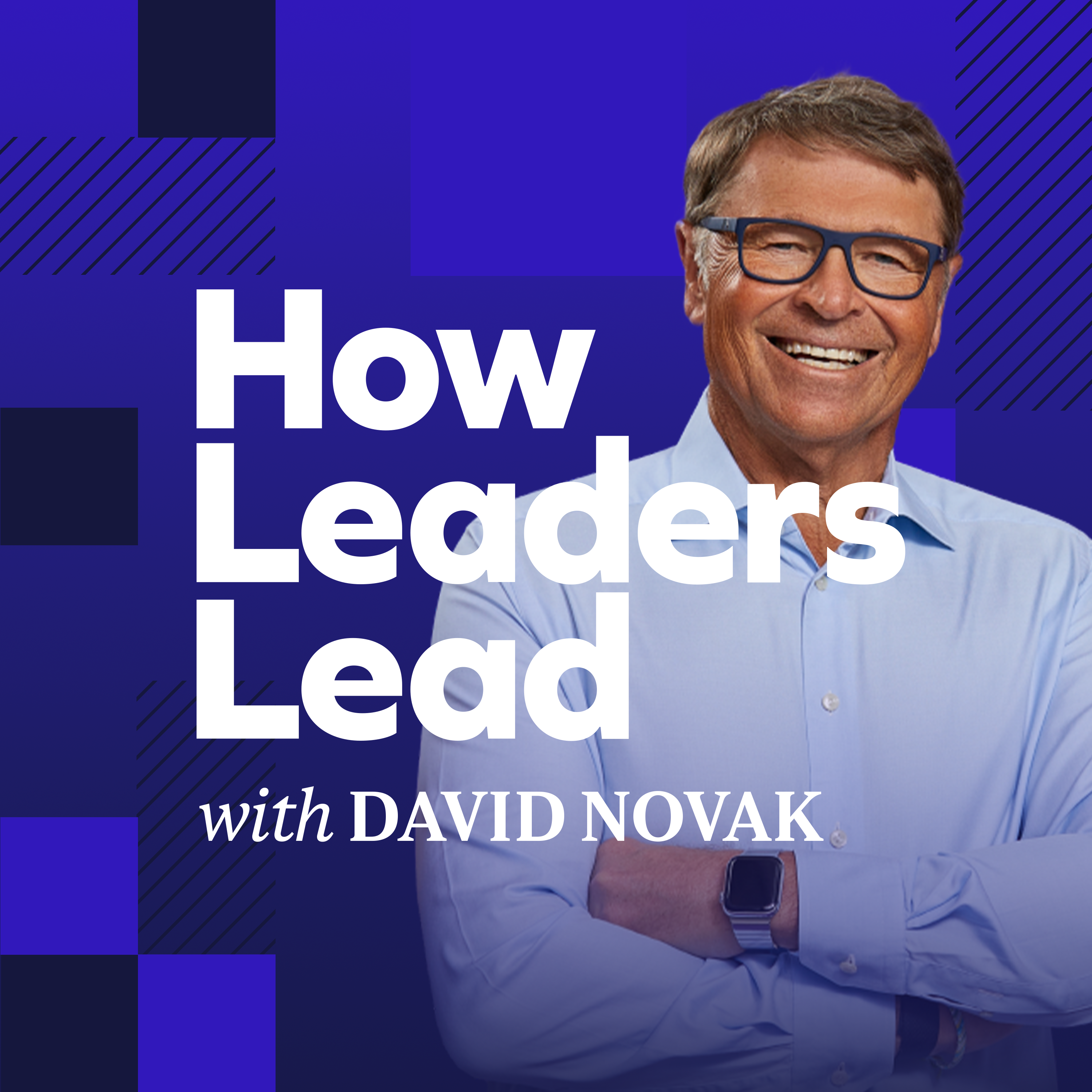
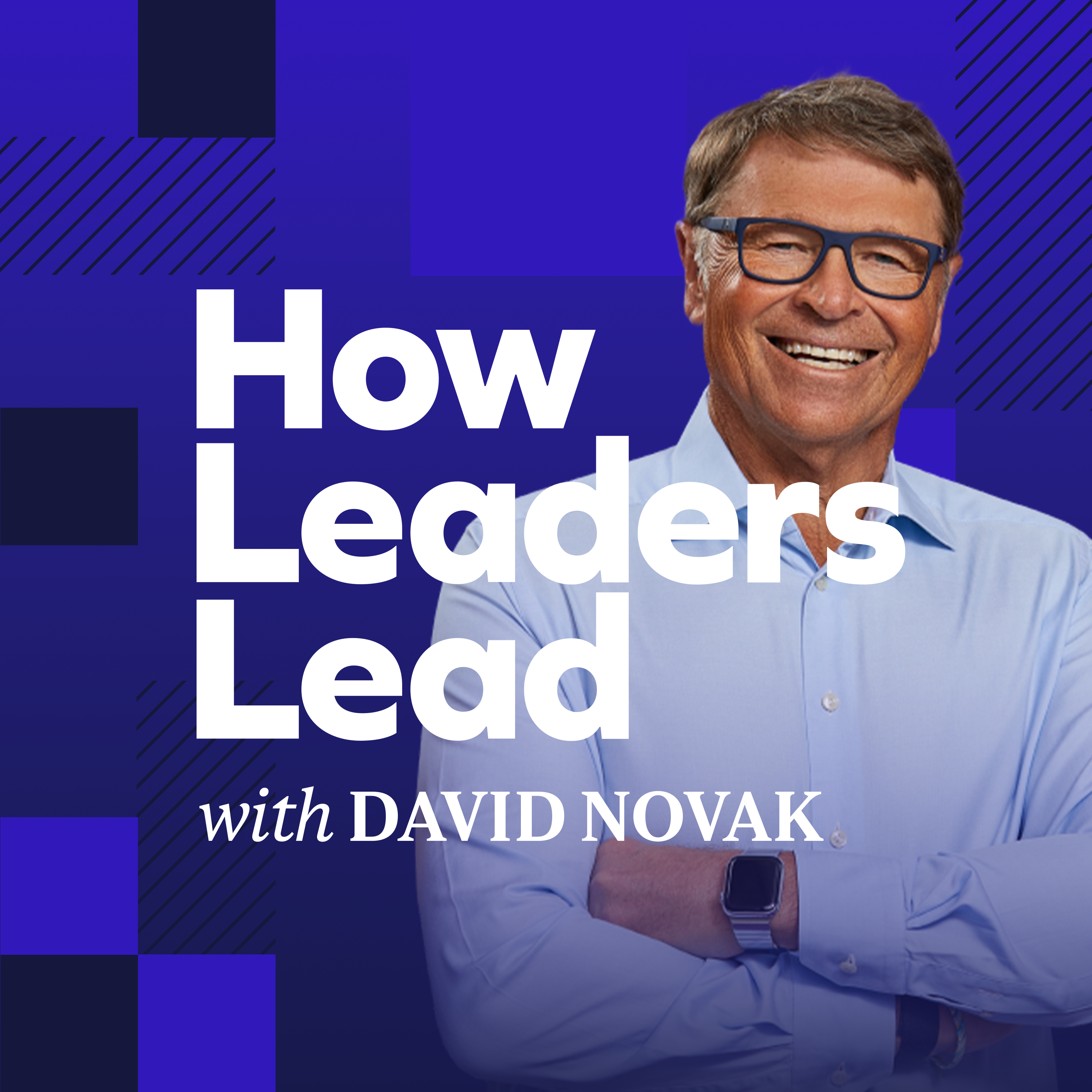
 How Leaders Lead with David Novak
19 Jun 2025 · 1h


 Add vo to ChatGPT or Claude to ask about everything you hear
vo listened to this episode to put together the overview and transcript, so there may be the odd mistake.
How Sanjit Biswas leads Samsara by staying close to customers (“big eyes, big ears”), using feedback loops and operating principles to scale, simplifying adoption, and applying AI to physical operations and logistics (safety/efficiency for supply chains, utilities, construction, fleets, frontline work).
Sanjit Biswas is co-founder and CEO of Samsara, which digitizes physical operations/logistics. He previously co-founded Meraki (MIT grad research on large-scale Wi‑Fi via RoofNet) and sold it to Cisco for over $1B. He studied at Stanford (undergrad) and MIT (PhD, not finished), and did an early Oracle internship at age 15.
Build the right problems, not just “fast and scalable.” Iterate via customer feedback loops. Maintain culture at scale with “shared code” (consistent operating experience) and operating principles embedded in hiring, rewards, and town halls. Simplify hardware/software so customers can start with plug-and-play trials. AI should be practically useful, especially for customers who are short-staffed.
New York Stock Exchange opening bell button with a fail-safe; Meraki’s growth via Cisco channel; Samsara beta customers using legacy IBM mainframes and whiteboards, revealing the real product need; early temperature-sensor installs leading to broader operational tracking; AI investment framed through a 70-20-10 R&D time horizon.
0:00When we get on site, I always tell people like big eyes and big ears, like let's see how these operations really run. Let's listen to where those pain points are. So I love it in terms of helping me understand what problems need solving next.
0:21You can build fast, you can scale smart, but if you're not solving the right problems, what's the point? Welcome to How Leaders Lead. I'm David Novak, and every week I have conversations with the very best leaders in the world to help you become the best leader you can be. My guest today is Sanjit Biswas, the co-founder and CEO of Samsara. It's a company that helps digitize physical operations and logistics so they're safer and more efficient. This isn't Sanjit's first rodeo. Before this, he co-founded Meraki and sold it to Cisco for over a billion dollars. And what drives him is a mindset he calls big eyes, big ears.
1:01I got to tell you, I love this phrase so much, and I just wish I'd have come up with it. And you're going to love it too, because it's all about staying close to your customer. You watch what they struggle with, you listen to what they can't quite articulate, and when you do, you uncover the problems that actually need solving. Stay tuned to see how he does it. plus how Sanjit is thinking about AI and his business, and a hiring tip you're going to want to use in your next interview. So let's get into it. Here's my conversation with my good friend, and soon to be yours, Sanjit Biswas.
1:41You got to ring the opening bell at the New York Stock Exchange in December of 2021 when you took Samsara public. What's a behind-the-scenes story of that experience that you've never told anybody? Well, first of all, it's definitely one of those milestone moments. I think as an entrepreneur, it's actually hard to imagine that you're going to get to the point where the company is going public and there's all this fanfare. One behind-the-scenes story that I don't think a lot of people know is that that opening bell ring is by a button, right? So you're on this podium. They ask you when the market opens to press the button.
2:16And they actually have someone with a fail safe because it turns out a number of people forget to hit the button. So I was not aware of that. I didn't know how any of that stuff worked. They guided us through it. It was a lot of fun, but it was actually funny to hear maybe 10, 15 percent of people actually forget to press the button and the market doesn't open unless someone hits it. Yeah, that's great. I was really lucky to be able to do that a couple of times. It's a great experience. And you, you've built two billion dollar businesses with your co-founder, founder, John Bickett. And I want to learn how you two make decisions.
2:50So I got to know, how'd you decide that you were going to be the guy to push that button and ring that bell and not him? Well, you know, it's funny. John and I have known each other now over 20 years. We met as grad students back at MIT, and it's always been a great partnership. So even before we started any companies, we were working together. We were doing research together. He was the guy who loved to write code. And like, if he could just spend all of his time just in the details of the technology, he would. And I was the person who kind of did, you know, a bit of the research, but also the everything else.
3:24So in some sense, as you're founding a company, you need someone to do the everything else. That person in my case became the CEO. And it's a partnership we've had across both companies. So he's been CTO, I've been CEO. And, you know, I think from an opening bell perspective, he's like, I don't want to do it. You do it. It's something else. You see everything else. That's a great reason why, you know, and, you know, I can't wait to really dig into, you know, how you're leading at Sam Sarah. But first, Sanjeev, I want to take you back a little bit and start at the beginning. What's the story from your childhood that shaped the kind of leader you are today?
4:04Well, you know, if we go way back, you know, 40 years or maybe a little bit less to when I was in middle school or high school, I always loved technology. You know, it's my background. My dad was actually a computer science professor, an electrical engineering professor. So I grew up with a lot of this technology around me. One of the things that I like is actually seeing other people use technology, other people get utility or value from it. And going all the way back to middle school or high school, I remember being really enthusiastic about bringing this idea of internet access, which was really new at the time.
4:38This is back in the 1990s, to other high school kids. And now that I kind of think back on it, I was like, that's a really unusual thing that I felt passionate about. But I just thought it was the coolest thing. And I just wanted everybody else that I knew to use it. So that maybe was a formative moment that didn't make sense at the time. But in retrospect, actually fits a lot of what I've been doing for the last 30-ish years, which is bringing technology to people. Yeah, that's amazing. You had that insight so early in your life. You know, and you feel like that was driven from your background with your father?
5:12I think so. And, you know, it's hard to say which influences cause which decisions and actions. But I was really fortunate that, you know, even back in the 1980s, when computers were pretty expensive and hard to get a hold of, we did have one at home because of his work. And he was always around to answer questions, curiosity questions. And I was able to kind of go down the rabbit hole early as a side effect of that, of just, well, how does this stuff really work? And, you know, what could you do with it? That sort of thing. Fantastic. And this was really hard for me to believe, but I understand that at 15 years old, you were hired by Oracle.
5:48What's the key lesson you picked up from that experience? Well, yeah, this is my first job is a summer internship that I got at Oracle. I don't think they knew I was 15 when I interviewed because it was like a coding interview and it was all very technical. I think they figured out when I showed up and it was my mom that had to drop me off because I was too young to have a driver's license. So that was definitely interesting. I learned a lot in that first job. I actually still have pretty vivid memories of everything from the code and the technology to the team that I worked with. It was, again, the first time really seeing a company.
6:22And this idea that you could get paid to basically do your hobby. It was programming was a hobby of mine at that point. And it was really interesting work. And you got to work with really smart people. That was energizing in a really deep way. And you were the youngest engineer to ever be hired there, as I understand that. And you've had a rocket ship career. You know, do you think that really taught you how to deal with people that are more experienced and older than you? And how do you think about that now? Because you're still a young guy. I'm sure you've got a lot of guys older than you that work for you.
6:57Yeah, you know, for me, it's never actually been about age or even years of experience. It's actually what do you bring to the table in terms of the discussion. So if it's a technical discussion, what ideas are you kind of debating or navigating? I think when it comes to business discussions, we have a lot of really young salespeople that are very close to our customers. I want to hear them out. So I've kind of learned to ignore the age component of it. There's a lot that comes with experience where there's some wisdom there. But so much of it is the type of experience and your insights and your knowledge.
7:27So maybe that was a deep learning from back in my 15-year-old days. You know, you then go on to Stanford to get your undergrad. And what impact did that have on the way you think as a leader, going to a school like Stanford? Well, first of all, it was an amazing undergrad institution, right, in terms of the breadth and the sort of diversity of ideas that are thrown around. One of the things that I loved about Stanford is it is very strong in both the humanities and the sciences, right? So you have engineers, you have people who are just out of this world in the liberal arts. And that balance of sort of numbers and sort of qualitative or ideas or, you know, that side of things, that balance is something that I really took away from that experience.
8:13And even when I look back, and this is now 25 years ago, some of my most formative experiences in college were actually not necessarily my computer science classes. It was when I took a Zen Buddhism class to fulfill a requirement. I thought I was being very clever because I think that class fulfilled two requirements at once, culture and religion or something like that. But just some of the philosophies have stuck with me decades later. And so really thankful that I had that experience and an experience I wasn't expecting to have. I went in thinking, OK, I'm going to take as many engineering classes as I can.
8:47But I'm really glad that I had that sort of well-rounded side of things as well. So how do you think about hiring people now when you think about right brain, left brain? You know, do you look for the balance or, you know, how do you how do you think about that? Well, we want the whole brain. So, you know, there's there folks that are really good at, again, the kind of quantitative side of things, the numbers and the math and so on. But their ability to apply it to understand how is this going to benefit a customer or change their world, that's what makes that engineering innovation relevant. So I think that's important on the R &D side.
9:21And then similarly, on the kind of sales or marketing side, you need to not just have great sort of marketing ideas or a clever tagline or something like that, but you do need to understand what's having an impact. So I think there's a really important balance between those two. I agree. And, you know, after Stanford, you made the move across the country to get your PhD at MIT, another very good school. And now I got to ask you, you know, when you're surrounded by some of the smartest people in the world, which you certainly were with Stanford and MIT, what did that teach you about working with and leading other really high performers?
9:58You know, what do you think is the key to working with people like that? Well, at a deep level, I think I learned a lot about this idea of working in a team. So in some situations, there's leader who is the everything. They're the commander and they're calling all the shots and so on. That was never the case, whether it was in my undergrad or graduate research or something like that. It was always a really amazing group of people. And people had different talents. Some people were really good at analysis. Other people were good at coding. Other people were building things. But this idea that you can form people together in a team and that the sort of some of the parts is greater than just the whole was really compelling there.
10:42And I was really fortunate. The research projects we worked on ended up going on to win some amazing academic research awards. Some of that research is still taught in class today. And when I look back on it, it wasn't just like the first author or any individual like the Ph.D. advisor that was responsible for those insights. It really was the discussion and debate that we had as a team, the way we built, and the way we built over a long period of time that made some of that research impactful. So that was a pretty important learning at MIT. And it's something that I've taken with me into Meraki and the companies we founded after is just the importance of the team kind of playing to the different team members' strengths and then really being cohesive.
11:23And speaking of Meraki, this was the company that was your first company. And you can almost say they was almost formed by accident. I don't know, that may be going a little bit too far, but talk about that. Talk about Meraki. Yeah, you know, I think a lot of startup stories have a tremendous amount of purpose at the very beginning of like, oh, we had a business plan and we want to go raise funding. And, you know, in Silicon Valley, there's a number of those kinds of tales. For us, this was actually more of we had a technology that we'd been working on as graduate students, which is this idea of like, we were building basically large scale Wi-Fi networks before Wi-Fi was mainstream.
12:04So again, this is the early 2000s. That was the research that we did at MIT. It was a project called RoofNet. We covered all of Cambridge, Massachusetts with free Wi-Fi. And that was really exciting because we got to be able to provide something of utility to our fellow students. So all the grad students had broadband internet without having to pay for it. We got to do really interesting research. And in that process, we said, well, wouldn't it be amazing if other people could build networks like this, like in their apartment complexes or on Main Street and that kind of thing. So with Meraki, it was actually simply we wanted other people to be able to build big Wi-Fi networks.
12:39We didn't know the first thing about starting a company. We had no capital of our own. We had no access to venture capital, but we just had this desire to bring it to the world. So that's how that company got started. A little bit of a different story than I think what you hear about some days. Some companies now start with the seed round and then the series A and so on. It almost goes back to your middle school idea that you have. It goes full circle. That's amazing. How do you think you lead differently given your engineering background and perhaps leaders with a different skill set and background?
13:15Yeah, I think every entrepreneur figures this out. What is their true strengths? What's authentic to them? For me, I'm still a product person at my core. I love the technology side of things, but I do love spending time with customers and seeing that impact. And that's how I spend my time. I love to spend time out on the road at Samsara. We've got customers in really diverse industries all over the US and really all over the world now. So I like to get out in the field. I like to stay current with the engineers on what they're building and what new chips are available or what new advances are happening in the world of AI and all that kind of innovation.
13:49And then I like to connect those dots. So for me, it's about being true to myself. I'm probably not your best salesperson. I'm not a finance wizard. I know sort of what I'm good at and where I need help. And so I try to focus on that kind of product and that customer experience. You know, when you see these areas that maybe you're not as strong at, whether it's sales or maybe it's working with the investment community, I don't know what, you know, we all go through things for the first time. How do you go about sharpening your ax? Well, for me, it's really about just getting in there. So, you know, none of us are born knowing how to do these jobs, right?
14:25Like, especially as a CEO or a founder of a company, you're figuring it out as you go. I think learning by doing is really key for me. I love the interactions and the engagement. So, for example, on the sales side, I had never sold a thing in my life, like through MIT. I was a, you know, research scientist, kind of engineer student. And I'll tell you, anything that involves selling, even in middle school or high school, there would be those projects where you have to sell the candy bars. I would just find a way to get out of it or shy away from it. I just did not like doing that. But when it came time to figure out how to get our first sale to happen for Meraki, because we didn't have any money to run the company otherwise, we figured it out.
15:05We figured out what a PO was. I discovered that means purchase order. I figured out, okay, how do you translate that into an actual check? All of that happened by just trying it out. And it's actually much more straightforward than people sometimes realize. You could read books and books and books about how to start a company, or you could just try it. And so I always recommend people to just try it. That almost takes me to my next question. As an engineer, you know as well as anyone, nothing is perfect on the first try. It's all about version two, version three, and so on. And what do you do to create a work environment that embraces that kind of iterative approach?
15:46Yeah. Well, at work, we call it running feedback loops. This idea of iterating, spending time with our customers, figuring out, well, how could you make it better? Because like you said, the odds that you got it right on the first try are kind of zero, right? There's always a way for something to be better. The question is, well, where should we invest our energy and what should we do next? That applies, by the way, to products and product management. but it equally applies to your sales process or your marketing message. There's a lot of things you can kind of tune and tweak. And I think in today's age, it's gotten way easier to essentially iterate on the fly and do it in a thoughtful way.
16:21It's not sort of haphazard, but the idea that we're going to run a process, we're going to get something out, whether it's a beta product or early access or whatever you want to call it, and get feedback, I think, is really important. You know, I've heard you describe your company culture as shared code. uh explain what you mean by that shared code kind of refers to well what are the what's the sort of common way that we all operate um and if you think about software uh software has many forms and manifestations but ultimately it's code down at the bottom of it and uh you might have lots of different users but they're all running on that same code base what i found is unless you're explicit about it the way you are with engineering a product you can have people running different code, right?
17:04So that you may be under the same company banner, but if you're operating in two totally different ways, the way people perceive the company, the way they engage with the company, it's going to be two totally different experiences. So by having this sort of shared code, if you will, the consistency of the experience is really common. Have you gone about really identifying the behaviors or the operating principles that you know that if you execute them, you know you're going to get results. Yeah. And I think that's really about distilling down what's worked for us so far. What we've done in both companies seems to be something people like.
17:41Well, what is it about our way of running? And so we do call them operating principles is basically, okay, what is it that we want to make sure everybody's doing? And for us, this idea of focusing on our customer success is really core. It doesn't matter which team you're on. And that's something that's really important. Building for the long term is another one of, you know, there's always a bit of a tradeoff of, are we doing something for, you know, this month or this quarter? We're actually going to like live with this decision. That's also something that's really important, again, that applies across departments and so on.
18:13So we've got about eight of these operating principles. We evolve them every couple of years. We hit refresh on them. But the idea is this is what's worked for us so far. we really try to think about them, distill them down, share them with everyone, especially new hires. So as they're coming in, hey, this is what's worked for Samsara, for example. And this is something we want to do more of. So for us, those operating principles are kind of key to how we run. So you have these eight operating principles, you know, I call them how we work together principles when I was at Yum Brand. So you have these principles.
18:46What do you do to recognize people who actually execute those principles? And how do you build your HR system or your compensation system around those? Or do you? We try to operationalize them in a few different ways. So at the very beginning of the process, which is the interview process, we actually interview based on those operating principles. So behind the scenes, we kind of assign different principles out of, hey, see if you can figure out how they built for the long term. Ask them for an example of that or how they adopted a growth mindset or something about their customer centricity. Those are things you can filter for at the beginning.
19:24And then, like you said, what you recognize and what you reward is also really important. So we ask for nominations. So we have different awards and different teams. And we'll try to align those with the principles. So so-and-so adopted a growth mindset. Here's an example of how they picked up a new skill or something like that. And then what we talk about at, call it a town hall, like a broadcast meeting that goes to thousands of our employees, that's also important because that sets the tone. That says, okay, that's really important to the company. You know this better than most, obviously. The best solutions are almost always the simplest ones or the ones that you can simplify.
20:04Can you tell me a story of where you've pushed the team to eliminate unnecessary complexity? There's a few that come to mind. And some of it just actually relates to the way that people try out our products. So something about Samsara that people sometimes don't appreciate is in order to adopt technology and operations, you sometimes need to install a piece of hardware. There's some software configuration and so on. A lot of that, by the way, can be made plug and play. So it used to be that in order to install technology, you needed to be an engineer. You need to have someone come on site and splice a bunch of wires or write some code.
20:40there was like a little bit of a hurdle. Something we emphasized very early here was, well, how do we simplify it so it just always lands on its feet, just works out of the box? That is something that enabled us to do free trials. So in other words, we don't even need to set foot on site. If you're up for it, you can just plug this thing in and try it out for yourself and experience the technology. That's a radical simplification of the customer experience. It's very complicated behind the scenes, but the result was we were able to grow our business very quickly because we could essentially engage with people over Zoom or on the phone, convince them that they wanted to try it out, and then just send them a unit or five units or something like that.
21:21That's cool. I love that. And I want to get to some Sara in just a second here, but I want to go back a little bit to Meraki. What do you think were the one or two smartest strategic bets that you made that really helped the company scale? Well, you know, like many businesses, we were lucky to be in the right place at the right time. So we were starting a company that was making it easy to deploy Wi-Fi in the mid 2000s. That was maybe we started in 2006. That was about the year before the iPhone was introduced. So we ended up in the right place at the right time in the sense that all of a sudden after the iPhone and then eventually the iPad and so on came out, people wanted Wi-Fi.
22:05They wanted guest Wi-Fi to offer to their clients and their customers and that kind of thing. We were just really lucky that that happened. Now, from a strategic perspective, we had a sense that there were going to be a number of challenges with doing that at scale, right? It would have to be secure. It'd have to be easy to set up. You'd need lots of great coverage. And so we set up the product and the company to be ambitious in that sense. We didn't just do hardware, for example. We did the software. We did the configuration. We did the security and everything. And so strategically, that ambition paid off when the complexity really went up for the customer and they needed something that just was all in one that worked entirely.
22:42The same thing paid off years later as we continued to be ambitious. We built Ethernet switches and routers. These are all the building blocks of a big network. We didn't just stop at Wi-Fi. In other words, we kind of built everything the customer needed. And then we saw customers saying, hey, I love what you guys have done for Wi-Fi. I need that for my whole network. Can you do that? And we were in that right place at the right time. So the ambition I think is really key. Hey everyone, it's Kula from How Leaders Lead. And if you've watched our podcast for any number of episodes, you probably know that a common theme from all of the great leaders we interview is that they are active learners.
23:17They have this commitment to continuing to learn and grow so that they don't stay stagnant and so that they continue to see success in their leadership and in their life. This theme of active learning is so important And it's what David's latest book, How Leaders Learn, is all about. It's all about helping you develop that skill of active learning so that you too can continue to see success in your leadership and in your life. The book is really entertaining. It pulls stories from some of our greatest podcast guests and pairs those stories with insights that you can incorporate into your leadership and into your life right away.
23:51Grab How Leaders Learn on Amazon or wherever books are sold. And I think you're really going to love it. You feel David's personality through the pages and through his storytelling. And it's a really powerful way to level up your leadership. You know, it's interesting. You know, you mentioned earlier, you didn't know how to sell anything. And when you're starting a company like that, you know, how did you really get the company to learn how to sell? I mean, you know, you got all these guys who can make all this stuff that nobody can understand. But how did you get the make the strategic shift to really drive sales?
24:25Well, I think most engineers are driven by a love for solving problems. They want to see their hard work have impact. And so they want to see their technology used. In other words, when we connected those two dots, that sales basically translates to customer impact, people using your stuff, everyone got into it. Even engineers who had no interest in selling, everyone wanted to see, okay, what's the customer using? Like, did they turn that feature on? Like, wow, this thing's getting like, you know, thousands of users, that kind of thing. So connecting that feedback loop to the engineering teams and not making sales a bad word or something a different team does, but we're all in this together.
25:01And by the way, those sales, those dollars that come from those revenue dollars get reinvested right back in the company means we can build more product, right? And so going back to this idea of being ambitious, we felt like, well, okay, if you want to build a lot of stuff, you're going to need more than a handful of people. You're going to need a sustainable R &D effort. the way to do that is not necessarily raise more and more venture capital. It's actually go get your sales engine running and have a reasonable set of margins and all that stuff. So you have a sustainable enterprise that you can keep reinvesting in for a long, long time.
25:35And so you build this Meraki into a billion dollar business. It's your baby. When I talk to entrepreneurs, it's like, you know, they're so passionate of what they built and it's their baby. And you love it like a child. There's no question about it, you know, but you end up selling it to Cisco. How hard was that for you to do? I mean, you know, take us through how you made that decision. First of all, I again, I kind of still think of Meraki as like this project that took on a life of its own. Right. This idea of like, can we make it possible for other people to build networks? And yes, you know, that that's what became the business.
26:12What was was happening just for a little bit of historic context is we were doubling revenue every single year. And this is a company that, by the way, was really growing in the global financial crisis era. So the idea that we're able to double revenue every year was really astounding. And I think that goes to show just how much market pull there was for the product. The company was getting to the point where Meraki was getting ready to go public. We had enough revenue scale. We were, you know, from a free cash flow perspective, all the kind of numbers and cents made sense to go public. And at that point, Cisco approached us.
26:44And just, you know, for those people who aren't in the networking industry, Cisco is like the big name, right? They are like the biggest brand, best known. They have, you know, majority market share in most of the products they sell. And so they were effectively our biggest competitor. Now, that actually made it kind of high stakes because they approached us and were like, we don't want to share numbers with you. Like, you know, we compete in the market. But they said, no, no, we get it. But we hear great things about the product. and we want you to think about one thing, which is what would happen if your product could be sold through the Cisco Salesforce and the Cisco Partner Channel with the Cisco logo?
27:21Think about how many more people would get access to it. And that was actually the compelling sort of reason for doing it. They had to make the numbers make sense from a finance perspective. The investors needed to be able to get a return. But for me, it was actually more about impact as well. We kind of did this as an experiment. We can keep doing what we're doing, but we had a long way to grow. We were a relatively small company compared to a Cisco. Now, what if you could do the experiment of, well, what would happen if you turbocharged it and made it available all over the world? And that's exactly what happened.
27:53If you now look at where Meraki is now, I don't know the exact numbers, but it's billions of dollars of sales a year. Whenever I walk into a Starbucks coffee and I look up, I see a Meraki access point. My kids' schools have Meraki access points. I go to an airport, you see it. And that is ultimately what we were there for was to see that impact happen. So that's ultimately what did it for us was this idea that, wow, you could really get this out to a lot of people. How do you feel when you walk into Starbucks and you see your imprint? Proud. Absolutely. So you mentioned it's like, you know, it's like a child.
28:27It's, you know, the kind of pride that you get of like, wow, we really did something meaningful. Yeah, that's cool. You know, how'd you figure out, Sanjee, you know, you sell the company, I think for$1.2 billion. So, you know, that's, that, that had to be exciting, but how'd you figure out what you wanted to do next? Well, at the beginning, we just spent our time making sure that we integrated the products while inside Cisco. So there was no plan to do anything next. But, you know, within a few years, it was pretty clear that this, this was working, right? Like the products were growing at an even faster rate than they had before.
29:02So that was excellent to see. And at the same time, Cisco said, hey, you guys have done a great job with this. Are you interested in their headquarter down in San Jose, California? We're in San Francisco. Do you guys want to come down to San Jose and take on some more of the business, like some of the other parts? And that didn't feel like it fit for us because we're not professional operators in the sense that we come in and we run your business that you've already got. We're builders. We want to build something from scratch. And so we said, okay, well, that's probably not for us. But it's not like we left with the, here's the next idea we want to pursue.
29:36For context, John and I basically hadn't really taken time off. You know, Meraki was an intense experience. So first thing we decided to do is like, take a real vacation. And I remember, for me personally, we just had our first child. So had a, you know, baby around that kind of thing. So I was just thinking, like, I'm just going to take a little bit of time to reset. And my initial thinking was actually to go back to academia because the two of us left without finishing our PhDs. We were all but dissertation. We were just like right there at the finish line. Long story short, we realized academia wasn't going to be for us, or at least I realized it wasn't going to be for me because the feedback loops are really long.
30:16It takes months to find out if your paper gets into a conference. And then, you know, it's really hard to see people use your stuff. So, um, you know, I figured that out the hard way, actually wrote a paper, got into a conference, uh, et cetera. John was, He's way smarter than me. He's like, I knew that wasn't going to work for us kind of thing. But after a couple of months, we kind of went back to our kind of curious selves outside of IT. So we were just kind of curious about the world, found ourselves really fascinated by the world of operations. And that's ultimately what led us to start Samsara was that same curiosity that got us excited about Wi-Fi a decade earlier, got us excited about operations because we were just wondering, like, how does all this stuff work?
30:59You know, I've heard you say, take the time to get bored. You know, I think that's where a lot of great ideas come from. You know, say more. Curiosity is just, it's such an important and special thing, right? And curiosity is sort of like when you let your mind wander a little bit and become fascinated. And it's something we all have as kids, right? Like you're kind of wondering like, okay, you know, how does that airplane fly or whatever it is, right? Like there's something there. That doesn't go away. It's just, you get really busy and you get kind of sucked up in the flow of things. If you ever get a chance to like basically hit pause or hit stop, sometimes you can do this if you take a week long vacation or something and you let your mind wander, you're sitting on a beach or in a mountain somewhere.
31:44Then your mind takes you to something that might be really interesting in a deep level that you couldn't articulate. For me, that was how we found operations, but it happens all the time if you give it time to happen. So tell me about Sam Serra. Give me a snapshot of the business you lead today. Yeah. So as I alluded to, we focus on the world of operations. This is kind of the infrastructure of our planet, if you will, right? So think about the supply chain or the utilities, the construction companies, all the people that keep our planet running. That's what we're referring to with physical operations.
32:18And what we do is we try to bring them new digital technologies to improve how they run, basically make it possible to run smarter. One interesting thing about operations is just how intense it is, right? You've got millions of trucks out on the road. You've got hundreds of millions of frontline workers. And so there's this kind of tremendous orchestra, almost ballet, that happens behind the scenes that no one really thinks about. But it's an area that technology can really help because you can make way smarter decisions if you have cameras that are able to see risky behavior out on the road, or you have GPS trackers that understand fuel consumption and analyze all that data.
32:55So those are the kinds of things we work on. I'm sure you probably know this, Sanjeev, but you're what they call a duocorn. You're someone who has built not one, but two billion dollar businesses from the ground up. And Sam Serra, you've grown on an extremely rapid level. What is it about how you show up as a leader that's helped make this possible? I mean, if you were going to try to define, you know, the, the, a couple of differentiating things that you do, you know, what do you think it is? Those are big businesses you've built. Yeah. You know, it's really hard to pinpoint, but I've kind of thought about this over the years of, well, and I've studied leaders like your listeners have, right?
33:43Like I've listened to so many podcasts, I've read so many books. And one interesting takeaway is everybody needs to figure out their own authentic style or form of leadership, right? And so, you know, there are things that we have natural talents at. And I try to like focus on, like I said, the product side and the customer side. And then there are things that you're not so talented at. And for me, sometimes it's actually communication. Like I'm great in terms of a one-on-one communication. Like I enjoy getting to know people. But communicating with thousands of employees is actually really tough because you can't read their faces, you can't engage and interact with them.
34:20So that's the kind of thing that as a leader, I've had to try different ideas and iterate a little bit. But again, leadership is really a personal sort of fit, like everybody's got their own leadership style. And then it's also a contextual fit, like the way you lead a tiny company, a startup that has a dozen people, versus the way you lead a company with thousands of people is a little bit different. And you kind of have to figure it out along the way. So for me, that's been a big takeaway. What was the biggest thing you figured out, Sanjeev, from going from 12 to 1 ,000? And what did you have to, what was that thing that, you know, you had to learn, maybe the hard way?
34:57For me, and, you know, I was fortunate to have had the Meraki experience. So as we scaled, Sam, sorry, I was very mindful of this. When you bring in hundreds of new people every year into an organization, it's very easy for the culture to drift, right? And it's a very practical thing, which is that people are bringing their own way of doing things with them. And you're not able to be everywhere. So the Samsara way or the Meraki way, it's hard to transmit when folks are reporting to a manager who just started three weeks before them kind of thing. So that kind of dispersion is something that I was very mindful of with Samsara.
35:32And we were lucky that our business grew really quickly. So we had to really stay on it. It's not like we could just add 5 % new people every year. It's like we had years where we doubled the size of the company. We had one year where we tripled the size of the company. That's really hard. So you double, triple the size of the company. What process did you put in place to really get the culture seeded with everybody? I mean, because you're right. You're bringing people in from Meta, Google, you know, all these great companies. And they may be great companies, but those playbooks, if you will, may not apply in our environment, right?
36:06So a lot of what we did was keep it simple. like we would go on customer calls together, right? Like let's go show and do a product demo, right? And actually show what the product does. That was foreign to a lot of people that came from companies where they never demoed their product. It was too complicated or, you know, sold differently. So just showing the way we do things like in a very practical way helped build some of that culture. The interactions, you know, we love to grab lunch or grab dinner or just, you know, coffee with each other and get to know each other, answer questions. And then that's the other one is ask me anything sessions.
36:39So I still do these, the new hires that come in, we do a big Zoom call and I'll answer whatever questions are on their mind. We'll do that with top talent. We'll do that with certain kinds of teams. But that interactivity, I think, is really key to kind of creating that cohesion. We'll be back with the rest of my conversation with Sanjit Biswas in just a moment. You know, I love how Sanjit develops his strategies by looking at customers' needs. And it reminds me of another fantastic way to approach your strategy, and that's by using war games. This is an idea that UPS CEO Carol Tomei shared with me.
37:13And I think it's something every leader should have in their toolkit. I love war gaming as a part of strategy. So the first time we did it, I think everybody thought I had lost my mind. But what I asked the team to do was to assume the personality of one of our competitors and to attack us. and to tell us what the attack plan was. So they did. And the attack plans were super scary and really thoughtful. So they attacked. And then I said, okay, now assume the persona or return to your UPS persona and fight the attack. Because by fighting the attack, it actually created opportunities for initiatives and growth.
37:52It's a really, really clever way to think about strategy. We've just released my conversation with Carol Tomei on YouTube. So subscribe to the How Leaders Lead channel or find it wherever you get your podcast. It's episode 118 here on How Leaders Lead. You know, something I know you push your team on is discipline. You know, define that in Sam Serra terms and how you lead that way as a CEO. Discipline has many different forms, but it's ultimately about, for me, it's at least about sustainability. So if we take financial discipline, for example, there's always a temptation to to spend a little bit more aggressively, whether it's like on product development or marketing campaign or something.
38:36But if you overspend, you're not going to be able to do that over and over and over, which means that like what worked for you this year, you probably can't keep up for five or 10 years because at some point your finances wouldn't tie, right? They wouldn't make sense. The same thing, by the way, applies to the way you build product. Like sometimes you can duct tape something together and throw it over the fence and that might like, you know, help in the short term, but it's going to blow up on you a little bit later. Doing that right thing for the long-term benefit is, for me at least, what it means to have discipline.
39:06So it's just something that I've seen play out so many times. It's a lesson I've learned the hard way. And so I just want to make sure everyone else is able to save a little bit of that sort of pain and just benefit from that. What's a big growth opportunity that you see for your business right now? And how are you attacking it and getting the organization galvanized around it? Well, for us, we're very focused on artificial intelligence and really how it can be practically useful to our customers. Now, AI is a very buzzy concept, but I think it's buzzy because of its potential utility. Like it's basically this idea that now the computer can give you leverage on intelligence, like it can think for you.
39:45And for a lot of our customers, they are short staffed. They could always use some more headcount, whether it's to help improve their safety or help fill out tax forms or whatever it is. So this idea that AI or the computer could help with those tasks is really profound. For us as a company, we've been very successful with products that have little bits and pieces of AI, but we're now infusing it across the board, bringing that to market, educating customers on what's possible, and then actually making it happen. is something that we're all focused on as a company. It requires real effort and rethinking how we do business internally.
40:22How do our internal processes run when we take the benefits of AI? It requires really hitting refresh mentally, and it's a big effort for us. You've mentioned customers over and over in this discussion, and you're an engineer, and engineers are not necessarily supposed to be customer-focused, but you definitely are for sure. What rhythms do you have to stay connected to customers? Well, for me, it's a treat to be able to interact with customers. And that's actually one of the best side effects or benefits of scale is we have customers all over the world in every potential industry that we want to serve.
40:59And so you get to go on site on these like fascinating on site tours, right? And see how their operations run. So that's what gives me a ton of energy. It also gives me a lot of new ideas for what other products we can build. So when we get on site, I always tell people like big eyes and big ears, like, let's see how these operations really run. Let's listen to where those pain points are. Because sometimes people can't say, I need a product that does X, but you see them doing something in a difficult way over and over. And then you say, well, if we could build you technology that just did that for you, would that be great?
41:34And they'll usually say, yeah, absolutely. So I love it in terms of helping me understand what problems need solving next. and you see that usually the patterns become really clear if you can get out there. So kind of back to kind of practicality for me, I just try to get on the road. Maybe not every other week, but every third week, I'm just out there trying to see it for myself and then share that information with everyone that I can inside the company. Big eyes, big ears. I would have ripped that off and I would love that. I would be telling everybody that, you know, what's the best example you could share where you had big eyes?
42:08Oh, well, lots of examples. You know, one of them that takes me back to the very early days of the company. When we started Samsara, we didn't know that the products that we've brought to market today would be the product. So we had some ideas of, okay, technology could help operations. So we started with a very simple set of products. One was like a temperature sensor. And I remember taking it out to these beta customers and we'd say like, you know, please install them. The big eyes part was, they'd be doing install, but then on their screen, you could see the system they were using to run their operations.
42:43So this is 2015. It's only about 10 years ago. They were still running IBM mainframe systems, like green screen systems that you'd recognize from the 80s or earlier. They were still running in place, and that's how they were getting their orders. And it's just because it's what worked. And then what they were using to track their vehicles was either if they had technology, it was something that looked like MapQuest from the 1990s, or it was a whiteboard that had like a list of where everyone was. That was big eyes because, you know, we were there to install temperature sensors, but you look over at their office and you're like, well, what's that system doing?
43:17What's with that whiteboard? That's how we figured out what the real product should be. It was, okay, it seems like that's a more important problem than knowing what the temperature is. Great example. How about big ears? Yeah. Big ears would be kind of similar. You'd actually listen to... In operations, people often just come by the operations manager director's office, knock on their door and say, hey, we just had a wreck over in Idaho. Can you take a look? We got to figure out what happened there. You would just actually hear what happens in the meetings in terms of interruptions. And when we would demo the product, the big ears part is we would hear, we'd actually hear people say, wow, like you just under the breath.
44:00And that's when you know you've got a feature that's differentiated, it's useful. But, you know, no amount of like reading market research reports tells you that. You do one demo and you, you know, the room's silent and someone says, wow, that's when you know you got something good. I love it. You know, tell me about your 70-20-10 model as you think about investing back in your business. Yeah, this is really related to, you know, if you're fortunate enough to get to some scale, you can invest in multiple R &D projects. Then there's a question of which ones, right? 70-20-10 basically is a reflection of time horizons.
44:39So, you know, a lot of R &D that we do, it's based on immediate needs that customers have. That's like this year, next year kind of stuff. That's the 70%. And that might be an integration or a new app, or it's like something that really needs to happen today. The 20 would be stuff that's a couple of years out. And that might be related to, you know, recently electric cars started becoming more common in operations. They're not the most common, but they're out there. And we could see that pattern that we need to be compatible with that. So we invested in that out of the 20 bucket. And then the 10 would be things that are really speculative.
45:15And this is kind of like the stuff that if it pays off, it could be a really big deal. But it's not obvious that this is going to work. And in fact, it's probably more likely than not it's not going to work. And so it's the kind of risky set of ideas that might be beneficial five to 10 years out. So for us, it was AI that we've been investing in now for over five years. it's now really kind of come into vogue, but we were experimenting with it in a deep way because we knew how useful it could be, even though it wasn't something customers were asking for, which is, I need AI. Nobody ever said that, but we saw the transformed potential.
45:52Yeah, that takes a lot of courage and conviction to go in that direction when people are waiting to see if it's really going to happen. How do you muster that up as a leader? Well, I think you have to have your own conviction, right? That if we build this, I believe based on my experience, based on my interactions, that this is going to be valuable and this is going to make a difference. So that conviction, I think, does come from experience and that kind of big eyes, big ears kind of concept. And then sometimes, again, it's this willingness to take a risk, but then also change your mind. Say, hey, we got that wrong, or we need to do it a little bit differently.
46:26And like I was saying earlier, I've learned a lot just by doing. A lot of it is getting to the point of, okay, we're going to try this. And if it doesn't work, we're all going to say, okay, that was a beta test and we learned from it. Now let's try this other thing. It's really interesting. You might've started out with sort of an academic goal, but you're not like that at all as a leader. You're like, hey, you can't read this stuff up. Let's make it happen and see what happens and adjust, which is great. Yeah, absolutely. By the way, I just have to say a lot of great academic research is done the same way.
47:01So it's interesting how many parallels there are between product building and company building and great practical academic research. Now, if you're a theoretician, that's a very different thing, but there's a lot to be said. It's almost like a lab science, right? This kind of idea of being experimental. Good point. A lot of people, Sanjeet, they want to be successful. I'm curious, what's something that you've had to sacrifice to achieve what you've been able to achieve in your career so far? That's a great question. I think a lot of what, and entrepreneurs say this all the time, the intensity of the startup life and the entrepreneur's journey is really high.
47:48The highs are high, the lows are low. Some of the sacrifice is that idea of free or unstructured time. Usually when you're working on something that's interesting, it just grows to fill the space. Right. And so that's why I was talking earlier about, well, sometimes you got to really clear out your mind a little bit. Um, but for me, maybe one sacrifice is just from like, uh, pursuing hobbies and, you know, people ask, what are you doing outside of work? Well, I've got three kids. So that really takes up almost all my time. And for me, it's about kids and the work that I do. I don't have, you know, I don't have like a great pickleball or golf game or any of that kind of stuff going because for me, like those are the two things that drive my life, at least at this moment.
48:29So maybe the sacrifice is that kind of free time or hobby space, but I love the work. So maybe that actually has filled the hobby side of things. Yeah. That's what you said earlier. When you were 15, you didn't know that you could actually get paid doing what you love. That was a pretty good thing to be able to do. That's your hobby, you said. It is. You know, Sanji, this has been so much fun and I want to have some more with my lightning round of questions. Are you ready for this? Let's do it. Okay. What three words best describe you? Curious. If I can get a double word, hardworking, focused.
49:02If you could be one person for a day beside yourself, who would it be? I'm a student of history. So I would probably find, I'm very curious sometimes what, you know, what life was like 10 ,000 years ago. It's a weird thing to wonder about, but it's not a famous person. I would just be kind of curious and maybe it wasn't so great, but I would love to see it. What's your biggest pet peeve? When people aren't in the details to kind of like gloss over things. East coast or west coast? Oh, that's a tough one. Having lived on both, I got to say the weather's better on the west coast. So I would go west coast.
49:38What's your go-to order at Buy Right Creamery? So that's a local ice cream shop here in San Francisco. They have, it's not all the time, but they have a pretty awesome like bourbon pecan kind of thing. So I'm a sucker for that. It's sweet, but it's good. Okay. You get two front row tickets to anything you want. Where are you going and who are you going to take with you? So I'm not a big sports guy. Like I couldn't tell you even what season it is, whether it's football or basketball. But something that I look forward to every four years are the Olympics, because it's really just incredible, just the level of excellence that these athletes have.
50:17So something we're looking forward to at the next Olympics, which is here in the U S is actually bringing the kids and getting, you know, the tickets early and doing all that kind of stuff. So if we can get front row tickets to any of those Olympic sports, I think it'd be amazing. What's the one thing you do just for you? You know, it's funny. I still like to tinker. And so, you know, sometimes those tinkering ideas turn into products, but whether it's, you know, just trying out like a new AI model or checking out a chip or something like that, that's my idea of fun. So that's something I do just for me.
50:50besides your family what is your most prized possession i'm not a big uh possessions guy to be honest um you know i i got like this isn't surprising but like everybody else i'm amazed by like how useful my phone is but that's not like the most expensive or special thing you know if i turned on the radio in your car what would i hear uh well right now i'm in a 80s throwback mode. So you'd probably hear, you know, some like whatever best of the 80s. It's cheesy, but it's good music. And my kids find it hilarious. What's one of your daily rituals, something that you never miss? Something I try to do every day that I'm home, like here in California is do school drop off.
51:37And it's funny. It's not like the most glamorous thing to do, but it's a great excuse to just hang out with the three kids in the back of the car. And they'll just tell you things in the car that you won't get to the dinner table and that kind of thing. That's great. We're out of the lightning round. Thank you very much for that. Okay. I've got a few more questions here and I'll let you go. You've obviously been enormously successful on many fronts, but, and you've obviously made a lot of money and you made a ton of money. How much did making money drive what you did and you're doing? Well, I think if you, if you sort of step back and look at the pattern, Um, like I said earlier, we, John and I started out as PhD students.
52:17You don't typically go get a graduate degree to make money. Like you do it because you're curious about something or you love the science. And, um, for me, like that, that was really, and still is so much of what drives me. The money has been a really fascinating kind of side effect. And we went from being grad students with no money to being entrepreneurs that had successful exit. Ultimately though, we're still doing the same things we were doing 20 years ago, which just tinkering around and building things and having fun in that sense. So now like money makes a lot of other things in life a lot easier.
52:50You're not stressing about your house payments and things like that. And in some sense, it lets you kind of be in that same mode that we were in when we were in our early 20s. So anyway, that's kind of my reflections on that whole side of things. Yeah. You and your wife, Hope, started the Biswas Family Foundation in 2023. what's the larger mission that you and Hope are pursuing? The Family Foundation is something we've, it's, it's kind of the side project, but it's a reflection of our interests. So my wife is a infectious disease epidemiologist. That's a profession, not a lot of people had heard of until 2020.
53:26And now everybody knows what an epidemiologist does. So she's kind of got a public health background. I have an interest in, like I said, engineering and AI and so on. So what we're doing with the foundation is at that intersection of AI and health, this idea that with the newer technologies that are coming out, it may be possible for everyone to have a doctor in their pocket. It may be possible to discover entirely new therapies and treatments, whether it's for cancer or other kinds of disease, using a lot of data. So we're helping fund ideas that are kind of high risk, high reward, and not in the lab science kind of mad scientist way, but more of like, well, could an AI really detect, you know, that form of cancer just from imagery or from, you know, an ECG or something like that.
54:12So that's a lot of what we're doing right now is helping seed fund a lot of these kind of ideas that are on the frontiers of science that could ultimately have a huge impact for human health. Well, that's really powerful. And thank you and hope for really focusing on that. I really appreciate that. You know, I'm curious, Sanjit, you know, how do you lead at home? In terms of keeping the kids on track or? Or just lead. You know, you've got a partner and hope you've got your kids. I mean, when you come home, what's your leadership philosophy or do you have one? Well, for us, we've got pretty young kids.
54:52They're elementary school age. So a lot of it is being present, which as a CEO, there's always demands on your time, right? Like someone's always sending you a message or wants to respond to an email or something. So I try to really make a big effort to be present as a leader at home. And then again, engage, right? So hear what's going on in the kid's world. Like fourth grade is way more complicated than I remember, by the way, right? Like there's lots of relationships and interactions and things they're learning. There's no substitute for being present in that way. Like it's not something that, you know, your spouse can tell you, okay, like there's something really special about being there.
55:32So for me, it's about the same way that I lead at work, which is showing up on the front lines. I like to show up on the front lines, even with the kids. You know, you mentioned at Stanford, you took a Zen Buddhism course, you know, and you mentioned being present is, you know, do you spend time on the idea of spiritual growth? and being present and focusing on the now? Is that, you know, where does that fit in your life? Yeah, I do. I think it's just even that awareness of it. Now, like you could, you have people who go become monks and spend all their time focusing on that. That's not a kind of place I am in life right now.
56:11But for me, this idea of sort of being present in the now is really important. And then also something else I took away from the Zen practice is this idea of beginners, mind, which the longer you sort of do a job, whether it's being a parent or, you know, being a CEO or being a founder, the easier it is to kind of fall onto old habits, right? Like, oh, I can kind of do this in my sleep. There's something really special when you're fully present and when you approach things with a complete beginner's mind. And I try to make sure I do that as often as I can. It's not the easiest thing to do, but it actually kind of like opens up your thinking quite a lot.
56:49So what do you see as your unfinished business now, Sanjee? Unfinished business. Well, I think my mom would tell you my academic research career is still unfinished business because I never finished a PhD. I think I'm firmly over that, especially because that research is like 20 years old. But for me, the unfinished business is like, I just feel like there's not enough hours in the day if you want to read and be curious. And so So something I still do every night is I try to get a couple of pages of reading in because there's always something that you kind of want to tug on the thread of. Last question here.
57:25What's one piece of advice you'd give to anyone who wants to be a better leader? Well, I would say just do it, right? You have an idea of what it means to be a better leader. Start operating that way. And that's actually, it's easy to say, but it's hard to do because sometimes you get sort of racked with anxiety of like, should I do it this framework or that framework? A lot of it's kind of a gut feel. And again, you kind of learn by doing. So for me, the advice I'd give that person is dive in, just go for it. Well, I have to tell you, Sean Zid, after reading about you and watching a lot of things that you've done and hearing your thoughts on business, I knew I would have a lot of fun with this conversation.
58:09And I want to thank you for your time. I want to thank you for what you're doing in the world to make the world a better place. And you're one heck of a guy. Thank you, David. Thanks for having me on.
58:25Great leaders move fast and scale smart. But what sets Sanjot apart is how closely he pays attention. He doesn't assume he's got the answers, but he watches and he listens. And because of that big eyes, big ears mentality, he finds the problems that actually need solving. And that's the takeaway here. Big eyes, big ears. And it isn't just a catchy phrase. It's a discipline. It's a curious mindset. And it's a great way to become more innovative and customer focused. So this week, find one place to observe more and talk less. Sit in on a customer service call. Shadow your team in the field. Ask your frontline people what's working and what's not.
59:08Because when you pay closer attention to what's really happening, you get the kind of insights that can take your business and your leadership to the next level. So do you want to know how leaders lead? What we learned today is the great leaders lead with big eyes and big ears. Coming up next on how leaders lead, you're going to want to fasten your seatbelts and make sure your tray table is in its full upright and locked position. because I'm talking with Bob Jordan, CEO of Southwest Airlines. So be sure you subscribe on YouTube or wherever you get your podcasts so you don't miss it. Thanks again for tuning in to another episode of How Leaders Lead, where every Thursday you get to listen in while I interview some of the very best leaders in the world.
59:51I make it a point to give you something simple on each episode that you can apply to your business so that you will become the best leader you can be.
1:00:03Thank you.
If you want to build smarter solutions and truly serve your customers, you’ve got to get closer to what they’re struggling with. In this episode, Samsara CEO Sanjit Biswas shares how his “big eyes, big ears” mindset helps uncover those opportunities.
You’ll also learn:
How to make your engineers love sales (no, really)
The one thing you’re missing about curiosity
Practical ideas to put your core values into action
A helpful formula to prioritize your R&D budget
Take your learning further. Get proven leadership advice from these (free!) resources:
The How Leaders Lead App: A vast library of 90-second leadership lessons to stay sharp on the go
Daily Insight Emails: One small (but powerful!) leadership principle to focus on each day
Whichever you choose, you can be sure you’ll get the trusted leadership advice you need to advance your career, develop your team, and grow your business.
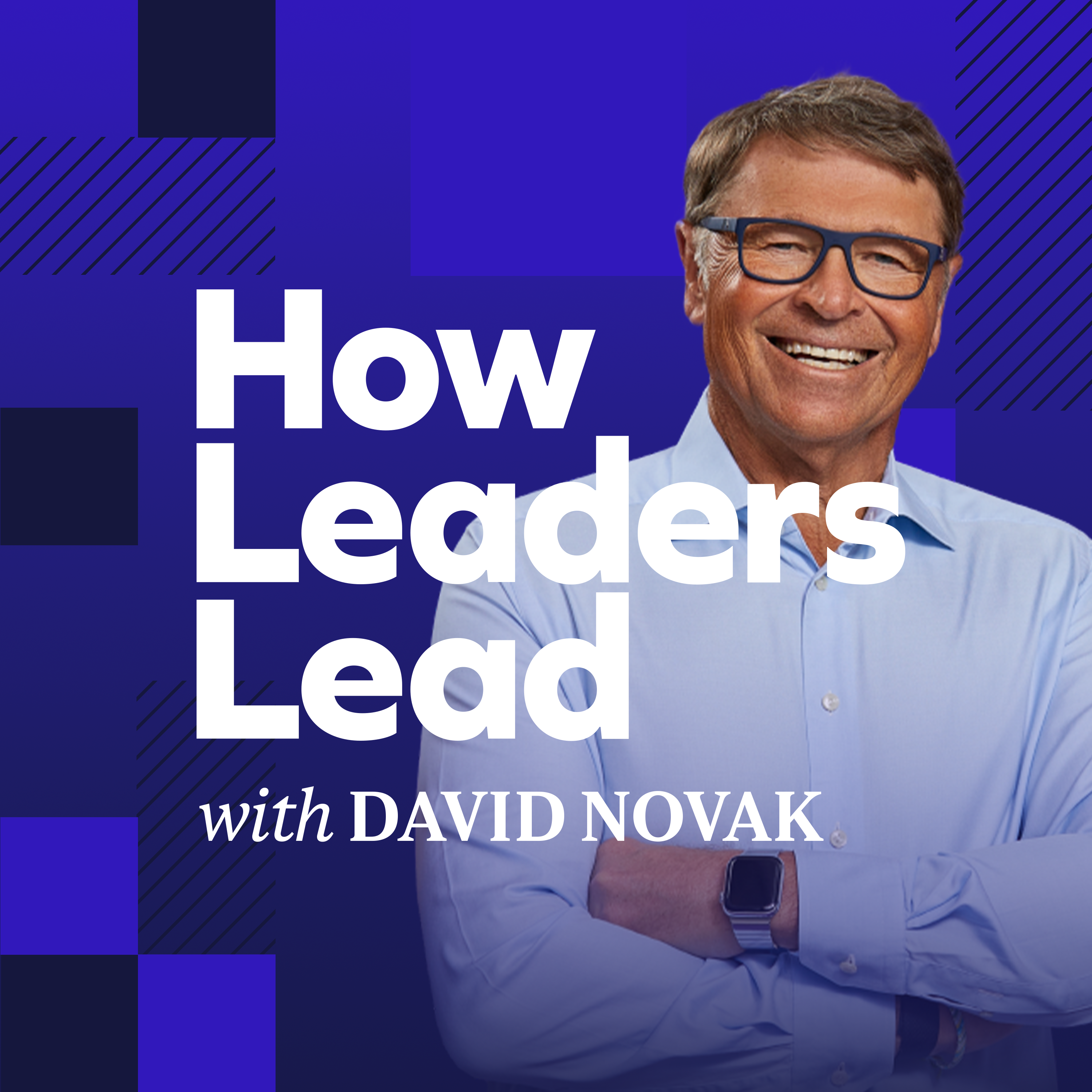
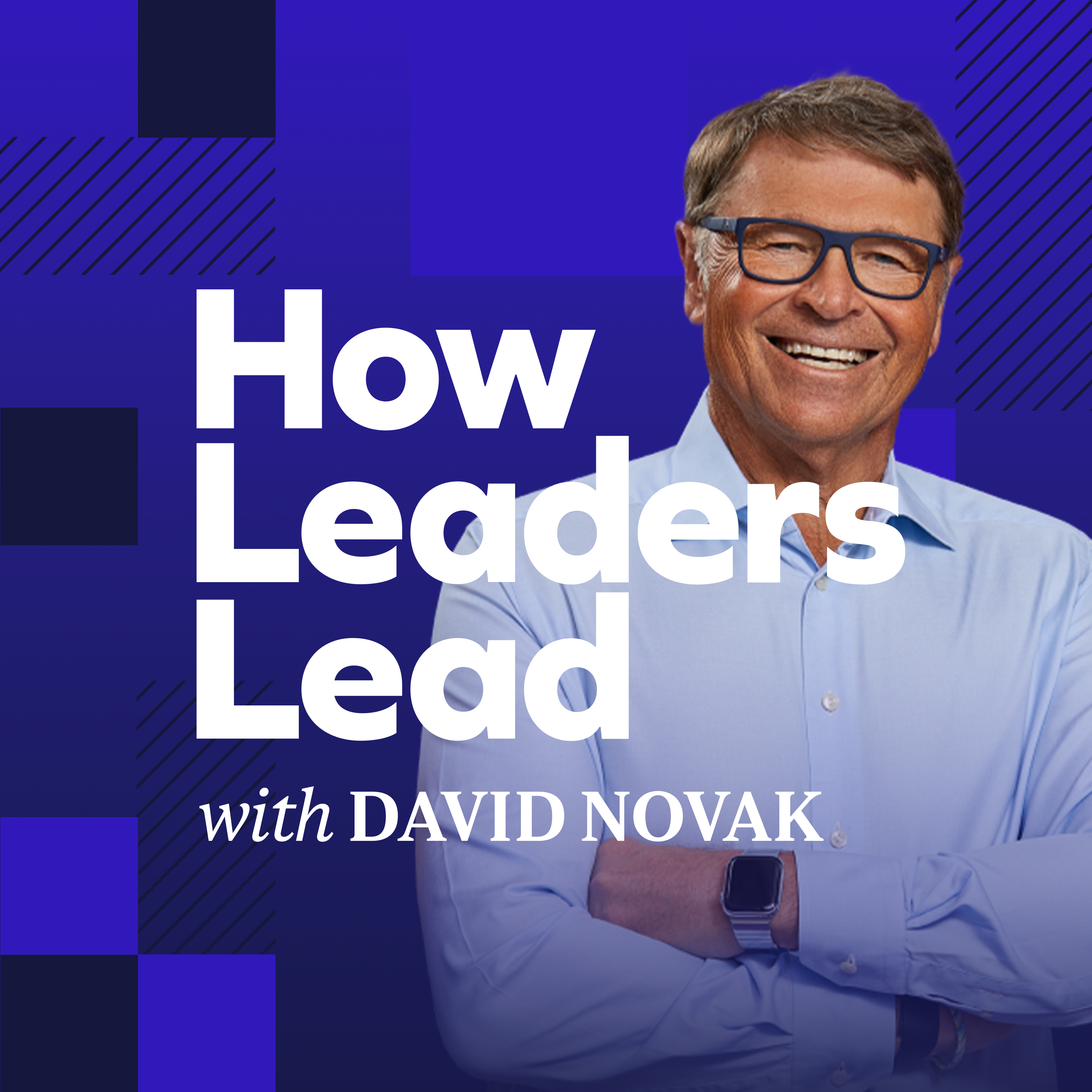
Scan the code with your iPhone camera
Listen in the app.