 How To Fail With Elizabeth Day
7 Oct 2026 · 59m

 Add vo to ChatGPT or Claude to ask about everything you hear
vo listened to this episode to put together the overview and transcript, so there may be the odd mistake.
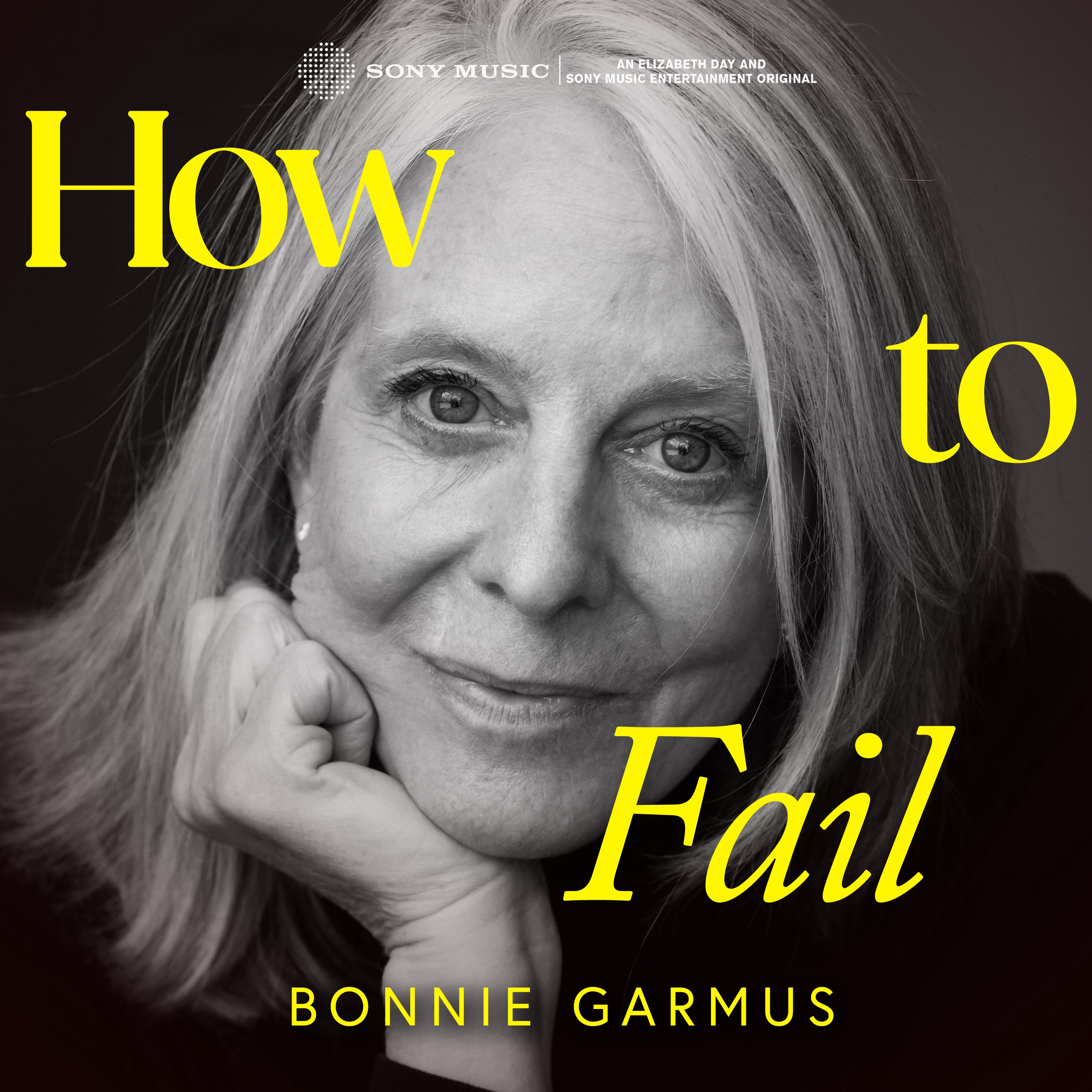
Bonnie Garmus discusses how repeated rejection and personal setbacks shaped her writing career and her views on family, art, conformity, and persistence. She also talks about adoption, stuttering, and the role of anger and community in creativity.
Bonnie Garmus, novelist and former copywriter. Her debut novel Lessons in Chemistry sold 8+ million copies, topped bestseller lists, was translated into 40+ languages, and became an Apple TV series. She later wrote Peck and Peck, centered on poetry and resisting conformity.
Humanities/arts are undervalued compared with science and are under “attack.” Wealth and unregulated power (including AI) can enforce conformity. Adoption is not “saving” someone; it’s choosing to create a family and love the child as they are. Rejection is survivable fuel; writing requires “doing,” not hope or AI shortcuts.
A tech meeting where her ideas were stolen led her to write Lessons in Chemistry. A teacher told her she’d never go to college due to cursive; she later proved herself. A librarian helped her avoid stutter bullying by sending her on “library missions.” Adoption attempts were rejected in the U.S.; China adoption succeeded after a “lightning bolt” feeling for Zoe. Her first novel was rejected 98 times before agent Felicity Blunt read it.
0:00You know, I look back now and the stutter was tough, but you know, it made me a great listener because stutters don't want to talk. My mother was one of the very first volunteer AIDS nurses in the United States. And when it came time to care for these people with AIDS, she was the only nurse on the entire floor. My husband and I decided to adopt. Here's another failure. We were rejected from every program in the United States. every single child we applied to for, we were told no. When we first heard about our first daughter, Zoe, we knew it was our child. This episode of How to Fail is brought to you by Arla Lacto Free.
0:43Welcome to How to Fail with me, Elizabeth Day. This is the podcast that, to paraphrase James Joyce, believes all failure is a portal to self-discovery. Before we get cracking on this episode, please do remember to like, follow and subscribe so that you never miss a single conversation. Bonnie Garmus's first published novel came out when she was 64. It sold over 8 million copies, spent nearly two years on the New York Times bestseller list and was translated into more than 40 languages before being adapted into an eight-part TV show for Apple. That book was Lessons in Chemistry, whose protagonist was the fearlessly forthright Elizabeth Zott, a chemistry whiz turned 1950s TV cooking star.
1:32But while Lessons in Chemistry was Garmus's first published novel, it was not the first she had written. An earlier attempt was rejected by 98 agents. Nor was novelist her first career. In fact, Garmus started out as a copywriter, a profession that required her to research unfamiliar subjects, understand complicated information and make it accessible to a general audience, all skills that she later transferred to fiction. Her new novel, Peck and Peck, is a perfect example. In it, Garmus displays an astonishing knowledge of both typography and poetic structure. And it tells the story of Bata Gray, a recent graduate in 1980s New York, unsure of anything other than his passion for poetry.
2:21When a chance encounter leads to a job at the most prestigious poetry quarterly in the world, Batter's life starts picking up pace. The book is destined to be another smash hit. Not that any of this has gone to her head. I find writing a novel is like setting out on a long hike with an outdated map and not nearly enough food, Garmus writes in her latest acknowledgements. There are only ever two choices, turn back or rewrite, but only one leads to the lake. Bonnie Garmus, welcome to How To Fail. Thank you. I'm thrilled to be here. I'm delighted to have you and I know that the How To Fail community is going to be so thrilled because they are ardent Bonnie Garmus fans, as they should be.
3:08Is it true that your two daughters now have your name in their phones as global phenomenon? Yes, yes. I think they mean it somewhat sarcastically. But yes, when they saw it on the trailer, it just said from the global phenomenon. And so they changed their phones that day, apparently. And I discovered it by accident when I called them and I was sitting nearby and their phones rang and I went, oh, nice. That's amazing. They'll always keep you down to earth. Yes, exactly. Lessons in chemistry in many ways was a clarion call for the importance of science. And Peck and Peck does the same thing but for the arts.
3:52How conscious was that decision? It was extremely conscious. You know, for some reason in our society, for as far back as I can remember, the humanities are always second place compared to science, math, computer science. And I've never really quite understood why. because the arts provide everything of beauty in our culture, everything important, the written word, all the music, all the design, all the things that we collect are done by artists, by people from the humanities. And so it made sense to me to turn the direction away from science this time and talk about the arts because right now in our society, the arts are really under attack.
4:37And I wanted to explore that issue. Yes. And you do so brilliantly. And why did you want to write a male protagonist? He came to me as a male protagonist. I think I would have chosen a woman, but it was a man, I heard. And I figured out why, I think, because at that time in the 80s, and perhaps even today, there was, but especially in the 80s, I think men had this weight of expectation that they had to be a success. Women also, of course, have always wanted to be a success. But for a man not to know what he wants to do, it's not a good look. And so I really wanted to explore that in this character and talk about why we often feel like we don't know what it is we're meant to do and why it's okay to struggle a little bit with that decision.
5:29Because when When you're 18 and you're told, choose a major, it's like making the biggest life decision right then. And maybe it's the wrong one. And for many people, it turns out to be the wrong one. That's so well put. And it brings me to your mother and to the initial spark for lessons in chemistry. So your mother was a nurse who gave up work to raise her four daughters. And then she went back to work. and years later you find yourself as a copywriter in an advertising agency and you're in a meeting, having witnessed what your mother sacrificed in the early years of feminism, and you're in a meeting and something makes you angry.
6:08Will you tell us this story? Yes. So I was a copywriter, which is in advertising. If you're high enough up, you're a creative director, so that's what I was doing. And I was in a meeting. It was all men because it was technology. It was always all men. and I'd finished presenting my ideas for the latest big campaign. It was a very expensive campaign. It was pretty major. And after I was done, the room went quiet, which had honestly never happened to me before. And so I asked for comments and there was nothing. And finally, there was one man I didn't recognize in the room who said, well, you know, no, I don't think we should do any of that.
6:49And he was very superior sounding. And then he said, what I think we should do is this. And then he read my PowerPoint slide out loud. And the worst part was that all the other men in the room said, oh, that's brilliant. Oh, you're brilliant. And so I thought I was being had. I thought it was some sort of joke. So I said, no, come on, you guys. He literally just read my PowerPoint slide. And everyone ignored me. I realized I wasn't going to get anywhere. But as the meeting ended, somebody said to me, you know, Bonnie, you have that thing due at five. We really need it at five. So don't forget, just go back to your desk right now and write that.
7:26And I went, that thing due at five. Okay. And I stomped back to my desk and I wrote the first chapter of Lessons in Chemistry. And I never worked with those people again. And didn't years later, someone who was in that meeting came to a book signing? Yes. He came to a book signing armed with 10 copies of the book for everyone who'd been in the meeting that day. That's brilliant. Yeah. And he had actually been kind of a friend of mine, but we'd never spoken after that meeting. And he told me, you know, he said, I knew what I did was wrong that day. And I knew it almost immediately when I went home that night and I was reading to my two young daughters.
8:05And I was reading them a book about how they could be anything. And he said, and I realized, I like to think I'm not part of the problem, but I'm part of the problem. And he said, I apologize years later now. I apologize for that meeting. And he said, so feel free to sign all these books for every person in that meeting and write whatever you want. I said, you know, I'm not going to hold a grudge. However, for that one vice president, whose name is still on my work, let me autograph that one for him. And I personalised it. And I just wrote, karma's a bitch. Bonnie, yes to that. Anyway. I'm a big believer in the idea that anger, well-shaped, is an extraordinary fuel for creativity.
8:58Were you angry when you came up with the idea for Peck and Peck? Yes, I was. I get a feeling people are going to think that I only have bad days at work, which wasn't true. But I was angry. The idea for Peck and Peck, I should explain, came before Lessons in Chemistry, way back in 2008 or 2009, somewhere in that time frame. And I was, again, working in technology a lot in advertising, and I really felt that the entire landscape had shifted. It went from really kind of crazy people doing these interesting projects and, you know, just the amount of ideas that were in these companies was just incredible.
9:41It was so inspiring. And they were trying everything and failing at a lot of things. and picking themselves up and doing something else. But what never came up was how much they had to do to make money because these companies were already kind of wealthy and they just kept saying, do what you think is right. Right around the time that I got the idea for this book, it had shifted very dramatically. And it went from don't be evil to be greedy. And greed really took over and you could see it in the software. You could see it in the attitude around the office. And it became unpleasant for me. A lot of people equate wealth with intelligence, and they shouldn't.
10:28And I was working with a lot of overnight millionaires, and they suddenly changed. And it was not great. And now at that time, there was a lot of talk of AI even back then. But back then, at least, everyone knew that it was a dangerous technology and that it had to be regulated. But that didn't happen. So in a way, are you also attacking unmitigated wealth and what that might do and how that might corrupt the beauty that we have in the arts? Yes, exactly. You know, I think now we have billionaires telling us that we must use the software which is not regulated, which it's like saying we're not going to regulate a nuclear weapon.
11:15That's how dangerous AI can get. And to say that they, all of these people, are now in charge of the humanities, now in charge of what we write, how we say it. It's called conformity. Yes. And that's really the message in Peck and Peck, which is you must resist conformity because if you don't, we'll go extinct. Incredible. And also you are so loyal to that idea because it's such a different novel from Lessons in Chemistry. Do you think that writing the character of Elizabeth Zott changed how you feel about yourself? Because she's such a strong woman. Yeah, I was writing my role model when I wrote her.
11:55So some of her rubbed off on me, but I'm always waiting for more to rub off on me. I feel funny when I say this, but I hear from her on a daily basis saying, I don't know if I'd do that. I'd say no to that. Really? Yeah. And I love that. It's been very helpful for me. Yes. Thank you for having a heroine called Elizabeth. Big fan. You know what? Yes. Not a problem. Before we get onto your failures, I want to talk to you about dogs. Okay. There's a fantastic dog, 630, in Lessons in Chemistry, and there's an equally fantastic dog in Peck and Peck called Batter. So Batter Grey is named after this dog.
12:32What is it about dogs for you, Bonnie? You know, I think I grew up with a dog. I was devoted to him, and I just love dogs. I've had a lot of dogs in my life, and not a single one has ever disappointed me. They've all brought something interesting to the table. but I think we tend to underestimate most animals in the animal kingdom. And dogs certainly, I hear people all the time say, oh, you know, I have a great dog, I love him, but he's really dumb. Well, you're measuring that dog's intelligence against human intelligence, but your dog has skills that you'll never be able to touch. And so I wanted to develop a kind of respect for the animals that choose to live with us and choose to tolerate us and our decisions.
13:15Will you tell us a little about Friday? Oh, yes. Friday was 630. That's the only character in Lessons in Chemistry that came from a real-life entity. Friday had been in—she had been taken from a home. The man who had her and several other dogs had tortured the dogs. And so she'd had cigarettes burned out on her back, and she'd had nearly all of her teeth knocked out. And she was in very bad shape. She had two kinds of mange. And when my kids and I and my husband went to the dog shelter, out of all the dogs they could have picked, they zeroed in on this dog, which was she looked like she'd been beat up.
13:57And they just thought she was adorable. And my husband and I were a little worried about their perception. But we brought her home, and then she turned out to be the smartest dog to this day that we've ever had. And we always used to say, you know, she's so smart. Maybe we should have her take the kids' SAT tests. Or maybe we should ask her which stocks to pick or whatever. But she was kind of beyond the bounds of intelligence, as we tend to think dogs can be. When we were transferred abroad, she picked up German almost instantly, which sounds weird. But when you move to Switzerland, your dog has to pass the famous Swiss dog test.
14:44Yes. What? Yes. In order for your dog to be off lead and be allowed on trains, your dog has to be really well behaved and well trained and all off lead. And so after we were there, they're about, I don't know, maybe four months, she had to take the dog test. And what you do is you turn your dog over to the trainers and they take her away and they put her through these paces throughout the city. And they put a deer in front of them. I mean, they do everything. Cats. They take them into the grocery store. You know, the whole, you know, you may not take anything. Anyway, Friday's test, they called her Frytog.
15:22Freitag's test was all in German. And at the end of it, the man came out and he said, this dog is not American. And I thought, well, I've never really thought of nationalities applied to dogs except for maybe French poodle and German shepherd. But whatever. And he said, this dog is Swiss. This dog is the only dog in two years to get 100 % on our exam. And I said, yeah, and I said, and it was all in German? He said, it was. incredible you you wrote this beautiful piece about friday for good housekeeping i think it was and it's on your website yes and it made me cry it was so moving and i just want everyone to go and read that because you talk you write more about her what an incredible dog she really was and she was very famous in the neighborhood because when we take the kids well she would often take kids to the bus stop for us like the whole neighborhood yeah and so you know kids would come out and she'd go, no, you don't have your lunchbox.
16:23You know, go back in. Animals, they all the best. Yeah. One of the things I hear a lot from listeners is how tiring it can be when your mind just doesn't settle. And I can only imagine this feels even heavier with intrusive thoughts. It's that quiet sense of being worn down by something you never asked for and never wanted, but just can't seem to switch off. If you struggle with this, I want to tell you about NoCD because it's a resource that genuinely helps people. NoCD provides specialised treatment for OCD and what I appreciate about their approach is how human it feels. You're matched with a licensed therapist trained in ERP therapy.
17:04That's exposure and response prevention. And over time, you learn skills that help your OCD symptoms become manageable so you can live more of the life you want to live. If you're struggling with OCD or unrelenting intrusive thoughts, NoCD can help. Book a free 50-minute call to get started at learn.nocd.com slash fail. Okay, let's get on to your failures. Your first failure is being told as a child by your teacher that you would never go to college because your handwriting was awful. Yes, we were learning cursive. I would say my printing wasn't great either. We were learning cursive, and she felt that mine was very badly done.
17:46And she became very angry with me all the time because I couldn't do the neat handwriting. I wrote everything very quickly. And I mean, to this day, I have trouble reading my handwriting. But it was just the way I did it. Anyway, on my report card, I got a D minus in cursive writing. and my teacher at back to school night with my parents and I'm sitting there, she said she will never go to college. She's just not bright and it's proof that she can't even write her letters correctly. In front of you? Yeah. That's awful. It was pretty bad. How did your parents react? Well, they wanted me to really focus on my handwriting and prove it, but I remember my father saying, you must ignore people like that.
18:38You must divorce that, get that out of your brain and just put it on the back burner. You'll be fine and you'll end up doing what you're meant to do. He was really great that way. And my mom was like, you're working on your cursive every night from now on. So I did, but it didn't really improve. Was your father right? How easy or difficult was it to ignore that and put that voice aside? Because clearly we're still talking about it. It's very interesting that you can remember that. The next day at school, she told everyone that I would not go to college. Bonnie! I know, it sounds terrible, but back then they used to hit us with rulers.
19:18So, you know, it was just part of the day. She was mean to a lot of kids. I think she was a really unhappy woman. And she would just say these things, like she would constantly comment on girls and saying, you know, you're fat or you're ugly or you're never going to get married. So me not going to college kind of fit right in. But it did nag at me a little bit. Still, I thought, no, of course I'll go to college. Tell me a bit more about your childhood. You grew up in California and you're one of four girls. What does growing up in a household so full of feminine energy teach you? Well, first of all, I should say that my father so desperately wanted a boy that when I was born, they only had boy names picked out.
20:07And because they had no girl name at the ready, on my birth certificate, it just says girl, where my name is. You could be Girl Garmus. It says Girl Garmus. Oh my goodness. And my father came from a family of five boys. And all of his brothers, by the way, had girls. So it was very strange. But there was a lot of feminine energy in our home. And my dad traveled a lot, so he wasn't home as much. But, you know, he made sure that if he was going to have all daughters, every single one of us would be an athlete. and he really thought that exercise was the way to get past your sorrows, work things out, but also have strength, physical strength.
20:54It was really important to him. But then as we grew, there were no teams for us to join, so it was really frustrating. Okay. Yeah. But you became a row. Do you still row? I do. I do still row, yeah. Yes, which is a thing that you have in common with Elizabeth Sotten, Lessons in Chemistry. And what about your mother? How much of a role model was she for you? Oh, my mother was this incredibly hard worker. You know, she was very conservative. I'm not sure she would approve of everything in lessons in chemistry. She was very religious. But she was such an inspiration for me because of the selfless way that she approached everything and did everything.
21:30She made all of our clothes. You know, she made all of the meals. She tried to teach us, you know, to become housewives, which none of us wanted to do or be. None of us wanted to go into nursing. So I think we were all a little bit of a disappointment to her. But, you know, she definitely loved us. But I do think growing up in the neighborhood that I grew up in where there were all these women who were so smart and all of them were just cleaning the house. and they were frustrated. And it's really no surprise to me that all the kids that came out of that neighborhood were feminists. Some of the boys too.
22:13Did that make you determined that you were going to fulfill your potential? Almost as a kind of counteracting the pain that she was in? Yeah. I mean, partly I wasn't really sure. You know, I knew I wanted to be a writer. That kind of worried my parents. Whenever I'd say I want to be a writer, they'd say, you mean a reporter? They were worried, you know, that I wouldn't be able to fend for myself, like all parents worry that their children won't be able to make a living. And so I understood why they said what they said. Per example was really important to me because my mother was one of the very first volunteer AIDS nurses in the United States.
22:57And when it came time to care for these people with AIDS, she was the only nurse on the entire floor. She was inspiring to me. One time I went to pick her up from work. I had come home from college and I dropped by to, you know, pick her up and I couldn't find her. I wasn't allowed up on the AIDS floor and she was supposed to meet me below. Hello? I know, you know, it was before cell phones. You can't text her. So finally I decided, well, she's not afraid to be on the AIDS floor. Why should I be afraid? So I went up and I finally found my mom reading to a group of young men in beds. Some of them were blind already.
23:35They were covered in sores. And she was reading the three musketeers to this group of men. And one of them looked up and he said, I know you want your mom to go, but frankly, she's our mom too. And it was really heartbreaking. And all of them had been rejected by their families. And there's my mom. She's tiny little thing. I'm huge, but my mom was just 4 '11", just 100 pounds, 4 '11. And she's sitting there surrounded by AIDS patients and fearless. She just said, all you have to do is the right thing. My goodness. What a story. I know she was just the greatest. Also, given, as you mentioned that her conservative religious background, ultimately for her to see beyond that to the human in suffering.
24:30Yeah. That's what a what an amazing person. No, she really was. You know, she's very, very selfless. Yeah, I did put her in lessons in chemistry. She's the woman who stands up and says that she would like to be an open heart surgeon. Oh, I'm so glad you put her in. Yeah, yeah. Wonderful. Yeah. What, if anything, did this failure teach you? This teacher saying to you, well, actually, you'll never go to college because your handwriting is awful. Do you think it taught you something about other people's perception of who you are and not allowing that to define you? Absolutely. Because the day that she told me that I would never go to college with poor handwriting, I went home and I started looking at all these signatures of famous baseball players and things like that, that, you know, I didn't own, but I could see them in the encyclopedia and stuff.
25:20I looked at the Declaration of Independence. I looked at everything and I went, I'll be fine. Good for you. Did you just have this innate sort of stubbornness and sense of self from a young age? Yes. Unfortunately, I have always been pretty stubborn. Yeah, definitely. I think my entire family would agree with that statement. Interesting. I was identified as a stubborn child as well for a very early age. And I think there is something about cleaving to the identity that you know you have that is very important. And often I lost it in my sort of 20s and 30s, and now I'm coming back to it. I'm coming back to my four-year-old self, I feel.
25:58Yes. Yeah. Do you feel now that you're writing books that you're doing the thing that you were always meant to do? Well, to be honest, you know, I never look back on my career and say, oh, I wish I hadn't done that. I think I had to take every step necessary to get to where I am now. And I don't regret any of it. I worked with some of the greatest people in the world. The fact is, I wrote my first book when I was five. And I illustrated it. It was one page long. And it's horrific. And my kids found it in our basement and constantly mention that should I get out of line, they will be releasing it to the media.
26:34Why is it so horrific? because it's about a princess okay i can't have that for less you know the lessons in chemistry uh and then i wrote another book when i was 12 a full book and my librarian put it in the library and then for years no one no one ever checked it out oh your librarian we're coming on to your librarian okay because i believe that this librarian has something to do with your second failure which is that you had a significant stutter as a child i actually had it all the way into my 30s. But it was very bad as a child. It started to abate in my late 20s. Well, in my 20s, I would say, and then really start to fade in my 30s.
27:17But yeah, it was very significant. And it was really tough at the time to go through that amount of bullying. And, you know, kids always make fun of you. I had a best friend, and she never once made fun of me. She just completely ignored the stutter. She would never try to correct me. You know, so she was my best friend since we were basically since we were born. When it came to acknowledging that I had a stutter, she never said, just slow down or anything. But it was significant. And I did stop speaking. And my librarian at school worried about me. And I think she had a deal with my teacher at that time that when we were giving oral reports, I would suddenly be needed on an emergency mission at the library.
28:08And I never put two and two together for the longest time, but I'd get there and she'd say, I really need you to read these books and then tell me if we should buy them for the library or, you know, if you think certain students would like them. And I think, wow, okay, but, you know, I'm out of class and she can know it's okay. And then I realized what she was doing. It took me a while, but she was saving me. She was saving me from the laughter and everything. But, you know, I look back now, and the stutter was tough. But, you know, it made me a great listener because stutterers don't want to talk.
28:44They don't like talking. And if I hadn't been a stutterer, I'm not sure I would hear my characters as well or understand people as well when I listen to them. And so in a way, it's sort of one of those backhanded gifts that you're supposed to be really appreciative for. But in fact, it is. So interesting. I'm so sorry you went through that experience at school. And I have an experience that is in no way equivalent. But there's a similarity there in that I have always spoken with this very English accent. But I was raised in the north of Ireland. We moved out there when I was four years old in 1982, height of the troubles.
29:27And I remember getting to secondary school and being teased for speaking like this, understandably. It's like English geek. And so I stopped speaking very much and I became a listener. And I think exactly as you identify there, listening also means observing and empathizing. Right. And those are extraordinary skills for a writer. Yeah. Yeah. Yeah, and I was just a huge reader anyway, and so getting the extra hour in the library held me in good stead. This librarian in particular was my elementary school librarian for many years, and she'd always say, Bonnie, you're too advanced for those, so we'll take you to the adult section.
30:11And I just remember the day I brought home The Godfather, my mom's like, no, no, no, no. Too adult. You know, but it was great. I read it. My mother was appalled. She called the school. But, you know, the librarian was like, she's ready for it. I don't know if you know this, but Maggie O 'Farrell had a stutter as a child too. Oh, really? Another extraordinary writer. Yeah. So did Ed Sheeran, I'm learning. And Emily Blunt. And Emily Blunt. Yeah, it's like, it's sort of this weird club because this is, you've probably heard this, but other stutterers recognize each other, even as adults. I didn't know that.
30:46Yeah. And so you can hear these certain hesitations and pauses in our speech, or you'll notice that they'll pause before saying a word because they've just substituted a word they know they can say. I was sitting in an airport one time talking to another, a mom. We were actually going to China to adopt our first child. And I'm talking away and she goes, oh, you're a stutterer. and I thought how would you know that and I said but you're not a stutterer and she said how would you know that and I said what are you a speech therapist and she goes yes oh my goodness yeah isn't that funny how did you stop stuttering I'm unsure you know I really wish I knew I went to see I'd never gotten any help from it for it you know back then they were just like talk slower you know, that sort of thing.
31:38There was no therapy or anything for it. And they're still not quite sure where it comes from. It has something to do with white matter accumulation. And so it's a form of neurodivergency. That's one of the ways that it manifests. But it is really interesting. I went to see in my 30s a professional therapist who was himself a stutterer. And I went to see him because he said, I told him, you know, I was still having trouble in my 30s. And we became friends. And I think there was something about being with him. And his stutter was much worse. And he was in his 60s at the time. That he gave me the courage somehow to just embrace it.
32:25And then I got better. He was an amazing man. He was a professor at University of Washington. Do you still feel the stutter within you? Oh, yeah. Yeah. It's funny because there are certain things that stutters will just avoid, but the number one thing is answering the phone. Right. We're all like, no, you get it. No, it's yours. I mean, I avoid answering the phone, but for vastly different reasons. Yeah, yeah. But why is there a sort of performance element where? Well, H is a really hard letter for a lot of stutters to say. There are certain, we all have our pitfalls with certain consonants, but H is really hard for me, an S and T, R.
33:04B is really hard. And so I have recognized that over the years, and I was doing way too much word substitution to avoid, you know, it's bad when your name starts with a B, and you don't want to introduce yourself. Yes. So I really had to figure out workarounds to get through this. And they finally came. I do think now they have much better therapy for stutterers to figure out how to live with it because it does go away. You've named your protagonist Batter. Yeah. Okay. I know it's a B. Believe me, I thought that. I know. Well, one of the reasons I did was I really wanted him to hate his name. Oh, yes.
33:47That makes total sense. I won't give it away, but that makes sense. You mentioned there that you were on the plane to China to adopt your first daughter. One of my passions is talking about different paths to parenthood. I would love to talk to you about it if you're okay with that. Talk to us about your daughters and how they came to be in your life. Well, it's going to sound like a complete exaggeration, But I do think we have the two best daughters in the world. They've never been a disappointment. You know, they've been challenging and they've had a lot of health problems, especially one of them.
34:27But they've been just incredible people in our lives. Before I was born, my mother took a drug called DES. Sometimes for some women, it either manifests as cancer, which it did for me, but also it will be very hard for you to have a baby. And so I kind of knew this, you know, going in. And sure enough, you know, it was hard. And so my husband and I decided to adopt. Here's another failure. We were rejected from every program in the United States. Every single child we applied to for, we were told no. We went abroad and then in South America, and I spoke fluent Spanish, and I was fluent in Portuguese because I'd lived abroad.
35:13My father had been transferred abroad. Um, we were rejected because we weren't Catholic. It just went on and on. So we were pretty convinced that we weren't going to have a family and we were both really sad about it. And then China had announced that they were open to adoption and they had a very peculiar set of standards. One was you had to be well-educated. You had to have gone to college. Uh, the other was that you could not be a parent if you were under 35 years of age. I love this. Yeah. So they wanted you to take it really seriously. There have been a lot of things about Chinese adoption that have come out in recent years very negative.
35:57But the funny thing is there isn't a parent I know who ever thought they were adopting an orphan. They were adopting a child that had been abandoned, and it was all because of the government. The government was forbidding women to have babies. And so some were dying through infanticide. But others, the government would forcibly go in and remove the child. And it was horrible. And then they would put them in a welfare home, and the statistics on the deaths were as high as Romania. So it was quite a terrible situation. On the other hand, when I went to China to get both of our girls, the people there who were taking care of these kids, And we're talking about 100 babies in one room and two workers.
36:44I mean, these women worked really hard. I have nothing but appreciation for what they tried to do and how open they were with us. Our, I guess we'd call her the president of her orphanage, which was huge, came all the way to Seattle to visit us and to check on our daughter. Wow. I mean, they really care. And so I always hate it when people paint adoption as, A, a second choice, or B, as you're saving someone. You're not saving anyone. It's a very selfish choice to make, actually, to take somebody out of their culture and decide to make them an American citizen. And lately my kids have been saying about being an American right now.
37:29Yeah, and they're absolutely right. But no, it's a really incredible thing. And for us, just to suddenly be handed this child who's, our daughters are about a year old, or Sophie was a little older than that, 15 months or so. And you'd see this person start to blossom in front of you. But it was quite, you don't know anything about the child. You just take it on faith. You just go and you're handed a child and that is it. My goodness. Yeah, yeah. Yeah. And, you know, I know so many kids from China and I know so many parents with kids from China. It's a wonderful group of people. It really is. But not all adoptions work out.
38:12And so, of course. So it can be really traumatic for some kids. But we're really lucky and we're a very close family. How old are your daughters now? Oh, they're old. I should never say it like that. They're 32 and 34. And, you know, I text them every day. We talk almost every day. Did you feel that thing that many adoptive parents describe, that when you met each of your daughters, you felt, oh, this is my child? When we first heard about our first daughter, Zoe, we knew it was our child. It was just like a lightning bolt. And then strangely enough, my husband, who is not at all religious in any way, not at all spiritual, told me we were waiting to hear about our second child and it wasn't going very well.
38:59We'd been assigned a son, but then he died before we could get to him. It was really horrible. But then he woke up one night and he said, I just had the strangest dream. There was a woman crying and she was trying to hand me her baby and she was crying. She was sobbing. and I said did you take the baby he said of course I took the baby but I'll never forget how much she was crying and the next day we heard about our second daughter oh oh my gosh yeah I know I know no it was just you know just no it's it was but you know so for us it's been incredible and we have this great family and you should never go into adoption if you think you're saving someone because that is not the job.
39:45The job is to create a family. And family isn't about saving people. It's about loving people and letting them be who they are. And the gift of adoption that no one ever talks about is that you never say, well, that's just like me. You know, she's just like me. Yeah. You get to say you're just like you and I love who you are. So we feel extremely lucky. I'm so glad your family found you. Oh, thank you. You're so beautiful. Thank you. Oh, thank you. No, we're very lucky. Let's just chat quickly about your husband, hot mathematician David Earp. Oh, my God. Oh, he'll love hearing that. Should be hot because you're basically Gwyneth Paltrow pretending to write books.
40:26But he is a Jeopardy champion. Oh, my gosh. You know about Jeopardy. He's very proud of this. Yes. When we were in the United States, his episode, we were going on tour for me, and his episode had just aired, his three big wins. And we were walking through the airport, the Denver airport, and someone said, it's the guy from Jeopardy! And he was just mobbed. And then we'd go to restaurants and they'd go, it's you, the Jeopardy guy. And so he really ate that up. Yes. Well, now your daughters have two global phenomena. Well, yeah, they told us, OK, enough. OK, you're making it really hard for us now.
41:03Yeah. Yeah, I understand that. your final failure i'm so thrilled you're going to talk about this because i i often feel that when people talk about their success stories they leave out the parts where they were rejected repeatedly and what that taught them and your final failure is that your first novel was rejected 98 times yeah and you kept going well isn't it weird that i hung on that long yeah at one point my husband said, why are you going through this every time? And I said, well, I was just trying to get to a hundred. And he said, that is a very bad goal to have. And luckily my 98th rejection, it was the only agent who'd read anything.
41:46She'd requested the first 50 pages. And then, and then she wrote me the meanest email of all time, which is, she said, you know, I really loved your writing. I thought it was great, but you are stupid. She actually called me stupid in this email. She's not. Was it the teacher from your school? Yes, yes. It turns out she's, I think, a little bit of a legend. But she called me stupid and she said, everyone knows that you can't write a 700-page novel as a debut. You're unknown. No one's going to take a chance on you. Your foolishness is so evident. And, you know, so she went on and on. But then she said, at the very end, she said, but I will say you're a good writer.
42:21And what I want you to do is write a book of appropriate length, which she said was 350 pages. And she said, and I want you to send it to me. So I finished Lessons in Chemistry and it was 400 pages. And no, I did not send it to her. She shouldn't have called me stupid. 100%. I hope she regrets that decision. I'm sure she does. I love how you hold a grudge. Yeah. Oh, yeah. I'm kind of a grudge holder. Me too. Yeah. But they can be fuel too. That's wonderful. So you were rejected for these 97 times before you got to the final agent. What kept you going? Wine. No, I mean, I think you should have, you know, some wine during this process.
43:06It's really hard. I think, you know, there's this belief that these agents are just standing by and waiting, hoping to read your manuscript. when the reality is they get 50 ,000 of them a day. I once sat next to Felicity on an airplane and watched the queries just poured in. It just looked like this fountain of people saying, here's mine, here's mine. And that was every day for her. And now with AI, it's, I don't know, quadruply bad. It was painful to go through, honestly. But I think if you're going to be a writer, you have to be really good with rejection. And I wanted to write about rejection in my new book, Peck and Peck, because I've been told by my poet friends that people who write nonfiction and people who write novels don't know the first thing about rejection, that it's so much worse for poets.
44:00And I think they're right. So luckily for me in my career, there's a lot of rejection in advertising. You get pretty used to it. You get a tough skin. You have to be able to take a lot of feedback. But as you grow, you begin to know what it is you're trying to say and what your voice is. And that makes it so much easier to say no to that, no to that, no to that. But yes to that idea. I like that. And also I imagine, oh, you don't get that. You don't get what I'm trying to do. So you're not the right person for me. Yeah. So how much of rejection do you think is data acquisition? Did you discover things that you could do differently as a result of this process?
44:40or did you stick very firmly to your guns? When I am certain about something, I will not change it. You could threaten me with a gun. I would not change it. There were just certain things which I go, no, I know. I was a copywriter and the stuff I was writing was being seen by millions of people. I know how to communicate to certain audiences. I know how to talk to people and I'm a good listener. And so I know that I can create things I hope that people want to read. but also I read everything I do out loud and interestingly enough when I read out loud I don't stutter. That is interesting. Yeah and so I can hear if the cadence is right and everything but yeah I have some I'm really lucky because I have a lot of really good readers.
45:27My first reader is always my husband. He's very critical. He's well read. I take what he says very seriously. How did How do you know when to quit, I suppose, is my next question? Because you did decide to move on from that 700-page novel, although it did provide not only the spark for Peck and Peck, but Elizabeth Zott was a walk-on character in that unpublished novel, wasn't she? But how did you know when to set it aside? Well, I set it aside the day the agent, who actually, even though she called me stupid, she gave me good advice. Don't write a long novel for your first novel. She was right.
46:05And so I had to set that aside. And I only started lessons in chemistry. I thought I was done with novels. I only started lessons in chemistry because of that bad day at work where I thought, no, I'm not going to give up. And I think someone recently asked me if I'd always hoped to write a novel. And I said, you know, hope has nothing to do with it. Hope is sitting down in a chair and actually doing it. I have a very good friend who's won the Ironman triathlon 11 times and also the half Ironman 16 times. And she has cystic fibrosis. She should not be running at all. And she's won every time. And she always says it's not about, you know, I want to do something.
46:51You do it. You just have to do it. And I really think that she's an amazing person. and I take a lot of inspiration from her. She's still going strong. Incredible. Yeah, she's incredible. And a great piece of advice is actually in the doing that you get it done. It's always in the doing. And yeah, that's why I think when I hear people writing their books with AI, they're not doing it. And they're missing the whole, oh, they're missing. The worst part for me about AI when I hear people using it for their novels is that I want to say the computer just stole your voice. Your voice is what the agents are looking for.
47:29that's the distinguishing factor and you buried it. So you're only doing yourself a disfavor and at the same time you're telling yourself, I'm not good enough to write. That's a bad message to send yourself. And you're not going on that journey that you identify in the introduction. You're not going on that hike where you get lost in the fog and sometimes it's miserable, but sometimes you get to the most incredible view. Exactly. And the journey is the writing. It is the writing. Yeah, it is the journey rather. How did you get your now agent, Felicity Blunt, who we share. Yeah. How did you get her?
48:01So we were transferred first to Switzerland and then we were transferred to London. And my husband was traveling all the time. My kids were grown up, you know, they'd done school, they were in college or they were in graduate school. And we moved to London and my work was still in the United States. And so I was, I was lonely, you know, he was gone for six weeks at a time. And so I applied, I thought, well, I need a writer community. I've always had one wherever I've been. And so I thought, well, okay, I'll sign up for this Curtis Brown three-month writing course. I didn't want to sign up for six months.
48:38That seemed like too much of a commitment. It's like, no, no, no. It was great because I instantly, the first night, met 14 other writers who were still all friends. And it made a huge difference to me to be in the room with those people. And we could share the stories of what we're trying to do, but also the stories of feeling, you know, rejected and not knowing if we were going to be able to do this. And it was really, really helpful. Anyway, at the end of three months, where you go once a week, you know, one night a week. And did you take Elizabeth's thought with you? You took the first chapter that you'd written of lessons in chemistry?
49:14Oh, no, I was almost done with the book. Oh, you were almost done with it? Yeah. Yeah. So I was about, well, I should say, I was three quarters of the way through. And I was just, I was stuck. And I thought, well, maybe this class will help me get unstuck. But the funny thing was, I realized I was stuck because I didn't want to query again. I didn't want to go through the process. So after the three-month course was over, and you know, you have 15 people, everyone's submitting. And so you only come up twice when you submit. So you don't actually review that much of each other's work. But it was great because, you know, I had that community, which I think is really important.
49:49It's a huge part of writing. And at the end, they gave us a party. And Curtis Brown was wonderful. And they invited all the six-month people and then the shorter, faster, three-month people to this party. And then agents, you've got to really feel for them. They're like, they're just thrown to these wolves who are all these writers going, oh, please let me pitch you my novel. And when I walked in that night, I just thought, I can't even pitch a novel. I don't know. I'm not going to do it. You know, I'll just have my glass of wine and leave. And as I walked in, Felicity Blunt was handing out the name tags and she was calling everyone's name, you know, and all of a sudden I heard my name called.
50:33So, you know, I jumped up and got it and she put all the other name tags down. She said, you need to come with me. I know, I thought I'd done something horribly wrong. I actually thought, oh my God, did I not pay for the class? I really, you know, just instinctively, I always think I've really messed up here. But as we walked away, she said, I have to tell you, I just love what I read of yours. And I thought, no, well, that's not right either, because I think she signs thrillers and, you know, like your book, perfect. You know, like, that is dead on. And so I thought, well, this isn't right. So, oh boy, she's mixed me up with somebody else.
51:10And then suddenly, like a minute went by and then she said, Elizabeth Zott. And I said, oh, you mean my book? I mean, she must have thought I was an idiot. I thought I was an idiot. And then we had a great conversation and she said, when are you going to be done with this novel? And I said, six months, which I just made up on the spot. I have no idea where that came from. And she said, okay, well, when it's done, I'd like you to send it to you. And I said, okay. And then three months later, she called and said, actually, are you done? And I said, six months. I hadn't gotten that far. And I was working this horrendous job.
51:51I mean, I was working like 70 hours a week. So I thought, oh my gosh. Anyway, she said, why don't you just come in and we'll have a talk? And we did. And at the end of the talk, she said, well, I'd like to sign you. And I literally had to stop myself from saying, for what? Because I thought she hadn't read most of the book. She'd only read that intro. She hadn't read the rest of it. Wow. And so she said, when you, so you finish it up now and then we'll go from there. And I went, okay. But I have to tell you that day after I left her office, you know how you kind of, you're nervous and you kind of fiddle with your phone in the pocket.
52:28I called emergency services over and over. Yeah. I kept, I don't even know how, I've never done that before, but I did it so often that they actually called me and my phone was, it was really loud. I guess they can make it like an alarm. And I took it out of my pocket and it said emergency services. And I said, hello. And they said, you know, ma 'am, what is your problem? Is there an emergency? And I looked at my phone and I thought, oh my God, I've been dialing them. And then I said, no, there's no emergency, but I got an agent. Oh my God. I know. And the woman said, that's very nice, ma 'am, please don't call again.
53:04And please shut off your phone right now. And then I got on the tube and went home. They weren't calling saying, has Felicity Blunt taken you prisoner? Do you need us to send them out? No, they were not doing that. They were very unimpressed with me. What a story. And then it launched this ferocious bidding war at the Frankfurt Book Fair. And the rest is history. Can you believe your life now? No, it's funny, though. I feel like my life is pretty much the same. I mean, it's different in that, you know, I've had to, I go do a lot of events and I talk about things that I care about. And that part I think is wonderful.
53:40I'm very lucky to get to do that. But, you know, in terms of the everyday, I still get up really early to write. I lead kind of a dull life. And I think people are kind of surprised that I don't have a more active life. But I'm like, oh, my God, I want to go to bed at 8.30. Are you kidding? You know, I get up at 4.30 or 5. Do you? Yeah, from rowing. It's just a rowing habit. Do you write immediately? Immediately. Yeah. For how long? Usually like four hours. I rewrite everything I did the day before. I just every day. Every day I rewrite. and then I try to see where the story's going and then I go on a walk and then I come back and I work some more.
54:22It's an awful question, but I'm too nosy and I need to ask it. What are you writing now? Well, right now I'm just writing articles. Even in those morning sessions? Yeah, because there are too many of them. I have to get them done. I have an idea for another book. I have a lot of ideas, unfortunately, and I have to choose one And so I'm going to have to write parts of each of them and then hear the character and see who shouts the loudest. So, yeah, I wrote Peck and Peck mostly on airplanes. Now, I know you can't say much about which idea you're going to pick. Will the next novel have a dog in it?
55:01It might. Would you ever write a cat? No. I don't know cats very well. You can come and spend time with mine. Oh, really? You could shadow my cat. Oh. Let's research. What is your cat's name? Huxley. Oh, my gosh, that's a great name. Thank you. Oh, that's a great name. Thank you. I always say he's the cat that wins dog people over because he's like a dog wrapped up in a cat's body. He's a ginger cat. Well, my daughter has a little dog named Ellie, a little chihuahua sort of dog, some sort of mutt. And her boyfriend has the biggest cat I've ever seen in my life. It's, I mean, it might as well live in the wild.
55:35It is the biggest thing. You know, you can barely pick it up. But the dog and the cat get along so well. and sometimes they just cuddled together. Yeah. That was so sweet. Yeah, it is so sweet. Well, whatever you end up writing next, Bonnie Garmus, I can't wait to read it. Thank you. Thank you so, so much for coming on How To Fail. Oh, thank you so much for having me. I hope you got as much out of this episode of How To Fail as I did. Brought to you by Arla Lacto Free. All the taste, easier to digest.
56:08please do follow how to fail to get new episodes as they land on apple podcast spotify amazon music or wherever you get your podcasts please tell all your friends this is an elizabeth day and sony music entertainment original podcast thank you so much for listening
Bonnie Garmus was 64 when her debut novel, Lessons in Chemistry, was published. It went on to sell more than eight million copies, spend almost two years on the New York Times bestseller list, was translated into more than 40 languages and become an eight-part Apple TV+ series. At its centre was Elizabeth Zott, a fiercely intelligent, forthright chemist turned 1950s TV cooking star.
Bonnie and I talk about the misogyny that inspired Lessons in Chemistry, her love of dogs, working through a stutter, adopting her two daughters from China and what it took to overcome years of rejection.
Her new novel, Peck & Peck, is out in the UK on 13 October.
IN THIS EPISODE:
00:00 Intro
03:41 Arts Versus Science
05:44 Sexism Sparks Novel
08:58 Greed And AI Warning
12:19 Dogs Behind Characters
16:30 Childhood Failures
30:26 Living With A Stutter
31:50 Letters And Workarounds
32:53 Adoption Journey To China
36:10 What Adoption Really Means
37:23 Family Bonds And Fate
39:17 Jeopardy Husband Spotlight
40:10 98 Rejections And Resilience
47:05 Finding An Agent And Writing Life
💬 QUOTES TO REMEMBER:
I’ve had a lot of dogs in my life, and not a single one has disappointed me.
I never look back on my career and think I have regrets.
I had a therapist who was a stutterer… he gave me the courage to embrace it, and then I got better.
🔗 LINKS + MENTIONS:
Bonnie’s new novel Peck & Peck is available to pre-order now: www.waterstones.com/book/peck-and-peck/bonnie-garmus/9781786588975
Join the How To Fail community: www.howtofail.supportingcast.fm/#content
Elizabeth’s Substack: www.theelizabethday.substack.com
📚 WANT MORE?
Alain De Botton - swap.fm/l/dnU4ieYPW7eCbesQFNSf
Chimamanda Ngozi Adichie - swap.fm/l/YiA3DPR1awzdCrHfEMfPv
💌 LOVE THIS EPISODE?
Subscribe on Spotify, Apple or wherever you get your podcasts
Leave a 5⭐ review – it helps more people discover these stories
👋 Follow How To Fail & Elizabeth:
Instagram: @elizabday
TikTok: @howtofailpod
Podcast Instagram: @howtofailpod
Website: www.elizabethday.org
Elizabeth and Bonnie answer listener questions in our subscriber series, Failing with Friends. Join our community of subscribers here: https://lnk.to/7i0moR
Have a failure you’re trying to work through for Elizabeth to discuss? Click here to get in touch: askhowtofail.com
Production & Post Production Coordinator: Eric Ryan
Engineer: Matias Torres
Assistant Producer: Shania Manderson
Senior Producer: Hannah Talbot
Executive Producer: Alex Lawless
How to Fail is an Elizabeth Day and Sony Music Entertainment Production.
Find more great podcasts from Sony Music Entertainment at sonymusic.com/podcasts
To bring your brand to life in this podcast, email podcastadsales@sonymusic.com
Learn more about your ad choices. Visit podcastchoices.com/adchoices
Scan the code with your iPhone camera
Listen in the app.