 How To Fail With Elizabeth Day
12 Oct 2026 · 38m

 Add vo to ChatGPT or Claude to ask about everything you hear
vo listened to this episode to put together the overview and transcript, so there may be the odd mistake.
Bonus episode about adapting Luke Evans’s 2017 novel The Party into a five-part ITV drama, focusing on the show’s themes (class, loyalty, “monsters” like grief/shame/addiction/abuse) and the craft of turning a novel into TV.
Luke Evans (actor; How to Fail alumnus; plays Martin Gilmore; found the book via a friend during COVID; says Sarah’s scripts were precise and character-led; draws on his own gay identity experiences for Martin’s emotional release). Sarah Solemani (writer/showrunner; adapted the novel; met Luke via Zoom; foregrounded women’s storylines; emphasizes class consciousness and the British class system’s material effects).
the adaptation succeeds through character depth, casting “musicality” that reduces ad-libbing, and Sarah’s collaborative presence on set; the show’s party is opulent on the surface but “a quivering house of cards.”
the rugby-field first meeting scene; on-set continuity details (elderflower cordial in a “champagne” glass, marked blood spatters); and a police-station interrogation scene that even a non-watching crew member reviewed by watching the take.
0:00Luke Evans: This episode of How to Fail is brought to you by Arla Lacto Free. Hello and welcome to this very special bonus episode of How to Fail. Today, I wanted to share with you what can only be described as my own decade-long failure to get my work adapted for TV. But we can rejoice because it's finally happening and it was totally worth the wait. A five-part drama based on my 2017 novel The Party is coming out this Sunday. and although I'm biased, I do think it's really rather excellent. And the reason it's really rather excellent is largely because of the two people I have sitting in front of me. They are my trusted creative collaborators who have also now become dear friends, Luke Evans and Sarah Soleimani.
0:46Luke Evans: Luke is a How to Fail alumnus. You can hear his episode from 2024 in our back catalogue. He plays Martin Gilmore, the protagonist of the party. Sarah Soleimani is Luke's on-screen wife, Lucy. She also adapted the novel brilliantly for screen and is the show's showrunner. Before we dive in, here's a little teaser of what you will see on ITV. Can you tell us what you were doing at Denby Hall, Martin? Where were you at the time of the shooting? Just forget all the nonsense of the past for one night. What happened at university between you and Ben? There's a story out there. We are in this together.
1:23Together, we always have been.
1:26Luke Evans: This will coming out now. You have to tell them everything. I can't! Can he ever tell the truth?
1:39Luke Evans: What a joy to be sitting here with both of you. Thank you for making the time in your very busy schedules. Perhaps we could start, Luke, with you. For anyone who hasn't already heard this story, how did you come across the party in the first instance well it was covid and um a friend of mine had read your book and said you should read this it's really good and there's a really good character in it that you could play and of course that spiked my interest immediately so i bought it picked it up um probably the fastest read i've ever had because it is a proper page turner and I immediately could see how this story could be segmented into a very fun exciting gripping thriller the first step of course is how do you turn a novel into a script and that requires a lot of work very clever people write scripts I've realized because I have tried and it is not will never be part of my CV.
2:51That's when we came to this wonderful, talented person here, Sarah Soleimani, who we met via Zoom. Via Zoom, you were in Los Angeles and God knows where I was. And immediately, I mean, now I know you as a person. You ask many questions. You're a curious person, which is obviously a wonderful thing as a writer. And you were very similar too, actually. You always ask lots of questions. It must be something that writers do because you gained so much knowledge and you talked about to me personally on such a level. I often forgot that we were actually, you know, thinking about the book. You were just asking me about me.
3:25But of course, it all informed so much when you finally said yes to doing it.
3:30Luke Evans: Yes. And I'm so grateful to you for multiple reasons. And one of them is that you kept the faith for that length of time. And when I got an email saying Luke Evans is interested and then Sarah Soleimani is up for potentially adapting it, I was so thrilled and I did not think it would happen I was like no there's no way these are two A-list talents there's absolutely no way it's going to come off and it has and that is so largely thanks to you Sarah I can't thank you enough for doing this I've been a long time admirer of yours as an actor and as a writer and yes we met over Zoom as well and you looked terrifyingly chic because you had slicked back peroxide blonde hair and you were dialing in from Palm Springs I was like, oh my gosh.
4:14Luke Evans: A writer's retreat. Can you tell us a bit about the nuts and bolts of taking a novel and turning it into five one-hour episodes of television? Where do you start with that? When you read anything, you just trust your instincts. And when I first read your brilliant book, I was just taken by the story. I just could see the characters. I felt like I knew the world. I related to the idea of a young working class boy getting into this boarding school and it changing his life and even his class. it's funny because with with tv shows i write i i can often know the first scene and i know the last scene and i have absolutely no idea how i'm going to get from one to the other and then that to me is the joy of writing because i know where i'm going to get and i just write and then you know from when you've got the sort of five laid out you know if you're doing one a disservice or you're making a move that doesn't feel quite right but you don't know you don't know why that makes such sense now as to why we get on so well because that's how I write books wow I know the beginning and I know the end and then my characters inform how we get there right wow so there's often a point when 20 20 000 words from the end of a manuscript I'm like what do I do now because I've got to tie up all of these loose ends but that's so interesting because I think hopefully in the book but definitely in the show it is so character-led and yes it's a thriller and it's riveting and it's entertaining and fun and there are lots of twists in it but the characters are so deep and layered and believable thank you yeah thank you thank you both what is the show about okay give us your pitch for anyone who hasn't seen it trailed already, Luke.
6:16Luke Evans: What for you is it about? Well, I would say the story revolves around two principal characters called Martin Gilmore and Ben Fitzmaurice. The story itself revolves around three timelines. One is the present, which is the party itself. One is past the present, which is the police investigation because of what happens. And then there is these several different timeline flashbacks of Martin and Ben and where they originate from and how they become part of each other's lives. Through those three timelines, we're introduced to the other people that are part of these characters' lives. Sarah is Lucy, Martin's pregnant wife.
7:06Lydia Leonard plays Serena, which is Ben's wife. But also you see these characters in their younger selves as well. it's a story of loyalty of almost obsessive loyalty of an outsider who really wants to belong and comes from not belonging anywhere it's a very interesting very topical observation of the british hierarchical class system which i would say is as prevalent now as it's ever been even if we think it isn't it takes you on a journey of questioning what one would do for a friend when you sacrifice so much by making decisions not for yourself but for someone else and the destruction and the toxicity and the pain and the damage that causes not just you but everyone around you and I feel like that to me is what is the crux of my character's journey but also of Ben's character and but it's all wrapped up in this celebration of this wonderful, beautiful, coloured very wealthy, opulent party where you know behind the scenes it's a quivering house of cards
8:29Luke Evans: That is so well explained Can you write every scene you need to lie down now I need a glass of gin That was astonishing Thank you. Nailed it. And as you mentioned there, Luke, Sarah, you play a married couple on screen. You'd never met each other before filming this show, had you? No, no. Once Sarah had said I would love to play Lucy, in my mind, that was it. It was a done deal. It was concrete. And at one point you were questioning it because you're so busy and you live in L.A. and you've got young children. and I was freaking out because at that point I was already, I quickly start to solidify things.
9:14It's a very bad thing that actors shouldn't do because in television and film you do change a lot of stuff, even on the day, as we did. But I often need, it sort of gives me a backbone to stop worrying and I knew, even though I never worked with you, that I was like, she's Lucy. And I just knew that I had to go on the journey with you. So the moment where you were questioning whether you could make it work, you wanted to do it, but whether you can make it work, I was like, no, no, no, please tell her that she has to make this happen because I saw the journey with you, you know, and so it was.
9:48Luke Evans: Thank you for that. That was how I feel. And you were brilliant, Lucy. And it's a complicated role to play for various reasons that will become clear when people watch the show. What was that experience like for you, sort of getting to know Luke on set? I mean, I think most people would be like, I'm happy to get to know Luke Evans. Yeah. But is he an actual nightmare behind closed doors? Well, I didn't know. You never know what someone's really like until you start, you know, you do a production. You have lots of challenges. You are getting to know a person really in conflict more than when things are a smooth sailing.
10:26And I didn't know him before we agreed to do the show together. but the first sort of sign that he was this very special person and creative was when he received the scripts and I'd really fleshed out the female characters and gone into these other storylines and and the wives and the mother and and I I didn't know how he'd respond to to not centering on him and Tom's character and he really embraced the scripts and I said I didn't do you mind that it's less of you here or there and he went no that's what makes it better that's what makes a good story and that relaxed me a bit because I felt that he understood to make a really good show would be about a collaborative experience and then I got lucky because he he I hate people who gush you know on actors who gush over each other but the truth is luke is the my dream kind of actor because he takes the work really seriously but he doesn't take himself seriously and i was actually working with nicole kidman i'd written a show with david e kelly for nicole kidman and me and nicole were on a zoom and i said i'm thinking of doing this show um with luke evans you just work with him on nine perfect strangers which i don't and she went he's just he's the best and she was right thank you nicole kidman thank you nicole kidman that's lovely
12:01Luke Evans: you mentioned there that sometimes things would change on set as you're filming i'm really interested to hear more about that like how much of your role ended up being ad-libbing according to circumstance luke and how much sarah did you have to sort of rewrite on the fly were there things that kind of went wrong and had to be worked around and and the final question of sort of multiple questions in one it is so current this show and I wrote the party originally in 2015 2016 it was published in 2017 in the 10 years since so much has changed politically and there is a line in there for instance about reform which is one of the zingers one of the many zingers of the show but how much were you writing to current affairs as well should i start with you luke well yeah i mean i can come from an actor's yeah a pov of this which is you very rarely have a writer on set you know it or a showrunner that's there because usually they're holed up in a hotel with a computer going through the notes in the studio and you see them every couple of weeks and they look more and more like gollum because they haven't seen sunlight you know and having sarah on set with us every day with our scenes we talk them through and and then when we were and sometimes change them not that we changed a lot to be honest with you but what was lovely was sarah was often there when she wasn't in the scene and i mean i love being directed by people who were actors most of the time because they understand how we think and we do think differently to directors and sometimes you're with directors who are a bit dictatorial, slightly inhumane.
13:42They don't get that you have a process as well, you know, and just do it, you know. And sometimes if you're in the actor's position, sometimes you go, I can do it, but I know there's a better way to do this or a better way to say this. My delivery's not coming out and you would always pick up on it. And every time that happened, you'd go, you'd just come in and you'd just whisper something in my ear. And of course we have to say how wonderful Vivian, the director is, because she allowed this and she was very collaborative and she understood that having you there was such value. So when you were there and when you'd come up and you'd go, try this one, and she'd whisper something in my ear and then she'd wander off sneakily through the crowd, back to the playback screens and we'd try it.
14:24And that, you know, I come from theatre, I love that sort of trying new things every night and seeing if they work and often they do because it was instantaneous. And I think that's my POV, but I'm sure as a writer, when you're watching something and you see something is very very different to your question about the ad-libbing really the secret there's a musicality to screenwriting there's a rhythm especially with our show which it is a drama but there's a lot of funny beats there's a lot of comic moments there's a lot of satire and um really the secret to that is the casting because if it's cast right the actor sings the music you've written and uh and it's just it's the closest i'll ever come to being a musician you know i can't play any instruments but when i watch the tapes and i see the actors say the lines and it's exactly how i had it in my head you you don't need ad-libbing because they've connected to it sort of they've they've connected to the musicality of it.
15:26The joy of being an actor on your own show that you've written is that people don't tend to ad lib because you're there with the lines that you've written and you've laboured over the lines and they're there for a reason and you've tweaked them. And Luke was so specific. Even in the opening scene I'd put in a stage direction, he clears his throat and he did that. So it was very precise writing. So it was a joy for me just to see all the actors be so loyal to the writing.
16:07Luke Evans: One of the things I hear a lot from listeners is how tiring it can be when your mind just doesn't settle. And I can only imagine this feels even heavier with intrusive thoughts. It's that quiet sense of being worn down by something you never asked for and never wanted, but just can't seem to switch off. If you struggle with this, I want to tell you about NoCD, because it's a resource that genuinely helps people. NoCD provides specialised treatment for OCD, and what I appreciate about their approach is how human it feels. You're matched with a licensed therapist trained in ERP therapy, that's exposure and response prevention.
16:45Luke Evans: and over time you learn skills that help your OCD symptoms become manageable so you can live more of the life you want to live. If you're struggling with OCD or unrelenting intrusive thoughts, NoCD can help. Book a free 50-minute call to get started at learn.nocd.com. When I was writing the original versions of Martin and Ben, I had a mood board of very handsome men on this mood board But Martin, in my eyes, was kind of sort of slightly Faye and Freddie Fox-like. And he wasn't available. No, that wasn't the case. When, obviously, Luke came on board, I was like, God, that's incredible. And I know what an amazing actor he is.
17:32Luke Evans: And whilst he wasn't initially the physical representation of Martin I'd had in my mind, as soon as I saw you that day on set, you walked out dressed as Martin, having just done a take. and honestly I did a double take thinking that's Martin that's Martin because you were wearing a suit that was like brown and slightly cheaper material than the other suits where you were dressed so like Martin and the way that you inhabit this character I can now see Martin no other way than through your performance and one of the things I'm excited about is you touched on Sarah foregrounding the the women a lot more and I'd love you to speak a bit to that and why that was important to you and also we should say vivian and a reagan who you mentioned there the director a relative rarity still to have a female director and a female showrunner at the helm yeah she's she's an incredible filmmaker we were so lucky to have her and uh you know we were there for months together we had young children and we became like a collaborative um duo making the show together and that was an incredible experience can you tell us if you don't mind about the fight your final shoot day and you gave a speech you said something about how the party had been a really meaningful experience for so many people on the cast and crew yes that was that was one of the beautiful things it felt like well I think Luke both Luke and I we want to not just make good work but we want people to have a good experience and we don't want to we're not the type of actors that think that you have to really suffer and everyone has to be uncomfortable for it to be good no that the experience on the set should be good it should be something that you have a good memory about and no one has to be really uncomfortable and suffering in order to make something and and people come up to us and and people were invested in the story it wasn't just entertainment everyone understood that and the only people that didn't understand that were the um supporting artists on the set because they hadn't read the scripts and they were there you know in the cold welsh winter um in not very many clothes and i realized we haven't told them the story so yeah during lunch we gathered them all and i said yeah this is so important what you're you're lending you know your your time and your bodies and your call to this is the story and I told them from beginning to end and they were oh wow okay and it it changed the energy of the set and it was a good lesson to me to always include the essays in in what you're making not to expect that they know they're not to expect they know they don't get they don't get sent the scripts and I was very struck because it was my first time on a drama set and I got to be a supporting artist.
20:25Luke Evans: It's my first demand as executive producer. I did. I was like, don't care about anything else, have at it, but I do need to be on set. And I remember being so humbled by the scale of the enterprise and by the sheer talent on view. And it wasn't just the amazing actor and every single actor knocks it out of the park in this show, in my opinion. It was the man who ensured that my plastic glass filled with what looked like champagne but was actually sparkling elderflower cordial was taken at the end of every scene and there was a line marked on that glass to ensure for continuity that it would be exactly the same level the next time the camera started rolling.
21:08Luke Evans: It's right down to wardrobe, to the people who dressed Luke as Martin in that perfect brown suit, the hair and makeup people. The blood spatters every day. We'd go back to those scenes for like a week and they would have photographs and have to put the blood marks in exactly the same place and wet the blood. And, you know, that stuff nobody sees. And it is artistry. One of the ways in which the show differs slightly from the book is that Ben and Martin's friendship has many layers to it and becomes more nuanced. How important was that for you, Luke, to explore? this is a friendship slash relationship slash slash sexual dynamic i i've really seen yes in a good tv drama you know and and yes we do definitely take their relationship to a further level deeper level than than it goes in the book but i think it's his representation of us of of what some people go through i would hope it's not a common thing but it certainly does exist within society and i don't know whether that answers your question but it definitely it's painful like it sort of makes me emotional when i got to this certain scenes with martin where you know he finally releases this cloud this darkness this shadow that's been following him I just felt this overwhelming emotional like release possibly because I am a gay man and I remember leaving home and I had to leave home to find my identity to find my my family my my my non-blood relation family and my people um I did it much earlier than Martin did it but I remember that feeling and of course he's in his late 30s early 40s I was a late teenager but it's something that only gay people ever experience you know that suppression when you everyone else is celebrating their first girlfriend and their first boyfriend and a lot of gay kids grow up not being able to do that and when you do finally find that whether you're you know a late you know coming out I often struggle with that um phrase but finding yourself seeing your real, seeing yourself, you know.
23:35It's a euphoric thing. And I think I felt that in certain scenes with Martin, where I just felt that strange positive PTSD moment of that, you know.
23:48Luke Evans: And thank you for using your own experiences to give this character such depth, because it can be very difficult for people to live an authentic life. And sometimes that's a privilege to live an authentic life from an early age. Some of us, it takes an endless amount of time to get there. And that brings us on to class, which is another major theme of this show. And Sarah, you said something so interesting to me about how, yes, the British have a complicated relationship with class, but we also have a complicated relationship with putting it on screen. Can you delve into that a little bit more?
24:28Well, that's why I was so thrilled to read your book, because I've been trying to get a story on the screen of a character that crosses class boundaries. Because I feel that's when you get class consciousness, when you realize the material circumstances of your own life are different to other people. And they say a British man is born branded on the tongue. The way he speaks will determine his material life. and I couldn't get it on I couldn't get various films tv shows on screen and they it felt like uh the British class system itself was deciding the genre of something so people go oh you're Downton Abbey you Ken Loach what are you trying to make I'm like well I want to I want to mix it up talking about class sometimes sounds quite like sixth form social studies it's like oh we're beyond that now but when you look at something like covid and you look at the group of people who have presented themselves as the people that are supposed to govern us and make good decisions for us you realize that the class system does disadvantage people if it doesn't represent the people of the country so there is a bit of that in there there is there is the politics of that and also the education system luke's character's life is changed because he gets into a certain school and we know that a certain school breeds our prime ministers which I felt like we should address.
26:00Luke Evans: There are so many things I wish I'd known when I started this podcast and my production company Daylight. Like why am I spending hours trying to make a website look good? Why am I designing everything from scratch and why am I spending all my time just doing admin? in. What I really needed was one place that could do all of this for me. Enter Shopify. Shopify has beautiful ready-made templates that make your website look polished without needing to become a graphic designer overnight. Its AI tools can help you get your site up and running quickly and Shopify checkout makes it really easy for customers to actually go from, ooh, I like that to, yes, I'll have one.
26:40Luke Evans: If Shopify had existed when I started out, I could have saved myself a lot of time, stress, and some rogue design choices. If you're ready to hear the of your first sale today, head over to shopify.co.uk slash fail to start your free trial today. That's right. Start your free trial at shopify.co.uk slash fail. One of the things we talk about so often on this podcast is how life can change in the quietest, most unexpected ways. And that's at the heart of a new romance novel, Lucky 22, a story about timing, trust, and the kind of connection that grows softly but surely. It follows Ella Rose Holt, an actress in Los Angeles who believes in small everyday magic, and Christian Lucas, a professional baseball player, when a chance encounter, a lucky number, and a not-so-blind date brings them together.
27:33Luke Evans: It becomes clear that sometimes the most extraordinary love stories aren't loud or dramatic. They're built on faith, on timing, on believing that when the moment comes, you'll be brave enough to say yes, and a little bit of luck. It's a romance inspired by a true story, full of meet-cute charm, and that feeling of being brave enough to say yes when the moment arrives. The Lucky 22 limited edition paperback also features specially designed edges, crafted for readers who believe in love stories worth holding on to. Was there anything that worried you about working with me? In terms of, I know it must be quite awkward sometimes if someone else has written the book that you're adapting.
28:17well you well i love meeting you and you was you you were very trusting and you said you know i always ask novelists do you want to write the script do you want to write a script absolutely not and yeah you emphatic that you didn't want to write it um but you never know when you know you deliver something if if a novelist is going to feel differently when they see their characters you seeing us try and find a right home and getting rejected and keep going and pushing the boulder up the hill that your championing of it was um meant a lot to us oh thank you well vice versa what was your what was the most surprising thing for you seeing the tv in
28:56Luke Evans: production so there were a couple of moments where it felt like you and i sarah were sort of symbiotically connected because there were a couple of scenes that i felt i had imagined exactly as they appeared on screen one is in the first episode and it's the rugby interaction on the playing fields of this school where martin and ben meet for the first time and that's an incredibly surreal experience and feeds into all sorts of magical things about art and the collective unconscious and that that was incredible um it surprised me how many people had so much faith in and were so bloody good at their jobs.
29:38Luke Evans: And that was a pleasant surprise. And it also surprised me how included I was in the whole process. A book, you can write someone's internal monologue. And I was doing that a lot with Martin. On TV, you don't really get that privilege or that liberty. The dialogue has to do so much of that work for you. And it's such an extraordinary skill. So to see it done so well was a real education. Was there a prankster on set? Were there any practical jokes? I feel like Tom Carlin, who plays Ben, probably had people laughing. Tom's just like a big teddy bear of a human being. The warmest, kindest, happiest person.
30:25I mean, we giggled a lot. We did giggle a lot. Remember, so we were in South Wales through October, November, December and January. The sun really came out. And, you know, on any set, whether it's television or film, there's a lot of downtime. And these big party scenes would take a lot of setting up. We had 100 extras, you know, supporting artists. And, you know, there was a lot going on. So we would often be in a room, all of us, together. We didn't separate. We all sat together. And the conversation never stopped. It never stopped for four months. and that says a lot about you know that the the warmth that we had for each other and also the very sad days when one of the cast members would leave because it was their final scene and we were still saying and it's a very strange feeling because you're with them every day you know 14 hours a day everyone wanted to be there and stayed there sometimes they'd stay even if they'd finish shooting they wanted to be around it and i think that's that's part of when you make when you make it a good working experience people give more because they don't just want to give the bare minimum leave they want to be part of something that they're telling a story bigger than themselves so that was and also it made for great banter because we were we enjoyed each other's company yeah but you can sort of see what's very interesting is if you get on with somebody and and you're with that person so so much when you then do scenes with that person there's a level of trust you have you may not know them from adam but you've just you know you we've had such deep and meaningful conversations during the the hours that we spent together and and then we'd go into a scene where we were you know husband and wife and i don't know if anybody else does this but in my mind i'm like i know this person better than i knew her three hours ago and it means nothing to this scene but because i've i'm building a real connection with Sarah as a human being, I'm feeling I can go further in the scene with her and trust her.
32:29And I mean, that's just human nature, I guess. You know, you feel like you can fall back and be caught. But that really helped me.
32:36Luke Evans: Talking about that interplay between cast and crew and how it's a collective endeavour, are there any stories that you can share from your time on set with maybe the crew's reactions? So there was a crew member who was literally with us every day, often as close as we are, you know, behind the camera. And very early on had mentioned, everybody knew that he didn't, he wasn't somebody who cared very much about what he was shooting. He was there to make it, you know, and then move on to the next project because, you know, they make TV shows and whatever. So I already knew that he wasn't somebody that knew what we were shooting.
33:15But of course, he's there every day. So he's watching it completely out of sequence, by the way. So it must be very weird. But you can see why you'd switch off if you, you know, it's not in sequence. This must make no sense. Then we got to a scene, maybe episode four or maybe even five, where I'm in the police station and we're in a very small interrogation room. It's quite a powerful emotional scene. And after the take, somebody who doesn't watch anything he makes, Vivian the director shouted cut and he went oh I'm gonna watch this one yes he was like I'm gonna watch this one oh yeah that's the best review you'll ever get I had a similar experience so we have there's a sequence I won't give too much away but my character goes through a very challenging physical journey and we were in a hospital for about three days doing very intense work and I thought you know I haven't got the energy in my legs to walk to the lunch truck I'm just gonna like just I'm just gonna pull the curtain across this bed and I'm just gonna lie down just try and gather myself but I could hear all the crew packing up and they started talking and I thought I was lying there feet thinking this is probably like the least relaxing place to be and as one of the crew members who was packing up we just went that were good that was it honestly was the best acting review yeah i've ever had because they see so much they see so much so many takes yes they must switch off after a while or you think they do but clearly some don't
34:55Luke Evans: and it is not when the acting is this good and that and that um those scenes that you're referring to obliquely that sarah are incredibly powerful i can't even imagine what that took out of you Well, I wonder, talking about shared collective consciousness, I wonder if hearing you give language to so many women who have suffered grief and gone through fertility issues, I think that subliminally came through me into the storytelling. And I think it's thanks to your sort of bravery in giving language to that that it's probably on screen. Thank you for saying that. What do you most want people to get from this show?
35:41Luke Evans: Why should they rush away as soon as they finish listening to this exceptional podcast episode or watching it on YouTube? Why should they now go and binge all five episodes of The Party on ITV and ITVX? I think if most people are honest, they will realize that they are carrying some darkness or some shame or some shadow that they haven't confronted. And we talk about it as a monster. Every person has one. Every family has one. Some countries have one. It's a secret. It's an addiction. It's abuse. It's grief. It's something someone said. It's a melancholy. maybe you can't put your finger on but you carry it in your life and you get flickers that maybe you need to deal with it but often we ignore our monster and and it risks becoming us or we run away from our monster and it will get us but when you follow this show and you see Luke's performance you're witnessing a man who refuses to be dominated by his monster and he stares his monster right in the eyes and goes you're not controlling me anymore and I don't care if my life is dismantled i'm going to be free and that it really is one of the best performances of a generation and i'm so excited for all your listeners um to watch this master class in acting from mr luke evans oh please that's stop it why am i welling up it's beautiful that makes me so sweet thank you what about me as a supporting artist sarah we can come on to that Carry on, Lee.
37:18It's fucking brilliant. It's fucking brilliant. I am so proud of it. And I just think there's nothing like it on TV. You know, that is a story that hasn't been told.
37:29Luke Evans: I'm so, so grateful. And I've been reining myself in because I tend to gush. But I really, really mean it when I say I love you both so much and thank you for one of the highlights of my, let alone my professional career, my life. It has been working with you. so thank you so much. Proud to be a part of it. Thank you. I hope you got as much out of this episode of How to Fail as I did. Brought to you by Arla Lacto Free, all the taste, easier to digest. Please do follow How to Fail to get new episodes as they land on Apple Podcasts, Spotify, Amazon Music or wherever you get your podcasts. Please tell all your friends.
38:09Luke Evans: This is an Elizabeth Day and Sony Music Entertainment original podcast. Thank you so much for listening.
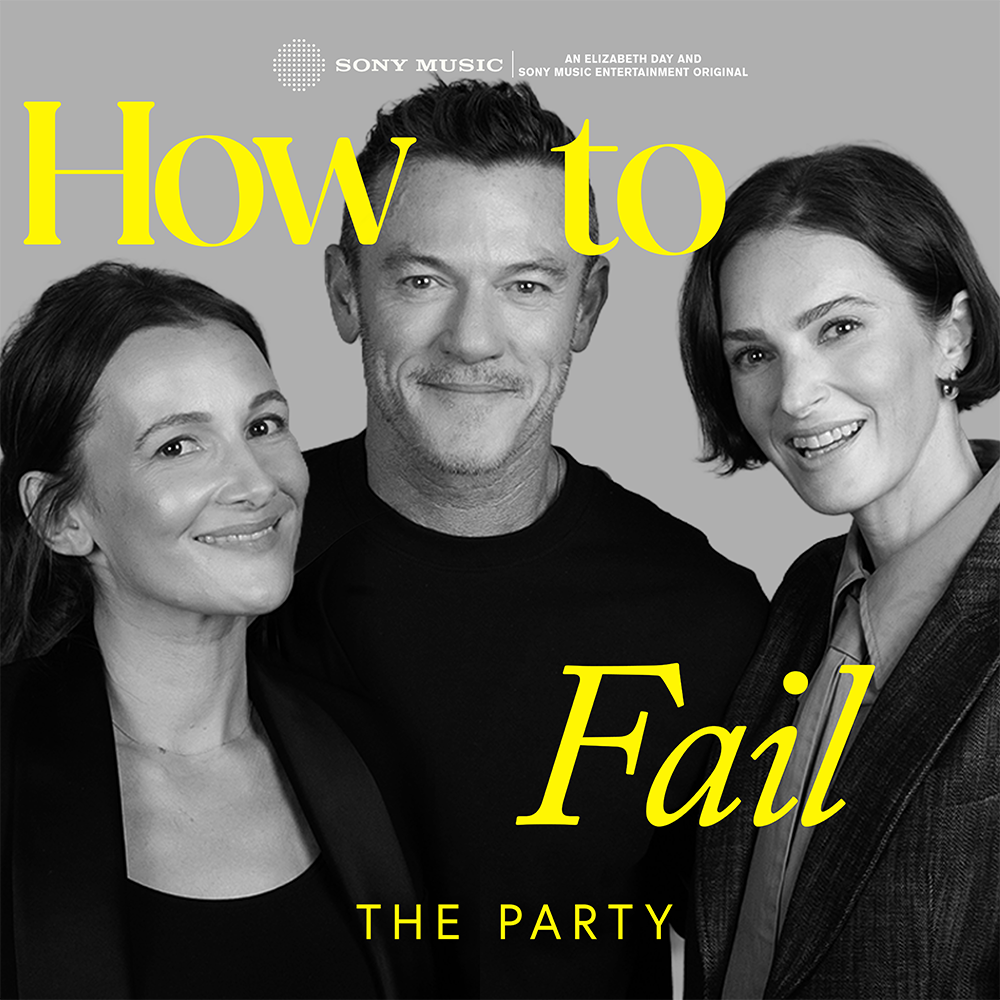
Luke Evans and Sarah Solemani join Elizabeth to talk about the journey of Elizabeth’s 2017 novel The Party to its new five-part ITV adaptation.
Luke stars as the show’s protagonist, Martin Gilmour, and Sarah stars as his wife, Lucy… oh and she also brilliantly adapted the novel for screen.
The trio discuss the making of this exciting new drama for TV, how Luke discovered the book and kick-started the process and what the show is about. They discuss themes including: sexuality, the class system in the UK, shame, women leading production, culture on sets in today’s world and friendship.
This bonus episode is brought to you by @arlalactoFREE - all the taste, easier to digest.
IN THIS EPISODE
00:00 Introduction
01:42 Luke Discovers the Novel
02:51 Finding the Screenwriter
04:45 Adapting Into Five Episodes
07:13 What The Party Is About
09:44 Casting Lucy and Onscreen Marriage
13:04 Collaboration and Set Rewrites
18:09 Women Leading the Production
19:35 Set Culture and Final Day Speech
21:15 Author Visits Set and Craft Details
22:26 Friendship, Desire and Identity
25:08 Class, Shame and Final Takeaways
WANT MORE?
Luke Evans - swap.fm/l/2AAJhVeDNGdKIJGdznR9
LINKS + MENTIONS:
The Party starts Sunday 11th October 9pm on ITV1 and ITVX. The series airs for three consecutive nights: Sunday, Monday and Tuesday, concluding with the fourth and final episode the following Sunday 18th and Monday 19th. Or you can binge all five episodes on ITVX.
Join the How To Fail community: www.howtofail.supportingcast.fm/#content
Elizabeth’s Substack: www.theelizabethday.substack.com
Subscribe on Spotify, Apple or wherever you get your podcasts
Leave a 5⭐ review – it helps more people discover these stories
Instagram: @elizabday
TikTok: @howtofailpod
Podcast Instagram: @howtofailpod
Website: www.elizabethday.org
Join our community of subscribers here: https://lnk.to/7i0moR
Have a failure you’re trying to work through for Elizabeth to discuss? Click here to get in touch: askhowtofail.com
Production & Post Production Coordinator: Eric Ryan
Engineer: Matias Torres
Assistant Producer: Shania Manderson
Senior Producer: Hannah Talbot
Executive Producer: Alex Lawless
How to Fail is an Elizabeth Day and Sony Music Entertainment Production.
Find more great podcasts from Sony Music Entertainment at sonymusic.com/podcasts
To bring your brand to life in this podcast, email podcastadsales@sonymusic.com
LOVE THIS EPISODE? Follow How To Fail & Elizabeth:
Learn more about your ad choices. Visit podcastchoices.com/adchoices
Scan the code with your iPhone camera
Listen in the app.