Ask ChatGPT
 HUNGRY.
12 Oct 2026 · 1h 55m · 53 chapters
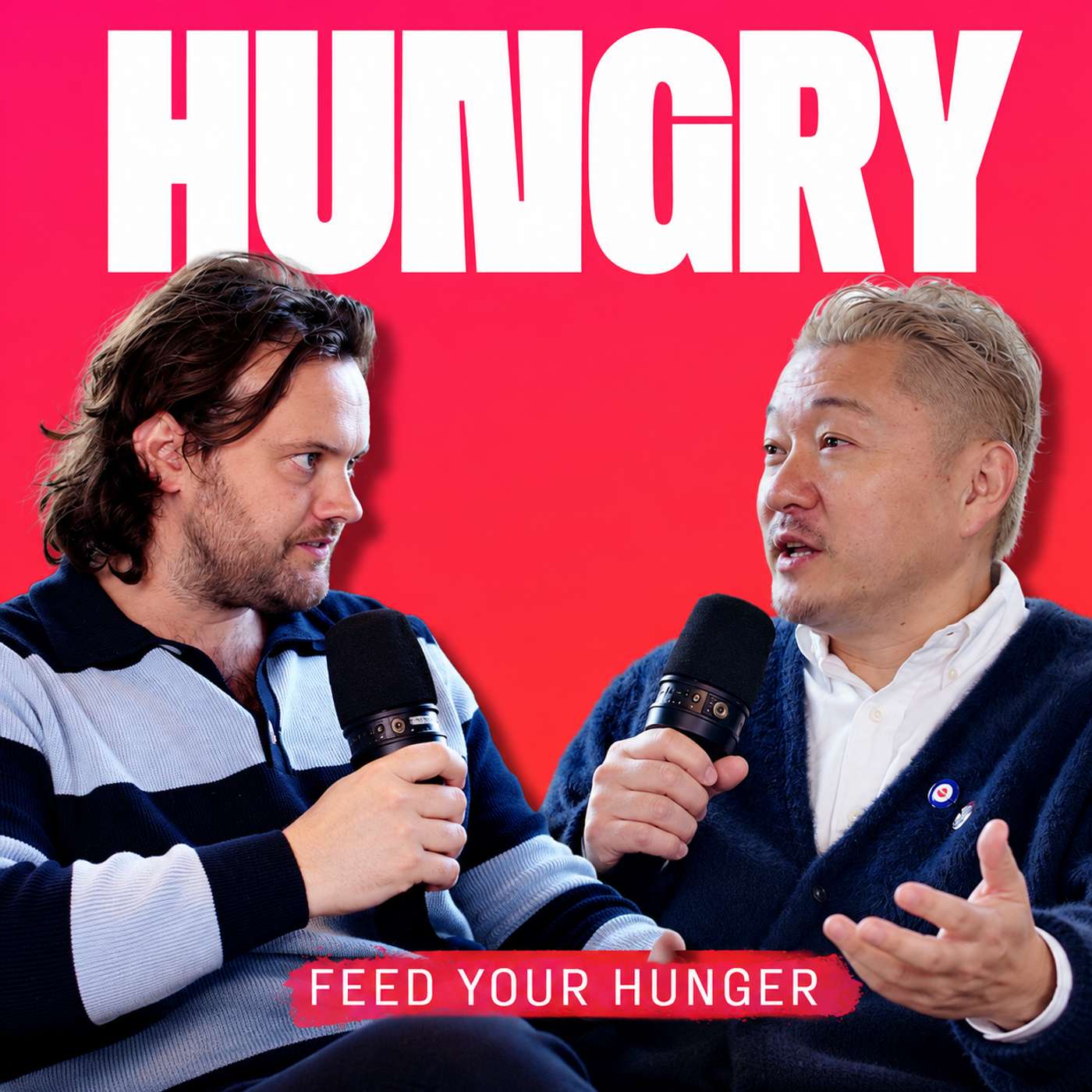
Endo Kazutoshi, a Michelin-starred sushi chef, explains how discipline and “mentality” shape sushi more than technique. He frames his work as destiny and hospitality (omotenashi), built on three “golden triangle” relationships: guests, team, and producers/suppliers. He also discusses presence, guest empathy, and adapting omakase in real time.
This episode is an interview with Endo Kazutoshi (53), London-based sushi chef and owner of Endo at Rotunda (opened 2019). He previously worked at Zuma and traveled for roles across major cities (Amsterdam, Hong Kong, Dubai, Abu Dhabi, Istanbul; also New York). His culinary lineage includes his father (started chef at 15; grandpa earlier) and his “master” who trained him in a traditional, low-verbal, observation-based style.
Written by AI. May contain mistakes.
Explore the mindset behind sushi mastery and the importance of discipline.
“Billion times make sushi, training, but mentality not easy.”
Endo shares his initial surprising experiences living in London.
“If you listen to the podcast regularly, you know I love reading.”
Endo reflects on the subtle teachings he received from his mentor.
“I read that that time for you was very hard and brutal.”
Discussing the essential mindset chefs must adopt beyond techniques.
“Have to think why they suggest me like that.”
Endo explains how a team-oriented approach fosters creativity and responsibility.
“I'm team member as well what's my responsibility?”
The significance of sourcing ingredients and local collaborations in cuisine.
“That three triangles always nicely, we make success.”
How Endo applies the concept of 'ichigo ichie' to enhance guest experiences.
“Anyway, the name of the beers escaped me, but it goes down swimmingly fast.”
Learn how presence and creating memorable experiences enhance dining.
“The festival I always try to do is the most memorable time in their life.”
Discover how laughter and spirituality play roles in sushi dining.
“For example, you know, my hair is like a very crazy now.”
Understand the concept of omotenashi and its significance in hospitality.
“It's very Japanese style of the hospitality.”
Explore how personal life experiences influence culinary practices.
“That some of the Japanese language cannot translate to English.”
Learn the crucial lessons on dedication and craft from a sushi legacy.
“That's because, you know, the chef is not my job.”
Discover the importance of tea-making in the journey of a sushi chef.
“So in the UK, you know, when you go to restaurants, do they have too much soy sauce?”
Discover how the chef learned sushi-making through observation and practice.
“Oh, months later, little bit close to the mouth.”
Learn how the chef tailors the sushi menu based on guests' emotional states.
“Then I change the menu, last minute, sometime.”
Explore the tension between teaching and experiential learning in culinary training.
Understand the impact of technology on sushi making and chef training.
“all the time shouting shouting that yesterday I speak what sort of stuff do you shout yeah it's like no no right things no right way I'm everybody But hey, guys, stop.”
Discuss the connection between hard work, joy, and the culinary experience.
Examine how sushi restaurant culture has changed and the importance of accessibility.
“Price, mobile number, that address, everything.”
Hear about the chef's career path and experiences in various restaurants.
“But my restaurant is, of course, sushi restaurant in London.”
Learn about the valuable lessons Endo Kazutoshi gained while working at Zuma and how it shapes his current philosophy.
“I organizing section like teaching, make menu.”
Explore how Endo emphasizes the importance of team relationships and a supportive environment in the restaurant industry.
“Guests are very always say, oh, thank you very much.”
Endo shares insights into the importance of being adaptable and present in high-pressure environments.
“So you said pressure, everyday pressure.”
Endo draws parallels between sushi making and punk rock, emphasizing creativity and breaking traditions.
“So don't look at the tree, look at the forest.”
Explore the connection between punk rock music and sushi culture.
“And so what was, what kind of music was it?”
Discuss the historical evolution of sushi and its innovative aspects.
“So, yeah, because you say sushi is my punk rock on your Instagram, what does that mean?”
Understanding personal judgment in taste and culinary preferences.
“I never eating, but they many people asking me, what do you think?”
Endo shares his surprises and observations about life in London.
“You know, push against what's moving in the right direction.”
The impact of Zen practices on the mentality of a chef.
“used to be over hours takes time to eating to East London, Hackney speciality.”
Discussion on Japan's changing societal norms and cultural evolution.
“Yeah, yeah, yeah, yeah, yeah, yeah, yeah.”
Explore Japan's mentality and rapid development after World War II.
“Only just less than 20 years later, Olympic Games is coming too.”
Discuss the Edo period and cultural changes influencing modern Japan.
“After World War II, less than 20 years later, Tokyo Olympics is coming, ex-Tokyo Olympics.”
Connect samurai principles to modern entrepreneurship and resilience.
“Then inside Japan war, the samurai lose, the samurai generation is finished.”
Learn about the importance of consistency and daily focus in the culinary world.
“Yeah, because he's a famous samurai, right?”
Gain insights into how personal losses and challenges can inspire resilience.
“After you're meeting, what's happening in the kitchen?”
Discover how to find purpose after loss and the importance of community support.
“I told you, my restaurant is my everything.”
Endo shares a personal story about camaraderie and emotional experiences at a pub.
“automatic Automatic, you know, automatic.”
Endo discusses finding his purpose in cooking and the emotional impact it has on himself and his guests.
A conversation about the complexities of reality and perception influenced by social media.
“The fire, I was listening to Liyah as well.”
Endo explains the significance of calligraphy in his life and its connection to Zen philosophy.
“SNS what's that like you know posting like Facebook yeah okay yeah some kind of things A lot of, you know, like gossip, news, a lot of things.”
The dialogue explores the nuances of language and expression in Japanese culture compared to English.
“I present to the chopstick and the menu.”
Endo shares his perspective on art, extending beyond traditional forms to embrace life and cooking.
“like art and I think you said sushi is your art or sushi is art like what artists do you like?”
Explore the interconnection between art and sushi through emotional expression.
“But then I'm thinking, maybe I have to think in something.”
Discuss how restaurant design influences the dining experience.
“This restaurant's first touch is more like a combination.”
Learn about teamwork and discipline in the kitchen from a sushi expert.
“the ones of like you know with the london eye and it's like the japanese oh yeah yeah what's Where are those from?”
Understand the importance of respect and cultural wisdom in personal relationships.
“I have to explain Japanese skill, Japanese mentality because of Japanese restaurant.”
Discover how manners can impact business interactions and relationships.
“On a Sunday Exactly Because She takes The apple doesn't fall Too far from the tree Because I don't know About her It's a daily life Yes Yeah But what's wisdom, you know, your mother, your father, your sushi master?”
Analyze the role of aggression in achieving excellence in culinary environments.
“No But I love baseball I'm very typical Japanese I love baseball Really?”
Explore the complexities of team dynamics within high-pressure environments.
Explore how aggression can drive excellence in sports and beyond.
“With football, like soccer, if you watch those documentaries, Pep Guardiola, do you like football?”
Discuss the importance of balancing passion and control in creative processes.
“What's one truth you believe most people would disagree with you on?”
Learn about the cultural distinctions between Yokohama and Tokyo.
“That's why always reality is very important.”
Understand Yokohama's historical role in international trade and culture.
“Tokyo is very cosmopolitan, like a capital city.”

Get the gist, explore an idea or ask about something said.
 Claude
On HUNGRY., what are the key points of this episode?
Searching your listeningAutomatic transcript. May contain errors.
0:00Technique is easy to learn. Billion times make sushi, training, but mentality not easy. Today is never coming back. Yesterday is yesterday. Today is today. Tomorrow is tomorrow. I'm not challenging anyone. I'm challenged by myself. Your logic, our logic is totally different. How thinking, how to show, how to improve. My starting educator of music is punk rock. My mom is very upset. Don't listen to that kind of music. Too much educate. I was a child. That's why I go to Anarchist. Oh, good. What surprised you about London when you moved here? That's the most surprising thing is train never comes on time.
0:45That's I'm surprised. Don't watch in the tree. We have to see the forest. Chef is like one of the part is very artistic. They used to be working in Michelinster, like French kitchen. They just say yes. I ask him, how long you say just yes? You have to think. Many guests laughing to me. Oh, Endo, why are you watching me? I'm not watching today. I'm watching how to eat. This is omakase. This is the hospitality of the Japanese spirit. Chef is not my job. This is my destiny. Yes, yes, people. So the hungry reading list is here. Right? If you listen to the podcast regularly, you know I love reading.
1:26I think books are the most beautiful thing in the world. As Stephen King said, they're teleportable magic or something like that. These books, I whittled down my gargantuan bookshelf into 46 absolute 30 bangers. The link is in the show notes to get the list, whatever. And it'll also make you a subscriber to our weekly newsletter, which I think is sick. So, yeah, get your fucking books, buddy. Yes, yes, people. We're trying to make Hungary into the most valuable food and drink business podcast on planet Earth. But I really need your help. I want to make this podcast so valuable for you to help you grow your business faster, stronger, better, have way more fun.
2:03We've got a super short customer feedback, sorry, consumer survey, audience survey thing on Google Forms. There's a link at the top of the show notes. If you could fill that out, it would be so helpful. We make this podcast way better for you. Let's start with your sushi master. I read that that time for you was very hard and brutal. What did he teach you? Or, yeah, firstly, who was he? What did he teach you? And what are some of the life lessons you picked up from him? You know, I think he nothing teaching me. Okay. Like, this may be very traditional Japanese style, I think. but I really understanding like last 10 years ah that's why like you know what reason why he do for me like basically my father of course my father starting chef 15 years old my grandpa is he's eight years old it's like long long time ago generation is different I'm quite late I'm starting shift 22 years old after graduate university so i'm joined first day he told me just short sentence your logic our logic is totally different your what sorry your logic like uh it's like a rule of the of the life yes so that's why today you draw the line don't i i don't think my logically like life think everything full commit to what he want if if i can do this you join to my team something like that so he wasn't he wasn't telling you anything he was showing you no just like uh do this do that do this do that but always sous chef suggest to me chefs never speak to me really yeah never so whereabouts was the first restaurant you went into so i give the cb like i give the 10 cb yeah so because before i never make sushi also i never work in the kitchen so what yeah what were you doing from 11 to 22 what was that period 11 to 22 okay so i bought a sushi restaurant yeah but of course my mom educated me i was five years old so I was like a primary school I never my memories never play with my friend always after school I'm straight I learn to like a Japanese classic dancing tea ceremony flower arrangement calligraphy is I'm busy children she very kid very busy kids so my mom is like I'm first son that's a maybe she got a lot pressure to around the family so i i want to be i have to be sushi chef take over family business that's why my mom have to educate me i was child but of course i don't using knife i don't cooking anything but like a kind of mentality of the chef mentality of the chef exactly tell me what that is that for example how this how thinking how to show how to improve how to suggest so that's like uh you know chef is like uh one of the part is very artistic so that's why always my mom told me see the good picture good things why the artist make like that our child you know i can't thinking but my mom always told me bring me like oh you have to think You have to think things.
5:54You have to think things. Yeah, think why. So not just say yes, yes, yes, yes. Have to think why. Have to think why they suggest me like that. Why they writing calligraphy like that. What's inspiration coming from? I was a child already. My mum always speak to me like that. You have to think why we do this. Do you know Sat Baines, the chef in Nottingham? Mm-hmm. Two star chef. I interviewed him and he said everyone who works in his kitchen, he won't teach them how to cook. He'll teach them how to think. Yeah, absolutely. And I think, I think, pardon the same think a lot. I think that's a really interesting lens to look through is it's not about what you're cooking.
6:37It's about how you think. It is. So, so, so one thing you said, mate, is about always asking why. So why is that like that? Why is almost that childlike curiosity? It is. What other things, what other principles did your mom teach you at that age? So very important. So we have to understand the first step is the principle. Yes. That's very important. After not just like a machine, have to think why chefs speak to me like that. Why we need this. Like always I speak to my team like we are union. Yes. Kind of. Yeah, yeah, yeah. I'm one of the members of the union in Endowat, Rotunda. That's why each person have to think what I have to bring to the team.
7:20I'm team member as well what's my responsibility? so it's not hierarchical it is of course we have a pyramid but it's more like that yesterday I have three commies I speak to three commies they used to be working in Michelinster like French kitchen like Italian kitchen something like that they just say yes for me for me okay I ask him until how long you say just yes yes yes yes you have to think why i suggest you why are you chopping this why knife is this shape you have to think why exactly why why why then the end of course you we are sick you know 16 17 hours every day we work so after work always friday night i don't want to say party night but friday night this is my style you know every day hard work is a lot of pressure to be honest because our guests coming from all in the world from America, from Europe from Asia, everybody book first my restaurant after buy the ticket so that's high pressure then Friday night all finished after 1am I'm appreciated, I buy the beer and wine, like everybody makes nice stuff for me the night take me into the night Yeah.
8:42Then it's a little bit drinking after, you know, they starting talk. Ah, chef, why we do this? Ah, chef, why speak me two days ago? You know, a little bit more conversation. So for me, sorry, my opinion, technique is easy to learn. You know, billion times make sushi, training, maybe OK. But mentality, not easy. mentality is not easy yeah that's why sushi chef is first maybe half to 10 years starting have to learn from the guests from the people from the produce if 10 years is complete go to the next step what's the next step it's maybe in charge of the restaurant it's open the restaurant You know, technique is technique.
9:40It's mentality, how to approach attitude. Japanese wrestling is very important, attitude. What's the right attitude? What's the right attitude? What's the wrong attitude? Appreciate, of course, appreciate that. I always say golden triangle. Golden triangle. Yes, I always say. Yeah. One for the guests, one for the team, one for the producer and supplier. That three triangles always nicely, we make success. That's what we have to learn. So take me into the producer part. So for example, it's my produce, it's almost 90%. I buy from the direct from the fish farmer. Even funny things, micro herbs, it's come from Acton town.
10:26You know, it used to be my restaurant. Unfortunately last year it's bonded, but before bond, I have a private garden as well in Hawaii City. And one of the guys or Endo-san, anything you want. So we collaborated five years before. He made like micro herbs. Can you imagine? He took himself 3 p.m. Delivered at 4 p.m. Wow. Every day. Yes. That for me is like appreciated that we work together. So before I opened Endo-at-Rutanda, I live in Cornwall as well. seven months you live where cornwall lizard oh really whereabouts in cornwall it the lizard oh the lizard that's right with the beach the tip yeah but it's a not only just lizard i live in so many like place what other places did you live yeah it's like cornwall all around cornwall you know southwest do you know um lukey farrell who does speedboat i don't know so he lives in thailand I was just in Thailand with him in January.
11:28But he has a farm. He has a speedboat in Soho. And he has a plaza in London Bridge. Thai restaurants. Really authentic. Okay. He fucking lives in Bangkok. Oh, okay. But he smuggled ingredients. Well, yeah, this is the story. He smuggled ingredients and he has a farm in Dorset where he grows those really authentic Thai ingredients. And now he's got these greenhouses full. and they go straight to his restaurant. And it's that appreciation again, but it's on the South Coast because that's where, you know, you can get the, I don't know, I'm not some sort of farmer, but the right environment to grow the stuff.
12:07It's mad. Yeah, so, yeah. So what were you doing in Cornwall? Just learning? Just I want to know about what's happening in this country. Yeah. Because before I opened Endor, I really want to, my concept is I'm using local produce. That's main focus. Yes. So where the best place is Cornwall. Yes. That's where I go. So, of course, I've been to Devon, Scotland. It's Northern Ireland. I go everywhere. What's your favorite place? Cornwall. Whereabouts specifically? It's the Lizard Peninsula. Yes. That's amazing. Then used to be, a little bit heavy for me, it's Cornish Passy. But now my favorite. It's amazing.
12:51One of the lizards. Then it's like They have the pub Yes The beers Oh Mate what's the Cornish beer they have Which is I forgot the name But it's really No no no It's It's on the tip of my tongue There's this Cornish beer they have And they have it in They serve it in like The Cornish arms Yeah And on a hot summer's day In the beer garden Yeah Like all the builders coming in You know They've got the little church outside Right And they have Their rolly cigarettes Packet of crisps That's really nice It's very a beautiful thing to, you know. Absolutely. Yeah. Oh, my God. Anyway, the name of the beers escaped me, but it goes down swimmingly fast.
13:29It's glorious. So the producer side is understanding ingredients, respecting ingredients, appreciate ingredients. On that triangle, go to the customer side. I read that you, I think you've said the customer experience is empathy and spirituality. how do you think how do you apply spirit spirituality to service uh my favorite word in japanese word is ichigo ichie the meaning i don't know sorry my english pronounce is not great but once meet once a life once meet once a life like that day is a one of the night yeah like for example today is never coming back yesterday is yesterday today is today tomorrow is tomorrow so presence in today exactly so everybody live different place everybody come same time six o 'clock everybody sit same place eating same food so this is kind of like we have to make great time to then the guests.
14:38The festival I always try to do is the most memorable time in their life. So how we approach to the guests I really don't want you know, before I open Endo, many times I go back to Japan I go to many restaurants specialty like high end omakase or kappo style. People know much, explain, introduce why we developed this food, this fish is where I come from, that kind of people create the fish, just serve. They also most memorable times, so five years ago, I've been to one of the great restaurants in Kyoro. Without me, all foreigners, non-Japanese people, they cannot speak English I'm sorry my English is not good English is great better than my Japanese they cannot speak English but they don't know anything or what it is what it is or how to eat yeah yeah yeah but food is not just flavor flavor is one of the part it's experience also relax also memorable time that we have to like I'm conductor how everybody like orchestra not just like food yes everything so how do you apply spirituality to that to create that so i of course we chat a lot we laughing a lot then i will explain to everything why endo does this why my team is do this why we using the chopstick why we using the plate so that our clock is in 70 to 90 percent i design or i made it wow yeah so so almost keep i actually yeah i haven't ever thought about this but also laughing is a very spiritual thing yeah it's a very if people are laughing not no ai no algorithm no fucking nothing can replace that feeling it's probably i haven't actually thought of it but laughter might be the most one of the most spiritual exchanges between people.
16:51So how do you get people laughing? Cracking jokes? Yeah, it's a lot. A lot. What's your favorite joke? I don't know. Like, it's a lot. A lot. I tried to do this. For example, you know, my hair is like a very crazy now. So this unusual hairstyle. Yeah. Sushi chef. So my signature sushi is oyster. Right. It's from Irish oyster. The marinated sauce. The sauce is from my master. Then my master, before open end, he gave me seven liters. Okay. Seven what, sorry? Seven liters. He gave me the sauce. Right, okay. Yeah. The sweet soy sauce or something like that. Well, just one tub of it. Yeah, like this.
17:35But no more constant supply? No, no, this is like a top up, top up, like more than 100 years. Like his master, that sauce come from his master. Wow. That sauce has come from his master. something like a more generation legend legend kind of like a legend from the legacy so then last time I decided to pop up in Alibus because that sauce is burned as well last September I don't have it so I go back to Tokyo I request my master can I get the sauce again this time he gave me only just last time 80 years ago he gave me 7 liter so this time only just like 150 mil what use is that? yeah that's why I'm wondering I ask him why he said he has a lot still but he gave me only just like 150 mil 200 mil I ask him why he hate my hair then he said to me if I back on track the black hair back on track he happy to 10 liter 100 liter he offered me so until that gold hair Now the gold The gold hair is great mate That's why Maybe After Annabelle Finish the pop up Maybe I'll back Back on track To black hair I see Or dye it pink No If he Dye it pink You'll get a little pipette You'll get a pipette Maybe I bring back The passport You know I change the nationality Oh that's hilarious So So Yeah so Just pushing on the spirituality So it's about Having you know, making people have fun, laugh.
19:18What else? How else do you create that experience? Also, we call it omotenashi. The very Japanese word. It's very Japanese style of the hospitality. What's it called? Omotenashi. Omotenashi. Omotenashi. That's a very key word. But some of the... What does that mean? Yeah, exactly. That some of the Japanese language cannot translate to English. Mate, mate. It's a lot. My two favorite authors, You know, there's two Murakamis. So there's the Murakami who did Wind Up Chronicles. Have you read those? Yeah, yeah, yeah. But you know the other one, Rue Murakami, who wrote In the Miso Soup? Oh. Crazy book.
19:57My favorite book. Have you read it? Yeah, no. Oh, so it's about this American. It's fucked up. It's about this American who goes with this tour guide around Tokyo. It's a short book, but it gets really twisted and sinister. Right, right, right. and um yeah it just it's it's it's a very very beautiful book but why i love japanese um i went to japan in 2019 blew my fucking mind man crazy beautiful bombastic place yeah but that you have words that mean nothing that we don't have in english language i think you have a word for walking through a forest while bluebells are up what other words do you have that we should appreciate in English in the Western world.
20:38I think it's important. Yeah, like it's very like in the beginning, I tell you, my master never teaching me. He teaches, but no word. The word is word. We can, we have to catch in the feeling, you know. That's why, for example, we always check in the guests. There are many guests laughing to me. Oh, Endo, why are you watching me? I'm not watching to them. I watching how to eating how to biting one of the piece of nigiri how many biting finishing so how many should you buy it that's why if biting different i make smaller i make bigger they also putting salt on top sometime how to eating the pointing salt is different position i don't know how many people does this is omakase this is hospitality of the japanese spirit No, I really don't want guest requests.
21:35Little bit more less, little bit more big, more soy, more water. We have to search. We have to catching. This is master teaching me. I have to catching. Catching, as in catching the feeling? Catching the feeling. What they want. Guessing. Guessing is very important. How do you guess? this is experience that's why chef need experience of the life also like you know life no life experience how running the business also how understanding come from the guest team supplier yeah so maybe chef is like specialty for me japanese cuisine chef the most important thing is the life experience what are some of those important experiences if you could pick three that you bring into the...
22:26Yes. You know, for the guests, that's why I created the ceramic as well. Yes. The reason why I bring to the great fish, great produce for the guests, for the team. You know, like everybody for supplier for me, I'm for them. You know, every like a circle. Yeah. That for me is like, it's very important. And what are some of the experiences you've brought in from your life, you know? Whether it's from your childhood, from your learnings, from your holidays, like what do you bring into your restaurant? It's everything, so everything. Everything. I love that. That's because, you know, the chef is not my job.
23:16This is my destiny. I never thinking about never thinking I like this I don't like this I never this every morning I automatically wake up automatic thinking that's like automatic because I never thinking this is my job the end of the thunder that's not my working place that's my everything no matter any reason always 100 % I love that yeah that for me is like very important that's why in the beginning I tell you the union so everybody has a joint union, we have an end we have a room, we have a circle we have to think that's no work this is ours you know, always I don't care if my chefs they need ambitious in the money or name I don't care any purpose I don't care but at the moment we work together We have to think, we have to follow the rule of the end of the thunder.
24:19We have to think, how did everybody do the goal? What's goal? I don't know what's my goal as well. Just your destiny. Yeah. And your destiny is doing it every day. Absolutely. And not knowing where it's going to go. Absolutely. And letting the destiny tell you where it's going to go. It is. That's why maybe most shocking stories. Unfortunately, 10 years ago, my father passed away. He doing sushi is like 65 years. His life is sushi. Then me, young brother, my big sister, we clean up to my father's room. We don't know anything. He writing diary 20 years. Then last diary, last page is three days before he passed.
25:09What he writing. It's very difficult cooking rice. Can you imagine? 65 years he's doing everyday duty job. He says still difficult. My young brother also take over my family business. Me, young brother, stopping thinking. Too far away. I'm just 30 years I do the sushi ship. So what else was he writing in those last pages? Yeah. what else no that's it just I still need to be better it's still hard no just like how make better can you imagine 65 years he doing the same things every day but he's still thinking how make the sushi how make the rice you know rice is first of all rice is most important why because rice is more than fish more sort of rice the rice is key should you have soy sauce with sushi so many people i don't want to say soy soy sauce there's no sauce like a just perfume kind of yes like we have the rice is already flavor the fish is like rice is base then we think what kind of fish accept to the rice the rice is confirmed the fish is confirmed the soy is a little bit fucking little bit aroma little bit more flavor little even something like no sauce.
26:39So in the UK, you know, when you go to restaurants, do they have too much soy sauce? Of course, you know. Or soy, I should say. I don't want to warm the root because it's now in 2026. So, you know, 100 people, 100 different. I'm welcome to do. But for me, soy sauce is like a kind of like a how thick of the flavor. Not like a sauce. Not dipping. Like a little bit touching. It's not mayonnaise. Not ketchup. Yeah, yeah, yeah. It's just a little... It is. Very interesting. So what other lessons did you take from your father that are applicable to life? My father... A lot. But my father also, my master also, very similar.
27:30How so? He not much talking to me. Why? But always, this is kind of like, I don't know, this is very old school Japanese. Really? Not much talking, but young people have the catching. I don't know, baby. Have the catching. Improve the catching, what he wants. For example, first year, my first job, make tea for my master. We go to fish market every morning. My master comes at 6.30, exactly 6.30 coming to the restaurant. me and my senior chef we live in the first floor in the restaurant my life is sushi restaurant always then 6.30 he open the door he sit in the chair automatic I serve to the tea even my senior chef never speak to me how to make the tea just he say to me how you serve to the tea I ask him how because one week before I'm a university student you know I don't know anything I don't know how to make the miso soup I don't know anything yeah yeah yeah even sorry I'm very very bad you know I never make tea for anyone yeah then he that day I'm never ever forever he he didn't touch they go to the market I'm shocking he don't touch anything.
29:00Then one week before he touching. That's the first step. Oh, he touching. Oh, months later, little bit close to the mouth. Finish. You know, he never say no good. So you're learning by watching. Yeah, that's a watching. I have to think what he want, what I have to do. Because raining day sunny day uh dark like cold like always situation different but now i understanding you know for example look and not through thunder now in the annabelle's when a guest come i check in the guest hi how are you welcome to endo no like a like this like introduction I'm catching what they're feeling, tired, come from the workplace or from house, age, guessing everything.
30:00Then I change the menu, last minute, sometime. Give me an example, specific example of where you've, someone's walked in, you've caught the feeling, the spiritual feeling in the room. And then you've changed Omikasi style, the menu. It is. No, but is there an example of that? For example, yesterday. There's a big, big, big, big, for example. Yesterday, 6 o 'clock, the first sitting on the guest. Almost half minute, I changed it. Last minute. To what? So what information did you catch? And what did you change? So for example, maybe today is like 10 people. Maybe we have to change the numbers. Maybe first, tonight more, in the beginning is better.
30:52This is not this. Maybe instead the tofu or something. Like always, I can't explain to you this experience. That's like a sense. Is it when craft compounds? The more you do something, the more you experience it. Exactly. this is like a sorry I can't explain this is like sense yeah yeah yeah no I like I like some things can't be explained but this is she have to but there's a thing between like 2D lessons there's a guy called Chris Williamson a podcaster and he talks about 2D lessons which is something that you know you could tell a recipe right 3D lessons like it's something you can only understand by going through it you know so heartbreak no one tell you can't read a book about how to deal with heartbreak do you know i mean you like no you have to fucking go through it right to understand it and that's a you know 2d lesson 3d lessons yeah and i think that applies not only in life but uh you know your destiny right you're cooking you're running the restaurants like only through being in that situation yeah hundreds of times can you understand those 3d lessons which is like right we're going to change that's why i always you know i was young like i'm starting chef first i make sushi i i asked my father how to become much more quicker to learn understanding he always speak to me guess educate you guess educate me how you know now you know it's everybody has mobile smartphone like a comment to something but used to be guests direct speak to me oh you sushi is too loose you cut it too thick you know that's like a great great like times like 30 years ago still people more closer no one mobile if not good never coming back of course some big guests but some of the guests really like the lesson my master's lesson that's why he suggested me ah today last time you make tea it's too hot you have to think more guest speak to me like that everybody like kind of educate to the young people but now you know if young people something wrong no one pointing that yesterday sorry that word is no good or no but I'm quite shouting all the time shouting shouting that yesterday I speak what sort of stuff do you shout yeah it's like no no right things no right way I'm everybody But hey, guys, stop.
33:33Stop the hunt. Please come to me. Yes. Then I speak to them. So the end of the day, I speak to them. So if I'm thinking you are one with the staff, I never shout. I don't care. If you're at one with... You know, for example, my staff. Yeah. All shifts. Yes. If got something... Okay. For example, they do something, go to long way. Yeah. If the guy, I don't care. because I'm feeling like one of the staff. At one? Yeah, one of the staff. Like I don't care his future. Yes. I don't want to shout. It's okay. Just two hands. But I speak to them. If you join my team, this kind of like family, my son. If, for example, opposite, your father, your sister, your brother, somebody along, you have the pointing, right?
34:24Same. I'm honestly, I really want you join my team. that's my honest. I'm straight speak to them. Why, why you something go too wrong? Reason why do this, do that, do this, do that. So, you know, just like, I'm looks younger. I'm 53. You're 53? Yeah, 53. Looks like. He's got to drink in East London more often. You know, it's our generation is, we have to, young generation, we have to tell. So, so when you were growing up, No one told you. You had to watch and observe and understand feeling through no verbal communication. Now, you, with your young chefs, you tell all the time. Yeah. Because now, it's a totally different situation.
35:12Because I'm starting a chef. No one has a smartphone. 32 years ago. Yes. Yeah, yeah, yeah. You know, now, too much information. if you want any recipe you go to google you go to chat gbt they give the answer my time zero so too much information that's a day confusing that's why how maybe we need they don't have experience at the moment because one year two years that's why for my job I make first one of the rules she will have to like that what do you mean you know okay right approach to the produce i i make example yes then he have to make one of the target if he's clear he put on his feeling ah maybe i do more better i need base he they need base i make base first because too much information youtube they they showed how to make sushi but they can judge there's right or no right way the first day worked with me I make a base of that kind of like I give the base of the idea but you know I was for example I told you one week before I'm university student I'm starting chef next day my senior chef told me tomorrow you make I make stock meal how i'm never using knife how how did you exactly that's why that time i don't have a mobile right yeah zero idea i go to public phone i call my mom yeah then she give me she give me the recipe okay one one two spoons salt two spoons sugar two spoons something like that you know this this but now if i speak to somebody hey stuck me you make stuck me this they check in the mobile ah maybe this maybe that it's also like now there's so much information youtube like like i mean i i like doom scrolling like i just sit there and just yeah if i'm hung over i'm just bang bang and i'll do four hours of it i don't give a fuck but like it's so easy to get it's ironic it's so easy to get information it's actually exhausting and there's no um reward to it whereas before doing hard rewarding things are hard right so it's going to call going out the restaurant to call your mom on the payphone paying for it it is bringing it out it is now chat gpc tell me how to make some fucking nigiri but where's the joy in that like where's the what joy equals hard hard equals joy like it's yeah you know it's sushi restaurants very my feeling it's not open sorry this very positive or negative i don't know basically sushi restaurant is very hidden meaning like not open that's great that's cool for me For example, now you check the mobile and all information comes up.
38:29Price, mobile number, that address, everything. But it used to be it's like Ginza is one of the best places in the world in Tokyo. Ginza is a lot of sushi, but very hidden. When I go to a restaurant, I don't know how much they charge. You know, how, zero. but you know now used to be okay for example 200 sushi restaurants in one of the city one of the Tokyo not much restaurant closing down because everybody each person had a good judgment I love this because no mobile no information like a five star three star two star zero just I like it that's judgment itself That's my favorite, my favorite, my favorite.
39:22But now when we decide to go to lessons, first we check the Google map. How many score, how many this, or maybe good. Google review is nice. Yeah, everything's become, everything's become like numerical. Yeah. So how many followers you have, how many likes you have. And it's just like, that is, I just don't think that's a healthy place to operate. It makes you very anxious. Yeah. It makes you very not present. It makes you not, you know. But my restaurant is, of course, sushi restaurant in London. So my mission is I introduce our culture. That's why I totally opposite way. I'm fully open. Where or how I practice fish, I explain to everything.
40:17because I really want everybody understanding, more fun. When, you know, I always have a great story. I explain to everything. Oh, next week I go back, I go to Japan. Oh, good luck, enjoy. After the guest coming back to my restaurant, so feeling like I'm more enjoying Tokyo because I explain to a lot of things. When they go to Japan, they're eating sushi. It really be more understanding, more knowledgeable. What's the correct way to eat sushi in Japan? Correct way, it means what? The right, the perfect way, if you're a tourist. Sorry, maybe now is very good, that's why. For me, it's like Michelin star restaurant is great, of course, but high end also great.
41:03But I really want to enjoy both, not only just high end, maybe like a more local. So, for example, my father's restaurant, very low key. Really? Very low key. What did it look like? Paint the picture? Ice. Side street, main road? It's main road, but small. Only just 15 seats. Dark, light? Yeah, dark and light, just both. Yeah. But, you know, Omagase is like 45 pounds. Wow. Yeah. Where does the best, like, sushi other than your restaurant in London, do you think? Just because I like sushi.
41:42That's a very difficult question because I don't want, I know much eating sushi in this country. Only just I go to Sumi, Sumi is my restaurant. Yes. And Kyoku is my restaurant too. Only these. Only those two, bounce around. But I think a lot of good sushi chefs in this country. Yeah. Why did you come to London out of any countries? What made you come here? Previous I worked in Zuma. yes so with my ex-boss is a Mr. Lina Becker, Chief Lina Becker so Zuma and Zuma offer me so I'm really happy to work together then I came to London 2007 but I'm really happy to work with him so I with him I'm Zuma is that time only London so I'm joined after we we open seven restaurants in Amsterdam London Hong Kong Dubai so speciality my biggest like challenging Zuma Open New York.
42:42I organizing section like teaching, make menu. Like you know this is great experience. Like I'm 35, 39 I go all in the world. Hong Kong, Dubai, Abu Dhabi, Istanbul I go everywhere. Yeah, yeah, yeah. Great experience. What did you learn from that experience that you applied today? ah sorry i love yeah the from chef reiner becker i love from him it's a lot of things i'm lucky enough of course you know i'm a chef there used to be i never thinking about the money things i'm just work work work work work work right he always speak me it's a money also important I keep to like business look after the staff staff life as well my staff's life how do you do that?
43:39yeah it's like of course no much profit cannot make happen of course a lot of guests supporting us that's why very important consistency how of course skill wise our performance but how look after my team as well I really don't want too far away to live because we are long hours working so how managed to the team I learned a lot from him what other things? of course you know now I told you Friday night we drink together that's kind of like show to the appreciated of course daily basis very hard work but after work no side you're like oh let's go drink next week as well we go to East London I love East London yeah yeah yeah all team I bring it to team we drink I love the way you do the drinking thing next Saturday why not so what's an endoteamite outlet like do you go do you go music partying or is it pub just Aira is an AI communication booking platform where restaurants can manage all inquiries bookings Aira allows you to take bookings directly from your Instagram DMs this is literally a world first it makes the whole booking process super seamless.
44:58If a punter wants to ask any question about your restaurant, Aira will answer it. If they want to buy merch or make a booking, they can do it all through Aira. Aira doesn't send them to some icky outside link. This is what I really love. Aira literally learns your unique tone of voice. It will speak like you. It's an extension of your brand, an extension of your restaurant. This means people, when they first interact with your restaurant, it feels on brand. This isn't some shitty soulless bot. Aira literally collects so much information about your customer remembers every tiny weenie little detail about their experience and allows you to build relationships with soul at scale it's so sick a feature i really love is i will automatically send out cold outreach emails i reckon send these emails to people who haven't been in for a while to regulars to people who've got a special occasion coming up the customer simply clicks the link at the bottom the email and the pre-filled booking form is already filled out so you've all you got to do is click and you've made the booking it's so simple click the link in the show notes to book a demo you're gonna love it chilling beer anything yeah anything what do you like to drink anything like wine sake whiskey everything yes we are crazy yes we drink crazy why is it important to be crazy to get that to get that trifecta that triangle how does crazy help that you know
46:21my team as well and guests as well. Guests are very always say, oh, thank you very much. It's appreciated as well. Like one of the words is appreciated. For supplier for the everybody knows. Guests knows because I explained to everything. Guests knows the fish is how effort people supply effort to deliver to us. But supplier knows after me I cooking guests are happy like you know always like a circle yeah yeah yeah then my team also I explain to everything why I open this restaurant why I come to restaurant why why why I explain to everything so for example drinking time after before first 10 minutes I explain to how much I'm appreciated so you know how much you know I love everybody then what our target next what do daily best what we have to do today so always chat chat chat chat after doing this doesn't care but it's interesting it's like the yin and yang of like the craft the discipline the sophistication the simplicity of the food and then the other side is the craziness of the team And I think that when you put that together, it creates this force.
47:55It is. Would you agree with that? Yeah. Interesting. Interesting. So you said pressure, everyday pressure. Yeah, it is. When you wake up, what are the thoughts in your head? Already I wake up, I'm thinking because... What time did you wake up? Day before, already I know what kind of fish is coming. Yeah. Because fishermen always decided what kind of fish delivered to me. Then second I wake up What time? 7.38 Yeah Normally Yeah Then Already my staff Is wake up as well So my head shift We chat a little bit Hey What's going on? So Endo-san What do you do today? Like that Yeah Or maybe I'm guess this This this They don't trust me I'm changing all the time Maybe at the moment 8 a.m At the moment My feeling Maybe today I do this This Okay Endo-san Let me know any change.
48:49I know they already changed. Then I changed, like I took shower, blah, blah, blah. I'm from Ealing Broadway. Now I go to Bond Street. That's why I take Elizabeth's line. Oh, easy peasy. Yeah. But that 12, 13 minutes is very important for me. On the train. Exactly. Before Ealing Broadway to White City, only 10 minutes. I'm super. I have a note every day. super concentrate i'm thinking guest list i watch the guest list and officialist what manage to the day what they like it what they drinking before everything what seating plans well i like everything last time they sit front of endosan uh before they came five years ago it's anniversary what kind of do what kind of things i do more guess is more fun so it's like a game almost game plan.
49:47Yes. Interesting. Then that's 8 a.m. already passed to my game plan. Then 9 a.m. my team we have a big whiteboard. Then my sous chef lighting everything. Then everybody joined to without me the game plan. Maybe Endo-san do this. Then I come it's 10 10.30 I arrive to the restaurant. Hey, morning. They lighting everything. menu then if i change delay delay delay delay i change change change they stopping in the prop because already prop but that problem i don't need it today it's completely changed then so she said this this stop the hand change everything so that 30 minutes on the train yeah that's for me is very important very super concentrate Super concentrated So fascinating And also being It's that presence To adapt And be Like water You know You know Brutally You like You Exactly Yeah Do you know the quote?
50:55This is Exactly Be like water Yeah be like water It's my favourite quote We Absolutely That word is Exactly Yes Thank you It's a quote I use a lot so with this you know like i have a game plan when i do questions but then it's about being present in the moment and just letting i believe i'm quite a spiritual person curiosity is this fucking energy yeah and it just will go where it needs to go and so just be be like water but we did a we did an event uh three weeks ago no about a month ago in uh in ireland in king's cross right and we had all this plan. It was a big supper club. We had like 40, 50 people there, all hospitality operators.
51:41And we had this game plan of how we were going to sit people together so they could connect. We had these specific questions that we wanted people to ask. And before, two years ago, I would have forced it. But the energy, and maybe it's just because I've done it a few more times and more confident. And I was like, fuck this. We'll scrap that and just let it, let the water flow, you know? What other, so Be Like Water, what other quotes do you love? Like, maybe from samurais or fucking whatever, like, what other quotes do you like? You know, that for me is exactly similar. Yes. Be water. Be water.
52:21Yeah. That's maybe very fit. Sometimes, you know, water is very strong. I think that sometimes, like, it's like, I don't know. For me, it's about, we have to always, I don't know, English is very difficult. Yeah, but you can say that. It's not adjusting. Say that, you can say the Japanese word and then detail what it means. Always I speak to everybody. Don't watch in the tree. We have to see the forest. Yes. Yes. You know, not just one thing. For example. So don't look at the tree, look at the forest. Exactly. For example. What does that mean? For example, I make the one with a plate. It's make many, one with a plate.
53:08Don't pick up to one with a thing. All of the harmony. Yes. You know, for example, you're eating like one with a dish. You pick up to, oh, this is strong ginger. That ginger, your head is already input. That's what ginger, ginger. but you have to think whole of the thing of the flavor. The restaurant as well. My sushi is one of the pot. Whole of the thing you have to think. My attitude, how developed, how built is the restaurant. My word, my voice, how built is the restaurant. Sometimes quiet, sometimes offense, back and forth, back and forth. Like a bewater. Yeah, yeah, yeah. You know. Yeah, yeah, yeah, yeah, yeah.
53:53Yeah, I love that. So don't look at the tree, look at the forest. Yeah. Any others? I don't know. Have fun, drink. Yeah, it is. That's important. That's very important. Yeah, yeah, yeah. I think it's really important. I love music. That's why. Because you used to collect records. Yeah. What's your... You know Murakami? You know Norwegian Wood? Yeah, of course. That book? Yeah. That's probably one of my favorite Beatles songs. I think everybody loves it. I mean, if you don't love it, I think you're a bit twisted in the head. Yeah. But it's sort of ding, ding, ding, ding, ding. It's just a beautiful, beautiful, beautiful song.
54:27But in that book, I think he works in a record store. Because Murakami used to collect a lot of records, I think. You used to collect records, right? Yeah, but I... I love everything. Jazz, like J-pop. Mate, Murakami was into jazz as well. Yeah, he was. He, I think he had a jazz shop. It is. Yeah, yeah, yeah, yeah, yeah. So, yeah, so what was in your collection? It's a lot, a lot of variety. But my starting educator of music is punk rock. Yeah. I have a band. It's 15 years old. I have a punk rock band. What was it called? Full copy. Name, I'm very shy. That's why I don't speak the name. It's a crazy name.
55:11No, please. No, no. We can take it out. We can take it out. You know. I think it's important. What's it called? Oh, they, they, they, they're theirs. They, they're, them, theirs. They, them, them, theirs. Yeah. That's a great name. Because, you know, we starting in Japanese program. Yeah. Primary school, we don't learn English. So junior high school starting English. Then we call it he, she, ha, ha, hers. She, ha, ha, ha, ha, ha. They, they, they, they, they, they. It sounds fucking amazing. Yeah. Okay, that button made a bad name. That's a great name. That's a fucking great name. They, them, them, theirs.
55:56Yeah. That's amazing. So did you play guitar? I play guitar. Electric or bass? Yeah. Electric. Yeah. And so what was, what kind of music was it? No, they were full copy and sex pistols. Yep. And the clash. The clash. It's so bad, but we very enjoyed. The clash are just... So, we really enjoyed. Yeah, the clash are just... Then my mom is very upset. don't listen to DACA music. Why? I don't know. She really headache. She's thinking she's long educated me. That's why she's listening to punk rock. You're doing flowering. Exactly. Anarchy is too much educated. I would try. That's why I go to anarchist.
56:39Oh, fuck you. Fuck you. That's hilarious. So, yeah, because you say sushi is my punk rock on your Instagram, what does that mean? You know, maybe sushi is like only just 180, 200 years old history. 80? 100, yeah, 200, 200 years old. Sushi is? Yeah, it's not like 300, 500. Really? I thought it was way, would have been older than that. But you know, but always innovate. So that's why I really want now, my style is this I'm now center of the like line the middle middle of the line what do you mean? it's 200 years ago here yes 2026 here yes 200 years later here yes so now we take over a lot of technique from 200 years ago yeah the sushi chef developed to that technique mm-hmm so how I passed to that 200 years later about sushi chef specialty London maybe London Japanese history Japanese restaurant history is only just 30, 40 years maybe omakase is 10 years ago 10 years ago and now it's completely different because I opened Endo is 2019 maybe omakase is only 3 or 4 now how many so always meaning like I keep the tradition but we have to more innovate so I'm class to like you know people's logic oh sushi is this no no no wait you see sushi has more opportunity sushi is a lot of variety I really don't say California is bad you Many people asking me, oh, how is it like I never eating it's something like that.
58:51Yeah, yeah, yeah. It's a wagamama. I don't know. I'm sorry. I never eating, but they many people asking me, what do you think? For me, it's not complaining. This like a lot of variety, a lot of ranch, a lot of sushi. People, this is like a first open door to Japanese cuisine. eating like a bento box oh let's go to next time it's the gateway drug it is it's nothing wrong but people like too much watching YouTube and Instagram or something oh this is the best you know my hair is two years ago I changed the reason why people like looks like don't talk silent this is everybody exclusive no technique is mentality I really want people judgment themselves technique is mentality yes I talk everything like mentality of the chef yeah no no but as in how does so technique is mentality like yeah unpack that more so technique of course light technique light make sushi light way and light attitude to the guest also like conductor make great environment.
1:00:08That's a light sushi restaurant. No looks. That's why it used to be 52 years ago, 51 years, I never hair dye. Never. Well, just black hair. Oh, always. Yeah. Before I... Well, even in the punk rock band. Yeah, unfortunately. I'm going to go ahead. So I really want the hair, people say, what's happening in those days? I really want people judge their self not like looks not like people say oh this is good if I don't like say no don't like yes yes yes I like this if it is like good it's for me I really want more people individually understanding thinking like not just too much people say good it's good just so like yeah always following the crowd is not good.
1:01:04Zig whenever on zags. You know, push against what's moving in the right direction. So what surprised you about London when you moved here? What surprised you about London? Price? Price. Oh, okay. Surprise. Surprise. As in like, ah! Surprise. Yeah, yeah, yeah. That's most surprising is train never coming on time. that I'm surprised yeah yeah yeah yeah I'm really surprised yeah yeah yeah yeah first I live in North Ealing Station never come train oh my the Japanese I always come on time yeah yeah and it's fucking I've been on the bullet train yeah it's crazy the seats are so comfy you feel like you're in your grandma's living room yeah you know they're just like you're reclining there and it's like this is so cotch yeah that's most surprised and I went to I'm alive in London.
1:02:02Next day, I went to Camden Town. No much Mohican people. No punks. Looks like no punk people. There's no much there. I'm very shocking. Yes. My friend Aaron was over from Australia. He runs a wine business. And he was like, I want to go to Camden Town. He watched a documentary on Camden on the plane over. This was two weeks ago. And he texted me, he goes, Mike, where are all the fucking punk rockers? Yeah it is You know My image Before come I'm too much Leading in the magazine Well because all those bands Yeah London is everywhere Like punk look people Yeah yeah yeah It's probably full of Food blogs now Do you know what I mean Then My first thought Is eating What's happening This This Is like Very calm Quiet Oh let's go to Camden Town This Camden is good But But East London Gives you that energy It is That's why since I came to London, I love East London.
1:03:01Would you move to East London? Not yet. Not yet? Yeah. Because? My family. Yes. Yeah. I want kids and stuff. Yeah. Very typical reason, you know. I don't care. I don't care. They care. I don't care. I don't care. So you go on Sundays and get your fix. It is. So now good, you know. I used Elisabeth. used to be over hours takes time to eating to East London, Hackney speciality. But now 40 minutes. 14? 40. 40. Yeah, yeah. The Lizzy lines is a... My favourite place, the restaurant. My favourite always, Elliot. Elliot's. Oh, God. Yeah. The one in London Bridge as well. Yes. Yes. Sensational. Warm, busy.
1:03:50Yes. Nice people, nice food, nice drink. Always, I don't know. It's opposite eating to Hakuni, but when I go to a restaurant, always my feeling like back to home. Why? I don't know. That's like, sorry, Japanese, no word, but feeling. What's the word in Japanese? Like, uh. How do you say it in Japanese? Like, as in, what's the word? Like, like. It's very difficult to explain to the word. This is why I find the Japanese culture, and that's why I read a lot of Murakami, because I think he can say things. Granted, it is translated, right? But the way he expresses things, you're reading it, and you're like, what the fuck is this?
1:04:38You know what I mean? Yeah, yeah, yeah. Again, I can't articulate what I'm trying to say, but there's almost no words to describe what the feeling is. But it's like, what is it saying? It's a word for coming to home. Like, you know, I don't know. Maybe we have, we come from Zen mentality. Zen. Zen. As in like? Zen. Like Namaste, bro. Exactly. So they don't think feel, like Bruce Lee. Like feel. Yes. Feel is like very important, I think. Yes. Do you have like a spiritual practice? Do you ever meditate? Do you ever do any of those things? When I go back to Japan, you know, the Zen is with monk together, sit down one hour, like a don't think.
1:05:31Listen to some punk rock. Yeah, no, unfortunately. So that I did every time. Really? Every time. What does that experience, how does that transform you? No, that's very important. It gets you bored. Very important that time, one hour. Right. Zero. Zero. Empty. Empty. It's difficult. Yeah, yeah, yeah. Never thinking. Zero. Zero. So you catch thoughts, let go. Catch, let go. Yeah, exactly. Catch, let go. Exactly. Yeah, yeah, yeah. Yeah, because... But this is like very difficult, you know. Oh, it's impossible. Yeah. I'm thinking always. Yeah, yeah, yeah, yeah, yeah, yeah, yeah. I read... There's a writer called Will Storr.
1:06:11And he said, you know... And he got a really good point. If we were all Buddhists and all just like... Hmm... None of this shit would have been built. We need, people need to think. People need aggression. People need ego. We need, so if everyone was a Buddhist, we wouldn't be sat in this private dining room in London. You know, so it's kind of, yeah, Buddhism is really great. And like that idea of Zen is really great. But also humanity needs that fucking let's go, baby. Do you know what I mean? So interesting. So interesting. What else do you miss from Japan?
1:06:47public bath the public what? it's nice bath or bus? bus ah the big a lot of people we bath together very hot nice after beer that's amazing yeah of course food but mostly like that the bath normal life like bath like you know public bath like a horse spring. Oh, yeah. That's amazing for me. I thought you said the bus, because I quite like London buses. Unfortunately, I've never been. You've never been on a London bus? I've never been. Oh, mate. That's like, honestly, it's the most underrated way to get around London. Top deck. No much. No, no, no. It's good. I rate it. It's better than the tube.
1:07:34The, what the, so, with Japan is, is, well, It was quite a lonely society. Is that right? As in Murakami's work and just through speaking to people, as in like, you know, a lot of people work really, really hard. Like I saw, I don't know what the word is, but like, so when I was there, you'd see people leaving work in their suits. This was 2019 when I went. In Japan? Yeah, in Japan. We were there for the Rugby World Cup, you know, best trip of my life. I'm dying to go back and just a crazy tornado for your senses. It's just like, do you know what I mean? But one of the things I noticed and as you see everyone living in, a lot of people live alone.
1:08:26I might be wrong, but they work and you see it at like 11 o 'clock, everyone comes out into the karaoke bars. Like, what's that about? What's, is that, do you know what I'm trying to push? This is like a change to generation. Used to be grandma, grandpa, mom, papa, the big family lived together. But, you know, 1970, 1980s, 1990s, little by little, that family is split. Little by little. So it's like atomized. You know, after World War II, it's like Japan is always busy. We call it the salaryman. It's a work hard. It's tie, jacket. What's it called? We call it salaryman. Salaryman. Yes. Which means what, like, just work hard.
1:09:14Work. Just work, work, work, work, work, work all the time. So this is like maybe our culture-wise as well, but now... What's crazy is how Japan rebuilt itself after World War II. Yeah. Is there's a really good book, and it's about not... It's called The Same As Ever, The Same As Ever by Morgan Housel. And it talks about how, you know, some of the lessons that are timeless and some of the stuff. But anyway, there's one chapter and it has newspaper articles just after World War Two about how Japan was on its knees. And it's basically like, you know, don't believe everything. You know, be very careful to what you believe.
1:10:00That's completely opposite. Complete opposite. Complete. complete opposite and it's now one of the most powerful countries in the world but back then it was completely fucked completely fucked like let's talk about mentality not of of sushi but of japan as a you know not the not the tree the forest what how did what's the mentality to build it so quickly ah that's very good very good question but i can't give the answer because i don't know I really want to know how, because especially 1950, 1960s, like 1964 is coming to Olympic Games as well. Only just less than 20 years later, Olympic Games is coming too.
1:10:42After World War II, less than 20 years later, Tokyo Olympics is coming, ex-Tokyo Olympics. It's completely different. I really, really want to know. I really want to ask my father and my mom, that generation, work hard. Just work hard. Just work hard. Yeah. Interesting. But then all the innovations as well. It is. Absolutely. That's what I find crazy is how. But, you know, I think in Japan, always we learn a lot. For example, I born in Yokohama. Yokohama is the next Tokyo. I went there. Yeah. World Cup, yes. Yeah. Yeah. Yeah, they played games. Yeah, I went there. Maybe Yokohama is like after Edo period, samurai is finished.
1:11:32Edo period is finished after Meiji. Meiji is like an open door. It's like any... Sorry, sorry. So you say samurai? The samurai is like Edo period. Edo culture. Yes, what's that? Edo is the samurai. They live samurai. Yeah. Then inside Japan war, the samurai lose, the samurai generation is finished. After, a lot of foreigners come from outside. Speciality Yokohama, a lot of English people come to Yokohama. But Yokohama is a lot of English church, English school, a lot of English things. Maybe Japanese people will learn a lot. It's very acceptable about different culture. Yes Maybe World War II After World War II As well A lot of like Totally different things Come over to Japan We Learn Also improve They make more More Make better Yes Something like that Yeah Because what was it The period of time When Japan Didn't open itself Didn't open its borders What was that called?
1:12:44It's Sakoku Yes And it just And that's why the culture Is so unique because for ages it didn't have any influence. And like it's so really it's like only recently and again on that timeline. Yeah. It's a very recent thing that it's let people in. So that's why it's such a unique culture. Yeah, because what years was that? That was... It's Edo. Yes. Edo generation. Okay. What like how do you take any lessons from samurais? Maybe because... sorry no joking i never see the real samurai that's why that's why of course i reading book but i don't know there's the have you read the um miratashi the book of five rings yeah yes of course my favorite yeah yeah so it's like the book of earth the book of yeah yeah i don't know what the lessons are but yeah do you think about how do you think about that That's totally special things.
1:13:45Yes. That's normal. That's water. It is. Yeah, yeah, yeah. He copied from Musashi Miyamoto. Miyashima Moto. Yeah, that's it. Yeah, because he's a famous samurai, right? Yeah. So he's got Book of Water, Book of Fire, Book of the Mount. Yeah. Five different. Yeah, yeah, yeah, yeah. Wow, you know a lot of things. I like reading, yeah. I find Japanese culture like so interesting. I think it's, and I think like the Samurais, this is a bit of an, yeah, it's a bit out there, but like Samurais are kind of like entrepreneurs and modern day Samurais, like they're the ones, although they're not getting fucking stabbed and shit.
1:14:27Like it's to actually start your own restaurant, your own business, like where they're not, if entrepreneurs fail, like if Samurais died in war, they were still celebrated. if entrepreneurs fail they're like they're like oh you failed like you're a piece of shit you know and i feel like my i think samurai entrepreneurs and samurais are very similar people it's the courage it's the be like water it's the helping your team the empathy it's all those things yeah um that don't get uh that don't get what's the word like yes it's if a restaurant closes it's like oh poor you but it's kind of like you failed i think yeah i think it should be more like well done you tried and you helped and made people feel something you know do you know i'm understanding yeah i maybe yes like a very we we are japanese that's why not saying but we keep going one of the things from the samurai spirit yes we still keep which is like uh i don't know maybe always i'm speak by myself not to like up and down too much like a good things bad things not going down it's a i don't know maybe very japanese consistency right consistent so like not going not up and down so that's why for example you know I open end though I'm thinking like 20 years 30 years but never thinking about 2-3 years making money or like that yeah like consistency every day people come people happy daily base today's brand new day we have to do my best tomorrow come new day brand new day like every day no like until when no like that every day just focus on today exactly every day today's today yeah For me, I'm thinking only today.
1:16:30What's the future? My future is after this. After you're meeting, what's happening in the kitchen? That's my future. Tomorrow is like a drinking day. I don't know. I'm not thinking today. Today is very important for me. Already, you know, I don't know. No, no, I know. It's really, it's so, it's a beautiful lesson in terms of just being in now. And also the other thing is these fucking things. These phones. You know. It's just like. Your brain's like. It's like a missile's like. You know. I'm not challenging anyone. I'm challenging to by myself. Yeah. I have to improve better than yesterday. My competitor is me.
1:17:14Yesterday is me. I know yesterday what I do. What did you do yesterday? Yeah. Yesterday I did best service. 100%. But. Why is it best? is my attitude is I think the best in the world best in my life sushi also I'm yesterday my medium 42 nights looks incredible but how today is me how more than yesterday the medium 42 nights more better my attitude is more better like a Friday people tomorrow is off how feel come to my restaurant, how are my attitude? That's like, you know, today is a today. The competition is, I'm yesterday's me is my big competitor. I have to make better than yesterday. What's the hardest thing to get better that you've had to work on?
1:18:07Everything. You know, I told you consistency, but unfortunately I'm very still amateur. My heart is very up and down. always I say, calm down, calm down. I speak by myself. Please calm down, calm down, calm down. Relax, relax, relax. What stresses you? What makes you go? No, it's difficult. But always I speak by myself. But I never show. Never show to anyone. I speak by myself. Well, it just goes for a little... Yeah. Then before service, I always have the teeth. There are always a mirror. I will speak by myself. Calm down, calm down. Let's start my showtime Let's go Let's go Let's go Something like that Yeah yeah yeah I speak by myself In the mirror Let's go Let's go Yes Today's the best service You do yourself Yes I love that Who does Me Like I do by myself You know Yeah yeah Because I'm up and down If I'm maybe Like monk Like that No need it Yes When it's gone down Yeah In the You know You feel like you're under the ocean Yeah How, when did that happen to you?
1:19:18I really want to know how to do it. But it's very difficult. But at the moment, for me, struggle. That's good, struggling. Because I'm going down, struggling. But if I'm struggling, so bad feeling, but tomorrow, next day comes. Automatic. I'm sorry, I cannot stop anything. Next day is coming 100%. Speciality, last year, my restaurant fire.
1:19:53Completely destroyed my heart. I told you, my restaurant is my everything. That September, my feeling is I lost everything. Everything. Then my partner worried to me, they sent to Japan. First week, I never go out. I stay home. My parents are home. Then second week, my friend, a lot of people contacted me. Instagram, WhatsApp, email, like more than over 1 ,000. So many people text me. I don't know. They, I speak by myself. A lot of people text me. I'm open. Instagram, yes. Then my mom speak to me. What's happening? I wrote to people more than 1 ,000 over 1 ,000 people contacting me okay then she asked me then what do you mean then?
1:20:52then why you stay? she asked me why you are here? why you not go back to London? come on even months before after fire I go to I'm using central line I go to central center 100 % I pass through the white city cannot watch in the right hand side right hand side is my restaurant my hand is shaking like I don't know my heart is something like happened so I speak to my mom I'm not ready to bark my feeling is destroyed now then she speak to me what's the purpose of the why I'm chef okay we all they offer me back to London finish, back to Japan take all my family business but I say to my parents, I really want to open a restaurant in London because my mission is I introduce my culture in these London people okay, you I speak to, she speak me like that you speak me seven years ago like that, okay now over 1000 people miss you so what's the point you say in Japan you have to go back to London now she booked the ticket she sent me back to Japan London so like you know she always speak to me don't forget this last word unfortunately she passed away 3 months ago yeah so sweet to hear that this is kind of my last word she speak to me last word totally I'm wrong because I say I lost everything.
1:22:38But this is exactly reality is always we make happening seven years in Hawaii City. Every day, service, guests come, we make enjoy. That time is never lost. This is exactly seven years we did with the guests. Yes. You have, then she's speaking to me. I have to understand. This is amazing happening. This no one loses. This is amazing. You have to understand, I'm open restaurant, seven years at Hawaii City. That's great happening. You have to go to next chapter. That's my mom speaking. Then I decide. Then I go back to London. Coming back to London, I speak to a management director. can I do pop-up anywhere then Alambis offer me they all like my team is separate before everybody back to the team then now I do the pop-up in Alambis that's like this is maybe great for example completely last September my heart is desolated you know I don't know if drinking the wine crying all the time I don't know why I don't know why your destiny is being challenged automatic Automatic, you know, automatic.
1:24:02This is a little bit funny story. Last September after fire, me, my manager, my sous chef, we went to the one of the pub in Mariborne. Which pub? I forgot. It's like I know my regular place. So we meeting after. Okay, let's go to the pub. Then I invited to the Guinness. We drink. Three people starting. One hour, three pinties lady. You know, can you imagine? All like a big pub. Two Japanese lady, two Asian lady, one Japanese guy crying the beer together. Everybody will look at us. You guys okay? Okay, okay. Oh, I invite you to the beer. Thank you very much. You know, we are six hours there. Yeah, yeah.
1:24:58Around us, the table is ton. Yeah. There are new guests coming. Oh, are you okay? Are you okay? Three Asian people crying all the time. Yeah, mate, it's like, it's, yeah, I mean, well, firstly, that's why I think pubs are so important in British culture because good, bad, or ugly. Yeah, that's why maybe like if I really understanding now, if I struggle is so bad, always my feeling is the guest is by my side and my team is by my side. So we have to... How did you come back stronger? I'm not 100 % yet, to be honest. What's off? Like still, like, you know, still I couldn't see yet exactly my end or to Lutanda.
1:25:50So now Annabelle's finished. I take care, I'm using Uber. I go back to home, 1.30 a.m. A40, running for A40, past White City, always. Lehman side of White City. If I'm watching like that, I can see my lesson. Still, I cannot see. Always, I'm watching this other side like that. It's still coming to my memory. Yeah, yeah, yeah. It's trauma, right? Yeah, kind of. Yes. Yeah, yeah, yeah. That's why maybe, of course, something will have to happen. happening, new happening. So that's why, Annabelle is good now. So always busy, a lot of regular guests coming. You know, sometimes everybody crying. Everybody eating sushi at the end is everybody crying.
1:26:42I'm crying two weeks ago as well. Well, how do you make your guests cry in a positive way? Oh, you know, same. Welcome back, Endo. I speak to everybody. Welcome back, Endo. thank you for you back to london you back to the pop-up and something like that wow that's why for me it's like uh i really understanding why you know i learn from my mom i learn every day i from i learn from my master i learn from my father i learn a lot of things but i'm finally stamp it's confirmation what's my purpose in all my life what is that cooking for the guests that's my everything zero other zero I cooking for the guests that's my purpose of my life I don't know when it's gonna be finished that's my destiny not destiny it's my purpose why I wake up for the guests why I do something why I'm upset why I do everything because I cook for my guests that's for me it's like a couple months ago first day I stopped Annabelle's like people crying, my staff crying, but positively yeah yeah yeah, I really understand my mom also my master also educated this finally I understand what's my purpose a little bit takes time but you know Lutanda fire, maybe Lutanda educate me as well, end up Lutanda of white city that restaurant educated me as well educated you how it's burn cannot go in have to think endo you have to think i open restaurant but now you you cannot go in but you have to think what you have to do the fire have to be like water be like water annabelle's this place it is beautiful what's the um so i read on instagram post you talked about the matrix not the film but like I think about being in the matrix yeah what talk to me about that uh that's like you know I don't know which one is real like uh that's very difficult to explain this is like a feeling as well like every like this is my real as well then my day always my Liyah as well.
1:29:17The fire, I was listening to Liyah as well. Liyah as in? Liyah, Liyah, Liyah story. Yes. Yes. Yeah. Yeah. No, it's all good. Yeah. So that's why everything like, which was my reality. Reality. Yeah. Always I'm thinking, especially that time last December, November, December, because my big friend, kind of best friend in Berlin is a Chef Dilan, his owner chef from Ernst. So I pop up two weeks with him. We work 18 hours every day. 5.30, he calling me, Endo-san, fish come. We clean up together. That's kind of like my organic life is back. Then I'm thinking, what I want? What's my reality? What's my life?
1:30:14now I understand it that I posting the time it's matrix like which one's more real reality it's not I don't want to say fake like what's my life everything like that so many details like Instagram SNS like life SNS what's that like you know posting like Facebook yeah okay yeah some kind of things A lot of, you know, like gossip, news, a lot of things. But which was my life? What's my real life? What's my purpose? That last December, November, I'm thinking a lot. But of course, chef, I'm chef. We cannot divorce. I'm chef. I think forever. Yeah. But the more I think about it is like that we all have our own two matrix.
1:31:12Like today, everyone has two matrices, right? So the matrix right now, as of like what we're just having this conversation. And everyone who gets sucked into this fucking phone, that is not real. No. And that's what the issue is. We're having our both matrices are getting confused. You know, if I get sucked into that thing, I start thinking I'm not good enough. I'm not doing well enough. You know, I should be on a beach having a cold beer in the Maldives. I should be in Ibiza partying, you know, like they just did the amnesia opening party in Ibiza. And I don't know if you've ever been to Ibiza, it's a really cool, cool place.
1:31:49But they, and they had a sick party and it was, went all viral all over social media, right? Yeah. And it was like, party, party. And I was like, looking at this thing, like, oh, I should be there. Why am I not there? And I was like, fuck this, fuck this. Like, throw that away. Like, and it's, that is another matrix in your head. and it's like as soon as i get sucked into that i'm like this isn't like things aren't good enough whereas when i'm not in that here like we're in the most probably most beautiful room in london or one of you know it's so much but it's we we all get trapped into that stuff do you know i mean and it's how do you how do you create space but it's hard because that follows you around everywhere um tell me about calligraphy like what is what is that why is that what is it like it's We call it the shodo.
1:32:35It's a Japanese calligraphy. Yeah, but what... So what... I don't even know what it is like... Is it... What is it? It's writing like a... Is it writing as drawing kind of thing? Yeah, yeah. What role does that play in Japanese culture? My... Why... Reason why my mom educated me, I learned is calligraphy. So is that something they teach you? A bit like playing... No, I go to like a calligraphy school. Right. I go to calligraphy school eight years. Right. I'm starting five years old. Like maybe training mentor, silent, just writing calligraphy. Like I told you, Zen, nothing. Just focus on this.
1:33:20Don't think after this, just writing calligraphy. So that's why the end of the day, the end of the day, dinner, the end of the dinner, I present to the chopstick and the menu. Tonight's menu. To the guests? Yeah. Always I like calligraphy. Because you know Steve Jobs? He did the iPhone. He took a calligraphy course. Oh, really? Yeah. I didn't know. Yeah, yeah. So, you know, his, and I always believe the different things you absorb and learn makes you, and you absorb it all, you have a, it gives you a unique taste. Yeah. unique view yeah he took a calligraphy course and i think like i've read i've read articles like part of the design of the phone like it taught me a lot about kind of that presence and that smoothness you know with with the phones yeah like but what so so it teaches you to be zen what what do they are they like poems or like what does i don't understand what it is is it so when you write or draw one of those things no that's some of the word it's a lot of word Right Then Just like We do writing Ah And what are you writing about?
1:34:31Every day Yeah Every About menu My menu Every month changing the word So what words So this month I writing Suranuku Is meaning like That's difficult to explain to This is why I love Japanese culture Because you have words That don't mean Suranuku
1:34:54just go straight yes no shaking my my mentality very yeah japanese and that's what it's so interesting it's such an interesting language because you have words that mean we can't comprehend you know so yesterday yeah yesterday front of me my guest she asking me oh chef hendo what you writing i said tsuranaku then one of the guests they're japanese they they're born in england so i asked her how to pronounce how to explain to the about tsuranaku she said difficult it's um good difficult okay like uh Is it easier to express emotion in Japan or the UK with the language to express emotion? Here, I think.
1:35:48Really? I don't know. It depends. Yeah, yeah, yeah. Why here? Because I feel like we're like, oh, sorry. You know. Oh, I'm sorry. Maybe. Sorry. Don't get me wrong. But I don't know much English. That's why. English is great. Because billions of words are sorry to Japanese. The same word, a lot of meaning. Yes. So, like one sentence, a lot of meaning. Yes. That's if different, using different. Something goes to a different way to use, different meaning. So, that's very difficult to Japanese. Yes. Also, how to speak. Like maybe English as well. old people, friends, young people wife, it's all different word we use it the writing and the letter as well so there's an older person it's different to a younger person you have to nicely really?
1:36:48you have to what about what was I going to say like art and I think you said sushi is your art or sushi is art like what artists do you like? Art is like not painting. Like art is more feeling. Like a... Yeah, sorry. So many times I say feeling, feeling. No, no, no. This is like a... I'm no point... I'm no picker about the lighting. I'm no picker about the painting. Art is like everything. This is like a forest is art, one of the art as well. Yeah. That life is one of the art. Yes. That means like a sushi also one of the life. is art. Yes. So my master always take me to some of the like so many like how can I say
1:37:49like one of the very famous people, Monet or very famous painter come to Japan, And already he take me to go to sea. Then always, he never say to me, you watching this, you watching that. Just I watching. Then he do this. Sometimes he stay five, ten minutes. I'm boring already. But then I'm thinking, maybe I have to think in something. I have to catch something. He watching. You're thinking about your podcast. Yeah, I'm boring already. That's like art is like It's very Okay, what's art? So I Yeah, well there's Oh my god, there's a really good definition of it So it's like where I think it's by John Ruskin And he says art is like Emotion, intuition And the hand combined You know, that's what he says it is But exactly sushi are the same Yeah, but I also think to your point i went to the national gallery yeah this girl i'm seeing and um i was having to pretend to be interested i was like i was going around i was like this is fucking boring like all the paintings were like i was just like yeah and i was just like this is just you know um and so yeah i agree it's like i don't think painting's too reductive it's not painting it's like paintings one vessel for it exactly do you know what i mean that's a mini art yes yes how do you think about the design of the restaurants because the paintings in the corner are really like it's amazing that's i designed to join together really yeah oh yeah so for people listening we're in a room that is high above london we can see the london eye you can see the houses of parliament we're overlooking Buckingham Palace Buckingham Palace there's British flags regally flying in the air yeah that's Houses of Parliament and then yeah I feel like I'm in the turret of a castle you know like you know back in the day with a bow and arrows it is it is it is and it's like this palatial yeah private dining room but yeah on the ceiling so yeah what the fuck is that thing like tell me what that is that's art that's art right yeah This is odd, but for me, it's like a design.
1:40:12This restaurant's first touch is more like a combination. Japanese culture is a Western culture. It's like a combined. Not just Japanese-Japanese. Not just Western-Western. Like a little bit more mixed. Yes. Some of the detail need Japanese. is for example this kind of things this like this kind of things yeah what this is just a past food round yeah yeah okay it's pretty sick yeah i could play with that my adhd would go on that thing but yeah so um yeah so so yeah so sorry the paintings in the in the uh in the the ones of like you know with the london eye and it's like the japanese oh yeah yeah what's Where are those from?
1:41:00They're really cool. That's, I don't go much. Not yet, but this is like,
1:41:11how can I explain? That's also like a catching feeling. I'm sorry, too much catching. Yeah, but I love the word feeling. It keeps, it keeps, it's so important. I feel like when you follow that right feeling, and you're in line with your destiny, it's just like. What have you learned about discipline? from your sushi master? Oh, good question. We talked about the discipline yesterday. Really? Yeah. Kitchen. Maybe
1:41:42for the team, 100%. Everybody said teamwork, teamwork is, I don't know how many people understanding about teamwork. Teamwork is, like in the beginning, I explained to you already. If I don't care, just like my feeling, like everybody walk or walk to me. Maybe I'm not shouting just like two hands. But my feelings, everybody, my family. That's why I suggestion as well. That's why everybody improve, like suggestion and improve. That's one with a set for me. So this is... Sorry, sorry, sorry. So suggestion and improve. It's always one set. Okay, so it's like a knife and fork. Yeah, exactly. Suggestion and improvement come together.
1:42:31So that's why I really don't... What's the difference? If no one suggests how to improve. That's why if something next day, next people working, if they go to something wrong way, how to suggestion. Don't do this. Do that. Okay, so you're not saying... Okay, so you're suggesting is a better way of helping people improve. Yeah, I really hate like that. We have a recipe. 100 this 100 this 100 this mix mix mix oh my gosh please this is sauce i hate these kind things yeah yeah yeah yeah yeah recipe is a recipe not 100 always checking that's right or not what's different or you know like i'm not to be honest like no crazy trust recipe recipe is a base based on the things then we make less beer have to try to taste as well so disciplines like for me is very important teamwork meaning suggest have to mention have to improve listening as well like make teamwork this is teamwork teamwork is not just take beer and nicely chatting you know working time how we match more closer.
1:43:58Of course, I don't want to shout. But I have to shout because I have to mention everybody what I want. Okay, I want this. Okay, what you deliver for me. Not just thinking about this, this, this, this, this. Life is short. Always I speak to everybody. unfortunately I'm not extra hours I have 24 hours per day only you look like you have 30 hours, 35 hours but sorry 24 hours only you have I'm 30 years I do chef in the beginning very far away 30 years later quick, time is quick that's why you know now we are the team that we work together. Meaning we have to understand the reason. Someone have to explain why you come here.
1:45:02Why I need that plate. Why we need that cut. Yes. Okay, cut. Why you using the knife? Why Japanese knife is one way? You have to understand it. But no one tell. No one knows because my kitchen is not only Japanese. Okay, what's my mission? I have to explain Japanese skill, Japanese mentality because of Japanese restaurant. What are some of your favorite Japanese books? Hey,
1:45:43come again, mate. Maybe better just using mobile. Yeah, yeah, yeah. We lambasted phones, but it might help us out here. What's it called? The Tale of the Heiki. The sound of the going soja bells echoes the impermanence of all things. Nice and light. That's why I cannot explain. Yeah, yeah, yeah, yeah, yeah, yeah. But it's that spirit. It's spirit. It's spirit. Interesting. I'll read that. This is like maybe 1 ,000, nearly 1 ,000 years ago. Really? Yes What's your What's advice You pass on to your kids How old are your kids No kids anymore 21 Oh really Very typical 21 lady Young generation Yes
1:46:38That sounds like you On a Sunday Exactly Because She takes The apple doesn't fall Too far from the tree Because I don't know About her It's a daily life Yes Yeah But what's wisdom, you know, your mother, your father, your sushi master? Maybe respect. Respect. Respect the people, respect to everything. Always respect. Thank you for this. Appreciate this. Maybe respect is very important. I think manners is the most underrated business marketing weapon of all time. It's like the amount of times we have people who are trying to organize podcasts and stuff. Yeah. or like get guests on. They just don't say please or thank you.
1:47:19And it's just like, or when you go into, when we go to a restaurant, it's always say please and thank you. And it's like the amount of, the amount of, of amount of just not even respect, just manners that can get, people don't know how to use manners, which is hilarious considering we're British. People don't, you can't say please, thank you. And what's your name enough. I don't, I think you can, that you'll, and it's interesting, like some of the, some of the big operators we've sat with, so nick jones from sewer house right i went round um the site with him and it was really interesting i mean this podcast will come out afterwards but he's about to open a new site uh in near 180 strand and it was amazing so he showed me around like i had a fucking hat on yeah hi-vis yeah every single person's name he said please jack um please john thank you john please the every single person's name he fucking knew from the from the electrician to the doorman and i was like mate important so important and then you know when we were doing the podcast he was like this is what i think dan and it's just like those little things are just so but it's the respect thing and it's like everyone says the british is so well-mannered it's like well it's mad it's so interesting what did you study at uni physical education physical education how what's uh sports management Sports science Because the Japanese Like baseball Don't they Yeah Did you play baseball?
1:48:48No But I love baseball I'm very typical Japanese I love baseball Really? Why? I find baseball I mean There's no reason Because I'm Born My boy Yokohama Is one of the Baseball team Really? That's automatic But how did baseball Did baseball How did baseball get to Japan? Was that like Was it Maybe I don't know Maybe over 100 years ago, America. So it did come from America then? Yeah. What are the other sports you guys have that are big? Now football. Yes. Rugby. Japanese rugby is really big. Yeah, getting more. Yeah, because do you know Eddie Jones? Oh, Eddie Jones, yes. Eddie Jones, who took us to the World Cup final.
1:49:33It is, it is. He played, I think he's half Japanese and Australian. Yeah. And he coached, I think he's coached. Yeah, yeah, yeah. Two times ago? Yes. The World Cup. Yeah, yeah, yeah, yeah, yeah. And then, anyway, but he's got a great book all about respect, being in the moment. His whole, no, no, that's Clive Woodward. He's got a thing called, oh, fuck. It's like, it's always be 10 minutes early. It's always be 10 minutes early. This is like a normal for me. Yeah, yes, I know. Yeah, my kitchen as well. Yeah. If briefing five, last week, I'm shouting everybody. Five, five o 'clock, We have a briefing.
1:50:12Everybody come five o 'clock. I'm extremely upset. But always, I speak to everybody. Ten minutes before. So will you show emotion? Or will you, because you know you're saying you're brushing your teeth going like, I've got this baby, let's go. With your team, are you like, are you an emotional leader? I don't know the word it can use or not. Go for it. I'm quite aggressive. Right. that's why I speak to everybody why I'm very emotional to you because my feeling you are my family like you are my son my daughter is 21 that's 23 years old 2 years different my feeling like who tell him if I'm ignored he don't know anything what's going to next step you know maybe he don't care he don't want I'm involved maybe not involved in his life but one with a part of life now because he work with me that's kind of like equal is respect I respect I appreciate that he come to join to my team what I have to what I can do to him old people to young people it's interesting how like so you know how I interviewed michelle rue on two days ago and he was saying when he was running the gavroche three stars it was that aggressive environment obviously now it's changed a lot or like a lot of the sort of the the the way of the kitchens has changed but he was saying you can't always lose that because again back back to the buddhist point if everyone's like that like not excellence can't happen you know Excellence needs aggression.
1:52:02With football, like soccer, if you watch those documentaries, Pep Guardiola, do you like football? Kind of. Yeah, so Pep Guardiola, Manchester City, they're the best team. Oh, Pep, yes. Yeah, Pep, yeah, Sergeant Pep, absolute G. He's not going into the dressing room going, okay, guys, we lost today. You know, well done. You tried your best. He's going, fucking bull the fuck. But because they know they're a family, you can do it, you know? And I think it's interesting. and like so do you think the way aggression works only works is if only work that's why everybody confusing which one's my real end you know friday which matrix after drink my commies like like this yeah yeah yeah hand over their shoulders yeah and they're commies and hey that's why first day confusing which was the real end is that good for the team or bad i i don't know maybe it looks to enjoy everybody.
1:52:57Yeah, everyone's enjoying it. Yeah. That's mad. What's one truth you believe most people would disagree with you on? I try to do, I, my, I have a big passion. Yes. A hundred percent. I try to attack to my passion. Attack your passion. Attack me like a. Yeah, yeah, yeah. That's what I'm like with this. Keep going, keep going, keep pushing. That's for me, like, Like don't too much like, you know, great organizing is very important, but too much under control. Like always a passion. Reality is here. No need too much under control. Reality is here. That's why. Oh, so you're saying like the control is underground here, but actually reality is up here, i.e.
1:53:48the guests in the dining room. You can do all the preparation. Yeah, that's why, you know. It's a Mike Tyson. Everyone's got a plan until they're punching the face. It's a prime plan. Of course we need a game plan. Of course. But reality is calm. That's why always reality is very important. That's why you change. Always. So you will change the menu literally? It is. I have a plan. Game plan. But always change. Depends. So what will happen tonight then? I don't know. I have a plan. I sent text messages already. So they have a plan. I have a plan. Same plan, but after this I go back. Maybe I walk now.
1:54:30I hear to Annabeth, I walk. I listen to music, I walk. I'm not using underground, maybe, because I need to sing. What's your creative process? What music do you listen to? A lot. Any occasion, I listen to anything. Really? So what's on your place today then? Today, maybe Ryuichi Sakamoto. What's that? You know, Ryuichi Sakamoto is from YMO. Maybe you like it. Yeah, I was going to say just a few more things and we'll wrap this up. What's the difference between Yokohama and Tokyo, like culturally? Totally different. Really? Was it like... You know, very close. Like Hammersmith to Knightsbridge. Not far.
1:55:15Very close, Tokyo and Yokohama. Really? Yeah. But Tokyo is a city. Tokyo is very cosmopolitan, like a capital city. But Yokohama is like a more international because first opened a trade in Japan. That's why Yokohama is a lot of foreigners coming to 150, 180 years ago starting in the trade. Oh, so that was like the first. Yeah, that's why a lot of English culture or American culture as well. It's a lot of real mix. There are also big port. Queen Elizabeth is the big ship. It's come all the time Once a year Come to Yokohama too Oh really? So is it quite It's more open To different cultures? Yes We are very mixed Really?
1:56:02Very international Yeah Mate we're at time But that's been An absolute joy Thank you so much I really saw it Thank you I hope it worked It was fucking great It was really fucking great Thank you very much Thank you so much Thank you very much Thank you so so much to listen to the podcast i really really do appreciate it if you liked that episode only if you liked it please do give it five stars subscribe tell all your friends families foes next door but one cat dog whatever please tell everyone about this podcast it means the world to me and i really want to understand what your pain points are as the new wave of challenger food and drink brands please do hit me up on linkedin search dan pope and hopefully we can together create a more meaningful and powerful podcast for the next wave of challenger food and drink brands thank you so much
What does it really take to become a sushi master? And why does one of London's most celebrated Japanese chefs believe that mastering the knife is the easy part? Dan Pope sits down with Endo Kazutoshi, the chef behind Kioku, to explore the extraordinary discipline, philosophy and creativity behind Japanese cuisine. From 17-hour working days and a brutally demanding apprenticeship to a 100-year-old sushi sauce passed down through generations, Endo reveals how tradition has shaped his approach to food, leadership and life.
They explore the Japanese philosophy of Ichigo Ichie, why Endo sees sushi as his punk rock, the importance of respecting farmers and fishermen, and his belief that a great restaurant depends on a golden triangle of guests, team and suppliers.
Along the way, they dive into samurai wisdom, Zen Buddhism, Steve Jobs, Japanese calligraphy, the dangers of social media, and what Pep Guardiola can teach us about building extraordinary teams.
A conversation about much more than sushi: curiosity, craftsmanship, creative rebellion and the pursuit of excellence.
ON THE MENU:
00:00:00 Introduction
00:01:18 The Brutal Reality of Japanese Sushi Apprenticeships
00:03:15 Born Into a Sushi Dynasty
00:05:18 What Sat Bains Teaches Chefs About Thinking
00:08:34 The Golden Triangle of Restaurant Success
00:12:35 The Japanese Philosophy of Ichigo Ichie
00:15:07 Why Sushi Is More Than Food
00:18:08 Japanese Spirituality, Language and Culture
00:22:00 How Life Experiences Shape Japanese Cuisine
00:26:17 The Unspoken Lessons of a Sushi Master
00:30:20 Chris Williamson's 2D vs 3D Life Lessons
00:35:00 Has Technology Made Learning Too Easy?
00:39:45 The Correct Way to Eat Sushi in Japan
00:43:57 Why Great Restaurants Need a Little Madness
00:48:30 Bruce Lee's Be Like Water Philosophy
00:50:49 Don't Look at the Tree, Look at the Forest
00:54:31 Why Endo Calls Sushi His Punk Rock
00:59:00 Japan vs London: Two Different Worlds
01:05:18 Japan's Loneliness and Work Culture
01:10:56 Samurai Wisdom and The Book of Five Rings
01:16:12 What Really Stresses a Sushi Master?
01:23:21 How Do You Come Back Stronger?
01:26:31 Are We All Living in The Matrix?
01:30:07 Steve Jobs, Calligraphy and Japanese Creativity
01:34:37 Is Sushi Really a Form of Art?
01:39:05 The Discipline Behind Extraordinary Kitchen Teams
01:44:38 Why Respect Is the Ultimate Business Weapon
01:49:19 Michel Roux, Pep Guardiola and Aggressive Leadership
01:52:04 Why Great Chefs Must Embrace Uncertainty
==============================================
♨️Still bloody HUNGRY? Course ya are. Each week I spend 15 hours writing my newsletter. It’ll take you 5 mins to read. Full of wisdom from the biggest names in food and drink. Subscribe here - https://hungryfeast.beehiiv.com/🍲
==============================================
🤝 Let's Connect!
►Let’s link-up here (https://www.linkedin.com/in/daniel-pope/)
►Stalk me here (https://www.instagram.com/_hungry.pod/)
This episode was edited by: G.Thomas Craig (https://www.linkedin.com/in/gthomascraig/)
Ayra is your external front of house. An artificially intelligent communications manager that lives on your website and across your social channels, chatting and responding to customers 24/7 with warmth and personality.
She's trained on your business and built to act. Taking the reservation, holding the card, sending the reminder, recovering the lost booking. Instantly and autonomously.
click the link to learn more.
📙Download HUNGRY Big Banging Reading list here
🧾 HUNGRY survey would be so grateful if you may please fill out