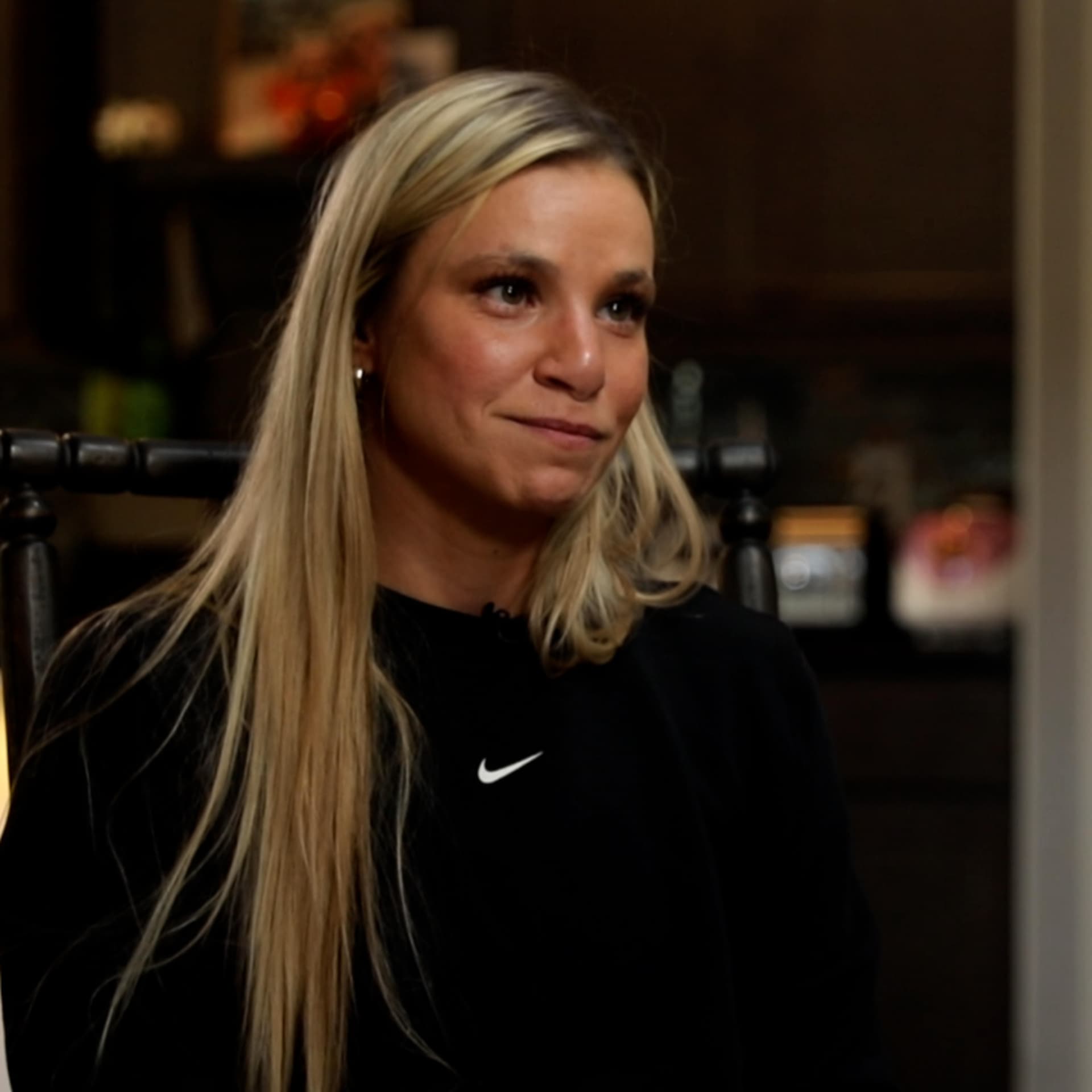

In short
Oksana Masters discusses depression, identity struggles, self-harm/suicidal thoughts, and how therapy, medication, art therapy, and sports helped her find outlets and recover. She also emphasizes not counting yourself out and normalizing disability in youth sports.
Guest background
Oksana Masters is a Ukrainian-born single-parent family member’s child who immigrated to America, experienced bullying at school, had prosthetic legs, and later became a rower; she describes early emotional suppression and severe mental health crises.
Key claims
Therapy calmed her mind; art therapy helped her process suppressed memories; medication was recommended after a suicide-watch period; sports/rowing replaced self-harm; recognizing adversity is necessary to heal.
Notable examples
cutting herself and suicidal ideation; school bullying over her “paws”/prosthetic legs; art drawings of monsters/blood and Ukrainian-English words; first happiness around age 11–12; rowing as life-changing.
Written by AI. May contain mistakes. Listen to the episode to check what was said.
Chapters
Tap a time to open that second in VOStruggles with Identity and Acceptance
1:16 to 3:08
Oksana discusses her struggles with identity and feelings of loneliness.
“There was a period of time where you disliked your reflection because you didn't have, like, family that you resembled.”
Overcoming Thoughts of Self-Harm
3:08 to 5:04
Oksana opens up about her experiences with self-harm and therapy.
“Well, yeah, because I never saw anyone that looked like me.”
Therapy and Creative Expression
5:04 to 7:39
Oksana shares how therapy and art helped her process emotions.
“To me, it honestly, Graham didn't feel normal because then I had to have a doctor tell me, you're not normal.”
Finding Happiness and Resilience
7:39 to 12:18
Oksana talks about her journey to finding happiness and perseverance.
“Because like when I first felt happy for the first time, like I felt that emotion finally when I was like 11 or 12 years old.”
Finding Happiness and Resilience
12:21 to 13:15
Oksana talks about her journey to finding happiness and perseverance.
“You think you know a browser, but Gemini and Chrome, that's new.”
Transcript
Automatic transcript. May contain errors.0:00Whether you're watching your favorite NBA team at the arena, the bar, or hanging at home, grab an ice-cold Michelob Ultra and enjoy every moment of the NBA season. Stock up today and watch your team drop buckets with a bucket full of ice-cold Ultra. Michelob Ultra. Superior light beer. Enjoy responsibly. Copyright 2026 Anheuser-Busch Michelob Ultra. Registered light beer. St. Louis, Missouri. Must be 21 plus to order alcohol. Alcohol available only in select markets. Are all batteries the same? That's like asking if all soccer players are the same. Take Messi, the most decorated player ever. Is there any other player who has achieved that?
0:43No, just him. Now take Duracell. Is there any other battery with Power Boost ingredients inside? No, just Duracell. Goats only trust goats, because they're built different. And Messi only trusts Duracell. As we wrap up the week, we're bringing you one of the many positive messages from our past interviews. Each Thursday, we're sharing stories of our most watched athletes, celebrities, and leaders. We hope these problem-solving narratives inspire you to tackle obstacles in your own life. This week, Oksana Masters.
1:22There was a period of time where you disliked your reflection because you didn't have, like, family that you resembled. Yeah. My friends, like, look so much like their mothers and their fathers, and I'm such a visual person and I think when I looked at the mirror, I didn't have any of that. I didn't know who I was. I have my mom and my family, but who am I when I see myself? Besides, I hate what I see because it's so different because the kids are telling me that in school. And that, yeah, so like I struggled with that whole identity thing. And like I have my family here, but it's really, and I love my mom for sure, but it's like, I feel sometimes alone in the world because there's no one that connects me to something when they look in the mirror kind of thing.
2:22And that's not what, I know that's not what family is and that's not everything, but it's just always made me wonder. What happened where I think the school calls your mom about you being on like suicide watch. I tried some crazy things. I tried to also like cut my hands off too because I hated my fingers. I didn't really realize... And I think my mom knew but didn't... And then like I needed to go through therapy because how bad things were and it was just a time where a lot of memories were coming back and I was suppressing everything. And when kids were telling me that you're a freak, you walk weird, what's wrong with you?
3:06I didn't want to live anymore. Like I don't know... Really? Yeah. Well, yeah, because I never saw anyone that looked like me. Like, I can hide my legs, but I can't hide my hands. They're like my little paws are out there for the world to see. I took a birthday cake into school, and I got mobbed by, like, five kids saying, why are you letting everybody bully her? And I said, what are you talking about? And I asked the teacher, and she goes, I don't know what they're talking about. but apparently they were pushing her, calling her names, making fun of her, doing all kinds of stuff. And she was not going to tell me because probably she thought I couldn't do anything.
3:48And also because she's pretty much a problem solver on her own anyway. Now, like I want kids to see my prosthetic legs. I want people to see the different ways you can do sports because when you start making that more normal then they're not going then those generations from now kids will not be made fun of hopefully one day but i think they're always going to because humans so what was involved for you in getting past that uh you know low point where you were having those thoughts um so i went to therapy the session was supposed to be a short session just to see two hours later the doctor comes out, therapist comes out to my mom and says like she we're gonna have a lot of lot of work to do here because I had a lot of anxiety, depression, just attachment issues and things that I didn't know.
4:44My mom didn't know. She's a single parent also. She didn't have that other person. She actually ended up having day treatment in a psych ward. They wanted to take her overnight. They wanted her to be an inpatient. I said, I can't do that to her. That will, that will, I might as well just let you kill her because she will think I'm giving her up. We're not doing that. To me, it honestly, Graham didn't feel normal because then I had to have a doctor tell me, you're not normal. You need medication. And I started hating the fact I needed medication to be normal when I already wasn't normal. Now my mind's not normal.
5:20So I I felt like I had no control of anything anymore. People were telling me what I could do with my bodies, what I, my mind and how to live and how to think and medicine to help me. And I just, but I didn't realize that until I started going to art therapy and drawing things out and I was talking, didn't realize I was like, that was therapy and what I was saying and the process of healing. What sorts of things were you drawing? Um, I don't remember like, the one I really remember is we were talking about animals, this doctor and I. And I'm talking about something that makes me so happy, but then I'm drawing this like room with a sliver of like, it's everything's black, but then there's a shadow and snow walls.
6:11And then there's red coming out or whatever. and which was like blood basically and then just like monsters and all these horrible things. And then I guess like the one was like someone just like there's like a person laying down and someone's laying down on top of them. And my body is drawing things that are completely messed up and are terrifying that an eight and ten year old should not be drawing at all. But the weird thing is like I didn't even know I was doing it until I look and I was like whoa Like I did not know I was doing it. How does that happen? I don't know. I was so lucky to have that therapist that understood what I was drawing and knew that things that I was drawing there were some words in there that I was drawing half in Ukrainian half in English and some numbers and like six always appeared a lot and
7:12and she never made me feel like, oh, there's something wrong. She was like, oh, okay, this is interesting, and would have me talk about it, but I could not remember why I was doing it. From that, she gave my mom suggestions, prescription for some to help with my anxiety and severe depression, and that really was where I started. Like my mom always loves this. Because like when I first felt happy for the first time, like I felt that emotion finally when I was like 11 or 12 years old. And your mom had to explain to you what that was? Yeah, well, I didn't know what that feeling, I didn't know I was not happy.
7:58Like, I think I did a pretty good job as a kid masking everything and never really, like, I knew how to adapt to my environment. But you wouldn't even laugh when you, like, got hurt, right? Yeah. Yeah, I'm a weirdo. Or, like, you'd fall and hit your head and start laughing. Well, I didn't cry for like the first few, for a long time when I came to America, because if I cried in Ukraine, if it wasn't the caretakers that were hurting you, the kids would hurt you because you made sounds and then we would all get hurt if the one kid did something. And so I was very, I did not show a lot of emotions and would laugh instead.
8:49And just because I didn't want to show that sign of weakness either.
8:58Yeah. In what ways did you find therapy helped? For me, it's a feeling thing. I don't even know how to put it into words how it helped me. but it helped my mind be so calm and so still and and like like you were saying like earlier like the happy and what happy means and actually feeling and living those emotions correctly and healthy and not living in fear and just masking something up because what happened for me was I went from trying to hurt myself and cutting myself to not and found other outlets to, like, whether it was sport or whether it was drama or whatever it was as a kid, it helped me not hurt myself, and it helped me also realize what I was doing is hurting myself because I didn't know.
9:58I think sports is what really, really helped, is that I think she definitely was a lot happier when she started rowing. Which was life-changing for her. It was life-changing for her. I was recreating feelings and sensations, what was normal to me, and that helped me realize what I went through as a kid was not normal. That's not a normal way to grow up. And without not knowing, you're never going to find your way out either. You have to recognize it first. You persevered through and accomplished so much in life. What do you think you most learned? Oh, my gosh. I think something I'm learning still is to never count myself out.
10:51Because there's so many times that I don't believe in myself. and I diminish what I've achieved or just don't think I'm worth it. Everything seems stacked up against you and you're set up to fail to never. There's that 1 % chance to never count yourself out. The minute you count yourself out of anything, you're done. You're out of it. You're checked out mentally and you're going to be definitely checked out of it physically. and I think there's a lot of moments in my life where I it was so much easier to just give up and stop I think like not just myself because I'm not the only one that goes through adversity goes through challenges I think humans what I'm learning is humans are capable of overcoming so much more than we give ourselves credit for and are like able to achieve so much than we are think that we can.
11:52And it all does seem impossible until that moment that you achieve something, and it's no longer impossible. And there's, we all have it. It's all just state of mind and mindset. One quick favor before you leave, please consider giving the podcast a rating and review. Those go a long way in helping us reach new listeners. Thanks for your support.
12:18This episode is brought to you by Google Chrome. You think you know a browser, but Gemini and Chrome, that's new. It can help you with practically anything on the web, like restoring a vintage motorcycle from a 50-page restoration block, or finally break down that long article you've had open for weeks. Gemini and Chrome is here for it. Ready to make anything online make sense? There's no place like Chrome. Check responses set up required. Compatibility and availability varies 18+. Well, Lorenzo, the pitch looked good. Yeah, so green. USA Keeper was decent enough. Didn't have much to do. Ugh, 99 minutes.
12:55Not a single goal. Well, Bet365 sure came through, though. I bet$10 and got$150 in bonus bets, just for signing up. At least someone scored. Bet365. Winning is everything. Gambling problem? Call 1-800-GAMBLER. 21 plus only. Must be physically located in Illinois. T-S &C Supply. In-app only. Thank you.
From the publisher
Oksana Masters, a 17-time U.S. Paralympic medalist, opens up about her struggles with self-image and identity due to bullying and feeling different from her peers. She shares how therapy helped her find happiness and come to terms with her emotional stressors. Today, she proudly displays her prosthetic legs to inspire children in sports.


