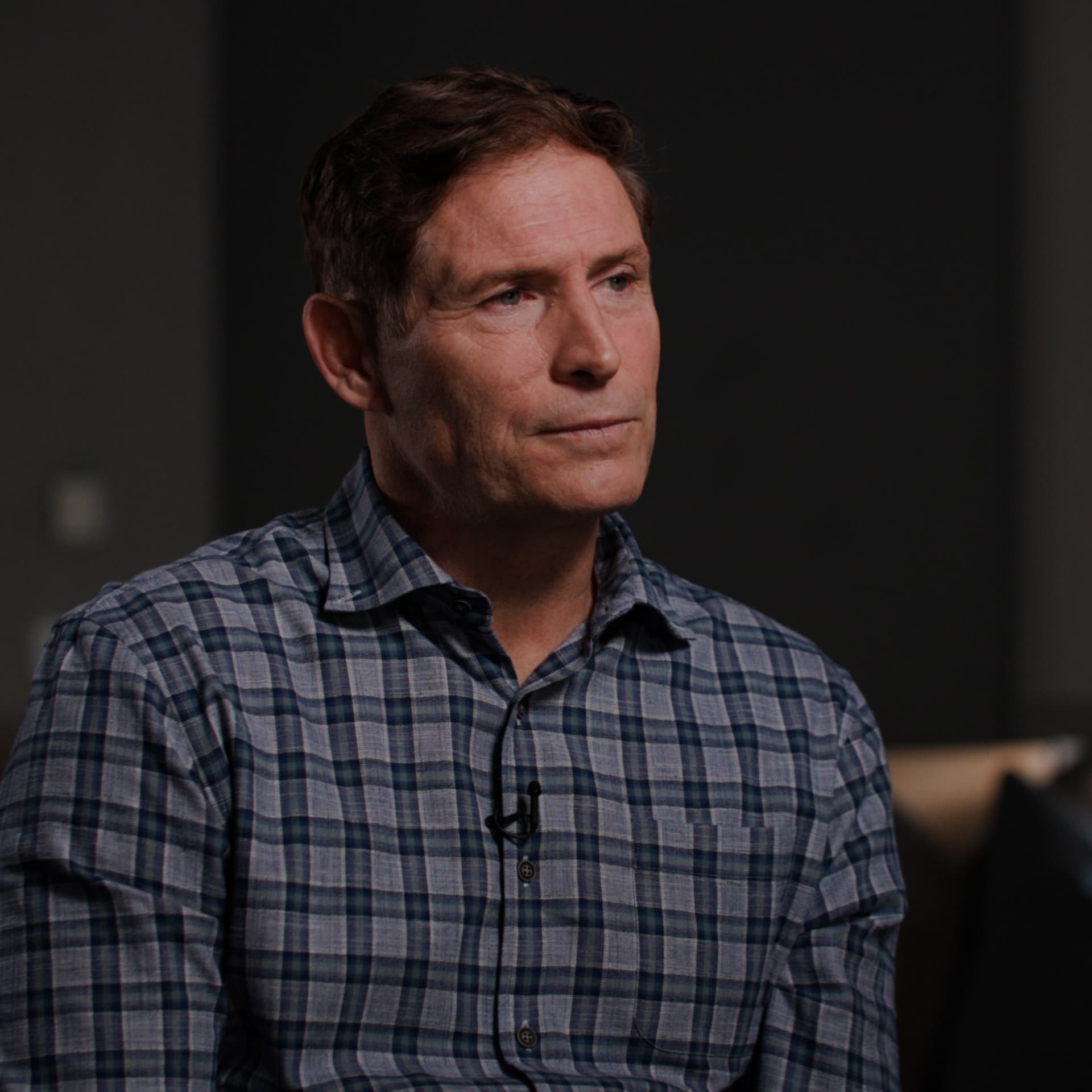

In short
Steve Young discusses overcoming anxiety and depression, especially childhood separation anxiety, and how naming it and reframing pressure helped him manage mental health during and after his NFL career.
Guest backgrounds
Steve Young is a former San Francisco 49ers quarterback and Super Bowl champion; he later wrote a children’s book and has spoken about mental health. The episode also references Steve Covey (author/mentor) and people around Young like Jim (team doctor context), Clint (team doctor), Brent Jones (long-term roommate), and teammates/figures like Joe Montana, Bill Walsh, and Eddie DeBartolo.
Key claims
Anxiety can be genetic; it can be undiagnosed for decades; talking about it reduces power; replacing Montana pressure became “trying to be Joe” and fueled depression; Covey’s questions shifted him from victimization to opportunity.
Notable examples
refusing trips as a kid; barely making it through BYU’s first semester; being diagnosed at 33 while playing for the 49ers; feeling emotionally “worn out” and retiring; Gulf War-era media pressure and “bottom of a hole” thoughts; Covey’s mentorship moment on a plane.
Written by AI. May contain mistakes. Listen to the episode to check what was said.
Chapters
Tap a time to open that second in VOSteve Young's Early Anxiety
1:23 to 2:54
Steve Young reflects on his childhood anxiety and coping mechanisms.
“Describe how that would come out in you.”
Separation Anxiety in College
2:57 to 4:12
Steve discusses his separation anxiety when transitioning to college.
“Jim, your buddy said about you at the time that you wouldn't do much, stayed in your dorm room, walked around with your head down, wouldn't engage socially, and seemed sad and sullen.”
Understanding and Naming Anxiety
4:16 to 5:39
Young shares the importance of recognizing and naming childhood anxiety.
“And so my mom would walk me to school and she would stick around for a little while while I kind of got settled.”
The Pressure of Being Joe Montana's Successor
5:42 to 7:20
Steve Young discusses the overwhelming pressure of replacing Joe Montana.
“The truth is what was great about it was to talk about it, to know it, to point it out and say, that's a part of you that you didn't choose to take on.”
A Turning Point with Steve Covey
7:24 to 9:56
Steve recounts a pivotal conversation with Steve Covey that changed his perspective.
“But I, it's funny if you just said that, because every time my wife says, you know, we should move, there is a little feelings like, oh no, I like, I like home.”
Transcript
Automatic transcript. May contain errors.0:00Every game day you show up for your team. Now it's your time.
0:10Ask your prescriber about WeGoV, semaglutide injection 2.4 milligrams, a GLP-1. Call 1-833-4-WEGOV or visit wegovy.com to view the medication guide and to learn more about WeGoV. Why wait? We Go V! Sierra has all the best active and outdoor brands you need. From athletic stuff, like a full-court pickup game, swish, to athletic-ish stuff, like a half-mile stroll. Get those steps in! And for morning hikes up the mountain trail, good pace, to nighttime ghost stories from the camping chair. What a twist! Whatever level of active, Sierra loves it all. Head to Sierra or Sierra.com for the brands you want at the prices that let you do it all.
0:57From athletic to athletic-ish, Sierra's got it. Hey, it's Graham. Our past in-depth guests have shared so many inspirational stories about overcoming adversity and tackling the darkest and most challenging times in their lives. We're sharing one of those moments in today's Thursday podcast in the hope that it provides a blueprint for any difficulties you might be facing. This week, Steve Young. A friend once asked you, I guess, if you ever enjoyed life, and you replied, do I ever enjoy anything? You talk about, like, anxiety. Yeah. Describe how that would come out in you. As a kid, I would, you know, I was three sports.
1:43I was a captain. I was straight A's. I was doing all this fun, cool stuff. I was loving it. I wasn't feeling, I didn't feel pressured. I didn't feel like my parents were over my back or anything. I was just flourishing. But I never wanted to go on trips. They'd go, hey, we're going to skiing in Vermont. I'm like, oh, no, no, I don't want to do that. And I never really thought much about it until my parents would try to go away from town when I was a kid. And then I'd freak out and try to convince my other brothers and sisters that our babysitter is an axe murderer. And you did once. I did. Then I went on to go to college.
2:17And when I finally decided to go to BYU, on scholarship. I remember going to school, actually leaving the house and going on the plane. I dreaded it in a way that was like, I didn't know how to describe it to anybody. I didn't want to show it, but I was freaking out. And, uh, and I barely made it through my first semester of college. Other kids, my brothers and sisters, yeah, let's go to school. Sweet. I mean, I was like, hey, and that is what is separation anxiety. That's kids have it. And that's what I had. It was genetic because it's my mom's side of the family, but I did not know it until I was 33 years old under real duress when I was playing for the 49ers.
2:54It's another interesting but long story. Jim, your buddy said about you at the time that you wouldn't do much, stayed in your dorm room, walked around with your head down, wouldn't engage socially, and seemed sad and sullen. That first semester, I dreamed of going home. I didn't unpack my bags. That was the truth those guys became my best friends and I'm grateful for them to walk it through with me because they didn't know what I mean What is that? What do you what's why is it so hard? Why my dad? What just have fun and I the transition the change That's why it's called separation anxiety to separate from home And then once I went back for call home for Christmas that first year I I realized when I got home, I mean, I couldn't wait to get home.
3:44I got home and like, oh, I have another home. My brain somehow kind of transitioned. I was like, and so then it was fine. Going to college was great. And that helped me make other transitions in my life. But childhood separation anxiety, your genes, you're born with it. You know, it influenced my life in a lot of ways that I didn't even realize. And your mom, I think, was called the class mom for. Yeah, in second grade. because I wouldn't go to school because I think the anxiety of something new as a kid at seven, six, seven years old, your body just says, don't do that. Don't go. And so my mom would walk me to school and she would stick around for a little while while I kind of got settled.
4:25And then I remember the teacher making me, we'll make you the president of the class. And that was like, somehow there's this other part of me that like the achievement. I was like, oh, okay, I'm good. But it's like I think that's why I'm really big on mental health because I want people to be able to ask questions To be able to say look I have an insecurity if you think you don't have insecurities you're not human and be able to be open and and and be vulnerable enough to say you know I've been carrying and dragging this insecurity around my home I didn't even understand it And if you don't realize how good life could be if we deal with it if we can kind of name it That was what was great when I was 33 years old when the child psychologist when I ran up there because Jim Clint the team doctor finally said look bro I think you got something going on from your childhood and I ran up there and he's like you have child undiagnosed Childhood separation anxiety a lot of kids had it.
5:17It's in your genes Naming it then I could be like oh That's why bright, you know on Saturdays before the games. I don't want to watch football I want to watch you know some movie because I don't want to be reminded on the anxiety level for me was always higher. I was like, why? And all of a sudden it's like, oh, because it's in your genes. And that's, that helped. In what ways will the anxiety come out in you today? And how have you learned to manage it? The truth is what was great about it was to talk about it, to know it, to point it out and say, that's a part of you that you didn't choose to take on.
5:56It's a part of your genes and just like and then dealing with it was like really powerful to be able to say it well and interestingly you were talking about mental health before that was even really part of the conversation during the day when i was growing up i was the king and then at night i'm like i gotta run home you know like that's a little that's that i wrote a little children's book right when we won the super bowl then it was kind of this a lot of the stories of my growing up and paper routes and bikes and stuff for and uh and they go what do you want to title it and i go i want to title it at least i'm not as weird as steve young because i think that's super powerful to be able to tell everybody at least i'm not as weird because i think there's something in as you're growing up to feel like i can be vulnerable and it's okay because like people are weird and that's that's cool and how do we how do we work it out and so again i retired mostly because i was worn out emotionally.
6:54I just had been 18 years and I just worn out and I think that even more than physically and in that way the day I retired I remember Brent Jones my long-term roommate my best friend he goes you're gonna because he'd retired a couple years before he goes you're gonna love it it's amazing it's just and it was amazing to leave it behind and it felt like what I left behind was this sense of anxiety. And I couldn't get my heart rate above 30, like ever since, you know, I think it just, it got, it got burned. It got burned out somehow. But I, it's funny if you just said that, because every time my wife says, you know, we should move, there is a little feelings like, oh no, I like, I like home.
7:37You know, I think there's, there's still in your genes a little bit of that. You mentioned Joe Montana a bit ago. You had wrote in your book, which was fantastic, the pressure to replace Montana was unbearable. The weight of the expectations was crushing me. My anxiety was overwhelming me. You told your brother in one conversation you didn't think you were going to actually make it till Christmas. Yeah, right. Like, what did you mean by that? You got to give me a minute here. Replacing Joe, trying to be Joe, what I realized very quickly is that, if you're a fan of the 49ers when Joe's not in the field, their only memory is Joe never threw an incompletion, never threw an interception, and never lost a game.
8:23And here comes this guy, which all he does is throw incompletions, throw interceptions, and lose games. So it's like this, it's all overwrought anyway. It's insanity. and I'm in the middle of the season. There's a, the Gulf War had broken out in the Middle East in October of 1991 and the front page of the San Francisco Chronicle, it was the Gulf War, it's Steve Young's fault because it was funny, right? It's funny. But for me, living this out, it was, I had, I felt like I was in the bottom of a hole in depression and victimization. Everything's my fault and on my way home, And that's when I ran into the great Steve Covey, who said, I told him all the terrible things that were happening in my life.
9:07And he said, you know, Steve, let me ask you a couple of questions. Eddie DiBartolo. And I told him how great he was. Bill Walsh, I told him how great he was. And Joe Montana's on the team. I'm like, yeah, that's the problem. He goes, but if you had to ask him questions for mentorship, could you do it? I'm like, yeah, you could. I could. He goes, Steve, I travel the world looking for platforms for human beings to have the the ability to iterate and get better and find out how good they can get. And I can tell you, I travel in the world, I've never seen a better one, the one that you have. And I realized then at that moment, literally at that moment, it became crystal clear to me that the hole that I was in the bottom of, I dug.
9:47The victimization that I felt was self-inflicted. And I had just lacked the perception and the perspective to see the opportunity. And I raced from that plane flight home and never looked back. Thanks for listening. We'll be back next week and every week sharing long-form interviews on Mondays and shorter, uplifting stories on Thursdays and then trending clips on Fridays. We'd love to hear from you with ratings and reviews. Do you prefer the longer podcast episodes or our shorter ones? I'm excited to get your take. Thanks again. Every game day you show up for your team. Now it's your time. We go V.
10:31We go V. Ask your prescriber about We Go V. Semaglutide Injection 2.4mg, a GLP-1. Call 1-833-4-WEGOV or visit wegovy.com to view the medication guide and to learn more about We Go V. Why wait? We go V. Fall is the perfect time to refresh and reorganize your space. At the Home Depot, find power tools and tool sets starting at$50 to help tackle DIY projects, home updates, and more. Whether you're drilling brackets to support new shelving or sharpening your hedge trimmer blade with an angle grinder, the Home Depot has the tools you need to check projects off your list. Shop Labor Day Savings at the Home Depot and gear up for fall projects with the right tools to keep your projects moving.
11:22Outro Music
From the publisher
In this week’s motivational podcast, Hall of Fame quarterback Steve Young opens up about his struggles with separation anxiety from childhood through his college years. The 49ers icon also reflects on the immense pressure he felt as he took on the challenge of stepping into Joe Montana’s legendary shoes.


