 In Depth With Graham Bensinger
23 Nov 2026 · 1h 33m

 Add vo to ChatGPT or Claude to ask about everything you hear
vo listened to this episode to put together the overview and transcript, so there may be the odd mistake.
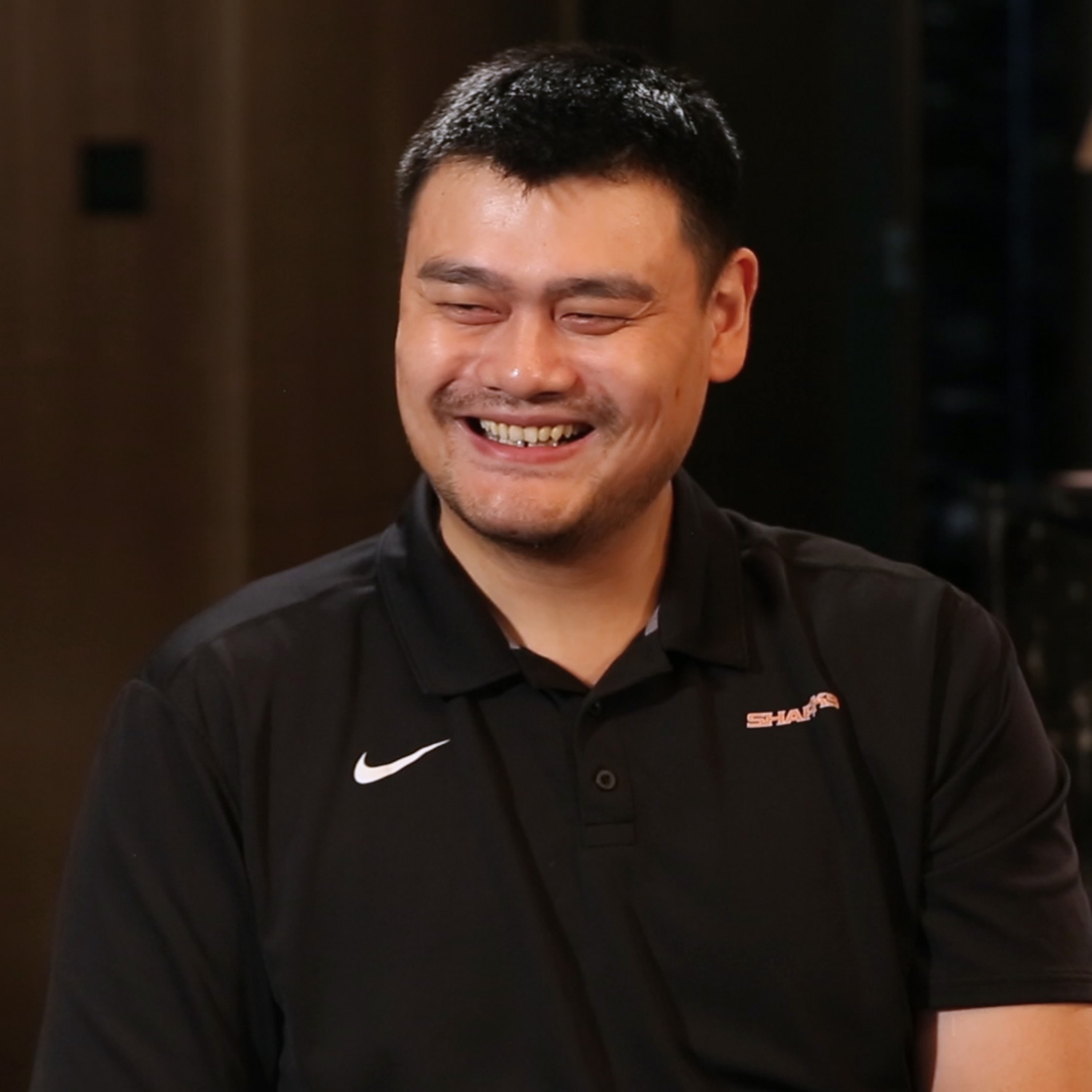
Yao Ming reflects on his NBA career (including a rough start and career-ending foot injuries), his Hall of Fame induction, and his post-NBA work in China—especially basketball’s growth, the Chinese sports system, and philanthropy (schools, anti–shark fin soup, and anti–ivory/rhino horn).
Yao Ming is an eight-time NBA All-Star and Hall of Fame center from Shanghai, who played nearly a decade in the NBA (Houston Rockets) and later bought/ran the Shanghai Sharks. The host is Taylor (In-Depth Podcast), with the episode recorded in Shanghai during a China trip.
Yao says China’s basketball popularity grew beyond players, driven by media and journalists. He argues China’s youth sports system centralizes training early and is efficient for some sports (diving, ping-pong) but less effective for basketball because the talent pipeline is too small (he cites ~3,000 registered basketball athletes vs ~6,000 soccer). He says sports should function as education and character-building. He claims his foot injuries left his top foot numb and never returned to normal after surgery in 2008.
His childhood meeting with Michael Jordan; pressure of representing China in 2002; a 2008 winning streak cut short by injury; 2008 Beijing Olympics flag-carrying; his foundation’s 17 rebuilt schools and “Hope School Basketball Season”; anti–shark fin soup efforts (he cites 72 million sharks/year before 2006) and anti-poaching work influenced by Dikembe Mutombo.
0:00Credit Karma puts all your finances in one place so you can stay on top of your money, helping you save smarter, maximize rewards on spending and grow your net worth. It feels like you've got an ace up your sleeve, like having a babysitter who lives right down the street. It's an incredible cook, has a doctorate in child psychology and is available this Friday. Credit Karma on top of your money, on top of the world. Download the app today. My name is Taylor. The economy is crushing moms like me right now, even working full time. My paychecks went straight to child care and all of the bills. Nutritious food is really important to me.
0:43High food costs and changes to nutrition programs constrain family budgets. Your donation helps Feeding America provide the nourishing food families need. I'm hopeful for stability. When budgets strain, your gift sustains. Give now at feedingamerica.org slash community response. This week on the In-Depth Podcast, Hall of Fame center Yao Ming. Wow, you're doing your homework. Really, thank you. The eight-time NBA All-Star looks back on nearly a decade in the league, including a rough first game. Embarrassing, a little embarrassing. Not just a little bit, but embarrassing. And the injury that spelled the end of his pro career.
1:23How does it feel now? Until today, I feel this foot is almost like completely numb on the top of my foot right there. Really? Yeah. The Shanghai native recalls a childhood meeting with Michael Jordan. That is probably the first time I know what nervous is. And explains the downside of being seven and a half feet tall. I can't hide anywhere and people can recognize me from 100 meters away. Right. Taping the Yao Ming episode was actually the second leg of our trip to China. We sat down in Shanghai just three days after filming with Arnold Schwarzenegger in Hong Kong. So please enjoy my 2016 chat with Yao Ming.
2:06We begin talking about his election to the Hall of Fame. First, it might just be me, but I find it absolutely amazing to realize it's been five years. since we last spoke in Shanghai. Does it seem like it's been that long on your end? Well, when you look back, everything is almost like a fast forward. But looking forward, it's okay. There's still many time to go. So that's how it's feeling like. So last time we sat down, it was less than a month after you announced your retirement from the NBA. We sat down here in Shanghai. This time, it's five years later to the week and less than a month before you're being inducted into the Basketball Hall of Fame.
3:04How did you learn you were being elected into the Hall of Fame? Oh, well, obviously there's a rumor floating around before the news broke up. And people were just asking, so OK, I don't know, because they didn't say anything yet, so I'm just waiting. And we all know the date. We all know the date in Houston. They were announced the class of 2016. So OK, let's just wait for that date. And they finally come, say, hey, I know you can't come to the States because you have certain things, and you take care in China. So can you please join us at the TV studio? to do a live broadcast for this. Okay, so I think that's the way I find out.
3:55What was your reaction?
3:59Like I said, it was almost like being drafted again by the NBA. So I'm similarly feeling like that. Yeah, like, you know, back to 2002 when I drafted by Houston Rockets, it's people say everybody should say why are you not so excited like everybody's thinking I say okay because we we all know that like a couple days before so it's I don't want to pretend like I'm so excited or something maybe my excitement is already gone excitement is already gone so that's so when they announced that Hall of Fame yes I'm happy I'm proud I'm very grateful but it's almost like a slow reaction. It's almost like happened a couple days before I really know on TV.
4:52Right. What do you think it means to you to be elected? Honestly, it is a surprise that... Why? I think maybe I can play until 36 instead of being elected for the Hall of Fame at 36 years old. Right.
5:13I think that the guy, the name on the Hall of Fame's war is so beyond me, honestly. And look at the same class, Neil, AI, you know, they all done a remarkable job in their career and after career. So I think, you know, I'm not there yet, in my opinion. Really? Yeah. Did you not think you would be elected? Maybe not that early. Maybe another 10 years or so. I know a lot of guys on the waiting list for so many years. Maybe some guys don't even see it when they're alive, when they're still alive. Given all the storylines around the two of you playing together, you and Shaquille O 'Neal, how cool was it to end up getting inducted in the same exact class as him?
6:13I'm just glad that I didn't elect the same year as the campaign of Mutombo. I know he's last year's class. He's way too old for me. I'm good. I'm good not with him. Have you thought about what you'll say in your induction speech? We are preparing on there. Me and my team is putting a speech together. We know that would be a six to ten minute speech for each people on the podium. I hope I can say something from my heart on there. How much of it have you put together so far? I would say about 90 % done. Okay. But I need a translator into English. That would be a hard job. What's the likelihood you're nervous or get emotional when you're up there?
7:17It's hard to say. You want to honor the traditional. So I watch a lot of videotape who speak before me. Kevin Mackell, Dikemi Matambo, and some others. You know, Kyle Macau, well, he did 28 minutes. So, Coach Macau is a hell of a speaker. And some of the people get up there without any notes and can speak in front of a massive crowd. Can you imagine that? Can you imagine that? No. I mean, I'd be terrified getting up there. Yeah, I need to know for sure. I need to know for sure. You know, I think I'm not there yet. Like I said, I'm not there yet. Those old guys, coaches, they used to speak right in front of his players.
8:10I've seen that before. Gandy, Rick Edelman, Tom Janowich, my NBA coach, doing my career. And how they speak, how they inspire the players, it's a very deep impression for me. How surprised were you that some in the American media criticized whether or not you deserved an election? Well, that's a mature society right there. You know, there are always people who say it from both sides. And you have to just take it. And for my opinion, it's that I don't have the voting rights. I don't vote myself. Right. Somebody else voted me in. And it flatched me back to the first time I've been selected as a starting of an All-Star game.
8:59Everybody said, Shaq deserved that, and now, yeah. I agree with that, but it's not my choice. It's like that. But all I can do is, I can't change what happened in the past, but I try to do my best for the future. Right. Right. And, I mean, you earn it if those that are voting for it elected you, just like the All-Star game. So the only thing I can do is my best in the future to match that kind of honor that people give to me. I know you're a really humble person, but how do you think the success that you had in the NBA impacted the game's growth here in China? Well, it is not just me. That's in my speech already.
9:53You know, I mentioned a couple of names who came to the NBA before me. Some guys, you know, the earliest one came back all the way to 1980. the guy who drafted by Atlanta Hawks, but because of injury he never got a chance to play. But those guys in early age that inspired not only me, but a generation of young kids right there. When I was really kids, I went back to the 80s. We may not really know what NBA is, but we know basketball. That's kind of confused why NBA is not basketball. But, you know, it's back to 80s. The fact is that we only know the basketball and the China national team, that kind of stuff.
10:43You weren't really aware of what the NBA was back then? Okay, most weren't. Yeah, the media channel, the TV is not that open yet. You know, that's the fact right there. I mentioned that. So I think, you know, I just want to copy from those older generation. You know, hopefully I can do the same as them to inspire the next generation. How would, and most would say, you've done it more than anybody in China. How would you say the popularity of the games grown from when you first entered the NBA in China? Credit Karma puts all your finances in one place so you can stay on top of your money, helping you save smarter, maximize rewards on spending, and grow your net worth.
11:38It feels like you've got an ace up your sleeve, like having a babysitter who lives right down the street. It's an incredible cook, has a doctorate in child psychology, and is available this Friday. Credit Karma, on top of your money, on top of the world. Download the app today. My name is Taylor. The economy is crushing moms like me right now. High food costs and changes to nutrition programs constrain family budgets. Your donation can help nourish families. When budgets strain, your gift sustains. Give now at feedingamerica.org slash community response. Popularity is unquestionable here in China.
12:19Basketball has become the top two sports in the country besides soccer. And we have better record than soccer.
12:33That's one part we're really proud of, but we still have many miles ahead of us need to go. And talk about the popularity, it's not only depend on players, but also the media, the The journalists, how they write down the stories to share to the fans and have them get interested about the sports, involve the sports, participate in the sports is the future of our game. How would the number of U.S. viewers that were watching your games when you played compare to the number of viewers watching the game in China? Well, I know the population in Houston is 6 million. I don't know anywhere else who are still watching Houston Rockets game.
13:36I'm sure there's some. Bay Area, New York, there's some of Asia or Chinese population right there. But I'm sure that we have some good years that get attention from national TV. when McGrady knocked down 13 points in the last 35 seconds. That's amazing right there. But I remember the game when we played against the Milwaukee Bucks for the first time they had a two-Chinese player match on court. Yijian Lian was there, and first of all, congratulations to him. He just signed another deal with Los Angeles Lakers. That's good for him. It's a payoff his effort, you know, for the last couple years. You know, it's hard work right there.
14:26I've been told there's 200 million people watch that game. In China? In China. You know, the difference in cultures, one example of that is the Chinese people view you as representing them. So if you were to fail, the Chinese people would view it as them failing. How much pressure did you feel when you played because of that? It is a lot of pressure. I remember the moment I ready to step on a plane to Houston back to 2002 at the airport, Shanghai Hongchiao Airport. and you thought about turning around I thought about turning around while you did your homework really thank you yeah I you know that you know that the way to the plane there's a turn right there you just walk on there walk on the plane right so I feel that turn is so dark right there it's almost like a black hole try to eat me.
15:36Why? And there's so many journalists, the cameraman behind me use a light all kind of stuff to flash cameras. That's kind of a, you know, that's one side is so bright, the other side make me feel so dark right there that, no, not mean dark but it's like a pressure. It really make me think, oh maybe I should turn around right there. But that's all. It's almost like I feel like that's a one-way ticket. It's a one-way ticket. The good thing is my parents taught me to forget everything when you step on the court. The court should be pure and clean. And clean your mind, clean all the essence, the thoughts right there.
16:25Just focus on your teammates, your plan, and the ring, and the basketball hoop right there. To what extent did you ever find it difficult to do that and block everything else out? It takes time. I can't give you exactly, you know, moments and say, okay, I did that in that game. No, and sometimes it will come, you know, you will be up back. Some game you did good, some game not. But it takes, like, it cost me some games right there, I can tell you. Oh, it did? Yeah, it did. It cost me some games, at least the first one. the first game in Napis yeah but it's come back but you know I've been thinking about you I remember what I said this before in a book you know I work with Rick Bueger sure that if I feel I if I fail that means entire countries fail something like that I think well that means that don't trust award from a young kid at 23 years old.
17:30That's a little bit too much of a self-central of that. But I mean here you were the first player of your caliber to be on a stage that big and you had captivated an entire nation of people. So I mean I don't know that that was that far off from the truth, right? Well, maybe it is, it exists. It is a fact, but it's not that serious. I don't know what other word I can use here. Maybe that inflicted how much pressure I have. But what if I failed? You failed. And there's other people who will replace you later. So, just you felt there's always a replacement, I would say. But I'm glad that, I don't know if you watched the Olympics just closed yesterday in Rio, that the sports fan in China has become much more mature than 10 years ago, over 10 years ago.
18:46The sports, the game has become now their lifestyle. And they understand and they didn't learn so much from the first decade of the 21st century. And it's a story from Liu Xiang who failed his track and sprint in 2008. The entire nation is criticized. From that fact, yes, what I said in the work, it is part of the truth. But we have to understand and we have to faith for the people that they will learn just like ten year age kids, you know, when you're 17 or 18 years, you're against every word your parents told you. But after that, you will regret and you will come back and to learn. So, OK, this, you know, what I shall tell my kids.
19:33And believe me, I know that right now. So you found in a way that the Chinese people are more supportive of athletes today than maybe earlier days? I think not only they support athletes from all the way, all the way. From the first time from 100 years ago, when we have a first athlete who participated in Olympics back to 1932, but all the way to now. But the difference is that we understand that sports are better. You know, sports is not that you put your effort in there, you put your time and your resource in there. You have to get payback. No, it's not guaranteed. And it's almost like a process, a journey that how much you're willing to do it, how much you're willing to do it.
20:31The athletes compete on the court is doing their best. They're getting better than the guy who yesterday by themselves. They did better than the same guy yesterday. That is what they try to do. And I think sports fans understand that better. It's not compete, again, not totally compete against other team, other players in the country. It's compete against another me. It's almost like another, I hope I become a better me. I want to talk to you a bit about the Chinese system. Explain why in China it seems like you basically have to choose at an early age school or sports. Why is that? Well, that is true.
21:21And I grew up in this system. Well, my parents was in that system back to the 60s. even maybe early in the dark, give or take. And that system exists in our country over 60 years. I think it was established in 1952.
21:51Well, sports had the power to inspire people and to shape the characters. That's how sports really can do. And obviously our leader understands that kind of power and are willing to put a resource in there. But back to 60 years ago, our country is not, it's still underdeveloped, entire country. You know, after World War II, after Civil War, all kinds of stuff, everything is waiting for a rebuild. and the sports probably have to take a backseat a little bit for a little time. Unlike in US, the sports is part of education. It's more it's PE classes class and you have NCAA, you have a state championship game for the high school level and all kinds of that.
22:44We have that now but obviously still maybe decades behind US program and because just you know because that the system is being separate and that is good and bad you know for a short term that's good because we can win a couple goldman can't imagine how much how much metal we can win with very limited to an athlete, I asked a diving coach, I'm a big fan of diving too. So she told me that China is very dominant on diving, right? You know that. So all ping pong. And she told me that they only have 300, maybe 350 athletes among the country. and we can go all the way to the top in the world for that.
23:40So that's so efficiency to train players, athletes right there. But basketball or soccer or tennis that kind of sports are a little bit different. It's a little bit different than that. Maybe it doesn't work as well as diving, as ping pong. Okay. So that makes a huge difference. What would your school and practice schedule entail when you were growing up? I went to the sports first level academy when I was nine years old. We still study as a normal student from 8 o 'clock all the way to 2. And then the difference is we have to participate a three-hour practice after that and then homework. And the rest of the kids can do, they still can play sports, but not like a central practice.
24:34It's a very random practice, a random play, and you can do your homework and go do whatever. We don't have that kind of electric time for it. That's, I keep that way until 14, the junior team of the Shanghai cities think I'm good enough. They draft me to the next level. So from that, I have a very minimal education time, but a maximum practice time. Almost, I would say somewhere around my first six months were really, really hard. Ten hour a day for six days a week. Ten hours a day, six days a week at 14 years old. 14, actually 13 and a half. See, first six months is really, really hard. and that is try almost like a, you can think of a boot camp for the military.
25:26In the first couple months, now they train really, really hard, not for really finding a good guy, but try to wipe out those who didn't qualify. So that is what training came for, for the first month. What do you remember from those first months? I lost about 40 kilos. Oh, did you? I wish I can do that now. Yeah, right. Yeah, that is what they do. And after that, we get back and we have much smaller group now after six months. We train almost like four hour, maybe five hour a day. Still six days a week, but we have more time to study. If you could make any changes to the system, what changes would you make and why?
26:20Well, I think that's a big question. It's not just me, and I can tell you that a lot of people think about that. That problem is already put under the microscope to everybody. Well, I ask you though because you've had the benefit of having been in both systems, you know, having gone through the system that you did and then also having some understanding of what the American system is? The change of this system, I would say you have to define from sports to sports. Maybe that is still very work for ping pong for diving because that kind of sports cannot not survive in the school, not many kids will go practice for that.
27:11Gymnastic? Gymnastics, yeah. Gymnastics, right. Not many school kids are willing to participate in that kind of sports, and if you lose that system, that we lose the medal too. We lose the medal too. Well of course, unless you said we don't need those medals. That's the question not for me, you know, because I'm not from those sports. Sure. I can't answer for them. But for the basketball, I think, you know, we always say, why we cannot find five guys on the court or 11 guys on the basketball, football, soccer field playing world level among 1.3 billion people? The answer is because we didn't elect people.
27:53We didn't select a player from 1.3 billion. We have only 3 ,000 registered basketball athletes league and about 6 ,000 registered soccer athletes in that system. We're so small talent pool right there. And to what extent is that because the recruiters who are making decisions for who to select base those decisions solely based on the height of a player's parents? Right. We try to recruit a player from a very, very young age. Basketball requires a couple of talents, right? There's size, of course, speed, strength, mentality, and basketball IQ. But if you really want to find a case into that system at the years of around 10, what you can find from there?
28:44Size only. Right. So then it turned out our basketball team become only the biggest team, but we always can find a kind of shortness or weakness from others. It's easier to find a Yao Ming in that system. It's harder to find Steve Nash, Tony Parker. Tony Parker, Kyle Lowry, all those guys. No, you can't find it. There's a joke about our basketball system, right? There's some kind of a joke about basketball today, which the head coach of a national team this year, you know, this past Olympics, he is the greatest point guard back to the 90s. and he is only, what, 171 centimeters. You know, if he'd been young and here today, he'd even not drive by the ping-pong team properly.
29:43Credit Karma puts all your finances in one place so you can stay on top of your money, helping you save smarter, maximize rewards on spending, and grow your net worth. It feels like you've got an ace up your sleeve, like having a babysitter who lives right down the street is an incredible cook has a doctorate in child psychology and is available this friday credit karma on top of your money on top of the world download the app today my name is taylor the economy is crushing moms like me right now high food costs and changes to nutrition programs can strain family budgets your donation can help nourish families.
30:22When budgets strain, your gift sustains. Give now at feedingamerica.org slash community response. So how do you then, how far along are people with understanding the need to make the reform to be able to find those sorts of shorter players who could have as much success? I think we should ask a question that's bigger than that. Bigger than that, but also back to the original question, which is what is sports for us? What is basketball or sports for us? I think that is education. I think the sports system today is no different than the Daokou. You know, the education system, they have almost like SAT test when you graduate from high school.
31:22And that test, we call gaokao, is defined your future. You know, when you go to the good college or just some OK college or mediocre college and make a career totally different. It's just like, I mean, the system between sports and education is basically the same idea. It's the same idea. That is centralize those kids who had the talent to give them the best education and hopefully they become an engineer or great leader or some kind of stuff and a contribution for our nation, for our country, make their contribution. So I think first of all, sports is, like I said, it's such a great strategy to educate people, to raise the kids, which not only teach them to become stronger men, faster men physically, but also mentality.
32:21They can become much tougher than before. They learn how to teamwork, how to competition, how to respect the rule, respect your teammate, and respect yourself, such a thing like that. But that is hard to directly learn from paper, from the book. You know, book is very important, but we all know that need to experience it. So that is what sports can do more than just a gold medal. I believe that. And if we're really doing that, we should have more kids to participate in the sports game. You know, if we have a good, very functioning National League in the school system and the players, the student athletes will play a game with each other.
33:09They can inspire their classmates. Maybe they even do better than just one single, one individual, you know, famous basketball players. You know, we're always, you know, inspired by the close people. I mean, those stars are way above us and far, far away. And we like those stories just right next to me. And from that, it naturally will come out some of the talent kits. In that case, because everybody can play in the system, that those speed, those talent like speed, strange, basketball IQ, that kind of talent will show up in different level of the age. And you will find a different talent of a player and put them together as a former team.
34:02So the first step is then making sure people understand the educational benefit of sport and then after that opening it up to more people. We have to measure that. But I would say take education as the first step. Just when walking with left and right and left like marching. But you can't, you always lean on the left, you tripled. Or you just, you know, jumping and you probably have a knee problem after that. So you purchased the Shanghai Sharks, the team you once played for back in the day. Since purchasing it, what are some of the changes you've worked to implement within the organization? A professional team has only one goal to win the championship.
34:51And I and my team, my team and I are focused on that. We try to strengthen the team, strengthen the coach staff, and do everything we can to purchase another championship for the city. That is the only goal we have. But for doing that, we need lots of experienced people, players, coaches, and managers to extend our circle. And how do you go about finding those people? First of all, it's traditionally sports area, professional athletes, coaches. The coaches were defined in two groups. One is a senior team who are playing in the professional league. Other one is managing and coaching in a junior team, just like the team I played before, and recruiting some young talent athletes, give them a well-trained, give them some education.
35:57Well, again, this is still an old system we have right now. Whether you like it or not, it still exists. Some coaches have to be a babysitter.
36:09So, yeah, that's basically what it'll do. Your longtime advisor and confidant, Eric, tells me that the Sharks are a more rule-based team than other CBA teams? In what way? We try to establish all the rules, and we try to have our specialists in the area control those things. We try not to over-control things at a top level. We try to put the right person in the right place, have them to do the best they can and the best part of them to do. And we try not to step over. So whereas with other CBA teams, there might only be a couple people doing everything. With your team, you're building out the staff more.
37:03I can't say that. I can't say that because more team are doing our way now. It's not because only us, because the NBA is influencing. And also European Soccer League is traveling to China many times. we learn from them although so but anyway just like said you know it started changed it's a search and it's a professional team now become more socialized with their fans with their society it's not only a very isolating a small area okay that play game is my only job now we visit the hospital sometimes we visit to some orphans home sometimes and maybe it's older people and to make communication. And we try to do a part as a member of a society.
37:49With the backing of 18 of the 20 CBA owners, you work to create a corporation to give owners more of a controlling, say, over elite business. Why decide to do that? We try to improve this system. We try to provide better basketball game, a good basketball game that the fans like. And for doing that, we need upgrade. We need to change some of our current system. And we need more people getting involved. Explain how the CBA's been run historically and how you've been working to privatize it. Well, CBA is a system that, how can I put it this way? The season is, the basketball season exists almost over 60 years.
38:50Like I said, 1952, when the sports bureau was being established. But back then, it's only almost like an Olympic game. You know, we play once a year like that. And instead of a four-year, maybe we'll play one year. But we have, you know, like the schedule would be like Olympics. You know, two weeks maximum gone for the year. But back to 1955, that's the first experiment season for CBA. Not called CBA yet, but we have all the teams as eight. Back then, 18 play home away game just like NBA for the first time in early 1955. I remember I watched some of the game in Shanghai. And 1995-96 season is the first season, crossed the year and played home away.
39:47So until today, it's just about 20 years. It looks like NBA schedule, but behind that, the management is very, very different. Owners will pay the wages for players and coaches, but basically it's CBA, Chinese Basketball Association, run the league and tell what to do. And now the owners feel that we have so much pressure on cost today because we don't have the kind of salary cap control. And you guys are the ones spending all the money but don't get to make the decisions. I think that's a big part of the reason, too. But we did a couple rounds of negotiation, and today I think we're heading to a course that the owner will have more speaking rights than before.
40:49How challenging have you found it to make the government less involved in the league? Well, I think it is not about dependence on not from the government, but have the best people to do their best, do their familiar area. If we admit that basketball league is a business, of course it's a sports too. We should have sports people, basketball person and business people in the chair to manage it daily. And if those changes are made, how much more success do you think the league can have? Well, it's 1.3 billion population of marketing. So a big potential audience. Yeah, and I think the NBA already helped us a lot to promote in sports here, so it should be easier for us to do something.
41:55Yeah, I'd like to talk to you some about retirement and then some of the injuries that led up to your decision. going back to as far as 1996 when you were playing for the junior team, you break your left foot. A year later when you're with the senior team, you break it again. How true is it that after that second break, you could never jump in the same way you once did? Well, I really don't need to jump to play basketball. So jumping doesn't matter for me. Well, maybe not because the break. Maybe because my weight limited my jump. I mean, you played something like 244 games your first three seasons in the NBA, and then only 242 games your last five seasons in the NBA.
42:51How frustrating was that for you? My frustration become as most at 2008, early 2008, February, that one. And when Rockets are going really well, and we're in a winning streak of 12 at that time, and we're made all the way to 22. And I have this foot injury, I have to stand out for the season. That has become the time that I frustrate the most. Your doctor, I believe, told you you could play two or three more seasons, but injury was all but re-injury was all but guaranteed. Why did the doctor say that? My first couple injuries is pretty simple. You know, sometimes I hurt my toe, I hurt my fifth marked tarsal on my left, and I hurt my knee.
43:43You know, it's never re-injured. That's good because it means that those injuries are just accidents. It can be recovered. hurt, but my latest injury is re-injured twice already. So that means that part is something is wrong and some agents, because agents are getting old or maybe the injury makes it weak already. Something it cannot back to where it's before. So I guess that is why. Even they put a metal in to try to straighten my bone and all kinds of things, still it's not natural. How do you think it would have impacted your health long term if you kept playing? I don't know. I don't know.
44:30I don't know. But I can tell you my foot never come back to before that after my surgery 2008. How does it feel now? Until today I feel this foot is almost like completely numb on the top my foot right there. Really? Yeah, still. That's probably the surgery damage of my nerve system or something, and I feel less down there. How does it impact your life day to day, if at all? Not much. Not that much. Well, maybe feel sore some days when weather went wrong, or something like that, but not much. I'm still only 36, maybe 50 years old. I feel something. I see my parents in Houston. They're injuring my mom's knee, and my dad's ankle is coming, kind of like an injury back to the day when they play.
45:35Yeah, that maybe happened to me 10 years or 20 years from now, but I don't worry about that. I know you made the decision to retire in February of your last NBA season. Why then wait till July to announce it after the season was already over? I mean, did you not want to have all the attention and retirement-related questions? I think I'm a Tim Duncan type person. You're what? A Tim Duncan type person? I try low profile and just privately tell Rockets what I'm going to do. And it's good for them and it's good for me that we both can head into a new course. Yeah, I don't want all kind of drama flowing around there.
46:28At any point over the past five years, have you considered coming back? No, not once. I mean, even if you know you would never come back, I mean, you had the urge to get back out on, you know, the playing court again? Maybe very little, but I know that's not really seriously considered. What, if anything, do you miss about playing? Simple life. Simple life? Simple life. Like what? Train, get home, rest, and get trained again, and over and over. And you have a goal to chase. Of course, here I am, another goal, different goal, off the court. And, yeah, such a thing like that. Once you announced your retirement, and it's clear you aren't coming back to play again, And what's it like going about essentially figuring out what to do with the rest of your life?
47:33Because, I mean, for so long from the time you were a kid, as you mentioned, till your last NBA game, I mean, you had very clear structure and goals in your life. And now all of a sudden you're on your own to decide what you want to do. It's...
48:20today. My name is Taylor. The economy is crushing moms like me right now. High food costs and changes to nutrition programs constrain family budgets. Your donation can help nourish families. When budgets strain, your gift sustains. Give now at feedingamerica.org slash community response.
48:42The NBA retirement I announced in 2011, but we all know that I've been through a long recovery from it, and I know there's a chance that I cannot come back at all. So a small part of me already have that kind of preparation. It's not too hard for me. It's just like I told you about a draft or the Hall of Fame, we know that in the head. So when the moment comes, it's not really exciting or really need to be very emotional. We already read it. We already read it for it. But talk about, you know, I lost the goal since I was a kid. That's interesting. Interesting thing is that you have to set a new goal for yourself in your head.
49:34like I said, back to school to study, but of course I didn't, I don't know, I need to take six years instead of four.
49:46And I strongly believe that sports has already built up a potential and also the attention from the public in the last 10 years in China that we can really do something, whether to use the power of sports to change the mentality, change people's mind, or establish a business. And more importantly, I try to find the next talent kid who can play in a group of kids to play in a world level. Not only tall kids. Right. I want to run through some of what you're doing today. in addition to what we've already talked about. Obviously, the 2008 Beijing Olympics, when you carried the flag, I know is a pivotal and very memorable moment from your career.
50:43Excitingly, Beijing was just awarded the Winter Olympics. What was your involvement in that process? Olympics is remarkable in China, I mean, all over the world, too. But I mean even more extremely in Chinese, that it's almost like gateway for us to touch the world back to early 1980s. And for us, we talked about this before, the sports system is trying to draft and train and develop the kids for that to gain the medals or the honors for our country. So the Olympics is something much bigger than individual, than just one sport, even beyond sports for that. So when you have a chance, when I have a chance to carry the flag on my country to lead the entire sports delegation, walking to the stadium, that's just like a life dream become true.
51:49And I can tell you how lost I am when the clothes ceremony ends in 2008. That night that we walk around in the city like a zombie with some of my teammates. I remember one of my teammates, Lee Nguyen, who was very close to my teammate, who is a team captain during my national team career. And I asked him the same feeling. He said, how do you feel? I said, I feel like I lost like a zombie. He said, because we walk our entire life for it. you know of course NBA is not a part but you know when you in the country when you're in that nation you feel that so emotion so strong for it and we almost feel like there's no sun will rise for tomorrow that's very very strong I don't know why I don't know why and I don't know how how to explain to you the night feeling that night after the close ceremony but that is how it feel.
52:53I mean, upset, sad. It's not like sad and like you lost someone because you just finished the most proud event in the country and you play well and you feel fulfilled. But the other half is what now? Okay. What is that move? And like, there's nothing more I can do for. What was, how long did those feelings last for?
53:31Until, I think, beginning of the NBA season, you know, we had to refocus on to the basketball again, all kinds of stuff. But that field is so strong that in my heart, I believe in every athlete's heart, you know, in that year. What was the moment that you were involved with from those games that is most memorable to you today? Probably the first game against the United States when we ran into the stadium. We are impacted by the, how to say this, it's unique, I must ask you in the arena, where the fans, how loud the voice is. And for the first time, I felt that the floor is shaking. The floor is really, really shaking.
54:27And I felt that the heart is connecting the entire land with all the people. I know that's just a very strange feel, but I do have that feel at the moment. Not just those in the stadium, but everyone in China. Yeah, the emotion is so strong. What was your involvement in bringing the 2022 Olympics to China, or back to China? I said that 2008 is such a big event and also a great education for our people. Through that sport, we understand much more than just winning or losing on a game. through Liu Xiang's story, through all kinds of stuff. You know, people may not understand at that moment, but they started beginning to realize that a couple years after, how we should treat the sports games.
55:26And I believe 2022 Winter Game will give us another lesson, another opportunity to get to the next level. I wanted to ask you about some of your philanthrop... Philanthropy. Philanthropy. That's bad. Don't worry, you're the boss. You can tell them to cut it. Yeah, right. I mean, the first one, bit of a random one, but explain what you've been doing to try and rid China of shark fin soup. Well, the shark fin soup is a traditional food on the royal family's table over centuries, over centuries, and now because our economic guru that can be served on the regular people's dinner too. Obviously, it's still very expensive, but it's not expendable.
56:24The problem is that there's so many sharks being fished from water that really damage the ecosystem in water. And so without the type of predators and shark that the secondary of the fish were grown and the next levels of those shellfish were gone and the water quality were really damaged. At the end, we damaged ourselves. Before 2006, that's the year we started that program, that 72 million of sharks fished from water per year. So, without control, the shark can go extinction inside of a decade. Wow. Yeah, that's pretty amazing. And after that, after a couple years, we try to spread a message and try to prevent that happens that the price of a shark thing is dropped almost over half.
57:23That means the consuming is down. Not enough, but it's a step. That's a step, a strong step. Tell about the stand you've taken against elephant and rhino ivory poaching. I've been asked a lot of questions. Why save those animals? If you try to say an animal is our friend, just need to be safe. Why pig? Why cow? Why sheep? You know, we eat those things. But that's a very good question. And I think that when people start to ask questions because they really pay attention for your gender. and they start stinking it. That's good. And the answer is that we eat the animal because physically we need it.
58:07And a rhino horn with ivory, that is not something we need physically. We need it physically. And medically it already proved that rhino horn has no different than fingernail by our own so it's really it's not necessary to take a wild animal's life for a small piece of their product right there and on other hand that wild animal approach is really cause a lots of local issues in Africa which local people in Africa depend on those tourists go there to safari to see the animal to generate a fund for the school for the for the infantry construction and their education for a hospital and there's there's a number that each elephant is lost is cost almost sorry I lost a number probably somewhere around 20 kiss of the drop each elephant being approached where it caused 20 kids to drop from the school.
59:14So that is something that we have to deal with. When we reach to a pocket, try to buy it, it's equally to kill a future of the kids. And I know schooling is something that's very important to you. How did the idea for your foundation come about? My foundation established in 2008, pretty soon after the greatest earthquake in Sichuan province, that earthquake took over 70 ,000 souls in there. It's a hard moment for my country. Everybody tries to do their part to support, to help our countrymen right there. And I can tell you that for almost like three months, none of us can get out of that sadness.
1:00:14For like three months. Obviously, there's Olympic behind it, but we have to refocus on everything. But that's a deep and ugly scar that's in our heart right there. I cannot, I can never forget it. So we started a foundation and tried to donate and also raise some funds to support the Citroen Privacy to rebuild some of the scoops and damage in the earthquake as a first step. And also not only here, but some other underdeveloped areas in China, such as Yunnan province, Yunnan, Guizhou province, Shandong, and Anhui province. Basically, it's an underdeveloped area. Some of the schools are lack of fixing, lack of supporting.
1:01:11So they become, you know, danger for the kids who study all the teachers teaching. in there. If we can do something to fix the house, make it create a better safety house for them, that would be very pleased for us. But after a couple years, we started thinking, me, Erica and other member of my team, Eyal, is thinking, what do we can do more for it? First of all, we need a professional team to manage the fund right there, to raise the fund and to run the fund and to locate the project and make sure everything is spent in purpose right there. And two is what is our future for the foundation. Build schools, obviously that's one thing.
1:02:04We're still rebuilding some schools. So far we have 17 schools already finished. half of them in Sichuan province and half of them are spread out in the western China and the developed area. And how many did you say? Seventeen. And we have another one open in last count next in October. And I will be there in Lanzhou. Not in Lanzhou but outside of Lanzhou, a western China, a west city in China. But two is what's made of a school? Is it just a house, a building, or maybe the people who make different in there? A building can be a warehouse too, it can be a hotel, it can be anything, but why we call it a school?
1:02:51So the person is the most valuable and the guy who make a difference in there, or she. So we think about what really is shortest for those underdeveloped area. They are short of a resource, they're short of equipment, and that's something we can do, but also they're short of manpower. And with that limited resource, they will put all their things we can get together into to such as academic classes, such as grammar, mathematics, geographic, or English, or that kind of stuff. But art and sports have taken a back seat, and which we believe is the most important classes. Same as important as those academic for kids when they grow up.
1:03:49Obviously, art is not my area. So we created this called Yao Foundation Hope School Basketball Season right there. What of the work that you've done so far would you say you're most proud of? You know, the Yao School Basketball Season program, we started five years ago. The idea is that we recruit a lot of young volunteers from the normal university and send them, train them and send them to those schools who need it, including the school built by us, and have them train kids to play basketball. Of course, but our goal is very clear that we're not trying to find the next talent players to play professional.
1:04:40We try and train them and teach them and learn those characters, respect, rules, teamwork, and leadership in the PE classes. And I strongly believe they will learn it. And I see some kids, in five years, I see a couple of group of kids, some kids come back to play again, and the characters start to change. The characters start to change. And they become more confident. They become more active. They like to talk. Some of the kids, we call this here in China, we call left behind kids because the parents migrate away to other cities to find a job or something and let them behind in a village in their home, live with their grandparents.
1:05:27The grandparents are either too old or too ill, sometimes a lack of energy to take care of them. So they become pretty much isolated. So a sports, team sports can put all the kids together. It's a try to similarly, like you have a sibling, play with you, some kind of that. You know, hopefully that can help. Some of the change from the kids really makes me feel that we do the right thing. And the other thing is for those volunteers, they finish their education in the school, they need experience before they really find a teaching job. They're from a normal university. And that kind of internship for them can help them too, to experience how you talk to the kids.
1:06:16And it's totally different than a book. And the book tells you it's right, but it still needs to figure it out by yourself, you know, sometimes. And some of the volunteers come back for us, work for us every year. You know, those are just volunteers. We recruit them for just one year, say, hey, look, we provide training, we provide the internship right there so you can get your experience before you go to the job. But some of the guys come back after, you know, they gain experience already and feel that, okay, I'd like to do this job. That makes me feel proud, too. We had the chance about two years ago to spend a week in Africa and the Congo with Dikembe Mutombo at his hospital there where he spent 20 plus million of his own money building the first modern medical facility where he was born and raised.
1:07:09I know you and Dikembe have been close over the years. How much do you think he influenced your charity efforts? Well, we have some kind of a common background. We all come from a country far, far away from the United States. We all play basketball and travel to the states as an international player in the league. And none of us have a natural language or English. And we all know that, okay, if the U.S. is here, our country probably right here. And we have that fortune to change our lives. but there's still millions of people there that we can do something for them. That is our comment right here, and that is what I learned from Dikembe.
1:08:06Basketball is our job, and basketball changed our life. And we try to spread this experience, and hopefully more people can benefit from it. Credit Karma puts all your finances in one place so you can stay on top of your money helping you save smarter maximize rewards on spending and grow your net worth it feels like you've got an ace up your sleeve like having a babysitter who lives right down the street is an incredible cook has a doctorate in child psychology and is available this Friday Credit Karma on top of your money on top of the world download the app today My name is Taylor. The economy is crushing moms like me right now.
1:08:54Even working full-time, my paychecks went straight to child care and all of the bills. Nutritious food is really important to me. High food costs and changes to nutrition programs constrain family budgets. Your donation helps Feeding America provide the nourishing food families need. I'm hopeful for stability. When budgets strain, your gift sustains. Give now at feedingamerica.org slash community response. There's another way I think he influenced you as well. How did he get you into wine? Oh, wine? Wine. Oh. We're talking about so much of work, but obviously I need to recharge myself. So wine is a way right there.
1:09:41And people may not think about, you know, I live in Texas for 10 years, but Texas is not a wine country there. But Texas has a lot of good beef, and the steak is such a great combination with wine. And, you know, sometimes I went out for a dinner on a road trip with my teammates, including the Camimo Tombo, and they would taste a glass of wine or something. I think that started getting me involved with it. Yeah, how did Yao Family Wines come about? Oh, it's okay. It's okay. I mean, what led to you starting it? Oh, this is something... It looks like a business, but it's more like a habit or interest right there.
1:10:34It's more casual. So there's an opportunity to say, hey, is there a chance that you want to own your own wine label? Okay, it must be very interesting, and you can add something you understand about a wine into the bottle. That would be very interesting to share an idea. So I remember this from our last interview five years ago. we were talking about fame and privacy, and you made the comment that, you know, if you could do anything today, you'd love to walk down the street in Shanghai with your wife holding your daughter and an ice cream cone and go unnoticed. How difficult is it for you to find privacy today?
1:11:28That, nothing changed. We had a good day, another day at the Disney Resort in Shanghai. They just opened two months ago. They have all the VIPs pre-opened tours in there two days before the grand opening. It's very less people in there and we had a good time there, walking the park, in the resort and get on all that kind of a game and play a little bit. That's one kind of a joy we don't have for a long time. What have you found to be the most difficult part of fame? Maybe it's this, that my fame somehow is called my height. Well, I'm not denying it because I have to admit that's my effect. But that's one thing I cannot hide, but other people can.
1:12:26You know, if like you had Jackie Chan or you are Arnold Schwarzenegger who were with this weekend. Yeah, yeah, yeah, just normal heights. He can put on a hat and sunglasses. Yeah, I did that too, but it didn't work. Right. That's one thing I feel uncomfortable with. What makes you uncomfortable about it? I can't hide anywhere and people can recognize me from 100 meters away. But when you were growing up, I understand you always wanted to be really famous. If the Yao today was talking to the Yao who was a kid and growing up, what would the Yao today tell that kid about fame? Enjoy our moments before you get all famous.
1:13:16Really?
1:13:20Everybody tries to get famous. And it's unfair for us to say, for me to say that the fame has hurt me more. It's unfair for other people. It's in our world that your back is not hurt when you're talking standing. That's in our world. But I think I try and use my thing to do something I think it's right to do, which I don't waste my day and don't waste my life. When you were growing up, or still today, I believe your mom was 6 '2", or is 6 '2", played for China's national team. Your dad, I believe, is around 6 '10", played for the Shanghai City team. as is customary in China. Tell about what the doctor said when your parents took you there to have the doctor x-ray your bones when you were growing up in terms of how tall you would end up being.
1:14:29Actually, I'm pretty excited. Yeah. Well, I can be that tall. Yeah, why not? I play basketball, and that's a proud family. I've been told many times, thousands of times, by my neighborhood, by people I know that, oh, your mom, your dad was a great player back in the 70s. It's a natural feeling that kids feel proud of their parents or what they did in the past. And you want to become one of those. And you don't want to let them down. And you try to follow their steps. so that when I learned I can be that tall and when I was young, that, okay, maybe that would help me to pursue that dream. I feel proud that I can make my parents feel proud for me.
1:15:25But even though you felt proud about it then, I understand that times growing up your height made you uncomfortable as well. Why? I don't like to feel a bit different. Yeah, I don't feel like to be different. Still now? Oh, yeah, but I can take that much naturally. Okay. It's a waste of my time to keep thinking that way. So you're comfortable with it now, but when you were growing up, maybe you were a little insecure. All I should say, I'm getting used to it. And I just face to myself said, okay, I don't want to waste my time right there. I wanted to do something meaningful. How well do you recall the first time you tried to dunk when you were 13 years old?
1:16:16I can't remember. No? I thought, I mean, maybe I'm wrong, but I thought you, like, missed the dunk the first time. Oh, yeah. Yeah, I believe every kid failed the first time he tried to dunk. How did your AAU coach almost force you into dunking because if you didn't, he would have punished all your other teammates? That's me. That is really me. That made me feel so hurt that my teammate had to run because of my mistake. You know, I just, back then junk for me is like embarrassing people, disrespect something. Obviously, it's not hard. It's just not, it's a culture. It's not hard for me. It's just a culture why it's not fitting to me back then.
1:17:17It takes time. Correct me if I'm wrong, but given the Chinese culture stresses teamwork and not sticking out, I think the CBA didn't even keep individual stats for a long time. So how different is that from how you found the American culture to be? Well, I remember this once. I remember when I realized when we see we or me, is the difference between we and I, the difference. I found out that, I forget which year, but it's a game we play against Philadelphia in Philly. Philadelphia Sixers in Philly. That game we lost by 40. Really, really bad game. And after that, again, we have a routine, a media, a press, coming to a locker room and interviewing everything.
1:18:14And we have to talk, you know, how you feel. and basically we said, oh, we didn't play, obviously you have to say something, you know, blame ourselves. We didn't play well, we didn't execute well, we didn't play tough, they come to kick our ass, whatever. We said we and we and we, and that moment, there's something crossed my mind. I said, why I say we? Why not I say I? Because if you admit that you are leader of the team, you have to take responsibility. When you say we, that means I try to hide behind this we. And if we over complain a saying about what we do, what we should do is actually I don't want to do.
1:19:01That is what it really means. And we try, okay, if everybody do it, I do. So which one first? Let's do it. Let me do it and everybody follow me. And what kind of attitude we should put out there. So if we continue to say we, then we should add another A and K after we. That's a week. So you left China for the first time, I believe, in 1997 to attend a basketball camp in Paris. Wow, you dig that out? First time, I believe, you were around an NBA player as well, and Tim Hardaway. Leaving that camp, what impression did that leave on you?
1:19:50The hungerness. The hungerness.
1:19:56Before that, I have never had any experience playing, not even internationally, not even nationally. You know, I play some of them nationally, a junior level game, but really the small circle, very, very small circle. And a very, very little number of athletes can match my size and my talent right there. And they almost like try to get around me. You know, they will stop like still 10 feet away from you and try to think, OK, how can I get around him? It's almost like that. But when I played international camp in Paris that time, obviously I can't remember the name, but I remember a couple of kids.
1:20:42Well, kids, they are the same age as me, even today. The hungerness they brought onto the court, the way they tried pushing me out, you know, I felt that's a strong winning driven inside of their body. they're seeking for opportunities, their futures, and they try, maybe they try to make to the NBA one day. Those kids, I'm not sure which country they're from, but they're really seeking for the opportunity. But for me at that time, when I'm playing in China, I'm just a little flower living in a greenhouse, I would say. You know, everything is so comfortable and, you know, everybody tries to take care of you, give your best water, get best food, best everything.
1:21:37But when you put that kind of small flower outside of the greenhouse to the jungle or nature, what are we going to happen? That is the first taste of me, for me. To what extent was that motivating for you? I don't understand what kind of motivating they are. I don't understand why they play that so hard. And I thought maybe they're just a stronger muscle, but then laterally I understand that's not about the muscle, that's about the heart. They're willing how strong they want to play. Tell about meeting Michael Jordan for the first time in San Diego. That is probably the first time I know what a nervous is.
1:22:21I've had a couple of Fs before in my academic class, about it. I've never been that nervous. You hadn't? No, I'm just joking about it, but you know what I'm saying. Right. Yeah, I feel very nervous. Why? I can't explain. Can't explain. I'm just nervous. How well do you remember him talking trash to you? I don't understand. I don't understand. What do you mean? I just don't understand English back then. What do you remember now from the you know being around him that first time? I remember I've been called up for a shooting game they he asked now every kid who want to come up to shoot five spot baseline 45 wing top of key and other side that if you made five shots if you miss two in a row you have to sit down.
1:23:22If you made five, all of the spots, obviously you can miss one but you cannot miss twice in a row, you can reward by a latest model of Jordan shoes. That's a big rule. I don't know if they have my size, but anyway I want to, you know, and I'm very shy. I'm trying to stay behind. I just want to look. I'm still pretty much of Chinese characters back then. And I remember a couple of kids shoot already, and the guy who took me there was a Nike person. Important to me, I think they know Michael, MJ, know them, so okay, big guy, come up, shoot. I'm a pretty good shooter, but I remember how my risk, you know, extend out for the shooting.
1:24:11It's totally not me. It's totally not me. I missed the first one, I made the second one, and the second spot I missed two, you know, I'm just get out. That's how nervous I am. How strange was it to consider that you were, I believe, a counselor at the camp, and then five years later you're playing against Michael Jordan in the NBA in his final All-Star game? Well, if you think back, if I think back, it is amazing for my rookie season. I played against so many superstars. Obviously, Michael is top of them in my first year. Also, their last year, Michael, John Stockton, David Robinson.
1:25:02I played a few years against Richard Miller.
1:25:09Too bad I missed Charles Barkley. I like him very much. You made him kiss a donkey's ass, though. Well, not my fault. That is not my fault. You can't blame that on me. I need to make my living in the NBA.
1:25:30Otherwise, what I'm going to do. Anyway, those guys really brought up NBA back to the 90s. You know, really get worse attention to the NBA back to the 90s. And I have the fortune to play against not many, but one or two games to the beginning of my career in the NBA. That's amazing. In the remaining moments with you, I want to talk to you a little bit about coming to America. And the first question on that topic being, what was the first time you realized you wanted to play in the NBA? Star Wars The Mandalorian and Grogu is now streaming on Disney+. What are you waiting for? Hop on. The must-see galactic adventure comes home on Disney+.
1:26:20This is the way. Our only chance is to work together. I like this kid. Always wear your seatbelt. Star Wars The Mandalorian and Grogu, now streaming on Disney+. Rate PG-13.
1:26:40It's the last week to beat the Black Friday crowd. Lowe's. Get 25 % off select pre-lit artificial Christmas trees. Plus, my Lowe's rewards members get same-day delivery for free. Shop now. Beat the rush. Thank us later. Black Friday deals are on now at Lowe's. In-store and online. Valid to$11.25. $25 minimum and loyalty membership required. Order eligible items by 2 p.m. Subject to weight and size restrictions and availability. Terms at lowes.com slash shipping terms.
1:27:12Want to play or I think I have a chance able to play NBA? How about both? I just put myself into trouble. I'll ask you that. Okay, if you say I want to play NBA, it's like when TV start broadcast about NBA, you know, when we know about NBA, And I don't want to deny that at the beginning is that for two reasons I want to play NBA. One is it's the best player to be there. And two is a lot of money on the contract. If I say that's not important, I'm lying. At the beginning, yes, that's important. Obviously, you want to be the best in the league too. But that's way too far from us. When we watch the game, we saw how they play.
1:28:09The first time I watched the NBA game is the Knicks against the Rockets in the 94 final, best seven series. Hakeem Olajuwon. Hakeem Olajuwon against Patrick Uyen. I didn't play against both of them, but I'm very fortunate. I have a couple of years spent with Patrick. Patrick has a couple of years spent with me as my coach. And that is one part. and then become the second three championship in a row, three championship in a row as Chicago Bulls, two years against Utah Jazz, John Stockton and Kyle Malone.
1:28:54That really gets everybody's attention. But again, they are too far away from him. The Lakers summer league team play against our national team beat us by 30 or 40 points when Kobe's first year just drafted by the Rockets. I'm sorry, the Lakers. And we were, okay, that's just summer league. That's a national team. That's the best team in our country. We need almost like get a step-by-step, but maybe that's a 20-step behind before me. I can't imagine for that. No, that dream is too far. And when I started thinking I have the ability, I might have a chance to play in the NBA, it's that AAU league I played back in 1998.
1:29:46I played against a couple of guys and they told me that they had potential to be a lottery pick in the NBA, like Tyson Chandler and some other guys right there who have been drafted by the NBA. Okay, if I can play pretty well against them, I might have a chance. So, you see, from Paris, from the summer 1998, that kind of experience really opened my eye and extended my confidence in there. If I never had a chance to walk out the door, then I might just be a normal player in China so far. When you were working to get your release from the CBA to enter the NBA, what was the most uncertain time for you of that process?
1:30:48Well, I'm not uncertain for the whole time. I'm uncertain for the whole time. Really?
1:31:01Well, I believe that when the day comes, it will win well. It will win well. I can't say I'm very confident on that, but I'm not worried about it either. One of your agents, John Huizenga, had me ask this question to you in the last interview, and I thought it was interesting to bring up again, given it's five years since then. How did you know when to fight for what you rightly deserved and when to just kind of hold off? Well, back then in 2002, the public press is on our side. Wang Jiechi has already been there, already played there, and Mung Batao already played there. They want to see more.
1:32:00They want to have a player from China that could be a draft as a number one pick. by NBA and there's something that people are very surprised and very excited about so that kind of a pressure is really not on our side but on CBS side and and I believe that kind of a pressure will help us and we don't really don't need to do anything in there. So you end up coming to the States. You're drafted first overall by the rockets. You make it through the airport even though you were a little afraid because of all the lights and journalists. And then you get to the States and as you already mentioned, everybody's calling you by your last name instead of your first name.
1:33:01How strange was that, and why did you never correct anybody? I didn't feel strange for that. No, I don't. I feel that it's okay. It's just name, and you don't want to change anything if people are already getting used to it. And, yeah, that's my thought. I was told to ask you this. How was your driving when you first came to America? I can't drive. I don't have a license. I don't have any experience. The only experience probably just in front of a video game. And, yeah, that probably would work. But we probably don't have three chance, three chance in real life. How is getting used to, or how is learning to drive in the States?
1:33:55First of all, I have to find a suitable car for me. I'm not ordering people that can walk on straight and just say, hey, this car, I'm getting it. I have to try it, and maybe I need to fix a couple of things before I can fit in there. But driving is pretty exciting for me, especially in Texas. You look at the highway right there. It's very open over there, and you can push your gas to the limit. Don't cross the limit. Otherwise, you get a ticket. The speed is always fascinating to people, the speed. And we actually taped an episode with Shaq a while back, and he was telling me about how he has to have his cars changed after he gets a car so he can fit in them, and you're obviously bigger than Shaq.
1:34:46What was involved with that process after you found the car you wanted?
1:34:55Well, the first car is, no, it's not really custom made for myself. It's more for family use. My parents were there. They need to go to the supermarket. And we have to think about the whole family. Everybody can use. And actually, the next car I bought it, which is, okay, I can do some fix, do something. just for myself. Obviously, that's just a young kid, just over 20 years old, have a first chance to spend his own money. And you probably still remember, you know, how's the feel the first time, you know, get your first payment. Now, obviously, it is not my first payment from MBA, it is. That's a big difference in paycheck.
1:35:48Very, very big difference. You feel that I can change the world or something like that. I need to do this and do that. And then your first payment probably will run out in the first week. And I want to end with this because in addition to getting inducted into the Hall of Fame with Allen Iverson, you're also getting inducted into the Hall of Fame with Shaq. your fondest memory of playing Shaq over the years you were in the league would be what? I think it's our first one, first matchup. And obviously after that we go back and forth and obviously his experience and his skill and his strength, of course, is beyond every player in another level.
1:36:43I'm just calling to a lucky timing that when he is just about, I don't know if he agreed that, but he is just about past his peak and slightly floating down, and I'm still young enough that I can compete. So imagine sometimes, sometimes I imagine that if I was Dikembe, in what year it is when Dikembe played for Philadelphia in the final against Lakers, how tough Dikembe is, but Shaquille O 'Neal still overthrew him. I don't know if Dikembe will agree with that. I'll ask him. Those are great centers, and I just hope that I can be part of them. Your longtime friend and advisor Eric was telling me yesterday that all of Team Yao was telling him not to call you the day of your first matchup against Shaq because Eric was terrified he was he thought you were you know gonna get overtaken right that's pretty much paraphrases it what about that first matchup do you most remember that's the best part of a story in my speech I trust I think I saved it Save it for them.
1:38:03Oh, come on. All right. Thank you very much. Sorry. Thank you. That does it for my conversation with Yao Ming. Head to YouTube.com slash Graham Bensinger to watch us shoot hoops in his old Shanghai schoolyard. And if you have time, give us a rating and review. Thanks again for listening. Hi there. I am fully charged and here to tell you, Toy Story 5 is now on Disney+. Woody! It's been too long, cowboy. Woody, Buzz, and Jesse are back for a brand new adventure with some seriously cool new tech. What? Holy butterscotch! You said it, Jesse. So, save your batteries and watch the global phenomenon at home.
1:38:48And the best part? It's perfect for the whole family. Power up your movie night and watch Disney and Pixar's Toy Story 5, now streaming on Disney +, rated PG. Games on a break? Don't doom scroll. Try Rips on Underdog. Buy a digital pack, rip it open, and reveal a real physical card. Football, basketball, even Pokemon. Packs start at just$5. Ship it straight to your door or sell it back instantly at full market value. Max value up to$125 ,000. Download Underdog and get in on the chase. Deposit$5, get five free packs. Real Rips, real cards, real cash. Only on Underdog. Unleash your dog. 18 plus terms apply.
1:39:27Top grails are extremely rare.
NBA legend Yao Ming reflects on his journey from China's demanding basketball development system to becoming an international superstar with the Houston Rockets. He opens up about the pressure of representing his country, his rivalry with Shaquille O'Neal, the injuries that cut his career short, and his induction into the Basketball Hall of Fame. Yao also discusses his efforts to transform basketball in China, his philanthropic work, and the challenges of finding purpose beyond the NBA.
Scan the code with your iPhone camera
Listen in the app.