Ask ChatGPT


 In Good Company with Nicolai Tangen
30 Oct 2026 · 10m · 6 chapters
Active management at Norway’s Norwegian Southern Wealth Fund, using Bill Ackman’s approach as a case study.
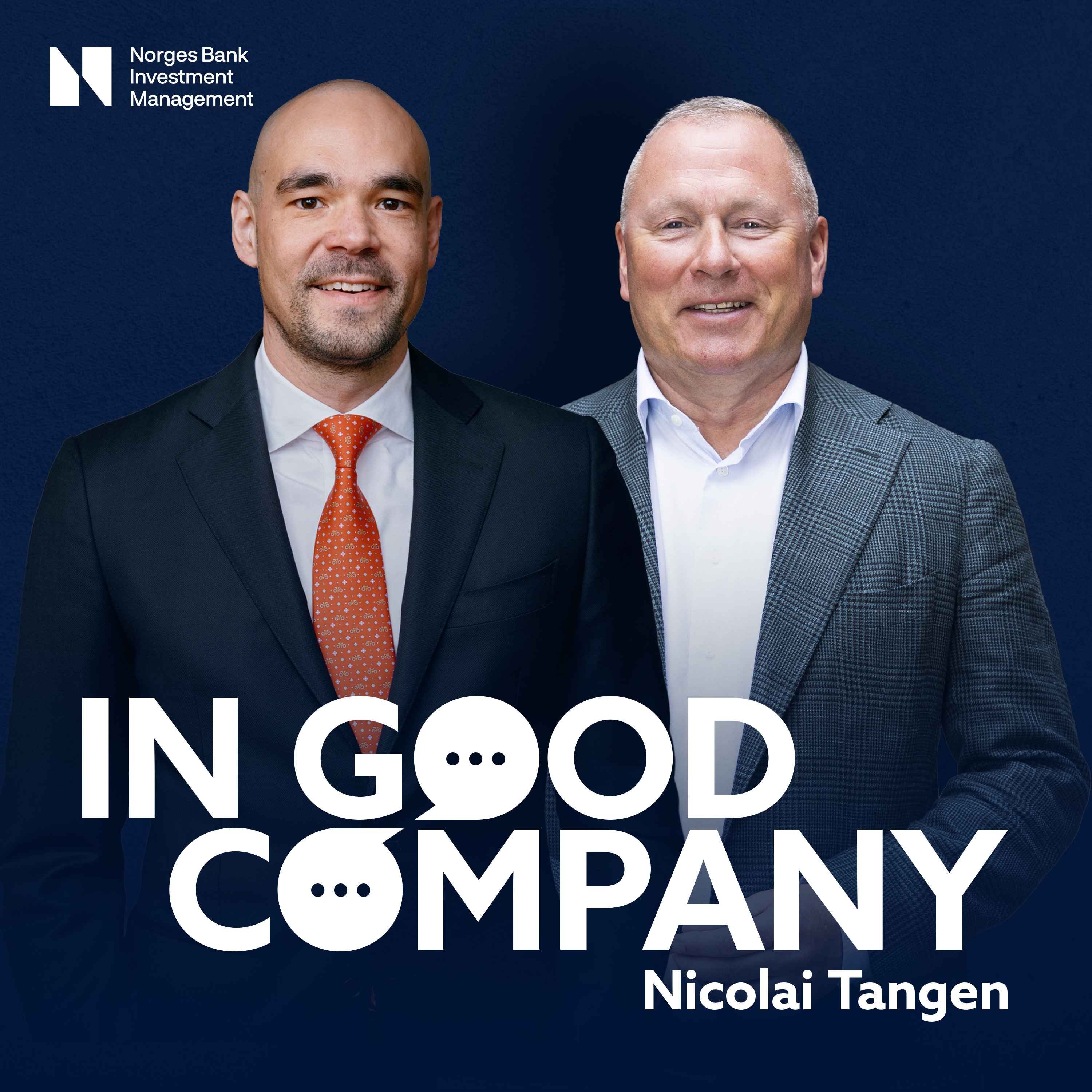
Daniel Balthasar, co-CIO of Active Strategies (with Pedro), at the fund since 2007; previously a portfolio manager. Host: Nicolai Tangen, CEO.
Cheap stocks stay cheap for a reason; value requires change. Ackman’s edge comes from challenging his thesis, seeking opposing views (e.g., meeting biggest short sellers), and engaging boards to drive operational change. Great companies with moats and stable, predictable cash flows can compound over long periods. The fund is “near” its benchmark but can deviate to generate excess returns; it uses permanent capital, active equity engagement, and systems to de-bias decisions and learn from mistakes.
Daniel’s Air Products experience (underperformed until Ackman intervened; Ackman doubled his money). Ackman’s “one share, one vote” alignment with stewardship.
Written by AI. May contain mistakes.
Daniel shares his experience with Bill Ackman's investment strategies.
“I was invested in a stock and I lost a lot of money.”
Discussion on what constitutes a good or great company and investment philosophy.
“And his response was good company or great company.”
Nicolai explains the fund's approach to active management and investment.
“We are near the index, but the min that we have from the Ministry of Finance allows us to deviate to a certain degree from our benchmark.”
The importance of challenging investment beliefs and learning from mistakes.
“What are the kind of things that you think we can learn from him?”
Discussion on the fund's commitment to active ownership and company accountability.
“and we systemize our learnings and we de-bias our investment decisions.”
Daniel shares personal insights on maintaining focus and family time.
“And we have a joint interest, which is the long-term success of the companies we are invested in.”

Get the gist, explore an idea or ask about something said.
 Claude
On In Good Company with Nicolai Tangen, what are the key points of this episode?
Searching your listeningAutomatic transcript. May contain errors.
0:00Hi everyone and welcome to Friday Wrap Up. I'm Nicolai Tangen, the CEO of the Norwegian Southern Wealth Fund. This week's episode was with Bill Ackman and today Marta has handed me the microphone. This is a special episode with a guest from inside the fun to learn more about active management. And Daniel Balthasar, how are you? Yeah, I'm very well. Thank you, Nicolai. Always good to be in Oslo.
0:32So Daniel is the co-CIO in Active Strategies together with Pedro. Been at the fund since 2007 and started out as a portfolio manager. And just to be clear, Active Strategies, that's the part of the fund that deviates from the benchmark. So Daniel, you admire Bill Ekman. Why is that? Well, I really admire him. And there's a very simple reason. I was invested in a stock and I lost a lot of money. I gave up and Bill came in and he doubled his money. Well, tell me what happened. Well, it's a company that I identified operates in a very good and healthy industry, very stable, very good long term prospects.
1:13What was the company? It was Air Products. The stock was cheap. So I thought there's an opportunity. It's much cheaper than the PS. And I got involved. And the stock kept underperforming. And then there was a profit warning and another profit warning and another profit warning. I kept losing money and I threw in the towel and I gave up. And then Bill decided to get involved. He got in. He engaged with the board. He made some changes to the company and it became a very successful investment for him. And he doubled his money within a relatively short period of time. And what did you learn from it?
1:48I think I learned that every stock that's cheap is cheap for a reason. and something needs to change for that stock to perform and for that value to materialize. And I was just investing in hope for change. And Bill came in and he made the change happen. Anything else that stood out? Yes, I think it was very interesting when you asked him, what is a good company? And his response was good company or great company. And he explained his philosophy about investing. that he ideally identifies a great company. And there are not too many of them. And that's the kind of company that you can invest in.
2:33And the market shut for 20 years and you don't need to worry too much, but in 20 years time, you can be relatively certain that you generated a good return on that investment. And these are typically companies that have a strong moat around their businesses. It's well protected and they generate very stable, very predictable cash flows in the long term. And when he said it, it reminded me a little bit Chris Horn and the way that he invests. And those two are probably one of the two best long-term investors. And Chris Horn, by the way, we've also done a podcast, which we recommend people to listen to.
3:07Absolutely. So we can learn from these guys and we try to implement this at the fund as well.
3:16Let's move on to the fund and the market. So many people see us as an index fund. Is that what we are? No, we are not. We are near the index, but the min that we have from the Ministry of Finance allows us to deviate to a certain degree from our benchmark. So we can take some risk to generate excess returns. That means generate returns for the fund that are better than its benchmark. And we in active strategies employ quite a bit of that risk. So we have four investment departments and they're all tasks with the generation of excess returns. The department that's probably closest to the way that Bill invests is called Active Equity.
3:54So these are our internal portfolio managers. What does the equities team have that Bill would recognize? I think one is a long time horizon. So we are here to generate returns for future generations. I think that sets us apart from many other investors. I think another one is the engagement with companies. we spent quite a bit of time meeting management teams, but also being on the road, visiting companies, understanding their management teams, understanding the products and understand the corporate culture. And Bill also talked about competitive advantages that come with permanent capital. We have permanent capital that gives you many investment advantages, but it also means for our portfolio managers that they don't need to go out there and do marketing, raise funds.
4:42They can focus on what they are here to do, which is investing and generate returns. What are the kind of things that you think we can learn from him? I think what he does extremely well is challenging his own investment thesis and this we need to do better at the fund. He speaks a lot how he does it so when he invests and wants to build conviction he meets the biggest short seller. The people who have the opposite view right? People that have the opposite view and the way he consumes news and information is also very specific to this and he really tries to get the information that goes against his reasons.
5:19Why is it so hard? Why don't people like to hear the opposite view? I think it's human nature. You don't like to hear that you are wrong. But I think it's also the way that the brain works. And the late Dan Kahneman, I think, describes it really well in his book, Thinking Fast, Thinking Slow. The two parts of the brain, the fast thinking one, the slow thinking one. The fast thinking one is switched off all the time and it does most of the work including the analytical work. The slow thinking part needs to be called upon. It's a little bit lazy but it does the reasoning for you and he has this great example.
5:59A bat and a ball cost$1.10. The bat is$1 more than the ball. How much does the ball cost? Yeah. So most people say 10 cents, and that's the fast thinking part of the brain answering for you. But if you call upon the deep thinking part of the brain, the right answer is 5 cents. So people can now go and do the math and figure it out. So what do you do? What do you do? Well, I think what we need to do better is find the counter arguments, challenge ourselves, be open to these arguments. we are developing a few systems that help us with this. And I think the objective should be to find the truth. And we also then need to admit when we are wrong.
6:48And when we are wrong, we need to make sure that we learn our lessons and we systemize our learnings and we de-bias our investment decisions. So we have a system in place, for example, that analyzes all of our investment decisions and tries to identify for every single portfolio manager what they are good at and what they are not good at, and then improve the quality of future decisions. Now, Bill Eichmann says that passive owners don't hold anybody to account. What about us? We do. Bill also says that he believes in one share, one vote. And we strongly agree with this. We provide capital to the companies.
7:26And with these capital come rights. We don't want these rights to be undermined. I think Bill, us and other investors are totally aligned with this. And we have a joint interest, which is the long-term success of the companies we are invested in. What have you been focusing on this week? You've been in Oslo, for instance. Yes. So I sat down with a couple of our portfolio managers and tried to understand how they are positioned, how they make decisions, what kind of risks they take. That's an important part of our job. But we also spend quite a bit of time with people from the active ownership department, which is an area that focuses on stewardship and sustainability.
8:08They will join our area in a couple of weeks. So we really want to meet those people, get to know them and understand what they are focused on and how we can integrate them in the best possible way.
8:22Daniel, finally, it's a tough game being in active management, right? in particular when you underperform and this year hasn't been so great for that part of the fund so how do you stay focused i think i try to focus on the absolute foundations bill talks about it as well sleep nutrition exercise i think that's the core of everything you do and then you need to make sure that you have some charging stations that you can pull on what is your what is your charging station well one is the weekend it's my kids so i'm looking forward to spending the weekend And with them, my son is 10 and he plays the drums.
8:58And he decided that he will be my teacher. He wants to teach me playing the drums. So I'm looking forward to another lesson. He's a very good teacher. And my 13-year-old daughter sings along. So we will have a lot of fun. The neighbors will probably have a bit less fun. It sounds like it. I'm happy I'm not your neighbor, Daniel. But a big thank you for joining us here. So what we will do going forward, we will do some episodes like this with people from the front on a regular basis so that you will learn more about all the interesting things we are doing around here. So happy weekend. Happy weekend.
9:30Thanks for having me. Take care.
On this week’s Friday Wrap-Up, Nicolai Tangen is joined by Daniel Balthasar, Co-Chief Investment Officer of Active Strategies at NBIM, for a closer look at the fund’s active side. Following this week’s podcast episode with Bill Ackman, they discuss the investment that made Daniel admire Ackman, whether NBIM is an index fund, and what the fund can learn from the best investors. Daniel also explains why challenging your own investment thesis can be so hard, and how he stays focused in a tougher year for active management. Tune in!
Listen to In Good Company with Bill Ackman, CEO of Pershing Square: https://podcasts.apple.com/no/podcast/bill-ackman-concentrated-investing-permanent-capital/id1614211565?i=1000798461455
This Friday Wrap-Up is hosted by Nicolai Tangen, CEO of Norges Bank Investment Management, together with Daniel Balthasar, Co-Chief Investment Officer of Active Strategies. New episodes of In Good Company air every Wednesday, with the Friday Wrap-Up following each week to break it all down.
Hosted on Acast. See acast.com/privacy for more information.