
 Ask ChatGPT


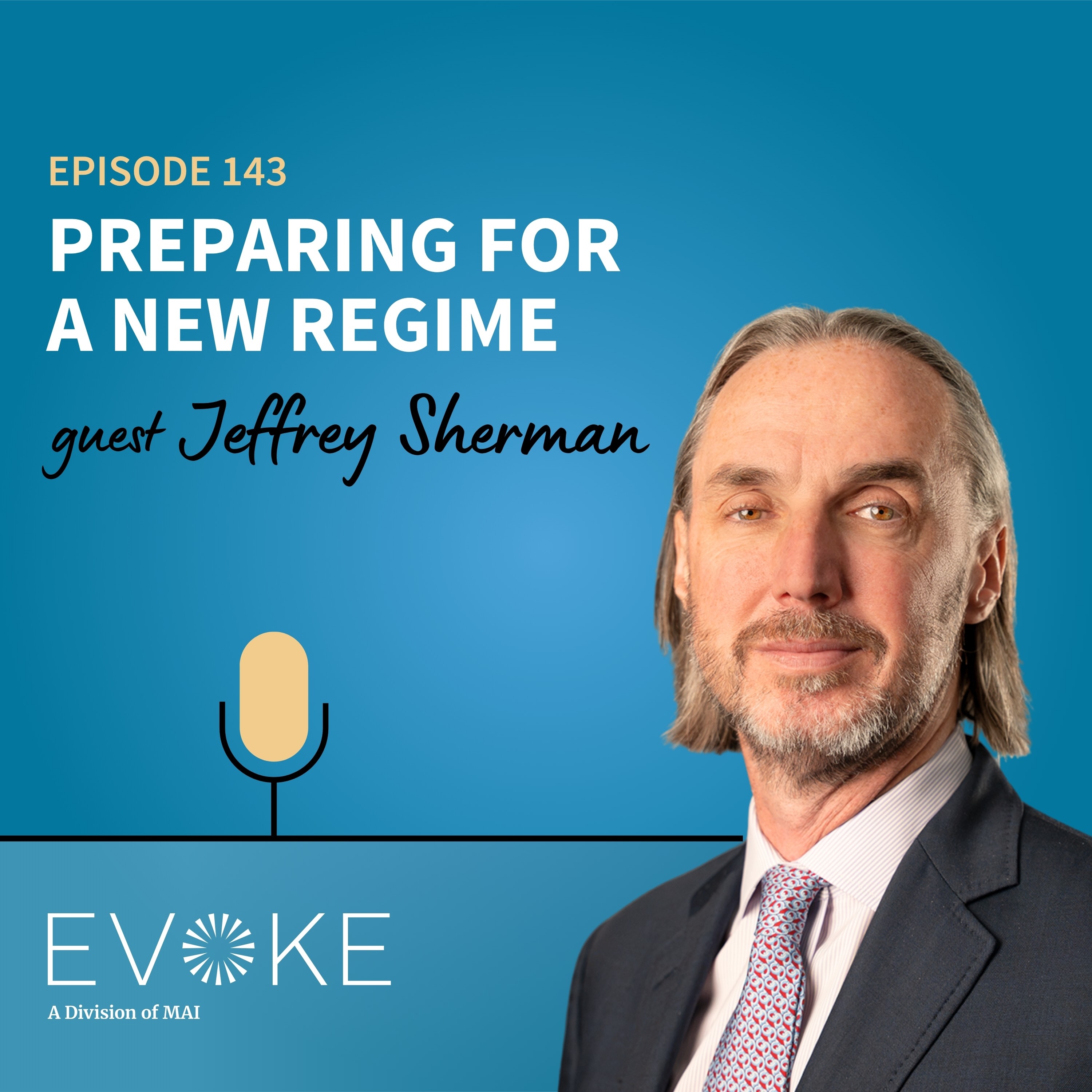
Jeffrey Sherman (DoubleLine Capital) argues investors must “throw away” the post-GFC risk playbook and prepare for a “new regime” marked by higher-for-longer, unstable inflation, deglobalization, fiscal dominance, and a Fed that can signal more than it can control real-economy knock-on effects. He says markets resemble the early-2000s (debt binge + nominal growth) more than 2010–2020 “financial repression,” and that bond yields/real yields still offer cushion.
Jeffrey Sherman, deputy CIO at DoubleLine Capital (about $97B AUM as of end-June). Background influences: Great Depression/Japan lessons, QE mechanics, and “history rhymes” framework.
Inflation’s “last mile” is hard; tariffs, supply-chain redundancy, labor/input costs, and deficits keep price levels high. Fed credibility matters more than small rate moves. Bond market implies higher rates; real yields can be positive (e.g., ~4% if inflation ~4%). AI capex is ROI-driven and won’t be choked quickly by 25 bps hikes.
2000-era parallels; “fixed income dungeon” low-yield era; gold driven by central-bank de-dollarization; diesel/oil input-cost complaints; concentration risk in US mega-cap/tech; short-duration TIPS preference; AI infrastructure financing needs (potentially $900B–$1.5T next year).
Written by AI. May contain mistakes.
Discussion on the evolving landscape of risk evaluation in investments.
“I think it's an extremely important question because I think it's an ever-evolving landscape when you think about it.”
Exploration of historical financial patterns and their relevance today.
“And a lot of pundits will focus on the US, but this was a global phenomenon.”
Analysis of how the pandemic has disrupted traditional market dynamics.
“This market looks much more like the market from 20 plus years ago.”
Insight into today's economic conditions and their implications for investors.
“But the point is, is you're building that up.”
Advice on building investment portfolios in a high inflation context.
“House while simultaneously trying to continue to establish credibility.”
Discussion on the challenges faced by newer investors in today's market.
“That's not what we were getting in the aughts.”
Explore how market perceptions of inflation are influenced by historical context and the Federal Reserve's actions.
“I would just say back to where we were 20 years ago.”
Understand the various factors contributing to persistent inflation, including tariffs and labor costs.
“So it's one that you can be right very short-term on the tips and then ultimately it becomes a detriment to you because the duration hurts you eventually.”
Discuss the implications of deglobalization and structural factors affecting inflation and manufacturing in the U.S.
“We are going to have to figure out how to do that.”
Examine the potential for sustained inflation and its impact on economic policies and restructuring.
“You know, the other thing is paying taxes, you know, not popular.”
The discussion covers recent inflation trends and contributing factors.
“101 degrees in Los Angeles, it feels like the world's breaking right now.”
Delving into the effects of fiscal policies on inflation and economic stability.
“2018, when we got the first tariffs, we saw goods inflation go up.”
Discussing how inflation affects different socioeconomic classes and wealth disparity.
“And that's going to be the mechanism that really drives policy changes.”
Analyzing the role of war and government policies in driving inflation.
“Long-term inflation is a less painful, maybe equally bad, but less painful, at least optically, to work through those debt problems.”
Examining how rising oil prices influence public sentiment and economic perception.
“We should have known when they renamed it the Department of War that it was going to change the dynamics.”
Discussing the concept of fiscal dominance and its impact on monetary policy.
“Maybe that's just who we are these days.”
Exploring the potential of AI to reshape economic structures and productivity.
“You know, probably one is better than the other.”
Identifying current investment opportunities and the associated risks.
“And he was looking at the ring camera and how it could identify that, oh, it's a UPS versus a FedEx versus, oh, someone's holding the trash bag.”
Explore the dynamics of private credit and equity market risks, with insights on diversification and market concentration.
“I think more importantly, I think there's kind of a doubling down of risk that people have ignored.”
Understand the implications of currency risks and opportunities in emerging markets, particularly in bond investments.
“Yes, I guess the short answer is participate, but be mindful of diversification so that you're not overly exposed.”
Legal disclaimers and important information regarding the podcast.
“No representation, warranty, or undertaking expressed or implied is given to the accuracy or completeness of such information by any person.”

Get the gist, explore an idea or ask about something said.
 Claude
On Insightful Investor, what are the key points of this episode?
Searching your listeningAutomatic transcript. May contain errors.
0:00Welcome to the Insightful Investor Podcast, a weekly series that seeks to share industry, investment, and market insights. Learn more about our show at insightfulinvestor.org. I'm excited to have Jeffrey Sherman joining us today live in our podcast studio in Los Angeles. Jeffrey is the deputy CIO of Double Line Capital, which manages about$97 billion as of the end of June. Jeff, thanks for joining us today. Yeah, great to be here in a beautiful office. Congratulations on the new move. Before we jump into Outlook, I want to ask you just a few questions about background to set the stage. What experiences most influenced the framework you use today to evaluate risk and opportunity?
0:47I think it's an extremely important question because I think it's an ever-evolving landscape when you think about it. And one of the adages in the investment business is that history doesn't repeat, but it often rhymes. And you hear that through historians in general. But I think that's the right lens to go with. And so when I think about the returning risk framework, I think what one needs to do is throw away the playbook that we had in the post-GFC era. So we'll call that from 2010, let's call it, right after things started to kind of stabilize. There's still a lot of pain, but we'll call it the stabilization, all the way to 2020.
1:25And why I say that is this was evident of a world of financial repression. That was a phrase that was coined and used a lot. There was massive coordination globally through central bank policies, through trade policies, right? You see where I'm going with this, right? The world's different. And I think when you look at markets, they were managed. And what I mean by that, specifically the bond market. Yields were not free to trade on supply and demand and outlook and fundamentals because there was the meddling of the central banks for a decade. And those policies I mentioned were coordinated. The central banks in the developed world all really had the same policies.
2:06You could argue Japan was on its own island. It still is. We'll talk, I'm sure we'll talk about Japan a bit. But coming back to it is that we may have had higher interest rates in 18. We kind of led people, we led people to the cuts during the GFC. We led them out of it. We had similar behavior throughout it. And we were kind of the leading model. But that all changed during the pandemic. And I think what changed is that one is it was the supply of money that came into the market. And a lot of pundits will focus on the US, but this was a global phenomenon. Inflation was a global phenomenon as some of the output of that.
2:44Obviously, the supply chains changed a lot of it. But we're still awash with a lot of that money. It got invested. It got put into the economies around the world. And simultaneously, we went into what I'll call disruption. And I think if I want to think about what the administration does in this sense, is that they disrupt the orthodoxy. Meaning that they want change. They want things to be different. And what this resembles to me is the market I kind of grew up in and call it the odds, right? In the early 2000s, like, you know, again, we had this debt binge. A lot of it was in the housing market.
3:24Those markets traded on their own. Inflation was a number that had a three-handle, a lot of cases a four-handle on it. We had nominal growth, 7 % or so, and we were able to grow our way through some of this. I think that's closer to the playbook than what we had in that post-GFC era, meaning that there's still inflation here today. It's not going away. Economists call it the last mile of inflation. Not really sure where that phrase comes from. I should probably look that one up. But I hear that referred to. And it's very hard to get that last kind of leg of inflation down. And that's what we're seeing today.
3:58But inflation ran at 3 % versus 2%. Is it a big deal? yes but in general it all goes into nominal gdp because gdp is real gdp plus inflation and i think that's important to think through because as we talk about the economy and we talk about how things are growing we need to grow our way out of some of this debt these debt issues right there's no doubt and the good news is is getting a nominal gdp of six seven percent gives you a chance, right? Remember the rule of seven, it's how you double and things like that. So the idea that I'm coming back to in the framework is that I think it may not rhyme with that period I'm talking about in terms of the inflation around growth rates.
4:45There was a massive economic boom expansion. There was a CapEx expansion there just happened to be in construction and housing. But there's a lot of similarities there. But it looks nothing like that post-GFC, kind of pre-pandemic era, simply because we don't have coordination. We have disruption of orthodoxy, we have disruption of the supply chains, we have disruption of trade, we have disruption of politics, right? And so I think when you start to think about it, I may not be right that the most similar thing is that 2000 experience. And look, There's some semblance to the late 90s of tech build out, of course.
5:22But I'm pretty sure we're not going back to that era, which my boss has coined it the fixed income dungeon, where you've got one and a half, 2 % yields, and there's just not much you can do as a bond investor. This market looks much more like the market from 20 plus years ago. And I think that's the framework people should be looking at, both from an equity and a fixed income perspective. One thing that has changed is if you zoom out even further and you go back to the early 80s, you basically had falling interest rates for 30 years and then you had zero interest rates until 21, 22. And it feels like we're in an environment of higher rates for longer.
6:02And part of that is you had an environment of low and stable inflation for an extended period. And that seems to have changed as well. So how does all that play into how you think about investing, but also what Fed policy might be, which may be less predictable as well? Well, here we go on a long diatribe. So I'll try to make it concise so we can be a little more interactive. But so first of all, I agree that we had this disinflationary environment, declining inflation rates for roughly 30 years, but it wasn't a straight line. You know, there was periods in the 90s where we had these kind of head fakes of double dip recessions in the mid 90s.
6:40You had inflation take off again those periods. And by the way, the correlation between stocks and bonds was positive back then, right? Very similar to some of the things you saw back in 22. Why? It was an inflation problem, right? It was unexpected inflation that kind of showed itself. And so you're correct that we had this declining rate. And then when we hit that zero lower bound and, you know, God forbid, some of the world went negative. I mean, that was just bizarre, right? You had to throw out all your textbooks and, you know, we started with risk premium and it never went negative, right?
7:13And you're supposed to not buy it. But the point being in that low period is that it was just managed. And it was that we didn't want to ever have a recession. We did not want the business cycle to play out. and I argue that because the pain we would have suffered in a true recession and the GFC was abysmal. Let's not, you know, doctor this up with flattering words but the pain that would have transpired without some of these efforts would have been even more widespread and more rampant. We learned those lessons from the Great Depression. Correct. And that's Bernanke is a student of the Great Depression as well as the Japanese experience.
7:52And so the behavior that he used was one that One, he believed in quantitative easing. He believed that, again, by getting rates low, QE made sense. There is an economic argument to that. But you're suppressing things. It's like coiling a spring. You're building up more kinetic energy, right? Or I guess it's potential. It's kinetic when it moves. I wasn't a good physicist. That's why I went to finance. But the point is, is you're building that up. And so at some point, that wants to explode. And anytime it wanted to explode a little bit, the central bankers came to the rescue. And so rescue being more QE, more negative yields, pushing people out the risk spectrum.
8:32And so when we talk about the environment now, yes, there's a higher inflation rate. It is unstable. Inflation usually is a bit unstable because it cycles. And so I think that's what has changed is that we're accepting part of the business cycle. And during the pandemic, companies defaulted. We don't talk a lot about it. there were a lot of defaults in 2020. You know why? There were bad companies. Again, maybe you ran a good company and something bad happened to you. I get that. Good things happen to bad companies, which you get lucky on. And bad things happen to good companies, which you get unlucky on.
9:08But I bring that up because now we're at this point in the business cycle where we extended a lot of debt at low rates. We extend a lot of floating rate debt. We've raised rates with the Fed. The point of that is to try to slow things down. I think right now the problem is, is that the Fed can't slow things down. What they can do is help signal policy. And what is one of, you know, the pet peeves of the chairperson is Kevin Warsh says he doesn't want to provide forward guidance. That's not very helpful in a market that needs to see that. So if you're not going to provide it through verbiage, right?
9:43Or, you know, remember Mario Draghi really started this when he said, I think it was 2013, early 14, when he said, we'll do whatever it takes. and that placated the market. I think what Kevin Walsh is trying to do is a positive. He's trying to say, look, we don't need to hold your hand. You all are professionals. You know, there is some retail in there, but in general, the market is a professional mechanism. You figure it out. We're here to kind of control the supply and demand side. But the problem, as I say, with the Fed, you could write hike rates next week, 100 basis points, and it's not going to choke off AI hyperscaler demand.
10:16Why? if you charge Apple, you know, or Apple's a bad example, you charge Alphabet, you charge Meta another 100 basis points, they're still doing the project. Why? They believe the ROI is massive. There's a rationale for it. They could reach 200 and it probably wouldn't change a lot of that outlook. So the question is, is how do you hit the knock-on effects of the other parts of the economy? I think that's where the Fed needs to have some action. And so sitting here today, We don't have the inflation report yet. It comes Friday. I think, you know, everybody's eyes are on that. Simultaneously, we have intervention from the Treasury Secretary got announced today.
10:55We've had the intervention on the yen from the U.S. Treasury Secretary. You've got Kevin Warsh, who is, you know, trying to placate the president and White House while simultaneously trying to continue to establish credibility. Sure sounds like they could use a little intervention, right? Sounds like they could use some coordination, but we've alienated a lot of these partners along the way. So what that means is we have to trade on our own. We have to resolve this on our own. And right now, the bond market's speaking volumes. The bond market's telling you rates should be higher. Why? It sees the inflation data.
11:30It knows that we had some transitory downward pressure because of the owner's equivalent rent. The lack of collection of data back in October led to some of this. We know there's going to be some revisions coming. I mean, that's going to hit more PCE than CPI. So I think what you see at this stage in the cycle that's different, you have those declining rates, but irrespective of the direction of rates right now, bond yields are positive in a real sense. If you believe inflation is going to 4%, the treasury curve outside of anything inside of six months gives you roughly 4%. You can get break even, you can make money, you can outstrip inflation.
12:09And by the way, we think inflation still continues to print with three handles. Is that horrible? No. But you know what? If I can go buy lower risk credit or sorry, higher quality credit, kind of what I deem to be low risk, not low quality, and you can start to put this stuff together, you can easily start on the front of the curve, yield five, right? You can go in the belly of the curve, yield five and a half, five and three quarters. And if you want to take more credit risks, you can get six, six and a quarter in a diversified portfolio. So all those numbers from a bond investor, because that's the lens I'm using here, still make sense.
12:44Even if rates are pushing up a little bit, even if we have some more inflation, we have some cushion there, right? And as long as the economy is still humming along, earnings are strong. You'll hear that from every investor right now. Unfortunately, profit margins tend to mean revert over some period of time. You're in a good spot in the bond market. So I think what it is, is that outside the inflation argument, I just have to think about from the perspective, what can I get today? What kind of risk do I need to take that? And am I being paid for it? And I'll say that if we have a, let's call it three and a half percent inflation.
13:20Let's just say that's the number of the next 12 months. But I can build you a portfolio that, I don't know, duration of a couple of years, those off five, five and a quarter, right? Even if inflation goes to four, that's still 125 basis points real yield that's positive. That's not what we were getting in the aughts. I'm sorry, in the teens. We weren't getting that in a lot of periods. It was hard to get those real yields. It was hard to build a portfolio that was a few hundred basis points over inflation. So I think the difference now in the market is that because of how you described it, unstable inflation, that means we should get more of an inflation premium, which says we call it higher for longer.
13:58That's the mantra. I would just say back to where we were 20 years ago. What's interesting is it seems like the market is placing a lot of faith in the Fed's ability to bring inflation back down closer to two when you look at long-term break-even inflation rates, despite the fact that inflation has been above target for over five years. What do you make of that? I'm going to offend the younger folk out there because I'm going to say, I'm going to call it rookie traders. I'm going to call it, and why I say rookie, it could be 10 years experience. and if you grew up, let's say you came in the market, you know, 15 years ago, right?
14:362011. All you know is a 2 % inflation target. All you know is the Fed is adamantly committed to it. All you know is that the ECB does it. The entire developed world seems to target us outside Japan, okay? So that gets burned into the psyche, right? And so it's not that the people aren't thinking about it. It's the framework. Once again, the framework is you're a function of your own experiences. And then we all try to learn history to try to learn from it. We try to use spreadsheets and pretend we can live through those drawdowns and all that, even though we can't. But it's easy to overweight your personal experience.
15:12It's what most people do. And that's why I always take a pet peeve at the concept that there's smart money, dumb money, retail money. I mean, like institutional committees are made up of people. They're smart people too, by the way. Some of them don't have finance experience. They come from the business they're in. And so they have emotions too. And so all of this emotional behavior is very powerful. But coming back to it, the 2 % break evens, I looked at the swabs crib this morning because obviously the oil was going on seeing the new$100 price on Brent. We looked at zero coupon swabs this morning and it's like the range between three and a half to four years out to 30 years is like 2.51 to 2.57.
15:58Let's call it 250 basis points. The market is just trained to that. And so we saw this too, Alex, during 22 when inflation was exploding, that you really didn't get like 10-year break-evens. They didn't even get to three, right? Even with a 9 % inflation rate, right? Compounding that out. Because you start extrapolating two, two, two, two, two, that's how you get back to it. So I think the market, when I look at break-evens, I look at tips, They've started to price in a little bit more inflation than we saw pre-pandemic. And I'll call that 30 basis points-ish kind of spread, which seems light.
16:35You know, it seems light. And it's been good to be betting on shorter term tips versus those longer term for this reason. And you get some role effects. And so for tips, we do like them in shorter duration accounts. They don't make sense in intermediate accounts to us. We just don't think that that pressure comes to the back end. And by the way, if we get some short-lived inflation, specifically in commodity prices, which is very difficult to time, if you get that, that leads to kind of slower economy. So it's one that you can be right very short-term on the tips and then ultimately it becomes a detriment to you because the duration hurts you eventually.
17:10But I think when I think about the inflationary environment, the challenge is that we just have it everywhere. It's not a commodity store. It's part of it. It's tariffs. And when you look at the manufacturing input costs this year, and you look in the first half of this year, they're up roughly 15, 16%. It's essentially the weighted average tariff of steel, copper, and aluminum. Not very hard to discern that that's going to go through eventually. You look at services. The ISM services, people always look at the headline number, but the price is paid inside of that. You have more than 70 % of respondents saying costs are going up.
17:47Well, what are costs to a service company? Some, it's inputs, you know, and goods and things. but it's also labor. So all of these things are saying that that last mile of inflation, it just doesn't look attainable in the near term. And so does the Fed hiking 25 basis points change that dynamic if they do that next week? No. But the difference is by hiking, you signal that you're serious. You're not jawboning. And what I've seen, obviously, It's a credibility game in some sense. They need to. And I think if the, let's say the inflation doesn't cool on Friday. Let's say it's kind of on the upper end of the range and call it at estimate to slightly above it.
18:29And then the Fed pauses. I think you can see the long bonds sell off 10 basis points because it says you're not serious about it. All Kevin has told or Kevin Warsh has told us thus far, I shouldn't call him on the first name basis. I don't know him. He probably doesn't want to know me either. But all we've heard from him thus far is they're going to get inflation down. What day of the week is it? We're going to get inflation down. What color is your shirt? We're going to get inflation down. We're going to two. He messed up in the first press conference and said he only looks left of the decimal.
18:56So a bond trader is like, is that 2.00 and 2.99? So Kevin Warsh said he only looks left of the decimal point. And so he only cares if it's a two. And so is it 2.00? Is it 2.99? Are those the same? No. And the bond market kind of scratches his head. Then at this next press conference, he was adamant, no, two is two. within a, not even within a whisker or a whim. He said some kind of archaic saying. And so he's trying to establish the credibility, but he didn't do anything. And then Jackson Hole, you know, he was pretty hawkish there saying, we're going to tackle this, we're going to do this. Obviously, there's no behavior there.
19:34It's time to show me the money, right? I think that's what the bond market's looking for right now. It's looking for the credibility. So does the 25 change it? No, but it tells the market that the direction of path of rates is not down. It's sideways to up and we are serious. And that is the most important thing I think Kevin Warsh can do. And he can make it a five minute press conference. They're gonna probably have some SEPs. This may be the last, you know, estimates we get all that. He won't care. He could come in and just say that. We told you we're serious. We're tackling it. If we need to, we'll hike again.
20:09We're gonna make it data dependent. Also, the easiest answer, and this, Mr. Warsh, I am telling you, this is what the market would like to hear. You can hike and you can say, we're doing this to reverse the risk management cuts from last year. We gave you three. We think it's prudent to peel one of those back. We may need to peel another one back. We'll make that decision. How simple is that? Because Jay Powell set that up perfectly for that. And you don't hire the, well, you're going to hire the president. And I thought it was clever that on the day we get one of the best jobs reports we've had in like six months, the president's all time to cut rates.
20:46It's kind of the other way around. But the point here is that you haven't seen. The thing is, is it's jawboning. And this is what Kevin's done thus far. It's what Scott's doing. Mr. Besant is whole intervention concept. I am the house was the headline from last night that he gave a speech in Texas where he said, don't bet against me. okay, show me, right? And at some point, if you're going to intervene in the treasury market, 6 billion isn't going to do it, Mr. Besson. That's not going to happen when you have a $30 billion auction coming. You need net negative supply to do so. And the only way you do that is you buy it somehow.
21:28So they have a problem. And this talking isn't going to get there. It's going to have to be actions. And I think it starts with the Fed chairperson. and we don't need to see coordinated efforts between Fed and Treasury because it's going to feel collusive. It's going to feel like they're trying to do interest rate curve management and curve control and just rate control. And we know how that kind of lasted last time. It'll build up some excesses. Things will look okay in the short term. But I think the bond market ultimately pukes on that because it leads to higher inflation. And by the way, Alex, have you heard about this CapEx cycle we're in?
22:05it's massive. That's more supply coming. That's just more stuff that needs to be financed. As I tell people, if you want to have the estimates are like between$900 billion and$1.5 trillion next year alone. That's the spend. Obviously, you can vacillate. Where does that come from? It's got to come from the bond market. It's got to come from corporate bonds. It's going to come from asset backs. It's going to come from commercial real estate bonds. It's going to come from free cash flow. It's going to come from bank loans. It's going to come from a lending facility. Heck, you might have to sell some of the art out of here just to finance the AI trade.
22:43We are going to have to figure out how to do that. And so either we get acceleration on the economy, we can turn these profits into reinvestments, or the bond market is going to set terms. And eventually, the bond market will dictate how far the AI trade goes, simply because it has to be refinanced. Is your sense that we've shifted from a world of globalization to deglobalization and other factors that are structural in nature that are more inflationary? So we kind of have a more inflationary backdrop that maybe keeps that inflation rate elevated for next 10 period? How do you think about that?
23:20Yeah, definitely. I mean, let's talk about kind of the things we're dealing with tariffs. They are inflationary short-term. They're kind of transitory inflation, if you want to define it that way, but the price level stays high, right? That's part of what we're dealing with right now. When consumers complain about the inflation level, they're not complaining about the 3%. They're complaining about the cumulative 40 % since the pandemic. That's the problem. It's about 35. And so that's where you're seeing the issue. It's the price levels have never come back down. Now, think about the plan that the administration had coming in was that we're going to redefine U.S.
24:01manufacturing. By the way, U.S. manufacturing is booming. Kudos to the president and the team for getting that done. I think they were talking about building widgets and cars and stuff. Turns out it's data centers. Don't care. Construction, it's good jobs. Manufacturing is there as well. But some of the manufacturing is redundant. If you have redundancy in the supply chain, that's inherently inflationary, right? Especially when you run a globalization, you're looking for lowest cost provider. And part of the whole kind of, I think, breaking this deglobalization and that developing was that we essentially pushed the labor costs in China to a level where it's not as competitive as it used to be.
24:44In most instances, it's cheaper to produce things in Mexico just because of the supply distance. And by the way, our number one trading partner, at least today, who knows what it is next week, they change pretty frequently. But it's cheaper to go with that kind of labor. And by the way, if we want these two hemispheres, which it seems like that's kind of Trump's accord, I don't really know what it is. But if you have that, that's kind of the natural progression. So at some point, the globalization does break, right? And now you just have more polarization. It's a multipolar world when it comes to agendas.
25:18And, you know, I think what you've seen in this, you know, maybe 18 months ago, the concept was sell America. Oh, you know, if you really want to show the administration, who's boss, sell the treasuries. I argued the whole time, if you really want to hurt us, sell our socks. You'll plummet the dollar. But the problem is, we've been the cash flow engine for the world. And so until you see something like that, you won't see it. But those policies start to change behavior. Why did we see such an acceleration in gold prices last year? This was not institutional money. This was not retail money. This was central bank money.
25:56This is a de-dollarization. It's the things that people talked about, the hedge money of the U.S. currency. for two decades. But it's the idea is that if you're going to have these policies, we're not going to coordinate, we don't have to play in your sandbox either. The main benefit we have, our sandbox has tech. Our sandbox has the innovation. We have the rule of law. And the idea of investing in the US has always been great. So bringing it back to your question, I forgot it, is that when I think about really where we are in the inflation environment, that it's just completely different. And you really don't necessarily want to bring it down that much because we need nominal growth.
26:40And by the way, for as good as nominal GDP has been, it's essentially over the last five years equal to the deficit. Let that sit in. This growth rate we have, you could offset and say it's all just been financed by the government. But it wasn't because there's private sector. It's how we're spending and reallocating resources. And And so at some point, someone's got to sit down and say, you know what? Here's what we can afford. Here's what we can't. And we've got to restructure it. And I'm not saying restructuring in default or anything. But the easiest thing to restructure is benefits, right?
27:17We've seen this with DB plans. It's your world, right? What have they done? They want to offload that risk at some point. And so what you do is you just say, look, retirement age goes up. You know what? All these previous presidents and administrators and congressional people lied to you. It's not your social security money. Your money paid people every time you had a paycheck coming in. That's not the system. You know what? You're going to have to wait till you're 70 to reach out. These are not popular. You know, the other thing is paying taxes, you know, not popular. We've got to find ways to figure this out.
27:49And it will happen one day when something breaks. And unfortunately, it will happen. The good news is it's probably not today. Although it feels 100 %... 101 degrees in Los Angeles, it feels like the world's breaking right now. Walking two blocks over here to meet with you, it was really like a desert. That's what LA is, I guess. But as I look through the inflation lens, why should it be lower? And that's the thing. And by the way, looking at goods inflation, which we talked about the trans-striped components, you've seen goods inflation start to print positive again on the year-over-year basis.
28:25And over the last, call it 15 years, there's really been three episodes where we saw goods inflation be positive. Remember, it's deflationary. This was all globalization, the Amazon effect. Everything's cheap and getting cheaper. And there was some merit to that. 2018, when we got the first tariffs, we saw goods inflation go up. Okay. And it was very microscopic. And Scott Besson in his testimony said, well, tariffs don't cause inflation. Look, CPI was flat. I'm like, yeah, but the stuffy tariff went up. But fine. you know he's he's he's being intellectually honest and we saw the supply chain issue where that was that was significant it went away and when we got the tariffs again all of a sudden you're seeing over the last seven to eight months and so all of these things come together so it's the supply chain pressure it's redundancy it's also that we have these fiscal policies which we're spending way too much money specifically as a percentage of gp these used to be recessionary levels when we spent as much and we act like everything's great.
29:25And so I think that's where you see that this term premium should be there. The inflation premium should be there. And, you know, if anything, the back end of the curve is what is overvalued the most. It's not really the front end rates. To your treasury, you know, it's like 75 basis points over Fed funds. It's repriced the risk management cuts, right? So from my standpoint, I feel like there's not as much value on the back end. And that's going to be the mechanism that really drives policy changes. And I think that's why you've seen Scott Bessing come out recently and talk about wanting to have buybacks on the 30-year treasury.
30:01I think he's a little disingenuous. It's a bond person's point of view. We are skeptical, but he's disingenuous, I would argue, because he's arguing liquidity for off the runs. He wants to take those out. It doesn't make any sense to me. If someone who owns this long duration treasury doesn't care about that that much, they just care about can and they buy the duration. And$6 billion was the announcement this morning. It's a drop in the bucket, even if you did it once a month, because it's really only coordinated with auctions. It's usually the secondary around it. And so what,$70 billion a year?
30:33I mean, our deficit is like $1.5 trillion. Maybe it's$2. No one knows because of the war costs too. So anyway, I bring all that up just because these are the things that it's a complicated world, but we distill it down to very few factors. It is inflation. What makes you think inflation is going up? What makes you think it's going down? I look at just input costs. I look at imports, exports. There's inflation. So it's hard to get your mind around how that doesn't transcend. And by the way, when you have a profit margin boom, that just means corporations are taking advantage to pass through some of that to you.
31:08Yeah. And when you have massive deficits during good times, and we know it gets worse during bad of times, and you have this growing debt burden, you need some inflation to work your way out of that. You can restructure, like you said, that's relatively painful. Long-term inflation is a less painful, maybe equally bad, but less painful, at least optically, to work through those debt problems. So you could see a world where there's structural pushes towards higher inflation, and there is probably a great need for more inflation. So you could see that playing out over the next decade or so. And the problem with that is it's all regressive.
31:43And what I mean by that is that it affects the lowest cohorts, whether it's income or wealth, because they have the least amount of disposable income. They live paycheck to paycheck. So if you're going to have it, what do you do with these people who you are penalizing, right? And so it's nice if you're an investor and you can buy something that gives you an inflation plus premium, but for those who don't get to participate, they're left behind. And so that's part of the problem of the wealth polarization in this country. And this has been an issue for almost two decades now. And what you have is that if you were an asset owner in 2020, and yes, you had some pain in March and April, but let's say you're an investor, you own a building, you own a house, you've done very well.
32:30Who didn't benefit? Those who weren't in the market. They call it the rentier class, my French isn't good, but it means rent, renter class, have been penalized. And they've had most of the pass through. And that tends to be lower cohorts as well. So we've had this experience of these regressive policies. And I think there's three major ones. One was the money printing, which caused inflation. The second has been the tariff policy, because at least short term, it causes that pressure on prices and resets the level. And then third, I think the wars have just put another level of inflation in here.
33:05And I've been very negative. I'm always negative on war. I try to not promote war. I think that's a good plan to start. We should have known when they renamed it the Department of War that it was going to change the dynamics. But the thing is, is that the destruction that Iran has done to the local region in the first month or two was enough to take oil supply out for, you know, offline. We would lose about 10 % of the oil supply. Luckily, China had stockpiled. That's coming down now. And by the way, that's why you're seeing oil prices back up and the war is really reflared. So I've been in a camp that I do think that oil prices are trade around 100.
33:46Again, rightly or wrongly, it's going to bounce a lot about it. That's an input cost that's going to choke people off. I mean, if you look about stuff going to midterms, what's the biggest complaint right now? It's not affordability housing. It's diesel, right? And diesel has set a new record high this week, right? All time. And remember, when you go in the cracker and you end up doing distillate, the other thing that comes out with diesel is jet fuel. It's kerosene. And so those are the two things. Those are huge input costs for this country. So it's hard to see how these policies are helpful at this point.
34:24And I think this is some of the revolt you see, the unhappiness, why the sentiment is so low. A lot of it's price levels, and I think people just aren't happy with anything. And by the way, this has been the good times, Alex. This is the boom, right? And we're miserable. Maybe that's just who we are these days. Welcome to a bond psyche. Wake up to the mind of a bond psyche. So we've talked about monetary policy. I know you feel like fiscal policy is becoming a more dominant factor. Would you talk through that as well? Yeah. I mean, this is what economists call fiscal dominance. And what fiscal dominance means is that all policies point to fiscal.
35:04And so when we talk about the Fed, the Fed is the monetary engine, right? So they set monetary policy. By the way, the Fed doesn't control long-term interest rates. The Fed controls overnight lending. It makes sure the economy is functioning. They try to with the narrative. They do. And they did it with QE. But that's kind of the role of the Fed is to make sure the market's functioning, markets are clearing, debt markets are open, you need to borrow money, we're here for you. There's the home loan bank, there's all kinds of stuff. And so that's the Fed's job. But when you hear about fiscal dominance, you know, what that means is that the monetary policy is not independent.
35:46What it's trying to do is make sure that no matter what we do as a policy, the fiscal is the most important. And that's essentially what the administration has connoted. From the standpoint of we need rates down, we need rates down. Why? We want to borrow more money. Do you recall when they set the debt limit last summer? The idea was that it would go through this administration's tenure. We're going to hit it next spring. Like, that's not even half the time they thought it was going to take. Or maybe it is roughly half. It's about 18 months. And so when you start to go through this, it's that it's reckless at the end of it.
36:25And look, I understand free stuff is super popular. People will stand in line hours for free things. Well, there's a long-term cost. There is a long-term cost. And there's opportunity costs. and there's other costs out there. But at the end of it, we've got to figure out how to make it all work. And look, is communism answer? No. Is capitalism answer? Not completely either. There's some mix of things. And I'm not trying to say one's better. You know, probably one is better than the other. The capitalist side works pretty well. But there has to be societal benefits too. And speaking of that, maybe when we're done with this AI build-out, maybe what it turns out to be is one of the greatest social experiments that we've done in over two decades.
37:08Maybe call it three. And what it is, is maybe what we're doing is these mega companies, we're going to use them to build the infrastructure for everything. And they're going to pay back society for those gains. They're going to make money potentially on the other side. But that's what happened in the telecom buildup, right? It was massive overinvestment. We have the internet now. You've heard of it, right? It works out pretty well. But when it first came out, I love to tell the story of like when it first came out, we were just sending random emails to each other. You've got mail, right? And then it got to where you can send a weird little image along with it.
37:45And this prevalence came around. But we had an overinvestment and the demand evaporated, right? And job losses, etc. And so did some of the companies. But then we got the internet. The next phase was what happened. the smartphone came, the e-commerce came, some rando, I can say, some rando will pick you up on the curb outside your office and take you to a place you rented from some other rando, you know, and we think it's okay. We don't know what we're going to do completely with AI. And I did read the headline from the Anthropic guy this morning. I hope it doesn't kill us. If it does, this podcast isn't going to be very valuable to folks.
38:26But the point being here is that I think none of us can fathom what AI is. I think we kind of get it. So I'll use an anecdote for my nephew. He's 23. And he was looking at the ring camera and how it could identify that, oh, it's a UPS versus a FedEx versus, oh, someone's holding the trash bag. He's like, oh, yeah, it's just AI. And I'm like, well, it's image recognition. And I tried to go there and he's like, he's just looking at me like I'm a total nerd, which he does think that. But I'm like, not everything is just AI, right? And so it's the evolution of it. So I just think that we're going to get there at some point, but you can't tell me the spin is disinflationary.
39:11And that's what the Fed chairman has tried to tell us. That's what Mr. Besson has tried to tell us is that, oh, it's going to come because we're going to have such productivity gains. Well, I'll tell you this. That might take a while. Have you used AI at all? You use it, right? Yes. Was there a learning curve? Yeah. Yeah. Right. So that's not a productivity gain. You'll get one, but you invested in it. Right. And so I question to the average person, that productivity game, I think there'll be specialized things. Right. And like, I'm not going out here and saying anything profound. Um, but if all we're doing is trying to do large language models and you're trying to have your better model than me of trying to analyze some text or some document, it's going to be a commodity.
39:56It's not very valuable. The discovery is, the infrastructure is, how do you monetize it? And that's going to be the question. I think that's the biggest question for the market. Now, we talk about Fed, we talk about inflation. We got to talk about this rampant spending. And there's not a lot of business cycles you can go to in the history of the US. And you can see four or five, but every time there's a significant investment in one single sector that promises all this great technology, the answer is it tends to be a bad investment at some point in the cycle. And then it becomes exactly what people dreamed and plenty more.
40:33We can talk about the invention in aviation. We can talk about railroads. We can talk about electricity. The internet's a perfect example as well. and we just think that it's just going to be the straight line and we know the human nature. We all get excited about it. What happens is if someone else has a new AI idea, it just compounds and we just keep spending and spending and somehow, you know, the demand collapses at some point. But again, when is that? Is it 27? Is it 28, 29? No one knows. But history does show this, that during these cycles that we tend to have that, I'll coin Professor Sean, it's the irrational exuberance.
41:14Are there any major risks or opportunities you feel like investors are generally missing? I think that some people have gotten very comfortable with cash. And I think that stepping out the curve a little bit is something that people should really be entertaining. As I sat here and described, a very high quality, low duration portfolio can pick up 150 to cash. Because yields are near 20-year highs in general. Yeah, and cash, right? But, you know, so is the two-year, right? I mean, so that's kind of how we're looking at things. So as you start to really dig through it, I think some of that opportunity cost, people have gotten complacent with it.
41:54Because, yeah, three and a half is good enough, you know, but if you can get five, why not try, right? That's one. I think more importantly, I think there's kind of a doubling down of risk that people have ignored. Or let's just call it, it's worked. And I think it's the, I own private credit. And this is a hypothetical, this is not me. By the way, I do own some private credit, so I'm not the quintessential hater. Private credit, I own bank loans, and I own CLOs. You know why? They've all worked. You know why? They don't have duration. There's a lot of floating rate, and again, there's enough yield to compensate.
42:32And you have an economic downturn. But those are all the same trade, is my point. There are different parts of capital structure. There's different risk in them. But it's lending. And it's lending in a narrowish market, a very well-defined market. And why we've seen such kind of low default rates in high-yielding bank loan is that stuff moved to the private market, the really hairy stuff. By the way, Alex, that's where it belongs. When you go private, there's a problem with your company. Usually, you don't just go, hey, I love this public company. I'm going to buy and go private. Maybe Michael Dell did it.
43:04There's not a lot of anecdotes out there. But there's usually a problem. There's a reason there's workout teams. There's a reason there's distressed investors. That's what they do. So I don't have a problem with that. But I think there's layering these risks that people think, I have three line items. I have diversification. I think the other one that's a little missed today, but it's widely cited, is the concentration risk in the US equity market. And there's, again, nothing profound. I'm not saying that you don't know. But I like to tell people, if you want to buy the S &P, instead of buying the S &P, why not just buy tech and buy something else with it?
43:42Segment that yourself to give yourself the mental accounting to realize this is my diversification. And I know that it's easy to have the low-cost index fund, whatever that may be, but you can do a low cost tech thing and you can build something else to it. And we've seen this with some value, values work this year, and values always been a paying trade for 20 years, but it's work. You've seen some mega, mid cap, I meant to say mid cap, not mega cap, but mid cap kind of really outperform. And we've seen a little bit of the better quality small cap there. And non-US as well. Non-US has been great.
44:14And so diversification, once again. No one wants to hear it in a bull market. But the amount of concentration, the top 10 names within the one sector dominating the market, we're at all-time highs in the US. And I put together a chart showing this of what the largest sector is. And I think Gunlock used on this webcast yesterday of showing that what's the largest sector weight, and also what's tech. And over the last 30 years, it's almost always been tech, right but we're at like 35 % where during the the telecom boom including tech and telecom together i think it was like you know low 20s so it's a different world then i can play the other devil's advocate and say well if you buy europe it's all financials you know it's very concentrated you go south korean stock market it's two stocks right it's sk hynix it's samsung i guess there's lg in there too but that's really driving it um so other markets have that concentration what's interesting is when you look backwards, it's all justified.
45:13Because it's not just the price have gone up, the earnings have accelerated significantly. So the question is, is that all priced and looking forward? That's the big question. That's the question. And look, right now, it looks, you know, PEs are coming down because estimates have been going. Earnings growth has been super strong. So I'm not here to say the MAG7 didn't deserve the moniker. The MAG7 hasn't worked as well this year. You know, I used to joke probably 15 years ago about Amazon. I'm like, why would you pay an ADP for Amazon? Oh, wait, it grows at the rate of the stock price. It's still an ADP, right?
45:45It just, it essentially, the stock goes up by the earnings growth, right? Pretty good company, right? So there's a reason that they've earned that. And I think some of that consolidation is why the IPO market has been softer. It's why you've seen companies stay private longer is that there's been a benefit to size for the last decade. But this rhymes with the late 90s. People talk about tech and telecom. There was a massive mega cap effect back then. I remember Walmart was like dominating as well. And if you didn't own mega mega, you underperformed as a large cap manager. And so we've seen some of these things before.
46:22And look, maybe we distill this down and there's only seven companies in the world. In the history of the world, we haven't ever got that. Usually there's some sort of regulation that comes in or there's destruction, wars, etc. But I think that right now, it's hard not to like the US stock market. I mean, you can argue about the earnings, you can argue that their margins will come down a little bit. But at the end of it, the pricing power has come through. And the demand is for our technology. Yes, we need memory. Yes, we need compute. We need processors. We need storage. But guess what? We need that for everything.
47:01Everything has those components. And so it's a good time to be an innovator. And this is a place to innovate. So I'm not as negative. I don't love the multiple on the market, but until this trade gets disrupted, you've got to run with it. But what I like to say is just segment the risk. Understand that your S &P is not your S &P from 10 years ago. It's just different. Right. It's more NASDAQ heavy. It's more tech heavy. It's AI heavy. And so you have to think through that. And I think that's another thing that's kind of missed. So we have this, well, not the one line item you think is diversified, isn't as diverse as you think.
47:38You have three items you think are diversified, but they're not really as much. And I think those are the things that you tease out. But my last comment on that is that during the pre-pandemic period, do you remember the rage was all factor analysis, right? I know you guys do a lot of work on risk parity and that stuff. And as a mathematician, I love risk parity, by the way. I think the concept's great. But the factor stuff has gone away. The only factor that anyone's liked in the last five years is momentum, right? And it's obviously had a bad year. But that kind of analysis needs to go through people's portfolio.
48:13Understand that you had this line item diversification, but what are the underlying risks there? And are you doubling down that? And I think that's where that complacency I talk about has seeped in because these trades have all worked. And the hardest thing to do as a portfolio manager, as an investor, is to sell the winning trade. It's very hard to do. And sometimes you got to pair it. That's what we call just cut risk a little bit. That's the way of saying, we're not exiting, we're taking the gains. And I think that's some of the stuff needs to be revalued in this market right now. But look, if we get a hot IPO calendar, it's going to transcend the economy.
48:53The SpaceX IPO for what happened, by the way, I've never seen a company come public and like within a week, week and a half, they have a debt offering. I've never seen that in the public markets. And by the way, it wasn't very well received. But SpaceX printed a lot of money for people. That goes to the economy. Anthropic is going to make the Bay Area rich. It's going to drive real estate to like 4 ,000 a square foot or something. It's going to be something insane. But these things have good knock-on effects too. So we can't dismiss that either. And we'll see how it plays out. But for all these things I'm talking about building risk, these are kind of mid to late cycle stuff.
49:31It's not imminent. But there will be a hiccup somewhere and probably we won't see exactly what it was. And we'll all go back with Captain Hindsight and say, of course that was happening. But the problem is we know the risk are building, but it's hard not to participate in some of them. And I think that's the biggest challenge an investor has today. And that's part of being an investor. The worst trade tickets are when it felt good to ride it. The best trade tickets a lot of times are when you were nervous as heck to buy it. Yes, I guess the short answer is participate, but be mindful of diversification so that you're not overly exposed.
50:10And I think it's helpful to look at history and you see how leadership changes through time. You know, the winners don't stay the winners and that cycle always turns. You just, it's hard to predict when that's going to happen. That's right. And look, if I have the highest conviction about some is that, you know, we're negative on the dollar over the medium term. And it's hard to really hate the dollar against, you know, against kind of the Dixie, which is primarily euro and yen. Because you look at those, you know, okay, maybe the yen needs to rally because the BOJ gets their act together. And there's too many players pushing that right now.
50:46But in general, it's hard to say why the euro should really strengthen against the dollar. So I think that's a tough trade to want to own. I think owning defensive stocks in the European region, I think energy stock, that's very interesting as a European investor. So I can take that currency risk along with it. If I'm going to buy it, I want to hedge it. I just want to own it. But the emerging world is a lot different. And I think what you've seen there is that they've been diversifying out. They've de-dollarized a bit. You own commodity producers, there's banking system, media, tech, telecom is very big in these regions because they're diversifying too.
51:22It really is. And that's the part that we like the most. And even as a bond investor, as a bond investor, I get paid for that trade. So if I buy treasuries today versus buying European-dominated debt, I give up yield, right? I give up something between 100 to 150 basis points. So why do I want to do that trade? Well, I have to think the currency is going to move. It's hard to see that happening. But on the EM side, we can build a portfolio. And this is what our EM local currency book looks like today. You're talking seven and a quarter to seven, three, eight yield on something with like a four and a half, five-year duration, quasi-investment grade.
52:05There's probably 30 % that's below investment grade. But I get paid to wait. So while I'm hoping for that currency movement or forecasting going down, and I get to participate in the yield, and also some of these banks have very high rates, they can bring rates down. So there's a lot of ways it feels like winning there. It's not without risk. So while you're waiting for the currency, you get carry. And then there's also just the bond price movements if you have all the fiscal and everything you know done i feel like our global sovereign emt does a very good job there and so from that standpoint that's very interesting and that's something i think people just don't talk a lot about it was kind of popular to talk about last year and but that's especially late in the year and we started in a trade kind of around the late spring early summer and we've continued to add to it and you know we want to we We want to double the position effect.
52:59In credit books, we're like 5%. Getting to 10 is no problem, right? But we're just trying to chip away at it, try to find some better entries as well. But I mean, this stuff has the potential to easily do double digits over the next three to four years just based on the setup, the currency movements, the overvaluation of the dollar. And I think that's the best way to express it. But it's not sexy. It's boring. You're going to have a month, like in March, you're down 6%. You're freaked out. You're like, why did I buy this stupid thing? I gave up all my yields a year and it snaps back in a short period of time because of the dislocation of the war.
53:32So I just think that for disciplined investors, you've got to rethink some of this stuff. The stuff that people didn't like EM. You know, spreads are tight in EM, by the way, but they're not in the local currency sovereigns. They're tight in corporate credit. They're tight on the sovereign side. In fact, they're in the most expensive decile over the last decade in terms of spread levels. So it doesn't sound interesting, but when you look at the other cohort, you start to blend them together. Now a 50-50 blend of these two things looks pretty dang attractive. Now we're talking mid to high sixes, get more diversification, more investment grade, got some corporate credit.
54:07All of a sudden, I've just built a diversified book of emerging markets. And I think that's the hard thing to get is because someone's like, well, do you like South Africa? Do you like India? Do you like... And it's like, you have to think about the package. And unless you are a macro person, you have to outsource that. You've got to go to a manager that spends their time day in, day out. If you've ever heard our global sovereign team talk, they're always worried about everything. There's always a problem in the world. There's always geopolitical risk, but there's always an opportunity. And so it's just interesting to listen to them.
54:38And I feel like it's that way in credit too. There's always losers. There's some winners. As a bond investor, what you can't do is diversify yourself with a bunch of losers. right? The winners don't offset it. And that's the thing I've reminded people, you get diversification, but when you buy a single sector and you diversify it on a bond portfolio, especially if they all trade at par, you have zero upside. The only thing you get is carry, you get the coupon. But if you have any losses, you eat that massively. In equity world, you can double, triple, quintuple, 10X, you know, in some of these names that I've done in a year, completely offsets losers.
55:18Unless the bonds trade cheap on a dollar price, you don't get the diversification in a single sector. And that's something I've spent the last year reminding investors when they say, why are you so negative on this AI trade? I'm negative on it from a bond investor standpoint, on the speculative companies that have no history of doing this. Yeah, because you don't get the upside. I don't get the upside. But you tell me all of them price at 40, and now I can start to price out yields. Excuse me. I got yields in the 15, 16 range. Plus I got some upside. Now we can talk, right? So there's a different dynamic between the psyche of a bond investor and an equity investor.
55:59Well, Jeff, this was, it's always fun having these conversations with you. I've enjoyed them over the years and this was another one of those. So I really appreciate you joining us. Thank you. Thanks for hosting me. And it's always great to talk to you. And again, for people out there, any way any of us can help, we're always happy to help. So thanks for taking the time.
56:22Important information. Past performance is not indicative of future results. This podcast slash webcast is provided for informational purposes only and should not be considered legal, tax, investment, or business advice. It is not a solicitation, recommendation, or endorsement. All opinions expressed by participants are their own, and do not necessarily reflect the views of the MAI Capital Management LLC MAI, its affiliates, or any companies mentioned. Information shared has not been independently verified by MAI or its affiliates. MAI Capital Management LLC is an investment advisor registered with the U.S.
56:59Securities and Exchange Commission, SEC. Registration does not imply a certain level of skill or training. Evoque is a division of MAI. Certain information contained herein has been obtained from third-party sources, and such information has not been independently verified. No representation, warranty, or undertaking expressed or implied is given to the accuracy or completeness of such information by any person. While such sources are believed to be reliable, MAI does not assume any responsibility for the accuracy or completeness of such information. MAI does not undertake any obligation to update information contained herein as of any feature date.
57:39The content is intended for a general audience and does not constitute a recommendation to buy or sell securities or adopt any investment strategy. Any examples or scenarios discussed are illustrative only, involve risks and uncertainties, and do not guarantee future results. Non-traditional assets carry significant risks and may not be suitable for all investors. Decisions should be based on individual objectives, risk tolerance, and circumstances. Statements herein are general and may not reflect an individual's or entity's specific circumstances or applicable laws, which vary by jurisdiction.
58:16Further, speakers' views are personal and may differ from MAI recommendations and are not specific investment advice, and do not consider client objectives, risk tolerance, and diversification. Guests may have current or past relationships with MAI, its affiliates, or the host, including as clients, service providers, or business partners. Participation does not constitute an endorsement or testimonial. No compensation has been paid or received for guest participation unless disclosed. MAI and its affiliates may have business relationships with entities mentioned in this podcast, which could create potential conflicts of interest.
58:54These relationships may include advisory services, investment management, or other arrangements. MAI seeks to manage such conflicts consistent with its fiduciary obligations and policies.
This interview was recorded on September 9th 2026. Some references made may now be outdated.Jeffrey is Deputy CIO at DoubleLine Capital, which manages approximately $97 billion in assets (as of June 30, 2026). We discuss the forces likely to define the next decade, including fiscal dominance, inflation, government debt, AI-driven infrastructure spending, credit opportunities, and how investors can build portfolios prepared for a very different market regime.
-
This podcast/webcast is provided for informational purposes only and should not be considered legal, tax, investment, or business advice. It is not a solicitation, recommendation, or endorsement. All opinions expressed by participants are their own and do not necessarily reflect the views of the Evoke Advisors Division of MAI Capital Management, LLC ("Evoke”), its affiliates, or any companies mentioned. Information shared has not been independently verified by MAI or its affiliates. MAI Capital Management, LLC (“MAI”) is registered with the U.S. Securities and Exchange Commission ("SEC"), which does not imply any particular level of skill or training.
Certain information contained herein has been obtained from third party sources and such information has not been independently verified. No representation, warranty, or undertaking, expressed or implied, is given to the accuracy or completeness of such information by any person.
While such sources are believed to be reliable, Evoke does not assume any responsibility for the accuracy or completeness of such information. Evoke does not undertake any obligation to update the information contained herein as of any future date.
The content is intended for a general audience and does not constitute a recommendation to buy or sell securities or adopt any investment strategy. Any examples or scenarios discussed are illustrative only, involve risks and uncertainties, and do not guarantee future results. Non-traditional assets carry significant risks and may not be suitable for all investors. Decisions should be based on individual objectives, risk tolerance, and circumstances.
Statements herein are general and may not reflect an individual’s or entity’s specific circumstances or applicable laws, which vary by jurisdiction. Further, speakers’ views are personal and may differ from Evoke and MAI recommendations and are not specific investment advice; and do not consider client objectives, risk tolerance, and diversification. Guests may have current or past relationships with Evoke and MAI, its affiliates, or the host, including as clients, service providers, or business partners. Participation does not constitute an endorsement or testimonial. No compensation has been paid or received for guest participation unless disclosed. MAI and its affiliates may have business relationships with entities mentioned in this podcast, which could create potential conflicts of interest. These relationships may include advisory services, investment management, or other arrangements. MAI seeks to manage such conflicts consistent with its fiduciary obligations and policies.
(As of December 22, 2025)


