Ask ChatGPT


Mark Dinner discusses “regimes, risk, and resilience” in investing, arguing that long-term market history and balanced exposure across economic regimes matter more than chasing what’s working. He emphasizes humility about predicting regime shifts, structural diversification within equities, and managing “risk of ruin” versus inflation risk.
Mark Dinner is founder and CIO of ICW Holdings, an investment management firm focused on global equities. Previously he spent 12 years at Bridgewater Associates, helping lead Ray Dalio’s personal investment research team, studying centuries of market/debt cycles, overseeing commodities systems research, and supporting positioning/risk management for the All Weather strategy.
Returns and resilience come from balanced portfolios across regimes; concentration in indices is a common hidden risk; equities can be vulnerable to inflation shocks and long stagflation/wartime-like periods; diversification should include “company archetypes” and equity segments, not just asset classes.
2008 and the pandemic as archetypal crises; 2022 (tech/growth down while energy/gold up; Japan benefited); historical concentration reversals (Nifty 50); inflation regimes like 1970s stagflation; AI/industrial revolution parallels and AI capex boom-bust risks.
Written by AI. May contain mistakes.
Mark Dinner explains the motivation and vision behind founding ICW Holdings.
“Before we get into investing, which we're going to spend a lot of time talking about, ICW stands for invest to change the world.”
Mark shares key takeaways from his decade at Bridgewater Associates.
“said, thinking about it from a white piece of paper, what do you think makes sense?”
Exploring how long-term views on economic regimes affect investment strategies.
“And so you see these waves of exuberance and then waves of fear.”
Mark discusses the vulnerabilities in traditional investment portfolios.
“why did you ultimately decide to leave and build something different?”
Mark emphasizes the significance of diversification within equities.
“And then here today, this is the big question, is here today we have another one of those, so to speak, where it looks like you have dominant firms that are 50 % of the NASDAQ, even dominating the equity world index.”
Final thoughts on adapting investment strategies to evolving economic conditions.
“Just reflecting on your prior comment, too, in terms of the emphasis of diversification, I think diversification of what also really matters.”
Learn about the different types of diversification in investment portfolios and overlooked aspects.
“Let's say small cap, mid cap, large cap, or geography, developed world versus emerging markets, or active versus management, or even quantitative measures like quality versus momentum.”
Explore how different economic regimes affect investment strategies and performance.
“do you feel like there's enough differentiation within that single asset class to get proper diversification rather than going to other asset classes?”
Understand the role of structural diversification in building a resilient investment portfolio.
“And that's where I think hedging and the ability to move to cash is important.”
Discuss the difficulties in maintaining a diversified portfolio and human behavioral biases.
“One reason is that if you're structurally diversified, you're always going to not have the best portfolio in the moment.”
Gain insights into Warren Buffett's investment strategies and macroeconomic considerations.
“So one of the challenges of being structurally diversified is you're going to end up holding some losers.”
Learn about the complexities and structural challenges in establishing a successful investment business.
“The willingness to hold cash when things are very expensive is another thing that it would be common amongst a macro investor.”
Explore the dynamics of leverage, investor behavior, and capital raising in investment management.
“You've seen so many investors be the smartest people in the room and blow out because of leverage.”
Understand the balance between maximizing returns and avoiding catastrophic losses in investing.
“If they're a wealth manager or if they're a CIO of a family office, they have to take career risk to invest in you.”
Discover historical parallels of the current AI cycle with past economic events and their implications.
“And so there's within that conversation, how much beta or alpha you want.”
Analyze the potential impacts of AI on jobs, economic dynamics, and spending behavior.
“muscle with machine, but we didn't replace brains with machine.”
Explore the implications of AI on employment and broader economic changes.
“if jobs are being replaced, what happens to those workers and where does this demand to spend come from.”

Get the gist, explore an idea or ask about something said.
 Claude
On Insightful Investor, what are the key points of this episode?
Searching your listeningAutomatic transcript. May contain errors.
0:00Mark Dinner: Welcome to the Insightful Investor podcast, a weekly series that seeks to share industry, investment and market insights. Learn more about our show at insightfulinvestor.org. My guest today is Mark Dinner, founder and CIO of ICW Holdings, an investment management firm specializing in global equities. Before founding ICW, Mark spent 12 years at Bridgewater Associates, where he helped lead Ray Dalio's personal investment research team, studied centuries of market and debt cycles, oversaw commodities systems research, and later helped oversee positioning and risk management for the firm's flagship all-weather strategy.
0:42Mark Dinner: Welcome to the show, Mark. Thank you. It's a pleasure to be here. Before we get into investing, which we're going to spend a lot of time talking about, ICW stands for invest to change the world. Why did you choose that name? And what did you want to communicate about the kind of firm you were trying to build? Initially, I named it for myself, reflecting my personal motivation that any success I have from investing and building the firm, I want to use to make a positive impact in society. As I've started building the firm, what that means is having meaningful relationships with people we work with, the type of people and the type of culture we're building, and the type of people we want to attract to the firm, having a shared value.
1:27At the end of the day, what matters is not just the return, but trying to have a positive impact.
1:34Mark Dinner: Well, you spent more than a decade at Bridgewater, eventually helping lead Ray Dalio's investment research team. Looking back, what was the most important thing you learned during those years? I think there's probably three or four big takeaways I had in terms of a way of being, in terms of the research, a way of thinking. The first, I think, is thinking about archetypes. So when you think about the pandemic or the 2008 financial crisis, thinking about that as another one of those that's happened, maybe not in our lifetime with the pandemic, but happened many times in centuries past. And that by having that perspective on market history, you can think about how the archetypical pandemic plays out.
2:19You can start thinking about what's typical and what's unique about certain situations. I think the second one is humility, knowing what you don't know, and being careful to kind of predict the future. There is a saying, he who lives by the crystal ball, each broken glass. And so I think that relates also to the takeaway I had in terms of the need for balance in one portfolio. Naturally, I think just appreciation of market history is so tied to understanding how cycles play out. Those are some of the key takeaways I had. And then in terms of trying to understand how something works, how the machine works, as Gray would have said, thinking about it from a white piece of paper, what do you think makes sense?
3:04But then talking to two or three experts in areas just to triangulate your own thinking is so important.
3:11Mark Dinner: Is there anything about your experience that may reveal how great investors approach markets? I think so. I do think the humility point and the combination of someone having a conviction to take risks, but also being humble about what they know and don't know, I think is common across investors who have not just made one great trade, but who have really made a lifetime building a business around investing professionally. The other one is having a philosophy and having a strategy and sticking to it is another lesson or takeaway I've had. Because if you look at some of the successful investment firms and investors, they might have quite different approaches, but they have something that's clearly they believe even, it's repeatable, they have a process that they can articulate.
4:06Those are important qualities.
4:08Mark Dinner: It is interesting when you think about it. If somebody who has a lot of experience, a lot of knowledge and insight, usually in most fields, they tend to be less humble because they feel like they have an edge. But in the world of investing, I found the same thing as the successful long-term investors tend to be very humble because they've had many opportunities to be wrong with significance, not small wrongs, but big wrongs. It's a bit like baseball in that batting average. If your hit rate is 55%, you're doing great if you can do that consistently. And so you're wrong almost as often as you are right.
4:45Mark Dinner: You spent much of your career studying market history, debt cycles, monetary systems, and you mentioned this economic regimes. How does viewing markets through a longer-term lens, let's say multi-century lens, change the way someone thinks about the headlines that we're facing day to day? At ITW, our focus is so much preserving and compounding wealth. And if you look back through history, I think you appreciate how there are different economic regimes and market regimes, and also how frequently actually wealth is destroyed during regime shifts. It gives you an appreciation of, I think, having a portfolio that's balanced across regimes.
5:29That's one piece. I think another piece of it is having framework to step back from the daily headlines and say, OK, how does the oil shock work and be able to see the bigger picture? Those are two key aspects that having that longer term lens really helps with.
5:51Mark Dinner: And I think to your point earlier about humility, you also have to have humility in terms of your confidence in predicting when the regimes will shift. One plausible argument is, well, we're in regime A and this is the way you invest in regime A. And as soon as we switch to regime B, then I'll change the way I invest. I think part of the reason you want to be diversified is because you don't really know when those shifts will occur. It's only obvious after the fact. So that's part of being humble as well. Yeah, I would agree with that. As you're studying all this history, what was the biggest intellectual surprise you encountered while you're looking at historical debt cycles and economic history?
6:39human psychology. And so you see these waves of exuberance and then waves of fear. And that hasn't really changed, even though a lot of things have changed. As much as there's been technology enhancing the efficiency of markets or speed of markets or whatever, we still have these dynamics that keep playing out. I think that's intellectually, when I was studying economic history at Yale, for example, I think a lot of the economics and let's say the academy of universities before 2008, there were so many regressions that you would see in economics papers and equation. And the notion that debt cycles should matter for monetary policy was a hotly debated topic.
7:26Whereas I think if you had to remove those tools from the toolkit of policymakers and just giving them charts of our market history, it would be much more clear that that cycles matter and intuitive. That's probably why Ray was well prepared for 2008, because there was a mix between a real rigor and then intuition and being able to synthesize from the past without having to rely on quantitative models to kind of prove it in a way that like regressions for Academy of Economists would have to do, at least when I was studying.
8:07Mark Dinner: Having spent years thinking about balanced portfolios, why did you ultimately decide to leave and build something different? I had always wanted to build my own thing and spread my wings. That was a big piece of it. And then I also wanted, I think, time to build my own investment philosophy. That's harder when you're within a really intense institution like Bridgewater or other places that has a unique view of the world that tends to be the paradigm that you're working with. Once I got out of that bubble, so to speak, and had time to think about how do I want to invest my own savings? How do I want to invest for family offices that might invest with me?
8:47I think I had two main reflections. One was that I didn't want to rely on bonds as a diversifier to equities in the way that risk parity or traditional models, 60-40 model might also do. That's given the government debt situation, the regime that I think we're going to be living in the next 23 years. Second, the reflection that companies are the most fundamental source of wealth creation. looking back through market history. In my mind, there's something unique. The third insight is what I did want to take with was the principle of Fallon. And so I think there's something really unique you can do, building an investment firm that's focused on owning great companies and combining that with appreciation of market history and building a balanced portfolio across economic regimes.
9:40Mark Dinner: Is your sense that many traditional portfolios may be more fragile than they appear? Definitely. When I've looked out there in terms of the competitive landscape or what other equity managers are doing, there isn't a lot of other examples of firms looking at equities in this way. If I think about the current portfolios, many of them hold the indices. We're at all-time highs since 1970. The market hasn't been this concentrated. I think the top 10 names in the NASDAQ are 50 % of the risk and 40 costs in S &P 500. And so the market concentration is a risk that I think is held very commonly among investors.
10:26And we've also seen that if you look back to 1970, typically periods of concentration are followed by, if you look at the equal weight S &P 500 versus the market cap weighted S &P 500, the equal weight tends to outperform over time. And it tends to outperform in particular after periods of extreme concentration, like we had with the Nifty 50 entering the 70s. And then here today, this is the big question, is here today we have another one of those, so to speak, where it looks like you have dominant firms that are 50 % of the NASDAQ, even dominating the equity world index. Most investors are vulnerable to a shift in that regime.
11:09In addition, just in general, equity portfolios are probably the typical equity portfolio that investors would hold is vulnerable to inflation shocks. And we think very hard about those. There's different types of inflation shocks. There's obviously the oil or commodity shock. There's ships in monetary regime that can cause inflation. There's wartime inflation. And I think equity portfolios over time, if you look at since 1900, there's been, even though holding equities in the US would have been such a fantastic thing to do, standing in 1900 and just compounding through time, There would have been multiple 10-year stretches where you would be down holding equities or flat.
11:55Two of the biggest periods were the 70s, which, you know, stagflation era, which you named a wartime period, basically 1970 to the mid 50s. So those regimes can last quite long and lead to both wealth destruction and very long times to recover wealth. The typical portfolio is vulnerable to that. But obviously, any equity portfolio is also vulnerable to just something like a Great Depression or global financial crisis. So I think that's also why active management, prudent management of cash versus equities or having a hedging program for tail risk is also really important for an equity portfolio.
12:38Mark Dinner: The concentration point you brought up, I think is really interesting because part of the reason there's so much concentration is because those companies have performed exceptionally well, not just their price, but the earnings of those companies. And then you accompany that with a great narrative and a very positive outlook. And you can understand why the indices are so concentrated. As you pointed out historically, that doesn't persist. So you get reversals, but it's really hard to know when that'll occur, which is another reason why you want to be diversified. Definitely. What insight led you to focus on diversification within equities rather than primarily across asset classes?
13:20Mark Dinner: You mentioned bonds. Is there more to it? Just reflecting on your prior comment, too, in terms of the emphasis of diversification, I think diversification of what also really matters. You see, if I look at the investor's statements that my mom used to receive from an early wealth manager after my father had passed away, there was an investment manager that stepped in. There were pages and pages and pages of information about securities that you owned or that she owned. So for the individual investor, they might see many, many holdings. And this is somewhat extreme because all the holdings turned out to be illiquid cash management tools that didn't work well in the financial crisis.
14:05But that being said, I think the typical investment portfolio for someone who goes to a wealth manager to help them manage their portfolio will have what looks like diversification across style. Let's say small cap, mid cap, large cap, or geography, developed world versus emerging markets, or active versus management, or even quantitative measures like quality versus momentum. And nowhere in that discussion of diversification enters in environmental diversification. So are we in a falling inflation, falling growth world? Are we in a stagflationary world? Are we in a productivity boom? What type of economic regime are we in?
14:53That's few and far between in terms of where you see diversification. And I also think in the way that the market has been described for investors as small cap, large cap, mid cap, value versus momentum or value versus growth, you lose a discussion of the archetype of the company. Is this a company that is a wealth compounder that has a niche in a certain part of the market with pricing power and are important part of the supply chain? Or is this a company that is winning in a winner-take-all market or competing in a winner-take-all market and may win, may not? The description of companies in that type of way of where they are in their life cycle, that also, I think, is there a little bit when people talk about growth tech.
15:45And by and large, it's missing as well. Although I think it's missing from the lexicon and I think from the, in general, the styles or choices retail investors get to make. If you start speaking with successful hedge fund managers or equity managers, they do have their own archetypes. Okay, this is the company that has a new CEO and it's a turnaround. Or this is the company that the new CEO, the company's been seen by investors as a value company and the new CEO sees a growth opportunity and growth investors don't see that yet. and then the company gets re-rated as it becomes a quote-unquote growth company.
16:28There's archetypes that successful equity managers or debt managers have of the type of company they're in, but you rarely see that described in many of the choices you would get prepackaged.
16:42Mark Dinner: So with your approach of trying to build diversification within equities, do you feel like there's enough differentiation within that single asset class to get proper diversification rather than going to other asset classes? I do. I think that 2022 is a great example where if you look at the broad equity and see if they were down between 35s, I think for the NASDAQ or 20 for the S &P. And bonds were also down because we had this major tightening on the short end and a widening out on the long end. If you're a municipal bond holder, you did not fare well. If you were a treasury holder, you did not fare well.
17:23If you were a 60-40 investor, you didn't fare well. And if you're a risk parity, you didn't fare well. Yet, if you look within the equity market, there are significant segments that were diversifying. You had the losses with the MAC7 and big tech, which makes sense. There was concerns around growth and there was a rise in discount rates. And those assets have a lot of duration or interest rate sensitivity because their growth is farther out in the future. Their cash flows are farther out in the future. And at the same time, Russia had invaded Ukraine. Gold was up. Oil prices were up. Energy producers and gold miners were up.
18:06And so if you owned simply a 50-50 risk weight between commodity beneficiaries and a tech, you would have been basically flat or down much, much less. And there were other slices of the market that did well as well. Japan did well that year because it had been waiting decades for a normalization of rates and inflation. So there's countries where the macro dynamics actually benefited from having been in a deflation trap that they were able to get out of it because of the shift in regime towards that inflationary world. And then you had segments of the market that were more durable. So, for example, insurance companies also weathered the storm pretty well.
18:51And we think that that's for understandable reasons. Those are savers where a rising saving, a shift away from financial repression and a move towards having more normalized savings rates. Fundamentally, it's quite healthy for an insurance company. And so I think there's a lot of diversification that you can get. I think the one environment that it's hard to diversify is something like the global financial crisis or global deleveraging, where there's move to cash. And that's where I think hedging and the ability to move to cash is important. outside of that type of event, which has happened maybe two, three times in the last century and has some, I think, understandable indicators ahead of it, even though it's hard to perfectly time those things.
19:38I think there's a lot of diversification that gets underutilized in the equity market.
19:43Mark Dinner: And I think it also goes to your earlier point, which is when you have high concentration in the index, you don't get all those diversification benefits because a lot of the pieces you described are in the index, but they're too small of a way to really matter. Right. How do you balance top-down macro thinking with bottom-up stock selection without allowing one to overwhelm the other? Partly it's just having a high bar for excellence. It's critical at each point in time, I believe at ICW for me and for my firm to be able to articulate a synthesis of what's thrown out in the global macroeconomy and market.
20:22That's critical for our strategy and for what we want to provide our clients. At the same time, I quite enjoy showing the portfolio to clients and walking through because it helps show the way we're thinking about different sub portfolios and how they protect against different market regimes. I better be able to explain why do we have this position in an excellent way. One thing that's been interesting as I've been building the firm is how I think it's a good thing the allocator world has been conditioned to look for a repeatable process. And so having a really excellent, repeatable, systematic, even if it's not an algorithm, but like a systematic process to come to a view on individual names, I think is critical and holding high bar for that is really necessary.
21:13Mark Dinner: Looking back at your career, what do you feel has been the most reliable source of investment edge? I think probably structural diversification is the most reliable edge that I've seen utilized in markets. And the way I would define that structural diversification is being able to be balanced across economic regimes. If you start with that, even if you don't get it perfect, leads to portfolios that are much more durable and have better return to risk characteristics, in my view, or that's what I've seen. I'd probably highlight that. There's a few others really understanding how a dynamic works and being able to describe that.
21:56How does bounce payments crisis work or how do productivity booms often play out? having that view of market history and what repeats can lead to edge as well. But I think probably the single first one that I would highlight would be structural diversification.
22:12Mark Dinner: Which is interesting because if you think about it, that's something that anybody can do because it doesn't require timing markets or any particular insights. And once you learn it, it's relatively easy to implement. It is rare enough where it actually becomes an edge. And you just wonder why that's the case. Oftentimes, when I describe these things to people, they'll say, that sounds very obvious. It makes sense. But why doesn't everybody else do this? I smile because there's a couple answers I can think of. One reason is that if you're structurally diversified, you're always going to not have the best portfolio in the moment.
22:49What would have been the best portfolio to hold this year would have been put all your money in AI names, summoning connectors. Even after the washout we had this summer, a 50 % washout, most people can't stomach a 50 % drawdown for understandable reason. AI would have been the thing you put your money in. There's a real discipline of saying, okay, the best portfolio right now is AI names. The best portfolio through time, the most durable portfolio through time is clearly not going to be just an AI name. We know that there's going to be boons involved. That's a big part of human behavior is fear of missing out, wanting to be in the thing that's worked recently.
23:32The reason I smiled is that I think there's even more ingrained ways of thinking currently in the investment world. For example, what became very popular is the Yale endowment model. and as part of that illiquid private investments and hedge funds and those types of things. What was unique about that was Yale was able to get into the top decile firms. That endowment model worked quite well when you could get into the top decile VC firms, top decile private equity firms, et cetera.
24:06Mark Dinner: 30 years on from that style of investing being developed and made popular when it's very hard for the typical family office or endowment to get into those top test out private managers or hedge funds. And still they think the endowment model is what makes sense. I think there's a current thinking of, it's very hard to have alpha in public markets. So let's have passive managing in the public market and get our alpha in the private market. I think that's also a reflection of what's worked in not recent history being the last year, but recent history being the last decade. And again, I think those things shift through time.
24:49It's hard for me to believe also that the world we've lived in in equities where there's been so much dispersion, so much volatility over the last five years, 2020, 2022, 2025, April. there have been significant drawdowns of 20 % or more. There's, I think, a lot of room to have a more durable foreflow in public markets than just have an ETF. I think that, most simply put, what's worked recently tends to be what people follow. What's worked over 100 years tends to require a lot more patience.
25:29Mark Dinner: Yeah, it is pretty fascinating because structural diversification, you can effectively prove mathematically that it's a superior portfolio. You get the same return for less risk or more return for the same risk. But in practice, and I think this goes back to your earlier point of one of the biggest surprises in the intellectual exercise of studying history is that human behavior has such a big impact. So one of the challenges of being structurally diversified is you're going to end up holding some losers. You're going to end up owning things that you don't think make sense given the environment because you're probably over attributing your expectations of what the future is going to hold.
26:10Mark Dinner: This goes back to the humility point. It's just hard to actually hold that diversified portfolio through time. And you're supposed to actually buy the losers and sell the winners. So all of that works against us. That describes why you feel like it's actually an investment edge when mathematically it shouldn't be. You made me think of something interesting too, which is it's even harder when you're trying to charge a client for that as well. That's not a very real thing, which is that if an investment manager for someone is able to put something in private equity that does great for seven years, it makes sense to be able to charge for that, the person's happy.
26:47The reality is the last 10 years of fiber equity investments, most people haven't gotten their money back because their returns haven't been there to actually distribute. That takes a long time to play out. Ironically, if you ask investors who like to make a change, they'll say, I'd love to make a change, but I don't have the liquidity because I haven't had the investments paid out. I think what's interesting about Warren Buffett, maybe it's on my mind because he retired, he did give himself the advantage of owning great companies, but also owning insurance and having the liquidity from that to invest.
27:21And so he almost had the balance sheet to say, this is what I want to do. One thing that I learned after leaving Bridgewater and paying more attention to him was that I don't think he ever talked about macro in the way that I heard at Bridgewater or that People often associate Buffett with being a very fundamental stock picker of good names that have sound businesses and good management. But I do think that there's an interesting macro overlay that he has had. You see the move to Japanese trading firms, for example, in 2020, I thought was really smart from a macro perspective. The willingness to hold cash when things are very expensive is another thing that it would be common amongst a macro investor.
28:08And actually, it's very hard for typical equity managers to do. So it's just interesting thinking about some of the structural reasons why we don't see more of that.
28:19Mark Dinner: What has building ICW taught you that you could never have learned inside a large institution? That challenge, I think, is one that I just articulated. It is a really hard challenge. I think you share, you've been incredibly successful, but having spoken with you, you so face the challenge of trying to articulate. And I think you've said before, you know, that there's what you feel is the ideal portfolio and then what a client or even a client advisor is willing to, for whatever reasons, there's a degree to which they don't buy into that or that they're not convinced. part of that is just how much market history, but also structural reasons, the difficulties of doing something that's not always going to be the thing that works.
29:08There's the appeal of, well, why can't I just shift between things, the thing that works today, and then I'll shift to the thing that works better tomorrow when the thing works better tomorrow. There's a way to articulate that, to build trust with investors in that approach that I think is one that can be very powerful when you win that trust and then when you deliver the results through time, but is a real challenge when you're building an investment firm versus look at how quickly situational we're going to scout to$10 billion.
29:44Mark Dinner: With a pretty unique insight, I think, into taking a bet that AI is going to have this amazing growth and being like this industrial revolution digital version, but being pretty undisciplined from afar, at least my perspective, but I don't think it's so controversial to say in terms of leverage. You've seen so many investors be the smartest people in the room and blow out because of leverage. Yet investors into funds, hedge fund managers, they get excited when things are working and human nature is opt-ins to try to boost those returns with leverage. And so you see these dynamics play out over and over again.
30:21But in terms of raising capital, it's telling that the kind of recent winner has been able to get$10 billion so quickly versus some of the most successful investors we've had have started with much, much less and have proven themselves over decades and then eventually gotten to scale. That's probably the more typical path for investment money.
30:45Mark Dinner: What do you feel has been harder? Developing an investment philosophy or building an investment business around it? Probably the investment business. I think someone asked me that earlier and I was like, said investment business quickly. Building an investment philosophy that's grounded in market history and is unique takes a lot of time. And then actually having the investment processes to generate return and generate alpha is incredibly difficult. So it's kind of like being in the Olympics and not just making it into the Olympics, but trying to be a gold medalist or in a top decile of that space is very, very hard.
31:25But I think having grown up in my investment career with the study of markets and the experiences I had, that's been incredibly rewarding learning process and intuitive, but taking a lot of hard work, but you can eventually create the philosophy yourself and it can hang together and be a good philosophy. Getting the rest of the world to believe in their philosophy and for someone to invest their hard-earned savings with you, when frankly there are elite competitors out there that they have the alternative to, it's a challenge. And so I think building an investment firm is a real challenge and it's been a fun ride so far, rewarding.
32:10It's also a difficult path. And I think there's some structural reasons for that. In general, I think there's been consolidation. Just like in other parts of our economy, there's been consolidation in the investment world. What's been interesting, you see, is how much savings in the U.S., which is a pretty sophisticated financial market, how much money goes through the wealth management industry. For a lot of wealth managers, there's the relationship and then there's the money management. And the money management actually has been something that's typically outsourced. It's outsourced to dimensional or capital group or passive ETFs plus elite VC and private equity.
32:56So there's a bifurcation between or a disinterested mediation between who's doing investing and who's the investment manager giving the advice of what to invest in. And with that, I think there's also career risk of suggesting something new. If you're a new investment manager, that becomes hard. Someone has to take career risk. If they're a wealth manager or if they're a CIO of a family office, they have to take career risk to invest in you. So I think while there are very well-developed markets for the undergrad coming out with the next software or AI projects, there's a VC industry around that.
33:38It's a much more bespoke industry for young investment managers. There isn't that many, not even close to kind of the infrastructure of the VC world around tech. And so that's another challenge and probably why you see a lot of managers have been able to be absorbed by the multi-strat firms or absorbed by the big institutional managers. Every industry has its challenges and being an entrepreneur always has its challenges. So I know that's something that is just, I think, what I see unique in the investment world.
34:13Mark Dinner: How should long-term investors balance two objectives, maximizing returns against avoiding catastrophic mistakes? The framework I've come to have is, and Ray talks about this in his writings, the risk of ruin, which is the risk of a catastrophic loss. And then there's the risk of not taking enough risk and having inflation erode your wealth. I once helped write out, memoed with Ray, all currency thiers of value. Having your money in a fiat currency, you'll find typically just keeping it in the bank is going to lead to total wealth destruction. or inflation eroding your wealth in a way that it's effectively a wealth destruction.
34:56And so we know that a prudent portfolio for a family that wants to compound it and preserve their savings requires taking a certain amount of risk. And at the same time, we know that a generation's wealth can be destroyed in a year if it's too concentrated. And so we're constantly balancing that when we think about portfolio construction and what we want to offer clients. And I think there are great investment firms out there that can be part of a portfolio but can also have 50 % drawdowns. By and large, I think it's first order, preserve capital, make sure you're never close to the rest of room.
35:38And then second is given that first requirement, what is a risk-taking portfolio that's going to generate durable returns per million?
35:49Mark Dinner: which is basically going back to the earlier point of structural diversification. You can potentially achieve attractive returns while minimizing the risk of ruin. Right. I'm sure we can have another podcast on how do I get structural diversification? And I might argue, here's how you could do it in the public markets. And that's what we're focused on. I know that you and your firm has a view of how to do it in the public markets, but also in the private markets as well. packaging up returns that can be very diversifying. And so there's within that conversation, how much beta or alpha you want.
36:24So there's a lot of questions under the hood of structural diversification that are interesting and important to think through as an investor. But yes, the headline is that structural diversification is so important.
36:39Mark Dinner: Obviously, you're a student of market history. What do you feel the current AI cycle may rhyme with historically? And where do you feel the analogy may break down? So I definitely think there's parallels to the Industrial Revolution and its implications. That was a period of really fast dynamic change. It was a period where you had a rise in wealth inequality, a period where you had a rise in populism and different political revolution. If you look at what's occurred over the last 20 years of the AI cycle is with ChatGPT and starting in 2023, that's been the kind of clear delineation of AI. But really, we've been going through this kind of digital revolution, I think, ever since 2000, at least.
37:28So I think there's parallels to the industrial revolution there in terms of its impact on society. There's clearly a CapEx boom bust cycle that's happened in the past with the internet in the 90s and the tech bubble in the 90s that makes you wonder about today's CapEx cycle. If you look at the levels of CapEx, if you asked me this question last year, we had had probably the fastest rate of change in capital expenditure as a percentage of GDP fastest growth since 1994, 1995. But it was still within the range. And then when you look, You ask the question now, the numbers are blowing through what was the biggest amount of one-year growth and investment in CapEx as a profanity of GP.
38:19So the pace has gotten to a point that it was even higher than during the mid-90s. What was interesting, looking back at mid-90s, is that a very high pace lasted with some wiggles, but lasted for four or five years. It wasn't just a one-year thing. It is interesting how long the capital cycle can play out. But one thing that's characteristic, I think, of the layer innings of capital cycles is the use of debt or equity issuance. And you see, until recently, a key differentiator that people would point to is that, look, all this CapEx is being funded with cash flows by a handful of the most successful firms ever.
39:01while those firms are still the driving force to CapEx and still have very, by and large, strong balance sheets and a lot of cash flows to put to work, you're increasingly seeing debt issuance back, some kind of circular financing, debt issuance backing. I think some estimates I've come across in the trillions now that we have investment grade debt backing the data centers, you have equity issuance being announced by the hyperscalers. Those are some indications that we're getting longer the tooth in the cycle, maybe seventh inning. And so those are indicators that we look at in trying to, as investors, now seeing the potential of the technology that being prudent about not being concentrated in AI, certainly not being concentrated at the risk of CapEx boom becoming a bust.
39:57Mark Dinner: When you think about the next decade, what developments do you believe investors may be underestimating? One last point that relates to that CapEx boom bust is something unique about the CapEx booms is that the CapEx spending creates revenue and earnings for the person selling the CapEx today, but it doesn't show up as a cost in the same way or hit to earnings for the person investing or the firm investing in the CapEx because it's a balance sheet item. And so it's only when it gets depreciated. So you have this macro kind of dynamic happen where there's a big surge in earnings during a CapEx boom that gets realized up front, a little bit like taking out leverage and enjoying the fruit of that up front.
40:41And then you need to rely on the return on investment to offset the costs. Over the next five, 10 years, certainly one question that's unresolved is, To what extent do the hyperscaler get a return on investment? And it does seem like there's this game theory dynamic where if you want to win in this space, you have to make sure you don't lose and don't underspend. And for them, there's those four or five players spending a lot to make sure that they don't lose a little bit of like that prisoner dilemma dynamic. and we'll have to see if all that spending generates a return on investment that justifies it across the players.
41:22And then, of course, you asked about CapEx cycles of the past or PAC for a kibbe boom. The Industrial Revolution, we replaced muscle with machine, but we didn't replace brains with machine.
41:35Mark Dinner: And as we seem to be moving into this kind of uncharted territory of artificial intelligence, the safety concerns and how that plays out. And to what degree is it disruptive for jobs? There's definitely a story you can tell of AI playing out where it's productivity enhancing and improves the margins of companies even further. You also have the question of, okay, if jobs are being replaced, what happens to those workers and where does this demand to spend come from. I think Henry Ford used to believe in having his work group being able to get a ways that they could buy and even have access to credit to buy the cars that they made.
42:18And so what does it look like if more and more the product is made by an AI, but there's a human there at the end of the day who has to spend to generate revenue, or maybe not. And there's AI on the other side. You still have to wonder about those people. So those are big questions that are not easy to answer, but certainly the investor in this era, I mean, there's so many things that are changing to geopolitical environment, the AI, and then this macro shift from, I think, a falling inflation, falling interest rate world, dollar reserve currency to more likely higher inflation. Some tend towards deglubalization, higher cost world, higher interest rate world, with the sovereign debt issues as well.
43:07There's this kind of macro economic regime shift, geopolitical regime shift, and unprecedented technology. I think those factors make it such that it's really important to have thoughtful, active management to balance portfolios, active management to manage the risks, as well as be able to profit from the opportunities that get created from that amount of change.
43:33Mark Dinner: Certainly seems like the future is highly uncertain. And at the same time, you talk about the advantages of being properly diversified. Most portfolios are highly concentrated. So it is interesting to see that difference. For sure. Well, Mark, this has been a fascinating conversation. Thank you for sharing all your insights with me and our audience. Thanks for joining us today. Thank you. This was a pleasure. I hope to speak more often and maybe another time we could do another one of these.
44:25Mark Dinner: Opinions expressed by participants are their own and do not necessarily reflect the views of the MAI Capital Management LLC, MAI, its affiliates, or any companies mentioned. Information shared has not been independently verified by MAI or its affiliates. MAI Capital Management LLC is an investment advisor registered with the U.S. Securities and Exchange Commission, SEC. Registration does not imply a certain level of skill or training. Evoque is a division of MAI. Certain information contained herein has been obtained from third-party sources, and such information has not been independently verified.
45:02Mark Dinner: No representation, warranty, or undertaking expressed or implied is given to the accuracy or completeness of such information by any person. While such sources are believed to be reliable, MAI does not assume any responsibility for the accuracy or completeness of such information. MAI does not undertake any obligation to update information contained herein as of any feature date. The content is intended for a general audience and does not constitute a recommendation to buy or sell securities or adopt any investment strategy. Any examples or scenarios discussed are illustrative only, involve risks and uncertainties, and do not guarantee future results.
45:42Mark Dinner: Non-traditional assets carry significant risks and may not be suitable for all investors. Decisions should be based on individual objectives, risk tolerance, and circumstances. Statements herein are general and may not reflect an individual's or entity's specific circumstances or applicable laws, which vary by jurisdiction. Further, speakers' views are personal and may differ from MAI recommendations and are not specific investment advice, and do not consider client objectives, risk tolerance, and diversification. Guests may have current or past relationships with MAI, its affiliates, or the host, including as clients, service providers, or business partners.
46:23Mark Dinner: Participation does not constitute an endorsement or testimonial. No compensation has been paid or received for guest participation unless disclosed. MAI and its affiliates may have business relationships with entities mentioned in this podcast, which could create potential conflicts of interest. These relationships may include advisory services, investment management, or other arrangements. MAI seeks to manage such conflicts consistent with its fiduciary obligations and policies.
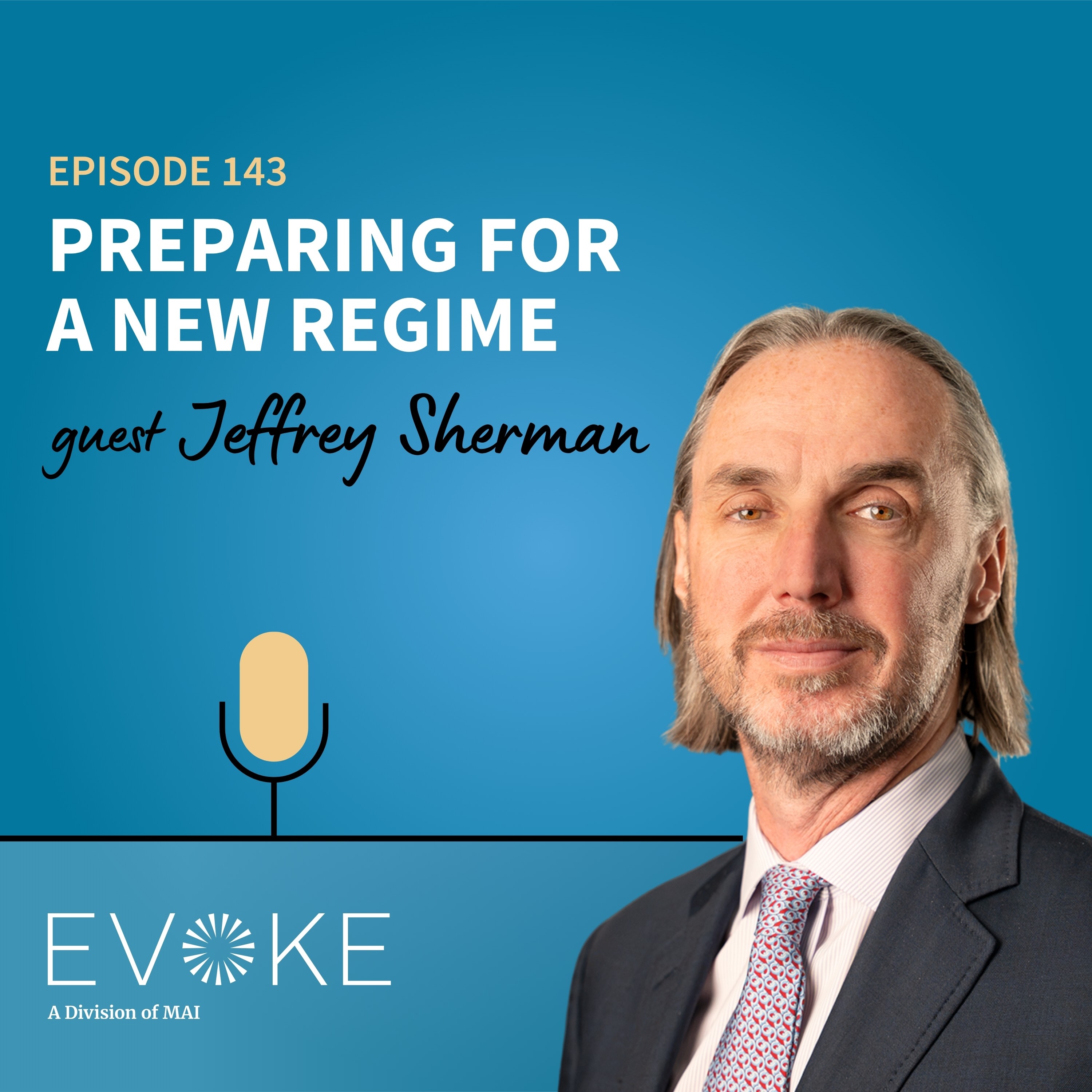
Mark is Founder and CIO of ICW Holdings, where he manages a global equity strategy built around resilience across economic regimes. After spending 12 years at Bridgewater Associates, including helping lead Ray Dalio's personal investment research team and overseeing research and risk management across major strategies, he shares lessons from centuries of market history, structural diversification, concentration risk, AI, and how investors can compound wealth while minimizing the risk of ruin.
-
Past performance is not indicative of future results.
This podcast/webcast is provided for informational purposes only and should not be considered legal, tax, investment, or business advice. It is not a solicitation, recommendation, or endorsement. All opinions expressed by participants are their own and do not necessarily reflect the views of the MAI Capital Management, LLC ("MAI"), its affiliates, or any companies mentioned. Information shared has not been independently verified by MAI or its affiliates. MAI Capital Management, LLC is an investment adviser registered with the U.S. Securities and Exchange Commission ("SEC"). Registration does not imply a certain level of skill or training. Evoke is a division of MAI.
Certain information contained herein has been obtained from third party sources and such information has not been independently verified. No representation, warranty, or undertaking, expressed or implied, is given to the accuracy or completeness of such information by any person.
While such sources are believed to be reliable, MAI does not assume any responsibility for the accuracy or completeness of such information. MAI does not undertake any obligation to update the information contained herein as of any future date.
The content is intended for a general audience and does not constitute a recommendation to buy or sell securities or adopt any investment strategy. Any examples or scenarios discussed are illustrative only, involve risks and uncertainties, and do not guarantee future results. Non-traditional assets carry significant risks and may not be suitable for all investors. Decisions should be based on individual objectives, risk tolerance, and circumstances.
Statements herein are general and may not reflect an individual's or entity's specific circumstances or applicable laws, which vary by jurisdiction. Further, speakers' views are personal and may differ from MAI recommendations and are not specific investment advice; and do not consider client objectives, risk tolerance, and diversification. Guests may have current or past relationships with MAI, its affiliates, or the host, including as clients, service providers, or business partners. Participation does not constitute an endorsement or testimonial. No compensation has been paid or received for guest participation unless disclosed. MAI and its affiliates may have business relationships with entities mentioned in this podcast, which could create potential conflicts of interest. These relationships may include advisory services, investment management, or other arrangements. MAI seeks to manage such conflicts consistent with its fiduciary obligations and policies.