
In short
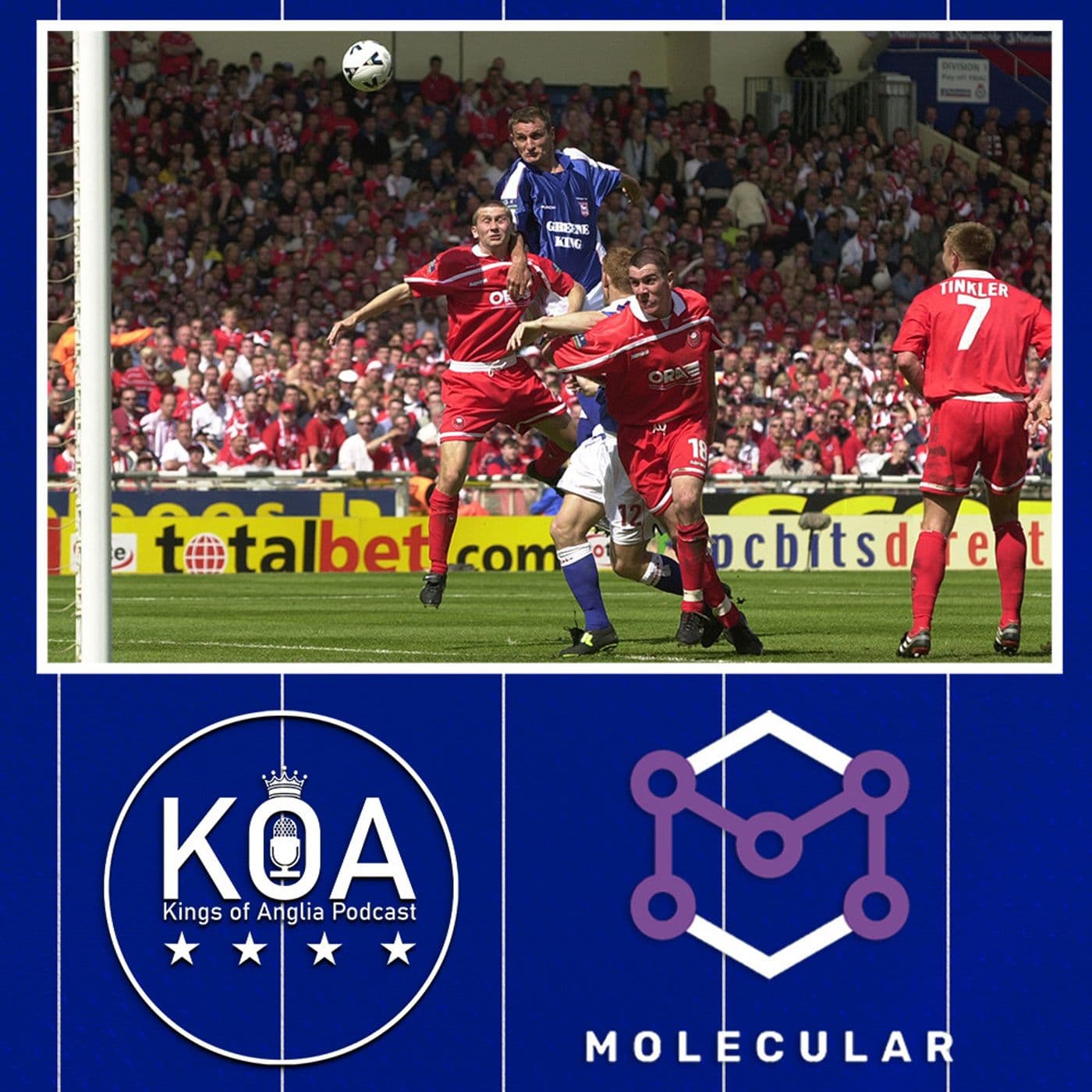
Tony “Mogga” Mowbray discusses his football career (Middlesbrough, Celtic, Ipswich), his Wembley goal in 2000, his nickname, and his cancer fight (bowel cancer), plus reflections on tactics and Ipswich’s Premier League recruitment.
Guest backgrounds
Tony Mowbray is a former Middlesbrough and Ipswich player and later a coach/manager; he says he’s 62 and is hoping to return to work after illness. He also references football figures he meets locally (e.g., Gary Pallister, Lenny Lawrence, Eddie Vavash) but the episode’s main guest is Mowbray.
Key claims
His bowel cancer began with a change in bowel movements; colonoscopy found cancer deposits/polyp development, leading to major surgery and chemotherapy (four to five months). A later scan showed another deposit in his groin area requiring a second operation; he reports regaining energy and playing golf with his kids. He says his Wembley goal was his last competitive professional game, scoring after Jim Magilton’s delivery.
Notable examples
Wembley playoff final vs Tottenham (debut vs Kevin Keegan; goal at Wembley in 2000); Ipswich playoff memories vs Bolton (Stewart, Magilton hat-trick); childhood heading practice using a ball on a washing line; Mogger nickname from junior-school goalkeeping.
Written by AI. May contain mistakes. Listen to the episode to check what was said.
Chapters
Tap a time to open that second in VOTony's Illness Journey
0:45 to 2:59
Tony shares his experiences with illness and recovery.
“I think, obviously, for Ipswich, it's all done and dusted.”
Insights on Bowel Cancer
2:59 to 5:23
Tony explains the symptoms and treatment of his bowel cancer.
“And it's a little bit unpleasant, but it's what was required.”
The Mogga Nickname Origin
5:23 to 8:11
Tony shares the story behind his nickname 'Mogga' from childhood.
“But I want to ask, Tony, where the nickname Mogger comes from.”
Early Life and Football Beginnings
8:11 to 13:05
Tony reflects on how he got into football and his early influences.
“And here I am still today being called Mogger.”
Becoming a Club Legend
13:05 to 14:00
Tony discusses his journey to becoming a club legend and its significance.
“I'd like to think through hard work because, you know, I wasn't the super talented footballer.”
Reflecting on Legendary Status
14:00 to 16:54
Tony Mowbray discusses his early career struggles and the legendary status of his team in Teesside.
“I get stopped 50 times in the park or on the beach every day.”
Transition to Celtic
16:54 to 19:15
Mowbray shares his decision to leave and sign for Celtic after a long tenure at his previous club.
“And as I say, people remember that team probably more fondly than that amazing team of Giannino and Gascoigne and Merson and Ravinelli.”
Personal Loss and Career Challenges
19:15 to 21:27
He opens up about losing his wife to cancer and the emotional challenges he faced during this time.
“celtic four years i had a difficult time at celtic because rangers were on top and if you know anything about football in glasgow if you're not number one you might as well be nothing you might I played at Celtic.”
Joining Ipswich Town
21:27 to 24:05
Mowbray recounts how he joined Ipswich Town and reflects on his challenging start there.
“oh, Mowbray, it'll be a cold day in hell when I think Mowbray's a good player, get rid of him.”
Memorable Moments at Wembley
24:05 to 25:46
He reminisces about his last professional game at Wembley and the significance of scoring a goal there.
“And I said, yeah, because he must be one of these people who know everything on the internet.”
Show all 22 chapters
Playoff Memories and Team Bonds
25:46 to 27:55
Mowbray reflects on playoff games and the lasting friendships formed with teammates.
“It had been a tough, them three years previously of losing them semi-final playoff games is not easy to take.”
Memories of a Career-Defining Goal
28:00 to 30:50
Tony Mowbray reflects on the pivotal moment in his career when he scored a memorable goal.
“Yeah, I love the goal scorers that day as well, because, you know, Marcus Stewart had a great, you know, just sign.”
Transition to Coaching and Insights
30:50 to 34:20
Mowbray discusses his transition from player to coach, sharing insights about football strategy.
“I enjoyed my whole career and finishing it at Wembley was yeah, they put in the cap on the head really.”
A Brush with Management at Ipswich
34:20 to 38:00
Mowbray shares his experience as an interim manager at Ipswich and his thoughts on football management.
“and here I am as I say at 62 hoping to go back to work this summer Yes and so many great clubs And there's a question that I think a lot of town fans want to ask Did you ever come close to becoming a town manager?”
Tactical Discussions and Football Philosophy
38:00 to 41:30
Mowbray elaborates on tactical approaches and how team composition affects gameplay.
“But we've got some fan questions I want to sort of shuck at you And you've sort of covered one already and that is your chant, the song about the Okie Koki.”
Reflections on Past Matches and Players
41:30 to 42:01
Mowbray reminisces about key matches and notable players during his career, sharing valuable lessons.
Remembering Borough's Glory Days
42:01 to 43:36
Tony Mowbray reminisces about his experiences and memorable matches against Borough.
“What does he remember of the Borough moving In the late 80s When Daly and Atkinson scored a hat-trick?”
The Wembley Goal Reenactment
43:37 to 46:03
Mowbray shares light-hearted stories about reenacting his famous Wembley goal.
“And so when I was at Coventry talking about a goal I scored at Ipswich, it's just my personality.”
Support and Affection for Different Clubs
46:04 to 48:59
Mowbray discusses his feelings towards the various clubs he has managed, especially Ipswich and Middlesbrough.
“But, yeah, I don't ever look back and think of negative things.”
Recruitment Strategy for Premier League
49:00 to 53:28
Mowbray outlines his thoughts on player recruitment strategies for Ipswich's Premier League return.
“Yeah, well, my wife is a hairdresser In John Oliver's in Ipswich and Richard Wright's wife also worked there and Richard said, I needed my hair cut.”
The Importance of Premier League Experience
53:29 to 56:01
Mowbray emphasizes the need for experienced players to ensure Ipswich's success in the Premier League.
“They bought some size and physicality as well.”
Reflections on a Legendary Career
56:01 to 58:23
Tony Mowbray shares heartfelt reflections on his time at Ipswich Town and his personal journey.
“I love to be a part of a football environment.”
Transcript
Automatic transcript. May contain errors.0:08Ross Halls:Well Tony, Mogga, thank you so much for joining me. Welcome to the Kings of Anglia podcast. Appreciate you setting this up. How's things? Good. Things are exciting in my world, I think. Hoping to go back to work this summer. Obviously, I've had an illness for a couple of years now. I've had a few major operations, supporting my family and the football world. I feel I'm coming out of the other end of that and feel ready to go back to work. So, yeah, things are good. Football is coming to an exciting sort of climax. I think, obviously, for Ipswich, it's all done and dusted. They are there for Middlesbrough, where I live, and the team I supported as a boy.
0:57I suppose we're waiting today to see the outcome of Spygate, I suppose. But it looks, I would assume, they're going to allow Southampton to play in the final against Hull. But still exciting things going. Premier League still not quite finished. Arsenal still not over the line. Champions League, you know, it's exciting into the season, as it was for Ipswich, of course. There were fantastic scenes at Portman Road a couple of weeks ago. So, yeah, good. And as I say, I miss it badly and want to get back in. And hopefully this summer I will be back at work.
1:34Ross Halls:Definitely, mate. Yes, I'm sure it's been a rare sort of season where this is your probably first full season. You've not sort of been on the touchline and stuff until you've got itchy feet. Yeah, I think a couple of things. Obviously, my illness for your family, really. When you're ill and you hear the word cancer, you know, the word death in my mind comes to mind with cancer. it's been a tough couple of years and for me just to get well, to get ill to get myself back for my family really, you know, I've got young teenage boys you know, they look in their eyes and they want me to still go out and play golf with them and kick the ball in the garden with them and do the things that dads do, go on nice holidays so yeah, I've been getting myself in a strong position you know mentally but um physically as well and and i feel i'm at that point now ready to go back to work and um so yeah everything's fine as i say i miss football a lot when i'm not doing it i've done it all my life since i left school at the age of 16 i'm 62 now um but i still feel i've got the energy and the drive to do it and um so let's wait and see if the opportunity comes that'd be good and um it's okay if you can share some insight on you know the bowel cancer and stuff like that yeah so let people know what sort of no problem involved in it um yeah well i basically a change in your bowel movement is what first started me i figured i was managing sunderland we were doing extremely well we were at the top end of the table and we were you know competing with with town really with ipswich to try and get out of that league and um there was a change in my bowel movements really it's you know it was seemed to be a blockage and And without going into too much detail, I went and had a colonoscopy, which is basically a camera to check.
3:28And it's a little bit unpleasant, but it's what was required. And with that colonoscopy, through the League Managers Association, they discovered there was some cancer deposits in my bowel that needed operating on. I think they developed from being polyps for a while, polyps sometimes in your bowel, but then they develop into cancerous polyps. And so they needed removing. I had a major operation to get that done. It's a recovery time, I don't know, four or five months it took me to recover from that. I had chemotherapy over that period as well, which is very unpleasant. just drains your body of energy and drains you you know you're not the same person you were you you you're laying in your bed constantly you needed to lay down it was hard to even stand in a shower it was lots of lots of really negative things chemotherapy really takes everything out of your body um so you know my main goal my main aim was really to get fit for my family and i went through all of the treatments I needed to go through.
4:39Actually, yeah, felt pretty good for a spell. And then I had to go back at West Brom. And yeah, West Brom went well for a while. It was good to go back. I had been at West Brom 18 years earlier and won the league with West Brom and got to the Premier League and had some great times with a very good team. A bit different going back. American ownership wanting to use a lot of data as all clubs do these days a lot of data, a lot of artificial intelligence, trying to aid the manager I suppose but sometimes it doesn't always aid the manager I would suggest but anyway for whatever reason that didn't really work out for me and I discovered I needed a second operation I went for a scan as you do after you've had cancer you go for three monthly scans and showed another deposit had come into my groin area I had another major operation removed again didn't have any chemotherapy, they just removed it and I've been through that process the last six months sort of a bit longer probably of recovering and here I am feeling full of energy again playing golf with my kids I've just I've told you I've just been coffee shopping in Yarm High Street here on Teesside with Gary Palastir talking about all things football Middlesbrough what's going on there what's going on at Manchester United you know as people all around Ipswich will be in their coffee shops talking what is the what is the town going to do this year are they going to spend how much money are they going to spend how are they going to stay up this season and the season coming sorry and how's it going to how are they going to look this next year
6:27Ross Halls:fine enough that is actually one of our questions we've got from a fan, but we'll get into that later on. But I want to ask, Tony, where the nickname Mogger comes from. Maybe I should know this, but it's just good to hear from your site. You know, when you get a nickname, it sticks and it sticks, you know, ever since. Well, mine stuck from junior school, really. So under the age of 11, I think probably eight, nine, ten. I was like a five-a-side team we had at school, really. I lived on a council estate on Teesside in Redcar.
7:04And I was the goalkeeper, strangely enough, for that team. I think it was generally older kids, really. So maybe a year or two. So you go to junior school, what is that from the age of, what, six or seven till 11, isn't it? So I was the goalie. I was chucked in goal. I lived on a council estate in Redcar and went to Lakes Estate School. And I was the goalie in that team. And yet they called me Mog like a cat. because they couldn't beat me. Nobody could get the ball past me, and I was throwing myself everywhere. And so Mogger became a name from the age of maybe six or seven, and everybody called me Mogger.
7:40Even my parents called me Mogger sometimes. And, yeah, I'm not sure. I've had car registrations with Mogger on it and things like that. And, yeah, it seems a bit daft at 62. People call you Mogger, and yet as I walk my dog on the beach here at Redcar or in a park in Middlesbrough, everybody calls me Mogger. All right, Mogger, how's things? How's your health, pal? All right, go, blah, blah. You can see the butter match on Saturday. What's going on? You know, everybody stops and calls me Mogger. And, yeah, so it started from the age of five or six, basically because I was a goalkeeper and the reference of being like a cat.
8:15And that was Mogger. And here I am still today being called Mogger.
8:19Ross Halls:Yeah, I'm sure it's interesting maybe when you went to the doctors and they were calling you Tony or Mr. Tony Mowbray or Mr. Mowbray. it's difficult yeah yeah listen that does happen it's because most as I say I've been to my coffee shop this morning five or six Lenny Lawrence in there Gary Pallister's in there Eddie Vavash the assistant manager at Middlesbrough you know football people talking football in the coffee shop and they all call me mugger it's but that's fine it's part of my life I'm trying to think I don't think my mother calls me mugger she calls me Tone but apart from that everybody calls me mugger really I love it I want to take you back I'm always intrigued on early life Of footballers, how they first Got into football and the first memories Who got you into it Well, who got me into it Just Living on a council estate with loads of walls To kick the ball against really And I'd say to my kids For Christmas all I ever got was A bag of nuts and orange And a football, that was it That was my Christmas presents You know, when the kids are opening their 30 presents every Christmas, and I'd get a ball every year and a bag of nuts and a packet of Smarties, something like that.
9:31But, yeah, the environment that I grew up, really, football, was everywhere. My dad did take me to the Borough matches at Erson Park as a kid. Maybe I shouldn't say this, but we used to do a squeeze, so he'd only pay for himself, and I'd squeeze in as the little kid next to him, and he'd just push the gates as the rotating gates they go through. and yeah so I would get a squeeze with my dad and go and watch butter at Erson Park football's always been there I was I talked to my players about their inner child find your inner child because when you're a child and you're a football good at football in the school I never used to pass to anybody I just dribble and score loads of goals and basically I think when you're a young footballer you're the best player in your school you're generally the best player this is the inner child I talk about to footballers of today find your inner child because when I was that young footballer dribbling scoring goals enjoying the ball football was such a joy really when you're so young and you are you are better than the other kids at school who don't practice like you do every time you go home I used to take a ball to school every day of my life and just either keep it up or bounce it off all the walls or play it off the kerbs and control it off my chest.
10:50The ball was always at my feet every day of school. And, yeah, I felt as if I was the best player at school. I don't see that with any arrogance other than I was the guy who all I ever did was have a ball with me. Everybody would see me and I never didn't have a ball. And I feel as if most footballers that make it to be professional footballers in whatever route they go down, whatever route they've come from, have probably been the same, lived with the ball all their life and had it at their feet and can manipulate it and can do whatever they want with the football. And I had a career as a big centre-half.
11:31And so it's amazing to think about all the talented footballers, all the attackers and the dribblers, how they've toned their skills really and honed them to be the professional players they are. Because as a young guy, I just lived with the football Went to a secondary school That didn't play football Only played rugby But I played for maybe three teams One on a Saturday afternoon Or a Saturday morning And probably two on a Sunday I was always playing football My dad encouraged it And when I left school at 16 I went to be an apprentice I don't know whether this recorded before But I looked after David Hodgson I went to Liverpool Craig Johnson went to Liverpool.
12:15They were all at Middlesbrough when I was a young boy. Mark Proctor went to Brian Clough's Nottingham Forest. I was looking after their kids at Middlesbrough when I was young. Grim Souness was there when I was very young. But yeah, it was a great upbringing for me, a working class upbringing. A young apprentice at Middlesbrough had to do all of the kit, had to clean the stands, had to mop the dressing room floors and learn to be a footballer. My youth team coach was Bobby Murdoch, who won the European Cup in 67. And so he just loved the football, Bobby. And I felt as if I had an amazing upbringing.
12:51Made my debut in 82 as an 18-year-old away at Newcastle, Kevin Keegan and Mickey Shannon. Yeah, and I was off and running, really. And the thing you always dreamt of as a boy, to play for Borough, to play at Essendon Park, it all came true for me. I'd like to think through hard work because, you know, I wasn't the super talented footballer. I was built on personality, character, steel, really. Teesside's a steel area and I feel my dad worked in the steel industry all his life and I think he gave me those values and the honesty and integrity that I hopefully carry with me today.
13:30Ross Halls:Yeah, and, you know, what a journey at Borough, you know, from a local lad to a club legend. I don't know how you feel about the legend word. I don't know, that gets chucked out a lot, I'm sure. What's that like as a sort of player manager, you know, when a legend is talking about? Yeah, again, it's like an out-of-body experience. You don't see yourself as a legend. Obviously, you deal with who you are, what you are. I'm a family man, really. I've got, as I say, three boys, 21, 19 and 16, and I try and be as good a dad and a husband as I can. and legend. It hits home whenever I walk my dog. I get stopped 50 times in the park or on the beach every day.
14:14People shouting, all right, Mogger, come on, butter. How's it going, Mogger? How's your health? I live that every day and that's fine. The club invite me back to watch their games. as you know I can go in the nice and watch games at the Riverside and yeah I don't see a legend I think the legend bit came because in 86 I'd been playing for the team for 3 or 4 years and it was a tough time because all of those players I'd mentioned Hodgson's David Armstrong went to Southampton Proctor went to Forest Craig Johnson went to Liverpool lots of they all sold the team and the team became a really struggling team and I was a young 18, 19 year old boy playing in a really struggling team and football is hard when you live in a town with a football team and that isn't winning and looking to survive every year, every game.
15:09Life's tough and in 86, 87 the club actually went into liquidation, they padlocked the gates at Erson Park, nobody could get any training kit, we had no training ground, everything was sold in fact we didn't play our first game of the season at Ayrson Park because the gates were padlocked, we went to Hartlepool to play the first game of the season this was in what is now League One because they got relegated the year before and what happened the youth team basically myself, Gary Pallister had signed, Bernie Slavin had been signed for a bag of balls from Scottish second division team, but basically the youth team.
15:52Stuart Ripley, who went on to win the Premier League with Blackburn, came out of the youth team. Colin Cooper got an England cap, came out of the youth team. It was thrown together and with Bruce Reock's guidance, we won back-to-back promotions as similar to what Ipswich did recently. We got promoted finishing second to Wigan in our first year in what was League One and then we won the second ever playoffs in the second year to get promoted. We beat Chelsea in a two-legged affair where we went to Stamford Bridge. And even though we got beat 1-0 in that second leg, we won 2-0 in the first leg. And so we got promoted and put Chelsea down.
16:33And that team, from being in the depths of despair of almost liquidation to actually, within two years, being back in the top flight of English football, playing Liverpool and Arsenal and all the big clubs, I think that team sort of acquired this legend status in Teesside. And whilst we try not to utilise it too much, it's there. And as I say, people remember that team probably more fondly than that amazing team of Giannino and Gascoigne and Merson and Ravinelli. That team was amazing for Burrard, who got to a European final. and yet the 86-87 team seems to be more revered a little bit on Teesside.
17:18Ross Halls:Yeah, and I'm sure was it hard to leave because you went on to sign for Celtic? Yeah, well the manager changed, Bruce Leehock left, Lenny came in, I sat and had coffee with Lenny Lawrence this morning in Yarmouth Street and what happened, I think I'd had 12 years in the first team playing, Saturday, Tuesday, Saturday, Wednesday for 12 years non-stop and I left around Christmas time in Lenny's first year. I thought it was the right time. Bruce had left. Pallister had gone to Manchester United two years earlier. The team was breaking up a little bit and I basically asked Lenny if I could go and I didn't know where I would go.
18:03I felt as if I was getting tired, almost bored of playing another game, another game, another game with the same team, the same fans they were top of the league when I left so around that Christmas time Celtic the day after I asked Lenny he called me back in the office the next day Celtic offered a million pounds and I went up to watch them play that midweek in a European game against a Swiss team in a Europa League it was UEFA Cup then there was 60 odd thousand in the stadium when it was still standing and stuff like that.
18:40Ross Halls:And it was just an amazing atmosphere, the colour, the noise, the excitement. It was just, it sort of rekindled the fire in my belly really. And I signed for Celtic. Left, was it a wrench to leave? Yeah, of course it was a wrench to leave. But Celtic is an amazing football club with amazing fan base all over the world. And I went there for four years. um sorry about these noises mate that's all right it's the doorbell but um yeah so i signed for celtic four years i had a difficult time at celtic because rangers were on top and if you know anything about football in glasgow if you're not number one you might as well be nothing you might I played at Celtic.
19:32I had an amazing time. Some amazing players, John Collins, Paul McStay, Peter Grant, Charlie Nicholas, Frank McAvenny, Gary Gillespie, lots of, you know, it was an amazing time and a great experience for me. I lost my wife, my first wife. I lost her to breast cancer and I spent six months, you know, going to every breast cancer charity event and stuff. And around that time, George started phoning George Burley. He'd obviously seen I wasn't playing. I'd had a loss in my life it was difficult I'd spent three months sitting on a bed sitting in a chair by a bed in a hospital watching my wife with her away really and and I think George did phone me, I don't know, he phoned me every day almost for a fortnight and in the end he wore me down I would suggest because I didn't want to leave this environment I felt as if I was leaving the situation I'd found myself in really not the football but my personal situation I didn't want to leave but George persuaded me to get on an aeroplane and come and have a look and again I suppose I was seduced by the club, the history I love football and my managerial career why did I sign for Coventry because I watched the 87 Cup final, I saw the diving header of Keith Auchin against Spurs why would I go to Wip Switch because I'd seen it, I saw Roger Osborne score in a Wembley Cup final i'd seen them tyson and muir and i love the romance of it really and um and so i signed for ipswich i got as far away from the west of scotland as i could and went down southeast and went to ipswich and um it was tough for me at the start again i hadn't played for six months um i picked up an injury or two you know i remember driving home from training one day in a rented house down at Cape St Mary and the local radio saying, oh, Mowbray, it'll be a cold day in hell when I think Mowbray's a good player, get rid of him.
21:32And I heard it, it hurts really. But as I talked earlier on, I feel as if I'm built from the stuff of the Northeaster steel industry. I feel as if I've been given the right ingredients by my family, my father. Integrity, honesty, hard work is my core beliefs really. and I dug in and kept going. And I'd like to feel that my period at Ipswich, it turned into nine years at the end, you know, after a difficult start. I felt as if I played my part in helping the club get to where it wanted. George was an amazing manager, amazing enthusiasm for the game and love of the game. I'd obviously been a part of Bobby Robson's era and I went for lunch a few times with Sir Bobby and with Charlie Woods and sat and moved the pepper and salt pots around and moved about where the back four should play and when, how high they should be and stuff.
22:30And I used to love them occasions, sitting with Bobby and talking about football and sitting with Charlie and George. You know, when Dale got ill, of course, I sort of stepped in and helped in the coaching and sort of it was a very smooth transition for me from playing to being a player coach to actually coaching. and yeah, I had an amazing time. When I look back at the whole Ipswich thing for me over nine years, whilst the start was very difficult, I think it was positive. I think it was good. I look back on an amazing time at Ipswich and been fortunate enough to have worked with George Burley, an amazing, enthusiastic football coach who drove his players, you know, every drop out of them and felt fortunate to have played with...
23:23George was brilliant at signing good footballers. And I don't say that because he signed me. I say that because he signed Magilton and he signed Matty Holland and he signed Jermaine Wright and he signed Mark Venus and he signed John McGreele. You know what I mean? I signed because of them. And then we had the fortune of Kieran Dyer coming through and Titus Bramble. You know what I mean? It was an amazing time and we had an amazing team. The four years I actually played for Ipswich, we got to the playoffs every year, lost in the three of them, some heartbreaking moments. But got there and got over the line in that last ever game.
23:58My last ever professional game at Wembley in 2000, fortunate enough to score. somebody actually strangely enough before i left the coffee shop this morning somebody actually showed me a picture um of me holding up a man of the match um trophy in the tunnel with my medal around my neck and um i don't know why that they did that today it's um fun enough it was basically
24:22Ross Halls:i was asking fans for questions and that was a picture i used so maybe that's that's what that's what that's what it was the lad showed me on his phone he said you because he said you're going to do something with Ipswich today, aren't you? And I said, yeah, because he must be one of these people who know everything on the internet. I don't do any socials or social media or anything like that. But he knew and he showed me the picture, yeah. So, yeah, that was my last ever game of professional football. It wasn't intended to be. I was ready to start. The week we played Tottenham, I think, was it the first game of the following season in the Premier League?
24:53I was in the team until Friday and I was so poor in training. We had a full 11 v 11 walkthrough sort of thing on the Friday on Portman Road and after training I went to see George and George I think was thankful I'd come to see him because I said listen I can't do it George you know he's talking about the Premier League I was 37 I was struggling to turn and run as I always would do but still I could always use my brain and hold the line and play offside but we were going to the Premier League and we agreed that Herman should play and that was off they went Herman played with Vino and John and yeah I was happy as can be I was 37 I couldn't go on forever and and it was a great way to go out Kevin Keegan in my debut and Wembley scoring a goal to finish my career and all the years in between it was pretty special yeah
25:45Ross Halls:and I want to get some more insight on that I want to quickly get your memories of the playoff games against Bolton I know we lost against them in the previous year but those games you know the Marcus Stewart day with these two great goals and of course the Jim Magilton Knights score that hat-trick what was that like playing in it as a defender because yeah you got the pound blinds attackers screwing the goals but as a defender there was goals conceded and it was just yeah yeah well i came off in the first game didn't i got i was concoast i got smashed really in the first game i think i don't know it might have even been two nil down will we and then then the goals you've got the equalizers but um yeah the first game was tough i mean both had a good team then sam allardyce was on on the up wasn't he and his team were there was a bit of investment there i had a good johnson appeal like this word they were good footballers and you could feel them, their hunger, they'd been driven and again, I go back to George, really driving, we had a team that were so tightly knit and so ready for it and yet you played against a team that you felt were warriors and would kick their granny to get over the line and they had a few sending-offs didn't they and we had a few penalties and that second game lives long in the memory only for me, only because I'd managed to get a header on knocking one down for Jim to volley in, didn't I?
27:04But yeah, it's amazing. It had been a tough, them three years previously of losing them semi-final playoff games is not easy to take. You work hard, so hard all season to get into that position. And then for it to be taken away over two matches, it was tough. And yet all made up for on that, on that day at Wembley really. And yeah, it was, when I think back of my Ipswich time I think of Wembley, I think of that game I think of the celebrations afterwards and going back to Ipswich in a big marquee and the celebrations and all of them lads from that team are still close it's like anything it's like the team of 86, 87 here at Borough the team of that 2000 will always be good mates and always be in touch with each other and yeah, happy times Football's an amazing sport that can bond and gel people together for lifetimes.
28:02Yeah, I love the goal scorers that day as well, because, you know, Marcus Stewart had a great, you know, just sign.
28:09Ross Halls:Then Richard Naylor came off the bench and had a great time. And then, you know, Martin Royce scoring that goal, you know, Royce the premiership. But I want to focus on your goal because what a header, you know, leaping like a salmon. Thank you. yeah well listen heading I said right at the start there my dad had worked in the steel industry all his life he in my back garden at home where we lived he'd he'd got a scaffolding tube and bent it in the the heat of the iron works and um and we ran a football through it on a and put it in a net and I had it hanging off the washing line very high up and then I could drop the ball to whatever height i wanted it so i practiced heading all my life um from the age of maybe 10 and where that trot and traction was put onto the washing line and if you can picture it it bends up and then bends around and the wire was put in and the ball was dropped and we could adjust the height of the ball and um so from the age of 10 i felt heading was something i was good at and could do and and I think back to the last ever game of my football career and think all of that work I put in through from the age of 10, every day going home, even when I was a professional, I would still go round my mum's and head that ball.
29:32It all paid off on that last day for me, that ball coming in again, Magilton put it in, I think, didn't he, Jim? And yeah, and it was all there for me to timed my jump, timed my run you use a bit of leverage off a defender and I bullied it into the corner and all of that practice all of that work paid off it's great memories happy days, great for Bam Bam to score great for Martin Royce to score amazingly different characters, different people Stewie, everybody loves Stewie, obviously he's going through his own issues at the moment as well but it was a great day, great team seeing George and seeing Dale celebrate, seeing the chairman, Mr Sheepshanks, so happy afterwards in the marquee.
30:18And it was just great to be together, really, all the families together. And all that work that I felt that for four years I left Glasgow for all came and all culminated on that day and was back in the Premier League.
30:32Ross Halls:And, yeah, and, you know, the last ever competitive game at Wembley, I know they played a few other games after that, but that must have been amazing as well. You know, the old Wembley, the Archers, everything. thing. What a way to end your career. Although I know you said earlier in the chat that it wasn't going to be your last game, but in the end it was. It was, yeah. Yeah. No, I feel for me, it's fitting really. I enjoyed my whole career and finishing it at Wembley was yeah, they put in the cap on the head really. it ended it perfectly, bookended it. You know, using Kevin Keegan for my debut, as an 18-year-old playing against somebody who'd won the European Footballers Footballer of the Year and won everything, you know, watched him as a kid growing up, an iconic captain of England, felt like an amazing start to my career.
31:26And the end was just as amazing, if not greater. And yeah, I really, I can sort of bookend them, really. that was my career from 82 to 2000 and everything that went on in between Definitely, and did you always plan to go into coaching, was that always something in the back of your mind
31:46Ross Halls:I know some players weren't interested in it, but there's some that are like, yeah, that's what they wanted to do Yeah, I think we're in the age of 22, brutally I'll come to Middlesbrough, because as I said to you there, football had been really hard then for three or four years for me, Middlesbrough were the bottom half always of what is the championship now and it was always a struggle to stay up um they'd sold all their life in my eyes were great players you know as i say david hodgson proctor craig johnson david armstrong the players i'd watched growing up as a kid they'd all gone all moved on and um middlezburg were downsizing they weren't paying the salaries we were taking loans and freeze and it was the team was just thrown together really it was really hard to win football matches um and it was only like the rebirth through 86, 87 of all the youngsters being thrown in and Riojic arriving that sparked this love of the game for me really Bruce was the first coach ever who talked to us where the space on the pitch was if the right winger comes inside can the right back use the space that he's leaving, can you arrive in that space and how the midfield Ipswich do it brilliantly well down their left don't they with with clark and philajeen with your left back like a rocket flying down there and sometimes the wide place stays wide and the fullback drives inside of course but it was about space and and when i was 22 first time a coach had ever talked about where the space was on the pitch and how you could fill it and how people would move into positions to create space for somebody else and so from 22 year old i used to watch football differently from how I'd ever watched it and then when I was playing I felt as if I could almost coach on the pitch really you know at Ipswich I know they had a song about they had a song about arm up flag up your offside but it was only built on how to press the ball and how to condense the pitch really and it helped me as well because I didn't have to turn around and sprint 50 yards back chasing long balls over the top bring your goalie out of the box a little bit and you know you don't have to turn and run because if you bring your goalie out and all that you're killing the space and the strikers have to stay on side it worked so yeah I knew pretty early on from the age of 22 that I wanted to coach and wanted to be a football coach and yeah and it panned out my life my career panned out and here I am as I say at 62 hoping to go back to work this summer Yes and so many great clubs And there's a question that I think a lot of town fans want to ask Did you ever come close to becoming a town manager?
34:33Ross Halls:I know you had a caretaker spell But was there any No I don't think so I never had any conversations around it I think football management is all about timing isn't it If you're in a job and you're doing alright And then Ipswich's job comes up No I never had an inquiry of taking me out of a club to come you generally them jobs I feel sometimes if you're out of work manager and the job comes available then maybe I might have come at some stage and had an interview or a chat or whatever but the timing was never really worked for me no I don't think Ipswich ever did come close and I can't remember ever having a conversation with with anybody from Ipswich about the manager's job and that's okay and I look at my career and I know I had four games as an interim manager didn't I so realistically I've managed all the teams that I played for, I only played for three Middlesbrough Celtic and Ipswich so I had four games at Ipswich there was a romantic side of me a few years back that thought what a great job Ipswich would be and yet obviously Kieran's gone in and done an amazing job over the last few years and it's great to see them once again back in the Premier League and, you know, because I don't feel as if I ever really managed it which I just took the team for four games and it was an amazing experience but it gave me the confidence to know that I had a voice when you talk so if you're going to be a football manager and you're sitting in front of 20 players in a dressing room you either know whether you can do it or you don't know whether you can do it when they need picking up, they need shouting at, they need talking to they need cajoling, they need some sympathy or whatever it might be you don't know whether you can do it until you're in the moment and what it showed me is that I can talk to a group of players I can tell them that this isn't good enough, this isn't hard enough You think you're working hard, you need to do this.
Read the full transcript
36:43How do you get at half-time? How do you know you can say the right things? The truth is, I found that my personality, whilst it's generally empathetic to footballers because I want them all to work hard, to love the game, to want to get better every day, when I see them not running, not working, shaking their head, putting their hands on their hips, sulking, they can then find a different side of me but that doesn't mean the next day I don't put my arm around them and love them again but then they decide which route they want to take they want to take the route that they know the manager the coach wants to go down hard work, honesty, integrity graft for the team you're just one of 11 out on that pitch or do they want to be selfish and sulky and if they do generally they're not at the club very long however talented they are But again, every manager does it differently Every manager's got their own way of doing it And what them four games at Ipswich told me Was that I can use my own emotion And be myself in the dressing room When you need it To do the job
37:53Ross Halls:Very much so And yeah, I think a lot of town fans wish you Could have had at least one other spell But the timing didn't work out And stuff like that But we've got some fan questions I want to sort of shuck at you And you've sort of covered one already and that is your chant, the song about the Okie Koki. But do you remember the full name? This is from Peachy. Can you remember the full chant? I think so, but I don't want to do it to you now. I think it's pretty much Okie Koki, isn't it? But I'm up, flag up your offside. Oh, you do Tony Mulberry. Yeah, I sang it to my kids, actually, because they weren't born when I was at Ipswich.
38:30So, yeah, I'm not sure. I do remember games. George would say to me at half time Listen Tony, you've got to be careful with that offside I remember going away to Stoke once And literally, they must have been offside 25 times in the first half Because they obviously had a game plan to run in behind the big slow centre half And yet I always feel as if celebrally I'm a bit cleverer than the striker I'm playing against I tell myself I'm clever So I start as if we're going to have a foot race But knowing that he's way faster than me So I turn and sprint and stop, arm up, glare at the referee or the linesman, and generally the flag goes up.
39:11And he thinks he's going to win the foot race, you see, because he's a little flying machine. Woof, you're going to beat me to get the ball. But I make him think he's going to be in a race. And literally, I remember George saying, listen, because we spent the whole game in their half, and every time they got in our half, they were offside, and they didn't get anywhere near our box. But that's how I, did I take it to extremes? some games maybe, but I think it was right for this football team because Jim Magilton was an amazing footballer who could attract the ball and move it around the pitch. He wasn't brilliant legs, didn't want to run up and down the pitch.
39:45He wasn't Matty Holland who could get up and down the pitch all day. Jammer didn't want to do that really. Jim Ayn was a footballer with the ball at his feet. So I felt, let's play the game in one half of the pitch rather than end-to-end. You attack, we attack, you attack, we attack. and I didn't feel we had, Marcus was never super fast and so if we'd have played deeper and played, I could have played on the edge of our box of course and won headers and defended but we didn't really have the speed at the top end of the pitch to break away and score transitional goals with speed. We needed to play, in my opinion, with Marcus Stewart and the type of footballer he was.
40:22We needed to play in the opposition half and so I held high lines and played offside and I hope it helped the team. I think it helped the team. And I think, listen, when you're a football manager, you have to think about all of those things. What's the make-up of your team? Have you got fast defenders where you can play high lines? Or have you got slow defenders who are organisers and can keep clean sheets by heading it out of the box, so play a bit deeper? But if you're going to play like that, you've got to have fast wingers or fast strikers who can break away and use the space at the other end of the pitch.
40:52And then you need people who can put the ball in front of them, of course. Your midfield players need to pass it. and so you're always thinking about how your team sets up and how you're going to play yeah listen it's football it's what you do you go into a football club you assess the group of players you've got and if you've got no money you have to get the best out of the group you've got if you've got money you can go and buy some fast wingers or a centre forward or super fast defenders who can make sure you play high up the pitch and press the ball really high but yeah that's how I see football look at what you've got assess the players where's the talent where's the speed where's the quality and hopefully you've got some of that and you just you make your football team into the team that suits the playing style and when I was in George's team I was an organiser and I could hold lines and defend and make strikers think that they were in a foot race and they never were really and they were offside
41:50Ross Halls:Yeah I think that's why fans sort of they know at the start I went, we're going to put that into a chant And then it's what it's part of Which is fantastic And we've got another question here And this is actually maybe a bad memory This is when you're playing for Borough This is from Zonderman 1974 What does he remember of the Borough moving In the late 80s When Daly and Atkinson scored a hat-trick? Yeah Yeah, it's not great Yeah, I do remember that No, I do remember it I was with Pally this morning Having coffee Pally played alongside me that day Daly and Atkinson I'd have to say He scored them from 25 yards Or 30 yards He rifled them in They weren't Sticking it through our legs And beating us And bullying us And scoring He whacked them in From 25 yards Definitely one or two Of them anyway Yeah it's not a bad memory Listen Them sort of things Have got to happen In your career To make you better And to help you really And yeah We do Pally occasionally Brings it up Daly in Atkinson God love him God rest his soul As well But I think just power, pace, a rocket of a shot.
42:58And I don't ever sit and... I played against some great players. I played against Kenny Dalglish and Ian Rush. Great players are great players. And Dalian at the time was on the upward spiral, I think, and scoring goals and doing well. Yeah, I'd have to say I didn't really follow his career. I know he went to Villa I'm not sure where else Daly and Atkinson played but I think he went abroad as well Did he go abroad? Did he? Okay But listen on that day he scored some amazing goals and I remember thinking wow what a player this kid's going to be but yeah I don't sit here and think God that's embarrassing you know as footballers we've all lost matches and we've lost matches to amazing goals that other people score and good luck to them Definitely
43:47Ross Halls:and this is actually a bit of a random one actually this is from bloomers one of our friends of the show and he said does uh do you remember that he reenacted his wembley goal for me in this sky blue lodge when i worked comms at coventry while you're a gaffer in 2015. completely arms and laugh celebration what a guy i listen i i when i go into football clubs i try to um create an environment where people enjoy life enjoy the work they want to come in they want to go to work every day and so whilst i do it with my kids, I obviously do it, I do it with the players at the teams and the staff and I'll be randomly talking about something and I'll say, have you ever told you about the goal I scored at Wembley?
44:28Just to break the ice and make people laugh oh Gaffer, you haven't told us that one, no, but somebody in the room will have heard it 50 times, because I've said it 50 times, have I ever told you about the goal I scored at Wembley? Yeah, well, I don't know Magilton put it, just lobbed it in the box and I rose like a salmon at the back stick and bullet-headed it, you know what I mean I still do my kids here I scored an amazing goal for Borough against Norwich actually in the top I hit a 30 yarder in the top corner you'll have to Google it, Millersburg Norwich at Erson Park and it's like it can't be me because it was a goal that Glen Honour would have scored and yet it rifled right past Brian Ginn going right into the top corner and I keep saying, have you ever seen that goal at Erson Park I scored against Brian Ginn where he's still trying to catch it but it It flew past him in the top corner.
45:20It's just banter, really. And so when I was at Coventry talking about a goal I scored at Ipswich, it's just my personality. I'm trying to be light-hearted. I'm trying to say, you know what? I played football once, as if way back decades ago, I scored this goal at Wembley. But, you know, you might be able to find it on Google, have a look. And it just lighten hearts it. And people think the gaffer's all right. He's not a bad lad. You know what I mean? he's having a bit of banter with us, a bit of chat and everything has to be serious all the time anyway that's why them things happen really I don't do it through arrogance, I did score a goal at Wembley, I do it to break the ice sometimes with staff and with players and yeah, I think it's fine
46:03Ross Halls:Yeah, I think Bloomers who's part of the show, he's an Italy fan, he was working at commentary at the time and I think when UK was mad he was like oh my god this is like a hero of my mind coming out and he just said it was great to sort of reenact that which is fantastic This is from James And he said When you work and play For so many clubs Over the years Do you still support them all And where does it To which rank In the list of those clubs For you I know it's a hard question It is a hard question And listen You do have a feeling For all of the clubs You've worked for Because generally There's been good times In those clubs There's been bad times Because you lose your job Sometimes And I haven't been Sacked from every job Sometimes I've left Sometimes I've left a club To go to a different club Because they've bought me basically as a manager.
46:46But, yeah, I don't ever look back and think of negative things. Tell me, what did he want me to... What was the question again exactly?
47:00Ross Halls:Where did you rank Ipswich in terms of the clubs? Ipswich. Ipswich. I had that dilemma this year, really, I think, because Ipswich and Middlesbrough were both vying for that second spot in the league. I grew up at Middlesbrough I told you my dad used to get me a squeeze In the Olgate end at Essendon Park I am a Borough fan at heart And always will Because from the age of 5, 6, 7 My first ever game at Essendon Park My dad took me out of my school class When I was 6 or 7 It was during a coal strike of 1970 To go and watch George Best On a Wednesday afternoon I was at school and my dad came and took me out of school because the floodlights weren't working.
47:45It was the coal strike and there was no electricity. So the game was on a Wednesday at three o 'clock in the afternoon. And so he just came into the classroom, just picked me up and took me to watch George Best. So Middlesbrough is my club, my team. And so what they're going through at the moment with this Spygate thing, of course, is really interesting. but I always go back to the sporting situation. Ipswich deserved to get promoted this year. They got the points they got. They played the way they did and congratulations to Ipswich and I'm delighted. It's amazing to see them back in the Premier League.
48:24I've been there recently and been at a dinner or two. It's just great to be associated with Ipswich and the success they've had and feel that, you know, Matty Holland, obviously a team mate, he's still a non-executive director there, I think, isn't he? So it's great to have connections But I don't think it's wrong to say that You know, Middlesbrough is my first love And always will be Because that's what I grew up It's where I still live now My kids grew up on Teesside And so that's fair enough, I think My wife's from Ipswich All her family are massive Ipswich fans
48:59Ross Halls:So is that how you met? Yeah, well, my wife is a hairdresser In John Oliver's in Ipswich and Richard Wright's wife also worked there and Richard said, I needed my hair cut. Strange little things like that. You go to a new football club and I was looking like Wurzel Gummidge and so I needed a haircut. And so Wright, he said, my girlfriend, as she was at the time, works in John Oliver's. So he took me to John Oliver's and Amber cut my hair. She cut it every three months and she cut it every four weeks and she cut it every two weeks and she cut it every week and then we went out for dinner And here we are 25 years later or 30 years later It's Yeah, still going That's brilliant, and I've got actually, fair enough, when you first signed I've got a picture of you here So I don't know if you would have Got your hair cut Yeah, gosh Have I got a green tie on there Yeah, I was wondering Where did that come from That's my Celtic, I wouldn't have wore a Celtic tie To come to it just i had a green tie on that's strange yeah i should have worn a blue tie but you you get to learn them things as you get older definitely yeah and um a few more questions before we wrap up i don't want to say too much of your time up but um this is a question from andy and it sort of links to sort of town being in the premier league and recruitment and he said i hope you're doing well mogger thanks for all you did richard's town and if you are our manager now what type of player and positions would you recruit at another crack in the prem you know what do you think town's approach which would be last time we signed really good championship players.
50:37Ross Halls:You know, Jack Clark, we signed. We sort of struggled in those early times. And, you know, we didn't make it stabbing. What I would say, what I would say, I've done it. I've tried it. You know, when I got promoted at West Brom, we spent four million quid. I think when getting promoted back in whatever year that was, 2006, you got 16 million off the Premier League. and we spent four of it and we did get relegated last year the season against Liverpool but
51:11Sunderland spent£185 million last year the team that I had at Sunderland the year before they got promoted
51:21there's only Trey Hulme and Dan Ballard really who survived that squad, the rest all moved on, Jack obviously is back in the Premier League with Ipswich now Patrick Roberts Amadiyalo was on loan, he's obviously United but
51:41yeah, is Sunderland the model that Ipswich will look at, will they spend all that £200 million that they're going to get from getting promotion, I don't know, my good feeling as a manager is to have the respect for the players who got them there and add to them a little bit so do you buy a a Premier League ready central defender, do you buy a midfield player, so do you go through the core of your team and put Premier League experience in there, so Sunderland signed Jacker of course didn't there, and I think he undoubtedly has been their best player, their most influential player, and he's obviously played at Arsenal all them years and got huge Premier League experience I would never tell Kieran what to do because he's shown what a brilliant football manager he is.
52:32But is it this time round to bring in some genuine Premier League experience that has been there, seen it, done it and played, I don't know, a dozen years in the Premier League to give them the know-how, when to calm it down some days, when we have to put the foot on the gas, when you have to play defensive, when you have to commit more men forward, are you going to play with two wingers or do you have to play with a narrower midfield? All of those things are questions that I think the football department will sit and talk and discuss. How are we going to stay up? Maybe this time it's a bit more experience of Premier League experience rather than somebody who's had one year in the Premier League three years ago or something like that.
53:27It appears to me that's the way Sunderland have done it. They bought Premier League experience. They bought some size and physicality as well. Broby had never played in the Premier League and what a physical specimen he is who can deal with the Premier League because I think it is a physically step up from the Championship as well as technically stepped up. So without telling anybody anything of how to do their job, it seems to me that get some players who know what playing in the Premier League and make sure you stay in the Premier League for at least a year or two and then you're off and you're doing what Bournemouth have done and Brentford have done.
54:05And before you know it, you've had 10 more years in the Premier League and it's just the norm for you. Because I think them first two years are the most difficult to stay there because of the mentality of the Premier League teams, look at the newly promoted teams and see them as three points. or six points because we've got better players than them. They were in the Championship last year. Whereas I think if you start putting some Premier League ready, know that they're ready footballers into your team and can handle it, and I've handled it for five, six, seven years, you're going to have a better chance to win them games where the other teams psychologically think they can run over the top of you.
54:45Ross Halls:Yeah. What do you reckon? Do you think Towne can stay up? I know it's still early days. I think they will definitely learn from the season before last and again it does come down to recruitment in my opinion you've got to have players that can handle the league and you would have watched every game of their relegation season were they that bad? No I remember watching the Liverpool game early in the season they were ok and yet Liverpool ran away and won the game I don't know what the score was 3-4-1 was it or something like that but you know you have to it appears to me that Sunderland have been in every game just about nil nil nil nil and then they've scored from a corner one and they've won one nil and you know you have to stay in the games more you can't go I don't think and think you're going to dominate teams like you did in the championship run over the top of them just let Clark and Philogene score at will that's not going to happen it's going to be so hard for them so my only suggestion is that get some Premier League ready, knowledgeable experienced players you don't have to change the whole team but put two or three down the spine of your team and then trust the players who got you there but they need help I think Definitely, well Morgan, thank you so much for your time this has been an incredible conversation sort of final message to the fans who are listening because I'm sure they've enjoyed this conversation as well um and yeah there's one message just just said legend I know once again you you go back to what we had a conversation earlier but you are a true it's your town legend and uh yeah oh thank you listen I I had nine amazing years there at a time when I needed some help in my life really as I said I'd lost my wife um I came and found a family really it's and the people of Suffolk helped me so much I um yeah and the team of course that that team that george built george himself um all of the big no pat godbold all the people that made ipswich town what ipswich town is really um the directors it felt like a family and that's just what i needed at that stage in my life even though it was a tough start for me i i hope that the people of ipswich felt that i contributed in some way along the way.
57:10That was all. Because I love football. I love footballers. I love to be a part of a football environment. And I feel quite proud that I've, as a footballer only, I had three teams. Middlesbrough, I spent 12 years at Celtic. I had four years in Ipswich. Ultimately, four years playing and five more years helping with the coaching and stuff before I went off on my own managerial career. and Ipswich are very, very close to me. Probably just behind Middlesbrough if I'm going to look at all the clubs that I've had. And Celtic is an amazing football club, but I didn't have the greatest time there, both as a player when we were coming second and when I went back as a manager.
57:50Walter Smith was in charge and they were still winning leagues after league and it was tough and it's tough to come second in Scotland. But yeah, Middlesbrough is probably my first love and then I think Ipswich nine years, my wife and all her family are from Ipswich I go to Ipswich a lot I'm in Ipswich quite a lot and I just like the people and I like the area and it feels like home and I go back
58:15Ross Halls:Love it my friend, well Markup, looking forward to seeing you back on the Touchline Enjoying the summer as you can and thank you so much for joining me Thank you very much, God bless mate, lovely to talk to you Take care
58:39Thank you.
59:03Thank you.
59:34Thank you.
1:00:03Thank you.
From the publisher
Ross Halls caught up with Ipswich Town legend Tony Mowbray to discuss his time at Portman Road and journey in football in our Kings of Anglia podcast special.
Tony spoke about a range of memories, including his early days in football, the nickname 'Mogga', playing for his boyhood club in Middlesbrough and a life-changing moment at Celtic.
He chats about George Burley persuading him to sign for Ipswich, his goal at Wembley and overall time in Suffolk as a player and coach.
The duo also discuss his bowel cancer recovery, getting back into management and if he was ever close to becoming Town manager.
Kings of Anglia is sponsored Molecular! Get 10% OFF with promo code KOA10 at https://www.molecular-uk.com/
Subscribe on our website to watch the video version of the podcast - https://www.eadt.co.uk/subscribe/
You can shop the KOA range here - (kings-of-anglia.myspreadshop.co.uk)