In short
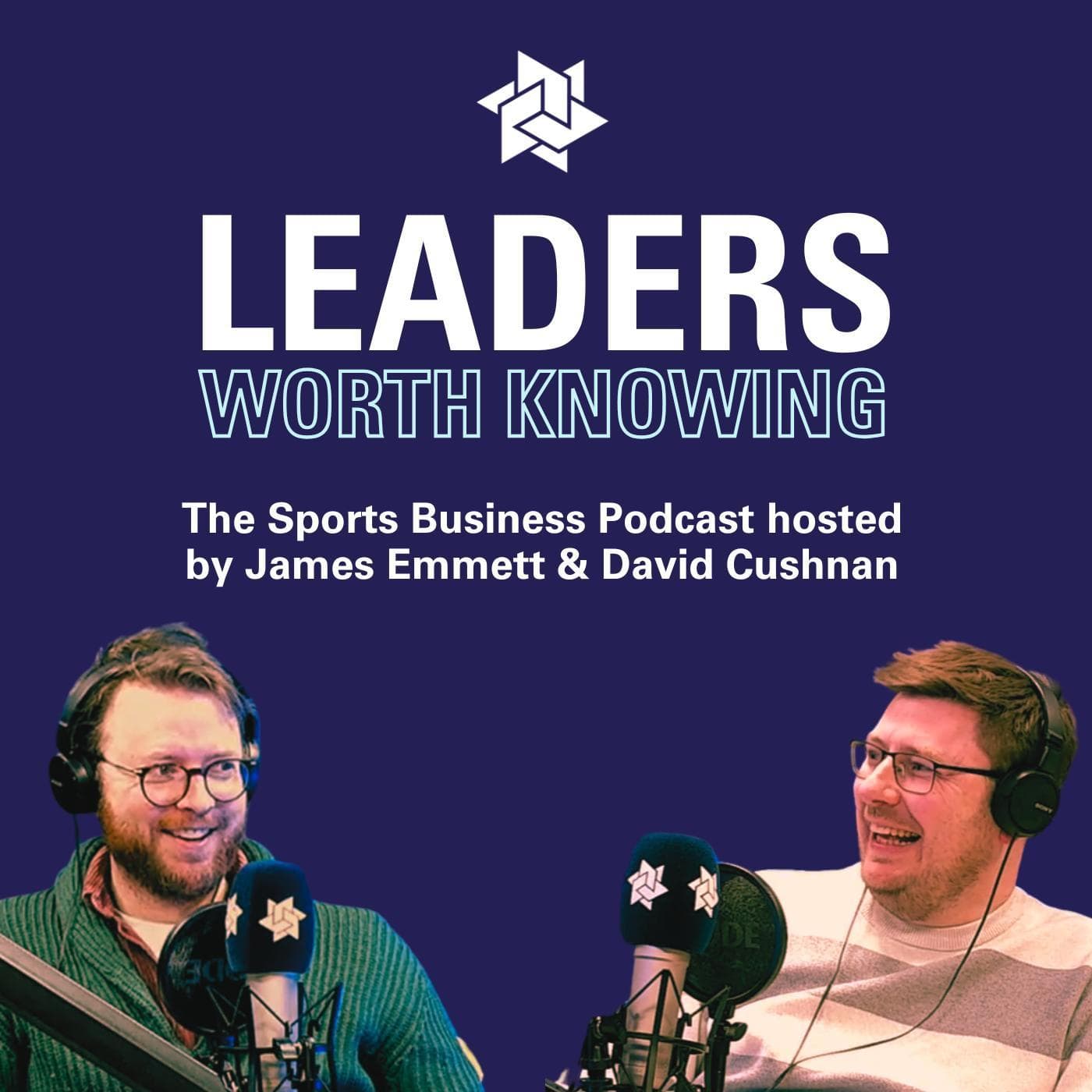
Leaders Worth Knowing Podcast Episode Notes
Episode Overview
- Title: How the DP World Tour Became Sport’s Funniest Rights Holder
- Guests: Tom Jackson, Group Director, Content at DP World Tour
- Hosts: James Emmett & David Cushnan
- Release Date: [Insert Release Date]
Summary In this episode, Tom Jackson discusses the DP World Tour’s innovative approach to content creation, focusing on the humorous and engaging viral videos that have become a hallmark of the Tour. He highlights the importance of player involvement, humor as a risk-reward strategy, and the evolving sophistication of branded content in sports.
Key Concepts and Discussions
Introduction
- Hosts express excitement about the podcast's new name, "Leaders Worth Knowing."
- Personal anecdotes shared by James and David, including discussions about the Women's Euros final and audience engagement in women's football.
Guest Introduction
- Tom Jackson is introduced as the Group Director of Content at the DP World Tour.
- The DP World Tour, formerly known as the European Tour, has gained recognition for its comedic and engaging content.
The Evolution of Content Strategy
- Historical Context:
- Initial reluctance around humorous content in golf; traditionally viewed as serious and technical.
- Early attempts at viral content began in 2013 with a Happy Gilmore shoot during the Scottish Open.
- Building Relationships with Players:
- Jackson emphasizes the importance of trust and collaboration with players for successful content creation.
- Notable players like Tommy Fleetwood and Thomas Bjorn have contributed to content initiatives.
Creating Viral Content
- Challenges of Humor:
- Jackson discusses the difficulty of crafting universally appealing humor across diverse cultures.
- Importance of a collaborative approach to brainstorming and production, involving a broad team including comedians and production specialists.
- Risk Management:
- Acknowledgement of the inherent risks in producing humorous content, particularly in terms of player image and audience reception.
- Jackson shares specific examples of content, such as the "Content Committee" video, where humor was carefully curated but still risky.
Branded Content Dynamics
- Changing Landscape:
- Discussion on how branded content has evolved significantly over the last decade, moving from simple advertising to more integrated storytelling.
- Successful collaborations highlighted with partners like BMW and Rolex, showcasing the importance of authenticity in branded content.
- Collaborative Success:
- Emphasizes the need for a partnership approach that benefits both the Tour and brands, ensuring that content resonates with fans.
Platforms and Audience Engagement
- YouTube and Other Platforms:
- Jackson discusses the strategic importance of YouTube, emphasizing the effectiveness of longer-form content alongside shorts.
- Exploration of newer platforms like TikTok and LinkedIn for reaching diverse audiences and creating engaging content.
- Adapting to New Trends:
- The need for the Tour to be agile in its content strategy, adapting to emerging platforms and audience behaviors.
Future Considerations
- Incorporating AI:
- Discussion on the potential of AI to enhance content production and operational efficiencies within the DP World Tour.
- Content Direction:
- Jackson expresses a commitment to balance between "Oscar-winning" narrative content and more mainstream "summer blockbuster" style pieces.
- Focus on expanding the Tour’s reach, especially in emerging golf markets.
Key Takeaways
- Humor in Sports Content: Successfully integrating humor requires meticulous planning and trust-building with players.
- Evolving Content Strategy: The DP World Tour's content strategy has shifted towards more engaging, humorous formats that resonate with broader audiences.
- Collaboration with Brands: Successful branded content emerges from genuine partnerships that align with the audience’s interests.
- Adapting to Platforms: Understanding various platforms and audience expectations is crucial for effective content delivery.
- Future Opportunities: Embracing technological advancements like AI can enhance the efficiency and creativity of content production.
Conclusion Tom Jackson's insights into the DP World Tour's content strategy offer a valuable perspective on the innovative use of humor in sports branding and audience engagement. The episode underscores the importance of collaboration, adaptability, and strategic thinking in the rapidly evolving landscape of sports content.
---
For more insights, visit the [Leaders Week London](http://www.leadersonsport.com/leadersweek) event featuring industry leaders and creative discussions.
Written by AI. May contain mistakes. Listen to the episode to check what was said.
Transcript
Automatic transcript. May contain errors.0:04Hello, and welcome to another episode of Leaders Worth Knowing, the Leaders Sport Business podcast from Leaders. And my name is James Emmett. I'm the editorial director here at Leaders. And with me as ever is my great colleague, David Cushman. David, how the heck are you? I'm really well, thanks. Isn't the new name of the podcast starting to become habit? Leaders Worth Knowing. Yeah, it's starting to roll off the tongue. It really is. Yeah, I like it. It's the talk of the industry. Do you know what? That phrase, Leaders Worth Knowing, I think was the result of some really quite excellent agency work in, I'm going to say 2014 or 15.
0:43About a decade ago, yeah. Revived for a fresh decade of sport. Nostalgia is very much in. Yeah, big time. Big time. I'm very well, thank you. How are you? Yeah, also doing well, thanks, Dave. Went camping on the weekend. Okay. How was the weather? Weather was mixed. Lots of good camping sports played, mainly cricket. It turns out you can play cricket with a hard ball and 20 children. Yeah. It is possible. It's a little dangerous, but you got away with it. Did you watch the Women's Euros final on the weekend, David? Yes, I did, along with much of the rest of the country. Nine or so million other people.
1:24Yeah, more than that, more than that. How much was it in the end? I think it was 16 million across BBC and ITV coverage. I actually went ITV, which is unusual in major football finals where the BBC and ITV share coverage. Now, why did you do that, David? Was it because you wanted to check out the portfolio of ads? Yes, precisely that. Right. You wanted to see Griffles. I know we talked about Griffles on the last, you mentioned all the sponsors. I couldn't stop looking at the Griffles logo. I keep thinking Griffles whenever I see it. And I know this is not the case, but I can't stop imagining that griffles are a packet of posh truffle crisps.
2:07Oh, yeah. Yeah. Just pass me a packet of griffles, will you? Yes. There's something to do with platelets and pharmaceuticals. Yeah. Completely not truffle crisps. It'd be actually a bit of a clash with Lay's, I think, category-wise. Sorry, PepsiCo. In the UEFA sponsorship portfolio. Yeah, it was great, wasn't it? Highly dramatic. The lionesses have done it again. But I think even taking off our lionesses goggles for a second, and I was very interested to listen into your interview with Emily Heath from Rexona last week. This has been, I think, a tournament with plenty to analyse at the end of it.
2:45But my view as an observer on the TV would be a really positive, you know, continuing the positive momentum of women's national team football. We touched on this briefly last week, but I just think the format of a 16-team, four-week tournament is the way forward. Yeah, I think you're right. Although it won't be the way forward because all the tournaments are being expanded. Gigantifying. That's the way it's going. Yeah, interesting. Off the back of the episode last week with Emily Heath from Rexona, a few bits and pieces of feedback for that episode, which is nice. From the mailbox. From bits and pieces from the mailbox.
3:32But I actually thought that Em was refreshingly honest in her first-hand view, her perspective of what the tournament was like. And she was certainly, it's fair to say that she, a little bit underwhelmed by the general atmosphere around Switzerland. Although, of course, she, you know, the games themselves were the semifinals that she went to. She was very positive about and she was broadly positive about the impact of women's sponsorship. But it's interesting just looking at some of the figures across the tournament. Very strong attendance. This is the best attended women's football tournament ever.
4:19Occupancy rates in the stadiums really, really high, 90 % higher. So a terrific job done by the local organizing committee, UEFA. Anyone who's involved in selling the tickets and making sure that people take them up, which is not always an easy task. But, you know, it's a mixed picture. I know you enjoyed the format and they clearly did very well on selling the tickets. But obviously, Emily's first-hand account of the lack of buzz about the place in Switzerland. It's also a mixed picture on the viewing figures across Europe. Clearly very strong in England, where ITV and BBC covered it, 16 million combined audience.
5:03But strong footballing nations not involved in the final. a little bit subpar. Martin Ross reports that TFA in France had a 1.7 million average viewership for the final. And Rye Sport in Italy didn't put it on its main channel, sort of hid it away. And they had... Because of what happened in the semi-final. They had an average of 392 ,000. But this is the next acid test, I think, for women's national team football and in the, well, in England. Appealing to the neutrals. Appealing to the neutrals, but also in England, brilliantly, the Lionesses have not allowed this question to be answered yet.
5:51But what happens, and it could happen at the next World Cup, there will be a tournament at some point where the Lionesses go out early. What then is the impact on viewing figures on the BBC and ITV? What I think we have at the moment, particularly in the knockout stages, Lionesses games become big national moments, national events. Without always comparing the women's game to the men's game, if the men's England football team go out of the World Cup at the quarterfinal stage, the next day, there's still very, very, very healthy audiences for whoever is playing. And I think that is the next big step for national team football on the women's side.
6:36Can audiences be sustained through a tournament where the Lionesses aren't involved? Now, it's not become an issue yet, but there will come a point where that is a genuine question. Obviously, the BBC and ITV committing to broadcast the entire tournament and committing greater resources. and primetime games were broadcast on BBC One and ITV One in the UK, free to air throughout this tournament. The audiences haven't necessarily been there and they're never going to be there in the same numbers as they would be if the Lionesses were playing, of course. But getting to a stage where casual viewers, but also the general public are into the tournament as a whole beyond Lionesses games is, I think, the key.
7:26I wonder how that's going to be. I think the first test... I think it's a long, long-term game. I think, I personally think that next year's World Cup, Men's World Cup, which will be the largest ever World Cup on lots of different measures, 48 teams, I think we're going to reach a saturation point for the casual viewers. Well, it's well over 100 games. It's well over 100 games. Are people, is a casual fan going to tune in for Camarine versus Bosnia in a group stage game? Potentially 2.30am UK time. I'm going to say not many. Don't know. You'll be there, though, won't you? I'll be there. Of course I'll be there.
8:00I'm doing it minute by minute for the intranet. Yes. Who's coming up on today's podcast, though? Well, today we have been watching some of the Euros and have been watching a reasonable amount of golf over the last few weeks. And we've got Tom Jackson, who is the Group Director of Content at the DP World Tour, the European Tour, as it was previously known. and Tom is the man who runs the content team and they might be the funniest content team in sport. They've carved out this, would you call it a niche? They've certainly carved out a series of skits, sketches, pieces of content which involve their players and in some cases send up their players and have players playing exaggerated versions of themselves in all sorts of amusing scenarios from being part of an influencer clinic to being part of a sort of content ideas brainstorm themselves.
9:00You'll have seen many of these. And over a number of years now, they've really established, I think, and done wonders, I think, for the European Tour from a certainly from an online content standpoint. So Tom's going to be on talking about what he does, what his team do, how they do what they do, why they do what they do. Is he going to give the secret formula to how to make a video go viral? He's going to sprinkle in a little of the secret sauce in the conversation. But I have been watching quite a bit of golf. And obviously, there's a big thing at the moment around golf content, golf content on YouTube, whether that's Bryson DeChambeau or all sorts of non-professional player golf YouTubers who are doing great stuff.
9:45You've got Happy Gilmore 2 just out on Netflix featuring cameos from all sorts of golfers past and present. But I was watching a little bit of the Live Golf coverage, which they've been on their European swing over the last couple of weeks in Spain and the UK and coverage of the Open Championship recently on Sky Sports. And it struck me, and I think I've said on this podcast before, I think the Live Golf, I think the broadcast coverage on Live is really good and has been from the start. And they brought a lot of really interesting features to it and they've made it somewhat more dynamic. But in general terms, golf, mainstream golf coverage is still very, very earnest, really quite technical, really very grown up.
10:36and Sky do a superb job with their Open Championship coverage. And it's actually, it's what a lot of people want and it works. But it did strike me watching the Open Championship that actually is golf the sport most suited to doing one of these altcasts, alternative broadcasts. And I know you're thinking about that and working on something at the moment, James, in this altcast space. But it did strike me that there is not even necessarily a kid's version, but something that is a bit more or maybe it is a kid's version. Maybe it's a big sort of crazy golf type thing. But golf coverage probably needs that sort of dynamism to be injected into it.
11:22I imagine very technically complicated to do, given the field of play that you're operating in with a golf course as opposed to a stadium. but I think it's crying out for it. Very difficult direction for golf as well because you're essentially queuing up important shots to show, sometimes shown live, sometimes shown as live and the sort of seams are a little bit kind of papered over in TV coverage as to whether you're actually watching something live. But yeah, I think you're probably onto something and it's part of the reason that the DP World Tour has been so celebrated for its non-live content output over the last few years.
12:03It's because they have, through Tom Jackson and his team's work, managed to establish a real, authentic, anarchic kind of tone of voice for themselves. They have a very distinct identity to their non-live content. And I think in a sport as competitive now as golf, with lots of different rights holder organizations essentially competing against each other, and I appreciate that there's going to be a shake up at some stage, you really need to do something distinctive to stand apart from your competitors. When you are appealing for sponsorship money, for media money, you need something that is going to elevate you beyond the background buzz of golf happening all the time in shot in the same way with slightly different rules between the different tours.
13:03And they've been onto something with this distinct output that they've done. Yeah, it's not Scotty Scheffler chipping through a crazy golf windmill. Has he done that? No, but that's what I'm saying. Oh, I'd watch that. An alt cast, yeah, sort of crazy golf transposed on top of a golf course would be fun. So, you know, let me challenge the sports golf media market to come up with that. But you're absolutely right. There's a lot of good stuff in here from Tom as well about how that content philosophy and that content execution and planning translates into the work that they're doing with partners as well.
13:42And the branded content space is obviously one that is growing and growing quickly. And yeah, he's good on that too. They've been superb as well across many years at getting buy-in from their players. It is not, obviously, it's a facile question. I know you ask it in the interview, David, but how do you make a video go viral? Everybody wants to know there is no specific formula. Spoiler, there is no specific formula. But it's really difficult in sport, especially, to even try to do something funny. You've got a lot of egos in play. You've got a lot of middlemen usually in play, all trying to protect or burnish the image of their clients.
14:29and ideas get watered down to the absolute blandest kernel of their origin. And there is a risk of not being funny, of course, which is, you know, a challenge. And there's also a risk of trying to do something that is funny in multiple markets, in multiple cultures, which is not the work of a moment. And Tom delves into all of that. Shall we hear from him? Yeah, let's bring on Tom Jackson from the DP World Tour. Tom Jackson is Group Director, Comma Content at the European Tour Group DP World Tour. Tom, hello. Thanks for joining us. Hello. And the comma is obviously a crucial part of that title, but yes.
15:15Did you push for the comma in - Very hard. It was a contentious issue, but we got there in the end with the comma. Yeah. It's attention to detail. I like it. Tom, thanks for coming on because we're right at the heart of a busy golf season. give us a sense, first of all, of that role, group director of content. What is the remit? Where does it start? Where does it end? Yes. I mean, it's quite wide in terms of a remit. Essentially, our team or my team look after everything really in the non-live space to do with content. So outside of our live production, which we have an excellent separate broadcast, team four, sort of everything that fits within non-live content comes under this remit.
16:01So whether that's our branded content team, whether that's our original content team, everything we do specifically for players, everything we do around the Ryder Cup, all fits within this sort of giant bucket of content. But within that bucket, there's obviously so many different strands and departments that sort of we manage. And give us the brief audio CV, if you like, for you, because you've been at the tour for a while but this is a relatively new position yes so my my journey my content journey i guess started um i like that your content journey content journey i didn't know it was going to be a content journey your narrative tom your narrative yeah yeah that's that's probably better yeah um so i started at img um back in 2007 um but it was when european tour productions was a joint venture between img and european tour so i started on the the production side of things and was heavily involved in the live broadcast of events and being out on the road for 20 to 25 tournaments a year which was a fantastic grounding in terms of you know knowledge and experience and seeing sort of how the world of golf works and then I've sort of slowly progressed into original branded content some news content and then on the tour side of things we set up Ryder Cup Productions, which is a dedicated production arm for Ryder Cup Europe and PGO of America.
17:30And then in the last six months or so, I've sort of moved on to this wider group director role, which encompasses all of those other areas. I want to come back and talk to you a little bit later on about branded content in particular, because I think that's a really interesting area that, of course, is top of mind for many people listening in all sorts of roles across the sports industry, whether brand side or on the rights holder side. But I think one of the things that the European tour, the DP World Tour has really become known for in the last few years are these viral videos featuring players, putting players right at the front and center, various sort of golf trick shots, stunts, moving into really using the players and leaning on players and videos that contain a lot of humor.
18:23And I'm going to ask you now a question that you probably get asked about 5 ,000 times a year. How do you create a viral video? It's a question we get asked and a question where, you know, people come to us and say, make us a viral video as well, which are the two quite often asked questions. It's a difficult brief that, isn't it? It is. And I think it kind of starts, the planning to get to where we are today as a tour starts years and years and years ago. And I think our journey from a tour perspective, you know, I looked earlier today, actually, thinking of the first piece of what we would consider sort of that needle moving content, viral content was 2013.
19:06And we decided to do a replica Happy Gilmore shoot at the Scottish Open, which was this time, gosh, 13 years ago. and at the time it was very sort of this isn't golf this you know this isn't on brand you know digital content back in 2013 just wasn't really a it was more of an afterthought and I think we always felt that this type of content deserved the respect and deserved to be part of a content strategy alongside linear broadcast and broadcast content and and really it's about sort of understanding first and foremost what we're trying to be and who we're trying to be you know who are we as a brand um and you know within the DP World Tour family you know one of the things that that stands out has always stood out for us is is our players and the way that our players um are together as a community at these tournaments around the world and we've we always felt that leaning into the players themselves gave us that opportunity to cut through and move the needle and do things differently where in the golf space at that time that really hadn't been seen before but it's a very interesting question around the players and again you know that that just takes time to build those relationships with the players it's trust it's understanding that actually you know we are working together to build a our profile as a tour but also build the player profiles across their platforms as well and you know i think there was a a recent 25 um report that came out which sort of really highlighted something that we felt for a long time which is fans and follow new fans follow sports for the athletes more so you know than than almost anything else.
20:59So if we were able to showcase our athletes, our members, our players in a really fun and engaging way, that would pay dividends down the line. People will have seen these videos and these type of videos, and there are several of them. And if you haven't seen them, do seek them out. So a few years ago, you had the players in an anger management class. There's more recently, um as i say various sort of plays on the sort of trick shots or you know get a hole in one hit a moving target and all those sorts um influencer training uh was one quite recently um involving the players again there was the sort of meta small m meta um content committee coming up with the viral ideas.
21:51Tell us, I mean, maybe take one of those or another that you really think is a prime example of what we're talking about here and take us through, you know, in as detailed fashion as possible, the sort of concept to execution. Yeah. I mean, I think, you know, I feel like the content committee piece that we did a few years ago now was quite groundbreaking for a number of reasons you know a it was a hard sell for the players you know we you know that comes down to trust and you know our our approach has always been fairly consistent and our you know the way that we like to deliver our content has been consistent because I think you need consistency in in the way that you do things and with with the content committee you know we always felt that if we're looking on the outside in this would be a really funny and and humor is just such a big part of this.
22:43And I think we sometimes take for granted the fact that fans of any sport or even not of sport at all just love humor and something that's genuinely funny and finding a way to play on the fact that people are out there trying to come up with these crazy ideas and trying to move the needle and do things differently, but having that in a setting where it's players themselves discussing this and I think we had Tommy Fleetwood who has been you know a very good friend to us from a content perspective and is brilliant but we also had the likes of Thomas Bjorn in there as well who you wouldn't necessarily expect to be someone on the content committee but that's why he was perfect and you know the relationships you build you they trust you to to deliver on this Humor is great when it lands, but it's also risky.
23:32And I imagine particularly risky when your audience is an international audience, right? There's a British sense of humor. And you've got to make sure that what you're producing translates and works for as many people as possible, presumably. So when you are doing something that you are trying to be humorous in, what are some of the internal conversations that you have about doing as much as you can? And I guess there's an element of art over science here, but making sure you're doing everything possible to ensure that it lands as you intend. Yeah, that's a very good question. I mean, I think one thing that I would start with is it sort of takes an army to get these pieces over the line.
24:22And whether that's sort of from a production point of view, and we do for those specific type of pieces, we do really lean into a heavier, high end type of production because we feel it works really well. Now there's obviously lots of other pieces of content which don't require that level of production. But when we sit down and talk about those ideas, there's a big team of people who sit in a room, cliche, sit in a room with some coffee and bounce ideas off. And there's plenty of ideas that just don't make it anywhere near the final edit. And actually, when we were filming that piece, we filmed it in Dubai, you know, there were, I would say, six or seven jokes that we thought would work.
25:06And when we listened and we watched them back, they just didn't land. And you do have to take a calculated risk. And it is very subjective, as humor always is. But I think you sort of, as a collective, you know, we have representatives from our player relations team. We have representatives from our production team. We actually brought in a comedian for that as well, a script writer. Just leaning into the best of the best to try and deliver something like this. But you're absolutely right. There is an element of risk. And I don't think in the sort of 15 odd years of doing this, there's ever been a piece of content we've put out where I felt this is a guaranteed home run.
25:50There's pieces where you go and you just before you put it out, you think this could be great. But sometimes you just you have that element of will it land? And it's a great feeling when it does and some land better than others. But that's, I guess, without risk, you're not moving the needle and you're not sort of pushing the boundaries of what fans maybe want to see. And you talked about doing everything possible to make this land, but still having that element of trepidation as presumably as somebody hits send. Yes. Particularly with something that does involve humour and actually quite sophisticated humour.
26:26The content committee, for example, is quite meta and you've got to not necessarily have watched the previous version, but you've got to have some sense of what you're seeing, what's going on. Are you almost pricing in the possibility that it could fall flat? Yeah, I think you have to be okay with that. I think you have to understand. And, you know, again, that's an internal sell of, you know, we, especially in the earlier days, it was hard because, you know, you're sort of saying, this is not necessarily a cheap deliverable, but we feel like this is, as a business, something that we should be doing.
27:03and but we have to be okay with the risk of it of it not being as successful as we would have liked but again you know i think you with with risk it's calculated risk so the players were on board so we knew that from a player perspective we were happy we we spent a lot of time from a distribution syndication perspective making sure that we could get this out to the right channels and to the right people from a broadcast and digital side and that goes a long way you know completing the circle You know, you could have the best idea in the world, but if you can't get people to watch that and see that and it come across their own personal platforms and their own personal algorithms, then what good is it?
27:43So I think, yeah. And you talked about an army being involved in putting these together and it can be the case with certain, you know, either piece of content or just decisions generally in any business where if they're going through a number of sign off processes. And I guess in some of these cases, there's even brands, there's player representatives, as you say, there's lots of stakeholders who are involved as well as the people actually involved in producing and signing off from within the tour. through that approvals machine, especially again, coming back to these pieces that are leaning in on humour, what is the best way to navigate that process when maybe there is a natural inclination and it's all everybody with the best of intentions, but sometimes messages or jokes can be maybe diluted or changed as they sweep through various layers of approval.
28:38Yeah. I mean, the approval process is something that I think you just have to, I think every organization who creates content with athletes has to, and athletes that have commercial partners and obviously our commercial family as well, you have to navigate them. And I've always found the best way is to try and get ahead of it. And again, the relationships that we build with players, with our commercial partners are so important for when we want to get things like this signed off. Because there's that level of trust and that doesn't happen overnight. You know, if we were to go to one of our partners now and say, look, we've got this crazy idea about X, Y or Z, and we hadn't had the 10 years of trust building before that, it's a lot harder to get it signed off.
29:26So I think, you know, planning and also understanding, you know, what is off limits. And there are lines, you know, for us as a members organization, there has always been a line in the sand where we don't like to cross. We try and get close to that line and understand, you know, that we have to try and get there, but we understand where, or we try to understand exactly where that line is. So, you know, we would never take anything that we felt was really out of pocket for sign-off purposes. You talked about player buy-in, which is obviously a critical element of this and building up that trust with players like Tommy Fleetwood and you've got Tyrell Hatton in really starring roles.
30:06And it's quite interesting because I guess by the nature of these things, you are in some cases exaggerating an element of a player's personality, or you are actually casting a player in a particular role that is the complete opposite of their real life persona and personality. So, and again, you're dealing with an international cast of players, different first languages, different personality types. I'm assuming there's a sort of, there's a group discussion at some level of here's what we're trying to achieve. But actually the key piece is a bit more of those individual relationships, individual conversations.
30:51Absolutely. Yeah. And I think we've been very fortunate with the development of our content team over the years to have that buy-in from player relations department and buy-in from Keith. When Keith first came in, he came in and said, look, we're an entertainment company. And that was music to our ears as a content team. And Keith was always so supportive of the journey that we wanted to take fans on from a content side of things. And Guy, since Guy has taken over, has been exactly the same. And having that level of support at the very highest level is so important for us because it gives us the freedom to sort of go out there and try and create these pieces of magic and get these over the line.
31:36And when you have Bayern at that level and from a player side of things, it frees you up a little bit to know that you're on the right track. But it was really interesting around, I mean, we are a global tour and we have so many personalities from so many different countries. And finding that balance has always been a real challenge for us. You know, we are predominantly English language in terms of the content that we create, but we are such a multinational tour. And we've always been very conscious about not trying to be too UK-centric with the players that we use and the type of content we deliver as well.
Read the full transcript
32:15Keith Pelley, the previous CEO of the DP World Tour and Guy Kinnings, who's now stepped up in reasonably recent times to that role. But that must be a really nice moment when you have a transition in top level leadership like that. But actually the approach, the buy-in continues in terms of being able to do what you've been doing and been successful at doing. it's incredibly important i think and and it was it was great for us as as a wider content team to understand as i say that we you know we had that level of support um and even when sort of you know management changes and at the top the very top that support has always continued um and you know it's it's we try and create you know some of those truths i guess you know to go back to our initial question, those true viral videos, we try to make them sort of brand agnostic and try and make them about us as a tour and representative of us as the DP World Tour, which is great for us because it removes the shackles a little bit.
33:28And there's no, the objective is, we set those objectives completely. Does this represent the personality we want to represent? Does it represent the direction of travel for the type of content we want to be doing for the next x y or z number of months it's interesting actually because you i was re-watching a few of them earlier on to to prepare for this video and you do almost sort of half expect at the end there to be a a partner logo or you know reference to a partner and actually you know somewhat surprising that that it isn't but i guess that as you say has been has been a bit um helpful in in some regards when you are producing content that is branded content for partners and you've got a great roster of partners at the DP World Tour and the Ryder Cup um you're obviously producing different types of content um but in in general terms what are the best relationships like between brand and your team in terms of producing something that works for them lands their messages, but really resonates with the audience.
34:35Yeah. I mean, and again, over the last particularly five to 10 years, that dynamic has really changed and shifted. And, you know, when we were, I would say branded content in the form it is today didn't really exist 15 years ago. Now it was, it was, you know, I'm generalizing here, it was hospitality in kind and things like that. Whereas the actual content production side of things, which now is integral to a lot of our partner relationships has really developed significantly in the last 10 years. And I think we've noticed the change of, you know, historically, maybe it was I have as a company, we have X, Y, and Z brand objectives, and these are our messages.
35:15And you have to get those into this content. And, you know, quite often, you know, putting square pegs and round holes doesn't work because you have to make sure you meet objectives from both sides. And also give credit to the fans and give credit to our audiences who are watching this content. They're savvy. They know what's good content. And if they don't feel like it's authentic, if they don't feel like it's genuine, if they don't feel like there's a true story in there, whether that's a humorous story or an emotional story, they just won't buy it. So I think you have to recognize and give credit to our audience when we're making these.
35:52And the best, and we're very fortunate with our commercial family on both a Ryder Cup and a DP World Tour side of things, you know, the best relationships are when we work collaboratively together to deliver for our fans. Is there a recent piece of branded content or a partner that you work with that you would call out as being illustrative of a really effective combination? I mean, we have some very long-standing partners that you know we we have grown together you know bmw rolex and and and you know that that evolution of of the the rights holder and and and brand journey has been like really great to see you know bmw um we did an amazing piece of content um must have been eight or nine years ago with a little guy little kid called aaron and his his dad wrote in and said it's his birthday can you help him and we produced this piece of content which was a branded piece of content where um i think uh beef picked him up in a car and then justin rose got in the car with his olympic medal and then martin kimer got in the car and it was just like but it was in the bmw car so it all sort of worked in that sense and that was this was that on the on the school run yeah it was like 18 in the morning and he was on his way to to wentworth and it was i think one of the best examples of going you know we can work really collaboratively here and the story is fantastic um but it ticks your boxes and it ticks our boxes and and it was a huge win for us and i think almost a a sort of a step change in terms of of how we can work together with brands but i mean all of our all of our long-standing partners and new partners you know they they are so much more we found so much more willing to embrace, you know, that shared journey and making sure that it works for our audiences as well.
37:53I guess one substantial change over that sort of five, 10 year period when it comes to developing branded content ideas is probably a lot of these brands now have, you know, very, very significant in-house content departments of their own that have also developed like the tours. And presumably that offers, you know, it's experts talking with experts a bit more. Yeah, it does. And we have seen that as a direction of travel in terms of people bringing in or brands bringing in their own in-house teams or working with agencies. And again, you know, there's obviously the danger of there being almost too many cooks sometimes when you're ideating and coming up with ideas.
38:38But I think with a shared goal or shared goals, it can be really productive as well. And it's creatives talking to creatives is always, I think, beneficial for from a content perspective. Very tactical question. Do you have an ideal way to run a whiteboard session? Lots of coffee. OK. How long should a whiteboard session be? Oh, we've had, I mean, back in the day, I think when maybe a lot of us had less responsibilities, maybe no kids and, you know, the whiteboard session would start at work and then move on to the nearest pub and carry on there. And I think some of the best ideas are the result of probably hours worth of whiteboard sessions and a lot of terrible ideas, which is great.
39:26And I think the idea that, and we always say, and I do mean it, there's no such thing as a bad idea. And, you know, if you were to take that further, you know, I would almost say there's no such thing as original content. You know, original content is, you know, ideas, inspiration, things that you've seen, experiences that you've had, which already exist out there. And we're repackaging this into a world that works for us, for golf. And one of the things we like to, you know, I love watching content from other sports. You know, I love watching the long form documentary content that other sports do.
40:04And I've definitely taken inspiration from those when we put together our Una Familia Ryder Cup documentary as well. And, you know, that works really well. I love the way that they've done that. You know, let's see if we can incorporate that. And even, you know, ideas and concepts. You just love to see people doing things differently and looking at things with a different lens, because I think that's how we as a sports industry can move forwards. very often a great format idea will be developed and then replicated and then you know you can play around with the the format a bit and you know clearly what you've been doing has been very successful and i'm sure you've you've measured that thoroughly and you report that back you get into a bit of a groove presumably of you know it's either a series or a you know a piece of content or a content format that can be replicated where's the art and science in terms of knowing understanding when to bring a content format to an end oh that's a yeah it's a great question um and i think we we have examples with um a lot of the sort of longer term strands that we do where we sort of do think you know has it run its course and you know and that's a combination of metrics you know um the tangibles which are the metrics and also the intangibles which is public and player sentiment um you know if we take for example our chase the ace series the first one we did was with eduardo molinari which is which is he doesn't make it spoiler alert but he doesn't make it but just and we were initially we were devastated you know a whole day's worth of filming eduardo's giving up his time and he's just such a an amazing person to film but actually him not making it was perfect for the continuation of this this series and you know i think andy's It's also quite an unexpected ending, right?
41:56Yeah. I mean, everyone expects him to make it. Yeah. And he doesn't. And in itself, that journey was incredible. And audiences really bought into that journey. And eventually, we had Andy Sullivan made the hole in one on the challenge. So in our mind, is that the end of the challenge? You know, or do we actually try and evolve it? And I think rather than looking at these things coming to an end, it's what is the next evolution of that strand. And we've had some great ones. We looked at non-golfers, so Tom Holland and his brothers. Twice now, they've attempted this at Wentworth. And we've had amazing feedback from that.
42:34And so there are opportunities for us to reimagine the same strands, but look at it with a different lens. We've talked a lot about formats. I'd like to talk about platforms for a moment, if we may. And I don't know if you've been scrolling on LinkedIn recently, but every second post certainly on my feed is extolling the virtues of a new platform that people seem to have just discovered called YouTube. How are you thinking about YouTube at the moment? And from a major rights holder's point of view, there's obviously a broadcast piece that is sort of not your remit, but from a content standpoint, pros, cons of YouTube and how are you seeing that platform evolving and becoming more or less of a factor in your thinking?
43:21YouTube is increasingly more and more important to us from a strategic point of view. And I think obviously, we must have the same sort of algorithms on our feeds because we get a lot of that as well. And we never like to rush into sort of a step change and approach, strategic approach to a platform. But at the same time, I think we, we have, um, we sort of bought into the, the value that, that YouTube can, can bring us as a, as a, uh, uh, an organization like the DP world tour. Um, you know, when there's obviously different levels within YouTube, there's YouTube shorts, and then there's the longer form YouTube.
44:05And we are seeing that actually, you know, So increasing the dwell time, the viewing minutes with longer form pieces of content has proved very beneficial to us in building out our platforms and building out our audiences. But yet those shorts are still incredibly effective as well. So it's quite resource heavy, you know, administering a clearly defined strategic approach to all these different platforms, you know, does take resource and expertise. And one thing that we sort of lent into on a YouTube side of things is looking at third parties to assist us in not only the creation of, but the execution of that distribution strategy.
44:50But we feel it's really important. And we've noticed, especially in the last six months or so, that, as I say, the dwell time and the amount of content people are watching on our YouTube channel has significantly increased. which has commercial implications down the line, but it also, it's great as a gateway to have fans come into our ecosystem. The next question is, well, what content do you create for them? You know fans are coming to YouTube and you see in other sports, people are putting together three, four, five hour long edits of these are the best dunks or the best goals or the best penalties.
45:32so you know how do we respond from a golf how do we make this our own in golf um and deliver it in the same way so those are the challenges i think and it's it's it changes all the time and it it's so fast-paced and it evolves so quickly um that you know it is a challenge to to not only keep up up with it but try and get ahead of it as well youtube has obviously been around for well it's 20 year anniversary of YouTube this year. But in terms of what's informing decisions to jump onto new platforms, I guess in fairly recent times, we've had threads has emerged, but I guess TikTok, you know, I'm not sure what year you started on TikTok, but, you know, a number of years now, what are some of the things that you're thinking about and what are you looking for in a platform that will help decide whether the tour has an official presence on there.
46:30Yeah. And it comes back down to, you know, what is at the heart of who we are? And I think we worked really hard with our comms team and our wider marketing team to really understand who we are as a tour. You know, what are our key pillars that we go back to when we look at whether we we take one direction or another. And our focus, particularly in 25, has been around our players, our destinations, and our communities, our talent destination and communities. And within those pillars, we have these key buckets which say, this is who we are, and this is who we aren't. And when you look at a new platform, you kind of look at it going, well, does this feed into who we are?
47:13And does the kind of content that will circulate on this platform feed into who we are, who we want to say we are? And the one thing I think that we're not, as an example, is we're not a clickbait organization. We try really hard now not to be that, can you believe what happens now on the green sort of thing. That's not who we are. It's incredibly successful strategy, but that's not who we are. So when you look at a platform, it's what stands out to us within this platform that could work for us. And TikTok's a really interesting one because we have seen the value of TikTok and the audience that TikTok presents us, which is really a younger, newer audience.
47:59So how do we embrace TikTok? And it's a completely different type of content. What about LinkedIn as a venue, as a vehicle for the tour, but also, I mean, we've seen a number of football managers, for example, start to dabble with LinkedIn as a platform to give us their views on the business world. How, you know, is that one that you're looking at? Yeah, I'm a big fan of LinkedIn in terms of, I think there's a high ceiling there from a content perspective. And I think it's so different from our other platforms. It's so different from X, the meta universe. It's so different from everything that we do and create there.
48:46It requires its own strategy, but like you say, it's more B2B. And I think we're really starting to see the value of creating distinct strategies within an overarching strategy. So what is the B2B approach here? Who are we talking to? How do we understand our audience? And it's a very different audience on LinkedIn to anywhere else. So I think there are opportunities for us, particularly in the branded space, to really lean into understanding that audience and creating content that is fit for purpose for that audience. So yeah, I'm excited by LinkedIn, and I think it requires a very different lens, but I think there are huge opportunities there.
49:31Sounds like we do have similar LinkedIn timelines. And I have definitely noticed that there's been an uptick in what I would suspect is AI generated content on LinkedIn. And I wonder in a broad sense, beyond LinkedIn, how you, from a content point of view, are thinking about AI. There's obviously potential risks, uncertainties, challenges, but also from a creative point of view, a lot of opportunity and ways to, you know, shorten the distance between the ideas meeting and the execution. Where's your view and the tour's view on AI within content? Yes. So personally, for me, I feel like it's not an if, it's a when.
50:24So it's not if we are going to integrate AI into the way that we operate. It's a when from a content side of things. But at the same time, it is the Wild West kind of out there with AI. And I think we as an organization, and we have a very exciting actually, or maybe I'm just a bit of a nerd, but it's a very exciting steer group around AI, where collectively as an organization, we are continually looking at the approaches that we can use around AI, not just for content, but, um, and even within content, editorial content, video content, but across the board, you know, we, we put on, you know, over 40 tournaments every year on the DP World Tour and, and, you know, the AI, the potential AI benefits in terms of operations and staging and, and championship management, um, you know, the way that we manage our players and, and databases and communications, you know, the whole piece is hugely exciting because I feel like it is an opportunity to become more efficient.
51:30And that's not reducing, you know, the impact on what we can create for our audiences. But I think, as you say, it does shorten the gap and it becomes, potentially becomes a more efficient way of delivering, you know, the content that we want to deliver. And just as we wrap up, where are you looking? I mean, maybe it's in other sports, maybe it's outside spot where are you looking for inspiration and give us a maybe a couple of examples of stuff you're looking at whether that's formats or uh particular um types of content uh that you've just got half an eye on yeah so i think um authenticity storytelling and leaning into our athletes will be at the heart of sort of where we move forwards.
52:18And there's a really interesting analogy I like to use around films and Oscar winning films and summer blockbusters. And my team are probably bored of me talking about this, but it's really interesting. You know, we would love to make all of these Oscar winning type pieces of content, you know, these deep dive storytelling pieces of content that really get to the heart of your emotions. But at the same time, they aren't always what we need to be doing as a wider business. And you need those summer blockbusters in there. You need to be able to create those pieces of content that just tick a huge box and maybe aren't as deep or they aren't as emotionally connected, but they still work really well.
53:05finding the balance if you're a film studio finding a balance between your oscar nominees and your summer blockbusters is what i think is really important to us um and we will always look to use our our members our athletes our golfers to be at the heart of heart of that content but also our communities you know our destinations where we go around the world and lean into those So the growth of golf around the world outside of traditional golf markets is exciting. You know, where we might look in Asia and the growth of golf there. How do we tie content into that? And what are the opportunities that we have there?
53:45So I think expanding horizons, but keeping our athletes, our golfers at the heart of what we do is our direction of travel. And taking you more literally than you meant, which golf tour will win an Oscar first is an interesting question that I might just leave hanging, but I'm assuming you're going to back yourself. I would back ourselves very heavily on that. I'm very proud of the fact that for a number of years, we at the DP World Tour and the Ryder Cup have almost been at the forefront of original content, viral content. And it's a challenge to try and stay ahead of the curve. But in terms of what we have achieved and what we hopefully will go on to achieve, I'm very proud of the way that we do that.
54:29So yes, I'll back ourselves to do this. Good stuff. Tom, that's been absolutely fascinating. Thank you ever so much for joining us. Well, thanks for having me. It's been great.
From the publisher
Tom Jackson, Group Director, Content at the DP World Tour - once known as the European Tour - joins the podcast to share the organisation’s approach to content creation and in particular its run of viral videos featuring challenges and players.
In conversation with Leaders’ Content Director David Cushnan, Jackson explains the critical planning and process required to bring a comprehensive content strategy to life; how his team convinced players to take part; the risk and reward of humour in content; and how the DP World Tour’s approach to branded content has become more sophisticated.
Join leading creatives, digital and content experts, and organisations including Ferrari, FIFA, Chicago Bulls, Snuggs, NASCAR and more, on the Creative Stage at Leaders Week London - 1st and 2nd October at Allianz Stadium, Twickenham. To find out more visit: www.leaders on sport.con/leadersweek