In short
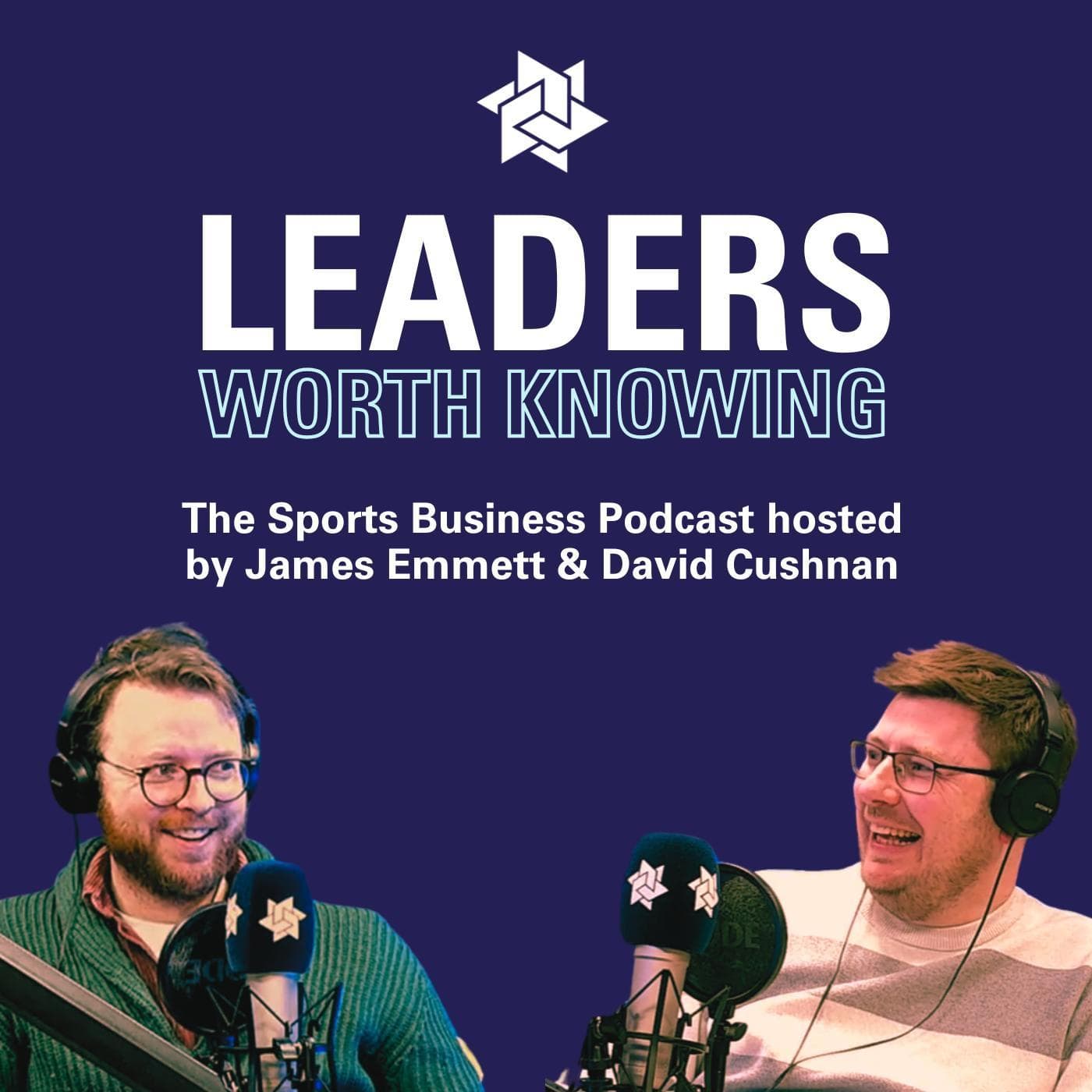
Leaders Worth Knowing Podcast - Episode Summary
Podcast Information
- Podcast Title: Leaders Worth Knowing Podcast
- Podcast Description: The biggest names in the global business of sport sit down with Leaders Editorial Director, James Emmett, and Content Director, David Cushnan.
Episode Overview
- Episode Title: The Curious Case of Wearables in Tennis; A New Era of British Olympic Sports Leadership
- Episode Description:
- Discussion surrounding the banning of Whoop wearables at the Australian Open, raising questions about ownership of personal performance data.
- Insights on Saudi Arabia’s Public Investment Fund (PIF) global sponsorship strategy.
- Reflection on Jon Dutton's appointment as CEO of the British Olympic Association.
---
Key Topics Discussed
- Who Owns Personal Performance Data?
- Incident at the Australian Open:
- Top players were instructed to remove Whoop wearables during matches, reigniting discussions on the ownership and commercialization of personal data.
- Players affected: Yannick Sinner, Carlos Alcaraz, Irina Sabalenka.
- Debate Points:
- Are tournaments justified in barring wearables for commercial reasons?
- Potential implications for athlete branding and sponsorship.
- Calls for clearer regulations regarding data ownership in sports.
- Saudi Arabia's Public Investment Fund (PIF) Sponsorship Strategy
- Overview of Recent Developments:
- A conversation with Alanoud Althonayan, PIF’s Director and Head of Sponsorship and Events, revealed insights into PIF's non-traditional sponsorship strategies.
- Key Takeaways:
- PIF's sponsorship approach focuses on solving challenges within sports rather than just traditional commercial partnerships.
- Examples include backing maternity initiatives in women's tennis.
- The need for PIF to build positive relationships with athletes and improve perceptions of Saudi Arabia.
- Leadership Changes in British Olympic Sports
- Jon Dutton's Appointment:
- Dutton steps in as the new CEO of the British Olympic Association after leading significant changes at British Cycling.
- Challenges Ahead:
- Navigating funding challenges and promoting sports visibility between Olympic Games.
- Exploring innovative approaches to sponsorship and partnerships within a competitive landscape.
---
Discussions and Reflections
- Cultural Insights:
- James Emmett shares his experiences in Melbourne, highlighting the vibrant atmosphere surrounding the Australian Open.
- Current Events in Sports:
- Other notable sports industry movements, including partnerships, leadership changes, and significant sponsorship deals.
Additional Notes
- The episode emphasizes the evolving landscape of sports data ownership and its implications for athletes and governing bodies.
- The podcast encourages further exploration of the intersection between technology, data privacy, and sports commercialization.
---
Upcoming Events
- Leaders Week London:
- Scheduled to take place at Stamford Bridge, home of Chelsea FC, on October 7-8, 2023.
---
This markdown file summarizes the key takeaways and discussions from the episode, emphasizing the importance of data ownership in sports, the strategic direction of PIF, and the leadership transition in British Olympic sports.
Written by AI. May contain mistakes. Listen to the episode to check what was said.
Chapters
Tap a time to open that second in VOSetting the Scene in Melbourne
0:45 to 2:30
Hosts share their current locations and experiences at the Australian Open.
“Well, you know, there's a poetic license, I think, involved in podcasting these days.”
Discussion on Manchester Events
2:30 to 4:00
David discusses his evening at the Etihad Stadium and Manchester City’s match.
“try to work with some new podcasting kit as well.”
Cultural Reference: Manchester and Linen
4:00 to 5:40
A light-hearted discussion about the term 'Manchester' used in New Zealand.
“And yeah, a lot of them really good fun, but a bad result for them on the night.”
Sports Industry Insights
5:40 to 7:30
Hosts preview discussions in the sports industry, including newsletters.
“in early December, so a good few weeks ago.”
Interview Overview: Al-Anoud Althanaian
7:30 to 10:10
Insights from the interview with the PIF's Al-Anoud Althanaian on sports sponsorship.
“Like how best to approach a spending entity in sport with a proposition to be spent on.”
PIF's Approach to Sponsorship
10:10 to 13:10
Discussion on PIF's non-traditional sponsorship strategy and impact.
“We've seen with the PIF's involvement in backing Live Golf, that the idea of ripping up the rulebook in sport isn't one that the hierarchy at the PIF are going to shy away from necessarily.”
Broader Context of PIF Activities
13:10 to 14:03
Exploring PIF's activities beyond sports, including economic and infrastructure developments.
“happening in all sorts of different sectors from healthcare to sort of huge physical infrastructure.”
Shifts in Saudi Arabia's Sports Landscape
14:03 to 15:56
Learn about the evolving landscape of sports and investment in Saudi Arabia.
“And the incredible renderings we saw, this idea of the line project running from the Red Sea to the desert, looks like it is no longer going to happen in the way it was first envisaged.”
Current Sports Industry Developments
15:57 to 16:44
Get updates on key partnerships and changes in sports organizations.
“Well worth around about half an hour of your time listening back to that podcast.”
Leadership Changes in British Sports
16:45 to 21:41
Understand the significance of John Dutton's new role at the BOA.
“And a big renewal and an expansion of a partnership between the NBA and Abu Dhabi's Department of Culture and Tourism has been announced.”
Show all 16 chapters
Challenges Ahead for the BOA
21:42 to 24:11
Explore the challenges and funding issues facing the British Olympic Association.
“British sporting landscape, at least this chief executive of the BOA role.”
Wearable Technology Controversy at Australian Open
24:12 to 28:00
Discover the implications of players being instructed to remove wearable devices.
“you know, the perpetual challenge of relevance of the Olympics outside of games time.”
Debating Wearable Technology in Tennis
28:00 to 29:48
Exploration of the implications of wearable technology in tennis, focusing on Whoop bands.
“Is this something, you know, Wimbledon has strict rules on what players can wear.”
Ownership and Legal Issues of Athlete Data
29:48 to 33:16
Discussion on who owns the data generated by athletes using wearable technology.
“And there is, and this has been, you know, discussed and it's interesting to see in some of the analysis of this.”
Backstage Access and Player Privacy Concerns
33:16 to 35:31
Examination of the pushback from players regarding backstage camera access during emotional moments.
“There's no wonder there are lawyers involved, but it strikes me that this is absolutely central to the role that player unions, athlete unions should be undertaking.”
Upcoming Events and Future Discussions
35:31 to 37:41
Preview of upcoming events related to sports leadership and performance in Brisbane.
“I do think this could become quite an interesting case study of how far is too far.”
Transcript
Automatic transcript. May contain errors.0:03Hello and welcome to Worth Knowing, the sports industry podcast from Leaders, where we talk about what's worth knowing in the business of sport this week. I'm James Emmett in Melbourne, Australia. And I'm David Cushman in Manchester, UK. On the show this week, we take a closer look at the rationale driving PIF's global sports sponsorship strategy. We talk about whoop, wearables and the hoary old issue of who owns personal data. And we look ahead to a new era and new leadership in British Olympic sport. This is Leaders Worth Knowing. Here you go, Dave. That's the intro. How do you like that? What's going on?
0:43You are in Manchester. I am in Manchester. I wouldn't lie during the intro, James. Well, you know, there's a poetic license, I think, involved in podcasting these days. Well, that's true, but I am in Manchester. I am recording, for the benefit of the listener, at 11pm UK time on Wednesday evening. What time is it and what day is it with you? Well, I am in Melbourne, Australia, in my hotel overlooking the park MCG in the background and the tennis centre here, which is currently playing host to the Australian Open. I'm here for the Australian Open as trailed in previous episodes in the podcast. Time check, David.
1:30Do you know what? It's difficult to say. 10 a.m., I think. It's worth saying that you flew in, arrived last night. So I think it's fair to say you'd be acclimatizing. Very much in the process, in the acclimatization process right now. Very pleasant city. It's my first time in Melbourne. And first impressions, very livable, David. It's green. It's walkable. It's, despite what people are saying about the 45 degree day earlier this week, very pleasant climate wise um lots going on lots of people about yes it's a very pleasant city i went for i got in last night uh and went immediately for a sports industry drink um with giancarlo benini um from elevate who's on maneuvers here in uh melbourne um and we had a nice time catching up yeah no it's it's good i'm looking forward to the next few days of tennis i'm going And I popped down to the tennis centre just after we finished recording to get my bearings, try to work with some new podcasting kit as well.
2:40So exciting times. Exciting times ahead. I have spent the day in Manchester meeting lots of people up here, trying to spread the good word as much as anything else about the Leaders Club Manchester Chapter, our membership for aspiring sports industry leaders. And I've actually spent the evening at the Etihad Stadium. Although I don't think they're allowed to call it the Etihad Stadium during Champions League games, where Manchester City, spoiler alert, if you haven't seen the score, then switch off now, beat Galatasaray by two goals to nil. The Galatasaray fans, about 3 ,000 of them, I'm going to say, great fun.
3:22You know, an element of rascal about them, fair to say. There was definitely some red hot literal, literally a flare action in the upper tier. And but a genuine buzz they created sort of in the city today at various points in all the various squares. I think particularly an exchange square right in the heart of Manchester here. and they did one of those escorted walks, very heavy police presence around as the 3 ,000 or so Galatasaray fans made their way towards the stadium out to the east of the city a bit earlier tonight. All very good natured, pretty much. And yeah, a lot of them really good fun, but a bad result for them on the night.
4:10Yeah. You saying that you're in Manchester right now suddenly got me remembering something. I don't know whether it's relevant to Australia, but certainly it's an Antipodean thing. In New Zealand, they use the word Manchester for their bedsheets, for their linen. Did you know that, David? I don't know. Is that a brand or is it just a sort of cloak willyism? No, it sort of hails from the days when they would wait for the boat to get in from Manchester with all the cotton, all the linen. I wonder if that's the same. And so they would just call it, you know, has the Manchester arrived? Is this the jet lag talking now?
4:51It could be. It could be. Shall we talk about sports industry fair? Yeah, let's do it. Plenty going on, much of which you will read about in the Worth Knowing newsletter, which if you do sign up and subscribe for that, should be in your inboxes as you listen to this. If for some reason you haven't signed up, then make sure you rectify that at leadersinsport.com slash newsletters. We put out a podcast a couple of days ago available just down the feed with Al-Anoud Althanaian, the director and head of events and sponsorship at Saudi Arabia's Public Investment Fund, which was a fascinating conversation that I actually went out to Riyadh to do in early December, so a good few weeks ago.
5:45And this is part of a new series that we are working on and putting out, which really hones in on PIS sponsorship strategy. And I do think, and again, would be keen to get your thoughts on it, James, having listened to the conversation. There is a sense that everything to do with Saudi Arabian involvement in sport is sort of wrapped under this big investment umbrella. And yet, I do think we don't talk enough in general about its very specific sponsorship approach and what it's done in the sort of commercial partnership area, this idea of non-traditional commercial partnerships that Alanood, who is a really excellent and engaging speaker and spokesperson for PIF on this stuff.
6:36And we thought it was definitely worth a little bit more investigation. And I think she gave a pretty comprehensive overview of the strategy, the rationale, but also then breaking down specifically what they're doing and how they've made the decisions they have to get involved with specific sports and properties. Yeah, a really interesting conversation and one that will spawn a few more interesting conversations as we talk to the heads of the various different parties that the PIF does sponsor over the course of the next few weeks. I think one or two key takeaways that I would take from this conversation.
7:21First of all, and there are plenty of folks across the sporting world who are trying to get under the skin of major sports sponsors to understand what is going to move the needle for them. Like how best to approach a spending entity in sport with a proposition to be spent on. The formal measurement for successful sponsorship at the PIF is clearly a mechanism within a sports organization that is going to improve the lot of the participating athletes. So Alan Ood talks at some length about the idea of solving challenges with sponsorships. the non-traditional approach that they're taking in sponsorship is this idea of solving often long-standing challenges in particular sports or at particular sports properties.
8:19And you can see that probably most obviously with the WTA and the backing that the PIF has put in place for a new maternity fund so that the WTA has been able to roll out this new initiative. It's world leading in sport, essentially giving players pretty comprehensive maternity and fertility support, which I don't think happens in other sports organizations. And this needs to be the case, this idea of the PIF at least being able to fund and badge a program that's moving the needle for participants in a particular sport, this needs to be central to any kind of partnership that they have. And I guess it's pretty straightforward why the PIF would be wanting to do this.
9:17And Alano didn't necessarily spell this out, but as a Saudi sort of government entity, it's important for the PIF to be getting close to athletes. It's a key stakeholder group in sport is the participants. And anything that Saudi entities can do to improve the lot of athletes, to make them feel genuinely positively towards Saudi Arabia, Saudi Arabia's intentions, Saudi Arabia's activity in sport can only be a good thing for the long-term ambitions of the kingdom. The second thing, if I may, that I thought was interesting was the thing that wasn't necessarily said by Al-Anoud is this idea that, you know, there's kind of two prongs to the PIF's historic approach to sport.
10:08One, this idea of solving challenges. Two, disruption. We've seen with the PIF's involvement in backing Live Golf, that the idea of ripping up the rulebook in sport isn't one that the hierarchy at the PIF are going to shy away from necessarily. Alanud, in fact, mentions that one of the things that drew them to their tennis sponsorships, WTA and ATP, was the fact that they could become the first sponsor to back them both at the same time, to sponsor the rankings of both men's and women's tennis. And at a time when tennis is making the right noises but can't necessarily get itself together to form key strategic alliances, the WTA has been talking to the ATP about getting together for some time.
11:01It hasn't happened yet. Al Anoud has said that there are so many things going on in tennis, but it needs to be brought together. and the PIF is acting and Saudi Arabia in general is acting as one of the forces sort of galvanizing some elements in the tennis world to come together to potentially quite seismic consequential changes but those are maybe a little bit further down the line. What did you glean from going over there and talking to her Dave? I think it's really important to say that And perhaps it sounds obvious, but, you know, PIF is a really serious organization and is obviously, and obviously we concentrate on sports industry matters here, operating in all sorts of, almost every sector that you can imagine.
11:53So in the grand scheme of things, it's investment in sports, either through equity plays, disruption, or indeed creating these kind of partnerships that address these critical needs. it's a small portion of what they're doing and you only have to sort of take the road from the airport in Riyadh to go past the site of the construction site or the planned construction site for the World Expo in 2030. There's obviously the World Cup coming in 2034, but this mega event, this huge construction infrastructure project of the World Expo is occupying a lot of time and thinking. The airport itself is not very many decades old.
12:38There's another one being built. And again, PIF very much at the heart of that. So I do think always when we talk about it and when the sports industry talks about PIF and what it's doing in sport, you have to place it in this bigger context. And that much is clear as you sort of wander through on a, I think it was a Sunday morning as you wander through reception at PIF Tower. And we were heading up to the, I think the 52nd floor to sit down with Alan Oude in the studio there. But there are all sorts of, on the screens, all sorts of meetings happening in all sorts of different sectors from healthcare to sort of huge physical infrastructure.
13:19And this is all happening in one of the most consequential buildings that there currently as anywhere in the world where so many decisions are being made. And I think that bigger picture is something that we touch on in the newsletter this week, because there's quite a lot of news stories at the moment that have sort of bubbled up around approaches from the Saudi Arabian government, impacts on some of the very, very high profile infrastructure projects that have been planned and envisaged over many years now and construction for which has been underway for some time. Neom, this mega city, has effectively had the brakes somewhat applied to it.
14:02And there seems to be now a shift in terms of what that ultimately will look like. And the incredible renderings we saw, this idea of the line project running from the Red Sea to the desert, looks like it is no longer going to happen in the way it was first envisaged. And in fact, There seems to be a move towards actually is a more practical use of the land to house these enormous data centers that the world of AI is now requiring. We're also seeing sort of changes in terms of policy play out, which again could, you know, over time, I think, stimulate potentially yet more activity, international activity, international interest in Saudi Arabia, in sport and outside sport.
14:50This new law around the ability, the access that foreigners have to own real estate and foreign individuals and foreign businesses to own real estate have just come into effect over the last week or so. There's also this call reportedly that PIF has made to wealthy Saudi families to engage a little bit more in some of these projects and also international projects and partners. we've seen the news the sort of news relating to um neom about the 2029 winter asian games being postponed indefinitely a project that always you know i think raised an eyebrow in terms of how that was going to work and obviously the way that was going to work was through artificial snow but that will no longer be happening as the neon project gets readjusted and redesigned so i really think it's important for everybody sort of working in sport thinking about Saudi Arabia, thinking about businesses that are going in, projects that are happening there, to consider the wider context of what's happening.
15:56Because there is so much happening in all sorts of different areas that will ultimately, maybe not today, but have a ripple effect down to what is happening, both in terms of the major sports events coming in, the facility development, the various investments that PIF has made internationally as well, and filtering down ultimately, probably at some point to the partners that PIF engages at the sponsorship level that we talked to Alan Oud about. Indeed, yes. Well worth around about half an hour of your time listening back to that podcast. If you have any interest in the goings-on in Saudi Arabia and the sponsorship strategy that the PIF is implementing across sport.
16:43David, shall we turn to some topical current happenings in the sports industry? Yes, let us do that. And a big renewal and an expansion of a partnership between the NBA and Abu Dhabi's Department of Culture and Tourism has been announced. This comprising all sorts of initiatives and we'll see the continuation of games and various events at all levels of basketball happening in Abu Dhabi. England football captain Aliyah Williamson has signed up with new agency Five3. Really interesting one, this. Five3 also represents British music star Olivia Dean. The agency has recently been co-founded by Laura Hadridge and Dean's creative director, Emily Braham.
17:33And Microsoft has signed a$60 million per year deal to be a major sponsor of the Mercedes F1 team. I'm sure they'll be playing on the word co-pilot there. Already are. Former New Zealand rugby chief executive Mark Robinson has joined World Rugby in a new role as chief of rugby. Manchester United have named Colette Roach, the club's chief operating officer, to the newly confirmed role of CEO of the new stadium development. And Pierre Quetere is joining the FIA World Motorsports Governing Body in March as director of the general manager's office. Michelle Kang's Kniska have promoted Kendall Crean to vice president, first vice president that Kniska have had.
18:22She will lead strategic initiatives, brand and communications and capital investments planning. And Kniska, currently the presenting partner of the FIFA Women's Champions Cup, which is happening in London over the next few days. Chris Maranach, who left Major League Baseball last year, has joined Playfly Sports as president. He'll work alongside Playfly CEO Craig Sloan. And Claire Bloomfield, the former head of women's football at the ECA, is the new chief of football affairs and governance at World Sevens Football. Well, Table Tennis has announced a new leadership structure under CEO Steve Dainton, headlined by Jenny Cowan, becoming executive director of commercial.
19:06Tom Foy is the new communications director at the Aston Martin F1 team. And IMG has bolstered its APAC leadership team, hiring Carlo Nora in Singapore as VP of Football in the region. And Phil Mooney, based right here in Melbourne, as VP of Strategy. Good stuff. Congratulations to everybody who has a big new role this week. And actually, on that front, James, perhaps we should reflect a little bit on a major announcement made on Monday back here in the UK, which is that John Dutton, the CEO of British Cycling, has been named as the new or the next CEO of the British Olympic Association. He will start work in his new role in around about six months' time, a fair old notice period at British Cycling.
20:04But John Dutton has the big new job at the BOA, effectively replacing Andy Anson, who announced last year that he was leaving his role after a good long stint in it. And John Dutton, a man who has, in his time at British Cycling, overseen quite a lot of change in that organisation, an already successful organisation when he came into the role. but he has been able to sort of continue that success story and build out the organization, I suppose, as fit for purpose and potentially as the new way of running a national governing body. Certainly in the UK, setting up a dedicated commercial arm, which was launched and announced at the back end of last year, which Darren Henry, the chief commercial officer at British Cycling, is heading up and sort of setting the path towards potential third-party institutional investment into that commercial arm.
21:14So he's done a lot of good work, a lot of projects around the Tour of Britain as well, and sort of trying to re-establish that and put that on a better commercial foothold. And obviously the Tour de France is coming through the UK next year in 2027, which he's been part of as well. So he's got credentials and he now steps into a very significant role with not insubstantial challenges. Yeah, it's definitely one of the plum jobs in the British sporting landscape, at least this chief executive of the BOA role. It's the top job in Olympic circles here in the UK, but arguably it's a more, the challenges that come with it are sort of bigger than the prestige that it has, I would suggest, because obviously it is the, you know it's the top job and the most visibly top job every two years when there is an Olympics you know and the team is out wherever competing but in between times it is a struggle that John Dutton knows only too well a role facing all sorts of funding challenges the idea of how to fund an organization that exists to take teams to Olympics that has very clear activation points for sponsorship that has some lottery funding, I think, as well.
22:49Yeah, John was always very clear-sighted at British Cycling about how to tackle that funding challenge there, the idea of separating the commercial entity from the administrative entity. I wonder how he will take on a similar challenge at the BOA where Andy Anson has done a stand-up job in the face of lots of challenges. Tim Ellerton there in the top commercial role as well who has been steadily signing sponsors for the team but it struggles with a lack of visibility and a lack of relevance really in between Olympics. But those in-between times are the points at which activation can really occur because of the stringent rules that the IOC has in place to protect its own top partners and to protect partners of any host organization.
23:50The competing teams, Olympic teams, are often feeding off crumbs in terms of how they're able to integrate their own sponsors and activate those deals. So big challenge there. John will obviously have to navigate the Trump Olympics in LA in a couple of years' time and other challenges that will be coming up and he will be expected to have a view on the enhanced games, for example, and the, you know, the perpetual challenge of relevance of the Olympics outside of games time. Yeah, I think it will be fascinating to see what he's able to apply from his time at British Cycling into the BOA, if not into that organization itself, but in terms of a best practice guide.
24:37And there's a lot of collaboration that happens amongst all these governing bodies in the UK, particularly the Olympic sports, but some of those organizations are bigger than others. And you see the big ones certainly taking, I think, slightly different appropriate to them routes to try and solve some of these challenges, particularly around commercial revenues and sponsorship. And I wonder whether we might see, we might be moving towards, and it's been tried across a couple of sports and in a couple of different ways over the years, moving maybe towards a slightly more bundled offering that sits outside of the core games moments that can pull together a number of certainly the bigger governing bodies.
25:27But of course, that too comes with a lot of challenges. We're in a slightly unusual position, James, in that you're sitting a stone's throw from the site of the Australian Open. But yet, because you've been on a plane for the last 24 hours, I probably sitting thousands of miles away have slightly more idea how things are going at the first Grand Slam of the year. You're going to get on site and dig into what's going on over the weekend and report back for us on that. But there is one really interesting story emerging over the last few days from Melbourne and from the Australian Open in what has been relatively speaking, I think so far at least, and we're talking before Thursday's women's semifinals, a fairly drama-free tournament, certainly in terms of shocks.
26:19But what that has done is set up a brilliant sort of finale with lots of the top players still very much involved. But a few of those top players have been, well, they've been, court is perhaps the wrong word. They've certainly been instructed immediately before they begin matches to remove their whoop wearable devices, which has created a big old fuss well beyond Melbourne and brought to the fore this age-old question, I suppose, of who owns personal data and ultimately, perhaps, the bigger question, how that's commercialized. An age-old question that's been a question for maybe 10 years. Since data was invented 10 years ago.
27:06Since data-driven storytelling became a thing in sport. Yeah, so a few players, including Yannick Siner, Carlos Alcaraz, and Irina Sabalenka, told to remove their devices, having been wearing them in games. And this has caused a bit of a fuss. The players obviously don't like that. The players who have been wearing their wearable devices don't like having been told to remove them. They can wear them and do wear them on their respective tours on the ATP and WTA. It seems the ITF also allows the use of wearable devices. It seems that the Grand Slams heretofore have not sanctioned the use of wearable devices.
27:53So there hasn't really been a lot of detail given, as far as I can see, by representatives from the Australian Open on this. I'll, of course, do some digging, Dave. But there's a couple of avenues here. One, is this a dress code thing? Is this something, you know, Wimbledon has strict rules on what players can wear. and sometimes there are kind of little scuffles around what contravenes their dress codes, dress code that they have in place largely for branding reasons and to keep the image of Wimbledon as it is. Does a tournament have the right to forbid a player from wearing something simply because it doesn't fit a code?
28:40Or is this something commercial, as you mentioned, the idea of owning data? So at the moment, I don't believe that Whoop, because we're talking about Whoop bands, obviously there are other wearables. I don't think that Whoop does anything with the data that comes back. I think that data is used personally and privately for the players. And that's what the players said. That's what the players have all said. But I guess from the Australian Open's perspective, from the Grand Slams perspective, there isn't much to stop the players in tandem with Whoop doing something commercial with that data. So Yannick Sinner, if Yannick Sinner goes on to win the Australian Open, what's to stop him doing something with Whoop, talking about, you know, some sort of branded content campaign that matches data to sort of real life storytelling, talking about calmness under pressure that sort of gives real data from Yannick Sinner's journey through the Australian Open.
29:44that's going to be quite impactful and make an association between whoop and the australian open i guess the australian open is protecting itself from that kind of you know not not paid for association in the hope of at some point maybe getting a wearable sponsor for themselves yeah and i think that's potentially a big part of this that there's a bit of protectionism going on And there's a bit of a, you know, a land grab potentially here in terms of who can be first and fastest to find the best way to commercialize this data. And there is, and this has been, you know, discussed and it's interesting to see in some of the analysis of this.
30:29There's a number of law firms who are starting to give a sort of view on this as a bit of their own sort of thought leadership and their own positioning on this. But there are definitely varying views on who ultimately, quote, owns that data. Is it the player that is generating the data, you know, on the court? Is it the device itself, Whoop in this case, that is collecting the data and sort of making sense of it and ultimately visualizing it and providing it back? or is it the venue the tournament in which the data is being created and top line without a sort of legal view on it it feels like there is a there is an argument for each of those that you could make that one could make and I think it's one to watch and I think seeing where the Grand Slams take a view and do they take a view collectively which seems to be the suggestion that there's there's a rule or there's a policy that the Grand Slams will decide this together and it will be all four of them.
31:37Is it something that becomes such an issue that it creates a little bit of a, you know, a tension or, you know, at its most extreme, a bit of a chasm opening up between policies in different Grand Slams? Does it sort of weaken them potentially as a foursome? The tours, as you said, already allow an approved set of wearables. So the players are very used to collecting this data and the fact they're not able to on the biggest stage to them. You can imagine how that seems. So there's a lot going on here. And I can't help but thinking that as much as this is a conversation about data, this is also just sort of almost a proxy for a conversation about where the power lies in tennis, ultimately.
32:19And we know there are those big conversations going on, grand slams, the tours, players themselves, and what sort of power and influence they might have. So yes, one for you to potentially dig into, talk to all the right people and bring us back a divinity view. What I would say is Whoop have been very, very quick to jump on this as a PR moment. And you've had their CEO very publicly making some very strong comments. And they're definitely making the most of this sort of, you know, this earned media that they're getting as this has sort of risen up over the last few days. It does strike me that this area, the idea of personal health data and any kind of data that comes from an individual athlete competing within a competition, you know, sanctioned competition, it is a tricky issue.
33:16There's no wonder there are lawyers involved, but it strikes me that this is absolutely central to the role that player unions, athlete unions should be undertaking. And I do sometimes wonder about the Professional Tennis Players Association and the role that it seems to have forged for itself. And we actually had them on the podcast not too long ago. This is an issue for the players union, 100%. And I wonder whether the focus of that union is on issues like this when they have come out and sort of stated their intention to be entrepreneurial and looking for new competitions, new formats, new products that can enrich their members.
34:05That seems to be more of a focus than this sort of much more bread and butter athlete issue, I would suggest. Just one other thing, James, for you to keep your eye on as you're padding around the Australian Open over the next few days. Padding around the pool here in Melbourne. Padding around the pool. Padding around the courts. There's been a lot of pushback over the last couple of days from some of the players, particularly on the women's side of the tournament, about the extent to which the sort of backstage cameras have been, you know, prying on, you know, what are supposed to be. And players have certainly tried to make very sort of private shows of emotion.
Read the full transcript
34:49And after, particularly after big losses, there was a shot of Coco Gauff sort of trying to find a spot that wasn't covered by the live cameras being beamed out to the world to smash a racket. and there's definitely been a lot of pushback and I think it's a again it's one of those subjects where in this world where there is you know an increasing demand and appetite for backstage access for the inner workings of what a player gets up to for the sort of real authenticity of players at their highest moments and at their lowest moments across all sports I do think this could become quite an interesting case study of how far is too far.
35:37And certainly we talked a lot in the last couple of podcasts about innovation around the Australian Open. I'm not sure it's particularly innovative, but certainly this sort of over the last few years at this tournament in particular, there has been a definite increase in that sort of backstage access pre-matches and post-matches. And to a large extent, it's great and we all watch it and it creates great clips. and interesting moments that sort of, you know, it's the classic case of somebody not realizing, forgetting or thinking they're not on camera and showing their real selves. But definitely after the Coco Gauff incident, a number of the players have sort of really pushed back on this.
36:20And I wonder what the response of a tournament that has always pushed for ever greater access might be. Yeah, interesting stuff. And I'll keep my eyes and ears and nose open, Dave, on all of these. You, go to bed, please. Are you having a coffee? Absolutely not. I'm having a late night cup of tea at the end of a busy old day. And you have a fantastic day and few days in Melbourne. And I think when we next hear from you, you're likely to be over in Brisbane in and around our big event there next week, which sort of straddles the business and performance spheres. Yeah, hopefully. Leaders Meet Australia happening in Brisbane 4th and 5th of February.
37:06I'll be there with 200 to 250 high performance practitioners and around about 50 CEOs of sports organizations out here. I've just got off the got off a Zoom call with Shetmates the very funny creators who'll be joining us to talk about the craft of what they do so yeah it's a really eclectic lineup of speakers and should be a really great couple of days but yes I'll talk to you from there David from the Olympic City of Brisbane next week good stuff talk then cheers bye bye
From the publisher
The world’s top tennis have been barred from wearing Whoop wearables at the Australian Open, reigniting a debate over who owns personal performance data.
James Emmett is on the ground in Melbourne for this week’s show, with David Cushnan back in the UK, to examine the various cases for ‘owning’ that data.
They also reflect on recent events in Saudi Arabia, as well as the Public Investment Fund’s global sponsorship strategy, laid out in David’s conversation with PIF’s Director and Head of Sponsorship and Events, Alanoud Althonayan.
And as British Cycling’s Jon Dutton is appointed as the next CEO of the British Olympic Association, what will the next period of leadership look like for British Olympic sport and its many governing bodies.
- -- -- -- -- -- -- -- -- -- -- -- -- -- -- -- -- -- -- -- -- -- -- -- -- -- -- -- -- -- -- -- -- -- -- -- -- -- -- -- -- -- -
Leaders Week London is moving to Stamford Bridge, home of Chelsea FC. We’ll see you on Wednesday 7th and Thursday 8th October. For more details visit leadersinsport.com/leadersweek