In short
Leaders Worth Knowing Podcast: Episode Summary
Episode Title The Glass of Whisky That Shaped an Industry and Other Big Ticket Items from Leaders Meet: Innovation 2026
Hosts
- James Emmett: Editorial Director at Leaders in Sport
- David Cushnan: Content Director at Leaders in Sport
Podcast Overview In this episode, James Emmett and David Cushnan discuss key insights from the Leaders Meet: Innovation event held in London, where leaders from various sectors, including sports, shared innovative ideas and strategies. The conversation delves into standout presentations, panel discussions, and key takeaways related to leadership, data, ticketing, and more.
---
Key Highlights
Event Overview
- Location: 180 Studios, London
- Format: A two-day networking and knowledge-sharing event focused on innovation in sports and transferable lessons from other sectors.
Notable Presentations
- Leadership Masterclass by Paula MacKenzie (CEO of PizzaExpress)
- Emphasized the importance of P&L responsibility for career progression, especially for women.
- Discussed the significance of brand embodiment and effective communication in leadership.
- Highlighted PizzaExpress’s revenue diversification through live music events and retail ventures.
- Darren Skates (Outgoing Chief Data Officer, Metropolitan Police)
- Shared insights into data initiatives and real-time data utilization for public safety.
- Lauren Sager-Weinstein (Chief Data Officer, Transport for London)
- Discussed real-time data collection and predictive analytics to improve transportation services.
- Mario Doogie (Design and Media Director, Unilever)
- Presented on AI-powered content studios and the rapid production of localized content.
- Liz Wynn (Chief Supporter Officer, The Guardian)
- Explained the success of The Guardian's reader support scheme, highlighting behavioral science techniques for audience engagement and monetization.
Discussion on Ticketing
- Sean Stewart (VP of Open Distribution at Viagogo)
- Provided a historical overview of ticketing, drawing parallels with airline industry innovations.
- Discussed the evolution of ticket distribution and pricing strategies, emphasizing the importance of dynamic pricing.
- Critiqued the walled garden approach of Ticketmaster compared to the airline industry's open distribution models.
Themes and Concepts Explored
- Data Utilization: Leveraging real-time data for decision-making in various sectors.
- Leadership in Crisis: Insights into effective leadership styles and career development.
- Monetization and Audience Engagement: Techniques for sports organizations to diversify revenue streams, drawing lessons from media and retail sectors.
- Ticketing Innovations: The need for the sports industry to adopt sophisticated pricing and distribution models similar to the airline industry.
---
Key Takeaways
- Leadership Development: Providing P&L responsibility is crucial for career growth, especially for women in leadership roles.
- Data Insights: The sports industry can learn from the data initiatives of other sectors to enhance operational efficiency and user experience.
- Revenue Diversification: Organizations should explore multiple revenue streams, including live events and product sales.
- Dynamic Pricing: Embracing sophisticated pricing models can enhance ticket sales and maximize revenue while ensuring customer satisfaction.
Final Thoughts The episode emphasizes the importance of learning from diverse industries to innovate within the sports sector. The discussions not only highlight current trends but also set the foundation for future strategies that can lead to significant advancements in sports management and fan engagement.
---
This summary encapsulates the salient points from the podcast episode, providing a comprehensive overview of discussions and insights shared during the Leaders Meet: Innovation event.
Written by AI. May contain mistakes. Listen to the episode to check what was said.
Chapters
Tap a time to open that second in VOEvent Overview
0:45 to 1:40
Discussion about the event 'Leaders Meet Innovation' and its purpose.
“been running for Sports C-Suite, Leaders Meet Innovation.”
Chatham House Rules and Expert Insights
1:40 to 3:30
Exploration of Chatham House rules and insights from various experts.
“airline inventories, hotel systems, sort of IBM's role in the whole thing, and a sort of madman-esque story of a glass of whiskey shared between folks on a plane that changed the course of ticketing history.”
Data Utilization in London
3:30 to 6:00
Insights on how London institutions utilize data effectively.
“And she was really good talking about pattern spotting and how in amongst this huge wealth and volume of data, they are getting ever better at spotting, predicting.”
Leadership Lessons from Pizza Express
6:00 to 9:20
Discussion on leadership lessons learned from Paula McKenzie of Pizza Express.
“And Pizza Express as a business, for people who aren't that familiar with it, over 360 restaurants across the UK and Ireland, but also operating in 12 markets internationally as well.”
Unilever's AI-Powered Content Strategy
9:20 to 12:10
Mario Doogie's presentation on AI-driven content creation at Unilever.
“Lots of transferable lessons for sports organizations that consider themselves as growing media entities.”
The Guardian's Reader Supporter Scheme
12:10 to 14:00
Liz Wynn on The Guardian's successful fundraising model.
“You don't have to have all the resource of the Premier League.”
History of Ticketing and Sports
14:24 to 15:10
Exploring the parallels between the music industry and sports ticketing.
“Thanks very much for being with us, Sean.”
The Evolution of the Airline Industry
15:10 to 18:44
Discussing the historical development of ticket distribution in the airline sector.
“Anyway, give us a little potted presentation, if you will.”
The Rise of Ticketmaster
18:44 to 20:10
Examining the impact of Ticketmaster on the ticketing industry.
“People are buying tickets to Elvis at box offices and in record stores.”
Comparing Ticketing Models
20:10 to 21:48
Contrasting airline ticketing models with live event distribution.
“Then once the Live Nation Ticketmaster merger occurred, you now had this incredible vertical integration, both distribution at one layer, but also the content.”
Show all 18 chapters
The Open Distribution Revolution
21:48 to 24:43
Discussing open distribution and its potential benefits for ticket sales.
“Now, if a venue wants to open up its distribution, that primary integration is the key component.”
Challenges in the Ticketing Industry
24:43 to 26:06
Identifying challenges that rights holders face with open distribution.
“No, I think the beauty of this, as long as the open distribution integrates back into the system you control, then you don't lose power.”
Future of Ticket Systems
26:06 to 28:00
Exploring the future of ticket systems amidst evolving technologies.
“primary and sell in South Korea suddenly.”
The Evolution of Open Distribution in Ticketing
28:00 to 28:27
Learn how the ticketing industry's adaptation to open distribution is reshaping market dynamics.
“Some of them are incredibly swift, takes us two weeks to do a primary integration.”
Challenges and Opportunities for Primary Market Players
28:28 to 29:28
Understand the competitive challenges faced by major players in the ticketing market.
“But the amazing thing for this is if you think of the market as, let's say, 50 primaries globally, one has an 80 % share.”
The Role of Technology in Ticket Pricing and Distribution
29:29 to 30:28
Explore how technology is transforming ticket pricing strategies and distribution methods.
“decide how and when your tickets are sold.”
Startups and Innovation in the Ticketing Industry
30:29 to 31:11
Discover the impact of new startups on the ticketing industry and their focus on disruption.
“And I think it's the same on the distribution side.”
Understanding Pricing Strategies in Ticketing
31:12 to 33:57
Learn about the complexities of pricing strategies in ticket sales and their implications.
“Because the sort of elasticity in pricing is completely dependent on the type of product that you're selling, right?”
Transcript
Automatic transcript. May contain errors.0:04James Emmett:Hello and welcome to Leaders Worth Knowing, the sports business podcast from us right here at Leaders in Sport. My name's James Emmett. I'm the editorial director here at Leaders and with me is dot, dot, dot. Content director David Cushnan. Hi, James. Hello, David. It sounds like we're, I don't know whether this will be audible on the edit, but it sounds like we're in a discotheque.
0:26David Cushnan:Yeah, we're having a great time, aren't we? We're having a groom. Coming to you from the disco. It will sound very strange as saying that if there is no background pick up on the mics.
0:36James Emmett:Yeah, I don't think there will be. We are at 180 Studios here in London in the dying embers of a two-day event that we've been running for Sports C-Suite, Leaders Meet Innovation. Two days of idea exchange, strategising, getting to the nub of some of the biggest issues facing sport and sort of corollary industries. We've been sprinkling in quite a lot of outside expertise, leaders from all sorts of different organisations. It's been good fun. We're going to talk very briefly about what we've seen, what we've heard. It's Chatham House rules here. So it's tricky
1:17David Cushnan:because we can't sort of assign quotes to people, but we'll do our best to bend the Chatham House rule.
1:23James Emmett:And then we're going to hear from Sean Stewart, who is the VP of open distribution at Viagogo and StubHub North America, very smart guy who was speaking here across the last two days, who is going to talk to us about the history of ticketing. Some fascinating stuff in there, airline inventories, hotel systems, sort of IBM's role in the whole thing, and a sort of madman-esque story of a glass of whiskey shared between folks on a plane that changed the course of ticketing history.
1:56David Cushnan:Yeah, he was really good. And as you say, somebody who really got the idea of this event, which was to tease out some of the transferable lessons from outside of sport into the sports industry. So we have had experts talking about topics from artificial intelligence. We've had people from the retail industry. We had the Met Police Transport for London on stage as well. And lots of discussions that we've helped to nudge along and facilitate along the way. So, yeah, it's been really good, really good fun. The highlights from you, Dave? Well, talking of that session, we worked really hard as we were programming this event to try and come up with a new and interesting way to talk about how to bring data to life.
2:42David Cushnan:obviously the sports industry, as we all know. We talk about data a lot, think about data a lot, and there's a lot of very good case studies from within the sports industry about that. But we wanted to delve into two of London's largest institutions to understand a little bit more about how they do data. So we had Darren Skates, the outgoing and outgoing chief data officer at the Met Police, the Metropolitan Police Service here in London, come and talk about some of the remarkable data initiatives that he has been front and centre of within the Met. And we also had Lauren Sager-Weinstein, who is Chief Data Officer at Transport for London, who gave a really lively presentation talking about real-time data collection to keep London moving, but also to keep Londoners informed as they try and move around the city.
3:31David Cushnan:And she was really good talking about pattern spotting and how in amongst this huge wealth and volume of data, they are getting ever better at spotting, predicting. Inevitably, there's a lot of talk about AI and how it's coming into that sector, that transportation sector. But yeah, pattern spotting, pattern identification to be able to better inform, better serve anybody who's using London's rails, roads and buses. Yes, great.
4:01James Emmett:And actually, from a personal perspective, this event is arguably the most interesting for us to work on because it's a chance to leave the day job behind a bit and look into other industries and find transferable lessons for the sports industry. And I think both you and I really enjoy talking to and hearing from these experts from outside of sport. And one of the highlights for me was a really engaging and energetic session with Paula McKenzie, who's the chief executive of Pizza Express. Honestly, I genuinely thought at one stage she was going to tap into that sort of viral meme that's going around there, you know, the McDonald's bloke eating the burger.
4:41James Emmett:I thought she's the type of character that might just bring out a pizza box and get going. But no, she was fantastic. She described herself at one point as the Daniel Day-Lewis of the restaurant business, because she goes fully method and she's painted her house in Pizza Express colors. She embodies the brand. She's a really magnetic personality and clearly a very compelling leader and someone who's really affected a turnaround inside the Pizza Express business. But she had a lot of transferable lessons for the audience on leadership, career development, communication, something that really stood out, actually, a real actionable point.
5:19James Emmett:And she's been in leading positions, it's worth saying, for the last 20 years inside the restaurant business. She said a key reason for her success and her progression was that she was given responsibility, P &L responsibility early in her career. And she said for women, particularly who want to progress in their careers, being given P &L responsibility is something that is often overlooked and is absolutely critical for developing accountability and skill. So as a young woman in any industry, she would sort of urge people to look for that P &L responsibility. And for men looking to be good allies, give P &L responsibility where you can.
5:57David Cushnan:Yeah. And I wasn't able to be in the session, but I know that she touched on revenue diversification as well. And Pizza Express as a business, for people who aren't that familiar with it, over 360 restaurants across the UK and Ireland, but also operating in 12 markets internationally as well. It's got a very big and growing retail range. So it's in supermarkets with its branded products. And it's also got its live music events brand over 1500 shows across many of its restaurants.
6:26James Emmett:It's called Pizza Express Live at that live music bit. So I think it's four of the restaurants. There's not actually that many. Four of the restaurants, including a couple here in London, are Pizza Express Live restaurants. She reckons they're the number one live music booker in Britain because it's four restaurants, nine acts a week, which adds up across the year, of course.
6:49David Cushnan:A couple of other sessions. I just wanted to point out a couple of other speakers who I thought were really great and brought an interesting perspective, again, from outside of sport. We tried to, as you would imagine, program a fair bit about content and what that looks like both from a monetization point of view. And I know you would want to talk about a fantastic session that you helmed with The Guardian. A shout out, though, to Mario Doogie, the design and media director at Unilever, Unilever's home care brands. And he gave a super presentation demonstrating, detailing how Unilever and how he has created an AI-powered network of content studios around the world to effectively to be able to, at speed, feed the algorithm, feed the incessant algorithm and localize products, more personalized content that can be produced in very short spaces of time, hours rather than days and weeks.
7:46David Cushnan:And he was particularly excellent on some of the changes that he foresees in specific skill sets for designers and creatives and marketeers, but also for the way that projects are briefed in and how they may be in the future. And yeah, some really interesting nuggets for the people who were lucky enough to be in the room.
8:06James Emmett:I think the doogie is a dance, isn't it? That's a dance trend. I think so. Doing the doogie. Yeah. You mentioned the Guardian session. So Liz Wynn, who's the chief supporter officer at The Guardian, gave a fantastic presentation, an even more fantastic Q &A session with me afterwards, on the extraordinary success that The Guardian has had through its reader supporter scheme, a fundraising pillar that has amassed revenues of around 120. Well, I think the publicly available figures are 100 million over the course of its lifetime. I think the supporter scheme has been going for almost 10 years now.
8:38James Emmett:And it's only growing. The momentum is growing. She pointed to different geographies. She pointed to the sophistication with which the Guardian has identified behavioral science techniques that push people's buttons. They've realized how to articulate their mission and their purpose in a way that will resonate with readers to the extent that readers are willing to support them. They have a very sophisticated approach to asking readers to give in a way that is going to be most comprehensive for The Guardian. So the old second cheapest bottle on the wine list type thing. And yeah, borrowing techniques from subscription services, from philanthropic organizations, from massive charities in the US.
9:22James Emmett:Lots of transferable lessons for sports organizations that consider themselves as growing media entities. First of all, trying to obviously monetize content, but second of all, a step removed from that, looking at audience acquisition techniques, strategies, the underlying thing that has driven The Guardian's capability to do this is a huge push to add detail to their database, which has been sort of facilitated by a newsletter strategy. strategy. Basically, The Guardian has added tens of new, I don't know how many newsletters they do now, Liz did say. Probably can't say for Chatham House Rules.
10:01James Emmett:It's way more than 10. It's way more than 10. But honestly, it's driven their database in the last two years from something like 800 ,000 to something like 8 million, which is extraordinary and yeah, huge success story.
10:12David Cushnan:In amongst all the outside of sport perspectives, we did want to make sure because we had a really high level audience who were also part of the discussions here over the last couple of days, we wanted to make sure that we put a couple of big ticket items, literally in one case, for the sports industry on the program. We will talk to Sean Stewart on ticketing from Viagogo in a moment. But there was also a really good session, James, that you were in and running on piracy, the old chestnut that is piracy.
10:40James Emmett:Yeah, it's tricky with piracy because it's tricky to do a session on piracy at an event like this for the industry because complacency is the wrong word, but a kind of... Resignation? Yeah, resignation, NUE. I feel like we're at a stage now in the evolution of IP theft and how it affects the sports industry where there aren't that many folks in the sports industry who aren't alive to the issue that is piracy. But what can be done that's going to have any kind of serious impact, that is less clear. And we actually had a little polling function that we used within the session to try and gauge the sports industry's approach to piracy.
11:19James Emmett:And we found that those assumptions absolutely bang on. Yes, most people consider piracy to be a big threat to whatever sport they were representing. It's split pretty much down the middle on whether they can have an effect on piracy. Just as many people said, no, they can't do anything to personally affect the situation as yes, which I think goes at that kind of thing of resignation. Luckily for those folks, we had some world-leading experts with us on stage. We had Stéphane Ledrault, something like that. I don't know how to pronounce it. We had Stéphane from Nagra with us and also Tim... Tim Cooper, the Director of Content Protection at the Premier League.
12:00James Emmett:That's right, who were sort of acknowledged as world-leading rights holders in how they combat piracy. And they were both fantastic on articulating an up-to-date set of tools for different sized rights holders, broadcasters in the fight against piracy. You don't have to have all the resource of the Premier League. So they detailed the latest things that you can do in tech, the latest things that you can do in terms of litigation and different jurisdictions in which it is easier to litigate. note the Premier League's emphasis on Singapore as an area in which it likes to have media operations and also sort of moral societal.
12:43James Emmett:And I think this is the key thing. It's sort of messages that will land with the general public, yes, but also with the sports industry on quite how serious this issue is, quite how serious a crime it is and what the ramifications are if you don't do anything.
12:59David Cushnan:And I think based on that point and the point you made earlier, I think one thing that I will take away from this event and something that will maybe inform what we program as we get. You're not going to watch pirated content anymore. I'm going to stop. You know, I'm going to stop. Actually, for the purposes of the tape, I'm not going to start. But what I'm going to take is behavioral science, I think, is something that the sports industry should maybe be thinking about and doing more of. And I think there's probably some ideas that we have about how we can inform future programming that we do on that front as we head towards, for example, Leaders Week London in October.
13:30David Cushnan:Ticketing, as we mentioned, was the other big area of focus. Our idea here really was to have a step back. Ticketing is one of those items that is near universal as a necessity and a critical part of pretty much most sports organizations thinking. And we had Sean Stewart with us from Viagogo, as you mentioned. And the brief we gave Sean was to almost take a step back and to some extent, give us a bit of a history lesson, which he did absolutely superbly.
14:02James Emmett:Yes. And here's Sean sort of recollecting that history lesson and seeing how much of his presentation he could trot through with us. This is Sean Stewart from VirgoGo. Goodbye. Sean Stewart. Now, let me get this right. You are the VP of Open Distribution at VirgoGo and also Stop Hub North America.
14:22Paula MacKenzie:That's correct. That's right. Thanks, James.
14:24James Emmett:Very good. Thanks very much for being with us, Sean. you've literally just come off stage where you've been talking about ticketing and already I've had I didn't see the presentation but I've already had a few people come up to me at lunch and say oh my god that was amazing the history bit as well the history of ticketing yeah I've got a friend who works in sport now who used to work at well for Iron Maiden okay and he was in here watching this and he said incredible loved hearing the history there are so many parallels obviously between the music industry and the sports industry, he's in football.
14:57James Emmett:Yeah. It's like hearing about the detail in which an organization like Fear Gogo goes into, like how much they're able to give to sports organizations where it doesn't necessarily hold true in the music world. Okay. It's like, it's totally fascinating. Yeah. Anyway, give us a little potted presentation, if you will. What were you talking about here?
15:16Paula MacKenzie:Our initial objective was to inspire conversation amongst the audience about all the innovation and disruption occurring in ticket distribution and pricing, which is there is more happening in this space right now than there ever has been in regards to changing the landscape of how tickets are sold and priced. And to take a step back and inspire that conversation, we thought we'd walk them through the history of two different industries and how their distribution strategies and infrastructure evolved over the course of 70, 80 years. And so the one I thought was the most interesting as an analogy or a comparison was the flight industry, starting with the travel segment.
15:50Paula MacKenzie:We walked them through was this chance interaction in 1953, where C.R. Smith, who was the CEO of American Airlines at the time, happened to sit down on a flight from LAX to JFK next to Blair Smith. Blair Smith was a sales executive at IBM at the time. Now, other than the same last names, which probably stroke up conversation, they somehow get into a dialogue about how hard it is to sell an American Airlines ticket today. Back then, this is 53. A single flight was managed by eight full-time employees. Just one flight in regards to allocating seats, selling tickets. They use cue cards and chalkboards and phone calls across the country.
16:26Paula MacKenzie:And the average reservation process was like an hour and a half. C.R. Smith complains to Blair Smith about this. And he says, you know what? I think we're developing technology at IBM that originally was targeted for warehouse inventory allocation systems of tracking pallets in a factory. But we think this technology potentially could be applied to your problem. Five years later from that discussion over what was most likely a bourbon or two flying across the country. And you have Sabre, the semi-autonomous business research environment. And that becomes Sabre, this company that 60 years later, IPOs at a$4 billion valuation.
16:59Paula MacKenzie:But what they create was this underlying piping system that allowed flights to be sold around the world. It started with just American Airlines agents being able to use this system to query inventory. Then they decide the most difficult decision, which is let's use non-employees access these terminals. And they start giving away and selling terminals to people who want to be travel agents. You can earn a commission on every flight you sell. Once you put it in the hands of the travel agents, the next demands are put other airlines on this thing. We want to see Lufthansa and BA and American and United all on the same inventory system.
17:34Paula MacKenzie:And we'd like cars and hotels. And that's what was added to the system in the 80s. And so by the time you get into the 90s, the dot-com boom starts. I was actually there at 2000 at Expedia. And as we launched new markets, we didn't have to start with an empty store. We could connect into the GDS, source hotels, car rental, anything that needed about that market and sell it at a standard travel agency commission. Don't negotiate with the airlines. They don't even know who we are. You're patching into the same pipe and selling under the same terms and conditions. But the rights holder, in this case, an airline, not a stadium selling tickets, still had entire control of their product.
18:11Paula MacKenzie:They price their product, they manage the inventory of their product,
18:14James Emmett:and everybody patches into their system, maintaining incredible control over the years.
18:19Paula MacKenzie:By the time you get to the 2000s, the science of yield management is invested in. And that's where we get today, where there's no such thing as face value of an airline ticket. You and me get a different price based on so many different factors. The average 747 has 200 economy seats. You're probably seeing 100 to 120 different prices paid for those 200 seats. So that was chapter one. We jumped into chapter two, which is how does this compare to the ticketing evolution and live event distribution? And it's a very different story. Nothing happens in the 50s and 60s. People are buying tickets to Elvis at box offices and in record stores.
18:54Paula MacKenzie:They get a paper ticket. The seller of the ticket makes a commission, a net rate versus a sell rate. No major infrastructure developed, no technology advancement through the 50s and 60s. But in 76, Ticketmaster is founded in the US and becomes the first major technology evolution of how tickets are sold. But instead of developing this piping system globally that sends airline tickets everywhere, they go with a walled garden approach. An exclusive primary relationship where essentially the venue says, I'm going to outsource ticketing and distribution and pricing. I'm going to give it to this company.
19:25Paula MacKenzie:They're going to do my marketing. They're going to run a call center that sells my tickets. And most importantly, they're going to build the inventory system where my tickets live. So the primary system, the primary source, the source of record in the flight example is owned by American airlines. In the ticketing example, it's owned by Ticketmaster, an incredibly significant divergence in the overall strategies. And so So as that expands over time, they go from the 70s. These agreements just get longer, 10-year agreements, sponsorship checks, and they expand in the components of the deals. Suddenly, Ticketmaster owns your ticket scanning equipment when you walk into the venue.
Read the full transcript
20:02Paula MacKenzie:They manage the staff at your box office. They run your own website. You're not even running your own primary interface with customers. That's outsourced as well. Then once the Live Nation Ticketmaster merger occurred, you now had this incredible vertical integration, both distribution at one layer, but also the content. They're now deciding who plays in your venue and deciding how to sell the tickets to that venue. So that was the first part, lay the history down and try to inspire some conversation and comparison about if we could go back in time, what would we change about this model?
20:34James Emmett:Very interesting. And I do think it's a strange thing looking at it from a sports perspective, because I think the airline model of selling tickets is sort of admired from a distance, but it's admired for its use of features, which are very difficult to bring into sport. Yeah. Everybody knows and accepts dynamic pricing in, or whatever you want to call it, in the airline world is really difficult from a PR perspective to bring that in. In some sports, obviously America and Europe are different in that regard. I wonder what the reaction was in the room when you sort of laid those two historical developments side by side.
21:11James Emmett:Did you get some reaction saying,
21:12Paula MacKenzie:It was a very active audience, like a lot of interesting reactions to it, which is great to see. That was in the end the objective. But first, you have to separate two components there. One is sophistication around pricing and yield management. The other is around global distribution infrastructure and how you get a ticket in front of a global audience that has demand, especially nowadays, people travel across country borders to go to events. And so on the distribution side, what we realize is the primaries today, whether it's Ticketmaster at 80 % market share or the other 45 primaries out there that are fighting on the tail, they are the equivalent of the CRSs or GDSs of the travel industry.
21:47Paula MacKenzie:Right. They are the sources of truth. That's where the inventory is stored. That's where the most power exists. Now, if a venue wants to open up its distribution, that primary integration is the key component. if you can let any ticket site and it doesn't have to be stub hub this is an industry evolution not a stub hub thing sure or via gogo thing but if you can allow all of these websites to integrate demand centers to integrate into your primary yeah you control it because it's your system your pricing your inventory yeah and you can decide how you distribute and where you could do a broadcast show on stub hub the same thing as your primary at the same time let the demand decide where they want to buy it yeah because it's the same price in both places there's not a cannibalization occurring here.
22:29Paula MacKenzie:Or you could even use the functionality of consign tickets. I'm going to take this section of the stadium and only sell it on vivid seats or any other third party. So this is what we started building with open distribution. Giving rights holders and venues the infrastructure and the technology and the choice and the power to decide where and when their tickets are sold.
22:49James Emmett:To parcel out. Exactly.
22:51Paula MacKenzie:So you have, as an example, ATG, They're a European firm that's focused, the Ambassador Theatre Group. They operate theatres in the West End and on Broadway. They sell Hamilton and Book of Mormon and Harry Potter. What we're able to do is integrate with their primary, which is audience view, and we do a broadcast every show. A customer that goes to StubHub or Viagogo sees all the primary inventory that's on the primary website for Hamilton. Customers decide where they book. But the beauty for ATG is now the secondary marketplace that was traditionally offering intermediary inventory, either James buys a ticket, can't go because he has a headache, or an intermediary or broker is distributing the inventory that they've somehow acquired, they become the majority share of the transactions.
23:33Paula MacKenzie:And because we have a booking fee on top of the ticket value, we don't need to touch their ticket revenue. You keep the ticket proceeds. You keep 100 % of what the ticket sells for. We'll put our fee on top of that. We'll keep the fee and we're all whole.
23:46James Emmett:So quick benefits and challenges of that model, if you will. So from what I can see, lots of benefits, particularly for the rights holder or the IP owner, which would be you're spreading your ability to sell tickets. You're hitting the most number of people. You're maximizing your marketing by using lots of different vendors who have specialisms in lots of different areas, presumably, and are incentivized to make their allocation work or make some money selling your tickets. Challenges, you don't necessarily as the rights holder control the experience. So the end-to-end journey of the buyer, as much as you can give guidelines, you don't want your buyer feeling like they've been ripped off, I suppose, or put through the ring or confused somehow.
24:30James Emmett:You don't want them feeling like they've gone through an illegitimate means of buying. Other challenges, yeah, confusion in the marketplace. Probably there might be room for more illegitimate operators if you've got an open model like that?
24:43Paula MacKenzie:I don't know. No, I think the beauty of this, as long as the open distribution integrates back into the system you control, then you don't lose power. These aren't tickets floating in the ether. This is queries, pull queries or push queries happening on your system through APIs that is your source of record, your control. You change the price, the price has changed on the third parties that you've integrated that primary into. So they maintain a lot of control there. The obstacles first is some of these venues have signed 10-year agreements. I've seen 15-year agreements where they've committed for a decade and a half that only one brand can sell their inventory.
25:17Paula MacKenzie:That's going to become problematic as the market opens and the technology develops in this way because they're stuck with a single path to market. But outside of that, you have a lot of tradition. Teams in the US are used to consolidating and distributing tickets to brokers and intermediaries. And that tradition is a lot easier. You can sell 10 % of the stadium at the start of the season. It's an easier way to do your job of filling the stadium. So we're disrupting and changing things that isn't easy. Major shifts in industry is always a challenge. But the benefits exist on both sides. The fan gets to go to a single experience shopping and see all sources of inventory in one place.
25:52Paula MacKenzie:Primary pricing, fan tickets, as well as any intermediary that exists in that space. The rights holder suddenly gets a global network of distribution in every language that any demand channel exists in. If there's some big ticket website in South Korea that dominates the market, they should integrate with that through the primary and sell in South Korea suddenly. So there's a lot of upside, both on the rights holder side and the fan side. The only area of negative impact is the intermediary. The people who have lived off an arbitrage of sourcing tickets from the primary, reselling them on the secondary for Lyft now have a threat, which is the teams are able now to directly control that marketplace directly contribute to that marketplace, which literally since 76 with Ticketmaster, that's been forbidden.
26:35James Emmett:Yeah. I wonder what your view is on where ticket systems, both structurally, either an open or closed model, and technologically, like how the process actually works, whether you feel like they are in the right place that they need to be given where we are as a Western society, at least, where we are in this era of like major eventization, if that's a word. It seems to me there are more and more massive event buying opportunities, both in sports and in entertainment. In any given country, there's however many festivals that are overbooked throughout the year. There are major music tours, Oasis last year, Taylor Swift, whenever, etc.
27:18James Emmett:There are also major global sporting events where demand is being driven constantly through marketing messaging about must-buy tickets, It's over demand for tickets. We've sold out three times over, that kind of thing. And there are people experience pain points, right? Like everyone that you talk to has got a story of being in a digital queue for however long and then it crashed at the last minute and oh my God, I didn't get my tickets and blah, blah, blah. Do you feel like we're in the right play or do you feel like, you know, the technology is going to iterate and come along to meet where we're at?
27:50James Emmett:I mean, I don't know. It's a semi-formed question.
27:53Paula MacKenzie:No, it's totally valid. Yeah, we've integrated with about half a dozen primaries over the last six or seven months. Some of them are incredibly swift, takes us two weeks to do a primary integration. Others had no idea that this future kind of concept of open distribution was going to come along and they don't have the endpoints. They don't have the APIs to actually connect into to feed inventory to our distribution channels. Those have to go do a bunch of backend architecture work to meet the need of this evolution. Yeah. So some are ready. Some foresee this. Others, no. They're now doing the work to catch up and ensure that they can participate in this evolution.
28:28Paula MacKenzie:But the amazing thing for this is if you think of the market as, let's say, 50 primaries globally, one has an 80 % share. If we're doing rough estimates, the remaining 49 are fighting at the tail for the other 20%. The 49 are adapting this open distribution concept far more rapidly than the 800-pound gorilla with the 80 % market shared because it's negative for them. But for the other 49, they can offer distribution power, demand generation, the ability to market and distribute globally that now is a David and Goliath. They actually have something they can compete with that the other big guy doesn't offer.
29:02Paula MacKenzie:And what we think is it's going to get harder and harder to say, I'm picking a primary that part of the agreement is I don't get to sell my tickets anywhere, but on the primary. And once you open that up and change it. I think a lot of the pain points you're referencing change and the decision becomes how do you control and utilize this distribution network that's put in place. Then you might already still decide to have scarcity and have queues and all that is out of our control, but at least you have the infrastructure to decide and the ability to decide how and when your tickets are sold.
29:36James Emmett:Final question, Sean, and thank you for your time here today. You've been talking to the folks in the room in the building here and obviously you work in the sports and entertainment worlds in your day job. What do you feel is the number one issue facing sports organizations today when it comes to ticket sales?
29:53Paula MacKenzie:Obviously, hopping on the same piece, I think the two major opportunities for innovation you're going to see over the next five years are distribution technology and infrastructure and pricing and yield management sophistication. If we go back to that 747 example, 200 economy seats, usually 100 different price points that have been paid for the same seat. Maybe it's an aisle, maybe it's a window, but you get the concept. An 18 ,000 person baseball stadium in the US has 30 to 40 price codes, 40 different prices paid for 18 ,000 seats. The amount of sophistication that's available and improvement in yield management, I think will be substantial over the next five or 10 years there.
30:31Paula MacKenzie:And I think it's the same on the distribution side. I track Y Comendator in San Francisco. I'd love to see what their graduating class is pushing out in regards to startups and where startups are focusing. And startups, when you're an entrepreneur, you look for inefficiency, you look for pain points, you look for opportunity to be disruptive. There are more startups that have come out of Y Combinator in the last five years focused on the ticketing industry than the 20 years before that. And that's because young men and women coming out of Stanford or coming
30:58James Emmett:out of academic institutions around Europe are looking at this industry and saying, wow,
31:03Paula MacKenzie:there is a lot of improvement available to give rights holders the power to distribute and price. And honestly, I'm just excited to be in the industry during this evolution.
31:12James Emmett:It's a fascinating world, isn't it? Because the sort of elasticity in pricing is completely dependent on the type of product that you're selling, right? So we were talking before we started recording, we were talking about glasses, we're both spectacles wearers. What we take for granted, and you have a business in, in some fields, experiences where you're selling the opportunity to be in a certain place at a certain time and a function happen around you, either on a flight at a concert, whatever, people understand that the very same thing is going to cost you a different amount of money depending on the time, the location, where you buy it from, et cetera.
31:47James Emmett:But if you and I walk into the same bricks and mortar spectacles shop and your pair of glasses costs you a hundred dollars and exactly the same thing costs me$120, that's not going to
31:57Paula MacKenzie:compute, you know?
31:59James Emmett:Yeah.
31:59Paula MacKenzie:And I think yield management or sophistication around pricing is always labeled as like, this is going to make things more expensive. That's not actually the reality that if you book a flight a year in advance, you are deemed an incredibly valuable customer. You're going to lay the occupancy foundation that allows them to yield pricing up as you get closer to the event. So a segment is suddenly carved out. That's like, oh, you're booking from international, you're booking 300 days in advance. You're booking five seats in a section that's hard for me to sell. You don't want aisle seats. You're in the middle of the block.
32:28Paula MacKenzie:That might be a customer that you're like, I'm going to give them a$50 ticket. then your goal is that you build the foundation of volume of ticket purchases so that by the time it's the day before the show those people should pay the high price if me and my wife couldn't decide to see whatever artists go to a nets game or a knicks game until three hours before yeah we deserve to pay a little bit more than the person who planned a year ahead yeah and that's what you see in the flight world is certain patterns of behavior dictate a certain price if you want to go to the extreme. Imagine if they knew what I spend in the stadium, that I buy parking, that my wife always gets two glasses of wine before the Nets game, that I always eat in the restaurant before I go, and that my kid always makes me buy a bloody jersey for$95 at the game.
33:12Paula MacKenzie:Potentially, they would put a different price point in front of me than the person who brings their own lunch in a bag and doesn't spend as much money in a venue. United Airlines was caught a few years ago doing different pricing by browser type. They realized people using Safari could pay
33:27James Emmett:higher price points than chrome uses because they're on a mac because they're on a mac and
33:32Paula MacKenzie:that costs more like this is the sophistication that evolved in airline ticketing so we're not suggesting you jump to that extreme yeah but maybe people booking a 10 tickets have a different price than booking a one ticket maybe the aisle seats are more than the middle seats yeah maybe if you book 365 days before the game you should pay different to if you buy a minute before yeah but
33:51James Emmett:likewise you know if you buy 10 minutes before the game and it's nowhere near sold out the opposite
33:57Paula MacKenzie:it exactly the trend goes down totally this is perishable you don't feel that seat for this game
34:01James Emmett:today yeah it's gone forever yeah you're in the lap of the gods somehow aren't you there you go sean stewart thank you very much indeed appreciate your time appreciate it james
From the publisher
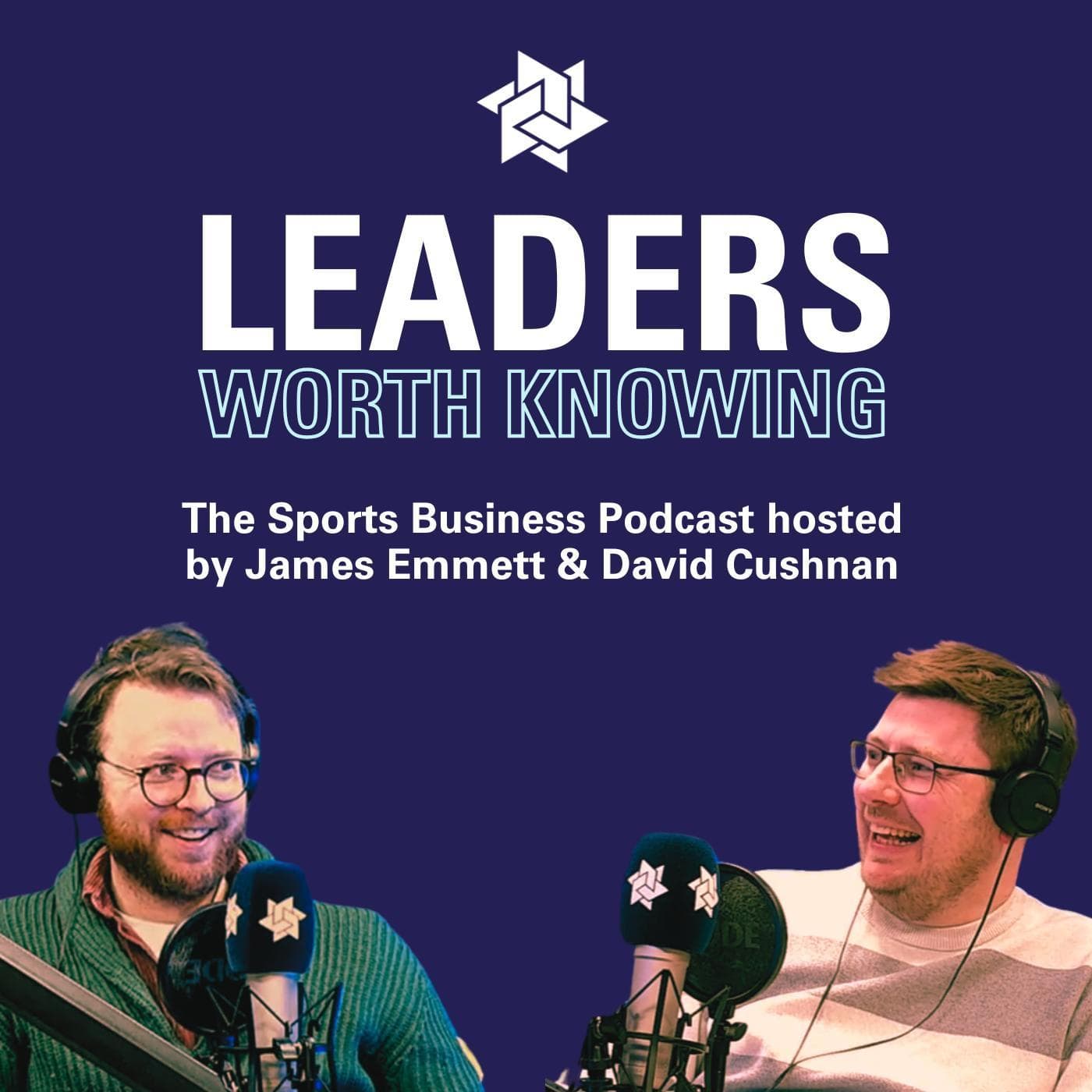
The sharpest operators in sport met the smartest minds from other sectors at Leaders Meet: Innovation in London this week, and James Emmett and David Cushnan are on the ground at 180 Studios bending the Chatham House Rule as far as possible to share a little about what they saw and heard.
They reflect on a few of the standout presentations and panels, including a leadership masterclass from PizzaExpress CEO Paula MacKenzie; the story of The Guardian's reader monetisation model; and how Unilever's AI-powered content studio might be a new model for sport.
And James also caught up with Viagogo's VP of Open Distribution Shaun Stewart, hot off the stage at the event for a potted history of ticket sales and why, even with the help of transformative technology, sport is still taking cues from the airline industry of the 1950s and 60s.