Ask ChatGPT

 Legally Speaking Podcast
6 Nov 2026 · 20m · 10 chapters
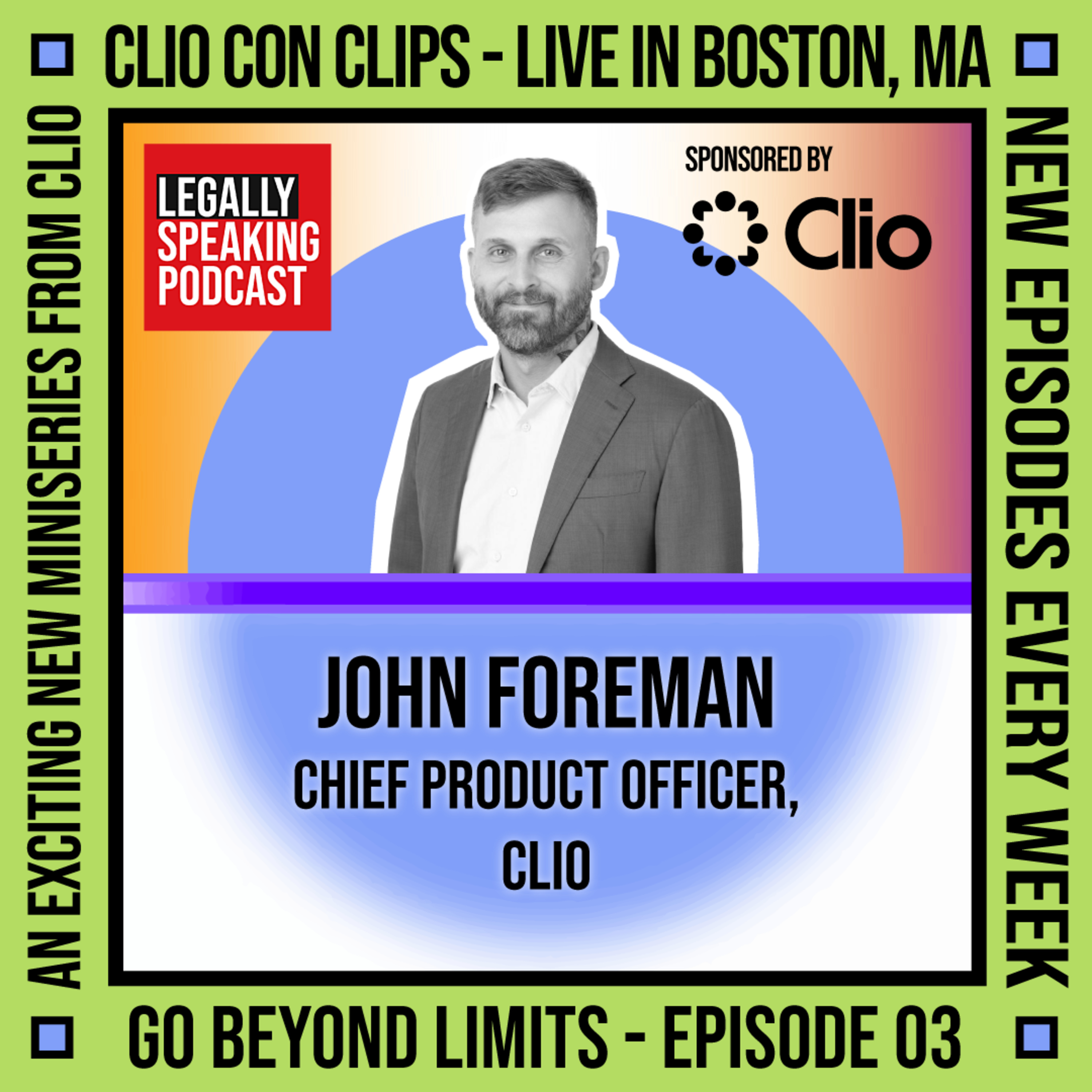
ClioCon Clips 2026 episode with John Foreman (Clio CPO) explaining how legal AI should move beyond chatbots to “automated law firms” that coordinate across an entire firm. He argues AI workflows improve firm performance by connecting data, users/roles, and actions end-to-end, while staying governed for attorney-client privilege and security.
John Foreman is Chief Product Officer at Clio; he previously worked at Mailchimp and has a product leadership book, Leadership Wise. He references earlier ClioCon work with CTO John Watson.
AI should take work off lawyers by executing drudgery; platform unification (data, users, permissions) enables this; audit logs track actions including AI; connecting call info reduces unlogged time; “not yet” prioritization (e.g., Zoom integration) beats hard “no.”
Clio phones linking call summaries, client info, and prepared time entries to matters; capturing “4.6 billable hours/month” from previously unlogged call time; AI using call details to draft/research without follow-up questionnaires.
Written by AI. May contain mistakes.
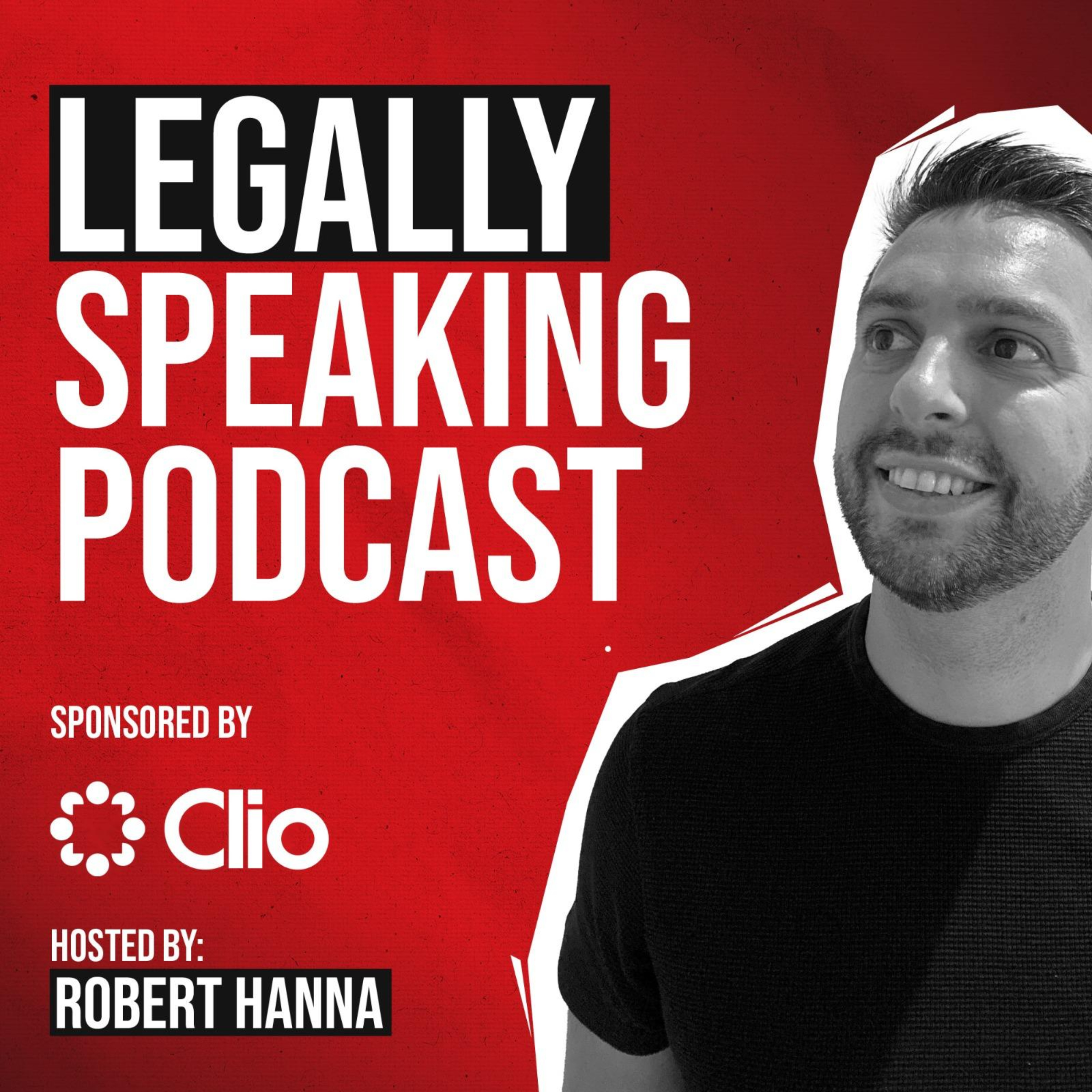
Host Rob Hanna introduces guest John Foreman and discusses past appearances.
“Welcome to the Legally Speaking podcast, recording live here in Boston for our ClioCon Clips 2026 series.”
Discussion on Clio's AI advancements and its impact on legal work.
“I think on top of Clio, you saw it in the keynote, we now have a platform on which you can easily build an AI automated law firm.”
Exploration of unifying various tools and workflows in legal practice.
“arbitrarily complex operational things and it can take care of them.”
Insights on how AI can transform the legal workflow and improve performance.
“And automation can work across those products.”
John discusses the importance of security and privacy in legal tech.
“Yeah, you're going for the whole shebang.”
Conversation about deciding on product features and future developments.
“So you've obviously helped build products before MailChimp, you know, now obviously Clio.”
Discussion on upcoming integrations and prioritizing legal-focused features.
“Now, what channel do we not yet support inside of Clio?”
Speculation on the future of legal work and the role of technology.
“Let's look at the future of legal work now.”
John shares insights on product development and the importance of diverse influences.
“One thing that I get every year is I'm just impressed by the Clio C-suite.”
John discusses his social media presence and how to connect with him.
“What can I learn from the way that fast casual dining is evolving?”

Get the gist, explore an idea or ask about something said.
 Claude
On Legally Speaking Podcast, what are the key points of this episode?
Searching your listeningAutomatic transcript. May contain errors.
0:00John Foreman: Boston, we're back. Welcome to ClioCon Clips 2026, a special mini-series from the Legally Speaking podcast proudly sponsored by Clio. I'm your host, Rob Hanna, and we're back in Boston for our fourth ClioCon once again as an official media partner. What an exciting time to part the global legal community. We're bringing you exclusive interviews and behind-the-scenes conversations with Clio's leadership, legal tech pioneers, Reisman Award winners, and changemakers shaping the future of law. From groundbreaking developments, legal AI and innovation to the future of our courts and access to justice, we're getting to the heart of the biggest conversations that's forming the legal profession.
0:40John Foreman: Expect bold ideas, fresh perspectives, exciting announcements and practical insights from the people leading the way. So wherever you're tuning in from around the world, we've got you covered. Welcome to ClioCon Clips 2026. Let's get into it. Welcome to the Legally Speaking podcast, recording live here in Boston for our ClioCon Clips 2026 series. And we are joined by name, title and organization. I'm John Foreman. My title is Chief Product Officer. And I assume by organization you mean Clio. Yes. Unless you mean research and development. Yes, that is true. And before we get into the important stuff, you were on the show last year during this series with your CTO, John Watson.
1:25John Foreman: and you told me your favorite television show was the Gilmore Girls. Still is. That's what I was going to say. Still is. It is fall in New England. It is Gilmore Girls rewatch season. Yep. And you also said if listeners could call your mom if they wanted to get hold of you as well. Is that also true? So, you know, we at R &D were only let out of our parents' basement once a year to come to CleoCon and otherwise we're down there just writing codes. So if you want to find me, I'll be in my parents' basement. Yeah. I mean, all jokes aside, you've really moved forward since we last sat down in Boston.
2:02John Foreman: It's been a busy year. Yeah. The level of products, the innovation is truly inspiring. And we love partnering with Clio. Last year, you told me AI shouldn't just be a chatbot, but it should genuinely take work stress off people. So now Clio has obviously unveiled the AI experience that can understand context and coordinate across an entire firm. So what's the biggest breakthrough moving from AI that just answers questions to AI that actually does the work? Yeah, yeah, yeah. I think on top of Clio, you saw it in the keynote, we now have a platform on which you can easily build an AI automated law firm.
2:39Yeah. Right. It's interesting to take something that seems kind of ethereal and maybe only the purview of thought leaders on Twitter working in dark mode command line prompts and be like, no, no, no, no, no, no, no, no, no. The complexity is on the AI to do the work. We can make this simple for you, and we can allow anyone with legal expertise to now automate their law firm, especially automate those things that are not legal expertise. They're just this drudgery. Let's get them done.
3:12John Foreman: Exactly. So it's cool to see that transformation over the past year. Yeah, and it's been very successful, and I've heard that from your customers. I was at the Channel Partner Day. The thirst for it is exciting. So ClioWorks visualizations, lawyers can now describe the tools they need and have AI help them create, which again is cool. Are we heading towards a future there where lawyers no longer need to adapt to software because the software adapts to them? That would be the goal, right? Yep. What's interesting working in software for so long is you come to a conference like this. Yep. And you talk to customers and everyone's got their list.
3:48Everyone's got their sticky note. Yeah. It's like, and oftentimes it's little stuff, right? It's, hey, when I do this thing, I need this notification. When I do this particular thing, I want this roles and permissions on so only, you know, Betty can do it. You know, it's always, it's just this little stuff, right? And that's, I actually think we're getting to a point now where so many of those little tiny things can be customized and taken care of. something like AI workflows that Clio released is now at a place where you can articulate arbitrarily complex operational things and it can take care of them.
4:31And that's very gratifying as someone who spent 20 years in tech trying to get jobs done and hitting walls.
4:37John Foreman: Yeah, this is true. And I think I always talk a lot about little touches, big impact. And you're absolutely right. These little touches are having astronomically big impacts on these firms because it's removing the friction. They're having a lot more success, happiness actually running the firms. You're basically connecting the entire legal workflow. So you've got the experience now brings in grow, manage, work together. While Vincent Projects allows teams to build on a shared AI work, what's the hardest part of turning, I guess, a fragmented set of tools and individual knowledge into one genuinely connected experience?
5:06John Foreman: And what makes that so transformative for firms? Yeah. What's the hardest part of it? Every part of it? Choose your hard. Let's talk about what it took to produce this one Clio idea, right? You're really talking about platform unification at several levels. Yes. The way that Jack unveiled the user interface, you see the visuals, right? You see the GUI. But underneath the hood, down at the platform level, we're talking about a unification of data. When I talk about a matter, when I talk about a contact, when I talk about documents, it's the same. everywhere. You're also talking about the unification of users, of roles and permissions.
5:47What I'm very proud of is the audit log. No matter what the hell you're doing in any product, you have an audit log of who's doing it, whether it's a lawyer, the system, the AI. So if you need to produce a report for anyone, I'm like, what the hell happened with this bill? It is there, including if an AI did something, right? So you're unifying at the platform level, But then you're also unifying at this product level that sits above our traditional grow, manage work. And that's where things like if you look at the new OneClio nav, you can actually see it. Automations, documents, unified communications, like the phone icon, they actually sit on the nav above these products because they now cut across.
6:31You're also building product that cuts across, right? That document, that document management system, no matter whether I'm in grow, manage, work, it's the same. And automation can work across those products. I can talk to Vincent, and no matter where I am, it can pull data out of those products. Phone call, if I'm talking with a lead, naturally that's grow adjacent. If I'm talking to an actual customer, a client, that's managed adjacent, but the phone system cuts across. So that whole one Clio release, you see it in the keynote and you're like, hey, that's a new interface. It's actually like a metric ton of work at every level.
7:10John Foreman: Yes. And we got it out the door. And so I'm excited about that. And you smashed it. It has to be said. I want to talk about adoption versus transformation. Again, at your channel part of the day, I quite like your mini intro. You sort of teased that, hey, I wrote a book about AI, which is pretty irrelevant now, you know, over a decade ago, whatever it might have been. But I think this is quite interesting because the latest Legal Trends report shows that 85 % AI adoption, but stronger commercial results when law firms connect AI across a legal workflow and operation. So as the chief product officer, how do you design technology that doesn't just save time but genuinely improves how a firm performs?
7:44This goes back to classic technology product management, honestly. Which is the idea at the end of the day of, okay, what are we trying to do? And so often tech companies just, they're quite myopic. They're like, let's just do this particular small thing, this task, this small moment of the day, as opposed to actually saying, let's look at someone's full job. Let's look at a full end-to-end workflow. And when you do that, you often do weird organizational things, right? So you say, in order to accomplish this workflow, I'm actually going to have to get a front office team doing communications and intake to talk to a billing and payments team in order to maybe collect a consult fee, etc.
8:31And so in order to execute where we're at today in terms of AI workflows, what you're having to do actually is break your research and development organization in ways that perhaps you never had to in the past. because you say AI can work across all y 'all, you'd better talk to each other and build full jobs as opposed to working in your little tiny little task area, right? Because now you're going to build stuff for a human's whole job and not just for like, oh, yeah, I do this for five minutes after lunch, this moment. That's not good enough.
9:03John Foreman: Yeah, you're going for the whole shebang. And, you know, it comes to the North Star of transform the legal experience for all and everything in and around that and the job and the firm, et cetera. Okay, big announcements this year at ClioCon. Clio phones being one of those because you can now connect call summaries, client information, prepared time entries to your relevant matters. The research found, again, what we were looking at before here, an average of 4.6 billable hours a month through unlogged call time. Just going to repeat that, 4.6 billable hours is the next major step, I guess, in legal tech about capturing the valuable information firms already have but perhaps kept losing.
9:40John Foreman: And as a follow-up to that, how do you build the privacy and accuracy that safeguards lawyers need? Yeah, that's great. There are like six questions, right? I guess I'll start with the front bit about sort of not losing, keeping pace with that, with the valuable. So it's interesting, the 4.6 billable hours thing, right? Yes, I think one of the attractions for attorneys is right off the jump is, did you log your time on those calls, right? Yeah. But for us, it's about so much more than that, right? It's about I want to take that call and I want to make sure that anything that's mentioned on that call, the AI has access to it if it needs to distill case facts out of that call.
10:21In order to do legal research or drafting later, oh, that person actually talked to you about their assets. They talked to you about how many kids they have and their names and their birthdays. And that might actually be really relevant for filling out a template. You don't have to send them a questionnaire later. You already got it, right? You can actually just pull it right out of there. Time to save. Efficient. So that type of connection allows you to just, it allows the AI, it allows you to just do work so much faster, which is what it's all about. And it is quite nice. It allows you to sort of claim that time, keep track of that time.
10:53John Foreman: Yeah. Now you asked, if we're bringing all this in, how do we do it safely? I think your question was, how do you build it safely? I'll tell you what's not safe, which is the opposite. It's not building it. It's entering into a world where you're just connecting a bunch of stuff from a bunch of disparate partners, right? By Clio building it, the whole purpose of Clio building it is to make it safe. It's to bring it all under a roof that is built for legal, that is governed by attorney-client privilege, that has a roles and permission system that is designed for law firms, where the AI actually obeys those roles and permissions.
11:35I mentioned audit log earlier. If it's all in one place, you know who did what when. You can actually construct that whole timeline. our big concern, which is really attorney's big concern, that's why we're doing this, is, hey, I got a Rube Goldberg machine out there of this system and this system and this system and this system and this system. Oh, and by the way, these here, they're not even legal tech. And in fact, I'm on a, I don't want to pay for the pro version of this. So I'm on the regular version of this. So they're training models and it's all discoverable. Like this feels very insecure.
12:09Yeah. And so that's why we're building things like phones in the first place, which is let's make it secure. Let's bring it in a place where we can actually govern security, you know, force things like MFA on it, etc.
12:21John Foreman: That's the whole purpose. Yeah. And look, I think all the decisions you've made today have been smart, but also making decisions on products is tough. So you've obviously helped build products before MailChimp, you know, now obviously Clio. Last year, you spoke about putting early products into customers' hands and learning from their particular feedback, which again, I hear from being at this conference you get all the time. With so many possibilities in legal AI, how do you decide what not to build? And what's been the toughest product decision for you thus far at Clio? I would say working for Jack Newton, it's very difficult to say no.
12:56John Foreman: Yeah. Because Jack is down for like, hey, let's help lawyers in any way we possibly can. Yeah. Yeah. And so honestly, I don't say no that often. If this is a it's not quite improv class. I'm not saying yes and to everything, but I'm saying maybe not yet. Yeah. Right. So there is an order in which you build and that order is based on sort of governing principles in our strategy. Right. One that you picked up in the keynote would have been AI does its best work if it has all of the data it needs to do its job. it also actually needs to have all of the surfaces to execute actions so for instance phones gives you both it brings in call data it's also a place where the ai works it picks up the phone it talks to leads it does intake it does both so it's a it's a place where it does work it's also a place where it gets data so what you're really doing is not saying no to things what you're doing is you're burning down the list we go and we talk to law firms we say like where do you do most of your communication.
14:00Well, phones and email. Now, what channel do we not yet support inside of Clio? Well, we don't actually have a good Zoom integration yet, but we're going to. But we just prioritized it. It's coming next. It'll be here before Q1, right? So that's the type of thing that I'm doing. I'm not saying no. I'm just saying not yet, which is not quite yes and, but like, just, hey, not yet, but we're going to get to it. And so that's what a lot of my work is. It's disappointing people by saying we're going to get to it rather than being like hard no. But we are fully legal. So when someone tells me we're going to start a barbecue restaurant, I will say no to that.
14:38Right? Like we are here to serve the legal community. Let's get everything done that they need. Specific is terrific.
14:44John Foreman: Just stay in your lane, focus on legal, double down on that mission to transform the legal experience for all. Completely agree. Okay. Let's look at the future of legal work now. Imagine we're at 2030. I know things change rapidly. So you can caveat this response next time you come on the show in a year or so's time. What's one thing lawyers will spend hours doing today that you'll find extraordinarily we ever expected humans to do manually? Wow. I mean, when I speak to law firms today, what I find is that as the law firm grows, we have a lot of firms here that are 15 attorneys, 20 attorneys, 30 attorneys, 40 attorneys.
15:22I'm bumping around. I'm not talking necessarily large law. just even sort of scaling law firms, they start to accrue operational complexity. And what I find in speaking to them is they talk a lot about, oh, I've got this spreadsheet. I've got that spreadsheet. I'm pulling this report. I'm staring at it. I'm chasing these people down. I think that 2030, a lot of the, like, I'm staring at this report. I'm pulling this data. I'm chasing this client down. I'm chasing this partner down. The introspecting on spreadsheets, spreadsheet hell, and the chasing of people to get what you need. I think these toily tasks go the way of the dodo.
16:09That's my hope for people. As firms scale up, it actually gets worse. You start to encounter people like, yeah, I got 20 attorneys in my firm, and let me take you through the operational nightmare that is my life. I have to do all of this stuff. I want that to get a lot better.
16:25John Foreman: Yeah. One thing that I get every year is I'm just impressed by the Clio C-suite. You're all commercial. You think big. You believe in the mission, the vision. I'm more just curious, where do you get your wisdom from? Do you have mentors? Where do you seek, I guess, your own development in yourself? You've mentioned, obviously, it's great to hard to say no to Jack, but to maybe inspire other CPOs that might be struggling a little bit right now or maybe thinking they're not making the smartest moves, what do you do? I don't know if you want a good answer from me on this one. Well, we already talked about it.
16:58It's Gilmore Girls. I get most of my wisdom from television. No, but in all honesty, I am an oddball for this. You can check out my second book, Leadership Wise, to understand more about my philosophy on this. I actually believe the best product people are omnivores. they engage in a practice called um so french filmmakers this makes me sound so snooty french filmmakers called it bricolage which is this idea of i'm going to take disparate ideas together and combine them to create something new right and this is what you you see when you read the story around the invention of the ipod yeah it's like hey i got this software i've got this tiny hard drive i got this battery the screen like what could we do and they bring these sort of disparate things together, in order to be able to bring it together, you have to eat all of these things.
17:52And what that means is you can't be as a product person necessarily heads down in a niche all the time. You should be out consuming all sorts of culture. You can't just be on X reading about technology, right? I think you got to engage with the broader culture, whether for you that's Media, TV, politics, food, sports, all of these things provide metaphors. They all provide you with a new way of doing things. Like, what can I learn from the way that baseball uses data now? What can I learn from the way that fast casual dining is evolving? I get my ideas. I sort of grow how I think about things by just looking around and being like, what is Taco Bell's method of now asking everyone if they want to add jalapenos to their order?
18:44What does that say about how I should be building product? So that's me. I don't know if anyone can learn anything from it, but that's how I do it.
18:53John Foreman: Well, I think there's that always on and being curious, you know, sort of mentality that comes through from that. And, you know, it's clearly working because the products that you've brought out and the speed and velocity since we last sat down is genuinely impressive. So congratulations on a truly, truly phenomenal year. And I know it's coffee. Yeah. This is coffee. Maybe that's the one thing people should be doing. Yeah. I'm living by that. I hear tea works as well. Yeah. English breakfast tea. But John, in case people have been lifting under a rock, where can they find you? Is there any particular social platforms if people want to connect to chat with you?
19:26You can find me all over the place providing really bad takes. I am on Twitter at John Foreman with the number 4, J-O-H-N, number 4, M-A-N. I am, of course, on LinkedIn doing silly thought leadership. Track me down. You'll find me there. Hopefully being entertaining, if not being helpful.
19:48John Foreman: Yeah, I find your posts entertaining. And I think sometimes you've got to have fun along the way as well. And it brings a smile to people whilst doing cool SHIT. So, John, it's been an absolute pleasure having you back. From all of us here on the League Speaking Podcast, sponsored by Clio, over and out. Thank you for listening to this week's episode. If you like the content here, why not check out our world-leading content and collaboration of The Legally Speaking Club over on Discord. Go to our website, www.legallyspeakingpodcast.com. There's a link to join our community there. Over and out.
We are excited to be back in Boston for Clio Con Clips 2026! The Legally Speaking Podcast™ returns as an official media partner, bringing you exclusive interviews, fresh insights and behind-the-scenes conversations from one of the world’s leading legal technology conferences. Our Clio Con Clips series features Clio’s leadership, legal tech pioneers, Reisman Award winners and industry changemakers exploring the latest developments in AI, legal innovation, access to justice and the future of the legal profession.
In the third minisode of Clio Con Clips 2026, we get to speak with returning guest, John Foreman, the Chief Product Officer of Clio. In our conversation, John discusses how AI can automate routine law-firm work, adapt software to lawyers and connect workflows across a secure, unified platform. He also shares how Clio prioritises product ideas and hopes to reduce the spreadsheets and follow-ups that burden growing firms to this day.
So why should you be listening in?
You can hear Rob and John discussing:
- How Software Should Adapt To Lawyers
- AI Absorbing Complexity for Users
- Unifying Data, Users, Roles and Permissions
- Automating Full End-To-End Workflows
- Safe AI Obeying Privilege Permissions
Connect with John Foreman here - https://www.linkedin.com/in/johnwforeman