Ask ChatGPT
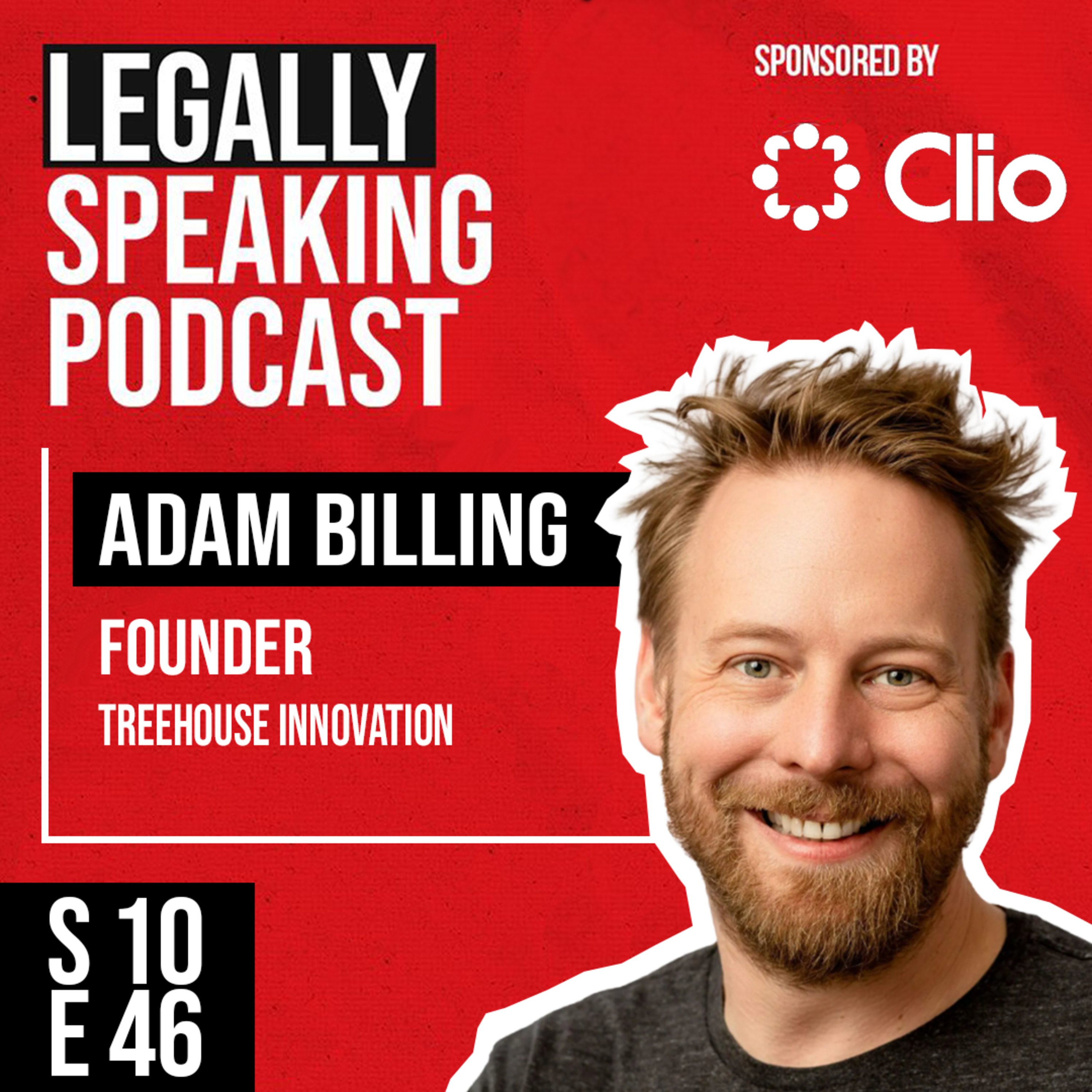
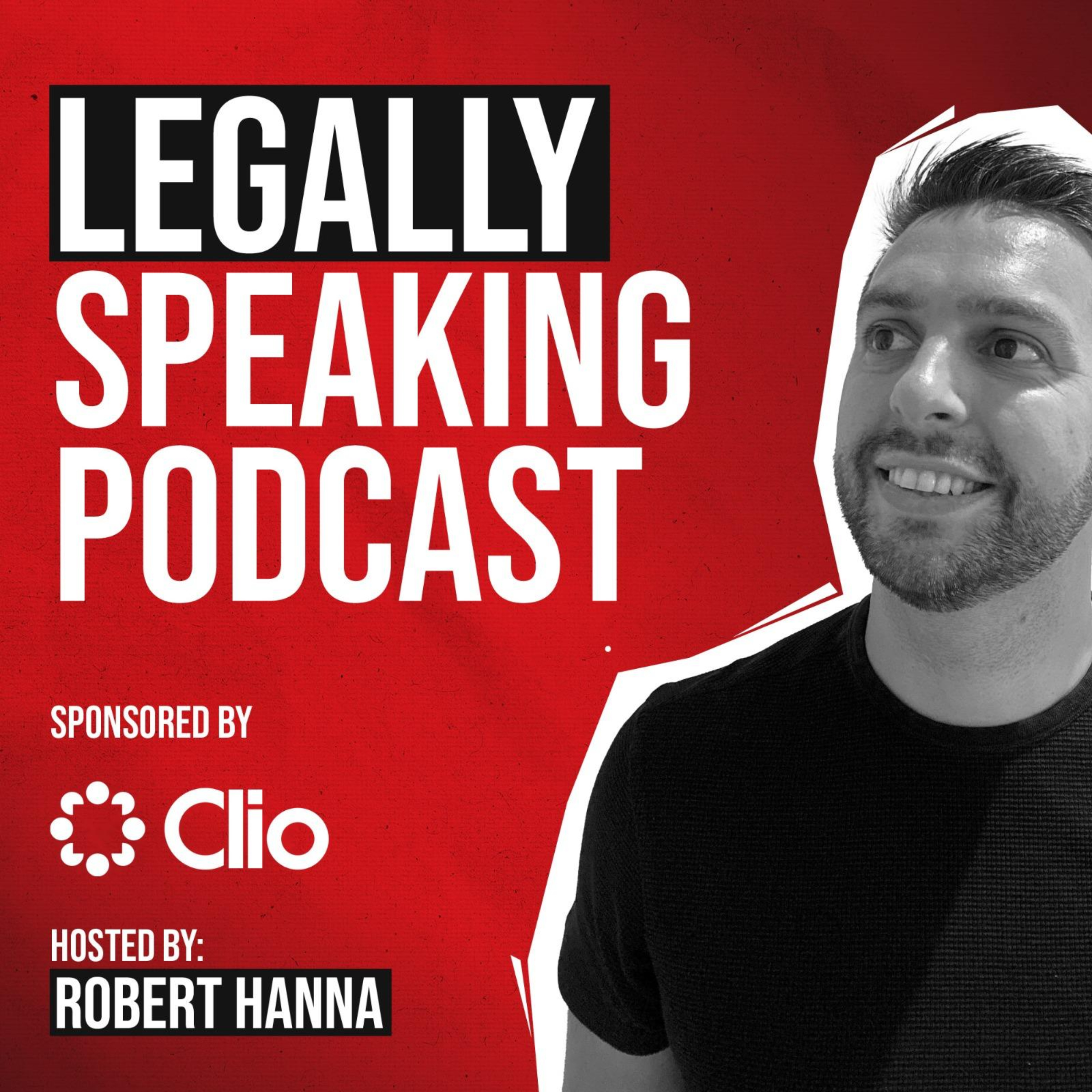
 Legally Speaking Podcast
17 Nov 2026 · 18m · 10 chapters

Bridget Mary McCormack (Clio) argues for turning courts into “a service, not a place,” using legal AI to reduce friction, manage rising caseloads, and expand access to justice—especially for people who can’t afford legal help—while preserving judicial trust and human fairness.
McCormack is General Manager of the Judiciary at Clio. Previously: helped establish the Michigan Innocence Clinic (first non-DNA innocence clinic; secured 12 exonerations), served as Chief Justice of the Michigan Supreme Court, and led the American Arbitration Association. She also worked with legal technology on the court.
~92% of Americans can’t afford civil legal help; AI can lower the “barrier to entry” but will flood courts with filings, so technology must help judges handle the noise. Trust requires judicial-grade security and building with judges/staff.
non-DNA innocence clinic focus; lack of hyperlinking in court systems; “hallucination detection”; ambient tools like “spellcheck” for judges; courts lacking “a plan B” when resources don’t increase.
Written by AI. May contain mistakes.
Host introduces guest Bridget McCormick and her background.
“Welcome to the Legally Speaking podcast recording live here in Boston for our ClioCon Clips 2026 series.”
Discussion of Bridget's career and her insights on the justice system.
“What made joining Clio the right next chapter for you personally?”
Bridget discusses bottlenecks in the justice system and technological solutions.
“It's harder to prove innocence, which is what you have to do when someone's been convicted, but incredibly important.”
Exploration of how technology can assist courts in managing caseloads.
“And I've studied the Clio Legal Trends Report, which is a fantastic piece of work.”
Discussion on the importance of trust and designing tech with judges.
“Because the technology is going to continue to get better and there's going to be more and more filings.”
Bridget shares her excitement about advancing access to justice through tech.
“So there's a lot of functionality that technology can provide to courts and their judges and their staff that are sort of like no-brainers.”
Learn about the excitement surrounding the delivery of high-quality legal services.
“But they all want that early stage foundational ambient functionality that lets them do the job that they, you know, swore an oath to do and the one they want to do.”
Discover how courthouses might evolve into services rather than physical locations by 2030.
“I've been to every legal tech conference so many times, but not ClioCon.”
Explore the ambition behind creating a more satisfactory legal experience using technology.
“people don't usually come to court because something happy is going on, there are a couple of exceptions like every once in a while we get to do a marriage sometimes an adoption Those are like happy days.”
Find out where to connect with Bridget McCormick on social media.
“and the wisdom you have is very exciting.”

Get the gist, explore an idea or ask about something said.
 Claude
On Legally Speaking Podcast, what are the key points of this episode?
Searching your listeningAutomatic transcript. May contain errors.
0:00Bridget Mary McCormack: Boston, we're back. Welcome to ClioCon Clips 2026, a special mini-series from the Legally Speaking podcast proudly sponsored by Clio. I'm your host, Rob Hanna, and we're back in Boston for our fourth ClioCon once again as an official media partner. What an exciting time to part the global legal community. We're bringing you exclusive interviews and behind-the-scenes conversations with Clio's leadership, legal tech pioneers, Reisman Award winners, and changemakers shaping the future of law. From groundbreaking developments, legal AI and innovation to the future of our courts and access to justice, we're getting to the heart of the biggest conversations that's forming the legal profession.
0:40Bridget Mary McCormack: Expect bold ideas, fresh perspectives, exciting announcements and practical insights from the people leading the way. So wherever you're tuning in from around the world, we've got you covered. Welcome to ClioCon Clips 2026. Let's get into it. Welcome to the Legally Speaking podcast recording live here in Boston for our ClioCon Clips 2026 series. And joining me is name, title and organization. Bridget McCormick. I'm the general manager of the judiciary at Clio. You sure are. And congratulations on recently joining Clio. And what an incredible career you've had today. Very excited about this discussion from obviously helping Michigan Innocent Clinic to then serving obviously as chief justice of Michigan Supreme Court, then leading the American Arbitration Association.
1:28Bridget Mary McCormack: Now you're helping Clio bring legal AI into the judiciary. Big, big challenge, big opportunity. Let's get into it. You up for it? I'm up for it. Okay. So you've obviously experienced the justice system from almost every angle. I have. What made joining Clio the right next chapter for you personally? And what opportunity did you see that others might be missing? I don't know if I saw anything others were missing, but it certainly was an extraordinary opportunity that I felt like I couldn't say no to. So I've definitely been, I've had a really interesting career and I've been able to focus on the ways in which the legal system in the United States falls short of meeting the needs of the public.
2:06And there are lots of pieces in that puzzle. But an important one is what the courts have the capacity to do. I don't, I know a lot of judges, some of my best friends are judges. And to a person, they all, wake up in the morning and want to serve the public, and they want to serve the public well. But they've been pretty overwhelmed for a number of decades. In this country, about 92 % of Americans can't afford any help with their civil justice needs. And the courts do their best to help them through that. And when Clio decided it was going to put some real effort behind figuring out how to help the courts and the judiciary with meeting the needs of the public because that's of course part of and central to a mission of transforming the legal experience for all yes um and then they were able to hire uh pablo ardondo who i think is sort of the og of like legal ai um and he is passionate about this particular submission of the big clio mission um and they thought i might be a good addition to the team it was just hard for me to say no to that i i can't think of any more um deserving you know sort of stakeholder in the in the legal ecosystem and one that's
3:23Bridget Mary McCormack: underserved right now frankly by the market yeah we talk about dream teams and it absolutely is a dream team joining Pablo's team i always say it's like it's like i signed up for a neighborhood mixed doubles tournament and like Raph Nadal is my partner i was like oh wow we're gonna win we're gonna win yeah we've got this yeah we're here for this okay let's um what about a justice system i I guess, that we should never forget because you helped establish, as I said in the intro very briefly, the Michigan Innocence Clinic, which secured 12 exonerations during your leadership. So how has that experience shaped your thinking about technology, fairness and the consequences of getting justice wrong?
3:59So I so appreciate this question because I established the Michigan Innocence Clinic when I was on the faculty at the University of Michigan Law School. And it was the first non-DNA innocence clinic in the country. There were lots of DNA innocence clinics, and we had learned a lot from those clinics because they both both about sort of the rate of wrongful conviction and the causes of wrongful conviction. And what was clearly obvious was the kinds of things that go wrong to cause wrongful conviction didn't only happen in cases where there was some kind of biological evidence to test. Those things go wrong in every kind of case.
4:33And so we thought University of Michigan law students are really smart. Let's focus on those cases where there is no biological evidence. They're harder. It's harder to prove innocence, which is what you have to do when someone's been convicted, but incredibly important. And we saw there where those gaps in the American justice system were having devastating impact on people, not just the people who are wrongfully convicted and their families, but imagine a victim of a crime that's had the wrong person locked up. You kind of want the right person locked up. And then the rest of society. So seeing the places where the gaps in the American justice system needed closing was a really important perspective I took to me, took with me to the court.
5:17And then I did 10 years on the court and we and use technology pretty regularly to address those needs. But but there's just more opportunity now than there ever has been because of what's happening with the technology. So it's it's a it's a really nice time to return to that work.
5:34Bridget Mary McCormack: And it's going to have such an exponential impact of that. I have no doubt. Okay, so you obviously served as Chief Justice. You know the challenges of the courts, you know, firsthand. If you could then eliminate one major bottleneck in the justice system tomorrow, what would it be and where could technology make the biggest difference? Yeah, I mean, I think one of the bottlenecks that I have spent a lot of time thinking about and focusing on, which still needs some work, is allowing people who can't afford legal help to still have access to justice solutions. It doesn't make a lot of sense that just because you can afford a lawyer, you have more access to understanding what your legal rights and responsibilities are, on both sides of that equation.
6:25There's lots of empirical reasons to understand that if everybody had better information and better access to how to exercise both their rights and responsibilities. Economies are stronger and communities are stronger and they're safer. And so there's like lots of like good in the barrier to entry coming down. The barrier to entry has come down significantly because of AI, right? Now more and more people have ways to figure out like what the law allows them to do and what it requires them to do. And that's overall a good thing. It does mean that courts are being flooded with pleadings. And we can respond to that in one of two ways, right?
7:06Like you could imagine responding by just building new barriers. Like let's build new barriers to entry. You could say like, no, it had to be in this font and it had to be, you know, there are ways to like probably shut people out. Or you could say, what are the ways in which technology can help us manage this escalating caseload so that people actually can get justice? And that's the question we're all facing right now, courts are facing right now, and that's where technology is going to be able to help significantly.
7:38Bridget Mary McCormack: Yeah, one thing you were talking about was obviously the access to the information. And I've studied the Clio Legal Trends Report, which is a fantastic piece of work. that goes into that. It's very in-depth. But obviously one of the biggest annual rises in recorded billable time in history. But courts, as we say, don't necessarily have more judges or capacity. At all. At all. So could we be making lawyers faster and actually make the justice system slower? Significantly. And how do we prevent that? Well, I mean... Chicken and egg, I know. Yeah, exactly. I mean, we're already in that world. The data we have is pretty clear that the filings are increasing pretty significantly and the state court filings significantly more than federal court filings, of course, because more cases are heard there.
8:26And I haven't found a court yet that has gotten extra resources. No legislature has gone to a court and said, hey, I see you're struggling. Here's some money. That's not happening. We had a judge say to us recently in a very, very large trial court, we need you guys to succeed because we don't have a plan B. We don't have a plan B. We're not going to get like 20 new judges. We're not going to get 20 new research attorneys. So we need you to succeed in helping us with like front end technology solutions to at least getting rid of the noise. So we have time to do the human part of the job that we need to do, that we need to keep doing.
9:06So I think there is like endless opportunity. One of the hardest decisions for my team is going to be, what do we not build? You know, like how do we prioritize what the courts need, which is more than we can do right this second, and do it in a stepwise way that we can build on top of what we build today will be a good foundation for what can build from there. Because the technology is going to continue to get better and there's going to be more and more filings. So I think the courts have to be building a foundation upon which they will also be able to construct new services, new ways of responding to incoming matters and handling them.
9:50Bridget Mary McCormack: Yeah. And I think one thing that goes hand in hand with technology as a conversation is trust. OK, so, you know, you're obviously helping lead with Pablo, you know, the judiciary business. Very exciting time. You're shaping the technology around that. If I look at this, what will earn the trust of judges and the court leaders, and what safeguards would you never compromise? Yeah, so actually, I think this is a really critical design question for us. And one of the reasons why we are pretty committed to designing, I mean, extremely committed to designing with the judges and their staffs. Like, there's no other way to do it here.
10:29Jack might have said something about this in his keynote. It may well be true when you're building for lawyers and their clients that they might think they want faster horses and the cars are already here, so you have to build the cars, right? That's not true. Our judiciary business is, first of all, segregated from the lawyer businesses. We are our own little team doing our own little thing, and our security has to be judicial security grade. It cannot be intermingled with the rest of the products that Clio does a great job with. And we can't build cars until courts want cars. We have to build with the courts and the judges.
11:05And that might mean faster horses today. And faster horses will get folks used to better speeds, which will then allow us to build new functionality along that. We have to build. We have to have an iterative process that is really responsive to the judges and their staff who know how to deliver public trust, which is their whole currency. That's all. They don't have an army. they don't have any money that's all they have is trust and so we might be building faster horses
11:32Bridget Mary McCormack: for a while but very good ones and very very high quality everything cleo does is absolutely spot on you mentioned it earlier access to justice you know there's access to justice for everyone jack talks about it a lot of the time um it's a big north star for cleo um absolutely understand that so from the research that was shared just 66 surveyed consumers are comfortable with ai being used in high stakes personal legal matters, yet millions of people actually struggle to access legal help. So how can AI ultimately close that gap while giving people the confidence that human judgment and fairness will remain central?
12:09I think this is a conversation we're going to keep having over the next few years. And I have a feeling that there will be like, we'll have more and more data that will shape opinions as technology changes. For now, So there's a lot of functionality that technology can provide to courts and their judges and their staff that are sort of like no-brainers. And all it's designed to do is to remove a lot of the friction to give the humans that are part of this process the time to do the things that humans should be doing. So if you imagine there are a lot of courts right now, most don't have hyperlinking.
12:50So pleadings come in, the cases are not hyperlinked to the, the citations are not hyperlinked to the cases. The exhibit sites are not hyperlinked to the exhibits. Hallucination detection, for example. You could imagine building in, and we're working on this, an ambient functionality so that judges don't have to drag and drop anything in any other program. But it just, like Spellcheck, does these things that allow you as a human judge to do your human judge job instead of spending a bunch of time figuring out, like, how do I find that case? How do I find that exhibit? Did I print it out? Did I bring it home?
13:26You can build in that sort of usability functionality that's kind of a no-brainer foundation upon which you can then build what I would call more robust services that some courts and judges want yesterday and some might not want until tomorrow. You know, there are some courts that right now have zero research staff that are already interested in, you know, some of the reasoning and research and drafting functionality that's possible and others that are not. But they all want that early stage foundational ambient functionality that lets them do the job that they, you know, swore an oath to do and the one they want to do.
14:10Bridget Mary McCormack: Yeah, and I think Damien Real talked about this in the Channel Partner Day. It's about bringing the fun back, you know, almost to what you want to do and removing a lot of the drudgery and so forth. Okay, what are you most excited about in your role over the next 12 months? Oh, I'm just excited about the ability to deliver high-quality services to the stakeholder at the centre of the business of law and the practice of law that I think needs it most, I mean, and one I care deeply about. So it feels like a once-in-a-lifetime opportunity to, you know, to literally, like, take an arrow and hit a bullseye, like, in this access-to-justice problem.
14:52And I can't think of a better team to do it with.
14:54Bridget Mary McCormack: Yeah, it's a rock star team, for sure. This is your first ClioCon as a Clio team member. It's my first ClioCon, period. I've been to every legal tech conference so many times, but not ClioCon. And so, describe it. it's amazing. I mean, I had no idea what I was getting into. It's really impressive. I mean, everything about it is really impressive. Okay, imagine we're in 2030 then. What's one change you'd ordinarily expect people to experience when they interact with the justice system in 2030? And what would you say joining CLEO is absolutely the right decision? So I think in 2030, everyone should be able to navigate a courthouse as a service and not a place, right?
15:43So they can figure out what the right door is for them, because people come to court with really different kinds of issues, right? And they don't all need the same front door, and they certainly don't all need the same back door. and if a courthouse becomes a service and not a place, which the technology will allow you will have significantly more satisfied members of your public because they will be able to come in and out the right door, get what they need and get on with their life people don't usually come to court because something happy is going on, there are a couple of exceptions like every once in a while we get to do a marriage sometimes an adoption Those are like happy days.
16:27Very few of those. For the most part, people are coming in and out into court because something traumatic has happened to them or to someone they love. And right now, it's hard to meet their needs given the volume and the resources. Technology allows us to change that. and I think the team that we have assembled at Clio has such ambition that we want to be part of building the courthouse of the future that is really a service and not a place.
16:59Bridget Mary McCormack: And we fully support that and I think you're absolutely going to achieve that and beyond I think the team that you have and the ambition and the wisdom you have is very exciting. It's been an absolute pleasure having you on the show live here in Boston for ClioCon. If folks have been living under a rock, where can they find you? feel free to share any social media handles LinkedIn and we'll share them as episode for you yeah I'm on LinkedIn Bridget McCormick I am on x at Bridget Mary MC Bridget Mary Mac and Instagram Bridget McCormick I'm everywhere there we go you can find Bridget everywhere thank you so much once again congratulations once again on joining Clio wishing you lots of continued success and indeed doubling down on that mission to transform the legal experience for all but from now from all of us here live over and out thank you for listening to this week's episode.
17:45Bridget Mary McCormack: If you like the content here, why not check out our world leading content and collaboration of the Legally Speaking Club over on Discord. Go to our website, www.legallyspeakingpodcast.com. There's a link to join our community there. Over and out.
We are excited to be back in Boston for Clio Con Clips 2026! The Legally Speaking Podcast™ returns as an official media partner, bringing you exclusive interviews, fresh insights and behind-the-scenes conversations from one of the world’s leading legal technology conferences. Our Clio Con Clips series features Clio’s leadership, legal tech pioneers, Reisman Award winners and industry changemakers exploring the latest developments in AI, legal innovation, access to justice and the future of the legal profession.
On today’s minisode of Clio Con Clips 2026, Bridget McCormick, Clio’s General Manager of the Judiciary, brings her experience as a law professor who founded the University of Michigan’s Innocence Clinic, Chief Justice of the Michigan Supreme Court, and leader of the American Arbitration Association. In this incredible chat, she explains why she joined Clio to help courts address limited capacity and unmet legal needs—including that, by her account, about 92% of Americans cannot afford help with civil legal problems. She sees AI as a way to reduce administrative friction and manage growing caseloads, while preserving human judgment and public trust through secure technology designed with judges and court staff.
So why should you be listening in?
You can hear Rob and Bridget discussing:
- Expanding Justice Through Legal Tech
- Supporting Courts Through AI
- Preserving & Encouraging Human Judicial Judgment
- Designing Trusted Court Technology
- Transforming Courthouses Into Places of Service.
Connect with Bridget McCormack here - https://www.linkedin.com/in/bridget-mary-mccormack-26700b30