
In short
Building a borderless legal career through curiosity, skill-stacking, pragmatic negotiation, and strategic leadership in global finance; also discusses AI readiness, geopolitics, and mentorship.
Guest
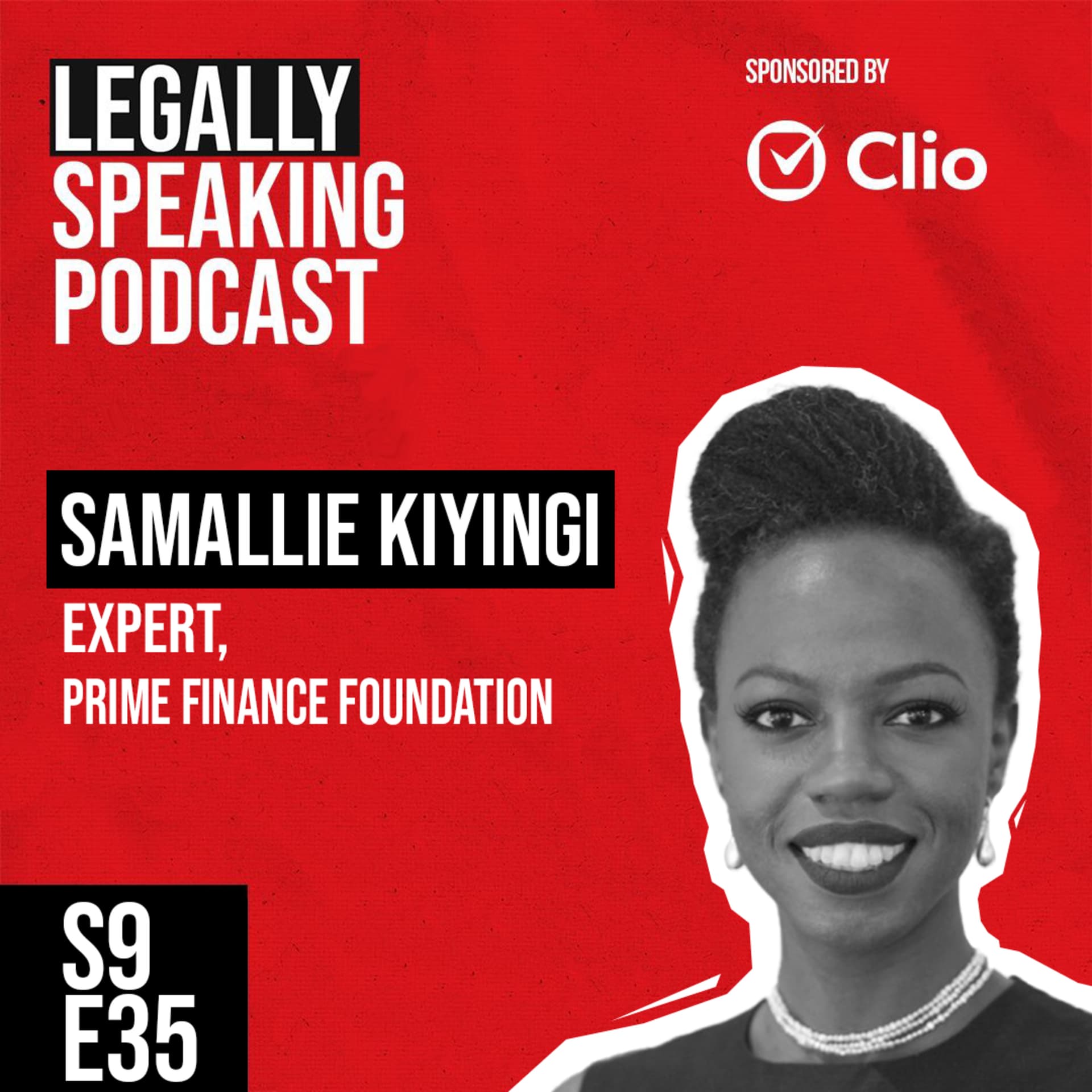
Samali Chienji (Samali Kiyingi in title), former General Counsel of Standard Chartered Bank. Background includes financial services across public/private sectors: Director of Legal Services at African Export Import Bank; Global Head of Securitization Regulatory Policy at Deutsche Bank; Senior Associate at Clifford Chance. Expert member (and board member) of Prime’s Finance Foundation. Awarded General Counsel of the Year (2021) at International Financial Law Review Africa Law Awards.
Key claims
Be curious by default; take opportunities and stack skills from everywhere; negotiate pragmatically (“work your way to the middle”) and use silence; at senior level, act as an executive decision-maker (“keep bankers out of jail,” be commercial, look around corners); AI should sharpen judgment, not replace creativity; plan for AI and geopolitics with a “corporate foreign policy.”
Notable examples
COVID vaccine procurement for Africa via African Export Import Bank—structured a back-to-back deal and partnered with UNICEF for delivery expertise; mentorship and networking (NSN: never stop networking).
Written by AI. May contain mistakes. Listen to the episode to check what was said.
Chapters
Tap a time to open that second in VOCuriosity and Versatility in Law
0:00 to 0:34
Learn how curiosity and adaptability contribute to a successful legal career.
“Always look at the opportunities that you have in front of you.”
Samali's Career Journey
1:16 to 3:38
Explore Samali's path from Australia to leading legal roles in major banks.
“And I'm very excited as we're speaking off air for today's discussion, giving the amazing background you've had to date.”
Influence of Family Legacy
3:38 to 5:00
Discover how Samali's mother shaped her perspective on law and human rights.
“And I admire your passion for everything that you've been doing and the energy you bring to everything.”
Transitioning to Finance Law
5:00 to 8:30
Learn about Samali's unexpected shift from human rights to finance law.
“How did her legacy and influence kind of shape your impact and role in terms of human rights and then obviously moving into finance and law?”
General Counsel Role Insights
8:30 to 10:14
Insights into the responsibilities and challenges faced as a general counsel.
“And even if you've got a particular interest that you have, you can get skills from absolutely everywhere.”
Navigating Senior Leadership
10:14 to 14:00
Understand how to succeed as a senior legal executive beyond traditional roles.
“Tell us a bit about your role there and what that involved, because I can imagine that was a pretty big role.”
Navigating Senior Leadership Challenges
14:00 to 16:41
Learn about the key attributes required for effective senior leadership in legal contexts.
“It's a big one for legal and lawyers in particular, from the perspective that it is changing how we work.”
AI's Impact on Legal and Financial Sectors
16:41 to 18:51
Explore how AI is transforming work dynamics in legal professions and finance.
“people need to start thinking about do they have a corporate foreign policy?”
Cultural Adaptation in Global Legal Careers
18:51 to 21:41
Understand the importance of cultural curiosity and adaptation in international legal roles.
“And what did you learn about the legal systems and culture?”
Effective Negotiation Tactics
22:35 to 25:45
Learn valuable negotiation strategies and the significance of listening.
“And again, it just reminds me of so many things that I've been taught and pick up from people along the way.”
Show all 22 chapters
Transitioning from Law Firm to In-House
25:45 to 28:00
Gain insights into the challenges and strategies for moving from private practice to in-house roles.
“into seriously senior in-house roles, Deutsche we've touched on, obviously Standard Chartered Bank as well.”
Taking Initiative in Career Development
28:00 to 28:23
Learn the importance of taking initiative to drive career success.
“We touched on it earlier, but I want to go back to that point in COVID because I think it's wonderful work that you did.”
Negotiating Vaccine Deals During COVID-19
28:23 to 31:52
Discover the key role played in negotiating vaccine access for Africa during the pandemic.
“And I'm talking, referencing here, obviously, your time at African Export Import Bank, where you played a key role in negotiating vaccines during, obviously, the pandemic.”
The Power of Networking
31:52 to 32:19
Understand how networking can lead to significant professional opportunities.
“My listeners know what's going to come next because I talk about it all the time, but that is just the best example of collaboration is domination.”
Role of Finance Foundation in Legal Expertise
32:24 to 35:31
Explore the mission and activities of the Finance Foundation within legal frameworks.
“OK, let's talk now about Finance Foundation, because you are also an expert member of Prime's Finance Foundation.”
Preparing for an AI-Driven Legal Future
35:32 to 38:28
Learn how lawyers can be AI-ready by embracing technology and continuous learning.
“Definitely go and check out her episode, folks, as well.”
Mentorship and Career Growth
38:28 to 42:02
Discover the importance of mentorship in shaping legal careers and personal growth.
“So I wouldn't say go to AI for the answer.”
The Power of Mentorship
42:02 to 43:31
Learn the significance of mentorship and how to prepare for it effectively.
“A challenge I find is time because of the roles that I've had.”
Inspiring Future Generations
43:31 to 45:45
Discover how to inspire yourself and others in leadership roles.
“And these questions, I mean, they kind of make me blush because it's just like, I was just doing my job.”
Pursuing Ambitious Goals
45:45 to 46:53
Understand the importance of stepping out of comfort zones to achieve greater success.
“So like you say, the more energy and effort you can put into things, that sort of flywheel continues to kind of pick up more and more pace and more and more things you can go on.”
Strategic Thinking for Lawyers
46:53 to 47:54
Explore the necessity of strategic thinking in a rapidly changing legal landscape.
“In this current environment, I would say what you need to do is focus on how is it that you are thinking strategically.”
Getting in Touch
47:54 to 48:39
Find out how to connect with the guest and learn more about their initiatives.
“And yeah, the harsh reality is we've had people come on board.”
Transcript
Automatic transcript. May contain errors.0:00Gregory Smith:You have to be curious by default. Always look at the opportunities that you have in front of you. Even if you've got a particular interest that you have, you can get skills from absolutely everywhere. And over time, that builds you into quite a versatile, well-rounded lawyer. I try to be quite pragmatic when I negotiate. I mean, there are people that ask for something ridiculous and then you work your way to the middle. There are people that have that approach. I try and be more pragmatic because I just like getting deals done.
0:34Samallie Kiyingi:On today's Legally Speaking podcast, I'm delighted to be joined by Samali Chienji. Samali is the former general counsel of Standard Chartered Bank. She has a wealth of experience in financial services in the public and private sectors. Samali was also previously director of legal services at African Export Import Bank, global head of securitization regulatory policy at Deutsche Bank and senior associate at Clifford Chance. She is also an expert member of Prime's Finance Foundation. In 2021, Sam Ali was awarded General Counsel of the Year at the International Financial Law Review Africa Law Awards.
1:09Samallie Kiyingi:So a very big warm welcome to the show.
1:12Gregory Smith:Rob, it's great to be here. Thanks for having me.
1:16Samallie Kiyingi:Oh, the pleasure is all ours. And I'm very excited as we're speaking off air for today's discussion, giving the amazing background you've had to date. But before we get into all of that, we do have a customary icebreaker question. here on the Legally Speaking Podcast, which is on the scale of one to 10, with 10 being very real, what would you rate the hit TV series Suits in terms of its reality of the law, if you've seen it on the scale of one to 10?
1:43Gregory Smith:Scale of one to 10. It would be a two, but I wish I had that wardrobe. I wish that wardrobe was real.
1:54Samallie Kiyingi:Justified, and I fully understand and hear where you're coming from. With that, we can move swiftly on to talk all about you. So would you mind by kicking us off telling our listeners a bit about your background and career journey? Sure.
2:07Gregory Smith:So I actually started my career in Australia. That's where I trained. Kind of always wanted to be a lawyer. But it's quite interesting. Started my career there. But as per what a lot of Australian lawyers do, you go to the big smoke in London. And so that took me to a magic circle law firm in London, stayed there for quite a number of years before moving in-house. But interestingly, I didn't move in-house as a lawyer. I moved in-house to an investment bank in the finance team. And my job was actually to create a new department off the back of the credit crunch, just focusing on the bank's regulatory capital.
2:53Gregory Smith:But my heritage is actually Ugandan. So I was born in Uganda, grew up in Australia. And Africa's always been a passion. Development has always been a passion. So following Deutsche Bank, I did a bit of consulting around Africa in terms of how to deepen capital markets in Africa. And after that, the African Export Import Bank gave me a call asking me to be a general counsel. And so I moved to Egypt where I lived for a number of years. And then following Egypt, I got a call from Standard Chartered asking whether I'd be interested in becoming their general counsel for their global investment bank.
3:32Gregory Smith:And that is a short summary of the career to date.
3:34Samallie Kiyingi:And there's a lot to unpack there, which we're certainly going to. But I mean, wow, what an impressive CV. And I admire your passion for everything that you've been doing and the energy you bring to everything. But let's go back to University of Technology, Sydney. Where did your interest in that stem from?
3:53Gregory Smith:So that was the only. So I did two degrees. So I did a law degree and a Bachelor of Arts in International Studies. And the University of Technology, Sydney was the only university that offered this international studies degree. And why that was important was that I grew up in Australia and Australia is in the Asia Pacific. However, I learned very, very little about Asia. And I just thought this is embarrassing. And so when I got to university, I wanted to learn more about Asia. And so the major for my international studies degree was Malaysia. So I spent a few years learning Bahasa, learning about the politics, the history.
4:36Gregory Smith:I spent a year living in Penang before going back to Sydney to finish my degree. So UTS was because I could do my legal degree as well as this international studies element.
4:48Samallie Kiyingi:Love it. And what a great rounded profile then you can get. And from all those rich experiences, you mentioned before that you sort of always wanted to go into the law. I understand your mother was a renowned human rights lawyer. How did her legacy and influence kind of shape your impact and role in terms of human rights and then obviously moving into finance and law?
5:10Gregory Smith:No, absolutely. I mean, I think it sort of helps. I mean, if you've got a parent who does something, you kind of by osmosis, you just absorb certain things. And so my mom was always my hero. And she actually moved back to Uganda when I was about 14. And she was one of the first women to set up her own law firm in Uganda. her. And so holidays, I'd be spending in her office, seeing what she did. And one thing that truly struck me was the care that she had towards her clients. So, you know, a large client base, but even with that, always found time to take some of those pro bono cases. And I think that element of, I mean, in her career, particularly social justice had an impact on me.
6:03Gregory Smith:You know, I'm a finance lawyer, so you think, okay, you're a finance lawyer. How does that work? And to be fair, I think one thing I haven't mentioned is that I fell into finance law by accident. So the deal was after university, I was going to do my master's, and after my master's, I was going to go to the UN. That was the plan. But one of my professors said, Samali, you know what? Why don't you go to a big law firm, get trained first, and then we'll see whether you leave. and you know as life would have it I actually liked finance um the geek in me I like the intellectual challenge uh but I think you know roundabout answer to your question it's one of the reasons why development for me is so important because that's how I can use my finance skills
6:49Samallie Kiyingi:within that context I love that I love that you you said the line of learning through osmosis and through your your mother so it speaks to me really and why I do a lot of what I do in terms of the um the legal work in the podcast through my late grandfather ran a very successful law firm over here in the UK in the 1950s and set that up and always did a tremendous job for his clients and I always talk and say stories around how his clients used to send him Christmas cards many years after retiring and the generations beneath them to thank them for the work and level of care and just hearing your mother's story there and how she's obviously treated clients and the work she's done that legacy it really does have an impact on you doesn't in terms of kind of wanting you to go out and emulate and try and do what you can to to be successful so I loved hearing that story thank you and you actually were answering my next question in terms of you mentioned sort of ending up in an accident in finance um anything else we can learn from from that experience because you transitioned from sort of an aspiring human rights lawyer to a banking lawyer maybe for individuals who might be looking to try and transition any things from those experiences you think might be helpful for people to take away that might be wanting to try and
7:53Gregory Smith:pivot or move in a different direction yeah i would say always look at the opportunities that you have in front of you. So I wanted to do my master's. And again, so two things, look at the opportunities in front of you, but also take advice. So the professor who actually said, don't do it was actually my international law professor. Like he was like my human rights guy. I'm like, you're telling me not to go and do my master's, but not do it, but not do it just yet. And again, it was really wise counsel because the truth is this, had I gone and done my master's straight away and then gone into the UN or the World Bank, it is unlikely my career would have taken the path that it has.
8:36Gregory Smith:And even if you've got a particular interest that you have, you can get skills from absolutely everywhere. And over time, that builds you into quite a versatile, well-rounded a lawyer. And an example I like to give is when I was at the African Export Import Bank. That is a trade sort of finance organization, finance based. But during COVID, we were tasked with effectively negotiating and procuring vaccines for the entire African continent. Now, it's a trade finance bank. That is not what they do. But I'd been a structured finance lawyer. So setting up a back-to-back structure where I've got 44 people over here, I've got an SPV, we all sign off to a contract to a vaccine company, could do that in my sleep.
9:36Gregory Smith:And so a skill that one would have thought has nothing to do with trade finance or even pharma actually became quite important in that context.
9:48Samallie Kiyingi:And I talk a lot about skill stacking, actually, and that talks beautifully to what you're saying there in terms of from every experience or role you have, you're stacking, you know, these skills on top of one another. And at some point in your journey, these are going to be useful to you to utilise. And like you said there, you've been able to transfer those skills and experiences you had to then go on to other things. So and by the way, that's fantastic work. And I'm going to talk a little bit more about that later on. how you did that. But I want to now move to, you know, you rose to general counsel at Standard Chartered, as you mentioned.
10:18Samallie Kiyingi:Tell us a bit about your role there and what that involved, because I can imagine that was a pretty big role.
10:23Gregory Smith:It was a pretty big role. So Global General Council for their corporate and investment bank, and the way the bank is structured, it's 70 % investment bank, 30 % retail. So it's the financial economic engine of the bank. And one of the things that attracted me about Standard Chartered was its global footprint, given that, you know, growing up in Australia, lived in London, you know, have a very strong connection with Uganda and Africa. The fact that it was Asia, Africa, Middle East, Europe, Americas, for me just looked absolutely phenomenal. And I had team members in, gosh, 14 countries. And my job really sort of at that level was, you know, as one would expect, not so much in the transactions, but really guiding sort of the C-suite of that investment bank through key risks, key concerns.
11:20Gregory Smith:I remember my first week, my boss at the time, the CEO of the investment bank said, look, you know, what I expect from you, keep my bankers out of jail.
11:34Samallie Kiyingi:Many are true words, I didn't guess.
11:36Gregory Smith:That was number one. You know, be more commercial. Well, I mean, he was talking about sort of what he wanted for the team to look like, you know, be commercial and help me look around corners. And, you know, that was really good advice sort of in week one to sort of know what, you know, my job would look like.
11:54Samallie Kiyingi:And it's a really important point, isn't it, particularly when you're operating at that level of seniority within such, you know, established, reputable organization of what is required because you are 100 % more than the lawyer. You are wearing these different hats and bring this level of commerciality and stakeholder management and gravitas and getting those three pieces of information. You need to then go and deliver on them. There is a responsibility. It's meant to be. It's up to me. How did you handle that environment and what did you learn most from that experience that you think would be helpful for other people who might aspire to get to that sort of level of GC or for other people who might be currently operating at that level at the moment?
12:32Gregory Smith:I think the first thing I would say, and this is also not just a transition to GC, but also a transition from, I would say, private practice to in-house. And so I did that sort of with my first, when I was at sort of Deutsche Bank. And it's this idea that, as you said, you're more than just a lawyer. So when I enter a room, I see myself as a senior executive. And I am at that table as a senior executive, as a decision maker, regardless of whether or not the issue is legal. And I say that because as lawyers, our training is designed to ensure that we are thinking about what questions to ask. We are thinking about the risks.
13:22Gregory Smith:It's not just, you know, should we sign the contract? And I think, you know, sometimes you'll see lawyers who say, oh, you know, it's not a legal issue. So, you know, we'll leave it to somebody else. And what I would say when you're operating at this level is it's about saying, actually, you are an executive and an officer of that organization. And that's how I approached the African Export Import Bank and how I approach Standard Chartered. and in that way over time you know people see you as a trusted advisor i remember it used to happen more often than i liked sort of in in um the african bank where i just get this call and it would say come to the ninth floor that's where the president of the bank sat i don't know what the meeting's about i go up there it could be a minister of finance from i don't know which country and then i'll get a two minute synopsis and they'll say what do you think and most of the time it's a political issue it's a risk issue um and you it's about you thinking of yourself i think that's a key thing as a senior leader as a decision maker because yes people want options but they also want to know what you think that's why you're there
14:37Samallie Kiyingi:yeah absolutely because you and i love that you've grown into the role you know there's the in terms of you know if you don't feel like you're quite ready for it take it right and grow into the role but you just grow and leaned in i think that's some really good advice there as well in terms of well maybe that's not a not a legal issue maybe that's not me whereas actually you sort of said rise to the challenge lean in and like you say you build in that credibility and become that trusted advisor and that key voice so you get that invitation you have those conversations and you're really respected within the organization so thank you so much for for sharing that perhaps now a slightly more broader question and what do you think are some of the most pressing legal challenges to the sort of global financial institutions in the current situations and environments that we're living through today?
15:21Gregory Smith:Big question. AI is obviously a big one. It's a big one for legal and lawyers in particular, from the perspective that it is changing how we work. It's changing how we train junior lawyers. It's changing what the job will look like, particularly, I mean, not just looking at now, but looking at five and 10 years down the track. And we need to start planning for that. AI is also having an impact within the financial industry as a whole. So AI, when I look at AI, when I look at what's happening also in the fintech space, and when I look at historically what the banking industry has looked like, the banking industry is having to adapt because there are many other players that are able to do not all of what banks do, but a lot of it, which makes banks in a way less competitive than they were before.
16:18Gregory Smith:And again, that requires future strategic thinking around actually what should an institution look like. I think the other big thing that's definitely in front of mind is geopolitics. So particularly this year. You know, it's been eight months since I'll say day zero, as it were. And, you know, I look at that and I think that what we have seen is as institutions, and it's not just banks, people need to start thinking about do they have a corporate foreign policy? Now, resource companies that work across the world and tech companies, I would argue, have historically done this very well because they've either had to lobby government because their industry is new, or they're working in countries where the government might change, the laws might change.
17:10So for them, I don't think this environment is as challenging.
17:15Gregory Smith:But for other institutions where they've taken the status quo for granted, I think it's about actually putting that on the table and thinking, actually, what would our corporate foreign policy look like? if push came to shove, where would we stand? Because I think historically what a lot of corporates and multinationals have done is, you know, when the crisis comes, you initiate your war room, all the important people are there, you discuss, you solve it, you go back to business. But we're in an environment where actually every day or every month something is coming up. And I think that mindset is a useful one for corporations, for banks to have.
17:59Samallie Kiyingi:Yeah, I think we kind of need to get used to a world where the speed of change is going to be quite exponential compared to years and things that have gone past because, you know, we've had various guests come on the show and I talk about this all the time with Piers Linney, who's a former Dragons then, Shark Tank investor and lawyer comes on the show. Similar background in terms of finance and law and then obviously investment and talks a lot about AI and the ship has left the harbour now you know it's not going to slow down it's going to get quicker and quicker and quicker and that the time is now or yesterday in terms of adopting learning educating curating you made a great point earlier around the importance of mentors and taking good advice and I think that can be even more true particularly in the world of AI okay coming back to you then because you've had a wonderfully global career you know working across multiple jurisdictions, Sydney, London, Cairo, Singapore.
18:47Samallie Kiyingi:So what are some of the lessons you've learned from working across so many jurisdictions? And what did you learn about the legal systems and culture? Did anything stand out for you from those particular experiences?
19:00Gregory Smith:Good question. I would probably say curiosity is key.
19:07Samallie Kiyingi:Yeah.
19:07Gregory Smith:You know, just so when you start your career, you have to be curious by default because you kind of don't know what's going on. You've got law school, but, you know, you learn on the job. But then every time you move to a different country, you have to adapt to the culture. So it's quite interesting. The Sydney to London move, made that move. I did not expect culture shock. I was just like, it's London. But interestingly, the culture was different from the country's culture to the law firm's culture. And again, you've got to be curious. You've got to ask the questions. But you need also to be open.
19:52Gregory Smith:And again, I mean, I think, you know, if people are moving from country to country, I would assume that they're sort of open and interested in learning about other cultures. And London was amazing. It is literally one of my favorite cities in the world. But it was funny that I was surprised that I had to culturally adapt to London. And then I moved to Cairo. And Cairo, I assumed there would be culture shock. So in a way, you sort of go there thinking, okay, I've got to be sensitive. I've got to look around the room. I've got to just take cues from people in terms of what's acceptable and what's not.
Read the full transcript
20:31Gregory Smith:And Cairo was amazing. because when you are open, people sort of welcome you in. And I made some amazing friends. And it's not the easiest city, but if you have people, and I think that's the theme that connects all the places I've lived. If you can manage to connect people and get a core group of people who are from that place and can guide you, it becomes an amazing experience. Legally, I've seen cultural differences as well because in terms of what I do, I'm common law trained. However, in terms of what I've done in various countries, some of it has been civil law. Some of the people I've negotiated with from different countries.
21:21Gregory Smith:And that as well has required me to also step back and not assume that the way I do it is necessarily the right way or the only way. And again, it's about sitting back. You observe, not for too long, but observe. You ask the questions and then you try and move forward in the most respectful way possible.
21:41Samallie Kiyingi:Today's episode is brought to you by Clio. Are you frustrated with your current legal management software? You're not alone and thousands of solicitors across the UK feel your pain. However, the hassle of moving all their existing client and case data holds most back from switching, prolonging the frustration. Clio is here to help. Their dedicated migration team will be with you every step of the way while you transfer your information and if you have any questions you'll get award-winning support available 24-5 by live chat, phone and email. So help is always there when you need it most. It's no wonder Clio is consistently receiving 5-star ratings with ease of use and top-notch service.
22:22Samallie Kiyingi:If you're ready to leave frustration behind, visit clio.com forward slash UK to learn more and see why Clio continues to be the go-to choice for solicitors across the UK. Now back to the show. Love that advice. And again, it just reminds me of so many things that I've been taught and pick up from people along the way. And two ears and one mouth has always been taught to me very rarely early on in terms of, you know, making sure you really are listening and that deep level of listening as well. Quickfire question, what's your number one negotiation tactic? You mentioned, you know, negotiating with different parties, different jurisdictions.
22:54Samallie Kiyingi:Is Is there a particular strategy you advise people to improve their negotiation or something you've done that's worked well for you?
23:02Gregory Smith:I never thought of it in that way. I try to be quite pragmatic when I negotiate. I mean, there are people that ask for something ridiculous and then, you know, you work your way to the middle. There are people that have that approach. I try and be more pragmatic because I just like getting deals done. And again, going back to what we were just talking about, it's also reading the room. Because if I am dealing with somebody like that, well, then I have to adapt. But my approach is if people can see that you're pragmatic, if people can see that you're a dealmaker, often they meet you halfway. In terms of difficult negotiations, I found that silence works wonders.
23:45Gregory Smith:particularly when the room is frothing and people are, you let them talk and talk and talk. And then they'll stop. And then I won't speak, not for a little bit. And then you'll speak. And I found that as a de-escalation tactic, that's quite useful. And I raised that as well, because one thing I have found, unfortunately, that sometimes I'm in these rooms and I'm the only woman. And sometimes in these rooms, I get interrupted a lot. You know, people just talk over you. And so, again, I'll allow them to talk and talk and talk and talk and talk. And then they'll look to me to say something. And I will follow that with a pregnant pause.
24:40Gregory Smith:and at the point in time that they want to interrupt me it becomes very easy to say but my friend I let you talk without interruption for as long as you wanted to and at that point you know people sort of step back and think oh you know actually they'll wait until I finish before they think about interrupting again so that's something that I've used on occasion
25:04Samallie Kiyingi:and that's the power of a pause and i think that's a really good but it's so true isn't it i think you know it it is a really important tactic there and i love how you've just been out and that's obviously how you've been able to operate at such a senior level and been so so successful because you know these are really important skills these i talk about little touches but big impact that eq that level of ability to read the room know the stakeholders then to be able to sort of position yourself and it just makes all the difference doesn't it in terms of getting what you want out of these situations.
25:32Samallie Kiyingi:So yeah, loved hearing that. Thanks again so much for sharing it. Okay, so you've worked, and we've kind of touched on this, but I want to go a little bit deeper again for people that are thinking about careers and their futures, because you've worked in private practice of serious firms, Ashurst, Clifford Chance, before transitioning again into seriously senior in-house roles, Deutsche we've touched on, obviously Standard Chartered Bank as well. How did you find the transition, again, for folks that might be thinking about that? And what advice would you give to lawyers looking to make a move in-house?
26:00Gregory Smith:I would say it's a big transition. And for me, it was particularly big because I didn't move from a law firm into a legal department. I moved into finance. But I think even if you move into a legal department, it is a big transition. And if you are making that move, I think it's worth having a conversation with someone to say, okay, what are the five things or three things I need to have front of mind when I make that transition? Because there are two things. It's where you are in the organization. So that's one thing and where you might see yourself. And then there's what you actually do. So in a law firm, you are the fee earners.
26:37Gregory Smith:You are top of the tree. You know, even if you are a trainee lawyer, you are there adding value, adding to the bottom line in a very direct and real way. And the firm is structured to enable you to do that. So you have a lot of support from sort of the knowledge managers to sort of the admin support, et cetera.
27:01Samallie Kiyingi:You go in-house.
27:02Gregory Smith:It's a bit of a shock. I remember I got to Deutsche and day one they're like, here's your laptop, here's your desk. And they just all disappeared. And I was just like, okay, I guess I'll work it out. And, you know, I had to recruit a team, et cetera. You know, so it was in a way, entrepreneurial is the wrong word. I mean, in my role was entrepreneurial. But what I would say is that you have to really switch on a commercial mindset sort of when you move from that. And you have to sort of, you know, roll up your sleeves a bit more. And so in that sense, it's a little bit harder because you don't have that support.
27:48Gregory Smith:but in another way it's far more exciting because you're in these rooms you're negotiating these deals and you know your job is to become a partner for the business or whoever you're advising
28:00Samallie Kiyingi:again beautiful advice and i love that and a word that kind of came to my mind was initiative you have to take initiative there like you said you're giving this laptop you've got to go out there then and actually go make things happen like you say go strategically recruit make sure you get the right people in the right timing of that make sure you've got the right buy-in etc etc etc so So, yeah, love that. We touched on it earlier, but I want to go back to that point in COVID because I think it's wonderful work that you did. And I'm talking, referencing here, obviously, your time at African Export Import Bank, where you played a key role in negotiating vaccines during, obviously, the pandemic.
28:32Samallie Kiyingi:So could you just talk us a little bit more about that role and what it involved? Because I know you talked earlier from a sort of skills perspective, how you were able to implement that. But I think it's wonderful work. So I'd like you to just tell us a bit more. Yeah. And again, that was really interesting.
28:47Gregory Smith:And given we're talking about careers and things that you can do, in a way, when that came through, I had no idea that I'd play such a big role. So the genesis of that deal was the president of the bank I was working for was speaking with the president of South Africa. And the president of South Africa said, look, Africa is getting left behind. We can't negotiate vaccines. And that's because, you know, vaccine companies were swamped. Everybody wanted vaccines and you had countries hoarding, etc. So the idea was, let's pull all our vaccine. Let's pull all our resources together and buy as one unit.
29:25Gregory Smith:So that was the idea. Great idea. And so my boss calls me and says, OK, somebody. So I've had this conversation. We've got this great idea. Can you document it? And I said, okay, so tell me a little bit about the structure. It's like, oh, you know, we just want to buy vaccines for everyone. And again, reading the room, there was no structure. And so I sort of went home that night. It's probably the first all-nighter I'd pulled in a very long time and put together a deck for my boss. And I said, look, thank you, sir. This is, you know, some ideas that I have around, you know, how it could potentially work.
30:04Gregory Smith:He took it away, discussed it with others. And that's kind of the structure we sort of went with. And because and again, that goes back to the skills that I had back from Clipper Chance and from Deutsche Bank and from Ashes, to be frank, in terms of being able to quickly pull together what was a structured finance deal. And from there, the other thing that I would say that sort of stands out from that was I looked at this deal and I thought, But great, I can structure it. I know when the money is going to come in. I know where the obligations go in and out. But we've got to deliver these vaccines.
30:42Gregory Smith:How do we do that? And so, again, going back to different skill sets and different things that you can pull from different areas, I went to my network. And I got in touch with the General Counsel of UNICEF. And I said, look, I hear you guys have got some expertise in delivering vaccines. You know, and we have a conversation. And he was absolutely amazing. And we ended up in a joint partnership with UNICEF as our delivery partner. And through UNICEF, I learned so much around vaccine delivery, around what some of our contracts should look like. Because, again, sometimes it's about recognizing the skills you have and also the skills you don't have.
31:29Gregory Smith:And that was a skill set that I didn't have, that they were so generous. And even just referring sort of advisors or consultants. And, you know, we had to store vaccines in certain facilities. They were just absolutely amazing. And I think that sort of collaborative element was one of the things that made that deal such a success.
31:52Samallie Kiyingi:My listeners know what's going to come next because I talk about it all the time, but that is just the best example of collaboration is domination. And it's such a beautiful example of what I also talk a lot about, which is NSN, never stop networking. And you never know when your network could come in handy. And what a great example there of that for yourself. And, you know, again, I talk very openly about we've been through pandemics, we've been through recessions. You could lose your job, you could lose your business, but you never necessarily lose your personal brand, your network. And if you keep working hard on those two, they will always carry you through through boom or bust markets.
32:23Samallie Kiyingi:And I think you just gave a great example of doing great things to have exponential impact through your networking skills and everything you've built. So thank you for sharing that. OK, let's talk now about Finance Foundation, because you are also an expert member of Prime's Finance Foundation. So can you tell us about the work you do there and the importance of it, please?
32:42Gregory Smith:Oh, absolutely. So Prime, for those who don't know, is an organisation based in The Hague, invitation only, so people are nominated to be a part of Prime. And essentially, it gathers together experts from all over the world who are sort of leaders in their field, in structured finance, in derivatives, in fintech. And it's not just lawyers. So lawyers are there, but also bankers are there, structure is there, insurers are there. and the idea behind it was, in terms of the gentleman that set it up, was when we had the financial crisis, there was a sense that everybody was going to sue each other, given all these securitisations and deruders were going wrong.
33:29Gregory Smith:And so he quickly pulled together these experts so that if people did need to do that, you had a pool of people who actually understood what was going on. The lawsuits never came in the numbers expected, but this group of experts remained. And so I'm an expert as part of that organisation, but I also sit on the management board. And a lot of what we do now is focused still around dispute resolution. So we have published specific dispute resolution rules that cater to structured finance, because sometimes the standard rules just aren't as tailored. So again, to facilitate faster resolution of arbitrations in this space.
34:14Gregory Smith:And the other thing we do is a lot of capacity building. So again, structured finance, derivatives, you know, it's not something that everybody necessarily does. And a lot of what Prime has done, particularly recently, has been in developing countries to help train their judiciary, help train sort of the lawyers there around these issues. So particularly when governments and governments do enter some of these structured finance transactions, that, you know, there's a ready population of lawyers who can facilitate so that you don't necessarily have to go abroad to get that expertise. So it's a fantastic organization, very niche, but in my view, very needed, because, again, these are things, these are instruments that we live with.
35:05Gregory Smith:They're part of finance. And it's just really important to have these experts that can not only be a resource if you need them, but also assist with capacity building. Yeah.
35:17Samallie Kiyingi:And again, I talk a lot about this specific is terrific, right? And having that level of expertise and having that sort of, you know, just so much better, isn't it? You can just drive so much more meaningful impact. And it's beautiful work that you're doing along with others. So thanks for sharing that. Now I want to talk about conferences because, excuse me, this is where we actually connected earlier in the year at Legal Tech Talk 2025, where we're introduced by a former Legally Speaking podcast guest and mutual friend of ours, Stephanie Boyce, who is former president of the Law Society of England Wells.
35:46Samallie Kiyingi:Definitely go and check out her episode, folks, as well. But at Legal Tech Talk, you discussed what it truly means to be AI-ready. Sharing, it's about having the right mindset, creating appropriate governance frameworks, and building AI-literate teams. What other factors do lawyers need to consider if they want to really be AI-ready, in your opinion?
36:09Gregory Smith:I guess on top of that, just use it. Use it. I mean, yes, you'll have the tools at work to use it. You'll have frameworks to use it, but use it in your personal life. You know, the more familiar and the more comfortable you are with AI, all forms of AI, the stronger that muscle becomes. It's all about the prompts, but it's also about being comfortable because you've got people who perhaps might use it more as, you know, an advanced Google. But it's just, you know, how often you use it, because that's probably how a lot of us started using AI. But the more you use it, and I would also say not just use it sort of at work and in your personal life, but take time out to train yourself.
36:57Gregory Smith:So a lot of organizations provide training, but it's specifically around sort of what you do. And AI is bigger than your job and your career. And so for me, train yourself. Use it. Go out of your way and invest time in learning and getting up to speed as quickly as possible.
37:19Samallie Kiyingi:Such great advice. And you talked very earlier on about sort of curiosity. And I think that's the number one thing I think you have to bring with AI and you reference sort of advanced searching there as a Google. But actually, you know, why, why, why putting in the why into the AI to really understand what are some of these trends and why is that a trend? And why is this? And then actually getting those learnings and then you can make better educated decisions to have more impact. And also at Legal Tech Talk, you kind of reference to junior lawyers. And it's something we're passionate about as well in terms of building their careers and thinking about what AI cannot do yet, which is build a network, read a room, exercise, real judgment and think creatively, if I can get my words out.
37:58Samallie Kiyingi:So how else can junior lawyers build their careers with embracing the sentiment of in the future of law, it's not necessarily AI versus lawyers. It's lawyers who effectively can use the AI.
38:11Gregory Smith:Absolutely. And that's exactly what it will be. And I think actually that's what it is. I don't think I, as you say, you know, the train has left the building. And I think going back to mindset, AI should make you better. So it doesn't, it shouldn't take away your creativity. So I wouldn't say go to AI for the answer. No, go to AI to help you be better at whatever you're doing. And as a junior lawyer, I think that's where it becomes key. How do you use it to become better? I mean, yes, it'll help you deliver things, you know, faster, more efficiently. But I think in terms of that mindset and thinking, okay, how can I use this to learn?
39:04Gregory Smith:So number one, how can I use this to make me sharper? because I actually had a conversation with, this is outside of law, with a journalist who uses AI. And I go, okay, that's interesting. He was very honest. He said, look, AI writes far better than I do. I'm like, really? I was like, yeah, it does. But he says what he says is he still writes, but AI has made him a better writer. And I thought that's how you use it. So he uses AI in a way to challenge him, to improve him. It's almost like that mentor who, you know, as a lawyer used to sort of, you know, mark up your contract in red pen to all you can see was red.
39:49Gregory Smith:You know, AI can do that. So I would say use it as a tool to sharpen yourself as opposed to a tool that will just get things done faster or give you the answer. Yeah.
40:01Samallie Kiyingi:And I think if you do it the way that you're suggesting, you'll have self-development and you'll keep building. Whereas if you become ultra reliable and actually your level of thinking, I think you may potentially run the risk of going backwards in terms of your creative thinking and being relevant and, you know, actually bringing something to the table. Because like you say, you're building that muscle and you're kind of flexing it time and time again and you're getting used to way of using this technology is propelling you forwards. And I think that's the exciting thing of this. And it kind of leads nicely onto mentorship.
40:27Samallie Kiyingi:It's been a theme throughout the discussion. I know you've touched on mentors, but just a chance for you maybe to share a little bit more. some of the mentors who have really shaped your career and journey into law? And how do you approach mentoring the next generation of lawyers?
40:42Gregory Smith:So, I mean, we talked about my mom, I guess that was sort of mentor number one, in terms of, you know, just somebody that you can sort of look up to, but also sort of, I mean, she was my mom, but sort of ask questions, you know, silly questions. And the other thing I'd say is that my mentors haven't necessarily all been lawyers. So I've had sort of mentors from industry. I've had mentors from the media. And again, it's this idea that you can learn from the wisdom of others who've experienced things that you haven't necessarily experienced. One thing I would say is that I was probably late to the game in terms of formally seeking a mentor.
41:23Gregory Smith:So a lot of my mentors were informal. I knew them here and there. And then And it was just like, you know, do you mind if we meet up for coffee, et cetera? It wasn't a formal, I didn't approach it in that way. It was quite organic, which was quite nice. But I would say if I was starting my career again, I would probably be more intentional about seeking mentors. And seeking a mentor, it's not a one-way street as well. You know, it's actually a two-way street. So it's not you get a mentor and they give you all this stuff. But it's also about you actually contributing to them as well. So, you know, it's a conversation as opposed to a lecture.
42:01Gregory Smith:And in terms of sort of my approach to mentorship, I mean, I try and take sort of that approach where really it's a conversation between me and sort of whoever is coming, you know, seeking a mentor. A challenge I find is time because of the roles that I've had. And so it's much easier when somebody has, in a way, sort of framed the discussion, sort of, you know, why are we having this conversation? As opposed to let's have coffee and just see what happens. So someone who's potentially done homework or someone who has a specific question, it's much easier sort of as a mentor to sort of engage with that and assist.
42:55Samallie Kiyingi:and respectful of time i think if you're intentional and you come ready and prepared i think you can have a far richer conversation and and again i talk about this a lot but you know i learned very early on the word learn if you drop the l it spells earn so before you earn you must learn and it's so important and i think mentors are great for that and we talk very openly about 360 board of mentors maybe people ahead of you same level of you beneath you and then like you were talking about cutting across different industries you might just get that nugget from someone else or just that turn of phrase or that idea that could spark something into you or that one connection that could change your life all of that things um love it so mentorship absolutely so so important okay let's talk about guiding the next generation again because you've been recognized among the 100 most influential people of African descent under 40 and awarded general council of the year in 2021 number of accolades how do you continue to inspire and indeed mentor the next generation of women?
43:49Gregory Smith:Big question. And these questions, I mean, they kind of make me blush because it's just like, I was just doing my job.
43:57Samallie Kiyingi:Very, very well.
43:59Gregory Smith:But what I would say is this, and this is something that has got me through difficult periods because, I mean, we do these jobs. They're not always easy. Everybody's had hard days, hard clients, hard deals. how do you inspire yourself? So, so, so when it comes to inspiration, I start with myself. Am I inspired by me? So I start there and sometimes I'm not. And so I'm just like, okay, fine. I've got to work on that. Because if, particularly if you're in a leadership position, if you are not inspired by yourself, you are not going to inspire other people. the energy you bring to that room and what you convey.
44:46Gregory Smith:And it's not just what you say, it's sort of how you are. That makes a huge difference. So, you know, if I am walking into a room and I'm like, okay, you know, I've done all this, blah, blah, blah, blah. And I feel, I guess, confident in myself. And I guess, again, I'm trying to find the right word to use, but feeling quite satisfied in terms of the hard work that I've put in and the results that I've received. It makes it easier to sort of inspire myself and then inspire others. I think the other key thing is having a sense of purpose. Why is it we do what we do? We work all these hours, et cetera, et cetera.
45:33Gregory Smith:I think if you don't have a sense of purpose in that sense, a it's hard to be inspired by yourself or by what you do and it's also hard to inspire others so i'd probably say that those are sort of my two top tips i feel like i've met like my my my idol
45:51Samallie Kiyingi:and person that i would just like resonate so well with everything you've just been saying throughout this conversation because so many things that i've have picked up from mentors and um advisors over the year i remember someone saying what is your what rob you know i'm really leaning into that and you know everything is energy and i strongly believe everything is energy you've got to bring you know my view i'm i'm very pro that and try to put good energy out too because i think that's then reciprocated and like you say you know also in terms of inspiring yourself and you know we have ambitions with this show and where we want to take it and not resting on our laurels i'm going to continue to push very hard and you know hopefully that transcends to our community and they want to kind of uplift and support and champion and help and you know collaborate further.
46:30Samallie Kiyingi:So like you say, the more energy and effort you can put into things, that sort of flywheel continues to kind of pick up more and more pace and more and more things you can go on. And, you know, in terms of inspiring yourself, you know, if your goals aren't scaring you, they perhaps aren't big enough, right? So if you want to kind of like, you know, we talk a lot about comfort zones and actually getting out of that comfort zone to go on and do, you know, bigger and braver things. This has been a wonderful discussion. I've thoroughly, thoroughly enjoyed it. So if I could just leave with one final question and it's advice, what would your advice be to aspiring lawyers who are interested in pursuing a career in finance and banking law, given where we are in the world today with the times changing at the speed of knots?
47:10Gregory Smith:Gosh, all these big questions.
47:15In this current environment, I would say what you need to do is
47:21Gregory Smith:focus on how is it that you are thinking strategically. The knowledge you have is accessible to everyone via AI. So being the smartest person in the room in terms of knowing things isn't going to get you ahead in the way that it would have in the past. So strategic thinking. And I say that because often as lawyers, sometimes we don't start thinking about strategic thinking until we get a leadership role. And I would say, my friend, start now.
47:53Samallie Kiyingi:Such powerful advice. And yeah, the harsh reality is we've had people come on board. Knowledge is going to zero. So, you know, that is, that is, you know, whether you agree with it, disagree with it, that is a fact because you just referenced that. It's that level of human. That's where the human insight, that strategic thinking, that way of looking out and being able to see where the puck is going and how you can pull things together and utilize all these brilliant tools and things coming. Yeah, fantastic. Thank you ever so much. This has been a wonderful discussion. If people would like to know more about your career, or indeed get in touch and learn more about Prime's Finance Foundation, where can they go to find out more?
48:26Samallie Kiyingi:Feel free to share any websites or any social media handles. We'll share them with this episode for you too.
48:32Gregory Smith:Wonderful. So yep, LinkedIn, absolutely. Prime Finance is having a conference in New York at the end of October. So feel free to check that out as well.
48:40Samallie Kiyingi:Well, it just leaves me to say thank you ever so much once again for joining me on the Legally Speaking podcast sponsored by Clio. Thoroughly, thoroughly enjoyed it. But from all of us here on the show for now, wishing you lots of continued success with your future pursuits. Over and out. Thank you for listening to this week's episode. If you like the content here, why not check out our world-leading content and collaboration of the Legally Speaking Club over on Discord. Go to our website, www.legallyspeakingpodcast.com. there's a link to join our community there over and out
From the publisher
On today’s Legally Speaking Podcast, I'm delighted to be joined by Samallie Kiyingi. Samallie is the former General Counsel of Standard Chartered Bank. She has a wealth of experience in financial servies in the public and private sectors. Samallie was also previously Director of Legal Services at African Export-Import Bank, Global Head of Securitisation Regulatory Policy at Deutsche Bank and Senior Associate at Clifford Chance. She is also an expert member of PRIME’s Finance Foundation. In 2021, Samallie was awarded General Counsel of the Year at the International Financial Law Review Africa Law Awards.
So why should you be listening in?
You can hear Rob and Samallie discussing:
- Diverse and Global Legal Career
- Influence of Heritage and Family Legacy
- Lessons in Career Transitions and Adaptability
- Leadership, Executive Mindset, and Commercial Awareness
- Cultural Intelligence and Negotiation Style
Connect with Samallie Kiyingi here - https://sg.linkedin.com/in/samallie-kiyingi-26566213