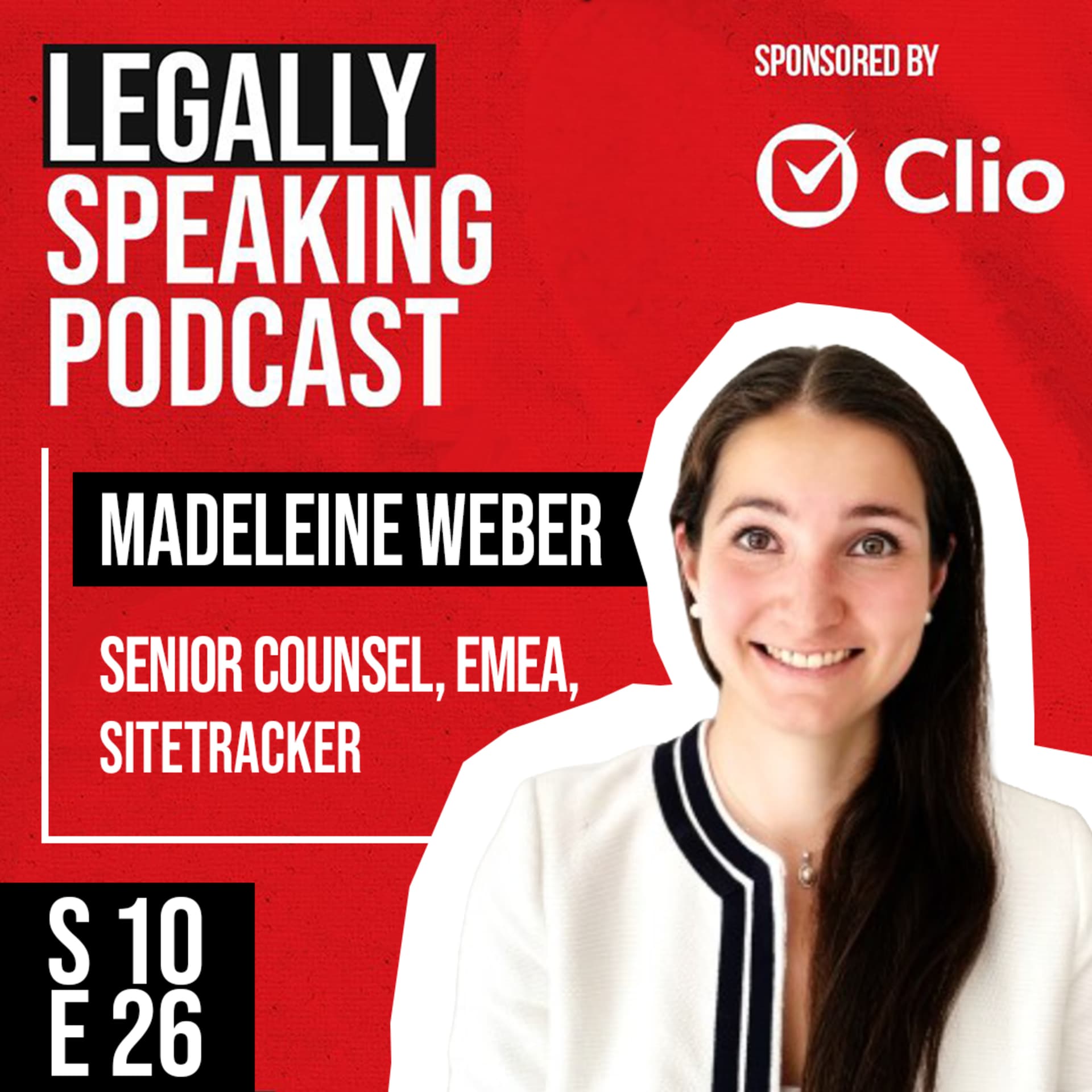

In short
Madeleine Weber explains her unconventional qualification route (SILEX to New York Bar to QLTS/SQE2) and how she runs InHouseW, an SQE2 prep platform. She also discusses pivoting into in-house roles, common SQE2 mistakes, and whether the SQE has widened or raised barriers.
Guest background
Senior Counsel for Europe, Middle East and Africa at a US SaaS company (software contracts, data processing agreements, NDAs, employment/policies). Studied SILEX, qualified via the New York Bar, completed QLTS, then did SQE2 (first intake in April 2022). Runs InHouseW; helped 2,000+ students.
Key claims
SQE2 is not purely skills-based—legal knowledge is often what causes failures. Students should buy only needed materials (mocks/outlines/feedback), not full expensive packages. SQE improves access for non-traditional legal roles but increases socio-economic barriers due to cost and limited support.
Notable examples
She faced delays admitting her after the New York Bar due to COVID, leading to a switch from QLTS skills to SQE2. She recommends timed mocks (e.g., aiming for ~48 timed mocks) and active recall of law.
Written by AI. May contain mistakes. Listen to the episode to check what was said.
Chapters
Tap a time to open that second in VOPreparing Students for the SQE
0:00 to 0:30
Learn about supporting law students through the SQE preparation process.
“My core driver is to not force students to buy everything, but just students only get what they need.”
Icebreaker Questions with Madeline
1:01 to 1:48
Discover Madeline's favorite beverage and footwear preferences.
“It's an absolute pleasure to have you on the Legally Speaking podcast.”
Madeline's Legal Career Journey
1:48 to 3:18
Explore Madeline's unconventional path into the legal profession.
“So to begin with, Madeline, would you mind telling our listeners just a little bit about your background and career journey.”
A Day in the Life of a Senior Counsel
3:18 to 4:59
Understand the diverse responsibilities of a senior counsel in a software company.
“So congratulations but let's pick off from where you are currently then as senior counsellor across the media.”
The Appeal of Drafting Contracts
4:59 to 6:00
Hear about the aspects of contract drafting that Madeline enjoys most.
“And I can hear that, you know, the passion and the excitement and what you do.”
Advice for Junior Lawyers Transitioning In-House
6:00 to 7:57
Gain insights into research and preparation for moving into in-house legal roles.
“The majority of my career was in software and I did a very brief stint in aviation beforehand and I know that you know even though you're in-house it's completely different worlds if you're in a different industry.”
Madeline's Unconventional Route to Qualification
7:57 to 11:12
Learn about Madeline's unique qualifications through Silex and the New York Bar.
“I don't think there's anyone that can tell you more than someone who's actually working in that area.”
Challenges and Changes in Qualification Paths
11:12 to 14:00
Discuss the challenges faced during the transition from QLTS to SQE.
“So that really bugged me because I had the experience, but it was missing a piece of paper, I guess.”
Navigating the Challenges of Legal Qualifications
14:00 to 18:03
Learn about the difficulties faced in transitioning between legal qualification paths and how resilience plays a key role.
“And they were basically saying, well, you can start again on the SQE.”
Insights from Non-Traditional Legal Paths
22:57 to 28:00
Explore how unconventional legal experiences can provide unique advantages in the field.
“And it gets you sort of lawyer ready, doesn't it?”
Show all 18 chapters
Tailored Study Packages for Law Students
28:00 to 29:51
Learn about the flexible study options offered to help law students prepare for the SQE.
“And I also offer feedback, so one-to-one services.”
Learning from Mistakes: A New Perspective
29:51 to 30:28
Understand how to view mistakes in exam preparation as learning opportunities.
“Trying to meet people where they're at to help them get the education they need.”
Common Pitfalls in SQE2 Preparation
30:28 to 32:37
Identify frequent mistakes students make when preparing for the SQE2 exam.
“that assumption that SQ2 is a purely skills-based exam and that you don't have to worry about the legal knowledge, which I understand because SQ1 is this huge multiple choice exam around legal knowledge.”
Balancing Work and Study for SQE2
32:37 to 35:31
Explore effective strategies for managing full-time work alongside SQE2 preparation.
“The other thing as well as I would try and have honest conversations with your place of work.”
The Impact of SQE on Access to Legal Careers
35:31 to 38:31
Discuss the SQE's effects on accessibility and barriers in the legal profession.
“boundaries like you say in a personal world as well really really important.”
Proposed Changes to Make SQE More Accessible
38:31 to 40:57
Hear recommendations for improving the SQE structure and support for students.
“So I think, yeah, the SRA needs to be mindful, like in the current economy, asking people to fork out five grand, not considering resets as well.”
The Importance of Patience in Career Growth
40:57 to 41:58
Reflect on the value of patience and time in achieving career goals and success.
“And before I let you go, finally, what's the most valuable lesson you've learned about staying resilient on your path to qualification?”
Closing Thoughts with Madeleine Weber
42:00 to 42:33
Madeleine Weber shares how listeners can connect with her and her platform.
Transcript
Automatic transcript. May contain errors.0:00This whole process is there to prepare. My core driver is to not force students to buy everything, but just students only get what they need. I'm very conscious of what students are dealing with and I try to help as much as possible. When I was working in-house, if there had been SQE, my life would have been significantly easier and I would have just gone ahead with that. So I think that's been good that other legal roles are finally being recognised as being a place where you can qualify. On today's Legally Speaking podcast, I'm delighted to be joined by Madeline Weber. Madeline is a senior counsel across Amir at Sight Tracker.
0:37She has an unconventional route into the legal profession, studying Silex, New York Bar, QLTS, and the SQE2. Madeline also runs In-House W, an education platform helping aspiring solicitors prepare for SQE2 through different resources. She is committed to supporting the next generation of solicitors, having helped over 2 ,000 over the past few years. So a very big warm welcome to the show, Madeline. Hi, Rob. Thanks so much for having me. It's an absolute pleasure to have you on the Legally Speaking podcast. Before we dive into all the amazing things you're doing in and around the legal community, we do have a couple of customary icebreaker questions here on the Legally Speaking podcast, which is, what is your favourite beverage and what is your preferred choice of footwear on a typical workday?
1:22Oh, good question. I think my favourite beverage is probably quite basic. I love Fanta. I could drink Fanta every day, all day. And footwear, I'm not going to lie. I wear Skechers all day, every day, pretty much. I go through so many pairs because that's all I walk in and they're just so comfortable. There we go. Skechers and Fanta. And with that, we can move swiftly on to talk all about you. So to begin with, Madeline, would you mind telling our listeners just a little bit about your background and career journey. I did an LB law degree quite a few years ago now and wanted to qualify as a solicitor but I think as many people find it is quite a struggle.
2:09So when I sort of joined the workforce after graduating the SQE hadn't been introduced yet it was still the sort of traditional route of doing an LPC and training contract. I really struggled finding a training contract and by sheer coincidence, I ended up working in-house and ended up working for a software company and managed to qualify through a sort of very weird way, which we can talk about as well later on. and I've been in software ever since. I am now a senior counsel responsible for all of Europe, Middle East and Africa of a US SaaS company. And on the side as well, I run a business, an educational business that helps people prepare for one of the two SQE exams, namely the SQE2, which is an exam I sat as well in order to qualify.
3:09So yeah that's I would say is a quick summary. A very quick summary, very impressive and you know your tenacity, your resilience and your willingness to give back certainly impressed all of us on the show and why we're super keen to have you on today. So congratulations but let's pick off from where you are currently then as senior counsellor across the media. What does a typical day look like? Tell us a bit more about what your role involves? Yeah, of course. So we're a small legal team. There's only three of us. So I look after all of EMEA. A typical day, I mean, this is going to sound like such a cliche answer, but there isn't really a typical day.
3:44I deal with anything and everything legal in my region. The majority of that work, I would say, is contract work because we are a software supplier. So putting in place contracts for the sale of our software is my bread and butter. So in a sort of more common day, I will likely review a customer markup of our subscription agreement. I will review data processing agreements. I will often have to deal with a lot of NDAs, which we need before we, for example, demo our solution. But I also deal with random employment matters. Like I often get sort random employment questions because we have a number of entities in emia and sometimes the hr team will ask can we do this in spain can we do this in germany what are sort of the employment regulations around that i also deal a lot with um policies um putting in place policies for the company to make sure we're compliant so i would say a majority of my work is uh it's a lot of drafting a lot of reviewing of drafting and of course um as i think with lots of companies there's a lot of calls as well just sort of aligning internally but often as well negotiating with customers on on our subscription agreements because often there's points that need to be discussed before we find agreement but yeah that's that's roughly what i do yeah fairly like you say no two days the same very very different but interesting nonetheless what's the best part of a job what do you most enjoy for me personally I love the drafting aspect I love when you're negotiating a position trying a way to find you know the the best sort of way of expressing that that reflects sort of our you know our position but also the others you can get quite clever with it and I really enjoy like that sort of it's almost like a puzzle like trying to find the right words to get what I want but also to get what the other side wants I really enjoy that Like to me, it's like a daily, I don't know, like a almost like a crossword puzzle that I do just in the form of a contract.
5:52But yeah, I really enjoy that. That's my favorite bit about my job. Good for you. And I can hear that, you know, the passion and the excitement and what you do. And it's very important because we love seeing people in legal careers that they're generally, you know, excited about and aspects of the job they like to focus on. okay for junior lawyers maybe listening in today you know looking to pivot into commercial roles or into sort of in-house legal teams what research should they perhaps be conducting beforehand would you recommend oh good question you mean if you want to pivot from private practice yeah and you know it's a common path we see that trend you know for people thinking about that maybe what should they be leaning into when it comes to research yeah it's a great question i think um i think what's really helpful before sort of choosing to move in-house is looking at sort of the different industries because every industry is very different.
6:45The majority of my career was in software and I did a very brief stint in aviation beforehand and I know that you know even though you're in-house it's completely different worlds if you're in a different industry. I would say definitely research you know industry specifics if you want to you know if you're interested in tech if you're interested in software for example I would try and research the industry as much as possible and I think the best way of doing that is talking to in-house lawyers already in the industry and through like my social media platforms I often get questions from people asking what is there to think about with software because there's like you know loads of industry specific things that I don't think you would know unless you were in it.
7:32For example, you know, the different types of software that a company might sell, the different sort of types of contracts that are in play when you're an in-house lawyer in software. So yeah, I would sort of not like think of in-house broadly. I would think of it industry specifically and I would contact people to ask about like what are sort of the specifics in your role that I should be prepared for and go from there because I don't think there's anyone that can tell you more than someone who's actually working in that area. Yeah no really good advice and thanks for for sharing that. You touched on earlier your sort of route into law you know it's perhaps not the most conventional one so can you talk us through your route through Silex perhaps explain a bit about that to the New York bar QLTS and of course SQE2.
8:19Yes so I feel like I touched a bit on everything my qualification parts. Yes. I know it's very unconventional but that's just what happened I guess so when I started working in house as I mentioned at the time there was only sort of the LPC training contract route that was largely known and with the training contract route you need a contentious seat I was working in house there was no contentious work I mean that's another sort of big thing about in-house is that you don't really go to court. You usually settle if you have businesses arguing. So I couldn't do a training contract. I really wanted to qualify.
9:04So my manager at the time said to me, oh, look, have you looked at Silex? Never heard of Silex before in my life. So it just wasn't as well known as the classic route. And Silex is the process that you take in order to become a chartered legal executive. A lot of people don't know what that means because it's just, you know, like I said, not as known. A chartered legal executive is a qualified lawyer. They are not the same as a solicitor, but it's similar in the respect that a chartered legal executive is qualified to practice in a certain area, whilst the solicitor is qualified to practice in all areas.
9:44That's the key distinction, which is why it makes sense why, you know, most people still prefer to qualify solicitors but at the time I didn't think that was an option for me so I thought before I don't qualify at all I'll become a charter league executive and the process for that was because I hadn't done the LPC I needed to do two exams and a piece of coursework and I needed three years of qualifying work experience which I had to demonstrate as part of her portfolio. This was under again like the old system I know they've sort of they've changed it up a bit as well so it might not be quite the same but it is likely to be similar.
10:26So I pursued that and even though I was told by my manager at the time like if you qualify as a charter legal executive we'll promote you to be legal counsel there won't be a distinction with others who are solicitors. But I knew at the time already, because of just speaking to people that there is still like a very traditional mindset in the legal industry. And I have found that myself as well, in that charter legal executives and solicitors are not treated in the same way or not seen in the same way, which I don't agree with. But that has been the reality as I've seen it. So I would apply to jobs.
11:04Later on, when I wanted to move on, I was, you know, just with my charter leave executive qualification and I would be turned down because I wasn't a solicitor. So that really bugged me because I had the experience, but it was missing a piece of paper, I guess. So I researched and researched and researched, how could I become a solicitor without that training contract, essentially. There's also means, which I know some people have used in order to qualify where you can show that you have the equivalent experience as a trainee. Again, I couldn't do that because of the contentious element. So we started some research and found out that at the time, I'm not sure what it's like now, I think it might be similar now, but at the time you could qualify abroad and then cross-qualify into England by doing what was called the Qualified Lawyer Transfer Scheme that has been phased out and replaced by SQE now.
12:08But essentially, it's two exams, very similar to SQE. First exam being a huge multiple choice exam, second exam being a practical exam, testing you on a variety of skills in a number of subjects. So I researched again, where can I qualify abroad? Where recognises English graduates as being eligible to qualify? And found out that New York is really flexible. so off I went to to go do the the New York bar um that was severely delayed due to COVID so I couldn't do it when I was supposed to I actually ended up doing it online remotely from home because you couldn't be in exam hall which was actually very convenient so many didn't I didn't have to fly to New York which you would do ordinarily so I did the New York bar passed that Luckily, I then started with QLTS.
13:05I did that first exam, the QLTS MCT. And I was then going to move on to the second part of QLTS, which is a skills based exam. When I found out by the SRA that in order to qualify under that sort of system, I had to qualify by a certain date. if I don't make that date then I wouldn't be able to qualify under this old route because they were phasing in SQE and that was really stressful because I'd passed the New York bar but I hadn't been admitted yet because they had a backlog of I don't know how many thousand people because of Covid so I had no idea when I would officially be a New York attorney so I didn't know if I was going to make that that sort of date that the SRA was sort of prescribing so that was a bit stressful because i was like done all these exams and now they're telling me i can't qualify if i don't meet that date if you know and that date isn't up to me that's up to the new york bar of examiners which you know i can't influence so i was actually um i wasn't the only one in that situation this is a very niche route but there were others who were also in that situation and we got together and we sent quite angry letters to the SRO because we spent quite a bit of money on all of this, a lot of time.
14:33And they were basically saying, well, you can start again on the SQE. So we were not having it and we were arguing with them. And in the end, they said, okay, as a compromise, rather than doing the second part of QLTS, you do the SQE too. which is very similar to like they literally replaced QTS with SQE the structure is almost the same so we were like okay fine we'll do that then and it actually turned out well for me because like a very big part of my life now is is helping people with SQ2 prep so um I was annoyed at the time um but in hindsight I I am grateful to the SRA for being a little bit inflexible so I did the SQ2 I did the first ever SQ2 in in April 2022 which was quite daunting because you know being the first intake no one's ever done it before and it was quite like tough a lot a lot of the materials were based on the QLTS OSCE it was called based exam so that's kind of what you prep with um but you know it wasn't I guess you know the advice it was based on that exam which was similar but it wasn't quite the same so you kind of went in thinking like have I learned the right things have I sort of studied the right techniques but I did pass I did I did do quite well but that experience really inspired me to create resources that I thought I you know that I know not just thought I know would have helped me when I was studying for the SQ2 and I've been yeah I've been providing materials on my platform in house w since i think it's 2023 now and it's really grown and it's going really well and it's yeah it's my my absolute pride and joy to to help people with this um with this exam because i know how tough it is and i found when i was doing the sq2 less so now but at the time you know you only had sort of a handful of massive providers which are very sort of cost intensive and there isn't much else to choose from and I just really found that it's really harsh on on students who need this exam to qualify as a solicitor you know it's like you're arguably a life-changing exam a very sort of career very exam and then you sort of you know you slap him with three four thousand pounds in course fees let alone the exam fees and often you know you don't need the whole course like I've seen lots of students who you know they might have done SQ1 before the LPC before they already have all the materials but they might just need you know mocks for example to practice with to like get to grips with the format they don't need a full package and I think that's sort of where I've come in is like providing a variety of different options for people to choose from they can go for just mocks or they can go for just summaries revision summaries or they can go for like bigger packages that include videos so they just go for what they need to supplement whatever they already have so that you know they can revise in the most cost-effective manner to do this exam and it's been a long journey with with this business working you know full-time still as well but it's been honestly the most the most rewarding thing I've ever done.
18:08And look clearly you've shown resilience during that journey particularly of your own sort of you know New York bar then to SQE and etc etc to other people that might be going through different or challenging qualification paths at the moment how did you overcome the challenges and what advice would you give to others I can't sugarcoat it it was hard and there were times I wanted to give up because yeah you know everything just it just everything took longer and longer I was supposed to do the New York bar and these sort of English transfer process within I think two years and it took me, I think it took me three, nearly four, like three and a half into O'Toole and it was a long slog.
18:51The advice I would give to people who find themselves in perhaps similar circumstances is try, I know this is easy to say, but try not fall into the trap of thinking I'll be happy when I qualify like I know you will be but it does sort of make it sort of stretch it out more that sort of process you have to go through I would try and like just focus on one day at a time what really helped me as well was also working in sprints I would say so I would say okay I'm gonna study for two weeks and then I'm gonna have a week in where I don't think about it so always like schedule your breaks in advance as well so you've got something to look forward to and what I think is very important as well is just making sure you know what you're doing throughout a week that you have sort of a set of tasks that you want to get through it's a lot easier when you sit down to your desk that you already know what you need to do rather than having to figure out what you need to do so having a good plan having sort of things to look forward to like I said like having breaks to look forward to but also nice things to look forward to I do you think that's what got me through is I would do a sprint and then I would do like a little trip or like a little day out or something like that and then a sprint again and I know I said before like don't fall into trouble thinking I'll be happy when um because it can feel that much longer if you're studying over long periods whilst working but also like when like I remember like you know cried to my husband like i can't do this um and he was always like you know this is just for a short like this is for a confined period this isn't forever and it will be worth it after which is true like i have students a lot of students as well who struggle with the studying and the working and some people have children and have other commitments and it is a lot to deal with but i always remind them like just think about how it feels when you have that certificate it think about how it feels when you get that pay rise as an NQ like for me that was a key motivator because the gap is in some industries in some firms it is substantial between being not qualified and qualified like just remember that you're doing all this for those things and it will get better um so yeah that's that's sort of the things I would say but I know it's not easy And I think sometimes as law graduates as well, like it kind of like to me anyways, you know, a lot of people are probably a lot more realistic than I.
21:31When I was in law, I didn't expect it to be such a battle to to qualify and to get there. So I think, you know, depending where you are in your life, if you're quite early on, you haven't sort of started that process yet. just be prepared that is going to test you but um there's also reasons why it's so testing right like you know to to be a lawyer is sort of a regulated profession it is quite a challenging career that um demands quite a lot of people so like you know this whole process is there to prepare you for that today's episode is brought to you by cleo if you're spending more time managing your practice than practicing law, it's time for a change.
22:17Clio is the intelligent legal work platform built for modern solicitors, combining context-aware AI with trusted legal research to help you work smarter, not harder. Switching is easier than you might think. Clio's dedicated migration teams handle your client and case data every step of the way, so you can focus on what matters most, your clients. Plus, award-winning support 24-5 via live chat, phone, and email means help is always on hand when you need it. Visit clio.com forward slash UK to find out why thousands of UK solicitors trust Clio. Now back to the show. I think you're right. And it gets you sort of lawyer ready, doesn't it?
23:00Almost future peeps you through going through that experience. And clearly you've gone through the other side. What do you think the routes you have taken have given you over perhaps others who have gone through more of a traditional path? Good question. So a couple of things. I have a lot more experience, which is sector specific, compared to someone who would have gone through a traditional training contract. So, you know, you do a two year training contract, which has four seats. I just worked in software pretty much I've now been in software for eight years now and I've just been working pretty much in a legal counsel role for all those eight years even though I wasn't qualified so I have a lot more experience in this area compared to someone who would have gone for the traditional route and I know as well like when I apply for jobs some in-house organizations don't like that I'm in-house trained because they prefer someone who's training contract trained but a lot of people as well prefer me over someone who's training contract trained because I have a lot more specific experience because everything I've done pretty much the past eight years is to do with software contracts and if you come you know from a traditional training contract you would have spent maximum six months in a TMT department where you may or may not have seen a software contract so I think that's what that's a very big advantage I believe the other thing as well being new or qualified has been really helpful which I wasn't expecting because um I just did it because I had to but it's actually been super helpful because a lot of software companies are American and a lot of them you know the hiring managers are based out of the US I mean if you come to them with sqe or training contractors you know they'll be like you know they've never heard of these things before you know but however every u.s attorney would have either done or heard of so they you know i do think that gives me an advantage with u.s companies as well they they do like that i would say those are the two the two main ones that my unexpected route produced but everything happens for a reason and maybe they are extra like you say now usps you know I always say rejection is redirection maybe these redirections that you've had to go through throughout your own journey now are actually positives now you're the other side of it just on the New York bar how did the American style of exam differ from the the SQE?
25:34I get this question a lot there are similarities you know there's also a very big multiple choice aspect there are sort of essays and sort of tasks that are similar to the SQE it is a lot more efficient it's two days rather than, you know, two split exams that in total are seven days. And you do sort of, you know, in two separate exam seasons. So it's a lot quicker to deal with. I found it easier in the SQE, not necessarily the exam itself, but because it was so much easier to access past papers, it was so much easier to practice. And I did find that the syllabus provided was a lot clearer. It was very straightforward in a way.
26:21I mean, obviously it's hard, but you know what to expect and, you know, everything that came up, I mean, it was hard, but it wasn't like, oh my God, what is this? Whilst on the SQE, I did sometimes have, you know, moments of what is this? I've not seen this before. I do find that the SRA, yeah, they don't provide as much as what the New York Bar of Examiners do. You can bypass papers and you can't do that with the SQ, which I think is a huge disadvantage. So if anyone listening here, there are international people sometimes in firms or in-house that ask me oh I can do either what what would you do I would choose the New York bar definitely is faster it's more straightforward to prepare for it's just been around for so much longer as well so that's that's just been my experience though and a lot of people don't believe me when I tell them I found the New York bar easier because it's it's got this reputation of being a tough exam which it is but I do find the SQE I mean they don't make it easy for us I I would say.
27:32Well, that leads nicely onto actually what you referenced before in House W, you know, your education platform helping aspiring solicitors prepare for the SQE too. So tell us more about the platform, building on what you've already shared and the resources available and how you're helping ultimately students sit for the exams. I have a range of offers which can be bought separately where's the package so my most popular offer are mock questions so self-practice mock questions which are you know pdf downloadable so you can buy them you can download them and you can practice them in your own time and i think yeah because there's no past papers that that has been sort of the most popular thing i also offer outlines so summaries of the functioning legal knowledge being tested.
28:22And I also offer feedback, so one-to-one services. So if anyone needs feedback on an oral mock or a written mock, they can buy sort of in any quantity they need, anything between one and four mocks they can buy on my website and get feedback on a mock they've attempted. And then there's also course packages that include, you know, everything. So outlines, mocks, feedback, but also videos where I walk them through the functioning legal knowledge, the syllabus and then also sort of techniques how to approach the exam. So those, yeah, those are basically what I offer. And yeah, like I said before, it's really important to me that students only get what they need.
29:03So with the mocks, for example, you could also just get a little package just within one subject. So one of the five subjects. So you could just get criminal litigation marks, outlines as well. You could just get a criminal litigation outline if that's what you want. And so that's been sort of my my core driver is to not force students to buy everything, but just get the bit what you need. And sometimes, you know, very often I've got students saying, oh, I've got your marks, but I want to upgrade to a course package because I think I need more. And then they just upgrade by taking off the amount they already spent.
29:39So, you know, I'm very like, yeah, I'm very conscious of what students are dealing with. And I try to help as much as possible. You're flexible, aren't you? Trying to meet people where they're at to help them get the education they need. And I think that's great that they're not tied into these big packages for things that ultimately they may not need. I mean, it's huge what you've done. You know, you've helped over 2000 students prepare for the SQE2. I heard recently at an event, a mistake is not a mistake. if you do it once it's only a mistake if you do it twice following feedback and I thought that's a really good way of looking at it actually because we're always typically learning aren't we so you know the first time we never know it's only deemed a mistake if it's the second time after feedback which I thought was quite an interesting perspective looking at it but on mistakes would you mind sharing what are some of the most common mistakes you see people make when it comes to all things SQA2?
30:27So most common mistakes are firstly I think there is still that assumption that SQ2 is a purely skills-based exam and that you don't have to worry about the legal knowledge, which I understand because SQ1 is this huge multiple choice exam around legal knowledge. And I think a lot of people think, I did my legal knowledge in SQ1, I don't have to worry about it in SQ2. That's not the case. SQ2 is still very much a law-based exam. All the questions that come up on the SQ2 are phrased as legal knowledge questions. So you're going to have to know the law. I've looked at dozens and dozens of students' results who didn't pass, and it's usually the legal knowledge that lets people down.
31:13So active recall of the legal knowledge is a must, like you can't get around that. I think that's a very common mistake to just not check that you actually know the law without looking. The other mistake I see very often is students not doing timed mocks or not doing enough of timed mocks. So I have also worked with students in the past who had to re-sit and some of them had done no mock practice prior to sitting or, you know, done five mocks or something. Like you have to remember like on On the SQ2, you have three written days. On each day, you have four assessments. So that's 12. And you have two oral days.
31:57On each day, you have two assessments. So that's four. You have 16 assessments in total across different skills. You know, practicing five mocks isn't going to cut it. Like you need to, I always say, I would aim for two mocks per subject per assessment type. So that's 48 mocks. I would aim for practicing that amount so that you've seen every assessment in every subject at least twice. The more the better and also making sure that you do it under time conditions. I see that very often as well with students. They don't set a timer, they just do it in whatever time they have, like give themselves and that again isn't going to cut it because some of the assessments are really time constrained.
32:37Legal writing for example, you have 30 minutes, like you don't have time to dilly dally you you need to get what you need to get out as fast as possible so yeah i would say those are the two most common mistakes i've seen again thank you for being so thorough and and sharing that it's only going to help people going through these parts um you know you've mentioned yourself working full-time for our listeners and watchers who may be navigating the sqe2 alongside working full-time what would be your advice to help them prepare effectively first of all be prepared it is tough um secondly i would be uh this is gonna sound obvious but you really need to be super strict with timings like i guess that's that's another mistake i sometimes see you really need to set aside you know every day you need to set aside time so when i was studying for the exam i set aside one to two hours in the evening and the weekends i would do I tried to do a full day but that sometimes just wasn't possible energy wise but I would try and do a couple of hours four to five hours so I would try and like aim for 10 to 15 if you can I for the SQ2 studied over a three month period and I was very strict I did um I did put in the hours and I see that often where students they study here and there so they'll sort of put their books away for a week then they'll come back to it for a few hours put it away get get distracted you know they might sort of focus on other things um and you just can't you can't do that in my opinion like I know it sounds harsh but you do need to put in consistent hours in the lead up to the exam and you just need to be clear with um your family if you're living with your family be clear that I'm really sorry, but I can't socialise or I can't like do all the chores.
34:31I have to focus on this. The other thing as well as I would try and have honest conversations with your place of work. I didn't, I have to admit, I didn't get very far with my work. They didn't really give me time to study, but I know some employers are more supportive and they do allow people to take, for example an afternoon uh paid study leave is not common is not standard but i know employers that do do that so i definitely have a chat with the manager see what they can offer and also just make sure that you let them know like you know obviously you want to do the best you can at work but this is not the time to pile it on um because i know some employers they can be really really harsh and just ignore the realities of students working and studying so having those honest conversations I think is is really important.
35:29And again great great advice and also setting boundaries like you say in a personal world as well really really important. A big question now so you know feel free to you know share your views but I know it can go in so many different directions so the SQE do you think it has leveled the playing field for those wanting to enter the legal profession or do you think it's introduced new barriers? Good question. Loader question. Because I know this is a very divisive topic. I think the answer is yes and no, or very loyally answers. It depends. I think industry wise, especially with coming from in-house, I would say it's opened up options to qualify.
36:14But like I'm a prime example, like at the time when I was working in house, if there had been SQE, my life would have been significantly easier and I would have just gone ahead with that. So I think that's been good that like other legal roles are finally being recognised as being a place where you can qualify. I think that's been a huge improvement. But I do find it has raised barriers in other respects, I would say. like I think the cost is madness um and back you know back in the day when you did the LPC there were loans to do the LPC with now there are no sort of like you know because at the time I remember like the LPC could be done as a master's as well and it was possible to get a post-grad master's loan but now for these very expensive prep courses like you I mean you could put on a credit card, I guess, but like the interest rate's insane.
37:11So I do think people who are financially disadvantaged, who don't have, you know, the means as others, I do think there's been a barrier added to those people. And I think as well, because I hear this a lot from students, I think it is harsh that, you know, some students, I mean, this is going to sound a bit controversial, but it's just, It's true. I think it is harsh. And a lot of students complain about the fact how students who get sponsored by law firms, you know, they get the course fees paid and they do SQ1, SQ2 before they start training. They often have sort of study time, you know, only study.
37:54They don't work and study. whilst a lot of other students you know who aren't sponsored they will work and study which that's quite a different starting point I would say that's that's not the same that's not the same position um to be in when doing these exams so yeah I think it's yeah I think it's been been good in terms of widening the possibility to qualify in a greater like greater variety of legal areas I do think it's raised barriers in other areas like yeah there's the socio-economic side of things like the you know the financial side of things I do think it's increased inequality I think it's fair to say yeah and again thank you for being open and sharing your you know on the ground live views now you know as someone who's very immersed in this world you know looking at changes possibly for the SQE having sat it yourself SQE2 of course what changes would you be championing to ensure then exams are more accessible there's two two things i would say uh firstly i think the finance side of things needs improvement i just i don't think it's okay to say to people oh you know the sq1 is i think it's two thousand pounds roughly the sq2 is three thousand without any prep courses like i do think there needs to be more options for people to pay for this either i don't know either with loan options installment options some other way and i guess going back to the new york bar it has been incredible to see because like the us you kind of see as a slightly more expensive jurisdiction new york bar cost me a fraction compared to the Yes, QE, like not comparable at all.
39:43So I think, yeah, the SRA needs to be mindful, like in the current economy, asking people to fork out five grand, not considering resets as well. If you need, you know, if you need a reset, like is pretty hardcore, in my opinion, about any, you know, any support. And then the other thing I think as well, that needs to be a little bit improved. and i am like i'm also in contact with the sra as a sqe materials provider it's just like a little bit more certainty around the syllabus because there are like areas in the syllabus where it's not 100 clear what's being here what could be included so just a bit more clarity and um yeah i think just uh you know it'd be great if they could start issuing past papers as well I understand why they might not want to because I guess it's such a new exam and you know it's there aren't maybe enough papers I don't know but I do think it would help students just to see how does it look how does the real exam look like I mean you get the sample questions on the website but they are a lot easier than the real thing and you know it's not quite the same so I think those two things would help a lot if they could make changes there perfect well thanks again And before I let you go, finally, what's the most valuable lesson you've learned about staying resilient on your path to qualification?
41:10Another good question. You've got all the good questions. I think that the most important thing that I've learned is that everything takes time. I'm not the most efficient of people. And I think starting this career, also starting my education business, I always thought, oh, you know, I can do this fast. You can't. There are no shortcuts. Everything takes time. my career took a while qualifying took a while my business as well like I founded I founded it originally in 2020 and it was only like three or four years later I saw any form of interest so I guess that's the biggest thing I learned and what I would also just sort of you know say to people who are in the thick of it whatever it is they're currently doing like give it time nothing nothing is a quick fix and you know things worth having just they take the time that they do really well said and thoroughly enjoyed today's conversation if our listeners i'm sure they will want to know more about you or indeed uh get involved with your platform in house w where can they go to find out more feel free to share any websites any social media handles we'll also share them this episode for you too so i'm very active on instagram under the handle in house w and then my website inhousew.com explains all my offers and you can buy everything that I've explained in this episode so yeah perfect well Madeline thanks so much once again it's been an absolute pleasure having you on the show from all of us here on the Legally Speaking podcast sponsored by Clio wishing you lots of continued success with your career and future pursuits but for now over and out thank you for listening to this week's episode if you like the content here why not check out our world-leading content and collaboration of the Legally Speaking Club over on Discord.
42:54Go to our website, www.legallyspeakingpodcast.com. There's a link to join our community there. Over and out.
From the publisher
On today’s Legally Speaking Podcast, I am delighted to be joined by Madeleine Weber. Madeleine is Senior Counsel, EMEA at Sitetracker. She has had an unconventional route into the legal profession, studying-CILEx, New York Bar, QLTS and SQE2. Madeleine also runs inhousew, an education platform helping aspiring solicitors prepare for SQE2 through different resources. She is committed to supporting the next generation of solicitors, having helped 2,000 students over the past 3 years.
So why should you be listening in?
You can hear Rob and Madeleine discussing:
- Non-Traditional Route to Qualifying as a Solicitor
- Building a Successful In-House Legal Career
- Overcoming Qualification Challenges with Resilience
- Making SQE Preparation More Accessible for Students
- Supporting the Next Generation of Solicitors
Connect with Madeleine Weber here - https://uk.linkedin.com/in/madeleine-weber-0261aba2