
In short
Equality by Design in law and workplaces—why institutions should embed fairness proactively in systems (including algorithms/AI) rather than react after discrimination harms people; also Elaine Banton’s career path and lessons on representation and access to justice.
Guests
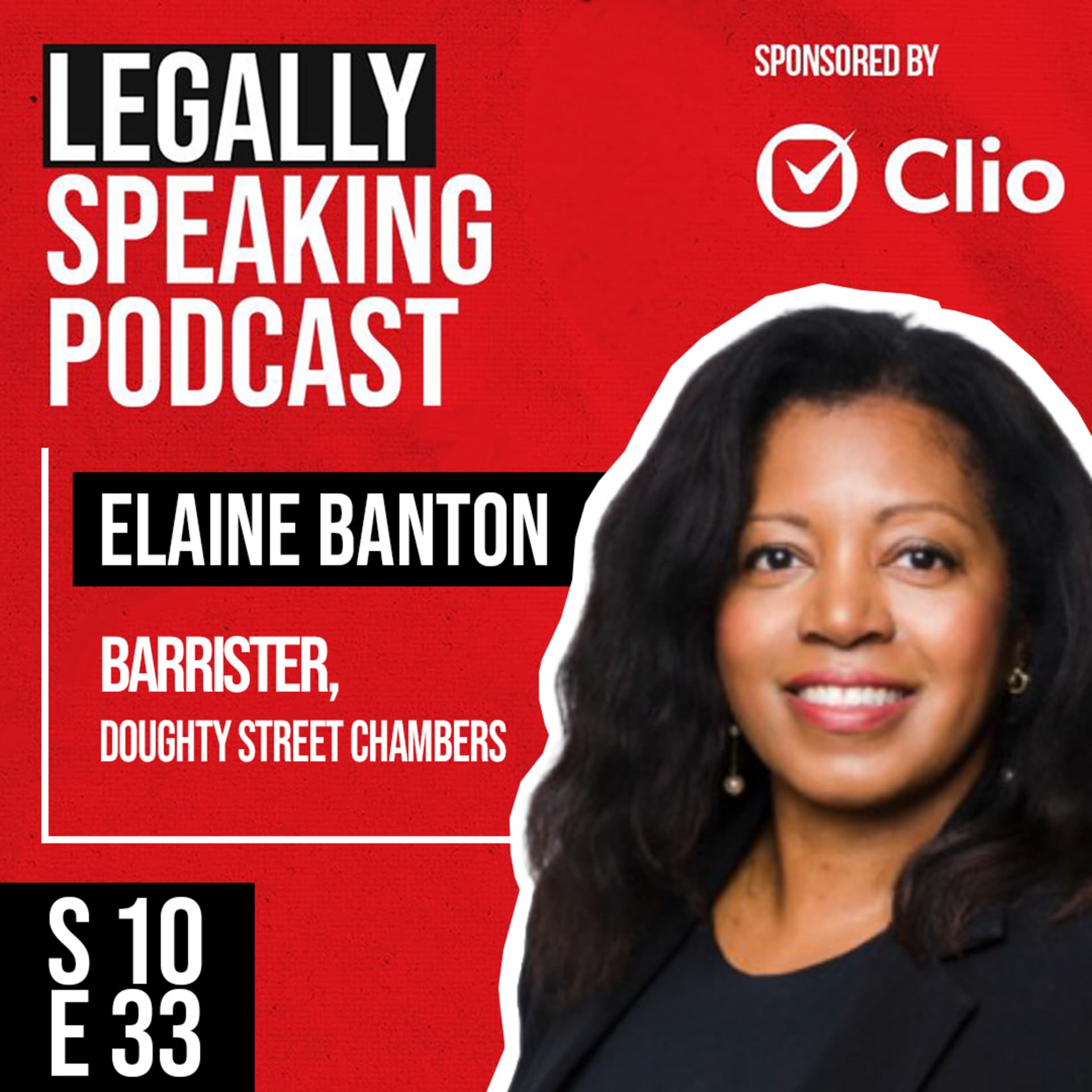
Elaine Banton, barrister at Doughty Street Chambers (called to the bar in 1997), specialising in employment, discrimination and human rights law. She advises/represents individuals, organisations and public bodies on workplace equality issues; spoke at the UN in Geneva on AI, equality and human rights.
Key claims
Widening opportunity strengthens the profession; visibility (“if you can see me, you can be me”) breaks barriers; litigation often results from rigid systems lacking flexibility; equality must be designed into policies and algorithms (“cradle to grave” training and governance); lawyers should treat AI as an assistant and keep human oversight.
Notable examples
Windrush judicial review against the Home Office/Secretary of State—some Wendy Williams recommendations weren’t implemented; endometriosis case against a global consultancy where an “up or out” progression model dismissed a disabled employee despite high utilisation; DWP fraud detection algorithm discriminating on sex, disability and race.
Written by AI. May contain mistakes. Listen to the episode to check what was said.
Chapters
Tap a time to open that second in VOElaine Banton's Background
0:34 to 1:40
Explore Elaine Banton's journey as a barrister and her advocacy for equality.
“On today's Legally Speaking podcast, I'm delighted to be joined by Elaine Banton.”
Icebreaker Questions
1:40 to 2:44
Elaine shares her favorite beverage and technology she relies on for work.
“It's an absolute pleasure to have you on the show.”
Growing Up in Hackney
2:44 to 4:41
Elaine recounts her challenging upbringing in Hackney and her aspirations.
“So could you give us a bit of a short version of your career from growing up in Hackney through to becoming a barrister at one of the top set of chambers?”
Navigating Challenges in Law
4:41 to 6:35
Elaine discusses the obstacles she faced in pursuing a legal career and her resilience.
“How did you actually navigate the challenges of pursuing your ambition?”
Understanding Diverse Perspectives
6:35 to 9:11
Elaine reflects on the strength found in navigating different worlds and perspectives.
“I didn't have connections the way that some people come into the law with connections lined up I had none of that so I had to make my own.”
The Importance of Visibility
9:11 to 11:26
Elaine emphasizes the significance of representation and visibility in legal professions.
“And, you know, you're doing great work now to help and educate and inspire other people as well.”
Lessons from the Courtroom
11:26 to 14:00
Elaine shares vital lessons learned from her 30 years of experience in the courtroom.
“for the strengthening, the growth and the future of the profession.”
The Importance of Fair System Design
14:00 to 14:36
Learn how inadequate system designs lead to litigation and delay in justice.
“And so if you fall out of that norm, if you fall out of that ideal worker, for example, then you come up into, you come against a hard intercept.”
The Windrush Case: A Judicial Review
14:36 to 17:22
Explore the judicial review of the Windrush decision and its implications for equality.
“because the issue, the key thing about litigation that we see is that it's after the event, after the time, after the incident has happened and the harm has been received.”
Equality by Design Explained
17:22 to 19:36
Discover the concept of equality by design and its practical applications in law.
“review and it said that we would never do this again and we put in place various policies and practices that would absolutely ameliorate that risk on helping.”
Show all 17 chapters
Endometriosis Case Study
19:36 to 21:13
Learn about a significant case involving endometriosis and employment discrimination.
“And it's one of my more recent appellate cases.”
Proactive Fairness in Institutions
22:02 to 27:45
Understand how institutions can build fairness into decision-making processes.
“We're now at the process where some of these decisions are algorithms and the propensity for bias gets exponentially higher, unless you are extremely intentional as to how you design those algorithms.”
AI and Human Rights in Law
27:45 to 28:00
Explore the importance of AI awareness for lawyers and its broader implications.
The Role of AI in Law and Society
28:00 to 31:22
Learn about the pervasive role of AI in various sectors and the importance of legal professionals understanding it.
“So why should lawyers be aware of developments in AI?”
Lawyers' Responsibilities in AI Decision-Making
31:22 to 34:52
Explore the responsibilities of lawyers and regulators when AI leads to discriminatory outcomes.
“But as AI is becoming more sophisticated, models are getting better all the time.”
Growth and Reinvention in Legal Careers
34:52 to 38:23
Understand the importance of continuous learning and growth in a legal career.
“You know, you've spent 25 years at the bar.”
Advice for Aspiring Legal Professionals
38:23 to 40:36
Gain insights into overcoming self-doubt and seeking mentorship when pursuing new opportunities.
“The people who create the greatest impact are not always those in the most power, they are the ones who?”
Transcript
Automatic transcript. May contain errors.0:00Absolutely everyone has some role to play in this. Different perspectives, different voices, other forms of information and knowledge. And we know that the best decisions are made by collections of different individuals with different walks of life. Talent is absolutely everywhere, but not everyone has the opportunity. And so widening that ball, bringing people in, is, I think, of great importance for the strengthening, the growth and the future of the profession.
0:34Elaine Banton:On today's Legally Speaking podcast, I'm delighted to be joined by Elaine Banton. Elaine is a barrister at Doughty Street Chambers, specialising in employment, discrimination and human rights law. Called to the bar in 1997, she has built an outstanding career advising and representing individuals, organizations and public bodies on some of the most significant workplace equality issues of our time. Elaine has become a leading voice on fairness, inclusion and systemic change. Through her concept of equality by design, she advocates for equality in institutions, workplaces and emerging technologies.
1:10Elaine Banton:More recently, Elaine contributed to international discussions on artificial intelligence, equality and human rights when speaking at the United nations in Geneva. She explored the implementations of AI for fairness and accountability. Today, we'll explore Elaine's journey from growing up in Hackney to becoming one of the UK's leading barristers, her reflection on nearly three decades at the bar, and her vision for a representative legal system. So a very big warm welcome to the show, Elaine. Very pleased to be here, thank you. It's an absolute pleasure to have you on the show. And before we dive into all the great things that you've been doing.
1:47Elaine Banton:We have a couple of icebreaker questions here on the show. Firstly, what is your favourite beverage and what is your preferred choice of footwear on a typical workday? So favourite beverage, if I was on a night out for example, I think summer times here I'll go for a glass of cold crisp glass of rosé. Nice, nice and footwear on a workday? On a workday a shorter heel but a little heel maybe a pointy toe but not too high okay and then a tech question what's one piece of legal tech or everyday technology you now rely on which you would have thought would have been unthinkable when you started your career well the phone is like a desk from home i i didn't know that was gonna happen but also earphones are really useful obviously two practical and very sensible options.
2:43Elaine Banton:Okay, and now we're going to move on to talk all about you. So could you give us a bit of a short version of your career from growing up in Hackney through to becoming a barrister at one of the top set of chambers? Yes. So I grew up on a council estate in Hackney at a time when the area was called the Murder Mile. It was pretty deprived. And I had a single mother who my parents got divorced and she was a nurse. She worked a lot, she worked all the time and we were kind of what you would have called latchkey kids before you, I didn't even know the terminology. But for some of the time we had to be quite responsible for ourselves and so that was also another factor that could have been problematic.
3:33But I somehow, by about the age of seven, I had decided I was going to be a barrister. So I knew the difference between solicitors and barristers. And I went on to tell my careers advisor that I was going to be a barrister. And I remember her saying, slow down, slow down. I'm taking notes. I don't know about this. I arranged my own work experience with a local high street firm in Hackney. And they actually years later reached out to me. So still in touch with them. and the actual principal took me for lunch, which was really sweet. But so I carried on in that vein. And I think it was partly growing up in an area where it was challenging.
4:19There was a lot of social injustice. There were things going on. And I just gravitated naturally to the law as potentially something that looked interesting, but also perhaps had some power or some voice behind it. And I never, I never let go of that. I mean, inspiring stuff.
4:43Elaine Banton:How did you actually navigate the challenges of pursuing your ambition? You know, you mentioned age seven. How did you actually navigate that? It was difficult because there were a number of obstacles. One was that one of my English teachers, she told us that the exam board had said no child in Hackney could get an A in English literature. So that was something that she was absolutely furious about. And I look at that now and I see that was a system in place. It wasn't necessarily individuals conspiring the room to hurt the children of Hackney, but it was the way the system was being produced.
5:23It was, if you like, That postcode was an algorithm and there was a bias at play. And so I had to navigate all of those issues when I was a young girl and really trying to aspire for more. And something I came across recently, which was when the wedding between, I think it was Callum Turner and Dua Lipa, and I looked him up and he said something about growing up in a council estate that really resonated with me. And it was something about there being many worlds that you have to navigate. And I absolutely agree. It's not really code switching. It's about a richness that gets embedded in you that is a type of dynamism that means that you can actually cope with a lot of different aspects, which could be extremely good and some could be extremely bad and quite unpredictable.
6:27And so I think that that sort of encapsulated it. But yes, it was it was difficult. There was limited money. I didn't have connections the way that some people come into the law with connections lined up I had none of that so I had to make my own.
6:48Elaine Banton:Well as they say tough times don't last but tough people do right and I think it's really impressive and I wanted to lean into the navigating those different worlds a bit further because you have moved before you know these different environments throughout your life and indeed careers so so many experiences. How has that almost shaped the way that you understand people, institutions, professional spaces? Do you think there are strengths that individuals from non-traditional backgrounds often underestimate in themselves? I think it can be a really important point of power, actually. At first, when I was going into the bar, people made assumptions of me.
7:27They thought, and I was always well-spoken even when I was in Hackney. It wasn't something that just suddenly happened. I was going to be a barrister. I was interested in dance and theatre. And it was just me. But I do think that people made assumptions about them. And I remember being asked, is your father a diplomat? And I wouldn't necessarily dissuade people from their assumptions because it somehow felt easier to allow that to happen. But I did start to speak about it later on in my career. I became extremely open about the fact that I did grow up with a single mother in a council estate and had to learn how to navigate different spaces.
8:14And I think that is a really important story to share so that people, it's breaking down barriers effectively. But I think what you do when you bring yourself into those different environments is that you are able to shine a light on different issues and different perspectives that resonate and land in a really quite eye-opening way. And so I think that's been a strength for me. I do think that having different perspectives, different voices, is some it's a it's a felt of information and knowledge and so and we know that you know the best decisions are made by collections of different individuals with different walks of life and so I think that is something that I've been able to to utilize throughout my career especially when I actually leaned into it more and I think that's so important finding your voice
9:17Elaine Banton:you know, in that authenticity. And, you know, you're doing great work now to help and educate and inspire other people as well. And I guess it leads nicely onto the importance of visibility in the world that we live today. You know, representation is a significant topic of discussion, particularly in the legal profession. So why do you believe visibility matters? And what impact does it have when people see someone with a similar background succeeding in a profession where they may not see themselves fully represented? I think it's fundamentally important. There's a lovely saying that I like, if you can see me, you can be me.
9:50And I think that's absolutely crucial. When I was a young girl myself, I won an award for my grades at Hackney. I was introduced to Gus John because he was giving the prizes. And Gus John was then the director of education for Hackney. He's someone that Steve McQueen, the filmmaker, actually made a film about. So he was pivotal in education at the time and still is. But he asked me, what do you want to be when you grow up, think I was 16 or 17?
10:20Elaine Banton:And I said, well, I'd be embarrassed. And he said, well, you've got to meet Courtney Griffiths. Now, that was Courtney Griffiths who went on to become extremely well-known. He had handled a lot of the very big miscarriage of justice cases that are infamous. And he went on to become a silly. He took me under his wing as a young Black woman to see a Black male barrister. You know, I saw him become a silt when I was probably about 20, if that. So it was very inspiring being around him and seeing that he actually brought his full self to work. He was entirely authentic. He was crisp and he was sharp, but he was absolutely himself too.
11:09So that was also a real insight as to how you can benefit from that. And I think it's really important because, to put it shortly, talent is absolutely everywhere, but not everyone has the opportunity. And so widening that pool, bringing people in is, I think, of great importance. for the strengthening, the growth and the future of the profession.
11:37Elaine Banton:Really well said. And, you know, you've spent 30 years practicing as a barrister. You knew, you know, from a very, very early age. So giving you a moment to reflect on your career, what are the most important lessons the courtroom has taught you about people, organizations and indeed the pursuit of fairness? The courtroom is a lesson that never ends, really. It varies so much. And I think that's a fantastic question. You're navigating so many different systems and individuals and perspectives, and you've got to actually operate in a multi-world environment. You've got a client who doesn't know the rubric, who doesn't know the process, who might be intimidated, who might be shy, who might be fearful and may have health conditions, mental health conditions.
12:30You've got an opponent who has their own game plan, if you like. You've got a judge who also is there to oversee fairness and make a decision and determination. So you're navigating all of those different individuals and systems. And I think it does teach you an element of flexibility and adaptability of how you approach individuals, how you will broach particular issues and subjects, because one size does not fit all. And I think that's something that's been ingrained in me from the very beginning.
13:09Elaine Banton:Yeah, agreed. Absolutely agreed. And human stories and personal experiences, employment and discrimination law often does involve a lot of personal experiences. So how have these cases influenced your understanding of legal principles and the real life experiences of individuals seeking justice? It's really informed a lot in my practice over the last 30 years. I have been reflecting and I look back and I see that most of my career I've been arguing about different types of systems and the results they produce, whether it's in employment, health, education, different aspects of discrimination. It usually comes down to a system that's in place which lacks a certain degree of flexibility.
14:02And so if you fall out of that norm, if you fall out of that ideal worker, for example, then you come up into, you come against a hard intercept. That could mean that you are dismissed. Whereas, had there been a system that was designed with the fairness and the quality embedded within it as architecture, as you would design a bridge, load -bearing, absolutely stress test, failure test, if we had been more careful with some of those systems, we could actually reduce some of the litigation that's brought. because the issue, the key thing about litigation that we see is that it's after the event, after the time, after the incident has happened and the harm has been received.
14:59And then you have a delay. You have all these issues to navigate. Is your claim in time? Is it out of time? You then may have to wait three, four, sometimes now five years to get to triwena in employment. And then you wait that time, but it depends on your own individual resilience. And we know as well that the backlogs are growing exponentially. So we have a long delay, we have substantial backlogs. I see now increasingly it's important that we spend time on designing the systems more efficiently, more fairly, to prevent some of that harm occurring in the first place. And then we may actually help some of this backlog as well and access to justice exponentially, if we can do that.
15:54I think it's actually something that we should all be cognizant of. Yeah, and being proactive, right?
16:02Elaine Banton:And, you know, sticking with systems. So obviously you've learned a lot about these policies and institutional decision making and creating fair outcomes. I want to allow you to tell us a bit about a case with the King and maybe you acted as a junior counsel for the claimant and involved sort of institutional matters. Do you want to educate our listeners, give a bit more context around that to build on that point? Yes. So that was a case which was a judicial review and it was dealing with the Windrush decision. And we know that in the Windrush era that there have been issues around how those individuals that came across during that time from the Caribbean and from other islands and other diaspora were subject to systemic issues around their status and their ability to stay in the country, even though they had been promised that they could stay.
16:58They had to actually go through severe loops to prove that they'd been in the country for a period of time. And so many, many individuals were being caught out and it was then exposed as a scandal. The government then said at the time, we want to stop this, we don't want this to ever happen. There was a big review, Wendy Williams' Windrush Lessons Learned, review and it said that we would never do this again and we put in place various policies and practices that would absolutely ameliorate that risk on helping. But what happened and what led to the actual litigation in Donald was that some of the most important recommendations were not actually implemented.
17:49And so myself as part of a team of lawyers, I was one of the junior lawyers, we actually brought litigation against the Home Office at the Secretary of State, and we were able to show that in fact, recommendations that were about having a commissioner overseeing the immigration process should have been implemented. And it was not simply enough that the minister changed her mind. So we're able to win on that. And subsequently, there has been a windrush commissioner that's been appointed. So that's really heartening to see that after a challenge like that, that there can be a change intact. And you can see positive change come from litigation which can affect many, many people, thousands of people.
18:46So that was an example.
18:48Elaine Banton:And like you say, a fantastic example as well. And, you know, positive change off the back of that. Just going a little bit deeper into sort of what we're touching on before, equality by design for our listeners, because you recently, you know, you described this topic and this sort of content. But for our listeners, you may be unfamiliar with the term. What does that actually mean in practice? Absolutely. What I mean by quality by design is that we bring our care, our planning, our analytical thought to designing systems which have intentionally embedded fairness and equality into it. So that way we lessen the impact of harm.
19:33Now, I'd like to give an example of that. And it's one of my more recent appellate cases. It's one involving endometriosis, and it was against one of the big global consultancies. And it's been reported widely. But my client in that case was a woman of endometriosis who hit the harsh, harsh intersect of an up or out policy. Now, she had endometriosis, she had an operation, came back to work, phased return, and was actually on 100 % utilisation and on an upward trajectory. But she was not promotable in this progression model pyramid. pyramid. So she lost her job. She was actually dismissed. Whereby, if within that system, they utilized the flex or it was built in in a better way, then you could have adjusted the system to allow her to get to the required standard because she had obviously been off work and she had a disability.
20:53Now, all too often, employers do not operate in that way. They do not consider the wider position. But then what happens is you may find yourself litigating an issue for six, seven, eight years or more.
21:13Elaine Banton:Today's episode is brought to you by Cleo. If you're spending more time managing your practice than practicing law, it's time for a change. Clio is the intelligent legal work platform built for modern solicitors, combining context-aware AI with trusted legal research to help you work smarter, not harder. Switching is easier than you might think. Clio's dedicated migration teams handle your client and case data every step of the way so you can focus on what matters most your clients plus award-winning support 24 5 via live chat phone and email means help is always on hand when you need it visit clio.com forward slash uk to find out why thousands of uk solicitors trust clio now back to the show you know once you said it sounds so obvious but yet you know historically organizations have responded to sort of discrimination or inequality only after these issues have emerged so again maybe to help them how can institutions move away from this reactive approach towards being proactively building fairness into their structure and to their decision making processes to hopefully avoid litigation and everything else that goes with it absolutely i think this is so important now, particularly as we are in this technology sphere, AI, etc.
22:36We're now at the process where some of these decisions are algorithms and the propensity for bias gets exponentially higher, unless you are extremely intentional as to how you design those algorithms. So we've got workplace systems and we've got the algorithm, which is becoming part of the workplace systems. And we already are seeing that. So it's crucial that we do think about the fact, okay, we've got policies, we've got governance, we've got all of these things, but are we actually intentionally using it? Or is it just festering there in a nice bundle online somewhere and And you look at it when something goes wrong.
23:24Yeah. That's not helpful. It needs to be streamlined into every aspect, every decision that's being made. And you need to move away from the paradigm of the linear ideal worker. Very few people are this in reality. We're a lot more rough around the edges. Sometimes you might be that linear ideal worker, and other times you're not going to be. And sometimes it's just a small adjustment in the system and you accommodate the issue that's there and you avoid years, literally years, of cost, time, anguish, all the rest of it, on both sides. So I think it is challenging the way we look at these structures and systems, not in silos, but joining them up and looking across, you know, make sure that there is real training that's practical, that does this work rather than just I've got the policy tick.
24:34It's done. Let's move on.
24:36Elaine Banton:Yeah, because it's not a tick box process, is it? I think that's very important. And, you know, having that ongoing training and a very valid point around, you know, maybe a little tweak can have a huge impact. And so it's worth investing that time. You obviously went there on the technology points. And, you know, of course, we have to talk about tech and AI. You know, it's becoming increasingly integrated into decision making. There are growing concerns, as you're alluding to, about the risks of bias being sort of replicated. So, again, to help organisations, how can they minimise these risks, ensuring technological systems support fairness, but also keep up with what's needed in terms of the implementation of tech within these businesses?
25:11Absolutely. So they'll have to be very careful about the type of system they adopt. Obviously, they want it to comply with all the EU regulations and all of that in terms of governance. responsible, ethical AI is really the buzzword that we're looking for. I think that's absolutely key. But it's really important that there is training about how we utilise it. We have to look at it from the very beginning to the end. So cradle to the grave. Who's putting the data in? What is that data? How have they been trained? Have they been trained on equality? Do they understand what this means? Because it starts really from that point.
26:06So you can have the best system. And if your employee, your analyst who's inputting the data is not trained, you can still fall into quite substantial difficulties. So you do have to have an assistant that is coherent in terms of the governance and the regulations, and there are many out there like that. But you have to make sure that your staff are adequately trained and understand the synergy between what they are doing on a Monday and Tuesday and what happens to an individual later on down the line. And quite often, there's a disconnect. And just an example on this, the government brought in a fraud detection scheme, and this was the Department of Work and Pensions.
26:57And it was a benefit fraud detection scheme. And the algorithm discriminated on grounds of sex, disability and race. So this is what we're talking about. Then the harm is scaled. It's not one manager and one employee or a handful of employees, potentially. It's thousands of people. And so it's really, really important that we don't simply see AI as operating in a silo or that it's completely neutral, because there is a tendency to look at systems and assume that it's neutral. And we know that with AI, it isn't, actually. it's what the data that goes into it very much informs the output so we need to be very consciously approaching all of that from the framework which I say which is equality by design which is being very clear about issues or unfairness equality that there is actual sis in the system but also in the input of the data all of those things are dealt with and interrogated from the very beginning all the way through and on the other side great wisdom though i talk very openly about you know it's
28:23Elaine Banton:better to be clear than it is to be clever sometimes on these things and you're looking for fusion rather than confusion when it comes to all of these some sort of trends and when you're training businesses all of these various bits and pieces um want to stick with sort of ai human rights in the future of law now because you recently spoke at the united nations in geneva about artificial intelligence and indeed equality. So why should lawyers be aware of developments in AI? And why does this conversation extend beyond just the tech sector? AI is absolutely for everyone. Everyone needs to know about AI.
28:57It is not just a tech issue. And I think for too long, we were told that. But people are far more aware now that AI is an integral part of our life. it's embedded into so many of the things that we use and do, the way that we are assessed. Even, you know, when you make a job application, that could be assessed easily by AI now. And very often it is. And so we do need to understand that and upskill. It is absolutely part of the fabric of society. And personally, I came to this sphere about five, six years ago, talking about bias, talking about algorithmic bias, because I realised there was another form of discrimination that was, you know, it had the propensity for harm.
Read the full transcript
29:54But the way that things have developed in the last three years or so, I ended up studying AI myself last year. And I think that was really helpful for me just to really understand how it works from a technical aspect. But absolutely everyone has some role to play in this. Whether you know it or like it or not, it is already in your daily life. It could be something that determines what happens in your health, in your education, and in your employment, and that's only some. We can talk about the criminal justice system, the civil system. All of these systems now are using technology and AI in ways that can impact on the individual.
30:41This is where we are. They're either using it or they're considering using it, and so we do need to see it as something integral and part of our society and not just floating up there for very techie people who know about it.
30:59Elaine Banton:It's here to stay very much so. And I love that you sort of invested that time to really go and educate yourself and understand what the impacts are and how it can be used. And I think that's a really good lesson and learn for our listeners to take away. There's clearly risks of heavily relying on automated systems. Clearly human oversight and judgment is essential when making important decisions. I think we still rely on that. But as AI is becoming more sophisticated, models are getting better all the time. What should lawyers or regulators consider when technology concludes a discriminatory or unfair outcome?
31:33Absolutely. I mean, this is who owns that decision.
31:36Elaine Banton:Yeah. You know, who is actually owning that? I think that if you are a lawyer, it's your duty, first and foremost, to check. Treat AI like an assistant. You would check their work. You would check that it's accurate. You would check that the references to legal authority are correct. And so with AI, you need to do that as well. It's not a panacea for everything. It simply cannot be used like that. And I think we have to be very careful that we do not move away from actually embedding the human here. I think there's a risk that the human almost gets downgraded. And we're seeing, aren't we, that there are reductions in recruitment for junior lawyers.
32:33And where does that take us 10 years' time? at the moment where it's fine, but if we do cut and we lose a lot of the junior lawyers, then later on down the line, where are we going to get them? Are we never going to need them? That's unlikely. I think there's a lot of big questions around the legal community's use of AI and how it's going to progress in the future. And of course, we're very good at talking about it. We talk about it a lot.
33:09Elaine Banton:Yeah, I'm sure all of us are talking about it daily. Well, let's talk about shaping the future and from a barrister's role in this. What do you think barristers can and should play in shaping ethical legal frameworks which will govern emerging technologies? I think barristers are well placed to actually have a voice in this arena I myself am involved in governance, something that I got involved with as a student actually. I first became a school governor when I volunteered with a charity and they placed me in school. So I became a governor when I was doing my undergraduate. So throughout my whole career, I've been involved in governance.
33:49And I think as a lawyer, the governance lens is a really useful one in the sphere of AI. I've been really fortunate to be involved in something called Braid, which is in conjunction with Ada Lovelace and BBC and Eucarist and Edinburgh University. And it's about bridging those divides in between culture and technology. And so as a lawyer and someone that's been involved in culture, you're able to have those conversations where you're trying to make sure that we're making decisions and we're facilitating the ability to take everyone with us on this journey. I mean, it is literally and should be for everyone.
34:38So I think as lawyers, that is an aspect that we can actually tap into the governance side of it. And certainly that felt interesting to me.
34:48Elaine Banton:Yeah, and very interesting to me and our listeners, I'm sure. A reflection question now, You know, you've spent 25 years at the bar. Can you share what you've learned about growth and indeed reinvention throughout your career? Absolutely. This is, I think, so key to longevity in your career, interest, growth. I don't think you ever stop learning. For me, my career has developed over the course of many years, and things that I thought I was going to practice in, I didn't. And other things that I discovered along the way, such as employment law being founded by human rights principles and discrimination, it just took my mind away in a different direction.
35:40So I followed that. And then my equality areas expanded, and I followed that. And all of it underpinned by almost algorithmic human rights, and the lens that I see that through. So that is where my growth has been, and it evolved in a way that perhaps I didn't see at the very beginning. However, for me, I do see a lot of synergy in that I sort of now ended up where I started. Started with the human rights underpinning lens, and now I'm there again, very clearly there with everything being underpinned by human rights, which I think is increasingly important in this technological, you know, developing world that we are heading straight into.
36:37Elaine Banton:Yeah, it's right, isn't it? You know, it's a tech first world now. You just look at the amount of paper documents that are all digital now, even, you know, we are in that world. And I think the human right piece, as you say, couldn't agree more. So, so, so important. Okay, going back then to some advice for the next generation here. What would you give to someone who feels, advice-wise, that maybe they don't belong in the room, whether applying for a new role, putting themselves forward for a new opportunity? What advice would you share? I think that they should do it. They should absolutely take a chance and do it.
37:10But what I would say to them is get some advice. It's fantastic if you've got a mentor. If you could learn from someone who's navigated that space and they can share some of their wisdom, because that will help you to have the confidence to take that step. But I do think if you're thinking about it, that's a sign that you do need to explore it more. And I think, you know, those opportunities for growth, those are sometimes the most scariest moments of your career. but yet if you pursue it it can become the defining moment so I think you know do your groundwork do your research get a mental you know I think that is extremely helpful but go for it
38:02Elaine Banton:the comfort zone is great but nothing ever grows there go out there and get it and like I said to a lot of people you know the other side of them fear is everything you ever wanted you know just go out there and what's the worst that can happen. Okay final piece of advice from you now Leigh. I really enjoyed today's discussion learning about your journey from Hackney to all the work that you've been doing and just generally for the wider legal community. If you had to complete this particular sentence how would you finish it? The people who create the greatest impact are not always those in the most power, they are the ones who?
38:36they are the ones with the greatest vision courage fortitude and verve to do it
38:47Elaine Banton:i love that and just for our listeners um elaine was not expecting that question we do live questioning as to go so that was very much off the top of your head and just flew beautifully and i think very sage advice elaine this has been wonderful it's been really nice having you on the show. If our listeners do, which I'm sure they will, would like to follow you, would like to learn more about your work or collaborate or indeed use your services, where can they find more? Feel free to share any websites, any social media handles. We'll also share them this episode for you too. Absolutely. You can find me on LinkedIn, Elaine Banton.
39:20You can also find me at Dow Street Chambers website. That's easy. And also on Instagram you can find me as Elaine Arbanton on Instagram so I'm probably mostly more likely to find me on LinkedIn than Instagram but I'm on both.
39:38Elaine Banton:Well it just leads me to say Elaine this has been brilliant I think your career absolutely demonstrates that excellence is law is very much more than just legal knowledge alone right it's about understanding people it's about creating systems that promote fairness encouraging progress innovation technology remaining grounded in accountability which you've alluded to as well as of course human dignity so from all of us here on the legally speaking podcast sponsored by cleo wishing you lots of continued success with your advocacy work and basically advancing equality and everything else that you're doing in and around the world of helping to reduce that access to justice gap it's been an absolute honor having you on the show today wishing you all the best but from now from all of us over and out thank you for listening to this week's episode if you like the content here why not check out our world leading content and collaboration of the Legally Speaking Club over on Discord.
40:28Elaine Banton:Go to our website, www.legallyspeakingpodcast.com. There's a link to join our community there. Over and out.
From the publisher
"If you can see me, you can be me." - Elaine Banton
What happens when a barrister who grew up on a Hackney council estate helps shape the future of equality, human rights, and AI? Elaine Banton from Doughty Street Chambers reveals why the law can no longer afford to be reactive and why fairness has to be built into systems from the start. Something that stood out most to me in this conversation was how strongly she framed the idea of “equality by design” — the belief that fairness should be built into systems, workplaces and even algorithms from the start, rather than added later after harm has already happened. We also explored how bias can be amplified by AI and why lawyers, institutions and businesses all need to understand the technology shaping decisions across health, education, employment, and justice.
So why should you be listening in?
You can hear Rob and Elaine discussing:
- Equality Being a Systems Problem, Not a People Problem
- The Biggest Fairness Failures Happening When Institutions Worship the “Ideal Worker”
- Visibility Not Being Symbolic - It Changes What People Believe is Possible
- Background Not Just as an Identity But a Strategic Intelligence
- How AI Bias is Not a Tech Issue - It Is an Accountability Issue
Connect with Elaine Banton here - https://uk.linkedin.com/in/elaine-banton