Ask ChatGPT

 Legally Speaking Podcast
16 Jun 2025 · 59m · 18 chapters
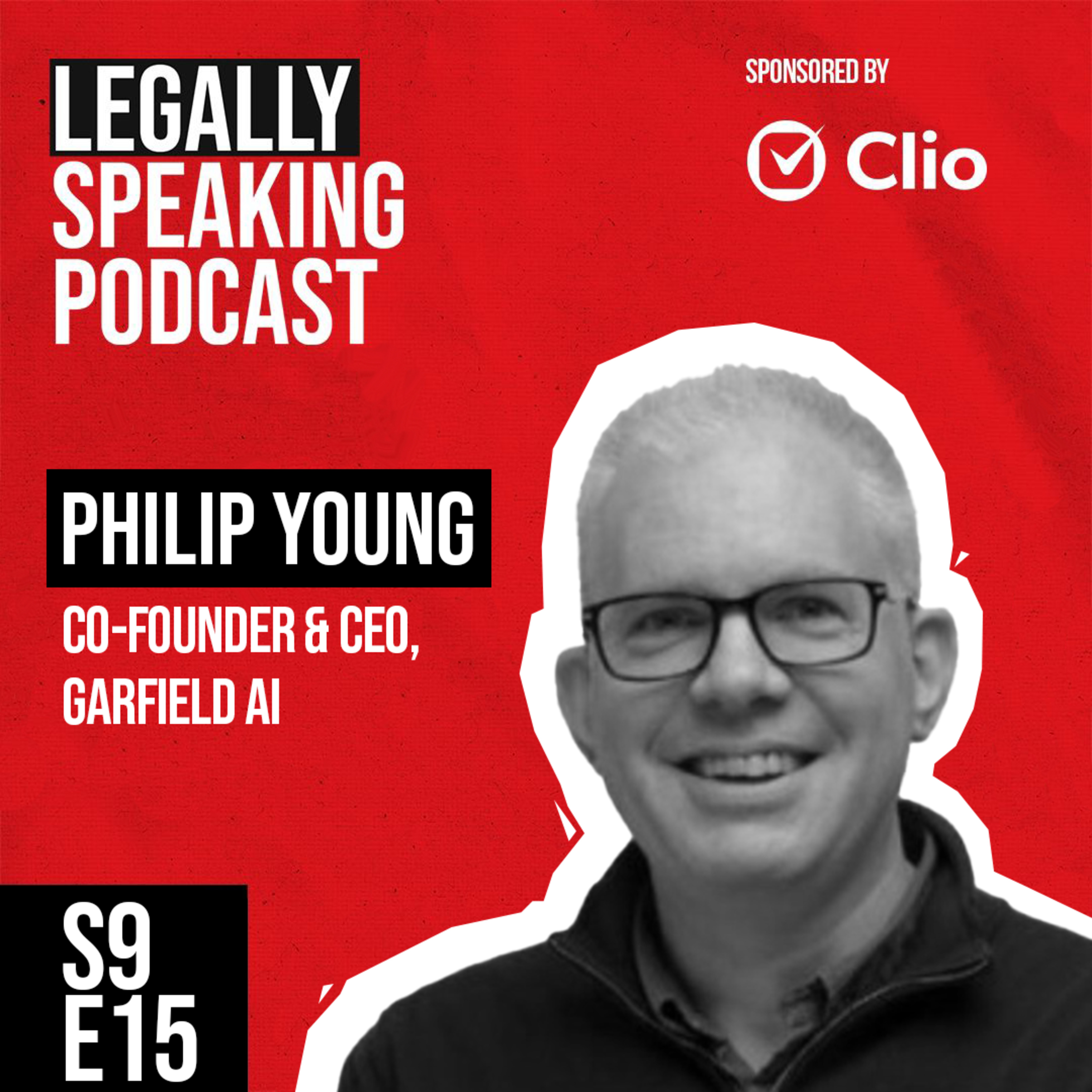
Philip Young explains Garfield AI, the UK’s first SRA-regulated AI legal services firm, designed to help recover small debts through the English Small Claims Court by automating document drafting, correspondence, and case progression.
Philip Young, co-founder of Garfield AI; city lawyer for 25+ years; previously a partner at Cook, Young & Keedon (specialist litigation/arbitration). After leaving the city (around 2022), he focused on large language models and access to justice. He co-founded with Dan (programmer; photonics doctorate work) and built a team of five (front-end: Pablo, Harry; back-end: James).
Garfield replicates a “good law firm” workflow with triage, guardrails, and deterministic control to reduce hallucinations. It supports claimant-side small debt claims up to £10,000, aiming to reduce repetitive admin and improve access to justice. It became the first SRA-regulated legal AI after ~8 months approval.
triage of uploaded invoice documents; drafting claim forms/particulars; handling admissions/default judgment/defences; generating trial bundles and skeleton arguments; rejecting non-qualifying claims (e.g., >£10,000 or overly complex cases).
Written by AI. May contain mistakes.
Learn how AI can transform the legal sector by automating repetitive tasks.
“We have basically an entirely synthetic county court system that's just sat in code on our systems, which I think is an amazing concept.”
Discover Philip's journey from a city lawyer to launching an AI law firm.
“Thank you very much for the introduction, and I'm glad to be able to join you.”
Understand the inspiration behind creating Garfield AI and its origins.
“Yes so I'm originally from Derbyshire in the Peak District and I went to a local comprehensive school and from there I went to Durham to read law which is a very fine university and enjoyed myself very much.”
Explore how Garfield AI works in handling small debt claims effectively.
“sort of what happened in late 2022 and particularly what happened in late 2023 and maybe we want to get onto those topics via other questions.”
Learn the criteria for small debt claims and how Garfield AI addresses them.
“And what a lovely thing to do as well, you know, in terms of obviously seeing a family member with a problem and you've gone above and beyond to solve that and some.”
Get insights into the step-by-step process of developing Garfield AI.
“Well, thanks for giving such a concise and easy to understand response to that.”
Learn about how Garfield AI automates court forms and improves legal processes.
“library of documents to assist leading professionals.”
Explore the benefits and hurdles Garfield AI faces in the legal sector.
“Set at Ribby Hall Village in Lancashire, over 200 SME law firm leaders will come together for a full day experience designed to challenge, connect and inspire.”
Discover the importance of legal expertise in developing AI products for law.
“Thanks for giving such a candid overview.”
Understand the challenges of shifting focus from high-value cases to small debt claims.
“Claims have got seven figures up to billions.”
Explore how AI is creating self-service options in legal services.
“And do you think you're making a market for self-service generally?”
Learn how lawyers perceive the integration of AI in legal work and its benefits.
“underestimate the technical challenges involved.”
Examine how Garfield AI is enhancing access to justice for underprivileged communities.
“And the best analogy I can give for you is that humans have always invented tools and we invent tools to save ourselves effort.”
Explore the ethical challenges law firms face when integrating AI tools.
“Yeah, no, really, really brilliant answer.”
Learn what makes Garfield AI stand out in the landscape of legal tech.
“What makes Garfield AI so unique, if you like, in comparison to other AI platforms out there?”
Gain insights on how young solicitors can thrive in a changing legal landscape.
“And I think it's brilliant that you're leading by example and doing that and then educating and inform them on what it can and it can't do and making sure expectations are managed.”
Learn essential advice for developing a successful legal AI platform.
“And some people absolutely know, and they will tell you instantly.”
Find out more about Garfield AI and Philip Young's contributions to the legal field.
“I enjoyed it even more than I thought I was going to.”

Get the gist, explore an idea or ask about something said.
 Claude
On Legally Speaking Podcast, what are the key points of this episode?
Searching your listeningAutomatic transcript. May contain errors.
0:00We have basically an entirely synthetic county court system that's just sat in code on our systems, which I think is an amazing concept. This sort of technology is going to take away a lot of the very time intensive, repetitive administrative stuff that lawyers have to do but don't enjoy. Why not build something to help people like that? And that thought particularly came into sharp focus in April, May 2023 when ChatGPT4 came out. And that was such a big jump in capability from ChatGPT3.5. I thought, well, we could build something to chat GPT for. And so that's really where Garfield came from.
0:33It started as a hobby, but very rapidly became a very serious thing. And now it's an even more serious thing. On today's Legally Speaking podcast, I'm delighted to be joined by Philip Young. Philip is the co-founder of Garfield AI, the first SRA-regulated AI legal services firm. He was a city lawyer for over 25 years and previously a partner at a specialist law firm. Philip has experience in a range of commercial cases. Upon leaving the city, Philip focused his attention to large language models and is passionate about access to justice, leading him to create Garfield AI. So a very big warm welcome, Philip.
1:07Hello, Rob. Thank you very much for the introduction, and I'm glad to be able to join you. Oh, I'm absolutely delighted to have you on the show. I know you've been in very high demand in recent weeks and months, but before we get into your journey and everything you're getting up to over at Garfield AI, we do have a cheeky customary icebreaker question here on the Legally Speaking podcast, which is, on the scale of 1 to 10, 10 being very real, what would you rate the hit TV series Suits in terms of its reality of the law if you've seen it? Okay. I'm only dimly aware of Suits isn't that the the tv series that Prince Harry's wife was yes yes so can I be your typical lawyer because I've not seen it I'm going to go right down the middle and go for five because I don't know whether it's zero or ten well cautious yeah yeah and that's a fairly justified five I've also given it five and I've seen it so we're great minds and with that we're going to move swiftly on to talk all about you to begin with Philip would you mind telling our listeners a bit about your background and career journey.
2:06Yes so I'm originally from Derbyshire in the Peak District and I went to a local comprehensive school and from there I went to Durham to read law which is a very fine university and enjoyed myself very much. Probably focused a bit too much on not so much the law but sort of extracurricular activities while I was there but that's what university is really about in my opinion and then I came down to the city to practice I qualified into I joined after qualification the firm Baker McKenzie in London and I was there for eight years a really really fun excellent eight years brilliant work brilliant people you know made friends for life really from that and then much to my family's I think probably shock slash disappointment, I actually sort of stepped away from Bakers rather than go down the partnership track.
2:59And I co-founded it with two other guys, the firm that is now Cook, Young & Keedon. And that is a specialist litigation arbitration firm in the city. It's an excellent firm, does really excellent work, brilliant people. And stepped away from them about 2022, I think. yes 2022 so about three years ago really because Covid had happened and I wanted to do some traveling and that's really where where sort of Garfield comes from sort of Garfield comes from sort of what happened in late 2022 and particularly what happened in late 2023 and maybe we want to get onto those topics via other questions. Yeah no absolutely and yeah I just encourage our listeners we've had Luke Harrison actually come on and a lot of the London International Disputes week.
3:48Go and check out that great content we've done before. And Derbyshire, well, I'm a Leicestershire lad, so not a million miles away from where you were. Yeah, let's talk about Garfield AI. So I was going to say, firstly, where did the name come from? And what is Garfield AI for folks that may be less familiar? So the name came from an joke that sort of stuck. So ever since I was at Baker's in the late 90s, early noughties, I had a friend there, I had a lot of friends there, but one of them was a guy called Garfield Smith, who nowadays has his own boutique technology practice in London he focuses very much on sort of early stage and startup tech companies and he spent years saying to me you should have been a technology lawyer Philip because he knew I'm basically a giant nerd at heart and I used to respond and say well Garfield you should have been a litigator mate because litigation is clearly better than being a technology lawyer anyway when I started this I realized that Garfield had won so I said from Garfield you've won we're just going to have to call it after you so we call him Garfield um with the idea of coming up with a better name um but but Garfield pointed out there is no better name obviously he's a bit biased and then we couldn't no one could think of a better name I couldn't think of a better name Dan couldn't think of a better name members of our team couldn't think of a better name all sorts of people could not think of a better name so Garfield is sort of stuck and I think Garfield feels sort of 50 % flattered and 50 % puzzled by all of this.
5:07So that's where the name comes from. And in terms of the genesis of the whole thing, so my brother-in-law is a lovely guy called Andy. He has got a plumbing business up near Sheffield. And from time to time, people just didn't pay him, not because of service issues, not because they're insolvent, because those things are understandable and legitimate, but just because they knew the small business people just don't have the time to write letters, to fill in court forms to chase debts. And so, of course, cynical business people will try and get discounts or get things written off. And this was probably overkill, but me as a good brother-in-law would come in as a city lawyer and help him get paid.
5:46Because as I do keep saying, you know, for, you know, city lawyers, £3 ,000,£5 ,000, even£10 ,000 is not hugely material for a company and will be written off by a law firm. But to somebody like Andy, you know, it's a summer holiday. So they simply can't afford to write it off and they don't know what to do if they don't have help. And I thought, why not build something to help people like that? And that thought particularly came into sharp focus in April, May, 2023, when ChatGPT4 came out. And that was such a big jump in capability from ChatGPT3.5 that I thought, well, we could build something with ChatGPT4.
6:19And then I thought, why not build something to help Andy? And so that's really where Garfield came from. It started as a hobby, but very rapidly became a very serious thing. And now it's an even more serious thing. Yeah, and it is serious. I mean, you're everywhere. And what a lovely thing to do as well, you know, in terms of obviously seeing a family member with a problem and you've gone above and beyond to solve that and some. So, again, a lot of our listeners, they're still sort of educating themselves on AI and trying to grapple their hands around it. So, you know, in very simple terms, I want to talk about Garful AI's process so that it lands with them.
6:56So drop an invoice to get started, handle all the correspondence and recover your debt as swiftly as possible. So talk our listeners through how Garfield AI actually works. So Garfield seeks to replicate what a good law firm would do if pursuing a small debt claim on behalf of a client. So it starts with a triage stage where you drop documents into Garfield and Garfield tries to understand what sort of claim it is. and if it isn't a small debt claim Garfield will then politely reject it but if it is a small debt claim then Garfield will then tell you what information it's understood so you can understand what the AI understands so there's been no misunderstanding between you the user and Garfield and then Garfield will give you options as to the next steps and it will do that throughout the whole of the life cycle of a small debt claim depending on where it goes if it gets paid or settled pre-action, brilliant, you're done, Garfield's helped you.
7:53If you have to issue a claim form, Garfield will draft that for you and particulars, and when you approve it, will send it to court. Obviously, the court serves small debt claims, so you don't have to do service. And then, depending on where the claim goes thereafter, Garfield helps you with that. So, if your claim gets paid or settled, brilliant. If you get an admission, Garfield helps you with the admission form. If you get ignored, Garfield helps you apply for default judgment and sends those documents to the court. And if you go to defence, Garfield helps you deal with the defence up to the edge of trial.
8:24So Garfield will go up to the very edge of trials. It will do for you at the trial stage a little bundle, PDF bundle of all the documents. It'll do you a little skeleton argument, it'll do some talking notes, all of those sorts of things. One thing Garfield can't do, and maybe at some point this might happen in the future, although I've got some philosophical reservations about this is he can't do advocacy at court for you now in a small debt claim of course you're not supposed to need a lawyer you're supposed to be able to do that yourself but if you want you could always send along a barrister or a solicitor to do that for you but Garfield should have sort of got you to that point um and it's sort of my hope with this product that eventually you'll get to the point where it's well enough known and respected by the business community in England and Wales but actually the sort of people that don't pay debts because they're just being difficult when they get a letter from Garfield they'll be like oh, there's no point messing with this.
9:13It's just going to keep coming. It's not causing the other side anything. So we might as well just sort of settle up and behave ourselves, in which case, in which case, I might have actually done some good in my life. Well, I think you would have done a hell of a lot of good to be frank. Just again, for our listeners listening, we've got a variety of people, lawyers, people curious about the law, what qualifies as a small debt claim, just in terms of a definition, if you like, And then I want to go on to talking about the actual build around it. But yeah, just sort of give a definition when it comes to that.
9:46So there's various features that make something a small debt claim. First of all, it's got to be a claim in debt. So a claim for damages wouldn't qualify. So in reality, it's got to be a claim that comes out of a, there's basically been invoice that comes out of a contract for sale of goods or the supply of services. There's also debt claims, of course, that come out of loan agreements. But at the moment, we're not managing those. We're going to bolt that on at some point, I think, because we're trying to start in a confined way. It has to be a claim for less than£10 ,000. And it also has to be a fairly simple claim.
10:20So you do sometimes see debt claims that are under£10 ,000 but are horrendously complicated with fast quantities of documents. And that sometimes you'll find a district judge will say that's not a small debt claim. That's going up to fast track or intermediate track. So you're thinking basically under£10 ,000 debt, debt claims and reasonably straightforward. So not vast quantities of documents and huge amounts of correspondence where people are bickering with each other. Yeah. Well, thanks for giving such a concise and easy to understand response to that. And I guess that leads nicely onto the building of Garfield AI.
10:53You were talking before about obviously ChatGPT and the various models that have been coming out. But could you share a bit of your step-by-step process of actually building Garfield AI to where it is today? So the first step was really I had to find somebody who could help me because, OK, I'm I'm I'm getting on a bit in years now. I've got great. Well, what's after my hair has gone gray? And like a lot of my generation, I sort of grew up in the 1980s, learning the 8-bit computers and learning program and things. And so I'm slightly nerdy. So I knew I could build some of it, but I knew that there was plenty of stuff I couldn't build.
11:27So the first thing I did was I went off and found my co-founder, Dan, who's a completely brilliant guy, very, very clever. He's very keen to stress he's got a background in quantum physics because the press keeps calling him a quantum physicist. And that's caused quite a lot of amusement where people have been sort of commenting on the comment section of the FT saying he can't be a quantum physicist, he doesn't have a doctorate, which is, I think, a bit irksome for poor Dan because he was reading a doctorate in photonics, which is really clever stuff, and then dropped out of that to go all in on this.
11:57So at some point he will go back and he will be Dr. Dan. But anyway, I found him. And he's also by sort of trade, a programmer as well as quantum physicist. And then we started building this thing together. And then as we realized this was a really serious thing, we started to scale the team. So there's now five of us. There's two front end guys who are just wizards of what they do, Pablo and Harry, and another back-end guy alongside Dan called James, who's also a wizard. And sometimes they allow me to do some coding, and then they're quite kind about my efforts and probably just sort of shake their head behind closed doors.
12:33But what we set out to do, as I said, was try to replicate the way a good law firm would operate. And we tried to ensure that all of the guardrails constraints that a lawyer would have in mind are applicable as well in this sort of product. So we sort of took a design decision early on that we were going to build a sort of hybrid of a deterministic system and an expert system and a probabilistic AI. And of the two, the deterministic system would be in control. And that gives you, we think, the perfect balance of the ability to do things like run inference from the LLM, but have all of the legal knowledge and the guardrails in place that mean that the AI can't do things that everyone's heard about, like hallucinating, things like that, or at least reduce it to the point where it's a very controlled issue.
13:21And that design decision has probably pretty much influenced the entire product throughout. Yeah, and it's great that you've given it that level of due diligence as well and thought because a lot of people when they hear AI and they're worried about the wild, wild west and everything else that's happening, you've really put that central to what you're providing. And the other key point you've mentioned there where people will read the headline of obviously announcements, but there are humans behind this. Yes, it's an AI version. But like you say, you've got the wizards, to yourself and Dan, there's real human strategic thinking at the top level to really produce a high quality product for people that need this.
13:55And so you touched on it before, but I want to go deeper into showing off Garfield AI in terms of your document library, because you have a library of documents to assist leading professionals. So can you give us a bit more of an insight to what actually is available? So pretty much Garfield will auto-populate all of the court forms that you might need in a small debt claim and also drafts correspondence will also draft settlement letters and will handle settlement letters from the other side so Garfield basically tries to do every sort of document you might reasonably expect to encounter in a small debt claim from time to time the court service obviously amend their forms which means that we then have to just tweak Garfield to amend the form in the same way but it does try to do the entire universe of all those documents and also understand the other documents that you don't have to generate but you do have to understand so for example when you get a judgment that's not a document that a user generates generated by the court but you still have to be able to understand it so when those documents come in that they can be processed as well and also Garfield talks to the the bulk issuing center in Northampton.
15:03And so Garfield therefore has to be able to sort of exchange data programmatically with that core system. I'm hoping, and I'm on a little crusade of my own to persuade the government to do this, but I'm hoping that the new OCMC that the government has now got out there for people to use, this is the newer version of how to bring a debt claim via the web, via the government's portal, will be given an API in due course. And I know lots people were very keen on that and then Garfield can then seamlessly integrate with that as well yeah and that's the key isn't it I think the more I always say when you can remove friction and have more fusion then you know you get a lot more adoption and you know if you confuse people you lose people and if it's if it's tricky people you know it's just very difficult and I guess that leads nicely to you know we've talked about the small claims court but I want to to sort of again just so our listeners really understand this it's important stuff because this is where the puck is going this is absolutely it's not turning around this is the future of legal services particularly in this space.
15:59So Garfield AI is the only AI that enables you to recover invoices on up to 10k through the English Small Claims Court. So talk us through how Garfield AI can assist a lawyer with a small claim in the county court start to finish but high level just in terms of so people really understand what it's actually doing for them. So yeah for a law firm so we also built Garfield to be used by a law firm because I was really keen that it could be used both by creditors directly and also by law firms. So for law firms, they can set up an account in just the same way that a user can. And then they're able to do two things.
16:36They're able to pursue their own debts if they want. I do say other than debts that are subject to detailed assessment, because we don't handle that yet. That's a wholly separate process. Or alternatively, act on behalf of their client's debts. And it's a sort of white label solution. So So it does all the same things, but it assumes that the lawyer will want to put the letters on the lawyer's letterhead rather than on Garfield's. And that was my assumption. And actually, it's been a little bit challenged in the last few weeks. And I'll come back to why in a moment. It's been quite an interesting learning curve for me there.
17:09But it also sort of Garfield for a creditor would email the documents out and send the documents out. But for a law firm, it assumes the law firm would probably want to do that itself. so in other words it sort of generally assumes that Garfield sort of sits locally on on the the law firm's desktop and external parties don't know the law firms using Garfield I mentioned my assumption of being challenged because I mean I've obviously been in law 25 years and law firms let's be honest a little bit egotistical about a few things including you know their letterhead and I just naturally assume that law firms excuse me wouldn't want wouldn't want letters to go out on another effectively another law firm's letterhead so I assume they wouldn't want to be able to use Garfield's letterhead but actually quite a few of our early adopter law firms have said no no that's quite wrong I'm wrong about that they want it to be on Garfield's letterhead because they've said things to me like clients know if they get a letter from us we just won't pursue it because law firms traditionally don't tend to pursue their debts whereas it comes from you they think that probably it will be pursued and then they might pay I mean that thought never even occurred to me I was like okay fair enough so we then we then should find but we'll just we'll just allow law firms you've got to use Garfield right ahead as well if they want yeah and obviously it's a win for you in terms of extra you know let's head at the top and making sure it gets the job done as well I mean we're basically agnostic we don't care who of law firms or predators whoever uses it great if it helps fantastic well that's it and to the point that I said in the introduction access to justice you know you know we talk a lot and we partner with Clio, obviously the world's largest legal technology company, and they're very passionate about tech for good and actually reducing that access to justice gap.
18:46And that's why we're so keen to hold this conversation principally today, because what you're doing is brilliant and it's helping those plumbers, those electricians, those people out there that really do struggle for many reasons to get those invoices paid. So, you know, let's take your mind back then to May 2025 announcement, Garfield AI became the first SRA regulated legal AI. So it took, I believe around eight months for the sra's approval can you talk us through the sra's approval process if you can concisely yeah trying to trying to deal with eight months concisely is a bit of a challenge isn't it taking for a lawyer because we're not known for concision but i'll do i'll do the best i can um so yeah i mean for the sra this was a new thing as well and they had to find their way and um they were very thorough and they were they were really clever and engaged in the way that they approached this and very and very open-minded so they have a public duty to try to promote access to justice and that obviously informs their philosophy and their thinking and the first the first question they really had to ask themselves was did they even have the jurisdiction to authorize this because at the end of the day regulators can only act in areas where they've been given the jurisdiction to do so so the SRA had to look quite closely at whether or not Garford was doing something that had to be regulated that fell within the Legal Services Act and I mean my view on that is that Parliament bless them has not helped the regulator in fact made the regulator's life harder than it should be because Parliament never defined a lot of the the what's called the reserve legal activities and conducting litigation is particularly ambiguous and if you look at case law on this a lot of judges have struggled with what is and what is not conducting mitigation fortunately there was a case about two years ago now where I judged a pretty thorough job of trying to say what what will be and what won't without trying to be exhaustive and it was clear from that case that Garfield did enough of the things it fell well within the right side of the line so I think the SRA therefore felt comfortable having considered that around its jurisdiction but I do feel quite sorry for the SRA that there will there will clearly be other products that appear and some may not be built by lawyers and then there'll be all sorts of questions about is this on the right side of the line or the wrong side of the line and always in this giant gray area in the middle and I feel quite sorry for the SRA that they're going to have to sort of they're going to have to sort of find their way through that world which has been sort of foist upon them this is basically a pitch by the way for the fact that the Legal Services Act does need to be looked at again and reformed I think a lot of things have to sink that this is getting on a bit um and some of these definitions are very old and they really need to be looked at again in new world but anyway that aside that was the jurisdictional question was the first thing and then thereafter the sra without going too much into the detail wanted to look very much at who was behind garfield you know check out our credentials um where were the appropriate people to be involved did we have the right skill sets um wanted to look at the product um is it was it going to be helpful for access to justice is it the sort of thing that that should be allowed um and um and also very much the ethical because a lot of ethical questions that i've been considering from day one of this so client confidentiality conflicts of interest um all those sorts of questions um that need to be thought through when you build a new product that wasn't very concise but i'll stop there and you can ask another question no but it's important and you know we want to make sure that our listeners understand what you went through.
22:19For me, when I hear AI, I think of two words, opportunity and trust. And so being SRA approved, what advantages does that bring to Garfield AI? And what opportunities as an extension of that? Because, you know, still some people, particularly in the legal industry, will not be on the boat as of yet. Yeah, well, I mean, the key advantage is that if we weren't regulated Garfield couldn't be released unless I wanted to be prosecuted for quite a serious criminal offence and I don't have any desire to be prosecuted. Not in for that Mark. Yeah no no no no thanks. So I mean it was therefore a sort of an in limine threshold issue in that if we hadn't got regulated there would be no Garfield.
23:06In terms of being regulated though I mean I think it it shows a couple of things first of all it shows that our that our powers that be in this country are very forward thinking about ai i mean we know the government's been talking a lot about it but also the regulators are very keen on in a responsible way seeing how they can allow ai to help people um i think it also shows that that we are as a country we are creative um and i although i know what i'm doing i also know lots of other people who are building very interesting things in law tech. I think there's a lot of very exciting things coming down the track for everyone in the profession over the next couple of years.
23:46I do think though you're right, I think the two words I think about are responsibility and accountability, both of which were key topics in my discussions with the SRA because obviously at the end of the day if they're going to authorise a law firm, somebody's going to have to be ultimately accountable, that's a cult, and people got to be responsible because you are providing a regulated service to, in my case, businesses, but in most cases, the general public. Yeah, no, absolutely. And, you know, I think it's fantastic that you're able to get this through. And it doesn't surprise me going through listening to the journey, the level of due diligence and thought you put behind this before actually, you know, making this a reality.
24:24And given, obviously, your impressive legal background prior, it's only exciting times ahead, I think, for Garfield AI. But you did talk openly a moment ago about challenges and so I like to get people vulnerable and open because entrepreneurship is hard you know I'm involved in various ventures and you have a lot of you know setbacks you have a lot of not a believers you have all these doubts and so many things so firstly how many users have you been able to acquire since inception and how are you planning to bring this to the market and what challenges do you foresee? So the so I mean I had been planning a very quiet nice stealth launch over six months, just keep it low key, quiet, set some people on.
25:06We had quite a lot of different types of businesses who wanted to give it a go. We had small sole traders all the way up to some big businesses with fully-fledged finance functions. We had a couple of law firms and accountancy practices. We had basically a good range and various other professionals. But then the FT discovered us, and that was the end of that. That'll do it. Yeah, that did it. I mean, last three weeks, was it three weeks? my candidates three or four weeks have been quite a shock to the system in terms of the level of interest i wasn't expecting anything like this um certainly wasn't expecting to appear on your podcast so that's a treat i'll take that off my list um but um yeah i mean it's been i think the biggest challenge we've got at the moment is is calibrating people's um expectations because some people come on they give it a go with a couple of nice simple claims or you know one invoice couple invoices and it's beautiful and then they're like wow this thing's brilliant and then they jump to the other extreme we're thinking this is an ai god and then and then you get people trying to put things on that are claims for 50 000 quid or something and of course we're very click garfield then i say i'm really sorry we don't handle claims more than 10 000 pounds and and you know sometimes you get people who who've got a claim that really isn't a simple debt claim you might be 9 999 pounds but they're trying to put hundreds of documents on all at once and that's not the reality of a small debt claim um so it's very much so we've we've been thinking a bit about that and we're going to slightly tweak our sort of onboarding process so that um so that the expectations are more firmly grounded in in what is um possible and what is frankly unrealistic um which is odd because i mean i i i the 10 000 pound is right at the top of our website.
26:52So I wasn't expecting people to ignore that, but some people have them. But bless them, I love an optimist and people are asking for trying. Yeah, what else in terms of challenges? Well, my messages have melted down. I'm the sort of person, I'm very British and polite and a bit awkward. And I like to reply to everyone who messages me. And I've got to the point where I've just realized that I'm going to be doing that for quite some time still. If anyone's listening to me and I haven't replied to them and they've written to me, I'm really sorry. but I will get to you. Don't worry. I'm just really, really excited.
27:24I had to do a chronological order. Another challenge is obviously building the product and continuing to add things to it. That is a really interesting challenge because that's basically engineering. And that's something I really enjoy. But I, at the moment, I've not been quite as close to that the last couple of weeks as I wished I was, because I've been doing a lot of responding to the media and inquiries and things. So the team who are awesome have been sort of having all that fun by themselves. I'm a little bit envious of them for that. Those are sort of the things that are on my plate at the moment, really.
27:57Today's episode is brought to you by Clio, champions of innovation and legal tech and proud sponsors of some of the most exciting events in the legal calendar. And looking ahead to July the 3rd, Clio is proud once again to be involved in the great big legal offsite, GBLO 2025. This one-of-a-kind gathering blends learning, innovation, wellness, and community in a refreshingly different format. Powered by us, the Legally Speaking podcast and High Risk, GBLO is the UK's ultimate legal leadership getaway. Set at Ribby Hall Village in Lancashire, over 200 SME law firm leaders will come together for a full day experience designed to challenge, connect and inspire.
28:37Expect incredible talent, diverse legal voices and thought leaders taking the stage. Plus a VIP dinner, live music, golf, spa access, Monster Truck, Cheerleaders, Titan, the eight-foot AI-powered robot, and hosting it all, the legendary voice of the X-Factor and Britain's Got Talent, Peter Dixon. This isn't just another legal conference, it's a movement. And your future firm, it starts off-site. Clio will be there, and we'd love to see you there too. Now back to the show. Thanks for giving such a candid overview. I guess just to the build of Garfield Air, because I know, you know, and I see lots of people building in legal tech how do you go about overcoming certain problems is there a sort of process you follow or is it a case-by-case basis anything you could share to maybe other legal legal entrepreneurs legal tech entrepreneurs thinking about problems that they're trying to overcome with their ai businesses so and this is a personal view and it's not necessarily shared by lots of other people but i do think if you're going to build a a law tech product particularly in contentious in the contentious space so litigation or arbitration i really think there's got to be a lawyer leading the an experienced lawyer leading the product development because um we have we have come across so many edge cases that only an experienced lawyer would know about and i think oh that could happen there that you would never get from just reading the cpr or reading a couple of books on how to bring a small claim you need that sort of experience to be able to sort of plan for it and handle it um and build it into the architecture of the product so i think that that is one thing i would say and so when i when i read for example that y combinator in america is talking about building all these little tech products just with techie guys i'm like that ain't gonna work guys you know this is a nice idea but you go off and find yourself some lawyers who can lead the the product development and and have the have the team of a warrior and a and a an engineer working together who manage the whole thing that's one point i would make and the second point is find really good people um so i mean the success of cyk was driven by the fact we recruited really carefully um and we put candidates through up to three interviews plus various other assessments and we therefore at cyk i mean okay i've left them for three years but i still hear how they're doing and chat to the partners there because they're my mates and they're doing really well and it's because they really are very focused on the quality of their team and i think it's the same for for software development i think you've got to really sort of focus on bringing the right people on board um thirdly also helps if you know people frankly it's like life it's a you know what not not what you know in some ways and and the ability to sort of have people who can you know give you good advice or or challenge you when you're going down the wrong alley is so valuable yeah uh you're talking my language and all of those points and i talk but i listen as we fed up with me talking about the power of your network and getting yourself out there and who knows you and building that reputation and various ways you can do that featuring on podcasts etc etc so no absolutely and you kind of answered my next question so i i kind of suspected you would say that and it was going to be you know has your previous city experience really shaped helped shape the way garfield ai has been created and the answer obviously is definitively yes but is there anything you would bolt on to that yeah i mean it's interesting because cyk does not do small debt claims.
31:56Yes, this is true. Claims have got seven figures up to billions. You know, they're really big ticket cases. So when I started Garfield, I had to completely re-educate myself because it had been 25 years since I did a small debt claim. So I went off and I bought a whole bunch of books to remind myself, you know, how, so I obviously understand the law. Everyone understands, if you've been a litigation, commercial litigation guy, you understand the law of debt and you understand contract law and all those sort of things and damages. but I had to go back and get the books out on how you actually run a small debt claim in the process which is a core really of Garfield.
32:28What else? Yeah so I mean other than that it was really sort of experience in knowing where something might go and sort of thinking about edge cases but I sort of feel in a weird way the CYK and Baker McKenzie life was wildly different to my Garfield life and it's not just because of tech but because we've gone the utter opposite end of the spectrum in terms of claims. Yeah I totally get that putting my legal recruiting hat on and having done work with some of the top boutiques like the CYKs yeah it's very very different in terms of what you're handling but I love that the values behind this and why you've created this from that sort of spawning of your you know your family members sort of having these issues because it's so needed you know if we can get this tech for good to work and work properly it's brilliant And I guess a loaded question next, you know, we've touched on it, but how do you get the concept of this into the public consciousness and keep it when the majority of people probably don't know that this type of service exists?
33:29And do you think you're making a market for self-service generally? I think AI and AI agents are coming, whether we like it or not. I think it's inevitable. And the real questions around how to sort of build products that help people and build them so they're responsible and the issue of accountability we touched upon earlier. so I think regardless of how Garfield does this will become a thing over the next sort of five five years or so where there'll be many sort of products that help ordinary people access justice and that's a great thing and lots of people were excited about that and I and in saying that I've completely forgotten the second half of your question I think it's the no it's absolutely fine the self-service point you know do you think you're making a market for self-service generally Well, as I said, we're sort of agnostic on whether or not it's law firms using us or just creditors.
34:21And I think it's horses for courses. Some creditors will want to have a human overseen solution, in which case, brilliant, they'll go to their law firm. Some will not, and they might try and come to us directly. And I think giving the end user that sort of option is going to be incredibly useful and also helps law firms as well, because it means that they can offer a service that hopefully will help them. Because for law firms, I was thinking very much that being able to use a platform like ours means that they can scale much more easily. They don't have to take a lot more staff. They want to do a lot more small debt claims.
34:56They have to worry about the overhead of fixed costs like offices and things. And it might help to maintain their margins. And because I come from Derbyshire and a lot of people I knew up there were sort of, you know, high street solicitors or country solicitors, I'm very keen to sort of support that world. but who otherwise I think they might be slightly left behind because all the money in AI at the moment is being slammed at all the big firms and in some cases being spent by the big firms and we don't want to sort of forget that the high street practices are a really important part of the legal profession and provide services to some really important you know basically the general public so that was what I was thinking there I think in terms of self-service I think there'll be other products like Darfur that get built it's inevitable I think I think people will underestimate the technical challenges involved.
35:42I mean, I'm obviously very conscious of the technical challenges that we've tackled in the last two years. And I think there are lots of other sorts of claims that could be tackled that will be even more complicated to tackle. But people will try because people are very creative. Yeah, and innovation never stops. And I think you make a really important point, particularly about the high street. And that sort of touched me as my late grandfather ran a very successful law firm and grew that to multiple offices across Leicestershire and yeah much needed much respected so yeah I love that it was rich and car solicitors it was brilliant yeah yeah my granddad he was a carpenter and he worked for a law firm in London called Reeves and they I think they they ended up with a property business on the side that was bigger than their law firm and so they all ended up running the property business instead there we go well how about that yeah so my um my late grandfather the reason why we set up and do a lot of all of this this content actually is to continue that family legacy and law um so yeah It's nice to be neighboring counties and similar values as well.
36:41And obviously, you've done some tremendous things. So in a recently published The Law Society Gazette article, it says, In-depth, world's first AI law firm targets high street practices. You share. It will remove a lot of the lower value, often repetitive administrative work, if I get my words out, in each case that has to be done, but is time intensive and hence costly for the client. It will therefore free up lawyers to focus on the higher level and more valuable work. I think most lawyers will appreciate this. So since you've launched, are lawyers appreciating it? And any thoughts or anything you would add to that?
37:16Yeah, so, so far, the feedback from lawyers who've used it is that they like it. And actually, one of the first reactions I had to Garfield was I went along and I showed it to the Tech Dispute Network in London, which is basically a network of solicitors and barristers who specialize in tech disputes, something set up by one of my former partners, CYK, Sam Roberts. And that was at a point that no one even knew this thing was coming. And so I sort of demoed it cold to them. And there was a sort of intake of breath amongst the entire room when I showed them that we could run up a claim form in literally seconds, just based upon uploading a couple of documents.
37:53and I think everyone from that point on has been thinking that you know they've been thinking this sort of technology is going to take away a lot of the very time intensive repetitive administrative sort of stuff that lawyers have to do but don't enjoy and that's going to have some profound implications for for the profession but I think on the whole it's a plus because it means you put it another way no one get went into the law thinking great I'm going to spend years doing doc review or due diligence or giant disclosure exercise those are the things that particularly junior lawyers do that they they have to almost do as a rite of passage but actually they don't enjoy at all because they want to do the higher level things um you know thinking about strategy help you know managing clients tactics you know formulating a case putting forward the best legal arguments those sorts of things and i think lawyers will spend more of their time in the future doing the good stuff and less doing the bad now there is a sort of an ancillary question there which is does that mean that lawyers will become less skilled?
38:50And I think not. And the best analogy I can give for you is that humans have always invented tools and we invent tools to save ourselves effort. And you wouldn't, if you want to go and, I don't know, screw a screw into a wall, you're going to get a screwdriver and a drill. You wouldn't go and try and do it with your fingers. So it's the same principle. You know, there's stuff that you, that skills that you probably won't use as much and you won't need to because you'll be using the higher level scores instead. So I think on the whole, it's a plus. But that's me. And it's coming anyway. So we should make it a plus.
39:25Yeah, and absolutely. It is a plus. And the wave, as you say, is just continually to go. And Piers Linney, former Dragons Den investor and lawyer who's been on the show, says the ship has left the harbour when it comes to AI. And there's no way it's turning around or coming backwards. So yeah, here's to that. OK, so at the CJC National Forum, the Deputy Head of Civil Justice, highlighted how products like Garfield AI are absolutely at the core of what we can do for access to justice. So how is Garfield AI making justice more accessible to those who are less privileged in the community? The view of people like Lord Justice Burst is that products like Garfield, because the judiciary could never endorse any particular product, But their view is that products like Garfield are going to help with access to justice because what they're going to do is they're going to make it possible for people that at the moment either won't access the court system because it's too intimidating or they try to, but they access it as litigants in person and therefore don't really get the results that they deserve because they're not represented, have a solution that enables them to come to court with a claim that has been properly prepared.
40:34I think one of the attractions of Garfield to the judiciary is that it basically ensures a uniform quality of claim is presented if it gets so far as a trial. And that would then mean, because it's also incredibly affordable as a product, that a lot of people that would otherwise be litigants in person and cause district judges a lot of time to try and unpack whatever this new thing is, would then be given a good quality case to just sort of deal with and do it a lot more swiftly. so it's two things really it's one it's um it's enabling people that um otherwise wouldn't have any access to any sort of legal advice to have access and secondly it also helps the court system because um it means that cases on the whole are prepared um with a decent uniform degree of quality and therefore means that um judicial time is not being spent trying to understand what it is that the person in front of you is actually seeking you know what what relief are they seeking from the court um even even the skeleton arguments that we've shown garth will generate to to members of judiciary get them quite excited because they're like we wouldn't normally get this in a lot of these claims and this would save us so much time um and obviously the judiciary and then ask themselves a question of where is this going to go next and they could see it would apply to other sorts of claims and it would also um therefore um hopefully remove litigants in person by giving them some form of support and advice in other sorts of cases.
42:01So that's why I think the senior judiciary are quite excited by this sort of technology and what it could lead to in terms of people that otherwise would be unrepresented or just not access a court, being able to access a court in an informed way. Yeah, no, really, really brilliant answer. And so many net positives there and, you know, absolutely get all of that. And I think, you know, time is also our greatest commodity all around, isn't it? So I think if we can free up that where possible for good, We're here for that. Okay, we've touched on it, but I want to go a little bit deeper around ethical considerations, because what ethical considerations do you think law firms and legal teams should be mindful of as they adopt AI tools?
42:41So it depends a bit upon what the tool is and that they are planning to adopt. Some tools are literally just going to sit silently within the law firm, i.e. they won't sort of interface with the outside world, in which case they're always going to be overseen by a human, a lawyer, in which case I don't see that as being any different than using Word or Excel or any other tool, in that the lawyer is using it and is checking the work as it happens. Something like Garfield poses an extra challenge, which is one of the reasons why we had to think about this very carefully. I had a long dialogue with the SOA because whilst at the beginning, I'm being very cautious, typically cautious, and I'm checking all the documents while they go out the door, I'm going to move over time to a sampling-based process.
43:31And so I won't be checking every simple document. There won't be any need because we'll be confident that the quality is exactly where he wants it to be. And that obviously creates interesting challenges and issues. And then we're having to focus very much, of course, upon topics such as, and we talked about this a bit before, such as accountability, ensuring quality control, because you can do that with technology to an extent, protecting client confidentiality, and things like conflicts of interest. and what I tried to do in building Garfield with Dan and the guys is I've tried to reduce the scope for ethical issues so for starters I said one of our architectural decisions was we're not going to have a client bank account client bank accounts are a big area of risk for law firms and we all know the reasons why and I said right we just won't have one you don't you don't have to have one as a law firm and if debtors when they pay the creditor they won't send the money for us or just pay directly, which actually our users prefer because it means there's not a middle guy in the middle.
44:38So we're disintermediated. And that instantly reduced a big area of risk and a potential series of sort of dilemmas for us because if you've got a client bank account, then you'd have to be automating that as well and how confident could you be in that? Another big architectural decision we took was to reduce and mitigate the scope for conflicts of interest, we decided we were only able to do one side of a debt claim. We're only ever going to be claimant side. We do actually have the technology to do defendant side cases as well, because one of the surprising things I've discovered in building a big software product is that most of your time is not building the product.
45:17Most of your time is building the massive infrastructure around it to test it and maintain it. And so in order to test a claimant side small debt claim product, you have to build the defendant side so that you can run vast quantities of dummy of realistic dummy defenses and and all that sort of stuff through the system to test it um automatically on top of the manual testing that we do as well so we could we could package up a defendant side product to sell that but we're never going to do that because that raises all sorts of interesting conflicts of issues and ethical issues and and issues around the confidentiality of one client's information and you know does it then have to be shared with another client all those sorts of things that come with potential conflicts.
45:58A third issue is confidentiality, generally, not just in the conflict or interest sense, but just in the general sense. And we thought very carefully about that and how we built logical separation between all of the clients. So there is no prospect whatsoever that one client's information could ever find its way into another client. And that's something with some AI products, I think some people have to think about very carefully, particularly if they're doing things like training models, where you'd have to be very careful that any information you put into it and became part of the weights of the model, didn't somehow come out of it again to another client.
46:30So there's all those sorts of challenges. And then there's a really interesting question about people's understanding of what they're getting. So we've been very careful by agreement with the SRA that in our letters Garfield explains what it is. You know, we might be a law firm, but we're an AI product in a law firm. And there's, you know, a page on our website that people get a letter to get directed to that explain what Garfield is and roughly how it works. And please don't ignore it. This is not a joke. You know, that sort of thing. Curious thing. And those are, I think, very important considerations too because people should know what they're dealing with.
47:08So there's quite a lot of topics there that I think other AI products will interface with to some extent or not. And, of course, some people will be even more ambitious and try and do things that go another step or two steps further and they will have even more interesting sort of ethical topics to consider. As I always say, new level, new devil. And you make so many good points there. And a couple of things. You mentioned you'd never build the defendant side, but do you assume someone else will? Yeah, I imagine at some point there'll be an arms race and some people come up with a defendant side product and then Garth will be getting letters from some AI that say, hello, I'm a defendant side.
47:49That's going to be very interesting. it did prove to be a lot more challenging even than building the claimant side product but it also means that we have basically an entirely synthetic county court system that's just sat in code on our systems which I think that is an amazing concept yeah when we when we showed this to the justice select committee in parliament a few months back I think they were a bit shocked by it because they just had a lot of evidence about how the county court modernization program hasn't quite gone the way everyone hoped and a lot of money's been spent and it's not quite where it should be and then we basically show them this highly synthetic county court system on our computers and they're like okay how come we don't have that yeah very true very true well it's it's great isn't it what you've been been doing and and that kind of brings me to talk about uniqueness because um other than what i assume is now there's ability for 24 7 for folks to be able to sort of carry out their small claims, which is brilliant.
48:46What makes Garfield AI so unique, if you like, in comparison to other AI platforms out there? So I think there's a couple of things. First of all, we're the first law firm that is AI only. So that is in itself unique. And that's what's really spurred all the media interest. And I wasn't really expecting the media to be as interested in that as everyone seems to be. secondly I think we're the first AI that can properly conduct litigation so there was somebody in America who set up a business called do not pay who tried yeah I watched his travails with with some interest from across the Atlantic because I think in the end he got threatened by a whole bunch of attorney generals in different states with contempt and that's because he wasn't a lawyer and that goes back to my point about lawyers have got to build these products because lawyers understand all the ethical rules and the professional obligations all that sort of stuff thirdly it's sort of the the first the first i think really scalable way of doing mitigation um it's in technologically wise because previously there's always been humans in the loop somewhere and that means your speed is limited to your humans and um i suppose it goes to your point about you know if you want to wake up at two o 'clock at two o 'clock in the morning and issue a letter for action then you'd have had to have hoped that somebody was up at two o 'clock to check your level action um and so now we've moved to a world where where it's much more where that sort of exercise that is in a closed problem space is much more scalable yeah no and yeah again to that access to justice point as well you know if someone's sort of awake at night and they have this burning desire to get in my mind yeah no absolutely um okay about it but some people have done that you know i've seen people who popped up at three in the morning and decided that this is of time that they're going to use Garfield and they're like well what can you not see yeah well exactly exactly but I think it's it's great that it's now there that's the main thing um okay future plans you know the future's tomorrow isn't it you know the world we're living in now it's quite hard to predict you know in so many years time what do you expect x so I'll just keep it as broad future and however you define that but what are the the future plans for Garfield AI and you know what what can people get excited or expect from you so i mean i'm because i'm a typically cautious lawyer i'm focusing at the moment in these early days in just trying to refine the product as much as possible so we're we're listening very much to all of our early adopters and a lot of them have been brilliant in terms of sort of saying we love this could this thing be added maybe this thing isn't quite the way i'd like it and we really want early adopters to give us feedback and we're going to keep refining it so it's it's sort of we obviously can't take into account everyone's desires because there's always some people that want something that's really niche it's not really worth building it but we're trying as much as possible to take into account what everyone says um and also as i say refine it so that people are really clear about their expectations so they don't think we can do a claim for 150 000 quid or something like that um as we as we sort of get past that phase i think we will probably build a few extra products we'll probably sort of so we're looking very much at doing loan agreements um simple loan we've been less than£10 ,000 and we've been approached by people that would like us to do that.
52:00And we'll probably look at other areas that are closely analogous. But at the moment, I can't really see much beyond the next three or four months worth of sort of, you know, scaling it to the point where it's sort of users have got everything they really want with the product. Yeah, and that's such a really golden piece of advice for anybody listening to be exceptionally customer centric and accept that feedback or hear that feedback and make informed decisions on what people actually want. And I think it's brilliant that you're leading by example and doing that and then educating and inform them on what it can and it can't do and making sure expectations are managed.
52:38That's just absolutely brilliant. And again, leads me nicely before we close to some last pearls of wisdom for advice. And I did ask a lot of members of our community questions they would like to ask you, knowing that you're coming on to the show. And I want to kind of dedicate these to the next generation of sort of aspiring young solicitors. So one lady asked, what advice would you give to young solicitors entering a profession that could look radically different in 10 years' time, particularly in a world where platforms like Garfield AI are transforming how legal information is accessed, analyzed and applied?
53:11There is a follow-up question to that, but I'll leave you with that one for now, because that's already a rich one in itself. Yeah, yeah, yeah. I think fundamentally, lawyering will never change. I mean, certainly in a contentious world, we are all about helping people navigate a process to get to a good outcome. And I suppose that also applies to transactional lawyers too, but that's not really my world. And I think that will never change. And I think what does change is the tools you use to get there and the sort of your day to day job and its complexion. And we've talked a bit already about how the day to day job is going to be on the whole higher level, more rewarding sort of skills.
53:49I think if I was a young lawyer today, I'd be totally keeping up with technological development. I would be trialing products as they come out. and I would also be thinking a bit about other skills because I've spoken, I spoke, for example, at the Technology Construction Courts conference a few months ago about the fact that I think that lawyers, traditionally we've not trained on other skills that we should have been trained on. So, for example, I would have benefited enormously by having experience of psychology, having some proper psychology training. And in fact, somebody said to me recently, or maybe learning a bit about therapy would be good too with some clients and I think actually you know that's semi-facetious but semi-correct I think that would be those sort of skills would be useful and I think I think you're sort of thinking about that and working a bit more on the EQ as well as the IQ would be a really good skill for junior lawyers to focus on.
54:42Such good advice and again I talk very openly about that EQ point it's so so so important and this leads on to the follow-up part of that question that the young lady asked in terms of how should they prepare to remain relevant, ethical and impactful in a legal landscape where much of the routine cognitive work is managed by machines? Gosh, that's a big question, isn't it? Well, remaining ethical is the easy bit. Just remain ethical. Everyone knows what the rules are. Everyone also knows when you step over them. So don't step over them. It's never worth it. And in terms of impactful, I think I think it comes back to what I just said, which is you've just got to stay up to date with technological development.
55:20you've got to think about how you can broaden your skills in a way that would make you more marketable as a person within your firm or elsewhere and also what what keeps you fulfilled and makes you happy because I think one thing that junior lawyers often sort of sometimes sometimes sometimes not often sometimes use track of is that there's a journey to a career in law and when you're a junior you're learning all about the law you're learning about process substantive law skills like how to manage clients how to run a case and you're a mid-level person you're learning about how to supervise them or junior lawyers and how to sort of take higher level decisions and then when you're a senior lawyer you're sort of you're you're aspiring to partnership you're running big cases by yourself those sorts of skills um managing client relationships and and and i think what will happen is that that will still remain broadly the same but a lot of the actual day-to-day skills will just change and you'll be pushed up the ladder quicker because you'll be moving towards the the higher level skills much quicker than than certainly in my day we were yeah and i always talk about um building your own being the king and queen of your own castle when it comes to your career in the sense of each move you do or experience as a building block and you layer that with a career move and like you say you may then get it you may take that promotional move to go manage people or you may take that step up to be leading on cases or be getting more clients whatever it is and i think that mirrors exactly what you're saying there and i think it's so true and i guess a final question then more on the going to the AI entrepreneur side of things now what advice would you give someone looking to build their own legal AI platform oh um oh that's a good question um I think the first thing is is well first think about your product um and I have spoken to quite a few youngsters in the last particularly in the last sort of month for reasons you can imagine this question and I the first thing I've asked them is I'm very product orientated I said well what do you want to build and why, you know, what is it that you're passionate about?
57:16And some people absolutely know, and they will tell you instantly. And some people are like, oh, something in law, something to help people. I'm like, well, that's, you've got to think about what you're going to build. You've got to think about what you're going to build. You've got to think about who would like to buy it to make sure that there is actually a market for this thing and it's not all pie in the sky. And then you've got to think about how you're going to build it and who you're going to build it with. And I think those are sort of the core questions. And I think it's best to start with where there is a problem and there's clearly demand.
57:43otherwise you're potentially doing that thing that you hear about with tech guys where they spend a lot of time and effort, they build an MVP, and then literally no one signs up. That would be bad. Yeah, find that problem where attention goes, money flows, all of that good stuff, absolutely believe it. This has been a masterclass, Philip. I enjoyed it even more than I thought I was going to. And it's amazing how we've blasted through nearly an hour with you on the show. And if our listeners, I'm sure they do, will want to know more about your career or indeed Garfield AI, Where can they go to find out more?
58:13Feel free to share any websites, any social media handles. We'll also include them in this very special episode for you too. Thank you. If you want to find out more about Garfield, then our website is the place to go, www.garfield.law. And we're going to revamp it at some point into the next few weeks or months. Depends on how busy we make Pablo in the meantime. So you might find there's more materials there to look at and there'll be more videos and things. and I don't think, frankly, I'm just, I'm very modest and boring, so I don't think you want to know more about me. Probably a bit overexposed now, frankly, after the last few weeks.
58:48Yeah, exactly, exactly. Well, I think, yeah, definitely folks go and check out Garfield AI online and it just leads me to say thank you ever so much once again, Philip. It's been an absolute pleasure having you on the show. So from all of us on the Legally Speaking podcast, sponsored by Clio, wishing you lots of continued success with Indeed Garfield AI and future pursuits, but for now, over and out. Thank you for listening to this week's episode. If you like the content here, why not check out our world leading content and collaboration of the Legally Speaking Club over on Discord. Go to our website, www.legallyspeakingpodcast.com for the link to join our community there.
59:28Over and out.
On today’s Legally Speaking Podcast, I’m delighted to be joined by Philip Young.
Philip is the Co-Founder of Garfield AI, the first SRA-regulated AI legal services firm. He was a City Lawyer for 25 years and previously a Partner at a specialist law firm. Philip has experience in a range of commercial cases.
Upon leaving the City, Philip focused his attention on large language models - and passionate about access to justice, leading him to create Garfield AI.
So why should you be listening in?
You can hear Rob and Philip discussing:
- Garfield AI Being the First SRA-Regulated AI Legal Services Firm
- How Philip Leveraged ChatGPT-4 Technology to Create Garfield AI
- Using a Hybrid Approach of Deterministic, Expert and Probabilistic AI Systems
- What Garfield AI aims to Improve by Making Legal Processes More Accessible and Affordable
- The Future of AI in Legal Services and the Removal of Repetitive, Administrative Tasks
Connect with Philip here - https://uk.linkedin.com/in/philip-young-091b665