
In short
Legally Speaking Podcast - Episode Summary
Episode Title
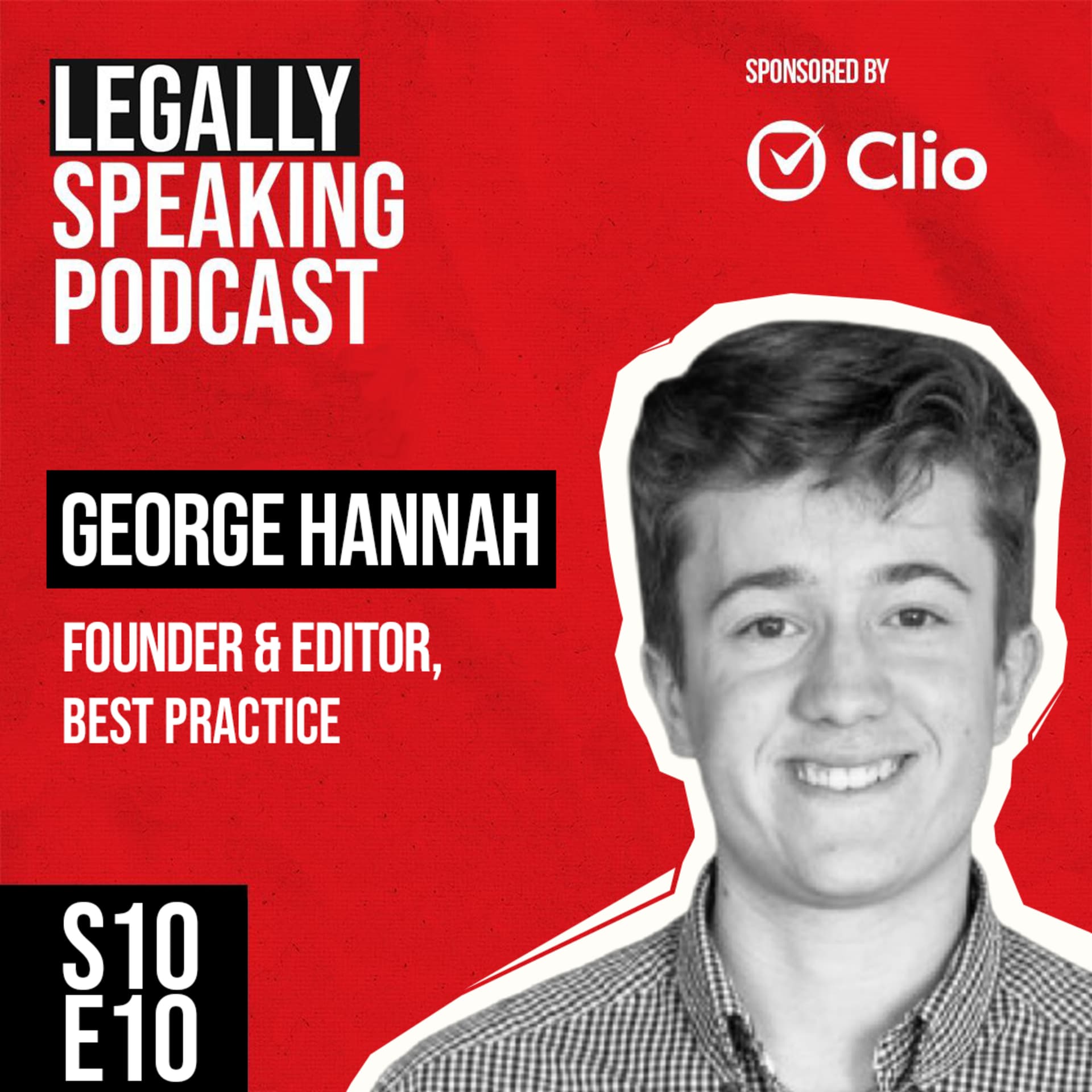
George Hannah: The Brand-Building Solicitor Apprentice Preparing Tomorrow’s Lawyers with AI - S10E10
Podcast Description
The Legally Speaking Podcast is a platform that aims to inspire, educate, and entertain listeners about the legal profession. Hosted by Rob Hanna, the podcast features various guests discussing topics such as legal innovation, career growth, AI, wellbeing, and redefining success.
---
Episode Overview
In this episode, host Rob Hanna speaks with George Hannah, a solicitor apprentice who has made significant strides in his legal career, particularly in the realm of AI and personal branding. George shares insights on his journey into law, the importance of commercial awareness, and the ongoing evolution of AI's role in the legal profession.
Key Topics Discussed
- Commercial Awareness in Law Firms:
- Importance of understanding business models, especially consumption-based models.
- Law firms’ cautious approach toward AI adoption due to costs and risks.
- AI's Impact on Legal Practice:
- Growing demand for AI-related legal advice as tech companies expand.
- Future legal practices likely to include dedicated AI law expertise.
- George's Journey and Experiences:
- Background: Transitioned from A-levels in Biology, Chemistry, and Economics to a solicitor apprenticeship.
- Experiences in the immigration department, with insights into handling high-profile clients, including athletes.
---
Key Takeaways
George's Perspective on Career Development
- Personal Branding: The significance of building a personal brand through platforms like LinkedIn, which George has effectively leveraged to gain visibility and connect with professionals in the field.
- Apprenticeship Advantage: Opting for the solicitor apprenticeship route over traditional university pathways offers immediate practical experience and a direct path to qualification.
Challenges Faced
- The competitive nature of securing apprenticeship positions, with George applying to 27 firms before receiving offers.
- Learning to manage workload and expectations as a junior lawyer, particularly in a high-stakes department like immigration.
Future Predictions
- A shift towards AI-driven processes within law firms, including timekeeping and client management.
- The potential for AI to offer tailored learning experiences for junior lawyers, enhancing their skills without compromising critical thinking.
---
Practical Advice for Aspiring Lawyers
- Do Your Research: Understand the culture and structure of law firms beyond their websites. Engage with current employees to gain insights.
- Maximize Networking Opportunities: Utilize platforms like LinkedIn for outreach and informational interviews to learn from others' experiences.
- Engage with AI Thoughtfully: As AI becomes integrated into legal practices, maintain a balance between leveraging technology and developing your own judgment and analytical skills.
---
Conclusion
This episode of the Legally Speaking Podcast highlights the dynamic intersection of law and technology through George Hannah’s experiences and insights. It emphasizes the need for aspiring lawyers to be proactive, aware of industry changes, and actively engage in building their networks and personal brands.
Listen Now
For more insights, follow George Hannah on [LinkedIn](https://www.linkedin.com/in/george-hannah-042078217/) and subscribe to his newsletter, Best Practice, to stay updated on developments in legal AI and personal branding.
---
Written by AI. May contain mistakes. Listen to the episode to check what was said.
Chapters
Tap a time to open that second in VOUnderstanding Consumption-Based Models in Law
0:00 to 0:30
Explore the implications of consumption-based billing models for law firms.
“Not many law firms are really going to know how to manage a consumption-based model.”
George's Background and Personal Branding Journey
1:12 to 3:08
Discover George's journey into law and his exploration of personal branding.
“Ah, it's an absolute pleasure to have you on the show.”
Navigating Career Choices in Law
3:08 to 6:45
Learn about George's decision-making process for pursuing a solicitor apprenticeship.
“Best Practice came up and I thought, OK, that sounds quite good.”
A Day in the Life of a Solicitor Apprentice
6:45 to 8:15
Get insights into the daily responsibilities of a solicitor apprentice like George.
The Role of Immigration in Football
8:15 to 12:20
Understand the significance of immigration law in the sports industry through George's experiences.
“Yeah and it's great varied experience you're getting.”
The Immigration Practitioners Legal Association (ILPA)
12:20 to 14:02
Learn about ILPA and its role in supporting immigration lawyers in the UK.
“So it's on you, George, is what you're saying.”
Introduction to ILPA and Its Role
14:02 to 15:01
Learn about ILPA's significance in immigration law and its collaborative efforts.
“So can you tell us about the organisation and what it stands for?”
Challenges of Becoming a Solicitor Apprentice
15:01 to 16:09
Discover the challenges faced during the application process for solicitor apprenticeships.
“One of those first major challenges was the number of applications that you've got to submit.”
Tips for Successful Applications
16:09 to 17:19
Gain insights on key factors for making successful solicitor applications.
“Yeah, I'd definitely say commercial awareness is really key.”
The Importance of Legal News Resources
17:19 to 18:43
Explore valuable resources for staying informed about legal news and developments.
“And the partners interviewing me were quite impressed by that, I think.”
Show all 21 chapters
Building an Audience with Newsletters
18:43 to 20:47
Understand how creating a newsletter can help build a personal audience and community.
“And the idea is that you really get to then own that email list.”
Recent Developments in Legal AI
20:47 to 21:45
Learn about significant happenings in the legal AI sector and their implications.
“What you're putting out there is really educational, helpful, practical content.”
The Future of Legal AI Pricing Models
21:45 to 23:19
Discuss predictions about the shift in legal AI pricing structures towards consumption-based models.
“So, yeah, the ideas behind some of those posts, I think definitely the 20 VC.”
AI's Impact on Time Recording in Law Firms
23:19 to 26:25
Examine the implications of AI on traditional time recording practices in legal firms.
“Obviously, we're sponsored by Clio, one of the world's largest cloud-based and, you know, legal AI organizations.”
Leveraging Social Media for Legal AI Interest
28:01 to 31:32
Learn how to effectively utilize social media platforms like LinkedIn for building a personal brand in the legal AI space.
“I also think there is huge opportunity with that.”
The Impact of AI on Legal Learning
31:33 to 35:18
Explore how AI tools can enhance legal education while maintaining the necessary critical thinking skills lawyers need.
“So how do we use AI to enhance our learning without sourcing the actual thinking?”
Future Aspirations and Opportunities in Law
35:19 to 39:50
Discover the areas of law and technology that excite future solicitors and how they can explore new opportunities.
“I think if they can get to that level, I think it could be super, super powerful.”
Advice for Aspiring Solicitor Apprentices
39:51 to 42:06
Get practical tips for young students interested in pursuing a solicitor apprenticeship, including research strategies.
Networking Strategy for Aspiring Solicitors
42:06 to 43:53
Learn effective strategies for networking and leveraging LinkedIn in legal applications.
The Importance of Mentorship and Resource Sharing
43:54 to 44:47
Understand how to give back through mentorship and provide resources to future lawyers.
“You know, you're proactive, you've got those credits, and you put yourself out there because, you know, if it's meant to be, it's up to me, you're proactive.”
George Hannah's Future Plans and Newsletter
44:48 to 45:42
Discover George's upcoming projects and how to stay updated through his newsletter.
Transcript
Automatic transcript. May contain errors.0:00Commercial awareness is really key. Not many law firms are really going to know how to manage a consumption-based model. I think a lot of law firms are also very cost-savvy. And if you had a consumption-based model, then some firms might ration their usage out of fear that they're going to go over the limit and then pay extra money for extra credits. But then also some firms already are not giving AI to all their lawyers and maybe they'll only give it to a couple of people within their team because the seats are so expensive. And so there's pros and cons to both, but it'll be interesting to see how that plays out.
0:29These firms, a lot of their clients are techie companies already, and they're all creating AI power products. They're going to need more AI advice. And so I think if they don't already have a bit of an AI lawyer practice, they're probably going to end up starting to build one out. On today's Legally Speaking podcast, I'm delighted to be joined by George Hanna. George is a solicitor apprentice at a law firm in London. He joined the firm after completing his A-levels in biology, chemistry and economics. George is currently sitting in the immigration department and is a member of the Immigration Practitioners Legal Association.
1:04He is also the proud founder and editor of Best Practice. So a very big warm welcome to the show, George. Thanks, George, for having me on. I'm looking forward to speaking. Ah, it's an absolute pleasure to have you on the show. And before we get into it, I have a couple of quick fire icebreaker questions for you. What is your favorite beverage and what is your preferred choice of footwear on a typical workday? oh that's a difficult question i'd say i don't go a day without having a black coffee it's a very lawyerly answer um the bit of caffeine in the morning is yeah helps me to wake up a bit um for the second question i think i quite like a a pair of white white leather trainers um that that's if it's like a normal day with like no I'm not going to any client sites or any fancy meeting so yeah I think that's my preferred choice of footwear.
2:02Black and white and with that we can move to beyond to talk all about you so to begin with George tell us a bit about your your background. Yeah so I do a solicitor apprenticeship at a law firm in London I started that in September 2024 straight after I've done my A-levels. It's going really well so far. I currently sit in our immigration team, so working on moving people from outside the country into the country. And on the side of that, I was watching some YouTube videos on the power of having a personal brand in January 2025. And I thought, okay, this sounds pretty interesting. I'd like to do something about that.
2:44So for about a year now, I've been posting on LinkedIn and I've been posting all from different things like the apprenticeship, early careers, right through to now talking about AI in the legal space, which is a very, very hot topic, Rob, as I'm sure you know. And off the back of that, I've also built a newsletter, which is called Best Practice. I was looking for some names and I asked ChatGPT that everyone does. I'll give me some newsletter names. Best Practice came up and I thought, OK, that sounds quite good. So I'll start with that. And I've now grown that to around 1 ,300 people in the newsletter and around, well, just over 8 ,000, I think it clocked over this weekend on LinkedIn, which is insane.
3:28And I think, you know, so many people are interested in how it's going to reshape the industry and the profession. So, yeah, commenting on that whilst the tap's running hot. Well, you talk my language, particularly around the power of the personal brand is what I try and educate our audience on. regularly, the opportunities that come your way, the people you will meet, you will be interacting with. It's just huge, isn't it? And I think the quality of the content you put out and the thought you put into things, there's a lot of hard work that goes into it. So those numbers you reference there in terms of followers and engagement and so forth is truly justified.
4:05And I've enjoyed watching your journey as well. And this is still very much the beginning. So I'm excited for your your future but just going back a little bit what was in what inspired you originally to pursue a career in the law it was in like year 12 year 13 time and all the careers advisors that sixth form were like right come on what are we doing are we going to university apprenticeship job gap year like start getting your life together kind of thing um so like everyone does i went to some university open days and we had some i went to a very good sixth form and actually we had like employers come in to talk about like careers fairs and stuff and there were a few like lawyers there but they're very much like the regional offices there weren't any like massive city firm and they were just talking about because for a long time I thought law meant oh okay your parents are divorced and they need to get like all their paperwork sorted out or like your granny's passed away and you need to get your like estate sorted out that's all I thought it was And so I spoke to these lawyers at the careers fair who do a lot more commercial and business side stuff.
5:12I thought, OK, that sounds very interesting. And maybe this is a career route I can pursue without boxing myself into finally, because I can go down intellectual property, immigration, employment, corporate. And so I decided to explore that a bit further. I went to some university open days. I wasn't very impressed by the how little number of contact hours you got at university especially for law and I was like you know you're only getting eight or ten contact hours whereas if you were to do pharmacy or medicine you're getting like 20 plus contact hours and for the for the 9 ,500 it costs you a year I didn't think it was really worth it for most of your degree to be self-study so I thought okay surely there must be another way came across young professionals on instagram uh damon is doing really well he's also on the apprentice uh on the tv he's doing really well for himself and he basically his business hosts loads of um open days for people in year 12 and 13 like me at massive law firms like link laters a and o sherman uh coca-cola like they're not all in law went to one at link laters and ano and i was like wow this is like you know big city life this is cool yeah um so then they're they're also promoting their apprenticeship routes and so yeah i applied for 27 different apprenticeships and got
6:44um assessment centers and two offers in the end so yeah that was very very hard but um pleased i pleased i pulled through and pulled through you did and i guess you are a solicitor apprentice now at a firm for those who may not be familiar what does your role actually involve yeah so the apprenticeship route is a six-year route to qualification and the first four years you're doing your undergraduate degree so I do mine at BPP online from home one day a week on a Monday which is my study day and then the remaining four days of the week I work for the business and the best bit about that is i get to rotate around the different teams that the business and the firm has to offer um and then the remaining two years within that six years you're doing the training contract and you ultimately qualify so some of the day-to-day stuff that i do is very much you know supporting the fee owners within my team but the firm is also very good at say if I have an interest such as an AI maybe it's in marketing then I can very much voice my interest and also get involved in bits within those different practice areas as well so I've been able to make some document automations for the team I'm in I've been able to help with some of the marketing stuff for our team so yeah a bit of everything really a bit of a generalist.
8:16Yeah and it's great varied experience you're getting. I mean you touched on it a bit before around the contact hours but what prompted you to pursue the solicitor apprentice route versus other routes that are out there? The two main routes into law are either like going to university and then getting a training contract or going by the solicitor apprenticeship route and to be honest I've only been posting on LinkedIn for a year but I've been on it since I was in like year 11 and i just love stalking people in year 11 and i was looking at all these like i don't know partners and like random ass people like associates at random law firms on linkedin and one thing that they all had in common is that they went to university but also because the training contract which which is what you kind of need to qualify is so competitive these people have to power legal for years and years and years and no matter what university you went to bristol or Cambridge LSE these people having to paralegal for three four years which is not a bad thing but just goes to show they're almost in the queue to get a training contract and I was thinking you know that plus the debt plus three years at university it's going to be years before I even qualify so I thought the apprenticeship is six years you've got the training contract in the bag already and so I thought okay I'll just give this a shot and so yeah that was a driving factor.
9:38and you've not looked back and it's been really really successful for you thus far would you mind telling our listeners about what a typical day looks like for somebody like yourself in your current role break it down for us my first day I get into the office around well 8 30 before most of my team get in really everyone else gets in nine so I look good and then I'd say I get like oh well I check my emails first thing and I think one of the hardest things that I struggled with especially in my early days as an apprentice was saying yes to too much stuff and so I'd have all these people in my team being like oh can you you know do this do you want to do this I might have I don't know some event that I've got to go to in the evening or something and you don't want to let anyone down so then I end up saying yes to too much stuff and especially in the early days I wouldn't know how long stuff would take me and so it's almost trying to like learn I'm much better now at knowing how long something's going to take me now but learning how long a task is going to take to see if you've got capacity to take it on so yeah so checking my emails I then probably go upstairs we've got a lovely free barista bar at the firm of that so making the most of that going getting my black coffee and then yeah like cracking on with any tasks that I have been assigned.
11:04And so in our immigration team, we work with a lot of football clients. And so these might be people, for example, a football player might have been scouted out in America or Jamaica or the Netherlands or something, and they want to come and play in the Premier League. And so I might have been sent a task by an associate to, they might have already filled out a questionnaire that we might have sent them and it's then going through and filling out the form on the official government website and then sending it back to the associate to review and then who will then go and send it back to the client and make sure it's all correct before we submit it booking lots of appointments as well so especially some of these like football players you know they are they get very high level treatment and so making sure their appointment is booked in their home country where they can go and provide their biometrics which is their out fingerprint and face so they can get their visa.
12:00I think that's, you know, a very varied mix. And you'll probably be interested to know, we've also had David Jones from Sky Sports News, Monday Night Football on the show. And he talked a long time ago now about BAR and some legalities around the law. So it's really on you if some of the really hard supporting fans aren't getting their players, you haven't been able to sort the immigration out for them. So it's on you, George, is what you're saying. Yeah, yeah. Yeah, it's very much my stakes. I mean, with that, is there one memorable project that you've worked on thus far that you're proud of or you think has been the greatest lesson for you given where you're at with your career?
12:38Well, back in the early days, so in immigration, you'd used to receive a physical, almost driver's license when you'd be given your visa. And those have now been phased out. So now you get an e-visa, so it's all done digitally. but back in the day we had to do these like when I first joined and we could only do these for a couple months before they got phased out at Christmas 2024 we used to have to do these identity checks and so before the applicant whether that might be the vice president of some marketing company whether that might be a really famous football player we'd have to give them a team's call to make sure they're a real person and then they'd have to like come on the team school and like share their passport and stuff and so yeah some memorable times would be being able to be on like facetime with some like you know insane football player and their manager um and then being like yeah like i sorted or i helped to sort you know their visa so yeah do you have a football team yourself do you follow or you're a fan of a team not not particularly actually no but we do work some pretty pretty major clubs rob Yeah, no, I'm aware.
13:53And yeah, as an avid football fan generally, I'm impressed by the work that you and the firm does. You're also a member of the Immigration Practitioners Legal Association. So can you tell us about the organisation and what it stands for? ILPA is essentially an organisation of all the immigration lawyers across the country, really. And one of the most important things they have, given it so political, is they have a lot of working groups. and so immigration has done quite well to be able to do um be all like digitalized and so i've joined some of their calls and then some of their working group discussions on like moving from the brps back in the day to now the e-visas and some of the you know early on there was a lot of problems with the e-visas but that's since been ironed out so it's essentially just like we use it what i use it as a bit of a forum to discuss different problems and then maybe we'll goes to like the home office with loads of different people from different law firms it's like oh these these are problems can you sort them from all of us yeah and that's the benefit of organizations groups communities you can lean on people get quick fire answers to people who have that that one piece of advice that can really help you something you might be stuck on particularly at the early stage of your career look it's all sounded positive thus far but you did mention before the number of applications you actually had to mention uh make 20 odd plus um but again for those that might be listening to this that aspire to get to where you are in their journey, what have been some of the challenges you've faced on your journey to becoming a solicitor apprentice and how have you been able to overcome them?
15:29One of those first major challenges was the number of applications that you've got to submit. I think it is very much a numbers game and given the ratios, I was quite lucky to have got six by assessment centres, but that is from applying to over 20 like nearly 30 applications I think one of the worst bits is that you don't really know what they're looking for and then you get some really generic rejection email being like oh sorry you didn't have the qualities we were looking for and yet they don't really state the qualities they are looking for so you don't really know where to improve your next application I think one thing that applying to so many did help me with though is the the video interviews a lot of firms it's very popular now to have a video interview a bit like this except for the fact you might have a question and then you have 30 seconds to think of an answer and then the count the the clock is like counting down it's like three two one record and you've got to like um like sit to the camera and talk for a minute and a half about the question that you've like kind of scrambled together um and so you can only really get good at those by just doing a lot of them so i did in my 30 odd applications um and yeah i think you know every application kind of like makes you better for the next one really yeah practice practice makes perfect and you know have you got a top tip or a couple of top tips for a successful application now you've been through that process?
17:03Yeah, I'd definitely say commercial awareness is really key. I think when I got to the assessment centres for the respective firms I was at, I was able to name a case that they had worked on and also a case I was interested in with confidence. And the partners interviewing me were quite impressed by that, I think. And there are a couple of places where I used to get my information from and still do actually. So if you're at school, you can get the Financial Times for free which is really good because it's like 45 pounds a month otherwise if you're if you're a private person I also read Iden's newsletter Little Law and that goes out every Wednesday and that is action packed with all different news stories and how you can write about it in your applications and there's also another one I used called Zip Law like a zip in your coat um and that was that's essentially similar to little law but he maybe goes into a bit more depth and a few more different cases and you do have to pay for that one but is definitely a resource worth having yeah absolutely and and ludo behind that has been on the show from zip law and we know adin very well and he's also collaborated with the show two very very respectful resources and really well said and another respectable resource of course is the best practice newsletter and you uh you know we must thank chat gbt for the uh for the for the assistance for the name um but you mentioned before you obviously are the founder and editor of that weekly newsletter decoding legal ai and how technology is reshaping the profession what were your motivations behind starting the newsletter well i think one of my motivations to starting a newsletter is really i was posting on linkedin throughout last year and a lot of my linkedin buddies all right okay what's the point of you like like great you're getting this visibility but you know a lot of people like to funnel their audience somewhere and it's the idea rob of you know i think i might have got this idea from you even is you rent your audience on linkedin you rent your audience and x on instagram you don't own those followers right so it's the idea that you can funnel these people into a newsletter that can be on any in any vehicle that can be on ConvertKit, Beehive, I choose Substack because it's free and it's got the most powerful tools.
19:24And the idea is that you really get to then own that email list. And so if the algorithm on LinkedIn, which is kind of already going a bit bad, then you can take that email list and do whatever you like with it, really, and you can import it to another platform. So it's kind of de-risking yourself. And I think also it's a lot more powerful in the way that you can move from that short form content to that long form content, especially with the likes of podcasts as well. It really builds a trust between yourself and the audience, which I think is also really important. Yeah, and absolutely. And I think it's very smart that you've done that.
20:00And yet I do talk very openly about these big platforms that we're all on, of course, for business interests, for commercial interests, for networking the likes of LinkedIn, which I'm a huge fan on. And this has changed my life. I'm forever grateful for LinkedIn. But, you know, who knows? One day your account goes. One day you're not flavor. One day, you know, something out of your control. And eventually those years of hard work have gone. And so, yeah, you need to find a place to own and also warm that community. I follow your newsletter. I look forward to your newsletter weekly. It drives further discussion, engagement, community.
20:33And through that, you know, you're building your own micro community, which, of course, will be a huge community over time. And you're utilizing the platforms to your benefit, but also finding a housing for them as well. And I think it's really smart that you do that. And it's just with sheer value as well. What you're putting out there is really educational, helpful, practical content. And sticking with that, then, in one of your recent articles, you shared a big week for Legal AI. Orbital closed a 60 million Series B. Vibeco Law launched as the first community platform for lawyers experimenting with lawyers.
21:05And Legora shared why Legal AI's pricing model is broken. So just one of your articles. I think they're all brilliant. But could you tell us a bit more about that article and why did you choose to discuss those particular topics generally just to get into your mind of how you think as a creator? Yeah, so I get my my news content from a variety of different places. Primarily, I just go on to like Google and then we'll search legal AI. Then we'll just go to the news tab and see what's there. And I also get a lot of my my sources from LinkedIn itself. And so people who drop a lot of interesting stuff on Mitchell, I have my notifications turned on for them.
21:45So, yeah, the ideas behind some of those posts, I think definitely the 20 VC. So I think all the Legal Tech founders that he had on Harvey last week and he had Max on very recently as well. And I think, you know, within a podcast, you can unpack so much value that you can make into almost so many different kinds of posts. And I'm all for, you know, that content, you know, repurposing and taking snippets from a podcast and then doing your takeaway, I think, is really impactful as well. And so, yeah, I listened to that podcast with Harry and Max on the train. And I was, you know, thinking, OK, what's kind of interesting that no one else is really talking about?
22:29and they were talking about the the pricing model and how max thinks that the per seats so you pay you know x amount per month per lawyer is actually going to disappear in a few years because if you look at the likes of cursor if you look at the likes of well a whole other range of software companies 11 labs you go on to there you want to get some audio distilled and so it's isolated So it's just the voice and you get like, I don't know, 10 ,000, 100 ,000 credits a month. And so, yeah, moving AI towards that consumption based model is what Max predicted. And then I was able to then, you know, do my takeaway on that and thinking about, OK, well, not many law firms are really going to know how to manage a consumption based model.
23:18I think a lot of law firms are also very like, you know, cost savvy. and if you had a consumption-based model then some firms might ration their usage out of fear that they're going to go over the limit and then paying extra money for extra credits but then also some firms already are not giving ai to all their lawyers and maybe they'll only give it to a couple people within their team because the seats are so expensive and so you know there's pros and cons to both but it'll be interesting to see how that plays out let's build on that then to get your your future predictions and thoughts as someone who's sort of early stages into the profession going through your, you know, your Slitter Apprentice route, you know, legal AI is continuing to evolve rapidly.
23:56Obviously, we're sponsored by Clio, one of the world's largest cloud-based and, you know, legal AI organizations. And, you know, we love what they're doing and their AI innovation, I think is super impressive. But where do you see legal AI having the biggest impact on the profession in the coming years? That's an action-packed question. I've got lots of different views and different things. Where we're seeing a massive, especially for AI with legal teams is actually in the in-house markets. We've seen so many different players such as Legalfly and Wordsmith based up in Edinburgh, we've got GCAI based out in America and they're doing amazingly well.
24:33They're all onboarding insane clients and their whole sell is that you can then reduce outside spend on law firms like us and which is you know good and bad but then as these firms a lot of their clients are very much techie companies already and they're all creating ai power products and so they're going to need you know more ai advice and so i think law firms if they don't already have a bit of like an ai lawyer practice they're probably going to end up starting to build one out a bit like what link latest announced a few months ago they've now got their like ai lawyers who kind of work as a bit of like a legal engineer and the fact that they go into these companies help them set up workflows but then also know a lot about the governance about these legal tools themselves another thing that i'm betting on that i'm we still haven't really seen much on is ai time recording law firms i think are going to really struggle to move away from the billable hour are and i think you know not just because clients want fixed fee stuff but it's also because in the law firm economics um you know if you want to get a bonus the partners in the team will look at not only just okay have you brought in new business have you been doing de and i stuff but how many hours have you billed have you gone over your target have you done above and beyond and you know it's also really useful for partners to see within the team okay george is only billing three hours a day he can't be very busy let me check in with him and see if he needs some more work oh um lawrence over here is building 12 hours a day he seems super busy let me check in and see if i can take some work off it and give it to someone else so it's actually a really powerful metric the billable hour not just in the fact that for performance but also for the business and so that brings me on to my prediction which i think you've got the likes of laurel and you've got the likes of point one who do ai powered software time recording so you're still billing your time you're still recording your time but the bit i hate the most about time recording is the whole narrative writing oh sending this form to so and so and then doing this and this if ai could then record my screen and i don't have to keep them going in and out and stop insulting my timer that would be yeah like game changing you'll know that i'm working in my emails it knows that i'm working on the government website and I'm filling out a form for this client for this matter.
27:04Yeah. So I reckon it'll be a couple of years until we see that. Today's Legally Speaking podcast episode is proudly sponsored by Clio. If your legal management software feels more frustrating than helpful, you're not alone. Many solicitors across the UK delay switching because moving client and case data sounds like a headache. Clio makes it simple. As the intelligent legal work platform, Clio combines context-aware AI with trusted legal research to power your practice. And when you switch, their dedicated migrations team supports you every step of the way, ensuring a smooth transfer of your data.
27:41You'll also get award-winning support 24-5 via live chat, phone, and email. So help is always there when you need it. Ready to leave frustration behind? Visit clio.com forward slash UK to learn more and discover why so many UK solicitors choose Clio. Now back to the show. I also think there is huge opportunity with that. And I've interviewed the founder of Ajax before as well, who do similar thing when it comes to time recording. And again, so much of that is also great data for internally for law firms, like you say, that could be used to make them even more efficient, more better with their key product, which of course they're people.
28:22So yeah, I love that okay we've touched on linkedin um but i want to go a little bit deeper how are you using or utilizing social media platforms like linkedin to share your interest in the legal ai world yes this brings me back to when i was watching these videos on youtube about the power of having a personal brand and i was thinking okay at the first i really wasn't comfortable going in front of a camera because for a long time i thought oh that means i need to start a youtube channel or be on TikTok and I didn't want to be rattling onto a camera and Instagram was too graphic-y like you couldn't really write much with the graphics and then I was thinking oh wait I'm already on LinkedIn LinkedIn you know you've got the you've got the graphics you've also got some you know like long form text it's not just a few little little words like it is on Twitter or something and so I thought okay I'll yeah I'll dive into LinkedIn but I don't only use LinkedIn now I post I cross post so I use like a software so I will post my post on LinkedIn but that same post will also go live Rob across blue sky x and threads and I have actually noticed quite a few like you know hundreds of views on threads and so i think threads has some potential in the coming year next year as well and it's really annoying that you can't schedule notes on substack because otherwise i would be doing that but it requires you to like manually post it um but otherwise yeah substack has massive potential i think as well especially with the way that on substack you can be scrolling through the home page on the notes function and then press subscribe and you're essentially then sending your email to that person but if you were doing it on LinkedIn or Instagram it's just like a follow so yeah I think there's a lot of potential it's a powerful change there and I think you make a really important point which I talk a lot about when I do public speaking at events and I shared this at the Law Society event last year with the likes of William Peake and Patrick McCann people you all know very well and I talked a lot about having a WAV strategy when it comes to your content creation which is either written audio or video maybe you don't like doing video so you drop the v maybe you don't like doing the audio size so you drop the a so you lean into the w and if you're a lawyer and you like writing so like for yourself you've done fantastically well and then over time you build confidence and suddenly you start bringing that a into you and then you bring the v you go on podcasts and so always think about where your current strengths are and have what i call a a web strategy and then on on linkedin generally you know you should you should put it into buckets which I think you do very well, which is sort of like your hero hub help content.
31:06So, you know, the help content is people are looking to you to come for information. Maybe they're seeking advice, seeking wisdom. Your hub is kind of the people that you're continuously warming up and speaking to generally. And your hero content are the people that, you know, they want to know about your wins, your successes and things like that. So I think definitely folks go and have a look at hero hub help and also follow some of my content for the WAV strategy just to help you get started, because it's been phenomenal watching your journey on LinkedIn and the growth that you've had. And In one of your recent LinkedIn posts, you explained AI tools are everywhere in legal education and early practice.
31:39So how do we use AI to enhance our learning without sourcing the actual thinking? And that is the 100 million dollar question, Rob, I think, definitely. I'm guilty of it as well. We know as humans, we want to have as low as a mental load as possible. And so we offload that mental load to ChatGPT, to Claude, and we really outsource our thinking. But, you know, judgment is what lawyers and what is what clients pay law firms so handsomely for, right? And so judgment is built off repetition. But if all that repetition work disappears, then I don't know how we're going to necessarily build the repetition and the judgment needed.
32:24and so there are now um ai startups such as be savvy and with mike and he's built like an ai training ground for lawyers and it's like a safe space almost to go and learn different parts of the m &a deal and then you know try and put some bits together before you actually go and try and do one in real life which i think will do really well this year but then also for legal education as well i think actually no i think it also comes down to really the vendors themselves and so in google gemini and in chat tpt they've both got like a learning feature which you can toggle on it's very simple toggle it on and off but if you have it toggled on and i go and ask it a question about tort law or um contract law it'll be it'll try to you know dig into me and be like you know try and get my current understanding of what I think about it already before just blurting out an answer and so I think if Harvey and Lagora and the other software practices were to build this into their platform and know that Robert Hanna is a 20-year M &A corporate partner and he has done this review 4 ,000 times therefore I can give him the direct output but then it knows over here you're dealing with um according to my profile it knows that i'm logged in as george and it knows that i'm a second year solicitor apprentice it knows that i don't know everything and that i need a bit of help and that it should probably test my knowledge and so i go to question it and it'll be like oh have you thought about this and what about this kind of thing so i think maybe having a bit of a learning thing especially because you know all these massive law firms now have harvey and lagora signed on and i definitely know that me and my apprentice peers are using them like crazy but we still want to be able to also analyze the output as well because i think so many junior people if we don't have those skills built up we just get the output and we're like oh that must be correct because harvey's going to never be wrong and then we'll just go and stick that into some email and then i don't know six months later we get held up at the solicitors tribunal for not missing out some comma or something so whereas if it was going to someone more senior there'd be or they'd have the skills to interrogate that output so yeah there's definitely a lot to think about for the firms and also there's a lot to play i think in these vendors hands the word co is so important that you know microsoft didn't call it autopilot they called it copilot right and that's very intentional naming for that because they're trying to work with you to collaborate with you, not just to sort of completely automate away, you know, absolutely everything.
35:11So your line of thinking goes, and I think similarly with these tools, like you say, understanding who's using it and actually co-working with you. So maybe hopefully they can co-develop you and co-provide better quality of work for you and outputs. I think if they can get to that level, I think it could be super, super powerful. Okay. Just one more on LinkedIn. I know we've talked a lot about that, but it's changed your life. And I can say that on your behalf, because I can see the results, the actions, the opportunities that have come your way. And, you know, it's through no, you know, you put in the hard work, you put in the yards, you put yourself out there.
35:40You've probably had to overcome some internal sort of, you know, worries or fears about putting yourself out there. And I think, you know, as a result of that, you've been fantastic and it's grown and you now have over 8000 followers on LinkedIn. So maybe to inspire maybe the next generation or indeed current people that are thinking, oh, I see, George, I wish, you know, oh, I think I could do that. What would be your top three tips to start helping people to get posting? yeah i think tip one is definitely not to overthink it and thinking that your first post has to perform exceptionally well and now i was in a very fortunate position that my first post did perform really well it got like over 2 000 likes i think that um really like spurred me on to post more but i think you know having that consistency because not everyone's first post is going to do that well have the consistency to go in and keep on iterating in your posts and learning okay what works well and what doesn't work well like if i post some amazing infographic i know or i can kind of predict now that is gonna perform quite well compared to if i was just opposed to like a video snippet from a podcast they don't always perform well i'd also say follow the creators that you really admire and then reverse engineer what they're doing and so there's a guy on linkedin called matt gray and he posts all of all of his posts are like these handwritten like notes on the notepads and that was one of my first posts right because i was seeing how well his posts were performing and they were getting like you know 800 likes and so i thought okay instead of just me doing a carousel on like my top tips to get an apprenticeship which is what my first post was i thought i'm gonna utilize i've already got the skill luckily um thank goodness to school and my mum for teaching me good handwriting but i wrote down on a piece of paper my top skills and then also i was looking at matt gray's post and thinking okay this is how he structured it with all these single lines you make it really easy so you have an amazing hook you then press see more you dwell more have more dwell time on the post and your eyes are just flowing down the post and it's so nice and easy on the eyes you're not reading these massive fat chunky paragraphs and so I thought okay I'm going to make it so my post is in the style of that as well and I think I've come across acting a bit surprised as if my first post done so well but I think actually it's because I had really looked at what you need to do to get a high performing post and you do the same for anything if you're making a thumbnail for youtube it'd make sure it's some amazing thumbnail um so yeah i'd definitely do that and then third tip would be it kind of links with the first one but not overthinking it but i think a lot of people think you need to be a domain expert to talk about what you're talking about if you i i was interested in ai and legal but boy did I did not have any experience talking about it.
38:45I don't really know much about Harvey and Agora. I didn't know about all the, any other, all the startups. I didn't know about what series A fundraising was compared to series D. And I think a lot of people think you need to be some expert to read loads about it and watch loads about it before you feel qualified enough to talk about it. But actually you learn so much and actually you probably learn at a lot faster rate if you were to just go and dive into it straight away which i did and don't regret doing but i think you also put in some work you know as you mentioned in tip number two you know you went and you know did some research you looked at what's working like anything you know it doesn't come overnight people go to your profile now see how well it's going see what you're doing see the newsletter see the opportunities but you know you did put in the work and i think that's a key point there you know in the world of ai and everything else yes there is ways to speed up but sometimes there is no substitute for putting in the work and you know as a result of that you know the results do do flow before um i let you go george you know you continue your solicitor apprenticeship route and you know wishing you lots of luck with that what areas of law or technology are you most excited to explore moving forward we're definitely looking at how ai is going to impact the legal industry and i think we have uh the firm i'm out we've got a legal tech team so hopefully within my apprenticeship i'll be able to do a seat within that and learn about all the different automations and the different processes because they get quite a nice bird's eye view of the entire firm actually they've got to know at quite a deep level what the problem um is in the employment team or the ip team that they're having and then what how are they going to use technology and you're going to use automations and processes to eliminate that problem for the lawyers and to know that problem they've got to know it quite deeply so i think that would be quite a nice team to spend some time in i'm also really looking forward to the ip team they work with some really interesting clients and some really interesting cases and it's quite like niche some of the stuff they do with like i don't know a design of something and how it can infringe someone else's design especially with loads of copycat brands around especially off the likes of like you know alibaba and team you making copycats of the real things and then the actual company and then they sell loads of units and then the real company who came up with the design don't get very impressed so that looks really interesting and i think i'd also i'm also looking forward to a bit of the corporate team probably given i write so much on startups and different funding rounds and mergers and acquisitions I think actually seeing that from a law firm a team lens would be quite interesting to see so yeah those are my hopes for the future and a very exciting future ahead for you I have absolutely no doubt but finally what advice would you give to young students looking to pursue the solicitor apprentice route into law I think I'd definitely say my first tip would be to do your research if it's something that you want to do then make sure when you're researching a firm you're not just looking on the firm's website then calling it a day if anything you know lots of firms have podcasts and so going on to the podcasts and noting down what a particular partner said and then maybe writing about that in your applications would really pay dividends um a thing that i done rob that i don't see many people doing is actually i uh got on linkedin again this is using linkedin i got the the premium version and the premium version allows you a 30-day free trial because i was not paying 60 or quid a month and it gives you something called in mails which are really cool because it means you can slide into anyone's dms you like without them having to accept your connection request and so i was looking at all these different firms and most of them did have solicitor apprentices there already and i was using my email credits my 50 email credits and i was messaging them only a very short message being like oh i'd love to like have a quick call to see what it's like at your firm most you know didn't reply but the some that did those conversations were you know amazing and i've done really well for that in my applications for those respective companies, probably because I was able to speak to someone and understand a bit more about their culture and what they're like and a bit more of that inside of you.
43:34And so I do get students messaging me on LinkedIn now and I definitely do try to take the time to reply and if not have a call with all of them because I know how hard it was when I was applying just a few years ago and how much a simple call can actually go go and help. I think also that the message I'm getting there is shoot your shot, right? You know, you're proactive, you've got those credits, and you put yourself out there because, you know, if it's meant to be, it's up to me, you're proactive. And so get people, hopefully, just go and shoot your shot, go and send that message, put yourself out there.
44:09And the other point you mentioned, it's very kind that you give your time, but it will get to a stage where you can no longer physically have a call with everyone, that you can speak to everyone, reply to every message. But the way that you are still helping people is actually back to the point about where you're housing people on your newsletter the content you're providing you can get people to go there you can educate them you can signpost them i get lots of people reaching out to me that want specific calls and so forth and we can signpost them and say hey go listen to this episode with george around the halfway mark he'll tell you a bit about this that and the other so it's a great way as a creator where you can continue if you can't have all of these one-to-one calls but you have some a platform where you've got educational tools you can help signpost them give them access to information to help them as as much as possible um george it's been a fascinating discussion really enjoyed learning a bit about your background i'm very excited for your future no doubt we'll do some future collaborations as well but if our listeners want to follow you or indeed learn more about your career or currently what you're getting up to or get access to your newsletter where can they go feel free to share any websites any social media handles will also include them this episode for you too um well obviously rob i think it would be linkedin is where you can find me uh george hannah yeah there's also my newsletter as well which is called best practice which there is a link to on my linkedin page and i'll take you through to substack and feel free to sign up to that and every sunday i will send you the very latest in legal ai developments and say you're not staying behind but actually staying ahead of the curve um so yeah no thanks rob it's been an awesome discussion and looking forward to maybe doing some future podcasts and seeing on how it's all going absolutely there could even be the Mr.
45:48Hanna and Mr. Hanna podcast show. Who knows? But from Mr. Hanna to Mr. Hanna, thank you so much for having you joining us on the show. I've really, really enjoyed it. So from all of us on the Legally Speaking podcast, sponsored by Cleo, wishing you lots of continued success with your very exciting career ahead. But for now, from all of us, over and out. Thank you for listening to this week's episode. If you like the content here, why not check out our world-leading content and collaboration pub, The Legally Speaking Club, over on Discord. Go to our website, www.legallyspeakingpodcast.com There's a link to join our community there.
46:23Over and out.
From the publisher
On today’s Legally Speaking Podcast, I’m delighted to be joined by George Hannah. George is a Solicitor Apprentice at a law firm in London. He joined the firm after completing his A-Levels in Biology, Chemistry and Economics. George is currently sitting in the Immigration Department and is a member of the Immigration Practitioners’ Legal Association.
He is also the Founder and Editor of Best Practice.
So why should you be listening in?
You can hear Rob and George discussing:
- Commercial Awareness Being Essential In Law Firms
- Law Firms Being Cautious With AI Adoption
- Demand For AI-Related Legal Advice Increasing
- Future Legal Practices Likely Including Dedicated AI Law Expertise
- Early-Career Lawyers and Apprentices Already Engaging With AI Discussions
Connect with George Hannah here - https://www.linkedin.com/in/george-hannah-042078217/