
In short
Legally Speaking Podcast - Episode Summary
Episode Title
- Is Your Voice Sabotaging Your Career? 3 Vocal Traits That Inspire Authenticity
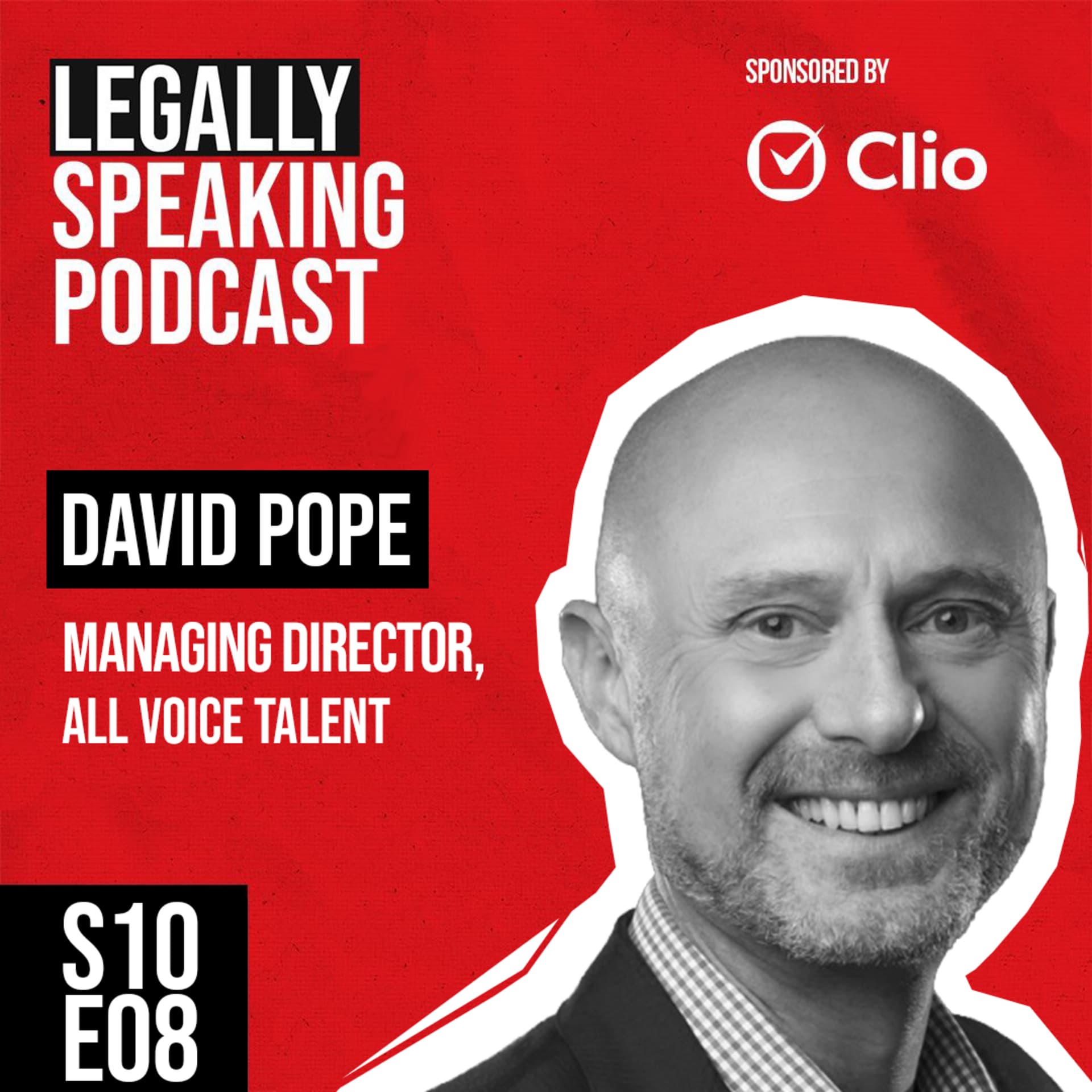
- Guest: David Pope
- Season: 10, Episode 8
Episode Overview In this episode of the Legally Speaking Podcast, host Rob Hanna interviews David Pope, an Executive Voice Coach with over 30 years of experience coaching legal professionals globally. The discussion centers on vocal awareness, authenticity in communication, and how one's voice can impact legal careers.
Key Themes
- The Impact of Voice on Communication
- The voice we hear is not the voice that others hear; thus, self-awareness in vocal delivery is crucial.
- Authenticity and engagement are key components of effective communication.
- Vocal Awareness and Skills
- Voice Projection and Breath Control: Importance of controlling breath for clarity and volume.
- Vocal Variety: Utilizing intonation and pacing to maintain engagement.
- Confidence vs. Warmth: Striking the right balance to avoid sounding overly authoritative.
- Overcoming Vocal Challenges
- Common issues include speaking too fast, using filler words, and monotone delivery.
- Tips to improve:
- Vary pacing based on the complexity of information.
- Eliminate fillers like "um," "like," and "you know."
- Work on intonation to avoid sounding boring.
- Building Presence and Authenticity
- The concept of Gravitas and its link to executive presence.
- Importance of balancing authority with warmth in voice.
- Engaging the audience through compelling narratives and data.
Coaching and Workshops
- David offers CPD-accredited workshops tailored for legal professionals, focusing on:
- Public speaking
- Mastering voice and presence
- Storytelling and pitching
- Workshops are designed to be interactive, providing quick, actionable tips for busy professionals.
One-on-One Coaching
- David’s Voice Intensive Program assists individuals in overcoming specific vocal challenges.
- Coaching includes:
- Analyzing the science of the voice (pitch, articulation, breath control)
- Enhancing vocal variety and presence.
Actionable Takeaways
- Record Yourself: Regularly record and listen to your voice to become familiar and improve.
- Practice Grounding Techniques: To manage nerves before speaking engagements.
- Engage in Opportunities: Accept speaking roles to build confidence and competence.
Advice for Legal Professionals
- Speak authentically rather than trying to imitate famous speakers; trust in one's unique voice.
- Preparation is key for panel discussions. Familiarize yourself with fellow panelists and structure your contributions for balance.
- Leverage storytelling and data to connect with audiences effectively.
Conclusion The episode emphasizes the integral role of voice in legal communication and career advancement. David Pope encourages listeners to embrace their unique vocal traits and continuously develop their communication skills.
Connect with David Pope
- Website: [All Voice Talent](http://allvoicetalent.com)
- LinkedIn: [David Pope](https://hk.linkedin.com/in/popedavid)
---
Additional Resources
- For those interested in voice coaching or workshops, visit David's website for free resources and video courses.
- Join the Legally Speaking Club community on Discord for further discussions and insights. Visit [Legally Speaking Podcast](http://www.legallyspeakingpodcast.com).
---
This summary captures the essence of the podcast episode and highlights actionable insights for listeners looking to enhance their vocal presence and communication skills in the legal field.
Written by AI. May contain mistakes. Listen to the episode to check what was said.
Chapters
Tap a time to open that second in VOMeet David Pope: Voice Coach Journey
0:46 to 2:52
David shares his background and journey into voice coaching.
“With over 30 years of experience, David has worked with thousands of legal professionals in Magic Circle, US and local firms.”
Understanding the Importance of Voice
2:53 to 7:10
David discusses the significance of voice in effective communication.
“OK, so I graduated from Leeds University.”
Workshops Tailored for Legal Professionals
7:11 to 11:28
Overview of CPD accredited workshops designed for legal professionals.
“to understand how you can use your voice to really stand out and get noticed.”
Personalized One-on-One Coaching Insights
11:29 to 14:00
David explains the structure and focus of his one-on-one coaching sessions.
“And I think what you would do for things like that would be incredible.”
Common Vocal Challenges and Tips for Engagement
14:00 to 18:36
Learn about common vocal challenges and tips to enhance your voice for better communication.
“And I think that's what we're all looking for, myself included, really effective, authentic communication that helps build trust.”
Balancing Authority and Authenticity in Voice
19:38 to 24:01
Explore how to project confidence while remaining authentic in your voice.
“could be doing um to ensure that i'm working on this as a podcast host so you know many leaders though, David.”
Understanding and Loving Your Voice
24:01 to 26:20
Find out why we dislike our recorded voices and how to embrace our uniqueness.
“And again, I encourage people to take heed of that because we're living in a world where there's so much out there, there's so much noise and actually being yourself is the best thing that you can do.”
Calming Nerves Before Public Speaking
26:20 to 28:01
Learn effective strategies to manage nerves and project confidence while speaking.
“And, you know, the comfort zone is lovely, but nothing grows there.”
Building Confidence Through Vocal Exercises
28:01 to 29:10
Learn effective exercises to enhance voice power and delivery confidence.
“And so what we do is the thing called the winner's pose.”
Mastering Panel Discussions
29:11 to 30:42
Discover strategies to stand out in panel discussions while collaborating.
“And I'm working hard on my obviously's and arms to be removed, particularly off the back of today.”
Show all 13 chapters
Connecting with Your Audience
30:43 to 32:50
Understand the elements of charisma and effective communication with audiences.
“And I think ultimately it's about just kind of lose the ego and recognize it's just a conversation between people.”
Advice on Public Speaking
32:51 to 34:24
Get insights on building confidence and overcoming the fear of speaking up.
“You don't think about them, but they have huge impacts on your career.”
Finding Resources and Final Thoughts
34:25 to 35:27
Explore resources for improving public speaking skills and connecting with the guest.
“And there's actually a free resource that I have there as well, which is a public speaking bundle.”
Transcript
Automatic transcript. May contain errors.0:00Rob:The voice that we hear when we're speaking is not the voice that other people hear. We need to ask, is our voice inspiring and is it engaging? If we're trying to balance all of these things, the authority with the energy, the confidence with the warmth, then we're going to sound much more authentic. We put a lot of pressure on ourselves to try and sound like these other people. We need to just trust our own voice. We've got our own unique voice. And I think we just have to ask two questions. Is our voice engaging? Can we be understood?
0:35David Pope:On today's Legally Speaking podcast, I'm delighted to be joined by David Pope. David is an executive voice coach based in Hong Kong. He runs CPD accredited communication skills workshops and one-on-one coaching sessions. With over 30 years of experience, David has worked with thousands of legal professionals in Magic Circle, US and local firms. He has coached legal professionals in Hong Kong, Tokyo, Sydney, Singapore, Dubai, Riyadh, and London. David is passionate about helping good speakers become great speakers.
1:05Rob:Thank you so much, Rob. Great to be here, and thank you very much for inviting me to be on your show.
1:10David Pope:Oh, an absolute pleasure. I mean, I'm a little bit nervous today when I'm talking to a voice coach about how I should be articulating, so I think I said off air I come here looking for tips and inspiration. But before that, this is you and your moment. So before we get into it, What is your favorite beverage on a typical workday and what is your preferred choice of footwear?
1:29Rob:OK, first time I've ever been asked these questions at the beginning of a podcast. Favorite beverage. Well, I don't drink alcohol, so I would say probably my favorite beverage is a Gunners. Now, people might not know what a Gunners is. So a Gunners was invented in the 1800s out here in Asia, Southeast Asia. And what it is, it's a mix. It's ginger ale, ginger beer, two little drops of Angostura bitters. There is nothing better than a Gunners on a very hot and steamy and humid afternoon here in Hong Kong. And in terms of footwear, probably flip flops. Actually, if I'm not suited and booted, I'm usually wearing flip flops.
2:17Rob:the reason being actually the moment I'm doing it more than than often is because I'm actually training to swim the English Channel in September so I'm having a bit of a midlife crisis so mostly I'm now down at the beach I'm trying to build my stamina for this race I'm sorry not a race it's a relay I'm doing as a relay with three other people so yeah mostly flip-flops there we go
2:44David Pope:Well, there we go. Wishing you tons of luck for that. And that'll be a huge feat. But we've got a lot to get through, David. So let's take us back a bit. Would you mind by telling our listeners a bit about your background and career journey first?
2:55Rob:OK, so I graduated from Leeds University. Did you go there, Rob? You went to Leeds, right? Like my good self. Yeah, absolutely. Loved my time there. So I graduated probably a few decades before you. so yeah my my degree was in english literature media studies and i moved down to london to the big lights the big city all the excitement of going down there this was the late 80s and i was very fortunate but i secured my job my first job was as a runner at a film production company so and probably this is going to give my age now i was working with the likes and pop videos with Wham! Remember George Michael?
3:39Rob:And also, aha, dire straits. And so one of my jobs as the runner was I was having to, well, you're basically running around on all the film shoots, and I had to make tea and coffee for everybody, and I was rubbish at making coffee. So I think I never would have survived as a runner. And then luckily, the BBC came calling. So I was very, very fortunate. I got a job at the BBC as an assistant film editor. So I was working on TV series, documentaries, and very fortunate actually that I got to work on the first ever BBC co-production of feature films. They do a lot of them now, but this was the first one they ever did with HBO.
4:23Rob:So that was the first thing. And then I moved to Hong Kong and the plan was I was only going to come here for six months. and that was goodness it was 32 years ago yeah so here in Hong Kong excuse me so I've worked as a producer and a studio director so I work with all the major publishing companies preparing and producing all of their audio requirements for their listening materials so people like McMillan's Oxford University Press, Pearson Longman's, and then also working as a voiceover artist myself. And then I set up my business, All Voice Talent, and that was a voiceover agency and a voice coaching organization.
5:14Rob:So, but really, I think for the last 15 years, I've been devoting my, personally, myself to actually coaching in the corporate space. So really, as you said, helping good speakers to become great speakers. So that's my journey. Fascinating.
5:31David Pope:And you would have come across some incredible people along that journey, particularly very international as well. So I guess at what point did you realise how important our voice is to successfully communicate?
5:43Rob:I guess it would have started at the BBC because working in the cutting rooms, working, mixing audio, just listening to actors, listening to the way that they use their voice to basically connect to the audience, you know, inhabit a character and have that charisma. So that was really where it started. And then I think, as I mentioned, the work that I was doing as a producer and a director, so I would be working with a lot of voiceover talent for like TV commercials, corporate videos, and I'm getting them to be able to use their voice to sell a product. So that's really, really important. You've got to have a good voice to sell the product.
6:29Rob:And I think now, you know, thinking about, well, actually, I worked out recently, I've spent about 30 ,000 hours in recording studios over the course of my career. And so using that experience to bring this now to the many legal professionals that I work with. And so voice for them is obviously incredibly important. You know, managing partners, getting them ready for global presentations, partners. Sometimes I'm working with them, getting them ready for conferences, pitches, podcasts even. And also like senior associates, managing associates, working with them on partner selection process. So I think, you know, in the world of business, you've really got to understand how you can use your voice to really stand out and get noticed.
7:20Rob:So that's really, you know, all the way through voice has been such a focal part of my life.
7:26David Pope:Yeah. And it's, you know, I'm just reflecting on what you're saying there. It's your tool, isn't it? It's an important tool as part of your, you know, your overall makeup of, you know, how you present yourself, obviously your other skills in your toolbox, so to speak, but this is really powerful. And you run CBD accredited workshops for legal professionals specifically. So can you share what those workshops offer and how do they benefit those specifically again in the legal industry? I know you touched on it, but tell us a bit more.
7:52Rob:My first CPD accredited workshop was about 15 years ago. This is one that I co-wrote and it was called Gravitas Voice and presence. Now, I was very fortunate to be able to have this CPD accredited here in Hong Kong by the Law Society. And then that got accredited in Singapore, and then down in Victoria in Australia, and also New South Wales, and then moved across to Dubai. So the government of Dubai have accredited it. And of course, the Law Society of the UK. And so the workshops that I've done, and you're probably very familiar with people who are fee earners in the legal space, they're probably not allowed to, not probably, they're not really allowed to spend a lot of time in training rooms.
8:42Rob:So I'm very sensitive to that situation. So what I did was I created workshops that really looked at the one hour, the two hour and the three hour. And so a lot of the people that I'm working with, but not just lawyers, you know, I'm working with business development people, with back office staff, they need fast, quick, actionable tips. So the workshops I've developed, they're like public speaking, master your voice and presence, storytelling for business, pitching, mastering and speaking on panels as well. So lots of things. And all of my workshops are very interactive. So people are learning on the go, as I said, fast, actionable tips.
9:29Rob:I'm giving them exercises to do. They work in pairs. We're doing assessments. We're doing group work. So it really comes together. You know, I'm wanting to give people as much as I possibly can in the small time allotted. And interesting, actually, one of the Magic Circle law firms a few years ago, they asked me if I was able to create some online video resources as well. So what I did was I created three online video courses. So they're on my website as well. So people, if they're not able to do the in-person workshop with me, then I'm covering all bases so they can actually study with all of that.
10:13Rob:So, you know, not only are they learning these fast, actionable tips, but a lot of law firms, they are bringing me in to be part of maybe a larger development program that they're doing. So I kind of slot in if it's maybe like an off-counsel retreat as talking about business development, if they're doing a learning week. These workshops, They're standalone, but I'm also working with a lot of firms who bring me in. Maybe they have a learning week or they have a program they're doing with their lawyers or partner selection or of counsel retreat. So that would typically be something like a blended learning program where I work with them on a workshop.
11:04Rob:And then afterwards we do maybe one on one follow ups. In fact, I recently, well, actually two days ago, I just got back from Shanghai where I was running a blended learning program for a US law firm doing that. So lots of things touching on many areas that I know from experience that legal professionals need and they want.
11:27David Pope:Yeah, absolutely. And just thinking of retreats, we've done, we've been the media partner for the lawyers retreat, the inaugural one in Ibiza last year. And I think what you would do for things like that would be incredible. I want to dig on the one-to-one coaching because you have experience of doing this with thousands of legal professionals across the globe. What do you hope for them to really learn from your one-to-one coaching sessions?
11:48Rob:So, yeah, I mean, I created this because, again, it was listening to the market because I was getting calls from people. So so people in the legal space, people in business development, senior associates saying things like I've got to speak at conferences and I'm not confident. People say that my voice is too quiet. I don't have the confidence to stand up and speak in front of lots of people. And I realized, as I mentioned earlier, with all the work that I've been doing in recording studios, that I had the techniques and experience to be able to bring something together for this one on one. So what I did was I created a voice coaching program.
12:31Rob:It's called the Voice Intensive Program. And I deliver this in Hong Kong. We have a professional recording studio and I also do it in boardrooms and I do it online as well. So, again, covering all bases. So my whole modus operandi is record, playback, analyze. So I get people to bring in work related material. I've also created a manual. So in tandem, I'm working together with somebody and it's really creating bespoke training for them because, you know, everybody has their own specific nuances of the voice, particular areas that they want to work on. But overarching, some of the things that they'll learn when I'm working with them is, for example, the science of the voice.
13:23Rob:So that's about it's about pitch. It's about articulation, about projection of the voice. It's about the breathing, the breath control. So that's the science of the voice. Then we do vocal variety. So that's intonation, pacing, pausing, stress and also volume. And then the final piece, of course, is the presence as well. We mustn't forget the presence. Presence definitely goes in tandem with the voice. So it's really about learning, you know, trying to put all of these things together. And this helps people to communicate effectively and above all authentically as well. Yeah.
14:04David Pope:And I think that's what we're all looking for, myself included, really effective, authentic communication that helps build trust. It helps with yourself, your personal brand, all of those things as and when you show up in vocal, I'm sorry, visual and indeed online. Yeah. Yeah. Vocal challenges, which I was just having then. What are some of the most common vocal challenges you come across when actually working with executive clients? What are the common ones that people think? Oh, that's me.
14:28Rob:OK, so there are there are many common ones. But actually, as you mentioned before, you know, because I've worked with many, many people globally. Right. And this is across a huge range of industries. And from this experience, it's actually it's not just voice. There are three things that will help you stand out as an exceptional communicator. The first is absolutely your voice. So is your voice engaging? Is it inspiring? Is it captivating? The second is your presence. So are you able to command the attention of a single listener or an entire room? And the third piece is about the message itself.
15:12Rob:So are you delivering a message that is inspiring, that is sort of educating, getting people to take action? So actually, it's not just the voice. So if we're talking about an engaging voice, typical things are that I come across is are we speaking too fast? Is our voice pitch too high? Are we speaking too quietly? So that's the first thing in terms of the voice in presence is is our posture open? What about eye contact? You know, all of these things. And then the final thing is the delivery of the message. So are you doing, you know, with legal, right? Is it like a data dump of information, you know, very technical language legalese?
16:01Rob:Or is your message crafted in such a way that it's inspiring? So yes, there are common traits vocally, but actually it's all of these three things that come together. That's what's important.
16:14David Pope:So David, what would be your top three tips for someone looking to have a more engaging voice?
16:21Rob:We make judgments about people based on the sound of the voice. And so just like we make judgments about other people, people are making judgments about us. So I would say the three top things, the top tips is, first of all, pacing. Lots of people that I work with, they speak really, really fast. There's nothing wrong with fast speaking per se, but if you are trying to maybe impart information which is quite complex, you have to slow down. So that would be my first tip is we need to think not speaking slowly all the time. That's kind of boring, but we need to think about varying the pace, slowing down for important pieces and complex pieces of information.
17:10Rob:And then just generally speeding up for the less important. The second thing I would say would be eradicating filler words. I'm working with managing associates at the moment on this partner selection program. So I'm doing a lot of interviewing and a lot of presenting practice. And some of the words that are constantly coming up are things like, you know, like, sort of. And somebody that I was working with recently is always using the word obviously. So if you think about that, you know, you're speaking in front of a board. You're trying to argue your position as a partner to come up to partner.
17:52Rob:And you're saying, well, obviously, it's a bit difficult. got, you need to get rid of those. So thinking about getting rid of filler words. And I think the final piece would be intonation. So intonation, the rising and the falling pitch of the voice, because again, a lot of people, well, they'll come to me and they say, David, I sound boring. I mean, that is a judgment. The fact is they're just not using intonation. They're quite monotone in their delivery. So if somebody is learning to use intonation a little bit more, it brings energy to the delivery. So those are the three things I would definitely say to be an effective speaker, just work on those.
18:35Rob:Today's episode is brought to you by Clio. Are you frustrated with your current
18:39David Pope:legal management software? You're not alone and thousands of solicitors across the UK feel your pain. However, the hassle of moving all their existing client and case data holds most back from switching, prolonging the frustration. Clio is here to help as the intelligent legal work platform, bringing together context-aware AI and trusted legal research to power the legal practice management. Clio's dedicated migrations team will be with you every step of the way while you transfer your information. If you have any questions, you'll get award-winning support available 24-5 by live chat, phone and email.
19:16David Pope:So help is always there when you need it most. it's no wonder clio consistently receives five-star ratings for its ease of use and top-notch service if you're ready to leave frustration behind visit clio.com forward slash uk to learn more and see why clio continues to be the go-to choice for solicitors across the uk now back to the show thank you for being so granular in in the detail i'm sat here thinking there's more that i could be doing um to ensure that i'm working on this as a podcast host so you know many leaders though, David. Obviously, fear, as I just said there, obviously, sounding authoritative.
19:52David Pope:So that might mean losing warmth, in their opinion. So how can someone actually still project confidence and stay authentic?
20:01Rob:There was some research done recently, actually, by CTI, which is the Centre for Talent Innovation. And this research was looking at executive presence, and what were the core elements of executive presence. And what this research found was that 67 % of the leaders who were surveyed said that Gravitas was the core element of executive presence. So what's this got to do with voice? So I mentioned that I run this workshop, Gravitas Voice and Presence. And what I do is I play audio samples of people, and I'm getting people to understand the nuances of the voice. Are there speakers who are coming across with too much authority?
20:45Rob:And are they dominant? Because I think it's a cliche, you know, this voice of leaders, they're deep, they're strong, they're authoritative. That to me is not what this, you're talking about, you know, the losing warmth. You lose that warmth if you've got that type of voice. So for me, what I'm always talking to people about is the balance, the balance of authority in the voice. So yes, that is that pitch, but also the warmth that comes down to that volume and that connection with people. So there's authority, there's warmth, there's confidence in the delivery, and also there's energy as well. And this comes back to that intonation.
21:30Rob:And the fact is, we need to ask, is our voice inspiring and is it engaging? And this, this is the idea that leads to the authenticity piece. If we're trying to balance all of these things, the authority with the energy, the confidence with the warmth, then we're going to sound much more authentic. People try too hard to sound authoritative and it doesn't work. We can see through that, right? We all hear that sort of rather phony voice.
Read the full transcript
22:04David Pope:It's inauthentic. And that leads nicely onto what I was going to ask next, actually, in terms of you have shared, you don't need to speak like Obama or Oprah to shine. So why do some people try to copy famous speakers instead of actually trusting their own voice?
22:21Rob:Yeah, I mean, as I mentioned earlier, it's this perception of what a leadership voice should sound like. And so a lot of people try and do that. And everybody talks about maybe Obama, you know, he's the poster boy for Gravitas. But by the way, Obama's had years of voice coaching, it doesn't happen overnight. And so what people do is that they try and copy, and because they want to sound like this person, but actually, they're putting a lot of pressure on themselves, because we've all got our own unique voice. You know, Elizabeth Holmes, if you heard of Elizabeth Holmes, she's the CEO of Theranos, She's in prison now.
22:58Rob:You can look her up. So if you she had this genome testing thing going on in America, she was the darling of of of America. She was getting all of this funding and actually it was fraudulent what she was doing. But if you look and watch videos of her, this is absolutely somebody who is just being somebody that she's not. She's pretending to put on this voice. It's deep. It's so the pitch is so low and it's so inauthentic and it's absolutely see throughable. But we put a lot of pressure on ourselves to try and sound like these other people. And to your point, what we need to do, we need to just trust our own voice.
23:42Rob:We've got our own unique voice. And I think we just have to ask two questions. Question number one, is our voice engaging? Question number two, can we be understood? and you just use that as the touch point. Don't pretend to be somebody else. Be your own authentic self.
24:01David Pope:I love that. And again, I encourage people to take heed of that because we're living in a world where there's so much out there, there's so much noise and actually being yourself is the best thing that you can do. On that, many of our listeners may relate to this. Why do we dislike the sound of our own voice recordings so much?
24:21Rob:Okay. I ask this question all the time in workshops that I run. And I say, who here likes the sound of their voice when they hear it on a recording? And I still have this expectation that loads of hands are going to go up. And I can probably count the number of people that have stuck their hands up over the years that I've been running these sessions. So basically, it's about the science of the voice. The voice that we hear when we're speaking is not the voice that other people hear. So voices are like sound waves. So you and I, we're speaking, we're communicating. So when I speak, the sound is coming into your ears, right?
25:02Rob:And when I'm speaking, I'm not only projecting so that voice is coming out and I can hear the voice that's coming into my ears, but I actually feel the vibration. The vibration is coming up through my stomach area, my chest, up into my head. This is what we call our resonance chamber. So this is why we think we're deeper and more resonant than we actually are. So when we hear ourselves on a recording, we get a little bit of a surprise. The voice is a little bit weaker, a little bit tinnier, it's got a little bit more treble. But I have to say, if there's one thing for people to take away from this podcast is this record yourself.
25:47Rob:If you have got anything high stakes coming up, record your voice, because if you record your voice, you're going to hear all of these nuances. The volume of your voice. Are you using too many fillers? Is your intonation OK? Is the messaging really long when it could be short? You need to understand and get to love your voice, because once you do that, then that's when that confidence starts rising. So even though we hate the voice, do it.
26:20David Pope:Yeah. And, you know, the comfort zone is lovely, but nothing grows there. And actually recording your voice, listening back to it is great. I mean, look, we've got a lot of litigators and people that spend a lot of time in court that listen to the show. And, yeah, I'm sure they'd want some strategies for calming those nerves. So how can lawyers go about calming nerves before speaking in court?
26:39Rob:Mark Twain, he said there are two types of speakers, those that get nervous and those that are liars. So there's this word, it's glossophobia. Glossophobia is the fear of public speaking. I don't know if you hear they always talk about, you know, people fear public speaking more than they fear death. I mean, I don't particularly, I don't know if that's true. Death and spiders, I think. That's the thing. So, yeah, when it's natural to feel nervous, I think nerves are good because they give you that adrenaline. But it's when it moves into that cortisol, when we get really clammy hands, when the heart is starting to race, the breath rises up.
27:22Rob:And I've seen this when I'm working with people, getting them ready sometimes to go into court for the first time. But, you know, all levels of legal professionals. And what I do is I walk them through a series of exercises. So basically what I do is, first of all, I do a grounding exercise. And what the grounding does, when that cortisol is raging and maybe there's that self-talk going on, it's like, I can't do this. I'm not good enough. Oh my goodness, you know, I'm going to fail. What I do is I walk them through this exercise, basically where they're opening the body that calms everything down.
28:00Rob:I then get them to open the body wide. And so what we do is the thing called the winner's pose. And if you think about somebody who's crossing the finishing line in a race, hands go up, head back, chest out and smiling. OK, so we do that and that really starts expanding the chest. I then give them exercises in diaphragmatic breathing because the diaphragmatic breathing, it really slows everything down. Because as I said, with the voice, everything goes up here. And so we're trying to bring everything down. And the hidden benefit of that is actually it's building the diaphragmatic muscle, which helps give your voice more power anyway.
28:45Rob:So it's giving you projection. And then the final piece is the articulation. It's the clarity, the pronunciation, the enunciation, because when we get nervous, we speak fast and we trip over our words. So that's really what I do. I walk them through that. And if you do those exercises, it will really ground you and it sets you up to have a very strong and confident delivery. Build that confidence muscle.
29:11David Pope:And I'm working hard on my obviously's and arms to be removed, particularly off the back of today. What are some, as I did there, what are some of the key things to consider when speaking on a panel? How can you make yourself stand out? Because a lot of people, again, will be on lots of panels traveling around the world. How can they show up and really consider speaking on a panel and standing out?
29:30Rob:So panels are a little bit difficult because you want your moment to shine, but you don't want to dominate. So you've kind of got to get this balancing act. So as I mentioned earlier, I've got a workshop which is about mastering panel discussions. One of the things I did a number then. It's very natural. Let's not get too self-conscious about it. No, I've done another one. So the first thing I would say is absolutely. You need to have a meeting before the panel discussion. Get to know everybody and you decide who's going to answer which question, Because then that way, the moderator can make sure that everybody has an equal balance and there isn't going to be that one person who pushes.
30:15Rob:I think the second thing I would say is avoid jargon and cliche. OK, and we talked about the authenticity earlier. Be authentic. I'd also say maybe using data, use data to support your ideas. You're invited onto that panel because you're an expert in your field. So using data and research that adds credibility to you as the speaker on the panel. And I think ultimately it's about just kind of lose the ego and recognize it's just a conversation between people.
30:52David Pope:Yeah, I like that. And it's so good that, again, if you can come prepared and have some really hard hitting data, It just shows your authority, shows you that subject matter expert, shows you as researched, shows you as someone that's really the key person to be speaking to, that likely off the back of that panel, people are going to want to connect, network with you and everything else because it's a good way for you to raise your brand, get new networks, etc. Yeah, absolutely. Okay, speaking to an audience, what is the difference between speaking to an audience and truly connecting with them?
31:21Rob:It comes back to, I think, what I said at the very beginning. I talked about charisma. So for me, it's about charisma. So I've met barristers. I've met litigators. There's something about some of these people. They just kind of light up the room. You know, they've got this thing. We don't know what it is. Well, we do know what it is. It's charisma. If we go back to Aristotle, let's go back to 300 BC. Aristotle's tools of persuasion. Right. So he's talking about there are three ways that you can connect, three ways that you can influence, three ways that you engage. The first one is the logos. So this is the facts and the figures, the legalese.
32:04Rob:We absolutely need that. The second piece is the ethos. That's the credibility. And the third piece is the pathos. That's the messaging. That's the maybe the storytelling. And that's where that connection, Rob, comes in, the way that we use that. So we've got those three things. But then you've also what we've been talking about is about the voice and also the presence. So actually, in a sense, it's the five elements that will help you to connect to an audience. The way you say it, the way you look when you say it, and then the logos, the ethos and the pathos as well. Put those all together. I guarantee you will absolutely connect.
32:48Rob:And that's when you become authentic as well.
32:50David Pope:And to your point, I think with all of this, it's taking that action to understand I could be a more effective, authentic communicator with this type of coaching, because these sort of things don't necessarily come naturally to people. You don't think about them, but they have huge impacts on your career. Like you say, promotions, opportunities, introductions, all of these things. We get one chance sometimes when you first meet someone and your way you articulate and communicate. So it's been a wonderful discussion. Really enjoyed it. And as I said, I came to this very much as a student and enjoyed learning.
33:22David Pope:And I'll be listening back to this myself. So before I let you go, what would be your advice to your younger self about speaking up and being heard?
33:33Rob:Advice to my younger self, I would just say go for it. Absolutely go for it. Like fall over, make mistakes, embarrass yourself. Just get up and keep doing it again and again. This is what I'm saying. If I'm if I'm working with like PQE zero to three. four to six years, I'm always saying to them, just say yes, put your hand up, speak at the company event, offer your services to give a presentation, emcee, give the birthday party speech, you know, all of these things. You have to train that confidence muscle. I mean, I've fallen down loads of times, but I just keep getting up. And the more you do it, you just train yourself, you get confident that's exactly what i would do absolutely and everything you ever wanted to the
34:20David Pope:other side of fear absolutely yeah put yourself over that get on get on with it and yeah i've thoroughly enjoyed this so if our listeners which i'm sure they will want to follow you or indeed learn more about your workshops or one-to-one sessions or online video courses where can they go to find out more feel free to share any website social media handles will also include in this
34:37Rob:episode sure okay well if people want to get a hold of my website uh and find out what i'm offering They can find me at allvoicetalent.com. Allvoicetalent, and that's one word. And there's actually a free resource that I have there as well, which is a public speaking bundle. So it's like little videos, little assessment and some top tips. So that will start that learning journey. And also they can have access to the online videos I've mentioned earlier. If people are LinkedIn, I'm sure lots of people listening do LinkedIn, then they can find me David Pope, BBC trained executive voice coach. But what would be quite nice is if they can actually just mention that they heard you and me speaking on this podcast.
35:24Rob:It's always nice to make that connection. Right. And the final thing, if anybody is on the learning in law website, then they will find all of my information there in the UK, the learning in law website.
35:37David Pope:There we have it. Thank you so, so much, David. It's been an absolute pleasure having you on the show. And from all of us here on the Legally Speaking podcast, sponsored by Cleo, wishing you lots of continued success with your career and indeed future pursuits. But for now, over and out. Thank you for listening to this week's episode. If you like the content here, why not check out our world-leading content and collaboration of the Legally Speaking Club over on Discord. Go to our website, www.legallyspeakingpodcast.com. There's a link to join our community there. Over and out.
From the publisher
On today’s Legally Speaking Podcast, I’m delighted to be joined by David Pope. David is an Executive Voice Coach, based in Hong Kong. He runs CPD-accredited communication skills workshops and 1-on-1 coaching sessions. With over 30 years of experience, David has worked with thousands of legal professionals globally in Magic Circle, US and local firms. He has coached legal professionals in Hong Kong, Tokyo, Sydney, Singapore, Dubai, Riyadh and London. David is passionate about helping good speakers become great speakers.
So why should you be listening in?
You can hear Rob and David discussing:
- Society’s Lack of Vocal Awareness
- Voice Projection & Breath Control
- Making the Most of Vocal Variety
- Confidence VS Warmth Imbalance
- Over-Imitating Others Instead of Trusting Their Own Voice
Connect with David Pope here - https://hk.linkedin.com/in/popedavid