
In short
Authentic leadership in law amid AI disruption; building a talent pipeline that improves social mobility; why apprenticeships and non-traditional routes (SQE, City Century) matter; what younger lawyers want; diversity/inclusion progress and remaining gaps; representation and legal education evolution.
Guests
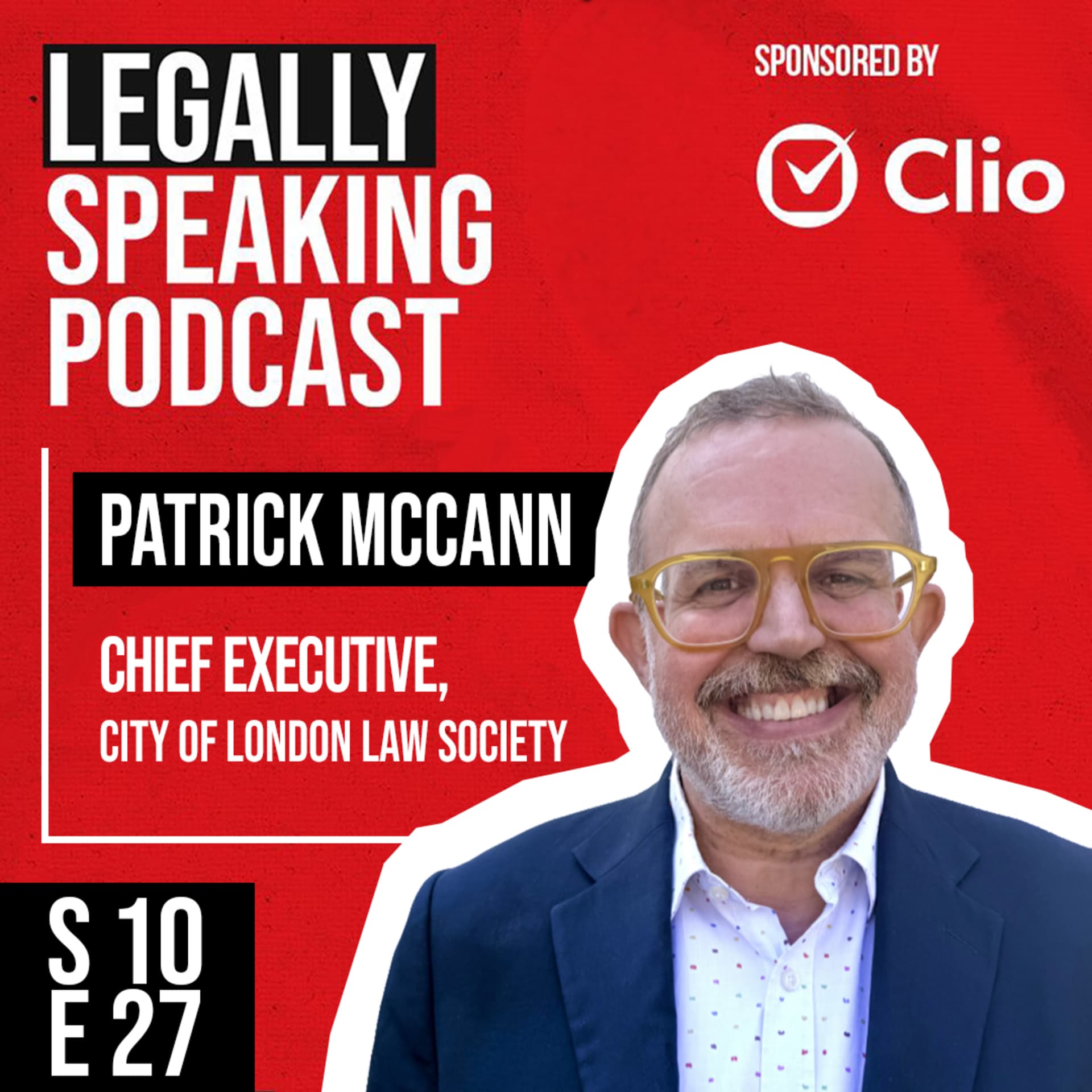
Patrick McCann, Chief Executive of the City of London Law Society (representing 21,000+ solicitors). Background: 30+ years across legal practice, learning & development, and talent strategy; Global Director of Learning at Linklaters; senior roles at Herbert Smith Freehills, BCLP, and Bird & Bird. He describes burnout at Linklaters and “de-retiring” to lead CLS.
Key claims
Firms must stop being overly critical and instead ensure people feel included and get real opportunity (work allocation, exposure, client access, name on matters). AI may reduce “knowing/doing” law, increasing demand for driven, connected, networked skills. Profit pressure and a rigid 80-hours/week model harm values and wellbeing. Representation at senior levels creates hope and challenges the system.
Notable examples
“London bus theory” for diversity; City Century funding low-SES students (days worked, one day study; 6-year qualification; 130+ recruits/year). Apprenticeships as “seismic” for junior contribution; visible role-model stories (e.g., Paulette Mastin at an O2 event). Leadership exemplars: Gideon Moore (listens), Neville Heisenberg (“get on the bus”), Yutunde Dania (connection), Sam Brown (mental health openness), William Peake (star power, honesty).
Written by AI. May contain mistakes. Listen to the episode to check what was said.
Chapters
Tap a time to open that second in VOImportance of Inclusion in Law
0:00 to 0:30
Discusses the necessity of ensuring all members feel included and valued.
“If it is that the knowing of the law, the doing of the law becomes slightly less important because AI can do some of that for you, then you might need another skill set in addition or instead of.”
Icebreaker Questions with Patrick
1:27 to 2:26
Fun icebreaker questions about personal preferences.
“Seems quite a moment for me, so I'm very appreciative and very admirable of the work that you do.”
The Role of Legal Tech in Today's Law
2:26 to 3:59
Patrick discusses his views on the integration of legal tech in the profession.
“And I won't tell your husband, but just in case some of the listeners that may know your husband will connect to the show, that could potentially get leaked.”
Patrick's Career Journey in Law
3:59 to 5:50
Patrick shares his diverse career path and experiences in the legal sector.
Passion for People Development
5:50 to 7:45
Discussion on Patrick's passion for learning and development within law.
“What first attracted you to that people development side of the profession and what did you learn from working with generations of lawyers throughout your career?”
Transitioning to City of London Law Society
7:45 to 10:34
Insights into Patrick's motivations and experiences after retiring from Linklaters.
“I remember going back to LinkedIn and seeing a retirement announcement from you, Patrick.”
Opportunities and Challenges in Legal Sector
10:34 to 14:01
Explores the future potential and challenges facing the legal industry.
“And I also thank you for being so authentic and open with your stories.”
The State of Exhaustion in Society
14:01 to 14:40
Explore the current state of societal exhaustion and its implications.
“And then exhaustion just generally in society.”
The Importance of Social Mobility
14:40 to 16:42
Discuss the significance of social mobility in the legal profession.
“And actually, they have talents, they have skills, they have voices that should be heard and from a range of different backgrounds.”
Barriers to Entry and Diversity in Law
16:42 to 19:15
Examine barriers to entry in the legal sector and the need for diversity.
“That's why Swissquiff, which funds the solicitors qualification for legal aid lawyers, allows people who are not earning much money, most of whom are first gen, most of whom are socially mobile.”
Show all 26 chapters
Apprenticeship Revolution in Law
19:15 to 21:10
Learn about the impact of apprenticeship programs on the legal profession.
“A little bit less since US government changed January of 2025.”
The Next Generation's Expectations
21:10 to 23:42
Understand what younger lawyers expect from their employers today.
“most of them in London, to bring in predominantly low SEB kids and fund them through the university and solicitor qualification route.”
Effective Leadership in Law Firms
23:42 to 28:00
Discover the traits that set effective leaders apart in law firms.
“And it's great that you mentioned George Hanna as well.”
Authentic Leadership and Trust in Law
28:00 to 34:02
Learn how leadership style impacts trust and effectiveness in law firms.
“He said, leadership isn't really about what you say, it's about how you act.”
Diversity and Inclusion in the Legal Profession
34:02 to 37:44
Explore the progress and challenges of diversity and social mobility in law.
“The model currently, at least in the city, is 80 hours a week, six, seven days, 50 weeks a year, do that for 40 years, finish.”
The Importance of Representation in Law
38:31 to 42:00
Understand the significance of visible leadership and representation in the legal field.
“And I think to your point around some of the other issues you're mentioning there, I think COVID really changed the landscape.”
Paulette Mastin's Impact on Youth
42:00 to 43:52
Learn how role models can inspire the next generation through visibility and connection.
“That this is something that she had made.”
The Evolution of Legal Education
43:52 to 46:25
Explore how changes in legal education and training can open doors for diverse talent.
“So my Swiss Quiffer is 152 of those now underway, 52 have qualified who have come through paralegal routes that wouldn't otherwise have qualified the Solicitor Apprenticeship route would not have existed.”
AI's Role in the Future of Law
46:25 to 49:16
Understand how AI is transforming legal practices and the skills lawyers will need.
“structure back into the regulator or at least your employer and then um I think with AI we We definitely need to learn how to use it.”
Skills for Future Lawyers
49:16 to 53:31
Identify essential human skills for lawyers to thrive in an AI-driven environment.
“Coping with all of that, I think, is a big thing.”
Designing the Future Law Firm
53:31 to 56:00
Envision the ideal law firm of 2026 and the need for cultural and operational change.
“Okay, so now, Patrick, you're building the law firm of the future.”
The Importance of Work-Life Balance
56:00 to 56:54
Explore the significance of balancing work and personal life in the legal profession.
The Power of Collaboration
56:54 to 58:52
Discuss the growing importance of collaboration over competition in law.
“I very much hope that that all goes away come the next set of elections.”
City of London Law Society Priorities
58:52 to 1:00:53
Learn about the strategic priorities for the City of London Law Society.
“I'll keep saying that until I'm on my deathbed.”
Future Proofing the Legal Profession
1:00:53 to 1:02:46
Advice on key areas for legal leaders to ensure long-term success.
“Okay before we let you go Patrick a couple of quick fire well not quick fire questions a couple of questions I want to ask.”
Personal Insights and Social Media
1:02:46 to 1:04:06
Patrick shares insights on his online presence and thoughts on leadership.
“What's this legal personality of the year award about, which I know not.”
Transcript
Automatic transcript. May contain errors.0:00Andrew Keightley:We just need to be less critical. I think we're getting quite good at bringing people in to some degree, but we're not paying enough attention to making sure that those people feel that they're part of something and making sure that the allocation of opportunity, both to get it, but also the work, the exposure, the client getting, having your names on things, that needs to be really, really dealt with. If it is that the knowing of the law, the doing of the law becomes slightly less important because AI can do some of that for you, then you might need another skill set in addition or instead of.
0:30Andrew Keightley:And I think that's where you want driven, connected, networked, passionate, clever, ambitious people.
0:36Patrick McCann:On today's Legally Speaking podcast sponsored by Clio, I'm delighted to be joined by Patrick McCann. Patrick is the chief executive of City of London Law Society, representing more than 21 ,000 solicitors and some of the largest law firms in the world. With more than 30 years of experience across legal practice, learning, development and talent strategy, Patrick has become one of the most influential voices shaping the legal profession. Before joining the London Law Society, Patrick served as the Global Director of Learning at Linklaters and held senior leadership positions at Herbert Smith Freehill, BCLP and Bird & Bird.
1:12Patrick McCann:Together we're exploring the future of the legal profession. We will discuss leadership, talent, social mobility, apprenticeships, legal innovation and how the legal sector can continue to evolve whilst remaining human. So Patrick, a very, very warm welcome to the show.
1:26Andrew Keightley:Thank you so much for having me on. I'm on the UK's number one law podcast. Seems quite a moment for me, so I'm very appreciative and very admirable of the work that you do. So thank you for allowing me to be part of that.
1:38Patrick McCann:Thank you. I'm a huge fan of your work and I'm delighted we've been able to make this discussion work. But before we get into the meat and potatoes, if you like, we have a couple of quick fire fun icebreaker questions. Firstly, what's your favourite beverage and your preferred choice of footwear on a typical work day?
1:53Andrew Keightley:I'm so dull I'm a sparkling water sort of a person so although I will have a Hugo Schwitz at a push and I'm known for my trainers so I have don't tell my husband but I've probably got a few hundred pairs of trainers and I certainly buy I buy a secondhand pair most weeks so it's it's not at all a problem it's absolutely normal behavior and that's what I wear at work and in fact tomorrow I'm meeting Sarah Sackman, the Minister for Courts and Justice, and I'm just going over my head about whether I'm going to wear trainers, and I think I probably am. So, yeah, I'm a trainer's boy.
2:29Patrick McCann:Love it. And I won't tell your husband, but just in case some of the listeners that may know your husband will connect to the show, that could potentially get leaked. So I'm putting my disclaimer in there just quietly.
2:39Andrew Keightley:He probably knows if he were ever to count them. He said, I think we need to acknowledge you have a problem. That's what he said to me a couple weeks ago i don't think we need to acknowledge that at all so so we won't be doing that nope and
2:52Patrick McCann:we're going to move swiftly on to another quick bar question one piece of legal tech or everyday technology you now rely on that you thought would have been unthinkable at the start of your career
3:02Andrew Keightley:yeah so look i think i think the first thing to say is i'm not lovely to be here for speaking about the future of law um i'm probably at the end of my law bit or towards the end of it so that there's a bit of a you know there's a bit of a conflict there for me um and legal tech has come I would say probably a little bit too late for me to be fully invested in it and fully do it. And certainly when I speak to other people who do use legal tech properly, Helen Burness, for example, and I tell her what I'm doing, her face just drops in disappointment. But, you know, I'm Stan Brown, I am losing it a bit.
3:35Andrew Keightley:I tend to use it more for me than the organisation, City of London Law Society, we're four people and we use bits, but not in the same way that my former firm, link letters would but I use it for maybe three main purposes so so certainly sort of um document research and analysis I also quite like it for when I've just got some ideas I'm just trying to formulate them into something that makes sense and then thirdly uh and this is I think where I'm unusual maybe I also use it um to help me with emotional matters uh how I might deal with difficult meetings or thoughts that I'm having or just getting myself to just cope with myself so I use it for those sorts of things maybe and obviously research you just have to really really check what comes out of the research when you do it yeah no really good points and good to shout
4:24Patrick McCann:out Helen as well big fan of Helen and she's a fan of the show and quite a few unsensible people as well are fans of Helen well Patrick let's start the short version of your journey beginning of your career obviously bird and bird becoming chief executive now where you sit today of city of law london society tell us a bit about your journey yeah so it's interesting that you want
4:43Andrew Keightley:short i'm not known for my concise communication i'm called hashtag chatty fatty for a reason but in short um or as short as i can make it um little gay kid um neurodiverse state school university posh university in london law german law um dentons as a lawyer went to a high street firm after that um but had close to a breakdown at that that point uh five years in legal conferencing went back into bird and bird 2000 in an lnd role sort of adult education bit um moved to blp moved to hsf um and then moved to uh link letters as you mentioned as a director and a fairly slow burn but i think i sort of had in mind that i would try and bounce up and and i ended up in you know what i think is probably widely regarded as one of the world's um top law firms in in a senior position and I've spent about six years in about five different law firms as an average and I taught aerobics and spin classes in a sixth law firm for 20 years so I've been in and around for I think 37 years at this stage in and around London Law.
5:48Patrick McCann:And that's why we're so keen to have the conversations you've got such a wealth of experience and knowledge from so many different environments and you know you've had many years leading on the sort of learning development side in terms of programs at some of the world's best law firms as you actually mentioned. What first attracted you to that people development side of the profession and what did you learn from working with generations of lawyers throughout your career?
6:09Andrew Keightley:I think the first thing to say was I'm probably quite an unhappy lawyer. You know I did five years uni and post uni and then five years of working and I was in litigation and I found that really difficult. I'm sort of a quite creative free thinker, don't like rules, don't like regulations, don't like being bossed about type person and that's not great if you're in litigation. If you're in working litigation something has by definition gone wrong so people are already in the mood in a mood and then you you put on a whole load of court timetables on top of that and high stake stuff and it makes for not a great state for me but so I moved in um to sort of learning and development and because it just felt more sort of creative it gives people um space um you can see you can really see people transform if you give them space if you give them some attention if you listen if you give them some solutions and guidance, some good practice.
7:03Andrew Keightley:That's the bit that I really lived for, because you could just see people transform. And, you know, some of the really high performers just became even better. And some of the ones that were in a funk, you could just help them come out of that. So that's what I really loved. And then alongside that, from going to L &D, I was always sort of working in an HR capacity as well. And I remember my happiest time was, or one of my happiest times was probably at BLP when I was on a three-person strong HR leadership team. And we could at lunch one day, make a decision, we could implement it the next day.
7:32Andrew Keightley:And two or three weeks later, you could actually see the difference. It was that fast. It was not like one of the big corporates. So I really love that. I found that in fact, quite intoxicating just to be able to make positive difference.
7:44Patrick McCann:Yeah, and absolutely. I'm sure you get a lot of intrinsic value from that as well, particularly people who perhaps are in that funk and through your work and actually helping them get out the other side of that, I think is a really nice feeling, obviously good work that's been done. I remember going back to LinkedIn and seeing a retirement announcement from you, Patrick. So after a successful time at Linklaters and many years of involvement at the City of London Law Society Training Committee, what then motivated you? I think it was the shortest retirement maybe in the legal profession we've seen of all time.
8:12Patrick McCann:You're all sounding very impeaky now.
8:14Andrew Keightley:You're sounding very impeaky. I maintain that what I say is the truth. The truth of the matter is I I burnt out at Linklaters. I was doing the Linklaters job. I was running City Century. I was running a social welfare solicitors qualification fund. I was running a fairly active LinkedIn and I was doing loads of other stuff. And I got to the stage where it got quite scary. Actually, I was, you know, I'd seen a psychiatrist. I'd seen the company doctor. I had a therapist and I had medication um and it and I was really working well I was getting lots of attention the projects or teams I led were shortlisted for 25 national awards in my last year or two we won um over half of them but I felt like I was in some sort of top level of some really dangerous video game where something could go go wrong um and so there was a real cost to that and So I had to retire to survive, essentially.
9:14Andrew Keightley:My husband looked at me one day and he said, I'm now very worried. Something needs to change. So I had to stimulate some conversations and that led to me leaving. And so I retired end of January. I got a phone call. I saw a LinkedIn post. I thought I'll give it a go. And the potential was huge, I felt. I felt at the time CLS was a sleeping giant. It has this incredible resource, this incredible network, and it just wasn't really, I think, doing enough. So I just felt there was a real potential. And then the chairman of the CLLS, Colin Parsons, was someone I'd known for 30 years and probably wanted to work with for about 30 years.
9:54Andrew Keightley:So when that opportunity came up, I thought, you know what, here is someone that I can learn from. And then the best thing, and no offence to any of the law firms I work for, it's lovely working not in a massive corporate. I might be representing, you know, 70 odd corporates, but I do not work in it. I'm not right in the middle of it. I don't have that intensity, that madness, that sort of death star experience that you have when you're in the middle of it. And so that just felt like an opportunity I should take. And I just thought I could do some stuff with it. So that's sort of what I wanted to do.
10:29Andrew Keightley:So I de-retired. And at some point I will re-retire. But at the moment, I'm de-retired.
10:33Patrick McCann:The industry is richer for you being with us and the work you're doing is commendable. And, you know, I tip my hat to you. And I also thank you for being so authentic and open with your stories. And that's something that's really important because, you know, the legal profession and whichever aspects you come at it, whether you're practicing, you're in and around it, you know, is demanding. So thank you for sharing that. And thank you for all the work that you're doing to help.
10:54Andrew Keightley:I have 19 years of not acknowledging who I was and who I've known for 14 years that I was. I'm not putting up with that anymore and I won't be told that I'm any worse than anybody else and I will be part of being neurodiverse at least my bit of neurodiversity is just this sort of run to honesty and I think it helps people so I will do it
11:15Patrick McCann:I agree and I think this is where we're hopefully attracting the conversations from people that we want to, you know, who have gone past that point, who are willing to be themselves and talk about the work they're doing and that probably leads nicely to the state of the legal profession as you see it because you have a unique perspective across from law firms, legal education, professional development. What do you think are the biggest opportunities but also challenges facing the legal industry over the coming years? Obviously AI is the potential we are
11:42Andrew Keightley:being told by legal tech providers is massive and maybe there's some truth in that. For me I think the biggest potential we have always had but particularly now because people are unleashing themselves is the talent we have within and around the sector. I think the other bit is just the closeness and the speed of connection and communication that we can have around the world. You can do anything around the world. So one of my roles in the City of London Law Society is to make sure that we fight to have that work done here. Like 40 % of the legal work on deals is done under UK law. So we want to make sure that happens.
12:18Andrew Keightley:I also think the opportunity is from the incoming generations who are very vocal about what they need. I really like that. That was not how it was when I was a kid. You did not say what you wanted. I love that. I think that forces mediocre middle management to up their game. And then because I have a particular affection for them, the solicitor apprentices who are coming in from underrepresented communities, I just find that really stimulating. I just think they're just brilliant. And then the challenges, though. So the one that really keeps me awake at night is the push for profits and the actual increase in how much law firm and law firm senior managing partners are expecting to earn for their partners and the impact that has on those partners, on the teams that work for them, on the work that we do, on the things that clients feel that they can do for us.
13:05Andrew Keightley:I question whether the core values that I thought we signed up for, ethics, upstanding, fighting for the smaller person, doing things right, creating a better society, making sure we have fantastic deals and matters being delivered. I don't know whether that's right at the centre of what we're doing. I think the other challenge is just the generational disconnect between what we need to generate those profits and what the younger generation are prepared to deliver. I also, I observe slash worry about what AI will do in terms of taking away some of our purpose, our value, taking away our learning experiences and where we find space for those people.
13:53Andrew Keightley:You know, it's now a low tech bros that could be making billions of pounds worth of money out of things that we used to make money for. And then exhaustion just generally in society. I think there's just so much stimulus around, not just in the legal sector, that I think it depletes people really, really quickly. Constantly on, there's lots of conflict. There's lots of rush. It's speedy. It's judgmental. It's divisive. All of that. I think that's just, yeah.
14:22Patrick McCann:There is exhaustion out there. And there's also, you know, mentors have said to me, look, Robert, we're drowning in information and craving wisdom. And that's why we're looking for voices like yourself that are going to come on and, you know, impart that and also be real. And I think the key point you mentioned about the next generation as well, I've been interviewed many times and I say if nothing changes, nothing changes. I think good that there's demands from the upcoming through. And actually, they have talents, they have skills, they have voices that should be heard and from a range of different backgrounds.
14:47Patrick McCann:So I advocate for that. And so that leads probably on to social mobility, which I know is something you're very passionate about. And you've been heavily involved in initiatives such as social welfare, welfare solicitors, qualifications fund and city centuries you've mentioned. So why is social mobility such an important factor in the legal sector? And where do you think the progress still needs to be made?
15:07Andrew Keightley:I think we all know that the legal sector, including the city legal sector, maybe particularly the city legal sector, has been elitist. The access to it has been restricted by those who can afford to get themselves the experience, the qualifications, the connections that they need in order to access it. And certainly, certainly, you know, for most people, you have to get yourself to a degree. So you've got to incur£100 ,000 worth of study rate to get to there. And that elitism thing I find really offensive. and that includes because as I was growing up as a queer sort of German English Catholic-y type kid slightly weird and slightly odd there were there were doors that were closed to me and conversations to which I was not invited and and groups of which I was not part so on behalf of that kid who was seven or eight years old and that was beginning to happen I feel that I need to not have that happen to anybody else so I have a theory which drives a lot of my work which is London bus theory, which is that in London, if you get on a bus, you'll tend to get a fairly good proportion of diversity about who lives and works in the city.
16:17Andrew Keightley:And that is not necessarily replicated within this profession, and certainly not at the higher and mid-leadership levels of the profession. And I think if you can get on a bus, you should be able to access anything that London has to offer, is my own view. That's where I sort of start. So that's a really big thing for me. And that's why City Century, which is about essentially taking that student debt part away, matters to me. That's why Swissquiff, which funds the solicitors qualification for legal aid lawyers, allows people who are not earning much money, most of whom are first gen, most of whom are socially mobile.
16:52Andrew Keightley:It allows them at least to not incur that burden and then qualify and continue to deliver access to justice to the most vulnerable members of society. So that's really important to me. The progress that still needs to be made. We have to acknowledge that this is an issue and acknowledge that that's the reality. And I think we're getting quite good at bringing people in to some degree, but we're not paying enough attention to making sure that those people feel that they're part of something. And making sure that the allocation of opportunity, both to get into the sector, but also the work, the exposure, the client, the client getting, the having your names on things, that needs to be really, really dealt with.
17:30Andrew Keightley:And where I will call out is I will call out a bunch of legal influences, the sorts of voices that we're seeing on legal who, you know, I'm one of them, like to think we're all a little bit odd. I would say most of us, William Peake aside, were probably not the most popular kids at school and we probably weren't picked first for the sports team. we weren't the equivalent of the homecoming king and queen. And yet we are creating space for those people who haven't necessarily been part of the show to talk about it. And we've created our own clip. And I think that is an indication that there is a bunch of people for whom the current paradigm doesn't really work so well, but who can perform really well if they have a paradigm that doesn't.
18:15Andrew Keightley:Here's what I reckon. If there is one medium-sized, There's a medium-sized firm out there who will get this right, who will create a business model that allows people to perform at their best, which will not be heavily, heavily profits driven, which will have values, which will allow opportunity, which will sing about its people. That firm will become massive. I don't know who they are. I feel like it might be Lewis Silken, Osborne Clark. Other law firms are available. Someone's going to get that right. And that's going to make the difference. But the other D &I progress, just moving out of social mobility, is we know that black lawyers are not progressing in proportionate numbers up to partnership.
18:56Andrew Keightley:I think that has to do with business development, connection, work allocation, opportunity. We know that queer people tend to not make it to C-suite. In my 40 odd years, I can think of maybe five or six managing partners who are LGBT identified. That's a really small number. and then I think also having networks that are agnostic as to who you are and just truly afford opportunity I don't think that exists as well and then the access to justice piece is shocking at the moment there's very little poor law out there there's very little that will help you we know that AI will offer you something and you might think that's good enough but it's it looks to me like it's a fifth of what you should be getting where I am pleased is is we're hearing most of the right stuff right at the top level.
19:44Andrew Keightley:A little bit less since US government changed January of 2025. But the people at the top seem to be saying the right stuff. The middle leadership, I think, is the issue where whether that actually happens, I'm not so sure.
Read the full transcript
19:57Patrick McCann:No, again, thank you for being so thorough. And I loved your London bus analogy. I think it couldn't be more spot on. And yes, you mentioned Lewis Silken. I would highlight people go and look at Rock Grawowski's recent episode. We've had him who made partner following his career journey at Reed Smith and with Linklaters and also on Osborne Clark. Go and check out Leanne Wright, who's a wonderful private equity partner, who has come onto the show as well. Two wonderful firms and rightly so highlighted. I want to now talk about something positive, the apprenticeship revolution. And we've also had Holly Moore, who was the first to get awarded a solicitor apprenticeship at ITV, come on the show and share her journey.
20:30Patrick McCann:But this route is really gaining momentum. So what impact do you think the apprenticeships are having on the profession from a positive perspective? And why should firms be embracing this pathway to qualification more?
20:41Andrew Keightley:I'm really pleased that you mentioned Holly. She is one of the people that particularly inspired the work that we do. I call out Amy Maron, formerly of BPP and also Mayor Crockford, DAC Beechcroft, as the first three people I can think that really role-modelled exceptional talent. And then of course, Joanna Hughes, with Joe Gubbie and I, the three of us, co-CEO City Century. So just one minute on City Century. So we've worked with over 50 firms, most of them in London, to bring in predominantly low SEB kids and fund them through the university and solicitor qualification route. They work for days, they study one day a week.
21:21Andrew Keightley:Six years later, they qualify as solicitors with an LLB, quite possibly a master's and the SQE as well.
21:27Patrick McCann:And we
21:28Andrew Keightley:are finding that we recruit somewhere between 130 or more than 130 every year now. We're working just over 40 firms at the moment and what we are bringing in is um i call them the mozarts of their schools we are bringing in the most talented kids um who are just exceptional it's just it just happens sometimes that incredible people exist uh george hannah at lewis silken is is but one um of the ones i would i would call that there are just some people who are special and what we are finding with that talent that comes in um first of all um they are it's more difficult to get a city century solicitor apprenticeship than it is to get a law place at Oxford and Cambridge.
22:08Andrew Keightley:They have to be so talented to get the job that you have that talent coming in. Then law firms can then find that they can mould those people, really work with them, make sure they rotate around. They become a really incredible resource. They are driven, they are grateful, they are pushy in the best sense, they are no respecters of hierarchy and they just want to get the thing done. They want to work, they're in and they want to work. And those communities are speaking to their younger brothers and sisters and more from those communities are coming in. Our application numbers are coming in. Our standards are coming up as well.
22:43I think they are seismic.
22:46Andrew Keightley:I think they are rewriting the junior lawyer contribution completely. And, for example, we're finding with the hijabi community, we've got a really strong word of mouth out. And you should see one hijabi woman helping another hijabi woman access this. And you're like, wow, that that is sponsorship. That is helping people up. That's allyship. And it's incredibly strong. And my my hope is that in a few years, those incoming numbers would be around 50 through traditional university, 50 through sister apprenticeship university. Here's the thing I put to you. If it is that the knowing of the law or the doing of the law, or that thing becomes slightly less important because AI can do some of that for you, then you might need another skill set in addition or instead of.
23:32Andrew Keightley:And I think that's where you want driven, connected, networked, passionate, clever, ambitious people. And I think the Solicitors Apprenticeships can bring a lot of that to you.
23:42Patrick McCann:And you're preaching to the choir here. We absolutely agree. And I think it's wonderful. And there's so many positives. And it's great that you mentioned George Hanna as well. He's also been on the show following your very kind introduction, actually, where we were all collaborating at an event at the Law Society last year. And Mayor Cropford, indeed, has been on the show. So, folks, go and check out those episodes from those inspiring individuals. So, let's stick with the talent pipeline. I've got others for you as well.
24:02Andrew Keightley:Oh, fantastic.
24:03Patrick McCann:Yeah, we want all of the hidden gems. Many firms still have concerns about attracting and retaining the next generation of legal talent. So, what do the younger and aspiring lawyers actually want from the employers today that perhaps the previous generations did not prioritise or were too scared to speak up about?
24:19Andrew Keightley:Well, we were definitely too scared to speak up about it. I think what we're hearing is sort of values, connection, purpose, sense of growth and the ability to have some sort of other interests, some sort of life alongside your work. I think that might change if some of the employers start reducing their pipeline numbers and the competition becomes harder because there are fewer jobs. Now, I'm really pleased to hear Paul Thwait at Stevenson Harwood and Julian Taylor at Simmons and Simmons saying, no, they're not reducing their talent pipeline numbers. I really hope that that continues. You know, we we have a duty to bring in talent, et cetera.
25:02Andrew Keightley:You can't just not have talent at the beginning and then suddenly have it at senior level. But I think that might change in terms of what people are saying that they want. But I think what I am hearing is that the ability to be able to challenge or change, having a flatter structure that allows you opportunity or at least a voice a little bit earlier. I would say it used to be back in my day that you would be prepared to forego things in order to get jammed tomorrow. So you'd say, I don't need to have a life. I work hard. Someone can be psychologically abusive to me or whatever, because I know that by the time I'm 30, 35, I will make a partner.
25:42Andrew Keightley:That jam thing has moved. It's later. There's possibly less of it. And it is less clear that you're going to make it. So I think what we're hearing from the younger generations at the moment is we want to see some of that stuff now. We're not really prepared to do the deal on the basis of deferred reward. So I think that's going to be a thing. My sense is what the younger people, the juniors are going to be saying now is I need you to, while I'm with you, which probably won't be that long, two, three years, you need to make me really, really portable in the market. you need to increase my skill set so that I can go to other places.
26:21Andrew Keightley:We need to be really open. I'm honest about that. I'm not going to pretend that I'm going to be a partner with you, but I will work really hard for those two or three years. I think they're going to be saying, I need to have some time in my week, in my month, in my year to dedicate to whatever I want to dedicate it to. I do want to be part of the conversation. and it is really important to me that I retain my health in the widest sense, which I completely agree with. From someone who opted out of being a lawyer, partly to have a less demanding life in order to retain my health, I definitely lost that in the last five years of my working career, my full-time career.
27:05Andrew Keightley:And I would urge everyone to really constantly, you've only got one life, you've only got one body as far as I'm aware. And it's really important that you look after that and part of the body is of course the mind. So that's what I think. And then I think choice. People just want a little bit more choice about what they do, where they do it, who they do it for, on what terms.
27:22Patrick McCann:I liken things to, imagine you've only got one car for the rest of your life. You know, you're going to get it serviced. You're going to make sure it's MOT'd. You're going to make sure that you're looking after it so you get longevity out of it, you get performance out of it. That is exactly how we should be treating ourselves. and thank you for sharing so many points as well. And I'd encourage folks to check the episode with Henry Nelson Case. He's a wonderful advocate as well for, you know, mental health and wellbeing and good things within the profession who also came from law and now giving back so much.
27:49Patrick McCann:We've joked throughout the conversation about Mr. Peake, William Peake, who's also been on the show, but I want to talk about leadership because again, you and I were both at an event recently at the professional training and he was on stage and I really liked what he was saying about leadership. He said, leadership isn't really about what you say, it's about how you act. And so if you're in a meeting and you've said certain things, you need to call that out. You need to be visibly seen to call things out, not just say things, because that's when you will lose and dilute trust. And he also said a great comment in terms of when he was interviewing people or people were interviewing him.
28:17Patrick McCann:One of the best questions he was ever asked was, when was the time that you had lost trust in your employer and what did they do to win it back? And he thought that was a great question to ask. That's a great example of leadership and his EQ and his intelligence and how he's leading a law firm and how he cares for people. so for you you've worked closely with many law firm leaders throughout your career appreciate you would have seen a high range but what separates truly effective leaders from those who simply hold
28:41Andrew Keightley:leadership positions yeah and just before i move into that and i mean no offense to anyone i still think you can be really successful financially without necessarily being brilliant i would say this is a this is an industry that is at least the commercial bit that is naturally profitable i usually talk about diamond miners you go down the mine and what you bring out has value in the market and you can sell it but do not confuse that the value of what you produce with your own innate brilliance so um there are a number of people probably me included who are fine and we are successful because the thing is successful rather than because we're naturally brilliant but but i can i can think of i think think of five before i get to william peak that i regard as being um really special leaders um and different reasons for each of them so i'm of Herbert Smith Freehills.
29:33Andrew Keightley:What he does is he creates excitement. He essentially puts on a show and he makes you feel like you are part of that show. He's a bit like the character, oh, what's the I Am Me, the circus thing, not Barnum, but you know what I mean, with Hugh Jackman. He's that person. He brings people together.
29:52Patrick McCann:The greatest showman type thing. He is the greatest showman, right?
29:55Andrew Keightley:In law, I don't know there's anyone that can come anywhere close to him for that. and you know now they've pulled off this amazing transatlantic merger which loads of firms have been trying to do and he does it right because that's just him so so it's that excitement and I worked there for six years very very happily and you know he was part of the reason then I will call out Gideon Moore who was a former managing partner at Linklaters and we overlapped by about three or four years and what I loved about Gideon and we didn't always see eye to eye but he listened and he might not go the way that you wanted him to, but he would at least listen.
30:30Andrew Keightley:He would ask, he would ask you your opinion. Like, oh my God, someone's asking me my opinion. Amazing. So just making you feel like you've been listened to was important. Neville Heisenberg at BLP, he was managing partner there for probably 20 years. He was steely. He would say, he would explain it to you, he would say, this is the way we're going and this is why. and then he would say, he saw him say this at the partners conference and he said, and you either get on the bus or you don't, but do not stand in front of the bus because the bus is going. So either you're on or you're off. Do not stand in front of you because the bus is going to go over you and it was very, it sounds a bit maniacal and a bit violent but I don't think that's what he meant but he was like, this is where we're going, you're either in or you're out and that was really clear and true and some people stepped off, some people came on and worked really well.
31:18Andrew Keightley:I will call out Joe Farmer with him, I'm slightly obsessed at Lewis Silken who her leadership quality is to be really really honest and her journey is really long like where she's come from and where she's gone to and she is very reassuring she goes I just I'm just thinking about the next thing I got two more Yutunde Dania office managing partner Birmingham Charles and Hamlin she has an ability to connect with people I have very rarely seen she tells her story she looks at you she spends time with you in that moment you feel like you are the most special person in the world that anything can happen I would swim oceans to work with you today I have to say and then someone who I really love as a friend we're not necessarily that close we don't see each other that often we didn't really work that close together is Sam Brown and Sam Brown is a really kind but firm leader Herbert Smith Three Hills former UK managing partner and she was very open about when she had um of her mental health um experiences and so i call her and then of course we have to go to william peak don't we because we have to yeah you can't have a podcast without william and he does two things i think he definitely does the honesty bit and calling people to camp but he has star power there is something about the way he looks about how he presents about the words he used about his communication about the rooms in which he inserts himself that just go oh that's a star right if you were casting for a show where you needed the best most engaging managing partner you would cast william he has stopped i don't and i think it's a combination of those things that what he does um uh so those are that's my composite cracking
33:03Patrick McCann:examples thank you and i'm sure everyone will be rushing to linkedin and trying to connect individuals and of course i think with william obviously his stand-up career stand-up comedy may have helped him a little bit as well but just sort of summarizing there what i take from that and things that we like to talk a lot about on the show firstly kindness matters in leadership being present having that presence and genuinely caring being seen heard and valued and also not being afraid to be clear and be you know it's better to be clear than it is to be clever sometimes like you say if you're clear with people you give themselves the choice to whether you want to be on the bus or not on the bus and explain why you're doing it and we're no longer in this sort of b2b b2c world and to the point about connection we're in this h2h it's human human connection people are craving and people who understand that connect with people will be seriously strong leaders and being refreshingly open and honest with people and giving them that reassurance and also the excitement why to come to work so absolutely love that masterclass i'm going to go rewind it and listen to it again and i'd encourage all our listeners to as well because it's important because these are leaders that are shaping the future of the profession can i just
34:03Andrew Keightley:before you go to the next bit i'm really impressed with how you're running this podcast right you're really properly listening and you're summarizing and then you're adding to it i'm really um listening is not one of my skill sets and I'm really impressed really really
34:17Patrick McCann:thank you I'm thoroughly engaged and engrossed and it's taken us a long time to make this work and we wanted to promise to give a good interview and I'm genuinely honored to have you on the show and enjoying the conversation there's more for us to get through so let's stick at it let's go to diversity inclusion and it's something that we're all very passionate about and you've been a very strong advocate for inclusion and worked on various projects supporting lots of underrepresented groups within the profession what progress have you seen start on the good stuff and where do you think we still need to do a lot more
34:46Andrew Keightley:work right so i think we we're close to more or less ish having cracked or at least started to crack um social mobility recruitment um as long as we keep going and do more of it um there are more visibly queer people um in the industry so that's good and we do to some degree um see women progressing, but the model itself fundamentally has to change in order to really see progression, including from people who might have other commitments in their life or other challenges. The model currently, at least in the city, is 80 hours a week, six, seven days, 50 weeks a year, do that for 40 years, finish.
35:28Andrew Keightley:That model does not accommodate the realities of of people's physiology, people's anatomy, people's psychology. It doesn't. So not much will change if that doesn't change. What does need to change apart from the model, we have to give much more support to allowing non-white, non-heterosexual, non-public school people to build networks that create work. We have to properly do that. And we have to come away from the rugby and the cricket and the opera and the oh didn't we go to same school thing. Shout out to Sophie Pender at 93 % Club who is doing lots to bring people in to professional industries including law and then just because it's become really apparent to me since I was diagnosed a couple of years ago, there's a lot that I think we need to know more about and thank God for JJ Thompson for Richard Fisk and to James Snyder at Freshfields for their work with the Legal Diversity Network.
36:34Andrew Keightley:We need to do a lot more. Let's be honest, the legal sector is full of neurodiverse people, right? Across all elements of the spectrum, right? And the profitability of commercial has depended on those people, but it absolutely does, right? Hey, you can work 220 hours a week. Great, lovely, fabulous. Lock your room. His data room, go for it. there's more to harness but also to protect people in that field and then I think there's a there's a piece for me around how we, it sounds so selfish it sounds like it's just about me, there's a piece around how we allow people to exit the industry and whether we're getting that legacy piece right, whether we're allowing people to leave their mark on the sector as they wish, whether their knowledge is being passed down, whether their values are being shared with others etc um and and sorry the last thing um we just need to be less critical and less he says criticizing everything and less cynical if there's one mindset i would like us to change it's the bit where we bitch about everybody and we think we're better than everybody else that that would transform
37:44Patrick McCann:things today's episode is brought to you by cleo if you're spending more time managing your practice than practicing law it's time for a change cleo is the intelligent legal work platform built for modern solicitors, combining context-aware AI with trusted legal research to help you work smarter, not harder. Switching is easier than you might think. Clio's dedicated migration teams handle your client and case data every step of the way, so you can focus on what matters most, your clients. Plus, award-winning support 24-5 via live chat, phone, and email means help is always on hand when you need it visit clio.com forward slash uk to find out why thousands of uk solicitors trust clio now back to the show context and empathy is really important and the legacy thing is is really what gets us out of bed and myself out of the bed you know my late grandfather ran a successful law firm in his own right you know man and boy came from a very working class family background always used to say to me laddie live live respected die regretted and it's something that I really, really resonate with.
38:51Patrick McCann:And I think to your point around some of the other issues you're mentioning there, I think COVID really changed the landscape. We went through a pandemic. Not many generations before us had experienced that. I think that really made people think about what they want from their lives more so than ever, if you think we've gone through that. And then bolt on now, which we've touched on, which we haven't really leveraged completely, is AI. This isn't once in a generation piece of technology. We've had Dragon's Den investors like Piers Linney, former lawyers come on the show he said rob this is once in a species revolution of the velocity of what this could be and you think of the anxiety and the impact and things that might happen and so you know we have to have empathy i think is so important and moving forward and sticking with leadership we touched on it but i want to come to go to sort of the the wider work that you've been doing in your thoughts because you've spoken very openly about the importance of visible leadership and representation so why does representation at senior levels matter and And what advice would you give to aspiring leaders from underrepresented backgrounds?
39:53Andrew Keightley:Just coming back on COVID and AI, we all need shitloads of therapy, don't we?
39:59Patrick McCann:And so actually, you know, that is a good thing. You know, let's be positive about it.
40:04Andrew Keightley:None of us have processed it. I think there's a tsunami of trouble coming our way. Anyway, let's leave that aside. And it's really difficult to talk about why legal representation is important without doing a bunch of cliches. But essentially, here's what I think. I think it gives hope because if they see someone, I was just talking to a senior partner from a law firm and he said to me, the fact that you have this role, Patrick, as a, I think we just, I think I might have used the phrase annoyingly visible queer. the fact that you and our industry have this role in itself is of worth so that's that's quite interesting isn't it and that is another reason why I took the role because I thought it's really important that younger queer people can see an older queer person essentially doing well so there's the hope thing I think it also just challenges the system seeing a black person over here an Asian person over here a person with disabilities over here a social mobility socially mobile person etc etc having James Smyther talk about you know autism and what have you that challenges the system because we're here we exist so I think that's important let me tell you this story um so I started doing my nails um I don't uh three or four years ago um and I was at linklaters doing something and there was a reception thing and there was a um there was a bunch of um get to know you day for like maybe first year students and one of them came up to me um you know split from the group came up to me and said to me I like your nails I said thanks uh and he said, that makes me think that I can be welcome here.
41:39Andrew Keightley:I just, I only came, I just thought I wouldn't be. I'm a black gay man from Manchester. I just thought I could, and I was like, oh my God, are you kidding? Come to LinkedIn, it's full of it. Loads of us come over here, right? It's central. But, you know, being able to do that is, I think, important, and it creates that connection. I have had so many conversations with people that wouldn't otherwise know me because of the way I'm role modeled and when I see senior people role model the response that they get let me tell you this example Paulette Mastin Reed Smith sorry Paulette Mastin CBE did a speech city century event that we did at the O2 there were about 1400 kids there she was the last speech she did a brilliant keynote speech she was about to go home I'll go back to work and I said no no you sit here and I said sit on the sofa on stage and I said watch this and I said if anybody wants to have their picture taken this is a bunch of year 12s year 13s if anybody wants to have their picture taken with Paulette please form a cue an hour later she was still getting her picture taken and and what I saw is for those kids they were like it could be me but almost more importantly what I saw as Paulette realising that she had made it, right?
42:58Andrew Keightley:That this is something that she had made. She was that person. She was that success story. And she was sort of owning it herself, which I don't think she had done until that point. And that's the sort of stuff that if you're a visible role model, I think makes a real difference. I get a bit emotional about stuff like that, but I have seen... No, but it's the passion.
43:17Patrick McCann:The passion I can hear in your voice coming through. And I think the one thing I respect is, you know we always talk about aba on the show always be authentic and to your point about you know to to believe it you have to see it and seeing these people in these um you know respective roles to the point that you said the fact that you were in the role i think is fantastic and you know i'd like to shout out trevor sterling and the work that he's doing with the be the ladder awards um you know he's very much you know if you can't see the ladder be the ladder drop it down help others climb up and i think these are the types of voices and conversations we want to be having on the show absolutely let's talk about the future of legal education now and slightly controversial because the introduction of the sqe has fundamentally changed the route to qualification how do you think legal education and training will continue to evolve over the
44:00Andrew Keightley:coming years i think number one um i'm really pleased to see um the change of leadership at the solicitor's regulatory authority sarah rapson um aileen armstrong but also beth black who's been brought in to look at the SQE and so I think we now have a regulator that actually is listening and wants to work with us I'm seeing great stuff come out of law firms out of SQEers and from the law schools about you know these are the areas that we should improve in relation to the SQE in order to make it work I don't think it's ever going to be an exam that guarantees success in the workplace I don't think there is any exam that does that and I was not a fan not sure I am a fan but it has allowed different people to come in.
44:41Andrew Keightley:So my Swiss Quiffer is 152 of those now underway, 52 have qualified who have come through paralegal routes that wouldn't otherwise have qualified the Solicitor Apprenticeship route would not have existed. Three or 400 coming through that in a couple of years, it will be two or three years, that'll be a thousand people that have come through that route through city century firms. So that opens the whole thing out. And I think we will get better at knowing what we need to do to pass the SQE, which I think means that pass rates for those who access suitable support in terms of course etc will go up um so it will become a thing that people will pass up i've always said i want the sqe to be hard but not harrowing and if we can get that right that's a thing so so i think that that will change for the better um and and some of the things that were problem i think you know we have already to some degree sorted but in relation to legal education training more um more likely i think we will get more people coming in through non-traditional routes successfully so I think we will hopefully get more career changes I think there will be a return to some mandatory completion I think in the age of hybrid and online and do it as you wish and we're not really following you and you don't have to sign a register I think that will change I think that will become a risk issue and a performance standard issue for a bunch of employers so I think we will have people coming back to some sort of mandatory you have to do it in order that you know you have and I would hope that that might include some light testing as well so it's not just I've been there but some testing um I think ethics will come that's going to be on there I don't think the answer is you need to have done a course when you're in NQ I think there will be something more involved which will involve reflection it will involve some sort of frequency um and it will involve some sort of reporting structure back into the regulator or at least your employer and then um I think with AI we We definitely need to learn how to use it.
46:33Andrew Keightley:We need to teach upwards to the more seniors how to do it. And then we need to somehow learn the stuff that we used to learn when we were doing the work that AI does. I don't know what the answer to that is. Whoever does that will become a very, very rich person. And then I think there will be a piece about how you work with people in a way that works across generations, including juniors upwards and seniors downwards. There's a there's a real communication disconnect, I think, happening more and more. And we know when people don't understand and don't connect to each other, things go wrong. And I think will become a thing, I think, for a number of lawyers.
47:08Patrick McCann:A massive thing. And I think, you know, I'd like to shout out Wendy Jepsen at Let's Think because I think they're doing a great job of trying to capture that cognitive learning and that sort of great wisdom and expertise, particularly in the AI world, to re-engineer and re-teach and learn people coming through the profession because it's absolutely needed. And I love that you talk to Ethics. We've had I, Stephanie Boyce, a good friend of mine, come on the show multiple times and it's something she talks up. about in great detail and is a great voice to be following, particularly on that topic.
47:34Patrick McCann:And more broadly, I think also, you know, organizations like NRG Lawyers, where I sit on the charity of Akil Hunt and work there doing, actually challenging law firms in terms of, you know, it shouldn't just be recruited in this dynamic. Actually, we are losing so much great talent and we should be opening the doors and holding these law firms accountable. So absolutely agree. And I love that you highlighted the SRA as well because, you know, we is greater than me, isn't it? The more we can collaborate, work together and actually drive in the same direction and feel people are listening to us to achieve greater things, far far better okay let's get into ai we've kind of skirted around it touched on it a little bit but i want to get your thoughts and i know you very openly said you sort of you know it came in a little bit late at the late later part of your career but you're absolutely at the coalface in terms of helping shape people's future careers so continuing to dominate the conversation how do you see ai changing the way lawyers will work learn and develop their careers yeah one reason i was
48:24Andrew Keightley:pleased to leave link laters was that i didn't have to be in charge of the ai training program I just thought that's just do a bigger thing, right? I will retire. I will watch Antiques Roadshow.
48:34Patrick McCann:Other shows are available.
48:35Andrew Keightley:Rather than having to take on that piece of work. So no one knows, right? But we have to master how to use the product and then how to do the stuff that the product can't do and market that intelligently. We seem to be saying that's all about judgment and that's all about empathy and that's connection. Whisper it. I think AI can already do that better than most humans. And we are fooling ourselves if we think we're going to pay£2 ,000 an hour because we can have a whole load of data and say, I think we should go this way. I think AI can do a lot of that. I think we have to move much more into business and operations and strategy away from legal.
49:15Andrew Keightley:I think it won't be long before we have lawyers who don't actually do law, I think. And we have to learn how to learn the stuff that we're not learning because we're not we're not learning it through doing informal working and then the big thing for me is we have to it feels like you're on a um on a slightly dodgy surfboard in a really choppy ocean and it's just coming everywhere and there's hell and there's and there's tidal wave and then it goes really quiet and then there's a whole thing going over here coping with that massive uncertainty coping with that um i think it's the biggest thing just the constant constant change let me tell you this story just in terms of speed and stuff when i was a junior um you could you'd ring up the junior on the other side and you would agree that you would send your letters to each other by second class post which would take an extra day so you'd get the letter on the monday you'd send your reply on the tuesday they would get it on the thursday they they would reply on the friday it would take two or three days it would come to you on tuesday so you have a week right between letters um so um there is a whole different way of working with it And so that was stressful, but calmish.
50:22Andrew Keightley:Coping with all of that, I think, is a big thing.
50:25Patrick McCann:A massive thing. And I think to the point about you mentioned about the£2 ,000 and, you know, I think law firms have to be really conscious of that as well. And I think one of my favourite quotes I've heard is very simply by obviously Richard Susskind. He says, the market will show no loyalty. I think that's so true, you know, in terms of the AI revolution, the tech revolution that we're going through. So, you know, you'd be fooled to think that clients are still going to be prepared to pay that, given, like you said, we say it softly, that some of the things that, you know, empathy and those various things that have been quoted AI can't do, it's only going to get exponentially better.
50:54Patrick McCann:One of the interesting shows that we've done recently, which was really well regarded, and it leads nicely onto human skills, what I want to talk about next, was David Pope, who was a voice coach for lawyers specifically. So as the tech is advancing, Patrick, what human skills do you think will become even more essential in a lawyer's toolkit? You know, are there particular skills or competencies future lawyers should be looking into to develop further?
51:17Andrew Keightley:Yeah, there's definitely a bit about how do you relate to people in a way that works for them. And I think that includes, you know, telling and sharing stories and listening and adapting. that ability to connect on a human level I think will still be important I don't know if that what the value of that will be compared to I can get it for free or for cheaper from from AI but I can think of someone like Charlie Moore who's a solicitor apprentice at DWF and she writes quite openly what she's 23 22 23 she writes quite openly about her life and who she is and what matters and she writes in a way that sort of goes there's got to be a better way and this is what we should be doing.
52:00Andrew Keightley:And I think I find that quite intoxicating. Adaptability, as I've mentioned, calmness, the ability to just stay steady while everyone around you is losing their heads. And then here's, I think, my big thing. The ability to emulate what a composite of successful people are doing, pulling this bit from here, this bit from here, this bit from here, and somehow emulating that. We all can point to 10 great people for different reasons. And it's them trying to pull those pieces together. I think that ability to sort of bring yourself up, I think, is a big piece for me. And then just the office basics as well, which I think we've lost.
52:46Andrew Keightley:You know, the timekeeping, the updating of your boss, the ability to answer the phone, the ability to tell your boss where you've got to, all of that stuff. I think we've rushed a bit too quickly to go and other computers can do it. And so I think that's a really big piece, just working out what is important for the other people with whom you work and how you can begin to deliver that.
53:07Patrick McCann:Yeah, and it comes to communication, doesn't it? Being disciplined. And I love that you're talking about picking from different pieces. I talk very openly about people should have a 360 board of mentors around them, people that are ahead of them, people beneath them, to the side of them, wherever it may be in using all of those skills. Yeah, absolutely. I always talk about the health squad around you.
53:23Andrew Keightley:It's incredibly important.
53:25Patrick McCann:Very, very important, yeah. And definitely storytelling. We all know facts tell, but it's the stories that are going to sell and really connect people and bring people in along that journey. Okay, so now, Patrick, you're building the law firm of the future. Switched roles. So if you were designing a law firm from scratch, 2026, what would it look like? What would you keep from the traditional law firm models, if anything? And what would you change?
53:44Andrew Keightley:I'm really pleased that I'm at this stage of my career, so I don't have to do that, if for real. Yeah, you can shoot your shot whichever way you want to go. I'm going to try and just do this short. I think if you get the law firm right, you should be uncomfortable within it. By which I mean you should have surrounded yourself with a structure and a network and a way of working and a team that are not like you, that don't think exactly the way you do and who annoy you sometimes and who get things wrong and also get things right. And you might get things wrong. I think you've got to be really uncomfortable in your law firm because that's where change and improvement comes from.
54:25Andrew Keightley:And so, you know, I'm always saying if you're recruiting, try and recruit someone who sort of vaguely irritates you a bit. You don't know what it is about them. There's something that isn't you're not used to. Yeah, there's an unfamiliarity in terms of stuff that I think we've got to keep. So I would definitely call out. I really want us to keep up that upstanding bit. You know, law is about something. I'm not saying we all have to turn into Atticus Finch to kill a mockingbird. But there has to be something like that, doesn't there? You know, like lawyers in drama shows, some of them are really decent.
54:58Andrew Keightley:So I want to keep that. I want to keep the discipline that we have, the diligence that we have. I want us to still be able to think forward a little bit. I think the staple work that we do, some of that's got to stay. Right. We still advise. We still represent. We still advocate. And we've got to keep our intelligence. We've got to keep as clever as we are. That's what that's what we are. We're brains. Right. We're walking brains. that's got to be kept the stuff i think we'd like to lose um is rigidity um i've mentioned circumspection cynicism um overworking i think we've just got to we've just got to lose that it's just not we we need not to be working people later hours a week um uh yeah hierarchy and um um cliques but by cliques i mean cliques that you can access because you have had access to money in order to get the experiences and the connections that allow you to be with those people I want to get rid of all of that so um you know I did do Latin at school as it turns out because I was a good comprehensive but um you know using Latin phrases or classical music or talking about where you where do you ski or you know which is your favorite part of Tuscany that sort of stuff I think doesn't help those
56:12Patrick McCann:sorts of keys i don't really like yeah and again to the point around um burning people out and working those hours you know if we're working through these revolutionary technology changes and getting these efficiencies let's pass them on to our people so they don't miss that wedding maybe they don't miss bedtime five weeks out of the seven you know five days out of the seven of the week they can be there more than just the weekends and actually people get the life with the career and get the right balance and absolutely on the comfort zone piece you know comfort zone's great but we all know nothing actually grows there could not agree more and ultimately you know this is a really important topic around us continuously being open to learning and being curious and sharpening our axes because that is what clients are ultimately going to be paying for so absolutely thoroughly agree really enjoyed that okay i want to talk about collaboration now say it all the time my listeners be sick and tired of me saying it but collaboration is domination i try and do as many facets as possible across the show in the community that i'm building i think it's so so powerful one of your strengths patrick bringing firms together to solve shared challenges so why is collaboration becoming increasingly important in the profession traditionally known more for
57:16Andrew Keightley:competition yeah thanks um i think this is coming sorry just to get psychological a bit not sure i was that popular a kid um and i to in order to make that kid's life a bit better i seem to have got myself into lots of group situations um uh so i have for whatever reason i i've done a lot of collaboration so I can think of Swissquiff, Diverse City which I set up, Queer City Law Career, CLS Training Committee which I chaired for five years and sat on for 15, City Century, you know now I'm at the CLS as well and so I'm about collaboration is so much more fun than than competition. I'm not a particularly aggressive type person I like to think I don't really want to beat the other side I want to beat the system and I want to beat the odds but I'm not really into making it worse and when everything that I found when I've done that is people really respond really well to that you do have to have one or two people at the middle who have the vision and do all the work let's be honest I've never found spreading the work equally actually works as there was someone that's not doing it but I think that's the key for the greater good to making stuff forward and I like to think that people do actually want to work together I I don't know whether that's what our politicians at the moment here and around the world and particularly across the Atlantic are about.
58:37Andrew Keightley:I very much hope that that all goes away come the next set of elections. But I think we should be about just generally being together and going, what can we do? And let's let's make that happen.
58:51Patrick McCann:Yeah, couldn't agree more. We is absolutely greater than me. I'll keep saying that until I'm on my deathbed. OK, let's get to the current chief executive. what are your priorities of the city of london law society over the next few years whilst we've
59:04Andrew Keightley:still got you yeah so so my main thing is our new newly settled strategy at the over the overriding thing is to elevate and amplify which that means you know we wanted to be doing more important work we want to be in rooms where we're maybe not we want to be doing stuff that's more significant as a whole as city law and we want to really amplify that and talk about that as well and And so we have four hours underneath that. We want to rally resource. We want to robustify representation. We want to reinforce our reputation and then we want to radiate responsibility. And so I think what that means is that I think what we've agreed is that we will try and lead us to a better place.
59:39Andrew Keightley:Definitely one where all of our firms are making really significant, possibly obscene amounts of money and profits. But we also want to improve stuff. We want to do that in a way that's respected around the world, that attracts clients, that attracts other people to come and work with us, but also that gives back to society in the bigger sense, but also back into the sector. And what we have to do in a competitive world is just make it very clear around the globe, around the world, that London is where you do your law. You do it in London, right? It's better, it's more secure, you've got better minds there, it works at a pace, it absolutely adapts to what you need, and you get to do what you want to do, but you do that in a way that, you know, you can sort of sleep at night.
1:00:25Andrew Keightley:I have a theory that in theory, the only person that you have to sleep with every night of your life is yourself. You want to be sleeping with someone who respects you. So I think that's what I want us to be, just going, yeah, done a great job, brilliant work, clients are really happy, made lots of money, did it in a good way.
1:00:45Patrick McCann:I love that. I remember when someone said to me before, Rob do you know who you need to be kindest to? I was like thinking family and he's like know yourself and absolutely you know it's so so true. Okay before we let you go Patrick a couple of quick fire well not quick fire questions a couple of questions I want to ask. Firstly around the future proofing of the profession you know I've been running now for the last three years the great big legal off site we've had some incredible speakers Don and Denise Smith OBE incoming president of Law Society and various other people speak there and it's all around future proofing law firms and trying to really help educate the legal profession on where it's going.
1:01:17Patrick McCann:So if you were advising managing partners and indeed on the in-house side, general counsel or legal leaders, what are the three biggest areas they should be focusing on to ensure long term success? Yeah, I think you'll like number two.
1:01:28Andrew Keightley:Number one is you should focus on your people and delivering a proposition that actually works. Side note, it is not delivering massive profits. That is not the answer for most of your people. Second is collaborate before compete. And I would say actually just collaborate, don't compete. and then um the third is the core of what we do um you know that that will change of course it will but we have to know that recognize it and work with it and not lose it completely you know i speak to someone saying i don't want the cls to be just representing the equivalent of very overpaid estate agents it has to be more than that and i think that's what our firms want as well so
1:02:09Patrick McCann:that's what i would say great points and i would encourage people to go way back into our archives We've done over 500 episodes. And listen to Jessica Hampson, who's one law personality of the year many times over, but runs CEL Solicitors. And she has been from day one people before profits. And her law firm has never been so well regarded, the amount of accolades, the growth, the happiness, even their culture in the law firm and the office space and the say that people have on the space and things that matter to them. So go and listen to Jessica. Follow her on LinkedIn. Wonderful leader. really, really, really stands in light with a lot of the things that you just said there in terms of not just thinking about the profit per equity partner and pure profit.
1:02:46Patrick McCann:Okay, final piece of advice.
1:02:47Andrew Keightley:What's this legal personality of the year award about, which I know not. Excuse me. Excuse me. Is someone going to have me one from the side?
1:02:54Patrick McCann:Yeah, absolutely. Yeah, for sure. For sure. Okay, this has been an absolute masterclass, as we knew it was going to be. Final piece of advice, Patrick. If you had to complete this sentence, how would you finish it? the legal profession of the future will be shaped not by the organizations that resist change but those that um kick the heck out of it so that the change itself says what the fact just happened there we go love it all right if our listeners or indeed watchers which i'm sure they will want to follow you learn more about the work all the great stuff you're getting up to where can they go feel free to share any websites any social media handles resources we'll also include them in this
1:03:29Andrew Keightley:very special episode for you too now i'm i'm not henry nelson case right so i'm not across all the socials apologies you can find me most safely on LinkedIn and I'm Patrick McCann I'm wearing a red jumper McCann is MCC a double n but just be warned I do post quite a lot I think I post I think I like the stuff I post but you can definitely mute me once it gets too much
1:03:54Patrick McCann:we will not encourage people to mute you I think what you're doing is fantastic your content's brilliant this conversation has been brilliant so it leads me to say thank you so much Patrick I'm So pleased we finally had you get you on the show. So from all of us here on the League's Bean podcast, sponsored by Clio, wishing you lots of continued success with your career. Hopefully we've got many more years left of you in and around the league profession yet. But for now, from all of us, over and out. Thank you for listening to this week's episode. If you like the content here, why not check out our world-leading content and collaboration of the Legally Speaking Club over on Discord.
1:04:27Patrick McCann:go to our website www.legallyspeakingpodcast.com there's a link to join our community there over and out
From the publisher
On today’s Legally Speaking Podcast, I am delighted to be joined by Patrick McCann.
Patrick is the Chief Executive of the City of London Law Society, representing more than 21,000 solicitors and some of the largest law firms in the world. With more than 30 years of experience across legal practice, learning, development and talent strategy, Patrick has become one of the most influential voices shaping the legal profession. Before joining the London Law Society, Patrick served as the Global Director of Learning at Linklaters, and held senior leadership positions at Herbert Smith Freehills, BCLP and Bird & Bird. Today, we are exploring the future of the legal profession. We will discuss leadership, talent, social mobility, apprenticeships, legal innovation and how the legal sector can continue to evolve whilst remaining human.
So why should you be listening in?
You can hear Rob and Patrick discussing:
- Top Talent No Longer Being Defined by Traditional Credentials
- How Leadership is Measured by Authenticity & Emotional Clarity
- The Legal Sector’s Evolution
- A Collective Shift from Competition to Collaboration
- Why We Need to Improve Senses of Purpose and Well-Being.
Connect with Patrick McCann here - https://uk.linkedin.com/in/patrick-mccann-066017207